
Here’s the short version: the best time to visit Andorra is mid-December to late March if you’re coming to ski, and mid-June to mid-September if you’re coming for the mountains in their green state. The clever money picks September — summer weather, empty trails, shoulder-season prices. The full answer depends on which Andorra you want, because there are at least four of them.
Most destinations have a high season and an off season. Andorra is rarer: a country with two entirely different high seasons that could belong to two different countries. From December to early April it’s a ski nation — 300+ km of pistes, snow cannons humming, every hotel bed within sight of a lift earning its keep. From June to September it becomes a hiking, biking and spa destination where the same slopes grow wildflowers and the air at 2,000 m smells of warm pine. In between sit two shoulder seasons that the brochures ignore — one of which (late September into October) is my favourite time in the country, and one of which (November) I’d steer most first-timers away from.
I’ve put the whole calendar under one roof here: a month-by-month verdict on weather, crowds and prices, the 2026 events actually worth planning around, when the country is cheapest, and the handful of weeks when I’d honestly tell you to go somewhere else. Dates and prices below were checked against the resorts, the tourist board and operators in June 2026; the ski resorts confirm next winter’s exact opening dates each autumn, so treat early-December plans as “almost certainly fine” rather than gospel until then.
Last updated: June 2026.
The short answer, by what you’re coming for
| You want | Come in | Why |
|---|---|---|
| Skiing, full season in swing | Mid-Jan to mid-Mar | Deepest reliable base, long days by March; avoid holiday weeks |
| Cheapest skiing | Early Dec or late Mar/early Apr | Dynamic pass prices and hotel rates at their season lows |
| Hiking, all trails open | Late Jun to mid-Sep | High passes clear of snow, shuttle services running, refuges open |
| Best all-round value + weather | September | Summer conditions, post-rush prices, locals get their country back |
| Spa + shopping city break | Any month except late May/early Jun | Caldea and the shops run year-round; watch the spa’s maintenance closure |
| Festivals and atmosphere | Late Jun to early Aug | Falles fire festival, Cirque du Soleil, festa major season |
| Autumn colour, zero crowds | Late Sep to late Oct | Golden valleys, crisp light, the year’s emptiest good weather |
| Lowest prices of all, any purpose | Nov to early Dec (excl. puente) | The dead zone: cheapest beds of the year, but most mountain attractions shut |
Why Andorra runs on a twin-peak year
Geography explains the whole calendar, so thirty seconds on it pays off. Andorra is a wedge of the eastern Pyrenees averaging just under 2,000 m of altitude — the highest country in Europe by mean elevation after Switzerland by some counts, and home to Europe’s highest capital city at 1,023 m. The inhabited valleys sit between roughly 1,000 and 1,600 m; the ski areas run from 1,710 m up to 2,640 m; the highest summit, Coma Pedrosa, tops out at 2,942 m. Nothing in the country is flat, and every weather statement comes with an asterisk that reads “depending on your altitude”.
That vertical range produces two dependable seasons. Winter delivers genuine snow-sure conditions — the big resorts hold a base from early December to early April, helped by north-facing terrain and one of Europe’s largest snowmaking networks. Summer delivers dry, sunny mountain warmth: valley afternoons in the low-to-mid 20s°C, high-trail temperatures 10 degrees cooler, and air with none of the soupy heat that flattens Barcelona three hours south. The tourist board likes to claim around 300 days of sunshine a year; having watched a few full weather cycles, I’d say the honest version is that properly grey multi-day spells are rare outside late autumn, and even January routinely produces sequences of hard blue days.
The transitions between those peaks — April-May and October-November — are where Andorra gets moody. May is statistically the wettest month of the year in the valleys (around 89 mm), April can’t decide whether it’s ski season or spring, and November is when the country audibly exhales, shuts half its mountain infrastructure, and waits for snow. None of this makes the shoulder months bad; it makes them specialist. More on that below.
One more structural thing worth knowing: Andorra’s crowds don’t arrive evenly. They arrive in pulses — Spanish and French school holidays, bank-holiday bridge weekends (the December puente around the 6th-8th is the most violent example), and ordinary Saturdays, when day-shoppers pour up from both sides of the border. Time your trip mid-week outside the holiday pulses and even February feels manageable; hit a puente blind and you’ll spend your holiday in a traffic queue wondering what people see in the place. Crowd timing matters more here than month choice, and I’ll flag the specific dates as we go.
Andorra weather by month: the numbers
These are typical figures for Andorra la Vella at 1,023 m — the warmest, lowest place in the country, and where most visitors sleep. The rule of thumb that has never failed me: knock 6-10°C off the valley figure for the ski areas and high trails (1,700-2,600 m), and expect any given day to swing hugely between frosty morning shade and t-shirt sunshine.
| Month | Day high / night low (valley) | Rain | Feels like |
|---|---|---|---|
| January | 6° / −2°C | 53 mm | Full winter; dependable cold, frequent bright days |
| February | 8° / −1°C | 38 mm | Driest month; peak snowpack up high |
| March | 11° / 0°C | 41 mm | Spring skiing: freeze-thaw, long afternoons |
| April | 13° / 1°C | 71 mm | Split personality; slush below, winter above 2,200 m |
| May | 17° / 5°C | 89 mm | Green explosion, wettest month, snow patches on passes |
| June | 21° / 8°C | 84 mm | Early summer; high trails clearing, storms after lunch |
| July | 26° / 11°C | 61 mm | Warmest month; perfect mornings, build-up afternoons |
| August | 25° / 11°C | 86 mm | Warm and busy; thunderier than July |
| September | 21° / 8°C | 81 mm | Summer’s encore; stable spells, golden light |
| October | 16° / 4°C | 74 mm | Crisp, colourful, first dustings on the peaks |
| November | 10° / 0°C | 69 mm | Grey transition; mountain facilities largely shut |
| December | 7° / −1°C | 69 mm | Winter returns; resorts open early in the month |
Three notes the table can’t carry. First, rain in summer usually means a loud, brief afternoon thunderstorm, not a lost day — start hikes early and you’ll finish dry far more often than not. Second, winter “rain” in the valleys is frequently snow above 1,800 m, which is exactly where you want it. Third, daylight swings hard at this latitude: about 15 hours of it in late June against 9 in late December, which is why a March ski trip feels so much more generous than a December one at the same snow depth.
Andorra month by month: honest verdicts
January — the connoisseur’s ski month
Once the Christmas-to-Kings rush empties out around January 7 (Spain unwraps presents on Epiphany, so the holiday runs long), Andorra settles into its best pure ski rhythm: cold, consolidated snowpack, short lift queues midweek, and hotel prices that drop a clear tier from the festive peak. Days are short and the cold at altitude is real — plan the first gondola, a long lunch, and an afternoon at Caldea’s thermal lagoons rather than heroics until 5 p.m. The winter sales also start in late December and run through January, so this is sneakily the best month to combine skiing with serious duty-free shopping. Avoid the third weekend onward if Spanish regional holidays align; otherwise, January midweek is as good as Andorran winter gets.
February — peak season, peak snowpack
Statistically the driest month and usually the one with the deepest base — the trade-off is that every school in Spain, France and half of Britain knows it. French winter holidays rotate through zones from mid-February to early March and they all own ski gear. Book accommodation months ahead, ski Sunday to Friday if you possibly can, and favour the quieter sectors (Ordino Arcalís over central Grandvalira) on Saturdays. Carnival week brings costumed silliness and ham-judging contests to the villages — Encamp’s is the famous one. If you want the postcard version of skiing in Andorra — blue sky, white mountains, properly cold air — February delivers it more often than any other month.
March — long days, spring snow, smarter prices
My pick for most skiers, and I’ll defend it. By March the sun is high enough to make terrace lunches a daily event, the snowpack is at or near its maximum, and once the early-March French school wave recedes, prices and crowds both slide. Conditions turn freeze-thaw — firm and fast in the morning, soft by 2 p.m. — which rewards early starts and suits intermediates perfectly. Resorts run their spring events calendars and the apres scene is at its sunniest. The catch: south-facing lower runs get slushy late in the day by the back half of the month. Ride high, lunch low.
April — the gamble month
The 2025/26 season closed at Grandvalira and Pal Arinsal on April 6 and at Ordino Arcalís — colder, higher, north-facing — on April 12, which is about typical: the lifts generally spin into the first or second week of April. Easter timing decides whether closing weekend is a party or a ghost town. After the lifts stop, Andorra goes quiet in a way that surprises people: too much snow up high to hike, no skiing below, hotels cycling through deep-clean season. Late April is for shoppers, spa days and very good hotel deals — not for mountain ambitions. If your dates are fixed in April and you want snow, aim at the first week and buy lift passes only once the resorts confirm late-season operations.
May — green, wet, and strictly for the unhurried
The valleys detonate into green, waterfalls run at full throat on snowmelt, and the country is at its least visited outside November. It’s also statistically the wettest month, high trails are still snowbound, and — the detail nobody tells you — Caldea traditionally closes for around two weeks of annual maintenance in late May or early June, so a spa-centred trip needs a date check on caldea.com first. Valley walks (the Rec del Solà balcony path above the capital, the lower Madriu mouth, Engolasters) are lovely and empty. May suits photographers, shoppers, and travellers who like having a country to themselves and don’t mind an afternoon shower schedule.
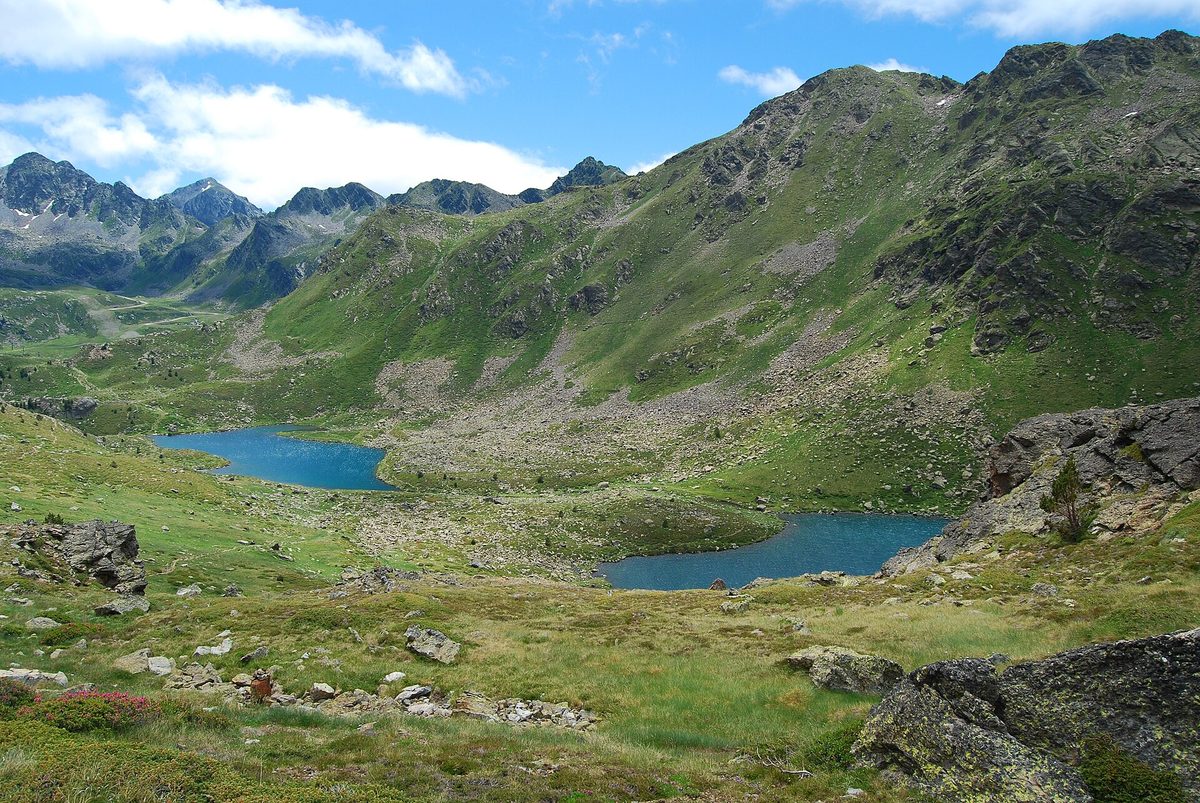
June — the mountains wake up
June is two months wearing one name. Early June is late spring: snow patches above 2,300 m, some high loops still dicey, infrastructure yawning awake. By the solstice it’s summer: the Tristaina lakes circuit clears, mountain activity parks open for the season, and the country hosts the Trail 100 Andorra by UTMB ultra-running festival in Ordino (June 11-14 in 2026), which fills the northwest valleys with several thousand very fit people and a genuinely good atmosphere. Then on June 23 comes the night that’s worth planning a whole trip around: the Falles de Sant Joan, when fire-swingers whirl flaming bundles through the streets to mark the solstice — a UNESCO-listed tradition shared with Catalonia and the French Pyrenees. Long days, fresh trails, pre-July prices: June quietly outperforms its reputation.
July — high summer, high energy
The warmest month and the one with the fullest diary. In 2026 the Cirque du Soleil’s Andorra production, Ràdio Andorra, runs July 3 to August 2 — five nights a week at 10 p.m. in central Andorra la Vella, tickets from about €25 — and the Tour de France’s Barcelona Grand Départ (July 4-6) sends cycling fever through the whole region, with stage three climbing the Pyrenees barely an hour east of the border. Every lift-served summer attraction is open, via ferratas and bike parks hum, and afternoon thunderstorms are the only serious weather risk. It’s busy, but July crowds in Andorra are river-valley busy, not Mediterranean-coast busy: book the popular bordas for dinner and you’ll still find solitude above 2,200 m by 9 a.m.
August — the Spanish month
Spain holidays en masse in August and a healthy share of it drives up the N-145. The first fortnight, around the August 15 bank holiday, is summer’s crowd peak: full car parks at trailhead honeypots, queues for the Tibetan bridge shuttle, and the festa major round — Escaldes-Engordany late July, Andorra la Vella’s own city festival the first weekend of August, Sant Julià mid-month — keeping the valleys loud and cheerful. The weather stays warm but turns thunderier than July. Strategy for August: sleep high (Soldeu, El Tarter, Arinsal, Ordino rather than the capital), start hikes at dawn, and treat the towns as evening entertainment. Or simply wait three weeks, because—
September — the insider’s answer
—September is the best month in Andorra, and it isn’t particularly close. The first three weeks deliver July’s weather with June’s crowds: stable high-pressure spells, trails dry and fully open, water still warm enough for the brave at the Tristaina lakes, and hotel rates 30-40% below August for the identical room. September 8 is Meritxell Day, the national holiday, when Andorrans walk in pilgrimage to the rebuilt sanctuary of their patron saint — a lovely, untouristed thing to witness. Mountain infrastructure begins winding down mid-month (summer lifts and shuttles taper after the second or third weekend), so front-load lift-dependent plans. If I could give a first-time summer visitor one instruction, it would be: take the first two weeks of September and thank me later.
October — golden valleys, closing doors
October is Andorra’s most beautiful month to look at — larch and birch turning the valleys gold and rust, fresh snow dusting the 2,800 m summits above, light so crisp it looks colour-graded. It’s also when the summer machine switches off: high refuges empty, the Roc del Quer skywalk and similar attractions run final weeks, and weather windows shorten. Low-level hikes remain superb and the country is gloriously empty midweek. Pack for four seasons, check what’s still open before promising the kids anything specific, and bring the camera. The first significant valley-level cold usually arrives late in the month.
November — the honest dead zone
I’ll say what the brochures won’t: November is the weakest month to visit Andorra, and unless you’re coming specifically to shop, to soak, or to score the cheapest hotel rates of the year, I’d point you at another date. Mountain attractions are shut, trails sit in the freeze-rot gap between seasons, days are short and often grey, and the whole country is in pre-season mode — half the staff at the ski resorts are doing lift maintenance, not serving lunch. The exceptions that make November work: Caldea is open and quiet, the shopping is excellent (the capital usually runs a Shop in Andorra Festival early in the month), and from November 1 the winter-equipment rule kicks in for drivers, so at least you’ll be ready when the snow does arrive. Arcalís sometimes opens in the last days of November when early storms cooperate — it did on November 27 for 2025/26.
December — winter switches on
The main resorts traditionally open in the first week of December — December 5 for both Grandvalira and Pal Arinsal in 2025/26 — and the country flips from its quietest month to one of its loudest inside a fortnight. Three distinct Decembers exist: the early-month sweet spot (open pistes on early-season prices, with the violent exception of the Spanish puente bridge holiday around December 6-8, which jams every road and hotel in the country); the pre-Christmas lull (excellent value, snow permitting); and the festive fortnight from roughly December 20, when prices peak for the year and booking ahead is non-negotiable. The Poblet de Nadal Christmas village fills the capital’s Plaça del Poble from late November to Epiphany, and the winter sales start on December 26 — Boxing Day skiing plus half-price perfume is a very Andorran double. Snow depth is the early-December gamble; snowmaking covers more than half of Grandvalira, so the product is reliable even when the sky isn’t generous.
When is Andorra cheapest? The price rhythm explained
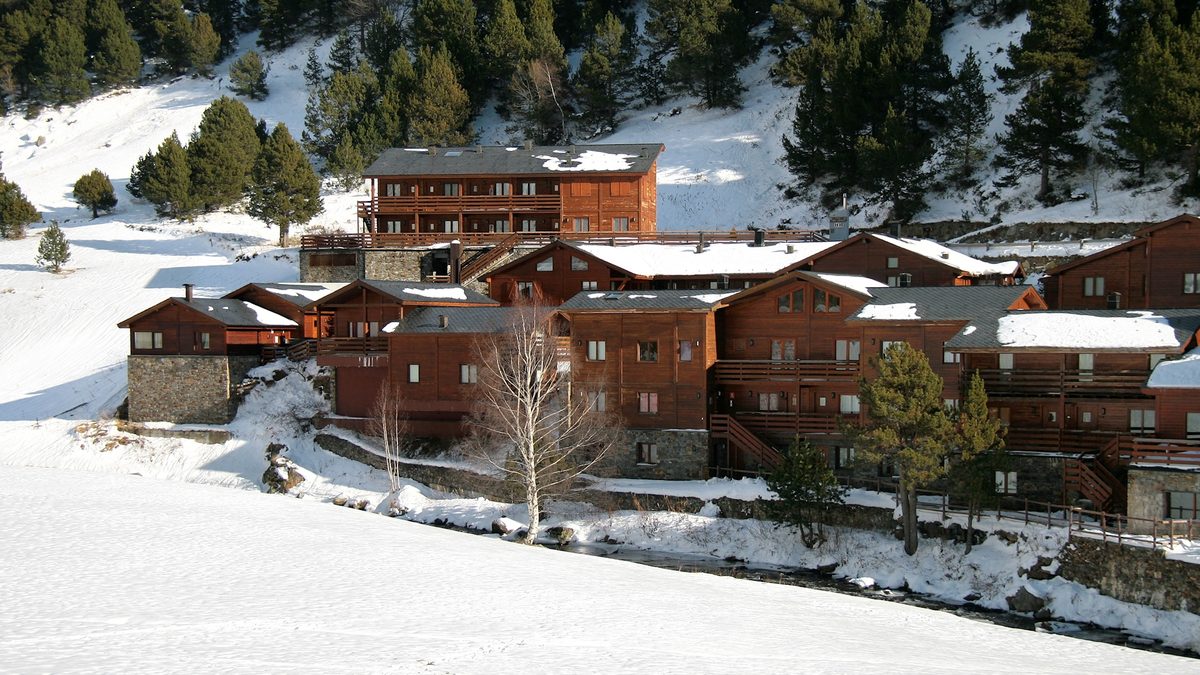
Andorra’s costs move to a beat you can dance around once you hear it. Accommodation is the big variable: the same three-star double that costs €70 in November runs €120-150 in February and can triple over New Year. Lift passes are dynamically priced — roughly €50-65 a day at Grandvalira in 2025/26 depending on date and how far ahead you buy — with the lows in early December and from late March. Food and fuel barely move seasonally, and the duty-free shopping that funds half the country is a constant, with two sharpening points: the winter sales from December 26 through January, and the summer sales through July into August.
Stack those rhythms and you get the cheap calendar. The absolute floor is November to the first days of December (excluding the puente): rock-bottom beds, but you’re buying a country in standby mode. The smartest cheap windows that still deliver the full product are early December before the 20th (skiing on opening-period prices), mid-January to early February midweek (full winter, post-festive rates), late March (spring skiing plus sliding prices), June before Sant Joan, and all of September. The expensive windows to plan around: December 20 to January 6, the February-March French and Spanish school carousel, Easter week, and the first fortnight of August.
Two budget levers people forget. First, midweek is a price season of its own — Andorran hotels price Friday and Saturday nights like a different country, and ski-pass dynamic pricing leans the same way. Second, how you arrive matters: the bus from Barcelona costs about €33-35 each way year-round (the full arithmetic is in our guide to getting to Andorra), while winter car hire means budgeting for the mandatory cold-weather kit — more on the law below.
When to avoid Andorra (or at least brace yourself)
Every date on this list is survivable with booking discipline; none of them is when I’d schedule a first impression.
- The December puente (around the 6th-8th). Spain’s Constitution Day and Immaculate Conception holidays bridge into the year’s single most concentrated invasion. Shops heave, the N-145 crawls, hotels charge February prices for early-season skiing. The dates shift with the calendar — in 2026 the 6th and 8th fall Sunday and Tuesday, making a four-day monster bridge. If you’re already in the country it’s lively fun; arriving or leaving through it is misery.
- December 28 – January 4. New Year is the most expensive week of the Andorran year, full stop. Beautiful, festive, and best left to people who’ve made peace with the invoice.
- Saturdays in February and early March. Changeover day for ski weeks plus day-tripper peak. The lift system absorbs it better than you’d fear; the road network doesn’t. Ski Sunday-to-Friday instead.
- August 10-16. The Spanish holiday crescendo around Assumption Day. The high trails stay calm; everything with a car park does not.
- Sunday evenings, year-round, leaving toward Spain. The border post at the Riu Runer can queue for an hour-plus as the weekend exodus meets customs checks. Leave before 3 p.m. or after 9 p.m., or exit via France — all three road doors are compared in our complete arrival guide.
- Late October to early December, for mountain plans. Not crowded — the opposite. It’s the gap when neither summer nor winter Andorra is actually operating. Know what you’re buying: shopping, spa, silence.
Andorra events calendar 2026: what’s actually worth planning around
| Dates (2026) | Event | Why it matters |
|---|---|---|
| Through April 6 / April 12 | Ski season close (Grandvalira & Pal Arinsal / Ordino Arcalís) | Last lifts of 2025/26; spring-skiing deals in the final weeks |
| April 23 | Sant Jordi | Books and roses fill Avinguda Meritxell — the Catalan Valentine’s, celebrated wholeheartedly here |
| June 11-14 | Trail 100 Andorra by UTMB, Ordino | World-class ultra-trail festival; electric atmosphere, booked-out Ordino valley |
| June 23 | Falles de Sant Joan | UNESCO-listed solstice fire-swinging in the old quarters; Andorra’s most photogenic night |
| July 3 – August 2 | Cirque du Soleil: Ràdio Andorra, Andorra la Vella | 22 open-air shows, Tue-Sat 22:00; tickets €25-59 — book summer-holiday dates early |
| July 4-6 | Tour de France Grand Départ, Barcelona/Pyrenees | Stage 3 crosses the eastern Pyrenees; expect cycling crowds regionwide and busy Barcelona transfers |
| Late July – mid-August | Festa major season (Escaldes Jul 25-26, Andorra la Vella first weekend Aug) | Free concerts, street dinners, correfocs; towns at their most local |
| September 8 | Mare de Déu de Meritxell (national day) | Pilgrimage to the national sanctuary; shops shut, trails don’t |
| Late October – early November | Shop in Andorra Festival, Andorra la Vella (dates confirm in autumn) | The capital turns retail into a festival during the quietest month |
| Late November | Ski season opening (typically first week of December; Arcalís sometimes earlier) | 2026/27 dates announced in autumn — expect Grandvalira around December 4-5 |
| Nov 28 (approx) – January 5 | Poblet de Nadal, Andorra la Vella | Christmas village on Plaça del Poble: market, shows, ice rink, vermouth stalls |
| December 26 onward | Winter sales begin | Duty-free prices drop further; the capital’s busiest shopping fortnight |
A planning note on the two headliners. Falles night (June 23) is genuinely worth building a June trip around — it’s free, it’s real, and it happens whether tourists show up or not. The Cirque du Soleil run sells in tiers and the cheap seats for peak Saturday shows go first; if it’s the anchor of your trip, buy tickets when you book the hotel, not at the box office. Both events confirm details on visitandorra.com, which keeps the most reliable consolidated calendar.
The shoulder seasons nobody markets (and how to play them)
Tourist boards sell peaks; the shoulders you have to figure out yourself. Here’s the field guide. Late April to May is the green shoulder: the country at its emptiest and cheapest while still being beautiful, with the snowline retreating uphill a hundred metres a week. The play is a valley-based trip — capital, museums, Romanesque churches, low balcony trails, long lunches — with zero high-mountain ambition. Watch for the Caldea maintenance window, and know that some mountain restaurants and family attractions simply don’t reopen until June. What you get in exchange: hotel rates 40-50% off winter, waterfalls at maximum violence, and wildflower meadows that August visitors never see.
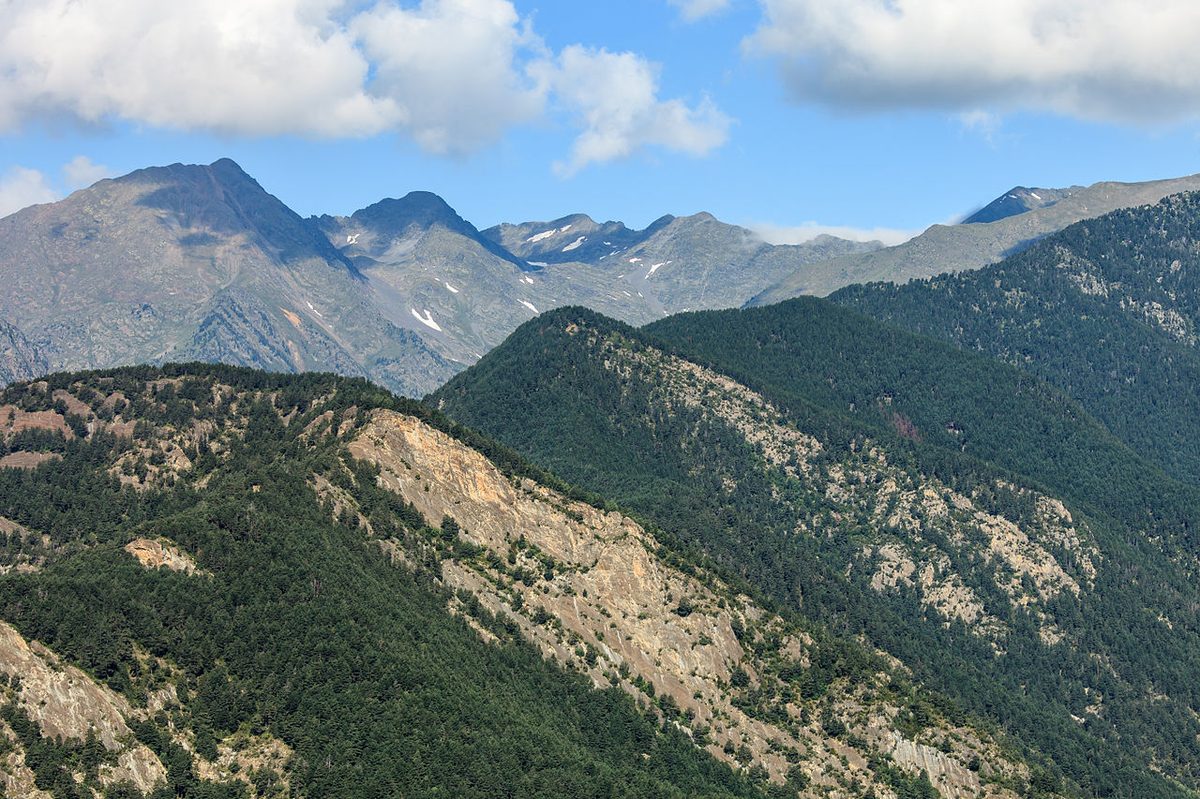
Late September to October is the gold shoulder, and it’s the better of the two. The weather holds more reliably than spring (autumn high-pressure spells in the Pyrenees can run a week at a stretch), every town is still fully staffed, and the larch turn paints the Ordino and Incles valleys in colours that don’t look real. Trails stay open in the practical sense — no lifts, but no snow either below 2,500 m until late October most years. It’s also wild-mushroom season, which Andorrans take seriously enough that good restaurants build menus around ceps and rovellons. The play: base in Ordino or La Massana, hike valley-to-mid-mountain routes, eat ambitiously, and have a flexible bad-weather day for Caldea or the museums.
The week the lifts close in April deserves its own mention as the year’s strangest micro-season. Hotels that were full at €150 on Saturday are empty at €65 by Wednesday, the spring sun is glorious, and there is almost nothing organised to do. I’ve come to like it — it’s the one week the country belongs entirely to the people who live there — but recommend it only to travellers who can build a holiday out of a thermal spa, a duty-free wine cellar and a stack of books. Everyone else: aim either side.
The two big seasons, briefly weighed
Winter (December – early April): what you’re signing up for
You’re signing up for one of Europe’s best-value serious ski products: 300+ km of linked and near-linked terrain across Grandvalira, Pal Arinsal and Ordino Arcalís, strong ski schools, and infrastructure that embarrasses resorts charging half again as much. The season runs roughly December 5 to April 6 at the main areas, with Arcalís bookending it longer at both ends; within that window, snow reliability above 2,000 m is excellent and the snowmaking network carries the gaps. The full resort-by-resort breakdown — which base town suits which skier, costs, passes, the Ikon Pass angle — lives in our complete guide to skiing in Andorra.
Two winter realities to plan around. Driving: from November 1 to May 15 Andorran law requires every vehicle to run winter or M+S tyres, or carry chains or approved textile socks for the drive wheels — checks happen, fines run roughly €180-500, and insurers can refuse claims if you crash without compliant kit. Rental cars from Spanish airports don’t automatically include it; ask. And altitude cold: the gap between a 1,023 m valley afternoon and a 2,500 m ridge in wind is the difference between a fleece and full battle dress. Pack for the mountain you’re standing on, not the forecast for the capital.
Summer (mid-June – mid-September): the quiet overachiever
Summer Andorra still feels like a secret in a way winter Andorra hasn’t for decades. The same lift companies turn their gondolas over to hikers and downhill bikes, the Madriu-Perafita-Claror valley — a UNESCO World Heritage cultural landscape covering a tenth of the country, reachable only on foot — offers genuine wilderness an hour’s walk from a parliament building, and the via ferrata count (20+ routes) is among Europe’s densest. Daytime valley temperatures in the low-to-mid 20s mean you hike in comfort and sleep without air conditioning. The full menu — Tristaina lakes, the Tibetan bridge, Coma Pedrosa, Caldea, the bike parks — is laid out in our guide to things to do in Andorra.
The honest caveats: afternoon thunderstorms are a near-daily rhythm in August (start early, summit by noon), the famous spots within 15 minutes of a car park get busy in ways the deeper country never does, and a few headline attractions are bus-access-only precisely to manage those crowds. None of it dents the central fact that June-to-September Andorra delivers Alpine-quality mountain summer at Pyrenean prices.
Best time to visit Andorra by traveller type
- Committed skiers and snowboarders: mid-January to mid-March, midweek. Deepest snow, full operations. Early December and late March if budget leads; February half-term only if you must.
- Beginners learning to ski: March. Gentler weather, long daylight, soft afternoon snow that forgives, post-peak pricing on lessons and gear.
- Hikers: late June to late September. For the high classics (Coma Pedrosa, the Juclar and Tristaina lake cirques), July-September is safest; for valley walking, May and October are underrated.
- Families with school-age kids: you’re locked to holidays, so play the edges — early July beats August for space, the first week of January beats Christmas week for price, and Easter delivers spring skiing if it falls early enough.
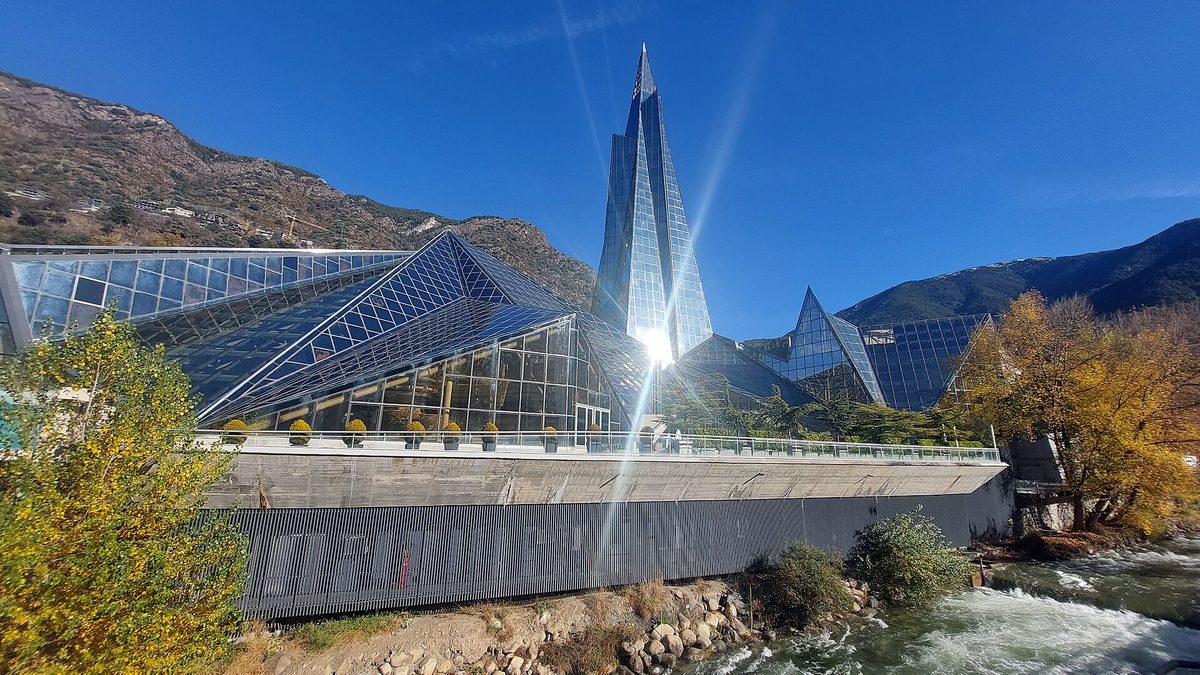
- Spa-and-shopping weekenders: any month, midweek, except the late-May/early-June Caldea maintenance window — confirm dates on caldea.com. Cold months make the thermal lagoons better; January adds the sales.
- Photographers: October for colour, February for alpine white, June 23 for fire. The losing months are few.
- Trail runners and cyclists: June for the UTMB festival and fresh legs on the passes; September for stable weather and empty roads. July if you want to combine with Tour de France fever across the border.
- Budget travellers, any purpose: September if you want the country switched on; November if you only need a cheap, quiet base with a spa and tax-free shopping.
So when would I actually go?
If you ski: the first two weeks of March. You trade January’s colder, drier snow for sunshine you can feel, terrace lunches, and a country relaxing after its peak — and the snowpack is statistically at its deepest anyway. If you don’t ski: September 1-20, no hesitation. It’s the rare travel answer where the best weather, the best prices and the smallest crowds all point at the same dates. And if you can engineer only one single day in Andorra all year, make it June 23 — stand in the old town after dark while the fire-swingers come down from the mountain, and you’ll understand more about this country in an hour than a week of shopping would teach you.
Best time to visit Andorra: FAQ
What is the cheapest time of year to visit Andorra?
November to early December (excluding the puente bridge weekend) has the year’s lowest hotel rates, but the mountains are largely shut. The cheapest windows with the country fully operating are early December before the 20th, mid-January to early February midweek, late March, and September. New Year week is the most expensive of all.
What is the best month for skiing in Andorra?
February has the statistical edge on snow depth and dryness; March offers nearly the same base with longer days, warmer terraces and lower prices once the school holidays clear. January is the connoisseur’s pick for cold, quiet midweek pistes. The season typically runs early December to the first week of April — our skiing in Andorra guide breaks down conditions month by month.
Is Andorra worth visiting in summer?
Emphatically. June through September brings 20-26°C valley days, 60+ marked hiking routes from gentle lake loops to 2,942 m Coma Pedrosa, lift-served bike parks, via ferratas, open-air Cirque du Soleil in July, and prices well below the winter peak. September is the single best month of the Andorran year.
When does it snow in Andorra?
First dustings hit the 2,400 m passes in October or November, valley snow concentrates between December and March, and the ski areas hold their base into early April. Snow cover below 1,500 m comes and goes even in midwinter; above 2,000 m it’s dependable, topped up by one of Europe’s biggest snowmaking systems.
Is Andorra cold in summer?
Valley afternoons run pleasantly warm — typically 21-26°C in July and August — and never Mediterranean-hot, while nights drop to a sleep-friendly 8-11°C. Up at 2,000 m+ expect 10-15°C and real wind-chill; carry a layer and a shell even on blue days, because afternoon storms build fast.
How many days do you need in Andorra?
A long weekend covers the capital, Caldea and one mountain day; four to five days does justice to either a ski trip or a summer hiking base; a full week lets you mix valleys, add a via ferrata or the Madriu, and still shop on the way out. Day trips from Barcelona exist but spend six hours of the day on a bus.
Is Andorra crowded in August?
The first fortnight is the summer peak — Spanish holidays plus festa major season — so expect full trailhead car parks and lively towns, especially around August 15. It rarely feels oppressive away from the honeypots: start hikes by 8 a.m., sleep in the higher villages, and the high country stays calm. Late August quiets noticeably.
What is the rainiest month in Andorra?
May, with around 89 mm in the valleys, followed by the August thunderstorm season. Winter is the dry half of the year — February averages just 38 mm — though what falls up high falls as snow. Summer rain arrives mostly as brief, loud afternoon storms rather than washed-out days.
Is anything closed if I visit in the off-season?
In November and from mid-April to May, most lift-served attractions, high refuges and viewpoint walkways (Roc del Quer and company) are shut, and Caldea takes a roughly two-week maintenance break in late May/early June most years. Shops, restaurants, museums and hotels in the main towns run year-round — the towns never close; the mountains do.
Whatever month you land on, most trips revolve around the capital — see my full guide to Andorra la Vella for where to stay, eat and start exploring.
Best Time to Visit & Weather: the in-depth guides
Each month and season has its own detailed guide:
- Andorra in Winter — Snow, Skis and Thermal Steam
- Andorra in Summer — The Pyrenees’ Best-Kept Hiking Secret
- Andorra in December — Season Opening, Markets and Early Powder
- Andorra in January — The Coldest, Most Reliable Snow Month
- Andorra in August — Peak Summer in the High Pyrenees
- Andorra in Spring — Slush Skiing, Waterfalls and Empty Trails
- Andorra in March — Spring Skiing at Its Best
- Andorra in Autumn — Golden Valleys and the Quiet Season
- When Does It Snow in Andorra? Snowfall Patterns Explained
Related Andorra travel guides
Keep planning your trip with my other in-depth Andorra guides — including Andorran food, a day-by-day itinerary, practical travel tips, and the history of Andorra.
Photo credits
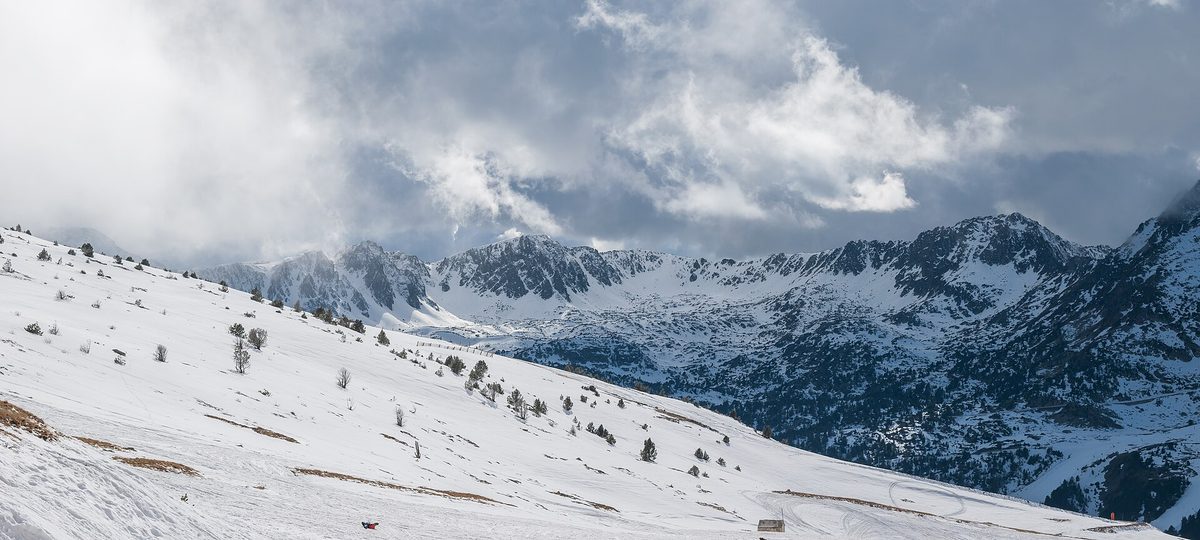
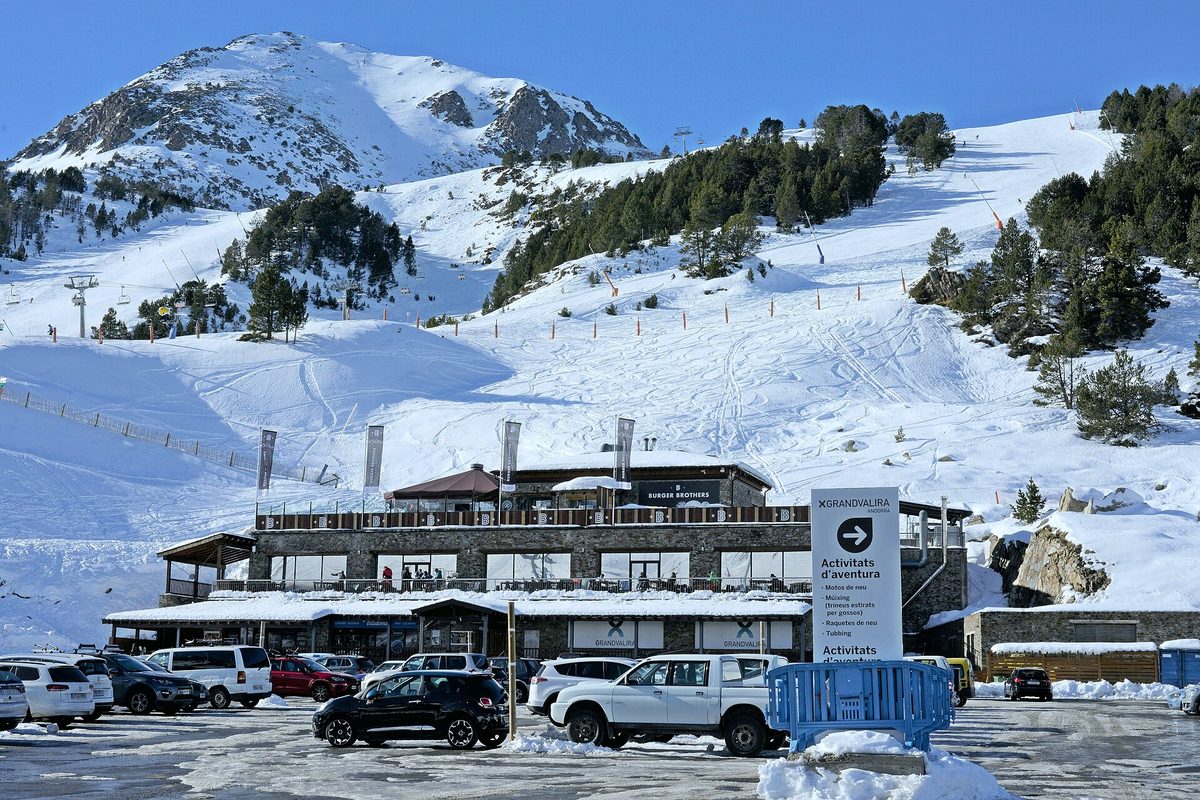
All images via Wikimedia Commons: Grandvalira ski area by Alberto-g-rovi (CC BY 3.0); Tristaina lakes by Sprok (CC BY-SA 3.0); Caldea by FrankAndProust (CC0); Vall d’Incles chalets by Jorge Franganillo (CC BY 3.0); Coll d’Ordino view by Luis Miguel Bugallo Sánchez (CC BY-SA 3.0).

2 comments
Comments are closed.