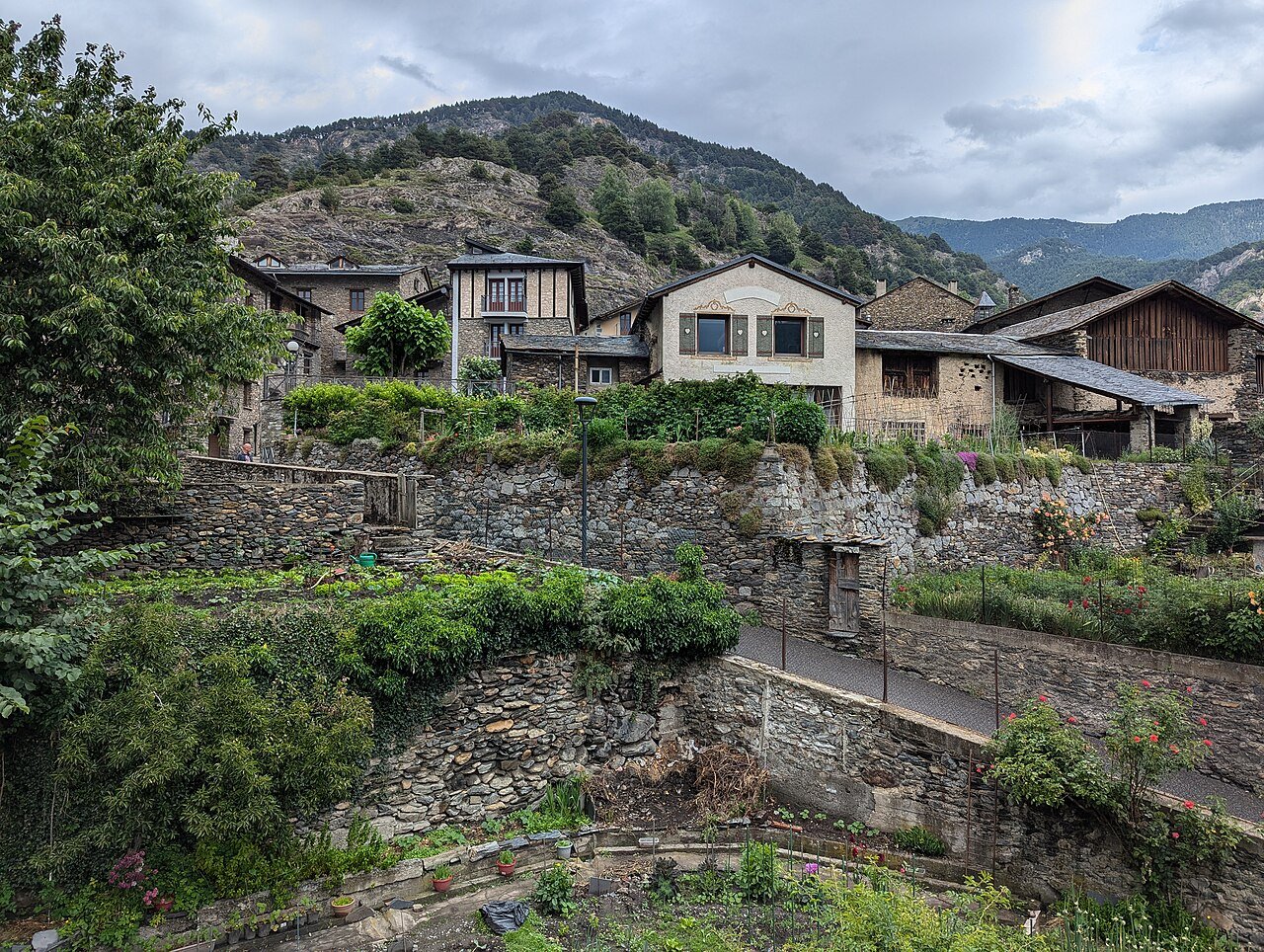
Here’s the short answer: the best Andorra villages are Ordino (a UN Tourism “Best Tourism Village” 2023), stone-built Pal and Llorts, Romanesque Canillo and tiny Os de Civís — a Spanish village you can only drive to through Andorra. The country squeezes all of its villages into 468 km², split across 7 parishes, and plenty of visitors only ever see one town.
That one is Andorra la Vella, usually at speed, usually with shopping bags. Which is a shame, because the country’s real face — slate roofs, hay meadows, 12th-century bell towers, bordes that smell of woodsmoke — starts a short drive from the perfume shops and gets better the higher you climb.
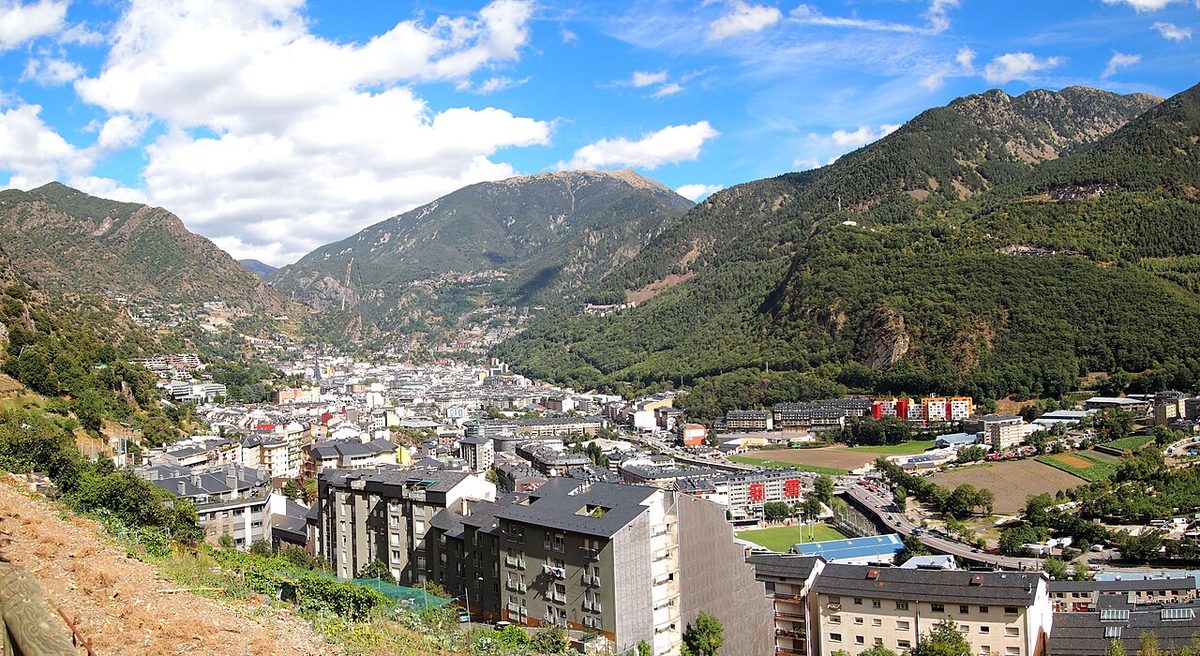
I’ll say upfront what the brochures won’t: not all of Andorra is pretty. The main valley from Sant Julià up through Escaldes is a working corridor of apartment blocks, car parks and roundabouts. The trick to loving Andorra is knowing exactly where the corridor ends and the postcard begins — and that line is surprisingly easy to find once someone draws it for you. This guide draws it: every village worth your time, ranked honestly, with prices, opening hours, the bus lines that get you there (singles from €1.90), and the quirk of medieval administration that explains why a country smaller than many ski resorts has seven mayors.
A heads-up the other guides haven’t caught up with: the Farga Rossell forge museum is currently closed for repairs, the Roc del Quer viewpoint now charges admission (€6), Ordino’s physical Postal Museum is gone (it’s online-only now), and the organised visits to the famous Romanesque village churches run in July and August, though Sant Joan de Caselles can also be opened outside those hours by arrangement. All of that is below.
Checked in November 2026 against museus.ad, bus.ad, ponttibetacanillo.com, grandvalira.com and naturland.ad.
Andorra’s seven parishes at a glance
Everything in Andorra is organised by parish — the seven mini-counties the country has used since the Middle Ages. Learn the seven names and the whole place clicks into focus.
| Parish | Main town (altitude) | Population* | Best for | Bus from the capital |
|---|---|---|---|---|
| Ordino | Ordino (~1,300 m) | – | Prettiest villages, Romanesque art, Sorteny park | L6/L7 |
| La Massana | La Massana (~1,230 m) | ~12,100 | Pal and Sispony, Comapedrosa hikes, bike park | L5/L7 |
| Canillo | Canillo (~1,530 m) | ~6,500 | Tibetan bridge, Meritxell, Sant Joan de Caselles | L3 |
| Encamp | Encamp (~1,250 m) | ~13,500 | Museums, Les Bons, Funicamp gondola, Pas de la Casa | L2 |
| Sant Julià de Lòria | Sant Julià (908 m) | ~10,300 | Naturland, vineyard villages, Os de Civís road | L1 |
| Andorra la Vella | Andorra la Vella (1,023 m) | ~24,800 | The capital, Barri Antic, Santa Coloma church | You’re in it |
| Escaldes-Engordany | Escaldes (~1,050 m) | – | Caldea spa, Madriu valley access, Engolasters | Walk (it adjoins the capital) |
*Approximate figures based on the national statistics office’s 31 December 2025 estimates (country total 89,058). Canillo is the baby of the family and also the fastest-growing parish, up 7.3% in a year.
How a 468 km² country organises itself (and why it matters to you)
Andorra has no provinces, no regions, no counties — just seven parròquies, parishes, a structure that has survived more or less intact for centuries. Each one runs itself through a comú, a town hall with real power and real money, headed by an elected cònsol major — effectively a mayor. There were only six parishes until 14 June 1978, when Escaldes-Engordany split off from Andorra la Vella and became the seventh.
It gets more medieval the closer you look. Three parishes — Ordino, La Massana and Sant Julià de Lòria — are subdivided into quarts (quarters), each centred on a village. Canillo skips quarts and instead has ten veïnats, neighbourhoods. These aren’t ceremonial leftovers; the quart of Sispony or the veïnat of Ransol still means something administratively, which is part of why tiny villages here keep their identity instead of dissolving into suburbs.
Why should a visitor care? Three practical reasons. First, the parish tells you the landscape: Sant Julià, at 908 m the lowest parish capital, is low, green and almost Mediterranean, while Canillo’s main town sits above 1,500 m. Second, each comú runs its own museums, festivals and tourist offices, so prices and opening hours change as you cross parish lines — Encamp’s comú-run Casa Cristo museum charges €5.40, while the national museums range from €5 at Casa Rull to €7 at Espai Columba, that kind of thing. Third, every parish throws its own festa major, a summer blow-out of dancing, communal meals and very loud fireworks, and timing your visit to one is the cheapest cultural upgrade in the Pyrenees. The festa calendar is further down.
One more orientation note: the country is a Y shape. Two river valleys — the Valira del Nord (Ordino, La Massana) and the Valira d’Orient (Encamp, Canillo) — meet at the capital and flow south as the Gran Valira through Sant Julià into Spain. Every village in this article sits on one arm of that Y, which is why getting around is simpler than the mountain scenery suggests: there’s basically one road per valley, with a bus on it every few minutes.
Ordino: the village that won the official beauty contest
If you only have time for one village, it’s Ordino, and it isn’t close. North of the capital at about 1,300 m, Ordino is what Andorra looked like before duty-free: honey-coloured stone houses with slate roofs and wooden galleries, an old church square, and mountains rising straight off the back gardens. In 2023 UN Tourism named it one of its “Best Tourism Villages”, and since October 2020 the parish has been a UNESCO Biosphere Reserve. For once, the plaques are right.
The thing to do here is the Casa d’Areny-Plandolit, the closest thing Andorra has to a stately home — a manor of 17th-century origin, largely rebuilt in the mid-19th century, whose best-known owner, Don Guillem, held a baron’s title: library, music room, chapel, defensive touches and an ornate wrought-iron balcony. Entry is €7 (reduced €3.50), and there’s a guided option for €1.50 more that’s worth booking ahead. They’ve added a hologram show, “Don Guillem’s Dream”, which is better than it sounds. Mind the family quirk of Andorran museum hours: Casa Rull and Espai Columba, for example, close on Mondays, on Sunday afternoons from June to September and all day Sunday from October to May, so check museus.ad before you plan a Sunday outing.
Two smaller stops round out the village. The Miniatures Museum (€10, discounts €4.50) displays the microscopic sculptures of Ukrainian artist Nikolai Siadristy — a caravan of camels inside a needle’s eye, that sort of thing; opening hours aren’t published online, so call ahead (+376 838 338). The old Postal Museum, which guidebooks still list, no longer exists as a building — it’s been converted into an online-only museum. Skip the search; the curious can browse it at museupostal.ad from the sofa.
Ordino is also the best village in the country to simply be in: morning coffee on Plaça Major, a wander up the lanes past Casa Rossell, and you’ve had the experience the rest of this article is chasing. It makes a strong base too — quiet at night, a short drive from both the capital and the ski lifts at Ordino Arcalís — and I’ve covered its hotels in the where-to-stay guide.

Up the valley: La Cortinada, Llorts and El Serrat
The road north of Ordino is Andorra’s prettiest drive, and the L6 bus (Andorra la Vella – Ordino – La Cortinada) covers it as far as La Cortinada. First stop is La Cortinada, whose church of Sant Martí keeps late-12th-century murals by the painter art historians call the Master of La Cortinada, plus a 17th-century polychrome wooden altarpiece and a dovecote. Like several of Andorra’s Romanesque churches it opens for the July-August visiting programme — free, with free guided tours — and outside those months you’re usually admiring the outside. Plan accordingly; this catches a lot of people.
Llorts (1,413 m) is the village I’d send photographers to: stone houses, wrought-iron balconies, a trough fountain, cobbles, and barely a modern building in sight. It also has a preserved iron mine you can visit. The Llorts Mine tour (€5, kids 6-12 €3) walks you 30 m into the gallery and explains the industry that fed the country before tourism did; it only operated for about four years in the 19th century, which tells you something about Andorran luck with mining. It opens in summer only: the museum service lists visits from 20 June to 13 October, with one set of opening days for July and August and another for late June, September and early October, so confirm the season’s dates with the Ordino tourist office (+376 878 173). The mine sits on the Ruta del Ferro (Iron Route), an easy, mostly flat 4.2 km trail to La Cortinada lined with ironwork sculptures — one of the best family walks in the country, about 2¼ hours there and back, and a good warm-up for the bigger routes in the hiking guide.
The road ends, more or less, at El Serrat (1,540 m), a scatter of stone and slate above a waterfall that serves as the gateway to two very good things: the Sorteny valley natural park, and the Ordino Arcalís ski area, the local freeriders’ favourite — more on that in the skiing guide. As a village it’s a five-minute stroll; as a trailhead it can fill a week.
Canillo: bridges, belfries and the country’s best church
Canillo parish is having a moment — its population grew 7.3% in the year to December 2025, to 6,457 — and its main town (about 1,530 m) has quietly assembled a serious collection of things to point a camera at.
Start with Sant Joan de Caselles, just north of town on the old road: an 11th-12th-century church with a Lombard bell tower that is, for my money, the finest Romanesque building in Andorra. Inside is something genuinely rare — the remains of a 12th-century stucco Christ in Majesty, sculpture and wall painting fused into one piece, plus a 1527 altarpiece. Free entry, July-August only (otherwise the AINA camp house next door, +376 851 434, sometimes opens it on request).

Canillo’s two modern attractions trade on altitude. The Tibetan Bridge is a 603 m pedestrian suspension bridge slung 158 m above the Vall del Riu — one of the longest in Europe, and billed by Canillo as the world’s second-longest when it opened in June 2022. In 2026 it costs €17 (€19 in high season, 18 July-13 September; kids 12 and under €14/€16), and the price includes a compulsory shuttle bus from Canillo — you can’t drive there, and tickets are sold online and at the Canillo tourist office, not at the bridge itself. The Roc del Quer viewpoint, a 20 m walkway cantilevered over a 500 m drop with a glass floor section and “The Ponderer” — a bronze man sitting nonchalantly on a beam over the void — used to be free; it now charges €6 (kids €4), and there’s a combined bridge-plus-viewpoint ticket for €20/€22 that’s the sensible buy if you want both. Reaching Roc del Quer needs a car (km 6.5 on the Ordino road, then a 400 m walk down).
Families should know about Mon(t) Magic, the summer activity mountain reached by the Canillo gondola — lake, zip lines, trampolines, mini-quads. In 2026 the summer season ran from 20 June to 13 September, so check Grandvalira’s Mon(t) Magic page for next summer’s dates and prices. That year the Basic Pass (€23) covered two consecutive days, with the simple activities on the first and the gondola only on the second, and the Únic Pass (€41) took in the main activities but not the complementary ones. Pair it with the toboggan run and you’ve solved a day with children — I’ve ranked it against the other family options in the things-to-do guide.
Two more stops in the parish. Meritxell, halfway to Encamp, holds the national sanctuary: the Romanesque-origin old church burned down on its own feast day in 1972, and Ricard Bofill’s striking black-slate-and-glass replacement — basilica status since 2014 — celebrates its 50th anniversary in 2026. The whole complex, including the Bibles of the World exhibition, is free and open daily 9:00-20:00, making it the best-value cultural stop in the country. And Ransol, up its own side valley, is a pocket-sized old quarter of medieval houses with a pre-Romanesque roadside church and Cal Jordi, a micro-producer doing tastings of traditional cured meats — the kind of place the food chapter of this site will keep coming back to.
La Massana: Pal, Sispony and the basecamp parish
La Massana town itself is pleasant rather than pretty — a busy little hub of hotels, bakeries and bike shops at about 1,230 m, some 6 km from the centre of the country. Its job is logistics: the gondola to the Pal Arinsal ski area leaves from the middle of town, the trail to Comapedrosa (2,942 m, the country’s highest summit) starts up the valley in Arinsal, and half the mountain-bike traffic in the Pyrenees seems to funnel through in July. Stay here for access; walk ten minutes in any direction for charm.
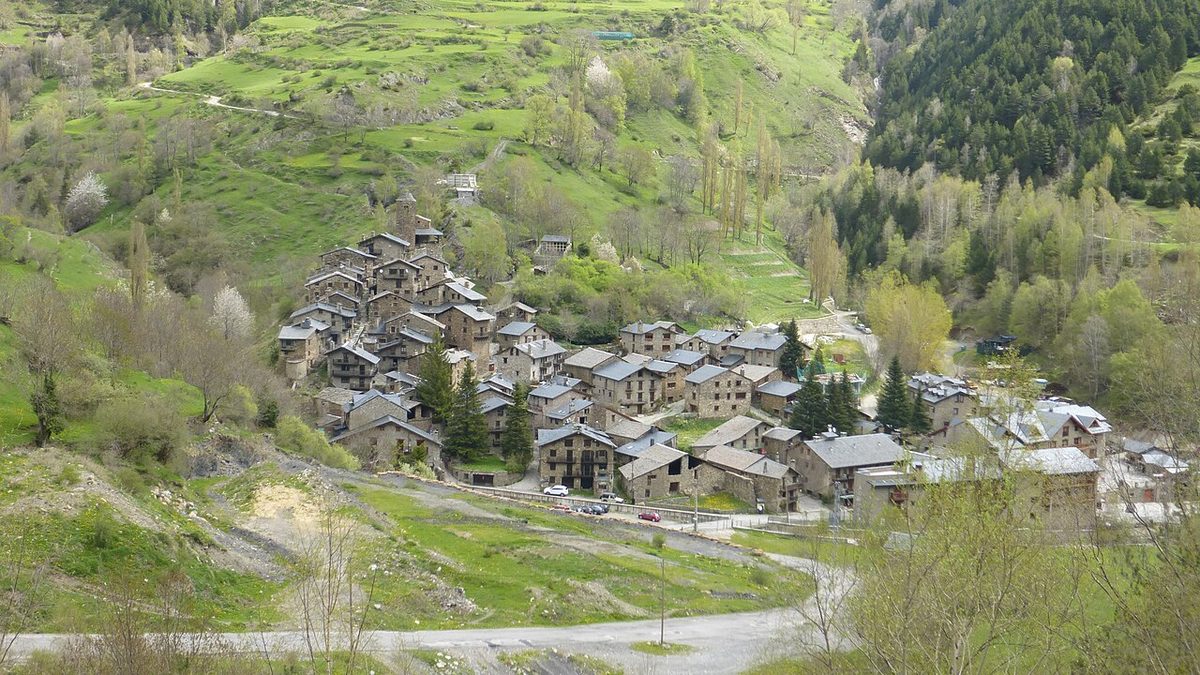
The charm has two names. Pal, up a hairpin road, is one of the best-preserved traditional villages in the country — stone, slate and timber with almost nothing modern breaking the roofline, which is why it’s a postcard regular. Its church, Sant Climent de Pal, is one of Andorra’s oldest (11th-12th century), with double mullioned windows on the bell tower that the national heritage service calls unique in these valleys; like its Romanesque siblings it opens July-August, free. In winter Pal moonlights as a ski village; in summer the Mountain Park above it runs family activities and the bike park takes over the lifts.

Sispony, on a shelf above the road to the capital, is the quiet one — old cortals (clusters of farm buildings), cobbles, and the parish’s essential museum: Casa Rull (€5, reduced €2.50, guided visits €1.50 extra, fully accessible), the house of what was once a wealthy farming family. Where Casa d’Areny-Plandolit shows you how the baronial family lived, Casa Rull shows you how everyone else did — fortunes built on hay, livestock and marrying carefully. Do both and you’ve understood old Andorra better than most residents. Sispony also hides Xocland, a bean-to-bar chocolate micro-producer, and El Pastador’s jams — good rainy-afternoon stops with kids.
Two footnotes for completists: Anyós (1,307 m) keeps a 12th-century hilltop chapel, Sant Cristòfol, with big views over the valley, and Arinsal is less a village than a ski resort with a long après-ski tradition — covered properly in the ski pillar. One warning while it lasts: the Farga Rossell, the 19th-century iron forge museum at the parish entrance and normally one of the better industrial-heritage visits in the Pyrenees, is closed for repairs as of June 2026 with no reopening date published. Check museus.ad before building a day around it.
Encamp: everyday Andorra (and its strange high-altitude twin)
Encamp doesn’t try to be quaint, and I find that’s exactly its value. The parish counts about 13,500 residents, its main town sits at 1,238 m, and this is where the country’s everyday life is on display. It also has, oddly, the best museum density in Andorra.
The National Automobile Museum (€5, reduced €2.50) packs about 80 vehicles and a hundred bicycles, starting with an 1885 steam engine — one of Europe’s better small car collections and a guaranteed hit with anyone over sixty or under twelve. Around the corner, Casa Cristo (€5.40, reductions €3.20, run by the comú) is the humble counterpart to Casa Rull: the house of a family that wasn’t rich, showing how they lived in the late 19th and early 20th centuries, left as lived-in, down to the smoke-blackened kitchen. In July and August it opens daily 9:30-19:00; book ahead.
Walk fifteen minutes up the eastern hillside to Les Bons, a hamlet that compresses a thousand years into one rocky outcrop: the 12th-century church of Sant Romà (whose Pantocrator murals are reproduced in situ; the originals went to Barcelona a century ago), a medieval defence tower, dovecote and the remains of a Moorish-legend bathhouse carved into the rock. It’s the most atmospheric twenty minutes in the parish and almost nobody goes.

Encamp is also where the Funicamp gondola leaves for the Grandvalira ski area — at about six kilometres one of Europe’s longest — which makes the town a genuinely smart budget ski base, an argument I make with numbers in the accommodation guide.
And then there’s Pas de la Casa, Encamp parish’s high-altitude outpost on the French border at 2,080 m — the highest town in Andorra and, let’s be honest, the least pretty: a grid of duty-free supermarkets and ski apartments built where a shepherd’s hut once stood (that’s what the name means). The skiing out the door is superb, the nightlife is the loudest in the Pyrenees, the fuel and alcohol prices explain the queues of French cars, and the architecture would make a heritage officer weep. I cover when it’s the right choice in the skiing and shopping guides; as a village experience, it isn’t one.
Sant Julià de Lòria: the green south nobody visits
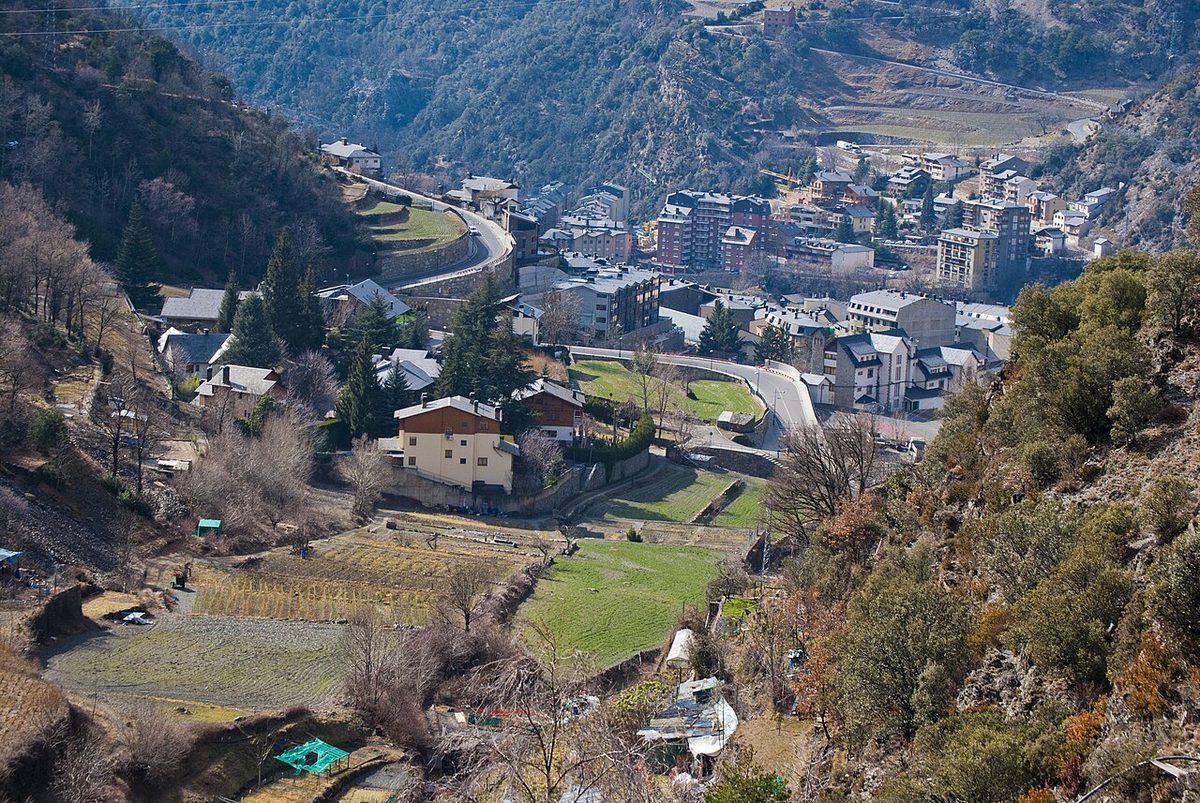
Sant Julià is the parish tour buses skip, which is precisely the recommendation. At 908 m its main town is the lowest of Andorra’s seven parish capitals — almost Mediterranean, with vineyards on the terraces above it — and its side valleys hide a good handful of genuine villages.
The headline act is a geographical joke with a serious payoff. Take the CG-6 from Aixovall and you pass Bixessarri — stone houses stacked over a mountain stream, and very quiet — before the road climbs to Os de Civís (1,492 m), which is in Spain. Its only paved road runs through Andorra. Some 25 residents (2023 figure), a Romanesque church, medieval lanes, and a couple of borda restaurants that have fed generations of Andorrans on weekend lunches. Combining the two villages makes the best half-day drive in the country.
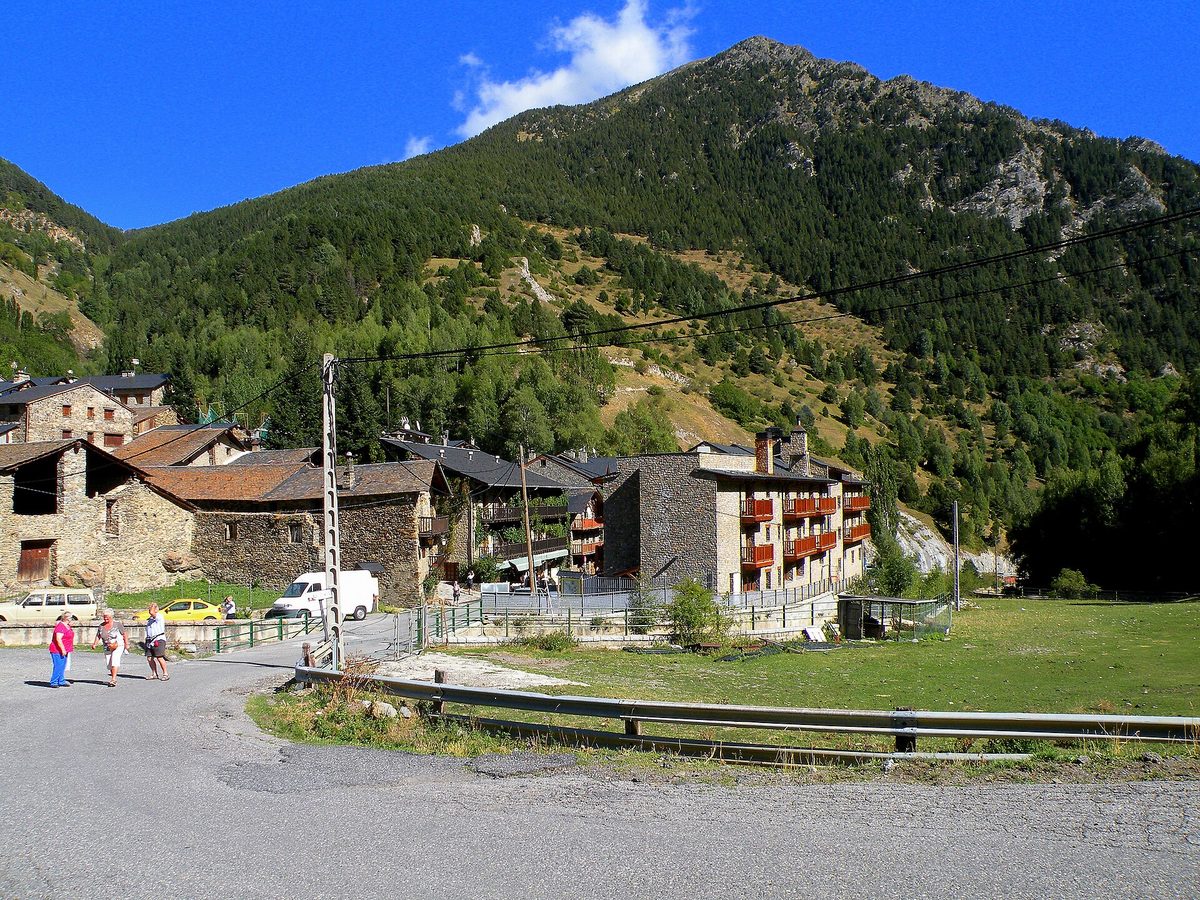
The rest of the parish rewards aimless exploring: Fontaneda, a terrace of stone houses in a line above the valley, on the cyclists’ route to the Coll de la Gallina; Nagol, whose tiny chapel of Sant Serni was consecrated in 1055 and keeps Romanesque murals of uncertain date; Aubinyà (1,176 m), home to Casa Auvinyà, whose vineyards grow at 1,200 m; and Juberri (~1,250 m), famous nationally for the Jardins de Juberri, a private garden of fountains and frankly surreal sculptures that has to be seen to be believed. Above them all, at about 1,600 m, sits the Sanctuary of Canolich, whose pilgrimage on the last Saturday in May is the parish’s most heartfelt tradition.
Sant Julià’s modern claim on your itinerary is Naturland, the activity park in the La Rabassa forest, where the Tobotronc — a 5.3 km alpine slide through the trees, the longest in the world — justifies the trip alone (Aventura ticket €35 online/€38 gate, juniors €30/€33). Families comparing it with Canillo’s Mon(t) Magic should read the head-to-head in things to do in Andorra.
The urban two: Escaldes-Engordany and the capital’s villages
The remaining two parishes are the conurbation, but they keep village fragments worth knowing about. Escaldes-Engordany — the 1978 baby — is functionally the capital’s other half, and its old core around Plaça Santa Anna, where the hot springs that feed Caldea surface at up to 70°C, still reads as a town in its own right. Above it, the Engolasters plateau scatters bordes and the 12th-century church of Sant Miquel, whose disproportionately tall 17 m bell tower is one of the country’s Romanesque landmarks, near the lake and the mouth of the UNESCO-listed Madriu valley — the wildest place in Andorra, reachable only on foot.
In Andorra la Vella parish, beyond the Barri Antic covered in the capital guide, the keeper is Santa Coloma: a pre-Romanesque church from the 10th century with Andorra’s only round bell tower. Its 12th-century murals, sold off in the 1930s and recovered in 2007, are now back and shown via a clever video-mapping projection inside the church — tickets (€7, reduced €3.50) are combined with the Espai Columba museum nearby. The 12th-century hermitage of Sant Vicenç d’Enclar on the crag above is a free, steep half-hour walk with the best sunset view over the capital.
The most beautiful villages in Andorra, honestly ranked
Every village above earns its place, but you have finite days. Here’s the table I’d hand a friend, with the one-line truth the brochures soften.
| Village | Go for | Time needed | The honest one-liner |
|---|---|---|---|
| Ordino | Prettiest core + best museum (Areny-Plandolit, €7) | Half day | The only must-see village; book the manor tour |
| Pal | One of the best-preserved traditional villages | 1-2 hours | Stunning shell; not much to *do* outside July-Aug |
| Llorts | Photogenic stone hamlet + iron mine (€5) | 2-3 hours with the Ruta del Ferro | Best combined with the walk, not alone |
| Os de Civís | The Spain-via-Andorra oddity, borda lunch | Half day with Bixessarri | Go hungry; the drive is the attraction |
| Canillo | Sant Joan de Caselles, bridge (€17), Roc del Quer (€6) | Half-full day | More activity hub than postcard village |
| Les Bons (Encamp) | Medieval ensemble on a crag | 1 hour | Tiny, free, criminally overlooked |
| Sispony | Casa Rull (€5), cortals, chocolate | 2 hours | The quiet social-history stop |
| La Cortinada | Sant Martí murals (free, Jul-Aug) | 1 hour | Time it with the church open or drive past |
| El Serrat | Sorteny park gateway, waterfall | 15 min, or a full hiking day | A trailhead wearing a village costume |
| Pas de la Casa | Skiing, duty-free, nightlife | As long as the snow lasts | Great resort, ugly town — know which you’re booking |
Seeing the villages without a car
Easier than you’d think. Taxis are around, and Uber lists rides in Andorra la Vella (check the app for what’s available on the day), but the buses do most of the work. Andorra’s national buses charge €1.90 for a Zone 1 single, €3.45 Zone 2, €4.80 Zone 3 — and your ticket allows free transfers within the validated zones, in the same direction, for 60, 70 or 90 minutes respectively. There’s no day pass (weekly and monthly ones exist); the workaround is the T-10 carnet (€12.40), which is multipersonal and holds ten Zone 1 credits, so one card can pay for two people’s five Zone 1 trips each. A Zone 2 journey uses two credits per person, a Zone 3 journey three. Full ticketing detail lives in the travel tips guide; here’s the village-by-village cheat sheet:
- L6 from Andorra la Vella runs up the Ordino valley to Ordino and La Cortinada — the single most useful tourist bus in the country. L7 also reaches Ordino via La Massana.
- L5 serves La Massana and continues to Arinsal; get off in La Massana for the Sispony turn-off (an uphill walk or a short taxi).
- L2 to Encamp every 11-15 minutes on weekdays (every 20-30 minutes on Saturdays, every 30 on Sundays and holidays); L3 up the Valira d’Orient to Soldeu; L4 all the way to Pas de la Casa.
- L1 south to Sant Julià de Lòria. Beyond that — Bixessarri, Os de Civís, Fontaneda, Juberri — there’s no useful public service; those need wheels.
Three genuinely car-only sights, for planning honesty: Os de Civís, the Roc del Quer viewpoint, and Pal out of ski season (a bus exists but is sparse; check bus.ad). Everything else in this article can be done from the capital by bus, at €1.90 to €6.35 a single depending on how many zones you cross — one good reason to base there, as argued in the capital guide.
When to come: open churches, hay meadows and festa season
The villages are at their best from mid-June to mid-September, and not only for the weather. The Romanesque churches — Sant Joan de Caselles, Sant Martí de la Cortinada, Sant Climent de Pal, and friends — open to visitors only in July and August (free, often with free guided tours). The Llorts Mine runs roughly late June to mid-October. Come in May and you’ll have gorgeous valleys and locked doors; the full seasonal calculus is in the best-time-to-visit guide.
Then there are the festes majors — each parish and many individual villages throw one, and crashing one (everyone’s welcome; that’s the point) beats any museum. Here’s when they usually fall; each comú publishes the exact dates and programme, and Visit Andorra gathers them on its festes majors page:
- Roser d’Ordino — first weekend of July; Canillo — July, on the dates in the comú’s agenda; Escaldes-Engordany — around Sant Jaume, 25 July; Sant Julià de Lòria — late July (the rowdiest, with its famous bull-themed folklore).
- Andorra la Vella — late July into early August; Llorts — dates on Ordino’s municipal calendar (a festa major for a village this small — wonderful); Encamp (Sant Roc) — around 15-16 August.
- La Cortinada (with Arans) — first weekend of September; Ordino (Sant Corneli i Sant Cebrià) — 16 September, the elegant season-closer.
Winter flips the logic: Pal, El Serrat, Soldeu and Pas de la Casa become ski villages (with the trade-offs covered in the skiing guide), Ordino does woodsmoke-and-fairy-lights better than anywhere, and the museums quietly stay open while the crowds head uphill.
One perfect village day (two versions)
L6 bus from the capital by 9:30. Coffee on Ordino’s Plaça Major, 11:00 guided visit at Casa d’Areny-Plandolit (booked ahead), then bus or roadside walk up to Llorts. Picnic or borda lunch, walk the Ruta del Ferro to La Cortinada (4.2 km, flat, sculptures en route), catch Sant Martí’s murals if it’s July-August, and ride the L6 home from there. Total transport cost: under €6.
morning at Santa Coloma church for the video-mapped murals (€7), then the CG-6: photo stop in Bixessarri, long borda lunch in Os de Civís — yes, you’ve left the country, no, nobody checked — and back via Juberri’s surreal gardens and a tasting at Casa Auvinyà if you’ve booked. Home by Caldea o’clock. Both days slot neatly into the multi-day plans in the itinerary guide.
Eating your way through the villages: the borda rule
Village Andorra has one great gastronomic institution, and it’s worth organising lunches around: the borda. Originally these were the stone barns you see dotting every hillside, where farmers kept their hay and livestock, and many of the best-placed ones have since been restored as restaurants, all thick walls, low beams and open fires. The cooking is mountain Catalan: escudella (the national meat-and-everything stew), trinxat (cabbage, potato and bacon, fried in a cake), grilled meats by the kilo, and snails when there’s a festa. Expect €25-40 a head with wine at a proper borda, half that for a weekday menú del dia in a village bar.
My working rule after years of testing: the harder the borda is to reach, the better the lunch. The dining rooms of Os de Civís exist almost entirely because Andorrans drive out of their own country to eat in them; Sispony’s bordas built the village’s reputation; Llorts and El Serrat have roadside spots where the escudella tastes like altitude. Sunday lunch is the institution’s peak hour — book, or arrive before 13:00, because village dining rooms are small and Andorran families are not. Pair a borda lunch with a church, a walk and a festa and you’ve assembled the complete Andorran village day without overspending.
One caution to balance the romance: a few bordas nearest the main valley now run on coach-tour autopilot. The tell is a laminated menu in five languages and a car park bigger than the village. Drive ten more minutes uphill and the laminate disappears.
Andorra villages FAQ
What is the most beautiful village in Andorra?
Ordino is the one with the official citations — UN Tourism named it one of its Best Tourism Villages in 2023, and its parish has been a UNESCO Biosphere Reserve since October 2020. For pure architectural time-capsule value, though, Pal and Llorts (1,413 m) run it close, with a fraction of the visitors.
How many towns and villages does Andorra have?
Andorra’s towns, villages and small named hamlets are spread across its 7 parishes. Total national population: 89,058 at the end of 2025 — about the size of a single mid-sized European town, spread over 468 km² of mountains.
What is the main town in Andorra?
Andorra la Vella, the capital — Europe’s highest at 1,023 m, with about 24,800 residents in its parish. It merges seamlessly with Escaldes-Engordany (~16,200) to form one urban strip of roughly 40,000 people; everything else in the country is genuinely small.
What are the parishes of Andorra?
Seven: Canillo, Encamp, Ordino, La Massana, Andorra la Vella, Sant Julià de Lòria and Escaldes-Engordany (created in 1978). Each is run by an elected comú (town hall) under a cònsol major — a mayor. Three parishes subdivide into quarts, Canillo into ten veïnats — medieval machinery still running a modern country.
Can I visit Andorra’s villages without a car?
Mostly yes. National buses (€1.90-€6.35 a ride, depending on the zones crossed) reach Ordino, La Cortinada, La Massana, Arinsal, Encamp, Canillo, Soldeu, Pas de la Casa and Sant Julià. The exceptions — Os de Civís, Roc del Quer, Pal off-season and the small Sant Julià hamlets — need a car or taxi.
Is Ordino worth visiting?
Yes — it’s the one village I’d call unmissable. Give it half a day: the old core, Casa d’Areny-Plandolit (€7, book the guided visit), coffee on the square, and if you have legs left, the bus up-valley to Llorts and the Ruta del Ferro walk.
Which village should I stay in?
Ordino for charm and quiet, La Massana or Encamp for lift access and value, Soldeu for ski-in convenience, the capital for buses, restaurants and shopping. I’ve matched villages to traveller types — families, skiers, hikers, spa-seekers — in the where-to-stay guide.
What is Os de Civís and why is it famous?
A Spanish village of 25 residents (2023) at 1,492 m whose only paved road runs through Andorra, climbing from Sant Julià de Lòria. It’s become a beloved excursion for its medieval stone core and big borda lunches.
Are the village churches open in winter?
Mostly not for regular visits. The organised visits to several Romanesque churches run in July and August, but Sant Joan de Caselles (free) can be opened outside those hours by arrangement with the AINA camp house, Meritxell’s new sanctuary opens daily 9:00-20:00, and Santa Coloma’s visits follow Espai Columba’s seasonal museum schedule, so check with the museum first. Exteriors — often the best part — are always on show.
How many days do the villages need?
Two full days covers the highlights without rushing: one for the Ordino valley, one for Canillo’s church-bridge-viewpoint trio or the southern Os de Civís loop. Slot them into a 3-5 day trip alongside the country’s other headline sights and you’ll have seen an Andorra most day-trippers don’t know exists.
Sources
Prices, hours and facts verified June 2026 against: museus.ad (national museums and monuments), visitandorra.com and visitordino.com (official tourism), bus.ad (fares and lines), ponttibetacanillo.com (bridge and Roc del Quer), grandvalira.com (Mon(t) Magic), naturland.ad (Tobotronc), tourism-villages.unwto.org (Ordino’s Best Tourism Village listing), and the official 2026 parish-holiday calendar (BOPA). Population figures: Departament d’Estadística estimates, 31 December 2025.
Towns & Villages: the in-depth guides
Each parish and village has a guide of its own:
- Canillo — Bridges, Belfries and a 550 m Zip Line
- Ordino — Andorra’s Prettiest Village (Official)
- Encamp — Museums, the Funicamp and Everyday Andorra
- La Massana — Basecamp for Peaks and Bike Trails
- Sant Julia de Loria — Andorra’s Southern Gate
- Os de Civis — The Spanish Village You Can Only Reach Through Andorra
- The 7 Parishes of Andorra, Explained
Related Andorra travel guides
Keep planning your trip with my other in-depth Andorra guides — including the full range of activities.
Photo credits
All images via Wikimedia Commons: Ordino’s Carrer Major by Андрей Романенко (CC BY-SA 4.0); Sant Martí de la Cortinada by Luis Miguel Bugallo Sánchez (CC BY-SA 3.0); Sant Joan de Caselles by Андрей Романенко (CC BY-SA 4.0); Sant Climent de Pal by Arnaugir (CC BY-SA 3.0); Les Bons by Pierre Bona (CC BY-SA 3.0); Os de Civís by Algont (CC BY-SA 4.0).
3 comments
Comments are closed.