Andorra has a marketing problem I’ve come to find endearing: everyone files it under “skiing and cheap perfume” and moves on. Which means the glass platform hanging 500 metres over a valley, the UNESCO valley with no road into it, Europe’s longest alpine slide and a 603-metre footbridge strung between two mountainsides all sit there, quietly under-visited, while the crowds shuffle down one shopping street. Their loss, frankly — and this guide is the correction.
The best things to do in Andorra split into five families: big-mountain engineering (the Roc del Quer platform, Canillo’s 603 m Tibetan bridge), genuine wilderness (the UNESCO Madriu valley, the Tristaina lakes), Europe’s biggest Pyrenean ski area, Caldea’s thermal lagoons, and the duty-free shopping mile — all packed into 468 km².
I’ve organised this by theme rather than a numbered countdown, because that’s how you’ll actually plan a day here: pick a mood, check the season column, go. Prices and opening patterns reference the 2025/26 year — Andorra tweaks them seasonally, so treat numbers as close guides and confirm on official sites before you build a day around one.
Last updated: June 2026.
Things to do in Andorra at a glance
| Experience | Where | Season | Cost (guide) |
|---|---|---|---|
| Roc del Quer glass-edge viewpoint | Canillo | ~June–November | €5 |
| Tibetan Bridge (603 m) | Canillo | Spring–autumn | €12 (€14.50 with bus) |
| Caldea thermal lagoons | Escaldes-Engordany | Year-round | ~€40 / 3 hrs |
| Skiing (3 linked areas, 300+ km) | Countrywide | Early Dec–mid Apr | €50–65/day |
| Madriu-Perafita-Claror UNESCO valley | Escaldes side | June–October | Free |
| Tristaina lakes loop | Ordino Arcalís | June–October | Free |
| Naturland Tobotronc (5.3 km slide) | Sant Julià de Lòria | Most of the year | ~€20–25 |
| Duty-free shopping mile | Andorra la Vella | Year-round | Your call entirely |
| Romanesque church circuit | Countrywide | Year-round | Free–€5 |
Getting your bearings: how this country is laid out
Andorra makes sense once you see it as a capital letter Y drawn in valleys. The stem is the Gran Valira valley holding Andorra la Vella and Escaldes — the capital, Caldea, the shopping mile, most of the hotels. The right arm is the Valira d’Orient: Encamp, then Canillo (the attraction cluster: bridge, platform, ice palace), then Soldeu and El Tarter (ski country), climbing to Pas de la Casa on the French border. The left arm is the Valira del Nord: La Massana (bike park, Coma Pedrosa trailheads), pretty Ordino, and the wild Arcalís road beyond. Nothing on this map is more than about 40 minutes from anything else, which is the whole trick of the place: you can stand on a glass platform at ten, soak in a thermal lagoon at one, and argue about perfume prices by four.
The big views: Andorra’s head-for-heights engineering
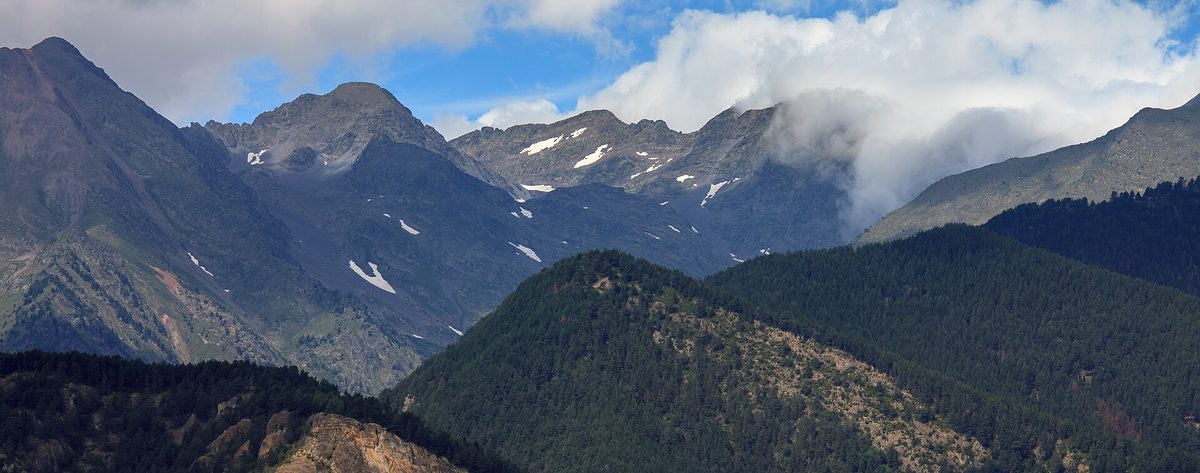
Andorra’s newest tourism trick is building elegant steel things in improbable places, and the results are the country’s best two hours.
Roc del Quer: the platform over the void
Twenty metres of walkway jut off a cliff edge above Canillo — the first eight sit on rock, the final twelve hang over a drop your brain refuses to file as safe, with a glass section underfoot for maximum disrespect to your nervous system. At the tip, a bronze figure sits on a girder gazing at the Pyrenees, which is exactly what you’ll do too once your legs agree to walk that far. It costs €5, opens roughly June to November (snow closes it), and sits at km 6.5 of the CS-240 road that climbs from Canillo toward the Ordino pass. Go in the first hour of the morning: the valley light is better and the platform is yours.

The Tibetan Bridge of Canillo: 603 metres of air
One valley over hangs the Pont Tibetà — 603 metres long, 158 metres above the Vall del Riu, and one of the longest pedestrian suspension bridges in Europe. It sways. It’s meant to sway. Crossing takes a slow, grinning fifteen minutes, and the engineering is reassuringly serious even when your knees disagree. Two practical points people miss: you cannot drive to it — access is exclusively by shuttle bus from Canillo village or the Roc del Quer car park — and the standalone ticket runs €12, with a €14.50 combo covering the bus. Pair bridge and platform in one half-day; they’re five minutes apart by road and emotionally identical.

Tristaina Solar Viewpoint: the sun ring at 2,701 m
Above the Ordino Arcalís ski area, reached by the Creussans chairlift in summer, a ring of weathered steel frames the Tristaina lakes cirque and doubles as a solar calendar. It’s a short, breath-stealing walk from the lift, the backdrop is the wildest corner of the country, and photographers should book the first lift up. Check seasonal lift dates before driving up the valley — outside summer operations it’s a proper hike to reach.
More lookouts worth a detour
Three free ones for the drive-by collection: the Mirador del Collet de Montaup above Canillo, a five-minute pull-off with the Valira d’Orient laid out below; the Coll d’Ordino, the lazy way to a big panorama between Canillo and Ordino; and the Port d’Envalira itself — at 2,408 m the highest paved pass in the Pyrenees, where France appears below you and your ears pop on principle. None costs a cent, all out-view most paid attractions in most countries.
Lakes, valleys and the UNESCO wilderness
Ninety percent of Andorra is mountain, and the parts without lifts are the parts I’d defend hardest.
Madriu-Perafita-Claror: the valley with no road
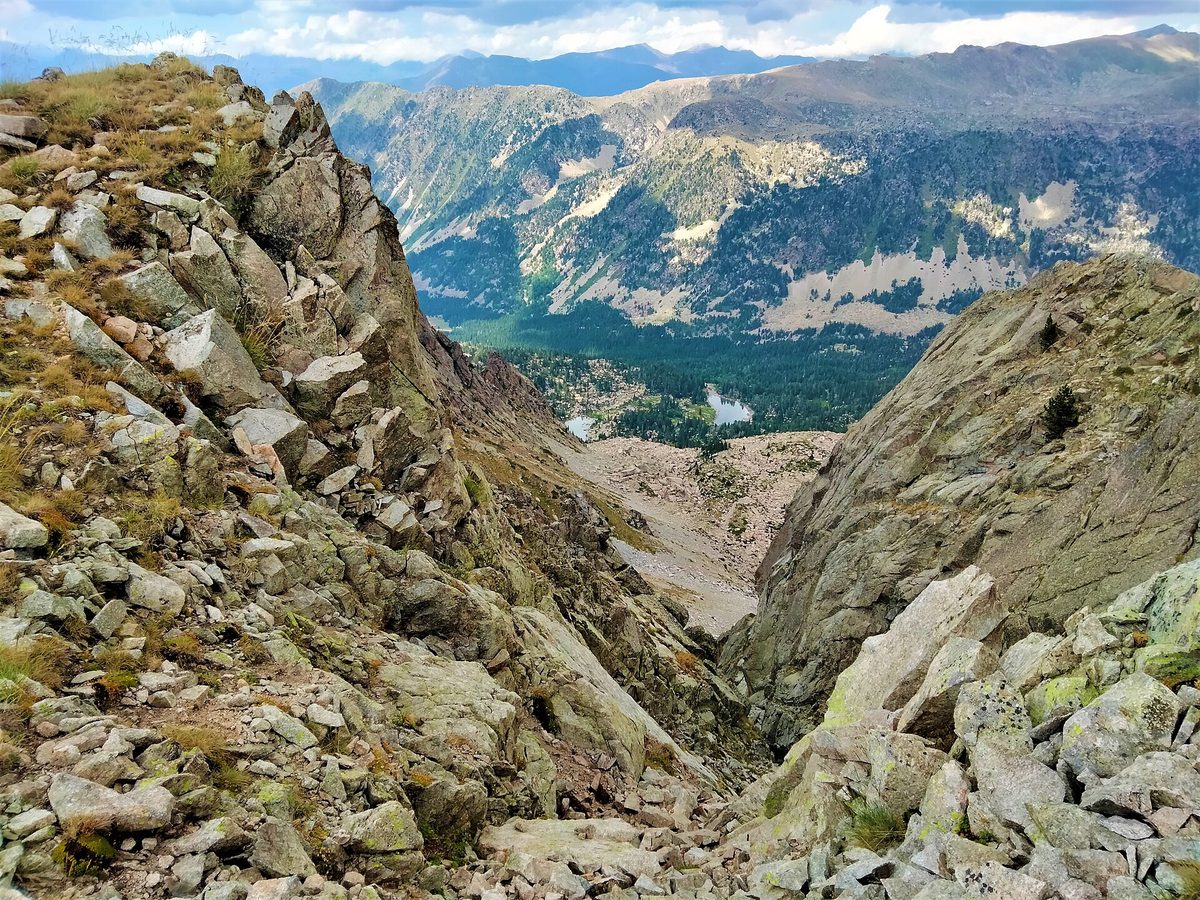
A tenth of the entire country is a UNESCO World Heritage cultural landscape you can only enter on foot. The Madriu valley got the listing in 2004 because it preserves how Pyrenean people actually lived — bordes, drystone terraces, shepherd huts, an old iron route — in a glacial valley the road network never reached. Walk in from Escaldes (the classic entry climbs from the Camí de la Muntanya) for an out-and-back taste, or commit to the full 23 km traverse with a night in a refuge. Even an hour inside feels like leaving the century. The practical version: the easiest taste is the two-hour out-and-back from the Escaldes side to the first bordes; day-hikers aim for Estany de l’Illa or the Refugi de l’Illa loop; and the committed book a refuge night and walk the whole cultural landscape end to end. Pack everything in and out — there are no kiosks in a World Heritage site, which is precisely the point of it.
The Tristaina lakes: three for the price of one walk
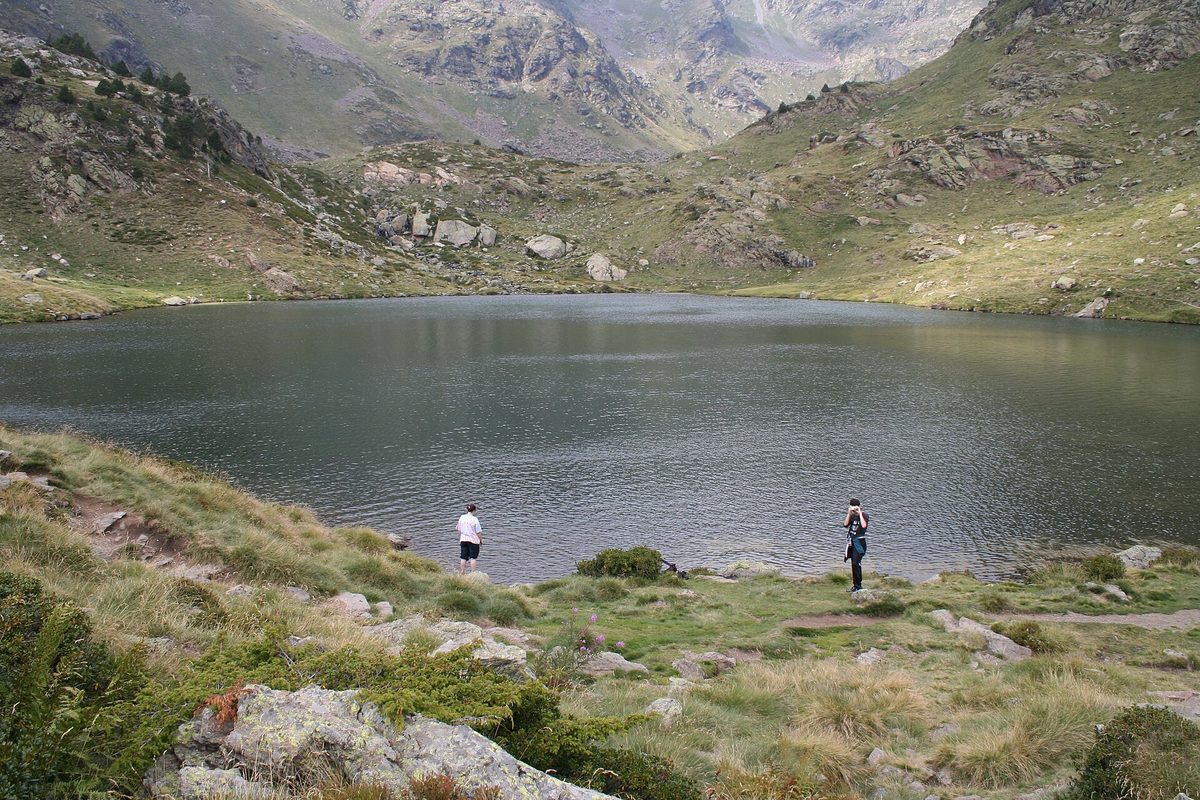
The Estanys de Tristaina loop above Arcalís is Andorra’s signature short hike: roughly 5 km, three glacial lakes stacked in a granite bowl, wild enough to feel earned and gentle enough for determined kids. June still has snow patches; July to early October is prime. Start before nine and you’ll share it with marmots instead of people. The trailhead car park sits at the top of the Arcalís road by the ski-area base; in high summer, arrive by 9:30 or accept the overflow lot and a longer walk.
Engolasters, Incles and Sorteny: the easy classics
Lake Engolasters is the capital’s local lake — flat shoreline path, pine forest, twenty minutes from town, with the lovely Romanesque bell tower of Sant Miquel on the walk up. The Vall d’Incles near Soldeu is the country’s prettiest dead-end valley, all meadows and stone barns, with a summer shuttle (private cars get restricted in peak weeks) and the harder Juclar lakes hike at its head. Sorteny Natural Park above Ordino is the botanist’s pick — a high valley famous for wildflowers with a small alpine botanical garden and mercifully few people. And if you want zero effort: the Rec del Solà above Andorra la Vella is a flat, shaded canal-side stroll with valley views the whole way.
Coma Pedrosa: the roof of the country
Andorra’s highest point (2,942 m) is a genuine but honest day out from Arinsal — about 13 km round trip with 1,200 m of climbing, a mountain refuge at half height for lunch, and a summit panorama that stretches deep into Spain and France. It’s a summer mountain (July–September for a clean track), it’s signposted and popular, and it’s the single best physical thing I can tell a fit hiker to do in this country.
Winter: the thing Andorra is actually famous for
From early December to mid-April the country becomes one big lift system, and it earns the reputation: three linked resort areas — Grandvalira (about 210 km of pistes, the Pyrenees’ largest area), family-shaped Pal Arinsal and freeride-wild Ordino Arcalís — run by one company, covered by one pass, and priced 20–40% under the Alps. I’ve written a full, honest guide to skiing in Andorra — resorts compared, real costs, where to base — so I’ll keep this section to the headline: if you ski at all, this is one of Europe’s best value-for-experience trades, and if you’re learning, Soldeu’s ski school might be the continent’s best classroom.
The underrated part is winter without skis. Dog-sledding and snowshoe circuits run up at Grau Roig; the Magic Gliss alpine coaster in Canillo turns a snowy hillside into a rollercoaster; igloo-building workshops exist and are exactly as fun as they sound; and the Palau de Gel in Canillo stacks an Olympic ice rink, ice karting and a pool under one roof for storm days. Plenty of people come in February, never click into a binding, and leave smug. The full menu’s in the ski guide’s beyond-the-pistes section.
If you’ve never done a winter trip at all, Andorra is a forgiving first one: a weekend of two half-day lessons, one snowshoe morning, one long Caldea evening and a borda dinner runs well under what a French resort charges for the skiing alone — and every piece of it books online in English a week out. That accessibility, more than any single statistic, is why first-timers keep choosing the Pyrenees’ smallest address.
Caldea and the thermal side of Escaldes
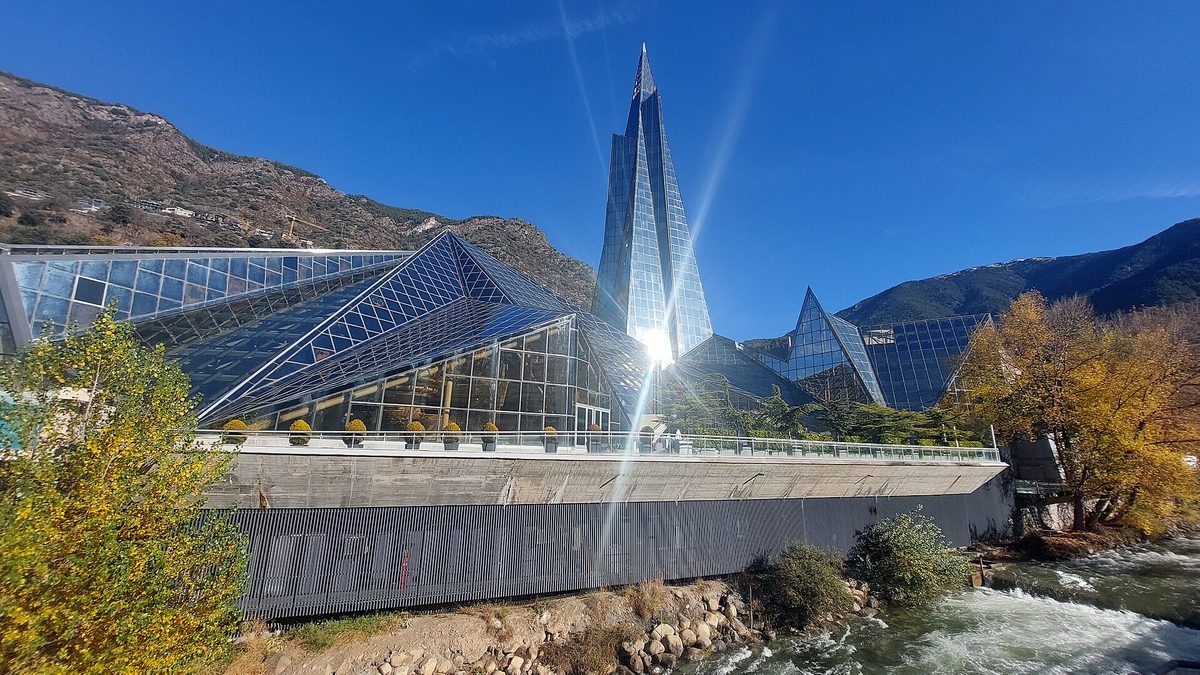
Escaldes-Engordany exists because hot water comes out of its ground at around 70°C, and Caldea is what a microstate builds when it decides to make that a landmark: a glass cathedral on the river holding southern Europe’s largest thermal spa — indoor-outdoor lagoons at bath temperature, saunas, ice wells, absurd grapefruit pools, the lot. A standard three-hour pass runs around €40, the adults-only Inúu wing costs more and earns it on quiet, and the correct move is booking the evening slot after a mountain day so your quadriceps can file a formal thank-you. Two tips: weekends and ski-season half terms get crowded (book online, go at opening or after 7pm), and the outdoor lagoon in falling snow is the single most Andorran sensation available for money.
The town around it deserves an hour too — Escaldes’ old spa-street fabric, the Carmen Thyssen museum’s small-but-serious art collection, and free thermal-water fountains where locals fill bottles like it’s nothing.
If Caldea’s scale isn’t your speed, the same thermal inheritance runs quieter elsewhere: a string of serious hotel spas across Escaldes and the ski towns sell day access to pools and circuits at gentler prices, and by February you will not regret knowing that. The pattern to copy from locals: mountains until mid-afternoon, water until dinner, repeat until your shoulders forget what a laptop is.
Adrenaline and family: the activity layer
Naturland and the Tobotronc
In the forested south above Sant Julià de Lòria, Naturland’s headline act is the Tobotronc — at 5.3 km the world’s longest alpine slide, a toboggan-on-rails that drops through the woods for a solid eight minutes of giggling. You control the brake; the person who never brakes wins. Around it: zip lines, a vertigo-inducing airtrekk course, summer tubing, and in winter the country’s only cross-country ski trails up at La Rabassa. Budget €20–25 for the slide and half a day for the site — it’s the easiest guaranteed-win with kids in the country.
Mont Magic and the Canillo zip line
Above Canillo, the Mont Magic family mountain stacks the Magic Gliss coaster, trampoline nets, themed walking circuits and the Big Zip line. It’s lift-served, it’s engineered for ages roughly four to fourteen, and it converts a non-hiking family into a mountain family in one gondola ride.
Bikes: a World Cup mountain in summer clothes
When the snow melts, Pal Arinsal becomes the Vallnord Bike Park — a UCI World Cup downhill venue with around 40 km of lift-served trails from flow lines to terrifying. Beginners get progression zones and rental armour; spectators get July’s World Cup circus if the calendar obliges. Road cyclists, meanwhile, treat the whole country as a col-collecting game — the climbs here feature regularly in the Tour de France and Vuelta, and the pros who live in Andorra train on them daily.
Via ferrata and canyons
Andorra has quietly built one of Europe’s densest via ferrata networks — twenty-plus equipped routes from beginner-friendly (the Canal del Grau classic near Sant Julià) to genuinely fierce, plus guided canyoning in the gorges through summer — the full menu lives in my guide to adventure activities in Andorra. Gear rents cheaply, guides are easy to book, and it’s the best half-day upgrade for a group that found the hiking too quiet.
Culture and history: a thousand years in an afternoon
Nobody comes to Andorra for museums, which is exactly why the cultural circuit is so pleasant — you’ll have a millennium of strange little country largely to yourself.
Casa de la Vall and the Barri Antic
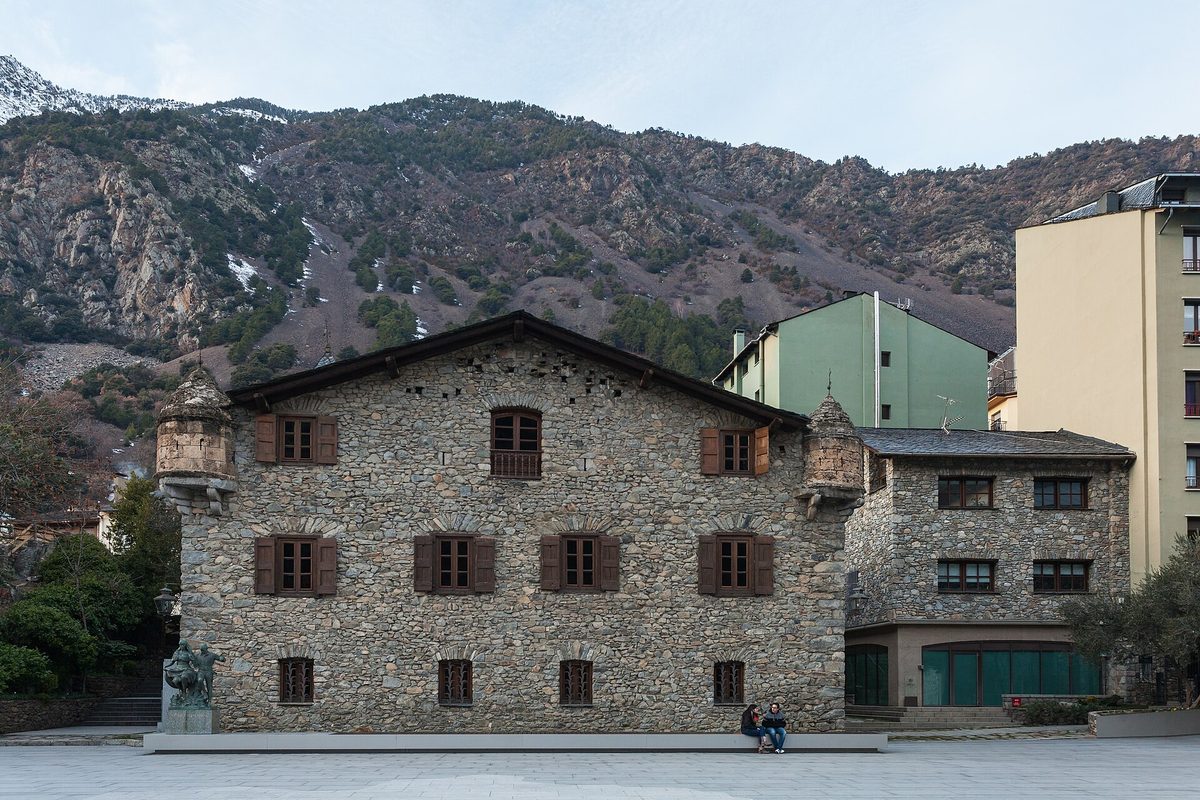
The 1580 stone manor in Andorra la Vella’s old quarter served as the country’s parliament from 1702 to 2011, and the guided tour is the fastest way to understand the co-principality — a state run jointly, for seven centuries, by a Catalan bishop and (these days) the French president. The surrounding Barri Antic is small but real: cobbles, 17th-century houses, the Church of Sant Esteve, and the pleasant shock of old Andorra hiding two streets from the shopping mile. Book the tour slot ahead in summer; it’s closed Mondays as a rule of thumb.
The Romanesque circuit
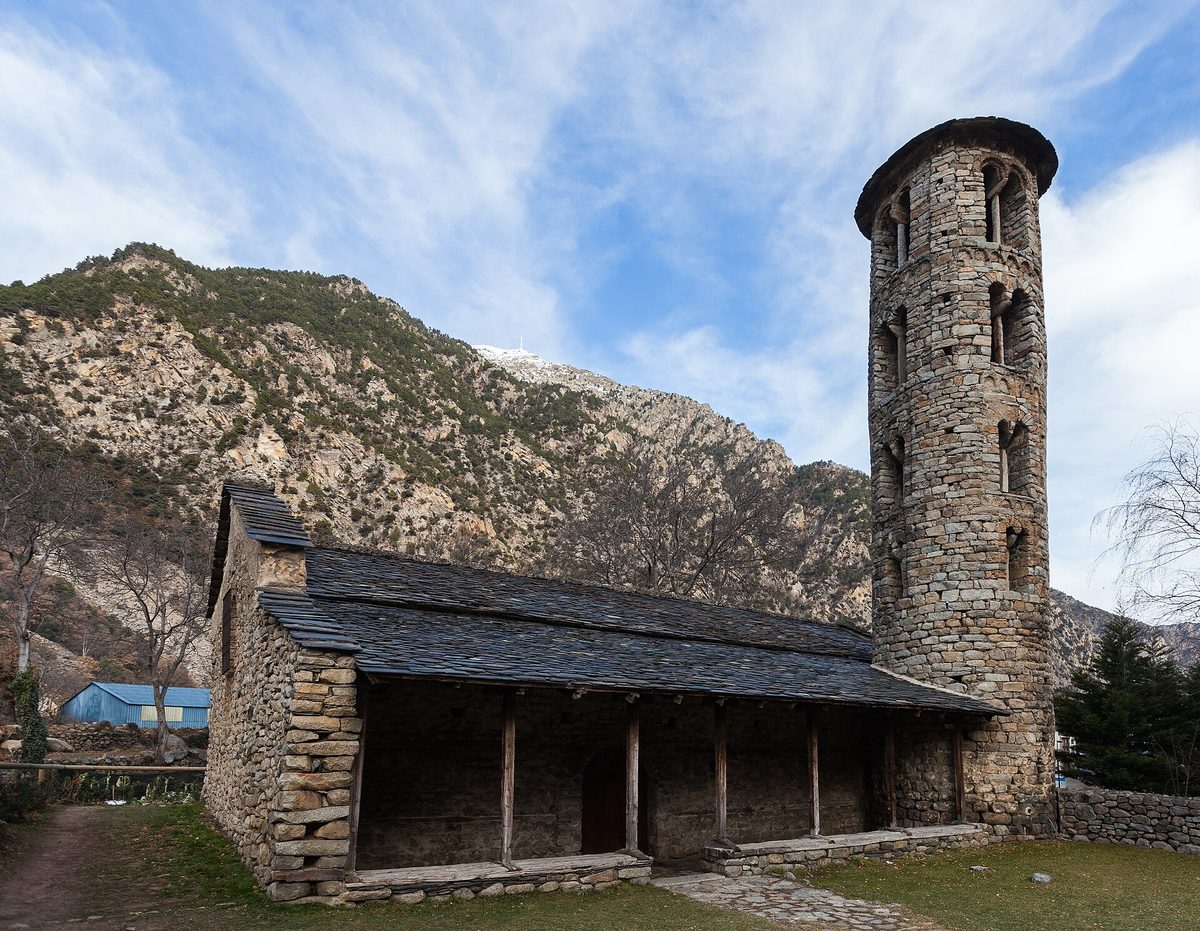
Forty-odd Romanesque churches dot a country you can cross in forty minutes, and three are essential: Santa Coloma, the oldest, with its rare circular bell tower and recovered medieval frescoes presented with a clever projection; Sant Joan de Caselles outside Canillo, the postcard one, all lichened stone and Lombard arches; and Sant Miquel d’Engolasters’ improbably tall tower on the lake walk. The Meritxell Sanctuary completes the set with a twist — after fire destroyed the old shrine in 1972, Ricardo Bofill rebuilt Andorra’s national sanctuary as a bold modern landmark, and the contrast is the point.
Museums for the curious (and the rained-on)
The honest tier list: the Carmen Thyssen museum in Escaldes (compact, rotating, genuinely good paintings) and Casa Rull in Sispony or Casa Cristo in Encamp (preserved house-museums that explain pre-tourism Andorra better than any text) lead; the National Automobile Museum in Encamp (~80 vehicles, about €6, 45 minutes) delights enthusiasts and shrugs everyone else; the perfume museum exists for duty-free synergy. None needs more than an hour, which is their charm.

The shopping question, answered honestly
Yes, Andorra is a duty-free state, and yes, that one kilometre of Avinguda Meritxell in the capital is the densest retail strip in the Pyrenees — perfume houses, electronics windows, tobacco-and-spirits supermarkets, two proper malls (Pyrénées and illa Carlemany) and weekend crowds that arrive from two countries with empty car boots. The honest version of the advice: savings are sharpest on perfume and cosmetics (often 25–30% under Spanish or French shelf prices), real on spirits and tobacco, decent on sunglasses and ski gear in end-of-season sales, and thin on electronics, where the legend has outlived the margins — check your home price before assuming. Know the customs allowances before you stock up; the French and Spanish border posts check with genuine enthusiasm on busy Sundays.
The mechanics, since they confuse everyone: Andorra isn’t in the EU, so allowances apply when you leave — typically along the lines of 1.5 litres of spirits, a few hundred cigarettes and a few hundred euros of general goods per adult before duties kick in (the official limits are posted at the borders and worth photographing). Sales seasons follow Spain’s rhythm, with January and July rebaixes turning real discounts into silly ones, and ski-gear clearances from late March are the sleeper deal of the whole retail scene. The two malls bookend the strip: Pyrénées is the grand old department store, illa Carlemany the modern one with the supermarket underneath that locals actually use.
My one strategic tip: do the shopping mile on a weekday morning or as your last half-day, never on a Saturday afternoon, and detour two streets uphill to the Barri Antic between purchases to remember which country you’re in.
Eat like the mountains expect you to
Andorran food is mountain-Catalan and unapologetic about it. The essential experience is dinner in a borda — a centuries-old stone livestock barn turned grill-restaurant, all dark beams and open coals (Borda Estevet in the capital and La Cort del Popaire in Soldeu are reliable entries to the genre). Order escudella, the national stew of meats, vegetables and pasta that has ended every Andorran winter day for centuries, or trinxat — cabbage and potato crisped in pork fat — and accept that lunch’s menú del día (around €15–20 for three courses, wine often included) is the country’s best-value institution. The surprise at the top end: genuine fine dining has arrived in the ski towns, and Andorran wine — grown on absurd terraced slopes — exists, surprises people, and belongs on your table at least once.
Two timing notes that save disappointment: kitchens run on Catalan-Spanish hours (lunch 1pm–3:30, dinner from 8:30 — book the bordas at weekends), and mountain restaurants at the ski areas and Naturland do a proper sit-down lunch for €15–25 that beats any sad summit sandwich. Breakfast is the one meal Andorra underplays; the fix is a café cortado and a croissant in any village square, taken slowly, like the locals who are all somehow never late for anything.
Villages worth leaving the capital for
Andorra’s towns are functional; its villages are the charm reserve. Ordino is the consensus prettiest — stone lanes, flower boxes, a UNESCO biosphere valley behind it and a Sunday-morning calm the capital lost decades ago; pair it with Sorteny or the Tristaina road for the country’s best slow morning. Canillo earns a full day by accident: Tibetan bridge, Roc del Quer, Sant Joan de Caselles, Palau de Gel and Mont Magic all hang off one village. La Massana is the foodie-leaning base that summer turns into bike-park HQ, and Encamp is workaday Andorra with two of the best small museums and the Funicamp gondola out of its middle. And the quirk prize goes to Os de Civís — a Spanish village reachable by road only through Andorra, where the borda dinners taste better for the passport-free border weirdness of getting there.
Free things to do (the zero-euro hit list)
For a country with a shopping street at its heart, Andorra gives a remarkable amount away: every lake and valley walk above (Madriu included — UNESCO charges nothing), the Romanesque churches’ exteriors and most interiors, the Barri Antic and Casa de la Vall’s square, the thermal fountains of Escaldes, the Rec del Solà and Rec de l’Obac canal walks, wildlife-spotting in Sorteny, and — if you time June right — the Falles of Sant Joan, when fire-swinging descends from the mountains in a UNESCO-listed midsummer ritual that makes the whole country smell of woodsmoke and singed legend. The viewpoints charge €5 or so; the views from every road pass above 2,000 m remain free of charge and full of marmots.
When to do what: Andorra by season
| Season | Lead activities | Watch out for |
|---|---|---|
| December–March | Skiing, snowshoeing, mushing, Caldea-in-snowfall, Poblet de Nadal Christmas village | Peak weeks (New Year, late Feb half terms) crowd pistes and hotels |
| April–May | Spring skiing early, waterfalls, quiet shopping, museum days | Shoulder closures: some attractions and high roads still shut |
| June–September | Hiking, lakes, via ferrata, bike park, Tibetan bridge, viewpoints, Falles (23 June), Cirque du Soleil (July), Ultra Trail (late July) | August valley heat and the busiest trails; afternoon storms |
| October–November | Golden larch hiking, empty everything, pre-season gear sales | Shortening daylight; Roc del Quer and high lifts wind down |
If I had to pick two windows for a first trip: late June for the full summer menu with snow still decorating the peaks, or late January for the winter one at peak ski value. September is the connoisseur’s secret — summer’s menu, nobody on it.
The events worth planning around: the Falles of Sant Joan on 23 June, when fire-swingers spin flaming balls down from the peaks in a midsummer rite old enough for UNESCO’s list; Cirque du Soleil’s summer residency in Andorra la Vella through July, a genuinely big show in a genuinely small capital; the Andorra Ultra Trail in late July, when the entire country becomes a finish line and the refuges fill with haunted-looking runners; Meritxell Day on 8 September, the national day at the rebuilt sanctuary; and December’s Poblet de Nadal Christmas village, which pairs suspiciously well with duty-free gift logistics.
The practical bones: days, bases, wheels
How long? A day trip from Barcelona sees the capital, Caldea and the shopping mile and counts as a sampler, not a visit. Three days covers a theme properly; four to five days lets you mix mountains, spa, culture and one big engineering thrill without rushing. A week only makes sense in ski season or for serious hikers.
Where to base? The capital/Escaldes for shopping, Caldea and restaurant choice; Canillo or Ordino for charm and the attraction cluster; Soldeu or El Tarter in winter for the lifts. Distances are tiny — nothing in this country is more than 40 minutes from anything else, which is why basing wrong is annoying rather than fatal.
Andorra uses the euro and speaks Catalan officially (Spanish, French and ski-town English all work); it is not in the EU, so your EU roaming bundle dies at the border — eSIMs or offline maps spare you the infamous data bill; shops genuinely close for lunch outside the malls; and pharmacies, fuel and supermarket basics are all cheaper than home, which softens most other blows. Passports come along even from Spain or France: it’s a real border with real spot-checks.
Do you need a car? For the capital-Caldea-shopping core, no — buses run the main valley constantly and cheaply. For trailheads, Arcalís, Os de Civís and freedom generally, a car helps enormously; just respect the winter-equipment rules from November to April and note that Saturday traffic on the shopping mile is its own cautionary tale. Arrivals are by road only — about three hours by direct bus from Barcelona or Toulouse airports (roughly €35 each way), there being no airport or railway in the country at all.
Three ready-made days (steal these)
The engineering-and-hot-water day
Morning at Roc del Quer when it opens (€5, empty, best light), shuttle across to the Tibetan bridge for the slow 603-metre grin, lunch in Canillo by Sant Joan de Caselles, an hour at the Palau de Gel if you’ve got kids or weather, then down the valley for Caldea’s evening slot and dinner in a borda. This is the single best first day in Andorra and it costs less than €70 before dinner.
The wilderness day
Early start up the Arcalís road, Tristaina lakes loop before the crowds (add the Solar Viewpoint via the chairlift if it’s running), picnic at the third lake, then a slow afternoon in Ordino’s lanes with coffee on the square and a wander into Sorteny if legs allow. Finish with a menú del día in La Massana. Total spend: lunch and lift money; total people encountered before 10am: marmots, mostly.
The family insurance-policy day
Naturland’s Tobotronc and airtrekk until early afternoon (book the slide online in August), drive the scenic loop north, and bank the Magic Gliss and trampolines at Mont Magic for the after-nap shift. If weather turns, swap any block for the Palau de Gel’s rink-karting-pool triple. No child has ever filed a complaint against this itinerary; some adults pretend they’re doing it for the children.
Things to do in Andorra by traveler type
Families
Naturland plus Mont Magic plus Palau de Gel is a guaranteed three-win run; add the Tristaina lakes for a first “real hike” and Caldea’s family zones (kids’ access has age rules — check before promising). Winter families get Europe’s most patient ski schools.
Couples
Inúu’s adults-only quiet, a borda dinner, the Roc del Quer at opening time, and an Ordino morning make the romance itinerary write itself. Spring and autumn bring empty trails and hotel prices that subsidise the tasting menu.
Adrenaline seekers
Via ferrata, canyoning, the bike park, the Tibetan bridge, freeride days at Arcalís in winter — Andorra compresses an adventure-holiday’s worth of bookings into one valley system and rarely makes you drive more than 25 minutes between them.
Budget travelers
The free list above plus menú del día lunches plus shoulder-season hotel rates makes Andorra cheaper than its reputation; the expensive version of this country is strictly optional and mostly carries shopping bags.
What I’d actually skip
Honesty corner: the perfume museum is a shop with exhibits; the automobile museum is 45 well-organised minutes for enthusiasts and a shrug for everyone else; Pas de la Casa is a ski-and-shopping border town to use, not to sightsee; and the shopping mile on a Saturday afternoon is an exercise in regretting your life choices in two languages. None of these are scandals — they’re just hours you could spend standing on a glass platform instead.
Things to do in Andorra: FAQ
Is Andorra worth visiting?
Yes — provided you match the trip to the country. Andorra delivers world-class skiing, surprisingly wild hiking, one landmark spa and tax-free shopping inside a half-hour radius, at prices below comparable Alpine trips. Visitors who expect grand cities or beaches leave puzzled; visitors who come for mountains plus comfort leave booked for next year.
What is Andorra famous for?
Three things: the Pyrenees’ largest ski area (Grandvalira, ~210 km of pistes), duty-free shopping along Andorra la Vella’s Avinguda Meritxell, and Caldea — southern Europe’s biggest thermal spa. The quieter fame it deserves: a UNESCO wilderness valley, 40-odd Romanesque churches and Europe’s longest alpine slide.
How many days do you need in Andorra?
Three days covers the essentials — one for mountains or ski, one for Caldea plus the capital and shopping, one for the Canillo attraction cluster. Four or five lets you add the Madriu valley or a full family-park day. A shopping-and-spa overnight works; a single day trip is a teaser.
Can you do Andorra as a day trip from Barcelona?
Yes — buses run direct from Barcelona and its airport in about three hours each way, making a roughly 12-hour round trip with four to five hours in the country. That buys the capital, Caldea or the shopping mile, not the mountains. It’s worthwhile as a sampler; staying a night or two is where Andorra actually starts.
What can you do in Andorra besides ski?
In winter: Caldea’s thermal lagoons, dog-sledding, snowshoe circuits, the Magic Gliss coaster, ice karting at the Palau de Gel, shopping and borda dinners. In summer the list triples: UNESCO valley hikes, the Tristaina lakes, the Tibetan bridge and Roc del Quer, the Tobotronc, via ferrata and a World Cup bike park.
Is Andorra expensive?
By Western European standards it’s mid-priced and frequently a bargain: three-course menú del día lunches at €15–20, day ski passes at €50–65, beers at €3–5 and duty-free retail below French or Spanish prices. Peak-season hotels are the exception — ski-week and August rates climb hard, so shoulder seasons reward flexible dates.
Do you need a car in Andorra?
Not for the core: the capital, Escaldes, Caldea and the shopping streets connect by cheap, frequent valley buses, and ski shuttles serve the lift bases in season. A car earns its cost for trailheads, Ordino Arcalís, Os de Civís and flexible mountain mornings — just carry winter equipment from November to April, as the law requires.
When is the best time to visit Andorra?
For skiing: January for cold snow and short queues, March for spring sun. For everything else: late June through September, when every trail, bridge, viewpoint and lift-served attraction operates — with late June (Falles festival, fresh snow still on peaks) and quiet September the standout windows. Avoid New Year and late-February school holidays if crowds annoy you.
Is Andorra la Vella itself worth exploring?
Give it half a day: the Barri Antic and Casa de la Vall reward an unhurried hour, Sant Esteve church anchors the old town, and the shopping mile is its own spectator sport. It’s Europe’s highest capital and a likeable, useful base — but the country’s magic lives uphill from it, in the valleys and villages.
Is the Tibetan Bridge of Canillo scary — and is it safe?
It’s engineered like infrastructure and inspected like it, with high mesh sides — objectively safe, subjectively hilarious. The 603-metre span sways underfoot by design, and the 158-metre drop stays visible the whole way. Most visitors who hesitate at the first tower are strolling by the midpoint. Vertigo sufferers should start with Roc del Quer’s shorter platform and decide there.
Final thoughts: small country, oversized to-do list
Here’s the running joke that stops being a joke once you’ve visited: Andorra is dismissed as a place you exhaust in an afternoon, yet I’ve never once left with the list finished. The country rewards a specific kind of traveler — the one who’d rather do five different things well than one famous thing in a queue. The platform’s morning light, the bridge’s ridiculous sway, a UNESCO valley you enter on foot like a pilgrim, hot water in falling snow, escudella in a 400-year-old barn — the country keeps handing you one more reason to stay another day, usually within ten minutes’ drive of the last one. Come for whichever cliché brought you — the skiing, the shopping — and let the rest of this list ambush you. It’s very good at that.
To turn this into an actual plan, line it up with my guides on getting to Andorra (there is no airport), the best time to visit, and a closer look at Andorra la Vella.
Things to Do in Andorra: the in-depth guides
Each of these themes has a full guide of its own:
- Roc del Quer — Walking the Glass Platform 500 m Above the Valley
- The Tibetan Bridge of Canillo — 600 Metres of Air Underfoot
- Tristaina Solar Viewpoint — The Sun Ring at 2,701 m
- Things to Do in Andorra in Summer — The Mountains Without the Snow
- Things to Do in Andorra Besides Skiing
- 20 Genuinely Free Things to Do in Andorra
- Unusual Things to Do in Andorra — The Microstate’s Oddities
- Rainy Day in Andorra — What to Do When the Clouds Close In
Related Andorra travel guides
Keep planning your trip with my other in-depth Andorra guides — including practical travel tips, and the history of Andorra.
Photo credits
All images via Wikimedia Commons: Tibetan Bridge and Madriu valley by Catalaalatac (CC BY-SA 4.0); Roc del Quer entrance by Alberto-g-rovi (CC BY 3.0); Ordino peaks by Luis Miguel Bugallo Sánchez (CC BY-SA 3.0); Tristaina lake by Josemanuel (CC BY-SA 2.5); Sant Joan de Caselles by Krzysztof Golik (CC BY-SA 4.0).
1 comment
Comments are closed.