
Here’s the short version: the best time to visit Andorra is mid-December to late March if you’re coming to ski, and mid-June to mid-September if you’re coming for the mountains in their green state. The clever money picks September — summer weather, empty trails, shoulder-season prices. The full answer depends on which Andorra you want, because there are at least four of them.
Most destinations have a high season and an off season. Andorra is rarer: a country with two entirely different high seasons that could belong to two different countries. From December to early April it’s a ski nation — 300+ km of pistes, snow cannons humming, every hotel bed within sight of a lift earning its keep. From June to September it becomes a hiking, biking and spa destination where the same slopes grow wildflowers and the air at 2,000 m smells of warm pine. In between sit two shoulder seasons that the brochures ignore — one of which (late September into October) is my favourite time in the country, and one of which (November) I’d steer most first-timers away from.
I’ve put the whole calendar under one roof here: a month-by-month verdict on weather, crowds and prices, the 2026 events actually worth planning around, when the country is cheapest, and the handful of weeks when I’d honestly tell you to go somewhere else. Dates and prices below were checked against the resorts, the tourist board and operators in June 2026; the resorts’ opening dates always hinge on snow and weather, so treat early-December plans as “almost certainly fine” rather than gospel.
Last updated: June 2026.
The short answer, by what you’re coming for
| You want | Come in | Why |
|---|---|---|
| Skiing, full season in swing | Jan to Mar | Midwinter snow, long days by March; avoid holiday weeks |
| Cheapest skiing | Early Dec or late Mar/early Apr | Dynamic pass prices and hotel rates at their season lows |
| Hiking, all trails open | Late Jun to mid-Sep | High passes clear of snow, shuttle services running, refuges open |
| Best all-round value + weather | September | Summer conditions, post-rush prices, locals get their country back |
| Spa + shopping city break | Any month | Caldea and the shops run year-round; check caldea.com for the spa’s current opening |
| Festivals and atmosphere | Late Jun to early Aug | Falles fire festival, festa major season |
| Autumn colour, zero crowds | Late Sep to late Oct | Golden valleys, crisp light, the year’s emptiest good weather |
| Lowest prices of all, any purpose | Nov to early Dec (excl. puente) | The dead zone: cheapest beds of the year, but most mountain attractions shut |
Why Andorra runs on a twin-peak year
Geography explains the whole calendar, so thirty seconds on it pays off. Andorra is a wedge of the eastern Pyrenees with an average altitude of 1,996 m, and home to Europe’s highest capital city at 1,023 m. The inhabited valleys sit between roughly 1,000 and 1,600 m; the ski areas run from 1,710 m up to 2,640 m; the highest summit, Coma Pedrosa, tops out at 2,942 m. Nothing in the country is flat, and every weather statement comes with an asterisk that reads “depending on your altitude”.
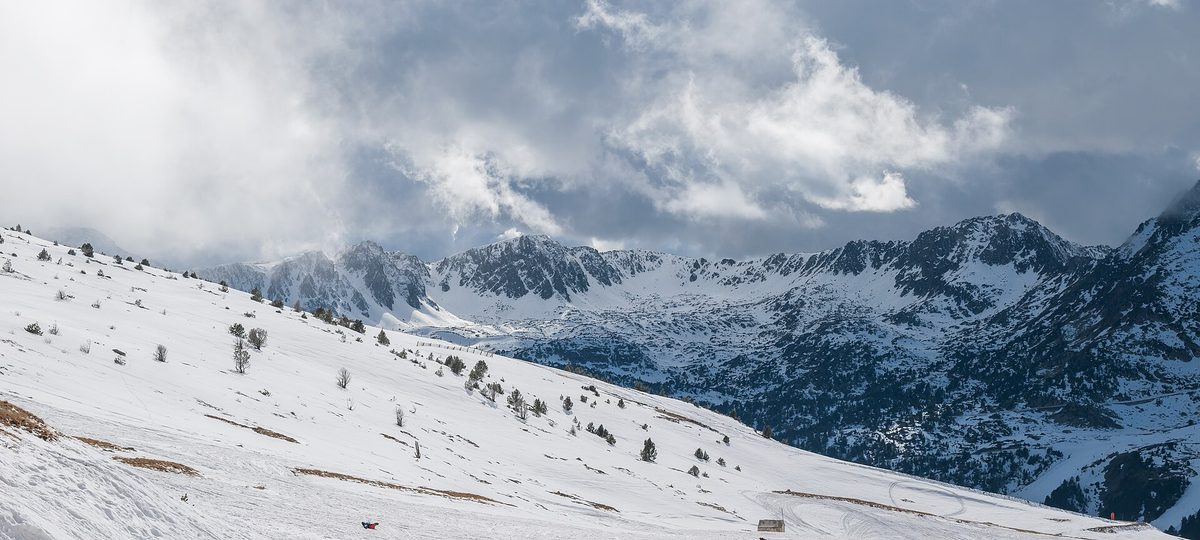
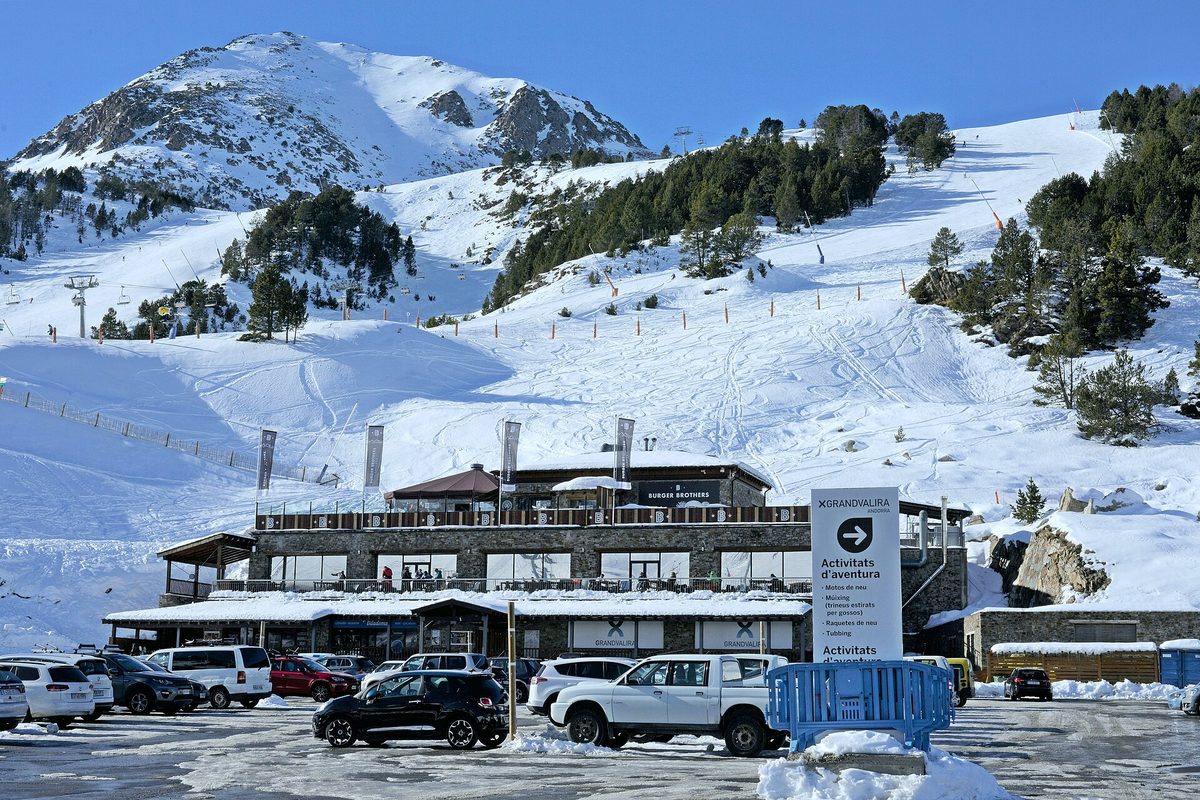
That vertical range produces two dependable seasons. In winter the big resorts plan to run from early December to early April, snow and weather permitting, helped by north-facing terrain and snowmaking that covers 66% of Grandvalira’s ski area. Summer brings warm valley afternoons (the averages are in the table below) and cooler air the higher you climb.
The transitions between those peaks — April-May and October-November — are where Andorra gets moody. May is the wettest month of the year in the valleys (around 90 mm on the long-term averages), April can’t decide whether it’s ski season or spring, and November is when the country audibly exhales and waits for snow, with the ski season not due to start until early December. None of this makes the shoulder months bad; it makes them specialist. More on that below.
One more structural thing worth knowing: Andorra’s crowds don’t arrive evenly. They arrive in pulses — Spanish and French school holidays, bank-holiday bridge weekends (the December puente around the 6th-8th is the most violent example), and ordinary Saturdays, when day-shoppers pour up from both sides of the border. Time your trip mid-week outside the holiday pulses and even February feels manageable; hit a puente blind and you’ll spend your holiday in a traffic queue wondering what people see in the place. Crowd timing matters more here than month choice, and I’ll flag the specific dates as we go.
Andorra weather by month: the numbers
These are long-term averages (1971-2000) from the Roc de Sant Pere weather station in Andorra la Vella, at 1,075 m, just above the capital’s 1,023 m. The ski areas and high trails (1,700-2,600 m) run noticeably colder, so check the forecast for the altitude you’ll actually be at, and expect any given day to swing hugely between frosty morning shade and t-shirt sunshine.
| Month | Day high / night low (valley) | Rain | Feels like |
|---|---|---|---|
| January | 6.9° / −2.5°C | 53.1 mm | Full winter in the valleys |
| February | 8.9° / −1.8°C | 37.9 mm | Driest month; midwinter on the slopes |
| March | 11.7° / −0.2°C | 40.5 mm | Spring skiing; longer afternoons |
| April | 13.3° / 1.7°C | 71.2 mm | Split personality; spring in the valleys, winter up high |
| May | 17.6° / 5.3°C | 89.8 mm | Green explosion, wettest month, snow patches on passes |
| June | 21.9° / 8.8°C | 84.2 mm | Early summer; high trails clearing, storms after lunch |
| July | 26° / 11°C | 61 mm | Warmest month; perfect mornings, build-up afternoons |
| August | 25° / 11°C | 86 mm | Warm and busy; thunderier than July |
| September | 21.4° / 8.5°C | 80.9 mm | Summer’s encore; golden light |
| October | 16.0° / 4.7°C | 72.4 mm | Crisp and colourful |
| November | 10.7° / 0.6°C | 68.4 mm | Grey transition; ski season not yet open |
| December | 7.5° / −1.4°C | 67.9 mm | Winter returns; resorts open early in the month |
Three notes the table can’t carry. First, rain in summer usually means a loud, brief afternoon thunderstorm, not a lost day — start hikes early and you’ll finish dry far more often than not. Second, a wet winter day in the valleys can mean fresh snow on the slopes above, so look at the mountain forecast before writing the day off. Third, daylight swings hard at this latitude: about 15 hours of it in late June against 9 in late December, which is why a March ski trip feels so much more generous than a December one at the same snow depth.
Andorra month by month: honest verdicts
January — the connoisseur’s ski month
Once the Christmas-to-Kings rush empties out after Epiphany on January 6 (Spain unwraps presents then, so the holiday runs long), Andorra settles into its best pure ski rhythm: cold snow, quieter slopes midweek, and hotel prices below the festive peak. Days are short and the cold at altitude is real — plan the first gondola, a long lunch, and an afternoon at Caldea’s thermal lagoons rather than heroics until 5 p.m. The winter sales also start in late December and run through January, so this is sneakily the best month to combine skiing with serious duty-free shopping. Avoid the third weekend onward if Spanish regional holidays align; otherwise, January midweek is as good as Andorran winter gets.
February — peak season, peak snowpack
Statistically the driest month in the capital’s long-term averages, and midwinter on the slopes — the trade-off is that the school holidays know it too. French winter holidays rotate through zones from mid-February to early March and they all own ski gear. Book accommodation months ahead, ski Sunday to Friday if you possibly can, and favour the quieter sectors (Ordino Arcalís over central Grandvalira) on Saturdays. Carnival week brings costumed silliness and ham-judging contests to the villages — Encamp’s is the famous one. If you want the postcard version of skiing in Andorra — blue sky, white mountains, properly cold air — February is a good bet for it.
March — long days, spring snow, smarter prices
My pick for most skiers, and I’ll defend it. By March the sun is high enough to make terrace lunches a daily event, and once the early-March French school wave recedes, prices and crowds both slide. Conditions turn freeze-thaw — firm in the morning, softening as the sun gets to work, how fast depending on the overnight freeze and the altitude — which rewards early starts and suits intermediates. Resorts run their spring events calendars and the apres scene is at its sunniest. The catch: south-facing lower runs get slushy late in the day by the back half of the month. Ride high, lunch low.
April — the gamble month
The 2025/26 season closed at Grandvalira and Pal Arinsal on April 6 and at Ordino Arcalís — colder, higher, north-facing — on April 12, which is about typical: the lifts generally spin into the first or second week of April. Easter timing decides whether closing weekend is a party or a ghost town. After the lifts stop, Andorra goes quiet in a way that surprises people: too much snow up high to hike, no skiing below, hotels cycling through deep-clean season. Late April is for shoppers, spa days and very good hotel deals — not for mountain ambitions. If your dates are fixed in April and you want snow, aim at the first week and buy lift passes only once the resorts confirm late-season operations.
May — green, wet, and strictly for the unhurried
The valleys detonate into green, waterfalls run at full throat on snowmelt, and the country is at its least visited outside November. It’s also statistically the wettest month, high trails are still snowbound, and a spa-centred trip with Caldea needs a date check on caldea.com first. Valley walks (the Rec del Solà balcony path above the capital, the lower Madriu mouth, Engolasters) are lovely and empty. May suits photographers, shoppers, and travellers who like having a country to themselves and don’t mind an afternoon shower schedule.
June — the mountains wake up
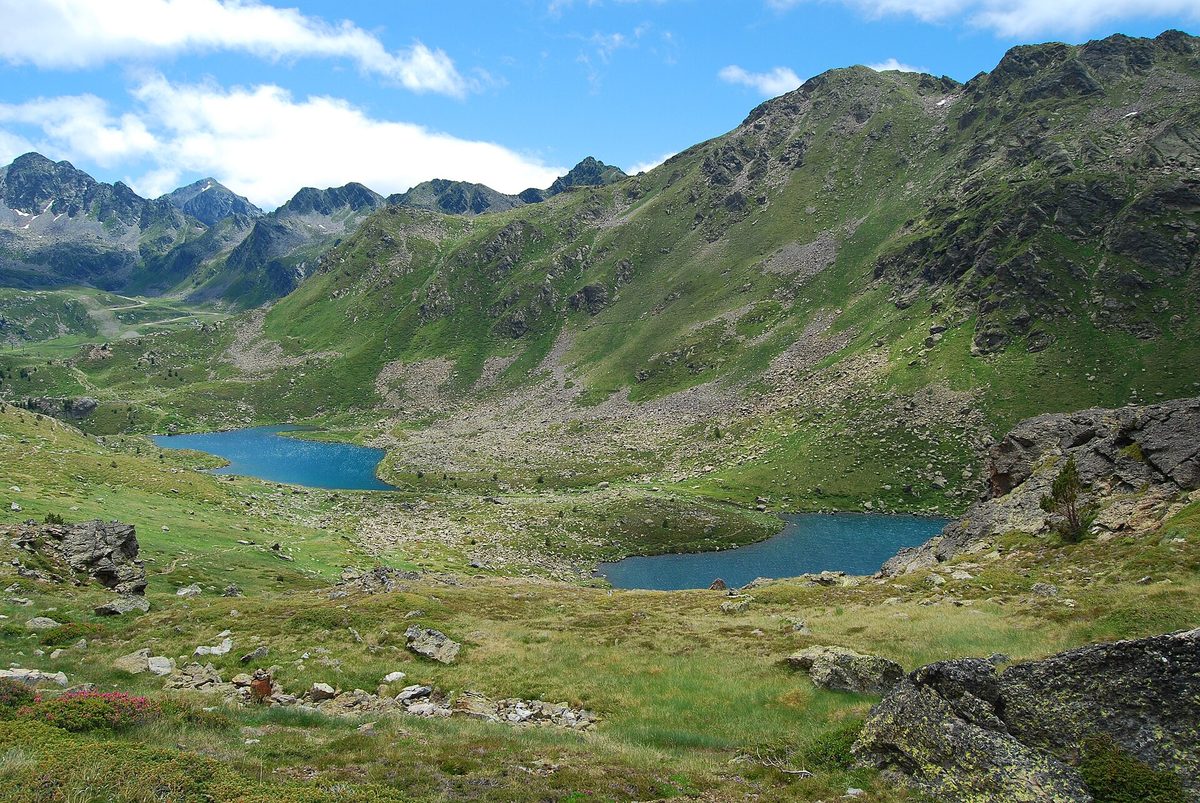
June is two months wearing one name. Early June is late spring: snow lingers on the high ground, some high loops still dicey, infrastructure yawning awake. By the solstice it’s summer: the Tristaina lakes circuit clears and mountain activity parks open for the season. Ordino hosts the Trail 100 Andorra by UTMB ultra-running festival in June; in 2027 its 105 km Ultra starts on Saturday 12 June, and the organiser’s site has the full programme. Then on June 23 comes the night that’s worth planning a whole trip around: the Falles de Sant Joan, when fire-swingers whirl flaming bundles through the streets to mark the solstice — a UNESCO-listed tradition shared with Catalonia and the French Pyrenees. Long days, fresh trails, pre-July prices: June quietly outperforms its reputation.
July — high summer, high energy
The warmest month and the one with the fullest diary. In 2026 it brought the Cirque du Soleil’s Andorra production, Ràdio Andorra, to central Andorra la Vella from July 3 to August 2, Tuesday to Sunday at 10 p.m.; any future run will be announced on Cirque du Soleil’s Andorra page. Lift-served attractions, via ferratas and bike parks are in full swing, though each lift keeps its own summer calendar, so check opening dates before you build a day around one, and keep an eye on the mountain forecast for afternoon thunderstorms. It’s busy, but July crowds in Andorra are river-valley busy, not Mediterranean-coast busy: book the popular bordas for dinner and you’ll still find solitude above 2,200 m by 9 a.m.
August — the Spanish month
Spain holidays en masse in August and a healthy share of it drives up the N-145. The first fortnight, around the August 15 bank holiday, is summer’s crowd peak: full car parks at trailhead honeypots and queues for the Tibetan bridge shuttle. The festa major round runs just before it: Escaldes-Engordany and Sant Julià in late July, then Andorra la Vella’s own city festival at the turn of the month (July 30 to August 3 in 2026), with each parish posting the next programme on its own site. The weather stays warm but turns thunderier than July. Strategy for August: sleep high (Soldeu, El Tarter, Arinsal, Ordino rather than the capital), start hikes at dawn, and treat the towns as evening entertainment. Or simply wait three weeks, because—
September — the insider’s answer
—September is the best month in Andorra, and it isn’t particularly close. The first three weeks deliver July’s weather with June’s crowds: stable high-pressure spells, trails dry and fully open, water still warm enough for the brave at the Tristaina lakes, and hotel rates 30-40% below August for the identical room. September 8 is Meritxell Day, the national holiday, when Andorrans walk in pilgrimage to the rebuilt sanctuary of their patron saint — a lovely, untouristed thing to witness. Mountain infrastructure begins winding down mid-month (summer lifts and shuttles taper after the second or third weekend), so front-load lift-dependent plans. If I could give a first-time summer visitor one instruction, it would be: take the first two weeks of September and thank me later.
October — golden valleys, closing doors
October is Andorra’s most beautiful month to look at — larch and birch turning the valleys gold and rust, light so crisp it looks colour-graded. It’s also when the summer machine switches off: high refuges empty, some summer attractions run their final weeks, so check each one’s own site, and weather windows shorten. Low-level hikes remain superb and the country is gloriously empty midweek. Pack for four seasons, check what’s still open before promising the kids anything specific, and bring the camera.
November — the honest dead zone
I’ll say what the brochures won’t: November is the weakest month to visit Andorra, and unless you’re coming specifically to shop, to soak, or to score the cheapest hotel rates of the year, I’d point you at another date. Many summer mountain attractions have closed for the season, trails sit in the freeze-rot gap between seasons, days are short and often grey, and the whole country is in pre-season mode — the ski resorts are doing lift maintenance, not serving lunch. The exceptions that make November work: Caldea is open (its spas keep separate calendars, so check caldea.com for your dates), the shopping is excellent (the capital usually runs a Shop in Andorra Festival early in the month), and from November 1 the winter-equipment rule kicks in for drivers, so at least you’ll be ready when the snow does arrive. Arcalís sometimes opens in the last days of November when early storms cooperate — it did on November 27 for 2025/26.
December — winter switches on
The main resorts traditionally open in the first week of December — Grandvalira, Pal Arinsal and Ordino Arcalís are scheduled to open on December 4 for 2026/27, snow and weather permitting — and the country flips from its quietest month to one of its loudest inside a fortnight. Three distinct Decembers exist: the early-month sweet spot (open pistes on early-season prices, with the violent exception of the Spanish puente bridge holiday around December 6-8, which fills the roads and hotels); the pre-Christmas lull (excellent value, snow permitting); and the festive fortnight from roughly December 20, when prices peak for the year and booking ahead is non-negotiable. The Poblet de Nadal Christmas village fills the capital’s Plaça del Poble through the festive season (Andorra la Vella’s Christmas pages carry the dates), and the winter sales start after Christmas — skiing by day and sale-price perfume by evening is a very Andorran double. Snow depth is the early-December gamble; snowmaking covers more than half of Grandvalira, so the product is reliable even when the sky isn’t generous.
When is Andorra cheapest? The price rhythm explained
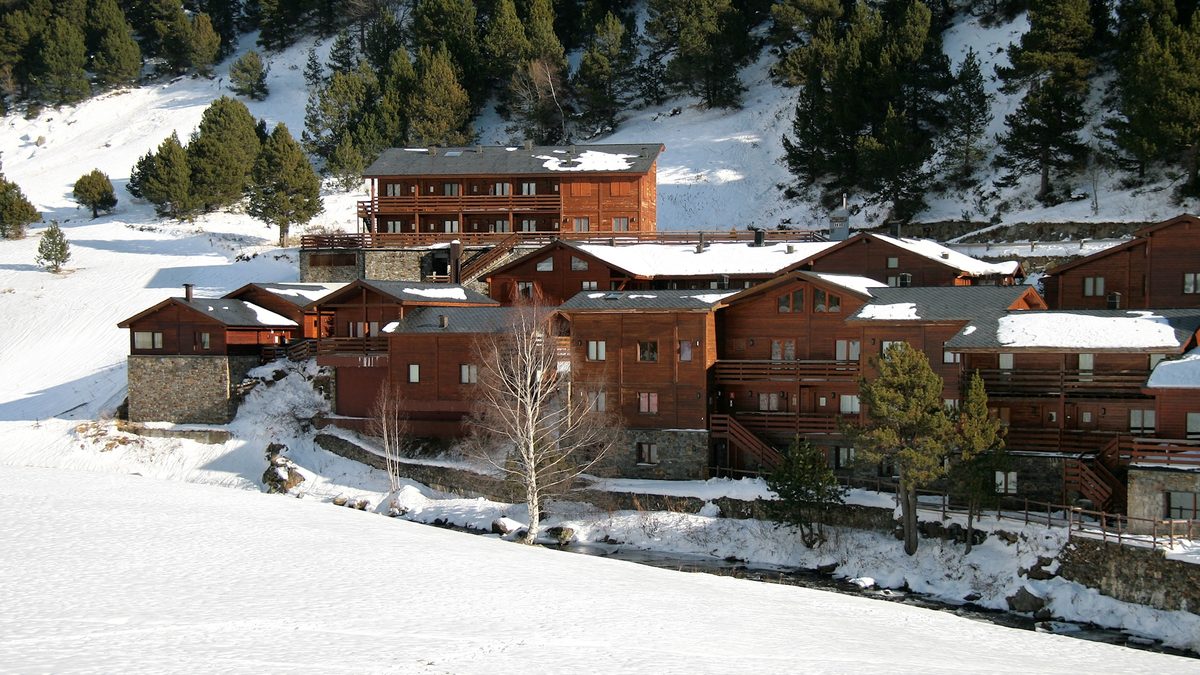
Andorra’s costs move to a beat you can dance around once you hear it. Accommodation is the big variable: the same three-star double that costs €70 in November runs €120-150 in February and can triple over New Year. Lift passes are dynamically priced — roughly €50-65 a day at Grandvalira in 2025/26 depending on date and how far ahead you buy — with the lows in early December and from late March. Food and fuel barely move seasonally, and duty-free shopping is a constant, sharpened twice a year by the winter sales after Christmas and the summer sales.
Stack those rhythms and you get the cheap calendar. Beds are usually at their cheapest from November to the first days of December (excluding the puente), but you’re buying a country in standby mode. The smartest cheap windows that still deliver the full product are early December before the 20th (skiing on opening-period prices), mid-January to early February midweek (full winter, post-festive rates), late March (spring skiing plus sliding prices), June before Sant Joan, and all of September. The expensive windows to plan around: the Christmas-to-Kings fortnight, the February-March French and Spanish school carousel, Easter week, and early-to-mid August.
Two budget levers people forget. First, midweek is a price season of its own — Andorran hotels price Friday and Saturday nights like a different country, and ski-pass dynamic pricing leans the same way. Second, how you arrive matters: the bus from Barcelona costs about €33-35 each way year-round (the full arithmetic is in our guide to getting to Andorra), while winter car hire means budgeting for the mandatory cold-weather kit — more on the law below.
When to avoid Andorra (or at least brace yourself)
Every date on this list is survivable with booking discipline; none of them is when I’d schedule a first impression.
- The December puente (around the 6th-8th). Spain’s Constitution Day and Immaculate Conception holidays bridge into the year’s single most concentrated invasion. Shops heave, the N-145 crawls, hotels charge February prices for early-season skiing. The dates shift with the calendar — in 2026 the 6th and 8th fall Sunday and Tuesday, making a four-day monster bridge. If you’re already in the country it’s lively fun; arriving or leaving through it is misery.
- New Year week. New Year is among the priciest weeks of the Andorran year. Beautiful, festive, and best left to people who’ve made peace with the invoice.
- Saturdays in February and early March. Changeover day for ski weeks plus day-tripper peak. The lift system absorbs it better than you’d fear; the road network doesn’t. Ski Sunday-to-Friday instead.
- Mid-August. The Spanish holiday crescendo around Assumption Day. The high trails stay calm; everything with a car park does not.
- Sunday evenings, year-round, leaving toward Spain. The border post at the Riu Runer can queue for an hour-plus as the weekend exodus meets customs checks. Leave before 3 p.m. or after 9 p.m., or exit via France — all three road doors are compared in our complete arrival guide.
- Late October to early December, for mountain plans. Not crowded — the opposite. It’s the gap when neither summer nor winter Andorra is actually operating. Know what you’re buying: shopping, spa, silence.
Andorra events calendar 2026: what’s actually worth planning around
| Dates | Event | Why it matters |
|---|---|---|
| Through April 4, 2027 | Ski season close (Grandvalira, Pal Arinsal & Ordino Arcalís) | Last lifts of 2026/27, snow and weather permitting; spring-skiing deals in the final weeks |
| April 23 | Sant Jordi | Books and roses — the Catalan Valentine’s, celebrated wholeheartedly here; the capital’s fair was in Plaça del Poble in 2026, and Andorra la Vella’s events agenda has the next one |
| June 12, 2027 (Ultra 105 km start) | Trail 100 Andorra by UTMB, Ordino | World-class ultra-trail festival; full programme on the organiser’s site |
| June 23 | Falles de Sant Joan | UNESCO-listed solstice fire-swinging in the old quarters; Andorra’s most photogenic night |
| Late July – early August | Festa major season (Escaldes-Engordany around Sant Jaume, July 25; Andorra la Vella at the turn of the month) | Free concerts, street dinners, correfocs; towns at their most local. Check each parish’s programme for the dates |
| September 8 | Mare de Déu de Meritxell (national day) | Pilgrimage to the national sanctuary; a public holiday, so check shop hours before planning a shopping day |
| Late October – early November | Shop in Andorra Festival, Andorra la Vella (dates confirm in autumn) | The capital turns retail into a festival during the quietest month |
| December 4 | Ski season opening (Grandvalira, Pal Arinsal & Ordino Arcalís) | Scheduled start of the 2026/27 season, snow and weather permitting |
| Christmas season | Poblet de Nadal, Andorra la Vella | Christmas village on Plaça del Poble; dates and programme on the town’s Christmas pages |
| After Christmas | Winter sales begin | Duty-free prices drop further; a busy fortnight for the capital’s shops |
A planning note on the headliner. Falles night (June 23) is worth building a June trip around — it’s real, and it happens whether tourists show up or not. Confirm the details on visitandorra.com, which keeps the most reliable consolidated calendar.
The shoulder seasons nobody markets (and how to play them)
Tourist boards sell peaks; the shoulders you have to figure out yourself. Here’s the field guide. Late April to May is the green shoulder: the country at its emptiest and cheapest while still being beautiful, with the snowline retreating uphill a hundred metres a week. The play is a valley-based trip — capital, museums, Romanesque churches, low balcony trails, long lunches — with zero high-mountain ambition. Check caldea.com for the spa’s dates, and know that some mountain restaurants and family attractions simply don’t reopen until June. What you get in exchange: hotel rates 40-50% off winter, waterfalls at maximum violence, and wildflower meadows that August visitors never see.
Late September to October is the gold shoulder, and it’s the better of the two. The weather holds more reliably than spring (autumn high-pressure spells in the Pyrenees can run a week at a stretch), every town is still fully staffed, and the larch turn paints the Ordino and Incles valleys in colours that don’t look real. Trails stay open in the practical sense — no lifts, and conditions up high vary from year to year, so check the mountain forecast before committing to a big route. It’s also wild-mushroom season, which Andorrans take seriously enough that good restaurants build menus around ceps and rovellons. The play: base in Ordino or La Massana, hike valley-to-mid-mountain routes, eat ambitiously, and have a flexible bad-weather day for Caldea or the museums.
The week the lifts close in April deserves its own mention as the year’s strangest micro-season. Hotels that charged €150 on Saturday can be down to €65 by Wednesday, the spring sun is glorious, and there is almost nothing organised to do. I’ve come to like it — it’s the one week the country belongs entirely to the people who live there — but recommend it only to travellers who can build a holiday out of a thermal spa, a duty-free wine cellar and a stack of books. Everyone else: aim either side.
The two big seasons, briefly weighed
Winter (December – early April): what you’re signing up for
You’re signing up for one of Europe’s best-value serious ski products: 308 km of pistes across Grandvalira, Pal Arinsal and Ordino Arcalís, strong ski schools, and infrastructure that embarrasses resorts charging half again as much. The 2026/27 season is scheduled from December 4 to April 4 at all three areas, snow and weather permitting, and the snowmaking network helps fill the gaps between snowfalls. The full resort-by-resort breakdown — which base town suits which skier, costs, passes, the Ikon Pass angle — lives in our complete guide to skiing in Andorra.
Two winter realities to plan around. Driving: from November 1 to May 15 Andorran law requires every vehicle to run winter or M+S tyres, or carry chains or approved textile socks for the drive wheels — checks happen, fines run roughly €180-500, and insurers can refuse claims if you crash without compliant kit. Rental cars from Spanish airports don’t automatically include it; ask. And altitude cold: the gap between a 1,023 m valley afternoon and a 2,500 m ridge in wind is the difference between a fleece and full battle dress. Pack for the mountain you’re standing on, not the forecast for the capital.
Summer (mid-June – mid-September): the quiet overachiever
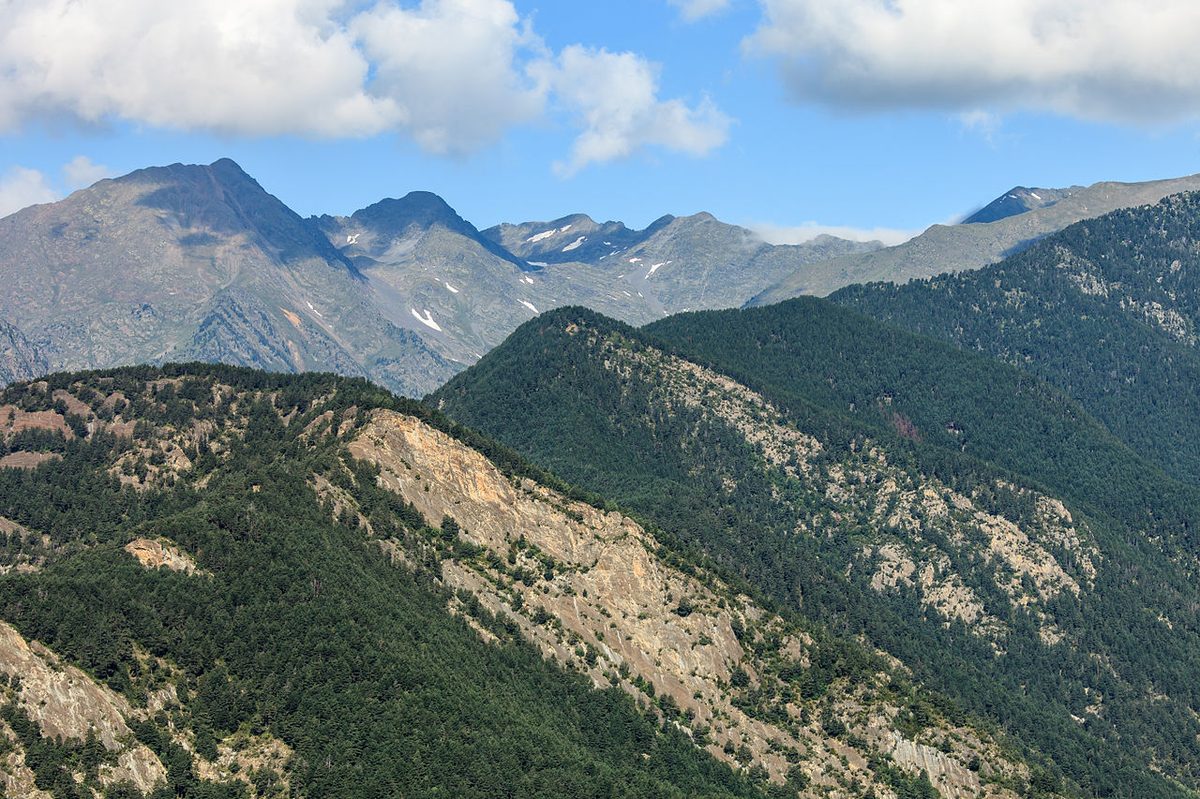
Summer Andorra still feels like a secret in a way winter Andorra hasn’t for decades. The same lift companies turn their gondolas over to hikers and downhill bikes, the Madriu-Perafita-Claror valley — a UNESCO World Heritage cultural landscape covering a tenth of the country, reachable only on foot — offers genuine wilderness an hour’s walk from a parliament building, and via ferrata routes add a vertical option. Warm valley days mean you hike in comfort and sleep without air conditioning. The full menu — Tristaina lakes, the Tibetan bridge, Coma Pedrosa, Caldea, the bike parks — is laid out in our guide to things to do in Andorra.
The honest caveats: afternoon thunderstorms are common in August (start early, summit by noon), the famous spots a short walk from a car park get busy in ways the deeper country never does, and a few headline attractions are bus-access-only precisely to manage those crowds. None of it dents the central fact that June-to-September Andorra delivers Alpine-quality mountain summer at Pyrenean prices.
Best time to visit Andorra by traveller type
- Committed skiers and snowboarders: mid-January to mid-March, midweek, for midwinter conditions; check the resorts’ snow and open-lift reports before you book. Early December and late March if budget leads; February half-term only if you must.
- Beginners learning to ski: March. Gentler weather, long daylight, soft afternoon snow that forgives, post-peak pricing on lessons and gear.
- Hikers: late June to late September. For the high classics (Coma Pedrosa, the Juclar and Tristaina lake cirques), July-September is safest; for valley walking, May and October are underrated.
- Families with school-age kids: you’re locked to holidays, so play the edges — early July beats August for space, the first week of January beats Christmas week for price, and Easter delivers spring skiing if it falls early enough.
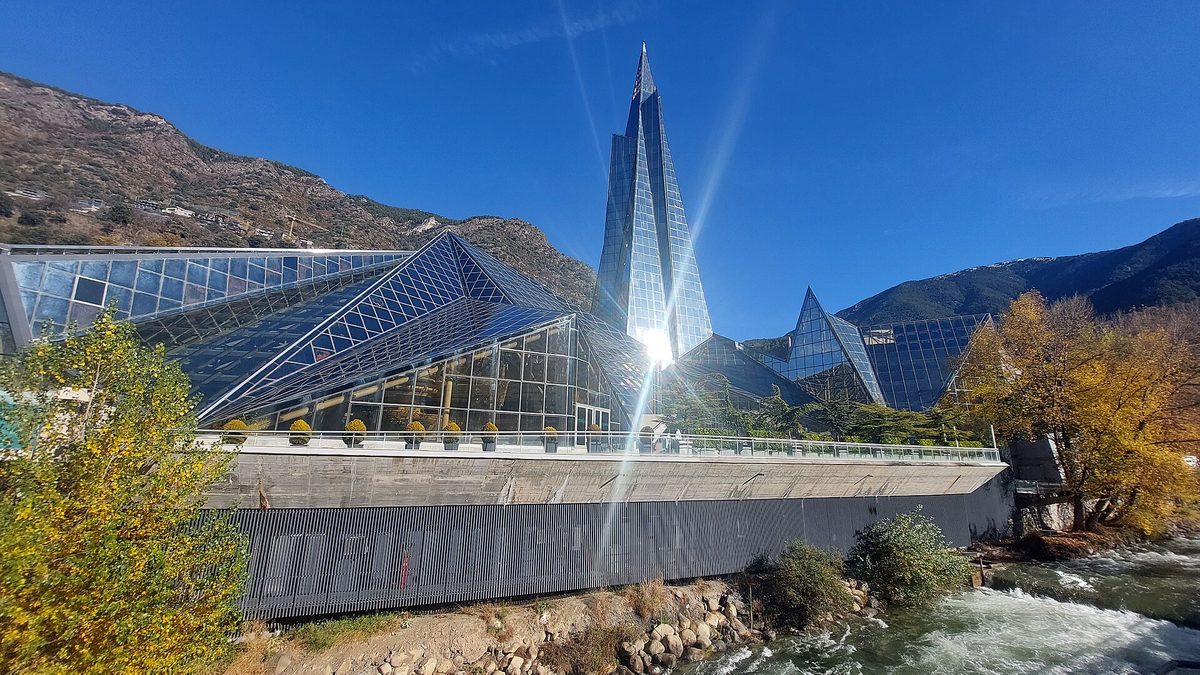
- Spa-and-shopping weekenders: any month, midweek — confirm dates on caldea.com. Cold months make the thermal lagoons better; January adds the sales.
- Photographers: October for colour, February for alpine white, June 23 for fire. The losing months are few.
- Trail runners and cyclists: June for the UTMB festival and fresh legs on the passes; September for stable weather and empty roads. July if you want to combine with Tour de France fever across the border.
- Budget travellers, any purpose: September if you want the country switched on; November if you only need a cheap, quiet base with a spa and tax-free shopping.
So when would I actually go?
If you ski: the first two weeks of March. You trade January’s colder, drier snow for sunshine you can feel, terrace lunches, and a country relaxing after its peak — with the lifts still running for weeks afterwards. If you don’t ski: September 1-20, no hesitation. It’s the rare travel answer where the best weather, the best prices and the smallest crowds all point at the same dates. And if you can engineer only one single day in Andorra all year, make it June 23 — stand in the old town after dark while the fire-swingers come down from the mountain, and you’ll understand more about this country in an hour than a week of shopping would teach you.
Best time to visit Andorra: FAQ
What is the cheapest time of year to visit Andorra?
November to early December (excluding the puente bridge weekend) has the year’s lowest hotel rates, but the mountains are largely shut. The cheapest windows with the country fully operating are early December before the 20th, mid-January to early February midweek, late March, and September. New Year week is the most expensive of all.
What is the best month for skiing in Andorra?
February has the statistical edge on snow depth and dryness; March offers nearly the same base with longer days, warmer terraces and lower prices once the school holidays clear. January is the connoisseur’s pick for cold, quiet midweek pistes. The season typically runs early December to the first week of April — our skiing in Andorra guide breaks down conditions month by month.
Is Andorra worth visiting in summer?
Emphatically. June through September brings warm valley days, marked hiking routes from gentle lake loops to 2,942 m Coma Pedrosa, lift-served bike parks, via ferratas, and prices well below the winter peak. September is the single best month of the Andorran year.
When does it snow in Andorra?
The first snow reaches the high ground in autumn, and the ski areas plan to run from early December into early April, conditions permitting. Down in the valleys, snow cover comes and goes even in midwinter; on the slopes, snow cannons cover 66% of Grandvalira’s skiable surface to back up what falls.
Is Andorra cold in summer?
Valley afternoons in July and August are usually pleasantly warm, though hot spells do happen, and nights cool off. Higher up it’s noticeably cooler, with real wind-chill; carry a layer and a shell even on blue days, because afternoon storms build fast, and read the mountain forecast rather than the town’s.
How many days do you need in Andorra?
A long weekend covers the capital, Caldea and one mountain day; four to five days does justice to either a ski trip or a summer hiking base; a full week lets you mix valleys, add a via ferrata or the Madriu, and still shop on the way out. Day trips from Barcelona exist but spend six hours of the day on a bus.
Is Andorra crowded in August?
The first fortnight is the summer peak — Spanish holidays plus festa major season — so expect full trailhead car parks and lively towns, especially around August 15. It rarely feels oppressive away from the honeypots: start hikes by 8 a.m., sleep in the higher villages, and the high country stays calm. Late August quiets noticeably.
What is the rainiest month in Andorra?
May, with about 90 mm in the long-term averages in the table above, followed by August at about 86 mm and its thunderstorms. Winter is the dry half of the year — February averages just 38 mm — though what falls up high falls as snow. Summer rain arrives mostly as brief, loud afternoon storms rather than washed-out days.
Is anything closed if I visit in the off-season?
In November and from mid-April to May, most lift-served attractions and high refuges are shut, though Roc del Quer stays open through the winter, weather permitting. Caldea’s zones keep their own calendars, so check caldea.com for your dates. Most shops, restaurants and hotels in the main towns stay open year-round — the towns keep going; the mountains wind down.
Whatever month you land on, most trips revolve around the capital — see my full guide to Andorra la Vella for where to stay, eat and start exploring.
Best Time to Visit & Weather: the in-depth guides
Each month and season has its own detailed guide:
- Andorra in Winter — Snow, Skis and Thermal Steam
- Andorra in Summer — The Pyrenees’ Best-Kept Hiking Secret
- Andorra in December — Season Opening, Markets and Early Powder
- Andorra in January — The Coldest, Most Reliable Snow Month
- Andorra in August — Peak Summer in the High Pyrenees
- Andorra in Spring — Slush Skiing, Waterfalls and Empty Trails
- Andorra in March — Spring Skiing at Its Best
- Andorra in Autumn — Golden Valleys and the Quiet Season
- When Does It Snow in Andorra? Snowfall Patterns Explained
Related Andorra travel guides
Keep planning your trip with my other in-depth Andorra guides — including Andorran food, a day-by-day itinerary, practical travel tips, and the history of Andorra.
Photo credits
All images via Wikimedia Commons: Grandvalira ski area by Alberto-g-rovi (CC BY 3.0); Tristaina lakes by Sprok (CC BY-SA 3.0); Caldea by FrankAndProust (CC0); Vall d’Incles chalets by Jorge Franganillo (CC BY 3.0); Coll d’Ordino view by Luis Miguel Bugallo Sánchez (CC BY-SA 3.0).

2 comments
Comments are closed.