Author: andorratourism_rtgky9

  • Andorra Travel Tips: 25 Things to Know Before You Go

    Andorra Travel Tips: 25 Things to Know Before You Go

    The most useful Andorra travel tips all come down to one idea: this is a country that looks familiar and isn’t. Andorra sits between Spain and France, uses the euro and speaks a language close to Spanish — yet it’s not in the EU, not in the Schengen area, has no airport and no train, charges full roaming on your phone, and makes winter tyres the law. Get those quirks right and the rest is gloriously easy.

    I’ve been coming here for years, by bus from Barcelona with a hangover, by hire car over the Envalira pass in a blizzard, and once memorably by motorbike in a hailstorm I’d been warned about and ignored. In that time I’ve watched clever, well-travelled people make the same handful of mistakes again and again — not because Andorra is hard, but because it breaks the rules they’ve learned everywhere else in Europe. Their phone bill detonates. They’re turned back at the border in November for missing chains. They blow their duty-free allowance on the way out and get a quiet talking-to by a customs officer at the Spanish line.

    So this is the page I wish those people had read first. Not a list of sights — I’ve got other guides for that — but the practical, slightly unglamorous stuff that decides whether your trip runs smoothly: paperwork, money, phones, driving, altitude, health and the small cultural settings that are different here. Everything below is verified against official Andorran sources this month, because half the advice floating around the internet is years out of date, and in a place changing as fast as Andorra’s border arrangements in 2026, stale is the same as wrong.

    Last updated: June 2026. Prices, allowances, fines and emergency numbers were re-checked against visitandorra.com, Andorra Telecom and government sources in June 2026. One thing in genuine flux: the EU’s new Entry/Exit System (EES) and the rollout of ETIAS are reshaping how Andorra’s de facto border with Spain and France works through 2026 — I flag exactly what’s settled and what isn’t in the paperwork section.

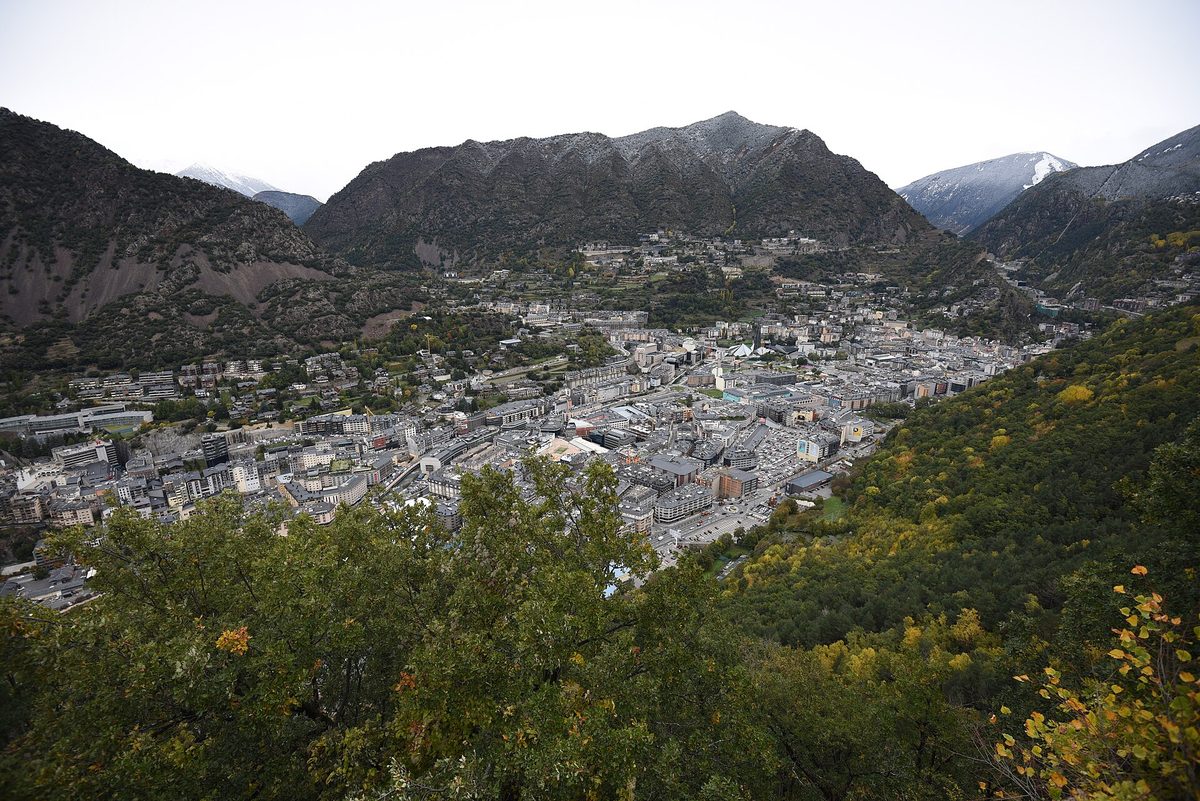
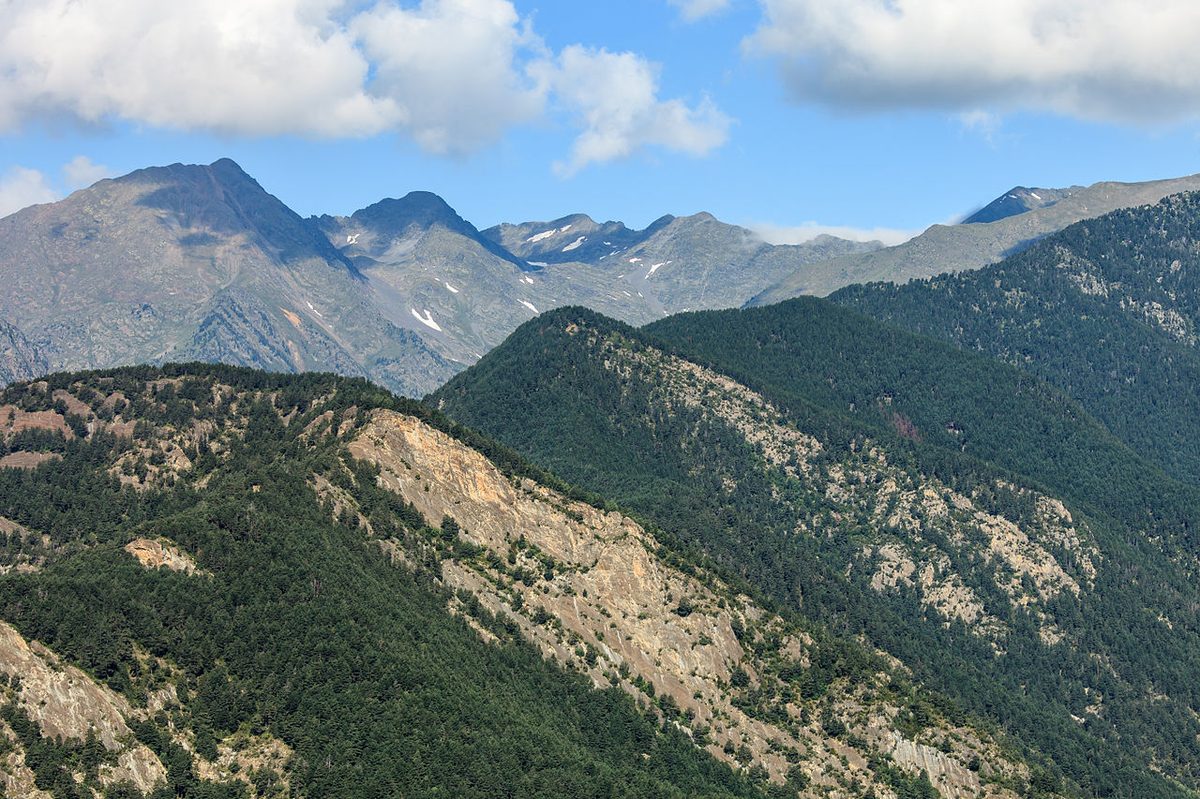
    Andorra travel tips: the capital Andorra la Vella in its high mountain valley

    Andorra at a glance: the cheat sheet

    If you read nothing else, read this. Everything in the table gets unpacked and defended further down the page.

    The thing people get wrong What’s actually true
    EU status In Europe, but not in the European Union and not in Schengen — you arrive through Spain or France with a passport or national ID card
    Currency The euro, despite the non-EU status (Andorra even mints its own euro coins)
    Language Catalan is the only official language; Spanish, French, Portuguese and English are widely understood
    Getting there No airport, no railway anywhere in the country: roughly 3 hours by bus or car from Barcelona, 2.5–3 hours from Toulouse
    Your phone One operator (Andorra Telecom); the EU’s “roam like at home” does not apply, so foreign roaming is expensive or simply blocked
    Driving Drive on the right; winter tyres or chains are mandatory 1 November–15 May; no motorways, 90 km/h top limit; fuel is cheap
    Altitude The capital sits at 1,023 m — the highest in Europe; resorts and villages climb past 2,000 m
    Why it’s cheap Sales tax (IGI) is just 4.5%, which is why alcohol, tobacco, perfume, fuel, cosmetics and electronics undercut Spain and France
    Tourist tax A small overnight tax of about €1–€3 per person per night applies — modest, but real
    Health cover EHIC/GHIC are not valid here; take proper travel insurance. Emergencies: dial 112, free, from any phone
    Safety One of the safest countries in Europe — crime is genuinely rare
    When to go Ski December–March; hike June–September; spring and autumn are the quiet, cheaper shoulders

    The status confusion: in Europe, not in the EU, and somehow on the euro

    Almost every Andorra misunderstanding traces back to one fact people can’t quite hold in their heads: Andorra is not a member of the European Union, and not part of the Schengen area — yet it’s wrapped entirely inside both, landlocked by two EU-and-Schengen countries, and it runs on the euro. That contradiction is the source of the roaming bills, the customs limits, the insurance gap and the multiple-entry-visa headaches further down this page. So it’s worth getting straight first.

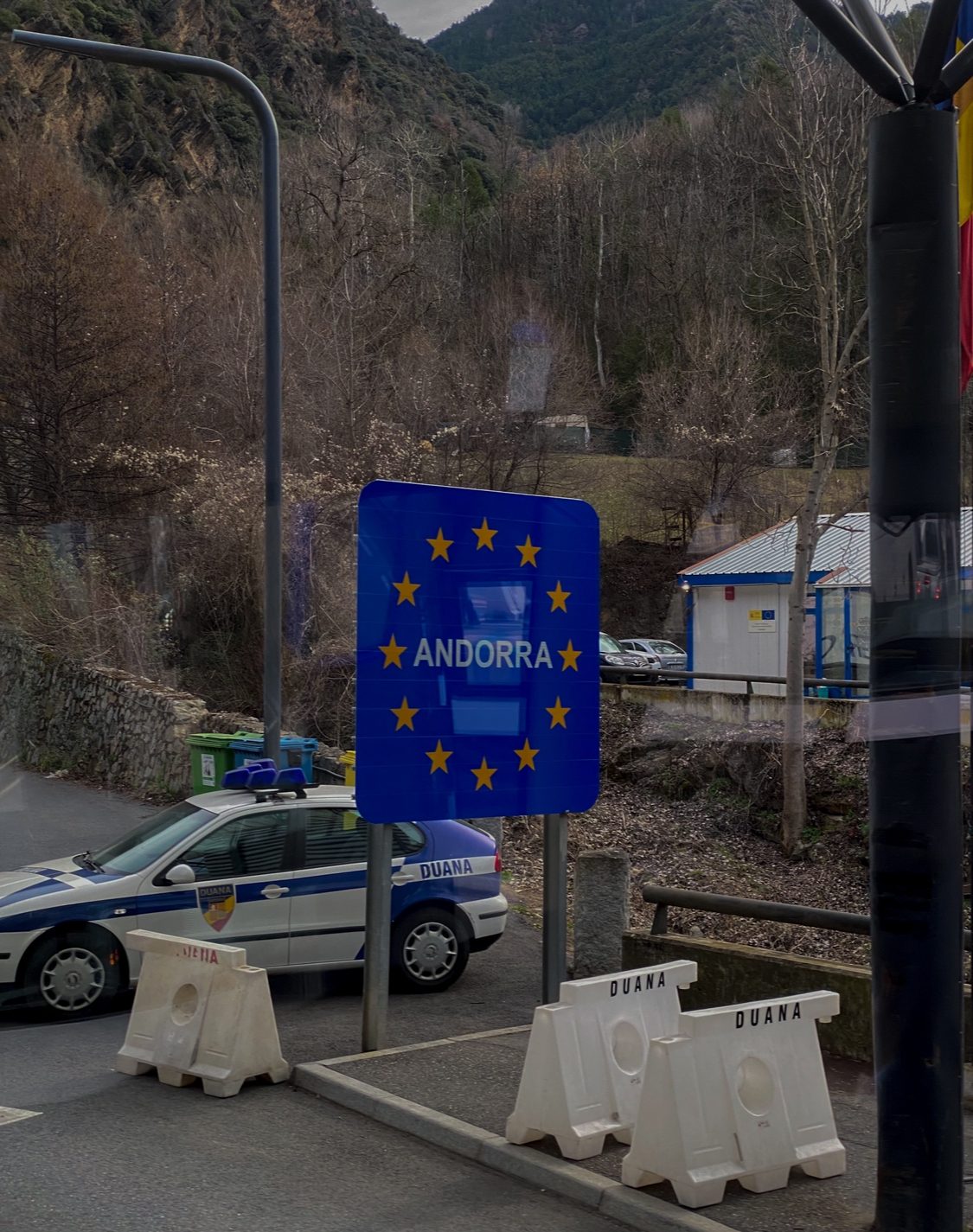
    Here’s how it actually works on the ground. Andorra has long-standing transit agreements with France and Spain, which means that in practice you don’t pass through a hard international frontier the way you would entering, say, Switzerland from outside. There’s a customs post, there are random checks, but arriving from Spain or France you’ll usually roll straight through. To enter or leave, EU citizens need only a valid national ID card or passport; everyone else needs a passport. That’s the official line from Andorra’s own tourism board, and it matches my experience of a dozen crossings.

    The trap is for travellers who need a visa to be in Europe at all. Because Andorra technically sits outside Schengen, but you can only reach it by crossing through Schengen (Spain or France), a non-EU visitor who requires a Schengen visa must hold a multiple-entry one. You use it to enter Spain or France, you “leave” Schengen into Andorra, then you re-enter Schengen to fly home — and a single-entry visa is spent the moment you first cross. People have been refused at the Spanish border on exactly this technicality. If you need a Schengen visa, make it a two- or multiple-entry, and don’t improvise.

    The maximum tourist stay is 90 days, which is plenty for any normal visit. And 2026 has added a live complication worth knowing about: the EU’s new Entry/Exit System (EES) began rolling out this spring, with the ETIAS travel authorisation following behind it. The agreed position is that EES and ETIAS will not be run at Andorra’s own borders — but the external Schengen checks where you actually arrive (Barcelona airport, Toulouse, the French and Spanish road borders) are another matter, and the fine print is still being ratified as I write this. The short version for a 2026 visitor: nothing extra is required to enter Andorra itself, but your Spain/France arrival may now involve the new biometric processing, and if you’re a non-EU traveller, check ETIAS rules for your Schengen leg before you fly. For the route logistics in full — which border, which bus, which approach — see my guide on how to get to Andorra.

    One last bit of trivia that explains a lot about the place: Andorra is a co-principality, jointly headed by two princes who are the President of France and the Bishop of Urgell in Spain. It’s been governed this way, more or less, since 1278. You don’t need to know that to visit, but it’s a neat shorthand for why the country feels split down the middle between French and Catalan worlds — and why nothing about its relationship with Europe is ever quite simple.

    Getting in and out of a country with no airport

    Andorra is one of a tiny club of nations with no commercial airport and no railway station of any kind. You arrive by road, full stop, and that single fact reshapes your whole trip — including how much of day one you’ll actually spend travelling. I have a dedicated getting-to-Andorra guide with every operator and fare, but here’s the orientation you need before you book.

    The two gateways are Barcelona and Toulouse. Barcelona is the workhorse: bigger airport, far more flights, direct coaches from both El Prat airport and Sants station that take roughly three hours up to Andorra la Vella. Toulouse is closer on paper (about two and a half to three hours) and often quieter, with its own coach links, but fewer long-haul connections. From either, expect to pay somewhere around €30–45 each way for a scheduled coach; book ahead, because in ski season and on summer weekends the buses genuinely sell out.

    If you’d rather drive, a hire car gives you the villages and the high passes but commits you to mountain roads, winter-tyre law (see below) and the reality that Andorra’s entire road network is essentially a Y of valleys — when it’s busy, everyone is on the same two roads as you. Day-trippers from Barcelona do exist, and the coach timetables support a long single day, but you’ll spend six hours of it in transit for a few hours on the ground. My honest take: Andorra rewards at least one overnight. The mountains look completely different at 7am and 9pm than they do at midday with the day-trip coaches in town.

    The part nobody mentions until it bites them is the way out. Because you’re crossing back into the EU’s customs territory, there are limits on how much of Andorra’s cheap alcohol, tobacco and perfume you can carry across, and the border guards do run random checks — more on the exact allowances in the money section. Build a little buffer into your departure for a possible queue or check at the Spanish or French line, especially on a Sunday evening when half of Catalonia is driving home with a boot full of bargains.

    Money: the euro, a 4.5% tax, and what’s actually cheaper

    Andorra uses the euro. You don’t need to change money, your cards work as they do across the continent, and ATMs are everywhere in the towns. (One reflex worth keeping: when an Andorran ATM or card machine offers to charge you “in your home currency,” always decline and choose euros — that “dynamic currency conversion” quietly bakes in a worse exchange rate than your own bank’s.) Contactless is universal in shops and restaurants; carry a little cash mainly for the smallest cafés, mountain refuges and the flat-fare buses.

    The reason Andorra has a reputation as a shopping destination comes down to one number: its general sales tax, called IGI, is just 4.5%. Compare that with 21% in Spain and 20% in France and you can see why the borders fill with cars at the weekend. That tax gap is real, but it’s selective, and this is where I’ll save you some disappointment: Andorra is not uniformly cheap. The genuine bargains are in alcohol, tobacco, perfume and cosmetics, fuel, and a lot of electronics and sports gear — categories where the tax difference and bulk buying actually move the needle. Restaurants, groceries and hotels, meanwhile, sit at roughly normal Spanish prices; nobody comes here to save money on lunch. If you want the strategy for what’s worth buying, where the real shops are versus the tourist tat, and how the savings stack up, that’s the whole subject of my guide to shopping in Andorra.

    Two money details that catch people out. First, tipping is modest and optional — service is usually included, and locals leave a little loose change or round up, maybe 5–10% for genuinely good restaurant service. You will not be chased down the street for failing to tip 20%; this isn’t that. Second, and contrary to a lot of blog posts that breezily claim Andorra has “no taxes at all,” there is a small tourist stay tax on accommodation — roughly €1 to €3 per person per night depending on the category of your hotel (campsites at the low end, five-stars at the top), typically charged for up to seven nights, with under-16s exempt. It’s a couple of euros, not a dealbreaker, but it’ll appear on your bill and it’s better not to be surprised by it.

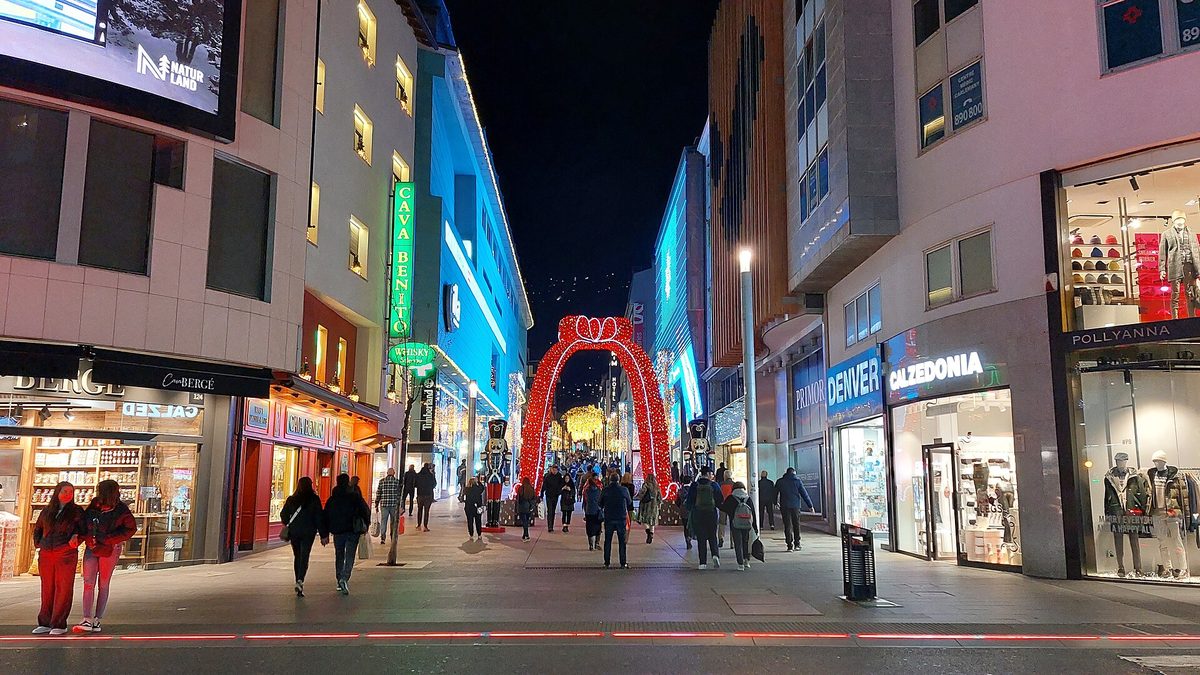
    Shoppers on Avinguda Meritxell, the main retail street in Andorra la Vella

    And then the duty-free allowances, which matter precisely because Andorra is outside the EU customs union. When you cross back into Spain or France, you may only bring a set quantity of goods per person without declaring them and paying duty. These are the current per-adult limits, and they are not poolable — you can’t combine a non-drinker’s alcohol allowance with your own:

    What you’re carrying out Allowance per adult (17+)
    Cigarettes 300 (one and a half cartons)
    Spirits over 22% 1.5 litres
    Wine 5 litres
    Beer 12 litres
    Perfume / eau de toilette 50 ml perfume + 250 ml eau de toilette
    Everything else, by value €900 per adult (€450 for under-15s)

    Go over, and at best you declare and pay; at worst, on a bad day with a thorough officer, you’re unpicking your shopping at the roadside. Most people never get checked — but “most” is doing a lot of work in that sentence, and the fine for a boot full of undeclared cigarettes is not worth the saving.

    Your phone will betray you: the roaming trap

    This is the single most expensive mistake first-timers make, and it’s entirely avoidable. Andorra is not in the EU, so the “roam like at home” rules that let your European SIM work for free across the continent do not apply here. The country has exactly one mobile operator, Andorra Telecom, and your foreign network either charges eye-watering roaming rates to use it — figures around €15 a day, or several euros per megabyte, get quoted — or doesn’t cover Andorra at all and simply drops you to no service. Either way, the phone you’ve relied on all over Spain stops being free the instant you cross the border.

    People discover this in three classic ways: a maps app that silently burns roaming data while you drive, a “welcome to Andorra” text quoting a tariff that makes your stomach drop, or — almost worse — no signal at all just when you need directions to your hotel. So sort it before you arrive, not after. Your options, in the order I’d pick them:

    • Buy an Andorra Telecom eSIM or prepaid SIM. If your phone takes an eSIM you can buy and activate one online before you even arrive, without being an existing customer. The current prepaid data plans are straightforward: an S rate at €10 for 3 GB and an M rate at €20 for 12 GB, both with some local calls and texts. For a few days’ trip that’s all most people need.
    • Check — properly — what your own plan does in Andorra. A minority of operators do include it, or sell a cheap bolt-on. Read the actual terms; “Europe” on a tariff sheet very often excludes Andorra specifically.
    • Lean on wifi and offline maps. Hotels, cafés and many restaurants have free wifi, and downloading your maps and key bookings for offline use before you cross the border costs nothing. If you’re a light user, airplane mode plus wifi is a perfectly good plan.

    Two numbers to save regardless: Andorra’s country code is +376 (there are no area codes; local numbers are six digits), and the European emergency line 112 is free and works from any phone, even one with no Andorran SIM and no credit. More on the other emergency numbers below.

    Driving in Andorra: cheap fuel, mandatory winter kit, and no motorways

    Driving here is genuinely lovely most of the year and genuinely consequential to get wrong in winter, so this section earns its length. The basics first: you drive on the right, the minimum driving age is 18, the blood-alcohol limit is a strict 0.05%, and there are no motorways anywhere in the country — the speed limit tops out at 90 km/h and is well signposted, dropping sharply through towns. The road network is a spine of “CG” general roads following the valleys, which means scenery on every journey and, on busy days, the entire country queueing on the same tarmac.

    Now the rule that turns travellers back at the border: from 1 November to 15 May, your vehicle must carry winter equipment — either proper winter tyres (look for the 3PMSF snowflake marking) or a set of snow chains (or textile snow socks) for at least the two drive wheels. This isn’t advisory. Andorran police can and do stop cars in poor weather, refuse onward travel to anyone unequipped, and issue on-the-spot fines in the region of €180. If you’re in a hire car, confirm before you collect it whether winter tyres are fitted or chains are in the boot; if not, chains are sold at petrol stations and supermarkets near the border and in the valleys. Visit Andorra’s own advice is blunt: in winter it is mandatory to carry chains. Treat it as non-negotiable and you’ll never think about it again.
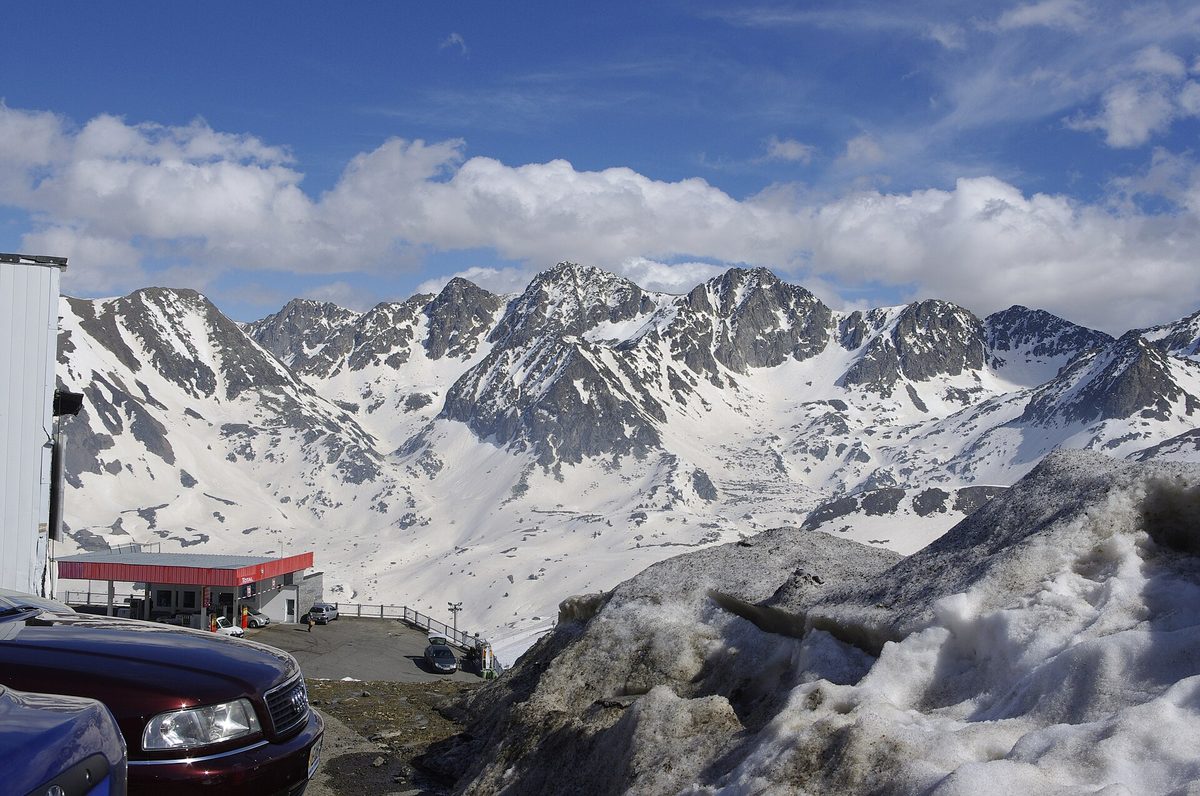
    The high Port d'Envalira pass in Andorra, snow-covered in winter

    The upside of bringing a car is the fuel. Andorra’s low taxes make petrol and diesel noticeably cheaper than across either border — in spring 2026, unleaded 95 was running around €1.34 a litre and 98 about €1.37, which is why you’ll see French and Spanish plates queueing at the stations nearest the frontier to fill up on the way out. If you’re driving in anyway, top up here rather than back home.

    A few honest warnings from experience. The descent from the high passes — especially the Port d’Envalira, the highest paved pass in the Pyrenees at over 2,400 m — demands respect in snow, fog or ice; there’s a road tunnel that bypasses the worst of it for a toll, and in bad weather it’s money well spent. Parking in central Andorra la Vella and Escaldes is paid and fills up fast on weekends; if you’re staying in town, park once at the hotel and walk, because the centre is small and a car between sights is a liability. And if conditions look grim, check the road status before setting off — the mobility service runs a real-time map, and roadside assistance is reachable on (+376) 1802 1802. For winter visitors heading straight to the slopes, the resort-by-resort access detail lives in my skiing in Andorra guide.

    Altitude, weather and what to actually pack

    Here’s a fact that sounds like trivia and turns out to matter: Andorra la Vella is the highest capital city in Europe, at 1,023 metres. And the capital is the low point of most trips — the ski villages and trailheads sit far higher, with Soldeu around 1,800–2,000 m and Pas de la Casa at roughly 2,100 m. You’re spending your visit at altitude even when you think you’re in “the city.”

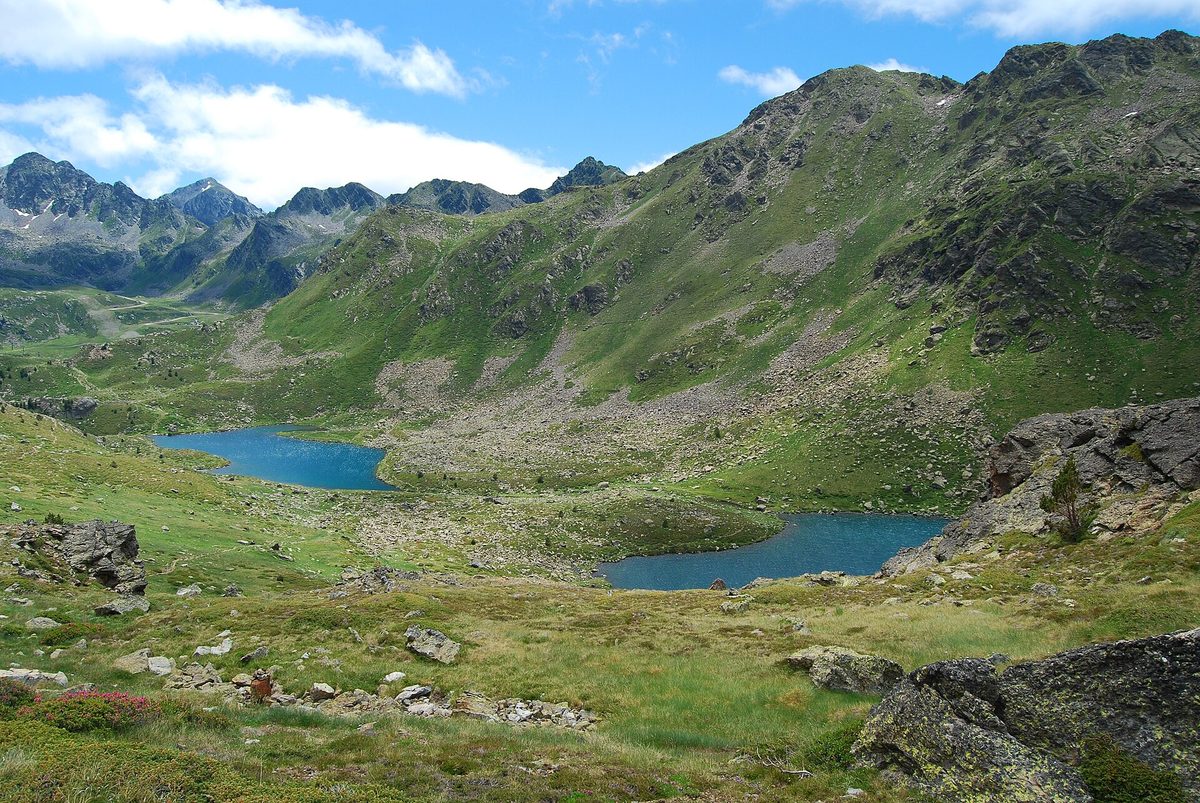
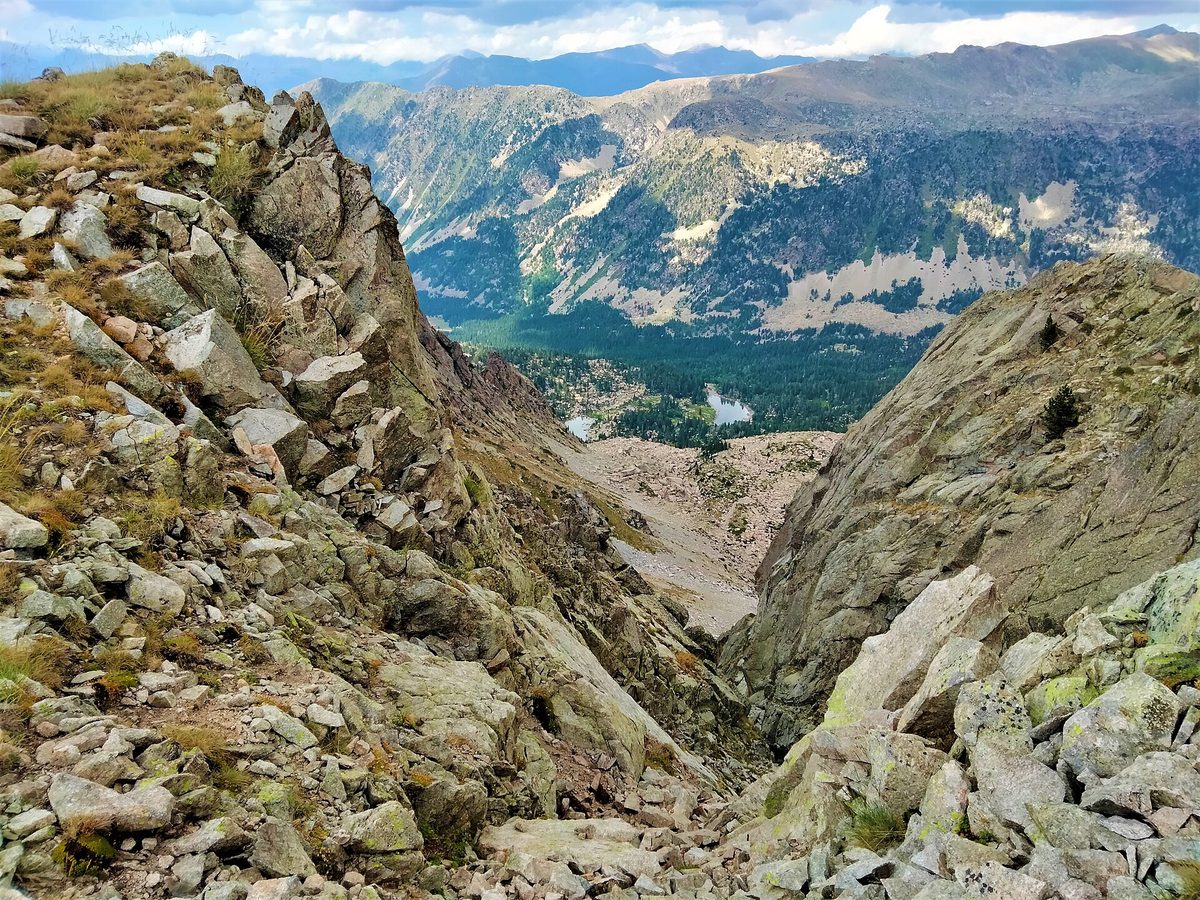
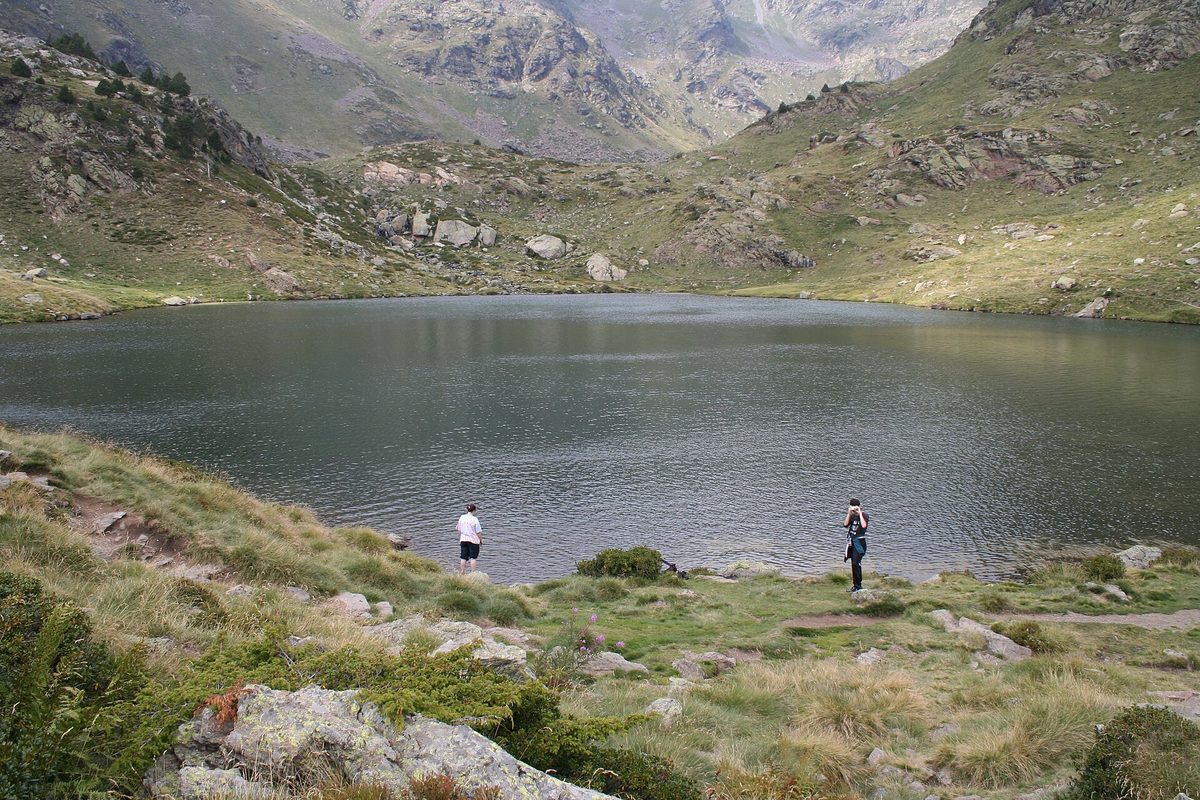
    Mountain lakes and high Pyrenees scenery in northern Andorra

    What that means in practice is gentler than full mountain-sickness territory, but real. The air is thinner and drier, so you dehydrate faster and a hangover hits harder — drink more water than feels necessary, especially if you’re skiing or in the thermal baths. The sun is stronger at altitude even when it’s cold, so sunscreen and sunglasses aren’t just summer kit; spring skiers get burned all the time. Temperatures run cooler than the Mediterranean coast you may have flown into, and they swing hard between sun and shade and between day and night. And the capital is hillier than its photos suggest — the city climbs the valley sides, so “a short walk” can mean a genuine climb. Decent shoes earn their place here.

    Pack in layers, every season. In winter that’s serious cold-weather gear — proper coat, gloves, hat — plus grippy footwear for icy pavements. In summer it’s light clothing and sun protection, but always with a warm layer and a rainproof for the moment the mountain weather turns, because at 2,000 m it will. Spring and autumn are the wildcard shoulders where you might want both in the same day. For the full month-by-month breakdown of temperatures, snow and crowds — and the case for each season — see my guide to the best time to visit Andorra.

    Health, safety and the numbers to dial

    Andorra is, statistically and in feel, one of the safest countries in Europe — its own authorities describe crime as very rare, and walking around at night in Andorra la Vella ranks among the least worrying things I do anywhere. Petty theft exists in any tourist town, so use normal sense, but violent crime is genuinely uncommon and the police are visible and efficient. This is not a place you need to be on guard.

    The thing you do need to take seriously is medical cover, because of that non-EU status again. The European Health Insurance Card (EHIC) and the UK’s GHIC are not valid in Andorra. There’s no reciprocal free treatment for tourists; if you need a doctor or a hospital, you pay — and you’ll generally pay up front and reclaim from your insurer afterwards. In a genuine emergency the system typically charges the patient a portion of the cost (commonly cited as somewhere between 10% and 25%), and full price otherwise, but the practical point is the same either way: take comprehensive travel insurance, and make sure it explicitly covers what you’ll actually do here. If you’re skiing, that means winter-sports cover including off-piste if you’ll venture there, and ideally mountain rescue and repatriation. A helicopter off a mountain is the kind of bill that ruins more than your holiday.

    The medical infrastructure itself is good for a country this size. The main hospital is Nostra Senyora de Meritxell in Escaldes-Engordany, with a full emergency department, and there’s a dense network of pharmacies (look for the green cross) with long hours that can handle minor ailments, altitude headaches and the supplies you forgot. Save these official emergency numbers — all free, all reachable from any phone:

    Number For
    112 General emergencies (and the one to use if in doubt) — works without an Andorran SIM
    110 Police
    116 Medical emergencies (the SAAS health service)
    118 Fire brigade (who also run mountain rescue)

    If a weekend or public-holiday illness catches you between pharmacy and hospital, Andorra runs a medical out-of-hours service with open consultations; any hotel or tourist office can point you to the nearest one.

    Language, culture and the small social settings

    The official language is Catalan — the same language spoken in Barcelona and across the wider Catalan-speaking world — which surprises visitors who assumed Spanish or French. In practice you’ll get by easily: Spanish, French, Portuguese and English are all widely understood in shops, hotels and restaurants, a reflection of how international the small population is. A few words of Catalan (a bon dia for good morning, gràcies for thanks) are warmly received and mark you out from the day-trip crowds, but nobody expects them.

    The rhythms here lean Spanish, which trips up northern Europeans. Lunch runs late and long — restaurants fill from around 2pm — and dinner rarely gets going before 8:30 or 9pm; turn up at a serious restaurant at 7pm and you may find the kitchen still asleep. Shops often take a midday break, especially in the villages, though the big retail strip in the capital stays open through the day and late into the evening. Sundays and public holidays are quieter, with more closures outside the main shopping core. None of this is a problem once you expect it; the mistake is arriving on a Spanish-French clock with a German-British schedule in your head.

    Dress is relaxed and practical — this is a mountain country, not a fashion capital, and you’ll feel more out of place in heels than in hiking boots. Andorrans are friendly but not effusive, proud of their odd little nation and its independence, and quietly amused by how many visitors think they’ve driven into Spain. For the human texture of the capital — where to eat, what’s worth your time, how the city actually works — I’ve put it all in my Andorra la Vella guide.

    When to go — and when everyone else goes

    Andorra runs two high seasons and two quiet ones, and matching your trip to the right one is the difference between a great visit and an expensive, crowded one. Winter (December to March) is ski season and the country’s commercial heart — the resorts are humming, the towns are festive, prices and crowds peak around Christmas, New Year and the February half-terms. Summer (July and August) is the green season: hiking, mountain biking, lakes and mild warm days, busy but in a more spread-out way. The shoulders — spring (April to June) and autumn (September to November) — are the quietly brilliant value windows, with thinner crowds, lower room rates and landscapes (blossom, then autumn colour) that the peak-season crowds never see.

    My honest steer: if you’re not specifically here to ski, the shoulder seasons are the smart traveller’s secret — you get the mountains, the spa, the villages and the shopping without the December prices or the August coaches. Whatever you choose, a wet or rest day always has an answer in the giant thermal spa and the indoor attractions, which is part of why I rate Andorra as more weather-proof than most mountain destinations. For the granular month-by-month picture, see the best-time-to-visit guide; for the menu of what to actually do once you’ve picked your season, the things to do in Andorra hub is the place to start.

    How long do you need — and the case against over-planning

    Andorra is small — 468 square kilometres, smaller than many cities’ metro areas — and first-timers reliably mistake “small” for “quick.” It isn’t. The mountain roads are slow, the parking is fiddly, and the country is folded into valleys that take longer to move between than the map implies. Trying to cram the capital, a ski resort, a couple of villages and a spa into one breathless day is the classic error, and it produces a rushed, unsatisfying trip every time.

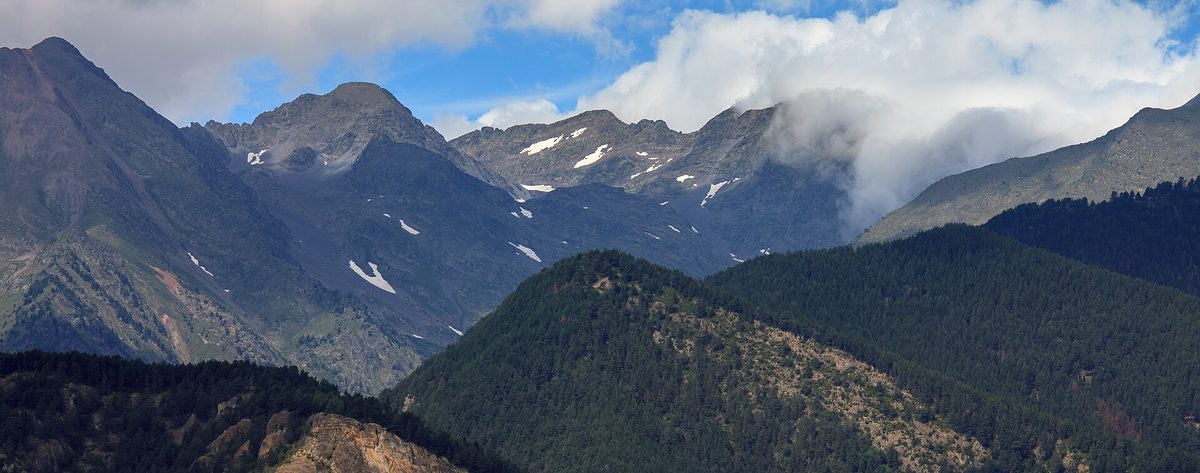
    High peaks above the village of Ordino in northern Andorra

    So my rule of thumb: two to three nights is the sweet spot for a first visit — enough to do the capital and Caldea, get up a mountain (ski or hike), and see a village or two at a human pace, with the slow roads built in. A single day from Barcelona is doable as a taster but you’ll spend more of it travelling than arriving. A week is easily justified if you’re skiing hard or walking seriously. And on any given day, narrow the plan: pick one valley or one theme — a ski day, a shopping-and-spa day, a village-and-hike day — rather than trying to sweep the whole country. The day improves the moment you stop trying to see all of it. When you’re ready to turn this into an actual route, the things-to-do guide breaks the country down by mood and region so you can build a plan that fits your days instead of fighting them.

    A dozen more small Andorra travel tips that save the day

    The stuff that doesn’t need a section of its own but absolutely needs knowing:

    • Plugs are European type C and F, 230 volts. Same as Spain and France — so UK and US visitors need an adapter, but if you’ve arrived from the continent you’re already sorted.
    • Tap water is safe and excellent. It’s mountain-sourced and clean; skip the bottled water and refill.
    • There’s no Uber. Use official taxis (ranks in town, or call), and agree the basis of the fare for longer mountain runs. The national bus network is cheap and useful, with a flat fare around €1.90 on the inter-town lines.
    • No trains, anywhere. If a journey planner offers you a “station in Andorra,” it’s lying — the nearest railheads are over the border in Spain (L’Hospitalet-près-l’Andorre and Lleida) and France.
    • Carry a little cash for the smallest cafés, mountain refuges, bus fares and the occasional market stall, even though cards rule everywhere else.
    • The time zone is Central European Time (UTC+1, and UTC+2 in summer) — the same as Madrid and Paris.
    • Decline the ATM’s currency conversion every time, as flagged above; your own bank’s rate beats the machine’s.
    • Build buffer time at the border on the way out, especially Sunday evenings and the end of ski weekends, when traffic and customs checks both spike.
    • Download offline maps before you cross, so a roaming gap doesn’t leave you navigating blind.
    • Book buses and, in winter, accommodation well ahead — both genuinely sell out in peak weeks.
    • Bring layers and proper shoes regardless of season; the weather and the gradients both change faster than you expect.
    • Don’t rely on finding a pharmacy open at 3am — stock the basics (painkillers, altitude-headache remedies, blister plasters) before a big ski or hike day.

    Andorra travel tips: FAQ

    Is Andorra in the EU or the Schengen area?

    Neither. Andorra is an independent country that is not a member of the European Union and not part of the Schengen area, though it’s surrounded by both and has transit agreements with France and Spain. You enter through one of those two countries with a passport or national ID card, and there’s no hard frontier in practice — but the non-EU status is why roaming, customs limits and health cover all work differently here.

    What currency does Andorra use — do I need to change money?

    Andorra uses the euro, despite not being in the EU, under a monetary agreement that even lets it mint its own euro coins. You don’t need to change money if you’re coming from the Eurozone; cards and contactless are accepted almost everywhere, and ATMs are plentiful. Carry a little cash for small cafés, buses and refuges.

    Do I need a visa or passport for Andorra?

    You need a passport or, for EU citizens, a national ID card. Andorra issues no visa of its own. If your nationality requires a Schengen visa to be in Europe, you must hold a multiple-entry one, because you reach Andorra by crossing through Spain or France and then re-enter Schengen to leave. There’s no separate Andorran visa or entry fee.

    Will my phone work in Andorra?

    Not on your usual European free-roaming terms. Andorra is outside the EU, so “roam like at home” doesn’t apply, and the single local operator (Andorra Telecom) means foreign networks either charge high roaming rates or don’t cover the country. Buy an Andorra Telecom eSIM (from €10 for 3 GB), check your plan’s specific Andorra terms before you travel, or rely on wifi and offline maps.

    Is Andorra cheap? What’s actually worth buying?

    Selectively. The sales tax (IGI) is only 4.5%, so alcohol, tobacco, perfume, cosmetics, fuel and a lot of electronics and sports gear are genuinely cheaper than in Spain or France. Restaurants, groceries and hotels sit at roughly normal prices, so it’s not a cheap destination across the board — just a great one for specific purchases, within the duty-free limits you can carry back across the border. My shopping guide breaks down exactly what saves you money and what doesn’t.

    Do I really need snow chains or winter tyres?

    Yes, by law. From 1 November to 15 May, vehicles must carry winter tyres (3PMSF-marked) or snow chains for at least the drive wheels. Police can refuse onward travel and fine you around €180 if you’re unequipped in bad conditions. In a hire car, confirm what’s fitted or supplied before you set off; chains are sold at petrol stations and supermarkets if you need them.

    Is EHIC or GHIC valid in Andorra?

    No. Because Andorra isn’t in the EU, the EHIC and the UK’s GHIC don’t cover you here, and there’s no free reciprocal treatment for tourists — you pay for care, usually up front. Take comprehensive travel insurance, and make sure it covers your activities (winter sports, mountain rescue and repatriation if you’re skiing or hiking high).

    Does Andorra have a tourist tax?

    Yes, a small one. Accommodation carries an overnight tourist tax of roughly €1 to €3 per person per night depending on the property’s category, generally for up to seven nights, with under-16s exempt. It’s only a few euros, but it’ll appear on your bill — so ignore the older blogs that claim Andorra has no taxes at all.

    How many days do you need in Andorra?

    Two to three nights suits most first visits — enough for the capital, the Caldea spa, a day on a mountain and a village or two, at a pace the slow roads can support. A day trip from Barcelona works as a taster but is heavy on travel; a week is easy to fill if you’re skiing or hiking seriously. Whatever the length, plan one area or theme per day rather than chasing the whole country.

    What language do they speak, and is English understood?

    The official language is Catalan, but Spanish, French, Portuguese and English are all widely understood in tourist-facing places, so visitors rarely have tr
  • Shopping in Andorra: The Complete Duty-Free Guide (What’s Cheap, What Isn’t)

    Shopping in Andorra: The Complete Duty-Free Guide (What’s Cheap, What Isn’t)

    The short version: yes, shopping in Andorra is genuinely cheaper — but selectively. Tobacco runs 40–50% below Spanish and French prices, spirits 30–44%, perfume 25–35%, electronics a thinner 10–20%, and chain fashion barely anything. The country charges 4.5% sales tax against the EU’s ~21%, and customs limits on the way out are the catch.

    Shopping is not a side activity here. It’s the single most common reason people come — 37.5% of all visitors name it as their main purpose, and among day-trippers that figure hits 82.5%. A country of 89,000 people maintains more than a thousand shops and absorbs over nine million visitors a year, most of whom go home with at least a bag of something. The whole national economy is, in a very real sense, organised around the duty-free run.

    I’ve done that run more times than I can count — the perfume errand for relatives, the pre-Christmas tobacco-and-whisky convoy with friends from Toulouse, the ski-gear restock every November — and I’ve also stood in the Sunday-evening queue at the Spanish border long enough to watch the guards unpack an entire boot. So this guide is the one I wish someone had handed me the first time: what’s actually cheaper in 2026 (with prices I’ve re-checked this month), where to shop street by street, the official customs allowances — including the ones most blogs get wrong — and the timing tricks that decide whether your bargain day ends in smug satisfaction or a fine.

    Last updated: June 2026. Prices, opening rules and customs allowances below were re-verified in June 2026 against official sources (visitandorra.com, duana.ad, the Spanish Agencia Tributaria’s Andorra traveller leaflet, store sites). Pump prices and shop promotions move; treat flagged numbers as that-week snapshots.

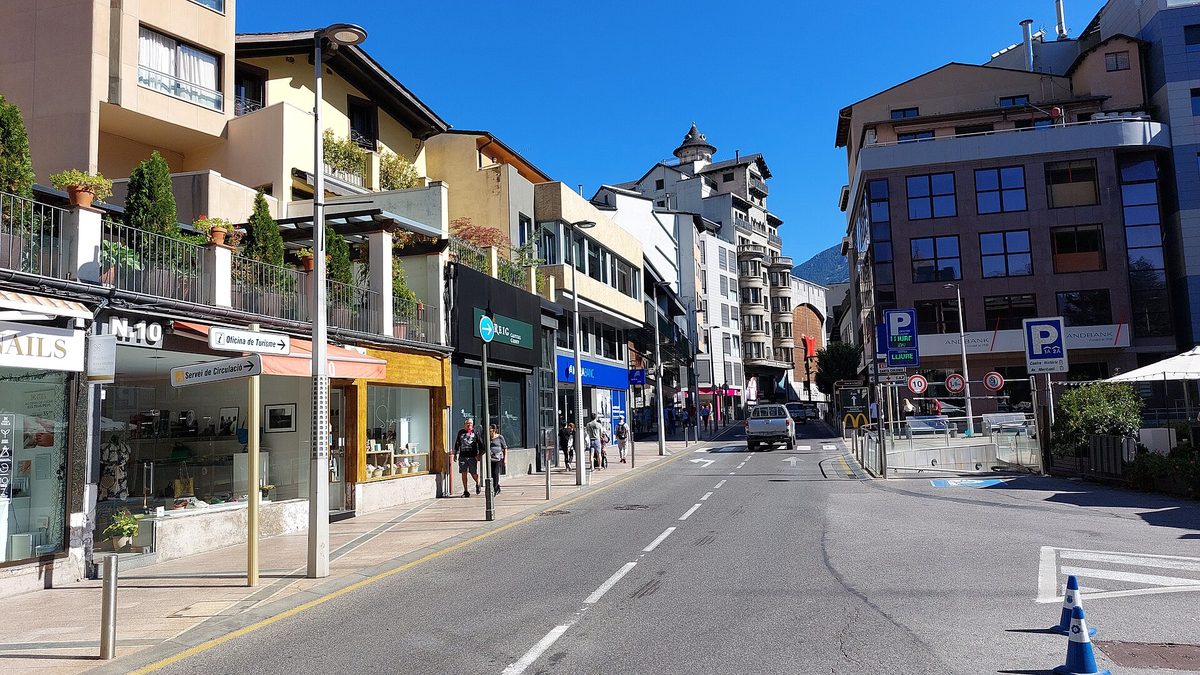
    Shopping in Andorra starts here: Avinguda Meritxell, the capital's main retail artery, with the Julia perfumery on the left

    Shopping in Andorra at a glance

    Essential The facts
    Sales tax IGI at 4.5% — versus 21% IVA in Spain, 20% TVA in France
    Best buys Tobacco (40–50% off), spirits (30–44%), perfume & cosmetics (25–35%), electronics (10–20%), fuel
    Weak buys Chain fashion (Zara & co. cost the same as Spain), books, fresh groceries, luxury watches
    Main drag The 1.5 km Shopping Mile: Avinguda Meritxell + Fener Boulevard (Andorra la Vella) and Vivand/Avinguda Carlemany (Escaldes-Engordany)
    Shopping days 362 in 2026 — shops close only on Jan 1, Sep 8 and Dec 25 (plus Mar 14 when it falls on a weekday)
    Hours Sunday–Thursday until 20:00, Friday–Saturday until 21:00; every Sunday is a shopping day
    Customs allowance (the headline numbers) Per adult: 300 cigarettes, 1.5 L spirits + 5 L wine + 16 L beer, €900 of other goods
    Borders Open 24/7 year-round: la Farga de Moles (Spain, N-145) and Pas de la Casa (France, RN22/RN320)
    Currency Euro; cards accepted nearly everywhere, but carry the receipts for customs
    Sales seasons Rebaixes in January and July–August; Shop in Andorra Festival each November

    Why everything is (somewhat) cheaper: the honest tax math

    Andorra is not in the European Union. It runs its own indirect tax, the IGI, at a general rate of 4.5% — roughly a fifth of what Spain (21%) or France (20%) add to a price tag. On top of that, the excise duties that make tobacco, alcohol and fuel so expensive in the EU are dramatically lower here: Andorra taxes tobacco at around 23% of its value, where Spanish and French excise-plus-VAT stacks claim 70–80% of the final pack price.

    That’s the whole secret. There’s no magic, no special “tax-free store” you need a passport for (one widely-read guide claims this; it’s nonsense — the low tax applies in every shop in the country, to everyone). And it’s why the savings vary so much by product: the more of an item’s home price is tax, the more Andorra saves you. Tobacco is mostly tax, so the gap is huge. A cotton T-shirt is mostly cotton and logistics, so the gap is pocket change.

    Two honest caveats before you load the car. First, retailers here aren’t charities: some of the tax gap disappears into margins, especially on electronics, so the real-world discount is usually smaller than the headline tax arithmetic suggests. Second, online retail has eroded the old advantages — an Amazon flash deal will sometimes beat an Andorran shelf price on a camera or a pair of headphones. Perfume, spirits and tobacco remain reliably, structurally cheaper. For everything else, the rule is simple and I’ll repeat it until it sticks: know your home price before you cross the border.

    It clearly still works as a draw. Andorra logged about 9.2 million visitors in the last full year — over a hundred times its population — and Spaniards and French together make up nearly 90% of them, a great many on shopping day-trips. The state’s own surveys say more visitors come primarily to shop than to ski, which in a country with the Pyrenees’ biggest ski area is saying something.

    What’s actually cheaper — and what isn’t

    Here’s the June 2026 reality check, built from shelf prices in Andorra la Vella and Escaldes and compared against typical Spanish high-street prices. Treat them as good-faith snapshots, not gospel — promotions move weekly.

    Product Andorra Spain Real saving
    Marlboro, 20 cigarettes ~€3.50 ~€5.50 ~36% (France ~€12.50: ~72%)
    Johnnie Walker Black 1 L ~€18 ~€32 ~44%
    Tanqueray gin 1 L ~€16 ~€27 ~41%
    Rioja crianza, 75 cl ~€5 ~€8 ~35%
    Chanel N°5, 100 ml ~€85 ~€120 ~29%
    Dior Sauvage EDT, 100 ml ~€70 ~€105 ~33%
    iPhone 16 Pro 256 GB ~€1,050 ~€1,299 ~19% — but mind the €900 limit
    AirPods Pro 2 ~€199 ~€249 ~20%
    Clinique moisturiser 50 ml ~€35 ~€48 ~27%
    Supermarket chocolate, coffee pods ~30–50% on branded goods
    Zara / H&M / Mango ≈0%: same prices as Spain

    Tobacco: the biggest gap, the tightest limit

    Proportionally nothing else comes close. A pack that costs €5.50 in Spain runs about €3.50 here; against France the same pack saves you nearly three-quarters. A carton of Marlboro lands around €35 in town (border megastores sometimes charge a few euros more for the convenience, which still amuses me) versus roughly €57 in Spain and €125 in France. The reason French cars queue at Pas de la Casa every weekend is not mysterious. The catch is the allowance — 300 cigarettes per adult, exactly 1.5 cartons — and the fact that customs officers on both borders treat tobacco as their main quarry. More on that below, because the difference between 1.5 cartons and 2 is the difference between a bargain and a bad afternoon.

    Alcohol: where the supermarket beats the duty-free shop

    Spirits are the second-best buy: big-brand whisky, gin and rum run 30–44% under Spanish prices, more against France. Mid-range litre bottles — Jameson, Ballantine’s, J&B — sit in the €14–18 band that Spanish supermarkets stopped seeing a decade ago. An open secret the duty-free shop windows won’t tell you: for standard brands, supermarkets usually beat the specialist liquor stores. The Carrefour inside Epizen and the big Bonpreu and E.Leclerc-style grocery floors price Absolut and Havana Club lower than the neon-lit “liquors” shops a hundred metres from the border. The specialists earn their keep on premium malts, cognac and champagne, where the selection genuinely is better. Wine is quietly excellent value too — decent Rioja and Priorat at €4–10 — and the allowance (5 litres of still wine per adult, on top of spirits) is more generous than most people realise.

    Perfume and cosmetics: the classic Andorran errand

    This is the category Andorra built its retail reputation on, and it still delivers: 25–35% off the big houses, with the bonus that perfumery here is a competitive local industry rather than an airport afterthought. The standard play is to walk Avinguda Meritxell comparing the two or three big chains’ prices on your specific bottle — they undercut each other constantly, and the same 100 ml of Sauvage can vary €8 between shops two doors apart. Stack a seasonal promotion on top of the structural discount and you can occasionally halve the Spanish price. Skincare with actives (retinol, vitamin C serums) is also notably cheaper than in Spanish pharmacies and perfumeries.

    Electronics: real savings, real fine print

    Phones, laptops, cameras, headphones and watches-of-the-smart-variety run 10–20% under Spanish retail. That’s worthwhile money on a €1,200 phone — with three asterisks I’d want a friend to read before handing over a card. One: the €900-per-adult customs allowance means a flagship iPhone technically exceeds what you can carry into Spain or France without declaring; a couple can’t legally “split” one €1,050 item between two allowances either, because single items aren’t divisible. Two: warranty. Ask explicitly for an EU/European warranty rather than a shop or Andorra-only guarantee, and keep the invoice — consumer law here is Andorran, not EU, and your home country’s consumer protections don’t follow you. Three: compare against online prices, not your home high street. The gap that looks decisive against a Madrid shop window sometimes evaporates against a Prime Day price. Buy here when the number genuinely wins, not because the mountain air feels lucky.

    Fuel, pharmacy and groceries: the locals’ basket

    Petrol and diesel run meaningfully under Spanish prices (typically 10–20 cents a litre, more against France) — there’s a dedicated section on the fill-up ritual below. Pharmacies sell many medicines cheaper than in Spain and stock some products that need prescriptions elsewhere; if that matters to you, bring your paperwork and ask the pharmacist rather than improvising. And branded groceries — chocolate, coffee capsules, spirits-adjacent treats — are 30–50% cheaper in the hypermarkets, which is why you’ll see Catalan families wheeling trolleys that are 40% Milka by volume. Fresh food, on the other hand, costs the same or more than in Spain; nobody drives up a mountain for lettuce.

    What’s not worth your boot space

    Chain fashion is the big disappointment for first-timers: Zara, H&M, Mango and friends price-match their Spanish stores almost to the cent, so the 1.5 km of fashion windows is about choice, not savings. Books and school supplies — same or pricier. Luxury watches and fine jewellery look tempting in the Meritxell vitrines, but the deltas are small once you compare seriously, and the €900 allowance makes the legal math awkward anyway. Ski hardware is a genuinely good buy — but mostly in the right week, which I’ll get to.

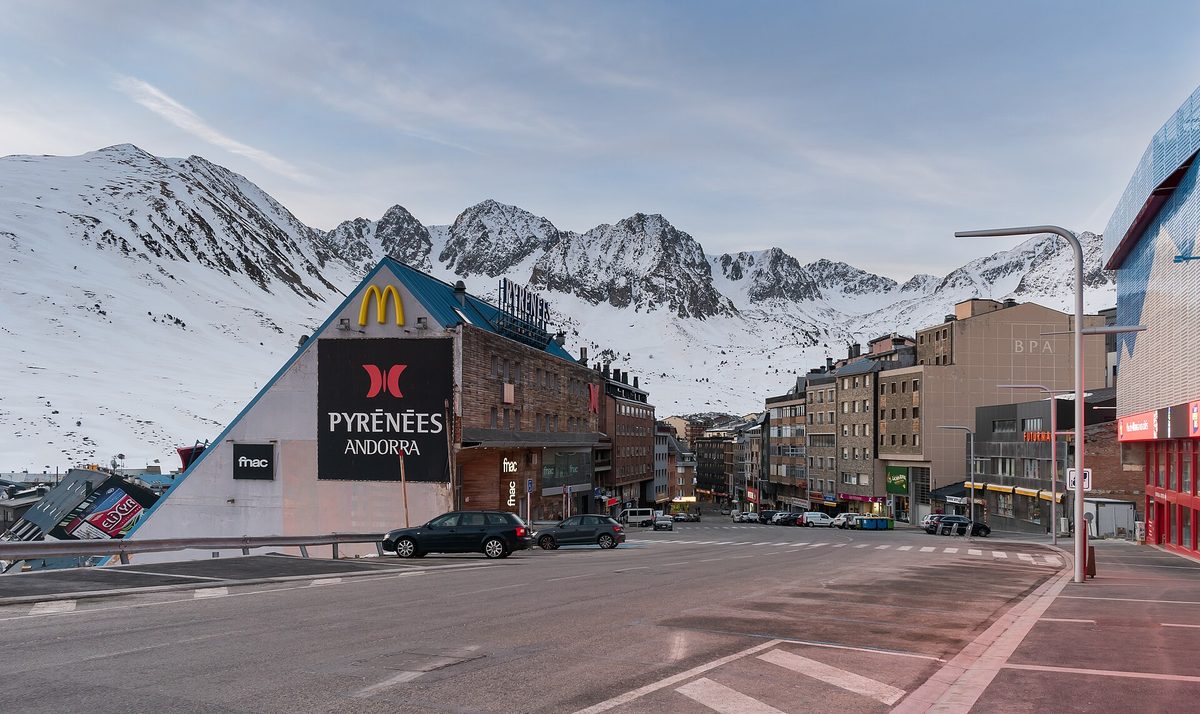
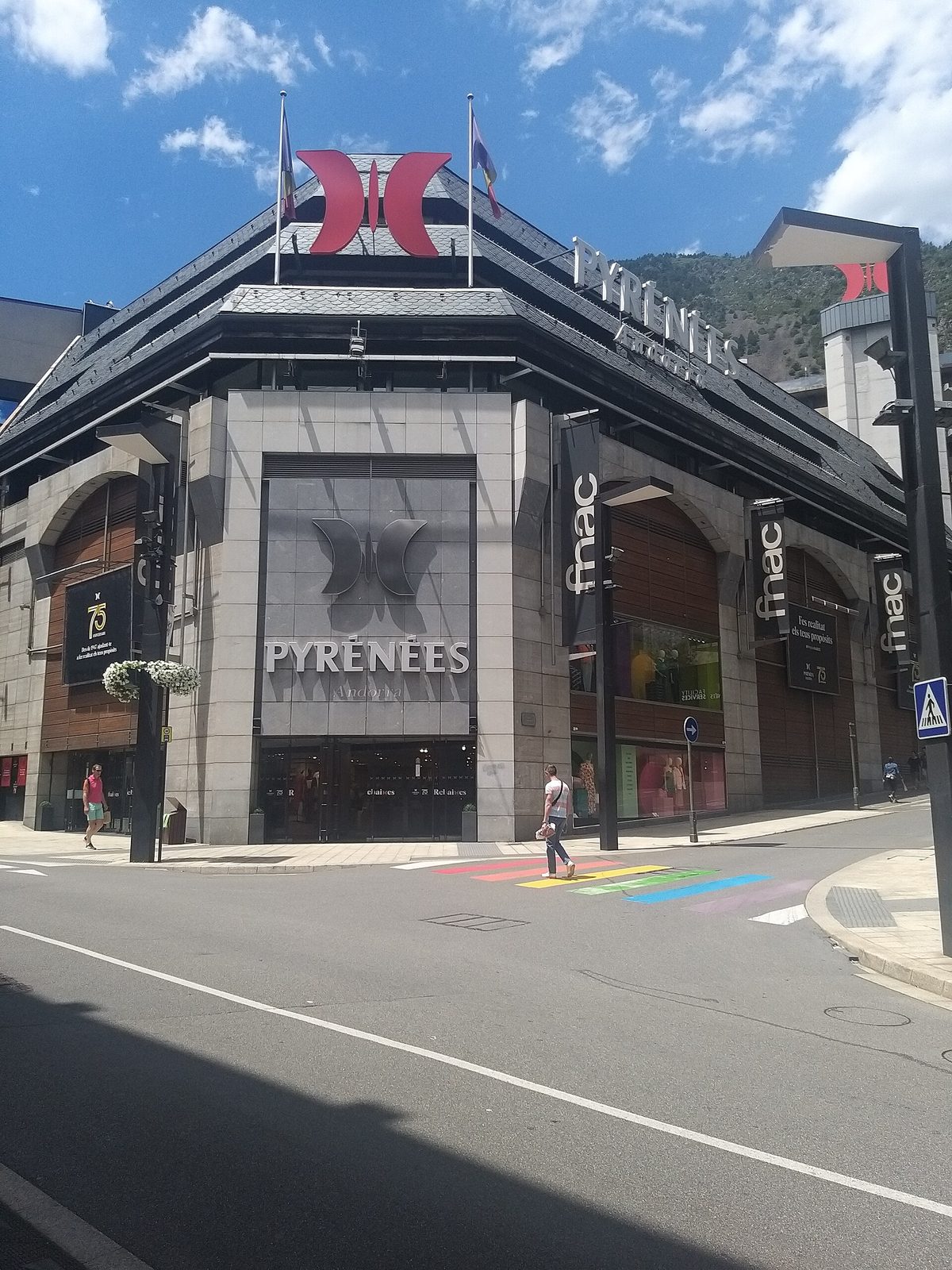
    Pyrenees on Avinguda Meritxell 11 - Andorra's only true department store, fnac banners and all

    The Shopping Mile, metre by metre

    Almost everything that matters happens along one valley-floor axis: the Shopping Mile, a 1.5-kilometre chain of streets running through the capital and into its Siamese-twin town next door. If you’ve read my Andorra la Vella guide, you know the trick: somewhere along this walk you cross an invisible parish line and Andorra la Vella becomes Escaldes-Engordany without telling you. The shops don’t care, and neither will you.

    Start at the bottom of Avinguda Meritxell, the most famous shopping street in the country. The lower stretch is pedestrianised and carries the heavyweight names: the big perfumery flagships, sports superstores, jewellers, phone and camera dealers, plus the international fashion chains. This is comparison-shopping territory — perfume in particular rewards checking two or three competing chains before you commit, because they fight each other on exactly the bottles tourists come for. The street is at its best on winter evenings, when the lights are on, the crowd is half ski-jacketed, and the whole valley smells faintly of roasted chestnuts and eau de toilette.

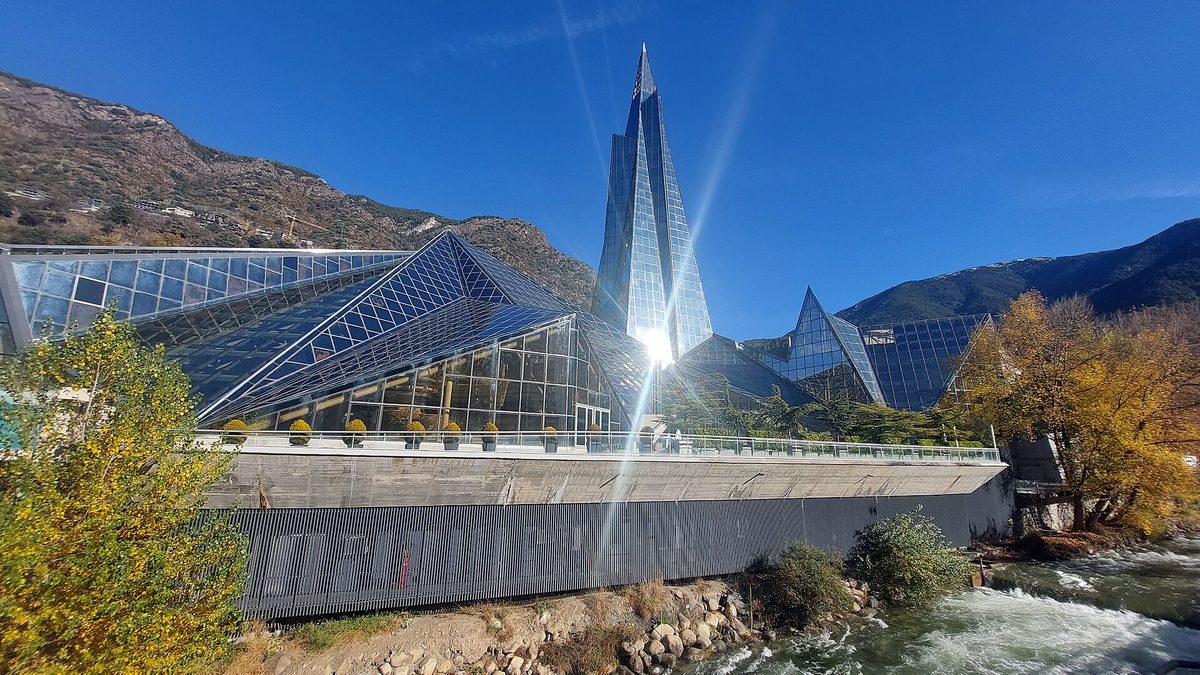
    Fener Boulevard picks up where pedestrian Meritxell ends — a glassier, more modern block linking through toward the river — and then the mile crosses the parish line and becomes Vivand, the fully pedestrianised stretch of Avinguda Carlemany in Escaldes-Engordany. I’ll admit Vivand is my favourite half of the mile: completely car-free, broader, calmer, punctuated with benches and sculpture, and home to a slightly more local mix — Escaldes’ own perfumeries and boutiques alongside the chains, with the thermal spa’s glass spire rising at the far end as a finish line. If your legs are good you can walk the entire mile, window to window, in twenty minutes; with actual shopping intent, budget a half day.

    Two detours worth knowing. The old town of Andorra la Vella, two minutes uphill from Meritxell, mixes souvenir and craft shops into the stone quarter — better for gifts with a story than for bargains. And Riberaygua i Travesseres, the grid of streets on the river side of the avenue, is where the locals’ shops live: hardware, haberdashery, family-run food stores, the unglamorous Andorra that doesn’t advertise in four languages. A wander there is the antidote if the mile starts feeling like one long airport terminal.

    Vivand, the fully pedestrianised Avinguda Carlemany in Escaldes-Engordany, under its December lights

    Department stores, malls and the border megastores

    Pyrénées (Avinguda Meritxell 11, daily 9:30–20:00) is Andorra’s only true department store and a national institution — the kind of place where you can buy a Longines, a raclette set, a drone and a leg of jamón under one roof, then have the car park validate your ticket. Floors run from beauty and fashion up through electronics and sport to a gourmet hall that’s dangerously good at separating you from your allowance budget. Prices aren’t always the lowest on the street, but the selection is the deepest, the staff actually know their stock, and when something goes wrong, a big established house is where you want your receipt to be from.

    illa Carlemany in Escaldes-Engordany is the city-centre mall: four floors of mostly fashion and lifestyle chains, a supermarket, food court and the country’s main cinema, dropped right onto the Vivand pedestrian axis. It’s the wet-weather and teenagers option — when a storm kills the mountain plans, half of Andorra has the same idea, and it shows.

    Epizen, in Sant Julià de Lòria three minutes’ drive from the Spanish border, is the one that surprises people who haven’t visited since the pandemic. This is the site of the old Punt de Trobada — the legendary border megastore where generations of Catalans did their tobacco runs — rebuilt by the Pyrénées group into a six-floor, 60,000 m² retail box that opened in late 2022. The anchor is a roughly 8,000 m² Carrefour hypermarket (the cheap-groceries-and-spirits mothership), topped with chain stores like Lefties, Sprinter, Tezenis and the IO Electro&Home electronics floor, a terrace with legitimately spectacular valley views, and over a thousand free parking spaces. Open daily 9:00–21:00. It is not charming. It is extremely efficient. If you’re day-tripping from Spain purely for the shopping, you could honestly park here, do everything in ninety minutes, and skip the capital’s traffic entirely — the L1 city bus even stops at the door if you’ve come up by coach. Closer still to the crossing sits the River shopping centre, the last big stop before Spanish customs, fulfilling the same last-chance-tobacco role it always has.

    My honest routing advice: if you want the experience — the mile, the lights, the lunch, the spa afterwards — shop in the capital and make a proper day of it with everything else the country offers. If you want the savings with minimum time-cost, Epizen plus a petrol station covers 90% of the typical shopping list.

    Pas de la Casa: the French-border bargain town

    At 2,050 m on the French frontier, Pas de la Casa is what happens when you build a town with two purposes — skiing and selling — and skip the beautification committee entirely. I’ve called its architecture ugly in print before and I stand by it; the concrete does nothing for the mountain. But for French visitors it’s the duty-free shop of national reference: streets of perfumeries, alcohol-and-tobacco supermarkets and sports stores, all calibrated to French prices, which makes the discounts look even better than they do from the Spanish side. Tobacco at a quarter of the French price and €12-cheaper bottles of cognac explain the Toulouse and Ariège plates filling every car park.

    Two practical notes. In winter, Pas de la Casa doubles as a major Grandvalira ski base, so you can genuinely combine a morning on the pistes with an afternoon allowance-run — my skiing guide covers the sector. And in big snow, the Envalira pass above town is the one bit of Andorran driving that demands respect: there’s a toll tunnel under the worst of it, and chains-or-winter-tyres rules apply. Check conditions before you commit to a January bargain mission; more on routes in the getting-here guide.

    Pas de la Casa at 2,050 m: duty-free shopfronts and the Pyrenees building right below the Grandvalira ridgeline

    Beyond duty-free: five scenes worth knowing

    Sports gear. A country that lives off skiing sells a lot of ski kit, and sells it well. The Meritxell-area sports superstores — Viladomat is the historic name — carry deep ranges of hardware and clothing, with two golden windows: October–November, when new-season stock arrives and pre-season promotions run, and late spring, when leftover winter inventory gets cleared at 30–50% off. Summer hikers and cyclists are equally well served; the bike scene clusters down-valley in Sant Julià de Lòria.

    Perfumery as heritage. Perfume isn’t just a product line here — it’s practically the founding industry of Andorran retail, and home-grown chains like Júlia have grown from a single shop into institutions with flagship stores on the mile. The staff in the big perfumeries are mostly career specialists rather than seasonal hires; if you half-remember a discontinued scent your mother wore in 1995, this is the place to ask.

    Pharmacy and parapharmacy. Cheaper medicines and a broader over-the-counter range pull a steady cross-border trade of its own. Sunscreen, contact-lens supplies, baby formula and dermo-cosmetics are the quiet bargains; for anything serious, bring your prescription and speak to the pharmacist properly.

    The gourmet run. Hypermarket aisles aside, look for Andorran and Pyrenean produce — mountain cheeses, charcuterie, local honey, wines from the country’s improbably steep vineyards — sold in the old-town delis and the Pyrénées gourmet hall. It’s the one shopping category where you go home with something that couldn’t have come from anywhere else.

    Cars and motors. Santa Coloma, on the capital’s southern edge, concentrates the car, motorbike and accessories trade — a local-facing scene, but useful to know if you’re into gear, tyres or just like wandering showrooms of vehicles taxed differently than at home.

    The customs limits that catch people at the border

    Here’s the section to screenshot. Andorra sits outside the EU, so when you cross back into Spain or France you pass a real customs border with real allowances — and because a special bilateral arrangement applies, the numbers are higher than the generic “arriving from outside the EU” limits you’ll find on most websites. Plenty of blogs (including some otherwise excellent local ones) quote 200 cigarettes and €300; the Spanish tax agency’s own leaflet for travellers arriving from Andorra, and Andorran customs at duana.ad, print the figures below. They apply per adult traveller (tobacco and alcohol: 17 or over), and they’re what the officers at la Farga de Moles work from.

    Category Allowance per adult (Spain/France)
    Cigarettes 300 (= 1.5 cartons), or 150 cigarillos (<3 g), or 75 cigars, or 400 g smoking tobacco
    Spirits over 22° 1.5 litresor 3 litres of drinks under 22° (fortified, sparkling, aperitifs)
    Still wine 5 litres (on top of the spirits line)
    Beer 16 litres — the allowance almost nobody knows exists
    Perfume 75 g of perfume + 375 ml of eau de toilette
    Coffee / tea 1 kg coffee (or 400 g extract); 200 g tea (or 80 g extract)
    Food products Up to €300 per adult (€150 under-15) with per-item caps: 4 kg cheese, 5 kg meat, 1 kg butter, 5 kg sugar/sweets…
    Everything else (electronics, fashion, etc.) Up to €900 per adult, €450 under-15
    Fuel A full normal tank + up to 10 litres in a portable container
    Cash €10,000 or more must be declared when crossing

    The fine print that does the catching, learned partly from watching it happen to others at the green channel:

    Allowances are individual and not poolable. Four adults in a car = four full allowances, and splitting the trolley across travellers is legitimate. But a single item’s value can’t be divided: a €1,050 phone exceeds €900 even with two of you, full stop. Children’s allowances don’t cover tobacco or alcohol at all. Under-17s have zero tobacco and alcohol franchise — the family-of-five maths only works on the €450-per-child goods line. Quantity limits ignore value. Three hundred cheap cigarettes and three hundred premium ones are equally over at 301. Keep every receipt — when an officer asks you to demonstrate you’re inside €900, a folder of tickets turns a twenty-minute unpacking into a two-minute wave-through. And if you’re over, use the red channel and declare: you’ll pay import VAT and duties on the excess and drive on. Getting caught in the green channel with undeclared excess means seizure of the goods and a fine that can reach double their value — Spanish enforcement on tobacco specifically is energetic, well-practised, and entirely unmoved by claims of arithmetic confusion.

    One myth to retire: there is no tourist tax-refund scheme in Andorra. Nothing to stamp, no forms at the exit. The IGI you pay is already the discount. (The DIVA kiosk you may spot at the Spanish border works the other direction — it’s for Andorra residents reclaiming Spanish IVA on purchases made in Spain.)

    The Andorran customs (duana) post at the Spanish border - the sign and channel barriers every shopping run passes

    Border reality: queues, checks and timing

    The borders never close — both crossings run 24/7, every day of the year, and the customs posts staff the same hours. What varies wildly is the queue. The Spanish exit at la Farga de Moles backs up on Saturday and Sunday late afternoons year-round, swells painfully on Spanish and French holiday weekends and through August (when waits of an hour or two aren’t rare), and reaches its annual worst around the Christmas bridge weekends and the Reyes sales. The French side at Pas de la Casa has the same rhythm tuned to French school holidays, plus weather drama in midwinter.

    The patterns that actually help: cross back before 16:00 on a weekend day and you’ll usually roll through; aim for a Tuesday–Thursday trip and the whole exercise feels like a different country. Checks intensify exactly when you’d expect — weekends, holidays, the festival weeks — and tobacco is what they’re looking for. The officers have seen every hiding place a Renault Scénic offers. Buy your allowance, keep the tickets on the passenger seat, and the border is a formality; the people idling in the inspection bay almost always bet otherwise.

    If you’re crossing by coach, customs boards the bus or waves it through — the allowances are identical, and yes, they do sometimes check coach luggage holds. Full route-by-route logistics, including the bus operators and the no-airport reality, live in the getting-to-Andorra guide.

    Fill the tank while you’re at it

    The cheapest souvenir in Andorra is in the ground. Fuel runs structurally below neighbouring prices — typically 10–20 cents a litre under Spain and 30–50 under France, which on a 50-litre tank means €5–10 saved for thirty seconds of nozzle time on your way out. As I write this in June 2026, the country’s average pump prices sit around the high-€1.50s for unleaded 95 (cheaper stations meaningfully under that), but pump prices move weekly everywhere — the reliable part is the gap, not the number. The rules even bless the habit: your allowance covers a full standard tank plus up to 10 litres in a jerrican.

    The country runs around forty stations for its 468 km², most open 24 hours, with convenient clusters on the CG-1 between the capital and the Spanish border and on the climb to Pas de la Casa. Locals from La Seu d’Urgell and the Ariège time their tanks to Andorra runs as a matter of course; do as they do and fill up last, after the shopping, on the way to the crossing.

    When to shop: hours, sales and the crowd calendar

    Andorra’s retail calendar is built for visitors in a way that still startles first-timers from Spain or France: shops open every Sunday, generally until 20:00 Sunday–Thursday and 21:00 on Friday and Saturday, and the whole country closes for retail just four dates a year — January 1, March 14 (Constitution Day — though shops open anyway when it falls on a weekend, as it did in 2026), September 8 (the national day) and December 25. That makes 362 shopping days in 2026. The asterisk: the big stores and malls trade straight through the day, but small old-town and neighbourhood shops still keep the Pyrenean lunch sacred, closing roughly 13:00–15:00. Plan the boutique errands for morning or late afternoon and use the middle of the day the way locals do — at a long lunch.

    The discount calendar stacks three layers on the structural tax savings. The rebaixes (sales) run twice a year, January into February and July into August, exactly as in Spain — January is the sweet spot, when sale prices compound the duty-free discount on winter stock. Each November, the Shop in Andorra Festival takes over the capital, Escaldes and Pas de la Casa with extended promotions, live music, tastings and prize draws — recent editions ran roughly the first three weeks of November (the 2025 edition was November 7–23; 2026 dates weren’t announced as I updated this). And the pre-season sports promotions in October–November are when ski gear is at its keenest. For how all this overlays the weather and the crowd peaks — December bridges, February half-terms, August — see the month-by-month guide.

    If pure shopping comfort is the goal, my pick is a Tuesday or Wednesday in late June, September or early October: full stock, no queues at the border or the fitting rooms, terrace weather for the lunch break, and hotel prices at their season-gap lowest.

    The shopping day-trip, with or without a car

    The classic version is the drive: Barcelona is about 200 km and three hours via the C-14/N-145, Toulouse around 185 km over the Envalira side, La Seu d’Urgell a ten-minute hop. Park once and walk — the capital’s communal car parks are plentiful and the mile is entirely walkable — or do the Epizen-and-fuel blitz near the border if time is the constraint. Either way, remember the golden sequence: shop, lunch, fuel, border before 16:00.

    Carless is easier than people assume. Direct coaches run from Barcelona city and El Prat airport (about €35 one-way, sixteen-odd departures a day) and from Toulouse, landing you at the national bus station ten minutes’ walk from Meritxell; full operator details here. Within the country, the L1 city bus runs down-valley from the capital and stops at Epizen’s door for €1.90, which makes even the border-hypermarket run feasible on foot-passenger logistics. The one thing the bus can’t carry for you is the weight — 16 litres of beer is a workout — so carless shoppers sensibly skew toward perfume, electronics and clothing rather than the liquid categories.

    And a gentle pitch from someone who’s watched ten thousand day-trippers do the U-turn: the 82.5% of you who come only to shop are leaving the best of the country unopened. Stay one night and the trip transforms — old-town wander, a long borda dinner, three hours in the thermal lagoons, maybe a cable car up a mountain before the drive home. The shopping is better as the dessert than the meal. The capital guide has the where-to-base details.

    Shopping in Andorra: your questions, answered

    Is shopping in Andorra really cheaper?

    Selectively, yes. Tobacco saves 40–50% versus Spain (far more versus France), spirits 30–44%, perfume and cosmetics 25–35%, electronics 10–20%. Chain fashion, books and fresh food save you essentially nothing. The 4.5% IGI versus 20–21% EU VAT is the engine; margins and online competition decide how much of it reaches your receipt.

    Is Andorra completely tax-free?

    No — “duty-free” is shorthand. Everything carries the 4.5% IGI, plus low local excise on tobacco, alcohol and fuel. It’s not zero tax; it’s a fraction of EU tax. There are no special tax-free stores and no refund paperwork: the price on the tag is simply the price.

    What is most worth buying in Andorra?

    In order of percentage saved: tobacco, spirits, perfume and branded cosmetics, branded groceries (chocolate, coffee), fuel on the way out, then electronics — with ski and sports gear a special case that peaks during October–November promotions and spring clearances.

    How much can I take back into Spain or France?

    Per adult: 300 cigarettes (or 75 cigars or 400 g tobacco), 1.5 litres of spirits over 22° (or 3 litres under), plus 5 litres of still wine, plus 16 litres of beer, plus €900 of other goods (€450 per child under 15) and food up to €300. These Andorra-specific allowances — higher than the generic non-EU ones many sites quote — are published by Andorran customs (duana.ad) and the Spanish tax agency.

    What happens if I exceed the limits?

    Declare the excess in the red channel and you simply pay the import VAT and duties on it. Get caught not declaring and the goods can be seized with a fine of up to roughly twice their value — and tobacco is precisely what the frequent weekend checks are hunting. Keep receipts; they’re your fastest exit from any inspection.

    What’s the best shopping street in Andorra?

    Avinguda Meritxell in Andorra la Vella for the flagship density, flowing via Fener Boulevard into Vivand (Avinguda Carlemany) in Escaldes-Engordany — together the 1.5 km Shopping Mile. Pyrénées at Meritxell 11 is the landmark department store; illa Carlemany the central mall; Epizen by the Spanish border the efficiency option.

    Are shops open on Sundays?

    Yes — every Sunday, normally until 20:00. Retail closes only four dates a year (January 1, March 14 when it falls on a weekday, September 8, December 25), giving 362 shopping days in 2026. Small family shops still close for lunch around 13:00–15:00; malls and department stores don’t.

    When are the sales?

    January–February and July–August (the rebaixes), with the Shop in Andorra Festival adding promotions and street events through early-to-mid November. January sales on top of duty-free pricing is the deepest-discount window of the year.

    Is it worth buying an iPhone or laptop in Andorra?

    Often, at 10–20% below Spanish retail — but check the live online price first, insist on an EU-valid warranty with a proper invoice, and remember a flagship phone alone can exceed the €900 personal allowance, which legally should be declared. The €249 saved on a €1,299 phone is real; the fine print is realer.

    Can I pay in euros, and do shops take cards?

    The euro is Andorra’s official currency (by agreement — it’s not an EU member), and cards are accepted practically everywhere, including the border megastores. Carry some cash for tiny old-town shops and keep all receipts visible-side-up for the drive home.

    Why do French shoppers go to Pas de la Casa?

    It’s the first town across the French border at 2,050 m, dense with perfumeries and alcohol-tobacco supermarkets, and the savings calculated against French prices are the steepest in the country — a French-priced €125 carton of cigarettes costs about €35 there. In winter it’s also a Grandvalira ski base, so the bargain run and the ski day combine neatly.

    Is there anywhere to shop without the crowds?

    Midweek, any season, the whole country shops calmly. Failing that: Riberaygua i Travesseres for local-facing streets two minutes from the mile, the old town for crafts and delis, Sant Julià de Lòria for the cycling and shopping-centre scene — or simply go at 10:00 on a Tuesday and have Avinguda Meritxell nearly to yourself.

    Before you load up, it’s worth skimming my Andorra travel tips: the customs limits at the French and Spanish borders are real and enforced.

    Photo credits

    All images via Wikimedia Commons: Avinguda Meritxell by FrankAndProust (CC0); Pyrénées department store by Lks.poch (CC BY-SA 4.0); Avinguda Carlemany/Vivand at Christmas by FrankAndProust (CC0); Pas de la Casa by Krzysztof Golik (CC BY-SA 4.0); Andorra–Spain border post by Jaakko.kulta (CC0).

  • Andorra la Vella: A Local-Eyes Guide to Europe’s Highest Capital

    Andorra la Vella: A Local-Eyes Guide to Europe’s Highest Capital

    Here’s the honest version up front: Andorra la Vella is Europe’s highest capital — 1,023 m up a Pyrenean valley — and its most misunderstood. It’s a two-hour old town welded to a 1.5 km duty-free shopping mile, with seriously good mountains on every side. Treat it as a destination and it underwhelms; treat it as a base and it quietly over-delivers.

    I’ve spent more hours in this little capital than in some cities fifty times its size, and I’ve watched first-time visitors make the same two mistakes in both directions. Half arrive expecting a miniature Prague and leave muttering about perfume shops. The other half write it off as “just shopping,” speed through to the ski lifts, and miss a genuinely lovely stone quarter, the best thermal spa in southern Europe, and an eating scene that’s far better than a tax haven has any right to have.

    This guide is my attempt to fix both mistakes at once. It covers what the city actually is (including where it secretly becomes a different town called Escaldes-Engordany), what’s worth your euros in 2026 — with prices I’ve checked against the official sources this month, plus two big closures the older guides haven’t caught up with — where to eat real Andorran food, which walks get you above the rooftops in twenty minutes, and how to use the capital as a base for everything else in the country. Day-trippers, this concerns you too: official surveys say 82.5% of you come to shop, and I’d like to show you what you’re walking past while you do.

    Last updated: June 2026. Prices and opening hours below were re-verified against official sites (turismeandorralavella.com, visitandorra.com, caldea.com, museus.ad, bus.ad) in June 2026.

    Andorra la Vella filling its Pyrenean valley at 1,023 m - Europe's highest capital seen from the slopes above town

    Andorra la Vella at a glance

    Essential The facts
    What it is Capital of Andorra, a 468 km² microstate between Spain and France
    Altitude 1,023 m — the highest capital city in Europe
    Population About 25,000 in the parish; about 89,000 in the whole country
    Languages Catalan (official); Spanish everywhere, French and English in shops and hotels
    Currency Euro (Andorra isn’t in the EU, but uses it officially)
    Time you need Old town: 2-3 hours. City properly: 1 full day. As a base: 2-4 nights
    Famous for Duty-free shopping, Caldea spa, being the gateway to 300+ km of pistes
    Nearest airports Barcelona (~200 km, ~3 h by bus), Toulouse (~185 km, ~3.5 h)
    Getting around On foot; national buses €1.90 a ride for everything beyond
    Shops open 363-364 days a year, Sundays included — closed only Jan 1, Mar 14*, Sep 8 and Dec 25

    *Constitution Day (March 14) is a trading holiday only when it falls on a weekday; in 2026 it lands on a Saturday, so the tills keep ringing.

    Orientation: one valley, two towns, one very long street

    The geography explains almost everything about this city, so give me three paragraphs on it.

    Andorra la Vella sits at the bottom of a Y-shaped valley system where the country’s two rivers — the Valira del Nord and the Valira d’Orient — meet and become the Gran Valira. Every road in Andorra eventually funnels down here, which is why a town of 25,000 people can feel like Barcelona’s Diagonal on a Saturday in December. The valley floor is narrow enough that the city is essentially one long ribbon: you can walk every part of it that matters without ever being more than 400 m from the river.

    That ribbon has three distinct personalities. At the south-western end, on a slight rise, sits the Barri Antic — the old quarter, a knot of stone lanes around Casa de la Vall where the whole country was governed for three centuries. From there, Avinguda Meritxell runs north-east: first as a normal high street, then as a pedestrianised retail canyon that is the densest concentration of shops in the Pyrenees. Keep walking and — without crossing anything more dramatic than a street sign — you’ll find the avenue has changed its name to Carlemany and you’ve changed municipalities entirely. This is Escaldes-Engordany, a separate parish with its own government, its own pride, and the country’s hot springs. The locals know exactly where the line is. Visitors never do, and honestly it doesn’t matter: functionally it’s one city, and this guide treats it that way.

    Walkability is total. The bus station to Caldea — one end of the visitor city to the other — is a 25-minute stroll, dead flat, most of it pedestrianised or riverside. You do not need a car to enjoy the capital; you need one to escape it, and even then the national bus network does the escaping for €1.90-€4.80 a ride.

    Is Andorra la Vella worth visiting? Let’s settle it honestly

    Yes — with calibrated expectations. I’ll give you both sides, because the internet won’t.

    The case against, stated fairly: this is a working commercial capital, not a museum piece. The valley’s tight, so the 20th century built upward in concrete and glass; the through-traffic on a winter Saturday is real; and the historic core you came for can genuinely be seen in a morning. If you’ve allocated three days to the city itself — the city, not the country — you’ve over-allocated. Anyone who tells you otherwise is selling hotel nights.

    Now the case for, which I find more interesting. First, the setting is absurd: 2,000 m ridgelines rise straight from the rooftops, and from the middle of the shopping mile you can see snow six months of the year. Second, the old quarter is small but it’s real — a 1580 parliament house, a 12th-century church, lanes that still follow medieval property lines — and at 8 a.m., before the coaches arrive, it’s yours alone. Third, the city earns its keep as infrastructure: the country’s best restaurants, its thermal water, its bus hub and its cheapest decent hotel beds are all here, within a 25-minute walk of each other. And fourth — the part day-trippers miss — the surrounding parish climbs to 2,334 m, with balcony paths above the rooftops that cost nothing and take twenty minutes to reach.

    My verdict, the one I give friends: give the capital one full day and sleep here two or three nights while you do the rest of the country. That ratio — city as base camp, mountains as the show — is the trip that works. If you only have one day total in Andorra, spend the morning in the old town and the shops, and the afternoon up a mountain, not in a third perfume shop. The full menu of what to do in Andorra beyond the city limits is a separate, much longer conversation.

    The Barri Antic: old Andorra in a handful of stone streets

    The old quarter occupies maybe four hectares on a rise above the river, and it rewards slowness far more than coverage. Here’s what deserves your attention, in the order a natural walk strings them together.

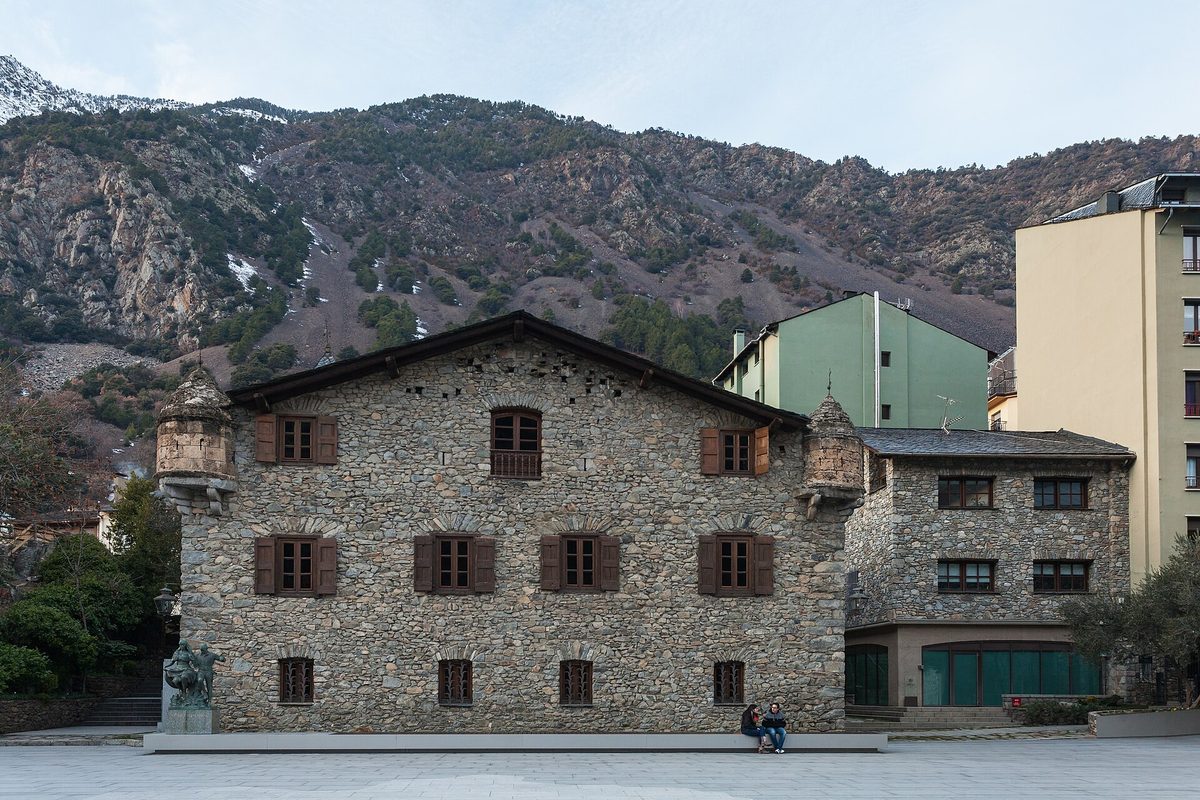
    Casa de la Vall, the 1580 stone manor that housed Andorra's parliament for three centuries

    Casa de la Vall

    Casa de la Vall is the building Andorra would grab first in a fire. A fortified manor house built in 1580 for the Busquets family, it became the seat of the Consell General — the parliament of one of Europe’s oddest states — in 1702 and stayed in the job until 2011. Inside you get the council chamber with its famous cupboard of seven locks (one key per parish; the national archives could only be opened with all seven parishes present — government by physical multi-factor authentication), the old kitchen, and the tiny courtroom where, until remarkably recently, the whole country’s justice was dispensed.

    Visits cost €5 (€2.50 concessions), self-guided with an audio guide, or €1.50 extra for a guided tour — worth it, the guides are excellent and the booking is a phone call or email away (+376 829 129, reservesmuseus@govern.ad). Open Tuesday to Saturday, 10:00-14:00 and 15:00-18:00; closed Sundays, Mondays and a handful of national days. Budget 45 minutes to an hour. The sober glass box next door is the parliament’s 2011 replacement — the contrast between the two buildings is the whole story of modern Andorra in one glance.

    Església de Sant Esteve

    Down the lane, the parish church of Sant Esteve has been here since the 12th century, and its apse — the largest Romanesque apse in Andorra — still shows it. The rest is more complicated: the church was heavily reworked over the centuries, and the 1940 restoration that gave it its current face was directed by Josep Puig i Cadafalch, the great Catalan modernista architect (Casa Amatller in Barcelona is his). So you’re looking at a genuine Romanesque core wearing early-20th-century tailoring. The original murals left long ago — most ended up in the MNAC in Barcelona, a sentence you’ll hear about several Andorran churches. Entry is free; it’s an active parish church, so slip in around services rather than through them.

    The squares, the poets and the view from the roof

    Three more stops knit the quarter together. Plaça Lídia Armengol holds 7 Poetes, Jaume Plensa’s seven white human figures perched on tall poles — one for each parish of Andorra, glowing after dark, and to my eye the best piece of public art in the country (yes, including the Dalí we’ll get to shortly). Plaça del Poble is the city’s odd, brilliant living room: a 16,500 m² public square built on the roof of the government administrative building, with the Congress Centre underneath and panoramic lifts dropping you back down to Prat de la Creu street. Locals cross it on their commute; in December it hosts the Christmas village; on a clear evening the light on the eastern ridges is worth the detour alone. And on Carrer Prat de la Creu below, Bici Lab Andorra — the national bicycle museum, €5, closed Mondays — is a far better hour than “bicycle museum” suggests, especially if you’ve ever watched the Tour climb these valleys and wondered why a microstate is so cycling-mad.

    Beyond the named sights, the Barri Antic’s real pleasure is texture: door lintels carved with dates from the 1600s, the contrast of rough granite and geranium pots, café tables on Plaça Príncep Benlloch where a tallat costs €1.80 and nobody hurries you. Two to three hours covers all of it generously. That brevity isn’t a flaw — it’s the honest size of the thing, and it’s exactly why the city works best stitched into a bigger Andorran day.

    Shopping in Andorra la Vella: the 1.5 km mile

    Shopping is the single biggest reason people come to this city — the government’s own surveys say 82.5% of day visitors come primarily to shop — so let’s treat it with respect and honesty in equal measure.

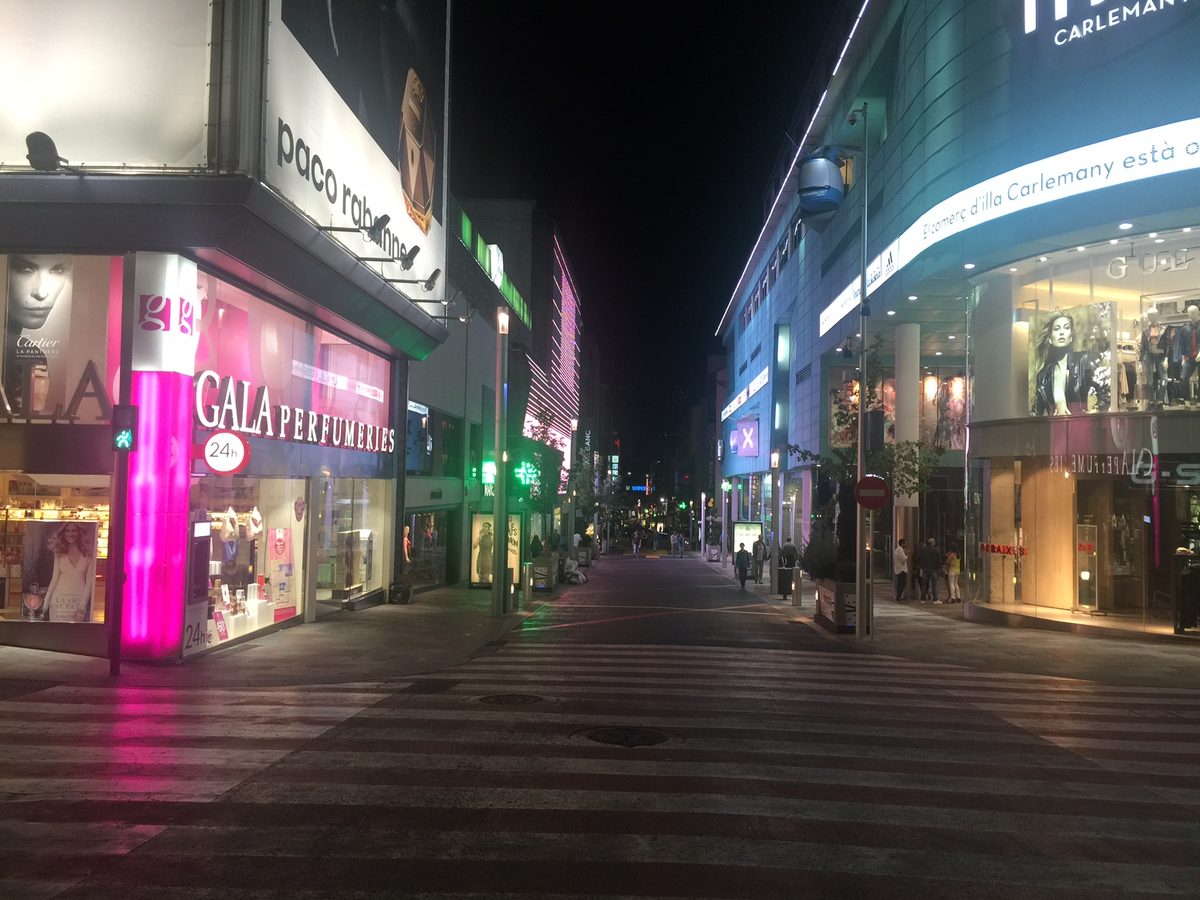
    The pedestrianised lower end of Avinguda Meritxell after dark - perfume and fashion all the way to the Escaldes line

    The geography first. What the tourist board calls the Shopping Mile is a continuous 1.5 km retail ribbon: Avinguda Meritxell and the Fener Boulevard in Andorra la Vella, flowing seamlessly into Vivand — the fully pedestrianised Avinguda Carlemany — once you cross into Escaldes. Over a thousand shops line this walk and its tributaries: every Spanish high-street brand (Zara, Mango, Stradivarius), international fashion, the El Corte Inglés-style Pyrénées department store at Meritxell 11, and a frankly comical density of perfumeries, electronics dealers, opticians, and tobacco shops. The mile is open 363-364 days a year: Sundays are normal trading days here, hours run to 20:00 (21:00 Fridays and Saturdays), and the only full closures are January 1, September 8, December 25 and — weekday-only — March 14.

    Now the honesty. Andorra’s low taxes (IGI, the local VAT, is 4.5% against Spain’s 21%) make some things meaningfully cheaper and some things barely cheaper at all. The reliable wins are perfume and cosmetics (typically 25-30% below Spanish or French high-street prices), spirits and tobacco (dramatically cheaper — which is why the border checks exist), and sunglasses and skincare. Electronics are a more modest 10-20% game, and on cameras and phones you should know your home price to the euro before assuming the sticker is a deal; I’ve seen Barcelona beat Meritxell on identical models during sale season. Clothing from the chains costs roughly what it costs in Spain. The January and July sales, though, stack discounts on top of the tax gap and get genuinely silly.

    Two practical notes the duty-free brochures skip. First, allowances: Andorra isn’t in the EU customs union, so there are limits on what you can carry out without declaring — the headline figures are 300 cigarettes, 1.5 litres of spirits, and €900 of general goods per adult, checked with real enthusiasm at the Spanish border on busy Sundays. Second, timing: the mile on a December or sale-season Saturday is shoulder-to-shoulder; the same shops on a Tuesday morning are a pleasure. If shopping is your main event, sleep in the city, shop at opening time, and you’ll be done before the coaches from Barcelona unload. In November, the Shop in Andorra Festival (the 2025 edition ran 7-23 November) adds street performances and extra discounts along the whole mile.

    The river, the Dalí and the prettiest bridge in the country

    The Gran Valira is the city’s spine, and the ten-minute stretch where the shopping mile meets the river collects most of the modern landmarks.

    Salvador Dali's melting clock, La Noblesse du Temps, beside the Gran Valira on Placa de la Rotonda

    On Plaça de la Rotonda, where Meritxell bends to meet the water, stands La Noblesse du Temps — a 4.9 m, 1,400 kg bronze Salvador Dalí: a melting clock draped over a tree, flanked by a veiled woman and an angel. It reached Andorra in 1999 as a gift from Enric Sabater, Dalí’s former secretary and business manager, spent years migrating around the city, and settled here in 2010. It is, I’d argue, the most photographed object in the country after the ski lifts — go at night when the floodlights do it justice, or before 9 a.m. if you want it to yourself.

    Thirty metres away, the Pont de París vaults the river in a single white gesture — a cable-stayed footbridge with its deck hung from two steel spheres on raked masts, opened in January 2006. It’s the city’s favourite photo frame (the big ANDORRA LA VELLA letters stand at its foot), and the riverside walk it anchors will carry you, pleasantly and traffic-free, all the way into Escaldes. En route you’ll pass the older, lovelier Pont d’Engordany, a humpbacked stone crossing that’s been carrying Andorrans over the water since long before anyone here sold a duty-free camera.

    Caldea, hot water and the Escaldes end of town

    Escaldes-Engordany exists because hot water comes out of the ground here — up to 70°C, the hottest springs in the Pyrenees — and the town’s name, its old wash-houses and its one unmissable building all flow from that fact.

    Caldea's glass spire above the rooftops of Escaldes-Engordany, fed by 70C spring water

    Caldea is the building: an 80 m glass spire by the river holding the largest thermal spa complex in southern Europe — indoor-outdoor lagoons at 32-34°C, hydromassage everything, saunas, ice baths, and grapefruit and Indo-Roman pools that sound like marketing and turn out to be excellent. I’ve sent every kind of traveller here, from teenagers to grandmothers, and the failure rate is close to zero. The classic three-hour adult ticket runs €43-46 depending on time slot (early-bird online deals from €30.50); the adults-only Premium wing — quieter pools, included robe and towel, minimum age 16 — runs €71-82 for the long sessions. Children under 5 can’t enter the main spa (there’s a Likids splash zone for ages 3-4), and under-18s need an adult.

    The 2026 caveat, and it’s a big one: Caldea’s main Classic (Thermoludic) zone is closed for major renovation works from 7 April until mid-July 2026 — the spa’s own ticket pages currently say July 17 — with the outdoor lagoon following for a shorter closure in late July. The Premium adults-only wing stays open throughout, as does Likids. If a Caldea afternoon is a pillar of your summer 2026 trip and you’re travelling before late July, either book Premium (16+) or check caldea.com for the live reopening date before you commit. Most of the guides currently on page one of Google haven’t noticed this; their readers are finding out at the ticket desk.

    One more 2026 closure while we’re correcting the internet: the Museu Carmen Thyssen Andorra, the small but serious art museum that’s anchored Escaldes’ culture since 2017, closed its Hostal Valira premises on 4 January 2026 and spends this year moving into the Node building nearby. Until the new space opens, the capital’s best art fix is the Plensa sculpture group and the CAEE exhibition hall on Vivand. Older articles still selling you a Thyssen visit are running on cached information.

    Escaldes itself deserves a wander beyond its spa: Vivand’s café terraces, the old corner around the Sant Pere Màrtir church where the pre-shopping village survives, and — my favourite free thing in the whole city — the Font del Roc del Metge, just below the Carlemany bridge on the Camí del Barri. This is the spring itself: water surfaces here at 68-71°C, among the hottest in Europe, feeds Caldea by underground pipe, and you can warm your hands on stone that’s been heating Escaldes’ wash-houses for centuries.

    Eating in the capital: better than a tax haven deserves

    Andorran food is mountain Catalan — pork, cabbage, snails, river trout, things that make sense at 1,000 m in January — and the capital is the easiest place in the country to eat it well. A field guide:

    The dishes to order. Escudella is the national dish: a broth-stew of veal, pork, chicken, white beans and giant pasta shells, traditionally a winter Sunday affair and properly a whole meal. Trinxat is mashed potato and savoy cabbage fried with pork belly into a crisp-edged cake — Andorra’s answer to bubble and squeak and, done right, the best €12 in the country. Beyond those: grilled snails (cargols a la llauna), duck with winter pears, river trout with mountain ham, and in autumn enough wild mushrooms to justify the trip alone.

    Where to eat them. The classic move is a borda — a converted stone barn doing mountain cooking over wood fire. Borda Estevet (Ctra. de la Comella 2, a 10-minute walk from the old town) is the capital’s standard-bearer: carts of vegetables at the door, lamb chops a la brasa, and a dining room that hasn’t changed its mind in forty years. It’s not cheap — count €40-55 a head with wine — but it’s the real article. In the Barri Antic itself, the lanes around Plaça Príncep Benlloch hide a clutch of small dining rooms doing serious Catalan-French cooking; quality is high and turnover low, so book anything with fewer than ten tables.

    The budget play. Andorra runs on the menú del dia — three courses with wine at lunch for €15-20 — and the capital’s versions are honest. Look for the chalkboards a street or two off Meritxell (the mile itself charges a shopping-traffic premium), or join the locals at the long-standing cheap stalwarts near the bus station end of town, where €15 still buys soup, trinxat and crema andorrana. Lunch is the value meal here; the same kitchens charge half as much again at dinner.

    What to drink. Andorran wine exists, it’s good, and almost nobody knows it: high-altitude whites and reds from terraced vineyards at 1,000-1,200 m. Look for Borda Sabaté’s Torb or Escol on serious wine lists. Local craft beer (Alfa, Boris) has colonised most bar taps. And a cafè amb llet on a terrace still costs under €2.50 — one of the small ways the city reminds you it isn’t Switzerland.

    Set your evening expectations correctly, though: this is an early town. Kitchens mostly close by 22:30-23:00, the bar scene is compact (the lanes off the old town and a few rooms along the river do the heavy lifting), and proper nightlife only really exists in winter when the ski crowd descends. Caldea’s late Friday and Saturday sessions — the spa runs to midnight those nights — are, no joke, the capital’s best after-dark entertainment.

    Green escapes: above the rooftops in twenty minutes

    The city’s least-sold virtue: you can walk out of a perfume shop and be on a silent mountain balcony path before your parking ticket needs renewing. The parish climbs from 1,023 m at the river to 2,334 m at Pic de Carroi, and the network in between is free, signed, and weirdly empty even in August.

    The flat Rec del Sola balcony path above the city rooftops, twenty minutes from the shopping mile

    Rec del Solà is the one everyone should do. It’s a flat path along an 1880s irrigation canal that contours the sunny side of the valley about 100 m above the rooftops — roughly 4-5 km out and back, effectively zero gain, benches and oak shade the whole way, with the entire city laid out below you like a model railway. Pick it up from Carrer de les Canals at the old-town end (the connector path from Plaça Príncep Benlloch is signed) and walk as much as you like; it peters out near Santa Coloma. Sunset is the hour. Its shadier mirror on the opposite slope, the Rec de l’Obac, gives you the reverse angle and morning sun.

    One step up in effort: the Comella road miradors. The switchback road behind the city (Ctra. de la Comella) passes a signed viewpoint at its bend — drivable, but the walk up through the woods from the Serradells side earns it better — and the Roc de Senders viewpoint off the Rec de l’Obac path frames the whole Y of the valleys. For a proper summit, Pic de Carroi (2,334 m), the rock pyramid that looms over the city’s western sky, is a strenuous, partly unmarked 1,300 m ascent best left to experienced walkers — but you don’t need the top; even the first hour of any uphill path here transforms your sense of where you actually are: a small stone city in a very large mountain range.

    In town itself, Parc Central fills the river bend with lawns, playgrounds and cherry blossom in April — the obvious decompression stop if you’re travelling with children who’ve hit their retail limit. For the bigger green agenda — the lakes, the UNESCO Madriu valley, the 2,900 m summits — see my full guide to things to do in Andorra; nearly all of it stages comfortably from a bed in the capital.

    Using the city as a base: skiing and day trips without a car

    Here’s the structural argument for sleeping in the capital: it’s the country’s transport hub, its beds cost less than the ski villages’, and nothing in Andorra is more than about 40 minutes away.

    Skiing from Andorra la Vella works better than most people expect. The move: city bus L2 to Encamp (every 12-15 minutes on weekdays, €1.90), then the Funicamp — a 6 km gondola, the longest of its kind in Europe — straight up to Grandvalira’s Solanelles sector at 2,300 m. Door to piste in well under an hour without touching a car; the Funicamp ride is included in winter lift passes. The L3 and L4 buses run the valley road to Soldeu and Pas de la Casa for the other Grandvalira doors, L5 heads for Pal Arinsal, and in season extra ski services thicken the timetable. Is it as convenient as sleeping slope-side in Soldeu? No. Is the trade — city restaurants, Caldea après, cheaper beds, shops for the blizzard day — worth 40 minutes of bus? For plenty of trips, yes. The full calculus lives in my skiing in Andorra guide.

    Summer and shoulder-season day trips stage just as easily. The same €1.90-€4.80 bus network reaches Ordino (prettiest village in the country, gateway to the Sorteny botanical valley), Encamp for the Romanesque circuit, La Massana for the bike park, and Sant Julià for Naturland’s 5.3 km Tobotronc — all covered in my country-wide guide. Two specific recommendations from me: the pre-Romanesque Santa Coloma church with its odd round tower — a 30-minute walk from the city along the river path, or one bus stop — and Engolasters lake above Escaldes, a forested reservoir loop that’s the locals’ standard Sunday leg-stretch. Cross-border, La Seu d’Urgell (Spain) is 25 minutes south for a proper Catalan old town and a Romanesque cathedral that outguns anything in Andorra.

    Where to sleep: pick your end of town

    The capital’s hotel stock is large, mostly mid-range, and meaningfully cheaper than the ski resorts in winter. The decision is really about which end of the ribbon you want:

    Old town and centre (Andorra la Vella proper): best for first visits — you’re between the Barri Antic and the shops, the bus station is walkable for day trips, and the restaurant lanes are on your doorstep. Decent three-star doubles run €70-110 most of the year; the grand old Andorra Park and a few four-stars push €150-250 with pools and parking. Escaldes end: book here if Caldea is the point — several hotels stand within five minutes of the spa, Vivand’s terraces are calmer than Meritxell, and the thermal heritage means a cluster of hotels with their own hot-water spas (the historic thermal hotels around the Roc del Metge source have been in the soaking business for over a century). Near the bus station: the practical pick for car-free ski trips — L2/L3/L4 on your doorstep — at the cost of nightly charm. Budget travellers should know the capital keeps a stock of plain, clean one- and two-star rooms from about €45-60 a double that the resort villages simply don’t bother offering.

    The one mistake to avoid: booking far up the through-road “because it was €15 cheaper” and discovering your evening walk to dinner runs along a traffic artery. Stay within the river-to-Meritxell ribbon and the whole city stays on foot.

    The city by season: what 2026 looks like

    The capital is a year-round machine — shops and spa never stop — but its personality swings hard with the calendar. The short version by season; the full national picture is in my best time to visit Andorra guide.

    Winter (December-March): the city at its busiest and most atmospheric — ski-season crowds, Christmas lights down the whole mile, and the Poblet de Nadal Christmas village filling Plaça del Poble with stalls, skating and mulled wine from late November to January 5. Shopping Saturdays are intense; book restaurants. Spring (April-May): the honest low season. Mountains between seasons, some attractions resting — in 2026, remember, Caldea’s main zone is closed for works until mid-July — but hotel prices at their floor and the old town at its quietest. Fine for a cheap shopping-and-eating break; don’t build the trip of a lifetime around it. Summer (June-September): my favourite city season. Valley days at 21-26°C, every trail open, café terraces full until late, and the events stack up: the Festa Major d’Andorra la Vella runs 30 July-3 August in 2026 with free concerts on Plaça Guillemó, and Cirque du Soleil’s summer residency (July into early August) plants its show ten minutes from the Dalí. Autumn (October-November): golden larch light on the ridges, the Shop in Andorra Festival in November, and the city quietly inhaling before ski season. November itself is the dead month — and the cheapest beds of the year.

    Getting there and getting around

    No airport, no railway — every visitor arrives by road, and the capital is where all the roads end up. The complete door-by-door comparison (both gateway cities, the Paris sleeper, the tiny La Seu airport, driving) is in my how to get to Andorra guide; here’s what matters for the city itself.

    By bus: direct coaches run from Barcelona (Sants and both airport terminals; ~3 hours, about €35 one-way with Direct Bus, 16 departures a day) and from Toulouse (station and airport; ~3.5 hours, €36 with Andbus). Every one of them terminates at the Estació Nacional d’Autobusos on Avinguda Tarragona — which sits, conveniently, a flat ten-minute walk from both the old town and the foot of Meritxell. By car: from Spain on the N-145 via La Seu d’Urgell, from France over the 2,408 m Envalira pass or through its toll tunnel. Two warnings: winter-equipment rules (tyres or chains) apply November to mid-May on the approach roads, and Sunday-evening border queues leaving for Spain are a genuine phenomenon — leave before 15:00 or after 20:00.

    Parking: the city runs 13 public car parks with 3,000+ spaces — Centre Ciutat on Prat de la Creu (24 h, under the Plaça del Poble) is the flagship and the easiest first-timer target. Rates run about €2.90/hour, with a €12.30 overnight flat rate and roughly €28 for 24 hours; surface lots give the first 30 minutes free. On December and sale-season Saturdays the central decks fill by 11 a.m. — arrive early or park a ring out. Getting around: your feet, overwhelmingly. For everything else, the national bus lines radiate from the capital on a zone fare of €1.90-€4.80 (a shareable T-10 carnet cuts Zone 1 rides to €1.24); taxis exist but are pricey, and — despite what at least one page-one article claims — there is no Uber, Bolt or any ride-hailing in Andorra. The bus app and timetables live at bus.ad.

    What things cost in Andorra la Vella (2026)

    Every price on this table was checked against the official source in June 2026. Where 2026 figures weren’t yet published, I’ve used the latest confirmed price and said so.

    Item Price Notes
    Caldea Classic, 3 h adult €43-46 Early-bird online from €30.50; main zone closed for works until ~17 Jul 2026
    Caldea Premium (16+), 3-4 h €71-82 Open right through the 2026 works
    Casa de la Vall €5 €2.50 concessions; guided tour +€1.50; closed Sun-Mon
    Bici Lab Andorra €5 Closed Mondays; free under-10s
    Sant Esteve church, Plensa’s 7 Poetes, both Recs, Roc del Metge fountain Free The whole open-air city, in fact
    National bus, any Zone 1 ride €1.90 T-10 carnet €12.40, shareable; Zone 3 (Pas de la Casa) €4.80
    Bus from Barcelona ~€35 one-way Direct Bus, ~3 h, 16/day; Andbus from BCN airport €33
    Bus from Toulouse €36 one-way Andbus, ~3.5 h, 4/day; €64 return
    Central parking ~€2.90/h Night flat €12.30, 24 h ~€28; first 30 min free in surface lots
    Menú del dia lunch €15-20 Three courses with wine; the capital’s best-value meal
    Borda dinner €40-55/head The full wood-fire experience with wine
    Three-star double €70-110 Winter ski weekends and August push higher; November is the floor

    Andorra la Vella FAQ

    Is Andorra la Vella worth visiting?

    Yes, for a day — and as a base, for several. The old quarter, the Dalí, a Caldea session and the shopping mile fill a satisfying day; the city’s real value is as a cheap, central, well-fed base for the mountains around it. It’s not a three-day sightseeing city, and pretending otherwise sets you up for disappointment.

    How many days do you need in Andorra la Vella?

    One full day covers the city itself without rushing: old town in the morning, shops or Caldea in the afternoon, borda dinner. Sleep here two to four nights if you’re using it as a base for skiing, hiking or the rest of the country — which is exactly how I’d use it.

    Can you do Andorra la Vella as a day trip from Barcelona?

    You can — buses leave Sants and the airport from early morning, take about 3 hours, and cost around €35 each way (all the routes compared here) — but you’ll spend six-plus hours of your day on a coach for roughly five hours in town. It works as a shopping run; as sightseeing it’s rushed. An overnight transforms the trip.

    Is Andorra la Vella walkable?

    Completely. The visitor city — old town, shopping mile, river walk, Caldea — is one flat 25-minute ribbon, much of it pedestrianised. You only need wheels (the €1.90 national buses do fine) to reach the villages, trailheads and ski lifts beyond.

    Is Andorra la Vella expensive?

    By Western European capital standards, no. Lunch menus run €15-20, decent doubles €70-110, coffee under €2.50, and the 4.5% IGI keeps shop prices down. Caldea’s €43+ tickets and borda dinners are the splurges. It’s pricier than small-town Spain, far cheaper than Alpine resort towns.

    Is shopping really cheaper in Andorra?

    Selectively. Perfume and cosmetics run 25-30% below Spanish high-street prices, spirits and tobacco much more, electronics a thinner 10-20% — check your home price first. Chain clothing costs about the same as in Spain. Remember the customs limits on the way out: 300 cigarettes, 1.5 L of spirits, €900 of goods per adult.

    What is Andorra la Vella famous for?

    Being Europe’s highest capital (1,023 m), duty-free shopping along the 1.5 km Meritxell-Vivand mile, the Caldea thermal spa’s glass spire, Casa de la Vall — the 1580 manor that was parliament for three centuries — and serving as base camp for the Pyrenees’ biggest ski area.

    Can you ski from Andorra la Vella?

    Yes, without a car: bus L2 to Encamp (€1.90, every 12-15 minutes) connects with the 6 km Funicamp gondola into Grandvalira’s 2,300 m sector — door to piste in under an hour. Soldeu, Pas de la Casa and Pal Arinsal are 25-40 minutes away by bus or ski shuttle.

    What language do they speak, and what money is used?

    Catalan is the official language, but Spanish works everywhere and French and English are routine in shops, hotels and restaurants. The currency is the euro, even though Andorra isn’t in the EU. Cards are accepted near-universally; the country’s outside the EU roaming zone, so check your phone plan.

    Is Andorra la Vella safe?

    Exceptionally. Andorra posts one of Europe’s lowest crime rates, and the capital’s streets feel relaxed at any hour they’re actually awake (which, fair warning, ends around 23:00 outside ski season). Normal big-city pickpocket caution on packed shopping Saturdays is all the vigilance required.

    What’s the best time of year to visit?

    For the city itself: June to September for terrace weather and festivals, or December for lights, skating and the Christmas village — accepting the crowds. In 2026 specifically, note Caldea’s main zone is shut until mid-July. September is the connoisseur’s pick: summer weather, no queues, pre-season prices — the month-by-month breakdown is here.

    The capital is also the country’s retail heart, and the full breakdown of what’s genuinely cheaper — and what isn’t — is in my guide to shopping in Andorra.

    Photo credits

    All images via Wikimedia Commons: Andorra la Vella panorama by Fernando Prada Sanromán (public domain); Casa de la Vall by Diego Delso (CC BY-SA 3.0); Avinguda Meritxell at night by Rauletemunoz (CC BY-SA 4.0); La Noblesse du Temps by Tomaszhanarz (CC0); Caldea by FrankAndProust (CC0); Rec del Solà path by Tiia Monto (CC BY-SA 3.0).

  • Best Time to Visit Andorra: A Month-by-Month Guide from Powder to Wildflowers

    Best Time to Visit Andorra: A Month-by-Month Guide from Powder to Wildflowers

    Here’s the short version: the best time to visit Andorra is mid-December to late March if you’re coming to ski, and mid-June to mid-September if you’re coming for the mountains in their green state. The clever money picks September — summer weather, empty trails, shoulder-season prices. The full answer depends on which Andorra you want, because there are at least four of them.

    Most destinations have a high season and an off season. Andorra is rarer: a country with two entirely different high seasons that could belong to two different countries. From December to early April it’s a ski nation — 300+ km of pistes, snow cannons humming, every hotel bed within sight of a lift earning its keep. From June to September it becomes a hiking, biking and spa destination where the same slopes grow wildflowers and the air at 2,000 m smells of warm pine. In between sit two shoulder seasons that the brochures ignore — one of which (late September into October) is my favourite time in the country, and one of which (November) I’d steer most first-timers away from.

    I’ve put the whole calendar under one roof here: a month-by-month verdict on weather, crowds and prices, the 2026 events actually worth planning around, when the country is cheapest, and the handful of weeks when I’d honestly tell you to go somewhere else. Dates and prices below were checked against the resorts, the tourist board and operators in June 2026; the ski resorts confirm next winter’s exact opening dates each autumn, so treat early-December plans as “almost certainly fine” rather than gospel until then.

    Last updated: June 2026.

    The short answer, by what you’re coming for

    You want Come in Why
    Skiing, full season in swing Mid-Jan to mid-Mar Deepest reliable base, long days by March; avoid holiday weeks
    Cheapest skiing Early Dec or late Mar/early Apr Dynamic pass prices and hotel rates at their season lows
    Hiking, all trails open Late Jun to mid-Sep High passes clear of snow, shuttle services running, refuges open
    Best all-round value + weather September Summer conditions, post-rush prices, locals get their country back
    Spa + shopping city break Any month except late May/early Jun Caldea and the shops run year-round; watch the spa’s maintenance closure
    Festivals and atmosphere Late Jun to early Aug Falles fire festival, Cirque du Soleil, festa major season
    Autumn colour, zero crowds Late Sep to late Oct Golden valleys, crisp light, the year’s emptiest good weather
    Lowest prices of all, any purpose Nov to early Dec (excl. puente) The dead zone: cheapest beds of the year, but most mountain attractions shut
    Skiers on a sunny Grandvalira piste with snowy Pyrenean peaks behind

    Why Andorra runs on a twin-peak year

    Geography explains the whole calendar, so thirty seconds on it pays off. Andorra is a wedge of the eastern Pyrenees averaging just under 2,000 m of altitude — the highest country in Europe by mean elevation after Switzerland by some counts, and home to Europe’s highest capital city at 1,023 m. The inhabited valleys sit between roughly 1,000 and 1,600 m; the ski areas run from 1,710 m up to 2,640 m; the highest summit, Coma Pedrosa, tops out at 2,942 m. Nothing in the country is flat, and every weather statement comes with an asterisk that reads “depending on your altitude”.

    That vertical range produces two dependable seasons. Winter delivers genuine snow-sure conditions — the big resorts hold a base from early December to early April, helped by north-facing terrain and one of Europe’s largest snowmaking networks. Summer delivers dry, sunny mountain warmth: valley afternoons in the low-to-mid 20s°C, high-trail temperatures 10 degrees cooler, and air with none of the soupy heat that flattens Barcelona three hours south. The tourist board likes to claim around 300 days of sunshine a year; having watched a few full weather cycles, I’d say the honest version is that properly grey multi-day spells are rare outside late autumn, and even January routinely produces sequences of hard blue days.

    The transitions between those peaks — April-May and October-November — are where Andorra gets moody. May is statistically the wettest month of the year in the valleys (around 89 mm), April can’t decide whether it’s ski season or spring, and November is when the country audibly exhales, shuts half its mountain infrastructure, and waits for snow. None of this makes the shoulder months bad; it makes them specialist. More on that below.

    One more structural thing worth knowing: Andorra’s crowds don’t arrive evenly. They arrive in pulses — Spanish and French school holidays, bank-holiday bridge weekends (the December puente around the 6th-8th is the most violent example), and ordinary Saturdays, when day-shoppers pour up from both sides of the border. Time your trip mid-week outside the holiday pulses and even February feels manageable; hit a puente blind and you’ll spend your holiday in a traffic queue wondering what people see in the place. Crowd timing matters more here than month choice, and I’ll flag the specific dates as we go.

    Andorra weather by month: the numbers

    These are typical figures for Andorra la Vella at 1,023 m — the warmest, lowest place in the country, and where most visitors sleep. The rule of thumb that has never failed me: knock 6-10°C off the valley figure for the ski areas and high trails (1,700-2,600 m), and expect any given day to swing hugely between frosty morning shade and t-shirt sunshine.

    Month Day high / night low (valley) Rain Feels like
    January 6° / −2°C 53 mm Full winter; dependable cold, frequent bright days
    February 8° / −1°C 38 mm Driest month; peak snowpack up high
    March 11° / 0°C 41 mm Spring skiing: freeze-thaw, long afternoons
    April 13° / 1°C 71 mm Split personality; slush below, winter above 2,200 m
    May 17° / 5°C 89 mm Green explosion, wettest month, snow patches on passes
    June 21° / 8°C 84 mm Early summer; high trails clearing, storms after lunch
    July 26° / 11°C 61 mm Warmest month; perfect mornings, build-up afternoons
    August 25° / 11°C 86 mm Warm and busy; thunderier than July
    September 21° / 8°C 81 mm Summer’s encore; stable spells, golden light
    October 16° / 4°C 74 mm Crisp, colourful, first dustings on the peaks
    November 10° / 0°C 69 mm Grey transition; mountain facilities largely shut
    December 7° / −1°C 69 mm Winter returns; resorts open early in the month

    Three notes the table can’t carry. First, rain in summer usually means a loud, brief afternoon thunderstorm, not a lost day — start hikes early and you’ll finish dry far more often than not. Second, winter “rain” in the valleys is frequently snow above 1,800 m, which is exactly where you want it. Third, daylight swings hard at this latitude: about 15 hours of it in late June against 9 in late December, which is why a March ski trip feels so much more generous than a December one at the same snow depth.

    Andorra month by month: honest verdicts

    January — the connoisseur’s ski month

    Once the Christmas-to-Kings rush empties out around January 7 (Spain unwraps presents on Epiphany, so the holiday runs long), Andorra settles into its best pure ski rhythm: cold, consolidated snowpack, short lift queues midweek, and hotel prices that drop a clear tier from the festive peak. Days are short and the cold at altitude is real — plan the first gondola, a long lunch, and an afternoon at Caldea’s thermal lagoons rather than heroics until 5 p.m. The winter sales also start in late December and run through January, so this is sneakily the best month to combine skiing with serious duty-free shopping. Avoid the third weekend onward if Spanish regional holidays align; otherwise, January midweek is as good as Andorran winter gets.

    February — peak season, peak snowpack

    Statistically the driest month and usually the one with the deepest base — the trade-off is that every school in Spain, France and half of Britain knows it. French winter holidays rotate through zones from mid-February to early March and they all own ski gear. Book accommodation months ahead, ski Sunday to Friday if you possibly can, and favour the quieter sectors (Ordino Arcalís over central Grandvalira) on Saturdays. Carnival week brings costumed silliness and ham-judging contests to the villages — Encamp’s is the famous one. If you want the postcard version of skiing in Andorra — blue sky, white mountains, properly cold air — February delivers it more often than any other month.

    March — long days, spring snow, smarter prices

    My pick for most skiers, and I’ll defend it. By March the sun is high enough to make terrace lunches a daily event, the snowpack is at or near its maximum, and once the early-March French school wave recedes, prices and crowds both slide. Conditions turn freeze-thaw — firm and fast in the morning, soft by 2 p.m. — which rewards early starts and suits intermediates perfectly. Resorts run their spring events calendars and the apres scene is at its sunniest. The catch: south-facing lower runs get slushy late in the day by the back half of the month. Ride high, lunch low.

    April — the gamble month

    The 2025/26 season closed at Grandvalira and Pal Arinsal on April 6 and at Ordino Arcalís — colder, higher, north-facing — on April 12, which is about typical: the lifts generally spin into the first or second week of April. Easter timing decides whether closing weekend is a party or a ghost town. After the lifts stop, Andorra goes quiet in a way that surprises people: too much snow up high to hike, no skiing below, hotels cycling through deep-clean season. Late April is for shoppers, spa days and very good hotel deals — not for mountain ambitions. If your dates are fixed in April and you want snow, aim at the first week and buy lift passes only once the resorts confirm late-season operations.

    May — green, wet, and strictly for the unhurried

    The valleys detonate into green, waterfalls run at full throat on snowmelt, and the country is at its least visited outside November. It’s also statistically the wettest month, high trails are still snowbound, and — the detail nobody tells you — Caldea traditionally closes for around two weeks of annual maintenance in late May or early June, so a spa-centred trip needs a date check on caldea.com first. Valley walks (the Rec del Solà balcony path above the capital, the lower Madriu mouth, Engolasters) are lovely and empty. May suits photographers, shoppers, and travellers who like having a country to themselves and don’t mind an afternoon shower schedule.

    June — the mountains wake up

    June is two months wearing one name. Early June is late spring: snow patches above 2,300 m, some high loops still dicey, infrastructure yawning awake. By the solstice it’s summer: the Tristaina lakes circuit clears, mountain activity parks open for the season, and the country hosts the Trail 100 Andorra by UTMB ultra-running festival in Ordino (June 11-14 in 2026), which fills the northwest valleys with several thousand very fit people and a genuinely good atmosphere. Then on June 23 comes the night that’s worth planning a whole trip around: the Falles de Sant Joan, when fire-swingers whirl flaming bundles through the streets to mark the solstice — a UNESCO-listed tradition shared with Catalonia and the French Pyrenees. Long days, fresh trails, pre-July prices: June quietly outperforms its reputation.

    Turquoise Tristaina mountain lakes in Ordino, Andorra, ringed by green summer slopes

    July — high summer, high energy

    The warmest month and the one with the fullest diary. In 2026 the Cirque du Soleil’s Andorra production, Ràdio Andorra, runs July 3 to August 2 — five nights a week at 10 p.m. in central Andorra la Vella, tickets from about €25 — and the Tour de France’s Barcelona Grand Départ (July 4-6) sends cycling fever through the whole region, with stage three climbing the Pyrenees barely an hour east of the border. Every lift-served summer attraction is open, via ferratas and bike parks hum, and afternoon thunderstorms are the only serious weather risk. It’s busy, but July crowds in Andorra are river-valley busy, not Mediterranean-coast busy: book the popular bordas for dinner and you’ll still find solitude above 2,200 m by 9 a.m.

    August — the Spanish month

    Spain holidays en masse in August and a healthy share of it drives up the N-145. The first fortnight, around the August 15 bank holiday, is summer’s crowd peak: full car parks at trailhead honeypots, queues for the Tibetan bridge shuttle, and the festa major round — Escaldes-Engordany late July, Andorra la Vella’s own city festival the first weekend of August, Sant Julià mid-month — keeping the valleys loud and cheerful. The weather stays warm but turns thunderier than July. Strategy for August: sleep high (Soldeu, El Tarter, Arinsal, Ordino rather than the capital), start hikes at dawn, and treat the towns as evening entertainment. Or simply wait three weeks, because—

    September — the insider’s answer

    —September is the best month in Andorra, and it isn’t particularly close. The first three weeks deliver July’s weather with June’s crowds: stable high-pressure spells, trails dry and fully open, water still warm enough for the brave at the Tristaina lakes, and hotel rates 30-40% below August for the identical room. September 8 is Meritxell Day, the national holiday, when Andorrans walk in pilgrimage to the rebuilt sanctuary of their patron saint — a lovely, untouristed thing to witness. Mountain infrastructure begins winding down mid-month (summer lifts and shuttles taper after the second or third weekend), so front-load lift-dependent plans. If I could give a first-time summer visitor one instruction, it would be: take the first two weeks of September and thank me later.

    October — golden valleys, closing doors

    October is Andorra’s most beautiful month to look at — larch and birch turning the valleys gold and rust, fresh snow dusting the 2,800 m summits above, light so crisp it looks colour-graded. It’s also when the summer machine switches off: high refuges empty, the Roc del Quer skywalk and similar attractions run final weeks, and weather windows shorten. Low-level hikes remain superb and the country is gloriously empty midweek. Pack for four seasons, check what’s still open before promising the kids anything specific, and bring the camera. The first significant valley-level cold usually arrives late in the month.

    November — the honest dead zone

    I’ll say what the brochures won’t: November is the weakest month to visit Andorra, and unless you’re coming specifically to shop, to soak, or to score the cheapest hotel rates of the year, I’d point you at another date. Mountain attractions are shut, trails sit in the freeze-rot gap between seasons, days are short and often grey, and the whole country is in pre-season mode — half the staff at the ski resorts are doing lift maintenance, not serving lunch. The exceptions that make November work: Caldea is open and quiet, the shopping is excellent (the capital usually runs a Shop in Andorra Festival early in the month), and from November 1 the winter-equipment rule kicks in for drivers, so at least you’ll be ready when the snow does arrive. Arcalís sometimes opens in the last days of November when early storms cooperate — it did on November 27 for 2025/26.

    December — winter switches on

    The main resorts traditionally open in the first week of December — December 5 for both Grandvalira and Pal Arinsal in 2025/26 — and the country flips from its quietest month to one of its loudest inside a fortnight. Three distinct Decembers exist: the early-month sweet spot (open pistes on early-season prices, with the violent exception of the Spanish puente bridge holiday around December 6-8, which jams every road and hotel in the country); the pre-Christmas lull (excellent value, snow permitting); and the festive fortnight from roughly December 20, when prices peak for the year and booking ahead is non-negotiable. The Poblet de Nadal Christmas village fills the capital’s Plaça del Poble from late November to Epiphany, and the winter sales start on December 26 — Boxing Day skiing plus half-price perfume is a very Andorran double. Snow depth is the early-December gamble; snowmaking covers more than half of Grandvalira, so the product is reliable even when the sky isn’t generous.

    Wooden chalets under fresh snow in the Vall d'Incles near Soldeu, Andorra

    When is Andorra cheapest? The price rhythm explained

    Andorra’s costs move to a beat you can dance around once you hear it. Accommodation is the big variable: the same three-star double that costs €70 in November runs €120-150 in February and can triple over New Year. Lift passes are dynamically priced — roughly €50-65 a day at Grandvalira in 2025/26 depending on date and how far ahead you buy — with the lows in early December and from late March. Food and fuel barely move seasonally, and the duty-free shopping that funds half the country is a constant, with two sharpening points: the winter sales from December 26 through January, and the summer sales through July into August.

    Stack those rhythms and you get the cheap calendar. The absolute floor is November to the first days of December (excluding the puente): rock-bottom beds, but you’re buying a country in standby mode. The smartest cheap windows that still deliver the full product are early December before the 20th (skiing on opening-period prices), mid-January to early February midweek (full winter, post-festive rates), late March (spring skiing plus sliding prices), June before Sant Joan, and all of September. The expensive windows to plan around: December 20 to January 6, the February-March French and Spanish school carousel, Easter week, and the first fortnight of August.

    Two budget levers people forget. First, midweek is a price season of its own — Andorran hotels price Friday and Saturday nights like a different country, and ski-pass dynamic pricing leans the same way. Second, how you arrive matters: the bus from Barcelona costs about €33-35 each way year-round (the full arithmetic is in our guide to getting to Andorra), while winter car hire means budgeting for the mandatory cold-weather kit — more on the law below.

    When to avoid Andorra (or at least brace yourself)

    Every date on this list is survivable with booking discipline; none of them is when I’d schedule a first impression.

    • The December puente (around the 6th-8th). Spain’s Constitution Day and Immaculate Conception holidays bridge into the year’s single most concentrated invasion. Shops heave, the N-145 crawls, hotels charge February prices for early-season skiing. The dates shift with the calendar — in 2026 the 6th and 8th fall Sunday and Tuesday, making a four-day monster bridge. If you’re already in the country it’s lively fun; arriving or leaving through it is misery.
    • December 28 – January 4. New Year is the most expensive week of the Andorran year, full stop. Beautiful, festive, and best left to people who’ve made peace with the invoice.
    • Saturdays in February and early March. Changeover day for ski weeks plus day-tripper peak. The lift system absorbs it better than you’d fear; the road network doesn’t. Ski Sunday-to-Friday instead.
    • August 10-16. The Spanish holiday crescendo around Assumption Day. The high trails stay calm; everything with a car park does not.
    • Sunday evenings, year-round, leaving toward Spain. The border post at the Riu Runer can queue for an hour-plus as the weekend exodus meets customs checks. Leave before 3 p.m. or after 9 p.m., or exit via France — all three road doors are compared in our complete arrival guide.
    • Late October to early December, for mountain plans. Not crowded — the opposite. It’s the gap when neither summer nor winter Andorra is actually operating. Know what you’re buying: shopping, spa, silence.

    Andorra events calendar 2026: what’s actually worth planning around

    Dates (2026) Event Why it matters
    Through April 6 / April 12 Ski season close (Grandvalira & Pal Arinsal / Ordino Arcalís) Last lifts of 2025/26; spring-skiing deals in the final weeks
    April 23 Sant Jordi Books and roses fill Avinguda Meritxell — the Catalan Valentine’s, celebrated wholeheartedly here
    June 11-14 Trail 100 Andorra by UTMB, Ordino World-class ultra-trail festival; electric atmosphere, booked-out Ordino valley
    June 23 Falles de Sant Joan UNESCO-listed solstice fire-swinging in the old quarters; Andorra’s most photogenic night
    July 3 – August 2 Cirque du Soleil: Ràdio Andorra, Andorra la Vella 22 open-air shows, Tue-Sat 22:00; tickets €25-59 — book summer-holiday dates early
    July 4-6 Tour de France Grand Départ, Barcelona/Pyrenees Stage 3 crosses the eastern Pyrenees; expect cycling crowds regionwide and busy Barcelona transfers
    Late July – mid-August Festa major season (Escaldes Jul 25-26, Andorra la Vella first weekend Aug) Free concerts, street dinners, correfocs; towns at their most local
    September 8 Mare de Déu de Meritxell (national day) Pilgrimage to the national sanctuary; shops shut, trails don’t
    Late October – early November Shop in Andorra Festival, Andorra la Vella (dates confirm in autumn) The capital turns retail into a festival during the quietest month
    Late November Ski season opening (typically first week of December; Arcalís sometimes earlier) 2026/27 dates announced in autumn — expect Grandvalira around December 4-5
    Nov 28 (approx) – January 5 Poblet de Nadal, Andorra la Vella Christmas village on Plaça del Poble: market, shows, ice rink, vermouth stalls
    December 26 onward Winter sales begin Duty-free prices drop further; the capital’s busiest shopping fortnight

    A planning note on the two headliners. Falles night (June 23) is genuinely worth building a June trip around — it’s free, it’s real, and it happens whether tourists show up or not. The Cirque du Soleil run sells in tiers and the cheap seats for peak Saturday shows go first; if it’s the anchor of your trip, buy tickets when you book the hotel, not at the box office. Both events confirm details on visitandorra.com, which keeps the most reliable consolidated calendar.

    The shoulder seasons nobody markets (and how to play them)

    Tourist boards sell peaks; the shoulders you have to figure out yourself. Here’s the field guide. Late April to May is the green shoulder: the country at its emptiest and cheapest while still being beautiful, with the snowline retreating uphill a hundred metres a week. The play is a valley-based trip — capital, museums, Romanesque churches, low balcony trails, long lunches — with zero high-mountain ambition. Watch for the Caldea maintenance window, and know that some mountain restaurants and family attractions simply don’t reopen until June. What you get in exchange: hotel rates 40-50% off winter, waterfalls at maximum violence, and wildflower meadows that August visitors never see.

    Late September to October is the gold shoulder, and it’s the better of the two. The weather holds more reliably than spring (autumn high-pressure spells in the Pyrenees can run a week at a stretch), every town is still fully staffed, and the larch turn paints the Ordino and Incles valleys in colours that don’t look real. Trails stay open in the practical sense — no lifts, but no snow either below 2,500 m until late October most years. It’s also wild-mushroom season, which Andorrans take seriously enough that good restaurants build menus around ceps and rovellons. The play: base in Ordino or La Massana, hike valley-to-mid-mountain routes, eat ambitiously, and have a flexible bad-weather day for Caldea or the museums.

    The week the lifts close in April deserves its own mention as the year’s strangest micro-season. Hotels that were full at €150 on Saturday are empty at €65 by Wednesday, the spring sun is glorious, and there is almost nothing organised to do. I’ve come to like it — it’s the one week the country belongs entirely to the people who live there — but recommend it only to travellers who can build a holiday out of a thermal spa, a duty-free wine cellar and a stack of books. Everyone else: aim either side.

    Forested ridges and high Pyrenean peaks seen from the Coll d'Ordino in summer

    The two big seasons, briefly weighed

    Winter (December – early April): what you’re signing up for

    You’re signing up for one of Europe’s best-value serious ski products: 300+ km of linked and near-linked terrain across Grandvalira, Pal Arinsal and Ordino Arcalís, strong ski schools, and infrastructure that embarrasses resorts charging half again as much. The season runs roughly December 5 to April 6 at the main areas, with Arcalís bookending it longer at both ends; within that window, snow reliability above 2,000 m is excellent and the snowmaking network carries the gaps. The full resort-by-resort breakdown — which base town suits which skier, costs, passes, the Ikon Pass angle — lives in our complete guide to skiing in Andorra.

    Two winter realities to plan around. Driving: from November 1 to May 15 Andorran law requires every vehicle to run winter or M+S tyres, or carry chains or approved textile socks for the drive wheels — checks happen, fines run roughly €180-500, and insurers can refuse claims if you crash without compliant kit. Rental cars from Spanish airports don’t automatically include it; ask. And altitude cold: the gap between a 1,023 m valley afternoon and a 2,500 m ridge in wind is the difference between a fleece and full battle dress. Pack for the mountain you’re standing on, not the forecast for the capital.

    Summer (mid-June – mid-September): the quiet overachiever

    Summer Andorra still feels like a secret in a way winter Andorra hasn’t for decades. The same lift companies turn their gondolas over to hikers and downhill bikes, the Madriu-Perafita-Claror valley — a UNESCO World Heritage cultural landscape covering a tenth of the country, reachable only on foot — offers genuine wilderness an hour’s walk from a parliament building, and the via ferrata count (20+ routes) is among Europe’s densest. Daytime valley temperatures in the low-to-mid 20s mean you hike in comfort and sleep without air conditioning. The full menu — Tristaina lakes, the Tibetan bridge, Coma Pedrosa, Caldea, the bike parks — is laid out in our guide to things to do in Andorra.

    The honest caveats: afternoon thunderstorms are a near-daily rhythm in August (start early, summit by noon), the famous spots within 15 minutes of a car park get busy in ways the deeper country never does, and a few headline attractions are bus-access-only precisely to manage those crowds. None of it dents the central fact that June-to-September Andorra delivers Alpine-quality mountain summer at Pyrenean prices.

    The glass tower of Caldea thermal spa in Escaldes-Engordany framed by autumn foliage

    Best time to visit Andorra by traveller type

    • Committed skiers and snowboarders: mid-January to mid-March, midweek. Deepest snow, full operations. Early December and late March if budget leads; February half-term only if you must.
    • Beginners learning to ski: March. Gentler weather, long daylight, soft afternoon snow that forgives, post-peak pricing on lessons and gear.
    • Hikers: late June to late September. For the high classics (Coma Pedrosa, the Juclar and Tristaina lake cirques), July-September is safest; for valley walking, May and October are underrated.
    • Families with school-age kids: you’re locked to holidays, so play the edges — early July beats August for space, the first week of January beats Christmas week for price, and Easter delivers spring skiing if it falls early enough.
    • Spa-and-shopping weekenders: any month, midweek, except the late-May/early-June Caldea maintenance window — confirm dates on caldea.com. Cold months make the thermal lagoons better; January adds the sales.
    • Photographers: October for colour, February for alpine white, June 23 for fire. The losing months are few.
    • Trail runners and cyclists: June for the UTMB festival and fresh legs on the passes; September for stable weather and empty roads. July if you want to combine with Tour de France fever across the border.
    • Budget travellers, any purpose: September if you want the country switched on; November if you only need a cheap, quiet base with a spa and tax-free shopping.

    So when would I actually go?

    If you ski: the first two weeks of March. You trade January’s colder, drier snow for sunshine you can feel, terrace lunches, and a country relaxing after its peak — and the snowpack is statistically at its deepest anyway. If you don’t ski: September 1-20, no hesitation. It’s the rare travel answer where the best weather, the best prices and the smallest crowds all point at the same dates. And if you can engineer only one single day in Andorra all year, make it June 23 — stand in the old town after dark while the fire-swingers come down from the mountain, and you’ll understand more about this country in an hour than a week of shopping would teach you.

    Best time to visit Andorra: FAQ

    What is the cheapest time of year to visit Andorra?

    November to early December (excluding the puente bridge weekend) has the year’s lowest hotel rates, but the mountains are largely shut. The cheapest windows with the country fully operating are early December before the 20th, mid-January to early February midweek, late March, and September. New Year week is the most expensive of all.

    What is the best month for skiing in Andorra?

    February has the statistical edge on snow depth and dryness; March offers nearly the same base with longer days, warmer terraces and lower prices once the school holidays clear. January is the connoisseur’s pick for cold, quiet midweek pistes. The season typically runs early December to the first week of April — our skiing in Andorra guide breaks down conditions month by month.

    Is Andorra worth visiting in summer?

    Emphatically. June through September brings 20-26°C valley days, 60+ marked hiking routes from gentle lake loops to 2,942 m Coma Pedrosa, lift-served bike parks, via ferratas, open-air Cirque du Soleil in July, and prices well below the winter peak. September is the single best month of the Andorran year.

    When does it snow in Andorra?

    First dustings hit the 2,400 m passes in October or November, valley snow concentrates between December and March, and the ski areas hold their base into early April. Snow cover below 1,500 m comes and goes even in midwinter; above 2,000 m it’s dependable, topped up by one of Europe’s biggest snowmaking systems.

    Is Andorra cold in summer?

    Valley afternoons run pleasantly warm — typically 21-26°C in July and August — and never Mediterranean-hot, while nights drop to a sleep-friendly 8-11°C. Up at 2,000 m+ expect 10-15°C and real wind-chill; carry a layer and a shell even on blue days, because afternoon storms build fast.

    How many days do you need in Andorra?

    A long weekend covers the capital, Caldea and one mountain day; four to five days does justice to either a ski trip or a summer hiking base; a full week lets you mix valleys, add a via ferrata or the Madriu, and still shop on the way out. Day trips from Barcelona exist but spend six hours of the day on a bus.

    Is Andorra crowded in August?

    The first fortnight is the summer peak — Spanish holidays plus festa major season — so expect full trailhead car parks and lively towns, especially around August 15. It rarely feels oppressive away from the honeypots: start hikes by 8 a.m., sleep in the higher villages, and the high country stays calm. Late August quiets noticeably.

    What is the rainiest month in Andorra?

    May, with around 89 mm in the valleys, followed by the August thunderstorm season. Winter is the dry half of the year — February averages just 38 mm — though what falls up high falls as snow. Summer rain arrives mostly as brief, loud afternoon storms rather than washed-out days.

    Is anything closed if I visit in the off-season?

    In November and from mid-April to May, most lift-served attractions, high refuges and viewpoint walkways (Roc del Quer and company) are shut, and Caldea takes a roughly two-week maintenance break in late May/early June most years. Shops, restaurants, museums and hotels in the main towns run year-round — the towns never close; the mountains do.

    Whatever month you land on, most trips revolve around the capital — see my full guide to Andorra la Vella for where to stay, eat and start exploring.

    Photo credits

    All images via Wikimedia Commons: Grandvalira ski area by Alberto-g-rovi (CC BY 3.0); Tristaina lakes by Sprok (CC BY-SA 3.0); Caldea by FrankAndProust (CC0); Vall d’Incles chalets by Jorge Franganillo (CC BY 3.0); Coll d’Ordino view by Luis Miguel Bugallo Sánchez (CC BY-SA 3.0).

  • How to Get to Andorra: Every Route Explained (No Airport, No Train, No Problem)

    How to Get to Andorra: Every Route Explained (No Airport, No Train, No Problem)

    Every guide to Andorra eventually breaks the news as if announcing a death in the family: there is no airport, and there is no train station. I’d like to reframe that. Andorra’s lack of an airport isn’t a problem to route around — it’s the price of admission that keeps a three-hour mountain approach between you and one of Europe’s most distinctive small countries, and the approach itself is half the fun. The road in winds past gorges, duty-free superstores and eventually snow-line hairpins; done right, arrival day already feels like holiday.

    Here’s how to get to Andorra in one paragraph: fly to Barcelona or Toulouse and ride a direct bus about three hours to Andorra la Vella (from roughly €33); drive in through Spain or France; fly Madrid to the tiny Andorra–La Seu d’Urgell airport 24 km away; or — my romantic favourite — take the Paris night sleeper to a mountain station and bus in for breakfast.

    This guide compares every route honestly — costs, timings, the catches nobody mentions — then covers the border, winter driving rules and how to move around once you’re inside. Numbers reference 2026 schedules and fares; operators tweak both seasonally, so confirm on the linked official sites before you book around a tight connection.

    Last updated: June 2026.

    Every route to Andorra at a glance

    Route Time (door to ALV) Cost (one-way guide) Verdict
    Barcelona airport → direct bus 3–3.5 hrs ~€33–35 The default; book it and relax
    Toulouse airport → bus ~3–3.5 hrs ~€38 Quieter, prettier, fewer departures
    Drive from Barcelona ~2.5–3 hrs fuel + ~€13 tunnel (optional) Freedom; mind winter rules
    Paris → night sleeper → bus overnight + 75 min from ~€51 train + ~€25 bus The adventure option
    Madrid → fly to La Seu (LEU) ~1h20 flight + 40 min varies (often €60–120) Fastest from Madrid, niche schedules
    Madrid → AVE to Lleida + bus ~5 hrs total ~€40–70 Solid rail-land combo
    Day tour from Barcelona 12-hr round trip ~€60–150 A sampler, not a visit
    Winter panorama of the high Pyrenees near the Port d'Envalira, the 2,408 m French-side approach to Andorra

    First decision: Barcelona or Toulouse?

    Andorra sits almost exactly between two international airports, and your whole arrival plan flows from which one you pick. Barcelona wins on flight choice (it’s one of Europe’s best-connected airports, decisive if you’re coming from the UK, Ireland or North America), bus frequency (departures from the airport and Sants station all day) and price. Its costs: the busiest road, and on winter Saturdays a bus station’s worth of fellow skiers. Toulouse is marginally closer, noticeably calmer, and its approach road over the high border is the more dramatic drive — but flight options are thinner and buses run only a handful of times daily, so a delayed flight hurts more. Madrid becomes relevant only because of one curiosity covered below: the only scheduled flights anywhere near Andorra.

    My rule of thumb after watching many groups do this: if your flight lands by mid-afternoon, either gateway works; if you land in the evening, choose Barcelona, where a missed bus costs you an hour rather than the night.

    From Barcelona: the main highway in

    The direct bus (how almost everyone arrives)

    The workhorse is the Andorra Direct Bus run by Autocars Nadal — comfortable coaches from Barcelona El Prat airport (pickups at both terminals) and Sants station straight to Andorra la Vella’s bus station, with a stop in Sant Julià de Lòria on the way in. Count on three to three-and-a-half hours depending on traffic and your boarding point, fares from around €33–35 one-way (returns shave a little off), and roughly sixteen departures a day across the airport and city stops. Andbus runs the same corridor with its own timetable, and Flixbus has muscled in with budget departures that reward flexible bookers. Three tips from experience: book online a few days ahead in ski season (Saturday buses genuinely fill), put skis or big luggage in the hold without fear — these coaches are built for it — and sit on the right side northbound for the better gorge views once you leave the motorway.

    Step by step: from the El Prat baggage hall to the bus seat

    Because first-timers ask: collect bags, follow signs to the coach stops — at Terminal 1 the Andorra buses load on the lower level (the same platforms the regional coaches use), at Terminal 2 by the stop between sections B and C — and look for the Andorra-liveried coach rather than a route number. Tickets work three ways: book online and show the QR (the move in ski season), buy from the driver if seats remain, or use the operator’s airport desk when staffed. The coach typically pauses at the other terminal, threads out to the motorway, and makes one comfort-and-coffee stop along the way; you’ll have signal the whole ride and the on-board Wi-Fi when it feels like cooperating. Arriving in Andorra, every bus terminates at the national bus station on the capital’s eastern edge — ten walking minutes from the centre, with taxis and the local valley buses outside, and most central hotels closer than the queue for either.

    If your flight runs late: tickets are date-flexible with most operators if you call or rebook online before departure, and because the airport stops are mid-route, the next coach is rarely more than ninety minutes away in daytime. It’s a forgiving system; the only unforgivable error is booking the last bus of the night against an evening arrival in February.

    Driving up (and the toll question)

    The drive from Barcelona runs about 2.5–3 hours in clear conditions: motorway to Manresa, then either the C-16 through the Cadí Tunnel (a ~€13 toll that buys you the fastest, most weatherproof route) or the toll-free C-14/N-260 by way of Ponts towards La Seu d’Urgell — slower, twistier, free, and prettier. Both funnel into the N-145 for the final toll-free climb from La Seu to the Spanish-Andorran border at the Riu Runer. It’s a genuinely easy drive by mountain standards; the caveats live in winter, covered below.

    Day tours and private transfers

    Organised coach day-tours from Barcelona bundle the ride with a few guided hours and run €60–150 — fine as a sampler, though as I argue in the things-to-do guide, a single day buys you the capital and Caldea, not the country. Private transfers (from around €200 per car each way, more in ski season) make sense for families with gear or groups of four-plus splitting the fare; every Andorran hotel can arrange one, as can the airport desks.

    Choosing a day tour that isn’t a shopping decoy

    One buyer’s note on those Barcelona day tours, because the market splits in two: the good ones sell you the Pyrenees — a guided stop or two, free time balanced between the old quarter and a viewpoint, clear timings; the cynical ones are duty-free shuttle runs wearing a tour’s clothing, engineered around commission stops. Read the itinerary for named places rather than “free time for shopping,” check the on-the-ground hours (under five and you’re mostly photographing motorway), and cross-reference the operator’s reviews mentioning winter — a tour that handles February competently will handle June beautifully. Or assemble your own: the scheduled bus plus a planned day from the things-to-do guide costs less and answers to nobody’s commission.

    From Toulouse: the quieter French door

    Toulouse-Blagnac sits a touch closer than Barcelona and sends Andbus coaches to Andorra la Vella several times daily (around 3 hours 15 minutes, fares about €38, picking up at both the airport and the city’s bus station). The route climbs through Foix and Ax-les-Thermes before entering Andorra at Pas de la Casa — at over 2,000 m, which is exactly as scenic and exactly as weather-exposed as it sounds. In hard winter weather the coach uses the Envalira Tunnel and you barely notice; in clear weather you crest near the Port d’Envalira with the whole principality unrolling below, which beats anything Barcelona’s motorway offers. The thinner timetable is the only real drawback: build slack between flight and bus, or you’ll discover Toulouse airport’s seating at length. Worth knowing: the coaches serve both the airport and the Gare Routière beside Matabiau station, so rail arrivals from elsewhere in France connect without crossing the city, and the route’s Ax-les-Thermes stop doubles as a back door for anyone already holidaying in the Ariège. Book the 2pm-ish departure against a morning flight and you’ll crest into Andorra with the late-afternoon light doing its best work on the Cerdanya.

    The unsung hub: La Seu d’Urgell (and other Spanish starting points)

    Ten kilometres south of the border, the Catalan cathedral town of La Seu d’Urgell is quietly the most useful transport fact in this guide. Local buses shuttle between La Seu and Andorra la Vella every half hour or so through the day for pocket change, which turns anywhere-with-a-bus-to-La-Seu into an Andorra route: Lleida (and its AVE station) connects several times daily, the airport sits on its doorstep, and drivers coming off the toll-free C-14 roll straight through it. If you’re piecing together an unconventional approach — coming off a Camino, a Pyrenean road trip, a slow loop through Catalan hill towns — solve for La Seu and the last leg solves itself. From Girona or the Costa Brava, by contrast, there’s no direct service; backtrack through Barcelona rather than inventing a three-change odyssey, unless you’ve hired a car, in which case the C-16 through the Cadí Tunnel collects you en route.

    By train: the night-sleeper route nobody tells you about

    Andorra has no railway, but France parks a station teasingly close: Andorre-l’Hospitalet (renamed in 2023 from L’Hospitalet-près-l’Andorre), a tiny halt on the gorgeous Toulouse–Latour-de-Carol mountain line, 38 km from Andorra la Vella. And the way to use it is one of Europe’s great under-the-radar journeys: the Intercités de Nuit sleeper from Paris.

    The choreography: leave Paris Austerlitz at 22:13 in a couchette, wake to granite and pine, and step onto a Pyrenean platform at 09:39. A connecting bus run by Hife leaves the station at 10:15 and rolls into Andorra la Vella at 11:30 — you’ve crossed France asleep and you’re checking in before lunch. Couchette fares start around €29 in six-berth, about €60 in first-class four-berth, with bare reclining seats from €22 for the young and unbreakable; the connecting bus runs around €25, or a pre-booked taxi covers the 38 km in 47 minutes for roughly €115 a carload. Heading home, the bus leaves Andorra at 17:00 to meet the 19:16 sleeper, which lands you in Paris at 07:08.

    The fine print for 2026: trackwork has the sleeper running only Fridays and Saturdays for much of the year (returns Saturdays and Sundays), going daily from June to September — so check your date on SNCF Connect or Rail Europe before building a trip around it, and note these night trains often open for booking only a month or so out. If the sleeper dates don’t fit, the workaround keeps most of the romance: TGV from Paris to Toulouse (~4.5 hours) and the Andbus connection from there. Either way you’ve turned the “no railway” problem into the best arrival story in the Pyrenees — and from London, Eurostar (from ~£51) bolts onto the front of the sleeper for a genuinely civilised UK-to-Andorra journey with zero airports involved.

    Two craft notes for the sleeper: book a bottom berth (luggage lives under it, and you’ll thank yourself at 6am), and pack breakfast plus water in Paris — the train sells little, and the l’Hospitalet platform sells nothing but mountain air. The station itself is a marvel of nowhere: a couple of platforms, a shuttered building, peaks on every side, and the particular silence that makes arriving feel like the opening scene of a film you’re suddenly in. Forty-seven kilometres of winding bus later, that film has duty-free perfume in it, but the opening scene stays with you.

    The slow-rail curiosities: Latour-de-Carol and the R3

    Two more rail approaches for collectors of odd journeys. The same Pyrenean line continues past l’Hospitalet to Latour-de-Carol, the border station where three gauges meet — French mainline, Spain’s Rodalies R3, and the narrow-gauge Petit Train Jaune toy of the Cerdagne. That R3 connection means you can, with patience, ride a commuter train from Barcelona’s Plaça de Catalunya up through the Pyrenees for pocket change and connect toward l’Hospitalet two stops down the French side — a five-plus-hour budget epic that beats the motorway for scenery the entire way. And from the south of France in summer, the Train Jaune itself makes Andorra part of a gloriously slow Pyrenean rail circuit. None of this is the fast way. All of it is the good way.

    Andorre-l'Hospitalet station, the closest railway station to Andorra and the end of the Paris night-sleeper run

    Flying close: the airports, compared

    Airport Distance / transfer Why (and why not)
    Barcelona El Prat (BCN) ~200 km / ~3 hrs by direct bus Maximum flights, maximum buses; the default
    Toulouse-Blagnac (TLS) ~190 km / ~3.25 hrs by bus Calm and scenic; thinner schedules
    Andorra–La Seu d’Urgell (LEU) 24 km / ~40 min The closest by far; only Madrid (+ seasonal Palma) flies here
    Girona (GRO) / Reus (REU) ~200–230 km Budget-carrier options; no direct Andorra buses — connect via Barcelona
    Lleida-Alguaire (ILD) ~150 km Winter ski charters only, transfer-dependent

    The curiosity worth knowing: Andorra–La Seu d’Urgell, a former regional strip reborn in 2021 as the country’s “almost airport,” twelve kilometres south of the border. As of 2026 it hosts about seven weekly scheduled flights to Madrid (Air Nostrum operating for Iberia regional, ~1 hour 20 in the air) plus seasonal Palma de Mallorca rotations — and that’s the entire timetable. If you’re starting in Madrid, it converts a seven-hour land journey into a two-hour door-to-door hop, with buses and taxis covering the last 40 minutes to the capital. Fares swing widely (€60–120 one-way is typical), the mountain weather occasionally bounces a landing, and the whole experience — walking across the apron with the Pyrenees filling the windscreen view — feels charmingly pre-globalisation. Check current schedules on the airport’s site; routes here evolve year to year.

    From Madrid by land, the rail-bus combo beats the long direct coach: AVE to Lleida in about two hours, then the connecting bus up through La Seu to Andorra in roughly two and a quarter more. The direct Madrid coaches exist but make a meal of it at eight-plus hours — defensible only as an overnight money-saver.

    What arriving actually costs: three honest budgets

    Scenario Route Arrival cost (one-way, per party)
    Solo traveler, no fuss BCN flight + direct bus ~€33–35 bus; total under €40 from the airport kerb
    Couple, story-collectors Paris sleeper + Hife bus ~€110–170 for two (couchettes + buses) — and it includes the night’s accommodation
    Family of four with ski bags Hire car from BCN via Cadí Tunnel ~€45–60 fuel + €13 toll + hire; door-to-door and gear-friendly
    Madrid start, time-poor LEU flight + transfer ~€70–130 pp flight + €10–40 transfer; ~2 hrs total
    Group of 4–6, zero logistics Private transfer from BCN ~€200–280 per van each way — competitive split four ways

    The pattern worth noticing: under about three people, the bus wins on cost every time; at four-plus with luggage, cars and private transfers close the gap fast; and the sleeper is the only option where the transport bill quietly deletes a hotel night. Ski-season Saturdays add €5–15 of demand pricing to almost everything, which is one more argument for the midweek arrival the ski guide keeps making.

    Driving to Andorra: two doors, one rulebook

    Andorra has exactly two road entrances, and they have opposite personalities.

    The Spanish door (La Seu d’Urgell)

    The N-145 from La Seu d’Urgell climbs gently to the border at the Riu Runer and into Sant Julià — low altitude, rarely weather-troubled, toll-free, and the sensible winter choice. From Barcelona you’ll reach it via the Cadí Tunnel (toll) or the free C-14; from anywhere in western Spain, via Lleida. It’s the door I’d use nine times out of ten with a car full of family.

    The French door (Pas de la Casa)

    The RN-20/N-22 from Ax-les-Thermes arrives at Pas de la Casa at 2,050 m, where you choose: over the top via the Port d’Envalira — at 2,408 m the highest paved pass in the Pyrenees, magnificent on a blue day — or through the Envalira Tunnel (a toll in the €7–8 range each way), which deletes the summit hairpins and most of the weather risk. In a storm this side closes first and queues first; in summer it’s the most beautiful approach to the country.

    The winter rulebook (it’s the law, not advice)

    From November through April, Andorra and the access roads on both sides legally require winter equipment when conditions demand — winter tyres fitted or chains carried and used. Police do check during snow episodes, rental desks in Barcelona will happily add chains if you ask (ask), and the fine-plus-stranded combination is the most avoidable bad day in Pyrenean motoring. A note for electric drivers: charging infrastructure inside Andorra has grown fast — the capital’s car parks and a good share of hotels now offer points — but the climbs eat range, so arrive with comfortable margin and confirm your hotel’s charger before relying on it. Two more local realities: fuel in Andorra is cheap enough that arriving near-empty is a strategy, not negligence; and border queues peak on Sunday evenings and shopping-weekend afternoons, when half of Catalonia heads home with full boots — time your exit off-peak or bring podcasts.

    The Envalira Tunnel toll plaza at Grau Roig - the all-weather alternative to the highest paved pass in the Pyrenees

    Why is there no airport or railway? (A short, telling story)

    The short answer is topography with a side of politics. Andorra’s valleys are deep, curved and walled by 2,900-metre ridges — terrain that defeated every twentieth-century railway proposal on cost before ink dried, and that makes a full-size runway geometrically impossible anywhere inside the borders (the La Seu strip next door occupies the first adequately flat ground south of the mountains). Periodic schemes resurface — a national heliport has been debated and announced in various forms for years, and helicopter transfers from Barcelona and Toulouse do operate commercially for those with more budget than patience — but the structural fact endures: every visitor since the Middle Ages has arrived along the valleys, and the modern N-145 and RN-22 simply pave the mule routes. I find this genuinely charming. The three-hour approach isn’t an infrastructure failure; it’s the moat that keeps Andorra feeling like somewhere, in an era when most places feel like anywhere.

    The border: passports, checks and the Schengen quirk

    Crossing into Andorra feels casual — often a wave-through — but it’s a real international border with real spot-checks, so carry your passport even from Spain or France (a driving licence is not a travel document, as a queue of embarrassed day-trippers discovers weekly). The quirk worth understanding: Andorra isn’t in the EU or Schengen, but you can only reach it through Schengen countries, so non-European visitors should make sure their Schengen entry allows re-entry — coming back out of Andorra means re-entering France or Spain, and on the rare occasions officials check, a single-entry visa becomes a genuine problem. EU, UK, US and most developed-world passports stroll through without thinking about any of this.

    Leaving is when the border earns its keep: customs allowances on alcohol, tobacco and general goods are enforced with enthusiasm on busy weekends, because half the queue is carrying exactly the duty-free haul the limits describe. Keep receipts handy, stay inside the posted allowances, and the whole thing stays a formality.

    Getting around once you’re in

    Here’s the pleasant surprise after the three-hour approach: internal distances collapse. The whole country is one Y of valleys about 40 minutes end to end, and you have four ways to work it. Inter-parish buses run constantly along the main roads for a few euros a hop — perfectly usable for the capital, Escaldes, Encamp, Canillo and the valley towns. Ski shuttles loop the lift bases in season, and Encamp’s Funicamp gondola is effectively public transport into the middle of the Grandvalira ski area — the reason savvy budget skiers base there, as covered in the skiing guide. Taxis exist but price like a duty-free luxury; book ahead for early airport departures. And a car stops being necessary the moment you’re based in the central valley — it earns its keep only for trailheads, Arcalís and flexible mountain mornings.

    Driving-in details that save circling: Andorra la Vella runs on underground car parks (plentiful, signposted, a few euros an hour, many hotels discount or include them) plus metered street zones — don’t improvise on yellow kerbs, the country is small enough that enforcement is a personal relationship. The valley buses, for their part, are simple single-line affairs radiating from the capital along each arm of the Y — you flag, you pay a couple of euros aboard or tap a card, and the timetable is honest “every 20–30 minutes on the trunk, hourly up the side valleys.” Nobody needs an app; the stop signs list everything.

    My honest sizing: city-and-spa trips need no wheels at all; ski trips need none if you base by a gondola; hiking trips genuinely benefit from a car. If you arrive by bus and change your mind, the capital has rental desks happy to fix that for a day or two rather than a week.

    Putting it together: arrival plans that work

    From the UK or Ireland: fly to Barcelona (widest choice, lowest fares), pre-book the direct bus for ninety minutes after landing, and you’re checking in about five hours after takeoff. The zero-flights alternative — Eurostar plus the Paris sleeper — turns the journey into part of the holiday and lands you in Andorra by late morning.

    From North America: land at Barcelona or Madrid. Barcelona hands you the bus; Madrid hands you the LEU flight trick — if the schedule aligns, you’re in the Pyrenees two hours after clearing customs, which feels faintly illegal.

    For a ski week: Saturday is changeover day across European skiing, and the buses and borders know it. Book bus seats the moment flights are ticketed, pad any flight-to-bus connection to two hours in winter (snow delays cascade), and if driving, treat the Spanish door as the default and the French door as the fair-weather scenic bonus. The full ski guide covers where to base once you’ve arrived.

    For a first general visit: arrive by bus, base centrally, do the country by valley bus and one rental-car day — then spend what the car-week would have cost on a better dinner and a Caldea evening, as the things-to-do guide recommends.

    When things go wrong: delays, strikes and plan B

    The failure modes are few and all survivable with the right reflexes. Missed the last bus from Barcelona airport? The sensible play is a cheap airport-area hotel and the first morning coach — a late-night private transfer can be summoned but prices in the hundreds. French rail strike or the sleeper not running your date? The TGV-to-Toulouse plus Andbus combination is the all-weather backup, bookable same-day more often than not. Storm closing the French door? Reroute via the Spanish side — longer from Toulouse, but it moves when Envalira doesn’t; check Andorra’s official mobility service (mobilitat.ad) for live road status, webcams and chain requirements before committing to either climb. Bus sold out on a peak Saturday? Check the rival operator and Flixbus before panicking, then the Lleida-via-La Seu back door. The deeper insurance is simply margin: in winter, never book the last connection of the day that your plan technically allows.

    Leaving Andorra: the reverse logistics

    Departure planning is mostly about respecting two bottlenecks. First, the border: Sunday evenings and the last afternoons of French and Spanish holiday weekends bring real queues at both doors as the duty-free convoys head home — leaving before 15:00 or after 21:00 on those days converts an hour’s crawl into a wave-through. Second, the bus-to-flight margin: from the moment a coach leaves Andorra la Vella, treat Barcelona check-in as four hours away (three and a half of road plus airport buffer), and book the bus that lands that margin even if it means an earlier alarm — winter weather eats optimistic connections for breakfast. Buy your return bus seat when you buy the outbound in ski season; the Saturday and Sunday midday departures genuinely sell out. And do your last duty-free shop the evening before, not on the way out: the border-adjacent superstores on departure day are where holiday moods go to die.

    Luggage, skis, bikes and other practicalities

    The coaches are built for this market: ski and snowboard bags ride the hold free or for a small fee depending on operator (declare them when booking in peak weeks), ordinary luggage is generous, and bikes travel boxed or bagged subject to space — book those by phone rather than hoping. Families: children’s fares run roughly half-price on the buses, car seats are bring-your-own, and the airport coaches’ single mid-route stop is mercifully timed for small bladders. Travelers with reduced mobility should contact operators a few days ahead — the modern fleet is largely adapted, the guarantee isn’t universal. And no, there’s no Uber in Andorra; the taxi trade is regulated, reliable and priced accordingly, so pre-book the dawn airport run through your hotel rather than gambling on a street hail at 6am.

    Timing your journey: the calendar that matters

    The road system has moods. Ski-season Saturdays are the big one — changeover day stacks buses, borders and the Cadí approach simultaneously; arrive Friday or Sunday and the same journey drops a class in difficulty. Storm days hit the French door first and hardest (the tunnel keeps it honest); if you must cross in active snowfall, go Spanish-side and go early. August swaps snow for shopping traffic — mid-month weekends jam the N-145 with bargain pilgrims. Sunday evenings year-round are the classic exit-queue window. And the golden slots? Weekday mid-mornings, almost any season: empty buses, flowing borders, mountain light, and coffee in Andorra la Vella before noon. As with everything in this country, the calendar is the cheat code — the same principle the things-to-do guide applies to attractions works on asphalt too.

    My honest verdict on every route

    The direct bus from Barcelona is the right answer for most people most of the time — cheap, frequent, comfortable, zero-stress — and pretending otherwise would be contrarianism. But the routes I actually look forward to are the odd ones: the night sleeper into a silent mountain station with the smell of pine and diesel and a connecting bus idling outside; the Port d’Envalira on a clear June morning with the country tipping open below the windscreen; the tiny Madrid plane banking between ridgelines toward a runway that barely interrupts the fields. Andorra makes you work a little to arrive. Choose the version of the work that sounds like a story you’d tell.

    How to get to Andorra: FAQ

    Is there an airport in Andorra?

    Not inside the country. The nearest runway is Andorra–La Seu d’Urgell (LEU), 24 km south in Spain, with around seven weekly Madrid flights and seasonal Palma routes. The practical gateways remain Barcelona and Toulouse, each about three hours away by direct bus. Helicopter transfers exist for those whose budgets bend that way.

    What’s the closest train station to Andorra?

    Andorre-l’Hospitalet, in France, 38 km from Andorra la Vella on the Toulouse–Latour-de-Carol line — including a direct night sleeper from Paris on selected days. A connecting Hife bus meets the morning train and reaches Andorra in 75 minutes; taxis cover the gap in about 47 minutes for roughly €115.

    How do I get from Barcelona to Andorra?

    The direct bus is the standard answer: around three to three-and-a-half hours from El Prat airport or Sants station to Andorra la Vella, from about €33–35 one-way, with roughly sixteen daily departures between Direct Bus, Andbus and Flixbus. Driving takes 2.5–3 hours; organised day tours bundle transport with a guided few hours.

    How far is Andorra from Barcelona?

    About 200 km by road — roughly 2.5–3 hours driving, or 3–3.5 by direct bus depending on traffic and your boarding point. Toulouse sits a similar 190 km on the French side. There’s no faster rail or air shortcut between Barcelona and Andorra; the road is the route.

    Do you need a passport to enter Andorra?

    Yes — bring it even from Spain or France. Andorra is outside the EU and Schengen, the crossings are genuine borders with spot-checks, and hotels require ID at check-in. Non-European visitors should ensure their Schengen visa permits re-entry, since leaving Andorra means re-entering France or Spain.

    Can you get to Andorra without a car?

    Easily — most visitors do. Direct buses connect both gateway airports to Andorra la Vella’s bus station, valley buses link every town for a few euros, ski shuttles serve the lifts in season, and the Funicamp gondola climbs into the ski area straight from Encamp. A car only matters for remote trailheads and maximum flexibility.

    Is driving to Andorra dangerous in winter?

    No — but it’s mountain driving with legal obligations. Winter tyres or chains are required in season, the Spanish-side N-145 is the gentler, lower entrance, and the French side’s high road closes first in storms (its tunnel usually keeps moving). Check conditions before crossing the Envalira in active snowfall and you’ll be fine.

    What’s the cheapest way to get to Andorra?

    Budget airline to Barcelona plus a promo bus fare gets the airport-to-Andorra leg near €30; Flixbus departures sometimes undercut that. From Paris, the sleeper’s €29 couchettes plus the €25 connecting bus is startling value for an overnight journey that doubles as accommodation.

    How do you get to Andorra from Madrid?

    Fastest: the scheduled flight to Andorra–La Seu d’Urgell (about 1h20) plus a 40-minute transfer. Best by land: AVE to Lleida (~2 hrs) then the connecting bus through La Seu (~2.25 hrs). The direct coaches run eight-plus hours and only make sense as an overnight budget play.

    Is there Uber or Lyft in Andorra?

    No — ride-hailing apps don’t operate in Andorra. The licensed taxi trade covers the country reliably at regulated (read: premium) rates, hotels happily pre-book airport runs and early starts, and the valley buses handle everyday hops for a couple of euros. For dawn departures, book the cab the night before rather than trusting luck.

    Once your route in is fixed, the next questions are the best time to visit Andorra and where to base yourself — start with my guide to Andorra la Vella.

    Once you’ve sorted how you’re arriving, two companion guides smooth the rest: my Andorra travel tips for the micro-state quirks first-timers get wrong, and the guide to shopping in Andorra, since most visitors fill the boot with duty-free before driving back down.

    Photo credits

    All images via Wikimedia Commons: Andorre-l’Hospitalet station by Carsten Pietzsch (CC0); Port d’Envalira panorama by Krzysztof Golik (CC BY-SA 4.0); Envalira Tunnel by Occitandu34 (public domain).

  • Things to Do in Andorra: 33 Experiences That Justify the Detour

    Things to Do in Andorra: 33 Experiences That Justify the Detour

    Andorra has a marketing problem I’ve come to find endearing: everyone files it under “skiing and cheap perfume” and moves on. Which means the glass platform hanging 500 metres over a valley, the UNESCO valley with no road into it, Europe’s longest alpine slide and a 603-metre footbridge strung between two mountainsides all sit there, quietly under-visited, while the crowds shuffle down one shopping street. Their loss, frankly — and this guide is the correction.

    The best things to do in Andorra split into five families: big-mountain engineering (the Roc del Quer platform, Canillo’s 603 m Tibetan bridge), genuine wilderness (the UNESCO Madriu valley, the Tristaina lakes), Europe’s biggest Pyrenean ski area, Caldea’s thermal lagoons, and the duty-free shopping mile — all packed into 468 km².

    I’ve organised this by theme rather than a numbered countdown, because that’s how you’ll actually plan a day here: pick a mood, check the season column, go. Prices and opening patterns reference the 2025/26 year — Andorra tweaks them seasonally, so treat numbers as close guides and confirm on official sites before you build a day around one.

    Last updated: June 2026.

    Things to do in Andorra at a glance

    Experience Where Season Cost (guide)
    Roc del Quer glass-edge viewpoint Canillo ~June–November €5
    Tibetan Bridge (603 m) Canillo Spring–autumn €12 (€14.50 with bus)
    Caldea thermal lagoons Escaldes-Engordany Year-round ~€40 / 3 hrs
    Skiing (3 linked areas, 300+ km) Countrywide Early Dec–mid Apr €50–65/day
    Madriu-Perafita-Claror UNESCO valley Escaldes side June–October Free
    Tristaina lakes loop Ordino Arcalís June–October Free
    Naturland Tobotronc (5.3 km slide) Sant Julià de Lòria Most of the year ~€20–25
    Duty-free shopping mile Andorra la Vella Year-round Your call entirely
    Romanesque church circuit Countrywide Year-round Free–€5

    Getting your bearings: how this country is laid out

    Andorra makes sense once you see it as a capital letter Y drawn in valleys. The stem is the Gran Valira valley holding Andorra la Vella and Escaldes — the capital, Caldea, the shopping mile, most of the hotels. The right arm is the Valira d’Orient: Encamp, then Canillo (the attraction cluster: bridge, platform, ice palace), then Soldeu and El Tarter (ski country), climbing to Pas de la Casa on the French border. The left arm is the Valira del Nord: La Massana (bike park, Coma Pedrosa trailheads), pretty Ordino, and the wild Arcalís road beyond. Nothing on this map is more than about 40 minutes from anything else, which is the whole trick of the place: you can stand on a glass platform at ten, soak in a thermal lagoon at one, and argue about perfume prices by four.

    Peaks above Ordino and the Valira del Nord, one arm of Andorra’s Y of valleys

    The big views: Andorra’s head-for-heights engineering

    Andorra’s newest tourism trick is building elegant steel things in improbable places, and the results are the country’s best two hours.

    Roc del Quer: the platform over the void

    Twenty metres of walkway jut off a cliff edge above Canillo — the first eight sit on rock, the final twelve hang over a drop your brain refuses to file as safe, with a glass section underfoot for maximum disrespect to your nervous system. At the tip, a bronze figure sits on a girder gazing at the Pyrenees, which is exactly what you’ll do too once your legs agree to walk that far. It costs €5, opens roughly June to November (snow closes it), and sits at km 6.5 of the CS-240 road that climbs from Canillo toward the Ordino pass. Go in the first hour of the morning: the valley light is better and the platform is yours.

    Sculpted timber pillars at the entrance to the Roc del Quer viewpoint above Canillo

    The Tibetan Bridge of Canillo: 603 metres of air

    One valley over hangs the Pont Tibetà — 603 metres long, 158 metres above the Vall del Riu, and one of the longest pedestrian suspension bridges in Europe. It sways. It’s meant to sway. Crossing takes a slow, grinning fifteen minutes, and the engineering is reassuringly serious even when your knees disagree. Two practical points people miss: you cannot drive to it — access is exclusively by shuttle bus from Canillo village or the Roc del Quer car park — and the standalone ticket runs €12, with a €14.50 combo covering the bus. Pair bridge and platform in one half-day; they’re five minutes apart by road and emotionally identical.

    The 603-metre Tibetan Bridge of Canillo hanging 158 m above the Vall del Riu - the boldest of all things to do in Andorra

    Tristaina Solar Viewpoint: the sun ring at 2,701 m

    Above the Ordino Arcalís ski area, reached by the Creussans chairlift in summer, a ring of weathered steel frames the Tristaina lakes cirque and doubles as a solar calendar. It’s a short, breath-stealing walk from the lift, the backdrop is the wildest corner of the country, and photographers should book the first lift up. Check seasonal lift dates before driving up the valley — outside summer operations it’s a proper hike to reach.

    More lookouts worth a detour

    Three free ones for the drive-by collection: the Mirador del Collet de Montaup above Canillo, a five-minute pull-off with the Valira d’Orient laid out below; the Coll d’Ordino, the lazy way to a big panorama between Canillo and Ordino; and the Port d’Envalira itself — at 2,408 m the highest paved pass in the Pyrenees, where France appears below you and your ears pop on principle. None costs a cent, all out-view most paid attractions in most countries.

    Lakes, valleys and the UNESCO wilderness

    Ninety percent of Andorra is mountain, and the parts without lifts are the parts I’d defend hardest.

    Madriu-Perafita-Claror: the valley with no road

    A tenth of the entire country is a UNESCO World Heritage cultural landscape you can only enter on foot. The Madriu valley got the listing in 2004 because it preserves how Pyrenean people actually lived — bordes, drystone terraces, shepherd huts, an old iron route — in a glacial valley the road network never reached. Walk in from Escaldes (the classic entry climbs from the Camí de la Muntanya) for an out-and-back taste, or commit to the full 23 km traverse with a night in a refuge. Even an hour inside feels like leaving the century. The practical version: the easiest taste is the two-hour out-and-back from the Escaldes side to the first bordes; day-hikers aim for Estany de l’Illa or the Refugi de l’Illa loop; and the committed book a refuge night and walk the whole cultural landscape end to end. Pack everything in and out — there are no kiosks in a World Heritage site, which is precisely the point of it.

    Looking down into the roadless Madriu-Perafita-Claror valley, Andorra’s UNESCO World Heritage landscape

    The Tristaina lakes: three for the price of one walk

    The Estanys de Tristaina loop above Arcalís is Andorra’s signature short hike: roughly 5 km, three glacial lakes stacked in a granite bowl, wild enough to feel earned and gentle enough for determined kids. June still has snow patches; July to early October is prime. Start before nine and you’ll share it with marmots instead of people. The trailhead car park sits at the top of the Arcalís road by the ski-area base; in high summer, arrive by 9:30 or accept the overflow lot and a longer walk.

    Engolasters, Incles and Sorteny: the easy classics

    Lake Engolasters is the capital’s local lake — flat shoreline path, pine forest, twenty minutes from town, with the lovely Romanesque bell tower of Sant Miquel on the walk up. The Vall d’Incles near Soldeu is the country’s prettiest dead-end valley, all meadows and stone barns, with a summer shuttle (private cars get restricted in peak weeks) and the harder Juclar lakes hike at its head. Sorteny Natural Park above Ordino is the botanist’s pick — a high valley famous for wildflowers with a small alpine botanical garden and mercifully few people. And if you want zero effort: the Rec del Solà above Andorra la Vella is a flat, shaded canal-side stroll with valley views the whole way.

    Coma Pedrosa: the roof of the country

    Andorra’s highest point (2,942 m) is a genuine but honest day out from Arinsal — about 13 km round trip with 1,200 m of climbing, a mountain refuge at half height for lunch, and a summit panorama that stretches deep into Spain and France. It’s a summer mountain (July–September for a clean track), it’s signposted and popular, and it’s the single best physical thing I can tell a fit hiker to do in this country.

    One of the three glacial Tristaina lakes above Ordino Arcalis

    Winter: the thing Andorra is actually famous for

    From early December to mid-April the country becomes one big lift system, and it earns the reputation: three linked resort areas — Grandvalira (about 210 km of pistes, the Pyrenees’ largest area), family-shaped Pal Arinsal and freeride-wild Ordino Arcalís — run by one company, covered by one pass, and priced 20–40% under the Alps. I’ve written a full, honest guide to skiing in Andorra — resorts compared, real costs, where to base — so I’ll keep this section to the headline: if you ski at all, this is one of Europe’s best value-for-experience trades, and if you’re learning, Soldeu’s ski school might be the continent’s best classroom.

    The underrated part is winter without skis. Dog-sledding and snowshoe circuits run up at Grau Roig; the Magic Gliss alpine coaster in Canillo turns a snowy hillside into a rollercoaster; igloo-building workshops exist and are exactly as fun as they sound; and the Palau de Gel in Canillo stacks an Olympic ice rink, ice karting and a pool under one roof for storm days. Plenty of people come in February, never click into a binding, and leave smug. The full menu’s in the ski guide’s beyond-the-pistes section.

    If you’ve never done a winter trip at all, Andorra is a forgiving first one: a weekend of two half-day lessons, one snowshoe morning, one long Caldea evening and a borda dinner runs well under what a French resort charges for the skiing alone — and every piece of it books online in English a week out. That accessibility, more than any single statistic, is why first-timers keep choosing the Pyrenees’ smallest address.

    Caldea and the thermal side of Escaldes

    Escaldes-Engordany exists because hot water comes out of its ground at around 70°C, and Caldea is what a microstate builds when it decides to make that a landmark: a glass cathedral on the river holding southern Europe’s largest thermal spa — indoor-outdoor lagoons at bath temperature, saunas, ice wells, absurd grapefruit pools, the lot. A standard three-hour pass runs around €40, the adults-only Inúu wing costs more and earns it on quiet, and the correct move is booking the evening slot after a mountain day so your quadriceps can file a formal thank-you. Two tips: weekends and ski-season half terms get crowded (book online, go at opening or after 7pm), and the outdoor lagoon in falling snow is the single most Andorran sensation available for money.

    The town around it deserves an hour too — Escaldes’ old spa-street fabric, the Carmen Thyssen museum’s small-but-serious art collection, and free thermal-water fountains where locals fill bottles like it’s nothing.

    If Caldea’s scale isn’t your speed, the same thermal inheritance runs quieter elsewhere: a string of serious hotel spas across Escaldes and the ski towns sell day access to pools and circuits at gentler prices, and by February you will not regret knowing that. The pattern to copy from locals: mountains until mid-afternoon, water until dinner, repeat until your shoulders forget what a laptop is.

    Adrenaline and family: the activity layer

    Naturland and the Tobotronc

    In the forested south above Sant Julià de Lòria, Naturland’s headline act is the Tobotronc — at 5.3 km the world’s longest alpine slide, a toboggan-on-rails that drops through the woods for a solid eight minutes of giggling. You control the brake; the person who never brakes wins. Around it: zip lines, a vertigo-inducing airtrekk course, summer tubing, and in winter the country’s only cross-country ski trails up at La Rabassa. Budget €20–25 for the slide and half a day for the site — it’s the easiest guaranteed-win with kids in the country.

    Mont Magic and the Canillo zip line

    Above Canillo, the Mont Magic family mountain stacks the Magic Gliss coaster, trampoline nets, themed walking circuits and the Big Zip line. It’s lift-served, it’s engineered for ages roughly four to fourteen, and it converts a non-hiking family into a mountain family in one gondola ride.

    Bikes: a World Cup mountain in summer clothes

    When the snow melts, Pal Arinsal becomes the Vallnord Bike Park — a UCI World Cup downhill venue with around 40 km of lift-served trails from flow lines to terrifying. Beginners get progression zones and rental armour; spectators get July’s World Cup circus if the calendar obliges. Road cyclists, meanwhile, treat the whole country as a col-collecting game — the climbs here feature regularly in the Tour de France and Vuelta, and the pros who live in Andorra train on them daily.

    Via ferrata and canyons

    Andorra has quietly built one of Europe’s densest via ferrata networks — twenty-plus equipped routes from beginner-friendly (the Canal del Grau classic near Sant Julià) to genuinely fierce, plus guided canyoning in the gorges through summer — the full menu lives in my guide to adventure activities in Andorra. Gear rents cheaply, guides are easy to book, and it’s the best half-day upgrade for a group that found the hiking too quiet.

    Culture and history: a thousand years in an afternoon

    Nobody comes to Andorra for museums, which is exactly why the cultural circuit is so pleasant — you’ll have a millennium of strange little country largely to yourself.

    Casa de la Vall and the Barri Antic

    The 1580 stone manor in Andorra la Vella’s old quarter served as the country’s parliament from 1702 to 2011, and the guided tour is the fastest way to understand the co-principality — a state run jointly, for seven centuries, by a Catalan bishop and (these days) the French president. The surrounding Barri Antic is small but real: cobbles, 17th-century houses, the Church of Sant Esteve, and the pleasant shock of old Andorra hiding two streets from the shopping mile. Book the tour slot ahead in summer; it’s closed Mondays as a rule of thumb.

    The Romanesque circuit

    Forty-odd Romanesque churches dot a country you can cross in forty minutes, and three are essential: Santa Coloma, the oldest, with its rare circular bell tower and recovered medieval frescoes presented with a clever projection; Sant Joan de Caselles outside Canillo, the postcard one, all lichened stone and Lombard arches; and Sant Miquel d’Engolasters’ improbably tall tower on the lake walk. The Meritxell Sanctuary completes the set with a twist — after fire destroyed the old shrine in 1972, Ricardo Bofill rebuilt Andorra’s national sanctuary as a bold modern landmark, and the contrast is the point.

    Museums for the curious (and the rained-on)

    The honest tier list: the Carmen Thyssen museum in Escaldes (compact, rotating, genuinely good paintings) and Casa Rull in Sispony or Casa Cristo in Encamp (preserved house-museums that explain pre-tourism Andorra better than any text) lead; the National Automobile Museum in Encamp (~80 vehicles, about €6, 45 minutes) delights enthusiasts and shrugs everyone else; the perfume museum exists for duty-free synergy. None needs more than an hour, which is their charm.

    The 12th-century Romanesque church of Sant Joan de Caselles near Canillo

    The shopping question, answered honestly

    Yes, Andorra is a duty-free state, and yes, that one kilometre of Avinguda Meritxell in the capital is the densest retail strip in the Pyrenees — perfume houses, electronics windows, tobacco-and-spirits supermarkets, two proper malls (Pyrénées and illa Carlemany) and weekend crowds that arrive from two countries with empty car boots. The honest version of the advice: savings are sharpest on perfume and cosmetics (often 25–30% under Spanish or French shelf prices), real on spirits and tobacco, decent on sunglasses and ski gear in end-of-season sales, and thin on electronics, where the legend has outlived the margins — check your home price before assuming. Know the customs allowances before you stock up; the French and Spanish border posts check with genuine enthusiasm on busy Sundays.

    The mechanics, since they confuse everyone: Andorra isn’t in the EU, so allowances apply when you leave — typically along the lines of 1.5 litres of spirits, a few hundred cigarettes and a few hundred euros of general goods per adult before duties kick in (the official limits are posted at the borders and worth photographing). Sales seasons follow Spain’s rhythm, with January and July rebaixes turning real discounts into silly ones, and ski-gear clearances from late March are the sleeper deal of the whole retail scene. The two malls bookend the strip: Pyrénées is the grand old department store, illa Carlemany the modern one with the supermarket underneath that locals actually use.

    My one strategic tip: do the shopping mile on a weekday morning or as your last half-day, never on a Saturday afternoon, and detour two streets uphill to the Barri Antic between purchases to remember which country you’re in.

    Eat like the mountains expect you to

    Andorran food is mountain-Catalan and unapologetic about it. The essential experience is dinner in a borda — a centuries-old stone livestock barn turned grill-restaurant, all dark beams and open coals (Borda Estevet in the capital and La Cort del Popaire in Soldeu are reliable entries to the genre). Order escudella, the national stew of meats, vegetables and pasta that has ended every Andorran winter day for centuries, or trinxat — cabbage and potato crisped in pork fat — and accept that lunch’s menú del día (around €15–20 for three courses, wine often included) is the country’s best-value institution. The surprise at the top end: genuine fine dining has arrived in the ski towns, and Andorran wine — grown on absurd terraced slopes — exists, surprises people, and belongs on your table at least once.

    Two timing notes that save disappointment: kitchens run on Catalan-Spanish hours (lunch 1pm–3:30, dinner from 8:30 — book the bordas at weekends), and mountain restaurants at the ski areas and Naturland do a proper sit-down lunch for €15–25 that beats any sad summit sandwich. Breakfast is the one meal Andorra underplays; the fix is a café cortado and a croissant in any village square, taken slowly, like the locals who are all somehow never late for anything.

    Villages worth leaving the capital for

    Andorra’s towns are functional; its villages are the charm reserve. Ordino is the consensus prettiest — stone lanes, flower boxes, a UNESCO biosphere valley behind it and a Sunday-morning calm the capital lost decades ago; pair it with Sorteny or the Tristaina road for the country’s best slow morning. Canillo earns a full day by accident: Tibetan bridge, Roc del Quer, Sant Joan de Caselles, Palau de Gel and Mont Magic all hang off one village. La Massana is the foodie-leaning base that summer turns into bike-park HQ, and Encamp is workaday Andorra with two of the best small museums and the Funicamp gondola out of its middle. And the quirk prize goes to Os de Civís — a Spanish village reachable by road only through Andorra, where the borda dinners taste better for the passport-free border weirdness of getting there.

    Free things to do (the zero-euro hit list)

    For a country with a shopping street at its heart, Andorra gives a remarkable amount away: every lake and valley walk above (Madriu included — UNESCO charges nothing), the Romanesque churches’ exteriors and most interiors, the Barri Antic and Casa de la Vall’s square, the thermal fountains of Escaldes, the Rec del Solà and Rec de l’Obac canal walks, wildlife-spotting in Sorteny, and — if you time June right — the Falles of Sant Joan, when fire-swinging descends from the mountains in a UNESCO-listed midsummer ritual that makes the whole country smell of woodsmoke and singed legend. The viewpoints charge €5 or so; the views from every road pass above 2,000 m remain free of charge and full of marmots.

    When to do what: Andorra by season

    Season Lead activities Watch out for
    December–March Skiing, snowshoeing, mushing, Caldea-in-snowfall, Poblet de Nadal Christmas village Peak weeks (New Year, late Feb half terms) crowd pistes and hotels
    April–May Spring skiing early, waterfalls, quiet shopping, museum days Shoulder closures: some attractions and high roads still shut
    June–September Hiking, lakes, via ferrata, bike park, Tibetan bridge, viewpoints, Falles (23 June), Cirque du Soleil (July), Ultra Trail (late July) August valley heat and the busiest trails; afternoon storms
    October–November Golden larch hiking, empty everything, pre-season gear sales Shortening daylight; Roc del Quer and high lifts wind down

    If I had to pick two windows for a first trip: late June for the full summer menu with snow still decorating the peaks, or late January for the winter one at peak ski value. September is the connoisseur’s secret — summer’s menu, nobody on it.

    The events worth planning around: the Falles of Sant Joan on 23 June, when fire-swingers spin flaming balls down from the peaks in a midsummer rite old enough for UNESCO’s list; Cirque du Soleil’s summer residency in Andorra la Vella through July, a genuinely big show in a genuinely small capital; the Andorra Ultra Trail in late July, when the entire country becomes a finish line and the refuges fill with haunted-looking runners; Meritxell Day on 8 September, the national day at the rebuilt sanctuary; and December’s Poblet de Nadal Christmas village, which pairs suspiciously well with duty-free gift logistics.

    The practical bones: days, bases, wheels

    How long? A day trip from Barcelona sees the capital, Caldea and the shopping mile and counts as a sampler, not a visit. Three days covers a theme properly; four to five days lets you mix mountains, spa, culture and one big engineering thrill without rushing. A week only makes sense in ski season or for serious hikers.

    Where to base? The capital/Escaldes for shopping, Caldea and restaurant choice; Canillo or Ordino for charm and the attraction cluster; Soldeu or El Tarter in winter for the lifts. Distances are tiny — nothing in this country is more than 40 minutes from anything else, which is why basing wrong is annoying rather than fatal.

    The gotchas worth knowing: Andorra uses the euro and speaks Catalan officially (Spanish, French and ski-town English all work); it is not in the EU, so your EU roaming bundle dies at the border — eSIMs or offline maps spare you the infamous data bill; shops genuinely close for lunch outside the malls; and pharmacies, fuel and supermarket basics are all cheaper than home, which softens most other blows. Passports come along even from Spain or France: it’s a real border with real spot-checks.

    Do you need a car? For the capital-Caldea-shopping core, no — buses run the main valley constantly and cheaply. For trailheads, Arcalís, Os de Civís and freedom generally, a car helps enormously; just respect the winter-equipment rules from November to April and note that Saturday traffic on the shopping mile is its own cautionary tale. Arrivals are by road only — about three hours by direct bus from Barcelona or Toulouse airports (roughly €35 each way), there being no airport or railway in the country at all.

    Three ready-made days (steal these)

    The engineering-and-hot-water day

    Morning at Roc del Quer when it opens (€5, empty, best light), shuttle across to the Tibetan bridge for the slow 603-metre grin, lunch in Canillo by Sant Joan de Caselles, an hour at the Palau de Gel if you’ve got kids or weather, then down the valley for Caldea’s evening slot and dinner in a borda. This is the single best first day in Andorra and it costs less than €70 before dinner.

    The wilderness day

    Early start up the Arcalís road, Tristaina lakes loop before the crowds (add the Solar Viewpoint via the chairlift if it’s running), picnic at the third lake, then a slow afternoon in Ordino’s lanes with coffee on the square and a wander into Sorteny if legs allow. Finish with a menú del día in La Massana. Total spend: lunch and lift money; total people encountered before 10am: marmots, mostly.

    The family insurance-policy day

    Naturland’s Tobotronc and airtrekk until early afternoon (book the slide online in August), drive the scenic loop north, and bank the Magic Gliss and trampolines at Mont Magic for the after-nap shift. If weather turns, swap any block for the Palau de Gel’s rink-karting-pool triple. No child has ever filed a complaint against this itinerary; some adults pretend they’re doing it for the children.

    Things to do in Andorra by traveler type

    Families

    Naturland plus Mont Magic plus Palau de Gel is a guaranteed three-win run; add the Tristaina lakes for a first “real hike” and Caldea’s family zones (kids’ access has age rules — check before promising). Winter families get Europe’s most patient ski schools.

    Couples

    Inúu’s adults-only quiet, a borda dinner, the Roc del Quer at opening time, and an Ordino morning make the romance itinerary write itself. Spring and autumn bring empty trails and hotel prices that subsidise the tasting menu.

    Adrenaline seekers

    Via ferrata, canyoning, the bike park, the Tibetan bridge, freeride days at Arcalís in winter — Andorra compresses an adventure-holiday’s worth of bookings into one valley system and rarely makes you drive more than 25 minutes between them.

    Budget travelers

    The free list above plus menú del día lunches plus shoulder-season hotel rates makes Andorra cheaper than its reputation; the expensive version of this country is strictly optional and mostly carries shopping bags.

    What I’d actually skip

    Honesty corner: the perfume museum is a shop with exhibits; the automobile museum is 45 well-organised minutes for enthusiasts and a shrug for everyone else; Pas de la Casa is a ski-and-shopping border town to use, not to sightsee; and the shopping mile on a Saturday afternoon is an exercise in regretting your life choices in two languages. None of these are scandals — they’re just hours you could spend standing on a glass platform instead.

    Things to do in Andorra: FAQ

    Is Andorra worth visiting?

    Yes — provided you match the trip to the country. Andorra delivers world-class skiing, surprisingly wild hiking, one landmark spa and tax-free shopping inside a half-hour radius, at prices below comparable Alpine trips. Visitors who expect grand cities or beaches leave puzzled; visitors who come for mountains plus comfort leave booked for next year.

    What is Andorra famous for?

    Three things: the Pyrenees’ largest ski area (Grandvalira, ~210 km of pistes), duty-free shopping along Andorra la Vella’s Avinguda Meritxell, and Caldea — southern Europe’s biggest thermal spa. The quieter fame it deserves: a UNESCO wilderness valley, 40-odd Romanesque churches and Europe’s longest alpine slide.

    How many days do you need in Andorra?

    Three days covers the essentials — one for mountains or ski, one for Caldea plus the capital and shopping, one for the Canillo attraction cluster. Four or five lets you add the Madriu valley or a full family-park day. A shopping-and-spa overnight works; a single day trip is a teaser.

    Can you do Andorra as a day trip from Barcelona?

    Yes — buses run direct from Barcelona and its airport in about three hours each way, making a roughly 12-hour round trip with four to five hours in the country. That buys the capital, Caldea or the shopping mile, not the mountains. It’s worthwhile as a sampler; staying a night or two is where Andorra actually starts.

    What can you do in Andorra besides ski?

    In winter: Caldea’s thermal lagoons, dog-sledding, snowshoe circuits, the Magic Gliss coaster, ice karting at the Palau de Gel, shopping and borda dinners. In summer the list triples: UNESCO valley hikes, the Tristaina lakes, the Tibetan bridge and Roc del Quer, the Tobotronc, via ferrata and a World Cup bike park.

    Is Andorra expensive?

    By Western European standards it’s mid-priced and frequently a bargain: three-course menú del día lunches at €15–20, day ski passes at €50–65, beers at €3–5 and duty-free retail below French or Spanish prices. Peak-season hotels are the exception — ski-week and August rates climb hard, so shoulder seasons reward flexible dates.

    Do you need a car in Andorra?

    Not for the core: the capital, Escaldes, Caldea and the shopping streets connect by cheap, frequent valley buses, and ski shuttles serve the lift bases in season. A car earns its cost for trailheads, Ordino Arcalís, Os de Civís and flexible mountain mornings — just carry winter equipment from November to April, as the law requires.

    When is the best time to visit Andorra?

    For skiing: January for cold snow and short queues, March for spring sun. For everything else: late June through September, when every trail, bridge, viewpoint and lift-served attraction operates — with late June (Falles festival, fresh snow still on peaks) and quiet September the standout windows. Avoid New Year and late-February school holidays if crowds annoy you.

    Is Andorra la Vella itself worth exploring?

    Give it half a day: the Barri Antic and Casa de la Vall reward an unhurried hour, Sant Esteve church anchors the old town, and the shopping mile is its own spectator sport. It’s Europe’s highest capital and a likeable, useful base — but the country’s magic lives uphill from it, in the valleys and villages.

    Is the Tibetan Bridge of Canillo scary — and is it safe?

    It’s engineered like infrastructure and inspected like it, with high mesh sides — objectively safe, subjectively hilarious. The 603-metre span sways underfoot by design, and the 158-metre drop stays visible the whole way. Most visitors who hesitate at the first tower are strolling by the midpoint. Vertigo sufferers should start with Roc del Quer’s shorter platform and decide there.

    Final thoughts: small country, oversized to-do list

    Here’s the running joke that stops being a joke once you’ve visited: Andorra is dismissed as a place you exhaust in an afternoon, yet I’ve never once left with the list finished. The country rewards a specific kind of traveler — the one who’d rather do five different things well than one famous thing in a queue. The platform’s morning light, the bridge’s ridiculous sway, a UNESCO valley you enter on foot like a pilgrim, hot water in falling snow, escudella in a 400-year-old barn — the country keeps handing you one more reason to stay another day, usually within ten minutes’ drive of the last one. Come for whichever cliché brought you — the skiing, the shopping — and let the rest of this list ambush you. It’s very good at that.

    To turn this into an actual plan, line it up with my guides on getting to Andorra (there is no airport), the best time to visit, and a closer look at Andorra la Vella.

    Photo credits

    All images via Wikimedia Commons: Tibetan Bridge and Madriu valley by Catalaalatac (CC BY-SA 4.0); Roc del Quer entrance by Alberto-g-rovi (CC BY 3.0); Ordino peaks by Luis Miguel Bugallo Sánchez (CC BY-SA 3.0); Tristaina lake by Josemanuel (CC BY-SA 2.5); Sant Joan de Caselles by Krzysztof Golik (CC BY-SA 4.0).

  • Skiing in Andorra: The Complete Guide to the Pyrenees’ Biggest Ski Country

    Skiing in Andorra: The Complete Guide to the Pyrenees’ Biggest Ski Country

    Tell a ski friend you’re going to Andorra and you’ll get either a blank look or a knowing nod from someone who quietly rebooks every January. A microstate of 85,000 people has built some of Europe’s most modern skiing, priced it well below the Alps, and made the supermarkets duty-free for good measure.

    Skiing in Andorra centres on three linked resort areas under one brand: Grandvalira (around 210 km of pistes, the largest ski area in the Pyrenees), family-friendly Pal Arinsal (63 km) and freeride haven Ordino Arcalís (30 km). The season runs from early December to mid-April, day passes cost roughly €50–65, and the whole country is on the Ikon Pass.

    This guide is the full picture: how the three ski areas actually differ, which of the seven-plus base towns to sleep in, what a trip genuinely costs, how the season behaves month by month, and an honest verdict on who Andorra suits — and who should book the Alps instead. I’ve tried to write the page I wish I’d had before my first trip, not a brochure.

    Last updated: June 2026. Prices and dates reference the 2025/26 season; resorts publish 2026/27 rates in autumn, so treat numbers as close guides and check official sites before booking.

    Andorra’s ski areas at a glance

    Every piste in the country is run by one company, Grandvalira Resorts, which absorbed the old Vallnord marketing brand a few seasons back. That sounds like trivia, but it matters in practice: one app, one season pass covering everything, and consistent lift infrastructure across all three mountains. Combined, you get just over 300 skiable kilometres — more than Val Thorens’ local area, squeezed into a country smaller than New York City.

    Ski area Pistes Altitude Character Day pass (25/26) Best for
    Grandvalira ~210 km / 139 runs 1,710–2,640 m Seven linked sectors, big and varied €50–65 (dynamic) Almost everyone
    Pal Arinsal 63 km / 47 runs 1,550–2,560 m Two friendly linked hills ~€45–55 Families, beginners, mixed groups
    Ordino Arcalís 30 km marked 1,940–2,625 m No village, all mountain ~€40–50 Freeriders, powder days, quiet weekdays

    One practical note before we dig in: those day-pass numbers are dynamic pricing, like airline seats. Book online weeks ahead for the low end; rock up to the ticket window at 9am in February and you’ll pay the high end. It’s the single easiest money-saving trick in the country.

    World Cup giant slalom racing on Soldeu's Avet piste - skiing in Andorra at its sharpest

    Why ski in Andorra at all?

    The honest pitch has four parts. First, value: lift passes, lessons, rental, food and drink all run 20–40% below comparable French or Swiss resorts, and because Andorra is a duty-free principality, the gap widens further at the bar and the supermarket. A beer with your burger at 2,200 m costs what the beer alone costs in Méribel.

    Second, the teaching. Andorra has spent decades courting the British beginner market, and the result is ski schools — Soldeu’s above all — with an outsized reputation and an unusual number of native English-speaking instructors. If someone in your group has never clipped into a binding, there are few better places in Europe to fix that, and none cheaper at this quality level.

    Third, the infrastructure punches far above the country’s size. Grandvalira runs a fleet of 76 lifts, hosted the Alpine World Cup Finals in 2019 and 2023, and backs the whole area with more than 1,000 snow cannons covering over half the terrain — useful insurance in the Pyrenees, where snowfall is real but moodier than the high Alps. Since winter 2022/23 the whole country has been an Ikon Pass destination (7 days on the full pass, 5 on Base), which tells you what the industry thinks of the product.

    Fourth, the compactness. This is a country you cross by car in 40 minutes. Stay anywhere and every sector, the thermal spa, the duty-free shopping mile and three different mountains are all within half an hour. No other ski country concentrates this much into so little space.

    And the catch? There are three. The transfer is a genuine 3 hours by road from Barcelona or Toulouse — there’s no airport and no railway in the country, so budget a long travel day. The top lift tops out at 2,640 m with no glacier, so don’t expect October turns or guaranteed fresh powder every week. And in peak weeks — New Year, and the February school-holiday pile-up when Spanish, French and British half-terms collide — the front-side pistes of Grandvalira get properly busy. Time it even slightly off-peak and the place transforms.

    Grandvalira: the big one

    Grandvalira is the headline act: roughly 210 km of pistes across seven linked sectors strung along the eastern half of the country, from the town gondolas of Encamp and Canillo to the French border at Pas de la Casa. It’s the largest ski area in the Pyrenees and southern Europe, one of the thirty biggest on earth, and the reason most people come.

    How the seven sectors fit together

    Think of Grandvalira as a long east–west chain. Pas de la Casa (2,100 m) sits on the French border at the eastern end: high, treeless, snow-sure and unapologetically lively, with a base town built for partying rather than postcards. Behind it, Grau Roig is the connecting bowl — no town at all, lovely sheltered skiing, and the spot where the dog-sledding and snowshoe trails hide. Then comes Soldeu (1,800 m), the polished heart of the area, home of the famous ski school and the Avet black run where World Cup racers throw themselves downhill at frightening speeds. El Tarter next door shares Soldeu’s mountainside and adds the main snowpark; it’s where I’d sleep if I wanted slopes at dawn and quiet evenings. Canillo and Encamp are valley towns with gondola access rather than ski-in convenience — Encamp’s Funicamp shoots you roughly 6 km up to Grau Roig’s bowls in one ride, which is why locals treat the town as the area’s cheap back door. Finally tiny Peretol, near Soldeu, exists mostly for its floodlit snowpark sessions.

    The linking actually works, which you can’t say for every “linked” area in Europe. A confident intermediate can have breakfast in Pas de la Casa, lunch above El Tarter and a last run into Encamp without ever removing skis beyond a couple of flat traverses.

    The skiing, level by level

    The piste breakdown — about 100 km blue, 82 km red, 33 km black — tells the true story: this is intermediate paradise. The reds rolling off Tosa Espiolets and down through El Tarter’s trees are the kind of confidence-building cruisers you plan whole holidays around. Beginners get dedicated, roped-off learning plateaus (Espiolets above Soldeu is effectively a ski-school campus). Genuine experts will exhaust the marked steeps in a day or two — Avet and the Pas de la Casa blacks are the highlights — but the lift-served off-piste around Encampadana and the Grau Roig sidecountry reward anyone willing to traverse, and the resort’s freeride zones are marked but ungroomed, a nice halfway house.

    Three runs to seek out on a first visit: Avet, Soldeu’s World Cup black, steep enough to host the 2019 and 2023 Finals yet wide enough that strong intermediates can survive it with dignity at 9am, before it’s skied off; Àliga, El Tarter’s racing red, the best fast cruiser in the country; and Tubs at Pas de la Casa, a broad, confidence-building blue off the Solana chair that’s perfect for finding your legs on day one. And one to respect: the home run to El Tarter on a busy afternoon, where the whole mountain funnels down at once — take the gondola down instead and nobody will judge you.

    Looking down the pistes to Pas de la Casa town and the Envalira hairpins on Andorra's French border

    Mountain food worth stopping for

    Grandvalira claims more than 60 on-mountain restaurants, and the spread is wider than the usual self-service-with-chips: proper table-service spots, sunny terraces at 2,400 m, and at El Tarter the L’Abarset complex, which morphs from breakfast café to DJ-soundtracked après institution by 4pm. Budget €15–25 for a proper mountain lunch, or do what the Spanish families do and book the menú del día down in Canillo for about €17.

    Pal Arinsal: the friendly one

    Across the country in the La Massana parish, Pal Arinsal is what Grandvalira’s marketing calls a family resort and what I’d call the easiest ski area in Europe to actually enjoy with mixed company. It’s two distinct hills joined by a cable car: Pal, all wide tree-lined cruisers, gentle gradients and picnic zones, reached by gondola straight out of La Massana town; and Arinsal, a higher, more open bowl above the village of the same name, with a snowpark, a long top-to-bottom descent off Pic Alt de la Capa (over 1,000 vertical metres) and a base village with a genuine British-pub après scene.

    The stats — 63 km, 47 runs, two snowparks — undersell how well the place does its job. Over 70% of the terrain sits in the blue-to-red band, the nursery zones are high enough (up to 2,300 m) that beginners learn on real snow rather than slush, and the ski school runs the same English-heavy instructor model as Soldeu at slightly gentler prices. Weekday mornings here, especially in January, you can have entire pistes to yourself. The activity menu runs deeper than the piste map too: airboarding (face-first sledging on an inflatable, more fun than it has any right to be), snowshoe trails off the Pal gondola, and a kids’ snow garden that gives parents an actual lunch hour.

    Who should pick it over Grandvalira? Families with small kids who value short lift queues over mileage; absolute beginners who’ll never leave the learning area anyway; and groups where half ski hard and half potter — the hard chargers can day-trip to Arcalís or Grandvalira on the combined pass while everyone else cruises Pal in the sunshine. If you’re an experienced skier planning a full week, though, you’ll want the bigger area as your base.

    Chairlifts and wide confidence-building slopes at Arinsal, Pal Arinsal ski area

    Ordino Arcalís: the wild one

    Arcalís is the local secret that stopped being secret. There’s no village at the base — just lifts, a futuristic day lodge and a winding mountain road up from Ordino — which is exactly why it stayed special. The mountain faces predominantly north, sits between 1,940 m and 2,625 m, and hoovers up snow that the rest of the country misses; Andorrans call it La Nevera, the fridge, and on a storm-cycle morning it earns the nickname “Arcalaska” too.

    The piste map says a modest 30 km, and if you only ski the marked runs you’ll be done by lunch. That’s not the point. Arcalís is about what’s between the pistes: lift-accessed couloirs, broad powder fields off the Creussans chair, and hike-to lines that have hosted Freeride World Tour stops. It’s the only resort in the Pyrenees where I’d genuinely recommend hiring a local guide for a day, because the terrain unlocked is out of all proportion to the lift map — and because Pyrenean snowpack deserves respect.

    For everyone else, Arcalís makes a brilliant change-of-scenery day on the combined pass: drive or bus 25 minutes up from La Massana, ski empty groomers with the best views in Andorra, eat a long lunch on the terrace, and understand why locals guard this place jealously. Skip it only if queues don’t bother you and trees do. (If you do want the guided freeride day, the resort’s own guiding outfit and independent local guides both run small groups — roughly the price of a nice dinner per person, and worth double that in terrain and safety.)

    Chairlifts beneath the crags at Ordino Arcalis, Andorra's freeride mountain

    Where to base yourself: Andorra’s ski towns compared

    Andorra’s accommodation puzzle is different from the Alps: instead of one resort village, you’re choosing between a string of towns along two valleys, all within 30 minutes’ drive of each other. Each has a distinct personality, and picking the wrong one for your group is the most common mistake first-timers make.

    Base Altitude Ski access The vibe Pick it if
    Soldeu 1,800 m Gondola + ski-back runs Polished, hotel-led, best après-to-bedtime ratio You want the classic Andorra ski week
    El Tarter 1,710 m Gondola, slope-side hotels Quieter Soldeu, early-night energy First lifts matter more than last orders
    Canillo 1,500 m Gondola into Grandvalira Real town: ice palace, zip line, families You’re mixing ski days with kid days
    Encamp 1,300 m Funicamp gondola (~6 km) Workaday, cheapest beds near the big area Budget rules and you don’t need charm
    Pas de la Casa 2,100 m Ski-in/ski-out, doorstep lifts High, snow-sure, loud after dark Groups, parties, doorstep skiing on a budget
    Arinsal 1,475 m Gondola from village Friendly, pubby, family-priced Beginners and families at Pal Arinsal
    La Massana 1,230 m Gondola to Pal Proper Andorran town, foodie-leaning You want restaurants and flexibility
    Andorra la Vella / Escaldes 1,023 m Drive or bus to any area The capital: shopping, Caldea spa, city hotels Skiing is only half your trip

    My short version: book Soldeu for the archetypal trip, El Tarter to save a little and ski more, Pas de la Casa if the evenings matter as much as the mornings (and your hotel room faces away from the bars — trust me on this), Arinsal with young kids, and the capital only if shopping, spa time and restaurant choice genuinely compete with skiing for your attention. Canillo is the dark-horse pick for families: real-town prices and its own gondola, plus the Palau de Gel pool-and-ice complex for storm days.

    One warning that applies everywhere: “ski-in/ski-out” is rarer in Andorra than hotel websites imply. Outside Pas de la Casa and a handful of El Tarter and Soldeu properties, assume a walk or shuttle to the gondola and read the map before paying a location premium.

    What skiing in Andorra costs (real numbers)

    Let’s do the budget honestly, because “Andorra is cheap” is both the country’s best marketing line and an oversimplification. It’s cheap for what you get — the lift system and grooming genuinely rival big-name Alpine areas — but it’s no longer the bargain-basement destination of 1990s package-holiday legend. Here’s what the 2025/26 season actually charged.

    Item Typical price (25/26) Notes
    Grandvalira day pass €50–65 Dynamic pricing; cheapest booked early online
    Pal Arinsal day pass ~€45–55 Slightly cheaper, same booking logic
    Andorra Pass (season, all 3 areas) from ~€589 Pays off around 10–11 ski days
    Ikon Pass holders included 7 days (full) / 5 days (Base) combined
    Group lessons ~€45–60 per half-day Book school direct; English widely spoken
    Standard ski rental ~€20–30/day Big discounts on 6-day packs booked online
    Mountain lunch €15–25 Menú del día in valley towns ~€15–20
    Beer at après €3–5 The duty-free dividend, in glass form

    Stack that against the French Alps and a like-for-like week typically lands 20–40% cheaper, with the gap biggest on lessons, food and drink and smallest on peak-week hotel rates, which have crept up as Andorra’s hotel stock has gone upmarket. Against Bulgaria or Bosnia, Andorra loses on raw price and wins heavily on lift quality and snowmaking. The sweet spot is exactly where the country positions itself: Alpine product, three-quarters of the Alpine bill.

    Two money tips that outperform everything else: buy every pass online and early (the dynamic pricing punishes spontaneity hard), and if anyone in your party isn’t skiing daily, note that Grandvalira sells per-sector passes and pedestrian gondola tickets — no need for the full-area pass just to meet the group for lunch. Check current rates on grandvalira.com before you commit; prices shift season to season.

    When to go: the Andorra ski season, month by month

    The official season runs from early December to mid-April — the 2025/26 dates were 4 December to 6 April, and 2026/27 is pencilled for a similar early-December start. Within that window, the months behave very differently.

    December opens gradually: upper mountains first, valley links as the snowpack builds, with the snow cannons doing heavy lifting in lean early weeks. Pre-Christmas weekdays are blissfully quiet and aggressively discounted; the Christmas–New Year fortnight is the opposite on both counts. January is my pick and most locals’ too — the coldest snow, the shortest queues (especially after Spanish Three Kings’ celebrations end on 6 January), and the year’s best hotel rates. February brings peak snowpack and peak humanity, as school holidays from three countries stack up; ski early, lunch at 11:30, and it’s manageable. March is the connoisseur’s month: full coverage up high, spring corn snow in the afternoons, terrace season at the mountain restaurants and a noticeable price drop after the first week. April is a gamble that often pays — Pas de la Casa and Grau Roig hold their high-altitude snow well, Arcalís sometimes skis beautifully to closing day, and passes plus beds go for a song. Just accept firm mornings and slushy home runs.

    A word on Pyrenean snow, because it’s different from the Alps: storms arrive from the Atlantic in generous, widely-spaced dumps rather than a steady weekly drip, so the snowpack swings more between feast and famine. This is exactly why Grandvalira built one of Europe’s biggest snowmaking systems and why north-facing Arcalís matters — between them, the bases stay skiable even in the lean cycles. Watch the forecast for a marked storm, and if you can travel flexibly, time your trip to land two days after one.

    If I could only book one week blind, it would be the third week of January. If I wanted sunshine with my skiing and didn’t mind softer afternoons, the second week of March.

    The tree-lined pistes of the Soldeu-El Tarter sector, the heart of Grandvalira

    Skiing in Andorra by skier type

    Complete beginners

    This is arguably Europe’s best-value place to learn. The combination is hard to beat anywhere: dedicated high-altitude learning zones (Espiolets above Soldeu, the Pal plateaus), ski schools with a decades-long British-market pedigree and plenty of native English speakers, gentle progression terrain off nearly every gondola top, and lesson prices well under French equivalents. Beginners who learn in Soldeu tend to come back evangelical about it.

    Intermediates

    You’re the target market and the place is built around you: 180-plus kilometres of blues and reds at Grandvalira alone, mostly wide, beautifully groomed and linked well enough that sector-hopping becomes the holiday’s main quest. The classic mission — Pas de la Casa to Encamp and back, lunch in the middle — is one of the most satisfying intermediate days in Europe. After three trips you’ll still be finding new corners.

    Advanced and expert skiers

    Here’s the honest bit: if your holiday lives and dies on marked steeps, Andorra’s blacks will entertain you for two days, not six. The Avet World Cup piste and Pas de la Casa’s steeper pitches are quality over quantity. The real expert product is off-piste — Arcalís above all, plus Grandvalira’s marked freeride zones and the Grau Roig sidecountry — and it transforms the country, but you’ll get the best of it with a guide and a flexible attitude to the forecast.

    Snowboarders and park rats

    Andorra treats freestyle as core business, not an afterthought: El Tarter’s main snowpark is the flagship, Sunset Park at Peretol runs floodlit evening sessions, and Pal Arinsal keeps two parks including a beginner-friendly line. Almost no drag lifts in the critical links helps too — riders won’t spend the week unstrapping.

    Families

    The whole country is engineered for this market: ski-school kindergartens at every sector, themed kids’ circuits, the Mont Magic adventure area above Canillo, the Magic Gliss alpine coaster, and the Palau de Gel ice rink and pool for bad-weather afternoons. Canillo and Arinsal are the natural bases; the maths of family passes plus apartment stock keeps costs civilised by ski-trip standards.

    How I’d plan a week (the no-regrets version)

    Seven days is the right length for Andorra; here’s the structure I’d hand a friend. Day 1: arrive, collect rental gear in the afternoon when shops are empty, and walk your base town so the morning isn’t spent navigating. Day 2: ski your home sector — Soldeu’s Espiolets and the El Tarter bowls if you’ve based there — and finish early at the spa or pool; travel-day legs write cheques the quads can’t cash. Day 3: the big traverse: Soldeu to Pas de la Casa and back, lunch at Grau Roig in the middle, after-ski beer on the French border feeling smug. Day 4: drive or bus to Ordino Arcalís for the change-of-scenery day — empty groomers, the Creussans views, the long terrace lunch. If it snowed overnight, this becomes the best day of your season, not just your week.

    Day 5: legs-off morning — Caldea’s lagoons or Avinguda Meritxell’s shops — then a short afternoon session on night-park or home-sector laps. Day 6: fill the gap your week still has: park day at El Tarter, a guided off-piste morning at Arcalís, or the Canillo family circuit with the kids. Day 7: ski until lunch, then the bus or car back down the valley. The mistake to avoid is treating Grandvalira’s size as a checklist; the area rewards repeating what you loved more than grimly completing the map.

    Got only a weekend? Base in Soldeu or El Tarter, ski the central sectors both days, and save Arcalís and Pas de la Casa for the longer return trip you’ll already be planning on the bus home.

    Practical details people forget (until they’re expensive)

    Phones: Andorra is not in the EU, so EU roaming bundles don’t apply — and the per-megabyte rates here are infamous. Download offline maps, use hotel Wi-Fi, or buy a travel eSIM that explicitly lists Andorra before you arrive. This is the single most common €100 surprise on an otherwise cheap holiday.

    Money and language: the currency is the euro and cards work everywhere; Catalan is official, but Spanish, French and ski-town English all function fine. Documents: bring your passport — you’ll cross a real border, and non-EU visitors should note Andorra sits outside Schengen, which matters if your visa is single-entry. Driving: winter equipment (chains or winter tyres) is legally required in season, and the fuel here is cheap enough that locals from two countries drive in to fill up — top off the tank before you leave.

    On the hill: the sun at 2,500 m in the Pyrenees is southern sun — pack proper sunscreen even in January, and budget for water; the altitude dehydrates faster than most first-timers expect. Helmets are standard practice in ski school and sensible everywhere. And book ski school for the first morning, not mid-week: the early lesson pays compound interest across the whole holiday.

    Beyond the pistes: après, spas and the duty-free question

    Andorra’s après scene splits neatly in two. The high-energy version lives at Pas de la Casa — table-dancing bars, happy hours that start at 3pm, a clientele that treats the skiing as warm-up — and at El Tarter’s L’Abarset, which has evolved into a genuinely good open-air party with proper DJs. The civilised version is everywhere else: Soldeu’s hotel bars, La Massana’s vermut-and-tapas hour, wine bars in the capital’s old quarter. Pick your town accordingly; you can’t accidentally stumble from one scene into the other.

    The non-negotiable off-slope stop is Caldea in Escaldes-Engordany, southern Europe’s largest thermal spa complex — a glass cathedral of hot lagoons fed by the natural springs that gave the town its name. Floating in 32°C outdoor water while snow falls on your head is the correct way to end a ski trip; the adults-only Inúu wing is worth the upgrade if you want the experience without the splashing. Beyond that: dog-sledding and snowshoe circuits up at Grau Roig, the 5.3 km Tobotronc toboggan through the forest at Naturland (which also hides the country’s only cross-country skiing), and helicopter sightseeing flights if the group kitty survived the bar tab.

    Dinner deserves its own paragraph, because Andorran mountain food is criminally under-discussed. The move is a borda — a centuries-old stone livestock barn converted into a grill-restaurant — for escudella (the national meat-and-everything stew), trinxat (cabbage-and-potato hash crisped in pork fat) and slabs of meat cooked over coals. Towns eat on Spanish time, so book 8:30pm or later and embrace it; the early sitting is yours alone with the tourists. Budget €25–40 a head with local wine, which itself exists and surprises people.

    As for shopping — yes, the duty-free thing is real, with savings sharpest on perfume, spirits and tobacco along Andorra la Vella’s Avinguda Meritxell. Electronics deals are thinner than legend claims. Know the customs limits before you load the car: France and Spain enforce them at the border with genuine enthusiasm.

    The glass tower of Caldea thermal spa in Escaldes-Engordany, Andorra

    Getting there (and getting around once you’re in)

    There’s no airport and no railway in Andorra, which sounds like a problem and is actually just a decision: you’re arriving by road, and it takes about three hours from either gateway airport. From Barcelona, the comfortable answer is the hourly-ish Direct Bus from El Prat airport and Sants station (roughly €35 one way, 3–3.5 hours); from Toulouse, slightly closer but with a twistier mountain approach, Andbus and others run several daily services. Day-trippers from France can also ride the train to L’Hospitalet-près-l’Andorre and connect by bus over the pass.

    Driving gives you flexibility between sectors and supermarket access for the duty-free run home. Come up the N-145 from La Seu d’Urgell on the Spanish side (the gentler road) or the RN-22 through the Envalira tunnel from France; from November to April carry winter tyres or chains — it’s the law, and the border climbs are serious. Once you’re in the country, you barely need the car: cheap inter-town buses run the main valley constantly, ski buses loop the bases, and the Funicamp means even capital-based skiers can be mid-mountain in Grandvalira within an hour door to lift.

    My honest verdict: who should (and shouldn’t) ski Andorra

    Book Andorra if you’re learning, teaching your kids, travelling as a mixed group of skiers and shoppers and spa-lovers, chasing maximum groomed mileage per euro, or holding an Ikon Pass and a curiosity about the Pyrenees. It delivers all of that with modern lifts, reliable snowmaking and a price list that makes Alpine receipts look like typos.

    Look elsewhere if your perfect week is 400 km of linked glacier terrain, lift-served couloirs straight off the piste map, or chocolate-box Tyrolean villages — Andorra’s towns are functional rather than beautiful, its top altitude is honest rather than heroic, and its expert terrain asks you to work (or hire a guide) for the goods. Everyone in between — which, let’s be honest, is most of us — gets one of European skiing’s best value-for-experience trades. I keep going back, and I keep meeting people on the gondola who’ve been coming for twenty years. They can’t all be wrong.

    Skiing in Andorra: FAQ

    Is Andorra good for skiing?

    Yes — genuinely good, not just cheap. Grandvalira’s 210 km make it the largest ski area in the Pyrenees and one of the world’s thirty biggest, with modern lifts, 1,000-plus snow cannons and World Cup pedigree. Experts will want the off-piste at Ordino Arcalís to stay entertained for a full week, but beginners and intermediates are superbly served.

    Is skiing in Andorra cheaper than the Alps?

    Usually 20–40% cheaper like-for-like. Day passes ran €50–65 in 2025/26 versus €70+ at big French areas, and lessons, rental, lunches and especially bar prices undercut the Alps further thanks to duty-free taxation. Peak-week hotels are the one line item where the gap narrows, so the savings are biggest off-peak.

    When is the best time to ski in Andorra?

    Mid-January for cold snow, short queues and low prices; the first half of March for spring sunshine with full coverage. The season typically runs early December to mid-April. Avoid the New Year fortnight and late February if crowds bother you — three countries’ school holidays overlap on those weeks.

    Which Andorra resort is best for beginners?

    Soldeu, by reputation and results: its ski school is regarded among Europe’s best, with many native English-speaking instructors and the dedicated Espiolets learning plateau at the top of the gondola. Pal Arinsal is the close alternative — gentler, quieter and slightly cheaper, with high-altitude nursery slopes that keep real snow underfoot.

    Does the Ikon Pass work in Andorra?

    Yes. Grandvalira Resorts joined the Ikon Pass for winter 2022/23: full Ikon Pass holders get seven combined days across Grandvalira, Pal Arinsal and Ordino Arcalís with no blackout dates, while Ikon Base holders get five days with some blackouts. It’s the cheapest way for North American pass-holders to sample the Pyrenees.

    Soldeu or Pas de la Casa — where should I stay?

    Soldeu for comfort, teaching quality and a balanced evening scene; Pas de la Casa for altitude, doorstep skiing, budget beds and proper nightlife. Families and first-timers are happier in Soldeu or El Tarter; groups chasing après energy belong in Pas. Both sit on the same lift system, so you’re choosing a bedroom, not a ski area.

    Can you ski in Andorra in April?

    Usually until the first week or so — 2025/26 closed on 6 April. High sectors like Pas de la Casa, Grau Roig and Ordino Arcalís hold snow best, mornings ski firm and fast, and afternoons go soft. April brings the season’s lowest prices and emptiest pistes; just book somewhere high and ski before lunch.

    How do I get to Andorra’s ski resorts from the UK?

    Fly to Barcelona or Toulouse, then transfer about three hours by road — the Direct Bus from Barcelona airport (around €35) is the easiest public option, and package transfers or hire cars work too. There’s no airport or train station in Andorra itself. Door to door from London, plan on eight to nine hours.

    How many days do you need for skiing in Andorra?

    Four ski days is the sweet spot for a first trip — three on Grandvalira, one at Ordino Arcalís — which fits neatly into a five- or six-night stay. A full week works if you’ll mix in a spa day or shopping afternoon. Pure weekend hits are viable too, since transfers run direct from Barcelona.

    Is Andorra good for snowboarding?

    Very. The lift network is nearly drag-lift-free on the main links, the terrain parks are taken seriously — El Tarter’s flagship park, floodlit sessions at Peretol, two more at Pal Arinsal — and the wide groomed reds suit riders perfectly. Arcalís adds legitimate freeride lines. Boarders are first-class citizens here, not tolerated guests.

    Sorting the rest of your trip? My companion guides cover the best time to visit Andorra, the wider menu of things to do once the lifts close, how to get here with no airport in the country, and what to make of Andorra la Vella, your most likely base.

    Photo credits

    {{CREDITS}}

  • Hello world!

    Welcome to WordPress. This is your first post. Edit or delete it, then start writing!