Andorran food is mountain-Catalan cooking: hearty, pork-heavy and built for cold valleys. The staples are escudella (a winter meat-and-vegetable stew that doubles as the national dish), trinxat (fried potato and cabbage), river trout wrapped in ham, charcoal-grilled meat in old stone bordes, strong mountain cheese, and — to almost everyone’s surprise — serious high-altitude wine.
Here’s the thing most travel guides get wrong about eating in Andorra: they treat it as an afterthought, a paragraph of “try the trinxat” tacked onto a ski or shopping article. That does the place a real disservice. Andorra has one of the more distinctive tables in Europe precisely because of where it sits — a 468-square-kilometre pocket of the high Pyrenees with no coastline, a hard winter, a long farming tradition and two big culinary neighbours leaning in from either side. What comes out of that is not Spanish food, not French food, and not quite Catalan food either, though it’s closest to the last. It’s its own thing, and it’s worth planning a few meals around.
I’ve eaten my way around this country in every season — escudella steaming on a January night in a stone borda with snow piling up outside, cold cuts and tomato bread at altitude after a summer hike, a tasting menu in Soldeu that genuinely surprised me, and more grilled mountain lamb than I’d care to total up. This guide is the one I wish I’d had on my first trip: what the dishes actually are, where to find the real versions rather than the tourist ones, what to drink, how the meal-time rhythm works, and roughly what it all costs. Everything’s been re-checked against official and restaurant sources this month, because food writing about Andorra is full of recycled errors.
Last updated: June 2026. Dishes, restaurants, the Michelin listing and winery details were verified against visitandorra.com, the MICHELIN Guide, and producer sites in June 2026. Restaurant prices and opening patterns shift seasonally — I’ve kept figures as ranges and flagged anything that moves.
Andorran food at a glance
If you read nothing else before your trip, read this. Each row gets unpacked and defended further down.
| The short version | What it means at the table |
|---|---|
| What kind of food is it? | Mountain Catalan — Pyrenean cooking with Spanish and French influence; rustic, seasonal, built around pork, mountain meat, garden vegetables and dairy |
| The national dish | Escudella, a hefty winter stew of meats, sausage, beans and pasta — eaten especially around Christmas |
| The signature side | Trinxat — mashed potato and cabbage fried with bacon, Andorra’s answer to bubble and squeak |
| The fish question | No coast, so the fish is freshwater river trout, classically grilled and wrapped in ham (truita a la andorrana) |
| What it’s famous for | Cured pork (embotits) and mountain cheese — the charcuterie board is a national institution |
| Where to eat the real thing | A borda — an old stone barn converted into a restaurant, with a wood grill and a fireplace |
| The surprise | Andorra makes wine, from some of the highest vineyards in Europe (around 1,000–1,200 m) |
| The fine-dining ceiling | One Michelin star — Ibaya, in Soldeu — plus a deep bench of very good mid-range kitchens |
| When you eat | Spanish hours: lunch 1:30–3:30 pm, dinner rarely before 8:30 pm; the menú del dia at lunch is the value play |
| Is it expensive? | Eating out costs about the same as Spain — modest, not cheap; the famous low taxes barely touch restaurant bills |
What Andorran food actually is — and why
Start with the geography, because it explains the whole menu. Andorra is folded high into the eastern Pyrenees between Spain and France, with its capital, Andorra la Vella, sitting at 1,023 metres and the villages and valleys climbing well past 2,000. There is no sea anywhere near it. Winters are long and cold; the growing season is short. For most of its history this was a poor, isolated farming country of shepherds and smallholders, and that — not the modern duty-free glitz — is the deep root of the cuisine.
So the building blocks are exactly what a mountain farming community could raise, hunt, forage or keep through a winter. Pork above all, in every form, fresh and cured, because every family kept a pig and the matança (the autumn pig slaughter) turned it into a year’s worth of sausage and ham. Mountain meat — lamb, kid, veal, and game from the hills: wild boar, rabbit, hare. Freshwater trout from the rivers, the only fish that made sense before refrigerated lorries. Potatoes, cabbage, beans and chickpeas, the hardy crops that store well and fill you up. Cheese and dairy from sheep and goats grazing the high summer pastures. And wild mushrooms and greens gathered in their seasons. It’s honest, filling, cold-weather food, and even the modern restaurant versions keep that DNA.
The flavours, though, are unmistakably Catalan. Catalan is the official language here, the historical and cultural ties run south into Catalonia, and the cooking follows: garlic and olive oil, the sofregit (slow-cooked onion and tomato base), the marriage of meat with fruit and nuts, allioli, and tomato-rubbed bread on every table. Onto that Catalan base, Andorra has absorbed a French accent from over the northern border — a fondness for the grill, for game, for a certain refinement in the better kitchens — and a broader Spanish influence in its tapas culture and its eating hours. The result is a cuisine that feels both rooted and quietly cosmopolitan. If you’ve eaten in rural Catalonia or the French Pyrenees, much of it will be familiar; the specific dishes and the mountain intensity are what make it Andorran.
One practical note before the dishes: this is, historically, not light food. The classics were engineered to fuel people working outdoors in the cold, and portions in traditional restaurants still reflect that. Pace yourself — and if you’re eating after a day on the slopes or the trails, you’ll understand exactly why it’s built the way it is. (For the wider context of when to come and what the weather’s doing to the menu, my guide to the best time to visit Andorra runs the seasons in detail.)
The dishes that define the Andorran table
You could eat in Andorra for a week and never repeat a dish, but a core handful show up everywhere and define what the country tastes like. These are the ones to seek out.
Escudella — the national dish
If Andorra has a single defining dish, it’s escudella — or more fully, escudella i carn d’olla. It’s a great two-stage winter stew: a rich broth built from a pot of mixed meats and vegetables, traditionally served as a soup with pasta (often big shell-shaped galets) first, followed by the drained meats and vegetables as the main event. Into the pot go some combination of chicken, veal, pork, a ham bone or marrow bone, botifarra sausage, white beans or chickpeas, cabbage, potato, and — in the most traditional versions — humbler cuts like pig’s trotter, ear and snout that melt into the broth. Many families add a pilota, a big seasoned meatball.
It is unapologetically a cold-weather, special-occasion dish. Andorrans eat it through the winter and above all at Christmas, when a version with the meatball is practically obligatory. Every household has its own recipe and will tell you theirs is correct. If you’re visiting in summer you may struggle to find it on menus — it’s genuinely seasonal — but come in the colder months and it’s the most authentic plate you can order, ideally in a borda where they’ve had a pot going since morning. It’s the taste of an Andorran winter, and it pairs perfectly with the Christmas-market season when the whole country smells of woodsmoke and roasting chestnuts.

Trinxat — the one to try first
If escudella is the grand winter centrepiece, trinxat is the everyday soul food, and it’s the dish I’d send a first-timer to find. The name comes from the Catalan trinxar, “to chop or shred”, which is exactly what happens: boiled potato and winter cabbage (sometimes with leek) are mashed together, then fried hard in a pan with cubes of cansalada — cured pork belly or bacon — until the outside crisps and caramelises. It’s often finished with a crust of garlic and, in some versions, topped with a few crisp bacon lardons, a scatter of bitter chicory, or a fried egg.
The honest comparison, which Andorrans themselves make, is to British bubble and squeak — but a trinxat made well, with good mountain cabbage that’s seen a frost, is a different order of thing. It originated in the high Catalan districts of Cerdanya and Alt Urgell just across the border and was carried into Andorra long ago, where it’s now treated as a delicacy. It’s cheap, filling, deeply savoury and very much a mountain dish: traditionally a way to use up the staples of a winter larder. Order it as a starter to share or as a hearty side to grilled meat, and you’ll understand the local table in one forkful.
Truita a la andorrana — trout, wrapped in ham
With no coastline, Andorra’s classic fish dish comes from its rivers: truita a la andorrana, Andorran-style trout. (A nice piece of Catalan wordplay here — truita means both “trout” and “omelette”, so menus can briefly confuse you.) The freshwater trout is seasoned and grilled, then wrapped in a slice of cured mountain ham, the salt and fat of the pork seasoning the delicate fish as it cooks. Some kitchens finish it with an almond-and-parsley picada, that quintessentially Catalan pounded sauce of nuts, garlic and herbs.
It’s a genuinely Andorran combination — the country’s two favourite ingredients, river fish and pork, on one plate — and a lighter option among a lot of heavy mountain food. You’ll see it across traditional menus year-round, often alongside grilled bacallà (salt cod), the one sea fish that mountain Catalonia has always eaten thanks to its long preservation.
Snails, game and the rest of the mountain larder
A few more traditional dishes round out the picture, and they reward the curious eater:
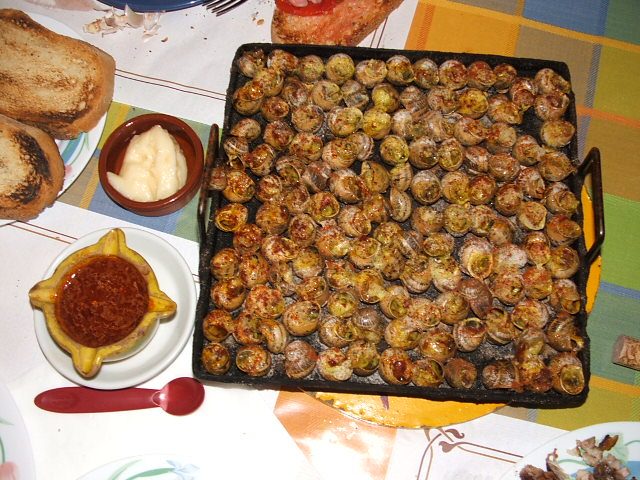
- Cargols (snails). As in Catalonia and the French Pyrenees, snails are a delicacy here, not a novelty. The classic preparation is cargols a la llauna — roasted in a metal tray over coals — served with allioli (garlic mayonnaise) or a sharp paprika vinaigrette to dip them in. An acquired pleasure, but a very local one.
- Game and stews. The hills give wild boar and hare, and autumn is the season for them. Civet de senglar — wild boar slow-braised in a dark, wine-rich sauce — is the standout; you’ll also find cunillo (rabbit) stewed with tomato, onion and white wine. These are deep, gamey, cold-night dishes.
- Bolets (wild mushrooms). Mushroom foraging is close to a national sport in autumn, when locals vanish into the forests after rovellons (saffron milk-caps) and ceps. On menus they turn up grilled with garlic and parsley, folded into rice and stews, or piled onto grilled meat. If you visit in September or October, order anything with bolets in the name.
- Canelons a l’andorrana. Cannelloni feels Italian, but it’s been a Catalan institution for over a century, traditionally eaten on Sant Esteve (26 December) using up the Christmas meats. The Andorran version stuffs the pasta tubes with a rich mince of pork, veal and chicken, blankets them in béchamel, and bakes them golden. Comfort food at its finest.
Grilled meat and carn a la llosa
For all the stews and specialities, the heart of a traditional Andorran meal is often simpler: meat, grilled over wood or charcoal. Mountain-raised lamb, kid, veal and the prized local black pork come off the brasa (the wood grill) smoky and unadorned, the quality of the meat doing the work. Look out for a mixed grill of sausages and cuts, or for xai (lamb) done over the coals.
The preparation worth crossing the country for is carn a la llosa — meat cooked at the table on a piece of scorching-hot slate. You’re brought a sizzling stone and thin cuts of raw meat, and you sear each bite yourself to your own taste. It’s interactive, it keeps the food hot to the last mouthful, and it’s a brilliant way to taste just how good the local beef and lamb are. It’s a fixture of the borda restaurants, which get their own section below because they’re the single best thing about eating here.

Embotits: the cured-meat board that runs the country
If one category of food deserves its own heading, it’s embotits — Andorra’s cured and cooked pork sausages and charcuterie. This is where the old pig-farming culture lives on most deliciously, and a sliced platter of embotits is the default start to a traditional meal, a ski-lunch staple, and the thing people cart home by the kilo from the shops and supermarkets. Get a board to share with bread and let everyone graze. The names to know:
- Llonganissa — the long, dry-cured pork sausage that’s the backbone of the board: firm, salty, pepper-flecked.
- Bull — a fat cooked sausage made from offal and lean pork, in white (bull blanc) and black, blood-sausage (bisbe) versions. Soft, rich, an essential local taste.
- Donja — a robust, smoky cured sausage particular to this corner of the Pyrenees, often cited as the most “Andorran” of the lot.
- Fuet — the thin, dry, snappable Catalan sausage you’ll recognise from any Barcelona deli; ubiquitous and very moreish.
- Botifarra — the fresh Catalan sausage, grilled and served with white beans (botifarra amb seques) as a classic plate, or cooked into escudella.
Alongside the sausages you’ll find pernil — cured mountain ham, the Pyrenean cousin of Spanish jamón — air-dried in the thin cold air. Buying a vacuum-packed selection of embotits to take home is one of the genuinely worthwhile food souvenirs from Andorra, and because they keep well, they survive the journey; I get into the practicalities of that in the shopping guide.
Cheese, bread and the things on every table
Ask what Andorra is quietly famous for, beyond the headline dishes, and the answer is cheese. The high summer pastures feed sheep and goats whose milk becomes some of the best mountain cheese in the Pyrenees — soft and sharp sheep’s cheeses, harder and tangier goat’s cheeses, made on both the Andorran side and in the neighbouring French Ariège. A cheese course here is never an afterthought.
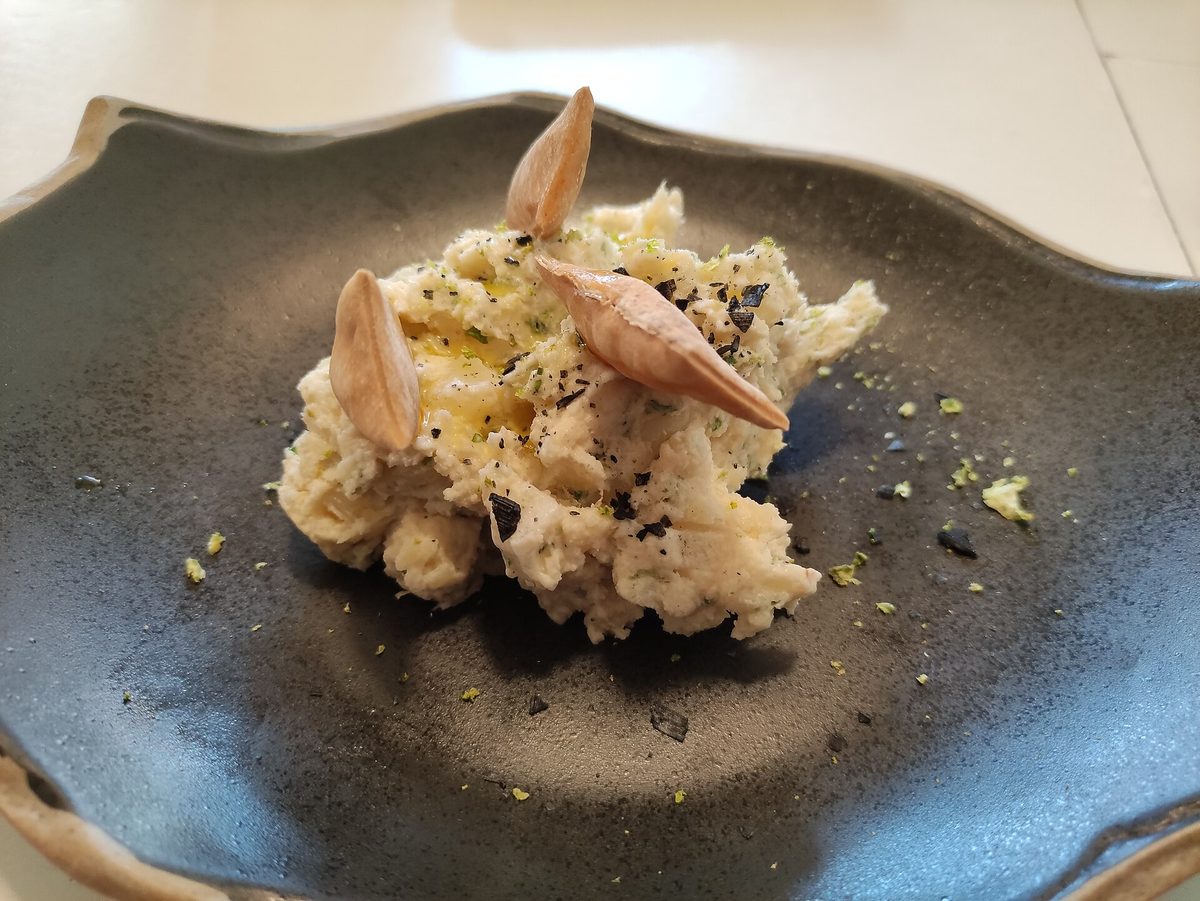
The one to be brave about is tupí (or formatge de tupí): a fermented Pyrenean cheese, traditionally made by packing leftover cheese into a clay pot — the tupí that gives it its name — with olive oil, garlic and a slug of ratafia or brandy, then letting it ferment into something pungent, spreadable and powerfully strong. It is not a beginner’s cheese. It is, however, intensely of this place, spread on bread with a glass of red, and worth seeking out if you like the funkier end of the cheese spectrum.
At the gentler end is mató (also called brossat), a fresh, unsalted whey cheese like a delicate ricotta. It crosses into dessert as mel i mató — mató drizzled with mountain honey — which is about the simplest and most satisfying sweet ending a Pyrenean meal can have.
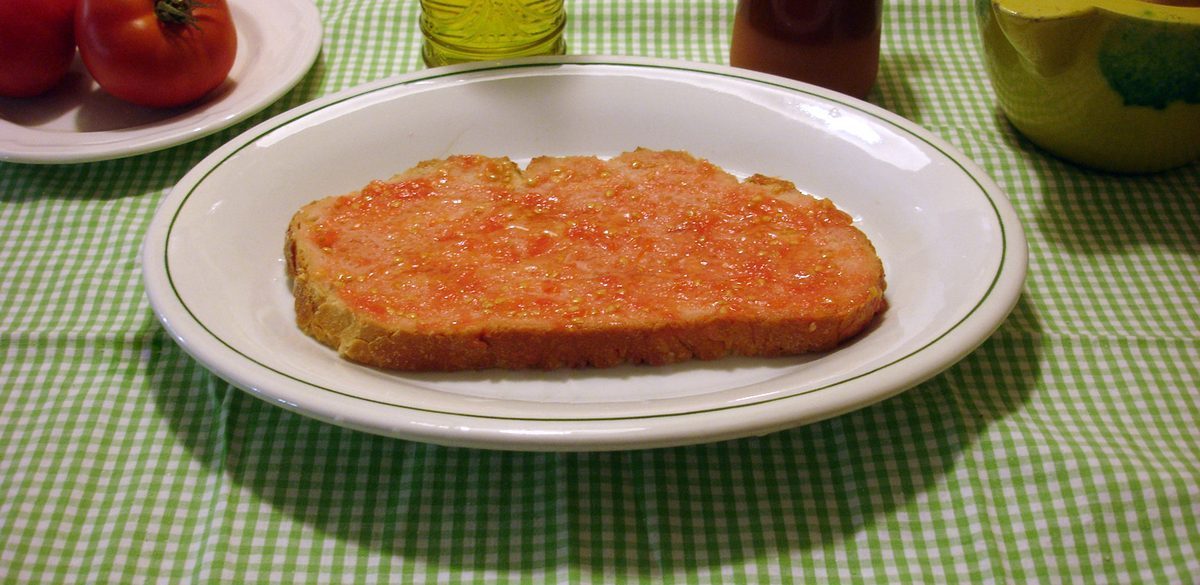
And on every table, without your asking, comes pa amb tomàquet: country bread rubbed with cut ripe tomato, then garlic, then dressed with olive oil and salt. It sounds like nothing and it’s the perfect accompaniment to embotits, to grilled meat, to cheese — to almost everything. Don’t be surprised when it appears as a reflex; do be prepared to eat a lot of it.
Vegetables and the seasonal table
Mountain food has a reputation as a wall of meat, and a bad traditional meal here can certainly feel that way. But the better kitchens lean hard on the seasons, and there’s more for vegetable-lovers than the stereotype suggests — if you know when to come and what to order.
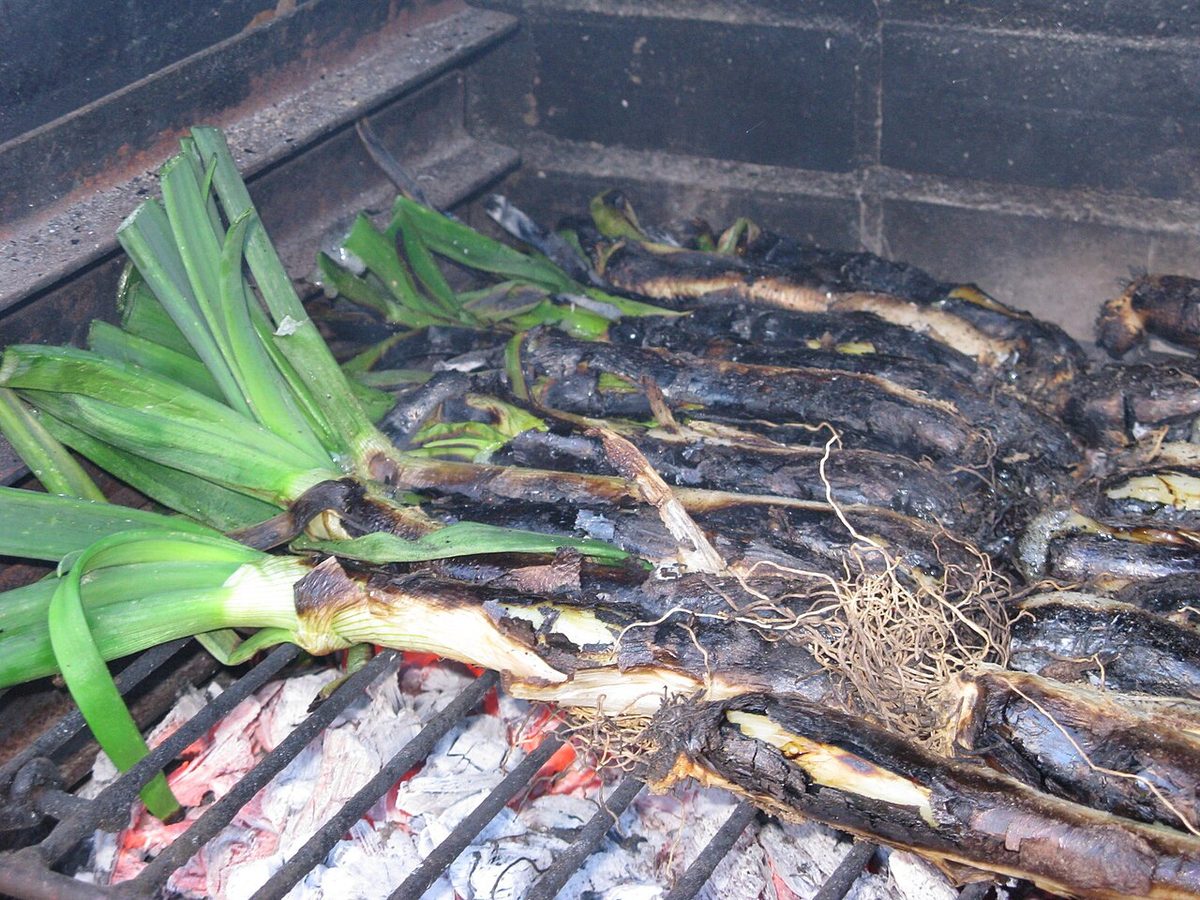
In winter, vegetables mostly arrive inside the stews — the cabbage and potato of trinxat, the beans and greens of escudella. Come spring, the table lightens: a classic is a salad of wild chicory or dandelion greens (xicoia), foraged off the hillsides and dressed with warm bacon and nuts, bitter and bright at once. Spring is also calçot season — the long, sweet grilled spring onions of a Catalan calçotada, charred black, peeled, and dunked in romesco sauce, eaten with your hands and a bib. It’s messy, communal and a joy if you catch it (roughly February to April).
Autumn belongs to the mushrooms, as above, and to the squashes and chestnuts that signal the turn toward winter cooking. The upshot: Andorra’s vegetable cooking is real but seasonal, so the time you visit genuinely changes what’s on your plate. Strict vegetarians and vegans should know that traditional borda menus are meat-centric and pork hides in many “vegetable” dishes (that trinxat is fried in bacon fat), but the capital and the resort towns have plenty of modern restaurants that cater well — more on navigating that in the practical section.
Something sweet: crema andorrana, coca and the rest
Andorran desserts are Catalan desserts with a mountain inflection, and they’re worth saving room for.
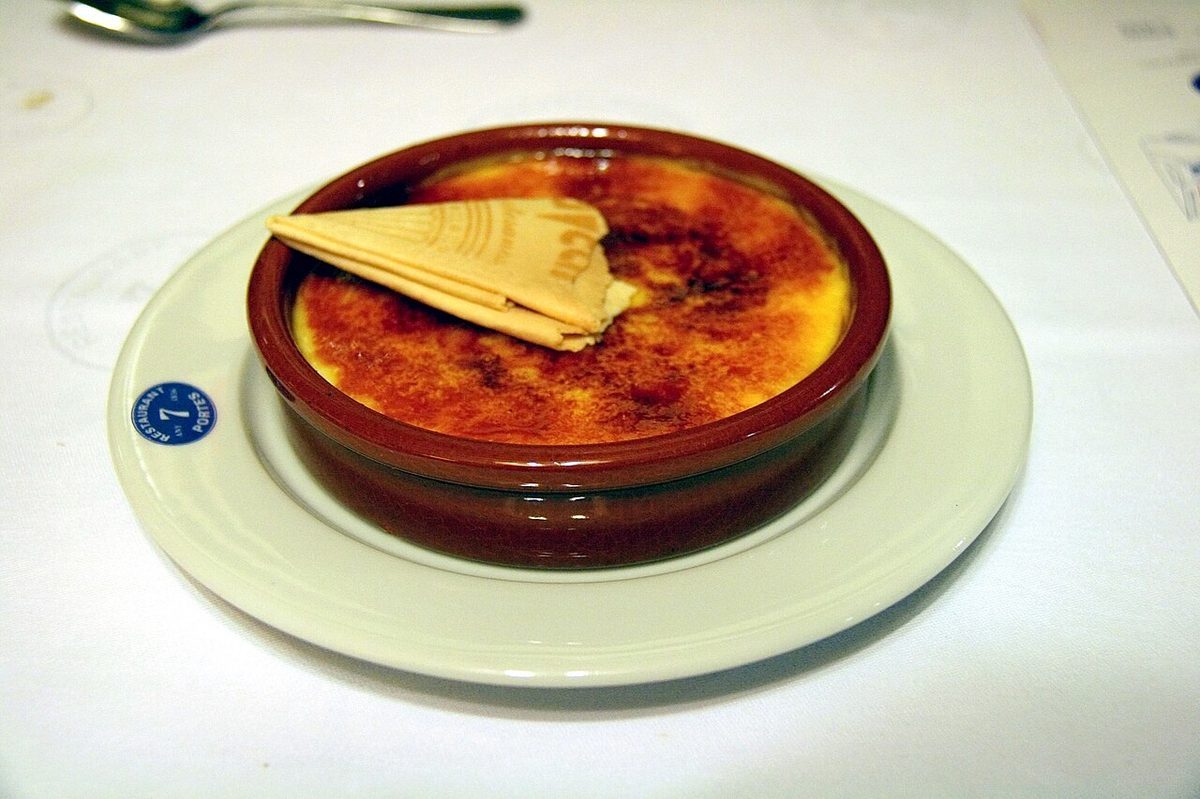
The signature is crema andorrana, the local take on the dessert the French call crème brûlée and the Catalans call crema catalana: a rich set custard scented with lemon and cinnamon. Where Andorra differs is the finish — instead of (or as well as) the brittle caramelised sugar top, the Andorran version is often crowned with soft meringue or whipped cream. It’s the dessert you’ll see most often, and a good one is a fine thing.
Then there’s coca, the flat Catalan pastry-bread that comes in countless forms, sweet and savoury. The one to time your trip around is the coca de Sant Joan, eaten on the night of 23 June for the midsummer festival of Sant Joan: an oval sweet bread strewn with candied fruit, pine nuts and sugar, sometimes hiding a band of custard. It’s one of the loveliest food traditions in the calendar — the whole country out late around bonfires with coca and cava. Other sweets to look for: mel i mató (the honey-and-fresh-cheese plate above), and torrijas around Easter — bread soaked in milk or wine, fried, and dusted with sugar and cinnamon, the Spanish cousin of French toast.
What to drink: ratafia, and Europe’s highest vineyards
This is the section every other Andorra food guide skips, and it’s the one that might surprise you most.
Start with the traditional digestif: ratafia. It’s a sweet, dark, herbal liqueur made by macerating green (unripe) walnuts together with a long list of herbs and spices — and recipes are closely guarded, often homemade. The flavour is nutty, aromatic and faintly medicinal in the best way, and it’s drunk as an after-dinner digestiu, sometimes over ice. If a restaurant offers a homemade ratafia at the end of the meal, say yes; it’s a real taste of the region and a gentle way to end a heavy plate.
Now the genuine surprise: Andorra makes wine, and not as a gimmick. A small cluster of serious producers grows grapes on terraced plots between roughly 1,000 and 1,200 metres, which puts them among the highest vineyards in Europe. At that altitude the vines get intense sun but big day-to-night temperature swings, which slows ripening and — the producers argue, persuasively in the glass — yields wines with bright acidity, deep colour and real aromatic complexity. It’s textbook “heroic viticulture”, farmed on slopes a tractor can’t climb.
The names worth knowing if you want to seek out a bottle or, better, book a cellar visit:
- Borda Sabaté 1944, in Sant Julià de Lòria, is the largest and most established — and the only certified-organic grower — with vines around 1,190 m. Their two wines have become the calling cards of Andorran wine: Escol, a fresh Riesling, and Torb, a structured red.
- Casa Auvinyà is the boutique star, farming since 2005 at about 1,200 m, producing only a few thousand bottles, including a Syrah grown on absurdly steep 70-degree slopes that won a gold medal at the CERVIM mountain-wine awards.
- Casa Beal and Celler Mas Berenguer round out the scene with small, characterful production and cellar doors you can visit by appointment.
Tasting and touring these high vineyards has quietly become one of the better grown-up things to do in Andorra in the warmer months — a genuinely memorable few hours, and a story to take home. Beyond the local wine, you’ll find the full Spanish and French lists everywhere (a glass of cava is the standard celebratory pour), and good coffee in the Spanish style — a cafè amb llet in the morning, a tallat (cortado) after lunch.
Where to eat: bordes, the capital and one Michelin star
Knowing the dishes is half the battle; knowing where to eat them is the other half. Andorra packs more than 400 restaurants into its small valleys, and they sort into a few clear types.
The borda — eat here at least once
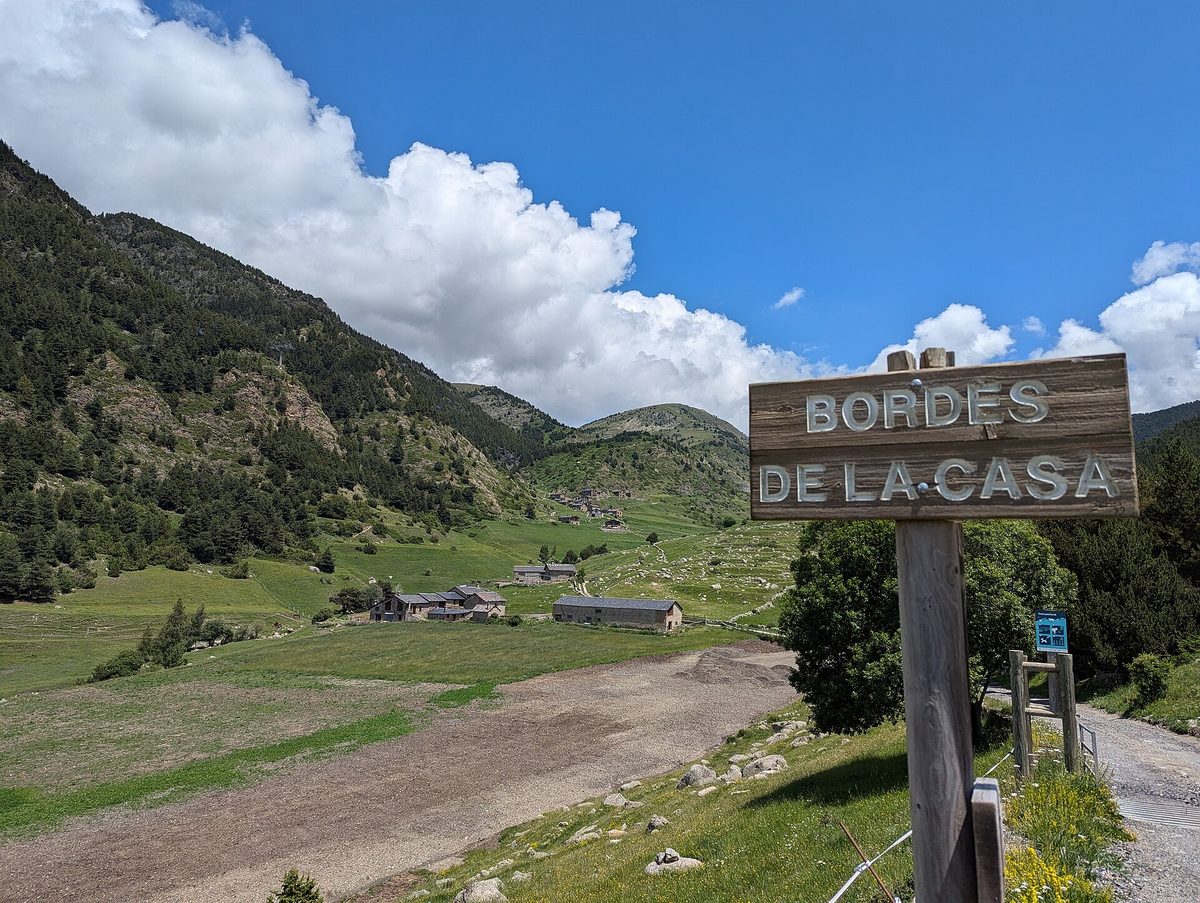
The single most Andorran way to eat is in a borda. The word means a mountain barn or storehouse in Pyrenean Catalan, and the best traditional restaurants are exactly that: centuries-old stone farm buildings, with thick granite walls, low wooden beams, an open fireplace and a wood-fired grill, converted into dining rooms. The atmosphere does half the work — you eat grilled meat and stews in the kind of room they were invented in — and the cooking is the traditional canon: escudella, trinxat, embotits, carn a la llosa, game in season.
A name that comes up again and again is Borda Estevet, just outside Andorra la Vella on the Carretera de la Comella, long famous for a mixed grill brought to the table still cooking on a hot slate. But there are excellent bordes in every parish — in La Massana, Canillo, Ordino and beyond — and part of the pleasure is finding your own. Book ahead in winter and at weekends; the good ones fill up, especially when the ski crowds come off the mountain hungry.
The capital and the towns
For sheer range, the capital and its conjoined neighbour Escaldes-Engordany are where you’ll eat most. Here the traditional bordes and Catalan grills sit alongside tapas bars, Basque pintxos counters, Argentinian steakhouses, sushi, Italian and a strong Portuguese presence (a nod to the country’s large Portuguese community). It’s a properly international eating scene for a town its size, and a good strategy is to do one traditional Andorran meal and then graze more widely. The full lay of the land — neighbourhoods, the market, where to sit — is in my Andorra la Vella guide.
Eating on the mountain
In ski season, a chunk of your eating happens at altitude, and Andorra takes its on-mountain food more seriously than most resorts. Beyond the self-service canteens there are proper sit-down restaurants up the slopes — the gourmet lunch at the Llac de Pessons in the Grau Roig bowl is a long-running favourite — plus the whole ritual of après-ski, where the food is more about sharing embotits and a drink in the afternoon sun than about fine dining. I cover the resort-by-resort detail in the skiing in Andorra guide; for food, just know that eating well on the mountain is entirely possible if you step past the obvious cafeterias.
The fine-dining ceiling: Ibaya and the Michelin star
For all its rustic reputation, Andorra has a real fine-dining peak. As of the 2026 MICHELIN Guide, the country holds one Michelin star, at Ibaya, inside the Sport Hotel Hermitage in Soldeu. It has held the star since 2021, under chefs Francis Paniego and Jordi Grau, and earned a Repsol Sun in 2026 as well. What makes it worth the splurge for a food traveller is its second tasting menu, “A Walk through Andorra”, which is explicitly a high-gastronomy tour of the local larder — Andorran trout, local sausages, even horse meat — turned into refined plates. It’s the rare fine-dining room that doubles down on its own region rather than importing a generic luxury menu, and it’s the best single argument that Andorran cuisine deserves to be taken seriously. Seven Andorran restaurants make the MICHELIN Guide selection in 2026; Ibaya is the one with the star, but the wider list is a reliable shortlist for a special meal.
How to eat like a local: hours, the menú del dia and prices
A few practicalities turn a decent food trip into a smooth one. Andorra runs on Spanish meal times, and fighting them is a losing game. Kitchens generally open for lunch from around 1 pm, with most locals sitting down between 1:30 and 3 pm; many restaurants then close the kitchen entirely through the afternoon, roughly 4 to 8 pm, before dinner service from about 8:30 pm onward. Turn up hungry at 6:30 pm expecting a hot dinner and you’ll find a lot of shut kitchens. Adjust, and your day suddenly works.
The smartest move at lunch is the menú del dia — a fixed-price set menu of two or three courses with bread and often a drink, the same midday-value tradition you’ll find across Spain. It’s how locals eat out, it’s generous, and it’s the best food value in the country, typically somewhere around €15–25 for a full traditional lunch depending on the place. À la carte dinner in a good borda will run more — figure roughly €30–45 a head with wine for a proper meal of grilled meat and starters — and the Michelin tasting menus are in a different bracket entirely.
Here’s the expectation-setter that catches people out, though: Andorra’s famous low taxes do not make restaurants cheap. The 4.5% sales tax (IGI) that makes alcohol, perfume and electronics such a bargain barely registers on a restaurant bill, and eating out costs roughly what it does in Spain — reasonable, but not a giveaway. Nobody comes to Andorra to save money on lunch; you come for the setting and the mountain ingredients. Tipping is modest and optional — rounding up or leaving 5–10% for good service is plenty. For the full rundown of money, taxes, tipping and the other quirks that trip up first-timers, see my Andorra travel tips; and if you’re road-tripping in for the day, the logistics are in how to get to Andorra.
Andorran food by season: a quick guide
Because so much of this cuisine is seasonal, here’s the at-a-glance version of when to eat what.
| Season | What’s on the table | Worth timing a trip for |
|---|---|---|
| Winter (Dec–Feb) | Escudella, trinxat, game stews, carn a la llosa, hearty borda dinners | Christmas escudella; Christmas-market street food in the capital |
| Spring (Mar–May) | Calçots with romesco, chicory and dandelion salads, lighter plates | Calçotada season (roughly Feb–Apr) |
| Summer (Jun–Aug) | Grilled meats and trout, cured-meat boards, terrace dining, winery visits | Coca and bonfires on the Nit de Sant Joan, 23 June |
| Autumn (Sep–Nov) | Wild mushrooms (bolets), game, wine harvest, chestnuts and squash | Mushroom season — order anything with bolets |
Whatever the season, the through-line holds: this is mountain food, generous and unfussy, best eaten slowly in a stone room with a view. Build a couple of proper meals into your plan rather than grabbing whatever’s nearest, and Andorra’s table turns from a footnote into one of the real reasons to visit. For more ways to fill the days around those meals, the things to do in Andorra hub is the place to start.
Andorran food: FAQ
What is Andorra’s national dish?
Escudella — more fully escudella i carn d’olla — is widely considered Andorra’s national dish. It’s a hearty winter stew of mixed meats (chicken, veal, pork, sausage and often humbler cuts), white beans or chickpeas, cabbage and potato, traditionally served in two stages: a pasta soup made from the broth, then the meats and vegetables. It’s eaten especially around Christmas, often with a large seasoned meatball called a pilota.
What food is Andorra famous for?
Andorra is best known for hearty mountain-Catalan cooking: escudella (the national stew), trinxat (fried potato and cabbage with bacon), river trout wrapped in ham, charcoal-grilled mountain meat, and above all its cured pork sausages (embotits) and mountain cheese. It’s also quietly famous among those in the know for high-altitude wine and the borda — the converted stone-barn restaurant that’s the classic place to eat all of it.
What is trinxat?
Trinxat is Andorra’s signature mountain dish: boiled potato and winter cabbage mashed together and fried with cured pork or bacon until crisp and caramelised, often finished with garlic and sometimes a fried egg or chicory on top. The name comes from the Catalan word for “chopped”. It originated in the neighbouring high valleys of Cerdanya and Alt Urgell and is the single dish most worth trying first.
Is Andorra known for cheese?
Yes. The high summer pastures produce excellent sheep’s and goat’s cheeses, and a cheese course is a genuine part of the cuisine. The most distinctive local cheese is tupí, a strong fermented cheese traditionally aged in a clay pot with oil, garlic and ratafia liqueur. At the milder end, fresh mató served with honey (mel i mató) is a classic simple dessert.
What do they eat for breakfast in Andorra?
Breakfast is light and Spanish/French in style: coffee with milk, a croissant or pastry, or toast with butter and jam. A more substantial mid-morning option is pa amb tomàquet — tomato-rubbed bread — with cured ham or cheese. Hotels aimed at skiers usually lay on bigger buffets, but the local habit is to eat little in the morning and save the appetite for a long lunch.
Is food expensive in Andorra?
Eating out costs roughly the same as in Spain — reasonable but not cheap. Andorra’s famously low 4.5% sales tax barely affects restaurant bills, so the savings travellers associate with the country apply to shopping, not dining. The best value is the lunchtime menú del dia, a fixed-price set meal often around €15–25; a good à la carte dinner with wine runs more like €30–45 a head.
Does Andorra make its own wine?
Yes — and it’s a real, growing scene, not a novelty. A handful of producers, led by Borda Sabaté 1944 and Casa Auvinyà, grow grapes on terraces between about 1,000 and 1,200 metres, among the highest vineyards in Europe. The altitude gives the wines bright acidity and aromatic complexity, and several wineries offer cellar visits and tastings by appointment.
Is there much vegetarian food in Andorra?
Traditional borda cooking is very meat-focused, and pork hides in many dishes (even trinxat is fried in bacon fat), so committed vegetarians should be specific when ordering the classics. That said, the capital and the resort towns have plenty of modern and international restaurants that cater well to vegetarians and vegans, and seasonal vegetable dishes, salads, mushrooms, cheese and pa amb tomàquet give you good options year-round.
What is a borda?
A borda is a traditional Pyrenean stone barn or storehouse. In Andorra the word now mostly means a restaurant set inside one of these old buildings — granite walls, wooden beams, an open fire and a wood grill — serving traditional mountain food like grilled meat, escudella and trinxat. Eating in a borda at least once is the most authentic dining experience the country offers.
Food & Drink: the in-depth guides
Each dish, drink and way of eating has its own guide:
- Trinxat, Escudella and Co — Andorra’s Mountain Dishes Explained
- The Best Restaurants in Andorra Right Now
- Bordas of Andorra — Eating in Converted Mountain Barns
- Fine Dining in Andorra — Tasting Menus at Altitude
- Andorran Wine and Local Products (Yes, They Exist)
- Eating Cheap in Andorra — Menu del Dia and Budget Bites
Related Andorra travel guides
Keep planning your trip with my other in-depth Andorra guides — including a day-by-day itinerary, hiking in Andorra, the Caldea thermal spa, the Grandvalira ski area, the full range of activities, visiting with kids, and where to stay.
Photo credits
All photographs are from Wikimedia Commons under their stated licences, with thanks to the photographers:
- Photo: Tamorlan, CC BY 3.0, via Wikimedia Commons — source
- Photo: Slastic, Public domain, via Wikimedia Commons — source
- Photo: Procsilas Moscas, CC BY 2.0, via Wikimedia Commons — source
- Photo: Mutari, Public domain, via Wikimedia Commons — source
- Photo: Tamorlan, CC BY 3.0, via Wikimedia Commons — source
- Photo: Wamito, Public domain, via Wikimedia Commons — source