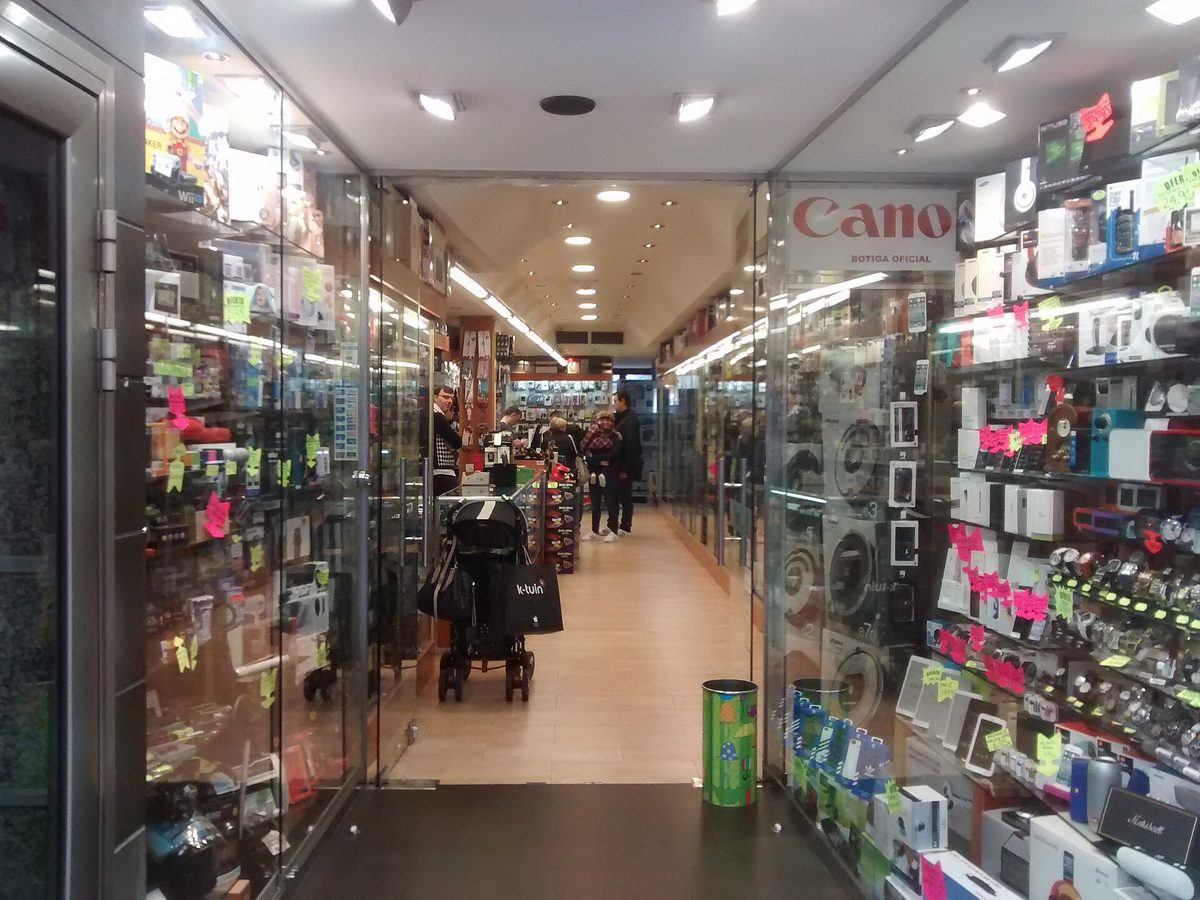
Of all the things people expect to be cheap in Andorra, electronics is where I see the biggest gap between hope and reality. The country’s duty-free reputation makes visitors assume a phone or a laptop must be a steal — and then they find the iPhone is 15% cheaper, not 40%, and the “bargain” camera is the same price they saw online last week. Electronics do save you money here. Just not as much as the perfume-and-tobacco legend leads you to believe, and only if you shop with your eyes open.
Buying electronics in Andorra typically saves around 10–20% versus Spanish retail — real money on a big-ticket item, but far less than tobacco or perfume, and hedged by three catches: the €900 customs limit, the warranty question, and online prices that often close the gap. This honest guide is for anyone weighing an Andorran tech purchase.
Last updated: July 2026. Electronics prices move fast and vary by model and promotion; treat the figures here as approximate 2026 examples, and always check the live online price of your exact item before buying.
Below I’ll give you the honest tax math, real price examples, the three catches that decide whether it’s worth it, where to buy, and a straight verdict. It’s the deep-dive companion to my main shopping in Andorra guide.
Buying electronics in Andorra at a glance
| Item (approx) | Andorra | Spain | Rough saving |
|---|---|---|---|
| Flagship phone (e.g. iPhone Pro, 256 GB) | ~€1,050 | ~€1,299 | ~19% (but over the €900 limit) |
| Premium wireless earbuds | ~€199 | ~€249 | ~20% |
| Laptops, cameras, TVs | Typically 10–20% below Spanish retail | — | |
| Sales tax (IGI) | 4.5% — not zero | vs 21% Spain | |
| Customs allowance (other goods) | €900 per adult (€450 under-15); single items can’t be split | ||
The headline: electronics are the classic “know your home price first” category. The saving is real but modest, and the fine print matters more here than anywhere else in Andorran shopping.
Are electronics really cheaper in Andorra?
Somewhat — and the tax math tells you exactly why the saving is smaller than you’d hope. Andorra charges its IGI sales tax at 4.5%, against 21% in Spain and 20% in France. That’s a real gap, but note the first myth to bust: Andorra is not tax-free. You’ll see shops and blogs imply electronics are “duty-free” or “0% tax”; they’re not — the 4.5% is baked into the price. So the maximum theoretical saving from tax alone is roughly the 16–17 percentage-point difference, before anything else eats into it.
And plenty eats into it. Retailers here aren’t charities: some of the tax gap disappears into margin, especially on high-demand electronics. Manufacturers increasingly set near-uniform euro pricing across Europe, which compresses the gap further on big brands like Apple. And global online competition — a Prime Day deal, a discounter’s flash sale — has quietly eroded the old advantage. The net result is a real-world saving of about 10–20% on most electronics, not the 30–50% you get on tobacco. It’s the thinnest of the “worth buying” categories, as my honest breakdown of whether Andorra is cheap for shopping explains.
How much you actually save on electronics
Let’s put real numbers on it, with the firm reminder that these are 2026 examples and prices move weekly — check your exact model before you buy.
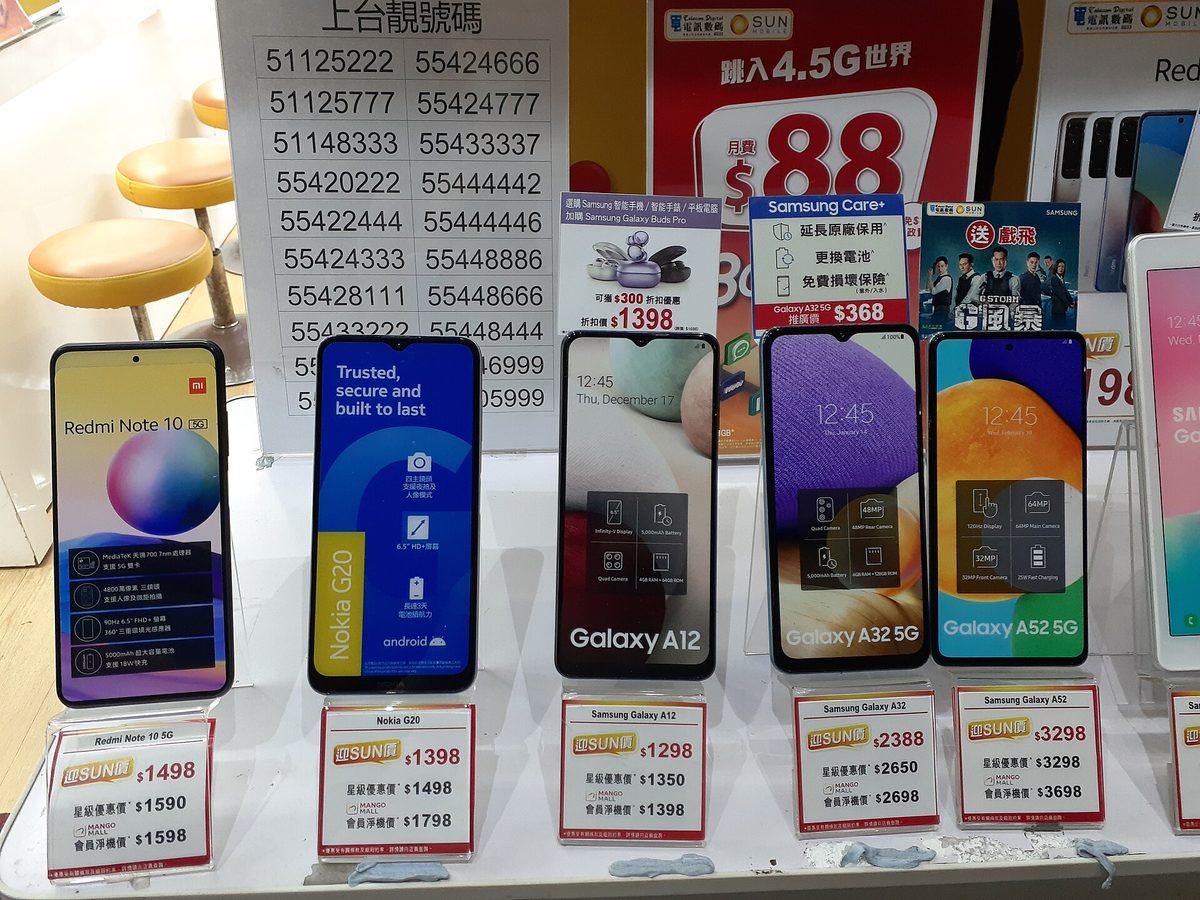
A flagship phone that lists around €1,299 in Spain — say an iPhone Pro with 256 GB — tends to run near €1,050 in Andorra, a saving of roughly 19%, or about €250. Premium wireless earbuds around €249 at home land near €199 here. Laptops, cameras and TVs sit in the same 10–20% band. On a €1,000+ item, 15–20% is genuine money — €150 to €250 in your pocket — which is why electronics make the “worth considering” list at all.
But scale matters both ways. That same 15% is only a few euros on a €40 accessory, so the small stuff isn’t worth a special trip. And the headline saving assumes you’re comparing against full home retail; measure it against the best online price instead and the gap often shrinks to single digits or vanishes. The rule that governs this entire category: know the live price of your exact item, online included, before you hand over a card. Buy when the Andorran number genuinely wins, not because the mountain air feels lucky.
The three catches that decide whether it’s worth it
More than any other category, electronics come with fine print. Three catches turn a “bargain” into a break-even — or worse.
Catch 1: the €900 customs limit
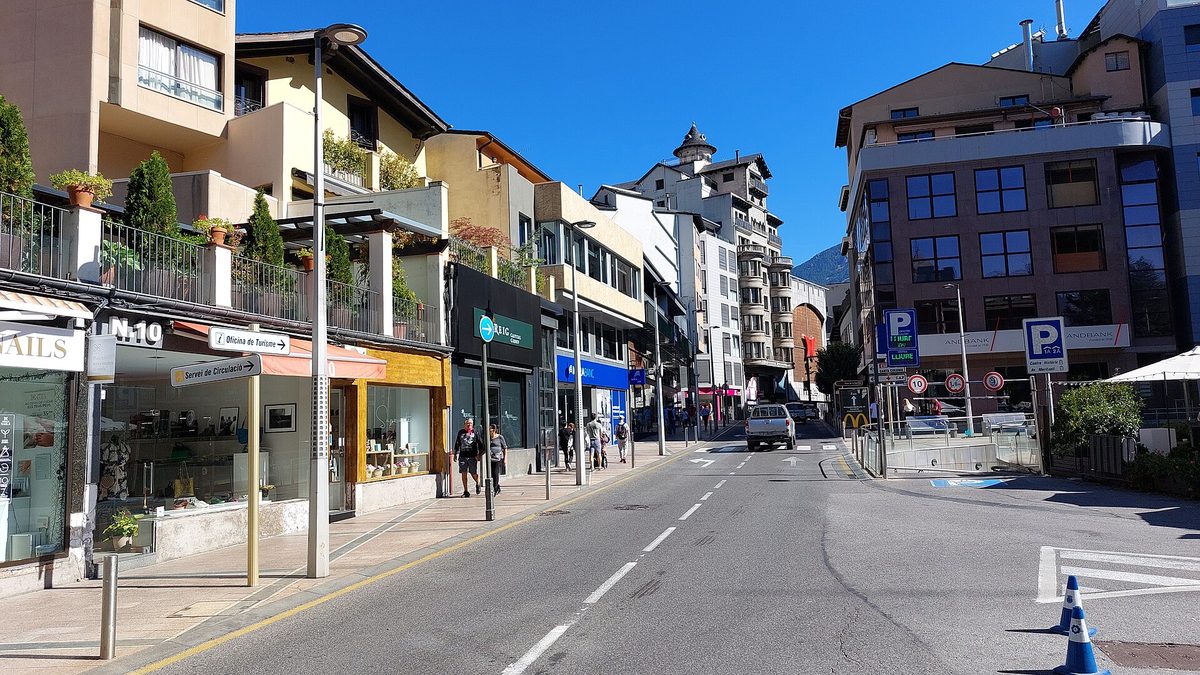
This is the big one. When you cross back into Spain or France, the general-goods customs allowance is €900 per adult — and a single flagship phone or premium laptop can exceed that on its own. Crucially, a single item can’t be split across two people’s allowances: a couple travelling together can’t combine two €900 limits to cover one €1,400 laptop. Anything over €900 must be declared in the red channel, where you pay import VAT on the excess — which can wipe out much of the saving. So the sweet spot is items comfortably under €900; above that, do the declared-price math carefully. The full rules are in my Andorra duty-free allowance guide.
Catch 2: the warranty question
Andorra is outside the EU, so the EU’s statutory two-year consumer guarantee doesn’t automatically apply, and consumer law here is Andorran, not that of your home country. In practice: ask explicitly for an EU-valid or international manufacturer’s warranty, and keep the invoice. Big brands often carry international warranties, but confirm it before buying, and be wary of small shops offering an “Andorra-only” guarantee — if the device fails at home, a local-only warranty is little use. This is the catch that turns a saving into a false economy when something goes wrong.
Catch 3: compare against online, not the home high street
The Andorran price often looks decisive against a Spanish shop window and merely okay against the best online price. Forum users regularly report that Andorran electronics were “no cheaper than the internet” once they checked. Before you buy, pull up the live online price — Amazon, the manufacturer’s store, a reputable discounter — and compare like for like. If Andorra still wins after that, buy with confidence; if it only wins against full retail, it may not be worth the customs risk or the warranty hassle.
Where to buy electronics in Andorra
If you’ve done the math and decided to buy, a few reliable places to look.

The Pyrénées department store on Avinguda Meritxell has a substantial electronics floor and, being a big established house, is exactly where you want your receipt to come from if something goes wrong; it also houses an fnac, good for cameras, computing and accessories. For Apple specifically, look for an official Apple reseller such as K-tuin, which gives you proper Apple warranty support. Near the Spanish border, the giant Epizen complex in Sant Julià de Lòria includes a large electronics floor (IO Electro&Home) alongside its hypermarket. And the pedestrianised stretch of Avinguda Meritxell has a run of independent phone, camera and electronics dealers — fine for browsing and price comparison, but scrutinise the warranty terms before buying from the smaller ones. For the wider retail map, see my Andorra shopping centres and shopping in Andorra la Vella guides.
What’s worth buying — and what isn’t
Not all electronics are equal here. Worth considering: a flagship phone, laptop, camera or TV you were going to buy anyway, where 15–20% off a big number is real money and the item (or your declared math) works with the €900 limit. Premium audio — earbuds, headphones — often shows a solid 20% saving in an easy-to-carry package. Not worth a special trip: small accessories and cables, where the percentage saving is a euro or two; anything you can catch cheaper in an online sale; and cutting-edge launch models, where uniform euro pricing leaves almost no gap. As a rule, the bigger and more considered the purchase, the better electronics do here — the opposite of an impulse buy. Fold the decision into a broader shopping trip rather than crossing a border specifically for a gadget.
The verdict: real savings or tourist myth?
Both, honestly, depending on how you shop. It’s a real saving if you’re buying a big-ticket item you already wanted, you’ve checked it beats the live online price, it fits within (or you’ll properly declare against) the €900 allowance, and you’ve secured a valid warranty. In that case, 15–20% off a €1,000 device is money worth having. It’s a tourist myth if you assume everything electronic is dramatically cheap, buy on impulse without checking online prices, ignore the customs limit, or accept an Andorra-only warranty. Electronics reward the disciplined shopper and punish the dreamer. Come with your homework done and Andorra can genuinely save you money on tech; come expecting magic and you’ll overpay for the privilege of a nice view. For where the country’s duty-free promise is more reliably true, see my guides to perfume and alcohol and cigarette prices.
Electronics category by category
The 10–20% average hides real variation. Here’s how the main categories actually behave.
Phones
Flagship smartphones are the headline draw and save a respectable 15–20% against Spanish retail — but they’re also the category most likely to exceed the €900 customs limit and the one where uniform euro pricing is tightest, so the launch-week models barely differ. Buy a phone here only after checking the online price and the customs math.
Laptops and tablets
Similar 10–20% territory, and often a better bet than phones because mid-range models sit comfortably under €900. A €700–900 laptop you were buying anyway is close to the ideal Andorran electronics purchase: meaningful saving, within the allowance, easy to carry.
Cameras
Cameras and lenses can save well on higher-end bodies, but this is the category where forum users most often report the online price matching or beating Andorra. Serious buyers should price the exact body-and-lens combination online first; the saving is real only on some models.
TVs and large items
Big televisions show a decent percentage saving, but two problems: many exceed €900, and they’re a genuine pain to transport over mountain passes and through a border check. Unless you’re driving and the declared math works, a TV is rarely worth it.
Audio and accessories
Premium headphones and earbuds are a quiet sweet spot — often around 20% off, well under €900, and easy to carry. Cables, chargers and small accessories, on the other hand, save only a euro or two and aren’t worth a special thought.
A worked example: is that phone actually a deal?
Run the numbers the way I would. Say a phone is €1,299 in Spain and €1,050 in Andorra — a tempting €249 saving. First, check online: if a reputable site has it at €1,150 with a sale, your real saving over your best alternative is €100, not €249. Second, apply the customs limit: at €1,050 it’s over the €900 allowance, so strictly you should declare it and pay import VAT on the €150 excess — call it €30–35 — trimming the saving further. Third, confirm the warranty is EU-valid. After all three, your genuine, safe saving might be €60–100 rather than the €249 on the sticker. That may still be worth it — but it’s a very different number, and it’s the one to decide on. Do this arithmetic on any big purchase; it’s the difference between a real deal and a story you tell yourself. My Andorra travel tips guide has more on the practical groundwork.
For non-euro shoppers: mind the exchange rate
One more factor if you’re paying with a non-euro card or comparing against non-euro home prices: the exchange rate and any card fees can quietly erase a modest electronics saving. A 15% Andorran discount is small comfort if a poor conversion rate and a foreign-transaction fee claw back several percent. Pay in euros where you can, use a card with low or no foreign fees, and do your comparison in a single currency so you’re comparing like with like. It’s the kind of detail that doesn’t matter on a €40 buy and matters a lot on a €1,000 one.
Common mistakes buyers make
The same avoidable errors turn up again and again with Andorran electronics. Steer clear of these and you’ll do fine.
- Assuming everything is dramatically cheap. The tobacco-and-perfume savings don’t carry over; electronics are a modest 10–20%, sometimes less.
- Not checking the online price. The single most common mistake — the shop-window saving often evaporates against a good online deal.
- Ignoring the €900 limit. Buying a €1,200 phone and sailing through the green channel is a gamble that can end in seizure and a fine.
- Accepting an Andorra-only warranty. Cheap now, expensive later if the device fails at home. Insist on EU-valid or international cover.
- Impulse-buying accessories. Cables and small gadgets save pennies; they’re not why you’re here.
- Forgetting the receipt. You need it for the border, for the warranty, and for any return — keep it safe.
Get those right and electronics take their proper place in an Andorran haul: a considered, occasional win rather than the guaranteed bargain the legend promises. For the categories where the duty-free promise is more dependable, my shopping in Andorra guide has the full ranking.
Buying electronics in Andorra: frequently asked questions
Is buying electronics in Andorra really cheaper?
Somewhat — typically 10–20% below Spanish retail, which is real money on a big item but far less than the 30–50% you save on tobacco or perfume. Andorra’s 4.5% sales tax (not zero) is the reason, minus retailer margins and online competition. Always compare the live online price of your exact model first; the saving that looks big against a shop window often shrinks against the internet.
How much cheaper is an iPhone in Andorra?
Roughly 15–20% below Spanish retail — a flagship model listing around €1,299 in Spain tends to run near €1,050 in Andorra, saving about €250. But that price exceeds the €900 customs allowance, so it technically must be declared when crossing back, and it can’t be split across two people’s allowances. Check the live price and the customs math before assuming it’s a bargain.
Do electronics from Andorra come with a warranty?
Not automatically an EU one. Andorra is outside the EU, so the EU statutory two-year guarantee doesn’t apply by default and consumer law is Andorran. Ask explicitly for an EU-valid or international manufacturer’s warranty, keep the invoice, and be cautious of small shops offering only an Andorra-only guarantee — it’s little help if the device fails back home.
How much electronics can I bring back from Andorra?
Electronics fall under the general goods allowance of €900 per adult (€450 for under-15s) when crossing into Spain or France. A single item over €900 must be declared, and it can’t be split across travellers’ allowances. Declare the excess in the red channel and pay import VAT on it; get caught not declaring and the goods can be seized and you can be fined.
Is it worth buying a laptop or camera in Andorra?
It can be, for a considered purchase: 10–20% off a €1,000+ laptop or camera is genuine money. But only if it beats the best online price, fits or is properly declared against the €900 limit, and comes with a valid warranty. For small or mid-priced items the saving rarely justifies a special trip, and launch models with uniform euro pricing barely differ.
Where is the best place to buy electronics in Andorra?
The Pyrénées department store on Avinguda Meritxell (which also houses an fnac) is the reliable choice for selection and after-sales peace of mind. For Apple, use an official reseller like K-tuin for proper warranty support. The Epizen complex near the Spanish border has a big electronics floor, and Meritxell’s independent dealers are good for comparison — just check their warranty terms.
Is Andorra tax-free for electronics?
No. Andorra charges a 4.5% IGI sales tax on electronics — low compared to Spain’s 21%, but not zero. Shops sometimes market goods as “duty-free,” which is shorthand, not literal. The low tax is why electronics are somewhat cheaper, but margins and online competition mean the real saving is usually 10–20%, not the full tax difference.
Are electronics cheaper in Andorra than online?
Often not by much, and sometimes not at all. Andorran prices tend to look best against full high-street retail; against a good online price — a Prime Day deal or a discounter’s sale — the gap frequently narrows to single digits or disappears. The golden rule is to check the live online price of your exact item before buying, and only buy in Andorra when it genuinely wins.
Can two people combine allowances to buy one laptop in Andorra?
No. Customs allowances are individual and a single item can’t be split across two people’s €900 limits. A €1,400 laptop exceeds one person’s allowance and must be declared, even if two adults are travelling together — you can’t treat it as €700 each. Declare it in the red channel and pay import VAT on the amount over €900, or choose an item that fits within a single allowance.
What is the best electronics to buy in Andorra?
Mid-priced, considered purchases that stay under the €900 limit and beat the online price: a €700–900 laptop, premium earbuds or headphones, or a mid-range camera you were buying anyway. Flagship phones save a good percentage but often breach the customs limit, and small accessories save too little to matter. Big, wanted, checked-against-online items are where Andorra delivers.
Related Andorra travel guides
Keep planning with my other in-depth guides: the main shopping in Andorra guide, the duty-free allowances, perfume shopping, alcohol and cigarette prices, whether Andorra is cheap for shopping, the shopping centres, and shopping in the capital, Andorra la Vella.
Photo credits
All photographs are from Wikimedia Commons under their stated licences, with thanks to the photographers: