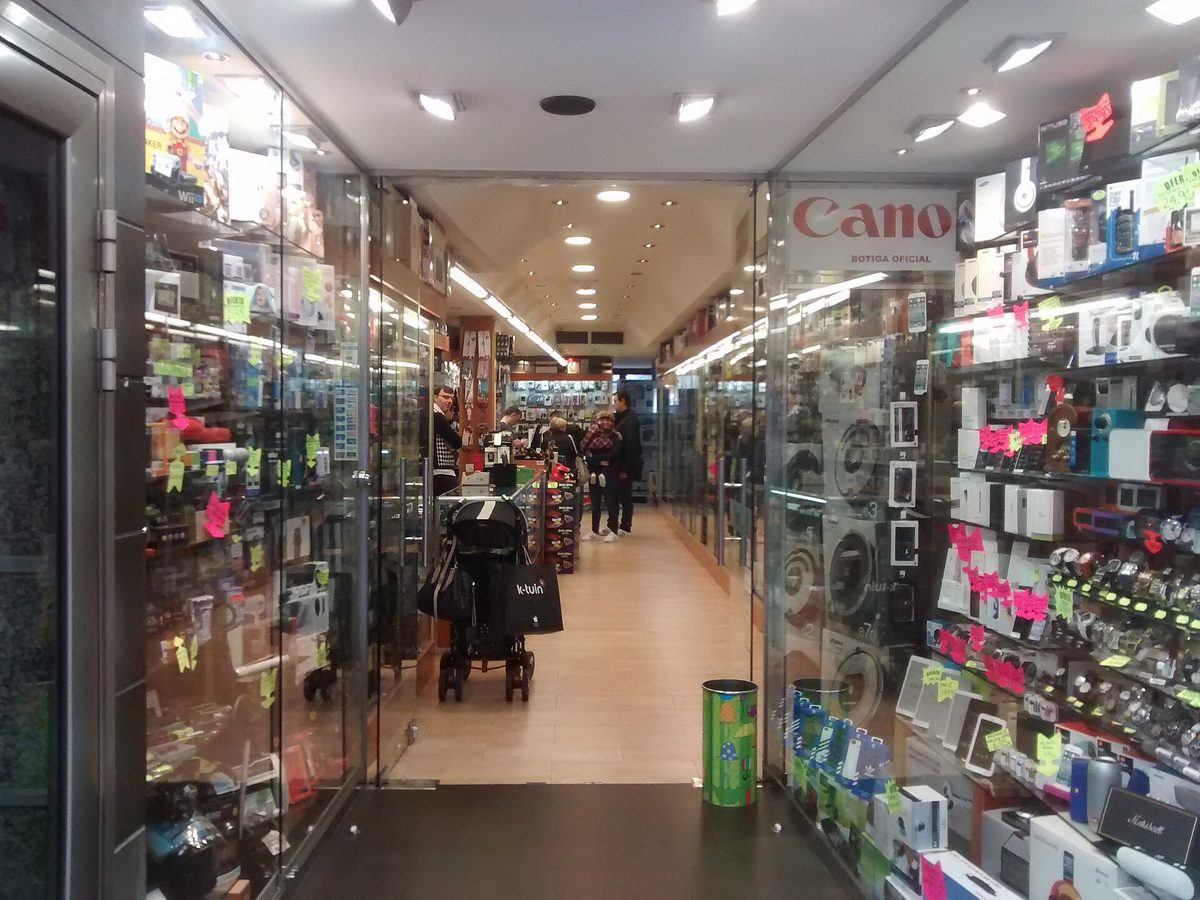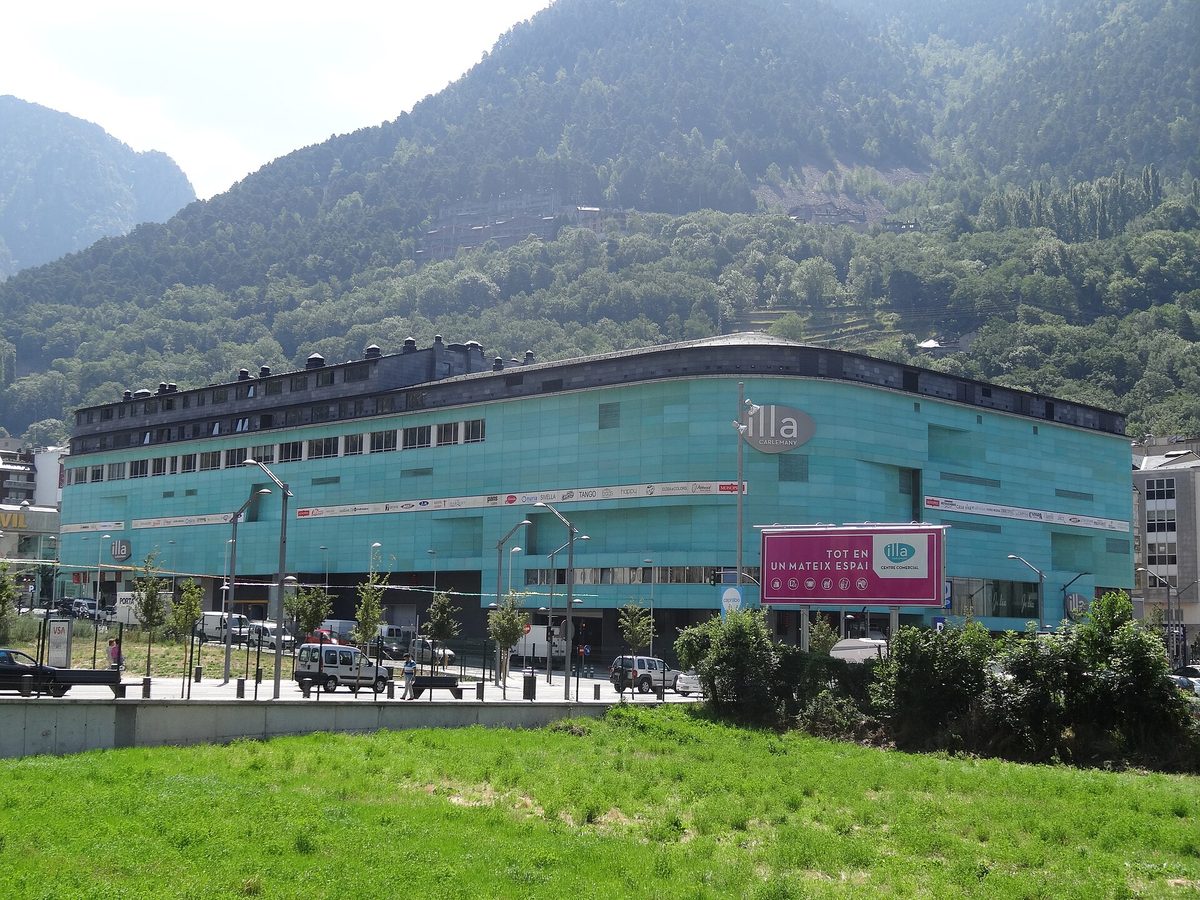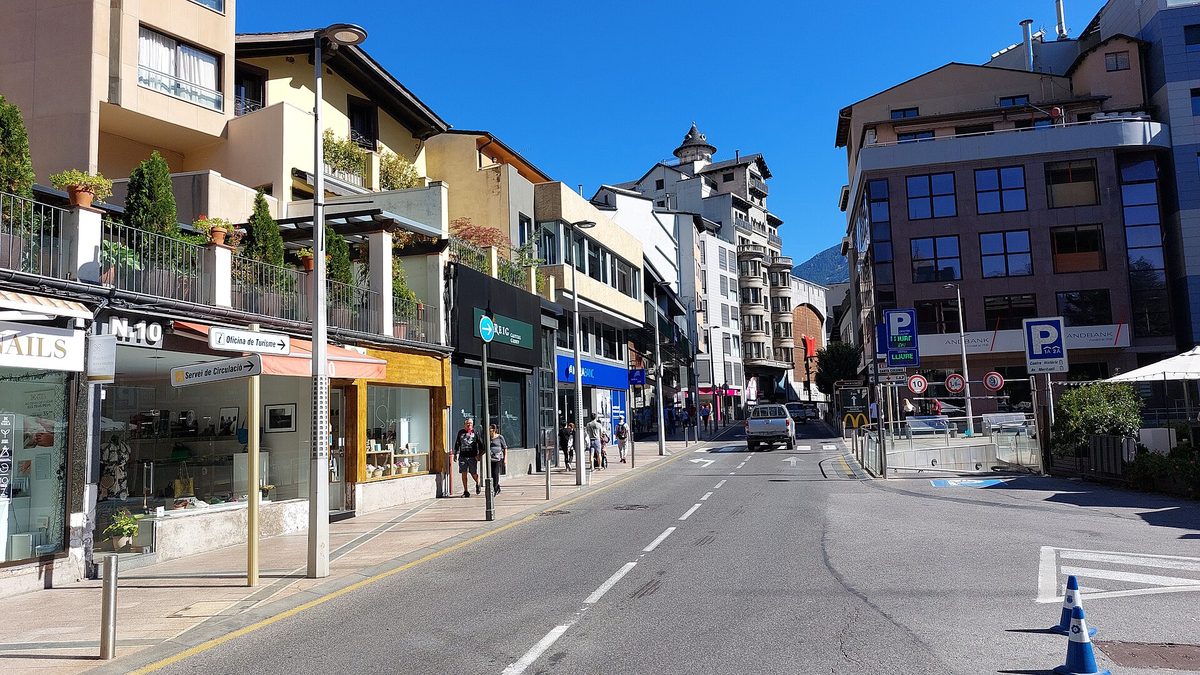
I keep a note on my phone that most people would find deranged: the Spanish shelf price of nine specific things, updated whenever I notice a change. Marlboro, Johnnie Walker Black, Sauvage, a litre of unleaded, a jar of Clinique moisturiser. It exists because I have twice driven up to Andorra, spent four hours shopping, and come home with things I could have bought cheaper at home. That is the trap this guide is about.
So, is Andorra cheap for shopping? Selectively, and the selection matters far more than the headline. Tobacco, spirits, perfume and fuel are dramatically cheaper than in Spain or France. Electronics are modestly cheaper. Chain fashion, books and fresh food are not cheaper at all. This guide is for the day-tripper deciding if the drive pays.
Last updated: August 2026. Every price below is a good-faith 2026 snapshot from shelves in Andorra la Vella, Escaldes-Engordany and Sant Julià de Lòria, compared against typical Spanish and French high-street prices. Promotions move weekly, fuel moves daily, and customs allowances get revised. Check current prices and the official customs pages before you plan a trip around any number here.
Is Andorra cheap for shopping? The at-a-glance answer
If you read nothing else, read this table and the break-even section further down. Everything in between is the working.
| The question | The honest answer |
|---|---|
| Short version | Cheap on tax-heavy goods. Ordinary on everything else. The gap is a tax gap, not a magic gap. |
| Sales tax | IGI at 4.5%, against 21% IVA in Spain and 20% TVA in France |
| Big savings | Tobacco (~35-40% vs Spain, ~70% vs France), spirits (~40%), perfume and cosmetics (~30%), fuel |
| Modest savings | Phones, laptops, cameras, headphones: typically 10-20%, and less once you compare online |
| Roughly zero savings | Zara, H&M and Mango, books and stationery, fresh food, most luxury watches |
| Realistic saving per adult | Around €90-190 against Spanish prices, €150-260 against French, if you actually fill the allowances |
| The hard ceiling | Customs allowance per adult: 300 cigarettes, 1.5 L spirits, 5 L wine, 16 L beer, €900 of other goods |
| Cost of getting there | Around €10 from La Seu d’Urgell, €70-110 from Barcelona, €55-80 from Toulouse in fuel and tolls |
| Break-even | One adult from Barcelona: marginal. Two adults: yes. From Toulouse or the Alt Urgell: comfortably yes |
| Tax refund at the border | None. There is no refund scheme to claim. The low shelf price is the entire discount |
| Currency and payment | Euro, cards accepted almost everywhere; keep paper receipts for customs |
| Best timing | Tuesday to Thursday, outside holiday weekends; sales in January-February and July-August |
The pillar guide to shopping in Andorra covers where to go and what to buy, street by street. This one does the thing most articles skip: the numbers, the ceiling on those numbers, and the cost of reaching them.
Why is Andorra tax free? (It isn’t, and that distinction matters)
Start here, because once you understand the mechanism you can predict which price tags will surprise you and which won’t.
Andorra is a sovereign principality that is not a member of the European Union, which means it is outside the EU’s VAT and excise system and sets its own indirect taxes. Its general sales tax, the IGI, sits at 4.5%. Spain charges 21% IVA on most goods; France charges 20% TVA. That is the number every headline is built on.
The 4.5% is only half the story
Apply the raw arithmetic and a 21%-taxed Spanish item should be roughly 14% cheaper in Andorra. That is real money on a laptop, and it is roughly what you see in the electronics shops. But it is nowhere near a 40% saving on a bottle of gin, and the reason is excise duty.
Tobacco, alcohol and fuel carry a second, much heavier layer of tax in the EU: excise, charged per unit before VAT is applied on top. In Spain and France the combined excise-plus-VAT stack swallows something like 70-80% of the final price of a pack of cigarettes. Andorra levies a far lighter duty on the same pack. So on tobacco you are not saving 16% of tax, you are stepping out of a punitive tax regime altogether.
That single fact explains the entire shape of Andorran shopping. The more of an item’s home price is tax, the more Andorra saves you. A carton of cigarettes is mostly tax. A cotton T-shirt is mostly cotton, freight and brand margin. One of those things is worth driving for.
“Duty-free” is marketing shorthand
You will see “duty free” painted on half the shopfronts near both borders. It is not literally true and nobody in Andorra pretends otherwise once you ask. Every purchase carries 4.5% IGI, and tobacco, alcohol and fuel carry local excise on top of that. There is no special tax-free store you need a passport to enter, and there is no VAT-refund form to stamp on the way out. The price on the label is the price, and the discount is already inside it.
Two knock-on consequences people miss. Because there is nothing to reclaim, you cannot improve your position by shopping in one shop rather than another for tax reasons. And because Andorra uses the euro without being in the eurozone, there is no currency arbitrage either. Prices compare directly, which makes the comparison honest and unusually easy.
Andorra prices vs Spain and France: the category-by-category table
Here is the comparison I wish someone had handed me before my first trip. These are typical 2026 shelf prices, not the best price you could possibly find on a promotion week, and not the worst tourist-facing sticker either. Treat them as the middle of a range that moves.
| Item | Andorra | Spain | France | Real saving |
|---|---|---|---|---|
| Marlboro, pack of 20 | ~€3.50 | ~€5.50 | ~€12.50 | ~36% vs Spain, ~72% vs France |
| Carton of 200 cigarettes | ~€35 | ~€57 | ~€125 | ~38% / ~72% |
| Johnnie Walker Black, 1 L | ~€18 | ~€32 | ~€36 | ~44% / ~50% |
| Tanqueray gin, 1 L | ~€16 | ~€27 | ~€30 | ~41% / ~47% |
| Rioja crianza, 75 cl | ~€5 | ~€8 | ~€11 | ~35% / ~55% |
| Chanel N°5 EDP, 100 ml | ~€85 | ~€120 | ~€125 | ~29% / ~32% |
| Dior Sauvage EDT, 100 ml | ~€70 | ~€105 | ~€108 | ~33% / ~35% |
| Mid-range moisturiser, 50 ml | ~€35 | ~€48 | ~€50 | ~27% / ~30% |
| Flagship phone, 256 GB | ~€1,050 | ~€1,299 | ~€1,329 | ~19% / ~21%, but see the €900 limit |
| Premium wireless earbuds | ~€199 | ~€249 | ~€279 | ~20% / ~29% |
| Unleaded 95, per litre | ~€1.55 | ~€1.70 | ~€1.85 | ~10-15c/L vs Spain, ~30c/L vs France |
| Branded chocolate, coffee pods | — | — | — | ~30-50% on big brands in the hypermarkets |
| Zara, H&M, Mango | same | same | same | ~0%: chains price-match their Spanish stores |
| Books and stationery | same or higher | — | — | 0% or worse |
| Fresh produce, bread, dairy | same or higher | — | — | 0% or worse |
| Luxury watches | marginal | — | — | ~0-10%, and instantly over the €900 cap |
Where the saving is genuinely huge
Tobacco is the outlier and always has been. Against Spain you save around a third; against France you save the better part of three-quarters, which is why the car parks at Pas de la Casa on the French border are a solid wall of Ariège and Haute-Garonne plates every weekend of the year. A carton that costs about €35 in Andorra runs roughly €57 in Spain and about €125 in France. Nothing else in the country produces that kind of delta.
Spirits are second, at roughly 30-45% below Spanish supermarket prices. Mid-range litre bottles of whisky, gin and rum land in a €14-18 band that mainland Spain stopped seeing years ago. Wine is quietly excellent value too, and the wine allowance is generous. The full breakdown of brands and bottle sizes lives in the guide to alcohol and cigarette prices in Andorra.
Perfume is the third pillar and, per kilo of luggage, the most efficient thing you can carry home. Around 25-35% off the big houses, with the useful quirk that the competing chains along Avinguda Meritxell undercut each other constantly on exactly the bottles tourists want. I have seen the same 100 ml of Sauvage vary by eight euros between two shops a hundred metres apart. Walk, compare, then buy: the perfume shopping guide goes deeper on which chains to check.
Fuel deserves a mention nobody gives it. Filling a 50-litre tank on the way out saves around €6-8 against Spain and €13-15 against France. That is not a reason to drive up a mountain, but it is a free rebate on the drive itself, and your allowance explicitly covers a full standard tank plus up to 10 litres in a jerrican.
Where the saving is real but modest
Electronics is the category that generates the most disappointment, because expectations run so far ahead of reality. Phones, laptops, cameras and headphones typically run 10-20% under Spanish high-street retail. On a €1,300 phone that is real money. But it is not the 40% people arrive expecting, and there are two structural problems on top: the €900 customs allowance makes a flagship phone technically undeclarable, and Andorran consumer law is not EU consumer law, so ask explicitly for a European warranty and keep the invoice. The detail is in the guide to buying electronics in Andorra.
Sports and ski hardware is a genuine bargain in the right week, which is not most weeks. October and November pre-season promotions and the late-spring clearance of last season’s stock are when the discounts get serious. Turn up in February and you will pay something close to Spanish prices for the same skis.
Where the saving is basically zero
Here is the part the glossy shopping listicles never say out loud. The international fashion chains, which occupy a startling proportion of the shopping mile’s window frontage, price their Andorran stores to match their Spanish ones almost to the cent. Zara, Mango, H&M and the rest are running a Spanish price list in a 4.5% tax jurisdiction and quietly pocketing the difference. You are shopping there for the range and the air conditioning, not for a discount.
Books, stationery and school supplies are the same or worse. Fresh food is the same or worse: nobody in the Pyrenees drives up a mountain for lettuce, and the supermarkets know it. Luxury watches and fine jewellery look tempting in the Meritxell display cases, but compare seriously against a Barcelona or Toulouse authorised dealer and the deltas shrink to single digits, at which point the €900 allowance makes the whole exercise legally awkward anyway. If you want the full ranked list, the sibling guide to what to buy in Andorra sorts every category by percentage saved.

The retailer-margin reality: you don’t get the whole tax gap
This is the single biggest reason people come home underwhelmed, and almost nobody writes about it.
Andorran retailers are not a charity distributing tax relief to visitors. They are businesses operating in a small, high-rent, high-footfall market where nine million visitors a year arrive already convinced that everything is cheap. When a shopkeeper’s cost base is 16 percentage points lower than a Spanish competitor’s, they face a choice: pass the whole gap on and compete on price, or pass on half and keep the rest as margin.
Which they choose depends entirely on how easily you can check. Tobacco and spirits are commodities with prices everybody knows, sold in a street of shops that can see each other’s windows, so competition grinds the margin down and you get most of the gap. Perfume is similar, because the chains fight publicly. Electronics is where the skim is largest: model numbers are confusing, specifications vary by region, and comparing a shop’s price against your home market takes effort most tourists won’t make on holiday. That is exactly why the electronics discount lands at 10-20% rather than the 16% pure tax arithmetic would predict on top of a normal wholesale advantage.
Fashion is the extreme case, where the pass-through is essentially zero. The chains set a single Iberian price list and Andorra sits inside it.
Online prices are the real benchmark, not your high street
Here is the rule I would tattoo on every day-tripper’s forearm. Do not compare an Andorran price against the shop window in your home town. Compare it against what you would actually pay if you bought it online tonight.
The Andorran retail model was built in an era when the alternative to driving up here was a Spanish department store with a Spanish department store’s prices. That world is gone. A large online retailer running a promotion will regularly beat an Andorran shelf price on a camera, a laptop or a pair of headphones, delivered to your door, with your home country’s consumer protections attached and no customs allowance to worry about. On electronics specifically, I now assume the online price wins until proven otherwise.
What online cannot do is sell you 300 cigarettes at Andorran excise rates, or a litre of gin at €16, or a €35 bottle of perfume saving. Those categories are structurally, permanently cheaper here because the discount comes from a tax regime rather than a logistics margin. That is the durable case for the trip, and it is a narrower case than the shopfronts suggest.
Practical version: before you leave home, check the online price of anything over about €100 that you are thinking of buying. Screenshot it. Two minutes of preparation is the difference between a good day and an expensive drive.
The allowances that cap your saving, whatever the shop windows promise
Every calculation about Andorran shopping runs into the same wall: you are crossing a real customs border on the way out. Andorra sits outside the EU, so the duty-free allowances apply in full, and a special bilateral arrangement means the figures are more generous than the generic non-EU limits most websites quote. They are also lower than the number of shopping bags a keen visitor will accumulate by mid-afternoon.
Per adult traveller returning to Spain or France, the headline limits are 300 cigarettes, 1.5 litres of spirits over 22 degrees (or 3 litres of anything weaker), 5 litres of still wine, 16 litres of beer, and €900 of other goods. Under-15s get €450 of goods and nothing at all on tobacco or alcohol. Food is capped separately at around €300.
The maximum legal saving per adult, calculated
Add it up and you get the real ceiling on the day. Filling every alcohol and tobacco allowance, buying two or three bottles of perfume and putting a tank of fuel in the car, one adult saves roughly:
- Against Spanish prices: around €33 on 300 cigarettes, €19 on 1.5 litres of spirits, €19 on five litres of wine, €10 on the beer allowance, perhaps €90 across three bottles of fragrance, and €7 on the fuel. Call it €175-180 at the absolute maximum.
- Against French prices: the same list is worth closer to €280-300, and the tobacco line alone accounts for around €135 of it.
Two adults double those figures. Four adults in one car quadruple them, which is precisely why the classic Andorran shopping run is a carload of friends rather than a couple.
Now the honest caveat, because this is where the maths gets misused. A saving only counts if you would genuinely have bought the thing anyway. Buying 300 cigarettes you were not going to smoke is not a saving of €33, it is a spend of €52. The same goes for the €900 goods line: it is a ceiling, not a target, and at a realistic 15% average discount you would have to spend the entire €900 to save about €135. Most people’s honest number is far lower than the theoretical maximum, and that is the number the drive has to beat.
The fine print that catches people at the barrier
Allowances are individual and cannot be pooled on a single item. Four adults in a car have four full allowances and splitting the trolley between you is entirely legitimate, but a €1,050 phone still exceeds €900 no matter how many of you there are, because one object cannot be divided across two people’s franchises. Quantity limits ignore value, so 301 cheap cigarettes are just as over the line as 301 expensive ones.
Keep every receipt on the passenger seat. When an officer at the border crossing asks you to demonstrate that you are inside €900, a folder of tickets turns a twenty-minute unpacking into a two-minute wave-through. If you are over, use the red channel and declare it: you pay import VAT and duties on the excess and drive on. Getting caught in the green channel with undeclared excess means seizure plus a fine that can reach double the value of the goods, and Spanish enforcement on tobacco in particular is energetic and extremely well practised.

The part nobody costs: getting there
Every article that tells you Andorra is cheap quietly assumes you are already standing on Avinguda Meritxell. You are not. You are three hours away with a full tank to buy and a mountain road to climb, and that cost belongs on the same page as the savings.
What the drive actually costs
There is no airport and no railway inside the country, so effectively everybody arrives by road. From Barcelona the fast route is the C-16 through the Cadí tunnel, where the 2026 car toll is around €14.56 each way, so roughly €29 on the round trip. The alternative C-14 through Ponts and Oliana is toll-free and adds around half an hour each way; on a shopping day that is usually the better trade. Full route notes are in the guide to driving to Andorra, and the Barcelona corridor specifically in getting from Barcelona to Andorra.
From the French side the toll to watch is the Envalira tunnel under the pass above Pas de la Casa, around €8.10 per car each way in 2026. The Port d’Envalira road over the top is free and spectacular in summer, but in winter it demands winter tyres or chains and occasionally closes altogether, at which point the tunnel stops being optional.
Then there is fuel, which is the biggest line for most people. A round trip from Barcelona is roughly 420 km; at a realistic 6.5 litres per 100 km that is around 27 litres, or €40-45. Filling up in Andorra on the way out shaves a few euros off it. Add parking in Andorra la Vella at roughly €1.50-2.00 an hour (free at the big border retail parks in Sant Julià de Lòria), plus lunch, plus the coffee you will need at hour five.
Time has a price too
The number people leave out entirely. A Barcelona-Andorra shopping day is six hours of driving minimum and realistically a twelve-hour day door to door. Even valuing your time at nothing, the tedium is a real cost, and the last two hours of the return leg on a Sunday evening in a queue at la Farga de Moles will make you question your life choices. Cross back before 16:00 and midweek if you possibly can.
Is Andorra cheap for shopping once you count the drive? Three worked break-evens
So let us actually do it. Three starting points, three very different answers.
From La Seu d’Urgell: yes, obviously, always
The Spanish border town sits about 10 km from the frontier and 20 km from the capital. Round trip: 40 km, roughly €4 of fuel, no tolls, no motorway, about an hour of driving in total including the shop. Your break-even is somewhere around €5.
At that price literally any shopping clears it. A single carton of cigarettes puts you €22 ahead. A tank of fuel alone roughly pays for the trip. This is why people in the Alt Urgell, the Cerdanya and the Ariège foothills treat Andorra as their normal supermarket, and why the true answer to “is Andorra cheap” depends enormously on your postcode. For locals it is not a shopping destination, it is just where the shops are.
From Barcelona: marginal alone, comfortable with company
Round trip roughly 420 km. Fuel around €42, tolls €29 if you take the Cadí tunnel or zero via the C-14, parking about €8, and a modest lunch for two at €35. Call the cash cost €80-110 for the car, before you count twelve hours of your life.
Now run three shoppers against it:
- One adult, non-smoker, buying two bottles of perfume and a pair of headphones. Saving roughly €60 on the fragrance and €50 on the earbuds, so about €110 against a cost of €90-110. You have broken even and spent your entire Saturday doing it. This trip is not worth taking for the shopping.
- Two adults, one smoker, filling the tobacco, spirits and perfume allowances. Roughly €33 on cigarettes, €38 on spirits across two allowances, €150-180 on four or five bottles of fragrance and cosmetics, plus fuel. Around €250-280 of saving against €100 of cost. Clearly worth it, and the margin is comfortable enough to survive one shop being more expensive than you expected.
- Four adults, all buying across the categories. The theoretical ceiling is near €700 and a realistic outcome is €350-450. The cost is unchanged because it is one car. This is the version that works, and it is the version Catalan families have been running for fifty years.
The pattern is stark. From Barcelona the trip pays when you divide a fixed cost across more people and more allowances. It does not pay for one person buying a moderate amount of anything. If you want the day out regardless, plan it as a proper shopping trip with a spa or a mountain in it, and treat the savings as a rebate rather than the point.
From Toulouse: yes, and it is not close
Round trip roughly 370 km on the N20 corridor, with no motorway tolls and the €16 Envalira tunnel round trip if you use it. Fuel around €40, less if you fill in Andorra. Call the cash cost €55-75.
The difference is French tobacco and French excise generally. One adult’s 300-cigarette allowance saves around €135 on its own, which covers the entire trip twice over before you have bought anything else. Two adults filling tobacco and spirits are €300 up. Even a committed non-smoker doing nothing but perfume and a supermarket sweep will typically clear €120-150 of saving against a €65 cost.
This is the structural reason French visitors have a completely different relationship with Andorra than Spanish ones do. Same shops, same shelf prices, radically different home baseline. If you drive down from Toulouse, Foix or Perpignan, the honest answer to “is Andorra cheap for shopping” is an unhedged yes.
So is shopping in Andorra worth it? Who it works for, and who it doesn’t
The break-evens above sort people into two groups more cleanly than any general answer could.
It is worth it if you are one of these
- You live within about an hour. La Seu d’Urgell, Puigcerdà, Ax-les-Thermes, Foix, the whole Alt Urgell and Ariège belt. The cost of getting here is trivial and everything you buy is upside.
- You are coming from France and anyone in the car smokes. The tobacco gap alone pays for the trip from as far as Toulouse or Perpignan, and comfortably.
- You are travelling as a group of adults. Multiple allowances against one fixed travel cost is the entire economic logic of the Andorran shopping run. Four adults changes the answer completely.
- You are buying perfume and cosmetics in volume. High value, low weight, 25-35% off, and the allowance is generous enough to carry three bottles home without a conversation at the border.
- You were coming anyway. Skiers, hikers and spa-goers get the discount as a bonus on a trip whose travel costs are already justified. This is the best position to be in.
It is not worth it if you are one of these
- You are one non-smoking person driving from Barcelona for a moderate shop. The arithmetic barely clears and the day is gone.
- You are coming for chain fashion. There is no saving. None. The prices are the Spanish prices.
- You are coming for one big electronics purchase. Check the online price first. It frequently wins, and it comes with EU consumer protection and no €900 problem.
- You are coming for a luxury watch. Small deltas, and any watch worth owning blows through the goods allowance on its own.
- You expect a country-wide discount. Restaurants, hotels, lift passes and petrol-station coffee are priced like a busy Pyrenean resort, not like a duty-free zone. The guide to whether Andorra is expensive to visit covers that side properly.
Andorra versus simply buying online
It is worth stating the alternative plainly, because for a growing number of goods the honest recommendation is to stay home and click.
Online wins on electronics most of the time, and wins on convenience always. It wins on consumer protection, on returns, and on the fact that no customs officer will ever ask you to justify the contents of your parcel. If your entire shopping list is a laptop and a pair of headphones, the drive is very hard to defend.
Andorra wins, permanently and structurally, on the excise categories. No online retailer can sell you cigarettes at Andorran duty, and the alcohol saving survives even after you account for delivery on a case of wine. Perfume sits in between: online discounters sometimes match Andorran prices on the most common bottles, but the Andorran perfumeries carry depth of range, staff who actually know fragrance, and constant inter-chain price wars that online rarely beats on the big-name 100 ml bottles.
The sensible modern approach treats Andorra as a specialist rather than a general discounter. Come for the things that are cheap because of tax law. Buy the rest wherever it happens to be cheapest, which is increasingly your sofa.
The verdict
Andorra is cheap for shopping in the same way a duty-free shop at an airport is cheap: brilliantly on four or five categories, unremarkably on everything else, and only if you were going to buy those categories anyway.
My honest summary after a lot of these trips. If you live nearby, or you are French and anyone in the car smokes, or you are travelling as a group, the savings are real, substantial and easy to capture. Expect €150-300 per car on a normal day and considerably more on a full four-adult run.
If you are a solo visitor driving three hours from Barcelona to buy a phone and some jeans, you will spend a whole day breaking even, and you will be annoyed about it on the drive home. That is not Andorra’s fault. It is a mismatch between what the shopfronts promise and what a 4.5% tax rate can actually deliver on goods that were never heavily taxed to begin with.
The version of this trip I actually recommend to friends: come for a night rather than a day, buy the tobacco, spirits, perfume and fuel because those genuinely pay, ignore the fashion floors entirely, check every electronics price against your phone before you commit, and spend the time you save in the thermal baths or on a mountain. The shopping is a much better dessert than it is a main course.
Frequently asked questions
Is Andorra really cheaper than Spain?
Selectively, yes. Tobacco runs around 35-40% below Spanish prices, spirits 30-45%, perfume and cosmetics 25-35%, electronics 10-20%. Branded groceries are meaningfully cheaper. Chain fashion, books, fresh food and luxury watches save you effectively nothing. The 4.5% IGI against 21% IVA is the engine; retailer margins decide how much of it reaches your receipt.
Why is Andorra tax free?
It isn’t, strictly. Andorra is outside the EU and sets its own indirect taxes, so it charges 4.5% IGI instead of 20-21% VAT and levies far lighter excise on tobacco, alcohol and fuel. Everything still carries tax, just a fraction of the EU load. There are no special tax-free stores and no refund paperwork at the border.
What is the cheapest thing to buy in Andorra?
Tobacco, by a distance, especially measured against France where the saving approaches 70%. After that: spirits, then perfume and branded cosmetics, then branded groceries like chocolate and coffee pods, then fuel on the way out. Ski and sports hardware becomes a genuine bargain during the October-November pre-season promotions and the late-spring clearances.
How much can I bring back from Andorra to Spain or France?
Per adult: 300 cigarettes (or 75 cigars or 400 g of loose tobacco), 1.5 litres of spirits over 22 degrees or 3 litres under, plus 5 litres of still wine, 16 litres of beer, and €900 of other goods. Children under 15 get €450 of goods and no alcohol or tobacco allowance at all.
Is a day trip to Andorra worth it just for shopping?
From La Seu d’Urgell or the French border towns, yes without qualification. From Toulouse, yes if anyone smokes. From Barcelona it depends on numbers: one person shopping moderately barely breaks even against roughly €100 of fuel, tolls and parking, while a car of four adults filling their allowances will clear €350 or more.
Are clothes cheaper in Andorra?
No, and this catches out more first-timers than anything else. The international chains that dominate the shopping mile price their Andorran stores to match their Spanish ones almost exactly, keeping the tax difference as margin. You get range and Sunday opening, not discounts. Sale season in January and July is when clothes are genuinely cheap here, exactly as in Spain.
Can I claim a tax refund when I leave Andorra?
No. There is no tourist VAT-refund scheme, no forms to stamp and nothing to reclaim, because the low IGI is already baked into the shelf price. The refund kiosk you may spot at the Spanish border works the opposite way: it is for Andorran residents reclaiming Spanish IVA on purchases made in Spain.
Related guides
To turn the numbers above into an actual day, start with the pillar guide to shopping in Andorra, then work out where to go with the walkthroughs of shopping in Andorra la Vella and the country’s shopping centres and malls. If you are coming up from Catalonia, the Barcelona day-trip guide has the timings, parking and border-queue advice that decide how the day feels.