Category: Skiing

  • Grandvalira Ski Resort: The Complete Guide to the Pyrenees’ Largest Ski Area

    Grandvalira Ski Resort: The Complete Guide to the Pyrenees’ Largest Ski Area

    Most people arrive at Grandvalira knowing one fact about it — that it’s cheap — and leave surprised by a second one: that it’s enormous. This is the largest ski area in the Pyrenees, a single lift-linked domain that runs the length of a small country’s eastern valleys, and it has the World Cup races, the snowmaking and the lift fleet to back up the size. The price tag is real, but it’s no longer the most interesting thing about the place.

    Grandvalira is the largest ski resort in the Pyrenees: more than 210 km of pistes across seven linked sectors — Encamp, Canillo, El Tarter, Soldeu, Peretol, Grau Roig and Pas de la Casa — rising from 1,710 m to 2,640 m in eastern Andorra. Adult day passes run roughly €50–67, the season runs early December to early April, and one ticket covers the lot.

    This guide is the full picture, written by someone who keeps going back: how the seven sectors actually connect and which one you should sleep in, what the skiing is like at every level, what a pass really costs once you understand the dynamic pricing, how to get there from Barcelona or Toulouse, where to eat on the mountain, and an honest verdict on who Grandvalira suits and who should look elsewhere. It’s the page I wish I’d read before my first trip — not the brochure.

    Last updated: June 2026. Prices and dates reference the 2025/26 season; Grandvalira publishes 2026/27 rates and an opening date in autumn, so treat the numbers as close guides and check the official site before you book.

    Grandvalira at a glance

    The Grandvalira ski resort sits in the eastern half of Andorra, the tiny principality wedged between France and Spain, and it’s the headline act of the country’s wider skiing scene. The resort’s own count is 215 skiable kilometres across about 140 marked pistes; most independent databases round it to roughly 210 km and 139 runs, split (by skiresort.info’s tally) into 24 green, 55 blue, 41 red and 19 black. Either way the headline holds: nothing else in the Pyrenees, or in southern Europe, is bigger, and only around thirty ski areas on earth beat it for size.

    Stat Figure
    Skiable terrain ~210 km (resort states 215 km)
    Marked pistes ~140 (24 green · 55 blue · 41 red · 19 black)
    Sectors 7 — Encamp, Canillo, El Tarter, Soldeu, Peretol, Grau Roig, Pas de la Casa
    Altitude 1,710 m – 2,640 m (vertical ~930 m)
    Lifts ~66, lifting 100,700 skiers/hour
    Longest run Gall de Bosc, 8 km
    Snowparks 3 (El Tarter, Grau Roig, Sunset Park Peretol — floodlit)
    Adult day pass (25/26) ~€50 booked ahead → ~€67 peak walk-up (dynamic)
    Season Early December to early April · lifts 09:00–17:00

    Two numbers do most of the explaining. The altitude — a top lift at 2,640 m, with no glacier — tells you this is snow-sure but not heroic: reliable cold-season cover backed by more than a thousand snow cannons, but don’t expect October turns or guaranteed midwinter powder every week. And the vertical of around 930 m tells you the runs are long and rolling rather than steep and short; this is a cruiser’s mountain, which is exactly why it suits the people who come.

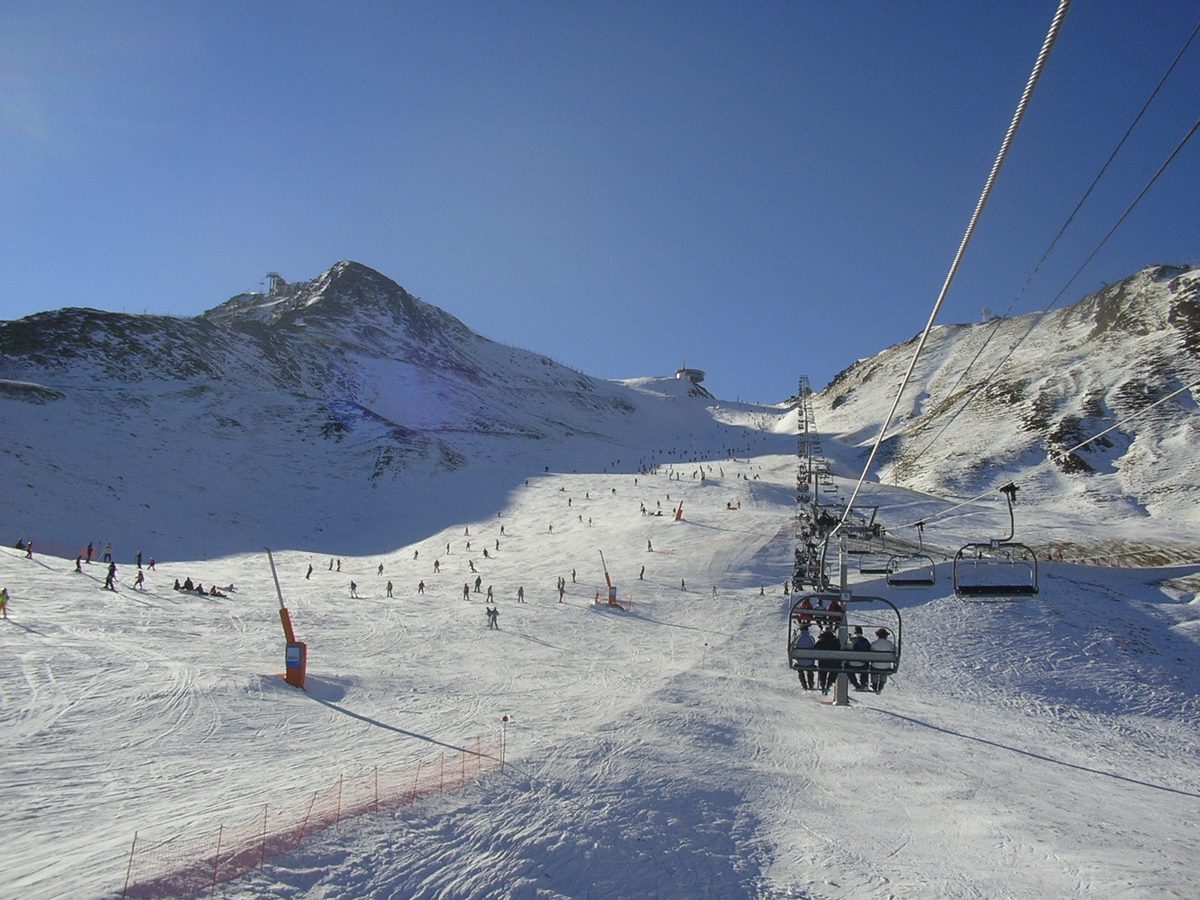
    Wide pistes and chairlifts at Grandvalira, the largest ski resort in the Pyrenees

    How the seven sectors fit together

    The single most useful thing to understand before booking is that Grandvalira is not one mountain but a chain of seven sectors strung east to west, each with its own access point, character and base town (or, in two cases, no town at all). They’re connected by pistes and lifts, so a confident skier can cross most of the domain without taking off their skis — but where you sleep changes your holiday completely. Here’s each one, and who it’s actually for.

    Pas de la Casa — high, snow-sure, and unapologetically loud

    Pas de la Casa is the easternmost sector, sitting right on the French border at around 2,100 m, and it’s the oldest part of the resort — the first rope tow went in back in 1956, reportedly powered by a lorry engine. Two things define it. First, the snow: this is the highest, most exposed terrain in Grandvalira, so it holds cover when lower sectors struggle, and it has the resort’s only night-skiing slope. Second, the town. Pas de la Casa is a wall of high-rise apartment blocks and duty-free shops thrown up for function, not beauty, and the nightlife is the rowdiest in Andorra. I’ll be blunt: it’s an ugly town. But if your priority is doorstep snow, budget beds and a bar at 3pm, you’ll forgive the architecture by day two — and the duty-free strip is genuinely useful, which I get into in the guide to shopping in Andorra.

    Skiers and a chairlift on the high slopes of the Pas de la Casa sector of Grandvalira

    Grau Roig — the quiet bowl behind the party

    Tucked behind Pas de la Casa over the ridge is Grau Roig (pronounced roughly “grow rotch”), and it has no town at all — just a car park, a famous mountain refuge and some of the loveliest sheltered skiing in the resort. This is where Grandvalira hides its adventure layer: dog-sledding, snowshoe trails and snowmobile circuits run from the Grandvalira Mountain Park here, and the Riberal slope is the only approved speed-skiing course on the Iberian Peninsula, hosting a leg of the FIS Speed Skiing World Cup. The Refugi Llac dels Pessons restaurant, beside its frozen lake, is one of the most atmospheric lunches in the country. Grau Roig is a sector you ski to, not from.

    Soldeu — the polished heart of the resort

    If Grandvalira has a centre of gravity, it’s Soldeu at around 1,800 m. This is the sector with the celebrated ski school, the smartest ski-in ski-out hotels, and the Avet run — a World Cup black so well regarded that Soldeu and neighbouring El Tarter hosted the FIS Alpine Ski World Cup Finals in February 2019, where Marcel Hirscher and Mikaela Shiffrin were crowned overall champions. The races returned in 2023. Soldeu’s slopes are wide and confidence-building up top, with some genuinely steep pitches lower down, and the village has a balanced evening scene: lively without being Pas de la Casa, with standouts like the Wine & Meat Bar by Jean Leon. For most first-timers, this is the right base, and it’s the one I recommend by default in the full guide to where to stay in Andorra.

    El Tarter — Soldeu’s calmer, snowpark-equipped neighbour

    El Tarter shares Soldeu’s mountainside but spreads along the valley below it, and it’s where I’d sleep if I wanted Soldeu’s skiing with quieter evenings and slightly better value. It holds the resort’s flagship snowpark, the Bababoom Circus children’s circuit, and L’Abarset — an open-air après complex that starts as a breakfast café and turns into a DJ-driven institution by mid-afternoon. The gondola from the valley puts you straight into the central sectors. It’s the sensible family-and-mixed-group choice without committing fully to a sleepy village.

    Tree-lined pistes of the Soldeu and El Tarter sector at the heart of Grandvalira

    Canillo — the family base with the gondola

    Canillo is a real Andorran town down in the valley, accessed by a long gondola rather than ski-in convenience, which makes it the gentlest, most family-oriented base. Its trump card is the Mon(t) Magic Family Park up the mountain, plus the 555-metre Màgic Gliss toboggan (you can ride it wearing virtual-reality goggles, if that appeals) and one of the longest zip lines in the Pyrenees beneath the pointed Casamanya peak. It has good beginner terrain in a calm setting and a year-round town life that the purpose-built bases lack. For travelling with children, it’s a strong pick — see the dedicated guide to Andorra with kids for how the ski-school age bands work.

    Encamp — the cheap back door via the Funicamp

    Encamp is the westernmost and lowest access point, the first you reach coming up from the Spanish side and the closest sector to the capital. It has almost no ski-in skiing of its own; instead it has the Funicamp, a 6 km funitel gondola — one of the longest in Europe — that hauls you from the town up to Solanelles at 2,500 m in one continuous ride. Locals treat Encamp as the area’s value back door: cheaper beds, free Park & Ride car parks in town, and a 25-minute lift straight into the heart of the mountain. If you’re basing yourself in Andorra la Vella or nearby Escaldes for the shopping and the spa, Encamp is your way onto the snow.

    Peretol — the newest sector, and a floodlit park

    Peretol (Bordes d’Envalira) is the baby of the family, opening for the 2019–20 season as the seventh sector. It was created by extending the Pla de les Pedres chairlift — now the longest in Andorra — from 1,960 m up to Solanelles at 2,500 m, adding a new entry point on the road up to Pas de la Casa. Its claim to fame is the Sunset Park Peretol, designed by freeski star Henrik Harlaut, which is the only night-time snowpark in the Pyrenees. Most people ski through Peretol rather than basing there, but the night-park sessions are a genuine novelty.

    Reading the Grandvalira piste map

    The official Grandvalira piste map looks intimidating the first time you unfold it — seven sectors, around 140 runs, lifts everywhere — but it follows a simple logic once you know the trick. Picture the resort as a long east–west ridge: France and Pas de la Casa at the right-hand (eastern) end, the Spanish side and Encamp at the left (western) end, with Grau Roig, Soldeu, El Tarter, Peretol and Canillo strung between them. Runs are colour-graded the European way — green (easiest), then blue, red and black — and the sector-to-sector links are mostly blue and red, so you rarely need to ski above your level just to get home.

    Two practical map-reading tips save real time. First, the connections between Grau Roig and Pas de la Casa, and onward to the central sectors, run over high, exposed cols — on a windy day these top lifts close first, effectively splitting the mountain in two, so check the live “open slopes” board (or the Grandvalira app) before committing to a cross-resort traverse. Second, the valley gondolas at Encamp, Canillo and El Tarter are your friends: when the afternoon home runs get crowded and skied-off, riding the gondola down is faster, safer and entirely normal. Download the official map as a PDF before you travel, or grab a paper copy at any ticket office or hotel desk.

    The skiing, level by level

    The piste breakdown gives away the resort’s true nature: with roughly 55 blue and 41 red runs against just 19 blacks, Grandvalira is intermediate paradise, with outstanding beginner provision and enough — but not unlimited — challenge for experts. Here’s how it plays out by ability.

    Complete beginners

    This is one of the best places in Europe to learn, and not by accident — Andorra has courted the British beginner market for decades, and the ski schools (Soldeu’s above all) carry an outsized reputation and an unusual number of native English-speaking instructors. Every sector has roped-off learning plateaus and magic-carpet conveyor lifts: the Espiolets area above Soldeu is effectively a ski-school campus at altitude, El Tarter and Pas de la Casa run dedicated snow gardens, and Canillo’s gentle pitches suit nervous first-timers. There’s even a free beginner pass concept in some sectors covering just the practice lifts. Book lessons for the first morning rather than mid-week — the early start pays compound interest across the whole holiday.

    Intermediates

    If you can link turns on a blue and you’re eyeing reds, Grandvalira is built for you. The long blues and reds that roll between sectors — through the trees above El Tarter, across the open bowls of Grau Roig, down the wide motorways into Encamp — are the kind of confidence-building cruisers you plan whole holidays around. The Àliga red at El Tarter is the best fast cruiser in the country. A fit intermediate can have breakfast in Pas de la Casa, lunch above Soldeu and a last run down to Encamp, covering most of the domain in a day, with only a couple of flat traverses to grumble about.

    Advanced and expert skiers

    Here’s the honest part. Strong skiers will have a brilliant few days but can exhaust the marked steeps faster than they’d like — black terrain is only around 13% of the resort. The Avet at Soldeu is the standout, steep enough to host the World Cup yet wide enough that a strong intermediate can survive it with dignity at 9am before it skis off, and the Pas de la Casa blacks add a few more genuine pitches. The real expert reward is off-piste: the lift-served sidecountry around Encampadana and the Grau Roig bowls, and the resort’s marked-but-ungroomed freeride zones, which are a sensible halfway house. To fill a full week at expert level, hire a guide or plan a day at the steeper, wilder Ordino Arcalís up the road.

    Snowboarders and park riders

    Boarders are first-class citizens here, not tolerated guests. The main sector links are nearly drag-lift-free, so you won’t spend the week unstrapping, the wide groomed reds suit riding perfectly, and freestyle is treated as core business: El Tarter’s flagship snowpark, the Grau Roig park, and the floodlit Sunset Park at Peretol give you three distinct setups. It’s one of the more snowboard-friendly big resorts in Europe.

    Where to stay: choosing your Grandvalira sector

    Because every base sits on the same lift system and the same single pass, choosing a sector is choosing a bedroom and an evening atmosphere, not a ski area. Get this decision right and the holiday largely sorts itself out. Here’s the quick version; the full breakdown of bases, hotel styles and budgets lives in the guide to where to stay in Andorra.

    Sector Vibe Best for
    Soldeu Polished, ski-in/ski-out, balanced evenings First-timers, mixed groups wanting comfort + teaching
    El Tarter Quieter, good value, snowpark on the doorstep Families and groups who want Soldeu’s slopes, calmer nights
    Pas de la Casa High, snow-sure, party town, functional looks Budget groups, night owls, doorstep-snow chasers
    Canillo Real town, gondola access, family park Families with young children, calm bases
    Encamp Cheap valley base, Funicamp access Value seekers, capital/shopping-and-spa combiners

    My default advice: first-timers and families to Soldeu or El Tarter; groups chasing après energy to Pas de la Casa; anyone combining skiing with the duty-free shopping and the thermal spa to Encamp, within striking distance of the capital. If you can’t decide, El Tarter is the safest all-rounder.

    What a Grandvalira lift pass really costs

    Grandvalira uses dynamic pricing — like airline seats, the cost moves with the date and how far ahead you book, and you can save up to 15% buying online in advance. For the 2025/26 season an adult day pass ran from around €50 booked well ahead to roughly €67 for a peak-week walk-up at the ticket window. That’s no longer a giveaway by Pyrenees standards, and it’s the single biggest reason to plan rather than improvise.

    The age tiers are generous at both ends. Children aged 6–11 and juniors 12–17 pay reduced rates; babies born in 2020 or later ski free, as do skiers aged 75 and over. Seniors get a steep break too — roughly €42.50 a day for ages 65–69 and about €25 for 70–74, collected at the ticket offices. A few specialist passes are worth knowing: a night-skiing pass at Pas de la Casa is around €27.50, a Sunset Park Peretol pass is about €25, and half-day passes start from 1pm.

    Three things genuinely save money. First, book online weeks ahead to catch the low end of the dynamic range. Second, if you ski two or more consecutive days, your pass also covers Ordino Arcalís and Pal Arinsal — the country’s other two mountains — at no extra cost, so a multi-day pass is a three-mountain pass. Third, North American visitors should note that Grandvalira Resorts has been on the Ikon Pass since 2022/23: full Ikon holders get seven combined days across all three mountains with no blackouts, Ikon Base holders get five. There are also small perks bundled with the Andorra Pass — 50% off parking at the Canillo, El Tarter and Soldeu car parks, free Park & Ride at Encamp, 52 EV charging points and free resort-wide Wi-Fi. For the bigger picture on trip budgets, the Andorra travel tips guide breaks down the costs first-timers forget.

    Renting gear, booking lessons and the practical stuff

    You don’t need to bring equipment. Every Grandvalira base has rental shops, and renting in the valley towns (Encamp, Canillo, the edge of Soldeu) is usually a touch cheaper than the slope-side outlets, with multi-day rates that make a week genuinely affordable — budget roughly €15–25 a day for a decent adult ski-and-boot package, less if you book online ahead. Collect your gear on arrival afternoon when the shops are empty rather than queuing at 8.45am on day one. Ski lockers at the lift bases save you hauling boots back to the hotel each night and are worth the small fee.

    For lessons, book the official Grandvalira ski and snowboard school early — the first-morning slot fills fast in peak weeks, and an early lesson sets up the whole holiday. The school runs everything from never-skied-before beginners to freeride and ski-mountaineering courses, with children’s classes broken into age bands and a nursery for the youngest (ages 1–3) at several sectors. A couple of services people forget: each sector has a medical centre, the resort runs adapted-skiing programmes for skiers with disabilities, and there are SMARTPOS self-service machines dotted around the bases where you can print passes bought online without queuing at the window. If you’ve booked accommodation through the resort, your passes are often waiting at the hotel desk on arrival.

    When to go: the Grandvalira season and snow

    The season typically opens in early December — the 2025/26 season opened around 5 December — and runs to early April, closing roughly the first week of the month depending on snow. Lifts run 09:00 to 17:00 daily. Within that window the mountain has distinct moods, and timing your trip is the difference between empty pistes and gridlock. The full month-by-month treatment is in the guide to the best time to visit Andorra, but the ski-specific version is short.

    Mid-January is my pick: cold, dry snow, short lift queues and the lowest prices of the core season. The first half of March delivers spring sunshine with full coverage still underfoot — arguably the most enjoyable skiing of the year if you’re not chasing powder. April brings the cheapest passes and emptiest slopes, but you’ll want to ski high (Pas de la Casa, Grau Roig) and finish by lunch, because the south-facing aspects go slushy in the afternoon sun. The weeks to avoid if crowds bother you are the New Year fortnight and the late-February half-term pile-up, when Spanish, French and British school holidays collide and the front-side pistes get properly busy. Grandvalira is snow-sure for a southern-latitude resort thanks to its altitude and heavy snowmaking, but the Pyrenees are moodier than the high Alps — build in a flexible day or two.

    The Pessons lakes above the Grau Roig sector of Grandvalira in summer

    Getting to Grandvalira

    There’s no airport and no railway in Andorra, which sounds like a problem and is really just a fact to plan around: you arrive by road, and it takes about three hours from either gateway. The full comparison of routes, buses and border crossings is in the guide to how to get to Andorra; here’s the Grandvalira-specific version.

    From Barcelona (El Prat airport, about 210 km away), the comfortable public option is a direct coach — Direct Bus, Andbus and ALSA all run services from the airport and city to Andorra, taking roughly 3 to 3.5 hours. From Toulouse (Blagnac airport, about 200 km), Andorra by Bus runs services via Toulouse station and airport in around three hours; the Toulouse approach is slightly shorter but twistier over the mountains. Coming from the Spanish side you’ll reach Encamp and Canillo first; from the French side, Pas de la Casa is the first sector you hit. Driving gives you flexibility between sectors and lets you do the duty-free supermarket run on the way home — but from November to April you’re legally required to carry winter tyres or chains, and the border climbs are serious. Once you’re in the country you barely need the car: cheap inter-town buses run the main valley constantly and ski buses loop the bases.

    A no-regrets first day at Grandvalira

    The classic first-timer mistake is to treat Grandvalira’s size as a checklist and spend day one racing border to border. Don’t. Here’s how I’d spend a first morning instead. Start in your home sector while your legs find their feet — Soldeu’s Espiolets plateau, El Tarter’s tree-lined blues, or Canillo’s gentle pitches — and do three or four warm-up runs on terrain you’re comfortable with. Stop for an early coffee before the 11am terrace rush, then push one grade harder: a long red if you cruised the blues, a confident blue if you’re newer.

    Save the grand cross-resort traverse for day two or three, once you’ve read the snow and the weather, and tackle it in the morning when the links are freshly groomed and the high lifts are open. When you do go for it, the Soldeu-to-Pas-de-la-Casa run and back — with lunch at Grau Roig in the middle and a smug border beer at the far end — is the signature Grandvalira day. End each afternoon a run or two before your legs are truly done; travel-day and altitude fatigue catch first-timers out, and the home runs are exactly where tired skiers come unstuck. The mountain rewards repeating what you loved more than grimly completing the map.

    On-mountain food and après

    Grandvalira claims more than 60 on-mountain eating spots, and the range is wider than the usual self-service-and-chips. There are proper table-service restaurants, sunny terraces at 2,400 m, and genuine destinations: the Refugi Llac dels Pessons at Grau Roig beside its lake, the Wine & Meat Bar by Jean Leon at Soldeu, and the El Forn self-service at Canillo. Budget €15–25 for a decent mountain lunch, or do what the Spanish families do and book a menú del día down in the valley towns for around €17. The deeper dive into the principality’s mountain-Catalan cooking — the stone-barn grill restaurants, the stews, the surprisingly serious wine — is in the guide to Andorran food.

    Après splits cleanly by sector. The high-energy version lives at El Tarter’s L’Abarset (open-air, proper DJs, starts mid-afternoon) and across the bars of Pas de la Casa, where happy hour begins around 3pm. The civilised version is everywhere else — Soldeu’s hotel bars, quiet terraces in Canillo. And the correct way to end a ski day that doesn’t involve a bar is a soak at Caldea, the vast thermal spa down in Escaldes-Engordany — floating in 32°C water while snow falls on the glass roof is hard to beat, and the adults-only Inúu wing is worth the upgrade.

    Beyond skiing: Grandvalira in summer and with the family

    Grandvalira doesn’t shut when the snow melts. The Canillo and Encamp sectors reopen for summer, with the Mon(t) Magic Family Park, mountain-bike trails, the Funicamp running for sightseers, and via-ferrata and hiking from the lift tops. The wider menu of warm-season adventures — the alpine coasters, the bike park, the lake hikes — is covered in the guides to Andorra activities and hiking in Andorra. In winter, the non-ski layer is just as deep: dog-sledding and snowmobiling at Grau Roig, the toboggan and zip line at Canillo, and the night-park at Peretol. Families in particular get an enormous amount here beyond the slopes; the age-by-age plan is in Andorra with kids, and the towns themselves are worth exploring through the guide to Andorra’s villages.

    The valley town of Encamp, a Funicamp gateway into Grandvalira

    How Grandvalira compares

    Within Andorra, Grandvalira is the big, do-everything choice. Its two siblings under the same ownership are smaller and more specialised: Pal Arinsal (around 63 km) is the friendly, family-and-beginner mountain on the western side near La Massana, and Ordino Arcalís (around 30 km marked) is the wild, village-free freeride hill that comes into its own on a powder day. Because a multi-day Grandvalira pass covers both, the smart move on a longer trip is to base near Grandvalira and steal a day at Arcalís when it snows. The whole comparison sits inside the parent guide to skiing in Andorra, and if you’re still sketching the trip, the Andorra itinerary guide routes it day by day.

    Against the Alps, the trade is clear. Grandvalira gives you more groomed mileage per euro than almost anywhere comparable, modern lifts, reliable snowmaking and superb teaching. What it doesn’t give you is glacier skiing, lift-served couloirs off the piste map, or chocolate-box villages — the top altitude is honest rather than heroic and the towns are functional. For the great middle of skiers — improving beginners, cruising intermediates, mixed groups, families, anyone who values value — that’s one of European skiing’s best trades. It’s also, for context, the engine room of Andorra’s tourism economy, a story told in the guide to the history of Andorra, and the snowy half of the broader list of things to do in Andorra.

    Is Grandvalira worth it? My honest verdict

    Yes — with eyes open. Book Grandvalira if you’re learning or improving, teaching your kids, travelling as a mixed group of skiers and spa-and-shopping types, or simply want maximum reliable groomed terrain without Alpine prices. The size is real, the snow is dependable for the latitude, the lifts are modern and the schools are among Europe’s best. Look elsewhere if your perfect week is endless steep off-piste, glacier guarantees or storybook villages — Andorra’s mountains are honest and its towns are workmanlike. I keep going back, and I keep sharing gondolas with people who’ve come every January for twenty years. They’re not wrong, and once you’ve understood how the seven sectors fit together, you probably won’t be either.

    Planning the rest of the trip? My companion guides cover where to stay in Andorra, the best time to visit, how to get here with no airport in the country, and the wider world of skiing in Andorra beyond Grandvalira.

    Grandvalira FAQ

    How big is Grandvalira?

    Grandvalira has more than 210 km of pistes (the resort’s own figure is 215 km) across about 140 marked runs, making it the largest ski area in the Pyrenees and southern Europe, and one of roughly the thirty biggest on earth. It spans seven linked sectors with a top lift at 2,640 m.

    How many sectors does Grandvalira have?

    Seven: Encamp, Canillo, El Tarter, Soldeu, Peretol, Grau Roig and Pas de la Casa. They’re connected by pistes and lifts under a single pass, so you can ski between most of them without taking your skis off. Peretol, opened in 2019–20, is the newest.

    How much is a Grandvalira day pass?

    For 2025/26, an adult day pass ran from about €50 booked online in advance to roughly €67 for a peak-week walk-up — pricing is dynamic, so buying ahead saves up to 15%. Seniors, juniors and children pay less; under-6s and over-75s ski free. A two-day-plus pass also covers Ordino Arcalís and Pal Arinsal.

    Is Grandvalira good for beginners?

    Very. It’s one of Europe’s best places to learn, with dedicated learning plateaus and conveyor lifts in every sector and ski schools — Soldeu’s especially — with strong reputations and many English-speaking instructors. Soldeu, El Tarter and Canillo are the most beginner-friendly bases.

    Is Grandvalira good for advanced skiers?

    For a few days, yes; for a full week, with caveats. Black runs are only about 13% of the terrain, so experts exhaust the marked steeps quickly. The Avet at Soldeu is the standout, and the real reward is the lift-served off-piste around Encampadana and Grau Roig — hire a guide, or add a powder day at Ordino Arcalís.

    When does Grandvalira open and close?

    The season typically opens in early December and closes in early April, weather permitting; 2025/26 opened around 5 December and closed in the first week of April. Lifts run 09:00 to 17:00 daily. The high, exposed sectors (Pas de la Casa, Grau Roig) hold snow longest into spring.

    Soldeu or Pas de la Casa — which is better?

    Soldeu for comfort, teaching quality and a balanced evening scene; Pas de la Casa for high, snow-sure, doorstep skiing, budget beds and proper nightlife — though its purpose-built town is functional rather than pretty. Both sit on the same lift system, so you’re choosing an atmosphere, not a ski area.

    How do I get to Grandvalira?

    Fly to Barcelona (about 210 km) or Toulouse (about 200 km), then travel roughly three hours by road — there’s no airport or railway in Andorra. Direct coaches run from both airports; driving gives flexibility between sectors but requires winter tyres or chains from November to April.

    Does the Ikon Pass work at Grandvalira?

    Yes. Grandvalira Resorts joined the Ikon Pass for winter 2022/23. Full Ikon Pass holders get seven combined days across Grandvalira, Ordino Arcalís and Pal Arinsal with no blackout dates; Ikon Base holders get five days with some blackouts.

    Is Grandvalira open in summer?

    Partly. The Canillo and Encamp sectors reopen for summer with the Mon(t) Magic Family Park, mountain biking, sightseeing on the Funicamp, hiking and via ferrata from the lift tops. The full ski domain itself only operates in winter.

    Where is Grandvalira?

    Grandvalira is in the eastern valleys of Andorra, the small principality between France and Spain in the Pyrenees. Its sectors run from Encamp, near the capital Andorra la Vella, east to Pas de la Casa on the French border. The nearest airports are Barcelona (about 210 km) and Toulouse (about 200 km).

    How many days do you need at Grandvalira?

    Three to four ski days is the sweet spot for a first trip — enough to learn your home sector, do the full cross-resort traverse and still have a flexible day for weather or a powder run at Ordino Arcalís. That fits neatly into a five- or six-night stay. A full week works well if you’ll mix in a spa afternoon or a non-ski day.

    Photo credits

    Photo: Alberto-g-rovi / CC BY 3.0 via Wikimedia Commons; Photo: Carlesmari / CC BY 3.0 via Wikimedia Commons; Photo: Albert.white / Public domain via Wikimedia Commons; Photo: Ferran Llorens / CC BY-SA 2.0 via Wikimedia Commons; Photo: Josemanuel / CC BY-SA 2.5 via Wikimedia Commons.

  • Skiing in Andorra: The Complete Guide to the Pyrenees’ Biggest Ski Country

    Skiing in Andorra: The Complete Guide to the Pyrenees’ Biggest Ski Country

    Tell a ski friend you’re going to Andorra and you’ll get either a blank look or a knowing nod from someone who quietly rebooks every January. A microstate of 85,000 people has built some of Europe’s most modern skiing, priced it well below the Alps, and made the supermarkets duty-free for good measure.

    Skiing in Andorra centres on three linked resort areas under one brand: Grandvalira (around 210 km of pistes, the largest ski area in the Pyrenees), family-friendly Pal Arinsal (63 km) and freeride haven Ordino Arcalís (30 km). The season runs from early December to mid-April, day passes cost roughly €50–65, and the whole country is on the Ikon Pass.

    This guide is the full picture: how the three ski areas actually differ, which of the seven-plus base towns to sleep in, what a trip genuinely costs, how the season behaves month by month, and an honest verdict on who Andorra suits — and who should book the Alps instead. I’ve tried to write the page I wish I’d had before my first trip, not a brochure.

    Last updated: June 2026. Prices and dates reference the 2025/26 season; resorts publish 2026/27 rates in autumn, so treat numbers as close guides and check official sites before booking.

    Andorra’s ski areas at a glance

    Every piste in the country is run by one company, Grandvalira Resorts, which absorbed the old Vallnord marketing brand a few seasons back. That sounds like trivia, but it matters in practice: one app, one season pass covering everything, and consistent lift infrastructure across all three mountains. Combined, you get just over 300 skiable kilometres — more than Val Thorens’ local area, squeezed into a country smaller than New York City.

    Ski area Pistes Altitude Character Day pass (25/26) Best for
    Grandvalira ~210 km / 139 runs 1,710–2,640 m Seven linked sectors, big and varied €50–65 (dynamic) Almost everyone
    Pal Arinsal 63 km / 47 runs 1,550–2,560 m Two friendly linked hills ~€45–55 Families, beginners, mixed groups
    Ordino Arcalís 30 km marked 1,940–2,625 m No village, all mountain ~€40–50 Freeriders, powder days, quiet weekdays

    One practical note before we dig in: those day-pass numbers are dynamic pricing, like airline seats. Book online weeks ahead for the low end; rock up to the ticket window at 9am in February and you’ll pay the high end. It’s the single easiest money-saving trick in the country.

    World Cup giant slalom racing on Soldeu's Avet piste - skiing in Andorra at its sharpest

    Why ski in Andorra at all?

    The honest pitch has four parts. First, value: lift passes, lessons, rental, food and drink all run 20–40% below comparable French or Swiss resorts, and because Andorra is a duty-free principality, the gap widens further at the bar and the supermarket. A beer with your burger at 2,200 m costs what the beer alone costs in Méribel.

    Second, the teaching. Andorra has spent decades courting the British beginner market, and the result is ski schools — Soldeu’s above all — with an outsized reputation and an unusual number of native English-speaking instructors. If someone in your group has never clipped into a binding, there are few better places in Europe to fix that, and none cheaper at this quality level.

    Third, the infrastructure punches far above the country’s size. Grandvalira runs a fleet of 76 lifts, hosted the Alpine World Cup Finals in 2019 and 2023, and backs the whole area with more than 1,000 snow cannons covering over half the terrain — useful insurance in the Pyrenees, where snowfall is real but moodier than the high Alps. Since winter 2022/23 the whole country has been an Ikon Pass destination (7 days on the full pass, 5 on Base), which tells you what the industry thinks of the product.

    Fourth, the compactness. This is a country you cross by car in 40 minutes. Stay anywhere and every sector, the thermal spa, the duty-free shopping mile and three different mountains are all within half an hour. No other ski country concentrates this much into so little space.

    And the catch? There are three. The transfer is a genuine 3 hours by road from Barcelona or Toulouse — there’s no airport and no railway in the country, so budget a long travel day. The top lift tops out at 2,640 m with no glacier, so don’t expect October turns or guaranteed fresh powder every week. And in peak weeks — New Year, and the February school-holiday pile-up when Spanish, French and British half-terms collide — the front-side pistes of Grandvalira get properly busy. Time it even slightly off-peak and the place transforms.

    Grandvalira: the big one

    Grandvalira is the headline act: roughly 210 km of pistes across seven linked sectors strung along the eastern half of the country, from the town gondolas of Encamp and Canillo to the French border at Pas de la Casa. It’s the largest ski area in the Pyrenees and southern Europe, one of the thirty biggest on earth, and the reason most people come.

    How the seven sectors fit together

    Think of Grandvalira as a long east–west chain. Pas de la Casa (2,100 m) sits on the French border at the eastern end: high, treeless, snow-sure and unapologetically lively, with a base town built for partying rather than postcards. Behind it, Grau Roig is the connecting bowl — no town at all, lovely sheltered skiing, and the spot where the dog-sledding and snowshoe trails hide. Then comes Soldeu (1,800 m), the polished heart of the area, home of the famous ski school and the Avet black run where World Cup racers throw themselves downhill at frightening speeds. El Tarter next door shares Soldeu’s mountainside and adds the main snowpark; it’s where I’d sleep if I wanted slopes at dawn and quiet evenings. Canillo and Encamp are valley towns with gondola access rather than ski-in convenience — Encamp’s Funicamp shoots you roughly 6 km up to Grau Roig’s bowls in one ride, which is why locals treat the town as the area’s cheap back door. Finally tiny Peretol, near Soldeu, exists mostly for its floodlit snowpark sessions.

    The linking actually works, which you can’t say for every “linked” area in Europe. A confident intermediate can have breakfast in Pas de la Casa, lunch above El Tarter and a last run into Encamp without ever removing skis beyond a couple of flat traverses.

    The skiing, level by level

    The piste breakdown — about 100 km blue, 82 km red, 33 km black — tells the true story: this is intermediate paradise. The reds rolling off Tosa Espiolets and down through El Tarter’s trees are the kind of confidence-building cruisers you plan whole holidays around. Beginners get dedicated, roped-off learning plateaus (Espiolets above Soldeu is effectively a ski-school campus). Genuine experts will exhaust the marked steeps in a day or two — Avet and the Pas de la Casa blacks are the highlights — but the lift-served off-piste around Encampadana and the Grau Roig sidecountry reward anyone willing to traverse, and the resort’s freeride zones are marked but ungroomed, a nice halfway house.

    Three runs to seek out on a first visit: Avet, Soldeu’s World Cup black, steep enough to host the 2019 and 2023 Finals yet wide enough that strong intermediates can survive it with dignity at 9am, before it’s skied off; Àliga, El Tarter’s racing red, the best fast cruiser in the country; and Tubs at Pas de la Casa, a broad, confidence-building blue off the Solana chair that’s perfect for finding your legs on day one. And one to respect: the home run to El Tarter on a busy afternoon, where the whole mountain funnels down at once — take the gondola down instead and nobody will judge you.

    Looking down the pistes to Pas de la Casa town and the Envalira hairpins on Andorra's French border

    Mountain food worth stopping for

    Grandvalira claims more than 60 on-mountain restaurants, and the spread is wider than the usual self-service-with-chips: proper table-service spots, sunny terraces at 2,400 m, and at El Tarter the L’Abarset complex, which morphs from breakfast café to DJ-soundtracked après institution by 4pm. Budget €15–25 for a proper mountain lunch, or do what the Spanish families do and book the menú del día down in Canillo for about €17.

    Pal Arinsal: the friendly one

    Across the country in the La Massana parish, Pal Arinsal is what Grandvalira’s marketing calls a family resort and what I’d call the easiest ski area in Europe to actually enjoy with mixed company. It’s two distinct hills joined by a cable car: Pal, all wide tree-lined cruisers, gentle gradients and picnic zones, reached by gondola straight out of La Massana town; and Arinsal, a higher, more open bowl above the village of the same name, with a snowpark, a long top-to-bottom descent off Pic Alt de la Capa (over 1,000 vertical metres) and a base village with a genuine British-pub après scene.

    The stats — 63 km, 47 runs, two snowparks — undersell how well the place does its job. Over 70% of the terrain sits in the blue-to-red band, the nursery zones are high enough (up to 2,300 m) that beginners learn on real snow rather than slush, and the ski school runs the same English-heavy instructor model as Soldeu at slightly gentler prices. Weekday mornings here, especially in January, you can have entire pistes to yourself. The activity menu runs deeper than the piste map too: airboarding (face-first sledging on an inflatable, more fun than it has any right to be), snowshoe trails off the Pal gondola, and a kids’ snow garden that gives parents an actual lunch hour.

    Who should pick it over Grandvalira? Families with small kids who value short lift queues over mileage; absolute beginners who’ll never leave the learning area anyway; and groups where half ski hard and half potter — the hard chargers can day-trip to Arcalís or Grandvalira on the combined pass while everyone else cruises Pal in the sunshine. If you’re an experienced skier planning a full week, though, you’ll want the bigger area as your base.

    Chairlifts and wide confidence-building slopes at Arinsal, Pal Arinsal ski area

    Ordino Arcalís: the wild one

    Arcalís is the local secret that stopped being secret. There’s no village at the base — just lifts, a futuristic day lodge and a winding mountain road up from Ordino — which is exactly why it stayed special. The mountain faces predominantly north, sits between 1,940 m and 2,625 m, and hoovers up snow that the rest of the country misses; Andorrans call it La Nevera, the fridge, and on a storm-cycle morning it earns the nickname “Arcalaska” too.

    The piste map says a modest 30 km, and if you only ski the marked runs you’ll be done by lunch. That’s not the point. Arcalís is about what’s between the pistes: lift-accessed couloirs, broad powder fields off the Creussans chair, and hike-to lines that have hosted Freeride World Tour stops. It’s the only resort in the Pyrenees where I’d genuinely recommend hiring a local guide for a day, because the terrain unlocked is out of all proportion to the lift map — and because Pyrenean snowpack deserves respect.

    For everyone else, Arcalís makes a brilliant change-of-scenery day on the combined pass: drive or bus 25 minutes up from La Massana, ski empty groomers with the best views in Andorra, eat a long lunch on the terrace, and understand why locals guard this place jealously. Skip it only if queues don’t bother you and trees do. (If you do want the guided freeride day, the resort’s own guiding outfit and independent local guides both run small groups — roughly the price of a nice dinner per person, and worth double that in terrain and safety.)

    Chairlifts beneath the crags at Ordino Arcalis, Andorra's freeride mountain

    Where to base yourself: Andorra’s ski towns compared

    Andorra’s accommodation puzzle is different from the Alps: instead of one resort village, you’re choosing between a string of towns along two valleys, all within 30 minutes’ drive of each other. Each has a distinct personality, and picking the wrong one for your group is the most common mistake first-timers make.

    Base Altitude Ski access The vibe Pick it if
    Soldeu 1,800 m Gondola + ski-back runs Polished, hotel-led, best après-to-bedtime ratio You want the classic Andorra ski week
    El Tarter 1,710 m Gondola, slope-side hotels Quieter Soldeu, early-night energy First lifts matter more than last orders
    Canillo 1,500 m Gondola into Grandvalira Real town: ice palace, zip line, families You’re mixing ski days with kid days
    Encamp 1,300 m Funicamp gondola (~6 km) Workaday, cheapest beds near the big area Budget rules and you don’t need charm
    Pas de la Casa 2,100 m Ski-in/ski-out, doorstep lifts High, snow-sure, loud after dark Groups, parties, doorstep skiing on a budget
    Arinsal 1,475 m Gondola from village Friendly, pubby, family-priced Beginners and families at Pal Arinsal
    La Massana 1,230 m Gondola to Pal Proper Andorran town, foodie-leaning You want restaurants and flexibility
    Andorra la Vella / Escaldes 1,023 m Drive or bus to any area The capital: shopping, Caldea spa, city hotels Skiing is only half your trip

    My short version: book Soldeu for the archetypal trip, El Tarter to save a little and ski more, Pas de la Casa if the evenings matter as much as the mornings (and your hotel room faces away from the bars — trust me on this), Arinsal with young kids, and the capital only if shopping, spa time and restaurant choice genuinely compete with skiing for your attention. Canillo is the dark-horse pick for families: real-town prices and its own gondola, plus the Palau de Gel pool-and-ice complex for storm days.

    One warning that applies everywhere: “ski-in/ski-out” is rarer in Andorra than hotel websites imply. Outside Pas de la Casa and a handful of El Tarter and Soldeu properties, assume a walk or shuttle to the gondola and read the map before paying a location premium.

    What skiing in Andorra costs (real numbers)

    Let’s do the budget honestly, because “Andorra is cheap” is both the country’s best marketing line and an oversimplification. It’s cheap for what you get — the lift system and grooming genuinely rival big-name Alpine areas — but it’s no longer the bargain-basement destination of 1990s package-holiday legend. Here’s what the 2025/26 season actually charged.

    Item Typical price (25/26) Notes
    Grandvalira day pass €50–65 Dynamic pricing; cheapest booked early online
    Pal Arinsal day pass ~€45–55 Slightly cheaper, same booking logic
    Andorra Pass (season, all 3 areas) from ~€589 Pays off around 10–11 ski days
    Ikon Pass holders included 7 days (full) / 5 days (Base) combined
    Group lessons ~€45–60 per half-day Book school direct; English widely spoken
    Standard ski rental ~€20–30/day Big discounts on 6-day packs booked online
    Mountain lunch €15–25 Menú del día in valley towns ~€15–20
    Beer at après €3–5 The duty-free dividend, in glass form

    Stack that against the French Alps and a like-for-like week typically lands 20–40% cheaper, with the gap biggest on lessons, food and drink and smallest on peak-week hotel rates, which have crept up as Andorra’s hotel stock has gone upmarket. Against Bulgaria or Bosnia, Andorra loses on raw price and wins heavily on lift quality and snowmaking. The sweet spot is exactly where the country positions itself: Alpine product, three-quarters of the Alpine bill.

    Two money tips that outperform everything else: buy every pass online and early (the dynamic pricing punishes spontaneity hard), and if anyone in your party isn’t skiing daily, note that Grandvalira sells per-sector passes and pedestrian gondola tickets — no need for the full-area pass just to meet the group for lunch. Check current rates on grandvalira.com before you commit; prices shift season to season.

    When to go: the Andorra ski season, month by month

    The official season runs from early December to mid-April — the 2025/26 dates were 4 December to 6 April, and 2026/27 is pencilled for a similar early-December start. Within that window, the months behave very differently.

    December opens gradually: upper mountains first, valley links as the snowpack builds, with the snow cannons doing heavy lifting in lean early weeks. Pre-Christmas weekdays are blissfully quiet and aggressively discounted; the Christmas–New Year fortnight is the opposite on both counts. January is my pick and most locals’ too — the coldest snow, the shortest queues (especially after Spanish Three Kings’ celebrations end on 6 January), and the year’s best hotel rates. February brings peak snowpack and peak humanity, as school holidays from three countries stack up; ski early, lunch at 11:30, and it’s manageable. March is the connoisseur’s month: full coverage up high, spring corn snow in the afternoons, terrace season at the mountain restaurants and a noticeable price drop after the first week. April is a gamble that often pays — Pas de la Casa and Grau Roig hold their high-altitude snow well, Arcalís sometimes skis beautifully to closing day, and passes plus beds go for a song. Just accept firm mornings and slushy home runs.

    A word on Pyrenean snow, because it’s different from the Alps: storms arrive from the Atlantic in generous, widely-spaced dumps rather than a steady weekly drip, so the snowpack swings more between feast and famine. This is exactly why Grandvalira built one of Europe’s biggest snowmaking systems and why north-facing Arcalís matters — between them, the bases stay skiable even in the lean cycles. Watch the forecast for a marked storm, and if you can travel flexibly, time your trip to land two days after one.

    If I could only book one week blind, it would be the third week of January. If I wanted sunshine with my skiing and didn’t mind softer afternoons, the second week of March.

    The tree-lined pistes of the Soldeu-El Tarter sector, the heart of Grandvalira

    Skiing in Andorra by skier type

    Complete beginners

    This is arguably Europe’s best-value place to learn. The combination is hard to beat anywhere: dedicated high-altitude learning zones (Espiolets above Soldeu, the Pal plateaus), ski schools with a decades-long British-market pedigree and plenty of native English speakers, gentle progression terrain off nearly every gondola top, and lesson prices well under French equivalents. Beginners who learn in Soldeu tend to come back evangelical about it.

    Intermediates

    You’re the target market and the place is built around you: 180-plus kilometres of blues and reds at Grandvalira alone, mostly wide, beautifully groomed and linked well enough that sector-hopping becomes the holiday’s main quest. The classic mission — Pas de la Casa to Encamp and back, lunch in the middle — is one of the most satisfying intermediate days in Europe. After three trips you’ll still be finding new corners.

    Advanced and expert skiers

    Here’s the honest bit: if your holiday lives and dies on marked steeps, Andorra’s blacks will entertain you for two days, not six. The Avet World Cup piste and Pas de la Casa’s steeper pitches are quality over quantity. The real expert product is off-piste — Arcalís above all, plus Grandvalira’s marked freeride zones and the Grau Roig sidecountry — and it transforms the country, but you’ll get the best of it with a guide and a flexible attitude to the forecast.

    Snowboarders and park rats

    Andorra treats freestyle as core business, not an afterthought: El Tarter’s main snowpark is the flagship, Sunset Park at Peretol runs floodlit evening sessions, and Pal Arinsal keeps two parks including a beginner-friendly line. Almost no drag lifts in the critical links helps too — riders won’t spend the week unstrapping.

    Families

    The whole country is engineered for this market: ski-school kindergartens at every sector, themed kids’ circuits, the Mont Magic adventure area above Canillo, the Magic Gliss alpine coaster, and the Palau de Gel ice rink and pool for bad-weather afternoons. Canillo and Arinsal are the natural bases; the maths of family passes plus apartment stock keeps costs civilised by ski-trip standards.

    How I’d plan a week (the no-regrets version)

    Seven days is the right length for Andorra; here’s the structure I’d hand a friend. Day 1: arrive, collect rental gear in the afternoon when shops are empty, and walk your base town so the morning isn’t spent navigating. Day 2: ski your home sector — Soldeu’s Espiolets and the El Tarter bowls if you’ve based there — and finish early at the spa or pool; travel-day legs write cheques the quads can’t cash. Day 3: the big traverse: Soldeu to Pas de la Casa and back, lunch at Grau Roig in the middle, after-ski beer on the French border feeling smug. Day 4: drive or bus to Ordino Arcalís for the change-of-scenery day — empty groomers, the Creussans views, the long terrace lunch. If it snowed overnight, this becomes the best day of your season, not just your week.

    Day 5: legs-off morning — Caldea’s lagoons or Avinguda Meritxell’s shops — then a short afternoon session on night-park or home-sector laps. Day 6: fill the gap your week still has: park day at El Tarter, a guided off-piste morning at Arcalís, or the Canillo family circuit with the kids. Day 7: ski until lunch, then the bus or car back down the valley. The mistake to avoid is treating Grandvalira’s size as a checklist; the area rewards repeating what you loved more than grimly completing the map.

    Got only a weekend? Base in Soldeu or El Tarter, ski the central sectors both days, and save Arcalís and Pas de la Casa for the longer return trip you’ll already be planning on the bus home.

    Practical details people forget (until they’re expensive)

    Phones: Andorra is not in the EU, so EU roaming bundles don’t apply — and the per-megabyte rates here are infamous. Download offline maps, use hotel Wi-Fi, or buy a travel eSIM that explicitly lists Andorra before you arrive. This is the single most common €100 surprise on an otherwise cheap holiday.

    Money and language: the currency is the euro and cards work everywhere; Catalan is official, but Spanish, French and ski-town English all function fine. Documents: bring your passport — you’ll cross a real border, and non-EU visitors should note Andorra sits outside Schengen, which matters if your visa is single-entry. Driving: winter equipment (chains or winter tyres) is legally required in season, and the fuel here is cheap enough that locals from two countries drive in to fill up — top off the tank before you leave.

    On the hill: the sun at 2,500 m in the Pyrenees is southern sun — pack proper sunscreen even in January, and budget for water; the altitude dehydrates faster than most first-timers expect. Helmets are standard practice in ski school and sensible everywhere. And book ski school for the first morning, not mid-week: the early lesson pays compound interest across the whole holiday.

    Beyond the pistes: après, spas and the duty-free question

    Andorra’s après scene splits neatly in two. The high-energy version lives at Pas de la Casa — table-dancing bars, happy hours that start at 3pm, a clientele that treats the skiing as warm-up — and at El Tarter’s L’Abarset, which has evolved into a genuinely good open-air party with proper DJs. The civilised version is everywhere else: Soldeu’s hotel bars, La Massana’s vermut-and-tapas hour, wine bars in the capital’s old quarter. Pick your town accordingly; you can’t accidentally stumble from one scene into the other.

    The non-negotiable off-slope stop is Caldea in Escaldes-Engordany, southern Europe’s largest thermal spa complex — a glass cathedral of hot lagoons fed by the natural springs that gave the town its name. Floating in 32°C outdoor water while snow falls on your head is the correct way to end a ski trip; the adults-only Inúu wing is worth the upgrade if you want the experience without the splashing. Beyond that: dog-sledding and snowshoe circuits up at Grau Roig, the 5.3 km Tobotronc toboggan through the forest at Naturland (which also hides the country’s only cross-country skiing), and helicopter sightseeing flights if the group kitty survived the bar tab.

    Dinner deserves its own paragraph, because Andorran mountain food is criminally under-discussed. The move is a borda — a centuries-old stone livestock barn converted into a grill-restaurant — for escudella (the national meat-and-everything stew), trinxat (cabbage-and-potato hash crisped in pork fat) and slabs of meat cooked over coals. Towns eat on Spanish time, so book 8:30pm or later and embrace it; the early sitting is yours alone with the tourists. Budget €25–40 a head with local wine, which itself exists and surprises people.

    As for shopping — yes, the duty-free thing is real, with savings sharpest on perfume, spirits and tobacco along Andorra la Vella’s Avinguda Meritxell. Electronics deals are thinner than legend claims. Know the customs limits before you load the car: France and Spain enforce them at the border with genuine enthusiasm.

    The glass tower of Caldea thermal spa in Escaldes-Engordany, Andorra

    Getting there (and getting around once you’re in)

    There’s no airport and no railway in Andorra, which sounds like a problem and is actually just a decision: you’re arriving by road, and it takes about three hours from either gateway airport. From Barcelona, the comfortable answer is the hourly-ish Direct Bus from El Prat airport and Sants station (roughly €35 one way, 3–3.5 hours); from Toulouse, slightly closer but with a twistier mountain approach, Andbus and others run several daily services. Day-trippers from France can also ride the train to L’Hospitalet-près-l’Andorre and connect by bus over the pass.

    Driving gives you flexibility between sectors and supermarket access for the duty-free run home. Come up the N-145 from La Seu d’Urgell on the Spanish side (the gentler road) or the RN-22 through the Envalira tunnel from France; from November to April carry winter tyres or chains — it’s the law, and the border climbs are serious. Once you’re in the country, you barely need the car: cheap inter-town buses run the main valley constantly, ski buses loop the bases, and the Funicamp means even capital-based skiers can be mid-mountain in Grandvalira within an hour door to lift.

    My honest verdict: who should (and shouldn’t) ski Andorra

    Book Andorra if you’re learning, teaching your kids, travelling as a mixed group of skiers and shoppers and spa-lovers, chasing maximum groomed mileage per euro, or holding an Ikon Pass and a curiosity about the Pyrenees. It delivers all of that with modern lifts, reliable snowmaking and a price list that makes Alpine receipts look like typos.

    Look elsewhere if your perfect week is 400 km of linked glacier terrain, lift-served couloirs straight off the piste map, or chocolate-box Tyrolean villages — Andorra’s towns are functional rather than beautiful, its top altitude is honest rather than heroic, and its expert terrain asks you to work (or hire a guide) for the goods. Everyone in between — which, let’s be honest, is most of us — gets one of European skiing’s best value-for-experience trades. I keep going back, and I keep meeting people on the gondola who’ve been coming for twenty years. They can’t all be wrong.

    Skiing in Andorra: FAQ

    Is Andorra good for skiing?

    Yes — genuinely good, not just cheap. Grandvalira’s 210 km make it the largest ski area in the Pyrenees and one of the world’s thirty biggest, with modern lifts, 1,000-plus snow cannons and World Cup pedigree. Experts will want the off-piste at Ordino Arcalís to stay entertained for a full week, but beginners and intermediates are superbly served.

    Is skiing in Andorra cheaper than the Alps?

    Usually 20–40% cheaper like-for-like. Day passes ran €50–65 in 2025/26 versus €70+ at big French areas, and lessons, rental, lunches and especially bar prices undercut the Alps further thanks to duty-free taxation. Peak-week hotels are the one line item where the gap narrows, so the savings are biggest off-peak.

    When is the best time to ski in Andorra?

    Mid-January for cold snow, short queues and low prices; the first half of March for spring sunshine with full coverage. The season typically runs early December to mid-April. Avoid the New Year fortnight and late February if crowds bother you — three countries’ school holidays overlap on those weeks.

    Which Andorra resort is best for beginners?

    Soldeu, by reputation and results: its ski school is regarded among Europe’s best, with many native English-speaking instructors and the dedicated Espiolets learning plateau at the top of the gondola. Pal Arinsal is the close alternative — gentler, quieter and slightly cheaper, with high-altitude nursery slopes that keep real snow underfoot.

    Does the Ikon Pass work in Andorra?

    Yes. Grandvalira Resorts joined the Ikon Pass for winter 2022/23: full Ikon Pass holders get seven combined days across Grandvalira, Pal Arinsal and Ordino Arcalís with no blackout dates, while Ikon Base holders get five days with some blackouts. It’s the cheapest way for North American pass-holders to sample the Pyrenees.

    Soldeu or Pas de la Casa — where should I stay?

    Soldeu for comfort, teaching quality and a balanced evening scene; Pas de la Casa for altitude, doorstep skiing, budget beds and proper nightlife. Families and first-timers are happier in Soldeu or El Tarter; groups chasing après energy belong in Pas. Both sit on the same lift system, so you’re choosing a bedroom, not a ski area.

    Can you ski in Andorra in April?

    Usually until the first week or so — 2025/26 closed on 6 April. High sectors like Pas de la Casa, Grau Roig and Ordino Arcalís hold snow best, mornings ski firm and fast, and afternoons go soft. April brings the season’s lowest prices and emptiest pistes; just book somewhere high and ski before lunch.

    How do I get to Andorra’s ski resorts from the UK?

    Fly to Barcelona or Toulouse, then transfer about three hours by road — the Direct Bus from Barcelona airport (around €35) is the easiest public option, and package transfers or hire cars work too. There’s no airport or train station in Andorra itself. Door to door from London, plan on eight to nine hours.

    How many days do you need for skiing in Andorra?

    Four ski days is the sweet spot for a first trip — three on Grandvalira, one at Ordino Arcalís — which fits neatly into a five- or six-night stay. A full week works if you’ll mix in a spa day or shopping afternoon. Pure weekend hits are viable too, since transfers run direct from Barcelona.

    Is Andorra good for snowboarding?

    Very. The lift network is nearly drag-lift-free on the main links, the terrain parks are taken seriously — El Tarter’s flagship park, floodlit sessions at Peretol, two more at Pal Arinsal — and the wide groomed reds suit riders perfectly. Arcalís adds legitimate freeride lines. Boarders are first-class citizens here, not tolerated guests.

    Sorting the rest of your trip? My companion guides cover the best time to visit Andorra, the wider menu of things to do once the lifts close, how to get here with no airport in the country, and what to make of Andorra la Vella, your most likely base.

    Photo credits

    {{CREDITS}}