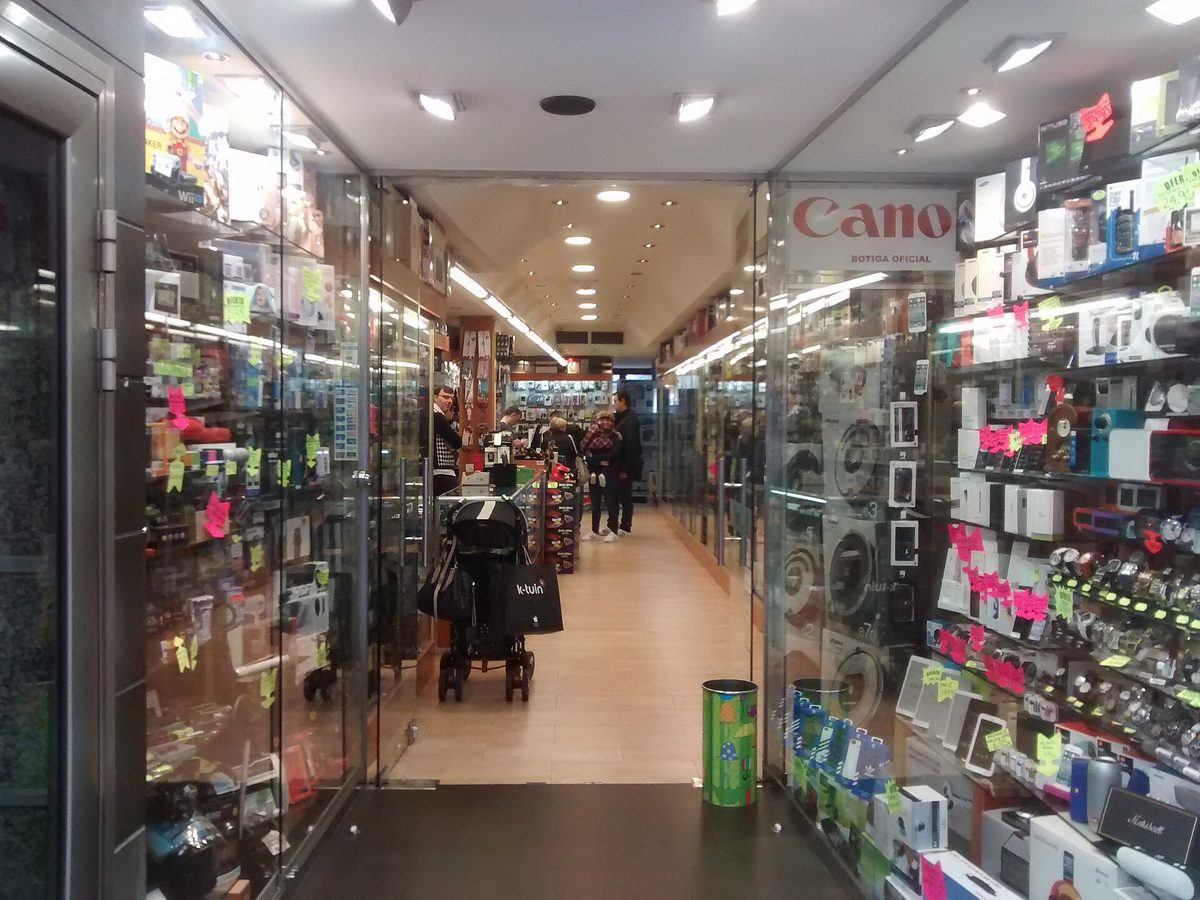
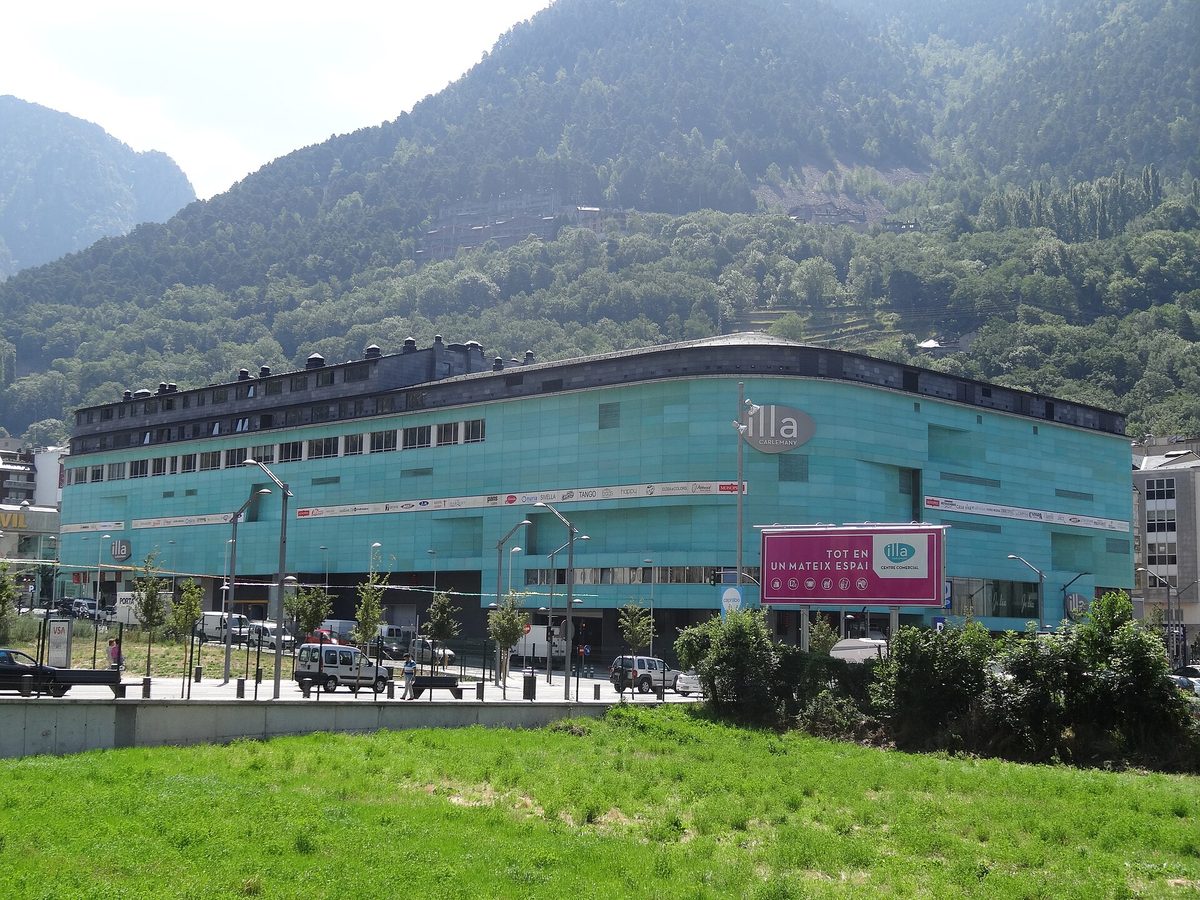
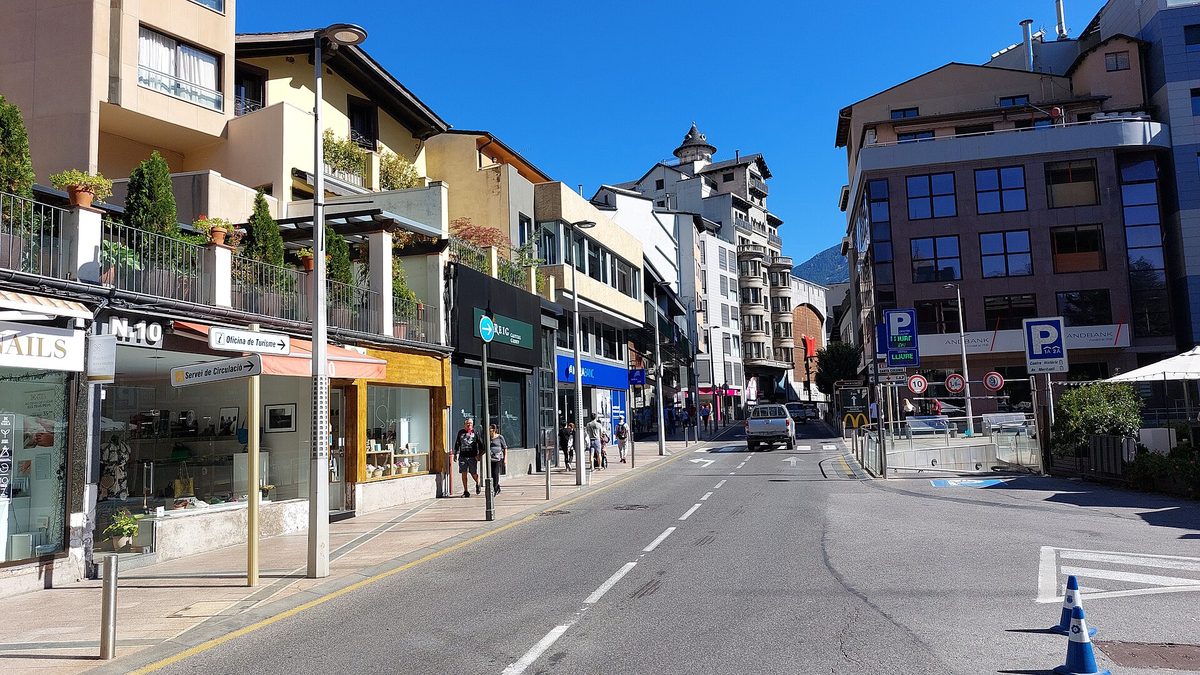
My worst Andorra shopping trip took eleven hours and produced one bottle of gin and a headache. We left Barcelona at nine on a Saturday in August, hit roadworks near Ponts, parked at 13:40, found half the small shops shuttered for lunch, and joined the queue at la Farga de Moles at 17:15 alongside several thousand people who had all had precisely the same idea. My best one, three years later, took six hours door to door and filled the boot.
Nothing changed except the planning.
The short version: a good Andorra shopping trip is a logistics problem, not a shopping problem. Come midweek, come during the January or July sales, buy in the right order, and cross back before 16:00. This guide is the operator’s manual for anyone driving or busing in for a day, or staying the night.
Last updated: August 2026. Prices, opening rules, toll charges and customs allowances move. Everything below is a 2026 snapshot and I have hedged it accordingly — check visitandorra.com, duana.ad and your own customs authority before you travel, and treat every figure here as a planning estimate rather than a promise.
This is the how-to companion to the main guide to shopping in Andorra, which covers what is actually cheaper and by how much. I am not going to re-litigate the price question here beyond one line: the savings are real but selective, and if you want the arithmetic, the honest answer on whether Andorra is cheap for shopping has it category by category. What follows is everything that happens around the buying — the calendar, the roads, the queues, the running order, the border.
The trip at a glance
If you read one thing before you set an alarm, read this.
| Planning point | The 2026 reality |
|---|---|
| Best months | January (deepest discounts), late June, September, early October (emptiest) |
| Sales periods | Rebaixes roughly early January to late February, and early July to late August |
| Best days | Tuesday, Wednesday, Thursday. Arrive by 10:00 |
| Worst days | Saturdays, Sunday afternoons, Spanish and French bank-holiday weekends, all of August |
| Shop hours | Typically 09:30/10:00 to 20:00 Sun–Thu, 21:00 Fri–Sat. Open every Sunday |
| Annual closures | Only four: 1 January, 14 March (weekdays), 8 September, 25 December |
| Drive times | Barcelona ~3 h (200 km); Toulouse ~2 h 30 (185 km); La Seu d’Urgell 10 min |
| Coach | Barcelona city and El Prat airport, around €35 one way, roughly hourly |
| Border crossings | La Farga de Moles (Spain) and Pas de la Casa (France), both open 24/7 |
| Golden rule | Shop, lunch, fuel, cross back before 16:00 |
| Allowance headline | Per adult: 300 cigarettes, 1.5 L spirits, 5 L wine, 16 L beer, €900 other goods |
| Tax refund | None. Andorra has no tourist VAT-refund scheme — the tag price is the price |
| Minimum useful stay | Six hours on the ground. One night if you want the country as well as the shops |
When to go: the Andorra shopping trip calendar
Andorra’s structural discount is permanent. The Andorra sales are not, and the gap between a random Thursday in May and the second week of January is large enough to be worth building a trip around.
Andorra sales: the rebaixes in January and July
Andorra runs the same two-season sale rhythm as Spain. The rebaixes start in early January and run into late February, then return in late June or early July and stretch to the end of August. Reductions typically start around 20–30% and deepen as the weeks pass, with the last fortnight of each period producing the 50–70% racks on leftover sizes.
Here is why the January window matters more than the July one. In Spain or France, a 40% sale price still has 21% or 20% of tax baked into it. In Andorra, the sales tax underneath that same discount is 4.5%. The two savings stack. A ski jacket at 40% off in Andorra la Vella and a ski jacket at 40% off in Barcelona are not the same number, and on a €400 shell the difference is roughly the cost of the petrol to get there.
January also lands when winter stock is still complete rather than picked over, because the ski season has months left to run and shops restock. That combination — full rails, deep cuts, low tax — is the single best value moment of the retail year. The trade-off is weather and traffic on the mountain roads, which I cover below.
July and August sales are strong on consumer electronics, cameras, perfume and summer fashion, and weaker on anything mountain-related. They are also fighting the worst crowd month of the year. If you can shop the first ten days of July rather than the whole of August, do.
The Shop in Andorra Festival, and the November window
Every November the capital, Escaldes-Engordany and Pas de la Casa run the Shop in Andorra Festival: extended promotions across hundreds of shops, street music, tastings, prize draws and late opening. Recent editions have run for roughly the first three weeks of the month — the 2025 edition ran 7–23 November — and the dates are usually confirmed in early autumn, so check the official tourism site before you commit.
I rate November as the best compromise week of the year. Discounts are real without being January-deep, the roads are dry, hotel rates sit at their off-season floor, and the mile is busy in a pleasant way rather than a crushing one. It is also the month the Black Friday promotions land on top, which in Andorra means a discount applied to an already low-tax price.
Pre-season ski gear and the spring clearance
Two smaller windows are worth knowing if you have a specific target.
October into November is when the ski shops run pre-season promotions to shift last year’s stock before the lifts turn. This is the moment to buy skis, boards, boots, helmets and technical outerwear — the range is complete, the fitters are not yet rushed, and you can spend forty minutes in a boot fitting without a queue forming behind you. Try that in the last week of December and see how it goes.
The other window is March into April, when the same shops clear whatever the season left behind. Discounts are deeper than October but sizes are patchy, so it rewards flexibility rather than a shopping list.
The best time to shop in Andorra, month by month
Condensed to a sentence per month: January is deepest value; February good but half-term busy; March quiet apart from Easter creep; April and May are the emptiest and dullest; June is excellent from mid-month; July good but warming up in every sense; August is the month I actively avoid; September is my personal favourite; October is quiet with the ski promotions starting; November is the festival month; December is atmospheric and chaotic.
If you want one answer to the best time to shop in Andorra, and the calendar is genuinely free, it is a Tuesday or Wednesday in late September or the first week of October. Full stock, terrace weather, no border queue, and hotel rates in the trough between summer and ski season. If your priority is price rather than comfort, it is a weekday in the second or third week of January and you accept the traffic. The wider seasonal picture is in the month-by-month guide to visiting Andorra.
The retail week: hours, Sundays and the lunch trap
Andorra’s opening hours are built for visitors in a way that still surprises first-timers, and they are the reason a day trip works at all.
Shops open every Sunday. Not some shops, not the malls only — the whole country trades on Sundays, which in Spain and France would be unthinkable outside designated tourist zones. Typical hours run from around 09:30 or 10:00 in the morning through to 20:00 Sunday to Thursday and 21:00 on Friday and Saturday. At peak periods — the December bridge weekends, Epiphany, Easter week — the big stores push later still, sometimes to 21:00 or 22:00.
Retail closes completely on four dates a year and no others: 1 January, 14 March (Constitution Day, and only when it falls on a weekday — shops open anyway on a weekend), 8 September (the national day) and 25 December. That is 361 or 362 trading days depending on the year. If you have driven three hours and found the country shut, you have managed something statistically impressive.
Now the trap. The big stores, malls and hypermarkets trade straight through the day, but small independent shops in the old town and the side streets still close for lunch, roughly 13:00 to 15:00 and sometimes to 15:30. Every year I meet people who arrived at 13:30, wandered a half-dead street, decided Andorra was overrated and drove home.
The fix is trivial: do your boutique and specialist errands before 13:00 or after 15:00, and spend the middle of the day either at a long lunch or inside a hypermarket that never closes. Locals structure the day exactly this way and so should you.
The crowd calendar: when the mile is calm and when it is brutal
Andorra absorbs around nine million visitors a year into a country of 468 square kilometres, and the overwhelming majority of them converge on the same three kilometres of shopping street. Whether that feels manageable or miserable is almost entirely a function of which hour you show up.
The calm windows
Tuesday, Wednesday and Thursday mornings are the good time. Doors open around 09:30 to 10:00, the coaches have not arrived, staff have time for you, the fitting rooms are empty and the perfume counters are not three deep. From 10:00 to 13:00 midweek, Avinguda Meritxell is a pleasant street to shop on. I have done a full electronics comparison, two perfume stops and a supermarket run inside that window without hurrying.
Monday mornings are also quiet, with one caveat: a handful of independents take Monday morning off, so if your trip hinges on one specific small shop, ring ahead.
Late afternoon midweek — say 17:00 to 19:30 — is the second-best slot. The day-trippers have started their drive home, the shops are still open for hours, and you get the mile back.
The days to avoid
Saturday is the worst single day of the week, and Saturday afternoon is the worst part of it. Sunday morning is tolerable; Sunday afternoon is when the entire weekend population tries to leave at once, which matters more for the border than the shops.
Then there are the compound dates, when a bad day of the week collides with a public holiday on either side:
- Spanish and French long weekends — the puentes. 1 May, 15 August, 1 November, 6 and 8 December are the big ones. Andorra fills the moment either neighbour gets a Monday or Friday off.
- The December bridge weekends and the whole run from about 20 December to 6 January. Christmas shopping plus ski season plus Reyes is the densest traffic of the year. Atmospheric, if you like that sort of thing — and Christmas in Andorra is genuinely good — but not efficient.
- 5 and 6 January, Reyes. Spanish families do their gift shopping here and the mile is shoulder to shoulder.
- All of August. School holidays in both neighbours, summer sales, and the highest hotel rates outside Christmas.
- February half-term weeks, when ski traffic and shopping traffic use the same two roads.
None of these are reasons not to come. They are reasons to arrive early, park once and lower your expectations about parking near the door.
Border queues and the 16:00 rule
Both borders are open 24 hours a day, every day of the year. That is not the constraint. The constraint is the customs check on the way out, which is the only part of the operation that has a physical throughput limit.
La Farga de Moles, the Spanish crossing on the CG-1/N-145, is where most of the pain happens. On a Sunday in high season the queue can start well before the checkpoint and turn a ten-minute exit into an hour or more. Pas de la Casa on the French side has the same pattern in a smaller form, with the added complication of the Envalira pass above it and the road up from Soldeu carrying ski traffic.
The rule I now treat as non-negotiable: be through the border by 16:00. Between roughly 16:00 and 20:00 on Saturdays, Sundays and holiday Mondays, both crossings absorb the entire day-trip population at once. Cross at 15:45 and you may not even slow down. Cross at 17:30 on a January Sunday and you will have time to reconsider your purchases at length.
If you cannot leave early, the counter-intuitive move is to leave very late. After about 20:30 the queue has drained and the run down to La Seu d’Urgell is quick. Have dinner in Andorra, then drive. The full picture on checks, documents and what customs actually look at is in the guide to crossing the Andorran border.
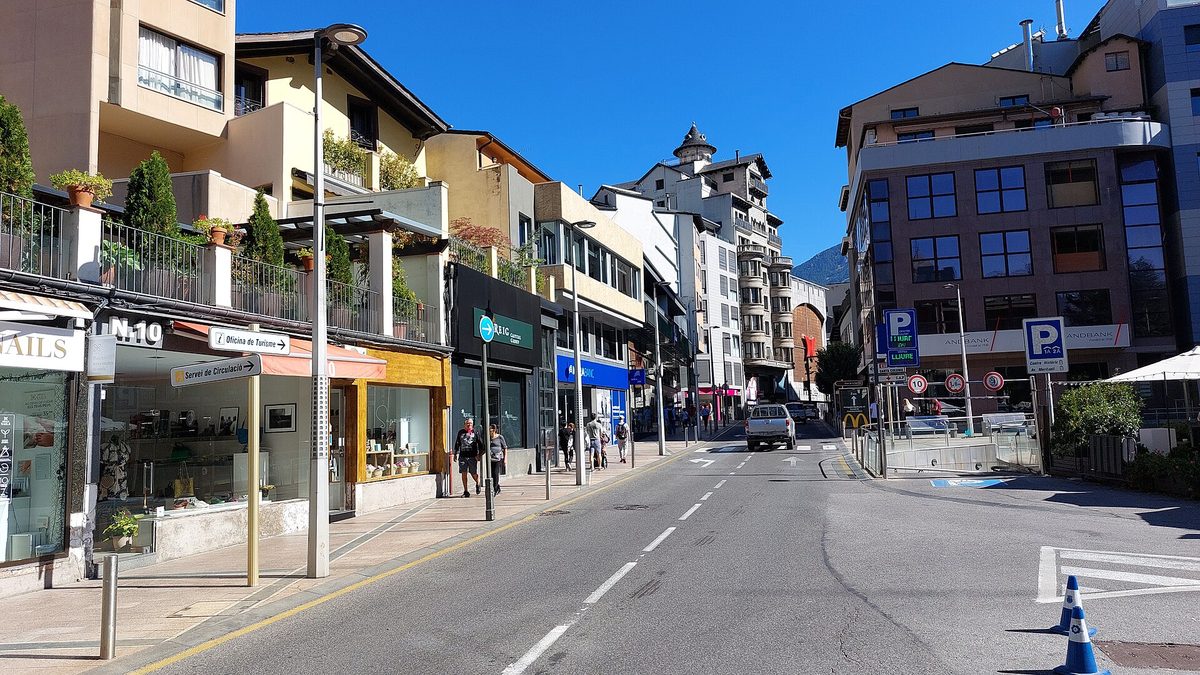
Routes in: getting yourself to the shops
There is no airport and no railway inside Andorra, so every arrival is a road arrival. Which road you take changes the shape of your day more than most people expect.
From Barcelona
Around 200 km and about three hours in normal conditions, via the C-16 or C-14 and then the N-145 through La Seu d’Urgell. Add 30 to 45 minutes for a summer Saturday or a ski Sunday. The last hour is mountain road with slow lorries and limited overtaking, so treat any satnav estimate as optimistic.
Leaving Barcelona by 07:00 gets you parked by 10:00 with the whole retail day ahead. Leaving at 09:00 gets you there for the lunch closure, which is exactly the mistake I made. Route detail, tolls and the alternatives are covered in the Barcelona to Andorra route guide.
From Toulouse
About 185 km and roughly two and a half hours, down the N20 through Ax-les-Thermes and over the Envalira side. This route enters at Pas de la Casa, which means you hit duty-free shops before you have even reached the capital — convenient for tobacco and spirits, less so if you buy 16 litres of beer at 10:00 and then drive it around all day.
My advice from the French side: drive through Pas de la Casa on the way in, shop the capital, and stop at Pas on the way back out. The full route notes are in the Toulouse to Andorra guide.
From La Seu d’Urgell, Lleida and Perpignan
La Seu d’Urgell is the outlier: ten minutes to the border and about twenty-five to the capital. If you are staying anywhere in the Alt Urgell, Andorra is a supermarket run, not a trip. This is also the smart budget play — sleep in La Seu, shop in Andorra, and pay Catalan hotel prices.
Lleida is about 150 km and two and a quarter hours via the C-13 and C-14. Perpignan is around 200 km and three hours over the French side, which is a long way to go for perfume unless you are combining it with a ski weekend.
Without a car
Carless shopping is more workable than people assume. Direct coaches run from central Barcelona and from El Prat airport, typically around €35 one way with something like sixteen departures a day in season, landing at the Andorra la Vella bus station about ten minutes’ walk from the top of the shopping mile. Services also run from Toulouse and Toulouse-Blagnac airport. Operators, timetables and booking notes are in the direct bus guide.
The limitation is weight, not access. Sixteen litres of beer and five litres of wine is a serious carry, and coach operators have luggage limits. Carless shoppers sensibly skew toward perfume, cosmetics, electronics, watches and clothing, and leave the liquid categories to the drivers.
The Envalira tunnel, tolls and winter tyres
If you come over the French side, you choose between the Port d’Envalira — the highest paved pass in the Pyrenees at 2,408 m — and the Envalira road tunnel that bypasses it. The tunnel is tolled, in the region of €7 to €8 for a car each way as of 2026, and in winter it is worth every cent. The pass is spectacular and occasionally closed.
Winter equipment rules apply roughly from November to April: Andorran authorities can require winter tyres or chains on the mountain roads when conditions demand it, and enforcement is real rather than theoretical. Carry chains and know how to fit them, or arrive on proper winter tyres. Turning up in a hire car with summer rubber in February is how a shopping trip becomes an unplanned overnight. The mechanics of all this are in the driving to Andorra guide.
Parking, and the L1 bus
Do not try to park outside the shop you want. Park once, in one of the communal underground car parks in Andorra la Vella or Escaldes-Engordany, and walk — the mile is entirely walkable end to end in about twenty-five minutes, and the two parishes run into each other without a gap. Rates are modest by European city standards, often around €1 to €2 an hour, and some malls validate.
The L1 bus runs down the main valley and is the useful line for shoppers: it links the capital with Escaldes in one direction and runs down towards Sant Julia de Loria and the border retail parks in the other, for a couple of euros. It is how you do the hypermarket run without moving the car. Fares, routes and passes are in the getting around Andorra guide.
The running order on the ground
Most people arrive and start shopping wherever they parked. That is how you end up carrying a case of wine past the three shops you actually came for. There is a sequence that works, and it is the same one every regular uses without ever writing it down.
1. Big-ticket comparison first, while you are fresh
Anything expensive and comparable — a laptop, a camera, a watch, a pair of ski boots — goes first, for two reasons. You need judgement for it, and judgement is the first thing to go after four hours on your feet. And you need to visit two or three shops before you buy, because Andorran electronics pricing varies more between shops than most visitors expect.
Walk into the first shop, get the price, walk out. Do the same at the second. Then decide. The savings on a big item are worth twenty minutes of legwork, and the fine print — warranty coverage, EU plug standards, whether your home warranty travels — is set out in the guide to buying electronics in Andorra. Do this at 10:00, not 16:00.
2. The perfume mile
Perfume and cosmetics are the classic Andorran errand and the easiest to do badly, because the shops are dense, the counters are competitive and the discounts differ by 10% between doors thirty metres apart. Work the stretch of Avinguda Meritxell and Avinguda Carlemany systematically rather than diving into the first bright shopfront.
These purchases are small, light and high-value, which is exactly what you want to be carrying at midday. Which houses genuinely undercut and which are theatre is covered in the perfume shopping guide.
3. Supermarket and hypermarket, for the heavy stuff
Spirits, wine, beer, coffee, branded groceries and confectionery all belong in a supermarket or hypermarket, not a souvenir-styled duty-free boutique on the main street. The shelf price in a normal Andorran supermarket routinely beats the shop with the giant DUTY FREE sign in the window, which is one of the more reliable rules of the country.
This is also where the weight enters your day, so it goes after the walking and before lunch, ideally within a short move of the car. Category-by-category savings on the liquid aisle are in the alcohol and cigarette price guide.
4. Lunch, deliberately
Take the lunch. It is not a break in the plan, it is part of the plan: it covers the 13:00 to 15:00 window when the small shops are shut anyway, it gets the bags into the car, and it stops the afternoon becoming a forced march. A menu del dia in the old town or up a side street runs roughly €15 to €22 and will be better than anything on the main drag.
5. Fuel last, on the way to the border
Fuel goes last, always, and the reason is arithmetic rather than superstition. Andorran petrol and diesel typically run somewhere around 15–25% below Spanish and French pump prices, so the saving scales with how empty your tank is when you fill it. Fill up on arrival and you buy fifteen litres of savings. Fill up on departure, having burned a day’s driving around the valley, and you buy a full tank of savings and leave the country with it.
There is a second reason. The best-value stations sit near the borders rather than in the centre, so filling up on the way out costs you no detour at all. Heading for Spain, that means the run down through Sant Julia de Loria, where the border retail parks and the big Carrefour-anchored centre also make a natural final stop for anything you forgot. Heading for France, it means Pas de la Casa.
One caveat: do not join a 40-minute fuel queue at 15:45 on a Sunday to save nine euros, because you will lose it and more at the border. Fuel last, but fuel early enough.

Border strategy: allowances, receipts and the red channel
This is the part of the trip people get wrong, and the only part with a financial downside. Andorra is not in the EU, so leaving it means importing goods into Spain or France, and personal allowances apply.
What you can take out, per adult
The 2026 allowances for a traveller returning to Spain or France, per person:
- 300 cigarettes, or 150 cigarillos, or 75 cigars, or 400 g of loose tobacco
- 1.5 litres of spirits over 22 degrees, or 3 litres of fortified or sparkling drinks under 22 degrees
- 5 litres of still wine
- 16 litres of beer
- €900 of other goods for adults, €450 for travellers under 15
- Food products up to €300
The alcohol categories are cumulative, so a legal load is 1.5 L of spirits and 5 L of wine and 16 L of beer, not a choice between them. The full detail, including the tobacco sub-limits and the perfume rules, is in the Andorra duty-free allowance guide.
The four rules people break
Allowances are individual and cannot be pooled. Two adults in a car have two allowances, and if one of you buys nothing, that allowance does not transfer. Customs assess the goods against the people who bought them, and “it’s for my wife” is not a defence for 600 cigarettes in one boot.
A single item’s value cannot be split. If you buy a €1,400 camera, you cannot claim €700 of it against each of two allowances. One item, one person, one limit. Over €900, the whole item is declarable and duty is calculated on the full value, not the excess.
Under-17s have no tobacco or alcohol allowance at all. Under-15s get €450 of other goods rather than €900. Children do not launder your whisky, and using them to do it is exactly the behaviour customs officers are trained to spot.
Keep the receipts. Loose, accessible, not buried under the spare wheel. If you are asked to demonstrate that your goods sit inside the limits, a folder of receipts turns a twenty-minute conversation into a two-minute one. It also protects you on warranty claims later.
If you are over, declare it
There is a red channel at both crossings. Declaring an excess means paying duty and VAT on the amount over the limit, which on a modest overshoot is often a manageable sum and always cheaper than the alternative. Not declaring and being found means the goods can be confiscated and a fine applied on top, and the whole car gets emptied onto a table while the queue behind you watches.
Checks are genuinely random rather than constant. Plenty of people cross without so much as a glance. But the odds go up sharply on a Sunday evening in December, and a boot loaded to the ceiling is its own invitation.
There is no tourist tax refund in Andorra
Worth stating plainly because it confuses people every year: Andorra has no VAT-refund or tax-free shopping scheme for visitors. There is no stamping desk, no form, no refund kiosk at the border. There is nothing to reclaim because there is almost nothing charged — the IGI sits at 4.5% and is already inside the tag price. What you see is what you pay, and what you pay is the saving.
Day trip or overnight? The honest argument
I will declare my bias: one night changes the trip completely, and I say that as someone who has done the round-trip blitz more times than the overnight.
The day trip is defensible on pure economics. Six hours of driving from Barcelona, six hours on the ground, no accommodation cost. If your target is 300 cigarettes, a case of spirits and a tank of fuel, the maths works and the country is incidental.
What you miss is everything the day-tripper drives past. The old quarter of Andorra la Vella — genuinely medieval, about four streets of it, and empty at 19:00 while the mile is still heaving. A borda dinner, in a converted stone barn, with the kind of long lamb-and-red-wine meal that does not fit into a shopping day. Three hours in the thermal water at Caldea, which is the single best way to recover from a day on your feet, and which closes long after the shops do. And a morning drive up a side valley before you leave, when the light is good and the roads are yours.
Roughly, per couple, in a shoulder-season month:
| Trip shape | Approximate extra cost and what you get |
|---|---|
| Day trip from Barcelona | Fuel and tolls around €50–70, or two coach returns around €140. Six hours on the ground, all of it retail |
| One night added | Three-star double from around €80–120 off-season, dinner around €60–80, spa around €90 for two. Twelve extra hours, no second drive |
| Verdict | The extra night costs roughly what an evening out at home costs and converts a supply run into a trip |
The other argument for staying is purely tactical. Stay the night and you shop Tuesday afternoon and Wednesday morning instead of Saturday midday, and you cross the border at 11:00 on a weekday with nobody in front of you.

Four plans that actually work
Pick the one that matches your constraint, then adjust for the calendar advice above.
The six-hour blitz
For drivers who need to be home the same night, ideally midweek.
Arrive and park by 10:00 in Andorra la Vella. Big-ticket comparison and purchase until 11:15. Perfume and cosmetics along Meritxell into Carlemany until 12:30. Back to the car, drive or take the L1 down-valley to a hypermarket for spirits, wine, beer and groceries, loading straight into the boot. Lunch at 13:45 near the border rather than in the centre. Fuel by 15:15. Through the border by 15:45. You will be home for dinner with a full boot and no queue story.
The full-day Andorra shopping day trip
The version I would recommend to anyone coming from Barcelona or Toulouse for the day.
Arrive by 09:45. Big-ticket first, then the small independents in the old quarter before they shut at 13:00. Perfume and cosmetics from 11:30. Long lunch from 13:15 to 14:45, bags in the car. Department store and mall from 15:00, when the small shops reopen and the malls are still calm. Supermarket run at 16:30. Fuel at 17:30. Cross at 18:15, accepting that a weekday evening queue is short. That is about eight useful hours and covers every category properly.
The shopping-plus-ski weekend
Friday evening arrival, two nights, and you use the mountain as the reason and the shopping as the bonus.
Ski Saturday and Sunday morning, shop Sunday afternoon and evening when you would otherwise be driving, sleep, then shop again on Monday morning and drive home at midday against the traffic. If you base yourself at Pas de la Casa you get the duty-free shops at the bottom of the pistes and a French-border exit that avoids the Spanish queue entirely — the trade-off, honestly assessed, is in the Pas de la Casa guide. Buy your ski gear in October or November, not in February, and bring it with you.
The shopping-plus-spa weekend
My favourite version, and the one I push on anyone who says Andorra is only shops.
Arrive Friday afternoon. Shop Friday evening until 21:00, when the mile stays open late and the day-trippers have gone. Saturday morning in the old quarter and the malls. Saturday afternoon in the thermal water at Caldea, three or four hours of it, which is exactly what your feet need. Borda dinner Saturday night. Sunday morning for anything you missed and a drive up a side valley. Home by mid-afternoon, having actually seen the country you drove to.
The Andorra shopping trip checklist
Print this or ignore it, but the people who ignore it are the ones in the 17:30 queue.
- Passport or national ID card for every traveller. Andorra is outside Schengen and checks identity at both borders.
- Check the date against the four annual closures and against Spanish and French public holidays.
- Book nothing for the evening you return. Border queues make liars of everyone.
- Winter tyres or chains from roughly November to April, plus a check on the Envalira pass status.
- Empty boot, empty tank, a couple of reusable crates to stop bottles rolling.
- Cool bag if you plan to buy cheese, charcuterie or anything from the counter.
- An envelope or folder for receipts, kept somewhere reachable.
- A written shopping list with target prices from home, so you know what a real saving looks like.
- Cards work everywhere and the currency is the euro, but carry some cash for small independents and parking.
- Know your allowance before you buy the third bottle, not after.
- Set a hard departure alarm for 15:30 if you are crossing on a weekend.
Frequently asked questions
How long do you need in Andorra for a shopping trip?
Six hours on the ground is the practical minimum for a serious Andorra shopping trip, and eight is comfortable. That covers big-ticket comparison, the perfume and cosmetics stretch, a hypermarket run, lunch and fuel. Under four hours you will only manage one or two categories and will feel rushed at the border.
When are the sales in Andorra?
The rebaixes run twice a year: roughly early January to late February, and late June or early July to the end of August. January is the deeper window because sale reductions stack on top of the 4.5% sales tax. The Shop in Andorra Festival adds a third promotional period across the first three weeks of November.
Is a day trip to Andorra worth it just for shopping?
If you are within about two and a half hours and buying tobacco, spirits, perfume, electronics or fuel, yes, comfortably. From Barcelona at three hours each way it is marginal on a single small purchase and clearly worth it on a full boot. Adding one night improves the trip out of all proportion to what the hotel costs.
Are shops open on Sundays in Andorra?
Yes, every Sunday, which is the whole basis of the weekend trade. Typical Sunday hours run to around 20:00, sometimes 19:00 for smaller shops. Retail closes only on 1 January, 14 March when it falls on a weekday, 8 September and 25 December. Check current hours for any specific shop before travelling.
How much can I bring back from Andorra to Spain or France?
Per adult: 300 cigarettes, 1.5 litres of spirits over 22 degrees or 3 litres under, 5 litres of still wine, 16 litres of beer, €900 of other goods, and food to €300. Under-15s get €450 of goods and no tobacco or alcohol. Allowances are personal and cannot be combined between travellers.
Can I claim a tax refund on shopping in Andorra?
No. Andorra has no tourist tax-refund or tax-free shopping scheme, because there is effectively nothing to refund. The IGI sales tax is 4.5% and is already included in the displayed price. Do not go looking for a refund desk at the border, and be sceptical of any shop that offers you one.
What is the best day of the week to shop in Andorra?
Tuesday, Wednesday or Thursday, arriving for opening at around 10:00. Weekend afternoons are the busiest hours in the country and Sunday between 16:00 and 20:00 is when the border queues form. If a weekend is unavoidable, shop Saturday morning and either leave before 15:30 or after 20:30.
Do I need winter tyres to drive to Andorra?
From roughly November to April, yes, or chains that you know how to fit. The authorities can impose winter equipment requirements on the mountain roads at short notice and they do enforce them. Check your hire car’s tyres before you leave the airport, and check the Envalira pass status if you are coming from France.
Related Andorra shopping guides
Once your dates are set, work out the list: what is actually worth buying in Andorra is the category-by-category verdict, shopping in Andorra la Vella maps the mile street by street, and Caldea is where you should spend the afternoon your feet have earned.
Photo credits
All photographs are from Wikimedia Commons under their stated licences, with thanks to the photographers: