“Andorran wine” sounds like the punchline to a joke about small countries. I thought so too, right up until a sommelier in Soldeu poured me a Gewürztraminer grown at 1,100 m in a village most Andorrans could not find on a map, and I had to put my notebook down.
Andorran wine is real, recent and very small. Five working cellers, all but one in Sant Julià de Lòria, grow vines between roughly 950 and 1,300 m on hand-worked terraces — among the highest commercial vineyards in Europe. This guide covers every winery, which ones you can visit, what the wine tastes like, and the rest of the country’s larder.
Last updated: September 2026. Andorran producers publish almost no prices and change their visiting arrangements seasonally; every figure here is an estimate and every tour needs booking in advance. Check with the winery directly.
Andorran wine at a glance
| Celler | Where, and how high | What they make, and can you visit? |
|---|---|---|
| Casa Auvinyà | Auvinyà, Sant Julià de Lòria — 1,200 m | Pinot noir, syrah, and Imagine, a viognier-led white. Andorra’s first red producer. Tours and tastings, booking required |
| Borda Sabaté 1944 | La Muxella, Sant Julià de Lòria — 1,190 m | Escol (riesling) and Torb (red). Biodynamic; winemaker Alain Graillot. Year-round tours, shop, own restaurant |
| Casa Beal | Nagol, Sant Julià de Lòria — around 1,050–1,100 m | Cim de Cel, a Gewürztraminer, and the first Andorran wine of this century. 1.5–2 hr tours, four languages, book ahead |
| Celler Mas Berenguer | Pui d’Olivesa, Sant Julià de Lòria — 950 m | Pinot noir, chardonnay, sauvignon blanc. Strongest on sparkling. Visits not advertised |
| Casus Belli | Ordino — 1,250–1,300 m, the country’s highest | Pinot noir and two sparklings. The only winery in the northern valleys. Visits not advertised |
Total national output is measured in low thousands of bottles per winery. Nobody buys or sells grapes here — every producer grows and vinifies its own, which is unusual anywhere.
Why a country this old only started making wine this recently
There is a documentary trace of monks making wine in Sant Julià de Lòria — the lowest, southernmost, warmest parish — more than a thousand years ago. Then, essentially, nothing, for most of the twentieth century.
The reason is the best story in Andorran food, and it is tobacco.
Andorra sat between France and Spain with almost no duty on anything, and tobacco was the crop that turned that geography into money. A hillside of tobacco earned more than a hillside of vines ever would, the steepest ground was more useful as pasture for sheep and cattle, and anyone with ambition went into trade — and later into ski lifts and shops. Vines are a slow, expensive, back-breaking thing to plant on a 50% slope. Nobody does it unless they can afford to lose money for a decade.
So Andorran viticulture is not an old tradition being revived so much as a new one being built, by families rich enough from something else to indulge it. That is not a criticism — it is why the wine is ambitious rather than rustic. Every one of these cellers started with the question “can we make something serious here?” rather than “what did grandad drink?”
The timeline is short enough to list. Casa Beal restarted in 1988 after more than a century’s gap and replanted in 2004. Casa Auvinyà began in 2005 and ran a five-year research programme into whether high-Pyrenean viticulture could produce quality wine at all. Casa Beal’s Cim de Cel came out in 2006, the first Andorran wine of the 21st century. Borda Sabaté and Casus Belli both got going around 2010, Mas Berenguer in 2011, and Casus Belli sold its first bottles in 2015.
One correction, because it circulates: there was no law banning Andorran wine that got repealed. What exists is a quality regime, not a legalisation. The government runs official control-and-guarantee seals, including Vi de qualitat controlada d’Andorra, and bottles carry a code beginning AD with the cellar, year and bottle number. A 2022 regulation governs the wider terms “Producte d’Andorra” and “Recepta Tradicional d’Andorra” for food and drink generally.
What altitude actually does to the wine
Andorra sits at the latitude of Tuscany. It also has a minimum altitude of around 840 m and an average nearer 2,000 m, which is why almost none of it can grow grapes at all. Ripening only happens on well-exposed southern slopes below roughly 1,250 m, and there are not many of those.
What you get on the ones that work is a compressed growing season, big day-to-night temperature swings, hard ultraviolet light and soils of decomposed schist and slate. In the glass that reads as acidity — sharp, clean, structural acidity — with aromatic whites and reds that are light-bodied and fresh rather than broad and warm. Producers plant short-cycle, early-ripening varieties because the season is simply too short for anything else; Casus Belli chose its grapes specifically for a site that spends much of the day in shade.
Harvest comes late, generally September into October rather than the August of lowland Catalonia. And every bit of it is done by hand. On a 40–60% gradient no machine can help you, which is the other reason there are five wineries and not fifty.
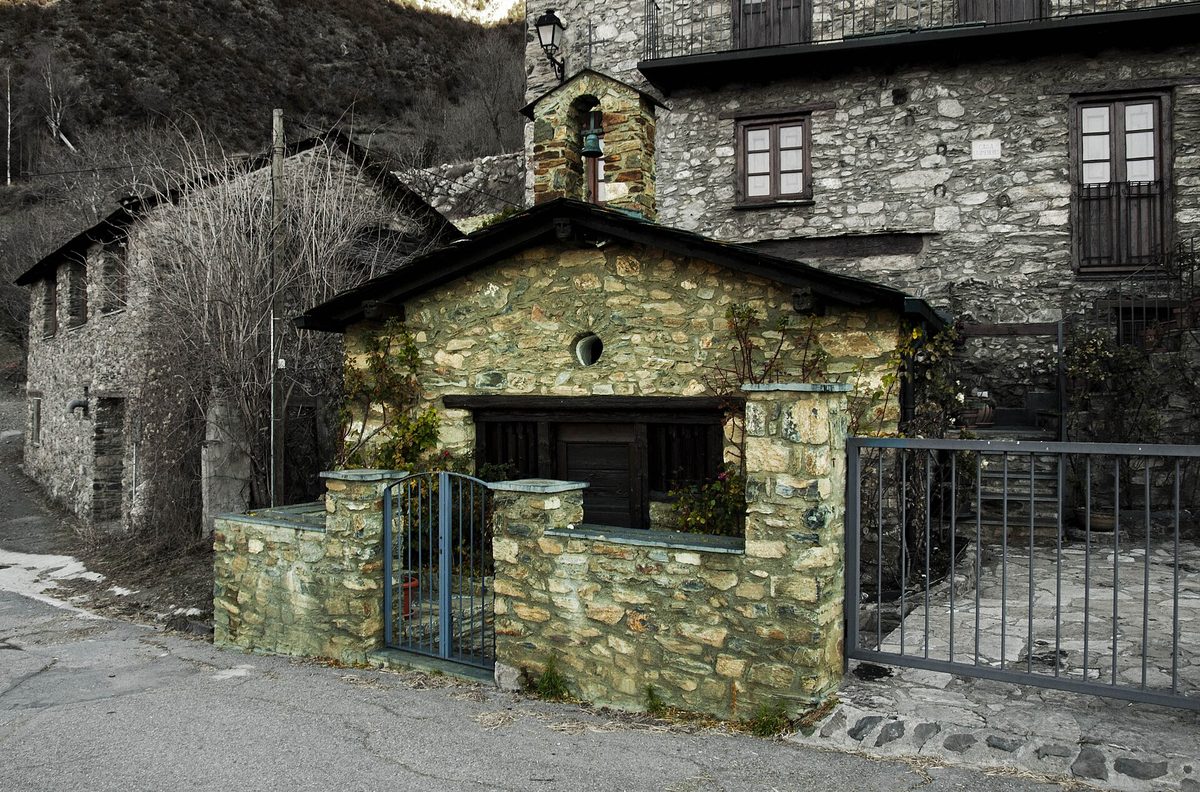
The five cellers, one by one
Casa Auvinyà — the one to visit first
Two hectares in five plots above the village of Auvinyà, in Sant Julià de Lòria, at 1,200 m on west-facing shale terraces cut into ground that runs at 40–60%. The Tor family started in 2005 with a five-year research programme rather than a business plan, which tells you something about the mentality.
They grow pinot gris, pinot noir, syrah, viognier and albariño. The reds are Evolució and Forapista, both single-varietal; the white is Imagine, a blend of roughly half viognier, 45% pinot gris and a splash of albariño that they describe as a snow white. Casa Auvinyà was the first producer to make red wine in Andorra, and has picked up more than a dozen international awards since 2014, including at the International Wine Challenge in London and BACCHUS in Madrid.
Guided tours and tastings run by advance reservation, and the tourist board also lists food-and-wine pairing lunches. Of the five, this is the one I would build an afternoon around.
Borda Sabaté 1944 — the serious one
Terraces cut into very steep ground on the sunny slopes of La Muxella, also in Sant Julià, at 1,190 m, farmed biodynamically. The name to notice is the winemaker: Alain Graillot, of Crozes-Hermitage. A northern Rhône vigneron consulting on a Pyrenean microstate’s two-wine range is a strong signal about how seriously somebody is taking this.
They make two wines. Escol is built on riesling. Torb is a red crianza that leans on the Swiss variety cornalin alongside merlot and syrah — sources disagree slightly on the exact blend, so take that as the shape rather than the recipe. The credentials are real: at the CERVIM extreme-wine competition in 2019, run by the mountain-viticulture body the OIV set up in the Aosta Valley, Escol 2010 was named the best extreme white wine in the world for its vintage and Torb 2015 took gold.
Borda Sabaté is Andorra’s wine-tourism pioneer and the easiest to actually experience: guided vineyard or cellar tours all year round, tastings, a shop, and its own restaurant, Le Domaine, doing mountain rice dishes and local cooking on the estate. If you want lunch and wine in one stop, this is it.
Casa Beal — the one that started it
In the hamlet of Nagol, above 1,000 m — sources put the vines at roughly 1,050–1,100 m. The Visa-Tor family restarted here in 1988 after more than a century of nothing, replanted in 2004, and in 2006 released Cim de Cel, a pure Gewürztraminer and the first Andorran wine of the 21st century. It is all lychee and rose on the nose and has a line of mountain acidity underneath that keeps it from being cloying. In 2014 the International Wine Guide named it one of the six best white wines in the world and gave it its Gran Or distinction.
Tours run 1.5 to 2 hours in Catalan, Spanish, French and English, take in the vineyard and the cellar and finish with a tasting, and must be booked in advance. There is also a genuinely odd sideline worth knowing about: Casa Beal makes a handmade foie gras mi-cuit, macerating the livers in its own Gewürztraminer and calvados.
Celler Mas Berenguer — the sparkling one
At Pui d’Olivesa, 950 m, the lowest and youngest of the five — founded 2011, first fruit 2013 — on a family holding the tourist board dates back more than a thousand years, with the Berenguer name running seven generations to 1714. Pinot noir, chardonnay and sauvignon blanc, producing Tancat Rocafort, a blanc de blancs, a brut nature rosé and a barrel-fermented chardonnay called Cortó Carlemany. Its most successful wines are the sparklings, which makes sense: high acidity is the raw material for good fizz, and Andorra has acidity to spare. Visits are not advertised; ask.
Casus Belli — the highest
The only winery in the northern valleys, at Ordino, with vines at 1,250–1,300 m — the highest in the Principality and among the highest commercial vineyards anywhere in Europe. Three hectares over about a dozen parcels on the Any de la Part estate, planted from 2010 with short-cycle varieties chosen for a mostly shaded site, worked by hand and vinified plot by plot. First harvest bottled and sold in 2015.
They make a pinot noir, a sparkling pinot noir and chardonnay, and a sparkling blanc de noir. The style is fresh, high-acid, long and fruity. Visits are not advertised, so do not turn up unannounced.
Two names that circulate online and are not Andorran wineries: Sarrat de Sant Miquel and Cims de Séquia. Both return nothing. If a list has them on it, that list is guessing.
What a bottle costs, and why it will never be cheap
Nobody publishes prices, and I am not going to pretend to a precision I do not have. What I can tell you is the structural reality: hand-worked terraces at 1,200 m, production runs of a few thousand bottles, no economies of scale anywhere in the chain. Andorran wine can be good or it can be bad, but it cannot be cheap — the landscape forbids it.
As a working expectation, budget somewhere in the region of €25–50 a bottle at the cellar door, with older library vintages higher; one third-party listing had a 2011 Escol at around €50. Treat that as an estimate rather than a price list, and ask when you book. Tour and tasting fees are not published either.
Is it worth it? As a wine on its own terms against €40 bottles from Priorat or the Rhône — that is a real argument and I would not win it every time. As a thing to drink in Andorra, in a borda with grilled lamb, having driven past the actual vineyard that morning: yes, obviously. Order it once. The fine-dining restaurants all carry the local list and their sommeliers know the growers personally.
Beyond the bottle: Andorra’s local products
Wine is the glamorous end of a much bigger larder, and most of it is easier to get hold of and considerably better value.
Honey
The strongest local-product story in the country, partly because the altitude and the wildflower meadows do genuinely produce distinctive honey. Four producers are on the official list: Naturalis, which runs guided tours of its apiaries showing the whole process plus tastings and is the one to visit; Casa Folch, a farmhouse operation in the Juberri area surrounded by oaks; Autèntic, with seven varieties of high-mountain honey from hives in Canillo; and Le Souffle d’Adore, whose No. 9 comes from hives at 1,600 m.
Cheese
Casa Raubert in Escàs, La Massana, makes shepherd’s cheeses from cow’s and sheep’s milk and runs tours, pairings, tastings and workshops. El Batall in Santa Coloma works with organic cow’s milk, makes mató and fresh and spreadable cheeses, and opens its workshop to visitors.
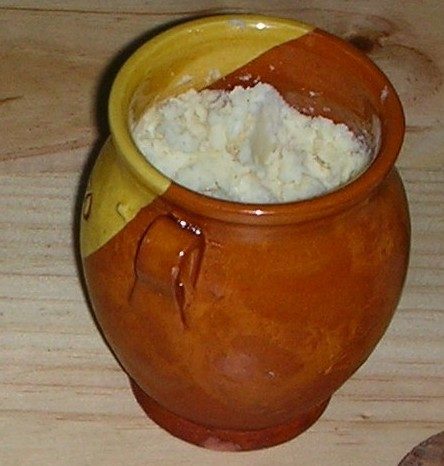
You will also meet tupí, a fermented cheese packed into a clay pot with olive oil, garlic and a slug of ratafia or brandy and left for at least two months to become something pungent and spreadable. Be aware it is a shared Pyrenean tradition rather than an Andorran invention — the Alt Urgell, the Cerdanya and the Pallars all claim it too. It is on the Andorran food repertoire either way, and it is an acquired taste worth acquiring.
Embotits: bull, donja and the January matança
The charcuterie is made at the traditional pig slaughter in early January and eaten across the year. Donja is the specifically Andorran one: made from the collar after head and belly are removed, skinned, seasoned with nothing but salt and pepper, cooked for about two hours. Bull is a whole family of cooked sausages — bull de fetge, bull de llengua, bull de ronyó, bull negre. Bringuera, a spherical cooked blood sausage made from parts of the head, is shared with the Alt Urgell and has a genuinely intense flavour.
Two producers open their doors: Els Escaubells and Cal Jordi, both offering facility visits, workshops and direct sales. On meat generally, Andorra runs a controlled-quality scheme covering beef, veal, lamb, kid and horse; Ramaders d’Andorra has marketed Andorran-raised meat since 1999.
Beer, gin, mead and ratafia
Andorra’s craft beer scene is small and better than it needs to be. Boris, in La Cortinada in Ordino parish, brews a golden ale, a brown ale and a wheat white and encourages visits. Estrella Andorra in Santa Coloma is the one to actually go to: an independent range running from light lager through toasted, amber ale, a mountain IPA, wheat and an intense stout, with its own taproom, Estrella’22, where the taps are plumbed straight to the tanks and they run structured tastings on the production floor. & AND is listed by the tourist board as an Andorran beer. Cervesa Alpha operates as a microbrewery around Arinsal and offers visits, and Blót in Canillo is a craft-beer bar and grill with an enthusiastically Norse theme.
Beyond beer: FORA is Andorra’s first craft gin distillery, built on native mountain botanicals. Asgard makes high-mountain mead in forest fruit, orange, peach and classic versions. And Ratassia de la Carmeta is the traditional liqueur, made from walnuts and medicinal herbs hand-gathered in the mountains — the thing to drink at the end of a long borda dinner instead of a brandy.
The odds and ends worth carrying home
Nectum is a fir-cone syrup revived by El Rebost del Padrí from a recipe with two centuries behind it, used both as a folk cold remedy and as a cooking condiment. (You will see it mistranslated online as pineapple syrup, because the Catalan word covers both pine cone and pineapple. It is fir cones.) L’Ànima del Bosc does birch sap, bud macerates and mountain herbal infusions. Xocland in La Massana makes 70–90% chocolate, pralines and truffles and runs workshops and tastings. Cafè El Conseller has been roasting coffee above 1,000 m for over fifty years. There are jams from Casa Gendret, El Pastador and El Rebost del Padrí, fresh pasta from Laganum, and eggs from farms in the Montaup and Ransol valleys, one of them above 1,800 m.
Tobacco: the crop that kept the vines away
You cannot really tell the story of Andorran wine without tobacco, because tobacco is the reason there wasn’t any. It was the cash crop that Andorra’s duty-free position made worth growing, it is still grown in the southern valleys, and the annual crop has historically been auctioned off in a matter of hours at prices that made a hillside of vines look ridiculous.
The industrial monument to it is the old Reig factory in Sant Julià de Lòria, which operated from 1909 to 1957 and later housed the Museu del Tabac. Important, because almost every travel page still gets this wrong: the museum closed in January 2022. It ran from 2003 and took more than 200,000 visitors over eighteen years, and it is now a virtual museum only. Do not build a rainy afternoon around it; there are better options in the rainy-day guide.
Where to buy Andorran wine and local products
Three reliable routes, per the tourist board itself: the Tourist Office in Andorra la Vella, which keeps a properly curated shelf; the gourmet shops in the commercial areas of the capital and Escaldes; and the producers’ own websites and cellar doors, which is where the wine actually is.
The best single morning for it is the Mercat de la Vall in the old town of Andorra la Vella, generally the first Saturday of the month from May to October, with local cheeses, cold cuts, wines, liqueurs, artisan honeys, jams and bull all in one square. Other parishes run their own markets on varying schedules — check locally rather than trusting a date you read online.
If you can time a trip to a food event, do. The calendar includes the Mostra Gastronòmica in Ordino and Andorra a Taula in November, La Massana Fogons in October, the Ruta de la Tapa in February, Sabors d’Estiu across July and August, autumn fairs in the capital and Canillo, and the free escudella served in village squares for Sant Antoni in January. There is more on the calendar in the guide to festivals and events in Andorra.
The big supermarkets carry a shelf of Andorran embotits and honey, which is the pragmatic option if you are driving home and short of time. They will not have much wine; the volumes are simply too small.
Should you actually bother?
Honestly: yes, but adjust your expectations in the right direction. You are not going to find a bargain, and you are not going to find a wine region — five producers is a hamlet, not an appellation. What you will find is genuinely distinctive high-altitude wine made in tiny quantities by people who chose to do something difficult, and a food larder — honey, cheese, charcuterie, mead, fir-cone syrup — that is far more interesting than the duty-free spirits everyone drives here for.
Do it as a half-day. Book Borda Sabaté or Casa Auvinyà in the morning, eat lunch at Le Domaine or in a Sant Julià borda, and take home a bottle, a jar of high-mountain honey and some donja. That is a much better souvenir than a carton of cigarettes, and it is the version of what to buy in Andorra I would actually defend.
Frequently asked questions
Does Andorra make its own wine?
Yes. Five cellers currently produce Andorran wine: Casa Auvinyà, Borda Sabaté 1944, Casa Beal and Celler Mas Berenguer, all in Sant Julià de Lòria parish, plus Casus Belli in Ordino. Production is tiny — a few thousand bottles each — and commercial winemaking only restarted in the late 1980s.
How high are Andorra’s vineyards?
Between roughly 950 m at Celler Mas Berenguer and 1,250–1,300 m at Casus Belli in Ordino, which grows the highest vines in the country. That puts them among the highest commercial vineyards in Europe, though Sierra Nevada in Spain and parts of the Aosta Valley are comparable.
Can you visit an Andorran winery?
Yes, at three of the five. Borda Sabaté 1944 runs guided tours all year with a shop and its own restaurant; Casa Auvinyà offers tours, tastings and pairing lunches; Casa Beal runs 1.5 to 2 hour tours in four languages. All require advance booking. Mas Berenguer and Casus Belli do not advertise visits.
What does Andorran wine taste like?
Mountain-fresh and high in acidity. The whites are aromatic and taut — riesling, gewürztraminer and a viognier-led blend — and the reds, mostly pinot noir and syrah, are lighter-bodied and brighter than their lowland equivalents. Schist soils, a short growing season and big day-night temperature swings do most of the work.
How much does a bottle of Andorran wine cost?
Producers do not publish prices, but expect roughly €25–50 at the cellar door, with older vintages higher. Hand-worked terraces at 1,200 m and production runs in the low thousands of bottles mean Andorran wine is structurally incapable of being cheap. Confirm current prices when you book a visit.
What local products should I buy in Andorra?
High-mountain honey, shepherd’s cheese from Casa Raubert or El Batall, embotits — especially donja, which is made nowhere else — Ratassia de la Carmeta liqueur, Nectum fir-cone syrup, Xocland chocolate, and a bottle of local wine or Estrella Andorra beer. Buy them at the Tourist Office, gourmet shops, or the monthly Mercat de la Vall.
Does Andorra have craft beer?
Yes, several producers. Boris brews in La Cortinada, Estrella Andorra in Santa Coloma runs the Estrella’22 taproom with taps plumbed to the tanks, Cervesa Alpha operates around Arinsal, and Blót in Canillo is a craft-beer bar and grill. Andorra also has a craft gin distillery, FORA, and a mead producer, Asgard.
Is the Tobacco Museum in Andorra still open?
No. The Museu del Tabac in the old Reig factory at Sant Julià de Lòria operated from 2003 until January 2022 and has since been a virtual museum only. Many travel pages still list it as open. Tobacco is still grown in the southern parishes, and the crop remains part of the country’s economic story.
Eating and drinking your way round the country? Start with Andorran food, then the best restaurants in Andorra, the barn restaurants in bordas of Andorra, and the budget end in eating cheap in Andorra. For the dishes themselves, see trinxat and escudella, and for the shopping context, shopping in Andorra.