I have arrived in La Massana three times with three completely different sets of luggage: skis, a downhill bike, and once just a rucksack and a pair of boots. That tells you most of what you need to know about the place. Nobody comes here for the town. They come because of what the town is standing at the bottom of.
La Massana is Andorra’s outdoors parish: a working valley town at about 1,240 m on the CG-3, roughly ten minutes north of the capital, with a gondola from its centre up to the Pal Arinsal ski area and bike park, and the country’s highest peak behind it. This guide is for anyone deciding whether to base themselves here rather than in Andorra la Vella or Soldeu.
Last updated: September 2026. Prices, opening hours, bus lines and resort names were checked against palarinsal.com, visitandorra.com, museus.ad, bus.ad and comapedrosa.ad in September 2026. Ski and bike-park rates move every season, so treat figures as close guides and check official sites before you book or travel.
La Massana at a glance
The short version, before the detail. If you read two things on this page, make it this table and the honest verdict at the end.
| La Massana, Andorra | |
|---|---|
| Town altitude | About 1,240 m; the parish runs from 1,134 m up to 2,942 m |
| From the capital | Around 6-7 km up the CG-3, roughly 10 minutes by car, 15-20 by bus |
| Parish size | 65 km2, about 14% of all Andorra’s farmland, roughly 12,000 residents |
| Villages in the parish | Arinsal, Pal, Erts, Sispony, Anyós, L’Aldosa, Escàs, Xixerella and more |
| Ski area | Pal Arinsal – about 63 km of piste, ~44 runs, ~31 lifts, part of Grandvalira Resorts since 2022/23 |
| Summer headline | Pal Arinsal Bike Park (formerly Vallnord Bike Park): 30-plus lift-served circuits, 1,000 m of vertical |
| Highest point | Pic de Comapedrosa, 2,942 m – the highest mountain in Andorra |
| Protected land | Comapedrosa Nature Park, 15.42 km2, plus a Starlight Reserve and Tourist Destination badge since January 2023 |
| Getting around | Bus line L5 (Andorra la Vella-La Massana-Arinsal) and L7 (Andorra la Vella-La Massana-Ordino), roughly every 20-30 minutes |
| Best for | Mountain bikers, hikers, families, beginner and intermediate skiers, stargazers |
| Not for | Postcard-hunters, nightlife, anyone who wants to walk out of the hotel into a pretty old square |
The honest verdict on La Massana
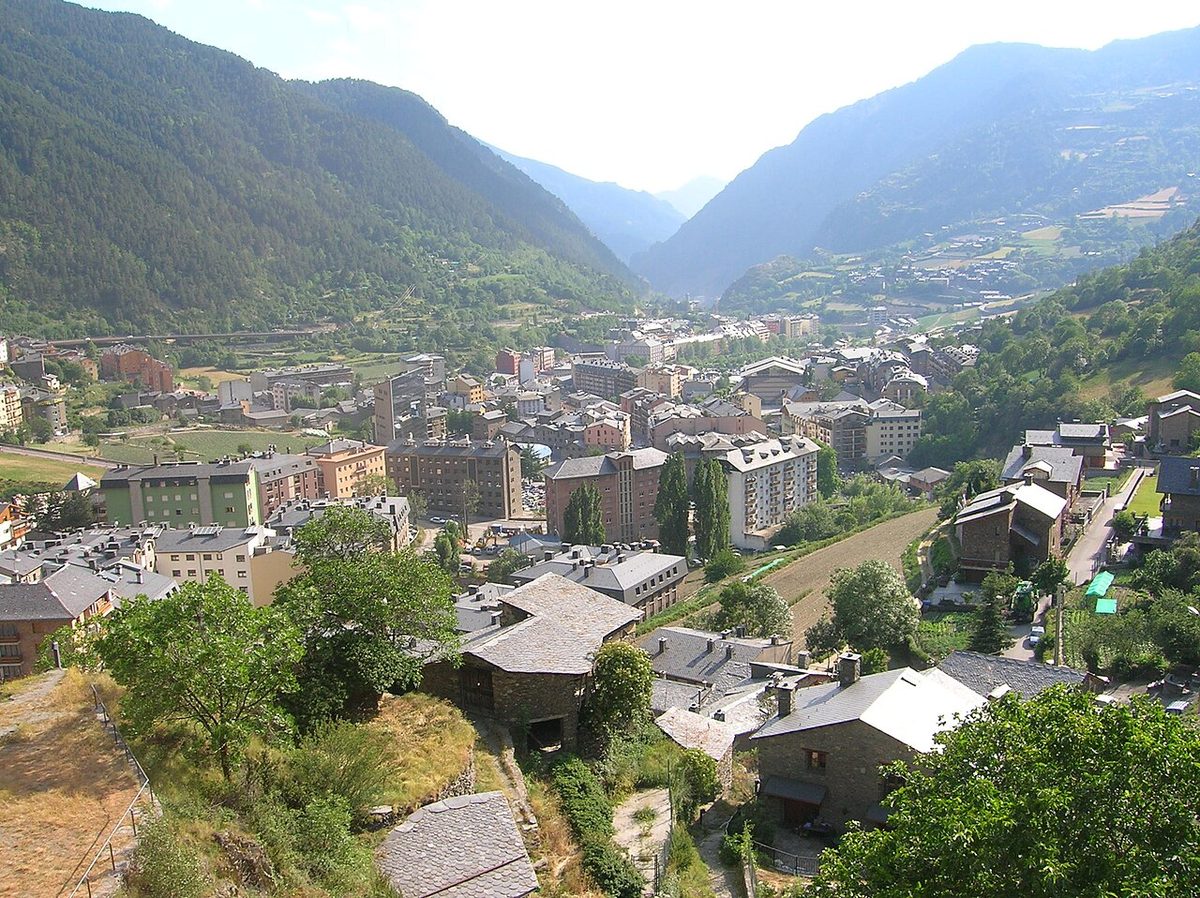
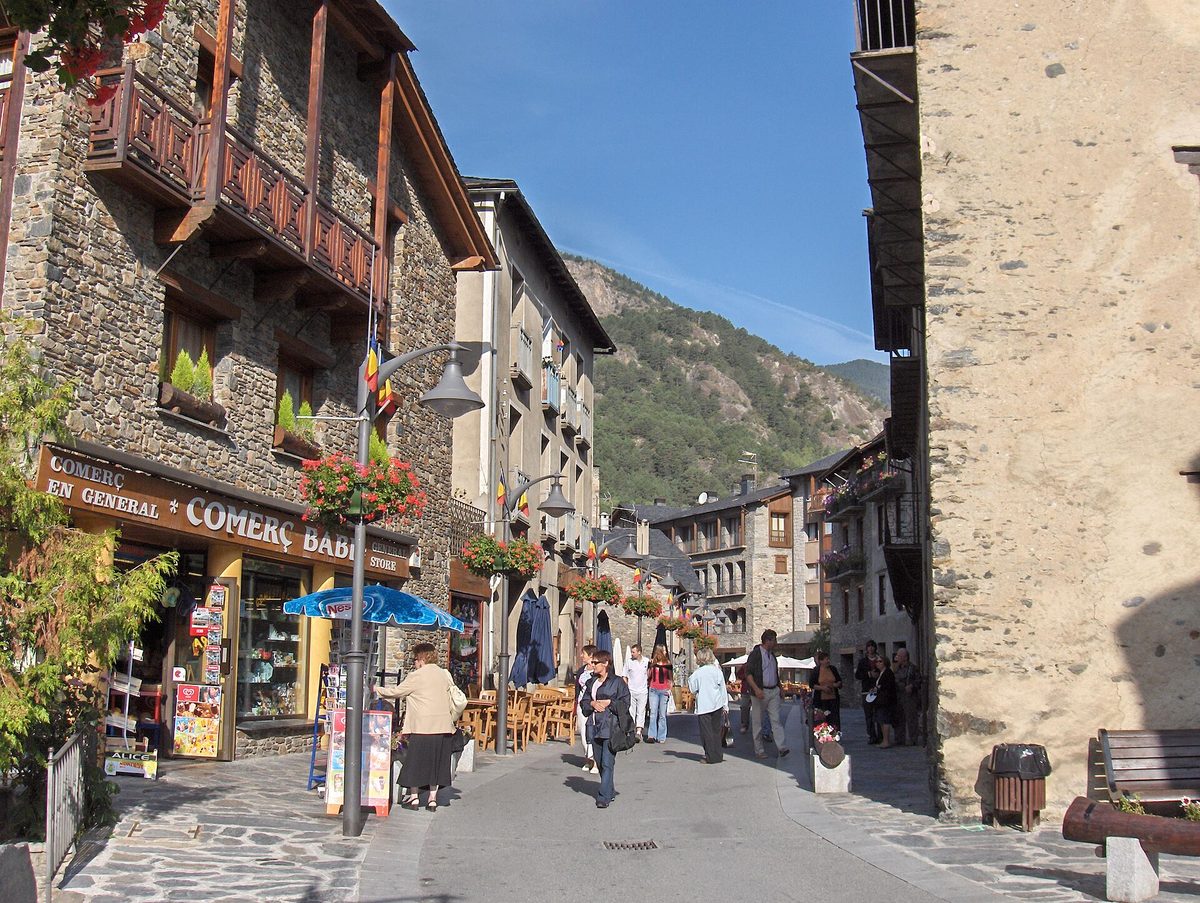
Let’s get the awkward part out of the way first, because almost nobody else will tell you. La Massana town is not pretty. It is a real, functioning Andorran valley town of apartment blocks, banks, tyre garages, supermarkets, a big roundabout and a gondola station, laid along a main road with the river somewhere underneath. If you have seen photographs of stone-and-slate Ordino and expect the same twenty minutes further up the valley, you will spend your first evening slightly confused.
That is the wrong way to judge it. La Massana is not a sight; it is a base. Its value is entirely in its access, and on that measure it is arguably the best-placed town in the country. From the middle of it you can be in a gondola cabin in five minutes, on a piste or a downhill trail in twenty-five, at the foot of Andorra’s highest mountain in half an hour, and in the capital’s shops or at Caldea in about fifteen. Very few mountain towns anywhere give you that spread without a car.
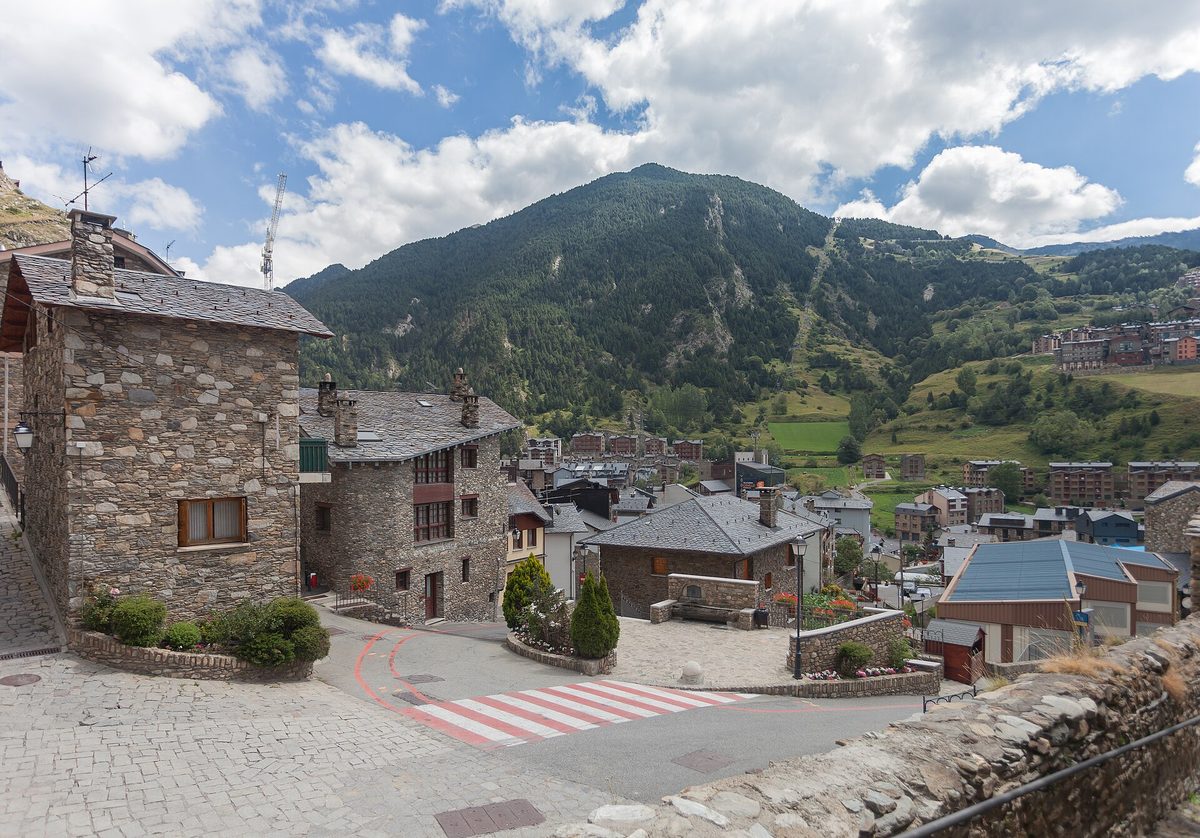
So the useful question is not “is La Massana beautiful?” (no) but “does La Massana do the job?” (yes, better than most). And the parish itself, as opposed to the town, contains genuinely lovely places – Pal in particular is one of the most attractive stone villages in the country, and it’s in this parish, ten minutes up a hairpin road. The guide to Andorra’s villages ranks them all if you want the wider comparison.
The geography: one town, ten villages, two side valleys
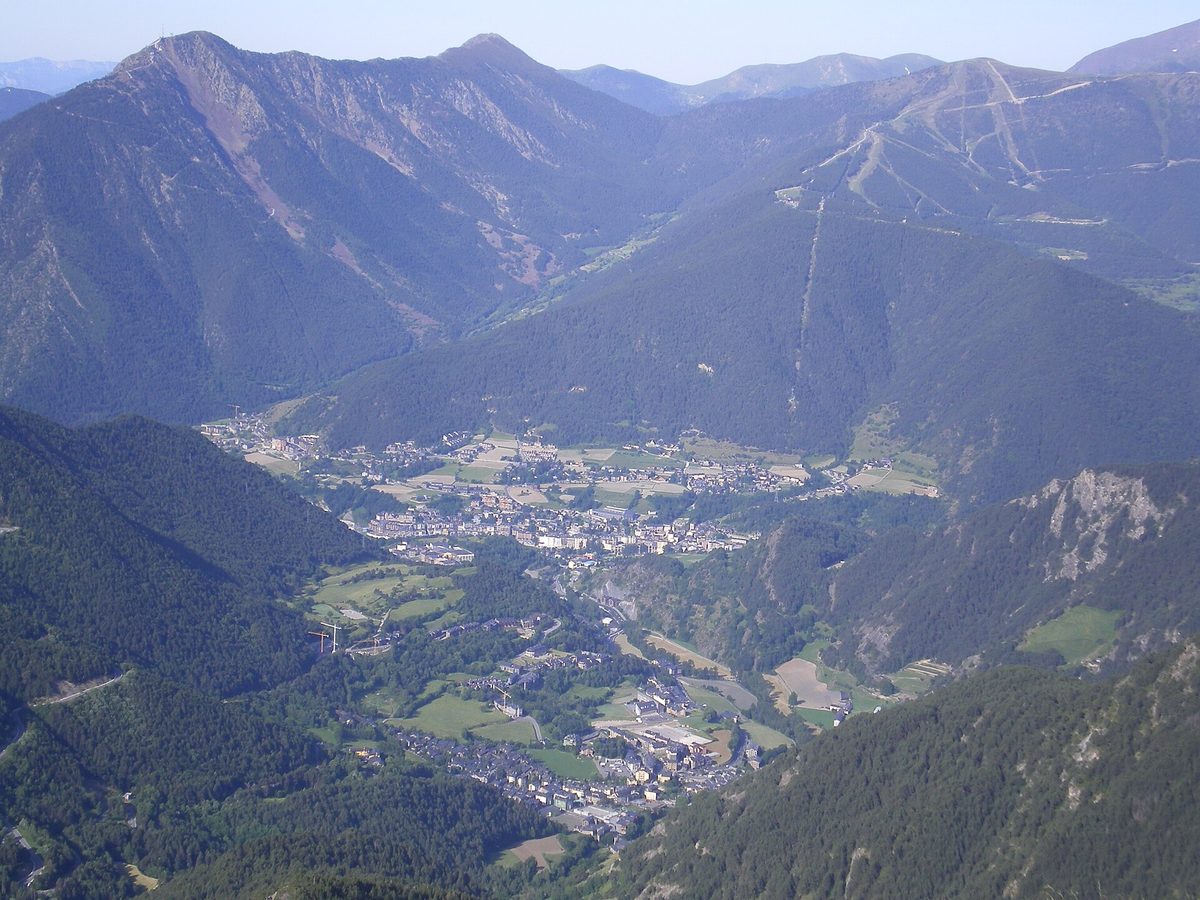
Andorra is shaped like a Y, and La Massana sits on the western arm, in the Valira del Nord valley. Drive north out of Andorra la Vella on the CG-3, through the Sant Antoni tunnel, and you are in the parish within a few minutes. Keep going straight and you reach Ordino and eventually Ordino-Arcalís. Turn left at La Massana onto the CG-4 and the valley immediately forks into the two side valleys that make this parish what it is: Pal to the west, Arinsal to the north.
The parish covers 65 km2 and holds around a dozen settlements, ten of which have their own name and their own church. Here’s who’s who.
La Massana town
The administrative and commercial centre, and where the gondola, the bus interchange, the tourist office and most of the useful shops are. The church of Sant Iscle i Santa Victòria stands on the Plaça del Poble at the heart of it – Romanesque in origin, but comprehensively rebuilt in the 17th century and again in the 1960s, with Baroque altarpieces inside and a bell tower dated 1802. It is worth ten minutes, not an afternoon.
Arinsal
Five kilometres up the northern fork at around 1,500 m, Arinsal is the ski-village half of the parish and the one with the British and Irish accent – cheap ski-and-stay packages have been landing here since the 1980s, and it shows in the bars. It has more evening life than La Massana town and a gondola of its own straight into the ski area. It is also the trailhead for Comapedrosa. The full Arinsal guide covers the resort side properly.
Pal
The one you photograph. Pal sits on the western fork at about 1,550 m and has kept its stone houses, its slate roofs and its 11th-12th century church, Sant Climent de Pal, which holds 16th-century Gothic murals and an 18th-century altarpiece. It is small, quiet and genuinely handsome, and the ski and bike lifts start a couple of kilometres above it at La Caubella rather than in the village itself, which is why it hasn’t been swallowed.
Erts, Sispony, Anyós and the rest
Erts sits between La Massana and Arinsal and has the parish’s via ferrata, the Roc de la Coma d’Erts, a K2/K3 route topping out around 1,650 m. Sispony, on a shelf above the town, holds the Casa Rull museum. Anyós, on the opposite side, has the 12th-century church of Sant Cristòfol d’Anyós with one of the best free views in the parish – down the La Massana valley, across to Sispony, and towards the mouth of the Escaldes valley. Xixerella has the parish campsite and is the launch point for a good network of forest walks.
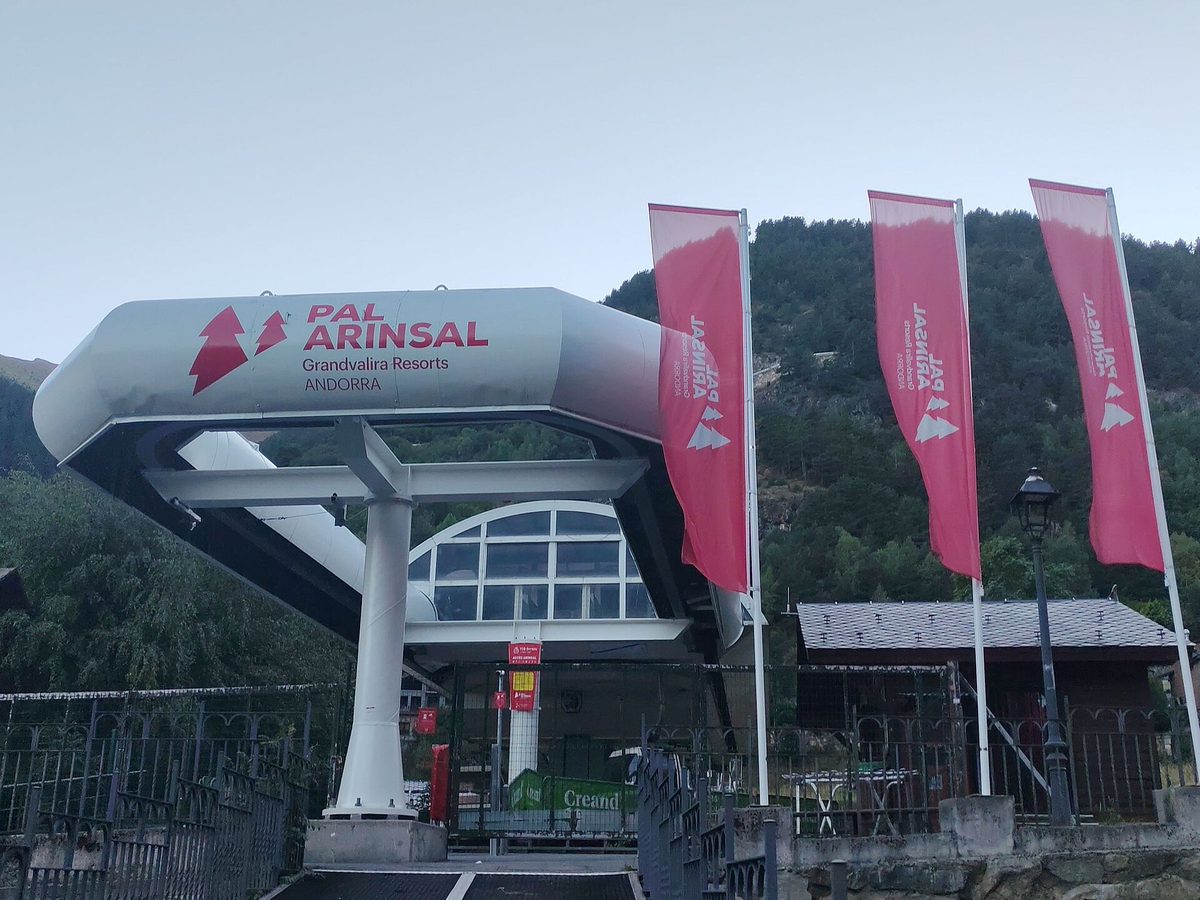
Skiing from the town centre: Pal Arinsal (and the Vallnord name)
Here is a naming problem that trips up a lot of visitors, so let’s fix it. For years the Pal and Arinsal sectors, plus Ordino-Arcalís, were marketed together under the brand Vallnord. Ordino-Arcalís left that arrangement in 2018, and in 2022 Pal Arinsal was folded into Grandvalira Resorts, taking effect for the 2022/23 season and creating a countrywide pass covering 303 km of slopes. The Vallnord brand went with it. If you see “Vallnord” on a hotel website, a hire-car map or an old blog post, it means Pal Arinsal – and the site is probably out of date on the prices too.
What you actually get is around 63 km of marked piste across roughly 44 runs, served by about 31 lifts, split into two sectors – Pal, wooded and sheltered, and Arinsal, higher and more open – joined by a big cable car across the top. It is Andorra’s second-largest ski area and by some distance the friendliest for people who are still learning. My honest read: strong beginners’ and intermediates’ terrain, good tree skiing on the Pal side in bad weather, and not enough steep marked pistes to keep an expert busy for a week. For the comparison across all five Andorran areas, see the overview of skiing in Andorra, and the dedicated Pal Arinsal resort guide for the runs themselves.
The La Massana gondola, and why it changes everything
The single best thing about basing yourself in this town is the Telecabina de La Massana, the gondola that has run from the middle of the town up to the Pal sector since 2004. It climbs 675 m of vertical over about 2,250 m of cable in 16-person cabins, it has covered parking underneath it with direct access, and it runs for most of the year rather than just in winter.
In practical terms it means La Massana behaves like a ski-in town without being one. You walk to the lift with your skis, ride up, ski all day, and come back down the same way to a town with actual supermarkets and normal restaurant prices. In summer the same cabins are fitted to carry bikes. In September 2026 the summer gondola was running roughly 10:00 to 18:00 with last access around 17:30; winter hours follow the ski day. Always check the day’s status on the resort site, because wind closes it more often than you’d expect.
Lift-pass pricing sits inside the wider Grandvalira Resorts structure now, with day tickets, the Pal Arinsal-only option and the countrywide passes all priced differently. Current numbers are in the guide to Andorra ski pass prices, and the Grandvalira guide explains how the pass families fit together.
The bike park: what La Massana is actually famous for
If La Massana is known for one thing outside Andorra, it is not skiing. It is mountain biking. The Pal Arinsal Bike Park – which you will still see written as Vallnord Bike Park almost everywhere, including on race footage – is one of the biggest lift-served bike parks in the Pyrenees and one of the better-known in the world. Red Bull once ranked it fourth on the planet, which is the sort of claim you’d normally discount, except that the racing record backs it up.
The park sits mostly on the Pal side. There are around 30 marked circuits covering more than 50 km, mixing downhill, enduro, cross-country and a growing set of e-bike routes, plus a gentler “Bike World” area for people who are not ready to point a 200 mm-travel bike at a rock garden. The headline number is the vertical: from Pic del Cubil at the top down to La Massana town is roughly 1,000 m of descent. You can genuinely finish a run in the town where you had breakfast.
The racing pedigree
This matters because it is why the trails are as good as they are. Pal Arinsal held its first UCI Mountain Bike World Cup in 2008, drawing about 20,000 spectators, and has been a fixture on the circuit ever since. It hosted the UCI Mountain Bike World Championships in 2015 and again in 2024, the 2024 edition running from 28 August to 1 September with cross-country, short track, downhill and – for the first time at a Worlds – e-bike. World Cup rounds have continued: the 2026 UCI MTB World Series stop ran here from 9 to 12 July.
A qualified bike patrol builds and maintains the circuits year-round, which is the unglamorous reason the surfaces hold up. One practical warning: during race weeks large parts of the park close to the public. If you are travelling specifically to ride, check the events calendar on the resort site before you book flights.
The other bike event worth knowing about
La Massana is also the base camp for the Andorra Epic Pyrenees, a four-day pairs stage race run in early July – the 2026 edition ran from 2 to 5 July, with around 200 km and 6,400 m of climbing, and drew roughly 520 riders from 50 countries. If you are in town that week, accommodation gets tight and the start-finish area takes over the centre. If you are not racing, it is still a good week to be here; the atmosphere is excellent and the town does the thing small mountain towns do well, which is take it seriously.
Bikes and walkers, in the same valley
Here is the bit nobody puts in the brochure. In high summer, La Massana’s trails carry hikers and mountain bikers on the same ground, and the mix is mostly – not always – civil. The marked bike-park descents are bikes-only and fenced or signed as such, so the friction happens on the shared forest tracks lower down and on the approaches to Comapedrosa.
Two bits of etiquette save everyone’s afternoon. If you’re walking, keep to the uphill side and don’t stop in a blind corner; riders come faster than the gradient suggests. If you’re riding outside the park boundaries, slow to walking pace when you pass a family and say something out loud before you’re on top of them. The Andorran system generally gives way to the walker, and the shared trails work fine when people remember that. For routes that avoid bikes altogether, the hiking in Andorra guide flags the quieter valleys.
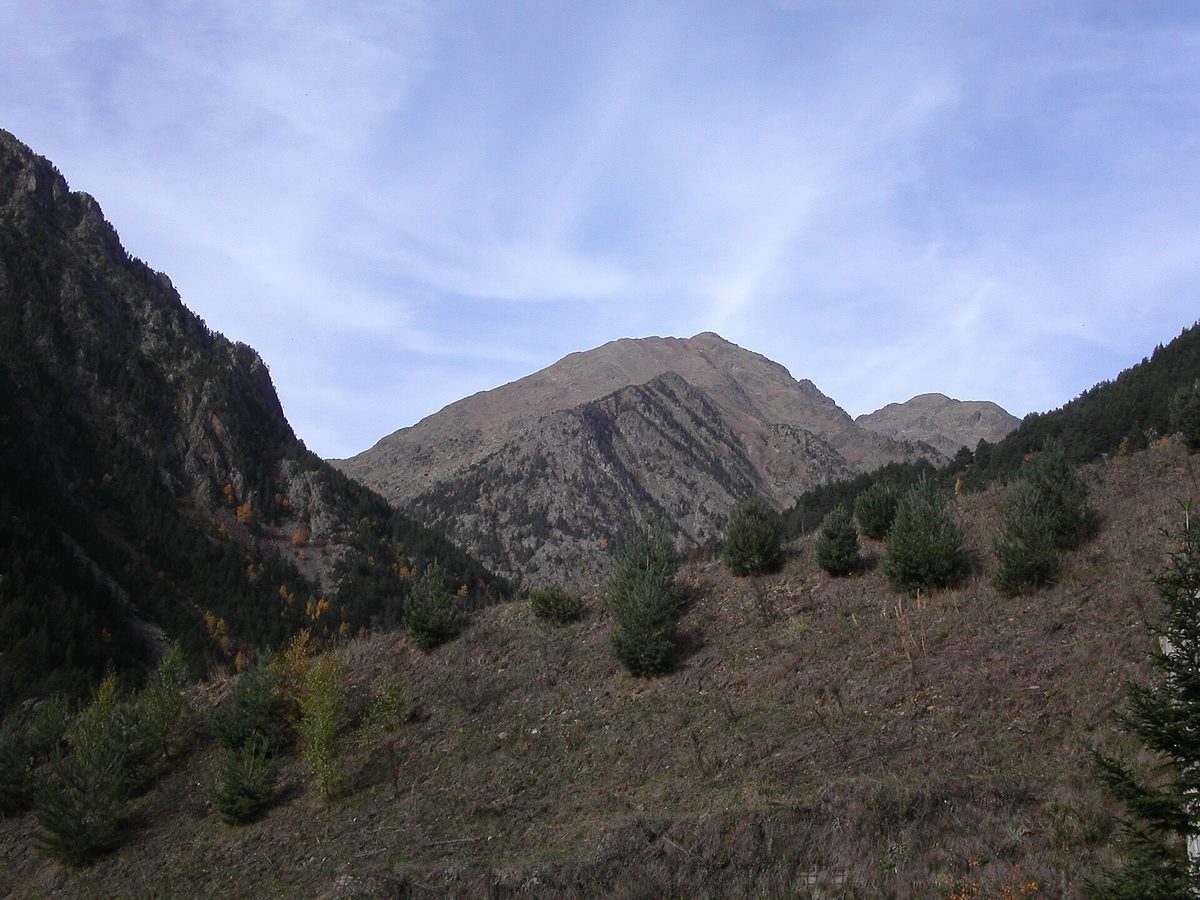
Comapedrosa: Andorra’s highest peak and darkest sky
Behind Arinsal, in the north-west corner of the parish, sits the Parc Natural Comunal de les Valls del Comapedrosa – 15.42 km2 of protected high country, glacial lakes, waterfalls and pine and birch forest, running up to the Spanish and French borders. It is one of Andorra’s three big protected areas, alongside Sorteny and the UNESCO-listed Madriu valley, and it is the wildest of them in feel. The nature parks guide compares all three.
Climbing Pic de Comapedrosa
The summit, at 2,942 m, is the highest point in Andorra. (You will see 2,943 m quoted too, including on Wikipedia; Andorran official sources use 2,942 m, and nobody at the top is going to argue.) There is an iron sculpture on the summit, La gran fita, containing three stones – one from the peak, one from the Valira river and one collected from the sea – which is a quietly lovely idea for a country with no coast.
The standard route starts from the picnic area at the foot of the Ribal waterfall above Arinsal, at about 1,580 m. It is not technical, but it is long and it is properly steep in its upper half: roughly 1,360 m of ascent, typically 5-7 hours round trip for a fit walker, and the last section above Estany Negre is loose rock where a slip has consequences. Snow lingers into June and can arrive again in September. Start early, take more water than feels sensible, and turn round if the cloud comes in – navigation on that summit block in mist is genuinely unpleasant. Our Coma Pedrosa route guide breaks the ascent down properly. If you want something in the parish that doesn’t involve 1,300 m of climbing, the easy-hikes options lower in the valley are a better use of the day.
The refuge
Two-thirds of the way up, beside the Estany de les Truites at around 2,260 m, is the Refugi del Comapedrosa – a staffed mountain hut with roughly 45 places, meals and showers, typically open from June to October. Splitting the climb over two days with a night up there is the version I’d recommend to most people: you get the summit at dawn, you avoid the worst of the afternoon heat and storms, and you are sleeping at 2,260 m in a place with no road to it. Book ahead in July and August, because it fills. Campers should note that wild camping rules inside the park are stricter than most people assume – overnight bivouacs are tightly restricted, so check with the park information point.
Stargazing, officially certified
In January 2023 the Starlight Foundation gave La Massana a double certification: Starlight Tourist Destination for the parish and Starlight Reserve for the Comapedrosa park. That is not marketing fluff – it is an audited measure of how little light pollution there is, and Comapedrosa has some of the darkest skies in the Pyrenees.
You can use it without any equipment. The two designated viewpoints are La Roca de la Sabina above Arinsal and the Coll de la Botella above Pal, both reachable by road in summer. The parish runs guided observation outings with Starlight-qualified monitors from July to September, and snowshoe night walks from Coll de la Botella on Friday and Saturday nights from 1 December. There is also an astronomy festival in Arinsal each June. Bookings go through the La Massana tourist office – and take a blanket, because you will be lying on the ground at 2,000 m and it gets cold fast.
La Massana things to do when you’re off the mountain
This is a short section, and I’d rather be honest about that than pad it. The parish has three museums, several Romanesque churches and a couple of good walks, and that is roughly a day’s worth of material. Come here for the mountains; treat the culture as what you do on the wet afternoon.
Casa Rull, Sispony
The best of them. Casa Rull is a 17th-century farmhouse in Sispony, above the town, preserved as the home of one of the parish’s wealthier farming families – which in Andorran terms meant a house with a hearth, a hayloft, a wine store and enough land to matter. It shows you how the country actually lived before duty-free. Admission has been around €5 (roughly €2.50 reduced) at the time of writing, with guided and audio-guide options, and it opens Tuesday to Sunday in summer with the usual Andorran pattern of a long lunch closure and Sunday afternoons off. It forms part of the three-house “Rural Habitat” itinerary with Casa d’Areny-Plandolit in Ordino and Casa Cristo in Encamp. Check current hours on museus.ad, because they change with the season.
The La Massana Comic Museum
Also called the Joan Pieras Museum, and free to visit, which alone makes it worth twenty minutes. Two floors of comics, including early 20th-century material from international authors, original artwork, art books and a film archive. Most of the labelling is in Catalan and Spanish, but comics travel. There’s a comic fair each spring with author talks and workshops.
Farga Rossell – closed, and this matters
Every other guide to La Massana still recommends the Farga Rossell, the restored 19th-century iron forge and iron interpretation centre on the edge of town. It is currently closed for structural repairs. A technical report found partial collapses in the wind chest and detaching panels on an exterior wall, and the government put around €310,000 into a rehabilitation contract that also covers preparing the exhibition floors. No confirmed reopening date had been published when I checked in September 2026. Do not build an afternoon around it without ringing first.
The churches, the bridge and the Camí Ral
Four Romanesque buildings are worth a detour if you like the style: Sant Cristòfol d’Anyós (12th century, heavily altered in the 16th and 19th, with the parish’s best free viewpoint outside it), Sant Climent de Pal (11th-12th century, Gothic murals), Sant Iscle i Santa Victòria in the town square, and the tiny Sant Andreu del Prat del Campanar just north of Arinsal, which avalanches destroyed twice and which was rebuilt in 1975 on the original lower walls.
Be realistic about access: like most village churches in Andorra, several only open their doors reliably in July and August, or by arrangement through the tourist office. The exteriors and settings are the point.
The best short walk in the parish is the Camí Ral, the old royal road between Escaldes-Engordany and La Massana, which crosses the Romanesque-origin Sant Antoni de la Grella bridge at the entrance to the town. It is easy, mostly shaded, and it is how people got between the two valleys before the road existed – about 6 km of it, walkable in either direction with the bus back. Doing it downhill from La Massana in the late afternoon and finishing at Caldea is one of the better half-days in the country.
The odd one out
Above Pal at 2,115 m, just past the Coll de la Botella viewpoint and visible from the road, stands Storm in a Teacup: a nine-metre-high, thirteen-metre-wide sculpture built in 1991 in the middle of high pasture. It is bizarre and completely unmissable, and in summer you can park beside it. In winter you leave the car at the resort. It is one of the odder things in the Andorran mountains, and I mean that as a compliment.
Planning a trip to La Massana Andorra
Getting there
There is no airport and no train in Andorra, so you arrive by road via Spain or France and then move locally. From Andorra la Vella it’s about 6-7 km up the CG-3 – ten minutes in light traffic, longer on a Saturday when the shopping traffic backs up through the tunnels.
By bus, the line you want is L5 (Andorra la Vella – La Massana – Erts – Arinsal), which runs from around 06:50 to 22:20 on weekdays, every 20 minutes in the morning peak and every 30 minutes for the rest of the day, with a similar Saturday and Sunday pattern from about 06:40. L7 links Andorra la Vella and La Massana with Ordino. Note the common mix-up: L6 goes to Ordino and La Cortinada, not to La Massana. National bus fares are cheap – single tickets have been in the region of €1.30–€2 depending on zone, with day and multi-day passes available – but check bus.ad for the current tariff, and buy from the driver or a sales point. The getting around Andorra guide has the whole network.
If you’re driving, read the driving in Andorra guide first: winter tyres or chains are a legal requirement from 1 November to 15 May, and the CG-4 up to Pal and Arinsal is a proper mountain road with hairpins that concentrate the mind in snow.
Parking
Better here than almost anywhere else in Andorra. The gondola building in the town centre has covered parking with direct lift access, which in winter is the single most useful car park in the country. Up at the resort, the Pal sector has large open car parks with direct access to the bike park and the summer activities, and there are EV chargers at Coll de la Botella, La Caubella, the Arinsal gondola and the La Massana gondola. Bike-park users also get a free motorhome area at La Caubella, 100 m from the park entrance – 60 pitches, water and waste facilities, no hook-up, open daily from around 20 June to 12 October, with overnighting outside it prohibited.
How long to spend
As a day trip from the capital: half a day, and only if you’re taking the gondola up. The town alone will not fill an afternoon.
As a base: three to seven nights, easily. Two full days on the bike park or the pistes, one day on Comapedrosa or a lower park route, one day for the museums, Pal and the Camí Ral, and one for the capital or the Caldea spa. A week here does not run short of things to do if you are the outdoors type. If you’re building a wider trip, this parish slots neatly into a three- or five-day loop of the country.
Why base here instead of the capital or Soldeu
you trade shops, restaurant choice and nightlife for a five-minute walk to a gondola and quieter evenings. If your holiday is mostly mountain-based, La Massana wins. If it’s mostly shopping, stay in the capital.
Versus Soldeu or Pas de la Casa: those sit inside the bigger Grandvalira ski sectors and are better if skiing 210 km of piste is the entire point of the trip. La Massana is lower, warmer, closer to everything else in the country, and much better in summer – Pas de la Casa in August is a ghost town with a supermarket. For the season-by-season comparison, see where to stay in Andorra for skiing.
Arinsal is nearer the snow and livelier at night; La Massana is nearer everything else and has real shops. Families with a car often prefer La Massana; groups on a ski package usually end up in Arinsal and are happy there.
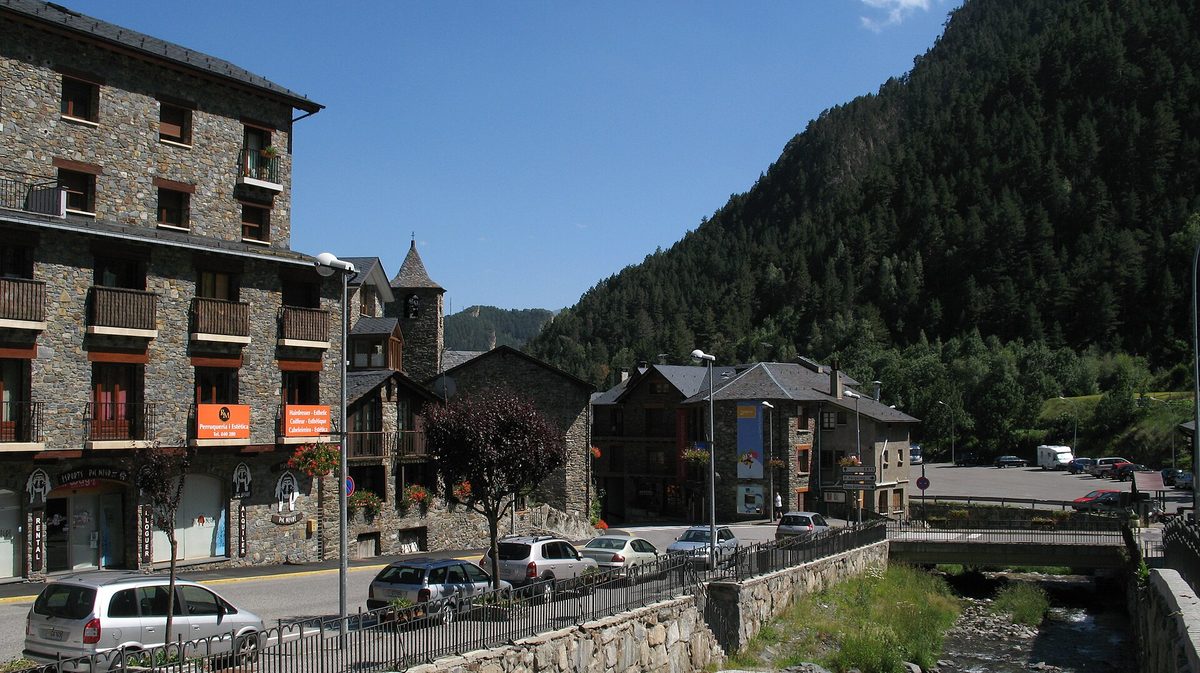
Who La Massana suits – and who it doesn’t
Time for the blunt bit.
Come here if you ride mountain bikes at any level; you want to walk up Andorra’s highest mountain; you’re a beginner or intermediate skier who’d rather have a friendly 63 km area than a stressful 210 km one; you have young children and want short lift queues and a gondola you can walk to; you like the idea of a certified dark sky twenty minutes from a supermarket; or you want one base from which you can reach almost the whole country in under 45 minutes. Families get more out of this parish than almost any other in the country.
Give it a miss if you want a pretty base to wander around in the evenings – go to Ordino; if you want serious nightlife – stay in the capital or Pas de la Casa; if you’re an expert skier chasing steep marked terrain – Grandvalira has more of it; or if you have no car and no interest in lifts, in which case the town by itself will bore you by lunchtime.
One seasonal note: the shoulder months are thin here. Late April to mid-June and late October to late November, the lifts are shut, the bike park is closed, the high routes are snowbound or muddy, and several museums cut their hours. The parish is at its best from late June to late September and from mid-December to early April. The best time to visit Andorra guide has the month-by-month picture.
Frequently asked questions
Is La Massana worth visiting?
As a town on its own, no – half an hour covers it. As a base, absolutely. It has the country’s best-placed gondola, the biggest bike park in the Pyrenees above it, Andorra’s highest peak behind it, and the capital ten minutes down the road. Judge it on access rather than looks and it’s one of the best-value bases in Andorra.
How far is La Massana from Andorra la Vella?
About 6-7 km up the CG-3, which is roughly ten minutes by car outside peak hours and 15-20 minutes on the L5 or L7 bus. Buses run every 20-30 minutes from early morning until about 22:20. You can also walk it in around two hours on the Camí Ral, the old royal road, which is far nicer than the main road.
What is La Massana known for?
Three things. The Pal Arinsal ski area, reached by gondola straight from the town centre. The Pal Arinsal Bike Park, host of the 2015 and 2024 UCI Mountain Bike World Championships and a regular World Cup venue. And Pic de Comapedrosa at 2,942 m, Andorra’s highest mountain, inside a nature park that also holds a Starlight Reserve certification for its dark skies.
Is Vallnord still the name of the ski resort?
No. Vallnord was a joint marketing brand for Pal, Arinsal and Ordino-Arcalís. Ordino-Arcalís left in 2018, and Pal Arinsal joined Grandvalira Resorts for the 2022/23 season, retiring the Vallnord name. The area is now simply Pal Arinsal, and the bike park is the Pal Arinsal Bike Park. Older sites still using “Vallnord” are usually out of date on prices too.
Can you ski straight from La Massana town?
Not literally onto snow, but close. The Telecabina de La Massana runs from the town centre up to the Pal sector, climbing 675 m over 2,250 m of cable, with covered parking underneath and 16-person cabins. You walk to it with your skis or your bike and ride up. In practice it works like a ski-in base, though wind can close it, so check the resort’s daily status.
How hard is it to climb Comapedrosa?
Non-technical but strenuous: about 1,360 m of ascent from the Ribal waterfall car park above Arinsal, typically five to seven hours round trip. The upper section above Estany Negre is loose rock and needs care. Snow lies late into June and returns from September. Breaking it over two days with a night at the Refugi del Comapedrosa at 2,260 m is the more enjoyable way to do it.
What are the best La Massana things to do when it rains?
Casa Rull in Sispony (around €5, the parish’s best museum) and the free Comic Museum in town are the two indoor options, and they will fill a morning between them. After that, honestly, drive fifteen minutes to Caldea in Escaldes and spend the afternoon in warm water. The Farga Rossell forge, which used to be the third rainy-day option, is closed for repairs. It is not a parish with a deep wet-weather bench, and pretending otherwise would be doing you no favours.
Is La Massana good for beginner skiers?
Yes – it’s the best parish in the country for it. Pal Arinsal is Andorra’s most beginner-friendly area, with wide learning terrain, a long-established English-speaking ski school culture on the Arinsal side, and short queues compared with the big Grandvalira sectors. Read it alongside the guide to learning to ski in Andorra before booking lessons.
The last word
La Massana is the parish I’d pick if someone told me I had to spend a fortnight in Andorra and could only unpack once. It is not the place you photograph, and I would never claim otherwise. It’s the place you leave from at eight in the morning and come back to at six with mud on your calves, and that turns out to be a much more useful quality in a mountain town than a pretty square.
The other thing I’d say: give the parish more than the town. Drive up to Pal, walk out to the Sant Cristòfol viewpoint above Anyós, take the gondola even if you’re not riding or skiing, and go and stand at Coll de la Botella after dark at least once. That’s the parish doing what it does best, and none of it costs much.
For more of Andorra, start with the guide to Andorra’s villages and towns, then compare this parish with neighbouring Ordino, fifteen minutes up the road and worth a day of anyone’s trip. If you are coming in winter, check the lift opening dates before you commit to anything in early December or April.
Photo credits
All photographs are from Wikimedia Commons under their stated licences, with thanks to the photographers:
- Photo: Jlmoncada, Public domain, via Wikimedia Commons — source
- Photo: Ion (Tagzania user ID: 35446), CC BY-SA 4.0, via Wikimedia Commons — source
- Photo: No machine-readable author provided. Jlmoncada assumed (based on copyright claim, Public domain, via Wikimedia Commons — source
- Photo: Occitandu34, Public domain, via Wikimedia Commons — source