The first time I told a ski-obsessed friend I was going to Andorra, he pulled a face — the polite grimace of someone hearing you’ve booked a package holiday to a car park. “It’s cheap,” he said, in the tone people use for “it’s fine.” Two trips later I’ve watched him make the same face at other people, and I’ve watched those people come back converted. That gap — between Andorra’s reputation and Andorra’s reality — is the whole reason this page exists.
So, is Andorra good for skiing? Yes — genuinely good, not just good-for-the-money. It’s snow-sure for its latitude, superb for beginners and intermediates, has modern lifts, a big linked area in Grandvalira, and costs roughly 20–40% less than a comparable French or Swiss trip. The honest caveats: no glacier, limited expert terrain, functional rather than pretty towns, and a real three-hour transfer. If you’re an improving skier, a family or a mixed-ability group, it’s one of Europe’s best-value weeks. If you live for steep couloirs and chocolate-box villages, the Alps still win.
Last updated: July 2026. Prices, pass details and travel times reference the 2025/26 season and may shift; Andorra’s resorts publish 2026/27 rates in autumn, so treat every number here as a close guide and check the official sites before you book.
This isn’t a brochure and it isn’t a hatchet job. It’s the even-handed comparison I wish someone had handed me before my first trip — written by somebody who loves the place but has skied enough of the Alps to know exactly where Andorra falls short. We’ll go factor by factor: price, snow, terrain size, the expert weak spot, teaching, charm, getting there, après. Then a clear verdict on who should book Andorra and who should book the Alps instead. If you want the full lay of the land first, the pillar guide to skiing in Andorra is the companion piece to this one.
Andorra vs the Alps at a glance
Here’s the shape of the argument before we get into the detail. Every one of these lines gets unpacked below, but if you only read one section, read this table and the verdict at the end.
| Factor | Andorra | The Alps |
|---|---|---|
| Price (like-for-like) | Roughly 20–40% cheaper; duty-free sharpens food, drink and shopping | Pricier across passes, lessons, food and drink; big range top to bottom |
| Biggest ski area | Grandvalira, ~210 km linked — largest in the Pyrenees | Vast: Three Valleys ~600 km, Portes du Soleil ~580 km, and dozens more |
| Top altitude | ~2,640 m, no glacier | Regularly 3,000 m+, several glacier areas for guaranteed snow |
| Snow reliability | Snow-sure for the latitude; huge snowmaking; good recent Pyrenean seasons | Higher ceiling but more variable low down; glaciers hedge the season edges |
| Expert terrain | Limited marked steeps; blacks a small share; good lift-served off-piste | Effectively unlimited couloirs, glaciers and off-piste |
| Beginners & teaching | Outstanding — many English-speaking instructors, gentle wide terrain | Excellent too, but lessons and English cost more and vary by resort |
| Town charm | Functional; Pas de la Casa is frankly ugly; some pretty villages inland | The postcard advantage — stone villages, spires, storybook resorts |
| Getting there | ~3 hr road transfer from Barcelona or Toulouse; no airport or train | Often 1–2 hr from Geneva; some resorts have their own train stations |
| Après & nightlife | Loud and cheap (Pas de la Casa); duty-free drinks | More variety, from glitzy to rustic; generally dearer |
| Passes | On the Ikon Pass; multi-day covers all three Andorran mountains | Ikon and Epic footholds; huge choice of area passes |
The honest short answer: is Andorra good for skiing?
Let me give you the verdict up front, because you came here for a decision, not a suspense novel. Andorra is a very good ski destination that is genuinely excellent for some skiers and genuinely wrong for others — and the marketing on both sides muddies which is which.
If you are learning, improving, travelling with kids, or herding a group where abilities range from “never clipped in” to “solid on reds,” Andorra is close to ideal and hard to beat on value. The teaching is superb, the terrain is forgiving, the lifts are modern, and the whole week costs meaningfully less than the equivalent in France or Switzerland.
If your perfect holiday is steep off-piste every morning, guaranteed glacier snow in a lean year, and evenings in a village that looks like a Christmas card, the Alps are still the better buy even at the higher price. Andorra doesn’t pretend to be Chamonix, and you shouldn’t ask it to. The rest of this page is simply the evidence behind that split — starting with the thing everyone leads with, and then the things they conveniently skip.
Value: where Andorra genuinely wins
Start with money, because it’s the honest headline and Andorra earns it. This is a low-tax principality outside the EU customs union, and that duty-free status flows into nearly everything you pay for. A like-for-like ski week in Andorra typically lands somewhere in the region of 20–40% below a comparable French or Swiss resort, and the gap is widest exactly where holiday budgets leak: food, drink, lessons and lift passes.
The pieces stack up. On-mountain lunch runs closer to €15–25 than the €30-plus you can pay in a smart Alpine resort. A beer in a Pas de la Casa bar is a few euros, not the best part of ten. Ski school — often the single biggest add-on for a family — is markedly cheaper than the French equivalent, and it comes with an unusual density of native English-speaking instructors, which I’ll come back to. Even the drive home doubles as a duty-free supermarket run, with spirits, perfume and tobacco at prices that make the boot worth filling; the detail on what’s actually worth buying sits in the guide to where to stay in Andorra and the wider trip pages.
A note of honesty, because value has a ceiling. Grandvalira is no longer the giveaway it was a decade ago — dynamic pricing means a peak-week walk-up day pass can top out around the high-€60s, which is proper money by Pyrenean standards. The savings are real but they reward planning: book the pass online weeks ahead to catch the low end, and self-cater or pick a functional base to widen the gap. The full breakdown, tier by tier, lives in the guide to Andorra ski pass prices. Compared like-for-like with the Alps, though, Andorra still wins the value round comfortably — it’s just not free.
Snow and reliability: better than the reputation suggests
Here’s where Andorra quietly surprises people, and where its geography plays a trick worth understanding. On paper, the Pyrenees sit a long way south of the Alps, which should mean warmer, less reliable snow. In practice, Andorra’s resorts are high — most skiing sits well above 1,900 m, and Grandvalira’s top lift reaches around 2,640 m — and that altitude counteracts the latitude. Layer on more than a thousand snow cannons across the big areas, and the result is cover that holds up dependably through the core season.
The recent record helps the case. Across several of the last seasons, the Pyrenees have taken storm after storm while parts of the Alps ran dry and leaned hard on their snowmaking — enough that Andorra hosted back-to-back Freeride World Tour events when Alpine venues couldn’t guarantee snow. Add in Andorra’s reputation as one of the sunnier corners of European skiing, and you get a genuinely appealing combination: reliable cover under frequent blue skies. For the month-by-month picture of how the season behaves, the guide to the best time to visit Andorra breaks it down.
Now the caveat, because this is a comparison and not a sales pitch. Andorra is snow-sure for its latitude — it is not the high Alps. There’s no glacier, so the very top of the season lacks the safety net that Tignes, Val Thorens or Zermatt can offer in a lean year, and the top altitude is honest rather than heroic. The Pyrenees are also a moodier range than the high Alps; a warm spell can turn south-facing afternoons slushy in spring. Ski high and finish by lunch in late season and you’ll rarely be caught out, but if your non-negotiable is guaranteed snow in October or a bad-winter insurance policy, the glaciered Alps hold the edge.
Terrain size and the intermediate sweet spot
Let’s be precise about size, because it’s where the “Andorra vs Alps” argument is won and lost. Grandvalira offers around 210 km of linked pistes across seven sectors — genuinely big, the largest ski area in the Pyrenees and among roughly the thirty biggest on earth. Add the country’s other two mountains, which your multi-day pass covers, and Andorra gives you more terrain than most people can ski in a week. The full anatomy of it is in the dedicated guide to Grandvalira.
But be honest about the comparison. The giant Alpine domains dwarf it: France’s Three Valleys runs to around 600 km, the Portes du Soleil to nearly 580 km, and a serious mileage-hunter will exhaust Grandvalira’s marked pistes faster than they’d exhaust Méribel’s. If your holiday is defined by how many kilometres you can chain together without repeating a run, the Alps simply have more of it.
Here’s the thing, though: for most skiers that ceiling never gets tested. Grandvalira’s real strength is the type of terrain, not just the quantity. The piste mix is heavily weighted to blues and reds — long, wide, beautifully groomed cruisers rolling between sectors — which makes it something close to intermediate paradise. A confident intermediate can have breakfast in Pas de la Casa, lunch above Soldeu, and a last run down toward Encamp, covering most of the domain in a day, and never once feel out of their depth. That’s the sweet spot Andorra hits better than almost anywhere at the price: enough space to feel expansive, graded gently enough to build confidence rather than fear. If you and your group live mostly on blues and reds, Andorra’s “smaller” area will feel like more than enough mountain.
Expert terrain: the honest weak spot
This is the section the tourist board would rather I skipped, so naturally it’s the one to read closely if you’re a strong skier. On marked steep terrain, Andorra is thin. Black runs make up only a small share of Grandvalira — around an eighth of the pistes — and a genuinely advanced skier can lap the lot in a couple of days and start getting twitchy. There’s no glacier, no lift-served couloir network off the piste map, and the top altitude simply doesn’t deliver the big, sustained vertical that the high Alps do. If your idea of a good week is racking up steep marked descents, Andorra will run out before you do.
The standout on-piste challenge is the Avet at Soldeu — steep enough to host World Cup racing, and a proper test when it hasn’t been skied off — plus a handful of genuine pitches in the Pas de la Casa sector. Beyond that, the honest reward for experts is off-piste rather than groomed blacks. Grandvalira maintains marked, avalanche-controlled freeride circuits, and there’s lift-served powder to be found around Grau Roig and under Pic d’Encampadana that stays untracked far longer than it would in a big Alpine name — Andorra’s under-the-radar status is, for a freerider, a feature. Serious powder hunters should also budget a day at Ordino-Arcalis, the wilder, village-free freeride hill up the road that has hosted Freeride World Tour events and is covered by the same multi-day pass.
Set against the Alps, though, there’s no contest for the true expert. Chamonix, Verbier, the Espace Killy — these offer effectively unlimited steep, glaciated, off-piste terrain that Andorra can’t touch. If you’re an advanced skier travelling solo or with equally strong friends and steeps are the whole point, the Alps win this round decisively, and you should book them. Andorra is for the expert who’s happy with three or four days of variety plus a guide and a powder day — not the expert who wants a fortnight of couloirs.
Teaching and beginners: Andorra’s quiet trump card
If value is Andorra’s loud advantage, teaching is its quiet one — and for a lot of travellers it matters more. Andorra has courted the British and Irish beginner market for decades, and the ski schools carry an outsized reputation with an unusual number of native English-speaking instructors. For a nervous first-timer, being taught to snowplough in fluent, encouraging English rather than through a translation gap is worth more than any piste statistic.
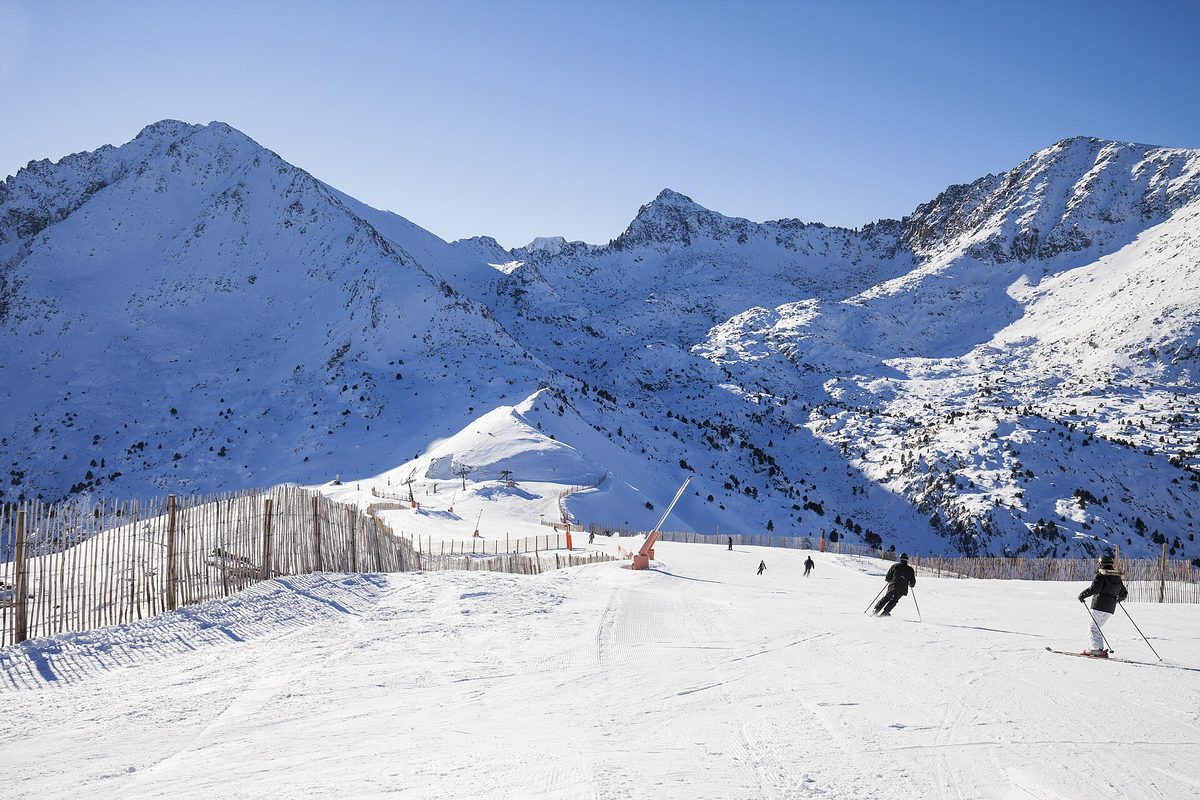
The terrain backs the teaching up. Every sector has roped-off nursery zones and magic-carpet conveyors, the progression runs are wide and forgiving, and the whole mountain is graded gently enough that a beginner’s first week off the nursery slopes isn’t terrifying. Soldeu’s ski-school setup is the celebrated one, but Pas de la Casa, El Tarter and Canillo all run strong beginner operations. The single best move, wherever you base, is to book lessons for the first morning rather than mid-week — the early start pays compound interest across the trip. The full first-timer playbook is in the guide to learning to ski in Andorra.
To be fair to the Alps: they teach beginners superbly too, and the biggest resorts have excellent English-speaking schools. But you’ll generally pay more for the privilege, English can be patchier in smaller French or Italian resorts, and the sheer scale of somewhere like the Three Valleys can be daunting for someone still finding their feet. Pound for pound, for a genuine beginner or a mixed group with learners in it, Andorra is one of the best places in Europe to start — and that’s not a consolation prize, it’s a real reason to book.
The towns and the charm question
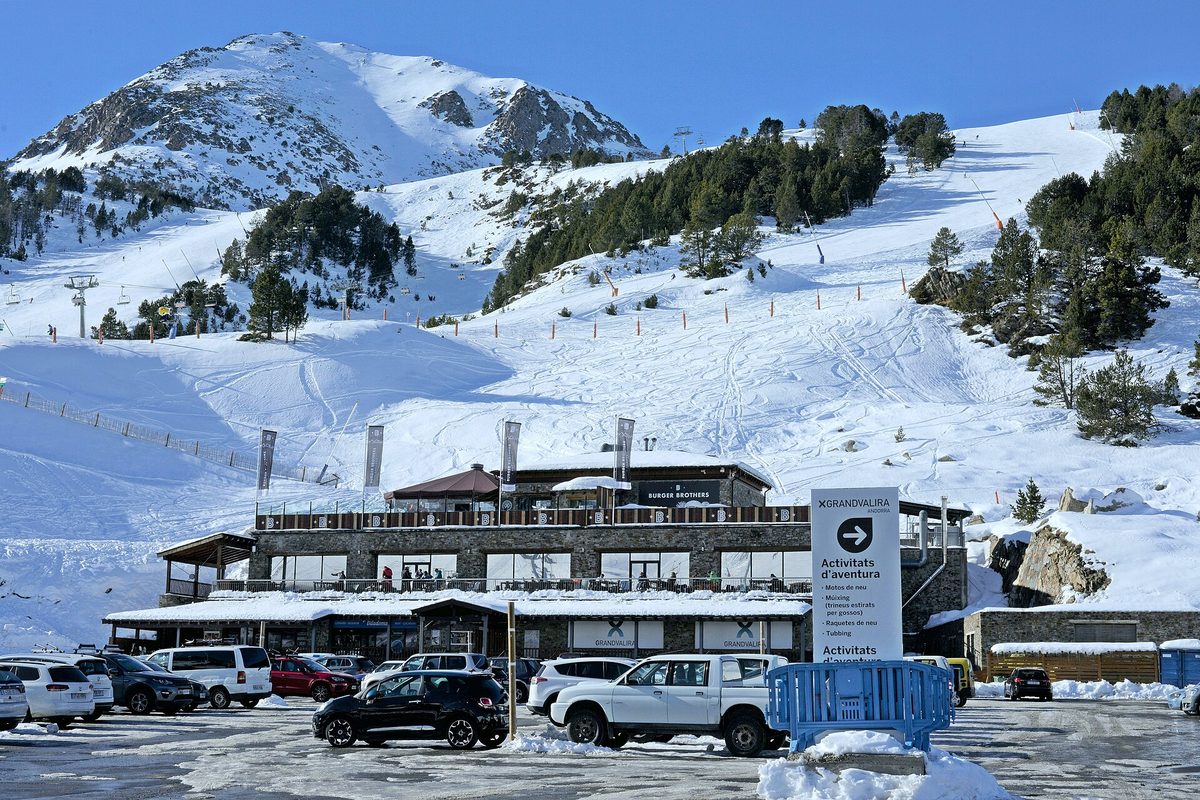
Now the thing the Alps win without breaking a sweat: looks. I’ll be blunt, because pretending otherwise is how these guides lose your trust. Andorra’s purpose-built ski towns are functional, not beautiful. Pas de la Casa in particular is a wall of high-rise apartment blocks and neon duty-free signs bolted to a mountainside — I have real affection for the place, but it is one of the least lovely ski towns in Europe. If you’ve seen photos of a stone-and-timber Alpine village with a church spire and expected the same, the top of the Envalira pass will briefly break your heart.
This is where the Alps have a genuine, hard-to-counter edge. A French or Austrian or Italian resort village — the old stone core, the balconied chalets, the twinkling square — is part of the holiday, and Andorra’s functional bases mostly can’t match it. If the feeling of the place matters as much as the skiing, if you want to stroll a pretty village at dusk, the Alps deliver something Andorra’s flagship resorts don’t.
Two honest counterpoints, though. First, Andorra is prettier than its worst town suggests: inland villages like Ordino and the quieter valleys have real stone-and-slate charm, and you don’t have to sleep under the neon — the guide to where to stay in Andorra maps out the calmer, better-looking bases. Second, and I say this as someone who came to love an ugly town, the architecture stops mattering by day two. You clip in, the snow is excellent, the beer is cheap, and the concrete fades into background noise. Charm is a real Alpine advantage — just be honest with yourself about how much of your holiday you spend looking at buildings versus skiing past them.
Getting there: the three-hour catch
Here’s the practical friction, and it’s a genuine mark against Andorra: there is no airport and no railway inside the country. You fly to Barcelona (around 210 km) or Toulouse (around 200 km) and then travel roughly three hours by road — a coach transfer, a hire car, or a private minibus over the mountains. Direct coaches run from both airports, and once you’re in the country the cheap inter-town buses make a car largely optional, but there’s no dressing up that transfer: it’s a half-day at each end of the holiday. The route-by-route detail is in the guide to how to get to Andorra.
The Alps often beat this handily. Geneva puts you within one to two hours of a huge spread of French and Swiss resorts; some Alpine resorts have their own railway stations, so you can step off a train more or less onto the snow. For a short trip, or for anyone who loathes transfers, that convenience is worth real money — and it’s a legitimate reason to choose the Alps over Andorra for a long weekend.
Two things soften Andorra’s disadvantage. The transfer itself is scenic and, once you’re on the bus, genuinely stress-free — you’re not driving, you’re watching the Pyrenees roll past. And the drive doubles as your duty-free run. It’s a real cost in time; it’s just not the deal-breaker some make it, especially for a full week rather than a snatched few days. If you’re driving yourself, note that winter tyres or chains are legally required from November to April, and the climb to the Envalira pass is serious mountain driving.
Après and non-ski: loud, cheap, and better than expected
Après-ski is where Andorra’s reputation runs ahead of it — and mostly in a good way. Pas de la Casa is the party engine, with the rowdiest, cheapest nightlife in the Pyrenees: happy hours from mid-afternoon, dance floors running to the small hours, and duty-free drink prices that keep the whole thing affordable. Soldeu offers a more balanced evening scene, and El Tarter’s L’Abarset is a proper open-air DJ institution. If your group’s idea of a good night is a big, uncomplicated one that doesn’t empty your wallet, Andorra delivers it as well as anywhere.
The Alps counter with variety rather than value. You can find everything from glitzy champagne-and-DJ après in the smart French and Austrian resorts to rustic mountain-hut singalongs — a wider spread of styles, and some genuinely iconic après scenes, but generally at a higher price. On pure cost-per-pint and uncomplicated fun, Andorra wins; on range and glamour, the Alps do.
Off the snow, Andorra punches above its size. The unmissable rest-day trip is Caldea, southern Europe’s largest thermal spa — floating in warm water while snow falls on the glass roof is the correct way to end a day your legs have lost. Add tax-free shopping in the capital, dog-sledding and snowmobiling at Grau Roig, and it’s an easy destination for a mixed group where not everyone skis every day. The Alps have their spas and shopping too, of course — but for a group that wants skiing plus a serious spa plus duty-free retail in one compact package, Andorra makes it unusually simple.
Andorra vs the Alps: the head-to-head
Pulling it together, here’s how the two stack up factor by factor — and, crucially, which kind of skier each answer favours.
Price
Andorra wins. Roughly 20–40% cheaper like-for-like, sharpened by duty-free food, drink, lessons and shopping. The Alps have a wider price range and some genuine bargains, but on a straight comparison Andorra is the value pick — comfortably, if no longer freely.
Snow reliability
A genuine draw, leaning Alps at the extremes. Andorra is snow-sure for its latitude thanks to altitude and heavy snowmaking, and recent Pyrenean seasons have been strong. But the glaciered high Alps have the higher ceiling and the better insurance in a lean year. For a normal midwinter week, Andorra is reliable; for guaranteed snow at the season’s edges, the Alps edge it.
Terrain size and variety
Alps for scale, Andorra for the sweet spot. The giant Alpine domains dwarf Grandvalira’s 210 km. But Andorra’s blue-and-red-heavy mix is ideal for beginners and intermediates, who rarely test the ceiling. Mileage-hunters: Alps. Cruisers: Andorra is plenty.
Expert terrain
Alps win decisively. Limited marked steeps and no glacier mean Andorra runs out for a true expert in days. The off-piste around Grau Roig and Ordino-Arcalis is a real reward, but it’s not the endless couloir terrain of Chamonix or Verbier.
Teaching and beginners
Andorra wins. Outstanding English-speaking schools, gentle wide terrain and lower lesson costs make it one of Europe’s best places to learn. The Alps teach beginners well too, but usually cost more and vary by resort.
Charm
Alps win. Stone villages and storybook resorts are a real advantage; Andorra’s flagship towns are functional and, in Pas de la Casa’s case, frankly ugly. Inland villages soften it, but the postcard round goes to the Alps.
Getting there
Alps usually win. Geneva and in-resort train stations beat Andorra’s three-hour transfer with no airport or railway. For a short break especially, convenience favours the Alps.
Après and non-ski
Andorra for cheap fun and spa-plus-shopping; Alps for variety. Pas de la Casa’s nightlife is loud and affordable, and Caldea is a genuine trump card. The Alps offer more range at a higher price.
Who should pick Andorra, and who should pick the Alps
So here’s the decision, laid out plainly.
Choose Andorra if you’re a beginner or improving intermediate; you’re travelling as a family or a mixed-ability group where not everyone skis the same level; teaching quality and English-speaking instruction matter to you; value is a real consideration; you want reliable snow under frequent sun without needing a glacier; or you want skiing plus a serious spa and duty-free shopping in one compact, affordable package. For those people — which is most people — Andorra is one of the best trades in European skiing, and the “budget” reputation badly undersells it.
Choose the Alps if your holiday lives on steep off-piste and couloirs; you want the biggest possible linked mileage; you need glacier-guaranteed snow or insurance against a bad winter; the charm of a storybook village is a core part of the experience; or you’re taking a short break where a quick transfer matters more than the total bill. Andorra can’t out-steep, out-scale or out-charm the high Alps, and if those are your priorities you should book accordingly and not feel you’re missing a bargain.
My own honest take, after enough trips to have earned an opinion: Andorra is the smart choice far more often than its reputation allows, and the wrong choice for a narrower group of skiers than its boosters admit. Match it to who you actually are on the mountain, and the “is it worth it?” question mostly answers itself. If you’re leaning Andorra, the next steps are the pillar guide to skiing in Andorra, then the base you fancy — polished Soldeu or lively Pas de la Casa — and the practical stuff on how to get to Andorra.

Frequently asked questions
Is Andorra good for skiing?
Yes. Andorra is genuinely good, not just good value: it has snow-sure slopes for its latitude, modern lifts, a big linked area in Grandvalira, and some of the best beginner teaching in Europe. It’s excellent for beginners, intermediates and families. The honest limits are little expert terrain, no glacier, functional towns and a three-hour transfer.
Is Andorra cheaper than the Alps?
Usually, yes — often around 20–40% cheaper for a like-for-like trip, with the biggest savings on food, drink, lessons and lift passes thanks to Andorra’s low-tax, duty-free status. It’s not the giveaway it once was, as Grandvalira’s peak-week passes have climbed, but on a straight comparison with a similar French or Swiss resort it remains the clear value choice.
Is Andorra better than the Alps for beginners?
For many beginners, yes. Andorra’s ski schools have an unusual density of native English-speaking instructors, its terrain is wide and forgiving, and lessons cost less than in the Alps. The giant Alpine resorts teach well too but can be daunting in scale and pricier. For a first-timer or a mixed group with learners, Andorra is one of Europe’s best and most reassuring places to start.
Is skiing in Andorra worth it?
For the right skier, very much so. If you’re learning, improving, or travelling as a family or mixed group, Andorra delivers reliable snow, superb teaching and a big cruising area for meaningfully less than the Alps — well worth the three-hour transfer. If you demand steep off-piste, glacier snow or storybook villages, the Alps are the better buy despite the higher price.
Does Andorra have enough terrain for advanced skiers?
For a few days, yes; for a full week of steeps, not really. Marked black runs are only a small share of Grandvalira, and there’s no glacier. The Avet at Soldeu is a genuine test, and the lift-served off-piste around Grau Roig and Ordino-Arcalis rewards freeriders — but a true expert chasing couloirs will exhaust the marked steeps quickly and should consider the high Alps or plan a guided powder day.
Is the snow reliable in Andorra?
Reliably good for its latitude. Most skiing sits above 1,900 m, the top lift reaches around 2,640 m, and more than a thousand snow cannons back it up, so cover holds through the core season — and recent Pyrenean winters have been strong. What it lacks is a glacier, so the very edges of the season carry less of a guarantee than the high Alps, and spring afternoons can go slushy on sunny slopes.
How hard is it to get to Andorra for skiing?
Manageable but not quick. There’s no airport or railway in Andorra, so you fly to Barcelona or Toulouse and travel about three hours by road — a coach, private transfer or hire car over the mountains. The transfer is scenic and stress-free once you’re on it, and doubles as a duty-free run, but it’s a genuine half-day at each end, which matters more for a short break than a full week.
Andorra or the Alps — which should I choose?
Choose Andorra for value, teaching, reliable snow and a great beginner-to-intermediate week, especially with a family or mixed group. Choose the Alps for expert off-piste, glacier snow, the biggest linked mileage, storybook villages or a quick-transfer short break. For most skiers Andorra is the smarter, cheaper pick; for steep-and-scenic specialists, the Alps still win.
Ready to plan properly? Start with the pillar guide to skiing in Andorra, then dig into Grandvalira, weigh up bases in the guide to where to stay in Andorra, check the best time to visit Andorra, and if you’re bringing first-timers, read up on learning to ski in Andorra.


