I have skied Andorra in the second week of December, when half the mountain was rope and rumour, and in the first week of April, in a T-shirt, on snow that had no business still being there. Both were good weeks, and completely different holidays — and the difference came down to one decision made months earlier: when to go. In Andorra the calendar matters as much as the resort.
The Andorra ski season runs roughly from early December to early or mid-April, and the month you pick changes everything — the snow, the queues and the price of the pass. This month-by-month guide is for anyone who has decided to go and just needs to know when: for the deepest snow, the emptiest slopes or the lowest prices.
Last updated: July 2026. Dates, snow figures and prices below reference the 2025/26 season and typical patterns; resorts publish 2026/27 opening dates and rates in autumn, and mountain snow is never a promise, so treat everything here as a well-informed guide and check the official resort sites before you book.
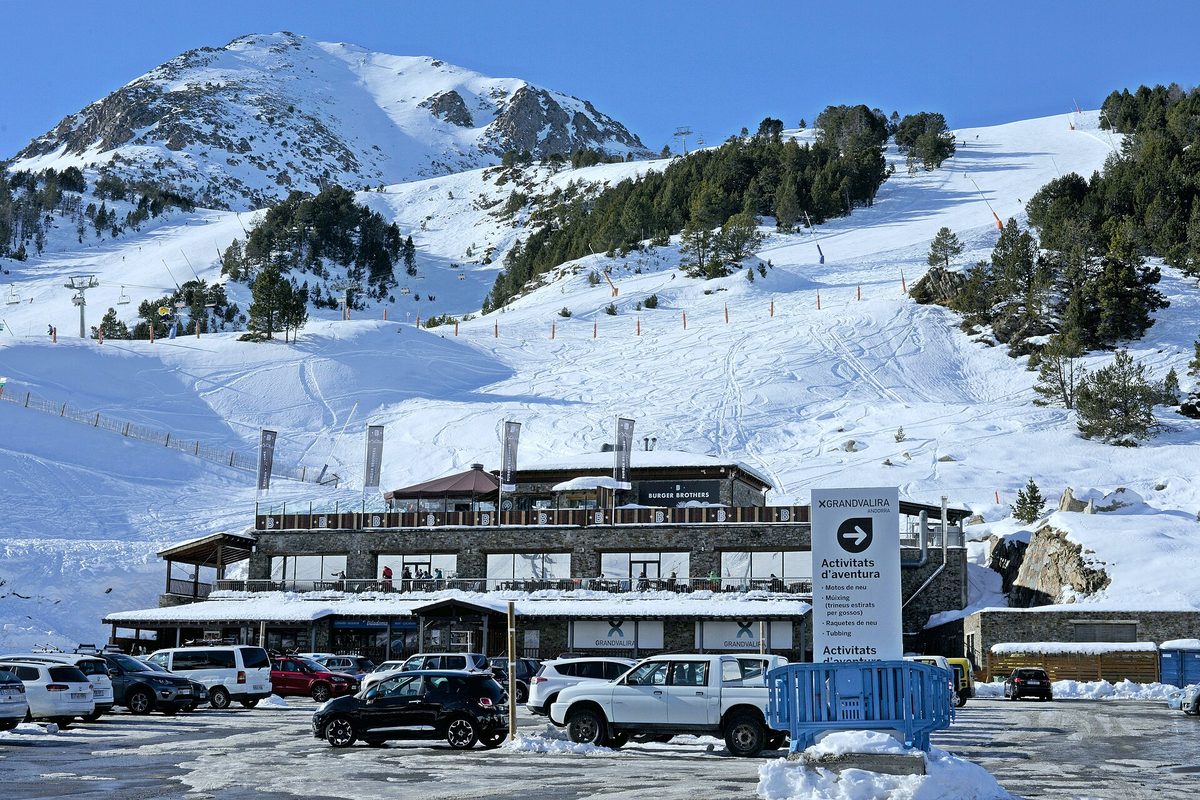
The Andorra ski season at a glance, month by month
If you read one thing, read this table, then the verdict at the bottom. Ratings are relative to the Andorran season, not the Alps — a “quiet” February week here still has people on it.
| Month | Snow | Crowds | Prices | Best for |
|---|---|---|---|---|
| December | Building; man-made early, then first real dumps | Quiet early, then a Christmas–New Year spike | Low early, very high over the holidays | Early-season keenos; a festive family week (if you book the right dates) |
| January | Coldest, driest, best-quality snow of the year | The quietest of the core season (after 6 Jan) | The best value of midwinter | Value hunters, powder chasers, anyone who hates queues |
| February | Peak depth — the snowpack at its fattest | Peak crowds when school holidays stack | The most expensive of the year | Guaranteed cover; families tied to half-term (eyes open) |
| March | Full cover, softening; spring sunshine | Moderate; eases after the February peak | Mid-range and falling | The connoisseur’s month — sun, snow and space together |
| April | High sectors hold; slushy low and late in the day | The emptiest slopes of the season | The cheapest of the lot | Bargain hunters, sun-seekers, ski-before-lunch spring skiers |
The one-line version: February has the most snow and the most people, January the best snow-to-crowd ratio, March the sleeper pick most people overlook. Now the detail, because the honest answer to “when should I go?” is “it depends what you want” — and this is the depends.
When does the Andorra ski season start and end?
Andorra’s lifts typically spin from early December to early or mid-April, running 09:00 to 17:00 daily. The 2025/26 season is a fair template: Grandvalira opened around 5 December and was due to close in the first week of April, while higher, north-facing Ordino-Arcalís opens a little earlier and closes later — its recent seasons ran from around 24 November to mid-April. These are targets, not guarantees: the opening date rides on when the snow arrives and how cold it is for the snowmakers, the closing date on how the spring holds. Both are confirmed only weeks ahead, which is why I keep telling you to check.
That is roughly four and a half months, but only the middle three — January, February, March — are dead-cert full-mountain skiing. December is a ramp-up and April a wind-down: both excellent, both with asterisks. Want the whole domain open and maximum terrain? Aim for the heart of the season. Want cheapest, quietest or sunniest? The edges are where the deals hide. For when to visit the country at all, not just to ski, the guide to the best time to visit Andorra zooms out; this page stays on the snow.
December: the opening act, and a tale of two halves
December is really two months wearing one name. The first three weeks are among the quietest, cheapest skiing of the winter; the last ten days among the busiest and priciest. Book the wrong dates and you would swear you had visited two different countries.
Early December is opening season. The high sectors crank up first — Pas de la Casa, the highest town in Andorra at 2,100 m, usually skis before anywhere lower — and the snowmakers work overnight while natural snow builds. Coverage can be patchy and not every low run is open, but the pistes that are running are quiet, prices sit at the friendly end of the dynamic scale, and there is a particular pleasure in early-season snow only the keen turn up for. It is my favourite time to shake off the rust before the crowds arrive.
Then Christmas happens. From roughly 22 December through New Year, Andorra fills up — Spanish and French families on holiday, a festive atmosphere in Andorra la Vella, and prices near their annual peak. The skiing is magical if a white Christmas is the point, but you are paying top rates for a snowpack that is still building. If the holidays are your only window with school-age kids, this is your week and it can be wonderful — just book early and know you are trading value for timing.
One quirk worth planning around: the Spanish holiday runs right through 6 January, the Feast of the Three Kings (Reis) — a bigger family occasion here than Christmas Day. The crowds do not properly thin until it passes. Which is the cue for the month the regulars actually book.

January: the quiet, cold, brilliant heart of the season
If you asked me to pick one month blind — no knowledge of your term dates or budget — I would say the second or third week of January, and it would not be close.
Here is the case. January is the coldest month on the mountain and, with February, the snowiest — Andorra averages around 13.9 snowfall days — and that cold delivers the driest, best-quality snow of the year. The pistes stay firm and fast because it rarely warms enough to spoil them, and an Atlantic storm brings the real thing, not the heavy spring mush lower resorts serve later. This is powder season, such as the Pyrenees do powder.
And the slopes are quiet. Once Three Kings passes on 6 January the Christmas crowds evaporate and the half-term hordes have not yet arrived — the second and third weeks are about the emptiest the core season gets. Short queues, elbow room, and the lowest prices of midwinter, because you are skiing in the gap between two holiday peaks. The flip side: it is properly cold, the days are short, and the towns are at their sleepiest after dark. Pack for the temperature and you will be fine.
January is the value skier’s month, the powder-hunter’s month and the queue-hater’s month at once. If any of those is you — and it is most of us — this is where I would point you first. It is also a fine time to learn: soft, cold snow, space to fall over in private, and an early first lesson pays compound interest across the week.
February: peak snow, peak prices, peak everybody
February is where the snowpack reaches its fattest and the resort its fullest, and those two facts are the whole story of the month. On snow alone it is arguably the best time to ski Andorra: the cold first half of winter has piled up a deep, reliable base, the high sectors are bulletproof, and even a poor year usually has February looking respectable — around 14.3 snowfall days, the most of any month.
The catch is everyone else read the same memo. February is when the school holidays of three countries pile onto one mountain — Spanish, French and British half-terms overlap across the second half of the month — so the front-side pistes get busy, the queues lengthen, and prices hit their annual ceiling under the dynamic-pricing system. This is the fortnight I warn about below, and it is the biggest avoidable mistake in planning an Andorra trip.
That said, February is not off-limits — just handle it with intent. If half-term is your only window, go and enjoy the best cover of the year: book everything early, pick a base with quieter evenings like El Tarter over the party towns, and take the first lifts before the 11am terrace crowd spills back onto the pistes. If you have any flexibility, aim for the first week of February, before the half-terms land — most of the depth, none of the full crush.
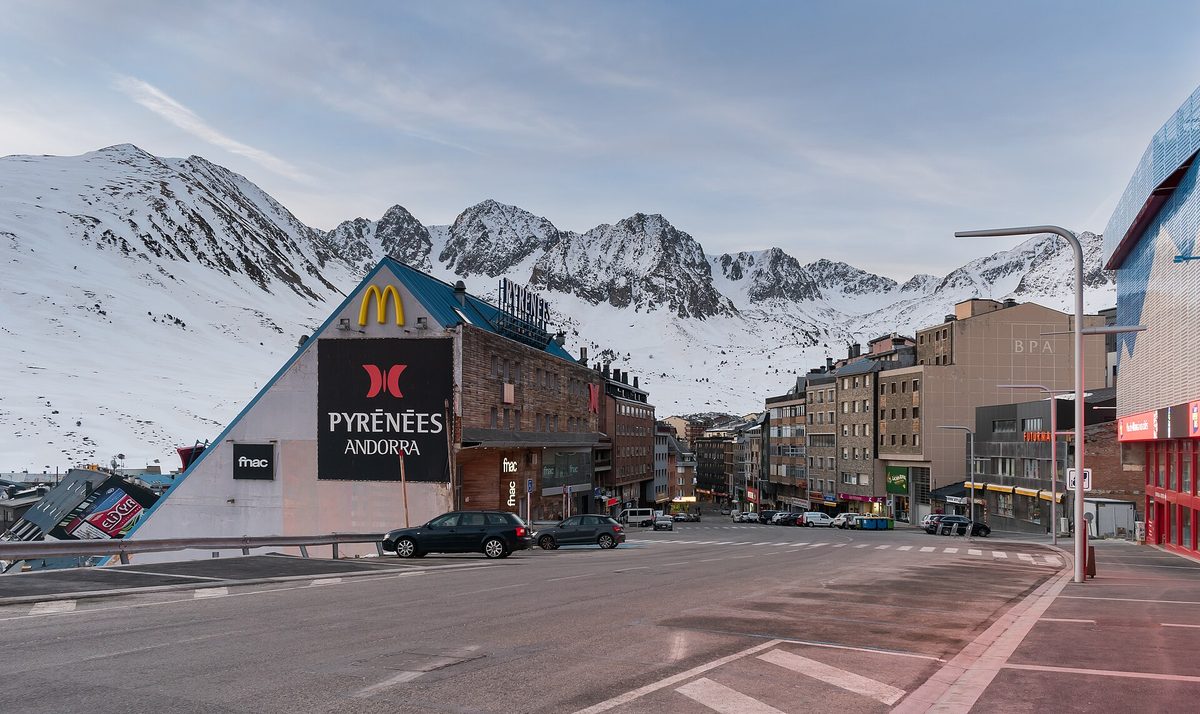
March: the connoisseur’s month nobody books enough
March is the month I quietly recommend to friends and then feel territorial about. It is the sweet spot the crowds miss, and I would rather they kept missing it.
The logic is simple. By March the snowpack is still deep from the winter’s accumulation — the tail of the snowy season, not the end of it — but Andorra’s southerly latitude means the sun has real warmth and the days have stretched out. This is spring skiing at its best: full coverage, blue skies, long terrace lunches, the joy of shirtsleeves on a proper base. The February crush has eased, the slopes are calmer, and prices have slid off their peak.
The trade-off is the freeze-thaw cycle. Spring snow sets hard overnight and softens through the day, so timing shifts from month to time-of-day: mornings can be icy until the sun works on them, and south-facing aspects go heavy by mid-afternoon. Chase the aspect and the hour — start where the sun has already touched, follow the good snow round the mountain as it warms, and lean on the high north-facing terrain when the low pistes turn to porridge. On a good March day, with full cover, sun and space, this is the most purely enjoyable skiing of the Andorran year for anyone not chasing powder. The Grandvalira sectors that hold snow best — the high links around Grau Roig and Pas de la Casa — are your afternoon insurance.
April: the last of the snow, the first of the bargains
April is the wind-down, and how good it is depends almost entirely on altitude and how early in the month you go. The season usually closes in the first week or so — the exact date rides on the spring — and by then only the highest sectors are worth the trip.
What April lacks in reliability it makes up in two currencies: price and space. These are the cheapest passes, beds and lessons of the season, and the emptiest slopes — a wide piste almost to yourself on a weekday. On a budget, or valuing solitude over guarantees, early April is lovely, provided you target the high ground: Pas de la Casa and the sheltered high bowls hold cover longest, while lower valley runs may already be slushy or closed.
The golden rule of April is ski early, then stop. The overnight freeze gives firm, fast morning snow up high; by early afternoon the sun has turned everything soft and hard work, and you are better off on a sunny terrace with a beer than fighting slush on tired legs. Ski the first few hours, take a long lunch, and treat the afternoon as a spa-and-sunshine holiday — a soak at Caldea, the vast thermal spa down in the valley, is the correct way to end a spring ski morning.
Why Pyrenean snow behaves the way it does
To time an Andorra trip well, it helps to know why the snow here differs from the Alps — the mental model most people arrive with is wrong, and it leads to bad decisions.
Andorra sits at the eastern end of the Pyrenees, closer to the Mediterranean than the Atlantic and at a more southerly latitude than the big Alpine resorts. That gives it two defining traits. First, the sun — around 300 blue-sky days a year, which is why spring skiing is such a pleasure and why the snow softens faster in the afternoon than you expect. Second, the snowfall pattern: rather than the steady top-ups of the northern Alps, the Pyrenees get their snow in big, widely spaced dumps. An Atlantic storm rolls through, drops a serious quantity over a few days, then hands over to a long clear spell. Land in a storm week and you are in deep, cold powder; fall in a gap and you are on firm, groomed pistes under a blue sky. Both are good — but it makes Pyrenean snow moodier than the Alps, so build in a flexible day or two.
Snowmaking and altitude are the insurance against those gaps. Grandvalira runs more than a thousand snow cannons across roughly two-thirds of its pistes — a backstop that lets it open in early December and hold a base through a lean spell. The high, exposed sectors do the rest: the altitude of Pas de la Casa and the north-facing slopes of Ordino-Arcalís hold cold snow long after lower, sunnier pistes give up. Ordino-Arcalís in particular is reckoned to get the best natural snow in the country, so powder hunters treat it as the storm-day go-to — keep a day in reserve for it. Snowmaking, altitude and north-facing insurance together make Andorra snow-sure enough to plan around, as long as you ski high when it turns warm.
The cheapest and quietest weeks, pinned down
Because “when” is often really about money and crowds, here is the precise version.
the two ends of the season. Early December (before the holidays) and all of April are where dynamic pricing bottoms out on passes, and where hotels and lessons are cheapest too. Within midwinter, weeks two and three of January are the best value — prime snow in the trough between the Christmas and half-term peaks. Whenever you go, buy your lift pass online and early: the February walk-up window is the most expensive way to ski Andorra.
April wins outright — midweek pistes can be near-deserted. In the core season, mid-January (weeks two and three, after Three Kings) is the quietest stretch with reliably good snow. Early December is peaceful too, if you accept not everything is open yet.
the Christmas–New Year fortnight and the second half of February, when the Spanish, French and British half-terms collide — the two pinch points where prices peak and the front side gets properly busy. Slide even a week either side and you keep most of the snow, lose most of the crush.
Which month suits which skier
The right month depends as much on who you are as on the weather. A quick sort by traveller type:
Families
Not tied to school holidays? The first week of February or the back half of March gives deep, reliable snow with fewer peak-week crowds — the sweet spots either side of the February crush. Tied to half-term? Go, book early, and pick a calm base; the crowds are survivable with an early start, and the country’s ski schools and children’s terrain are genuinely strong.
Couples, groups and powder chasers
Without kids you have freedom, so use it: mid-January for the best snow-to-crowd ratio and lively-but-not-heaving evenings, March for sunshine, space and long lunches. Skip half-term unless Pas de la Casa’s nightlife at full tilt is the point — then February delivers, for a price. Powder hunters want January and a flexible plan: base near the main Grandvalira sectors and keep a day free to bolt for Ordino-Arcalís when a storm lands, because Pyrenean powder is timing and luck.
Beginners and improvers
Cold, forgiving January snow and quiet pistes make for low-stress learning, and the value helps while you clock up lesson hours; March is the runner-up, its soft afternoon snow kind to nervous first-timers. Either way, the gentlest terrain and best-regarded schools are at Soldeu, my default for a first trip.
The one warning that matters most: the peak-week trap
If you take nothing else from this guide, take this. The two most expensive, most crowded periods of the Andorra ski season are the Christmas–New Year fortnight and the second half of February, when three countries’ school holidays overlap. You pay the year’s highest prices for the year’s longest queues, and the front-side pistes can feel like a motorway at rush hour.
Sometimes there is no choice — with children in school, those weeks may be your only window, and that is no reason to stay home. It is a reason to plan hard: book flights, transfers, beds and passes as far ahead as you can, pick a base with quieter evenings, and be first on the mountain each morning. But with any flexibility, shifting off the peak is the highest-value decision in the trip. Move a week either way and you keep the snow, halve the crowds and often cut the cost by a third. I have watched people spend a fortune to ski shoulder-to-shoulder in late February when early March or mid-January would have been cheaper, quieter and, honestly, better. Do not be that person.
If I could book one week
Here is my honest verdict — the answer I give when a friend asks over a beer and wants a straight recommendation, not a table of trade-offs.
If I could book one week of the Andorra ski season, no school dates to work around and a normal budget, I would take the third week of January. You get the coldest, best-quality snow of the year, the quietest core-season slopes with both the Christmas and half-term crowds absent, and the best value of midwinter. It is not the deepest snow — that is February — nor the sunniest — that is March — but it is the best combination of snow, space and price, and combination is what a good ski week is made of.
If you cannot do January, do the back half of March: sunshine, full cover, space and falling prices, the freeze-thaw the only price of admission. And if half-term is fixed by school, go anyway, book early, and follow the peak-week playbook above — deep snow makes up for a lot. There is no bad month to ski Andorra, only the one that fits what you want. Now you know which.
Andorra ski season: frequently asked questions
When does the Andorra ski season start and end?
The Andorra ski season typically runs from early December to early or mid-April, lifts open 09:00 to 17:00. The 2025/26 season opened around 5 December and was due to close in the first week of April; higher Ordino-Arcalís opens earlier and closes later. Exact dates depend on the snow and are confirmed only weeks ahead, so check official resort sites.
What is the best month to ski in Andorra?
For the best all-round week, mid-January: the coldest, best-quality snow, the quietest core-season slopes (after Three Kings on 6 January) and the best value of midwinter. February has the deepest snow but the biggest crowds and highest prices; March brings spring sunshine with full cover and fewer people. The best month comes down to what you prioritise: snow, space, sun or price.
Is there snow in Andorra in April?
Usually yes, in the high sectors, though the season generally closes in the first week or so of April depending on the spring. Exposed terrain like Pas de la Casa and the sheltered high bowls hold cover well, while lower valley runs may be slushy or closed. April brings the cheapest prices and emptiest slopes of the season — ski high and finish by lunchtime before the sun softens everything.
Is Andorra snow-sure?
Reasonably, for a southerly latitude. Its altitude, more than a thousand snow cannons across about two-thirds of Grandvalira’s pistes, and high north-facing sectors combine to hold a skiable base through most of the core season, even in a lean year. It is not glacier-guaranteed, and Pyrenean snow arrives in big, widely spaced dumps, so build in a flexible day or two.
Is January or February better for skiing in Andorra?
January for value and space, February for outright snow depth. January delivers the coldest, driest snow and the quietest core-season slopes at the lowest midwinter prices. February has the fattest snowpack but the highest prices and biggest crowds, especially in the second half when Spanish, French and British school holidays overlap. If you are flexible, January usually wins overall.
When is the cheapest time to ski in Andorra?
Early December (before the holidays) and April are cheapest — passes, hotels and lessons all bottom out — though coverage is less certain at both ends. Within reliable midwinter, the second and third weeks of January are the best value, sitting in the trough between the Christmas and February half-term peaks. Whenever you go, book your lift pass online and early to catch the low end.
What months can you ski in Andorra?
December, January, February, March and usually early April. The dependable full-mountain months are January to March, when every sector is open and snow is most reliable. December is a build-up — high sectors first, snowmaking filling gaps — and April a wind-down where only the highest terrain stays worthwhile. Outside those months there is no lift-served skiing in Andorra.
Related guides
Once you have your month, build out the rest of the trip. The natural starting point is the pillar guide to skiing in Andorra, which compares every base and mountain in one place. First-timers should read the guide to skiing in Andorra for beginners before booking lessons, and to see the ski season in the wider context of the whole year there is the guide to the best time to visit Andorra. When it is time to sort the logistics, how to get to Andorra covers every route in — there is no airport in the country, so it matters more than you think.
Photo credits
All photographs are from Wikimedia Commons under their stated licences, with thanks to the photographers:


1 comment
Comments are closed.