On 25 August this year, thirty-two professional riders lined up for a Vuelta stage that started and finished ten minutes from their own front doors. That is not a coincidence of scheduling. It is what happens when a country of 89,000 people, with a valley floor at 1,000 m and a flat 10% income tax, becomes the place the peloton lives.
Cycling in Andorra means seventeen cols in a country you can drive across in ninety minutes, an average col altitude of about 1,900 m, and gradients that regularly pass 13%. This guide gives you the real numbers on every major climb, the Grand Tour history, and the practical detail — season, bases, hire, gearing — you need to actually ride it.
Last updated: September 2026. Climb statistics are from CyclingCols, which measures from defined start points; other databases will differ by a few per cent depending on where they begin. Race results are current to the 2026 Vuelta. Check road and pass conditions locally before riding in the shoulder seasons.
Andorra’s climbs: the superlatives
If you want to know what you are dealing with before anything else, this is the table.
| Superlative | Climb | The number |
|---|---|---|
| Highest summit | Port d’Envalira | 2,407 m — the highest paved pass in the Pyrenees |
| Longest climb | Port d’Envalira, east side | 38.7 km |
| Most elevation gained | Port d’Envalira, north side | 1,687 m |
| Steepest average | Beixalís (east) and Els Cortals d’Encamp | 8.6% |
| Steepest maximum gradient | Beixalís, east from Encamp | 16.0% |
| Steepest single kilometre | Beixalís, east | 13.2% |
| Steepest 5 km | Coll de la Gallina, south | 9.9% |
| Most kilometres above 10% | Coll de la Gallina, south | 5.9 km |
Seventeen cols, average summit altitude around 1,900 m. Resort marketing sometimes says twenty-two categorised climbs; the climb databases count seventeen. Either way, the density is absurd for a country of 468 km².
Why the professionals live here, and what cycling in Andorra is really like
This is the thing that makes Andorra different from every other cycling destination in the Pyrenees, and it is worth understanding before you ride, because it explains the roads.
The tax
Andorran income tax is a flat 10% on income above €40,000. Spain takes 45% above €60,000. France takes around a third. VAT here is 4.5%, against 21% in Spain and 20% in France, which matters enormously for riders billing image rights through a company.
Residency is achievable too: a rider with a professional contract can get a residency visa by lodging a €50,000 bond for two years and carrying private health insurance. The presence requirement is 90 days a year. And a three-bedroom flat with a spare room for the bikes and a turbo trainer costs under €2,000 a month — in Monaco the equivalent number is closer to €20,000.
The altitude
The tax gets them here; the altitude keeps them. Andorra’s lowest point is around 900 m and the valley towns sit at roughly 1,000 m — Andorra la Vella is the highest capital city in Europe. That means every ride starts with a passive altitude stimulus, without the logistics of a training camp. The Pic Maià hotel up on the Envalira at around 2,408 m exists more or less entirely for this, and several hotels have altitude-simulation rooms where you sleep at a dialled-in equivalent of 2,700 m.
Who is actually here
Counts vary by source and year, from fifty WorldTour professionals to more than 130 riders in total; well over a hundred is the honest summary. The concrete proof point is better than any of those numbers: at the Vuelta’s Andorran stage in August 2026, thirty-two riders in the race were riding roads they train on every week.
Joaquim “Purito” Rodríguez moved here in 2006 and is generally credited with starting the wave. Confirmed current residents include Tom Pidcock, Sepp Kuss, and Adam and Simon Yates; Dan Martin lived here through his career. A great many other names get attached to Andorra online without evidence — Monaco is the usual answer for most of those — so treat celebrity-resident lists with suspicion.
The climbs, one by one
Coll de la Gallina — the hard one
About 1,910 m. From Sant Julià de Lòria: 12.1 km, 1,048 m of climbing, 8.4% average, 14.5% maximum, with 5.9 km of it above 10%. From Aixovall on the north side: 11.8 km at 8.3%.
This is Andorra’s hardest climb by every measure that matters — steepest five kilometres, most kilometres above ten per cent, worst profile index. It is not long by Pyrenean standards. It simply refuses to relent. The road was reportedly surfaced properly in order to host a Vuelta stage, which is consistent with it appearing in the race for the first time in 2012, and it has been back in 2013, 2015, 2018 and 2019.
If you ride one climb in Andorra, ride this one. Bring a 34.
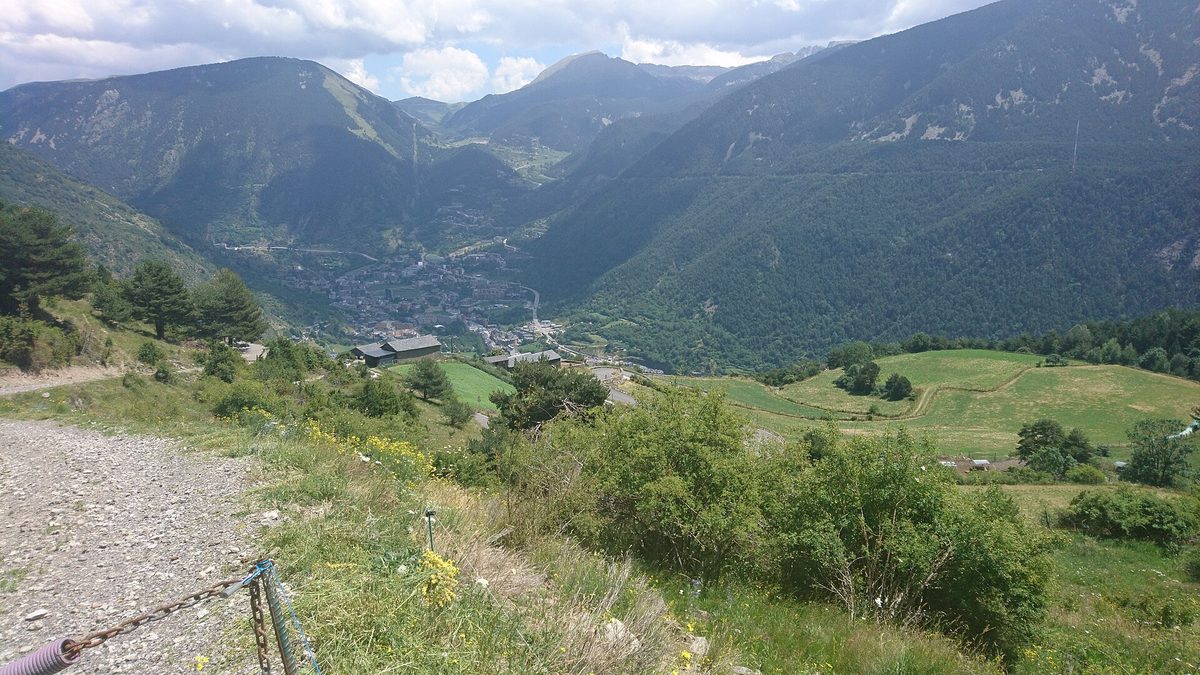
Collada de Beixalís — the vicious one
1,796 m. East from Encamp: 6.5 km, 559 m, 8.6% average and 16.0% maximum — the steepest gradient in the country — with 2.8 km above 10%. The west side from La Massana is 8.6 km at 6.9%, and Ordino gives you 8.8 km at 6.1%.
Short, and the meanest thing in Andorra. The east side holds the national records for average gradient, maximum gradient and steepest single kilometre, all at once. Sepp Kuss won his first Tour de France stage over it in 2021, and Tadej Pogaçar attacked on it with fifty kilometres remaining at this year’s Vuelta and rode the rest of the stage alone.
Port d’Envalira — the big one
2,407 m, the highest paved pass in the Pyrenees. Three ways up. North: 35.0 km, 1,687 m, 4.8% average. West from Escaldes: 25.3 km, 1,301 m, 5.1%. East: 38.7 km, 1,375 m, 3.1% — the longest climb in the country and by some way the gentlest.
The gradients are modest; the scale is not. This is a mountain you ride for the altitude and the sense of occasion, and the top is a genuinely strange place — a high, bare saddle above Pas de la Casa with the road running on into France. Take a jacket regardless of what the valley thermometer said.
Critically: bicycles are not allowed in the Envalira tunnel. The tunnel is the winter route underneath the top of the pass, 2,879 m long at around 2,050 m. You go over. Which is what you came for.
Els Cortals d’Encamp
2,090 m. From Encamp: 8.8 km, 760 m, 8.6% average, 13.0% maximum, with 4.0 km above 10%.
Joint-steepest average in Andorra alongside Beixalís, and the road where a twenty-year-old Tadej Pogaçar took his first Grand Tour stage win at the 2019 Vuelta. It is also the finish of La Purito, which is a decent indicator of how it feels after four hours.
Ordino-Arcalís
2,364 m at Port de Rat, the second-highest col in the country. Measured from Escaldes it is 27.4 km, 1,340 m, 4.8% average, 11.0% maximum.
The most famous finish in Andorran cycling. The Tour de France has finished at Arcalís three times: 1997, won by Jan Ullrich in the year he won the race outright; 2009, won by Brice Feillu; and 2016, won by Tom Dumoulin. If you ride only for the history, ride here. In winter it is Andorra’s freeride ski area.
Coll d’Ordino
1,981 m. From Ordino: 9.9 km, 696 m, 7.0% average. From Canillo: 8.9 km, 489 m, 5.1%. A steady, beautiful, forested climb linking the Ordino and Canillo valleys, and the most frequently used col in the country by the Vuelta — twelve appearances including this year’s.
Port de Cabús and Coll de la Botella
2,304 m at Cabús. From La Massana: 17.9 km, 1,071 m, 6.0% average, 12.0% maximum. Third-highest col in Andorra, and the quiet one — it has never been used by the Tour, the Giro or the Vuelta, and the Spanish side beyond the border is unpaved, so nothing comes over it.
A naming note: Coll de la Botella is not a separate climb. It is a point on the Cabús road at around 2,060–2,100 m, by the ski area. Plenty of route lists treat it as its own col; it is not.
Alto de la Rabassa
2,037 m. From Sant Julià via Juberri: 17.3 km, 1,128 m, 6.5% average, 13.0% maximum, 3.1 km above 10%. Long and consistently hard, topping out at the Naturland activity park, which makes for an odd summit — you finish a serious climb next to a queue for the world’s longest alpine coaster.
Pal and Alto de la Comella
1,901 m, 10.7 km from La Massana, 668 m, 6.2% average. Oliverio Rincón won a Tour stage here in 1993.
1,347 m, and only 4.3 km at 8.1% from Andorra la Vella — but it starts in the capital itself, which makes it the single most useful climb in the country. It is the pros’ doorstep interval, it has appeared in the Vuelta ten times, and it is the right thing to ride on your first morning to find out what the altitude is doing to you.
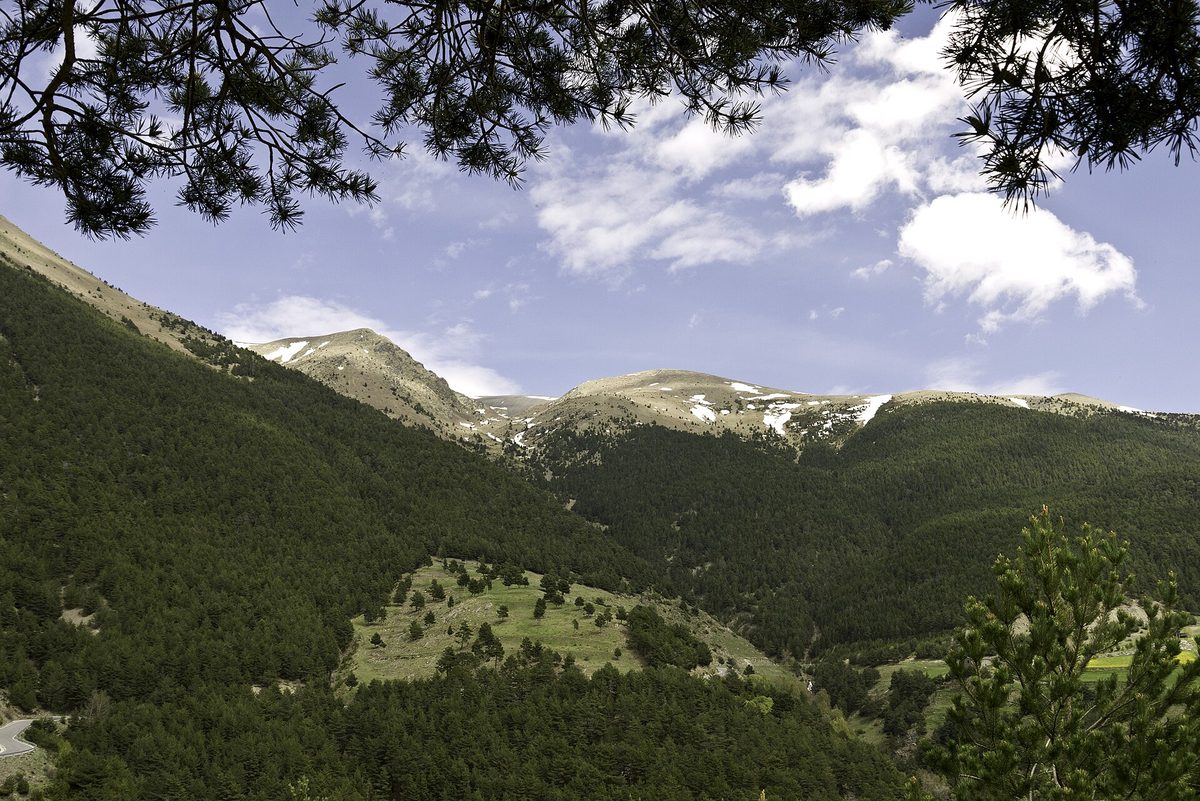
The quiet roads nobody lists
Beyond the cols, Andorra has a set of dead-end valley roads that are worth a morning each: Llac d’Engolasters above Escaldes, easy and scenic; La Coma de Ransol and Vall d’Incles up in Canillo parish, both climbing into properly wild country with almost no traffic; and El Forn, Certers and Aixàs, which are on the col lists but on nobody’s itinerary.
These are the rides to do on a tired day, and they are where you get the Andorra that is not a race route.
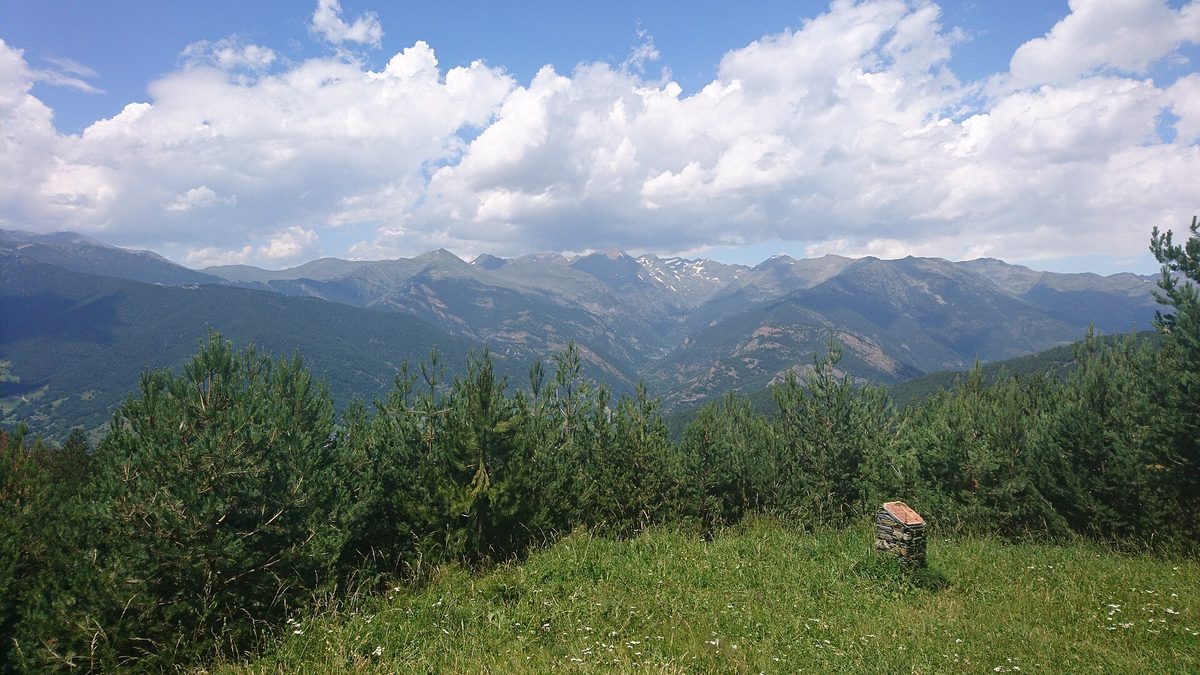
Grand Tour history, with the years right
A lot of what is written about Andorran race history is muddled, so here is the accurate version.
The Tour de France
The Tour has crossed Andorra repeatedly since 1964, when Federico Bahamontes crested the Envalira first. The stages that matter:
- 1993 — Oliverio Rincón won at Pal, having also led over the Coll d’Ordino.
- 1997 — Stage 10, 252 km to Andorra Arcalís, won by Jan Ullrich in the Tour he went on to win.
- 2009 — Arcalís again, won by Brice Feillu.
- 2016 — Stage 9, Vielha Val d’Aran to Arcalís, 184.5 km, won by Tom Dumoulin.
- 2021 — Stage 15 finished in Andorra la Vella over the Collada de Beixalís, won by Sepp Kuss, his first Tour stage. Stage 16 started from Pas de la Casa.
Note that 2021 finished in the capital via Beixalís, not at Arcalís. That is the mistake most lists make.
The Vuelta
Andorra is close to an annual fixture. The Coll de la Gallina has been climbed five times since 2012, La Comella ten times going back to 1985, and the Coll d’Ordino a dozen times. Two stages stand out.
2015, stage 11, designed by Andorran resident Purito Rodríguez: around 138 km with more than 5,000 m of climbing over six categorised passes, widely described as one of the hardest Grand Tour stages of the last thirty years.
2026, stage 4, on 25 August: a 104.8 km loop starting and finishing in Andorra la Vella, entirely inside the country, with four categorised ascents. Pogaçar attacked on Beixalís with fifty kilometres to go and won alone by 2:39. The route passed through Encamp, directly below the Cortals road where he took his first Grand Tour win seven years earlier — which is the sort of symmetry cycling occasionally arranges for itself.
Events you can ride or watch
La Purito Andorra is the amateur cyclosportive, founded by and named after Purito Rodríguez. The 2026 edition ran on 2 August, starting in Sant Julià de Lòria and finishing at Els Cortals d’Encamp, with three routes: 116 km and 4,200 m over six passes, 75 km and 2,900 m over four, and a 26 km introduction. The long route takes in La Rabassa, Coll de la Gallina, La Comella, Engolasters, Beixalís and Coll d’Ordino before the Cortals finish. Distances shift slightly year to year, so check the current edition.
The Andorra Cycling Masters is the new one and it is a genuinely good invention: an 8 km uphill time trial on the Coll de la Gallina followed by a 32 km criterium through Andorra la Vella and Escaldes, with riders competing teamless and head to head. The inaugural edition, in October 2025, put Pogaçar, Vingegaard, Roglič and Del Toro on the same start line. Roglič won the time trial in 25:39, twenty seconds up on Pogaçar, and took the overall; Del Toro won the crit.
The Volta als Ports d’Andorra and the Gran Fondo Encamp–Pas de la Casa are the other amateur fixtures, and the Andorra Epic is a multi-day mountain-bike stage race. More of the calendar is in the guide to festivals and events in Andorra.
Planning a cycling trip
When to go
The season opens in late May, once the high passes clear, and runs to September or October. June and September are the sweet spot: the same conditions as high summer with a fraction of the traffic. July and August give you the longest days and the warmest valleys, but afternoon thunderstorms build over these mountains with very little warning — ride the big cols in the morning.
November to April belongs to the skiers, and the high climbs are snowbound. Lower riding is possible year-round if you dress properly. One microclimate note worth having: the La Massana valley opens earlier in spring and stays rideable later than Encamp or Ordino, which sit higher and colder. The wider picture is in the best time to visit Andorra.
Altitude and gearing
Every ride starts at about a thousand metres, and thin air makes everything feel harder than the numbers suggest. Ease in with La Comella or Beixalís on day one rather than the Envalira, drink more than you think you need, and eat more — your metabolic rate goes up at altitude whether you notice or not.
On gearing, do not be proud. Gallina averages 8.4% for twelve kilometres and Beixalís ramps to 16%. A 32 or 34-tooth sprocket is not an admission of weakness here; it is the difference between riding and walking.
Where to base yourself
La Massana and the Ordino valley is the cycling heart of the country: the warmest microclimate, the longest season, and Cabús, Pal, Arinsal, Beixalís, Coll d’Ordino and Arcalís all from the door. Ordino village itself is higher, quieter and better if you are a pure climber. There is a full guide to La Massana.
Encamp and Canillo are central, quiet and give you the hard side of Beixalís, Els Cortals, Coll d’Ordino from the east, plus Ransol and Vall d’Incles. Sant Julià de Lòria at the southern tip is the quietest, closest to Spain, and the base for Gallina, La Rabassa and the gravel.
One piece of advice that will improve your week more than any other: do not stay too high. Anywhere above Canillo and every single ride finishes with a climb home, on tired legs, at the end of the day. See where to stay in Andorra for the full comparison.
Bike hire
Most of it is in La Massana: Viladomat, which has been renting in Andorra since 1952 and does road, e-road and mountain bikes; Pic Negre, with a certified workshop; Couloir, for top-end kit; and Commançal and Riders on the mountain-bike side. In the capital, Jorma Bike does road hire and servicing, and there is an Intersport Outdoor on Avinguda Santa Coloma. Road and e-road hire is also available in Soldeu and at Anyós Park.
Book ahead. Twenty-four hours online is usually enough, but in August it will not be.
Getting there with a bike
There is no airport and no railway in Andorra. Barcelona is about three hours by road, Toulouse about three and a half. Andbus runs direct airport transfers roughly every two hours and carries bikes for a small fee — around €6 when last published, so confirm. The nearest stations are L’Hospitalet-près-l’Andorre on the French side and Lleida Pirineus in Spain. If you hire a car in Spain or France you need a cross-border add-on, and from 1 November to 15 May Andorra legally requires winter tyres or chains, which Barcelona hire cars do not come with. See how to get to Andorra.
Roads, tunnels and safety
The asphalt is good, even on the steep stuff, and Andorran drivers are noticeably patient with cyclists. Three specific things to know:
- No bikes in the Envalira tunnel. Ride over the pass. Some other tunnels have bike paths or signed detours — follow the signs.
- Lights. Cyclists in Andorra are required to have a working front and rear light fitted at all times, including in daylight. Almost no visiting rider knows this.
- Brakes. The descents are long, fast and continuous. Pads wear far quicker here than at home. Check them every day and do not find out on the Envalira.
Andorra is not in the EU, so a European health card is no use. Take proper travel insurance that covers cycling, and read the general travel tips before you go.
Gravel and mountain biking
If tarmac is not the whole story for you, Andorra has two other things going on.
The smuggler trails are the good one: old contraband routes over the high borders, thickest around Sant Julià de Lòria, that once moved tobacco, cloth and salt and later served as escape routes during the Spanish Civil War and the Second World War. Gravel routes built on them top out around 2,300 m. Riding a border track that people once crossed at night to save their lives is a different kind of day out.
And there is the lift-served downhill at Pal Arinsal, formerly Vallnord, which is a World Cup venue in its own right. For the whole outdoor menu, see the pillar guide to adventure activities in Andorra.
Frequently asked questions
Is Andorra good for cycling?
Exceptionally, if you like climbing. Seventeen cols at an average summit altitude of about 1,900 m sit inside a country you can drive across in ninety minutes, on well-surfaced roads with patient drivers. Well over a hundred professional riders base themselves here, which is the strongest possible endorsement. There is essentially no flat riding.
What is the hardest climb in Andorra?
The Coll de la Gallina. From Sant Julià de Lòria it is 12.1 km gaining 1,048 m at an 8.4% average, with 5.9 km above 10% and a maximum of 14.5%. The Collada de Beixalís from Encamp is shorter but steeper still, holding Andorra’s records for maximum gradient at 16% and steepest single kilometre at 13.2%.
Why do so many pro cyclists live in Andorra?
A flat 10% income tax above €40,000, VAT of 4.5%, and a straightforward residency route for contracted professionals who lodge a €50,000 bond. On top of that, the valley floor sits at around 1,000 m, so riders live at altitude without a training camp. Joaquim Rodríguez moved here in 2006 and the wave followed.
Has the Tour de France been to Andorra?
Many times since 1964. The Tour has finished at Ordino-Arcalís three times — Jan Ullrich in 1997, Brice Feillu in 2009 and Tom Dumoulin in 2016 — and in 2021 stage 15 finished in Andorra la Vella over the Collada de Beixalís, won by Sepp Kuss. The Vuelta comes almost every year.
Can you cycle through the Envalira tunnel?
No. Bicycles are not permitted in the Envalira tunnel, which is the 2,879 m winter route running under the top of the pass at around 2,050 m. Cyclists ride over the Port d’Envalira itself at 2,407 m, the highest paved pass in the Pyrenees, which is the better road anyway.
When is the best time to cycle in Andorra?
June and September. The high passes are clear from late May and the season runs into October, but June and September give you summer conditions with far less traffic. July and August are warmest and busiest, with a real risk of afternoon thunderstorms, so ride the big cols in the morning.
What gearing do I need for Andorra?
More than you think. With Gallina averaging 8.4% for twelve kilometres and Beixalís hitting 16%, a 32 or 34-tooth largest sprocket is genuinely useful even for strong riders. Add the effect of starting every ride at 1,000 m and climbing to over 2,000 m, and low gearing stops being optional.
Where can I hire a road bike in Andorra?
Mostly in La Massana: Viladomat, Pic Negre and Couloir all rent road and e-road bikes and have workshops. Jorma Bike in Andorra la Vella and Intersport Outdoor on Avinguda Santa Coloma are the capital options, and rental is also available in Soldeu and at Anyós Park. Book ahead, especially in August.
Planning the rest? See the pillar guide to adventure activities in Andorra, the downhill at Pal Arinsal bike park, and the ropes-and-rock alternative in via ferrata in Andorra. For the wider summer picture, try Andorra in summer and hiking in Andorra.
Photo credits
All photographs are from Wikimedia Commons under their stated licences, with thanks to the photographers: