You’ve seen the photos: a bright wing hanging over a deep green valley, snow on the ridges behind. So can you book a tandem paraglide in Andorra, what does a helicopter flight over the valleys cost, and is either worth the money when a viewing platform gets you most of the same view for a few euros?
Searches for paragliding Andorra mostly end across the border: Andorra’s own resorts don’t sell tandem flights, and the established flying is in the Catalan Pyrenees around Organyà. For Andorra from the air, the bookable option is a Heliand helicopter flight from La Massana, listed at €360 for 10 minutes for up to five people.
This page sits inside our guide to adventure activities in Andorra, and it covers the two ways to get properly off the ground: tandem paragliding (where it actually happens, how it works, how to pick a pilot) and scenic helicopter flights, plus the high viewpoints and lifts that give you the aerial view without a pilot. Helicopter prices below are those Heliand’s own website listed when checked in November 2026; viewpoint and lift details come from the operators’ and Andorra’s tourist board’s own pages.
Paragliding and helicopter flights in Andorra at a glance
| Question | Short answer |
|---|---|
| Tandem paragliding inside Andorra | Not sold by Grandvalira, Pal Arinsal or Ordino Arcalís; Grandvalira’s 2026-27 winter activity list has no flying |
| Nearest established flying area | Organyà, in Catalonia’s Alt Urgell, south of La Seu d’Urgell |
| Helicopter sightseeing | Heliand, from the Terra Guindaldes heliport in La Massana parish |
| Helicopter cost | €360 (10 min), €480 (15 min), €600 (20 min) per flight, up to 5 passengers, tax included, as listed on Heliand’s site in November 2026 |
| Cost per head, full cabin | €72, €96 or €120 |
| Booking | Direct with the operator; flights depend on weather on the day |
| Best conditions | Clear, settled mornings; avoid summer afternoons when storms build |
| Low-cost view from above | Roc del Quer viewpoint, €6 for adults (2026 rates) |
| High-altitude viewpoint | Tristaina Solar Viewpoint, 2,701 m, by gondola, chairlift and a short walk in summer |
| Forecasts | meteo.ad, Andorra’s national weather service |
Can you go paragliding in Andorra?
Not as a simple bookable holiday activity, no. That surprises people, because the country looks built for it: steep valleys, high meadows, peaks well over 2,500 m. But the businesses that sell Andorra’s outdoor activities don’t sell flights, and the honest answer is better than a booking that falls through on the morning.
What the resorts sell, and what they don’t
Pal Arinsal’s summer offer is its bike park and mountain restaurants. Grandvalira’s summer activities page has no paragliding or tandem flights on it either. Neither resort sells a tandem flight as part of its summer programme.
Grandvalira’s 2026-27 list of individual activities covers snowmobiles, mushing, snowshoes, a zip line, night skiing and the rest, and nothing that flies. If you have read about ski-and-glide tandems at the resort in older articles, treat them as history unless the resort’s own site lists them again.
Andorra also has no home-grown tandem school with its own current website that you can book online. You will find booking-platform listings that put a flight “in Andorra”, but they tend to be pilots based over the border, and those pages are no guide to whether a flight will run, where it launches or what it costs. If a flight inside the country matters to your trip, ask the tourist office or your hotel’s activity desk for a pilot they know is working now, and book directly with that pilot.
plan your trip on the assumption that paragliding means a day across the border, and treat any flight inside Andorra as a bonus you confirm in person.
The nearest established flying: Organyà
Head south out of Andorra through Sant Julià de Lòria and past La Seu d’Urgell, and the road follows the Segre down to Organyà, a small town in Catalonia’s Alt Urgell. Organyà is a paragliding centre: operators there run tandem flights and courses, and the take-off area is known locally as the muntanya màgica (magic mountain).
That matters for you in two ways. First, this is where tandem operators are based, so it’s a good place to look for a flight on a good day. Second, it means a paraglide is a half-day out of Andorra with a border crossing each way, not an hour slotted between lunch and the spa. Spanish and French use the same word, parapente (Catalan drops the last letter: parapent), so that’s the search term for local operators’ own sites.
Coming in from France? The French side of the range has its own flying culture. Ask the tourist office in the valley you’re staying in which tandem pilots are working that week; the good ones are usually known locally.
flights run on the weather, so book with a pilot directly and keep a second day free; prices, ages and weight limits are set by each operator; allow a half-day including the drive from Andorra and the border; best for anyone who has always wanted to fly and doesn’t mind leaving the country to do it.
How does a tandem paragliding flight work?
A tandem flight needs nothing from you except a short run and a willingness to sit still. You’re clipped into your own harness in front of a qualified pilot, who steers, judges the air and lands you. Here is what the day usually looks like, wherever in the Pyrenees you fly.
Before take-off
You meet the pilot at an agreed point, often in the valley, and drive up to the launch together. Expect to be asked your weight when you book: a tandem wing is sized for a total load, and most pilots set a passenger weight range for that reason. Be honest. A few kilos of optimism can mean an awkward launch.
On the hill, the pilot lays out the wing, fits your harness and helmet, and gives a briefing that matters more than any other part of the day. The key instruction is almost always the same: when told to run, keep running, even when your feet start to lift. Sitting down too early is the classic beginner mistake.
In the air
Once you’re off, you sit back into the harness, which works like a padded seat. It’s quieter than people expect: wind over the wing and very little else. How long you stay up depends on the air. On a calm morning the flight can be a gentle glide down to the landing field; when rising warm air (thermals) is working, a pilot can climb and stretch the flight out. Tell the pilot before take-off if you want it gentle, because many will offer spirals and wingovers to people who look keen.
Many pilots will let you hold the brake lines for a minute on a calm stretch. It’s the best way to understand how little input a paraglider needs.
Landing
Landings are usually on a big, open field. The pilot tells you when to stand up out of the seat and get your legs ready; most tandem landings are a few walking or running steps. On a windy day you may land sitting, which is fine: the harness has padding for exactly this.
wear the clothes listed further down; eat lightly beforehand; allow the whole morning or afternoon, because weather waits are normal; best for adults and older children who are happy to follow instructions quickly.
How do you choose a tandem paragliding pilot?
The flight is only as good as the person behind you. Booking platforms make every operator look alike, so ask a few direct questions before you pay. A good pilot answers all of them without hesitation.
- Qualification: does the pilot hold a tandem (two-seat) rating from their national federation? A solo licence isn’t the same thing.
- Insurance: are passengers covered by the pilot’s insurance, and what does it cover? Then check your own travel policy, because many standard policies exclude paragliding unless you add adventure-sports cover.
- Equipment: is the tandem harness fitted with a reserve parachute? It’s standard practice; it should be a quick yes.
- Weather policy: what happens if conditions aren’t right? A full refund or a free rebooking is fair. A pilot who never cancels is the one to avoid.
- Limits: what are the minimum age, weight range and fitness requirements? These differ between operators, so get them in writing.
- Photos and video: are they included or extra? Many pilots fly with a camera on a pole and charge for the footage.
pick the pilot who talks about weather and safety before price. On a mountain site, the cheapest flight is rarely the one you remember fondly.
Helicopter flights over Andorra: what Heliand offers
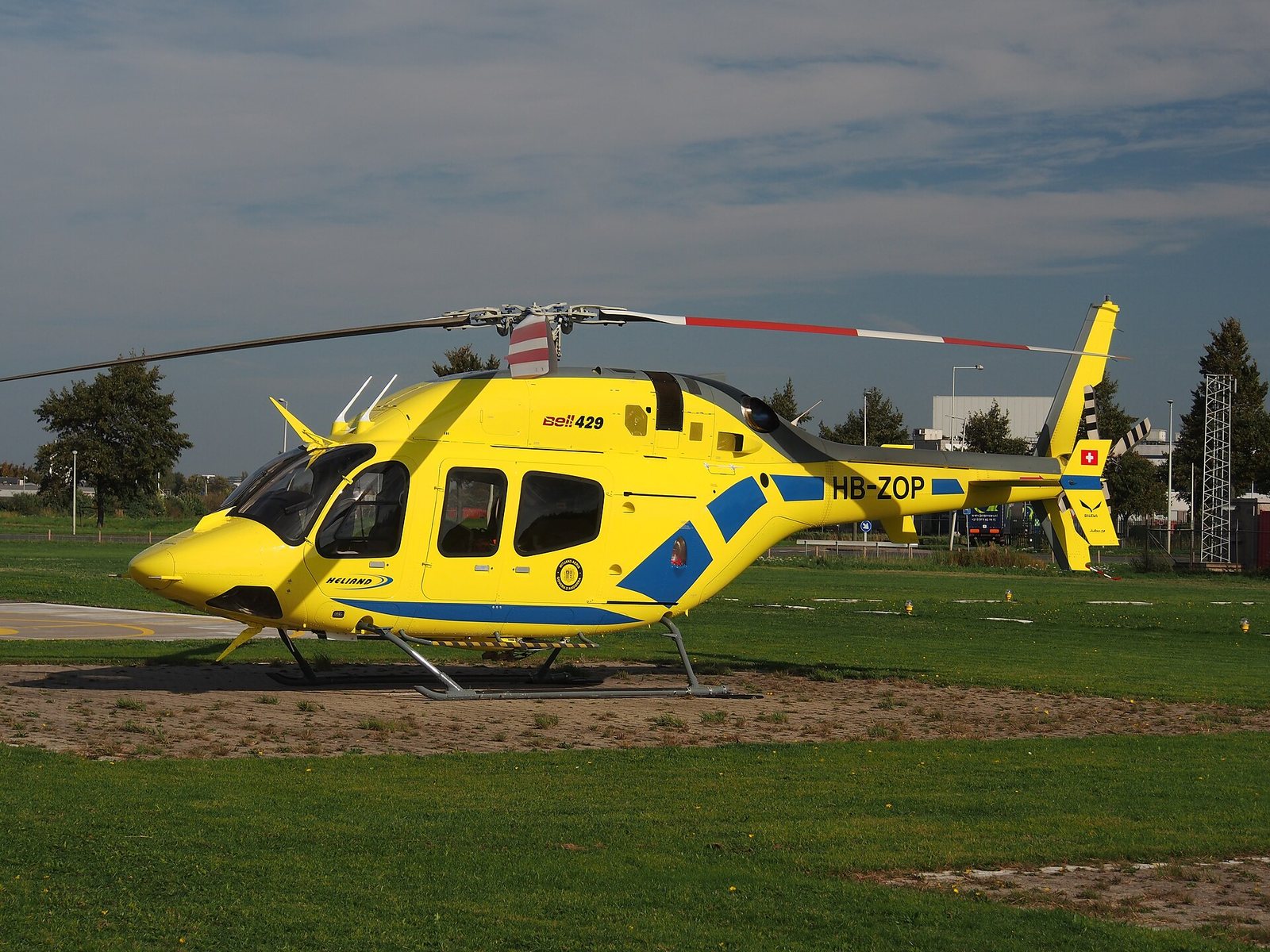
If you want Andorra itself from the air, a helicopter is the reliable way to do it, and the operator to know is Heliand. It’s listed as a helicopter sightseeing, airport-transfer and on-demand operator on Andorra’s official tourism site, it dates its company to December 1987, and its website lists AS350 B3 and Bell 429 helicopters in its fleet, with two helicopters based in Andorra.
What does an Andorra helicopter tour cost?
Heliand’s website lists private tourist flights at three lengths, with IGI (Andorra’s sales tax) included. The price is per flight, not per person, for up to five passengers. That changes the maths completely, so here it is worked through:
| Flight | Listed price per flight | Per head, 2 people | Per head, 5 people |
|---|---|---|---|
| 10 minutes | €360 | €180 | €72 |
| 15 minutes | €480 | €240 | €96 |
| 20 minutes | €600 | €300 | €120 |
These are the prices Heliand’s website listed when checked in November 2026. The page carries no date or season, so confirm the current price when you book, by phone on +376 737 271 or through the Heliand website.
A couple of honest points. A full cabin is the bargain, but with five passengers in a light helicopter not every seat is a window seat, so whoever takes the middle pays the same for a narrower view. And for a couple, €360 for ten minutes is a lot of money per minute. Two people who mostly want the view will get more from a 15-minute flight than from two separate treats on the ground, and less than they’d hope from a 10-minute hop.
Where do helicopter flights leave from?
Heliand’s site gives its base as the Terra Guindaldes heliport, on the road to La Massana (Ctra de la Massana, AD400). Andorra also opened a new national heliport, La Caubella in La Massana parish, on 22 June 2026, designed for round-the-clock operation. Local press in August 2026 reported that helicopters were still using Terra Guindaldes because La Caubella wasn’t yet operational, and the switch may happen at any point. Ask which heliport your flight leaves from when you book, and don’t rely on a map pin from an old listing.
Is a 10-minute flight enough?
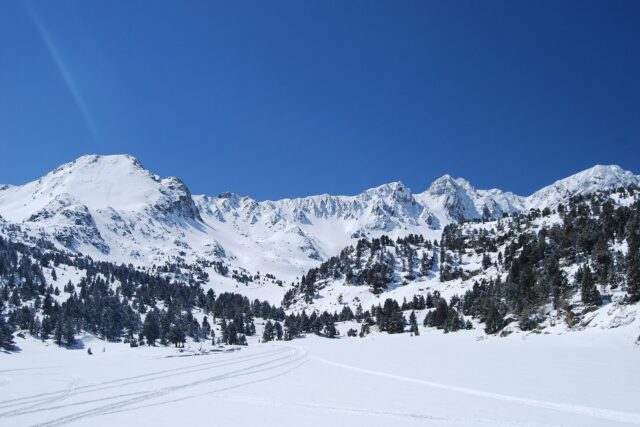
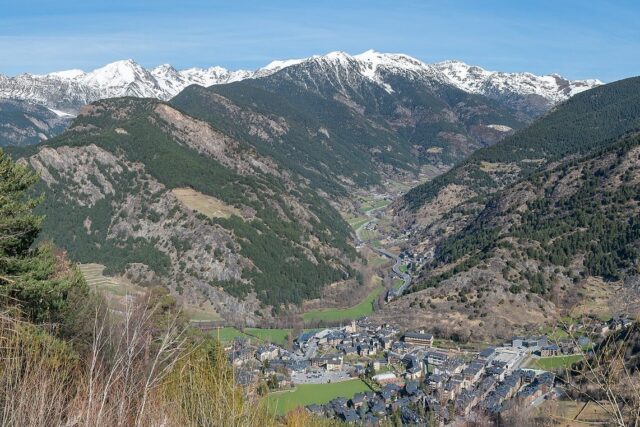
Andorra is a small country, so even a short flight covers real ground, and from the air you finally understand its shape: two river valleys meeting at Andorra la Vella, with side valleys climbing away into lake-filled cirques. Ask Heliand which valleys each length covers before you choose. As a rule of thumb, the extra five or ten minutes buys you the high ground rather than more of the same valley, and the high ground is the point.
book direct with Heliand and ask about routes, heliport, age and weight requirements; €360-€600 per flight as listed in November 2026; allow an hour or so including the safety briefing and any weather wait; best for families or groups of four or five who can fill the cabin.
worth it for a group, a special occasion or anyone who can’t hike to altitude. For a couple on a budget, the viewpoints further down this page get you most of the drama for a fraction of the price.
Weather, wind and the best time to fly
Mountain flying runs on the weather, and the Pyrenees are fickle in ways that catch visitors out. Paragliders and helicopters care about different things, but both want clear, settled air.
Summer: fly early
On a typical summer day the sun heats the slopes, warm air starts rising by late morning, and the valley breezes pick up through the afternoon. For a paraglider that rising air is useful in moderation and dangerous in excess. Summer afternoons in the Pyrenees also have a habit of building towering clouds that turn into thunderstorms, and no pilot flies near those. The pattern is simple: morning flights are smoother and more likely to happen. Take the earliest slot you can.
For helicopter flights, the enemy is low cloud and poor visibility: there’s little point paying to fly through a grey ceiling. A clear morning after a front has passed through is ideal.
Autumn and winter: the clearest air
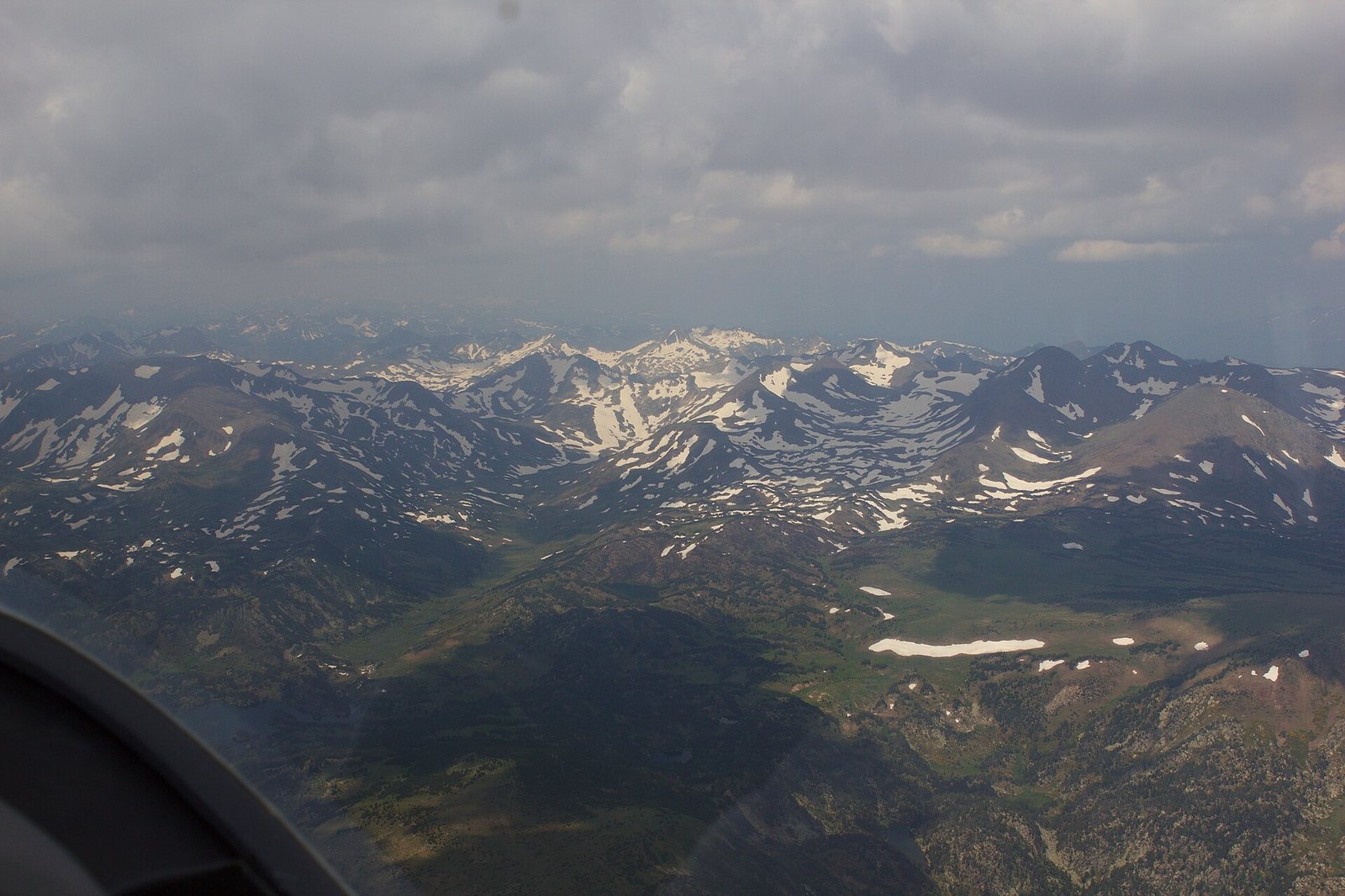
Cold, dry days after a spell of bad weather often bring the sharpest visibility of the year, and fresh snow on the peaks makes the view from a helicopter look entirely different. Paragliding is far more limited in the cold months, and winter flying is a specialist matter. Remember that a summer t-shirt day in the valley can be close to freezing at launch height, because the air cools as you climb: as a general rule of thumb, roughly 6 °C for every 1,000 m.
Check the forecast and any warnings on meteo.ad, Andorra’s national weather service, the day before and the morning of your flight. For which months suit the rest of your trip, our month-by-month guide to the best time to visit Andorra has the bigger picture.
build flexibility into the plan. Book the flight for the start of your stay, not your last morning, so a cancellation becomes a rebooking rather than a refund and a regret.
What to wear, motion sickness and taking photos
What to wear
closed shoes with ankle support (walking boots are ideal), long trousers, and layers you can zip up: a windproof jacket over a warm mid-layer, even in summer. Thin gloves help on cooler days. Sunglasses that stay on your face, and a buff or neck warmer, earn their place. Leave scarves and anything loose at home. Our Andorra packing list covers the mountain layers in more detail.
normal clothes are fine, but dark tops cut reflections in the window for the people beside you, which your fellow passengers and their photos will appreciate.
Motion sickness
A scenic helicopter flight is generally smooth, and short flights rarely bother anyone. Paragliding is different: a calm glide is fine for most people, but spirals, wingovers and bumpy thermals are where queasiness starts. If you’re prone to it:
- Eat a light meal an hour or two before, not a big one and not nothing.
- Tell the pilot before take-off that you want a gentle flight, and say so early in the air if you start to feel off. Pilots would much rather know.
- Keep your eyes on the horizon rather than on your phone screen.
- If you take travel-sickness tablets, check with a pharmacist which ones won’t make you drowsy.
Taking photos
In a helicopter, put your lens close to the window (without touching it, to avoid vibration), and use a fast shutter speed. Shooting slightly forward or behind the rotor’s shadow helps. Don’t spend the whole flight behind a screen: ten minutes passes very quickly.
On a paraglide, phones are a risk unless they’re on a lanyard; a dropped phone from a few hundred metres is gone, and could hurt someone below. Most tandem pilots offer their own pole-mounted camera footage, which is usually better than anything you’d manage strapped into a harness.
Andorra from above without leaving the ground
Here is the part most flight pages skip: Andorra’s high viewpoints are unusually easy to reach, and several of them get you most of the aerial feeling for the price of a coffee and a cake. These have their own full guides, so here’s just what each one gives you from above.
Roc del Quer and the Tibetan bridge
€6 for adults. The Roc del Quer viewpoint above Canillo is the closest thing to a flight with your feet on steel. A 20 m walkway runs out from the cliff, 12 m of it projecting into the air, with a glass section in the floor and a drop the operator describes as 500 m to the valley below. It sits at 1,913 m on the Coll d’Ordino road, is open through the year, weather permitting, and the published hours from November 2026 to February 2027 are daily 10:00-16:00. Adult entry is €6 in 2026 rates, children up to 12 pay €4, and under-5s go free.

Close by, the Tibetan bridge at Canillo takes the same idea and stretches it out into a walk over the void. Adult tickets cost €17, or €19 from 18 July to 13 September, and a combined bridge and Roc del Quer ticket costs €20 (€22 in high summer) with the bus included; the bridge opens on weekends and public holidays in November and December, so check the operator’s rates and opening page before you go.
The Tristaina Solar Viewpoint
One of the highest viewpoints in the Ordino Biosphere Reserve. At the top of Ordino Arcalís, the Tristaina Solar Viewpoint is a ring-shaped walkway at 2,701 m on the Pic de Peyreguils that doubles as a sundial, with a central beam casting the time onto its circumference. In summer the Tristaina gondola runs to La Coma, the Creussans chairlift continues upward, and the last stretch is a 15-20 minute walk. The 2026 summer season finished at the start of November; for next summer’s dates and lift passes, check Ordino Arcalís’s viewpoint page in spring.

Below it sit the Tristaina lakes, which look their best from exactly this angle. Of everything on this page, this is the one that most resembles a view from a helicopter, and it’s included in a summer lift pass rather than costing hundreds of euros.
Gondolas and cable cars
In winter the lifts are the cheap way up. Grandvalira’s pedestrian pass, for non-skiers, covers the Funicamp from Encamp, a funitel of about 6 km that climbs to around 2,500 m at Solanelles in a 25-minute ride. On the other side of the country, the La Massana gondola carries 16-person cabins from the village up to the Pal sector, and the large cable car between Pal and Arinsal crosses from Coll de la Botella to Port Negre. The 2026-27 ski season at Grandvalira and Pal Arinsal is scheduled to open on 4 December 2026, weather permitting, and the lifts run with it.
In summer, the Canillo gondola carries families up to Mon(t) Magic’s family park, and the views on the ride up are half the appeal.
Via ferrata and other ways to earn the view
If you’d rather earn your altitude, the via ferrata routes in Andorra give you exposure that a viewpoint can’t. The Roc del Quer route alone is 500 m long with 350 m of height gain and no escape route once you’re on it, which is aerial in every sense that matters. Gorge-lovers looking for a different kind of adrenaline should read our canyoning in Andorra guide; for something faster, the Vallnord bike park runs off the same mountain as the Pal gondola.
if the budget runs to one splurge, take the helicopter with a full cabin. If not, do Roc del Quer one day and the Tristaina viewpoint another, and you’ll have seen Andorra from above twice for less than the price of one person’s share of a short flight.
Frequently asked questions
Can you go paragliding in Andorra?
Not easily. Andorra’s ski resorts don’t sell tandem flights in summer or in their 2026-27 winter activity lists, and there’s no Andorran tandem school with its own bookable website. The established flying is across the border around Organyà in Catalonia. Ask Andorra’s tourist office or your hotel if you want a flight inside the country, and confirm it with the pilot directly.
How much is a helicopter tour in Andorra?
Heliand’s website listed €360 for 10 minutes, €480 for 15 minutes and €600 for 20 minutes when checked in November 2026, with Andorran tax included. Those prices are per flight for up to five passengers, so a full cabin works out at €72-€120 a head. The page isn’t dated, so confirm the current price when you book.
Where do helicopter flights in Andorra take off?
Heliand’s site gives the Terra Guindaldes heliport on the La Massana road. The new national heliport at La Caubella, also in La Massana parish, opened on 22 June 2026 but was reported not yet operational in August. Ask the operator which heliport your flight uses when you book.
Do you need experience for tandem paragliding?
No. The pilot flies the wing; you run a few steps at take-off when told, sit in the harness, and stand up for landing. You do need to follow instructions quickly, fit within the operator’s weight range and meet its age limit, which varies between pilots. Ask about all three when booking.
Is tandem paragliding safe?
With a qualified tandem pilot, proper equipment and sensible weather judgement, it’s a well-established activity enjoyed by many first-timers every year. The risks rise with poor weather calls and unqualified pilots. Choose a pilot with a tandem rating, passenger insurance and a reserve parachute, and one who is willing to cancel when conditions are wrong.
What is the best time of day for a scenic flight?
Morning. In summer, rising warm air and valley winds build through the day, and afternoon thunderstorms are common in the Pyrenees, so the early slots are smoother and less likely to be cancelled. For helicopter flights, a clear morning after a front has passed gives the best visibility. Check meteo.ad before you go.
What does parapente mean?
Parapente is the Spanish and French word for paragliding, and parapent is the Catalan. Use those terms when looking for pilots on either side of the border, especially around Organyà in the Alt Urgell, where most local operators write in Catalan and Spanish first.
Is there an airport in Andorra for flights in?
No. Andorra has no airport of its own; the nearest is Andorra–La Seu d’Urgell airport in Spain, just across the border. Our guide to Andorra’s airport options covers the routes and transfers.
For more ways to fill a trip, see our unusual things to do in Andorra and the Naturland adventure park, or plan the whole trip around Canillo and its high-altitude attractions.
Photo credits
All photographs are from Wikimedia Commons under their stated licences, with thanks to the photographers:
- The Casamanya massif from Ordino: Krzysztof Golik, CC BY-SA 4.0, via Wikimedia Commons — source
- A Bell 429 operated for Heliand, at Amsterdam Heliport: Alf van Beem, CC0, via Wikimedia Commons — source
- Pyrenean peaks from a glider: EvaSDK, CC BY-SA 3.0, via Wikimedia Commons — source
- The Roc del Quer walkway above Canillo: Alberto-g-rovi, CC BY 3.0, via Wikimedia Commons — source
- The Tristaina Solar Viewpoint: Jordi Gili, CC BY-SA 4.0, via Wikimedia Commons — source