Every ski country has one resort it quietly hands to the people who are nervous. In Andorra, that resort is Pal Arinsal (or Pal-Arinsal, as the linked ski area styles itself). It sits over on the western side of the country, up the green La Massana valley, far from the neon and the 1am dance floors of the eastern resorts — two friendly mountains stitched together by a cable car, wide blue runs through the pines, and a snow garden full of three-year-olds falling over and laughing about it. If your group has a first-timer, a wobbler or a couple of kids in it, this is the Andorran base I’d point you at first.
Pal-Arinsal is Andorra’s second-biggest ski area — around 63 km of pistes across roughly 44 runs — and it’s the country’s most family-and-beginner-friendly resort by a distance. Run today by Grandvalira Resorts (the old Vallnord brand), it pairs two distinct hills: Pal, all wide tree-lined cruisers, and Arinsal, a higher open bowl with the snowpark. It is not the resort for experts chasing big mileage. For everyone else learning or travelling with family, it might be the best choice in the Pyrenees, and this is the honest, complete version of why.
Last updated: July 2026. Prices and dates reference the 2025/26 season; Grandvalira Resorts publishes 2026/27 rates and an opening date in autumn, so treat the numbers as close guides and check the official site before you book.
Pal-Arinsal at a glance
Here’s the shape of the place before the detail. If you read two sections, make it this one and the honest verdict at the end.
| Pal-Arinsal | |
|---|---|
| Ski area | ~63 km of pistes, ~44 runs, second-biggest in Andorra |
| Altitude | 1,550 m base to 2,537 m top (Arinsal vertical up to ~1,010 m — the biggest in Andorra) |
| Two sectors | Pal (tree-lined cruisers) + Arinsal (open bowl, snowpark), joined by cable car |
| Valley towns | La Massana (gondola into Pal) and Arinsal village (lifts on the doorstep) |
| Operator | Grandvalira Resorts (formerly Vallnord) |
| Best for | Beginners, families, mixed-ability groups, snowboarders learning park |
| Not for | Experts wanting long steep mileage — base at Grandvalira instead |
| Lift pass | Nord Pass (Pal-Arinsal + Ordino-Arcalis) or an Andorra Pass covering all three mountains |
| Getting there | ~10 km from Andorra la Vella; Barcelona ~3 hr, Toulouse ~3 hr by road |
| Season | Early December to early/mid April; lifts roughly 09:00–17:00 |
Why Pal Arinsal is really two mountains in one
The single most useful thing to grasp before you book is that Pal-Arinsal is not one hill with two names — it’s two genuinely different mountains that happen to share a lift pass and a cable car. They face different ways, they ski differently, and they suit slightly different days. Get this straight and the whole resort makes sense.
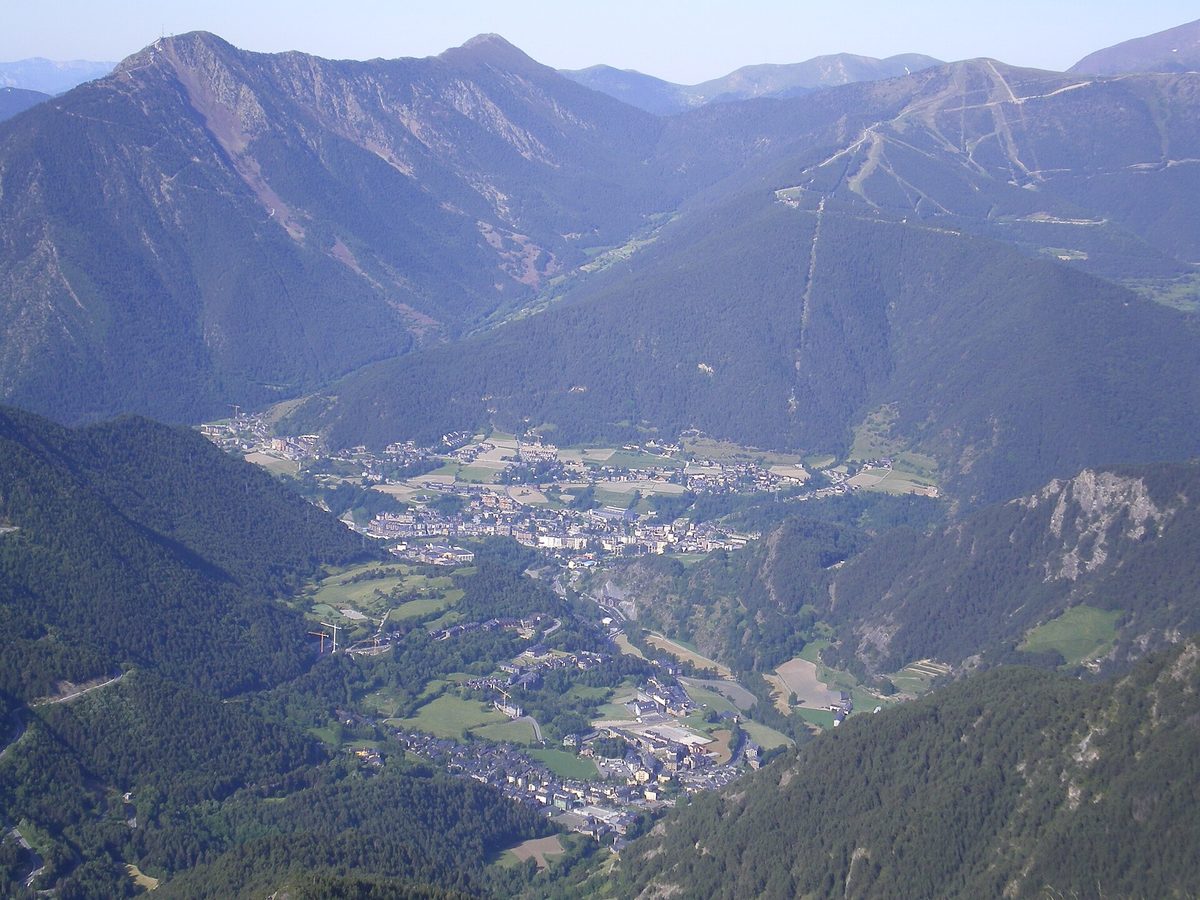
Pal is the tree mountain. You reach the heart of it either by driving up to the Coll de la Botella car park or — much nicer — by riding the 16-person gondola that lifts straight out of La Massana town up to La Caubella. Pal’s terrain is spread across a broad, forested hillside: wide, beautifully groomed blues and greens rolling down through the pines, sheltered from wind, quiet, and about as unintimidating as lift-served skiing gets. This is where I’d send a nervous adult or a family to spend their first two or three days. On a grey, blowy afternoon when the high stuff is closing, Pal’s trees keep you skiing in comfort while other resorts send everyone to the bar.
Arinsal is the bowl. It rises straight above Arinsal village at the head of the valley — a long, open amphitheatre ringed by the summits of Pic Alt de la Capa, Pic Negre and, beyond them, Pic de Coma Pedrosa, Andorra’s highest peak at 2,942 m. Arinsal is the higher, more exposed, more dramatic half, and it holds Andorra’s single biggest vertical drop: when there’s enough snow to ski right down to the Cota 1550 base, you can link roughly 1,010 m of descent, top to bottom, off Pic Alt de la Capa. That’s more than 3,000 feet in one go, which surprises people who arrive expecting a gentle little beginner hill.
How the two hills connect, and the pass that covers them
Pal and Arinsal are joined at altitude by a cable car — a big 50-person aerial tramway that swings across the gap between the two hillsides in a few minutes. You ski up to it on one side, ride across, and ski down the other. It means a single lift pass genuinely opens both mountains, and a confident intermediate can start the day in La Massana on Pal, cross to Arinsal for the bowl and the park after lunch, and be back for a run into the trees before the lifts close.
Two honest caveats. First, the cable car is a pinch point: it can build a queue at peak times, and — like any exposed high link — it’s the sort of lift that closes first in a serious wind, which on a stormy day effectively splits the area back into two separate hills. Second, that split isn’t the disaster it sounds, because each sector is a perfectly good day’s skiing on its own. You’re rarely stuck.
On the lift pass, there are two tickets worth understanding. The Nord Pass covers Pal-Arinsal plus the wilder, higher Ordino-Arcalis up the neighbouring valley — the two “northern” Andorran mountains, both run by Grandvalira Resorts. If you’re basing in this corner of the country, that’s usually the pass you want. The bigger Andorra Pass steps up to cover all three mountains, adding the vast Grandvalira domain in the east. And here’s the trick worth knowing: a multi-day Grandvalira ticket already includes Pal-Arinsal and Ordino-Arcalis, so a stay-and-ski week bought around the big resort quietly becomes a three-mountain pass. The full breakdown of tiers, child and senior rates and the money-saving moves lives in the guide to Andorra ski pass prices.
The skiing at Pal-Arinsal, level by level
The piste breakdown gives the resort’s character away instantly: roughly half the terrain is graded easy, a bit over a third intermediate, and only around one run in ten is a true black. That’s not a knock — it’s the whole point. Pal-Arinsal is built for the great middle-and-lower band of skiers, and it serves them better than any other base in the country.
Beginners and first-timers
This is where Pal-Arinsal earns its reputation. Both sectors have dedicated, roped-off beginner zones on gentle high-altitude snow — one up in Pal at La Caubella, where the La Massana gondola lands, and another above Arinsal village. The nursery terrain sits high (well above 2,000 m, up towards 2,300 m in places), which means better, colder, more reliable snow to learn on than the slushy valley-bottom plots some resorts fob first-timers off with. Wide confidence-builders like El Planell give you somewhere real to progress to once you’re off the magic carpet. If your trip is mostly about learning, read this alongside the guide to learning to ski in Andorra — and book lessons for the first morning, not mid-week, because an early start pays off across the whole holiday.
Intermediates
You’ll have a genuinely good few days here. Pal’s long tree-lined blues and reds are exactly the kind of wide, well-groomed cruisers you plan a holiday around, and crossing to Arinsal adds the open-bowl reds and that big top-to-bottom vertical for when you want to stretch out and let the skis run. The area is compact enough that you can ski most of it in a day without the border-to-border commuting a giant resort demands, and quiet enough that you rarely queue outside peak weeks. It won’t take you a full week to learn the map — but as an improving intermediate, that familiarity is part of the charm.
Advanced and expert skiers
Here’s the honest part, and it matters. Pal-Arinsal is not an expert’s mountain. There are blacks — the steep Comallempla-style pitches on the Arinsal side get properly sharp, touching gradients that will keep a strong skier honest — but there aren’t many of them, and the marked steep terrain is thin. Arinsal’s big 1,010 m vertical sounds heroic, and the descent is a real leg-burner, but realistically only the top few hundred metres of it has a pitch that a confident skier would call exciting; the rest is a lovely, rolling cruise. If your holiday lives and dies on black runs and lift-served couloirs, you will tick this area off in a day or two.
The fix is built into the pass. If you’re a strong skier drawn here by the family-friendly base, plan a day at the higher, wilder Ordino-Arcalis — Andorra’s best freeride hill, covered by the same Nord Pass — for when you get twitchy. And if steep mileage is your whole reason for the trip, be honest with yourself and base at Grandvalira instead, stealing a Pal-Arinsal day rather than the other way round.
Snowboarders and freestylers
Boarders are well looked after, and this is where Arinsal earns extra points. The Arinsal sector holds the resort’s snowpark — one of the better-known freestyle setups in the southern Pyrenees, built in zones so that timid first-jibbers and confident park rats each get terrain that fits. Between the wide groomed pistes that suit riding and a park that takes freestyle seriously, Pal-Arinsal is a strong, unintimidating place to learn to ride or to progress in the air.

The ski school: the reason many families come
Andorra courted the British learner market for decades, and Pal-Arinsal’s ski and snowboard school is one of the reasons it stuck. The school leans hard into teaching beginners and children, with plenty of English-speaking instructors and a structure designed around nervous first contact with snow rather than around already-competent skiers. From age three, little ones start in the snow gardens — playful, fenced enclosures where the “lesson” is half games, snowmen and falling over — and from six they move into graded group classes for skiing or boarding.
The practical, boring-but-important advice: book the school online and early, especially for peak weeks and for children’s classes, which fill first. Full-day children’s programmes typically run roughly 10:00 to 16:00 with lunch and supervision included, which is the format most families want — it buys the grown-ups a few proper runs while the kids are taught and fed. As with anywhere, the school is only as good as the individual instructor you draw on the day, so if a class isn’t clicking, say so early rather than suffering through the week.
Beyond the pistes: airboarding, the snow garden and more
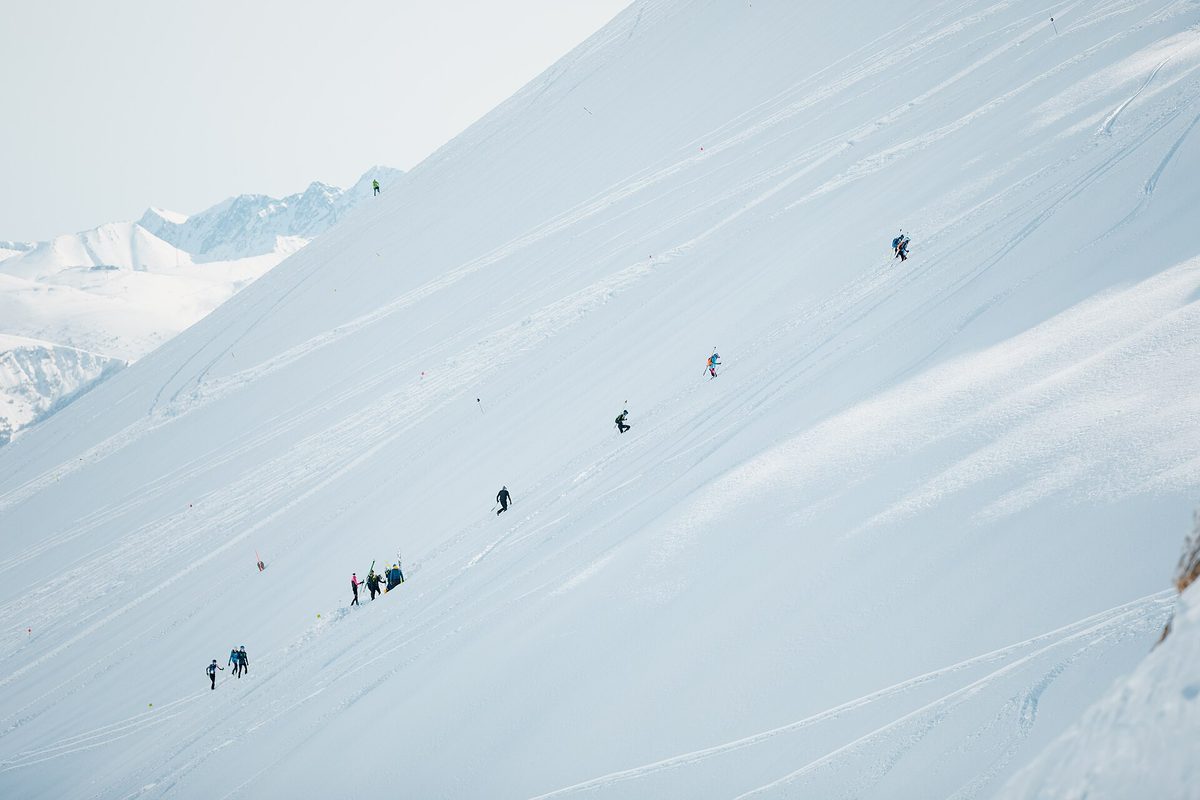
For a mid-size resort, the non-ski menu here is deep, which is exactly what mixed groups and families with a non-skier in tow need. The snow garden is the headline for the youngest — a safe, playful first-contact zone that treats snow as a playground rather than a classroom. Beyond it, the resort runs a genuinely long list of activities: airboarding (belly-down sledging on an inflatable, the sort of thing teenagers love), snowshoe trails out into the quiet forest, ski-touring routes for the fit, tobogganing and snow-tubing, snowmobile circuits, zip lines, and guided night excursions by tracked vehicle. There’s even scope for the exotic — ice diving in the mountain lakes turns up on the activity list for the properly adventurous.
It’s worth saying that Pal is also one of the great summer mountain-bike destinations in southern Europe, with a serious downhill bike park once the snow melts — not relevant to a ski trip, but a sign of how much the operator invests in this hillside year-round. For the wider catalogue of what to do on a rest day or with non-skiers, see the guide to things to do in Andorra, and for the age-by-age family plan, the dedicated guide to Andorra with kids is the place to start.
Where to stay: La Massana or Arinsal village
Because the two hills have two different valley bases, “where to stay” is a real decision here, not a formality. The two obvious options have distinct personalities.
La Massana is the larger, more grown-up choice — a proper Andorran town, the second-biggest in the country, with the gondola into Pal lifting straight out of it, a good spread of restaurants and shops, and easy bus and road links to the capital ten minutes down the valley. It’s the pick if you want town life, choice of places to eat, and a base that doesn’t feel like a single-street ski stop. You ride the gondola up to Pal in the morning and back down at night, which is a small daily faff but a pleasant one.
Arinsal village sits higher up the valley at the foot of the bowl, and it’s the more classically “ski resort” base: a lively little strip of hotels, apartments and bars with lifts more or less on the doorstep, long popular with British package skiers and stag-and-hen groups, so its nightlife punches above the town’s size. It’s more convenient for the Arinsal lifts and has more energy after dark; it’s also smaller and less pretty than La Massana. A free ski bus links the two, plus La Massana, so wherever you land you can reach both sectors easily. For how this corner compares with Soldeu, El Tarter and the eastern bases, the full rundown is in the guide to where to stay in Andorra.
Getting to Pal-Arinsal
Pal-Arinsal has a geographical advantage over the eastern resorts: it’s the closest ski area to Andorra la Vella, only around 10 km up the valley from the capital, which makes combining skiing with the shopping and the thermal spa genuinely easy. There’s no airport or railway in Andorra itself — you arrive by road — but the drive in from the Spanish side reaches La Massana quickly without crossing the country.
From Barcelona (El Prat, the usual gateway) it’s roughly three hours by road; from Toulouse it’s a similar three hours but twistier over the mountains. Direct coaches serve Andorra from both airports and the capital, and once you’re in the country the cheap inter-town buses and the free resort ski bus mean you barely need a hire car. If you do drive, remember that from November to April you’re legally required to carry winter tyres or chains, and the mountain roads demand respect in a storm. The route-by-route detail — buses, transfers, border crossings — is in the guide to how to get to Andorra.
What a trip to Pal-Arinsal costs
Pal-Arinsal is where Andorra’s “cheaper than the Alps” reputation holds up well, particularly for families. Lift passes sit a little below the big Grandvalira tickets — an adult main-season day pass ran around €53 for 2025/26, with youth and child rates lower still (roughly €47.50 and €42 respectively at the window), and generous under-12 discounts that make family passes noticeably kinder than an Alpine equivalent. Book online and ahead to catch the better prices rather than paying walk-up at the ticket window in February.
The bigger savings, as ever in Andorra, come from the low-tax prices on food, drink and lessons, and from self-catering apartments that suit groups and families. Add the fact that a multi-day pass throws in two extra mountains, and a learning-focused family week here lands well below a comparable French or Swiss resort. For the full cost picture, including senior tiers and the booking tricks, see the guide to Andorra ski pass prices.
Pal-Arinsal vs the rest of Andorra: an honest verdict
Book Pal-Arinsal if you’re learning to ski, travelling with children, or moving as a mixed-ability group where not everyone is confident — this is the friendliest, least intimidating base in Andorra, with the best beginner provision, a superb children’s school, sheltered tree skiing on Pal for bad-weather days, and a deep bench of non-ski activities to keep the whole group happy. The two-mountain layout gives you more variety than the size suggests, and the whole thing is compact, calm and reasonably priced.
Look elsewhere if you’re a strong skier who measures a holiday in vertical metres and black runs. The steep marked terrain here is thin, and you’ll want the bigger canvas of Grandvalira or the freeride bowls of Ordino-Arcalis — though the beauty of the shared pass is that you can base here and steal those days, or base there and steal this one. If your priority is nightlife over teaching, the louder, higher Pas de la Casa is the honest pick, though Arinsal village holds its own after dark. For the full country-wide comparison and how every base fits together, start with the pillar guide to skiing in Andorra. Pal-Arinsal knows exactly what it is: the kind, patient, family-first side of Andorran skiing. If that’s the trip you’re planning, you won’t find a better place to take it.
Pal-Arinsal: frequently asked questions
Is Pal-Arinsal good for beginners?
Yes — it’s the most beginner-friendly resort in Andorra. Both sectors have dedicated, roped-off learning zones on reliable high-altitude snow, plus wide confidence-building blues to progress onto and a ski school built around teaching first-timers with plenty of English-speaking instructors. The gentle, sheltered tree runs on the Pal side are especially forgiving for nervous adults.
Pal or Arinsal — which is better?
They suit different days. Pal is the tree mountain: wide, sheltered, gentle blues that are ideal for beginners, families and bad weather. Arinsal is the higher open bowl with the snowpark and Andorra’s biggest vertical, better for intermediates who want to stretch out. A cable car links them on one pass, so most people ski both — start on Pal if you’re learning.
Is Pal-Arinsal on the Grandvalira pass?
Effectively, yes. Pal-Arinsal is run by Grandvalira Resorts, and a multi-day Grandvalira ticket already covers it (plus Ordino-Arcalis) at no extra cost, making it a three-mountain pass. If you’re only skiing the northern hills, the cheaper Nord Pass covers Pal-Arinsal and Ordino-Arcalis. North American Ikon Pass holders also get days here.
Is Pal-Arinsal good for families?
It’s the best family base in Andorra. The snow gardens take children from age three, the ski school is geared to kids, the terrain is gentle and sheltered, and the non-ski menu — airboarding, tubing, snowshoeing, night excursions — keeps mixed groups busy. Child lift-pass discounts and self-catering apartments make it kinder on the family budget than most Alpine resorts.
How big is Pal-Arinsal?
Pal-Arinsal has around 63 km of pistes across roughly 44 marked runs, making it the second-largest ski area in Andorra after Grandvalira. It spans two linked sectors between 1,550 m and 2,537 m, and the Arinsal side holds Andorra’s biggest single vertical drop — up to about 1,010 m top to bottom when snow cover reaches the valley base.
Where is Pal-Arinsal and how do I get there?
Pal-Arinsal is in the La Massana valley in north-west Andorra, only about 10 km from the capital, Andorra la Vella — the closest ski area to the city. There’s no airport or railway in Andorra; you arrive by road, roughly three hours from either Barcelona or Toulouse, with direct coaches from both airports and a free ski bus linking La Massana, Pal and Arinsal.
Does Pal-Arinsal have a snowpark?
Yes — the snowpark is on the Arinsal side and is one of the better-known freestyle setups in the southern Pyrenees. It’s built in graded zones so nervous first-timers and confident riders each get suitable features. Combined with wide groomed pistes that suit boarding, it makes Pal-Arinsal a good, unintimidating place to learn or progress in the park.
Is Pal-Arinsal worth it for expert skiers?
For a day or two, not a week. The marked steep terrain is limited — only around one run in ten is a true black — so strong skiers exhaust the challenge quickly. The fix is the shared pass: add a day at the wilder Ordino-Arcalis for freeride, or base at Grandvalira for bigger mileage and treat Pal-Arinsal as a friendly side trip.
Planning the rest of the trip? Pair this with the pillar guide to skiing in Andorra, then read up on neighbouring Arinsal village, the freeride hill at Ordino-Arcalis, and the practical detail in learning to ski in Andorra.
Photo credits
All photographs are from Wikimedia Commons under their stated licences, with thanks to the photographers:


