Last updated: 11 June 2026
Andorra with kids is one of the easiest family trips in Europe: a 468 km² mountain country where the world’s longest toboggan run, ski schools that take children from age three, a thermal spa with its own kids’ zone, and stroller-friendly valley walks all sit within a 40-minute drive of each other. It works in winter and summer — you just pack differently.
I have now done Andorra with a pram, with a snowplough-ing five-year-old, and with a pair of teenagers who wanted Wi-Fi and a zip line in roughly that order. It handled all three. That is the quiet superpower of this place: because the whole principality is smaller than many city metro areas, you are never committing the day to one thing. You can ski in the morning, melt into a warm pool by mid-afternoon, and be eating grilled lamb in a 400-year-old stone barn by seven, all without anyone having a car-seat meltdown longer than twenty minutes.
This is the family lens on the whole country — the gentlest ski schools, the adventure parks ranked by age, the spa rules nobody explains until you are at the turnstile, and the honest cautions about what not to bother with when your kids are small. If you want the full firehose of options, our guide to things to do in Andorra covers the grown-up version; this one is built for travelling with short legs and shorter attention spans. Consider it the family holiday playbook I wish someone had handed me the first time.
Is Andorra good for kids? The honest answer
Yes — genuinely, not in the brochure way. Three things make Andorra unusually good for families, and one thing makes it occasionally annoying. I will give you all four so you can plan around the annoying one.
First, everything is close. Andorra is 25 km top to bottom. The drive from the southern border to the northern ski lifts is under an hour, and most family attractions cluster along the central valley road. With kids, proximity is everything: a 15-minute transfer between the pool and the hotel is the difference between a good day and a tantrum.
Second, the country is built around outdoor activity, and it has quietly engineered a lot of it for children. The ski resorts run snow gardens for three-year-olds. The summer adventure parks have age-banded tickets. There is a children’s spa. There are seven cartoon mascots hidden across the country as a summer treasure hunt. This is not a place that tolerates kids; it actively courts them, because family ski weeks and summer breaks are a huge slice of its 9.6 million annual visitors.
Third, it is safe, clean and easy. Crime is negligible, tap water comes off the mountains, restaurants expect children, and the altitude (the capital sits at 1,023 m) is high enough to be crisp but low enough that altitude sickness is a non-issue for almost everyone below the very top lifts.
And the annoying thing? There is no airport and no train. Every single family arrives by road, up a mountain, on roads that switchback. If your child gets carsick, this is your one real planning problem, and I will deal with it properly further down. Forewarned, it is entirely manageable. Ambushed at hairpin number forty with no plastic bag, it is not.
Andorra with kids, by age band: what actually works
The single most useful thing I can tell you is that Andorra changes character completely depending on your youngest child’s age. What’s magic for a seven-year-old is a logistical slog with a one-year-old. Here is the candid version, age by age.
Babies and toddlers (0–2). Honestly? Andorra is fine but not its best self here. The terrain is steep, so prams want flat valley paths (there are good ones — see the Rec del Solà below). Caldea‘s main lagoons take children only from age five, so the spa is off the table for the littlest. The wins at this age are simple: snow as a novelty, easy stroller walks, warm hotel pools, and the fact that mountain restaurants are relaxed about babies. Skip the lift-served stuff and keep it gentle.
Pre-schoolers (3–6). This is where Andorra clicks. Three is the magic number: ski schools take them, the children’s spa takes them, and the adventure parks have little-kid zones. A four-year-old can have a genuinely brilliant first ski lesson here. Expect short attention spans and build the day around one big thing plus a pool.
Primary age (7–11). The sweet spot. They are tall enough for the Tobotronc (the 1.20 m height bar is the gatekeeper of half the country’s fun), brave enough for zip lines, strong enough for a two-hour lake walk, and they ski properly now. Almost everything in this guide is aimed squarely at this band.
Teenagers (12+). Better than you’d fear. Andorra leans into the adrenaline that teens want — a top-five European bike park, via ferrata, a 603-metre suspension bridge, freeride ski terrain. The trick with teens is to let them pick the scary thing and then quietly enjoy the spa while they do it.
| Age band | Best bets | What to skip | Ski-school option |
|---|---|---|---|
| 0–2 | Valley stroller walks, snow play, hotel pools | Caldea lagoons, Tobotronc, long transfers | None yet |
| 3–6 | Snow garden ski lessons, Likids spa, Mon(t) Magic | High zip lines, Tibetan Bridge, long hikes | Snow Garden (from age 3) |
| 7–11 | Tobotronc, ski lessons, lake hikes, bike park | Very little — this is the golden age | Kids’ Program (6–11) |
| 12+ | Bike park, via ferrata, Tibetan Bridge, freeride | The gentle stuff aimed at littles | Teen/adult lessons |
The one thing you can’t skip: Naturland and the Tobotronc
If you do exactly one organised thing in Andorra with children, make it the Tobotronc at Naturland. It is the longest alpine slide in the world — 5.3 kilometres of stainless-steel toboggan track that snakes 400 metres down through pine forest while you control the speed with a lever. Children ride free of charge in the sense that they ride tucked in front of an adult, and the look on a seven-year-old’s face at the bottom is the single best souvenir Andorra sells.
The practical details matter here, because the height rule catches people out. To ride the Tobotronc you must be at least 1.20 m tall, and anyone under 14 has to ride with an adult over 18 (maximum 160 kg per sled, so one grown-up plus one child is the standard combo). If your child is under that 1.20 m line, they can still ride sharing the sled with you — it’s the solo ride that’s height-gated.
Naturland sits up at La Rabassa in the southern parish of Sant Julià de Lòria, around 2,000 m, and it is a whole day, not a single ride. The 2026 Adventure ticket runs €42 for adults and €32 for children, and it bundles the Tobotronc with the Airtrekk (a balance circuit strung 13 metres up in the trees), a zip line, archery, tubing, a maze and the Squirrel Circuit. For the smallest visitors there are gentler versions — Tubing Kids and the Airtrekkids mini zip line — plus a petting farm and pedal buggies. The park opens around 10:00 to 18:00 in season; buy Tobotronc slots online in advance because the queue is the only thing that can spoil the day.
Naturland is the headline, but the same trick — a ski resort that turns into an adventure park the moment the snow melts — repeats all over the country. I’ve broken down the full menu in our guide to adventure activities in Andorra, but for families the three names to know are Naturland in the south, Mon(t) Magic at Canillo, and the Pal Arinsal bike park in the west. More on each in the summer section.
Summer in Andorra with kids: when the mountains become a playground
Summer is, for my money, the easiest season to bring children to Andorra, and the most underrated. The ski lifts that cost a fortune in February turn into cheap up-and-down access to high meadows, and every resort spins up a different flavour of adventure park from roughly mid-June to mid-September. The weather is kind — warm days, cool nights, far less of the relentless heat that has families fleeing the Spanish coast.
At Canillo, the headline act for younger kids is Mon(t) Magic Family Park, a hillside of zip lines, trampolines and balance circuits aimed at the 4-to-10 crowd, reached by the Canillo cable car. It’s lower-commitment than Naturland — an afternoon rather than a full day — and pairs perfectly with the village’s other two attractions, which I’ll come to. Over in the west, the Pal Arinsal bike park is the serious one: a genuinely good gravity-and-trail network that ranks among Europe’s best, with green flow lines for nervous beginners and uplift so nobody has to pedal back up. If you have a bike-obsessed nine-year-old, this is your week sorted.
For the brave (and tall), the Tibetan Bridge of Canillo is the country’s most photographed thrill: a 603-metre footbridge strung 158 metres above the Vall del Riu, a metre wide, swaying gently as you cross. There’s no hard minimum age — under-fives go free and must be accompanied — but this is entirely a nerve question, not an age one. I’ve seen unbothered eight-year-olds skip across and grown adults turn green halfway. You reach it by shuttle bus from Canillo village or the Roc del Quer car park; do not promise a wavering child they’ll love it until you’ve seen the drop yourself.
The gentlest summer joy costs nothing organised at all. Andorra’s tourism board hides seven cartoon “Tamarro” characters — one in each parish — as a nationwide summer treasure hunt, and runs a series of themed Macarulla story-trails where short, easy walks come wrapped in a tale about a mischievous forest creature or a witch’s potion. For a five-year-old, “we’re hunting a Tamarro” beats “we’re going for a hike” every single time. It is the smartest piece of family tourism design in the country, and it’s free.

If you want to time a summer trip well, late June and early September are the brackets I’d fight for — school-holiday prices haven’t fully spiked and the trails are quiet. Our month-by-month breakdown of the best time to visit Andorra goes deeper on the trade-offs, but the family short version is: July and August are warmest and busiest, June and September are the value sweet spots, and the Cirque du Soleil summer residency (more below) is a August-weighted bonus.
Learning to ski: Andorra with kids in winter
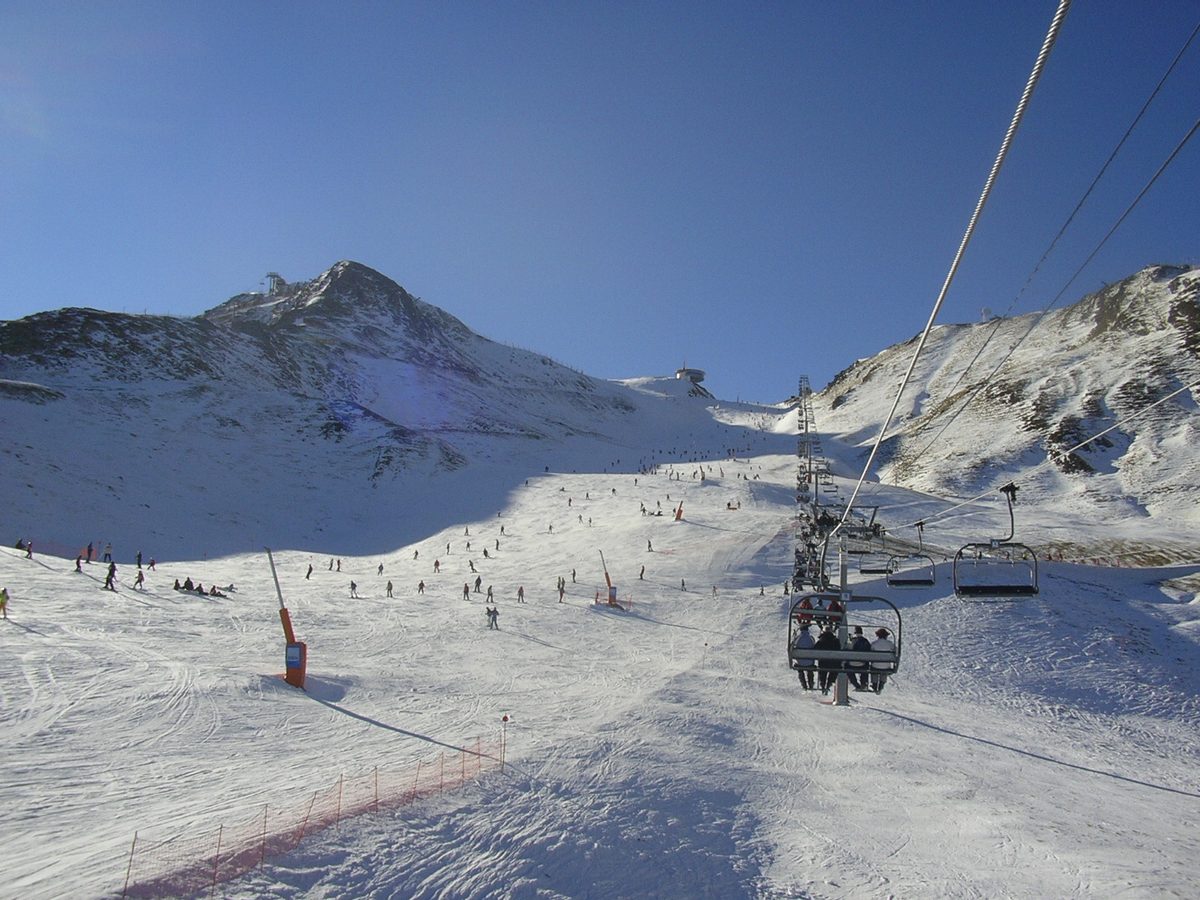
Andorra built its reputation on ski schools, and it is, hand on heart, one of the best places in Europe to teach a child to ski. The instruction is excellent and largely English-speaking, the beginner areas are wide and gentle, and the lift-and-lesson prices undercut the marquee Alpine resorts by a meaningful margin. If your family’s whole reason for coming is the snow, our full guide to skiing in Andorra compares every resort; here’s the family-specific cut.
The key fact: Grandvalira‘s ski schools take children from age three in dedicated “snow gardens” — fenced, gentle nursery areas with magic-carpet lifts where three-year-olds get an introduction to snow and four-to-five-year-olds get proper, playful lessons. There are six of them, at Canillo, El Tarter, Soldeu, Grau Roig, Pas de la Casa and Encamp. From age six, children move up to the Kids’ Program proper. The two sectors I steer families toward are Canillo and El Tarter: they’re the calmest ends of the giant Grandvalira domain, the snow gardens are well run, and El Tarter in particular is a quieter, better-value base than buzzy Soldeu.
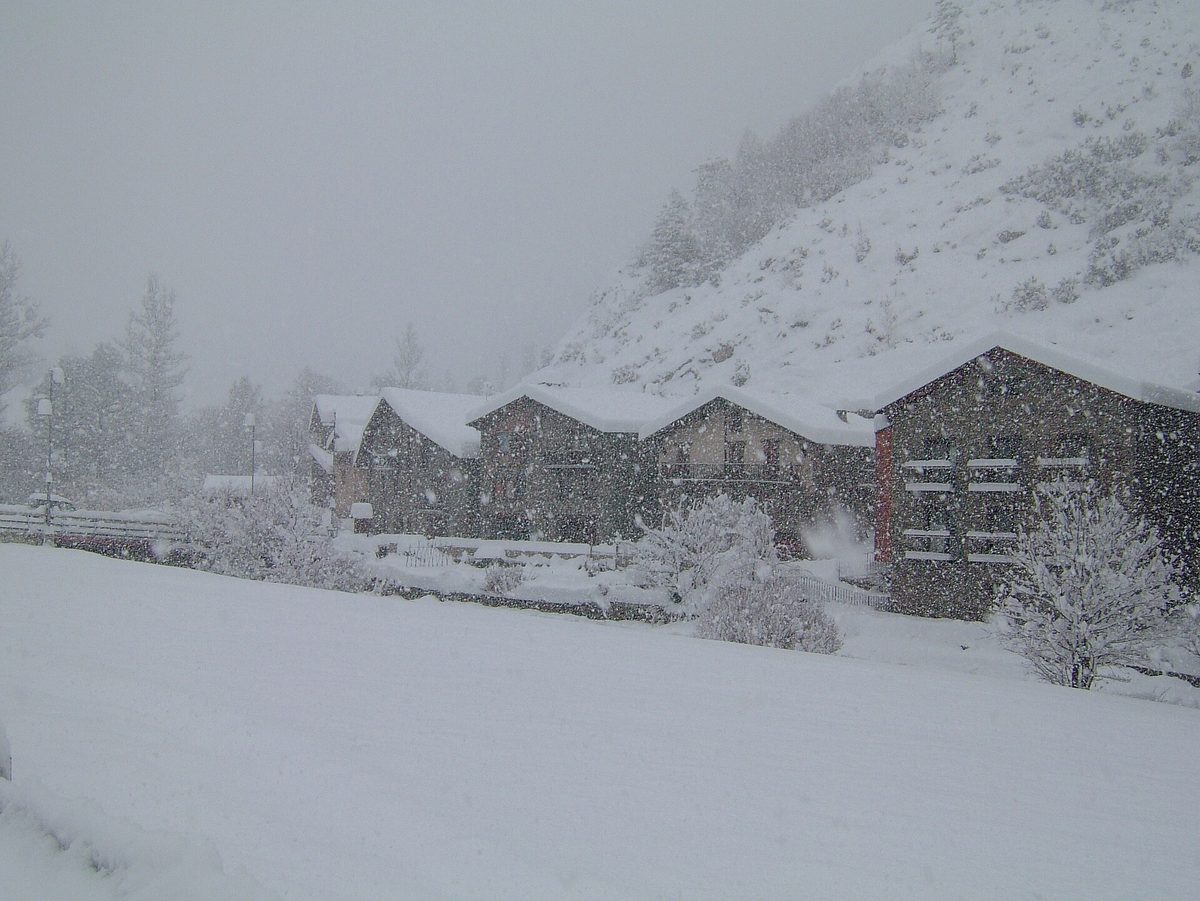
A word of realism about ski-week logistics with small children: the morning shuffle of boots, helmets, gloves and lift passes is genuinely hard work, and the lessons are typically three hours. My advice is to book the children into morning group lessons, ski as a couple in shifts or together while they’re supervised, and treat the afternoon as pool-and-hot-chocolate time rather than forcing more slopes. Burned-out kids do not become keen skiers. Beyond the big resort, Naturland runs a lovely low-key cross-country area and snow play up at La Rabassa, and most resorts offer sledding, snowshoe trails and tubing for the days when nobody wants another lesson.
Caldea and the children’s spa: the rainy-day ace

Here is the move that separates people who’ve done Andorra from people who haven’t: when the weather turns, or when everyone’s legs are done, you go to the water. Caldea, in Escaldes-Engordany, is the largest thermal spa in southern Europe — a science-fiction glass spire full of warm indoor and outdoor lagoons fed by hot springs — and crucially for families, it runs a dedicated children’s offer that most spas wouldn’t dream of.
The rules are specific, so let me save you the confusion at the desk. The standard Classic entry (around €30.50 for three hours) admits children from age five, and gives the whole family the big indoor and outdoor lagoons, the panoramic lagoon and the Indo-Roman baths. Separately, there is Likids, a children’s spa exclusively for ages three to eight — guided water games, a soft “beach”, and gentle beauty treatments run by specialist supervisors. Three-and four-year-olds can access Likids only; five-to-eight-year-olds get Likids plus the Classic lagoons. Under-fives go free.
Two things nobody tells you. One: parents do not go into the Likids children’s spa with their kids — but it opens directly onto the main lagoon so you can see them the whole time, and the instructors carry a pager so you’re reachable. It is, in effect, an hour of supervised fun for the children and an hour of actual warm-water peace for you. Two: anyone under 1.30 m must wear the armbands Caldea provides, and in the water areas it’s one adult per two under-15s. And a clear warning — Inúu, the adjoining adults-only wellness centre, is 16+. Do not book Inúu expecting to bring the kids; it is the one part of the complex designed for escaping them.
Easy walks and slow family days
Not every day needs a ticket. Some of the best hours we’ve had in Andorra cost nothing and asked very little of small legs. The country is 90% mountain, but it has more gentle, walkable terrain than its dramatic skyline suggests — you just have to know where the flat bits are.
The standout for prams and toddlers is the Rec del Solà, a flat, wide canal path that contours along the sunny hillside above Andorra la Vella. It’s a couple of easy kilometres, mostly level, with city views the whole way, and you can do as much or as little as the youngest member allows before turning back. For families with primary-age kids who can manage a real walk, the Tristaina lakes circuit near Ordino-Arcalís links three alpine lakes in about two and a half leisurely hours and feels genuinely high-mountain without being technical. Lake Engolasters, an easy loop around a forest-rimmed reservoir reachable by road, is the reliable middle option.
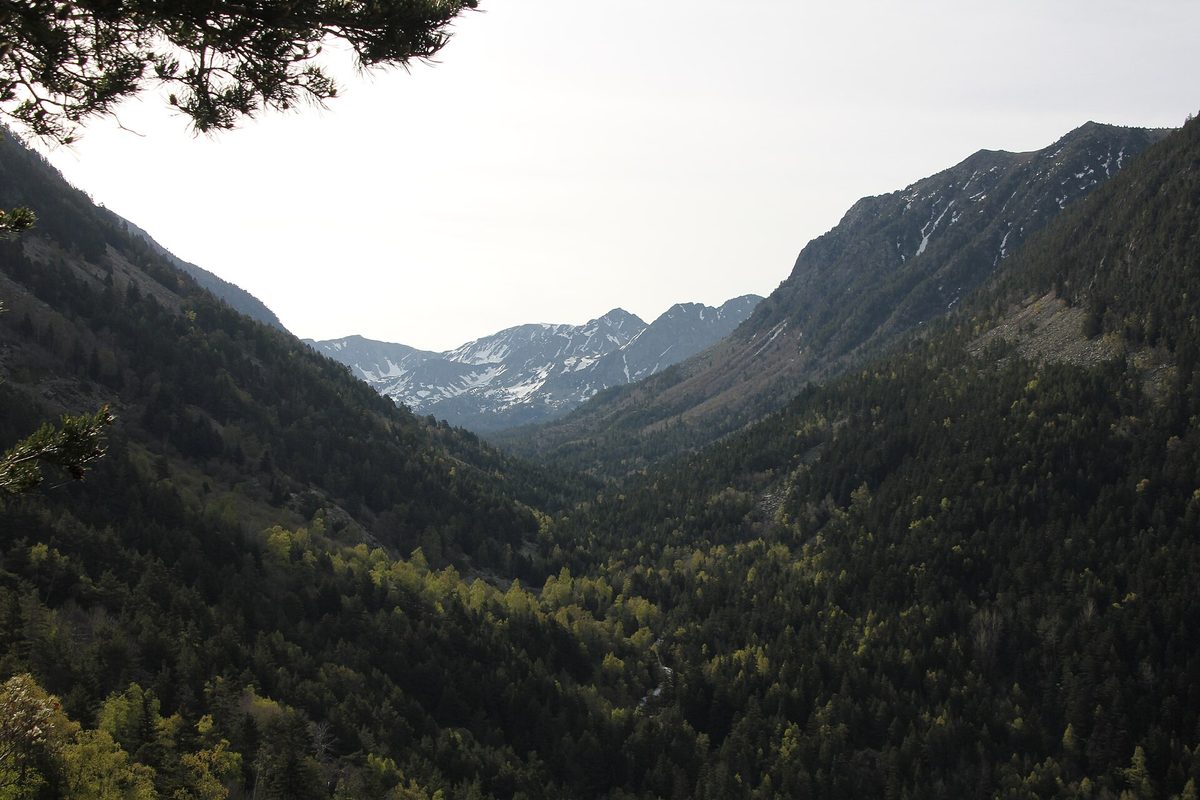
I keep coming back to the Macarulla story-trails and the Tamarro hunt here, because they convert a “walk” into an “adventure” with zero extra cost or kit, and the photogenic UNESCO-listed Madriu-Perafita-Claror valley — a whole glacial valley with no road through it — is there for older kids and parents who want the real thing. For the complete trail-by-trail picture across every ability level, our dedicated hiking guide goes much deeper; for families the rule of thumb is simple: pick lake destinations (kids need a payoff they can see), start early, and pack twice the snacks you think you need.
Rainy days and town days: Andorra la Vella, ice and museums
Mountains make their own weather, and sooner or later you’ll get a wet morning. Andorra is unusually well stocked with indoor escape hatches, which is a large part of why it works as a family destination at all.
The first is the Palau de Gel in Canillo — an ice palace with a year-round skating rink, an indoor climbing wall, and best of all for younger children the “Splash!” water-slide and pool area for ages 3 to 12. It is the single most weatherproof building in the country and a guaranteed afternoon-saver. The second is Caldea, covered above. The third is the capital itself.
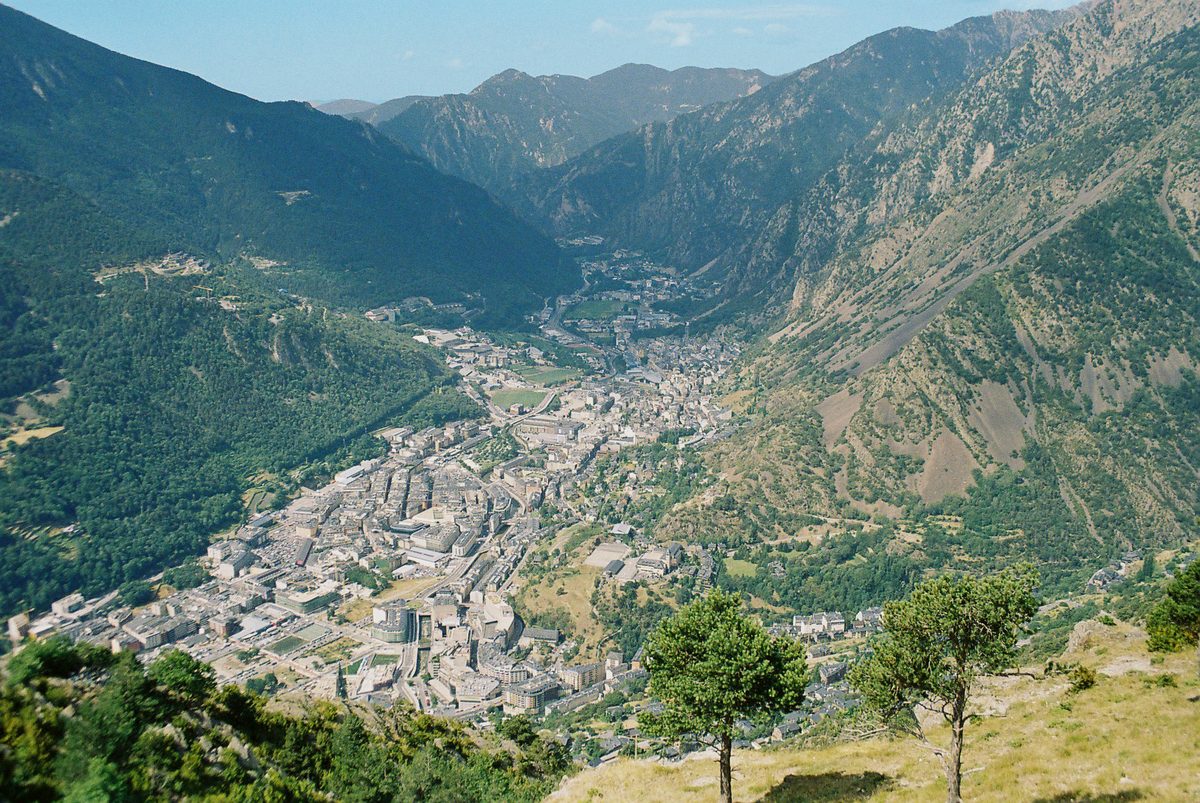
I’ll be straight with you, as our guide to Andorra la Vella is: the capital is a two-hour town, not a two-day one. With kids, that’s fine — you’re there for the practical stuff and a bit of wandering, not a cultural marathon. The old quarter (Barri Antic) is small, walkable and genuinely charming for a stroll; the riverside is pleasant; and the town is wall-to-wall shops. Which brings up the other rainy-day reality: shopping. Andorra is a duty-free country, and a wet afternoon can quite happily become a browse for cut-price trainers, ski kit and electronics. Our shopping in Andorra guide explains what’s actually cheaper (perfume and electronics, mostly) and what isn’t, so you don’t haul home “bargains” that weren’t.
For pure rainy-day novelty, Andorra has a cluster of small, oddball museums kids tend to like more than you’d expect: the Automobile Museum in Encamp, a Motorcycle Museum, and a Miniature Museum whose entire conceit is works of art small enough to need a magnifying glass. None is a half-day, but stitched together with lunch they rescue a washout.
Eating out with kids in Andorra
Mountain-Catalan food is, conveniently, exactly the kind of food children eat without negotiation: grilled meats, good bread, melted cheese, potatoes in several formats. Restaurants here are relaxed and welcoming about children in a way that feels genuinely Mediterranean — nobody blinks at a toddler, kitchens are happy to do a plain plate, and the rhythm of long lunches suits families who’ve been up a mountain since eight.
The dish to order for the table is trinxat, a cabbage-and-potato hash crisped with bacon that is essentially a mountain comfort blanket, and any of the grilled meats from a borda (a converted stone barn) will please the carnivores. Our guide to Andorran food has the full menu, but with kids the practical notes are: lunch is the big meal and runs roughly 1–3 pm, dinner starts late by northern-European standards (8 pm onward), and most mid-range places have a menú del dia — a fixed-price multi-course lunch — that’s the best value in the country and usually flexible for children.
Where to stay in Andorra with a family
Pick your base around your priority, because in a country this small you’ll day-trip to everything else anyway. The honest family comparison — which we go into base by base in our dedicated where-to-stay guide — looks like this:
| Base | Best for families who want… | Trade-off |
|---|---|---|
| Canillo | Mon(t) Magic, Palau de Gel, the Tibetan Bridge and a calm village feel | Quieter evenings; you’ll drive to bigger shops |
| El Tarter / Soldeu | Ski-in/ski-out winter weeks and the best snow gardens | Pricier in peak ski season; sleepy in summer |
| La Massana / Arinsal | The bike park, Pal Arinsal lifts and good-value family apartments | Less polished than Soldeu; west of the action |
| Escaldes-Engordany | Caldea on the doorstep plus the capital’s shops and restaurants | Town setting, not a ski village |
| Sant Julià de Lòria | Closest to Naturland and the Spanish border | Lowest and least scenic of the bases |
My default recommendation for a first family trip that isn’t purely about skiing is Canillo: it stacks three child-friendly attractions in one village, has a relaxed feel, and sits centrally enough that nothing is more than half an hour away. For a dedicated ski week with young learners, El Tarter. For a spa-and-shopping-leaning trip with little ones, Escaldes, so Caldea is a five-minute walk rather than a drive at the end of a tired day.
Getting to Andorra with kids (the no-airport problem, solved)
This is the one piece of Andorra logistics that genuinely needs thought with children, so let’s deal with it head-on. Andorra has no airport and no railway. Every family arrives by road, climbing a mountain valley on roads that switchback for the final stretch. Our complete how to get to Andorra guide covers every route in detail, but here is the family-specific advice.
Most families fly into Barcelona and cover the last leg by road — roughly three hours — either in a hire car or on the direct coach (Andorra Direct Bus runs from Barcelona airport and city). Toulouse is the quieter alternative at about two and a half to three hours and a gentler final climb. If you’re driving, the single most important thing is to confirm car seats in advance — if you’re hiring, reserve the right seats explicitly, and if you’re coaching it, check the operator’s policy, because mountain coaches and toddler car-seat law don’t always align neatly.
And the carsickness. The last 30–45 minutes into Andorra is genuinely winding. If anyone in your family is prone, plan for it the way you’d plan for weather: travel-sickness bands or medication if you use them, a front-ish seat with a horizon to watch, a stop at the border, light food not an empty stomach, and — non-negotiable — spare bags within arm’s reach. Do this and the drive is a beautiful mountain ascent. Ignore it and it’s the bit of the holiday everyone remembers for the wrong reason.
Once you’re in, you may barely need the car. The national bus network is cheap and links the valley towns, and within a single resort or town everything is walkable. Many families park the car for the week and use buses plus the odd taxi, which removes the daily mountain-driving stress entirely.
The practical stuff: money, phones and altitude
A few micro-state quirks are worth knowing before you go, all covered in depth in our Andorra travel tips guide. The currency is the euro even though Andorra isn’t in the EU, so no money to change if you’re coming from the Eurozone. Because it’s outside the EU, though, mobile roaming is not covered by EU “roam-like-at-home” rules — data can get expensive, so check your plan or buy a local/eSIM option, a small thing that matters more when you’ve got kids and are relying on maps and messaging. Pharmacies are excellent and widespread for the usual family mishaps. And altitude: the capital is at 1,023 m and resorts climb toward 2,640 m, which for the vast majority of children means nothing worse than getting tired and sunburnt faster — pack high-factor sun cream (snow and altitude double the burn) and push water.
Sample family days that actually flow
The mistake first-timers make is overstuffing the day. With Andorra’s tininess, you don’t need to — one anchor activity plus water or food is a full, happy day. Here are three that have worked for us, scalable to your kids’ ages.
The classic summer day: Naturland in the morning (be there for opening to beat the Tobotronc queue), a long picnic lunch up at La Rabassa, then back down to the hotel pool by mid-afternoon. One big thrill, one calm wind-down. Do not also try to fit in the Tibetan Bridge; save it for tomorrow.
The classic winter day: drop the kids at a morning snow-garden lesson in El Tarter, ski as adults while they learn, regroup for a long mountain lunch, an easy family run or sledge in the early afternoon, then Caldea or the hotel pool to thaw. Hot chocolate is mandatory.
The rainy-day rescue: Palau de Gel in Canillo for skating and the Splash pool in the morning, lunch in town, then either Caldea or a museum-and-shopping wander in the capital. You will not notice the rain. For more ways to assemble days into a full trip, our things to do in Andorra hub is the place to browse.
What a family trip costs
Andorra is mid-priced — cheaper than the marquee Alps, dearer than rural Spain. Here’s a rough per-activity guide for 2026 so you can budget without nasty surprises. Prices are per person unless noted and should be re-checked at booking, as operators adjust seasonally.
| Activity | Indicative 2026 price | Ages / notes |
|---|---|---|
| Naturland Adventure ticket | €42 adult / €32 child | Tobotronc needs 1.20 m height |
| Caldea Classic (3 hrs) | from ~€30.50 | Age 5+; under-5s free |
| Caldea Likids children’s spa | check current rate | Ages 3–8 only |
| Children’s ski lesson + snow garden | varies by package | From age 3 |
| Palau de Gel (skating / Splash) | budget day rate | Splash pool ages 3–12 |
| Tibetan Bridge of Canillo | low ticket + shuttle | Free under 5, accompanied |
| Menú del dia lunch | ~€15–20 adult | Kids’ portions usually flexible |
What I’d skip with young kids
Honesty is the point of this site, so here are the things I would not prioritise when travelling with small children, and why. The Tibetan Bridge with under-sevens: it’s a genuine 158-metre drop and a long, exposed crossing — magnificent for confident older kids, potentially miserable for a nervous little one, and there’s no turning back in the middle. Inúu, as covered, is 16+ and pointless to attempt as a family. Long, viewless ridge hikes: Andorra has serious mountain walks, but children need a destination they can see — a lake, a refuge, a summit cairn — so save the big traverses for when they’re older. And over-scheduling: the single biggest mistake is treating a tiny country as a reason to cram three attractions into a day. The country’s size is a gift that lets you do less, not more. One marquee thing plus water beats three rushed tickets every time. For the wider menu of adrenaline options when the kids are ready, our adventure activities guide ranks them all.
A bonus for summer visitors: Cirque du Soleil
One genuinely special seasonal draw is worth planning around if you’re here in high summer. Each year Andorra hosts a Cirque du Soleil residency — in 2026 it runs as “Ràdio Andorra by Cirque du Soleil” from 3 July to 2 August — a full big-top production staged in the mountains. It’s the rare cultural event that genuinely lands with both children and adults, and tickets for the good dates go early. If your trip overlaps, build a day around it.
Frequently asked questions about Andorra with kids
Is Andorra good for kids?
Very. It’s compact (so transfers are short), safe and clean, and a remarkable amount of its outdoor offering — ski schools from age three, age-banded adventure parks, a children’s spa, free treasure-hunt trails — is purpose-built for children. The only real friction is getting there, since there’s no airport or train and the final roads wind.
How many days do you need in Andorra with kids?
For a summer or mixed trip, three to four days hits the sweet spot: enough for one big adventure park, a slow walk day, a town-and-water day, and a spare day for weather. A dedicated ski week obviously runs longer. Because everything is close, you pack a lot into each day without long drives, so even a long weekend feels substantial.
What’s the minimum age for the Tobotronc at Naturland?
There’s no fixed age, but there is a height rule: riders must be at least 1.20 m tall to ride alone, and anyone under 14 must share the sled with an adult over 18. Smaller children ride tucked in front of a parent, so almost everyone can go — it’s the solo ride that’s height-gated.
Can children go to Caldea spa?
Yes. The Classic entry admits children from age five into the main lagoons, and the dedicated Likids children’s spa runs for ages three to eight. Under-fives are free. Note that the adults-only Inúu centre is 16+, anyone under 1.30 m must wear Caldea-provided armbands, and the ratio in the water is one adult per two under-15s.
What’s the best ski resort in Andorra for families?
For young learners, the Canillo and El Tarter sectors of Grandvalira are the calmest and best-organised, with excellent snow gardens taking children from age three. El Tarter is a particularly good-value family base. Our full skiing in Andorra guide compares every resort in detail.
Is Andorra good for toddlers and babies?
It’s fine rather than ideal for the under-threes. The wins are snow as novelty, flat valley walks like the Rec del Solà, and warm hotel pools; the limits are that Caldea’s lagoons start at age five and the steep terrain favours carriers over prams away from the main paths. Families with a baby plus an older child do well — the older one fills the days.
What is there to do in Andorra with kids when it rains?
Plenty, which is why the country works. The Palau de Gel in Canillo (ice rink plus the Splash pool for ages 3–12), Caldea’s thermal lagoons, the capital’s shops and small museums, and a long Catalan lunch will all comfortably absorb a wet day.
Do you need a car in Andorra with kids?
Not necessarily. The national bus network is cheap and links the valley towns, and within any single resort or town you can walk. Many families take the coach from Barcelona, then rely on buses and the odd taxi, which removes daily mountain driving. If you do hire a car, reserve the correct child seats explicitly in advance.
Related Andorra travel guides
Keep planning your trip with my other in-depth Andorra guides — including Andorra’s villages, a day-by-day itinerary, and the history of Andorra.
Photo credits
All images are used under their respective Creative Commons or public-domain licences via Wikimedia Commons: skiing at Grandvalira/Pas de la Casa — Carlesmari (CC BY 3.0); Andorra la Vella — Kimdime69 (public domain); Madriu-Perafita-Claror valley — Ferran Llorens (CC BY-SA 2.0); Sant Joan de Caselles, Canillo — Krzysztof Golik (CC BY-SA 4.0); snowfall near Ordino — Ansalonga (CC BY-SA 3.0); Andorran mountain lakes — Sprok (CC BY-SA 3.0).