The first time I walked out onto the Roc del Quer, I got about halfway along the steel and then stopped, mid-stride, because my inner ear had quietly filed a complaint. Ahead of me the walkway simply ran out of mountain — the ground fell away, the valley opened up, and there was a man sitting on the very end of a girder with his chin on his fist, staring into 500 metres of thin Pyrenean air as if the drop were a mildly interesting problem. He is made of iron. I was not. He looked a lot calmer than I felt.
Roc del Quer is a cantilevered viewpoint above the village of Canillo in Andorra, where a 20-metre steel walkway juts 12 metres out over the Vall del Riu — the last stretch part glass-floored — with a famous seated sculpture, “The Thinker”, perched on the beam over roughly 500 metres of drop. It sits at around 1,900 m altitude and is a short, dramatic stop for anyone with a car, a head for heights, and half an hour to spare.
Last updated: July 2026. Prices, opening seasons and hours at the Roc del Quer change year to year and the access road can close in snow, so treat every figure here as a well-informed starting point and check the official Canillo tourism and Pont Tibetà sites before you drive up.
Roc del Quer at a glance
If you read nothing else, read this. Here’s the shape of the visit before we get into the detail.
| Detail | What to expect |
|---|---|
| What it is | A cantilevered metal viewpoint (mirador) with a glass-floor section and “The Thinker” sculpture |
| Where | Above Canillo, one of Andorra’s high eastern parishes, on the Coll d’Ordino / Montaup road |
| Altitude | Around 1,900 m (roughly 1,913 m by most sources) |
| The platform | 20 m long; 8 m on solid rock, 12 m projecting over the void; about 500 m of drop below |
| How to get there | Car only, via the CS-240 (Carretera de Montaup) toward Coll d’Ordino, km 6.5; free car park |
| Walk from car park | Around 5-10 minutes on a made path |
| Entry | A small fee in the staffed season, around EUR 5-6 adults (check current price); a combined Tibetan Bridge + viewpoint ticket exists |
| Opening | Historically roughly June to November, staffed hours near 10:00-17:00; outside that, access depends on the road and snow — verify |
| Best time | Sunrise, late afternoon and sunset; clear days for the long valley view; night for stars |
| Good for | Photographers, families with older kids, anyone touring by car; not for serious vertigo |
The very short version: it’s one of the easiest big-payoff stops in the country, it costs about the price of a coffee and a pastry, and it turns an ordinary drive between the ski valleys into something you’ll actually remember. It also pairs perfectly with the Tibetan Bridge next door, which I’ll come back to. If you’re still building your list, this is one of the standout things to do in Andorra that doesn’t involve a lift pass or a hiking boot.

What the Roc del Quer viewpoint actually is
Strip away the marketing and the Roc del Quer viewpoint — mirador Roc del Quer, to give it its local name — is a clever bit of engineering bolted to a cliff. For years this spot had nothing but a couple of wooden benches and a very good view. Then in 2016 Canillo spent something like EUR 400,000 rebuilding it, and the result opened on 2 July that year: a 20-metre cantilevered walkway, eight metres of it anchored on solid ground and the other twelve reaching straight out into nothing.
The trick is in that projecting section. As you walk, the handrails narrow and the last stretch of floor turns to glass, so the ground you can see is no longer the path under your feet but the valley bottom several hundred metres below. Your brain knows the steel is rated for it. Your knees are less convinced. That gap between what you know and what you feel is the entire point of the place, and it’s why people who claim to hate heights end up shuffling out anyway, phone held at arm’s length, grinning like idiots.
At the tip sits the sculpture everyone comes for: a seated iron figure known as “El Pensador” — The Thinker — hunched on the end of the beam in a clear nod to Rodin, gazing out over the drop. It’s the work of Miguel Angel Gonzalez, an Argentine-born sculptor long based in Lleida, just across the border in Catalonia (you’ll see him described as both Argentine and Catalan, and honestly both are fair). The figure is roughly three metres of steel and over a tonne in weight, which is reassuring when you realise the money shot involves standing behind him with the valley yawning beyond.
Why the Roc del Quer viewpoint is worth the detour
Plenty of places in the Pyrenees have a good view. What Roc del Quer adds is theatre. The walkway frames the Valira d’Orient valley so precisely that the landscape stops being scenery and becomes something you’re suspended inside. On a clear day you can follow the valley from the direction of Soldeu right down toward Encamp, with the Montaup side rising green and steep across from you.
It’s also refreshingly quick and democratic. You don’t need to be fit, you don’t need special gear, and you don’t need to commit half a day. Park, walk five minutes, have your small existential moment on the glass, take the photo, and you’re back in the car before your coffee’s gone cold. For a country where a lot of the best scenery is guarded behind a chairlift or a two-hour climb, that accessibility is rarer than it sounds.
And the honest bit nobody puts on the brochure: the glass floor gets scratched. By the time you visit it may be more frosted than crystal-clear, so don’t drive up expecting to photograph the valley pin-sharp through your own feet. The thrill is the height and the exposure, not the optical clarity of the panel. Manage that expectation and you won’t be disappointed.

Getting to Roc del Quer: the practical bit
Here’s the single most important thing to know, because it trips people up: if you only want to see the viewpoint, you have to drive. There is no bus that serves the mirador on its own. The shuttle bus you’ll read about only runs for the Tibetan Bridge combo (more on that below), so plan around a car.
Driving up: the CS-240 from Canillo
From Canillo, you take the Coll d’Ordino road — the CS-240, also signed as the Carretera de Montaup — and climb. It’s a proper mountain road: narrow in places, plenty of switchbacks, and it gains height fast. The viewpoint car park sits at roughly kilometre 6.5 on the left, and it’s well signed, so you won’t miss it. From central Canillo it’s only about ten to fifteen minutes of driving, though it feels longer thanks to the hairpins.
If you’re coming from further afield, rough drive times to Canillo itself: from Andorra la Vella allow around 25-30 minutes; from Soldeu or the Grandvalira ski bases, ten minutes or so; from Encamp, fifteen. Then add the climb up the CS-240 on top. None of it is far in kilometres — Andorra is tiny — but the mountain roads keep the average speed honest, so don’t plan on motorway pace.
One caution for nervous drivers: this is a hill road with drops, and in a hire car you’re not used to, on the wrong side for many visitors, it can feel exposed. Take it slowly, use the pull-ins to let locals past, and don’t attempt it for the first time in the dark if you can help it. If you want it purely for sunrise, drive up in daylight the day before to learn the road.
Parking, the walk, and access on foot
Parking is free and there’s a decent-sized area right by the road, which is a small miracle in a country where car parks usually cost. From there a made path leads out to the platform — reckon on five to ten minutes at a gentle stroll, past a set of tall totem-style markers that make for a good warm-up photo.
The path is short but it is a mountain path, not a promenade: there’s a bit of gradient and the surface is uneven in spots. The final walkway itself is metal and flat, but the approach isn’t fully step-free, so if you’re pushing a wheelchair or a buggy it’s worth knowing you may hit rough ground before the platform. Sturdy shoes beat sandals. There have historically been toilets and a small refreshment kiosk by the entrance in season, but don’t bank on either being open off-peak.
Opening times, tickets and what it costs
This is the part I’d most urge you to verify, because it shifts. In the staffed season the viewpoint has run to hours in the region of 10:00 to 17:00, with a small entry fee — most sources put it around EUR 5 to 6 for adults, with a reduced rate for children and little ones free. That’s genuinely cheap for the experience.
The staffed season has traditionally run from roughly late spring or June through to around November, tied to the weather and the Tibetan Bridge’s operating calendar. Outside those dates the site isn’t necessarily gone — the walkway is still there — but access depends entirely on whether the CS-240 is open and clear of snow, and there may be no one collecting tickets or running facilities. In deep winter the road up can be closed or treacherous, so a January sunrise mission is not something to assume. Check the current season and road status before you commit.
There’s also a smart combo worth knowing: a joint ticket covering the Tibetan Bridge of Canillo and the Roc del Quer viewpoint, priced around EUR 14-15, which bundles in the shuttle bus. If you’re doing both in a day — and you should — that’s the ticket to look at rather than paying twice.
When to go, and how to get the photo
The view is good at any hour the road’s open, but a few windows are special. Early morning is my favourite: the car park is empty, the light rakes across the valley, and you often get the walkway to yourself for those first golden minutes. Late afternoon into sunset is the crowd-pleaser, when the western light sets the far slopes glowing — though you’ll share it with everyone else who had the same idea.
For the iconic shot — the seated Thinker with the valley falling away behind him — you want the sun behind or to the side of you, not blasting into the lens from across the valley. Get low, include the sculpture in the foreground and the far ridgeline behind, and let the drop do the work. If there’s a queue for the tip of the platform (there often is at peak times), be patient and let people take their turn; everyone wants the same frame.
Stargazing and the after-dark version
Andorra has genuinely dark skies once you’re away from the towns, and at nearly 1,900 m the Roc del Quer is a fine spot to look up — provided the road is open, you’ve brought a torch, and you’re comfortable on an exposed platform in the cold and dark. On a clear, moonless night the Milky Way over the valley is the kind of thing you drive home talking about. Go carefully, go with someone, and don’t underestimate how cold a Pyrenean night gets even in summer.
A quick word on safety and vertigo
Let’s be honest about the drop. If heights genuinely undo you, the glass floor and the open beam are going to test you, and there’s no shame in stopping short of the end — the view from the solid section is still tremendous. The structure is robust and railed, and I’ve never felt it move, but it is fully exposed and the wind can pick up. Keep a firm hand on children, don’t clamber on the railings for a photo, and skip the walkway in a thunderstorm — being the tallest metal thing on an exposed spur in a lightning storm is a poor life choice.

Combine Roc del Quer with these nearby sights
The mirador is a fifteen-minute stop, so nobody drives up the mountain just for it. The good news is that it sits in one of the most rewarding corners of the country for stringing sights together. Here’s how I’d build a day around it.
The Tibetan Bridge of Canillo
This is the obvious pairing, and the two are sold as a combo for a reason. Just across the valley, the Vall del Riu Tibetan Bridge is a 603-metre suspension footbridge hung up to 158 metres above the ground at around 1,875 m — one of the longest of its kind in the world, and a much bigger dose of the same exposed thrill. Crucially, you reach the bridge by shuttle bus from the Roc del Quer car park (there’s no other way in), so the logistics line up neatly: drive up, do the viewpoint, hop the bus to the bridge. If you like the walkway, you’ll love the Tibetan Bridge of Canillo — just know it’s a full hour or two with the walk in, not a quick stop.
Canillo village and the valley below
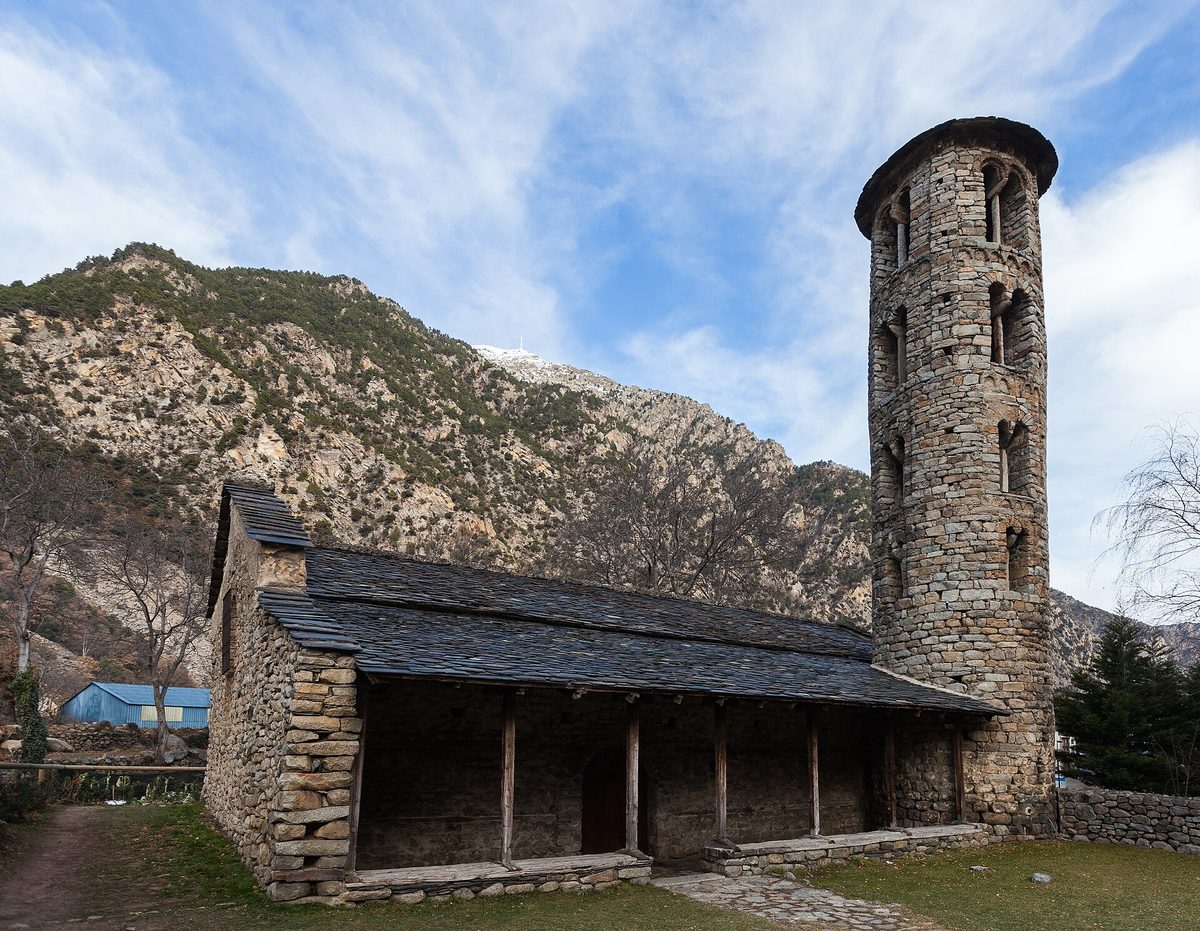
Down the hill, Canillo itself is worth an hour, and searching “Roc del Quer Canillo” will point you straight to the village that anchors the whole outing. It’s one of Andorra’s quieter, more genuinely Andorran towns, with the Sant Joan de Caselles church — a lovely Romanesque bell tower just outside the village — and the Palau de Gel ice palace if you’ve got kids to entertain. It also makes the natural base for all this, with somewhere to eat before or after the climb. For the wider picture of the country’s small towns, the guide to Andorra la Vella and the capital’s shopping is a useful counterpoint to Canillo’s calm.
The high lakes and other viewpoints
If the Roc del Quer gives you a taste for Andorran vantage points, you’re spoilt for choice. Over in the Ordino valley, the Tristaina solar viewpoint pairs a striking modern structure with the three Tristaina lakes and the peaks around Ordino-Arcalis. It’s a natural companion outing on a clear day, and between the two you get the country’s best “engineered view” experiences in one trip. Both reward the same things: clear weather, a head for heights, and a camera.
Is Roc del Quer right for your kind of trip?
Not every stop suits every traveller, so here’s the candid sorting.
Families and visiting with kids
For confident older children this is a hit — a real drop, a slightly scary glass floor, and a giant iron man to pose with. It’s short enough to hold their attention and cheap enough not to sting. For toddlers and buggies, the uneven approach path and the sheer exposure make it more of a hold-their-hand-tightly affair, and very small children may find the glass unsettling rather than fun. If you’re planning a broader itinerary, our guide to visiting with kids has the calmer alternatives too.
Couples, photographers and slow travellers
If your idea of a good day is a scenic drive, a dramatic view and a long lunch, Roc del Quer is made for you. It’s the kind of place that turns up on the “most beautiful viewpoints in the world” listicles, and while I’d take that with a pinch of salt, the photography really is that good in the right light. Chain it with a quiet valley walk and you’ve got a memorable half-day. It also slots neatly into a list of more unusual things to do beyond the obvious.
Budget travellers and free-day planners
Honesty time: the mirador isn’t free, but at a few euros it’s about as close as a marquee attraction gets. And the drive up, the totems, and the view from the solid ground cost nothing to enjoy. If you’re counting every euro, it still earns its place — pair it with the country’s genuinely free things to do and you’ve got a full day for the price of a sandwich. When the clouds roll in, swap it for a wet-weather plan, because a viewpoint in fog is just a cold walk to a grey wall.
Hikers and active visitors
If you want more than a stroll, the ridge around the Roc del Quer is also home to a via ferrata — a cabled climbing route for those with the kit and the nerve — and the wider Canillo valleys are laced with trails. The viewpoint makes a good bolt-on to a bigger day of hiking in Andorra or other outdoor activities, rather than the whole event. In summer especially, it’s one of the easiest things to do in summer when the ski lifts are quiet and the high roads are open.
Frequently asked questions about Roc del Quer
How high is the Roc del Quer viewpoint?
The viewpoint sits at roughly 1,900 m above sea level — most sources put it around 1,913 m. The bigger number people quote, though, is the drop: the cantilevered end of the walkway hangs over about 500 metres of open air down to the valley floor. It’s that sheer exposure, more than the altitude itself, that gives the place its stomach-flip.
How much does it cost to visit Roc del Quer?
In the staffed season entry has been around EUR 5 to 6 for adults, with a reduced rate for children and free entry for the very young. A combined ticket with the Tibetan Bridge of Canillo, at roughly EUR 14 to 15 including the shuttle bus, is the better value if you’re doing both. Prices change year to year, so check the official Canillo tourism site before you go.
Can you visit Roc del Quer for free?
Only partly. When the site is staffed you’ll pay the small entry fee to step onto the walkway itself. Outside the paid season, if the road is open and there’s no one on the gate, access can be free — but that’s weather-dependent and not guaranteed. The car park, the approach path and the view from solid ground are free either way; it’s the projecting platform that’s ticketed.
How do you get to Roc del Quer?
By car. From Canillo you take the CS-240 (the Coll d’Ordino / Montaup road) and climb to a signed car park at around km 6.5, then walk five to ten minutes to the platform. There is no public bus to the viewpoint on its own — the shuttle bus from Canillo only runs for the Tibetan Bridge combo ticket. Drive time from central Canillo is about ten to fifteen minutes up the hairpins.
Is Roc del Quer open in winter?
Not reliably. The staffed season has historically run from around late spring to November, and in winter the access road can be closed or snowbound. The structure doesn’t disappear, but getting to it safely off-season depends on road conditions, and facilities won’t be running. If you’re visiting in the ski months, treat it as a maybe and check the road and season status first.
Is the Roc del Quer safe if you’re scared of heights?
The walkway is sturdy, fully railed and I’ve never felt it move, so it’s objectively safe. Whether it feels safe is another matter — the glass floor and open beam are designed to unsettle you, and if vertigo is a real problem for you it will find you here. The good news: you can enjoy the view from the solid section without going to the glassy tip, and no one’s judging.
Is Roc del Quer worth it?
For a stop that costs a few euros and fifteen minutes, yes, comfortably. It’s one of the best-value big views in Andorra and a genuine highlight of the Canillo area, especially paired with the Tibetan Bridge. The only people I’d steer away are those with severe vertigo who won’t enjoy the exposure, and anyone expecting a crystal-clear glass floor rather than a scuffed one. Everyone else: go.
How long do you need at Roc del Quer?
The viewpoint itself is a fifteen-to-thirty-minute stop — long enough to walk out, take photos, and soak up the view without rushing. Add the Tibetan Bridge and you’re looking at a half-day once you factor in the bus and the 900-metre walk in to the bridge. As a standalone, it’s the definition of high reward for low effort.
Related guides
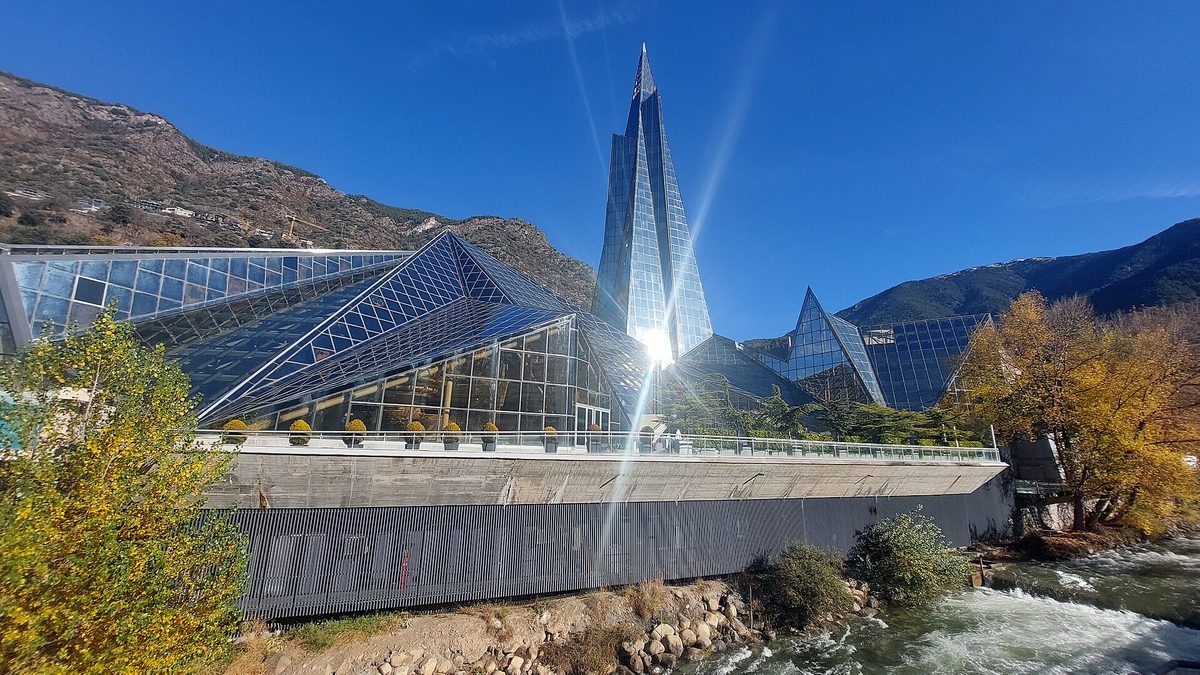
Once you’ve had your moment on the glass, keep exploring. Pair this with the Tibetan Bridge of Canillo for the full Canillo thrill day, or head to the Tristaina solar viewpoint for another spectacular vantage over in Ordino. Work out when to come with our guide to the best time to visit Andorra, sort the practicalities with our Andorra travel tips, and when your legs need a rest, book an afternoon at the Caldea thermal spa. For the full menu of options, circle back to our roundup of things to do in Andorra.
Photo credits
All photographs are from Wikimedia Commons under their stated licences, with thanks to the photographers: