Most people know Andorra as a place you drive to in a snowstorm with skis on the roof. That is a shame, because I think the country is better in July than in January. The snow that makes it famous melts off the high valleys, the light turns long and gold, and a landscape that spends five months buried in white becomes one enormous green playground with a bike park bolted to it.
I have spent chunks of several summers here, so here is my honest rundown of the best things to do in Andorra in summer, and what the season is really like.
The best things to do in Andorra in summer are hiking to glacial lakes like the three at Tristaina, riding the Pal bike park, walking the 603-metre Tibetan Bridge at Canillo, soaking at the Caldea thermal spa, and catching Cirque du Soleil in the capital. It suits hikers, families, cyclists and anyone who wants mountains without a ski pass — roughly June to September.
Last updated: July 2026. Opening dates, prices and event schedules in Andorra shift every season, so treat everything here as a starting point and check the official sites before you go.
Andorra summer at a glance
| Activity | Where | Rough cost | Who it’s for |
|---|---|---|---|
| Lake hikes (Tristaina, Incles) | Ordino Arcalís, Canillo | Free | Walkers of all levels |
| Bike park downhill | Pal (La Massana) | Around €40+ day pass | Mountain bikers |
| Tibetan Bridge | Roc del Quer, Canillo | Around €12–15 | The head-for-heights crowd |
| Tobotronc alpine coaster | Naturland, Sant Julià | Around €13 a ride | Families, big kids |
| Caldea / Inúu thermal spa | Escaldes-Engordany | Around €40+ | Anyone with tired legs |
| Cirque du Soleil | Andorra la Vella | Around €25–59 | Evening entertainment |
Prices are ballpark 2026 figures and move around; the resort and venue websites are the only source I’d trust for the current number.

Mountain walks and the lakes worth the climb
Andorra is small — you can drive across the whole country in about an hour — but it stuffs more than seventy lakes and ponds, sixty-odd waymarked trails and three natural parks into that space. Walking is the thing I’d do first, and the good news is the range runs from pushchair-flat to genuinely hard.
Estanys de Tristaina — the classic first hike
If you do one lake walk, make it the three Tristaina lakes above Ordino Arcalís, in the north of the country. A loop links the trio of glacial tarns sitting in a rocky bowl, and the trailhead is high to begin with, so you get a lot of scenery for not much suffering — figure two to three hours round trip at an easy pace.
The catch: everyone else has read the same advice. In August, the car park fills early and the path can feel like a queue. Start before nine, or come in June or September when it thins out. Up at the top of the Arcalís road there’s also the Tristaina solar viewpoint, which is worth the extra few minutes for the panorama alone.
Vall d’Incles and the gentle valleys
For a flatter day, the Vall d’Incles near Soldeu is my pick. It’s a broad green valley with a stream running through it, and in summer cars are restricted so you either walk in from the bottom or take a shuttle — which is exactly what keeps it pleasant. You can wander as far as your legs fancy and turn around whenever.
The Sorteny Valley Natural Park, near Ordino, is another soft option and a designated biosphere reserve, known for its wildflowers in early summer. Gentle trails, a guarded refuge for a drink, marmots if you’re lucky.
The Madriu-Perafita-Claror valley
This is the serious one, and the most special. The Madriu-Perafita-Claror is a glacial valley with no road into it — the only way in is on foot — and it’s a UNESCO World Heritage site precisely because it has been left alone. Stone shepherds’ huts, old irrigation channels, high pastures. You can dip in for a few hours from the Escaldes side or spend a full day going deep. It is quiet in a way the rest of the country isn’t, and I love it for that.
Coma Pedrosa, if you want the summit
Coma Pedrosa is Andorra’s highest peak at 2,942 metres, in the natural park of the same name above Arinsal. Reaching the top is a proper full-day mountain hike with a long ascent, and it’s usually clear of snow by July, though you should still check conditions. Most people break it with a night at the Comapedrosa refuge. Even if you don’t summit, the lakes on the way up are reward enough.
A word on all of this: mountain weather turns fast here. Afternoon thunderstorms are common in July and August, so start early, pack a windproof layer even when it’s 25°C in the valley, and carry water. There are more than fifty picnic areas dotted about with tables and taps if you’d rather make a lazy day of it.

The adrenaline layer: bike park, bridges and coasters
This is where Andorra earns its keep as a summer destination and pulls ahead of a lot of prettier, sleepier valleys elsewhere in the Pyrenees. The ski infrastructure doesn’t sit idle — the lifts spin all summer to haul bikes and bodies uphill.
Pal bike park (Vallnord)
The bike park at Pal, part of the Pal Arinsal resort above La Massana, is one of the bigger downhill parks in Europe and has hosted the UCI Mountain Bike World Cup. Red Bull once rated it among the best on the planet, and while I take those rankings with a pinch of salt, it is a seriously good facility: more than 40 km of trails across roughly 29 circuits, from beginner blue flow lines to rock gardens that will rearrange your fillings.
You ride the cable car up from La Massana or Arinsal with your bike, bomb down, repeat. There are bike and full-armour rental shops in La Massana, so you don’t need to bring your own. The park typically opens from mid-June and runs into autumn — and it’s not just for experts, there’s a Kids Bike Park for small people finding their brakes. Check the resort calendar, because opening days are limited at the very start and end of the season.
The Tibetan Bridge at Canillo
The Pont Tibetà, strung across the Vall del Riu near the Roc del Quer viewpoint above Canillo, is a metal footbridge 603 metres long and one metre wide, hanging up to 158 metres above the valley floor at around 1,875 metres altitude. It opened in 2022 and is one of the longest bridges of its kind anywhere.
It is exactly as unnerving as it sounds, and the grated deck showing the drop beneath your boots does not help. I loved it. If you’re travelling with anyone who genuinely fears heights, though, be kind and let them wait at the excellent Roc del Quer viewpoint instead. Tickets run around €12–15 and there’s a shuttle up from Canillo.
Naturland and the Tobotronc
Down in the south, in the forest of La Rabassa above Sant Julià de Lòria, Naturland is an open-air activity park built around the Tobotronc — billed as the longest alpine coaster in the world at 5.3 km, dropping about 400 metres through the trees on a ride that lasts close to twenty minutes. Two people to a car, a hand brake so you control the speed, and a lot of whooping. It’s genuinely brilliant, and one of the few attractions here that works equally for a nervous eight-year-old and a grown adult pretending not to be scared.
Via ferrata, zip lines and climbing
Andorra has close to thirty via ferrata and climbing routes, graded from family-friendly to properly vertical. Canillo alone has several — the Canal de Mora area offers a couple of itineraries, including the Cable 1 route, and there’s a high-mountain line up at Bony d’Envalira topping out around 2,664 metres with a huge panorama. Go with a guide unless you know exactly what you’re doing and carry the right kit.
For zip lines and softer thrills, the Mon(t) Magic family park at Canillo (part of Grandvalira) runs what’s billed as the longest zip line in the Pyrenees, plus a water-play area. It’s aimed at families rather than adrenaline junkies, but the zip line is no joke.
Water and wellness when your legs give out
Two or three days of hiking and biking and you will want to lie down in warm water. Andorra is unusually well set up for this.
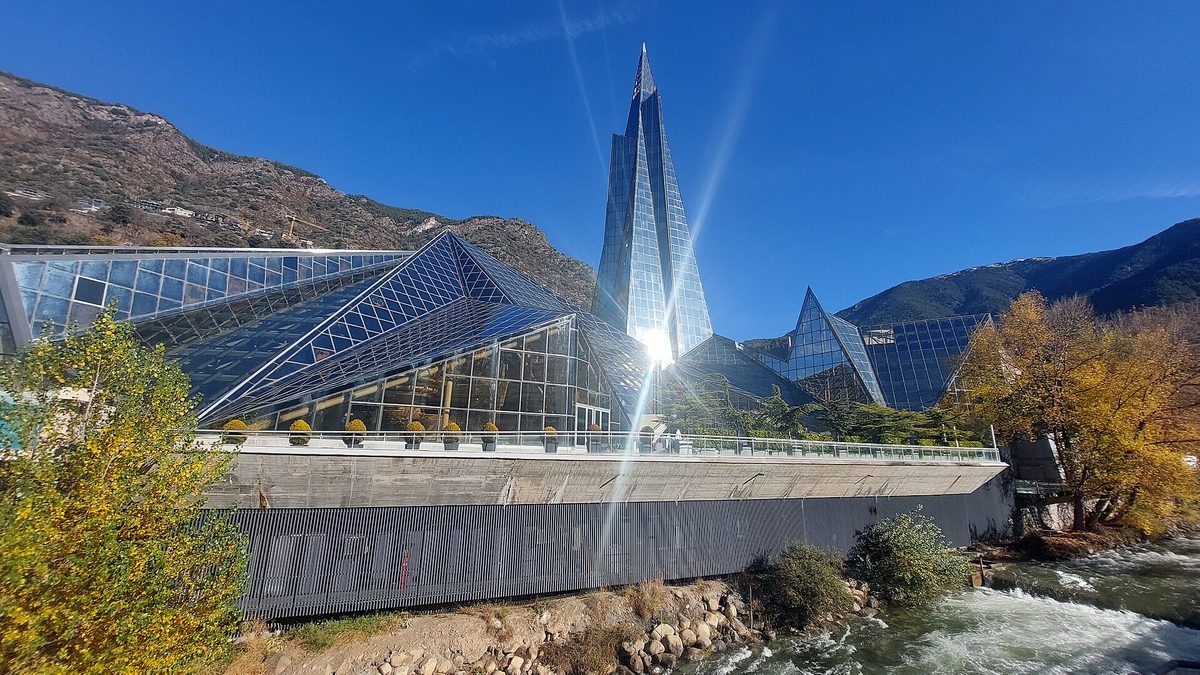
Caldea, in Escaldes-Engordany, is a large thermal spa fed by the town’s natural hot springs — think lagoons, jets, saunas and outdoor pools with mountain views, the whole thing under a glass spire you can see from the road. The adults-only Inúu section next door is the calmer, pricier sibling if you want quiet. Entry is around €40 and up depending on which zone and how long; book ahead in peak weeks. After a big descent day, it is close to perfect.
As for swimming outdoors — yes, you can, but manage expectations. There’s no coast; this is a landlocked mountain country. What you get is cold mountain lakes and rivers. Some people plunge into the high tarns after a hot climb, and it is bracing in the best way, but these are snowmelt-fed and genuinely frigid, so keep it brief and know your limits. Engolasters, an easy-to-reach reservoir near Escaldes, is a lovely spot to sit by even if you don’t get in.
Towns, culture and eating well
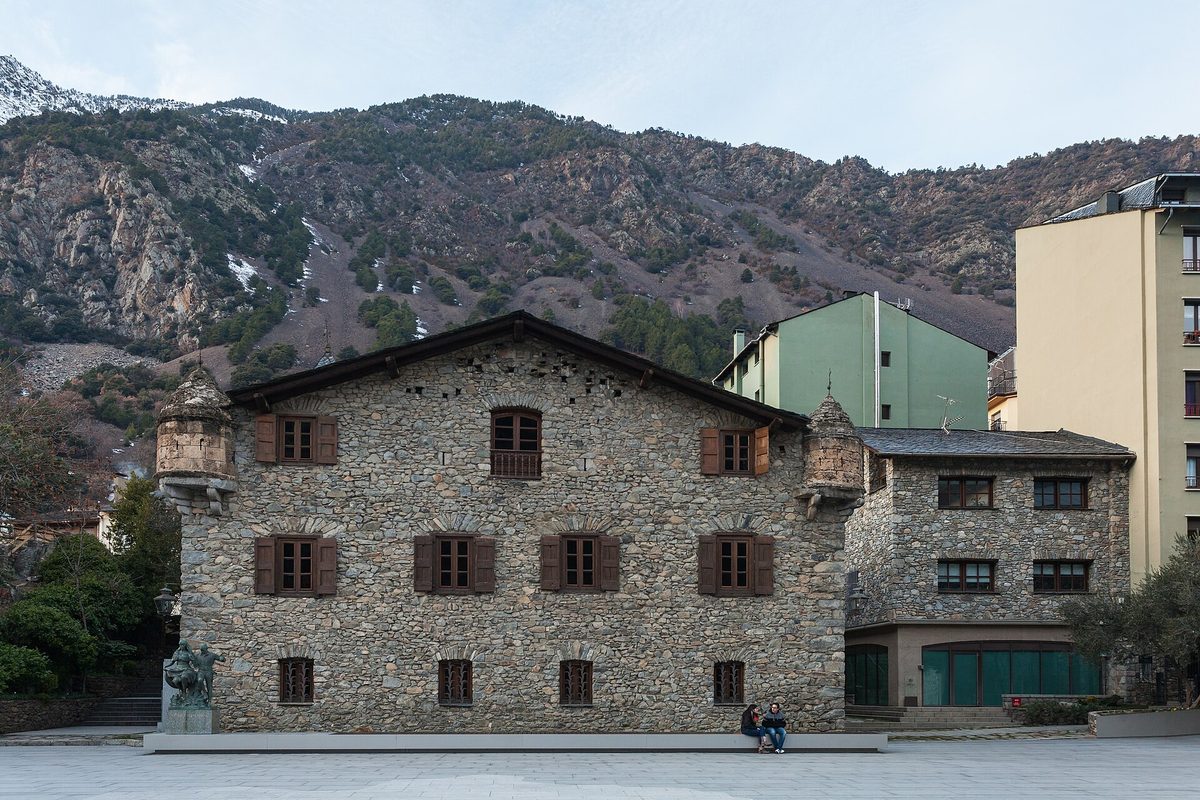
Andorra la Vella, the capital, sits at just over 1,000 metres in the Valira valley and is where the country does its shopping, eating and evening buzz. The main avenue is wall-to-wall shops — Andorra is a duty-free-ish bubble between France and Spain, so perfume, electronics and outdoor gear are cheap — and it’s pedestrian-friendly. Skip past the tax-free glitz to the small historic core around Casa de la Vall, which feels like a village that a shopping city grew around.
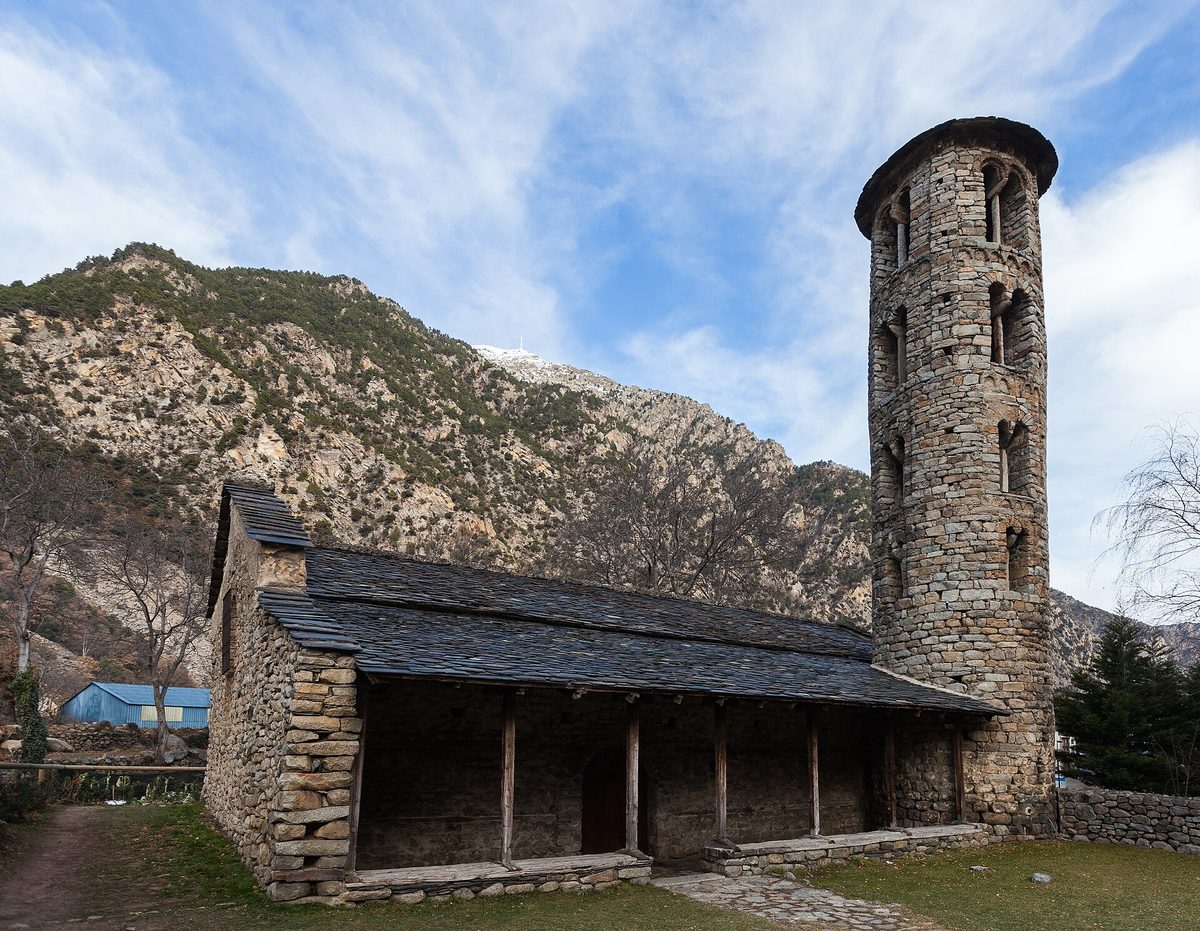
Neighbouring Escaldes-Engordany blends straight into the capital and is home to Caldea. For something quieter, drive up to the mountain villages: Ordino is the handsome one, all stone and slate; Pal and La Cortinada keep their old Romanesque churches. The country has more than forty churches, a scatter of little museums and, dotted along the valleys, the tiny stone chapels that are half the charm of a drive here.
Eat the local stuff. Look for a borda — a converted mountain barn now serving Pyrenean cooking — and order trinxat (cabbage and potato fried with pork), escudella stew, grilled meats, or the surprisingly good Andorran cannelloni. There are even a handful of high-altitude wineries near the Spanish border doing tastings, if you want a genuinely unusual afternoon.
One evening in July or early August, if the dates line up, go to Cirque du Soleil. The company has run an exclusive summer show in Andorra la Vella for years now, staged in a big top in a central car park; the 2026 production is called Ràdio Andorra, running roughly early July to early August, about 60 minutes, tickets around €25–59. It’s a shorter, cheaper version of their touring shows and, honestly, a lovely way to end an outdoor day. Check the official Cirque du Soleil Andorra page for exact dates before you build a trip around it.

Andorra summer activities for families
This is a strong family destination in summer, and not in a forced, box-ticking way — a lot of the best stuff genuinely works for mixed ages. The Tobotronc at Naturland is the headline act: fast enough to thrill teenagers, controllable enough for younger kids riding with a parent. The rest of Naturland’s Altitude 1600 area is built around family activities, with a nature classroom and gentler rides.
The Mon(t) Magic park at Canillo has that long zip line, canoeing and pedal boats on a small lake, and the Màgic Gliss ride. Pal’s Mountain Park runs skill trails, walking routes and a Kids Bike Park. And the flat valley walks — Incles, Sorteny, the Engolasters loop — are all doable with small legs and the promise of a picnic.
Two practical notes for families. First, altitude and sun: kids burn fast up here even when the air feels cool, so hats and sunscreen aren’t optional. Second, the bus network is good and free-ish to use, which means you can visit most parks and trailheads without renting a car, though a car does make the far-flung spots easier with tired children.
Planning: when to come, getting around, what to book
When in summer
Timing shapes everything else. When friends ask me about Andorra in summer what to do first, my answer always starts with the calendar. The season roughly runs June to September. June and September are my favourites — warm, long days, wildflowers or autumn colour, and far fewer people. July and August are the warmest and busiest, and August especially fills with Spanish and French holidaymakers, so book accommodation early. Note 15 August is a public holiday and some shops and restaurants close.
How hot? Not very, and that’s the point. Andorra la Vella averages daytime highs around 21°C in July, cooling sharply at night, and it’s cooler still as you climb. You’ll want shorts by day and a fleece by evening. Afternoon thunderstorms are a regular feature — plan the big hikes for mornings.
Getting around
There’s no airport and no train. Most people fly into Barcelona, Girona or Toulouse and come the rest of the way by bus (direct coaches from Barcelona airport take about three hours) or by car. If you rent a car in Spain or France to drive in, tell the rental company first — Andorra is a separate country and not in the EU, and some agreements need clearing.
Inside the country, a car is easiest for early starts and out-of-the-way trailheads, but the public bus network reaches every village and most parks, and you buy tickets on board. Two warnings: free parking in central Andorra la Vella is close to mythical, so use a car park; and turn off mobile data at the border, because Andorra isn’t in the EU roaming zone and bills can sting. Buy a local SIM or lean on the abundant free WiFi.
What to book, what to skip
Book ahead: Cirque du Soleil tickets, any guided via ferrata or rafting, and summer accommodation in July and August. Rafting, by the way, actually happens across the border on Spain’s Noguera Pallaresa river, usually sold as a combined 4×4-and-raft day out of La Massana — good fun, just know you’re leaving the country for it.
You can turn up on the day for: the lake hikes, the bike park (buy the pass at the lift), Caldea (though weekends get busy), and the Tibetan Bridge. What I’d skip? Don’t come purely for the shopping — it’s fine, but you’re in the Pyrenees; spend the day on a mountain and shop for an hour on the way out. And don’t over-schedule. The country is small enough that you can do a lake in the morning, a spa in the afternoon and a show at night, but you’ll enjoy it more if you don’t try to do all three every single day.
FAQ: things to do in Andorra in summer
Is Andorra worth visiting in summer?
Yes, and I’d argue it’s better than winter unless you specifically want to ski. You get the same dramatic Pyrenean scenery without lift queues or crowds, prices are lower, and the range of activities — hiking, biking, spas, family parks, the odd world-class stunt like the Tibetan Bridge — is genuinely wide for such a tiny country. June and September are the sweet spots.
Is Andorra hot in summer?
Not really. Andorra la Vella, the lowest town, averages daytime highs around 21°C in July and August, and it gets cooler the higher you go. Nights are chilly even in midsummer. It’s a comfortable escape from the fierce heat of coastal Spain, but you’ll want a warm layer for the evenings and the mountains.
What is the best month to visit Andorra in summer?
June and September, for my money. The weather is warm, the days are long, the trails and lakes are far quieter than in peak season, and accommodation is easier to find. July and August are lovely too but busier and pricier, and August in particular sees a big holiday influx from Spain and France.
Can you swim in Andorra?
There’s no coast, so swimming means cold mountain lakes and rivers, or hotel and spa pools. People do plunge into the high tarns after a hot hike, but the water is snowmelt and genuinely cold, so keep dips short. For proper warm-water relaxation, the Caldea thermal spa in Escaldes is the place, not open-water swimming.
How many days do you need in Andorra in summer?
Three to four days is a good amount — enough to fit two or three hikes, a day at the bike park or the family parks, an afternoon at Caldea and an evening in the capital. You could see the highlights in a long weekend, or happily fill a week if you’re a keen hiker or cyclist working through the valleys and passes.
Do you need a car in Andorra in summer?
Not strictly. The bus network connects every village and most trailheads and parks, and tickets are cheap. A car is genuinely handy for early-morning starts before the crowds, for reaching remote spots like the top of the Arcalís road, and for family trips with tired kids — but you can have a great car-free summer trip here if you plan around the timetables.
Is Andorra expensive?
It’s mixed. Fuel, alcohol, tobacco, electronics and perfume are cheap thanks to low duties, which is why day-trippers pour in from Spain and France. Accommodation and restaurants sit at normal European prices, higher in peak weeks. Activities are fair value — a spa day or a bike pass costs roughly what you’d pay in the Alps, often a bit less.
What is there to do in Andorra when it rains?
Plenty, which is handy given those afternoon storms. Caldea’s thermal spa is the obvious wet-weather winner. Beyond that there are museums, the shops and cinema in Andorra la Vella, indoor climbing walls, and cosy bordes for a long lunch. A rainy few hours is a good excuse to slow down and eat well.
Related guides
Summer is only one way in. If you want the full picture, start with our overview of things to do in Andorra, then dig into hiking in Andorra and the wider list of Andorra activities across the seasons. For the specific highlights above, we have full guides to the Tristaina solar viewpoint, the Tibetan Bridge at Canillo and its neighbouring Roc del Quer viewpoint, plus the ski-turned-summer resort of Ordino Arcalís and the Caldea thermal spa.
Planning the wider trip? See our advice on the best time to visit Andorra and practical Andorra travel tips, and if the mountains matter more than the shops, read things to do in Andorra besides skiing. Travelling as a household? Our Andorra with kids guide and the tour of the prettiest Andorra villages both pair well with a summer visit, as does a wander round Andorra la Vella itself. On a budget, don’t miss the free things to do in Andorra, the more unusual things to do in Andorra, and ideas for an Andorra rainy day.
Photo credits
All photographs are from Wikimedia Commons under their stated licences, with thanks to the photographers: