Here is the thing nobody tells you about Andorra: this is a country that has built its whole reputation on things you pay for. Lift passes. Spa entry. Duty-free electronics. Tank-of-diesel tobacco runs. And yet some of the best hours I have ever spent here cost me exactly nothing — a morning on a canal path with the whole valley laid out below me, an empty Romanesque church door, a melting Dalí clock sitting on a public bridge like it wandered off from a museum and never went back.
The best free things to do in Andorra are its walks and its old stone. You can hike the UNESCO-listed Madriu-Perafita-Claror valley, stroll the level canal paths above Andorra la Vella, admire centuries-old Romanesque churches from the outside, wander the Barri Antic old quarter, and see a real Salvador Dalí sculpture on the street — all for free. This guide is for budget travellers, families, and anyone who wants Andorra without the price tag.
Last updated: July 2026. Prices, opening times, bus timetables and seasonal access change constantly in Andorra — I have hedged where I am not certain, but always check official sites and opening hours before you go.
I want to be honest with you from the start, because a lot of “free things to do” lists are quietly lying. Some of the attractions people call free are only free if you ignore the €5 parking, the lift ticket you needed to get there, or the small entry fee that appears in summer. I have flagged every one of those below. When I say something is genuinely, no-catch free, I mean it. When there is a sneaky cost, I will tell you what it is so you can decide. Most of the best Andorra free activities are outdoors, which is exactly why they cost nothing.

At a glance: the best free things to do in Andorra
Here is the short version. The table below is my honest sort of what is truly free versus what has a hidden cost lurking somewhere.
| Free thing | Where | Truly free? | The catch |
|---|---|---|---|
| Madriu-Perafita-Claror valley walk | Above Escaldes-Engordany / Encamp | Yes | None to walk in; it is a roadless UNESCO valley |
| Rec del Solà canal path | Above Andorra la Vella | Yes | Steep first few minutes, then flat |
| Engolasters lake loop | Above Escaldes-Engordany | Mostly | Free to walk; parking near the lake can cost, and the funicular is paid |
| Santa Coloma church (round tower) | Santa Coloma, near the capital | Yes (outside) | Free to admire; guided interior visits may be paid/limited |
| Sant Joan de Caselles church | Canillo | Yes (outside) | Free exterior; interior hours vary |
| Dalí’s “The Nobility of Time” sculpture | Andorra la Vella, near Plaça de la Rotonda | Yes | None — it is on the public street |
| Barri Antic old quarter | Andorra la Vella | Yes | Casa de la Vall interior is a separate paid visit |
| Vall d’Incles | Above Canillo | Mostly | Free to walk; summer car access is restricted, shuttle is cheap not free |
| Roc del Quer viewpoint | Canillo | No | Small paid entry in season — I include it so you are not surprised |
If you only do three, make them the Madriu valley, the Rec del Solà, and a slow wander through the old quarter of Andorra la Vella with the Dalí clock at the end. That is a full, satisfying, entirely free day.
Free hikes, lakes and mountain walks
This is where Andorra earns its keep for the budget traveller. If you want Andorra on a budget activities that never cost a cent, the mountains are the answer, because they do not charge admission. Roughly ninety percent of this country is uninhabited high terrain, and the trail network that laces through it is public and free. You need decent shoes, water, a weather app you actually check, and that is more or less the whole budget.
The Madriu-Perafita-Claror valley — the crown jewel, and free
If you do one free thing in Andorra, do this. The Madriu-Perafita-Claror is a glacial valley that UNESCO added to the World Heritage list in 2004, and it is the last corner of the country with no road running through it. No cars, no cable cars, no ticket booth. You walk in on your own two feet, the way people have for eight hundred years, past dry-stone huts and old grazing terraces and communal land that has been managed the same way since the thirteenth century.
The most common way in is from the edge of Escaldes-Engordany, climbing steeply at first before the valley opens out. You do not have to go far to feel it. A couple of hours up to the Fontverd area and back gives you the whole atmosphere — the sound of water, the smell of pine, and a silence that is genuinely rare in a country this small and this developed. Serious walkers push on for full days toward the high lakes like Estany de l’Illa, which is a proper eight-hour undertaking and not something to attempt casually.
The catch: there is no catch on the walking itself. It is free. Just be sensible about the terrain and the altitude, start early, and turn back in good time. Weather in the high Pyrenees turns fast, and this is not a place to be caught out. For more on planning walks like this, see my guide to hiking in Andorra.
Engolasters lake — a short walk, a small asterisk
Engolasters is the easy, family-friendly one. A dark, still reservoir ringed by pine forest, about a ten-minute drive up from the capital, with a gentle loop of roughly five and a half kilometres around the water and a lookout that stares straight back down at Andorra la Vella. Kids can manage it, prams struggle in places, and on a calm morning the reflections are the sort of thing that makes people stop and go quiet.
The walking is free. Here is the honest asterisk: getting there is where costs can creep in. Parking near the lake is not always free, and the pretty way up — the little funicular / cog railway from Escaldes — is a paid ride. If you have a car, the cheapest approach is to drive up and just be prepared that the closest parking may charge. If you do not have a car, there are buses toward Encamp and the lake area, but check current timetables because they change with the season.
Vall d’Incles — free to walk, tricky to reach in summer
The Vall d’Incles, up above Canillo, is one of the loveliest easy valleys in the country: flat meadows, a stream you can follow, marmots if you are lucky, and higher lakes for those who want them. Walking it is free.
The complication is access. To protect the valley from being loved to death, cars are restricted in peak summer — roughly mid-June to mid-September. You park at the entrance and take a shuttle in. Parking at the entrance has generally been free, and the shuttle is cheap rather than free (I have seen it run free early in the season and then move to a nominal charge of around €1 a day once it gets busy — check the current arrangement before you go). It is worth the minor faff. This is exactly the kind of place I send people who want a summer walk without the crowds; see also my roundup of things to do in Andorra in summer.
The Rec del Solà and the Rec dels Molins — flat, free, and criminally underrated
Not everyone wants a mountain. If you want views without the sweat, the canal paths above Andorra la Vella are the best free thing in the whole capital, and almost nobody who is not local seems to know about them.
The Rec del Solà follows an irrigation canal built in 1880 that once watered the orchards on the sunny side of the valley. There is a short, honest climb to get up to it — a few minutes of stairs and slope that will get your heart going — and then it levels out completely and just tracks the hillside on the flat, with the whole city spread out below you and the mountains opposite. It runs roughly four kilometres there-and-back and takes an easy hour to ninety minutes. It is part of the Anella Verda, the “Green Belt” ring of paths around the city, which links up with the Rec de l’Obac on the shadier side of the valley. Between them you can string together a proper half-day of level walking without ever leaving sight of town.
It is completely free, it is close, and it is the walk I recommend to anyone who is short on time, travelling with older relatives, or just does not fancy a full mountain day. Pack a coffee and a pastry from town and you have a morning sorted for the price of the pastry.
Free culture: Romanesque churches and old stone
For a country of roughly eighty thousand people, Andorra has an absurd concentration of medieval Romanesque churches — small, thick-walled, stubborn stone buildings scattered through the valleys, most of them a thousand years old give or take. You can admire them all from the outside for free, which is the honest framing here: the exteriors are free and often the most striking part; interiors sometimes have limited opening hours or a small guided-visit arrangement, so treat the inside as a bonus rather than a guarantee.
Santa Coloma — the round tower
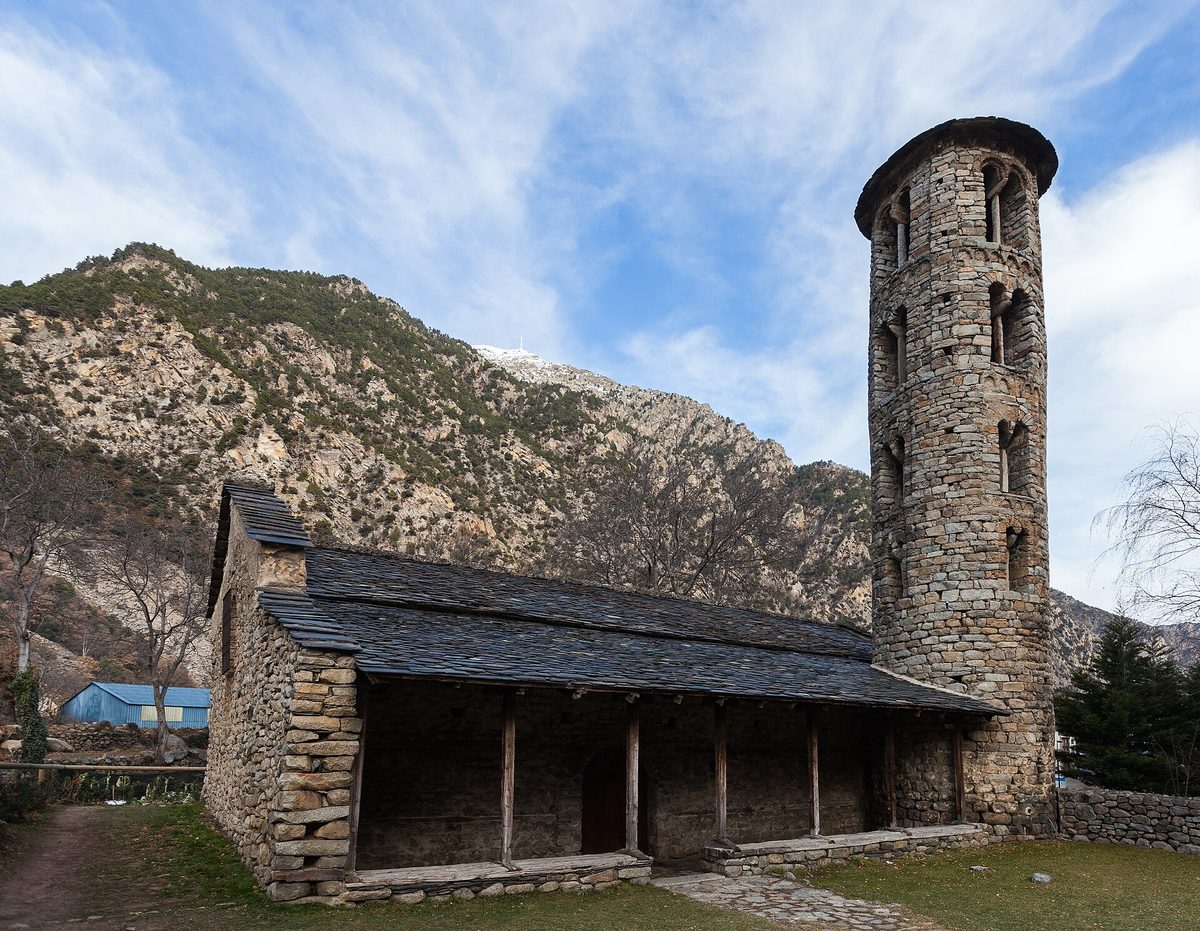
Start with Santa Coloma, just south of the capital in the district of the same name. It is one of the oldest churches in the country, pre-Romanesque in origin and built somewhere between the ninth and tenth centuries, and its party trick is the bell tower: a cylindrical, almost eighteen-metre-high round tower, which is genuinely rare. Very few Romanesque churches anywhere in the world have a circular bell tower, and standing at the base of this one, looking up at that plain, ancient stone cylinder, is a properly memorable free five minutes. It is easy to reach on the edge of town and pairs perfectly with the Rec del Solà, which runs down toward this very area.
Sant Joan de Caselles — the Canillo classic
Up the valley in Canillo, Sant Joan de Caselles is the church that ends up on the postcards, and for good reason. It is a textbook Romanesque building from the eleventh or twelfth century — rectangular nave, semi-circular apse, and a tall Lombard-style bell tower rising something like twenty-four metres against the mountains behind it. From the outside it is free and it is lovely, especially in late afternoon light. Inside, if you catch it open, there is a celebrated sixteenth-century altarpiece, but do not build your day around the interior being accessible; hours vary.
Sant Climent de Pal — the quiet one
If you make it over to the western valleys, the village of Pal is one of the best-preserved rural spots in the country, all dark stone and slate roofs, and its church — Sant Climent de Pal — is worth the detour. It is eleventh or twelfth century in origin with a distinctive Lombard bell tower; the double-mullioned windows on its top floor are, apparently, unique in Andorra. The village itself is the attraction as much as the church: wandering Pal’s lanes costs nothing and gives you a real sense of what these valleys looked like before the ski lifts arrived. For more on that side of the country, see my guide to the villages of Andorra.
If old stone and old stories are your thing, it is worth reading a little on the history of Andorra before you visit — these churches make a lot more sense once you understand how this strange little co-principality held itself together for seven centuries.
Free things to do in Andorra la Vella
The capital gets unfairly written off as a shopping strip with mountains behind it. There is truth in that — it is a shopping strip with mountains behind it — but there is a genuinely enjoyable free half-day hiding in plain sight if you know where to point yourself.
The Barri Antic — the old quarter
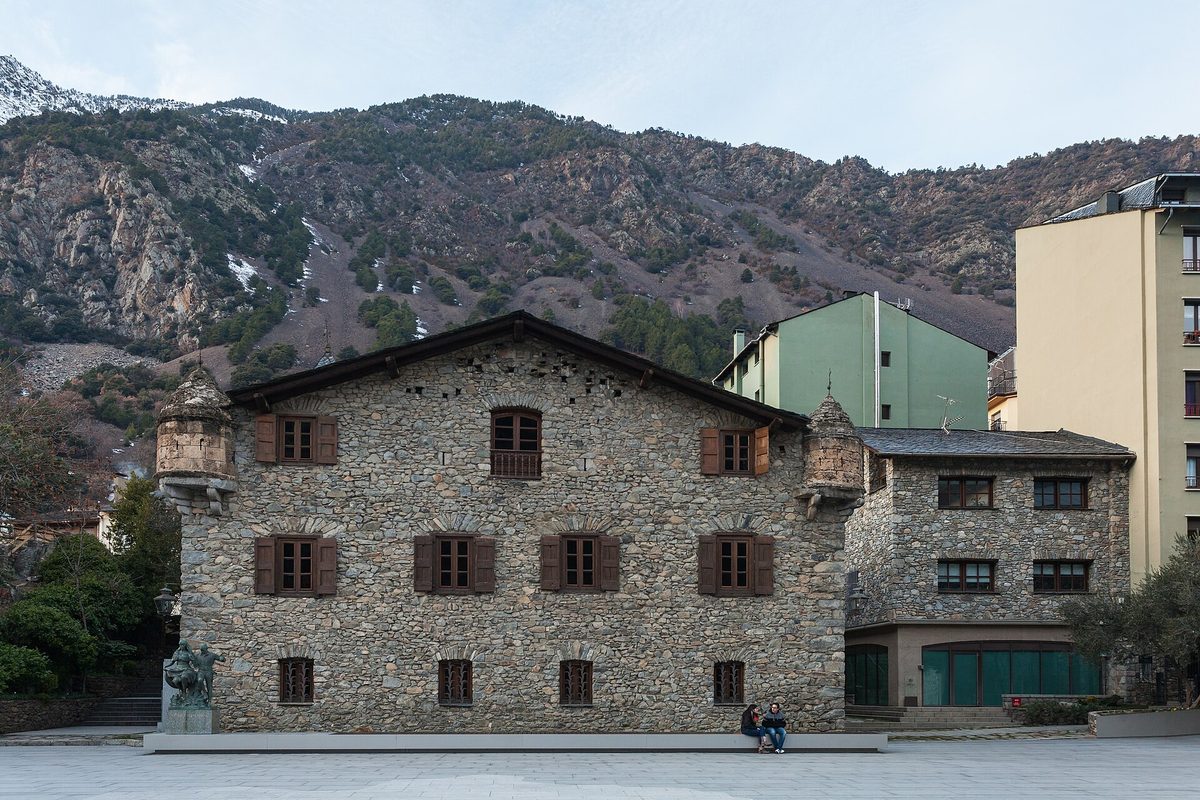
Behind the glass shopfronts of Avinguda Meritxell, the Barri Antic is the medieval core of the city: narrow cobbled lanes, thick stone houses, and a completely different pace from the retail bustle a hundred metres away. It is free to wander and it is the bit of the capital I actually like. The centrepiece is the Casa de la Vall, the old parliament house — a handsome sixteenth-century stone building. You can admire the outside for free; the interior is a separate, paid, usually guided visit, so factor that in if you want to go inside. Even from the street, though, it is a fine thing to stand in front of, and the little square around it is a good spot to pause. For a fuller tour of the capital, paid and free, see my guide to Andorra la Vella.
Salvador Dalí, on the street, for free
This is my favourite free surprise in the whole country. Down near the river, close to the Plaça de la Rotonda where Avinguda Meritxell crosses the Valira, there is a genuine Salvador Dalí bronze — “The Nobility of Time,” one of his melting-clock sculptures, complete with a draped, dripping timepiece, an angel, and a crowned figure. It is nearly five metres tall, it weighs well over a tonne, and it just sits there on the public street where anyone can walk up and photograph it. No ticket, no queue, no museum. One of the few public Dalí sculptures in the world and you can stand next to it eating an ice cream. Go at dusk when the lights come on.
Parc Central and the river
Right by the water, Parc Central is a proper green park with lawns and playgrounds, and the riverside walking-and-cycling path along the Valira threads through the city for free. With kids, this plus the Dalí sculpture plus an ice cream is a low-cost afternoon that actually works. It also connects nicely to a rainy-day plan B — if the weather turns, my Andorra rainy day guide has the indoor options.
Window-shopping without spending
Andorra is famous for tax-free shopping, and you do not have to actually buy anything to enjoy the spectacle of it. Wandering Avinguda Meritxell and Avinguda Carlemany, comparing prices, gawping at the electronics and perfume and ski gear, is a free activity in its own right — and useful reconnaissance if you do plan to spend later. Just know your home prices so you can spot a real deal from a fake one; I go into this properly in my guide to shopping in Andorra.
Viewpoints, scenery and the one that is not actually free
Andorra is stacked vertically, which means viewpoints everywhere. Many are free — you just drive or walk up to a bend in the road and there is the whole valley. A few of the famous, engineered ones charge, and I would rather tell you than let you turn up expecting free.
The free viewpoints
The high mountain passes are the obvious free ones. Drive over the Port d’Envalira — the highest paved pass in the Pyrenees — and there are pull-offs with enormous views for the cost of the petrol you were burning anyway. The lookout on the Engolasters loop, mentioned above, is free once you are walking. And honestly, half the pleasure of driving between the parishes is that the scenery is free and constant; there is barely a bad view in the country. If you want the drives and the stops organised, my things to do in Andorra besides skiing guide covers the scenic routes.
Roc del Quer — the one with the catch
You will see Roc del Quer, above Canillo, on every Andorra highlight reel: a viewing platform and a walkway that juts out over a sheer drop with the valley yawning below. It is spectacular. It is also not free. In season — roughly summer into autumn — there is a small paid entry, in the region of five or six euros for an adult, and prices and opening dates shift year to year, so check the official site. I include it here precisely because so many “free things” lists lump it in by mistake. It is worth the money in my view, but it is money. I have written it up properly in my Roc del Quer guide if you want the full picture.
Free festivals, markets and seasonal happenings
The other genuinely free layer of Andorra is its calendar. Time your visit right and the country hands you entertainment for nothing.
Each parish holds its festa major — the village summer festival — usually across a weekend in July or August, with music, dancing, processions and a lot of local pride spilling into the streets. You do not pay to stand in the square and watch. National day, the Day of the Constitution (14 March), and the various Meritxell-related celebrations around the country’s patron in early September bring their own free public gatherings and traditions. In the run-up to Christmas, the towns string up lights and set up markets, and simply walking through a lit-up Andorra la Vella in December costs nothing.
Markets are their own low-cost pleasure. Wandering a local market — poking at the cheeses and charcuterie and mountain honey — is free even if buying a snack is not; and it is a far better window into everyday Andorra than any shopping avenue. If you want to actually eat well without overspending while you are at it, my guide to Andorran food covers where the good, honest, well-priced stuff is. For the broader question of when all this is happening, check my notes on the best time to visit Andorra.
Two honest caveats on the “free festival” idea. First, dates move — a festa major is only free entertainment if you happen to be there when it is on, so check the calendar. Second, “free to attend” does not mean “free evening,” because you will absolutely end up buying a drink and a bite once the band starts. I have never once regretted that particular non-free part.
How to string the free stuff together
A quick word on making it a real trip rather than a scavenger hunt. Andorra is small — you can cross it by car in well under an hour outside of ski-season traffic — but the free things cluster, so it pays to group by area.
Base yourself in or near Andorra la Vella and you can do the Rec del Solà, Santa Coloma church, the Barri Antic, the Dalí sculpture and Parc Central across a single low-cost day without a car, mostly on foot. Give a second day to the Madriu valley from Escaldes and a wander around Engolasters. Save a third for the drive up-valley to Canillo — Sant Joan de Caselles, Vall d’Incles, and, if you do not mind paying, Roc del Quer — with the western village of Pal and its church as an alternative if you want to head the other way. That is three full days and, apart from the odd bit of parking, a shuttle fare and one optional viewpoint ticket, close to free.
Andorra does not have a network of free public transport across the whole country, but there are cheap national bus routes linking the parishes, and some parishes run their own free or nearly-free local shuttles, especially in season — Canillo introduced a free tourist bus for summer 2026, for example. Check locally, because these come and go. Doing Andorra car-free and cheap is very possible; you just have to plan around timetables. My Andorra travel tips cover transport, money and the practical stuff in more depth.
Frequently asked questions
Is Andorra expensive to visit?
It can be, but it does not have to be. Lift passes, spa entry and eating out add up fast, and accommodation in ski season is pricey. But the country’s headline attractions — its mountains, valleys, canal walks, old churches and street art — are free, and there is no tourist tax and no VAT-inflated shopping. Stay just outside the resort centres, walk instead of paying for lifts, and picnic, and Andorra becomes one of the more affordable corners of the Pyrenees.
Is the Madriu-Perafita-Claror valley free to walk?
Yes, completely. It is a UNESCO World Heritage cultural landscape and the last roadless valley in Andorra, open to the public with no entry fee, no ticket and no barrier. You simply walk in on the marked trails. The only “costs” are indirect — parking wherever you leave the car, and your own fitness, food and water. Start early, respect the weather, and do not attempt the long high-lake routes unless you are properly equipped.
Is Engolasters lake free?
Walking around Engolasters is free, and the loop is an easy, family-friendly hour or so. The indirect costs are getting there: parking near the lake may charge, and the scenic funicular railway up from Escaldes is a paid ride. If you drive up and are prepared for possible parking fees, or time a bus right, the experience itself costs you nothing beyond that.
Are Andorra’s churches free to visit?
The exteriors are free, and with the Romanesque churches the outside is often the best part — the round tower at Santa Coloma, the tall bell tower at Sant Joan de Caselles in Canillo, the stonework at Sant Climent de Pal. Interiors are a different matter: opening hours are limited and some are only accessible on guided visits that may carry a small charge. Treat getting inside as a nice bonus, not a plan.
Is Roc del Quer free?
No. Despite appearing on plenty of “free things to do” lists, the Roc del Quer viewpoint and walkway near Canillo charges a small entry fee in season — usually around five to six euros for an adult, with dates and prices varying year to year. Check the official site before you go. It is genuinely impressive and, in my opinion, worth the money, but it is money, so budget for it rather than expecting it free.
Can you visit Andorra without a car?
Yes, though it takes planning. There is no free countrywide transport, but cheap national bus routes connect the parishes, and some towns run free or nearly-free local shuttles, particularly in summer. Based in Andorra la Vella you can do a lot on foot — the old quarter, the canal walks, the Dalí sculpture, Santa Coloma. For the up-valley sights you will lean on buses and shuttles, so build your days around the timetables and check them fresh, because they change seasonally.
What free things can families do in Andorra?
Plenty. The Engolasters loop is gentle enough for most kids, Parc Central in the capital has lawns and playgrounds, the riverside path is prambable, and the Dalí sculpture is a genuine “wow, is that real?” moment for children. The Vall d’Incles meadows are easy walking with a good chance of marmots. None of these charge admission — you are mostly paying for the ice cream, which is a fee I consider non-negotiable with kids.
What is there to do in Andorra for free in winter?
Snow makes the free options narrower, since the summer trails and some viewpoints close or turn dangerous, and the headline winter activity — skiing — is firmly paid. But the towns are free to enjoy: December lights and Christmas markets in Andorra la Vella, the old quarter under snow, the Dalí sculpture, and the simple pleasure of watching a proper Pyrenean winter roll in. Just dress for it and check what is safely open.
Related guides
If this has whetted your appetite, keep planning with the rest of the site. Start with the big-picture pillar, things to do in Andorra, then narrow down by mood: things to do in Andorra in summer, things to do in Andorra besides skiing, and my pick of unusual things to do in Andorra for the odder corners. For the active side, see hiking in Andorra and the wider list of Andorra activities. And to get the logistics right, lean on Andorra travel tips and the best time to visit Andorra.
Photo credits
All photographs are from Wikimedia Commons under their stated licences, with thanks to the photographers: