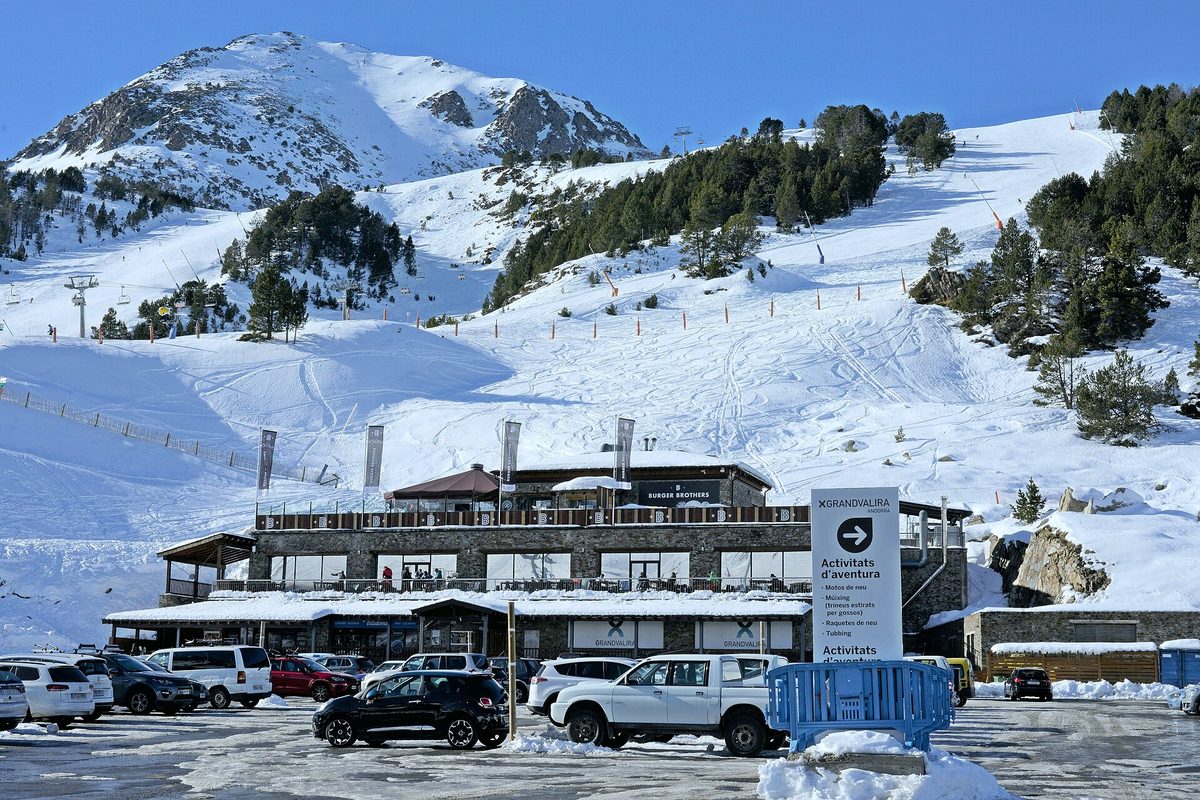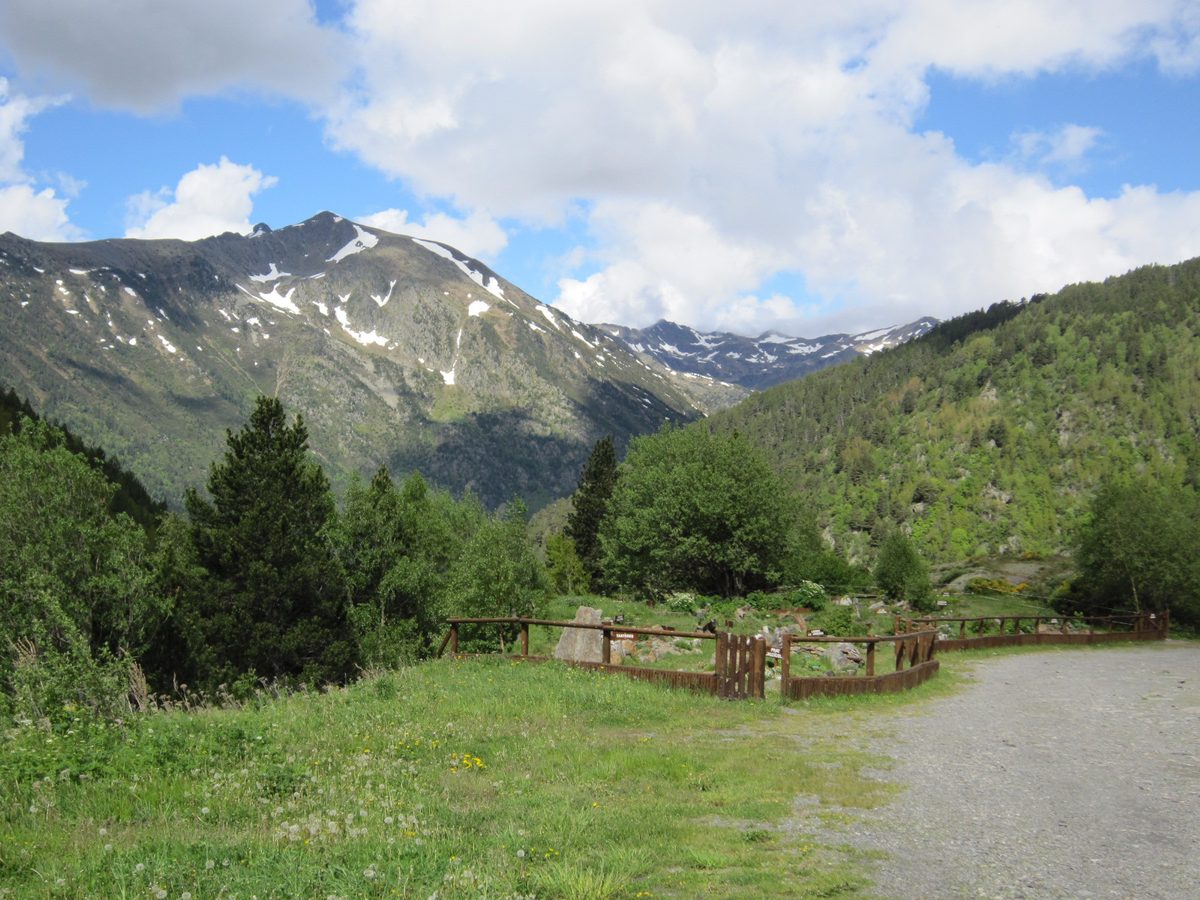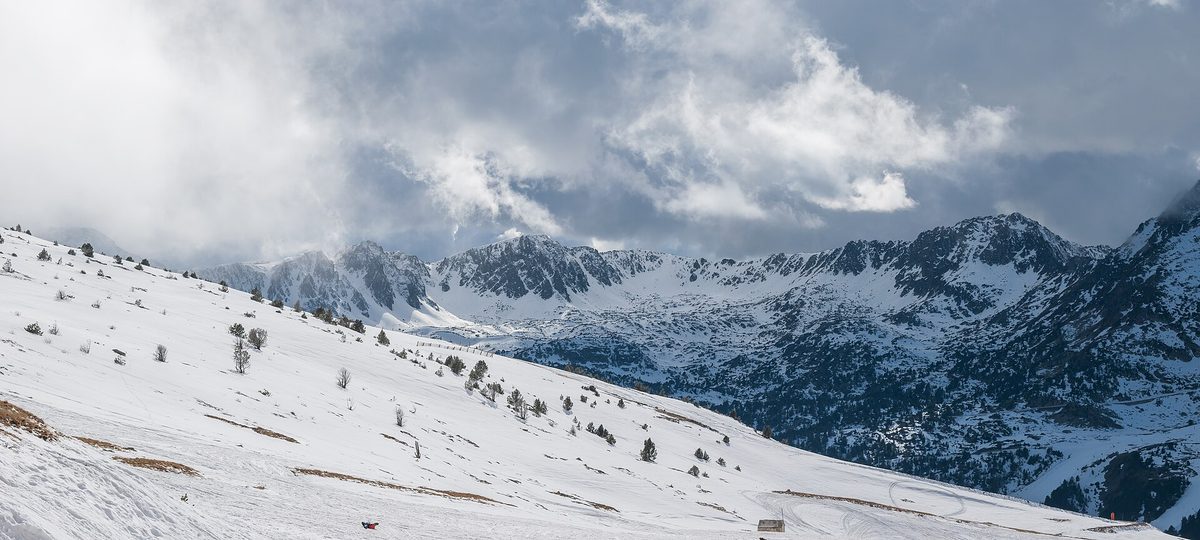
It’s the question I get more than any other from people planning a first ski trip here, and it’s a fair one: book the wrong fortnight and you can arrive to a thin, icy strip of man-made white with brown mountains either side. So let me answer it properly, with the altitude nuance that the one-line answers always skip — because in Andorra, “when does it snow” has a different answer depending on how high up you’re standing.
When does it snow in Andorra? Reliable snow falls at ski altitude (above about 1,800 m) from roughly late November to April, with the deepest, most dependable cover from January to March. Down in the valley towns (around 1,000 m) snow is lighter and comes and goes, mostly between December and February. The very highest summits hold patches into July.
Last updated: July 2026. The snowfall patterns below are drawn from long-run resort and weather data and describe a typical winter; any single season can run early, late, dry or huge, so always check live conditions before you travel.
This guide breaks the snow down by altitude and by month, explains why the snowiest month isn’t quite the one you’d guess, and shows you how to check real-time conditions before you book. If you’re choosing when to come, pair it with our full guide to the best time to visit Andorra and the seasonal deep-dives it links to.
When does it snow in Andorra? The short answer
Andorra sits high in the eastern Pyrenees — the whole country averages just under 2,000 m of altitude, and the ski areas run from around 1,700 m up to 2,640 m. That elevation is why snow here is far more dependable than the country’s southern latitude suggests. In a normal year, the first snows dust the high passes and peaks in October or November, the ski resorts build a base and open from late November into early December, and reliable snow cover holds at altitude until the season closes in early April. The heart of winter — deep, dependable, regularly topped-up snow — runs from January through March.
The single biggest mistake first-timers make is treating “Andorra” as one place with one snow answer. It isn’t. A green valley floor and a metre of powder on the pistes above it are a completely normal sight here on the same December day. So the useful version of the answer is always by altitude.
Why Andorra gets so much snow
For a country tucked between Spain and France at a fairly southern latitude, Andorra punches well above its weight for snow, and it comes down to altitude and aspect. The Pyrenees force moist air upward and wring it out as snow, and Andorra sits right in the high spine of the range — the highest country in Europe by average elevation after Switzerland. Its ski slopes face largely north, shading the snow from the strong southern sun and helping it last. The principality also catches weather from two directions: Atlantic fronts sweeping in from the northwest and, less often, moisture-laden Mediterranean systems that dump heavy snow when they meet the cold mountain air. The result is a snow record that embarrasses many resorts several degrees of latitude further north — one of the reasons Andorra became a serious ski nation in the first place, as our guide to skiing in Andorra explains.
Snow by altitude: the most important thing to understand
Get this one idea and you’ll never book a bad ski week again. Andorra’s snow reliability climbs with the land, in roughly three bands.
The valley floors (around 1,000-1,300 m) — where the capital, Escaldes and most hotels sit — see the least snow. It falls here mainly between December and February, often settles for a few days after a storm, then melts. A brown or patchy valley in midwinter is entirely normal and tells you nothing about conditions on the mountain. The mid-mountain and resort base (around 1,700-2,000 m) — the ski towns of Soldeu, Pas de la Casa, Arinsal and El Tarter and the lower pistes — holds snow reliably from about late November or December through to April in a normal year. The upper slopes and peaks (2,000-2,900 m) — the top of the lift systems and above — are snow-sure through the whole season and hold lingering patches on the highest north-facing summits, such as 2,942 m Coma Pedrosa, well into summer, occasionally to July.
This banding is why the resorts can guarantee a product even when the valley looks bare: the skiing lives up where the snow is dependable, and a gondola carries you from green grass to deep winter in a few minutes. It’s also why, if you want to actually see and touch snow rather than ski it, you should head up rather than wait for it to reach the town.
Andorra snowfall month by month
Here’s how a typical season builds and fades at resort altitude. Treat the depths as indicative averages, not promises — a big storm cycle or a dry spell can move them a long way in either direction.
| Month | What the snow is doing | Typical base / upper depth |
|---|---|---|
| October | First dustings on the high passes and peaks; nothing skiable yet | — |
| November | Snow building up high; the top resort sometimes opens late in the month | Thin, patchy |
| December | Season opens; early base, snowmaking-assisted; first real falls | ~50 / 65 cm |
| January | The snowiest month; frequent falls, cold and consolidating | ~75 / 105 cm |
| February | Deepest, most reliable cover; the most snow-days of any month | ~110 / 145 cm |
| March | Near-peak base with late top-ups; spring-snow conditions begin | ~105 / 140 cm |
| April | Melting fast at the base; the season closes in the first half | ~65 / 85 cm, dropping |
| May onward | Snow retreats to the high summits; patches linger into July | Summits only |
The headline: Andorra typically accumulates on the order of two-and-a-half metres of snow across a season at resort altitude, most of it between January and March. The base deepens steadily from the December opening to a February peak, then holds through March before the spring melt takes over in April.
One honest word on those averages: they hide big swings. Andorra has had winters that opened early on November powder and others that limped to a thin, late start before a March storm cycle rescued the season. The long-run pattern in this guide is your planning baseline, not a forecast for your specific week — which is exactly why the live-conditions check further down matters so much.
The snowiest month (and why it’s not so simple)
Ask which month gets the most snow and the honest answer has two parts. January generally records the heaviest snowfall totals — it’s cold, stormy and the powder tends to stay powder. February usually has the most individual snow-days and the deepest cumulative base, because January’s falls have had time to stack up. And March still brings substantial late-season snowfall on top of a deep existing base, which is why spring skiing here is so good.
So if your single priority is the best odds of fresh snow on cold, dry pistes, aim for January; if you want the deepest, most reliable base, February; and if you want a deep base plus long sunny days, March. All three are covered in detail in our month guides to January and March. There’s genuinely no bad answer in that window — which is the whole point of Andorra’s snow reliability.
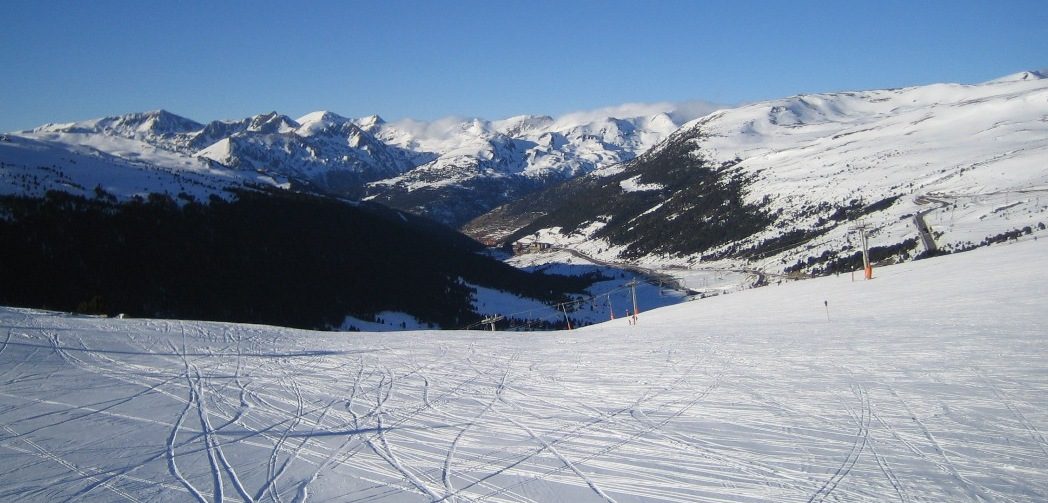
Powder days: where the fresh snow lands
Averages are one thing; a powder morning is another, and knowing where fresh snow lands and lasts is worth a dozen depth charts. When a storm clears, the best untracked snow tends to hide on the high, north-facing sectors the sun reaches last — the Grau Roig bowl behind Pas de la Casa, the upper reaches of Ordino Arcalís, and the shaded faces above El Tarter. Because Andorra’s crowds thin sharply midweek and outside the school holidays, fresh tracks can last well past first lift on a quiet January or March morning. Watch the forecast for an incoming front, book flexible, and base yourself high: the difference between skiing a powder day and reading about it is often just being in the right valley when the sky clears.
First and last snow: when the season starts and ends
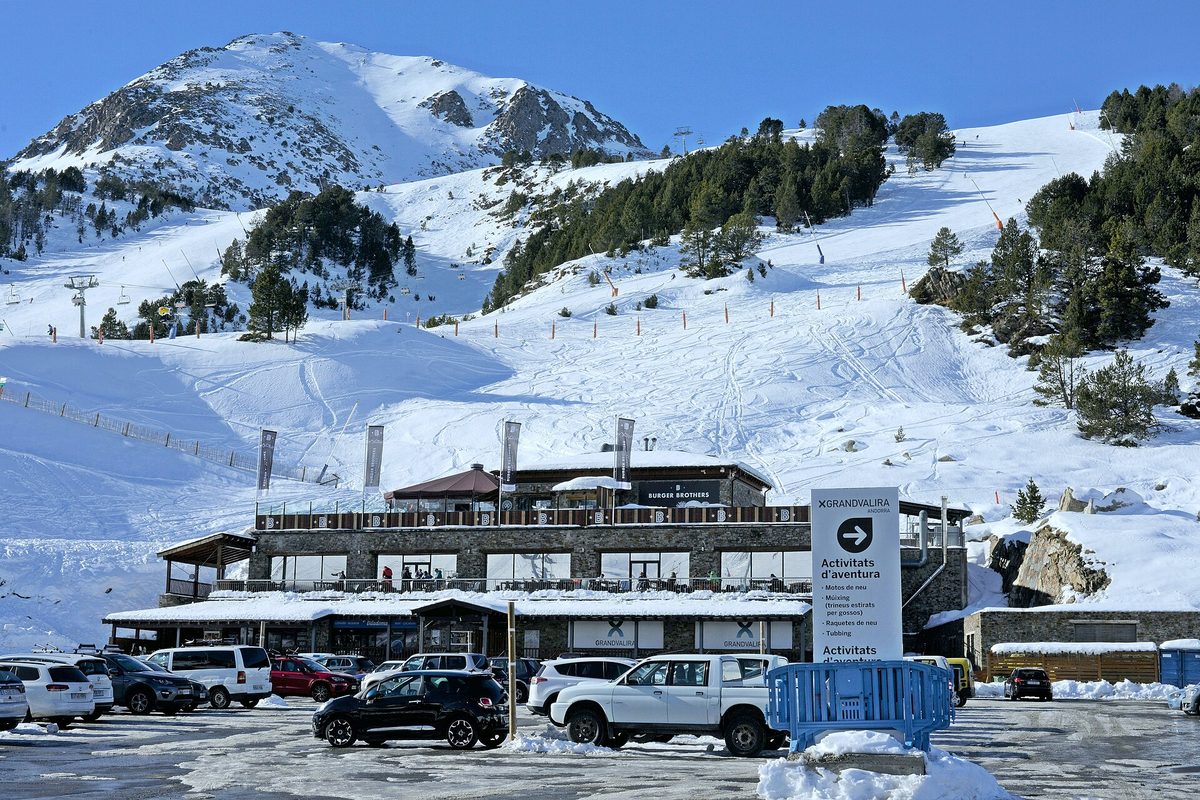
The ski season in Andorra runs, in a normal year, from the first week of December to the first or second week of April. The main resorts — Grandvalira and Pal Arinsal — traditionally open around the 5th of December and close around the 6th of April, while the higher, colder, north-facing Ordino Arcalís bookends the season at both ends: it sometimes opens in the final days of November when early storms cooperate (it did in late November for the 2023/24 season) and typically stays open a week or so later into April.
Before and after those dates, snow exists but isn’t skiable in an organised way: October and November snows are building but the lifts aren’t running, and the April-into-May melt leaves too much soft snow up high to hike safely but not enough below to ski. For how those shoulder weeks feel on the ground, see our guides to autumn and December.
How reliable is the snow? Snowmaking and the modern guarantee
This is the reassuring part, and it’s why Andorra has become such a dependable ski destination. First, the natural advantage: the slopes sit high and largely north-facing, so above about 1,800 m the snow is fairly reliable across the whole season in most years. Second, the insurance: Andorra runs one of the largest snowmaking networks in Europe, with snow cannons covering a very large share of the pisted terrain — on the order of two-thirds of the slopes at the big areas. That means that even in a slow-starting or dry winter, the resorts can lay and maintain a skiable surface on the main runs, which is exactly why early-December and late-March trips remain a safe bet even when the sky isn’t generous.
The honest caveat is that snowmaking needs cold, not just intent — it works when temperatures are low enough, which they reliably are at altitude through the core of winter. So the guarantee is strongest exactly when you’d expect: January to March, up high. Shoulder-season and low-altitude snow remains at the mercy of the weather.
How does that stack up against the Alps? Andorra can’t match the raw depths of a high Alpine resort in a monster year, but its blend of altitude, north-facing slopes and heavy snowmaking makes it markedly more reliable than many lower or more southerly European resorts — and it delivers that reliability at noticeably lower prices. The trade-off is variability: a poor natural-snow winter leans harder on the cannons, so the off-piste and the scenery suffer even when the groomed pistes are fine. In a good year, though, the snow here is deep, long-lasting and genuinely world-class for the money.
Does it snow in Andorra la Vella (the town)?
Yes, but less than you might picture. Andorra la Vella, the capital, sits at 1,023 m — low by Andorran standards — so while it does get snow, mainly between December and February, it tends to fall, settle for a day or two, and then melt, especially given the town traps a little warmth. You can easily spend a midwinter week based in the capital and see only occasional snow on its streets while skiing on a deep base twenty minutes uphill. If seeing snow in the town itself matters to you — for photos, or a first white-Christmas experience — January is your best bet, but treat valley snow as a bonus rather than a plan, and go up the mountain to be sure of it.
If a snowy town scene is high on your list, the higher villages beat the capital for it. Soldeu, Canillo, El Tarter and Pas de la Casa all sit up where snow settles and stays, and they look the part right through midwinter in a way the lower, slightly warmer capital often doesn’t. Base up there and a white street outside your window becomes the norm rather than a lucky exception — another reason to sleep near the slopes if snow is the whole point of your trip.
How to check the snow before you go
Because any single season can defy the averages, check live conditions before you commit, especially for a shoulder-season trip. Three sources I trust: the resorts’ own snow reports and webcams (Grandvalira and Ordino Arcalís publish daily base depths and open-lift counts), the Andorran meteorological service at meteo.ad for the forecast and snow warnings, and an independent aggregator like snow-forecast.com for a resort-by-resort mountain forecast. Cross-referencing the resort webcams against the independent forecast in the week before you travel is the single best way to know what you’re actually getting — far better than any long-range average, this guide included.
Snow on the roads: driving and safety
Snow that’s a joy on the pistes is a serious matter on the passes. From 1 November to mid-May, Andorran law requires every vehicle to carry winter tyres or chains, and it’s enforced with genuine enthusiasm. The high mountain roads — above all the Port d’Envalira, the highest paved pass in the Pyrenees at over 2,400 m — can close temporarily during heavy storms, so build slack into midwinter travel days and never assume a snowy pass will be open on schedule. Off the marked runs, the usual mountain rules apply: the pisted slopes are avalanche-controlled, the backcountry is not, so anyone venturing off-piste needs the right kit, training and a look at the day’s avalanche bulletin. The winter-driving essentials are in our guide to driving in Andorra.
What this means for planning your trip
Put it all together and the planning rules are simple. For guaranteed snow to ski, come between January and March and stay at or ski from altitude; you essentially cannot go wrong. For early-season snow on a budget, early December works thanks to snowmaking, with the base still thin. For spring snow and sunshine, late March into early April delivers a deep base under a warm sun. For simply seeing snow without skiing, midwinter up at a resort base or a high viewpoint is a sure thing, while valley snow is a gamble. And if you’re driving in any of it, remember the winter-tyre law runs from 1 November to mid-May — the details are in our guide to driving in Andorra. For the full seasonal breakdown, our guides to skiing in Andorra, the ski season and Andorra in winter take it from here.
When does it snow in Andorra? Frequently asked questions
When does it start snowing in Andorra?
The first snows usually dust the high passes and peaks in October or November. Reliable, settling snow at ski altitude arrives from late November into December, which is when the resorts build a base and open. Down in the valley towns, the first lasting snow typically comes in December.
What is the snowiest month in Andorra?
January generally sees the heaviest snowfall, while February usually has the most snow-days and the deepest overall base, since January’s falls have stacked up. March still brings substantial late-season snow on a deep base. In short: January for fresh falls, February for depth, March for depth plus sunshine.
Does it snow in Andorra la Vella?
Yes, but lightly and intermittently. The capital sits relatively low at 1,023 m, so snow there falls mainly between December and February and often melts within a day or two. For dependable snow you need to go up the mountain, where the ski slopes above 1,800 m hold cover reliably all season.
How much snow does Andorra get?
At resort altitude, a typical season accumulates on the order of two-and-a-half metres of snow, concentrated between January and March, building to a base of well over a metre by February. Valley totals are much lower. Any single winter can run well above or below average, so check live snow reports before booking.
Is snow guaranteed in Andorra?
Nothing is truly guaranteed, but Andorra is about as reliable as European skiing gets. High, north-facing slopes above 1,800 m and one of Europe’s largest snowmaking networks — covering roughly two-thirds of the pistes — mean the resorts can maintain a skiable surface even in a dry or slow-starting winter, especially from January to March.
When does the snow melt in Andorra?
The base melts fast at resort level through April, which is why the season closes in the first or second week of that month. Higher up, snow lingers much longer — the melt retreats to the summits through May and June, and patches survive on the highest north-facing peaks, like Coma Pedrosa, into July in a good year.
Can you see snow in Andorra in summer?
Not on the ski slopes, which are green and open for hiking and biking, but yes on the highest summits, where north-facing patches can linger into July. If you want to be among snow in summer, a hike toward the highest peaks is your best chance; the pistes themselves are firmly in their green season by June.
Where can I check current snow conditions in Andorra?
Use the resorts’ own daily snow reports and webcams (Grandvalira and Ordino Arcalís publish base depths and open-lift counts), the Andorran met service at meteo.ad for forecasts and warnings, and an independent aggregator like snow-forecast.com for a mountain forecast. Cross-check the webcams against the forecast in the week before you travel.
Thinking about a different time of year?
I have written up the other seasons and months in the same detail — useful if your dates are still flexible:
- Andorra in Winter
- Andorra in Summer
- Andorra in December
- Andorra in January
- Andorra in August
- Andorra in Spring
- Andorra in March
- Andorra in Autumn
Related Andorra travel guides
Keep planning with our other in-depth guides: the month-by-month best time to visit Andorra, the full skiing in Andorra hub and ski season timing, the snowiest months in January and March, and the wider view of Andorra in winter.
Photo credits
All photographs are from Wikimedia Commons under their stated licences, with thanks to the photographers: