Three mistakes catch out drivers on a first trip up the CG-1 from Spain. Filling the tank in La Seu d’Urgell just short of the border. Circling Andorra la Vella for street parking while an underground car park sits right beneath you. And turning up in winter with summer tyres and no chains in the boot. The first two cost money. The third can cost a €180 fine if police stop you on a snowy road on the way up to Soldeu.
Driving in Andorra is easy in principle and full of small traps in practice. No motorways, one toll tunnel, a legal requirement to carry winter equipment from 1 November to 15 May, petrol 20–30% cheaper than Spain or France, and customs checks on the way out. This guide is for anyone arriving by car.
Last updated: September 2026. Fuel prices, tolls, parking tariffs and fines move around; everything here was checked against official and Andorran sources in September 2026, but check mobilitat.ad and the relevant official sites before you travel.
Driving in Andorra at a glance
The short version, before we get into the detail. If you read nothing else, read this table and the winter equipment section.
| What you need to know | |
|---|---|
| Which side? | Right. Overtake on the left. Same as Spain and France |
| Road network | No motorways at all |
| Main roads | The numbered “carreteres generals” (CG roads). CG-1 goes to Spain, CG-2 to France |
| Speed limits | 50 km/h built-up, 90 km/h on general roads, 60 km/h on secondary roads, 30 km/h in Zone 30 areas, unless signed otherwise |
| Alcohol limit | 0.5 g/l blood alcohol. Administrative fine €400 plus up to two months’ suspension; refusing a test means arrest and can bring a €600–€3,000 fine and up to three years without a licence |
| Winter equipment | Compulsory 1 November to 15 May — winter or M+S tyres, or chains carried in the car. Fines on snowy or icy roads €180, or €500 over 3.5 tonnes |
| Tolls | One: the Envalira Tunnel, around €8.10 for a car in 2026. Everything else is free |
| Fuel | Andorra applies 4.5% IGI instead of 21% Spanish VAT — expect to save roughly €10–20 on a 50-litre fill |
| Parking in the capital | Foreign plates: blue zone €0.76 for the first 15 min, then €0.16 every 3 min (2h30 max); green zone €0.76 for the first 30 min, then €0.16 every 6 min. Underground car parks are easier |
| Emergencies | 112. Live road conditions and webcams at mobilitat.ad |
| Do you need a car? | Not for a capital-only shopping or spa trip. Yes for villages, trailheads and multiple ski areas |
What driving in Andorra is actually like
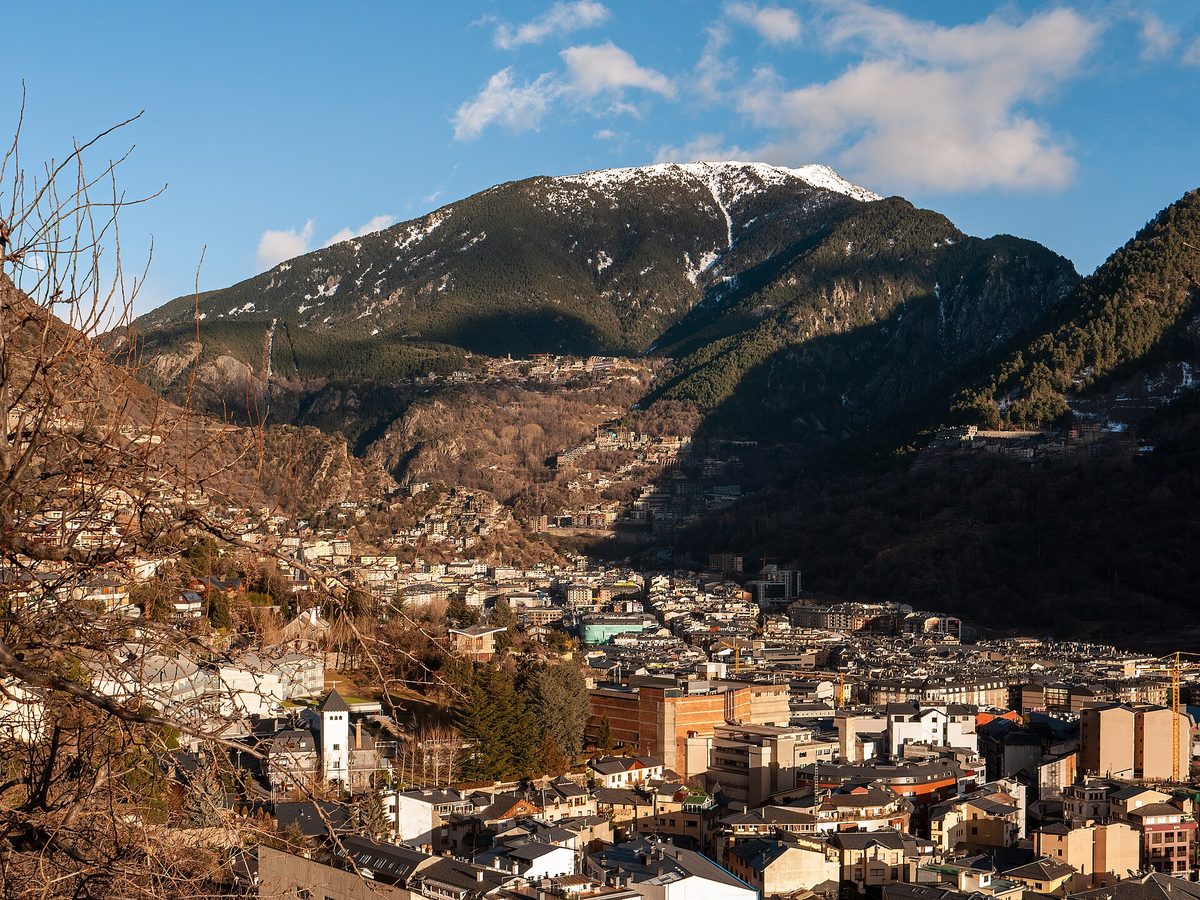
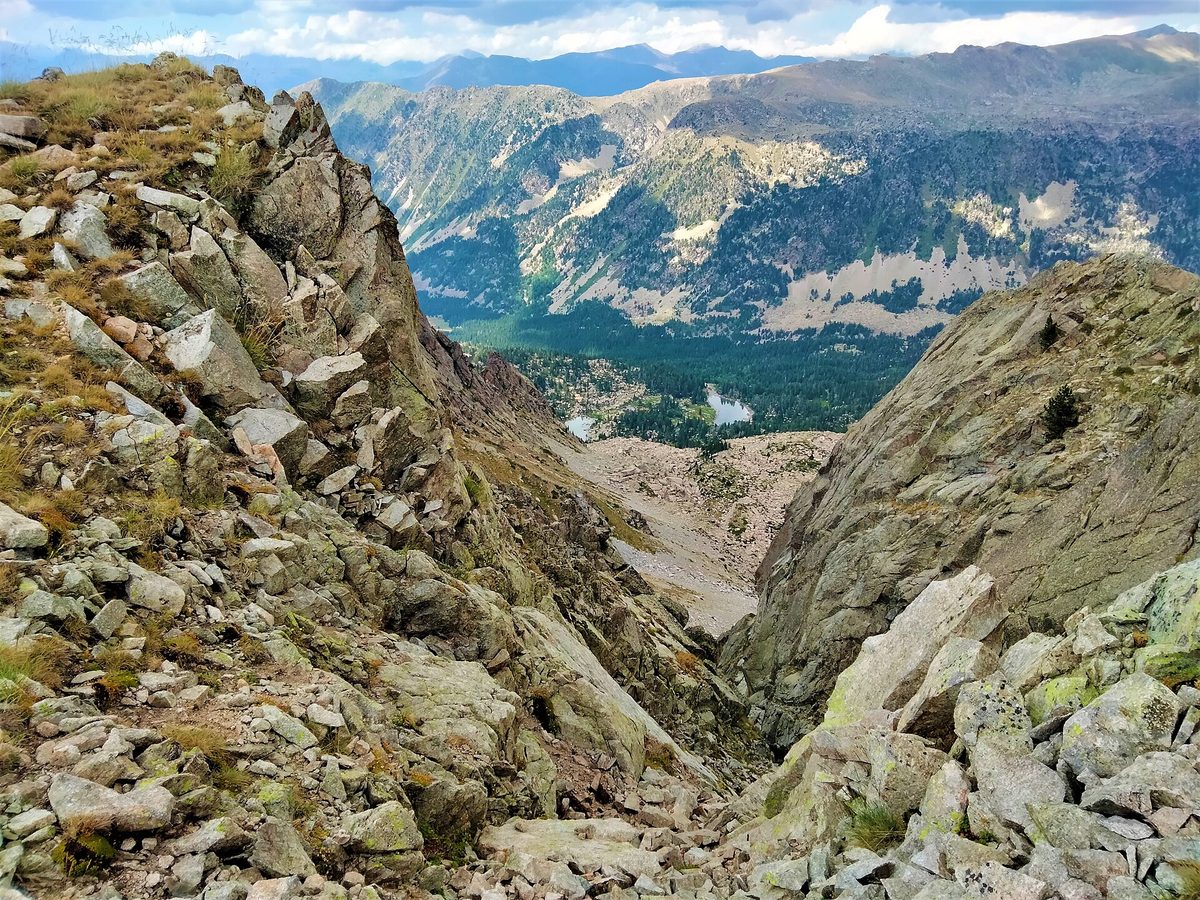
Forget the word “country” for a second and picture a Y-shaped set of valleys. Everything — every town, every ski lift, every roundabout — hangs off that Y. There is no ring road worth the name, no dual carriageway, and no way to bypass the middle of it without either a tunnel or a very long detour.
The surface quality is genuinely good. Andorra spends real money on its roads because it has no railway, no airport and no plan B, and it shows: smooth tarmac, decent signage, well-lit tunnels, crash barriers where you want them. This is not one of those mountain countries where you meet a pothole the size of a bath at 1,800 metres.
What catches people out is the geometry, not the maintenance. You will spend most of your time climbing or descending. Hairpins are constant. Gradients on the resort spurs are steep enough that an underpowered hire car with four adults and luggage will be working hard, and your brakes will be working harder on the way back down. Use a low gear on descents and let the engine do the braking — the single most useful sentence in this guide for anyone from a flat country.
The other adjustment is traffic. Andorra had 90,122 residents in September 2026 and received about nine million visitors in 2025, and a good share of them end up on the same 1.5-kilometre Shopping Mile along Avinguda Meritxell and Avinguda Carlemany in Andorra la Vella and Escaldes-Engordany. On a December Saturday afternoon that corridor crawls. My rule: park once, walk the capital, and get the car out again when you’re leaving town. Fighting the traffic to move 600 metres is a waste of your holiday.
Roundabouts deserve a mention because there are a lot of them and they replace almost every major junction. Priority goes to traffic already on the roundabout, as everywhere in Europe, and Andorran drivers use them briskly and competently. Indicate on exit, don’t dawdle, and be aware that some of the big ones have multi-lane approaches: work out your lane early.
One genuine pleasure: local driving standards are high. Andorrans drive these roads every day in every weather and they are quick, but they’re not aggressive and they don’t tailgate the way you might expect. If someone’s stacking up behind you on a climb, use a pull-in. Nobody will hold it against you.
The road network: CG-1 to CG-6, decoded
Andorran road numbers are refreshingly simple once someone explains them. “CG” stands for carretera general — general road — and there are six of them. Below those sit the CS roads (carreteres secundàries), which are the local spurs up to villages and hamlets. Learn the six CGs and you can navigate the whole country without a satnav.
CG-1: the Spanish artery
Twelve kilometres from the Spanish frontier at the Riu Runer, through Sant Julià de Lòria, past the Santa Coloma suburb and into the capital. This is the Spanish approach, the road you’ll arrive on from Catalonia, and beyond the border it carries on towards La Seu d’Urgell. It’s a proper valley road: wide-ish, two lanes each way in places, and choked at rush hour. If you’re coming up from Catalonia, the full route breakdown lives in my Barcelona to Andorra guide.
CG-2: the French road, the pass and the tunnel
Thirty-three kilometres from Escaldes-Engordany up the Valira d’Orient through Encamp, Canillo, El Tarter and Soldeu to the French border at Pas de la Casa. It is the most dramatic drive in the country and, in winter, the most demanding.
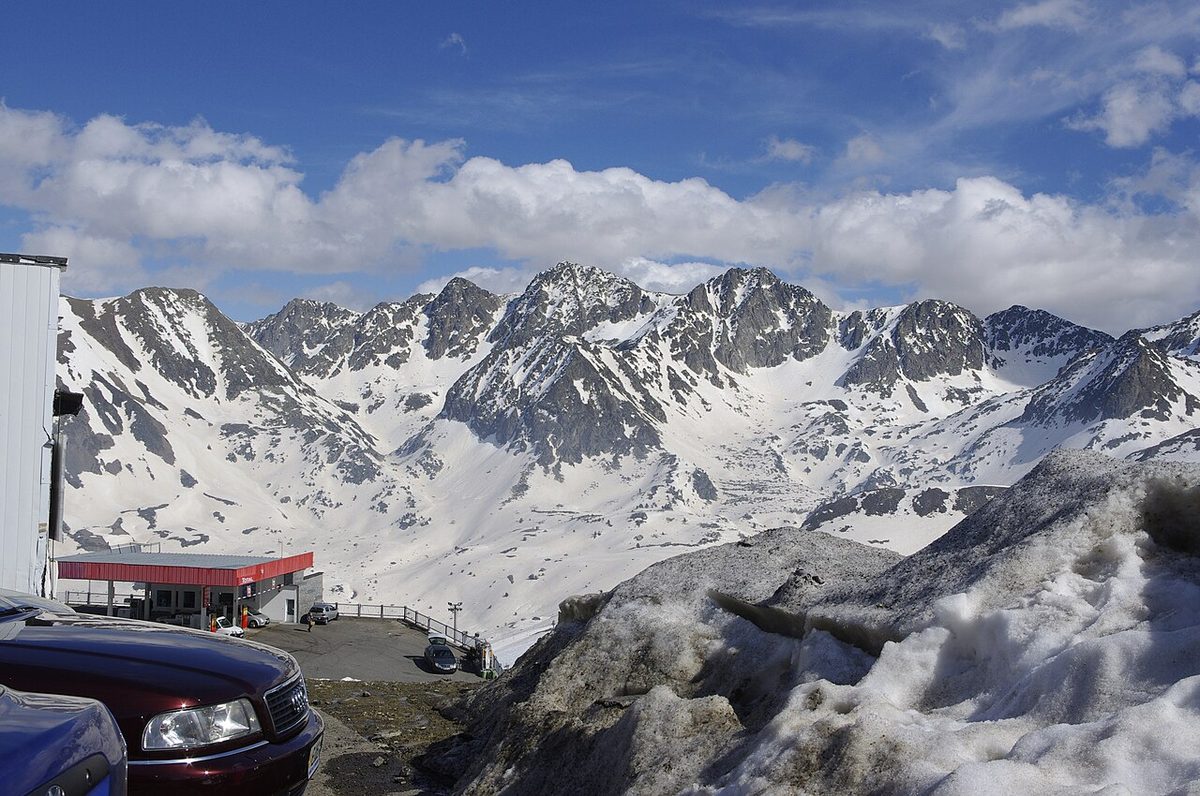
Near the top you get a choice. The Port d’Envalira is the old road over the pass at 2,408 metres — the highest paved road in the Pyrenees, a regular Tour de France and Vuelta climb, and a spectacular piece of engineering in clear weather. Or you take the Envalira Tunnel, 2,879 metres long at roughly 2,000 metres altitude, which is Andorra’s only toll road.
The 2026 tunnel toll is €8.10 for a car, or a car and trailer up to 2 metres high and 3.5 tonnes; a taller combination (2–3 metres, still within 3.5 tonnes) pays €14.20. Motorbikes pay €4.80, and the heaviest standard vehicles €20.30. The current rates took effect on 1 January 2026. Two things worth knowing: there’s a 50% discount for Pas de la Casa residents and workers, which you won’t qualify for, and the tunnel becomes free whenever the pass above it is closed by weather, which is exactly when you’ll want it.
Is €8.10 worth it? In summer, in daylight, in clear weather — no. Drive the pass. The views back down towards Grau Roig are worth far more than eight euros and the road is in good condition. In fog, at night, in falling snow, or if anyone in the car gets nervous on exposed hairpins — pay the toll without a second thought.
CG-3 and CG-4: the two northern valleys
Both leave the capital heading north-west. CG-3 heads up the northern valley through La Massana and on towards Arcalís — the road to Ordino-Arcalís and the Tristaina lakes. The final stretch above El Serrat is narrow, exposed and closed for much of the winter beyond the ski area.
CG-4 branches off at La Massana and climbs to Pal and, via the CG-5 spur at Erts, to Arinsal — the two halves of the Pal Arinsal ski area. The Pal road is a serious mountain climb with a wall of hairpins; the Arinsal road is gentler but ends in a resort village where winter parking is genuinely tight.
CG-5 and CG-6: the short ones
CG-5 is a link of about seven kilometres from Erts up to Arinsal. CG-6 is six kilometres from Aixovall in the Sant Julià parish up towards Bixessarri — and onward to Os de Civís, a Spanish village you can only reach by driving through Andorra, which remains my favourite piece of Pyrenean geographical absurdity. Neither road is on the way to anywhere else, so you’ll only use them deliberately.
The tunnels that save you time
Two are worth knowing about. The Dos Valires tunnel is 2.9 kilometres of tunnel linking La Massana on the CG-3 with Encamp on the CG-2, meaning you can get from the northern valley to the eastern valley without going anywhere near the capital’s traffic. Work began in 2005 and it opened in July 2012 as the first stage of a ring road around the north side of Andorra la Vella and Escaldes-Engordany. Use it. It will save you twenty minutes in high season and a good deal of temper.
The rest of the network has shorter tunnels and avalanche galleries of its own. They are well lit and easy, but dip your headlights and note that Andorran law expects lights on in tunnels and in poor weather. Also: download offline maps before you arrive. Mobile coverage is good in the valleys and patchy at altitude, and one of the cheapest fixes is sorting out an Andorran SIM or eSIM before you set off rather than roaming blind on a French mast.
Andorra driving rules you actually need to know
The basics are unsurprising if you’ve driven in Spain or France. The details are where the fines live.
Speed limits
There are no motorways. Unless signs say otherwise, the maximum is 90 km/h on the general roads and 60 km/h on secondary roads. Built-up areas are 50 km/h as standard, and designated Zone 30 areas drop to 30 km/h. Limits change frequently and sometimes abruptly, especially at tunnel mouths and on the approach to villages. Read the signs; don’t assume.
Alcohol, phones and seatbelts
The blood alcohol limit is 0.5 g/l — the same as Spain and France, lower than England and Wales. The administrative penalty is a €400 fine and up to two months’ licence suspension. Cross the criminal threshold (0.8 g/l in a blood test for ordinary drivers, 0.5 for professionals) and it’s a court matter: a €300–€3,000 fine, up to a year’s imprisonment or arrest, and losing your licence for up to three years. Police allow an error margin on breathalyser readings, but not on blood tests. Refuse the test and you’ll be arrested, facing a €600–€3,000 fine, up to a year’s imprisonment or arrest and up to three years without a licence. Random checks are common late at night and during ski season, and the morning-after stop is a real thing here. Andorra is a country where people drink at altitude after skiing and then drive home down a mountain; the police know it and they check.
Phones must be fully hands-free. Seatbelts are compulsory front and rear. Children under 10 who are shorter than 1.50 m must ride in the back in an appropriate child restraint. A child may sit in front, restrained, only in specific cases, such as a car with no rear seats or with suitable rear seats already taken, and a rear-facing seat in front needs the frontal airbag disconnected. Motorcyclists must wear a helmet.
What you must carry
Andorra’s kit list mirrors the Spanish and French one, which is convenient if you’re driving through either. Carry a reflective jacket (and wear it if you get out on the carriageway), two red warning triangles, a spare set of bulbs and the tools to fit them, and a spare pair of glasses if you drive with them. Bring your licence, insurance certificate and the V5 or hire agreement. UK drivers need a UK sticker on the back unless it’s on the plate, and headlamp beam deflectors if the car is right-hand drive.
The green card requirement was dropped in August 2021, so you no longer need one — but do check with your insurer that your policy actually extends to Andorra. This is the one that catches people. Andorra is not in the EU, and plenty of European motor policies list countries individually and quietly leave it off. Five minutes on the phone before you go is worth it. Andorra is in a customs union with the EU for industrial goods and uses the euro, but it is not a member state and it is not in Schengen — and insurers care about that distinction even when nobody else does.
Speed cameras and fines
There are only a handful of fixed cameras, mostly on the main CG roads, plus mobile radar vans that the police move around. The busiest fixed camera in the country in 2025 was the one at Bordes d’Envalira in Canillo, which caught over 1,600 drivers; mobile radars caught more than double that. Andorran police issued around 12,400 traffic fines in 2025 in total, with speeding offences actually down sharply on previous years.
Radar detectors and speed camera warning devices are illegal, as in France and Spain, and carrying one is itself an offence. Fines for minor offences are issued on the spot and you’re expected to pay there and then. Non-resident drivers do not get a friendly letter in the post six weeks later.
Andorra winter tyres and the winter equipment law
This is the section people skip and then regret, so I’m going to be blunt about it.
The dates and what counts
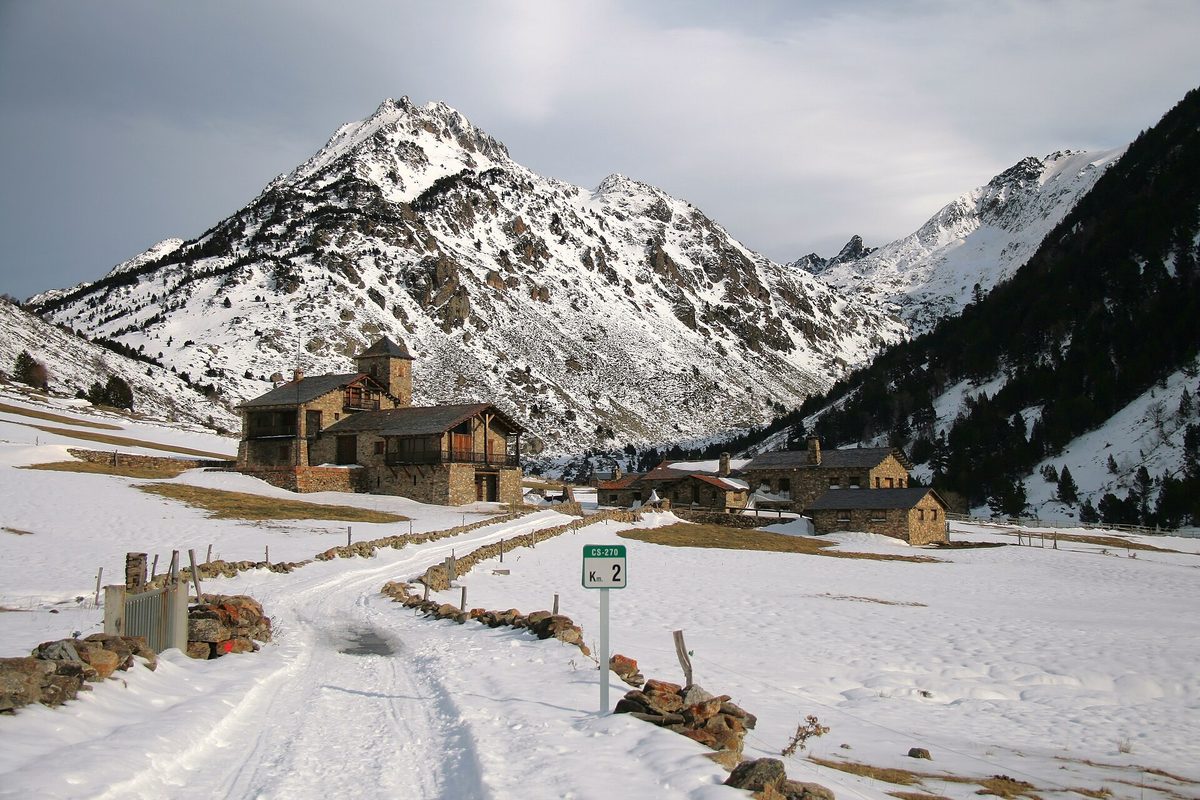
From 1 November to 15 May, every motor vehicle on Andorran roads must carry chains or similar devices ready to use unless it’s fitted with winter or M+S tyres, regardless of the weather on the day. It can be 18°C and sunny in the capital on 3 November and the law still applies. Compliance means one of the following:
- Winter tyres carrying the three-peak-mountain-snowflake marking on the sidewall, or
- M+S (mud and snow) all-season tyres, or
- Chains carried in the vehicle, ready to fit — metal or textile — even if you’re on summer tyres
On a snowy or icy road, driving without the required equipment costs €180 for a vehicle up to 3.5 tonnes and €500 for anything heavier, and police can immobilise a vehicle that’s a danger or blocking traffic. Four-wheel drive does not exempt you. Neither does “I’m only going to the shops.” Sources differ on the exact status of studded tyres, so if that’s your plan, check with Andorran police directly — they’re rarely necessary here anyway.
The practical version for most visitors: carry a set of chains. A pair of metal chains costs around €30–50, textile socks around €80–100, and either satisfies the law. Keep the receipt and keep them somewhere you can actually reach, not buried under four suitcases.
The Colors de la Neu: Andorra’s snow phase system
This is the bit almost no English-language guide explains, and it’s genuinely useful. When snow hits, the Departament de Mobilitat declares a colour phase for affected roads, and the rules change with the colour. Signs, radio and the mobilitat.ad map all carry it.
| Phase | What it means for you |
|---|---|
| Yellow (groga) | Snow on the road. Winter tyres or equipment compulsory. Maximum 60 km/h. Motorcycles, mopeds and personal mobility vehicles banned from the road |
| Orange (taronja) | Chains compulsory for all vehicles over 3,500 kg. Maximum 50 km/h. Articulated vehicles advised not to travel. Don’t continue if the weather worsens and you lack proper kit |
| Red (vermella) | Chains compulsory on every vehicle, winter tyres or not. Maximum 30 km/h. Heavy freight over 19,000 kg banned. Postpone the journey unless it’s essential |
| Black (negra) | Road closed. Real risk of being stranded for hours. If you’re immobilised, conserve fuel and stay with the vehicle unless you’re certain of shelter |
Snow-clearing vehicles and emergency services are exempt from the chain requirements. Note what red phase means in practice: even if you turned up in a Volvo on proper winter rubber, you can be legally required to fit chains. That is the argument for carrying them regardless of what tyres you’re on.
What actually happens at a checkpoint
Police run checks on the roads up to the resorts and passes; in the 2025–26 season they set up at Meritxell, Moles, southern Soldeu, Pal, Coll de la Botella, Ravell and Erts. They look in the boot. If you have nothing, expect a fine, and a car that’s a danger or blocking traffic can be immobilised on the spot.
My honest advice on tyres versus chains
If you’re bringing your own car from northern Europe for a ski week, put winter tyres on it. You’ll be driving down a mountain every evening in the dark, and summer tyres are designed for temperatures above 7°C.
If you’re hiring at Barcelona or Toulouse for a few days, you’re at the mercy of the rental fleet. Ask explicitly for winter tyres at booking, get it in writing, and check the sidewalls at pickup rather than trusting the desk. Then buy or hire chains anyway. For the seasonal picture — when the snow actually arrives, how deep it gets and how long it lingers on the passes — my guide to when it snows in Andorra goes into far more detail.
Andorra fuel prices: why everyone fills up here
You will notice the petrol stations. There are a lot of them for a country of 468 square kilometres, they cluster near both borders, and at busy times the ones at Sant Julià and Pas de la Casa can queue out onto the road. There’s a straightforward reason.
The tax gap
Andorra charges IGI — its version of VAT — at 4.5%. Spain charges 21%. France charges 20%. Put that gap on every litre and Andorran pump prices land roughly 20–30% below the neighbours.
To put numbers on it, at the time of writing in 2026, Andorran petrol has been sitting around €1.50 a litre and diesel around €1.60. Spanish petrol has been closer to €1.70 and diesel around €1.79. French petrol has been up near €1.90 with diesel around €1.86. On a 50-litre tank that’s roughly €10 saved against Spain and closer to €20 against France. The Andorran government has also applied temporary fuel-tax rebates this year, including an extra cut on diesel for September 2026.
These figures move weekly. Treat them as the shape of the thing rather than a quote.
How to play it
Arrive as empty as you dare and leave completely full. That’s the whole strategy. Fill up on the way out rather than the way in, and if you’re coming from Barcelona, run the tank down through Catalonia rather than topping up at La Seu d’Urgell just short of the border.
Practical notes. Stations take cards and cash, and most of the larger ones are attended rather than pay-at-pump, which is a small relief if your card is fussy about foreign terminals. Both unleaded and diesel are universal; LPG is rare. Electric charging is available at Grandvalira’s El Tarter, Soldeu, Grau Roig and Pas de la Casa bases, but plan charges rather than assuming you’ll find an open charger.
The queues are real. Sunday afternoon and the final hour before a border rush are the worst. If you can fill up on a weekday morning, you’ll save yourself twenty minutes of idling behind a French motorhome. Fuel is only one of several things that are meaningfully cheaper here — the full picture is in my guide to shopping in Andorra, and specifically for alcohol and cigarette prices, which drive most of the day-trip traffic.
Parking in Andorra la Vella and everywhere else
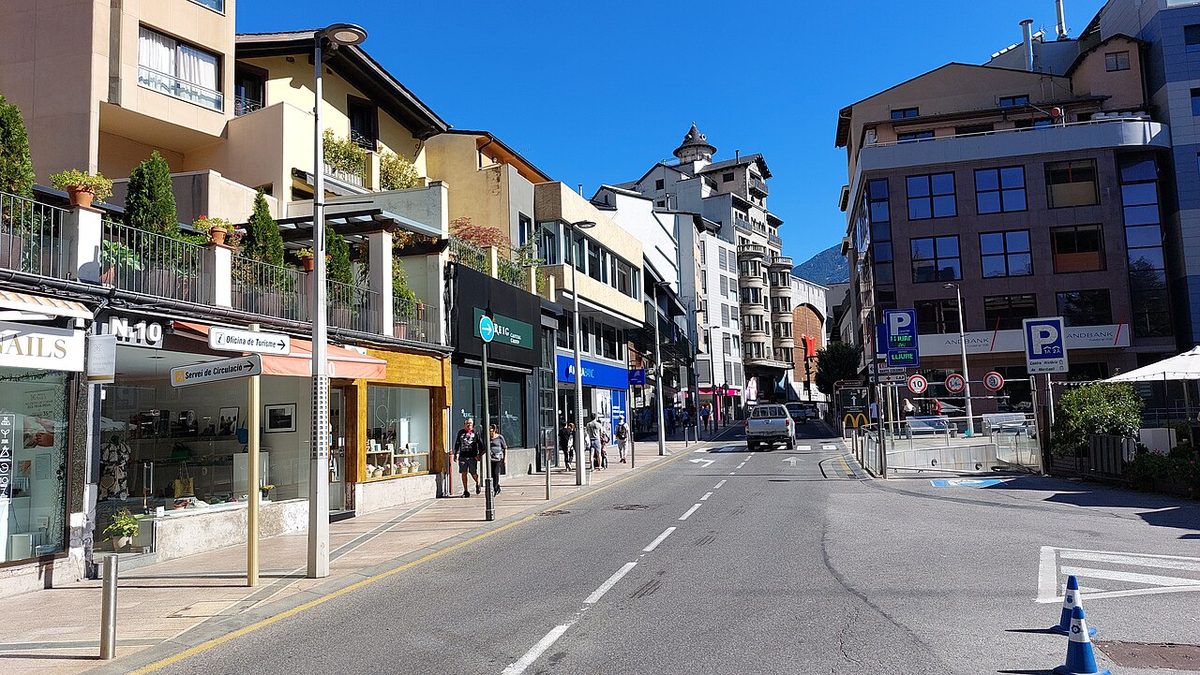
Here’s where I’ll gently correct a common misconception. People arrive expecting blue and orange zones because that’s the system in parts of France. Andorra’s street parking is blue and green.
The street zones
Both the capital and Escaldes-Engordany operate metered street parking split into two zones. Andorra la Vella’s 2026 rates:
- Zone 1 (blue) — €0.76 for the first 15 minutes, then €0.16 every 3 minutes, with foreign plates (Andorran plates pay €0.38, then €0.08). Maximum stay 2 hours 30 minutes. This is the central, high-turnover stuff
- Zone 2 (green) — €0.76 for the first 30 minutes, then €0.16 every 6 minutes, with foreign plates (Andorran plates pay €0.38, then €0.08). Slightly further out, much better value if you’re staying a while
The charging hours are posted on each meter, so read them before you walk off. Outside those hours street parking is generally free, which is handy if you’re arriving in the evening. Pay at the machine and display the ticket, or use the official parking-meter app, which saves hunting for coins.
Overstay and you get a ticket. Park somewhere obstructive, though, and it’s a different order of trouble: parking on a crossing, a bus stop, a pavement or a disabled bay carries a much heavier fine, and cars that block traffic do get towed.
Underground car parks: just use them
This is my strongest parking opinion. The capital and Escaldes are riddled with underground car parks, most of them beneath the shopping streets and the big commercial centres, and they are the correct answer for almost every visitor. You get a covered, dry, snow-free space, you’re a lift ride from Avinguda Meritxell, and you stop circling.
Rates vary by operator. Andorra la Vella’s municipal car parks charge €2.90 an hour, €12.30 overnight (20:00–08:00) and €28 for 24 consecutive hours, and the first half-hour is free in the open-air municipal ones; private operators set their own prices. Several shopping centres validate or discount parking if you spend inside, so ask at the till — worth knowing if you’re doing a proper shopping day in the capital.
If you’re staying overnight, confirm your hotel’s parking situation when you book. Central hotels often have a limited number of spaces or a deal with a nearby garage, and “parking available” sometimes means “€15 a night at the car park across the road.” My where to stay in Andorra la Vella guide flags which areas are easiest to drive to.
Ski resorts, trailheads and villages
Resort parking is mostly large outdoor car parks at the lift bases, some free, some paid, and they fill up on peak days — arrive early in high season or you’ll be walking. Grandvalira’s bases at Soldeu, El Tarter, Encamp and Pas de la Casa all have substantial parking; the Encamp funicular car park is a good trick for skipping the mountain drive entirely. Details on which base suits which trip are in my overview of skiing in Andorra.
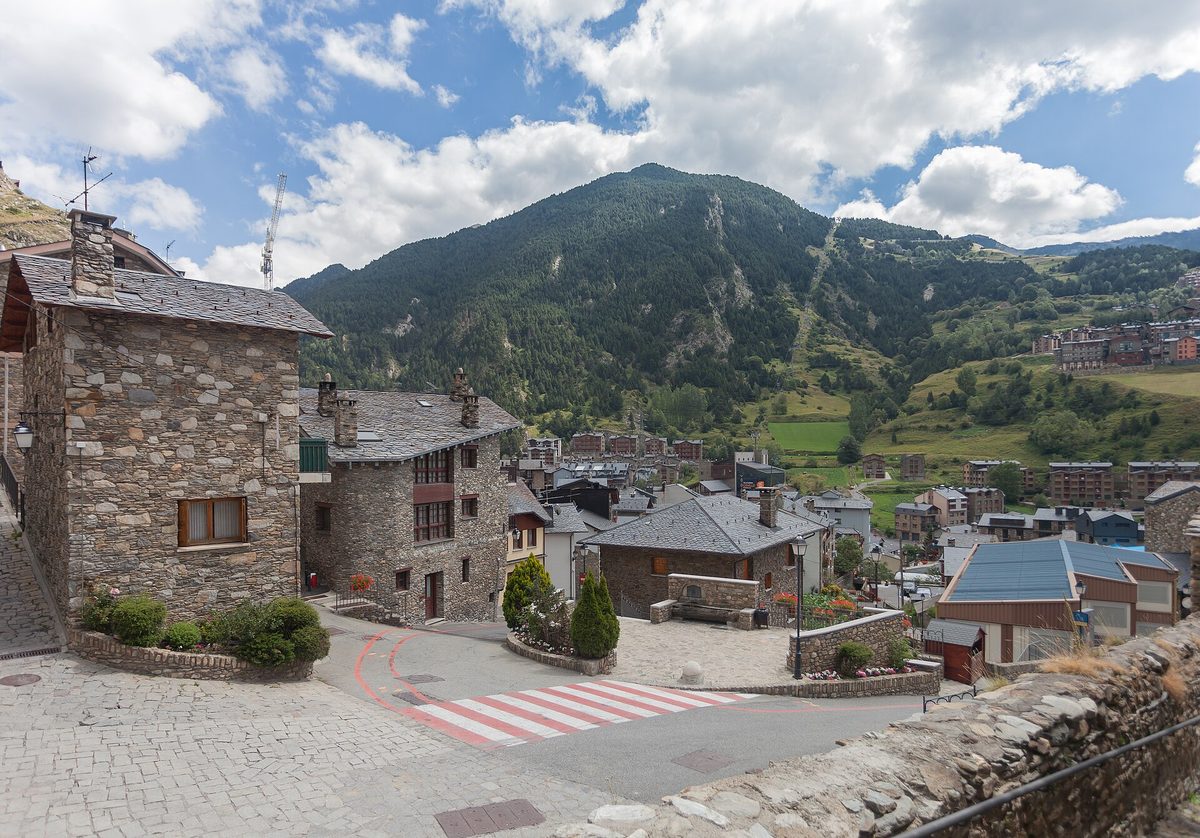
Trailheads are a different matter. Summer parking at popular walking starts — the Tristaina lakes road, the upper Sorteny and Incles valleys — is limited and some access roads are restricted or shuttle-only in July and August to stop the valleys being buried in cars. Check before you drive up. In the stone villages, park in the marked area at the edge and walk in. The lanes are narrow and there’s often nowhere to turn at the top.
Borders, queues, and the customs rule nobody reads
Andorra sits outside the EU customs union and outside Schengen, which has one practical consequence for drivers: there are real border posts on both sides, and the meaningful checks happen on the way out, not the way in.
The Spanish border at Sant Julià
The crossing is at the Riu Runer, with the Spanish post at La Farga de Moles just beyond. Going in, you’ll usually be waved through in a couple of minutes. Coming out is the problem. Spanish customs are checking for duty-free goods over the allowance, and at the end of a busy shopping weekend the queue back down the CG-1 from Sant Julià can stretch a long way.
Waits vary a lot with the day and the season. The single best piece of advice in this guide: leave Andorra before lunch or after 8pm on a Sunday. Not in the 4pm–7pm window with everyone else. Live camera feeds of both borders are on mobilitat.ad and various local sites, and it’s worth thirty seconds of checking before you set off.
The French border at Pas de la Casa
Quieter, higher and more weather-dependent. The frontier sits at Pas de la Casa, and on the French side you’re on the N-22, which meets the N-20 heading down towards Andorre-L’Hospitalet and Ax-les-Thermes. French customs check too, though usually with less enthusiasm than the Spanish side.
The catch here is snow. The Andorran side of the CG-2 is cleared fast and well — Andorra takes its winter road maintenance seriously because the country’s economy depends on it. Beyond the border the road is France’s responsibility, and its clearing and closures follow French decisions. It’s entirely possible for the Andorran road to be open while the French road on the other side of the line is not, which is a horrible discovery to make at 2,000 metres in the dark. If you’re heading out to Toulouse in winter, check both countries’ road status, not just Andorra’s.
What you’re allowed to take out
This is the one that catches people, because the shopping is the whole point for a lot of visitors and the allowances are per person, not per car. Broadly, per adult traveller leaving Andorra:
- Tobacco: 300 cigarettes, or 75 cigars, or 400 g of loose tobacco
- Spirits: 1.5 litres over 22% ABV, or 3 litres of lower-strength drinks or sparkling wine
- Wine: 5 litres of still wine
- Beer: 16 litres
- Other goods: up to around €900 in value (roughly €450 for under-15s), with food capped lower, around €300
Alcohol and tobacco allowances apply to travellers aged 17 and over. Allowances cannot be pooled between passengers to cover one person’s oversized purchase, and different categories can’t be traded off against each other. Keep every receipt — customs officers use them to establish value, and without one they’ll assign their own. Go over and you’ll pay duty on the excess, or lose the goods.
The full breakdown, including what happens if you’re over, is in my dedicated guide to the Andorra duty-free allowance, and there’s more on how the checks actually run in the border crossing guide.
Hiring a car, or bringing your own
The cross-border permission trap
Most visitors who drive in Andorra hire a car in Spain or France, because that’s where the airports are. This works well — but Andorra is a foreign country to a Spanish or French rental agreement, and that has to be dealt with in advance.
You need explicit permission from the rental company to take the vehicle into Andorra. Some brands allow it as standard, some allow it with a fee, some refuse outright. The fee, where charged, is typically a flat cross-border charge or a daily supplement. Crucially, taking the car over without permission can void your insurance entirely — the “territorial limits” clause is not decorative.
What to do: check the terms before you book, declare Andorra at the desk when you collect, get the authorisation noted on the paperwork, and take a photograph of it. Do the same for winter tyres if you’re travelling between November and May. Both conversations take three minutes at the counter and are impossible to have from a police checkpoint at 1,800 metres.
Practical route notes: Barcelona is about 191 km away and Toulouse about 186 km, and both take roughly three hours by car. Neither has a scrap of motorway for the final hour, so budget generously. Automatics are much rarer in Spanish and French fleets than in Britain or the US, and they’re worth the surcharge here — a manual on a hairpin climb in traffic gets tiring fast.
Hiring inside Andorra
You can, and there are agencies in the capital and at La Massana, but the fleet is small and the rates are rarely competitive against Barcelona. It makes sense mainly if you’ve arrived by coach and want a car for a couple of days mid-trip. Check the agency’s age rules, young-driver charges and deposit terms when you book.
Bringing your own car
Entirely normal, and a lot of British ski groups do it. From Calais it’s roughly a twelve-hour drive; from a Bilbao ferry, more like six. Check your insurance covers Andorra specifically, sort your European breakdown cover, and remember the country has no railway and no airport — if your car dies here, recovery is a long and expensive business. I’ve set out the full route options, ferry choices and overnight stops in the guide to driving to Andorra.
Do you actually need a car in Andorra?
Honest answer: often not, and I’d rather you decided that on purpose than discovered it after paying for six days of hire and a cross-border fee.
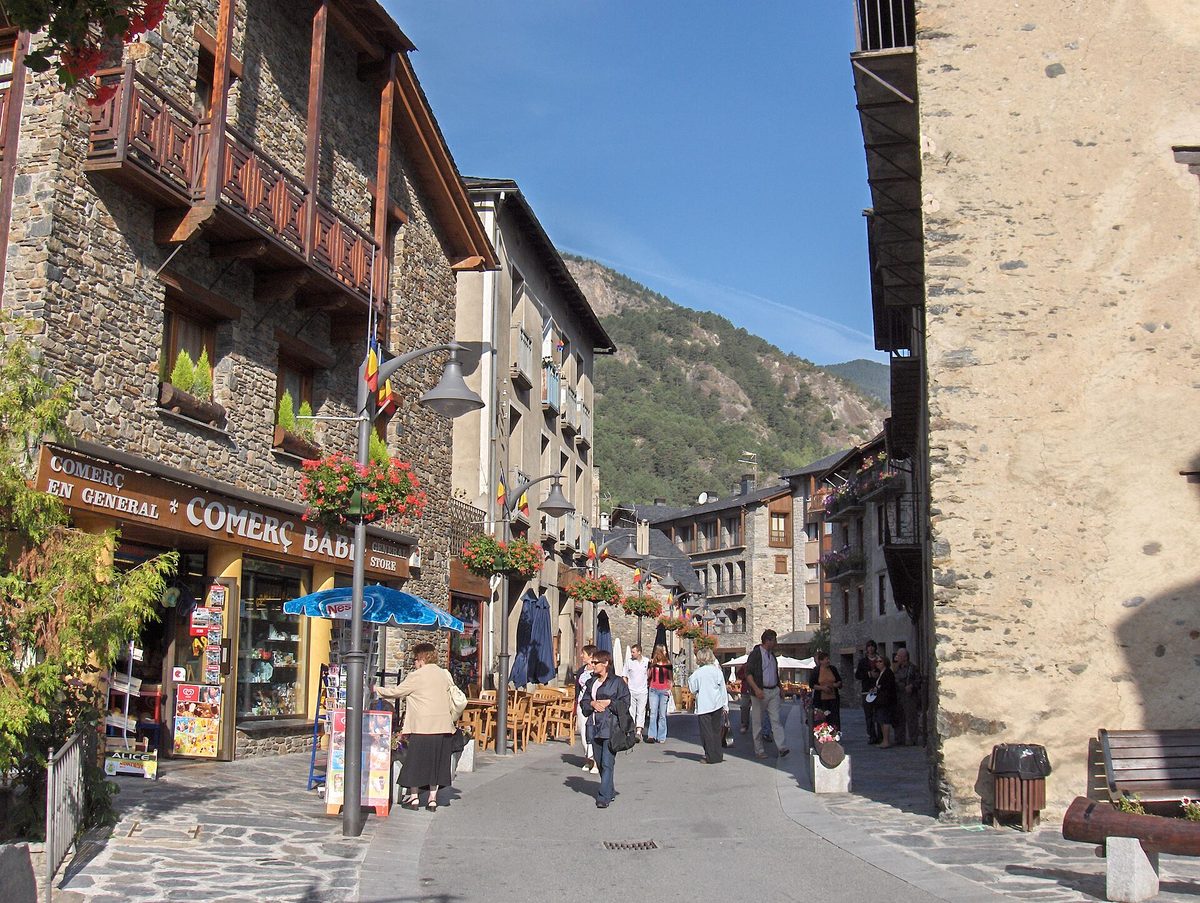
Skip the car if your trip is the capital and Escaldes — shopping, restaurants, Caldea, a couple of museums. The two towns run into each other and the whole thing is walkable end to end in half an hour. Add a coach from Barcelona or Toulouse airport and you never need a steering wheel. Same goes for a straightforward ski week where you’re staying in Soldeu or Arinsal and using the free resort shuttles; a lot of hotels are on the ski bus route and the car sits in the garage all week collecting a nightly charge.
Skip the car too if you’re nervous about mountain driving in winter. There is no shame in this. Descending an icy hairpin in the dark after a day’s skiing is not most people’s idea of a holiday, and Andorra’s bus network is better than its size suggests — national lines connect all seven parishes, with single fares from €1.90 for one zone to €6.35 for four, and buses every 30 minutes or better on the main corridors, depending on the time and day. The detail is in my guide to getting around Andorra.
Take the car if you want the villages, the viewpoints and the trailheads. This is the real argument. Buses serve the towns; they don’t serve the Coll d’Ordino at sunrise, the road up to Arcalís in June, or the drive out to Os de Civís. If your Andorra involves hiking, photography, hopping between valleys, or visiting more than one ski area in a week, a car turns a fiddly trip into an easy one. Andorra’s best half-day is arguably just a drive: the CG-3 up the northern valley, out to the Roc del Quer viewpoint above Canillo, back through the Dos Valires tunnel, with a long lunch in a stone borda somewhere in the middle.
Take the car if you’re travelling with small children or staying outside the main towns, where accommodation is cheaper and quieter but the last bus is earlier than you’d like. Families in particular tend to find the car pays for itself in avoided misery — a sleeping toddler and a 40-minute wait for the last bus are a poor combination.
Frequently asked questions
Is driving in Andorra difficult?
Not technically difficult, but it is constant mountain driving. Every road climbs, hairpins are frequent, and there are no motorways to relax on. Surfaces and signage are good and traffic outside the capital is light. If you’re comfortable on Alpine or Scottish mountain roads you’ll be fine; if you’ve only driven flat motorways, allow a day to settle in.
Are winter tyres compulsory in Andorra?
You must have winter equipment between 1 November and 15 May, whatever the weather. That means winter or M+S tyres fitted, or chains carried in the vehicle ready to use. Caught on a snowy or icy road without it, you’re fined €180 in a vehicle up to 3.5 tonnes and €500 in anything heavier. Four-wheel drive doesn’t exempt you, and police can immobilise a vehicle that’s a danger or blocking traffic.
Can I drive a hire car from Barcelona into Andorra?
Usually yes, but you need the rental company’s permission first, because Andorra is outside the EU. Some firms allow it free, some charge a cross-border fee, some refuse. Check the terms before booking, declare it at the desk, and get the authorisation written on your rental agreement. Driving over without it can void your insurance.
How much is the Envalira tunnel toll?
Around €8.10 for a car in 2026, roughly €4.80 for a motorcycle, and up to about €20 for the heaviest vehicles. It’s Andorra’s only toll. The alternative is the free Port d’Envalira pass over the top at 2,408 metres, and the tunnel becomes free whenever the pass is closed by weather.
How much does parking cost in Andorra la Vella?
With foreign plates, the central blue zone costs €0.76 for the first 15 minutes and €0.16 every 3 minutes after that, capped at 2 hours 30 minutes; the green zone costs €0.76 for the first 30 minutes, then €0.16 every 6 minutes. Andorran plates pay half. Each meter shows the hours when charges apply. Underground car parks cost similar and are far less stressful.
Why is fuel so cheap in Andorra?
Andorra levies IGI at 4.5% rather than Spain’s 21% VAT or France’s 20%. That puts pump prices roughly 20–30% below both neighbours, saving around €10–20 on a typical tank. It’s why there are queues at the border stations on Sunday afternoons.
Do I need an international driving permit for Andorra?
Not if you hold a full EU licence or a UK photocard licence — those are accepted for tourist visits. Holders of an old UK paper licence may need an IDP, as may drivers from some other countries, so check before you travel. Carry your licence, insurance certificate and vehicle documents at all times; police do ask for them.
What happens if it snows heavily while I’m there?
Andorra runs a colour phase system. Yellow means winter equipment and a 60 km/h limit; orange adds chain requirements for heavy vehicles at 50 km/h; red requires chains on every vehicle at 30 km/h; black closes the road entirely. Check mobilitat.ad, which carries live road conditions and webcams.
The verdict after a lot of miles
Driving here is one of the genuine pleasures of the country, and I say that as someone who normally advocates leaving the car at home. The roads are good, the distances are tiny, and within twenty minutes of a duty-free perfume counter you can be on an empty hairpin at 2,000 metres with the whole of the eastern Pyrenees opening up in the mirror.
Just respect two things and you’ll have no trouble at all: the winter equipment law, which is enforced and not negotiable, and the Sunday afternoon border queue, which is entirely avoidable if you plan around it. Everything else — the parking zones, the tunnel toll, the customs allowance — is small print you now know better than most people arriving this weekend.
If you’re still putting the trip together, start with the full Andorra travel tips hub, which pulls the practical stuff into one place. From there, the best time to visit Andorra will help you pick your season, where to stay in Andorra covers which valley suits which kind of trip, and if you’re driving in from Catalonia or Toulouse, the route guides will get you to the border with your temper intact.
Photo credits
All photographs are from Wikimedia Commons under their stated licences, with thanks to the photographers: