January is the month I quietly recommend to friends who actually want to ski rather than be seen skiing. The Christmas lights come down, the holiday crowds drive home, and what’s left is the real thing: cold, deep, dependable snow, half-empty midweek pistes, and hotel prices that have dropped a clear tier from the festive madness. It is Andorra at its most honestly wintry, and I love it.
Andorra in January is the depths of the ski season — the coldest, most snow-sure month, with the deepest reliable base and, once the Three Kings holiday ends around the 7th, the best value and quietest pistes of the winter. It’s for committed skiers, snowboarders and anyone who’ll trade short daylight for real snow and lower prices.
Last updated: July 2026. Temperatures, holiday dates and prices below reflect recent seasons; figures shift year to year and the resorts confirm each winter’s details in autumn, so treat them as close guides and check official sites before booking.
Here’s the honest, detailed version of the month — how cold it really gets, why mid-January is the sweet spot, and what to do when the weather closes the top of the mountain. If you’re still choosing dates, weigh it against our full guide to the best time to visit Andorra and the milder shoulder of December.
Andorra in January at a glance
| The question | The short answer |
|---|---|
| Snow | The most reliable of the season — deep base, frequent top-ups, snowmaking backup |
| Valley weather | Cold: highs around 4-6°C, nights around −2 to −5°C; far colder at altitude |
| Up high (2,000 m+) | Reliably sub-zero, wind-chill can hit −10°C or lower on exposed ridges |
| Daylight | Short — about 9.5 hours, the least sunshine of the year |
| Crowds & price | Busy and pricey to ~7 Jan (Three Kings), then a clear drop; quiet midweek after |
| Come for | Serious skiing, snowboarding, thermal spa, winter sales, cosy mountain food |
| Key date | 5-6 January: Three Kings — parade on the 5th, public holiday on the 6th |
| Driving | Winter tyres or chains are the law; high passes can close in storms |
Andorra in January weather: the depths of winter
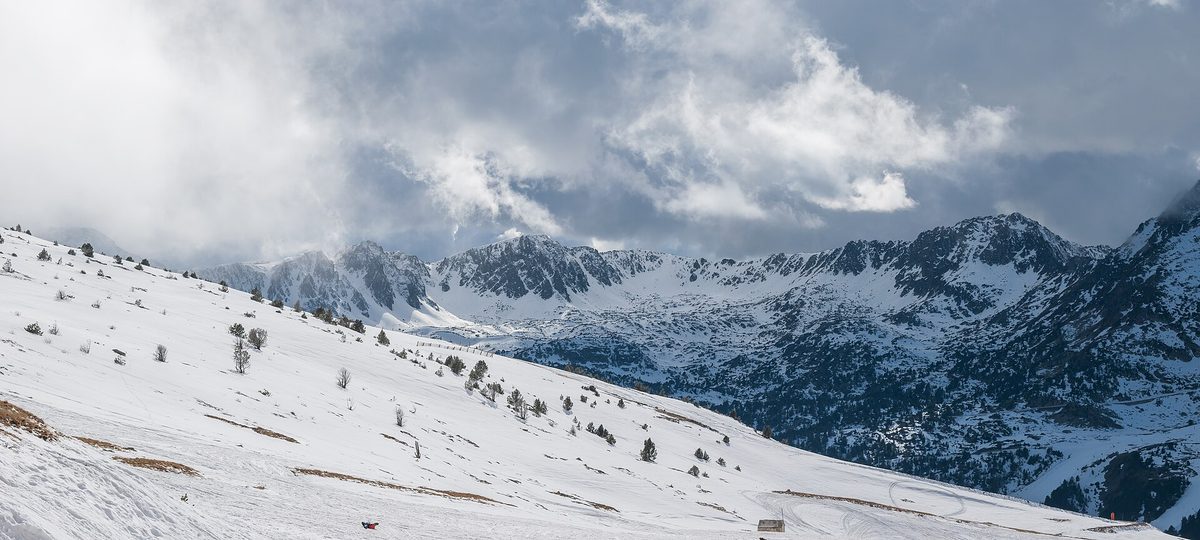
January is proper winter, and it behaves like it. Down in the valley at Andorra la Vella (1,023 m), daytime highs sit around 4-6°C, often under a hard blue sky, and nights fall to somewhere between −2 and −5°C. That’s the mild version. Climb to resort altitude between 1,800 and 2,600 m and it’s a different, colder country: reliably below freezing all day, with wind-chill on an exposed ridge capable of taking the felt temperature into double digits below zero. The gap between the capital at lunchtime and a summit lift in a north wind is the difference between a fleece and full battle dress.
What January lacks is daylight and what it makes up in is snow. This is around the shortest, least-sunny stretch of the year — roughly nine and a half hours of daylight, the sun low and the lifts stopping mid-afternoon — so an efficient ski day matters. But it’s also the snowiest month, statistically, with the deepest and most dependable base of the winter and frequent fresh top-ups. If snow reliability is your priority, this is the month it’s least likely to let you down; for the full seasonal picture, see our guide to when it snows in Andorra.
One honest note on the “coldest month” claim: February often runs a hair colder still on the averages. What sets January apart isn’t a record low — it’s the combination of dependable cold and the deepest snowpack, arriving just as the holiday crowds leave. That’s the sweet spot, and it’s worth understanding why.
The post-Kings pivot: why mid-January is the connoisseur’s ski month
Everything about January changes around the 7th, and it’s the single most useful thing to understand about the month. Spain and Andorra celebrate Epiphany — the Three Kings — on 6 January, so the festive season here runs long, right through the first week. Until then, prices sit near their Christmas peak and the pistes carry the holiday crowds.
Then, almost overnight, the country exhales. The families drive home, the lift queues shrink to nothing midweek, and hotel rates drop a clear tier. From roughly 8 January until the February school holidays arrive, you get the best pure-ski rhythm of the winter: cold, consolidated snow, quiet slopes, and prices that make Andorra’s value reputation look conservative. Ski Sunday to Friday in mid-to-late January and you’ll wonder where everyone is. This is the window I’d point any serious skier at — the deepest snow of the year without the deepest crowds or costs. The one thing to watch is the odd Spanish regional holiday weekend later in the month, which can briefly refill the popular sectors — but even those rarely approach the crush of February half-term, which is the next real crowd wave to plan around.
Skiing in January: the most reliable snow of the season
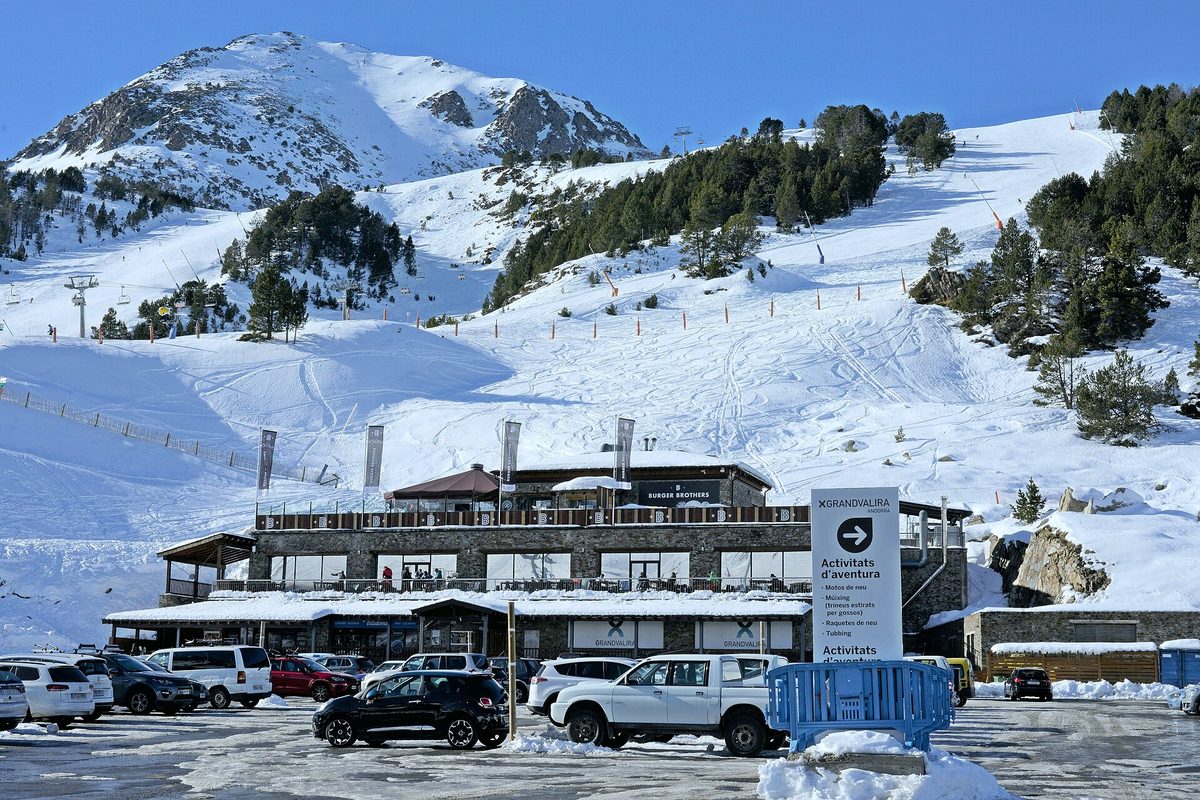
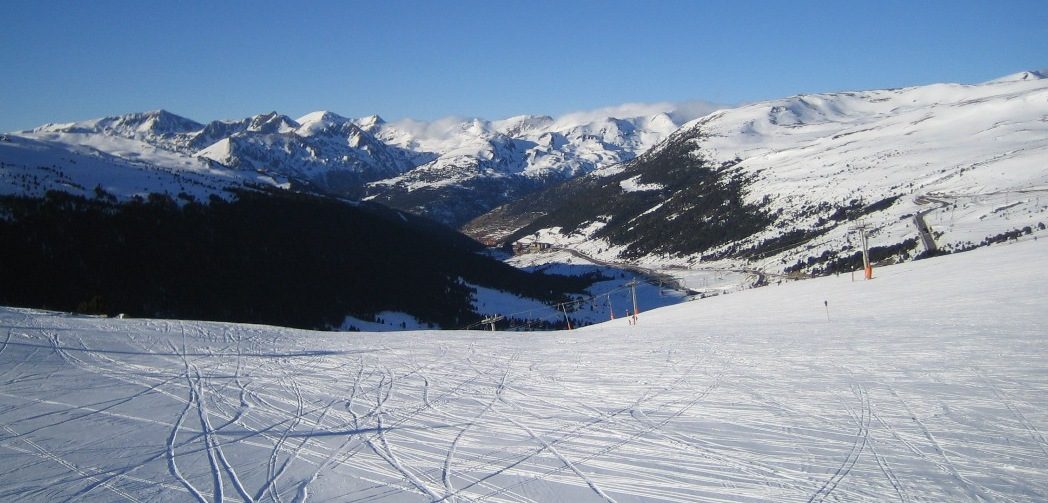
If you only ski once this winter, January is the safe bet. The base is at or near its deepest, natural top-ups are frequent, and Andorra’s large snowmaking network covers the gaps — so the full breadth of terrain across Grandvalira, Pal Arinsal and the higher, colder Ordino Arcalís is usually open and skiing well. For the resort-by-resort breakdown, our guide to skiing in Andorra is the place to start, with the timing detail in the ski season guide.
For every level
Beginners do well in January precisely because of that reliable snow — the nursery slopes are properly covered rather than icy or patchy, and post-Kings the ski schools have space. If you’re learning, base somewhere with gentle terrain on the doorstep and book morning lessons; our guide to skiing in Andorra for beginners has the detail. Intermediates get the run of the mountain on a deep base. Stronger skiers get the season’s best chance at lift-served powder after a fresh dump, with the quiet early-morning pistes of a mid-January midweek among the finest skiing Andorra offers. Snowboarders and freestylers get well-covered parks. The one constraint is shared by all: short days. Fresh snow tends to hold until late morning; the lifts stop mid-afternoon, so start early and don’t dawdle over lunch.
Which base for January
When the days are short and the priority is snow, altitude and lift access win. The high, snow-sure slopes above Pas de la Casa hold cover as well as anywhere in the country, while polished Soldeu gives you doorstep skiing with a pleasanter evening. Basing near a gondola saves precious daylight you’d otherwise spend travelling. Our full comparison lives in the where to stay in Andorra guide, and passes are cheapest booked online well ahead — see ski pass prices.
Making short January days count
January’s nine-and-a-half hours of daylight reward a plan. Aim to catch the first or second lift — the overnight cold keeps the groomers firm and fast, and any fresh snow is at its best before the late-morning sun touches it. Take an early, long lunch to sit out the coldest wind, then squeeze the final runs before the lifts wind down mid-afternoon, and bank the dark evenings for Caldea, dinner and the sales. It sounds obvious, but visitors who treat a January day like a July one — a slow start and a two-hour lunch — routinely lose half their skiing to the setting sun. The cold is manageable if you keep moving; it’s the lost daylight that catches people out.
Three Kings: the holiday that runs into January
If your trip falls in the first week of January, you’ll bump into the loveliest bit of the Andorran festive calendar. The Reis Mags — the Three Kings — are the traditional gift-bringers here, not Santa, and their arrival is the emotional peak of the season. On the evening of 5 January, the Cavalcada dels Reis parades floats and costumed kings through the towns, throwing sweets to children; the capital’s is the big one. Then 6 January is a public holiday, when most shops close and families gather for a long lunch.
For a visitor it’s a charming thing to witness and a slightly inconvenient day to need a supermarket, so stock up on the 5th. It also marks the crowd cliff-edge: come the 7th, the holiday is over, the country empties, and the value season begins. If a festive family trip is the plan, our guide to Andorra with kids covers the parade and the non-ski options.
Beyond the slopes: spa, churches and cold-weather comfort
January rewards non-skiers and rest-day skiers more than its reputation suggests, and it’s the month the indoor and cultural side of Andorra comes into its own. Top of the list is Caldea, the largest thermal spa in southern Europe: floating in 34°C water while the cold bites outside is the correct way to recover a pair of skied-out legs, and winter is when the thermal lagoons are at their best.
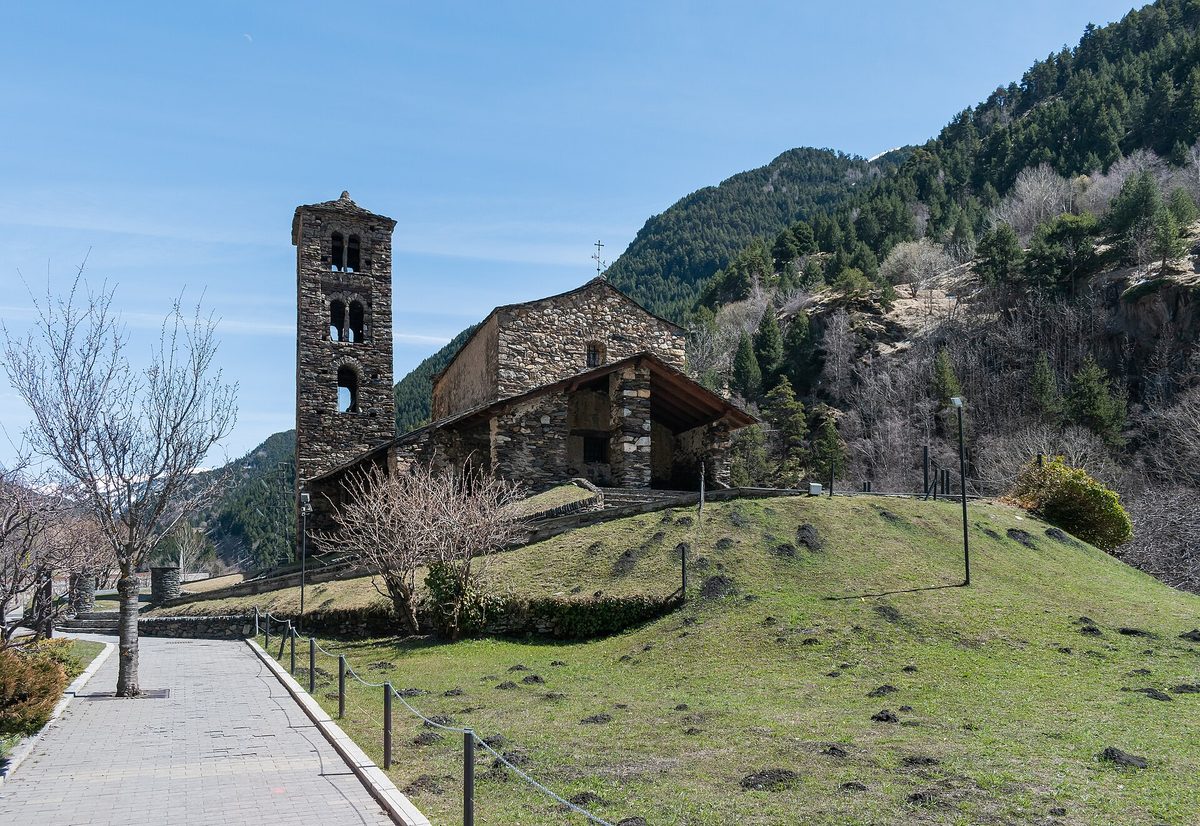
On a day when the weather shuts the top of the mountain, Andorra’s culture fills the gap nicely. The country is dotted with beautifully preserved Romanesque churches — stone bell towers and medieval frescoes tucked into the villages — and the little medieval quarter of the capital, anchored by Casa de la Vall, the former parliament, makes an atmospheric hour out of the cold. Then there’s the food, which is exactly what January weather orders: hearty mountain cooking built on trinxat and escudella, best eaten in a stone-walled borda after a cold day. Our guide to Andorran food maps out where to eat it.
Snowshoeing and the quiet mountain
For a different pace, January is prime snowshoeing season. Marked raquetes trails thread the higher forests and Nordic areas — Grau Roig, La Rabassa and the Vall d’Incles among them — and you need no lift pass and little skill, just warm boots and a willingness to break trail. Right after a snowfall, with the pistes roaring on the far side of the ridge, these forest routes are the most silent, beautiful corner of the whole winter. Guided outings run for the nervous, and several pair a walk with lunch at a mountain refuge.
The winter sales
There’s a reason January is sneakily the best month to combine skiing with serious shopping. The winter sales — the rebaixes — run through the month across the duty-free stores of Andorra la Vella and Escaldes, layering discounts on top of Andorra’s already low-tax prices. Perfume, fashion, sunglasses and electronics see the sharpest cuts; the savings are real enough that plenty of Spanish and French visitors treat a January ski trip as a shopping run with snow attached. For what’s genuinely worth buying and the current customs allowances, see our guide to shopping in Andorra.
Cold, daylight and driving: January realities
Three practicalities decide how smooth a January trip runs. First, the cold: the valley is manageable, but the mountain is genuinely cold, so pack for the summit rather than the forecast for the town. Second, daylight: with the sun down mid-afternoon, plan your ski day to start early and keep the dark evenings for Caldea, dinner and the sales.
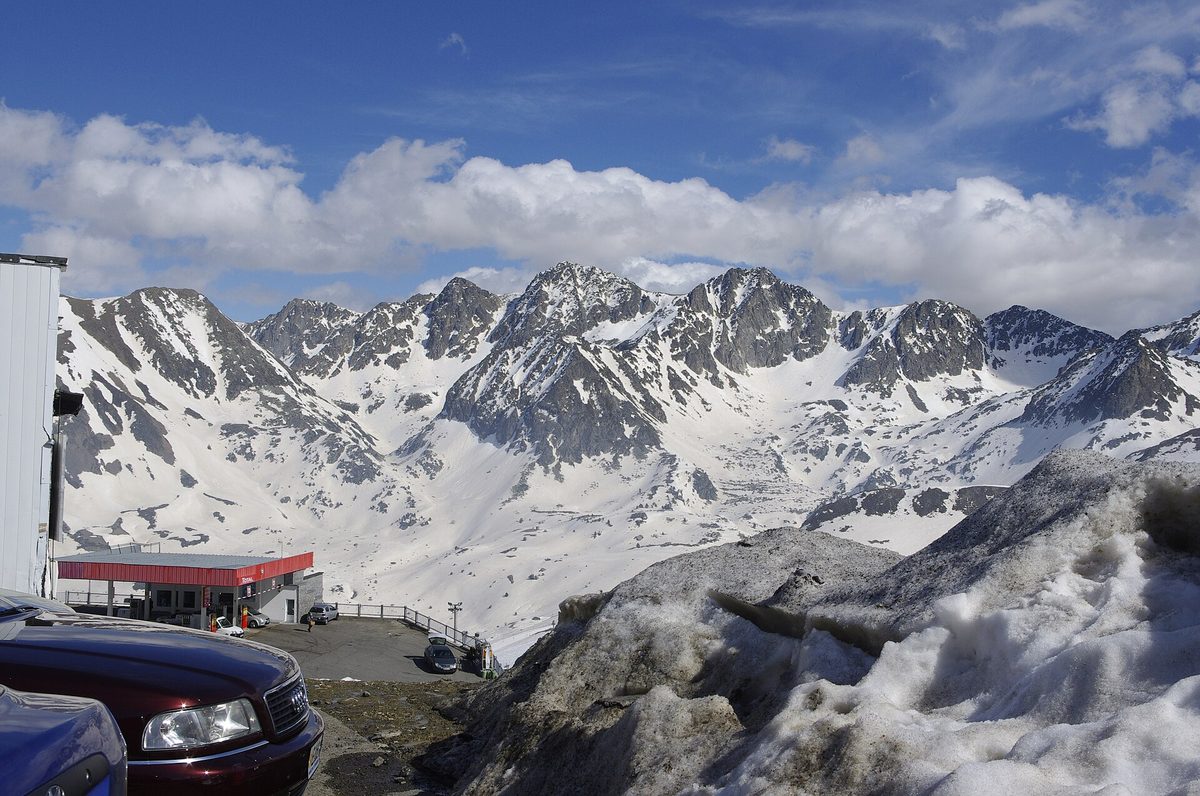
Third, and most important, driving. From 1 November Andorran law requires every vehicle to carry winter tyres or chains, and January is when you’ll need them. The high passes — the Port d’Envalira above Pas de la Casa chief among them, the highest paved pass in the Pyrenees — can close temporarily in a heavy storm, and the climbs demand respect and extra time. Rental cars from Spanish airports don’t always include winter kit, so confirm it when you book. The route options and the winter-driving detail are in our guides to getting to Andorra and driving in Andorra.
Where to stay in January
January’s short days make lift access the deciding factor. Ski-in or gondola-side villages — Soldeu, El Tarter, Encamp, Canillo, Arinsal — let you wring every minute of daylight out of the slopes, while the capital and Escaldes trade that for restaurants, the winter sales and Caldea on the doorstep, which is a fair swap if skiing isn’t the whole point. Whatever you choose, mid-to-late January is one of the easier times to find a good room at a good rate outside the holiday weeks. The area-by-area comparison is in our where to stay guide.
What to pack for Andorra in January
Pack for cold, and for the gap between town and mountain. Serious insulated layers, a waterproof and windproof outer, a warm hat, proper gloves and warm, grippy boots for icy pavements after dark. On the slopes, full ski kit and a face covering for wind-chill days; goggles and high-factor sun cream, because January sun off fresh snow is deceptively strong. A swimsuit for Caldea, and — if you’re driving — those legally required winter tyres or chains. Andorra sits outside the EU, so sort your mobile roaming before you rely on it.
What a January ski trip costs
January splits neatly into two price seasons. The first week, through the Three Kings holiday, carries near-festive rates. From about the 8th, everything softens: hotels drop a clear tier, lift-pass dynamic pricing eases off the holiday peak, and midweek deals appear. A mid-to-late-January week is one of the best-value serious ski holidays in Europe, with the gap over the Alps widest on food, drink, lessons and passes thanks to Andorra’s low-tax, duty-free status. Two levers sharpen it further: book lift passes online and early to catch the low band rather than paying the window price, and travel Sunday to Thursday, since Andorran hotels price weekends like a different country. Stack the winter sales and duty-free supermarket prices on top and the sums add up quickly in your favour — which is exactly how Andorra earned its name as the value corner of the European ski map.
Is January a good time to visit Andorra? My honest take
For skiers, it’s one of the best. Mid-January delivers the deepest reliable snow of the season, the quietest midweek pistes, and prices that have dropped from the festive peak — a combination no other month quite matches. The trade-offs are honest: the days are short, the mountain is genuinely cold, and if you need long afternoons of sunshine or a lively summer buzz this isn’t your month. But if your idea of a good winter holiday is fresh snow before 11am, a thermal soak as the light fades, and a plate of trinxat in a warm borda afterwards, January is Andorra doing exactly what it’s best at. Come after the 7th, ski midweek, and thank me later. For the sunnier, spring-skiing alternative, read on into March.
Andorra in January: frequently asked questions
How cold is Andorra in January?
In the valley (around 1,000 m), expect daytime highs of roughly 4-6°C and nights between −2 and −5°C. At ski altitude (1,800-2,600 m) it stays below freezing all day, and wind-chill on an exposed ridge can push the felt temperature to −10°C or colder. Pack for the mountain, not the milder town forecast.
Does it snow a lot in Andorra in January?
Yes — January is statistically the snowiest month, with the deepest and most reliable base of the season and frequent fresh falls, backed up by one of Europe’s larger snowmaking networks. It’s the month snow is least likely to disappoint, which is why it’s such a safe bet for a ski trip.
Is January a good time to ski in Andorra?
It’s arguably the best for reliable conditions. The snowpack is deep, and once the Three Kings holiday ends around 7 January the pistes are quiet midweek and prices drop from the festive peak. The only real limit is short daylight, so start early and make the most of the mornings.
When do the Christmas crowds leave Andorra?
Around 7 January. Because Spain and Andorra celebrate the Three Kings on 6 January, the festive season runs through the first week, with holiday crowds and near-peak prices. From the 7th the country empties fast, and mid-to-late January midweek is one of the quietest, best-value stretches of the whole winter.
What is Three Kings Day in Andorra?
Epiphany, on 6 January, when the Reis Mags — the Three Kings — bring gifts in the Spanish and Andorran tradition rather than Santa. The evening of the 5th brings the Cavalcada parade of floats and sweets through the towns; the 6th is a public holiday when most shops close. It’s a lovely thing to catch if your trip overlaps.
What is there to do in January besides skiing?
Plenty: soak at Caldea thermal spa, browse the January winter sales, tour the Romanesque churches and the capital’s medieval quarter, visit the museums, or eat your way through hearty mountain cooking in a traditional borda. It makes a satisfying winter city-and-spa break even without a lift pass.
How many daylight hours does Andorra get in January?
About nine and a half hours, the least of the year, with the sun low and setting mid-afternoon. In practice the lifts close earlier than in spring, so plan an early start on the slopes and keep the long evenings for the spa, dinner and the sales.
Do I need snow chains to drive in Andorra in January?
You need winter tyres or chains by law from 1 November, and January is when you’re most likely to use them. The high passes can close briefly in heavy snow, and mountain driving here demands extra time and care. Rental cars from Spanish airports don’t always include winter kit, so confirm before you collect the car.
Thinking about a different time of year?
I have written up the other seasons and months in the same detail — useful if your dates are still flexible:
Related Andorra travel guides
Keep planning your winter with our other in-depth guides: the month-by-month best time to visit Andorra, the full skiing in Andorra hub, the festive lead-in of December and the spring-skiing pivot in March, plus a soak at Caldea and the wider view of Andorra in winter.
Photo credits
All photographs are from Wikimedia Commons under their stated licences, with thanks to the photographers: