Getting the Andorra duty free allowance right is the difference between a smug drive home and a fine at the border, and it comes down to a few numbers most websites get wrong. Andorra sits outside the EU, so coming back into Spain or France you cross a real customs border with real limits — and, crucially, those limits are more generous than the generic “arriving from outside the EU” figures quoted almost everywhere. Know the numbers, keep your receipts, and the crossing is a formality.
The Andorra duty-free allowance per adult is 300 cigarettes, 1.5 litres of spirits (or 3 litres of fortified wine), 5 litres of still wine, 16 litres of beer into Spain, and €900 of other goods — higher than the standard non-EU limits many sites wrongly quote. Allowances are per person and can’t be pooled. This guide is for anyone bringing shopping home from Andorra.
Last updated: July 2026. Allowances can change and are enforced by Spanish and French customs; always confirm the current figures on official sources (Andorran customs at duana.ad, the French douane, and the Spanish Agencia Tributaria) before you rely on them.
Below is the full allowance table, why Andorra’s limits are higher than you’d expect, the fine print that catches people out, and exactly what happens if you go over. It’s the companion to my guides on alcohol and cigarette prices and the main shopping in Andorra guide.
The Andorra duty free allowance in full
Here’s the complete per-adult allowance for bringing goods from Andorra into Spain or France. Screenshot this table — it’s what the officers at the border work from.
| Category | Allowance per adult (17+) |
|---|---|
| Cigarettes | 300 (or 150 cigarillos, 75 cigars, or 400 g smoking tobacco) |
| Spirits over 22% | 1.5 litres |
| Fortified / sparkling wine (under 22%) | 3 litres (as an alternative to the spirits) |
| Still wine | 5 litres (additional) |
| Beer | 16 litres into Spain (French customs lists no separate beer allowance) |
| Perfume + eau de toilette | 75 g perfume + 375 ml eau de toilette |
| Coffee / tea | 1 kg coffee (or 400 g extract); 200 g tea |
| Food products | Up to €300 in value, with per-item weight caps |
| Other goods (electronics, fashion, etc.) | €900 (€450 for under-15s) |
| Fuel | A full tank plus up to 10 litres in a container |
| Cash | Declare €10,000 or more |
The two numbers to burn into memory are 300 cigarettes and €900 of general goods, because those are the ones people trip over most — and both are higher than the limits you’ll see quoted on generic travel sites, for reasons I’ll explain.
Tobacco: the tightest, most-checked limit
You may bring 300 cigarettes per adult — that’s exactly one and a half cartons — or, as alternatives within the same category, 150 cigarillos (of no more than 3 g each), 75 cigars or 400 g of smoking tobacco. You can mix them in proportion, as long as the combined fractions of the allowances don’t exceed 100%: it’s one tobacco allowance per person, not one of each. Tobacco is what customs officers are hunting on both borders, so this is the limit to respect to the letter. The savings are real — see my cigarette and alcohol prices guide — but so is the enforcement.
Alcohol: spirits, wine and beer stack
The alcohol allowances layer up, which surprises people. Per adult entering Spain you get 1.5 litres of spirits over 22% or 3 litres of fortified or sparkling wine under 22% — then, on top of that, 5 litres of still wine, and 16 litres of beer. So a couple can legally bring into Spain 3 litres of spirits, 10 litres of wine and 32 litres of beer between them. French customs lists the spirits and still-wine allowances but no separate beer quota, so check before relying on a beer allowance there. Just remember these are floors for enforcement, not shopping targets — buy what you’ll actually drink.
Perfume, other goods and the €900 line
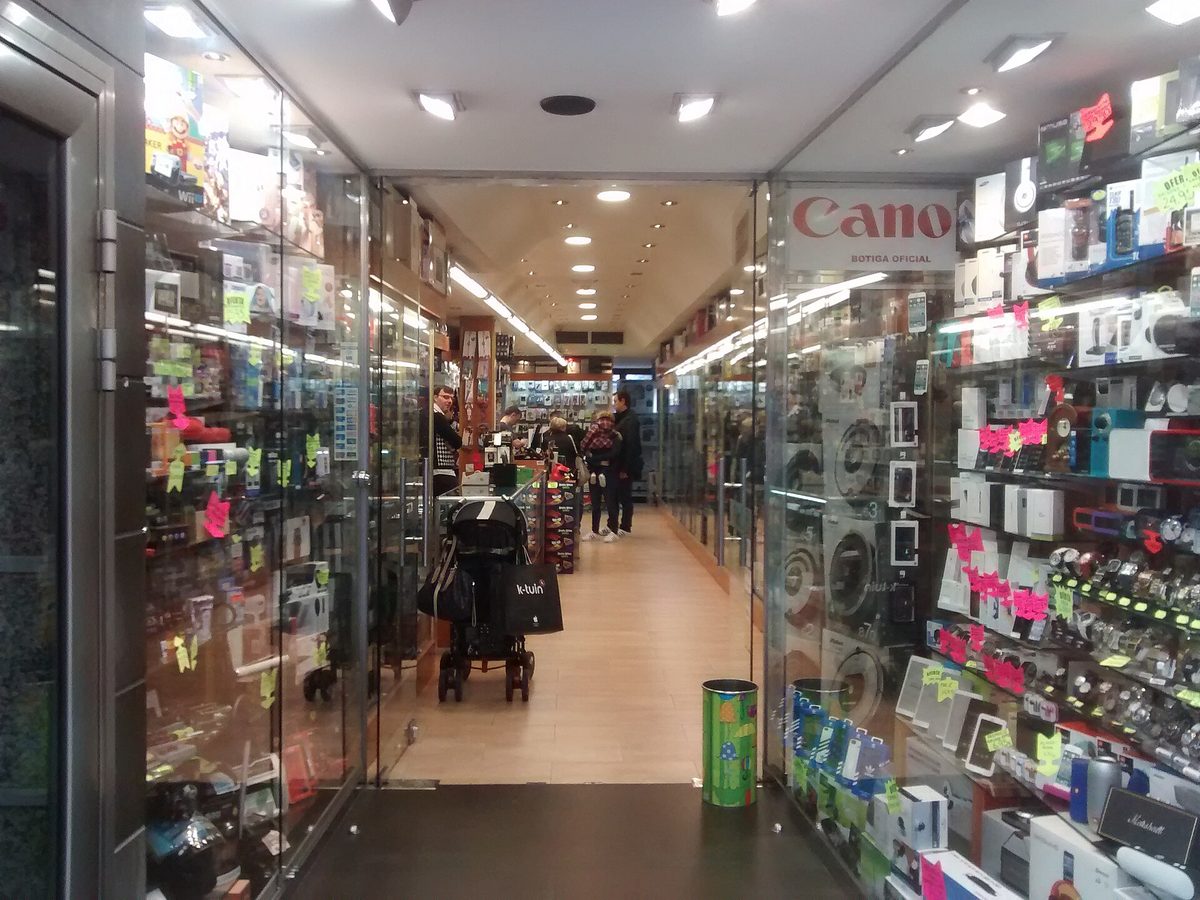
Perfume has its own allowance — 75 g of perfume plus 375 ml of eau de toilette per adult — which is generous enough for the classic Andorran perfume run. Everything else — electronics, clothing, watches, gifts — falls under the general goods limit of €900 per adult (€450 for under-15s). This is the line that catches electronics shoppers, because any single item worth more than €900 has to be declared.
Food, fuel and cash
Food products are allowed up to €300 in value per adult, with per-item weight caps (several kilos of cheese and meat, a kilo of butter, and so on). Fuel is covered up to a full standard tank plus 10 litres in a portable container — which is why locals fill up on the way out. And if you’re carrying €10,000 or more in cash, you must declare it at the border regardless of what you’ve bought.
Why Andorra’s limits are higher than you think
Here’s the point that makes this guide worth reading, because most articles get it flat wrong. Because Andorra is outside the EU, you might expect the standard “arriving from a non-EU country” allowances to apply — 200 cigarettes and €300 of goods for land travellers entering Spain. They don’t. A special bilateral arrangement between the EU and Andorra (dating to a 1990 agreement) sets more generous figures: 300 cigarettes, not 200, and €900 of goods, not €300.
This isn’t a technicality — it’s the difference between one carton and one-and-a-half, and between €300 and €900 of shopping. The French customs authority states plainly that the generic non-EU tobacco allowance does not apply to goods from Andorra, and the Spanish tax agency’s own leaflet for travellers arriving from Andorra prints the higher figures. Plenty of otherwise-good travel blogs quote the wrong, lower numbers; the officers at la Farga de Moles and Pas de la Casa work from the correct, higher ones. When in doubt, the authorities to trust are Andorran customs (duana.ad), the French douane and the Spanish Agencia Tributaria — not a random listicle.
The fine print that catches people out
The allowances are simple; the rules around them are where people come unstuck. Four things to understand before you shop.
Allowances are individual and can’t be pooled. Four adults in a car means four full allowances — genuinely useful — but you cannot combine them to justify one large purchase. Two people’s €900 limits do not make a €1,800 allowance for a single item.
A single item can’t be split across allowances. This is the one that stings electronics buyers: a €1,400 television or a €1,050 phone exceeds the €900 personal limit, and because it’s one indivisible item, a couple can’t “share” it across two allowances. It must be declared, full stop. Within a category you can mix proportionally, but you can’t halve a single object.
Children have no tobacco or alcohol allowance. The tobacco and alcohol franchises are for travellers aged 17 and over only. Under-15s do get a reduced goods allowance (€450), but a family of five can’t use the children’s allowances for anyone’s cigarettes or spirits.
Quantity limits ignore value. Three hundred cheap cigarettes and three hundred premium ones are equally fine; 301 of either is equally over. The customs count is by quantity for tobacco and alcohol, not by what you paid.
Red channel, green channel, and what happens if you exceed
At the border you choose a channel. Green means “nothing to declare” — you’re within every allowance. Red means you have something to declare, typically because you’re over a limit.
If you’re over, the honest and painless move is the red channel: declare the excess, pay the import VAT and any duty on the amount above your allowance, and drive on. It’s a minor cost and a few minutes. The expensive mistake is taking the green channel while over your limit and getting caught: the goods can be seized, and the fine can reach roughly double their value, with tobacco enforcement especially energetic on the Spanish side and French penalties running into thousands of euros. Customs officers on these crossings have seen every hiding place a family car offers, and checks intensify exactly when you’d expect — weekends, holidays and the sales weeks.
The single best insurance is boringly simple: keep every receipt and have them to hand. When an officer asks you to show you’re inside €900, a folder of tickets turns a twenty-minute unpacking into a two-minute wave-through. For more on the crossings themselves — the queues, the timing, the checks — see my guide to the Andorra border.
Practical tips for staying legal (and quick)
- Keep receipts visible. On the passenger seat, ideally in one folder. They’re your fastest exit from any inspection.
- Count your tobacco and spirits per person. 300 cigarettes and 1.5 litres of spirits each — no more, unless you’re declaring.
- Watch single big-ticket items. Anything over €900 (a flagship phone, a premium laptop, a TV) should be declared; it can’t be split across people.
- Don’t rely on children’s allowances for tobacco or alcohol — they don’t exist for under-17s.
- Cross at quiet times. Before 16:00 at weekends, or midweek, to dodge both the queues and the busiest enforcement.
- If in doubt, declare. The red channel costs a little VAT; the green channel while over can cost the goods plus a fine.
- There’s no tax-refund scheme. Andorra has no tourist VAT refund — the low price on the tag is already the discount, so don’t hunt for a refund desk.
Get those right and the customs post is a non-event. For the wider run — what’s actually worth buying and where — my Andorra shopping trip and shopping in Andorra guides plan the whole day, from the first shop to the fuel stop before the border.
Worked examples: how the allowances add up
The numbers make more sense as scenarios. Here’s how they play out for typical shoppers.
A couple on a tobacco-and-spirits run
Two adults get two full allowances: together that’s 600 cigarettes (three cartons), 3 litres of spirits, 10 litres of wine and, entering Spain, 32 litres of beer (French customs lists no separate beer allowance) — plus €1,800 of general goods (€900 each). That’s a serious, entirely legal haul, and against French prices the tobacco alone saves well over €200. What they cannot do is buy 900 cigarettes “because there are two of us and one doesn’t smoke” — the non-smoker’s allowance can’t be transferred.
A family of four
Two adults and two children under 15 have two full adult allowances plus two reduced goods allowances of €450 each — so €2,700 of general goods in total. But the children add nothing to the tobacco or alcohol limits, which stay at the two adults’ shares. The family maths only works on the goods line, not the cigarettes or the whisky.
A solo electronics shopper
One adult eyeing a €1,050 phone has a problem: it’s a single item over the €900 limit, so it must be declared even though it’s the only thing they’re buying. There’s no splitting it, no second allowance to borrow. They declare it in the red channel and pay import VAT on the excess — still often cheaper than at home, but not the clean bargain the sticker suggested. This is the classic electronics trap.
Three myths about the allowance
Three things people repeat that are simply wrong, each of which can cost you.
Myth 1: “It’s 200 cigarettes and €300.” Those are the generic non-EU limits, and they don’t apply to Andorra. The EU-Andorra agreement gives 300 cigarettes and €900. Believing the lower figure just means you under-buy; believing a different wrong figure that’s too high gets you fined.
Myth 2: “We can combine our allowances for one expensive item.” You can’t. Allowances are individual and a single item can’t be split across two people. Two €900 limits never add up to a legal €1,800 phone.
Myth 3: “If I declare, I have to pay full price / it’s not worth it.” Declaring means paying import VAT and any duty on the amount over your allowance — not repaying the whole value, and not a penalty. It’s usually a modest sum, and far cheaper than the seizure-plus-fine you risk by not declaring. Declaring is simply the smart move when you happen to be over the line, not a punishment to be avoided.
Coach and foot passengers: do the rules differ?
The allowances are the same however you travel — by car, coach or on foot — but the practicalities differ. If you come up by bus from Barcelona or Toulouse, customs can and do board coaches at the border, or wave them through, and yes, they sometimes check the luggage holds. The limits per person are identical to a car’s, so a coach day-tripper still gets 300 cigarettes, 1.5 litres of spirits and €900 of goods.
The real constraint for the carless is weight, not law: 16 litres of beer and several litres of wine are a genuine workout to carry, so foot and coach passengers sensibly skew toward the light, high-value categories — perfume, cosmetics, tobacco and electronics — rather than the liquid ones. There’s also no duty-free “airside” shop to buy from on the way out, because Andorra has no airport; you buy in the ordinary shops in town and carry it across the land border like everyone else. If you’re driving, the boot does the heavy lifting and the fuel top-up on the way out sweetens the trip; my driving to Andorra guide has the route detail.
Andorra duty-free allowance: frequently asked questions
What is the duty-free allowance for Andorra?
Per adult: 300 cigarettes, 1.5 litres of spirits over 22% (or 3 litres of fortified/sparkling under 22%), 5 litres of still wine, 16 litres of beer into Spain (French customs lists no separate beer allowance), 75 g of perfume plus 375 ml of eau de toilette, and €900 of other goods (€450 for under-15s). Food is allowed up to €300. These are the figures Spanish and French customs enforce on goods from Andorra.
How many cigarettes can I bring back from Andorra?
300 cigarettes per adult — one and a half cartons — or alternatively 150 cigarillos (of no more than 3 g each), 75 cigars or 400 g of smoking tobacco, or a proportional mix of them as long as the combined fractions of the allowances don’t exceed 100%. This is higher than the generic 200-cigarette non-EU limit because a special EU-Andorra agreement applies. Children have no tobacco allowance, and exceeding the limit without declaring risks seizure and a fine.
Are Andorra’s allowances higher than normal non-EU limits?
Yes. Although Andorra is outside the EU, a bilateral agreement gives more generous allowances than the standard non-EU figures: 300 cigarettes instead of 200, and €900 of goods instead of €300. Many travel sites wrongly quote the lower numbers. The correct, higher figures are published by Andorran customs and the Spanish and French authorities, and they’re what officers actually apply.
Can allowances be combined between people in the car?
Each traveller gets their own full allowance, so four adults means four allowances — but they can’t be pooled to cover one purchase, and a single item can’t be split across people. A €1,400 item exceeds one person’s €900 limit and must be declared even if two of you are travelling. Within a category you can mix goods proportionally, but you can’t divide a single object.
What happens if I go over the Andorra duty-free allowance?
Use the red channel, declare the excess, and pay import VAT and any duty on the amount over your allowance — a small cost and a few minutes. Get caught in the green channel with undeclared excess and the goods can be seized and you can be fined up to around double their value. Tobacco is the main target of checks, so never chance it.
How much alcohol can I take out of Andorra?
Per adult entering Spain: 1.5 litres of spirits over 22% (or 3 litres of fortified/sparkling under 22%), plus 5 litres of still wine, plus 16 litres of beer. The categories stack, so you get all three. French customs lists the spirits and still-wine allowances but no separate beer quota, so check before relying on a beer allowance there. As with everything, the allowances are individual and can’t be pooled between travellers to justify a bigger single purchase.
Do they actually check at the Andorra border?
Yes, regularly — especially at weekends, on holidays and during the sales, and with tobacco the main focus. Both main crossings (la Farga de Moles for Spain, Pas de la Casa for France) are open to travellers 24 hours a day; customs processing of goods keeps set opening hours, with a 24-hour on-call service. Keep your receipts to hand and stay within your allowances and a check takes moments; go over undeclared and it can cost you the goods and a fine.
Is there a duty-free refund or tax-back scheme in Andorra?
No. Unlike the EU’s tourist VAT-refund schemes, Andorra has nothing to stamp or reclaim on the way out — there are no forms and no refund desk. The country’s low 4.5% sales tax is already built into the shelf price, so the saving is automatic. Just keep your receipts for the customs check, not for any refund.
Can I bring meat and cheese back from Andorra?
Yes, within limits. Food products are allowed up to €300 in value per adult, with per-item weight caps — several kilograms of cheese and meat, around a kilo of butter, and so on. Andorran mountain cheeses and charcuterie are a genuinely worthwhile buy. Stay within the value and weight caps, keep receipts, and declare anything beyond them at the border.
Do the duty-free allowances apply if I arrive by bus?
Yes — the allowances are identical whether you travel by car, coach or on foot: 300 cigarettes, 1.5 litres of spirits, 5 litres of wine, 16 litres of beer into Spain (French customs lists no separate beer allowance) and €900 of goods per adult. Customs may board coaches or check luggage holds at the border. The only real difference for coach and foot passengers is that weight limits what you can practically carry, so most stick to lighter, high-value items.
Related Andorra travel guides
Keep planning with my other in-depth guides: the main shopping in Andorra guide, alcohol and cigarette prices, perfume and electronics shopping, the border crossing, planning an Andorra shopping trip, and the shopping-focused capital guide to Andorra la Vella.
Photo credits
All photographs are from Wikimedia Commons under their stated licences, with thanks to the photographers: