
The first time I drove out of Andorra with a boot full of duty-free, I braced for a serious customs grilling and got a bored wave instead. The second time, on a busy Sunday, I sat in a queue for fifty minutes while officers worked down the line of cars. That’s the Andorra border in a nutshell: usually a formality, occasionally not, and worth understanding before you cross either way.
The Andorra border is a genuine international frontier — the country sits outside the EU and the Schengen area — but in practice it’s relaxed, with two 24-hour crossings and often just a glance at your documents. Bring your passport, mind the customs allowances when you leave, and know that from late 2026 you’ll need a valid ETIAS to be in France or Spain either side. This guide explains the checks, the queues and the quirks, for anyone driving or bussing in.
Last updated: July 2026. Border rules, customs allowances and the incoming ETIAS requirement change — always check official Andorran, French and Spanish government sources before you travel, especially for non-EU passport and visa questions.
| Andorra border basics | The reality |
|---|---|
| In the EU or Schengen? | No — but surrounded by them |
| Crossings | La Farga de Moles (Spain) & Pas de la Casa (France), both 24 hrs |
| Documents | Passport (or EU national ID); carry it even from Spain/France |
| Checks entering | Usually a wave-through; occasional spot-checks |
| Checks leaving | Customs enforce duty-free allowances, especially on busy weekends |
| From late 2026 | ETIAS needed to be in France/Spain (not shown at Andorra itself) |
The Andorra border: what to actually expect
For all its official status, crossing into Andorra is refreshingly low-drama. There’s no passport stamp, no arrivals hall, no forms — just a road that passes through a border post where officers may or may not look at you. Most of the time, coming from Spain or France, you’ll be waved straight through, especially on the bus. It feels less like entering a country and more like passing a motorway toll that’s forgotten to charge you.
But “relaxed” isn’t the same as “nonexistent,” and that catches people out. This is a real frontier between a non-EU micro-state and the Schengen area, so the authority to stop, check and search is very much there — and it gets used, particularly on the way out when customs are hunting for over-the-limit duty-free hauls. Treat it as a genuine border that happens to be usually quiet, rather than no border at all, and you’ll never be caught off guard. If you’re still planning your route in, the full picture of every approach is in my guide to how to get to Andorra.
Andorra’s unusual status: a border but a soft one
It’s worth understanding why the Andorra border feels the way it does, because the contradiction is the whole point. Andorra is a sovereign country, so it has real borders — but it also has a special customs union with the EU for industrial goods, and decades of practical transit arrangements with its two neighbours. The result is a frontier that is legally genuine but administratively feather-light: no immigration hall, no stamps, but a customs regime that very much exists because the country’s low taxes make it a shopping magnet. Add the fact that Andorra never joined the EU or Schengen — keeping control of its own tax rates and duty-free status — and you get this odd hybrid: a border you barely notice going in, and one you definitely notice coming out with three bottles of spirits. The history behind that independence is a genuinely charming thousand-year story, told in my guide to the history of Andorra, and it explains why the shopping, covered in shopping in Andorra, is such a big part of the border experience.
Do you need a passport to cross the Andorra border?
Yes — carry your passport, even coming from within Spain or France. This is the single most common mistake I see: day-trippers assume that because they’re already in the EU, a driving licence will do. It won’t. A licence is not a travel document, and while checks are sporadic, the day you’re stopped without ID is the day it becomes a real problem.
The specifics depend on your nationality. EU and EEA citizens can use a passport or a national identity card. UK, US, Canadian, Australian and most other visa-exempt travellers should carry a passport. Citizens of countries that need a Schengen visa must think carefully — more on that quirk below, because it’s the one that genuinely trips people up. Hotels in Andorra also require ID at check-in, so you’ll need your passport in hand regardless of what the border officer does or doesn’t ask.
The Schengen quirk, explained
Here’s the genuinely important bit for some travellers. Andorra is not in the EU and not in the Schengen area, yet you can only reach it through Schengen countries — France or Spain. That geography creates a trap for anyone travelling on a single-entry Schengen visa. When you leave Andorra, you are re-entering Schengen (France or Spain), which counts as a fresh entry. If your visa only permitted one entry, you may have used it up going into France in the first place, and technically can’t get back out of Andorra without a problem.
In practice, checks are light and many people never notice — but “many people” is doing a lot of work in that sentence, and getting it wrong can wreck a trip. So if you needed a Schengen visa to reach Europe at all, make sure it’s a double or multiple-entry visa before you set foot in Andorra. EU, UK, US and most other developed-world passport holders can ignore all of this and stroll across; it only bites travellers who require a Schengen visa in the first place. When in doubt, ask the French or Spanish consulate that issued your visa before you travel.
ETIAS: the new requirement from late 2026
A change worth flagging because it’s new. From late 2026, visa-exempt visitors to the Schengen area — including UK, US, Canadian and Australian citizens — will need an ETIAS travel authorisation to enter France or Spain. It’s an online pre-registration, not a visa, valid for multiple trips over several years for a small fee.
What does that mean for Andorra? You won’t show an ETIAS at the Andorra border itself — Andorra isn’t in the scheme. But because you can only get to Andorra through France or Spain, your ETIAS must already be valid when you enter those countries on the way in. And since leaving Andorra means re-entering France or Spain, the same logic as the Schengen-visa quirk applies: your authorisation needs to cover that return leg. Check the current start date and apply online before you travel once the scheme is live; it’s cheap and quick, but being turned back at Toulouse or Barcelona for want of it would not be. For how this ties into flying in, see my guide to the nearest airports to Andorra.
The two crossings: Spain and France
Andorra has exactly two road borders, and knowing their characters helps you plan.
La Farga de Moles (the Spanish border)
The southern crossing, on the N-145/CG-1 near Sant Julià de Lòria, connects Andorra to Spain just north of La Seu d’Urgell. It’s low, gentle and open 24 hours, and it’s the busier of the two for everyday traffic — the route the Barcelona buses and most Spanish visitors use. Being low-altitude, it rarely suffers weather problems, which makes it the reliable winter option, as I explain in my guide to driving to Andorra.
Pas de la Casa (the French border)
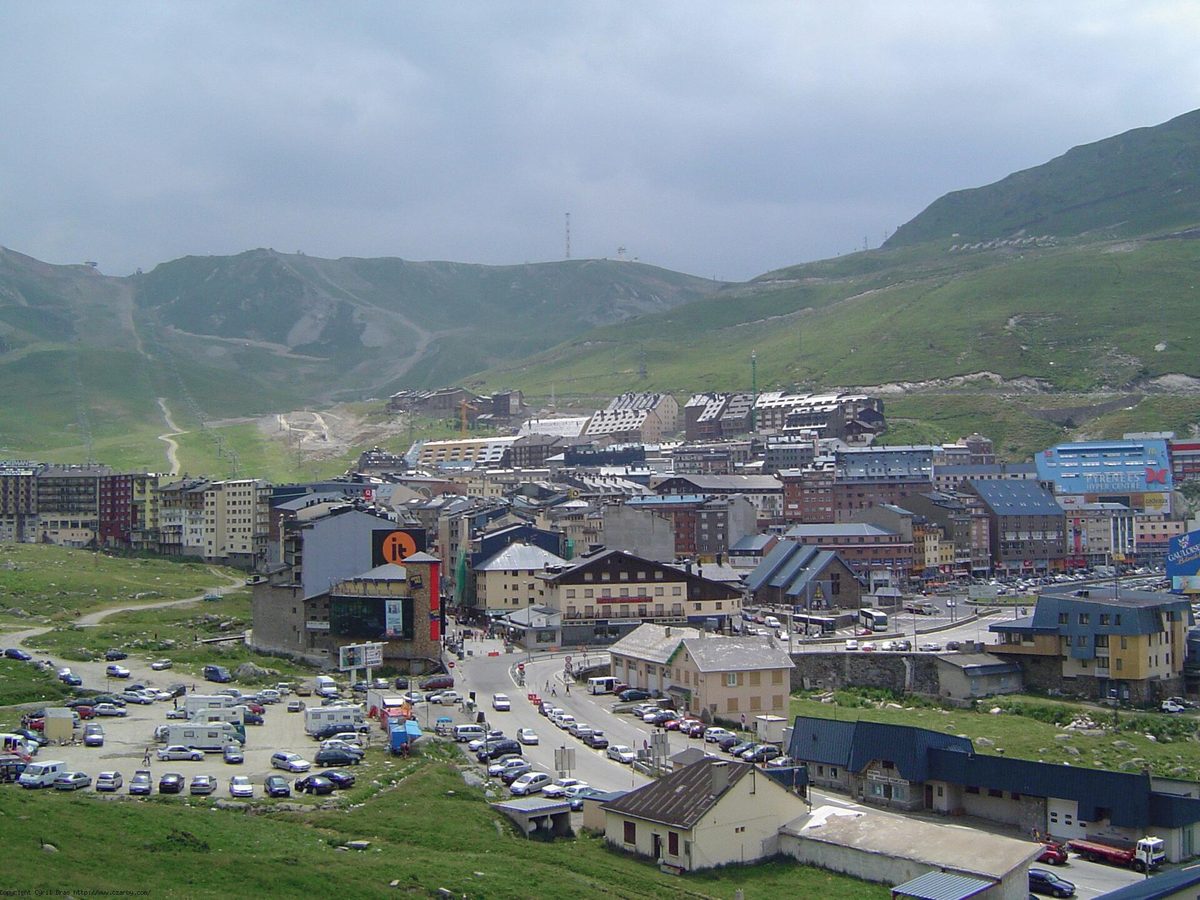
The northern crossing sits high in the mountains at Pas de la Casa, at 2,050 metres, where you cross the road at the top of the duty-free town and you’re in France. Also open 24 hours, it’s spectacular in good weather and the first to queue or struggle in a storm. Because Pas de la Casa is stuffed with tax-free shops aimed at French day-trippers, this crossing sees the most intense customs activity on busy shopping weekends — worth knowing if you’re heading out this way with a full boot.
Customs and duty-free: leaving Andorra
The border earns its keep on the way out, not in. Andorra is a low-tax haven, so its shops sell cut-price alcohol, tobacco, perfume and electronics — and France and Spain are keen you don’t carry home more than your personal allowance without declaring it. Customs officers stationed at both crossings enforce these limits, and on busy weekends they work methodically down the queue.
The allowances are set per adult and cover categories like spirits, wine, beer, tobacco, perfume and a general value cap on other goods; they’re more generous than you might expect thanks to Andorra’s special customs arrangement with the EU, but they are real and they are enforced. The exact current figures matter if you’re doing a serious shop, so I’ve put the full, up-to-date breakdown in a dedicated guide to the Andorra duty-free allowance — check it before you load the car. The golden rules are simple: keep your receipts, stay honestly within the posted allowances, and don’t try to smuggle the extra case of wine under a blanket, because that blanket is the first place they look. For what’s actually worth buying in the first place, see shopping in Andorra.
Crossing when you fly into La Seu d’Urgell
One nuance for the handful who arrive by air. The small Andorra–La Seu d’Urgell airport is actually in Spain, just south of the border, so flying in from Madrid doesn’t skip the crossing — the free connecting shuttle bus drives you across it into Andorra, exactly like any other road arrival. The same passport and (from late 2026) ETIAS logic applies: you’ll have cleared Spanish entry at the airport, and the Andorra border itself is the usual light-touch road crossing. It’s a reminder that there’s no way into the country that bypasses the frontier; even the “almost airport” delivers you to a Spanish road and lets the bus do the border. The full story of that quirky airport is in my guide to the Andorra airport question, and the Madrid connection in Madrid to Andorra.
Border queues: when it jams, and how to skip the worst
The Andorra border’s one real inconvenience is queues, and they’re highly predictable — which means avoidable. The crush comes from day-trippers and weekend shoppers heading home with full boots, so the worst windows are Sunday evenings and the final afternoons of French and Spanish holiday weekends, plus busy August shopping Saturdays on the Spanish side. At those times a crossing that’s normally a wave-through can back up for the better part of an hour.
The fix is timing. Leaving before mid-afternoon or after about 9pm on those peak days turns an hour’s crawl into a clear run. Mid-week and mid-morning, year-round, the borders flow freely. If you’re driving, check live road and border status on Andorra’s official mobility service (mobilitat.ad), which shows webcams and delays. And do your last duty-free shop the evening before you leave, not on departure morning — the border-adjacent superstores on a Sunday are where holiday moods go to die. Timing the border is the same skill as timing everything else in this country, a theme running through my guide to the best time to visit Andorra.
At the border by car versus by bus
Both cross the same way, with minor differences. On the bus, the coach handles the logistics; if there’s a check, an officer may board and glance down the aisle, or wave the whole coach through. You just keep your passport within reach. Buses can also use dedicated lanes at busy times, sometimes skipping the worst of the car queue. By car, you’re in the main flow and more exposed to both the queues and a closer customs look, especially leaving with visible shopping. Neither is difficult; the bus is simply more hands-off, which is one more point in its favour if you’re nervous about the crossing. Either way, once you’re through and into the country, moving around is a breeze — see getting around Andorra.
If you get stopped: what actually happens
Because the border is usually so quiet, the rare occasion you are pulled over can feel alarming — so here’s the reality, which is reassuringly dull. Entering, an officer might ask where you’re from and how long you’re staying, glance at passports, and wave you on; it takes seconds. Leaving, a customs officer may ask whether you have anything to declare and, on a busy day, ask to see in the boot. If you’re within your allowances with receipts to hand, that’s the end of it. If you’re over, you’ll be asked to declare and pay duty on the excess — a hassle and an expense, but not a drama if you’re honest. What turns a routine check into a bad afternoon is trying to hide goods: a concealed haul discovered is treated far more seriously than an over-limit one declared. So the practical advice is simply to be straight, keep your paperwork accessible, and know your numbers before you reach the post. Coming in on the coach from Barcelona or Toulouse, the driver has seen it all a thousand times and will steer the whole bus through smoothly.
Pets, medicines and other specifics
A few edge cases worth a mention. Pets crossing between the EU and Andorra need the usual pet-passport paperwork, microchip and rabies vaccination — check current rules before travelling with an animal. Prescription medicines for personal use are fine, but carry them in original packaging with a copy of the prescription for anything unusual. Large sums of cash are subject to declaration thresholds when crossing between Andorra and the EU, as anywhere. And commercial quantities of anything — more than personal use — need proper customs handling, which is well beyond a normal holiday shop. None of this affects a typical visitor, but it’s the kind of thing worth knowing exists so you can check if it applies to you. And a final reassurance: for the overwhelming majority of holidaymakers arriving with a suitcase and a passport, none of these edge cases will ever come up, and the border remains what it feels like — a brief, friendly formality on the way into one of Europe’s most distinctive small countries.
Andorra border: frequently asked questions
Do you need a passport to enter Andorra?
Yes — carry your passport even when arriving from Spain or France. Andorra is outside the EU and Schengen, so the crossings are genuine international borders with occasional checks, and a driving licence is not a travel document. EU and EEA citizens may use a national ID card instead. Hotels also require photo ID at check-in.
Is there passport control at the Andorra border?
There is a border post, but checks are light — most travellers are waved through, especially on the bus. French and Spanish border police do conduct occasional spot-checks, so you must carry valid ID. The more active control is customs on the way out, enforcing duty-free allowances rather than immigration on the way in.
Is Andorra in the Schengen area?
No. Andorra is neither in the EU nor the Schengen area, though it’s entirely surrounded by Schengen countries (France and Spain) and reached only through them. In practice, transit agreements mean most visitors face no special procedure. But travellers who need a Schengen visa should ensure it’s a multiple-entry one, since leaving Andorra means re-entering Schengen.
What can you bring back from Andorra through customs?
Personal-use quantities of alcohol, tobacco, perfume and other goods, within per-adult duty-free allowances that customs enforce when you leave. The limits are reasonably generous but real, so keep receipts and stay within them. For the exact current figures on spirits, wine, tobacco and the general goods value cap, see the dedicated Andorra duty-free allowance guide.
Will I need ETIAS to visit Andorra?
Not for Andorra itself, which isn’t in the scheme — but from late 2026, visa-exempt visitors will need an ETIAS authorisation to enter France or Spain, and since you reach Andorra only through those countries, it must be valid for your journey. Apply online before you travel once the requirement is live; it’s a quick, low-cost pre-registration, not a visa.
How long are the queues at the Andorra border?
Usually minimal, but they spike at predictable times: Sunday evenings and the last afternoons of French and Spanish holiday weekends, when shoppers head home with full cars. Then a normal wave-through can back up for up to an hour. Cross mid-week or mid-morning, or leave before mid-afternoon or after 9pm on peak days, to avoid the worst.
Which is the main border crossing into Andorra?
There are two, both open 24 hours: La Farga de Moles on the Spanish side near Sant Julià de Lòria, and Pas de la Casa on the high French side. The Spanish crossing is lower, busier and more weather-reliable; the French one is higher, more scenic and the first to queue or struggle in winter storms.
Can you cross the Andorra border on foot?
In theory the crossings are road borders designed for vehicles, and there’s no pedestrian tourist route across — at Pas de la Casa you can literally walk across the road into France, but it’s a high, exposed spot rather than a scenic border walk. In practice, virtually everyone crosses by car or bus. If you’re car-free, the coach and valley buses handle the frontier for you.
Related Andorra travel guides
Crossing in soon? Pair this with the full how to get to Andorra roundup, the Andorra duty-free allowance details, and the practicalities of driving to Andorra and getting around Andorra once you’re through.
Photo credits
All photographs are from Wikimedia Commons under their stated licences, with thanks to the photographers:


