
Andorra looks tantalisingly close to Madrid on a map — same peninsula, a few hundred kilometres northeast — and then you try to book it and discover the mountains have other ideas. There’s no direct train, no simple through-coach, and the nearest airport barely flies. It’s not hard, exactly; it just takes a decision.
Getting from Madrid to Andorra comes down to three realistic options: the twice-weekly flight to tiny La Seu d’Urgell (much the fastest, if the days suit), the AVE high-speed train to Lleida plus a connecting bus (the best all-rounder, about five and a half hours), or a long direct coach (cheapest, but a slog). This guide compares them honestly on time, cost and hassle. It’s for anyone starting in Madrid — or elsewhere in central Spain — and wondering which way to jump.
Last updated: July 2026. Fares, flight days and timetables below reference the 2025/26 season and change — confirm on the operator and official sites before you book around a tight connection.
| From Madrid | Time to Andorra la Vella | Cost (guide) | Verdict |
|---|---|---|---|
| Fly to La Seu d’Urgell (LEU) | ~1h20 flight + ~1 hr bus | ~€60–120 + free bus | Fastest — but only two days a week |
| AVE train to Lleida + bus | ~5.5 hrs total | ~€60–100 all-in | The best all-round land option |
| Direct coach | ~8 hrs+ | ~€40–95 | Cheapest; an overnight slog |
| Drive | ~6–6.5 hrs | Fuel + tolls | Freedom, if you want the wheels |
Madrid to Andorra: your realistic options
Let’s set expectations first, because Madrid is the one major Spanish city with no easy line to Andorra. Barcelona has a dozen-plus daily direct coaches; Madrid has none that are quick. The reason is geography — Andorra tucks into the Pyrenees up near the French border, a long way northeast of the capital, and the fast infrastructure runs to Barcelona, not up into the mountains. So every Madrid option involves either a flight most people can’t use, or a change somewhere along the way.
That’s not the disaster it sounds. The train-and-bus combo is genuinely pleasant and only a little longer than the drive, and the flight — when it runs — turns a seven-hour land journey into a two-hour hop. The trick is matching the method to your dates and your tolerance for changes. For the wider context of every route into the country from everywhere, see my guide to how to get to Andorra; this piece zooms in on the Madrid angle.
The fastest way: fly Madrid to La Seu d’Urgell
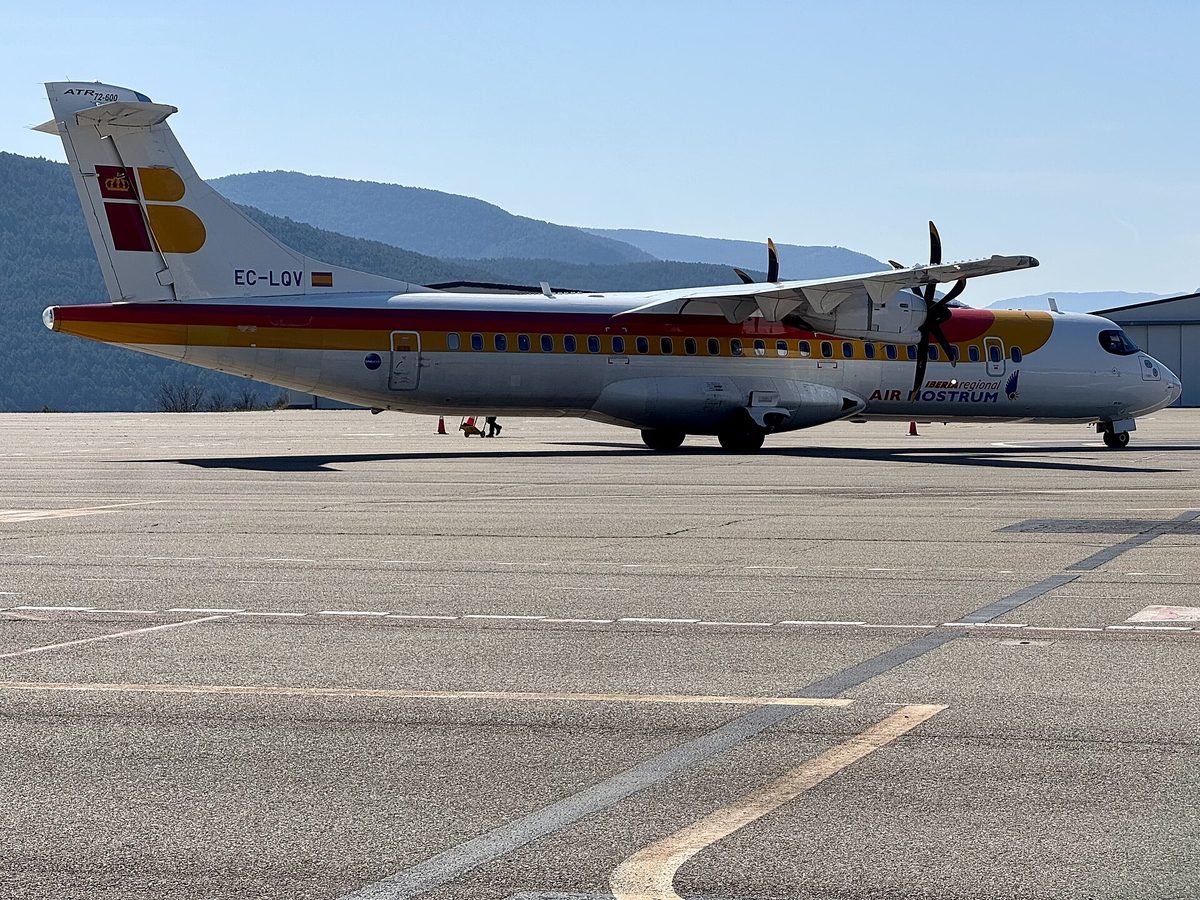
Here’s Madrid’s secret weapon, and the one time flying to Andorra actually works. The little airport at Andorra–La Seu d’Urgell — 26 km over the border in Spain — runs a scheduled turboprop to and from Madrid, operated by Air Nostrum in Iberia Regional colours on an ATR 72. The flight takes about an hour and twenty minutes, and best of all, a free shuttle bus meets it and runs into Andorra la Vella in around an hour. Door to door in roughly two-and-a-half hours: nothing else comes close.
The catch is the timetable. As of the 2025/26 schedule it flies only about twice a week — typically Fridays and Sundays — plus a seasonal Palma link, so unless your trip aligns with those days it’s simply not an option. Fares swing from around €60 to €120 one-way depending on how far ahead you book and how full the small cabin is. The mountain weather can occasionally bounce a landing, too. But if you can flex your dates to a Friday-out, Sunday-back rhythm, this is comfortably the best way from Madrid — I’ve written the full story of the airport, the aircraft and what flying in is like in my guide to the Andorra airport question, and it slots into the wider nearest airports to Andorra comparison.
The best all-rounder: AVE train to Lleida, then a bus
For most Madrid travellers on most days, this is the one I’d book. It splits the journey into two civilised halves and dodges the flight’s day restrictions entirely.
Leg one is a joy: the Renfe AVE high-speed train from Madrid’s Puerta de Atocha station to Lleida-Pirineus, roughly two-and-a-half hours at 300 km/h, running frequently through the day. Fares are cheapest booked well ahead — anywhere from around €25 on advance promos up to €60–70 close to departure. Leg two is the connecting coach: from Lleida, Andbus (with ALSA and Hife also on the corridor) runs up through La Seu d’Urgell to Andorra la Vella in about two hours fifteen, for around €25. The two stations in Lleida sit a 10–15 minute walk apart, so leave a sensible gap between train and bus.
All in, budget about five-and-a-half hours and €60–100 depending on your AVE fare. It’s comfortable, scenic on the second leg, and — crucially — available any day of the week. The one thing to watch is the connection: don’t book the tightest possible bus after your train, because a delayed AVE plus a missed last coach is a bad end to the day. This same Lleida gateway is why the AVE combo also works beautifully from Barcelona and beyond; the connecting coach is the same family of services I cover in my guide to the Andorra direct bus.
Booking the AVE without overpaying
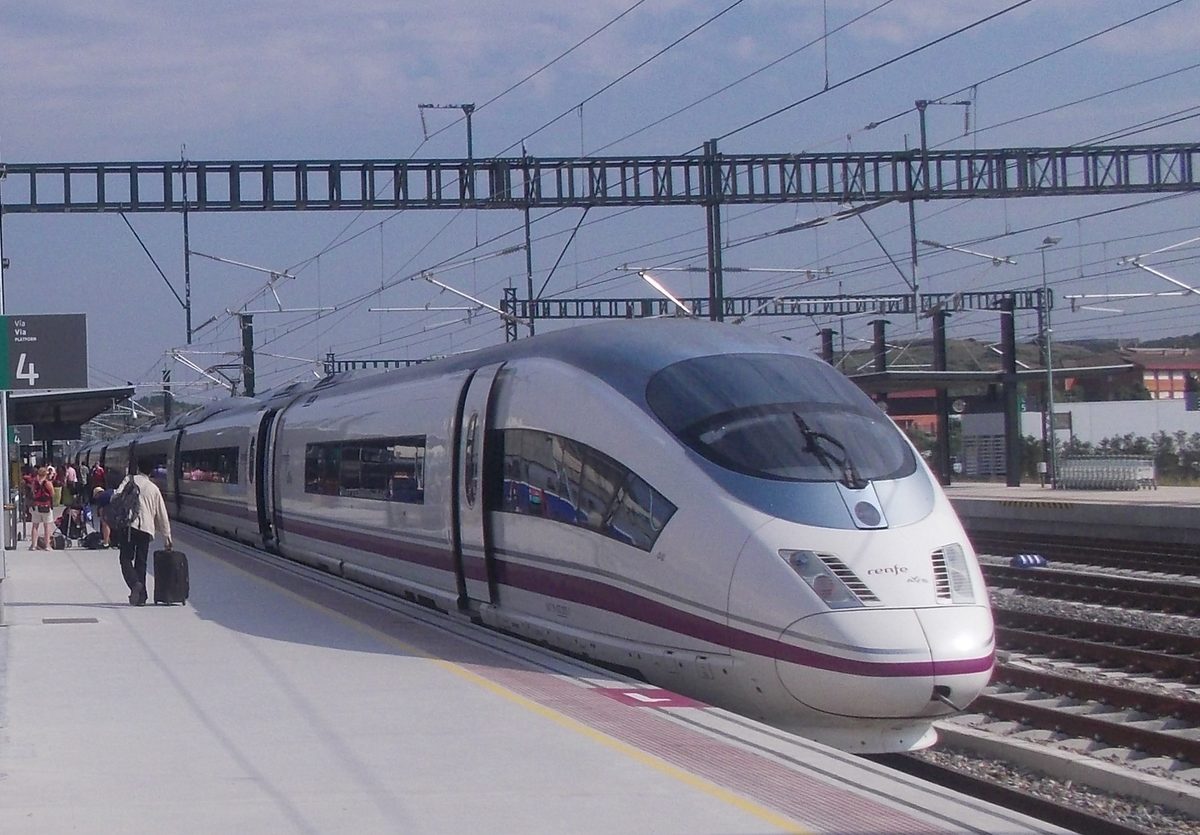
The high-speed train is where you can save real money or waste it, so a few pointers. Renfe releases AVE tickets a couple of months out, and the cheapest “Basico” fares vanish first — book two to eight weeks ahead and Madrid–Lleida can be €25–35 rather than the €60–70 you’ll pay at the counter on the day. The competing operators on the Madrid–Barcelona high-speed line (Iryo and Ouigo) sometimes serve Lleida too and can undercut Renfe, so compare. Trains leave from Madrid’s Puerta de Atocha, the big central station, and reach Lleida-Pirineus in about two-and-a-half hours; there’s ample luggage space, a cafe car, and power at every seat.
At Lleida, don’t dawdle: the AVE station and the bus terminal are a 10–15 minute walk apart, so give yourself a comfortable margin to find the coach — 45 minutes to an hour between train arrival and bus departure is sensible, more if you’re not a confident walker with luggage. Buy the Lleida–Andorra coach ticket in advance too in ski season, when the mountain-bound buses fill.
The cheapest way: the long direct coach
If money matters more than time, a long-distance coach will get you from Madrid to Andorra for the least outlay — but be honest with yourself about what eight-plus hours on a bus feels like. ALSA and others run services that, with a change (often around Zaragoza or Barcelona), eventually deliver you to Andorra la Vella; fares can dip to €40 or so if you book ahead, climbing to the €90s at short notice. Some routings run overnight, which at least converts the time into sleep and saves a hotel night.
I’d only choose this if the budget is tight and the AVE fares happen to be sky-high, or if an overnight departure genuinely suits you. For a couple of hours and a few tens of euros more, the train-and-bus combo is a far nicer day. Weigh it up rather than defaulting to the cheapest headline fare — once you factor in the misery tax of a long coach with a change, the maths often favours the train.
Breaking the journey en route
Six hours is a lot to do in one push, and the Madrid–Andorra corridor passes through places worth a night if you’re not in a rush. Zaragoza, roughly halfway, is an underrated city — the vast Basilica del Pilar on the river, good tapas, and an AVE station that makes it an easy stop-and-continue. Lleida itself, your interchange, has a striking hilltop old cathedral (La Seu Vella) if you’ve time to kill between train and bus. And La Seu d’Urgell, just short of the border, is a lovely Catalan cathedral town with a Romanesque cloister and a whitewater park — a pleasant place to overnight before slipping into Andorra the next morning. Turning the transfer into a two-day mini-trip takes the sting out of the distance and shows you a slice of inland Spain most Andorra visitors never see.
Driving from Madrid to Andorra
If you want a car for the mountains — or you’re touring Spain anyway — driving is a solid option. It’s around 610 km and six to six-and-a-half hours, mostly on fast motorway: northeast from Madrid towards Zaragoza on the A-2, then on towards Lleida, and finally up the C-13/N-260 through La Seu d’Urgell to the Andorran border at the Riu Runer. It’s an easy drive by mountain standards, with the only real climbing saved for the gentle final approach on the Spanish side.
Two things to plan for. Winter equipment — tyres or chains — is legally required on the access roads and inside Andorra when conditions demand, roughly November to spring, so a winter hire car should be properly shod. And the Spanish approach via La Seu is the low, weather-friendly one, so you rarely face serious mountain drama from this direction. The full route detail, tolls and winter rulebook are in my guide to driving to Andorra. Fuel is cheap in Andorra, so a common tactic is to arrive with the tank low and fill up over the border.
How far is Andorra from Madrid?
About 610 km by road, which is why none of the options is quick: this is a genuine cross-country journey, not a day-trip hop. As the crow flies it’s a little over 450 km, but the mountains force a dogleg via Lleida and the Ariège foothills. Put simply, Andorra is roughly a six-hour drive, a five-and-a-half-hour train-and-bus trip, or — twice a week — a two-and-a-half-hour door-to-door flight from Madrid. Compared with Barcelona (three hours by direct bus) or Toulouse (a similar distance on the French side), Madrid is the harder start, which is exactly why so many Madrid-based visitors treat the La Seu d’Urgell flight as a small miracle when the dates line up.
Coming from elsewhere in central Spain?
The same logic radiates out to Madrid’s neighbours. From Zaragoza you’re already halfway: an AVE or regional train to Lleida then the connecting bus is quick, or you can drive it in around four hours. From Valencia, the cleanest route is the coastal AVE up to Barcelona or across to Lleida, then the Andorra coach — or the direct-ish long coaches if you prefer not to change trains. From Bilbao and the north, honestly, Toulouse on the French side can be as easy as fighting across Spain, so weigh the Toulouse to Andorra option too. Wherever in central or northern Spain you start, the principle holds: get yourself to Lleida (or onto the La Seu d’Urgell flight from Madrid) and the last leg into Andorra solves itself.
For skiers: timing the Madrid approach
If you’re heading up from Madrid for the snow, a couple of season-specific tweaks matter. Weekends are when the La Seu d’Urgell flight actually helps — Friday out and Sunday back happens to map neatly onto a weekend ski break, so Madrid skiers are the flight’s natural customers. Book both the flight and any Lleida–Andorra bus early, because ski-season Fridays and the Saturday changeover fill fast. If you’re driving with gear, remember the winter-tyre law and give the higher passes respect, though the Spanish approach via La Seu is the gentle one. And once you land, basing near a Grandvalira gondola means you can ski all week without the car you drove up in. For where to point your skis, my full guide to skiing in Andorra lays out the resorts, and the best time to visit guide breaks the season down month by month.
Which Madrid option is right for you?
Match the method to your priorities:
- Time-poor and flexible on dates: the La Seu d’Urgell flight, no contest — if you can travel Friday and Sunday.
- Any day of the week, want comfort: the AVE to Lleida plus the connecting bus. My default recommendation.
- On a tight budget: the long direct coach, ideally overnight, accepting the time cost.
- Want a car in the mountains, or touring Spain: drive, taking the gentle Spanish approach via La Seu d’Urgell.
- Nervous about connections: the flight (one leg) or a generously-timed AVE combo — never the tightest bus after the train.
Arriving in Andorra: the border and getting around
However you come from Madrid, the final act is the same. The crossing into Andorra is a real international border — the country isn’t in the EU or Schengen — so carry your passport even coming from within Spain; occasional spot-checks catch out the licence-only day-tripper, as I explain in the Andorra border guide. Once inside, distances shrink to nothing: the whole country is about forty minutes end to end, cheap valley buses link every town, and you rarely need a car unless you’re chasing remote trailheads. The full car-free picture is in getting around Andorra, and for choosing when to come, see the best time to visit Andorra.
My honest verdict from Madrid
Here’s how I’d actually decide, standing in Atocha with a bag. If my dates are flexible and land on a Friday and Sunday, I take the La Seu d’Urgell flight every time — it’s the one route that makes Andorra feel close from Madrid, and the free bus at the far end still delights me. If they don’t, I book the AVE to Lleida and a comfortably-timed connecting coach without a second thought; it’s reliable, scenic on the mountain leg, and pleasant enough that the hours pass easily. I’d only take the long direct coach to save serious money on a tight trip, and I’d only drive if I wanted the car for touring or trailheads. Madrid asks more of you than Barcelona does to reach Andorra — but the principality on the far end is worth every one of those kilometres, and the journey, chosen well, is half the pleasure.
Madrid to Andorra: frequently asked questions
Is there a direct train from Madrid to Andorra?
No — Andorra has no railway at all, so there’s no direct train. The nearest you get is the AVE high-speed train from Madrid to Lleida (about two-and-a-half hours), then a connecting bus up through La Seu d’Urgell to Andorra la Vella (about two hours fifteen). Total journey time is around five-and-a-half hours.
What is the fastest way from Madrid to Andorra?
The scheduled flight from Madrid to Andorra–La Seu d’Urgell airport, about an hour and twenty minutes in the air plus a free one-hour shuttle bus into Andorra la Vella. Door to door it’s roughly two-and-a-half hours. The catch is that it runs only about twice a week, typically Fridays and Sundays.
How far is Andorra from Madrid?
Around 610 km by road, or a little over 450 km in a straight line. That translates to roughly six to six-and-a-half hours driving, about five-and-a-half hours by train and bus, or a two-and-a-half-hour door-to-door flight on the days it operates. It’s a genuine cross-country trip.
Is there a direct bus from Madrid to Andorra?
There’s no quick direct coach — services from Madrid involve a change (often near Zaragoza or Barcelona) and take eight-plus hours in total. It’s the cheapest option, sometimes as low as around €40 booked ahead, and some routings run overnight, but most travellers prefer the faster AVE-to-Lleida combination.
How much does it cost to get from Madrid to Andorra?
Roughly €60–100 all-in for the AVE-plus-bus combo (cheaper if you snag an advance train fare), €60–120 for the La Seu d’Urgell flight plus the free bus, and as little as €40 for a long direct coach booked ahead. Driving costs fuel plus any tolls. Book early for the best prices on all of them.
Can you fly from Madrid to Andorra?
Almost — you fly to Andorra–La Seu d’Urgell, the small airport 26 km over the border in Spain, then take a free connecting bus for the last hour. Air Nostrum operates the ATR 72 turboprop for Iberia Regional, about twice a week. It’s the only scheduled air link anywhere near Andorra, and the fastest way from Madrid when the days suit.
Should I go via Barcelona instead?
You can, and some do — an AVE from Madrid to Barcelona then a direct Andorra coach works, but it’s usually slower than the Lleida combo because it overshoots west-to-east. Lleida is the more efficient interchange from Madrid. Barcelona only wins if you want to spend time in the city en route.
Do the Madrid to La Seu d’Urgell flights sell out?
They can. The aircraft is a small ATR 72 with limited seats, and with only around two departures a week, popular Friday and Sunday flights fill up — especially in ski season and around holidays. Book as far ahead as you can, both to secure a seat and to catch the lower end of the €60–120 fare range. Have a backup plan (the AVE combo) in case dates or seats don’t work out.
Is Andorra worth the trip from Madrid?
For many, yes. Andorra packs the largest ski area in the Pyrenees, superb summer hiking, a huge duty-free shopping scene and a thermal spa culture into a tiny, distinctive country. The journey from Madrid is longer than from Barcelona, but the AVE-and-bus combo is comfortable and the weekend flight genuinely quick. If you’re after mountains, snow or tax-free bargains within Spain’s orbit, it rewards the effort of getting there — and the country is small enough to see a great deal in even a long weekend.
Related Andorra travel guides
Sorting your approach from central Spain? Pair this with the full how to get to Andorra roundup, and if you’d rather come via Catalonia, Barcelona to Andorra. Then plan the trip itself with skiing in Andorra and the capital, Andorra la Vella.
Photo credits
All photographs are from Wikimedia Commons under their stated licences, with thanks to the photographers:


