
Here’s the happy surprise that follows the three-hour slog to get to Andorra: once you’re in, moving around is almost absurdly easy. After all that talk of no airport and no railway, the country itself turns out to be tiny, well-connected and cheap to travel — and the car you assumed you’d need is, for most trips, entirely optional.
Getting around Andorra without a car is genuinely simple: a national bus network links every town for a couple of euros a ride, the whole country is about forty minutes end to end, and ski shuttles and a gondola fill in the gaps in winter. This guide covers the buses, the shuttles, taxis, walking and the handful of times a car actually earns its keep. It’s for anyone wondering whether to bother with a hire car at all.
Last updated: July 2026. Bus lines, fares and timetables below reference 2025/26 and change — check the official mobility site (mobilitat.ad) or the visitandorra transport pages for current details.
| Way around | Cost | Best for |
|---|---|---|
| National buses (L-lines) | From ~€1.90/ride | Almost everything — town to town |
| Ski shuttles | Often free with lift pass/hotel | Getting to the lifts in season |
| Funicamp gondola | Lift pass | Into Grandvalira from Encamp |
| Taxis | Premium, metered | Late nights, airport runs, groups |
| Walking | Free | Andorra la Vella and Escaldes centre |
| Hire car | Fuel + hire | Remote trailheads and Arcalís |
Getting around Andorra: do you actually need a car?
Let’s answer the big question first, because it saves money and stress. For the great majority of visitors, no — you don’t need a car in Andorra. The country is a single Y-shaped system of valleys, about 40 minutes from one end to the other, and a genuinely good public bus network threads all of it. If your trip is based in the capital, in Escaldes for the spa, or at a ski resort reachable by shuttle or gondola, a car is a liability you’ll pay to park rather than an asset.
There are exceptions — remote trailheads, the far-flung Arcalís ski area, flexible early mornings up quiet side valleys — and I’ll come to those. But the default assumption should be flipped from most destinations: here, plan to go car-free and add a car only if a specific need demands it. If you’re still deciding how to arrive in the first place, my guide to how to get to Andorra lays out the options, most of which drop you neatly into this bus network.
The national bus network: Andorra’s public transport backbone
Andorra’s public transport is all buses, and they’re the key to the car-free trip. A network of national lines — currently numbered L1, L2, L4, L5, L6, a circular LC line and a frequent express known as the “é” line — radiates from the Estació Nacional d’Autobusos in Andorra la Vella along each arm of the valley system. Between them they reach the capital, Escaldes-Engordany, Encamp, Canillo, Ordino, La Massana, Sant Julià de Lòria and the ski gateways.
How the buses work
It couldn’t be simpler. The lines run along the main valley roads; you wait at a marked stop, board, and pay a flat fare — from around €1.90 a ride — in cash or by tapping a card, or you buy a multi-ride pass to save. There’s no need for an app or advance planning; the stop signs list the lines and the timetable is honest. Frequencies are good: the é express runs about every 10 minutes through the day, the busy L1 and L2 every 10 to 20, and the quieter lines every 30 to 60, with services roughly from 6:30am to 10:30pm depending on the line. Since 2022 the buses have been free for residents holding a season pass, which tells you how central they are to daily life here — as a visitor you’ll pay the small flat fare, and it’s still a bargain.
Where the buses take you
Effectively everywhere you’ll want to go. The trunk lines up the main valleys connect the capital to every parish town and the ski-resort bases; a short hop to Escaldes for the Caldea thermal spa, up to Encamp or Canillo for Grandvalira, or out to La Massana for the Vallnord side. For a first-time visitor doing the capital, a spa afternoon and a day on the slopes, the bus covers all of it. The one honest limit is the very ends of the side valleys and the trailheads above the last village, where services thin to a few a day or stop altogether — which is exactly where a car, or your feet, takes over.
The valleys, and which way the buses go
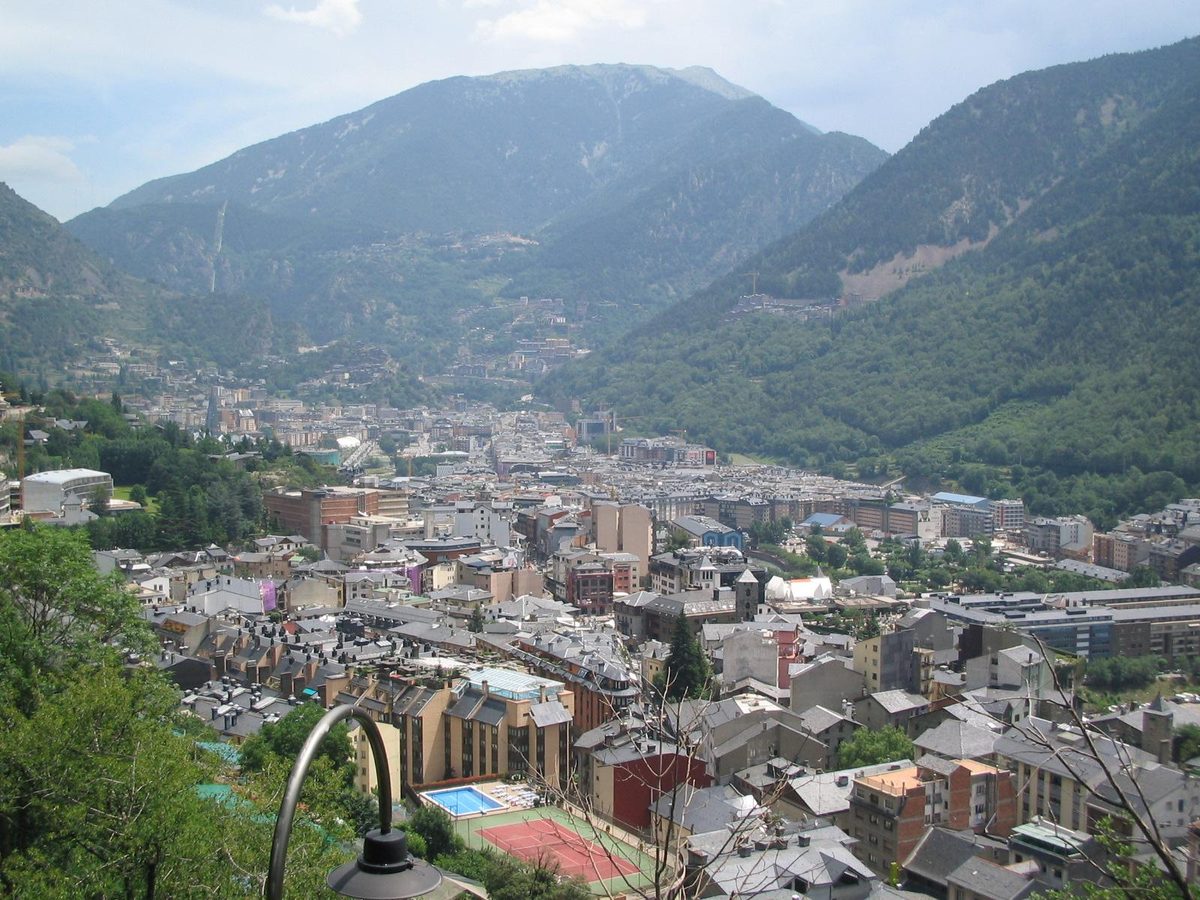
It helps to picture Andorra’s shape, because the bus network simply follows it. Think of a Y lying in the mountains, with Andorra la Vella near the join. One arm runs northeast up the Valira d’Orient through Escaldes-Engordany, Encamp, Canillo and Soldeu towards the French border at Pas de la Casa — this is the Grandvalira ski corridor, and the busiest bus axis. A second arm runs northwest up the Valira del Nord through La Massana and up to Ordino and the Arcalís road — the Vallnord side and the prettiest villages. The stem runs south through Sant Julià de Lòria to the Spanish border. Nearly everywhere you’ll want to go sits on one of these three axes, and a national bus line runs along each. Once you hold that map in your head, the network stops feeling foreign: you’re always either heading up a valley from the capital or coming back down it. Even the villages worth a wander — covered in my guide to Andorra la Vella and beyond — hang off these same lines.
Ski shuttles and the Funicamp gondola
In winter the public buses are joined by a second, seasonal layer of transport aimed squarely at skiers. Most resorts run ski shuttles that loop between the valley-town hotels and the lift bases, frequently free with a lift pass or included by your hotel — so you can stay down in a cheaper valley town and ride up to the snow each morning without a car. Ask your accommodation which shuttle serves it; the arrangements vary by resort.
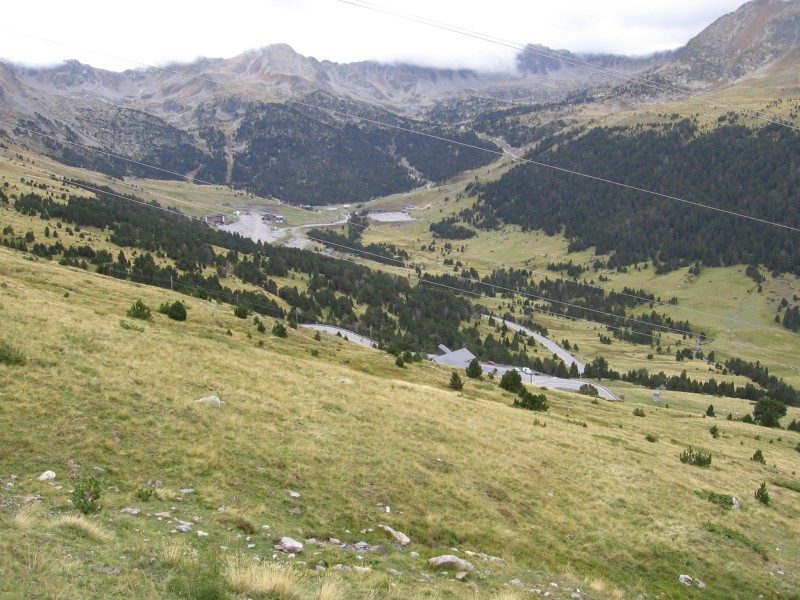
The cleverest piece of the puzzle is the Funicamp gondola at Encamp. It’s effectively public transport into the mountains: an enormous cable car that climbs straight from the valley town of Encamp up into the heart of the Grandvalira ski area. Base yourself in Encamp — cheaper than the on-snow resorts — take the national bus to the bottom station, and ride the gondola up to ski, no car required. It’s the single best trick for a budget, car-free ski trip, and I bang on about it in my guide to skiing in Andorra for good reason.
Taxis and the no-Uber reality
Taxis exist and are reliable, but manage your expectations on two fronts. First, price: Andorra’s licensed taxi trade is regulated and priced accordingly — comfortably more than a bus, and eye-watering for long airport transfers. Second, there’s no Uber or ride-hailing in Andorra at all, so you can’t summon a car with an app. The trade is app-free and traditional: your hotel books cabs, there are ranks in the capital, and you phone ahead for anything early. That last point matters — for a dawn departure to catch a Barcelona flight, pre-book the taxi the night before through your hotel rather than gambling on a street hail at 6am, when you won’t find one. For everyday hops, though, the bus is so cheap and frequent that most visitors barely use taxis at all.
Walking and cycling in the towns
Andorra la Vella and its conjoined neighbour Escaldes-Engordany are compact and walkable — the shopping streets, restaurants, the Caldea spa and most hotels sit within an easy stroll of each other, and walking is genuinely the fastest way to get about the centre. Bring comfortable shoes and layers; the capital sits at over 1,000 metres, so evenings are cool even in summer. Cycling is more of a sport than a transport mode here — the road cycling is superb and famous, but the gradients and traffic make it impractical for casual getting-about. For pottering around town, your feet win; for anything up a valley, take the bus.
When you do want a car
To be fair to the car, here’s when it earns its keep. If you’re a keen hiker chasing remote trailheads — the high lakes, the quiet cirques, the starts of long routes above the last bus stop — a car gives you the early starts and the flexibility that buses can’t, as I discuss in my guide to hiking in Andorra. The same goes for Arcalís, the wild, beautiful ski area at the head of the Ordino valley, which is more awkward to reach by public transport than the Grandvalira bases. And if your idea of a holiday is spontaneous mornings — deciding over breakfast to drive up a side valley you’ve never seen — a car delivers that in a way timetables don’t. For those trips, hire one; for everything else, don’t. You can even hire a car for a day or two from the capital mid-trip rather than committing to a week of it, and the full driving picture is in my guides to driving in Andorra and driving to Andorra.
Parking in Andorra la Vella
If you do bring a car, know how parking works so you don’t spend your holiday circling. Andorra la Vella runs on underground car parks — plentiful, signposted and a few euros an hour, with many hotels offering a discount or including a space. Use them rather than hunting for street parking. There are metered street zones too, but don’t improvise on yellow kerbs: the country is small enough that enforcement is brisk and personal. The practical upshot is that a car in the capital is more hassle than help for day-to-day moving about, which loops back to the main point — park it and take the bus for anything in town.
What going car-free actually saves you
The money question is worth spelling out, because the savings are real. Skip the hire car and you avoid the rental itself, the fuel (cheap here, but not nothing), the underground-parking fees in the capital, and the winter-tyre or chain faff from November to spring. In exchange you pay a couple of euros a bus ride. For a couple on a city-and-spa long weekend, that’s the difference between spending nothing on transport beyond a handful of €1.90 fares and shelling out a few hundred on a car you’ll mostly leave parked. Even for a week’s skiing, basing near a gondola or on a shuttle route means the buses and lifts do everything a car would, minus the stress of mountain driving. The one caveat is time: a bus up a valley is slower and less flexible than your own wheels, so if your holiday lives on spontaneity or remote starts, factor that in. For most itineraries, though, car-free is both cheaper and calmer.
Getting around by traveller type
How to move about depends on what kind of trip you’re having:
- City and spa breakers: walk the centre, take the bus to Escaldes and back. No car, no taxis needed.
- Skiers: national bus to your resort base or to Encamp for the Funicamp, then ski shuttles. Car-free is genuinely easy.
- Shoppers: the buses run right along the retail strip through Andorra la Vella and Escaldes — see shopping in Andorra — so no car needed, though you’ll want the bus for hauling bags back.
- Hikers: buses for valley-floor trailheads; a hire car for the remote, high or early starts.
- Families: buses are cheap and children’s fares low, but a car can ease the logistics of gear and small children on a multi-activity trip.
From the bus station to your hotel
One last practical note for arrival day. Almost every long-distance coach and the airport direct bus terminates at the Estació Nacional d’Autobusos in central Andorra la Vella — a ten-minute walk from most central hotels, with taxis and the national bus lines waiting outside. So the handover from “getting to Andorra” to “getting around Andorra” is seamless: step off your coach, and you’re already on the local network. If your hotel is up a ski valley, the same national buses (or a booked resort transfer) carry you the last stretch. Crossing in from Spain or France, remember it’s a real border — passport handy, as covered in the Andorra border guide.
Practical tips for using the buses
A few small things make the network even easier. Carry a little cash for fares even though cards are usually accepted — it saves fumbling on boarding. Note that stops are request stops on the quieter lines, so signal the driver as your bus approaches and press the bell in good time to get off. Screenshot the timetable for your line the night before if you’re heading somewhere with sparse evening service, so you don’t get stranded up a side valley after the last bus. Buses fill on ski mornings, so allow a little slack if you’re catching a lift opening. And don’t overthink tickets: there’s no zonal complexity or advance booking — it’s a flat fare, you pay as you board, and the same simple system works the length of the country. If you’re arriving on the airport coach, you’re already at the hub the local network radiates from.
Late nights, accessibility and other practicalities
A few remaining details that shape a car-free trip. Evening service is the main limitation: with most buses winding down around 10:30pm, a late dinner up a side valley can leave you reliant on a pre-booked taxi to get back, so plan late nights around the timetable or budget for a cab. Travellers with reduced mobility will find the modern fleet largely low-floor and adapted, though the very oldest vehicles and some rural stops are less accessible — check ahead if it matters. Luggage is fine for normal cases and day bags, but the national buses aren’t built for a full set of ski gear the way the airport coaches are, so if you’re moving between resorts with a mountain of kit, a taxi or transfer may be easier for that one leg. And a reassurance for the anxious planner: none of this needs an app or advance research. The system is small, legible and forgiving — you can turn up at a stop, read the sign, and go. That simplicity is a big part of why Andorra is such an easy country to explore without a car.
Getting around Andorra: frequently asked questions
Do you need a car in Andorra?
For most visitors, no. A cheap national bus network links every town, the country is only about 40 minutes end to end, and ski shuttles and the Funicamp gondola cover the slopes. A car only really helps for remote hiking trailheads, the Arcalís ski area, or maximum spontaneity. City, spa and most ski trips are easily done car-free.
How much is public transport in Andorra?
National bus fares start at around €1.90 per ride, with multi-ride passes for regular travel. It’s one of the cheapest ways to get around any European country. The buses have been free for residents with a season pass since 2022; visitors pay the small flat fare in cash or by card.
How do you get around Andorra without a car?
Use the national buses (lines L1, L2, L4, L5, L6, the circular LC and the frequent é express), which radiate from Andorra la Vella’s bus station to every parish. Add ski shuttles and the Funicamp gondola in winter, walk the compact capital, and take a taxi for late nights or airport runs. It’s genuinely easy to do a whole trip car-free.
Is there Uber in Andorra?
No — there’s no Uber or any ride-hailing app in Andorra. The licensed taxi trade covers the country reliably but at premium, regulated rates. Hotels book cabs, there are ranks in the capital, and you should pre-book by phone for early departures. For everyday travel the cheap, frequent buses make taxis largely unnecessary.
How often do the buses run in Andorra?
Frequently on the main lines: the é express roughly every 10 minutes through the day, L1 and L2 every 10 to 20 minutes, and the quieter lines every 30 to 60. Services run from about 6:30am to 10:30pm depending on the line. Timetables are posted at stops, and no app is needed to use the network.
Can you get to the ski resorts by bus in Andorra?
Yes. National buses reach the resort bases along the main valleys, and in winter ski shuttles loop from valley-town hotels to the lifts, often free with a lift pass or hotel. Basing in Encamp lets you bus to the Funicamp gondola and ride straight into Grandvalira. A car-free ski trip is entirely practical here.
Is Andorra walkable?
The capital, Andorra la Vella, and neighbouring Escaldes-Engordany are compact and very walkable — the shops, restaurants, spa and most hotels are within an easy stroll, and walking is often quickest in the centre. Between towns and up the valleys, though, distances and gradients mean you’ll want the bus rather than your feet.
How long does it take to cross Andorra?
Roughly 40 minutes by road from one end of the country to the other in clear conditions — Andorra is only about 25 km across at its widest. By bus, with stops, allow a bit longer up the main valleys, but no journey within the country is really long. That compactness is exactly why a car is so often unnecessary once you’ve arrived.
Related Andorra travel guides
Planning a car-free trip? Pair this with the full how to get to Andorra roundup and the nearest airports guide for arrival. Then plan what to do with things to do in Andorra, skiing in Andorra, and the best time to visit.


1 comment
Comments are closed.