
Most people’s mental map of Andorra hangs off Barcelona, and fair enough — it’s the busiest way in. But there’s a second door, on the French side, that I’d argue is the nicer one to walk through: Toulouse. It’s calmer, it’s marginally closer, and the drive in climbs over the roof of the Pyrenees rather than grinding up a motorway.
Getting from Toulouse to Andorra takes about three to three-and-a-half hours by direct coach (from around €36) or a little over two hours by car, crossing into the country at Pas de la Casa over the high French border. This guide covers every option — bus, car, and the airport and train connections — plus the honest catches of the French approach, especially in winter. It’s for anyone flying into Toulouse or already in the south of France.
Last updated: July 2026. Fares, timetables and winter rules below reference the 2025/26 season and change — confirm on the operator and official sites before booking or driving.
| From Toulouse | Time to Andorra la Vella | Cost (guide) | Verdict |
|---|---|---|---|
| Direct coach (Andbus/FlixBus) | ~3–3.5 hrs | ~€36 one-way | Easiest; mind the thinner timetable |
| Drive (hire car) | ~2–2.5 hrs | Fuel only (tunnel toll optional) | Most scenic and flexible |
| Train + bus (via Ax/l’Hospitalet) | ~3.5 hrs+ | Varies | Niche, but a lovely rail leg |
Toulouse to Andorra: the quieter French approach
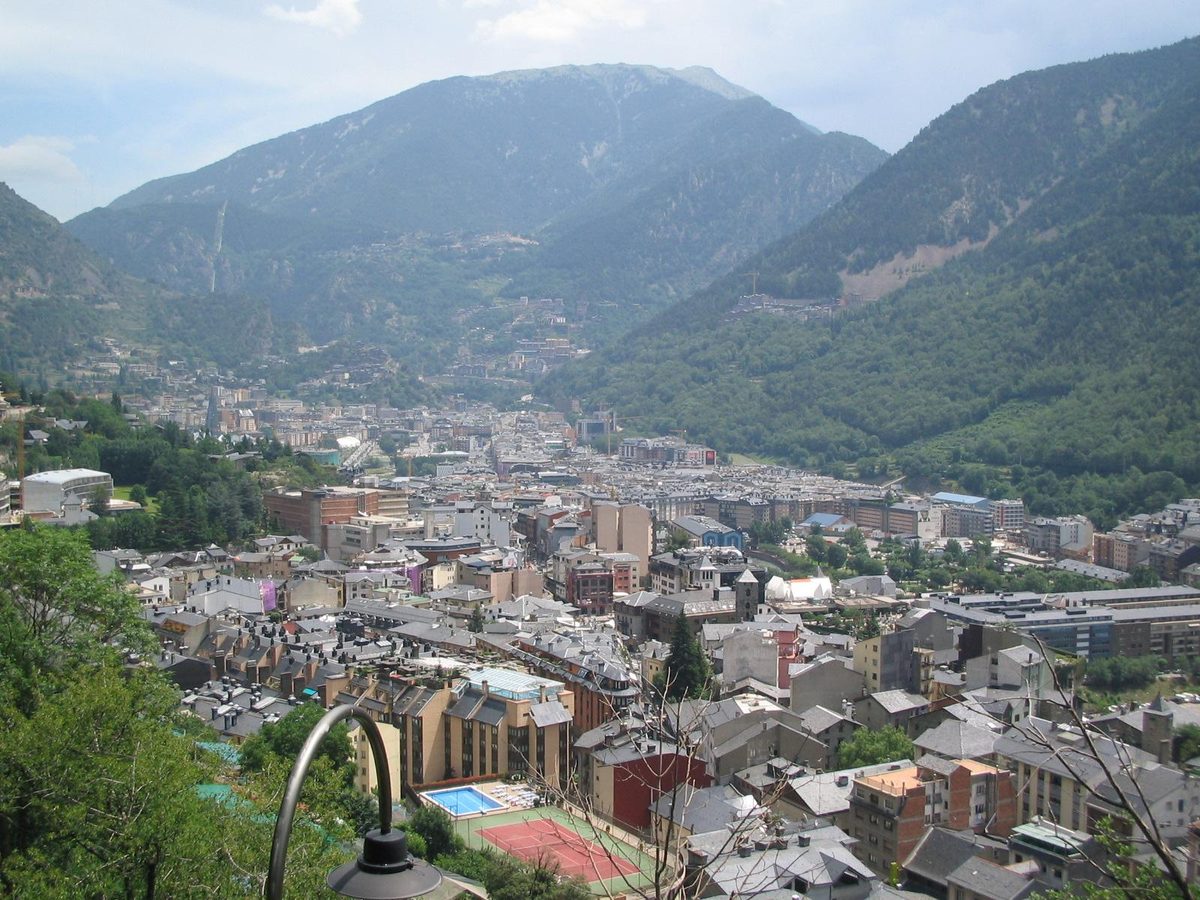
Toulouse-Blagnac sits about 185 km from Andorra la Vella — a touch closer than Barcelona — and the whole experience is a step calmer. Smaller airport, quieter roads, and an approach that saves its drama for the end. Where the Barcelona route is all efficient motorway, the Toulouse road climbs through the Ariège, past medieval Foix and the spa town of Ax-les-Thermes, then hauls itself up to the frontier at over 2,000 metres. On a clear day you crest near the Port d’Envalira with the entire principality unrolling below the windscreen, which beats anything the Spanish motorway offers.
So why doesn’t everyone come this way? Two reasons. Toulouse has thinner flight connections than mega-hub Barcelona, so from the UK, Ireland or long-haul you’ll usually find more (and cheaper) flights into Spain. And the French approach is the higher, more weather-exposed of the two, so in a serious winter storm it can slow or close while the gentler Spanish side keeps moving. For the full head-to-head of every route into the country, see my guide to how to get to Andorra. If you’re specifically comparing gateways, the nearest airports to Andorra piece ranks them all.
From Toulouse to Andorra by bus
The direct coach is how most car-free visitors do it, and it’s straightforward. Andbus runs the flagship service, with FlixBus and others also on the route; between them you get a handful of departures a day, most usefully in the morning and early afternoon.
Reckon on around three to three-and-a-half hours — the fastest scheduled runs do it in about three hours five minutes — and a fare from roughly €36 one-way, a little more for a flexible or last-minute seat. The coaches are modern and built for the ski market: air conditioning, Wi-Fi, power sockets and a hold that swallows ski bags without fuss. Crucially, Andbus picks up at both Toulouse-Blagnac airport and the Gare Routière beside Matabiau railway station in the city centre, so whether you’ve just landed or arrived by train, you can board without crossing town.
The one honest drawback versus Barcelona is frequency. Where the Spanish corridor runs two dozen coaches a day, Toulouse offers a handful, so a delayed flight bites harder. Build in slack — I’d book the early-afternoon departure against a morning flight — and don’t cut the connection fine in winter. Booking ahead online (you travel on a QR code) is wise in ski season, when seats fill. For how this operator and its rivals compare across the whole network, see my rundown of the Andorra direct bus services.
From Toulouse to Andorra by car
Hiring a car at Toulouse-Blagnac and driving in is, for my money, the best version of this journey — and the drive is genuinely part of the holiday. The route is simple: south on the A61/A66 motorway, then the N20 down through the Ariège valley past Foix and Tarascon, climbing steadily to Ax-les-Thermes. From there the N20/RN22 hauls up to the border at Pas de la Casa, at 2,050 metres, where you make the one real decision of the trip.
Over the top or through the tunnel?
At Pas de la Casa you either go over the Port d’Envalira — at 2,408 metres the highest paved pass in the Pyrenees, a glorious sequence of hairpins on a clear day — or through the Envalira Tunnel, a toll of roughly €7–8 each way that skips the summit and most of the weather risk. In summer, take the pass for the views. In winter or bad weather, take the tunnel without a second thought; it’s warm, dry and open when the top is a whiteout. Either way you descend into Grandvalira ski country and follow the valley down to the capital.
Total driving time is about two to two-and-a-half hours in clear conditions — quicker than the bus — and you arrive with a car for exploring, plus the option of a cheap-fuel and duty-free stop on the way home. The trade-offs and the full route detail, including the Barcelona alternatives, live in my guide to driving to Andorra.

The winter rulebook (it’s the law, not a suggestion)
This matters more on the French side than any other approach, so read it twice. From roughly November to spring, Andorra and the French access roads legally require winter equipment when conditions demand it — winter tyres fitted, or chains carried and used. Police do check during snow episodes, and the penalty-plus-stranded combination is the most avoidable bad day in Pyrenean motoring. If you’re hiring, ask the Toulouse rental desk to fit winter tyres or supply chains rather than assuming; a few budget outfits skimp. The high French approach is also the first to queue and the first to close in a storm — so if the forecast is grim, either take the Envalira Tunnel or reroute via the gentler Spanish side. Check live road status on Andorra’s official mobility service before committing to the climb.
What you’ll actually see on the way
The Toulouse road earns its “scenic” billing. You leave the pink-brick city and its flat farmland, and within an hour the Ariège closes in — wooded gorges, the dramatic cliff-top Château de Foix, and the pretty spa town of Ax-les-Thermes, where hot springs bubble up in the main square (the Andbus coach stops here, which makes it a handy back door if you’re already holidaying in the Ariège). Then the real climb begins, up through pine and past ski stations to the bare, boulder-strewn top of the border. The moment you crest and Andorra opens up below is genuinely one of the great mountain arrivals in Europe. Even on the bus, grab a window seat for this stretch.
Pas de la Casa: your first taste of Andorra
Come in from Toulouse and the first Andorran soil you touch is Pas de la Casa, the high border town at 2,050 metres — and it’s quite the introduction. After the wild, empty top of the pass, you round a bend into a horseshoe of high-rise apartment blocks, neon supermarket signs and ski lifts bolted to the mountainside. It is not pretty, and it is enormous fun; it’s also duty-free central, which is why French and Spanish day-trippers pour over the border to fill their boots with cheap spirits, tobacco and perfume. If you’re driving, it’s a natural first stop for fuel (noticeably cheaper here) and a coffee.
For skiers it’s better still: Pas is the eastern gateway to Grandvalira, the largest ski area in the Pyrenees, so from Toulouse you’re at the lifts fastest of anyone. I’ve written a full, affectionate guide to Pas de la Casa if you’re basing there, and the duty-free logic — what’s actually worth buying — is covered in shopping in Andorra. Either way, rolling into Pas is the moment the “no airport” approach pays off: you’ve earned the arrival.
Breaking the journey: Foix, Ax-les-Thermes and the Ariège
If you’re driving and not in a hurry, the Ariège rewards a stop or two, turning a transfer into a mini road trip. Foix, an hour south of Toulouse, is dominated by a three-towered medieval castle on a crag above the town — a proper leg-stretch with a coffee and a view. Further up, Tarascon-sur-Ariège sits near prehistoric painted caves worth a detour on a summer run. And just below the border, Ax-les-Thermes is a characterful Pyrenean spa town where thermal water still runs hot in a public basin in the square; it’s the natural place to pause, eat, and brace for the climb. The Andbus coach stops here too, so even without a car you can, in theory, break the journey. Come summer, the Ariège is a lovely region in its own right rather than just the corridor to Andorra — one more argument for the French approach when the weather’s kind.
From Toulouse airport specifically
If you’re flying in, Toulouse-Blagnac keeps it simple: the Andbus coaches serve the airport directly, so you can walk from arrivals to the Andorra bus without going into the city at all. Flights into Toulouse are strongest from within France and the main European hubs, decent from the UK, and thinner from further afield — so check what flies from your home airport before committing, and weigh it against Barcelona’s wider choice. If Toulouse works for your origin, though, it’s the calmer landing by far, and the airport itself is small and quick to clear. For the deeper airport comparison and the “is there really no runway in Andorra” question, see my honest take on the Andorra airport situation.
What a Toulouse to Andorra trip costs
Rough, honest numbers so you can budget the arrival leg. As always, treat these as guides and check current prices before booking.
| Way in | Typical cost (one-way) | Best for |
|---|---|---|
| Andbus / FlixBus coach | ~€36 per person | Solo and couple travellers, no car needed |
| Hire car (fuel) | Fuel + optional ~€7–8 tunnel toll | Families, groups, flexibility and scenery |
| Private transfer | ~€200+ per car | Groups of four to six, or gear-heavy trips |
| Train + connecting bus | Varies with rail fare | Rail lovers and the plane-averse |
The pattern mirrors the Barcelona side: for one or two people the coach wins on cost every time; at four-plus with luggage, a hire car or private transfer closes the gap and buys flexibility. One Toulouse-specific saving worth noting — because the town is a rail hub, arriving by TGV and connecting to the Andbus coach can be competitive with flying once you count airport transfers, and it’s far kinder on the eye. Whatever you choose, the fuel and duty-free economics mean many drivers deliberately arrive with a near-empty tank and fill up in Pas de la Casa.
Toulouse or Barcelona: which door?
The decision most French-side travellers face. Choose Toulouse if you’re already in southern France, if you value a calm, quick airport and the most scenic drive in, or if you’re heading for the eastern Grandvalira resorts like Pas de la Casa, which the French road reaches first. Choose Barcelona if you want the widest flight choice and lowest fares, the most frequent buses, or the most weather-reliable road in winter — the reasons it remains the default for most international visitors, as I lay out in Barcelona to Andorra. My rule of thumb: if you can fly into either at a similar price and time, and it’s summer, Toulouse gives you the better arrival; in deep winter, Barcelona is the safer bet.
Connecting via Toulouse: trains and the wider network
Toulouse is a rail hub as well as an airport, which opens up some elegant car-free journeys. A TGV from Paris reaches Toulouse in around four-and-a-half hours, and the Andbus coach connects from Matabiau — so you can travel Paris–Andorra entirely without flying. There’s also the gorgeous slow option: the mountain railway from Toulouse towards Latour-de-Carol stops at Andorre-l’Hospitalet, the closest station to Andorra, from which a connecting bus finishes the job. It’s the most romantic way in, and I’ve written it up in full in my guide to the train to Andorra. Whichever way you arrive, remember the crossing is a real international border — passport in the glovebox, not the suitcase — as I explain in the Andorra border guide.
Heading home: the return to Toulouse
Plan the return with the same care as the way in, because two bottlenecks catch people out. First, timing against your flight: from the moment the coach leaves Andorra la Vella, treat Toulouse airport as a good three-and-a-half hours away, and pick a departure that lands a comfortable check-in margin — winter weather on the high border eats optimistic connections. Second, the border and the tunnel: Sunday afternoons and the ends of French holiday weekends bring queues as day-trippers head home with full boots, so leaving mid-morning or later evening beats the crawl. Buy your return coach seat when you book the outbound in ski season; the Saturday and Sunday departures sell out first. And do your duty-free shop the evening before rather than on departure morning, when the border-side superstores are at their most chaotic. None of this is hard — it’s just margin, and in winter margin is everything.
Once you’re in: getting around
Here’s the reward after the mountain approach: Andorra is tiny, about forty minutes end to end, so you don’t need to have driven to get around. Cheap inter-parish buses link the capital with every valley town, ski shuttles serve the lifts in season, and a hire car earns its keep only for remote trailheads. If you came by coach and later fancy a car for a day, the capital has rental desks. The full car-free picture is in my guide to getting around Andorra, and for timing the whole trip, see the best time to visit Andorra.
Which Toulouse option suits your trip?
Match the method to your party rather than defaulting to the bus:
- Solo or couple, no gear: the coach, every time — cheapest and stress-free, just book a departure with buffer against your flight.
- Family or group with ski kit: a hire car from the airport, taking the tunnel in winter; you’ll want wheels for the gear and the flexibility, and the cost splits well.
- Summer road-trippers: drive, and take the Port d’Envalira over the top for one of Europe’s finest mountain passes.
- Rail romantics and nervous flyers: the Paris TGV to Toulouse plus the coach, or the slow mountain train to Andorre-l’Hospitalet — more journey, more story.
- Heading to eastern Grandvalira: Toulouse beats Barcelona hands down; you reach Pas de la Casa and Soldeu first.
Toulouse to Andorra: frequently asked questions
How do you get from Toulouse to Andorra?
By direct coach (Andbus and FlixBus, from around €36 and about three to three-and-a-half hours) or by car (roughly two to two-and-a-half hours), crossing into Andorra at Pas de la Casa over the high French border. The coach serves both Toulouse-Blagnac airport and the city-centre Matabiau bus station, so no cross-town transfer is needed.
How long is the bus from Toulouse to Andorra?
About three to three-and-a-half hours, with the fastest Andbus services doing it in a little over three hours. It’s slightly longer than driving because of the stops en route, including Ax-les-Thermes. In heavy winter weather, allow extra time for the climb to the border.
Is it better to fly to Toulouse or Barcelona for Andorra?
Barcelona for the widest, cheapest flights and the most frequent, weather-reliable buses. Toulouse for a calmer, quicker airport, a marginally shorter distance and the most scenic drive in — especially in summer, or if you’re heading to the eastern resorts. Both are about three hours out by coach.
How far is Toulouse from Andorra?
Around 185 km by road to Andorra la Vella — slightly closer than Barcelona. Driving takes about two to two-and-a-half hours in clear conditions; the coach takes three to three-and-a-half, depending on stops and traffic. The route climbs to over 2,000 metres at the border, so weather can affect timings.
Can you drive from Toulouse to Andorra in winter?
Yes, but it’s mountain driving with legal obligations: winter tyres or chains are required when conditions demand, roughly November to spring. The Envalira Tunnel (a small toll) avoids the highest, most exposed section and usually stays open when the Port d’Envalira pass closes. Check live road status before you set off.
Does the Toulouse to Andorra bus stop at the airport?
Yes. Andbus coaches pick up directly at Toulouse-Blagnac airport as well as at the Matabiau bus station in the city centre, so you can travel from the airport to Andorra without going into Toulouse. Leave a comfortable buffer between your flight and the bus, as departures are less frequent than from Barcelona.
Is the drive from Toulouse to Andorra difficult?
Not in good conditions — it’s a well-surfaced main road, scenic and steady, with the only challenge being the climb to the 2,050-metre border. The optional Envalira Tunnel removes the highest hairpins. In snow it becomes serious mountain driving requiring winter equipment, so respect the forecast and consider the tunnel rather than the exposed high pass.
Related Andorra travel guides
Planning the French approach? Pair this with the full how to get to Andorra roundup and, if Madrid or Spain is your start instead, Madrid to Andorra. Then plan the trip itself with skiing in Andorra, the duty-free lowdown in shopping in Andorra, and a full list of things to do in Andorra once the mountain approach has delivered you safely into the valleys.
Photo credits
All photographs are from Wikimedia Commons under their stated licences, with thanks to the photographers:


1 comment
Comments are closed.