
There’s a particular kind of traveller who hears “Andorra has no railway” and takes it as a personal challenge. I’m one of them. And the good news is that with a little ingenuity you can very nearly arrive by train — France parks a tiny mountain station teasingly close to the border, and on a good day you can sleep your way there from Paris and be in Andorra before lunch.
Taking the train to Andorra means riding to Andorre-l’Hospitalet, a small station in the French Pyrenees 38 km from Andorra la Vella, then finishing by connecting bus or taxi. The showpiece is the Paris night sleeper down to that station. One important caveat up front, covered in detail below: as of mid-2026 the French mountain line is disrupted by a landslide, so check current status before planning around it. This guide is for rail lovers and anyone who’d rather not fly.
Last updated: July 2026. Following a February 2026 landslide between Foix and Ax-les-Thermes, the Paris night train was suspended and repairs are expected to take months — always check SNCF Connect for live status before booking. Fares and times below reference normal operation.
| Rail route | How it works | Status (mid-2026) |
|---|---|---|
| Paris night sleeper | Paris Austerlitz → Andorre-l’Hospitalet → connecting bus | Suspended — check SNCF |
| London by rail | Eurostar to Paris + the night sleeper | Depends on sleeper |
| TGV + coach | Paris/anywhere → Toulouse by TGV, then Andbus | Running — the reliable option |
| Barcelona by rail | Rodalies R3 to Latour-de-Carol, then connect | Slow but scenic; confirm links |
Is there a train to Andorra?
No — there is no railway anywhere inside Andorra, and there never has been. The country’s steep, curved valleys defeated every twentieth-century railway proposal on cost, the same geography that means there’s no Andorra airport either. So “the train to Andorra” is always really a train to the edge of France, finished off by road.
What makes it work at all is Andorre-l’Hospitalet, a tiny halt on the gorgeous Toulouse–Latour-de-Carol mountain line, just 38 km from Andorra la Vella. A connecting bus meets trains and runs into the capital in about 75 minutes; a taxi covers it in around 47. That’s close enough to make a genuine rail journey possible — and on the sleeper, a memorable one. For the full menu of ways in, see my guide to how to get to Andorra; this piece is the rail obsessive’s deep dive.
A vital 2026 update: the line is disrupted
Honesty first, because it affects real plans. In February 2026 a landslide struck the Ariège line between Foix and Ax-les-Thermes, the stretch the Paris night train uses to reach l’Hospitalet. As a result the sleeper was suspended, and SNCF has said repairs will take several months. As I write in July 2026 it has not resumed, so anyone dreaming of the Paris-to-Pyrenees couchette needs to check the live position on SNCF Connect or Rail Europe before building a trip around it.
Don’t despair if you had your heart set on arriving by rail, though. The southern, Spanish approach by train is less affected, and the all-weather backup — a fast train to Toulouse then a connecting coach — runs regardless. I cover both below. And when the Ariège line reopens, everything in the sleeper section that follows applies again exactly as described; this is a repair, not a closure. Rail projects like this do come back.
Andorre-l’Hospitalet: the closest station to Andorra
Let’s get to know the station at the heart of all this. Andorre-l’Hospitalet — renamed in 2023 from the tongue-twisting L’Hospitalet-près-l’Andorre — is a marvel of nowhere: a couple of platforms, a shuttered building and peaks on every side, at around 1,430 metres up in the mountains. It sits on the single-track line that climbs from Toulouse through the Ariège to the border station of Latour-de-Carol, one of the most scenic railways in France.
From the platform, two ways finish the job into Andorra. A connecting bus run by Hife meets the key trains and rolls over the border into Andorra la Vella in about 75 minutes; the fare is around €25. Or a pre-booked taxi covers the 38 km in roughly 47 minutes for something like €115 a carload — worth it split between four. Either way, you cross the frontier by road, so keep your passport handy, as I explain in the Andorra border guide. The station sells nothing but mountain air, so bring food and water for the wait.
What the ride through the Ariège is like
The reason rail fans obsess over this route isn’t the destination — it’s the line itself. Climbing south from Toulouse, the train crosses the flat Lauragais farmland and then, quite suddenly, the Pyrenees rear up and the railway begins to earn its keep. You pass beneath the cliff-top castle of Foix, thread through the spa town of Ax-les-Thermes, and then grind up a series of engineering feats — tight curves, tunnels and viaducts — into genuinely high country. By the time you reach l’Hospitalet you’re at around 1,430 metres, in a landscape of bare rock and pine that feels a world away from the vineyards a couple of hours back. On the sleeper you miss the night-time stretch, of course, but you wake for the best of it as the train hauls up the final valley. In daylight on the TGV-and-Toulouse alternative you’d swap this for a coach doing the same climb by road — still spectacular, just on rubber instead of rails.
The Paris night sleeper: the great arrival (when it runs)
This is the journey that turns a logistical problem into the best arrival story in the Pyrenees, and it’s why I’ll forgive Andorra its lack of a railway forever. The choreography, in normal operation, is pure romance: you board the Intercités de Nuit at Paris Austerlitz around 22:13, settle into a couchette, and fall asleep as the city slides away. You wake to granite and pine, and step onto a Pyrenean platform at 09:39. The connecting Hife bus leaves at 10:15 and rolls into Andorra la Vella at 11:30 — you’ve crossed the whole of France asleep and you’re checking in before lunch.
Fares are startling value for what is effectively transport plus a bed. A couchette starts around €29 in a six-berth compartment, about €60 in a more comfortable first-class four-berth; bare reclining seats go from around €22 for the young and unbreakable. Add roughly €25 for the connecting bus and the whole Paris-to-Andorra journey — accommodation included — can come in near €55. Heading home, the bus leaves Andorra around 17:00 to meet the evening sleeper, which lands you back in Paris around 07:08.
The fine print matters. Even in normal times the sleeper runs only on selected days — typically Fridays and Saturdays down for much of the year (Saturdays and Sundays back), going daily from June to September — and these night trains often open for booking only a month or so ahead. Book on SNCF Connect or Rail Europe. And, to repeat the essential 2026 caveat: the service is currently suspended after the Ariège landslide, so confirm it’s actually running before you plan around it.
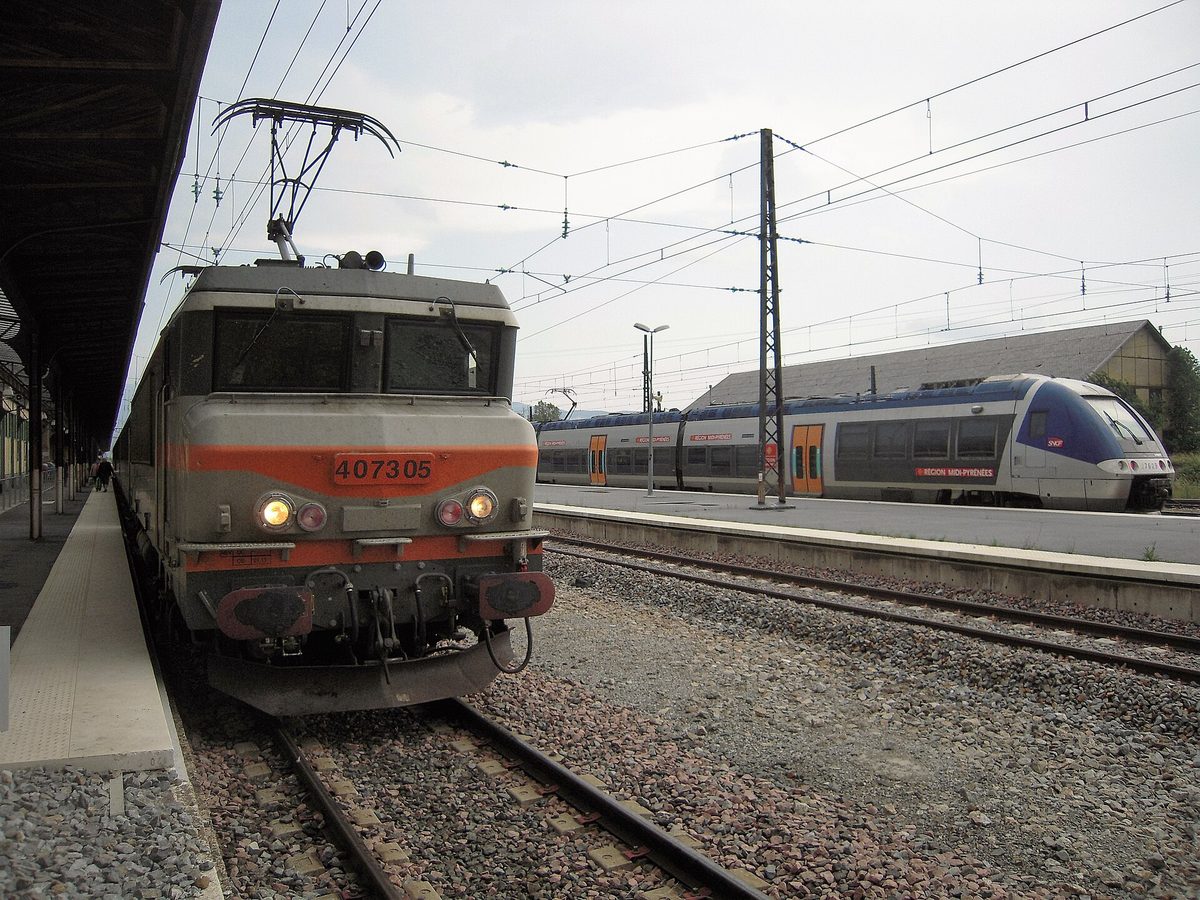
From London to Andorra by train
When the sleeper runs, it bolts elegantly onto the front of a UK journey. Take a Eurostar from London St Pancras to Paris (from around £51 if you book ahead), cross Paris to Austerlitz, and pick up the night train south — a genuinely civilised London-to-Andorra journey with zero airports and one good night’s sleep involved. It’s slower than flying, obviously, but it’s a low-carbon, low-stress alternative that many people find is half the holiday. With the sleeper suspended in 2026, the interim London option is Eurostar to Paris, a TGV to Toulouse, and the Andbus coach — more changes, but it works today.
The reliable alternative right now: TGV plus coach
If the sleeper’s dates or its current suspension don’t suit, this is the all-weather answer, and it keeps most of the “arrive by rail” spirit. Take a high-speed TGV from Paris to Toulouse — about four-and-a-half hours — then the Andbus coach from Toulouse over the border into Andorra. You lose the overnight romance but gain reliability and daytime scenery on the mountain leg. It’s also the natural route from anywhere on the French high-speed network. I’ve written the coach half of this up in detail in my guide to Toulouse to Andorra, and the operators involved in the Andorra direct bus rundown.
The Barcelona rail curiosity
Rail collectors, this one’s for you. The same mountain line that hosts l’Hospitalet ends at Latour-de-Carol, a remarkable border station where three railway gauges meet: the French mainline, Spain’s Rodalies R3 commuter line up from Barcelona, and the narrow-gauge Petit Train Jaune of the Cerdagne. That R3 connection means you can, with patience, ride a suburban train from Barcelona’s Plaça de Catalunya up through the Pyrenees for pocket change and work your way toward the Andorran approach from the south — a five-hour-plus budget epic that beats the motorway for scenery the entire way. It’s a wonderful, slow way to travel, though the onward links to Andorra take planning; the more straightforward Catalan approach is the coach, covered in Barcelona to Andorra.
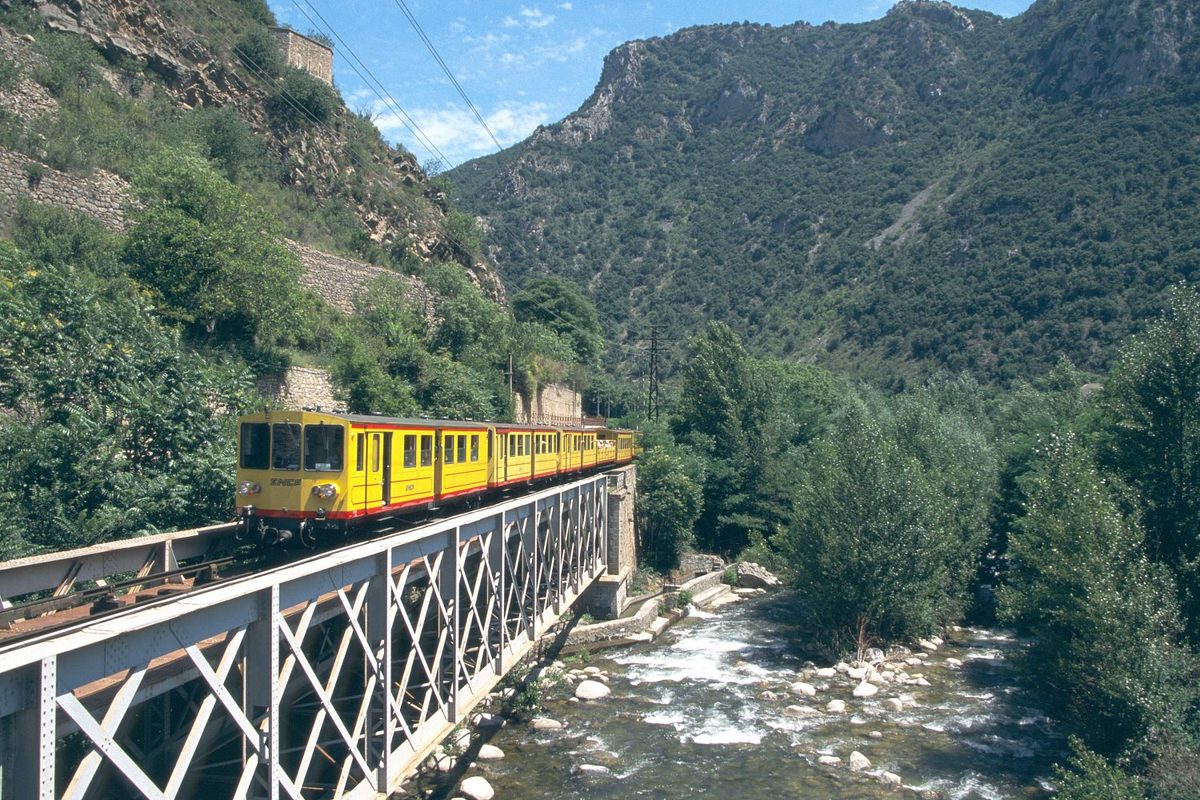
The Petit Train Jaune and other slow pleasures
While we’re deep in rail-nerd territory, the Petit Train Jaune — the “Little Yellow Train” — deserves its own mention. This narrow-gauge line climbs through the Cerdagne in the French Pyrenees in bright yellow-and-red carriages, some open-topped, past the highest railway station in France. It doesn’t go to Andorra, but in summer it makes a glorious component of a slow Pyrenean rail circuit that can be strung together with the Latour-de-Carol lines. If your idea of a holiday is the journey as much as the destination, building Andorra into a wider Pyrenean rail loop is a joy. None of it is the fast way in; all of it is the good way, and the mountain scenery is unrelenting.
Practical tips for the sleeper
A few things I’ve learned that make the night train better. Book a bottom berth if you can — your luggage lives under it, and you’ll thank yourself climbing in at 6am. Pack breakfast and water in Paris, because the train sells little and the l’Hospitalet platform sells nothing. Bring a sleep mask and earplugs; couchettes are shared and sociable, which is part of the charm but not conducive to deep sleep. Layer up — mountain mornings are cold even in summer, and you step off at altitude. And treat the connecting bus as the fixed point in your plan: it’s timed to the train, but leave no room for a missed connection at the far end, because options from a tiny mountain halt are thin. Get those right and the sleeper is one of the great budget adventures in European travel.
Building Andorra into a wider rail adventure
Because the l’Hospitalet line connects into a web of Pyrenean railways, the smartest way to justify the slow approach is to make Andorra one stop on a bigger loop rather than an out-and-back. A classic summer circuit might run Toulouse–l’Hospitalet by mountain train, a few days in Andorra, then onward over the border to Latour-de-Carol to pick up the Petit Train Jaune down through the Cerdagne, connecting eventually to Spain’s Rodalies R3 back towards Barcelona and the coast. It’s a genuinely magical week of narrow valleys, high passes and border stations where the platforms change language and gauge. You do need to plan the connections carefully — some links run only a few times a day, and the current Ariège disruption complicates the northern leg — but done right it turns “how do I get to Andorra by train” into one of the best slow-travel holidays in Europe. If you’d rather have wheels for part of it, my guide to driving to Andorra covers the road version of the same scenery.
Timing your rail trip: seasons and booking
Rail to Andorra rewards planning around the calendar. In normal operation the Paris sleeper runs only a couple of nights a week for much of the year, then goes daily from June to September — so summer is much the easiest time to build a trip around it, and also when the wider Pyrenean rail network (including the Petit Train Jaune) is in full swing. Booking opens relatively late for these night trains, often only a month or so ahead, and the cheap berths go first, so set a reminder and pounce when your date appears on SNCF Connect. Ski-season rail travel is trickier: the sleeper’s limited winter days rarely map neatly onto a week’s skiing, which is one more reason winter visitors lean on the coach and the flight instead. For a month-by-month view of when to come at all, see my guide to the best time to visit Andorra, and if snow is the goal, skiing in Andorra.
Is the train to Andorra worth it?
Honestly? As pure transport, no — the coach from Barcelona is quicker, cheaper and far more frequent, and I’d never pretend otherwise. But that misses the point. The rail approach isn’t about efficiency; it’s about turning the journey into part of the trip. The night sleeper into a silent mountain station, the smell of pine and diesel, a connecting bus idling in the dawn — that’s a memory, not a transfer. When the Ariège line is running, and your dates fit, I’d take it over a flight every time. When it isn’t, the TGV-and-coach combination keeps most of the spirit alive. Andorra makes you work a little to arrive by rail; choose the version of the work that sounds like a story you’d tell.
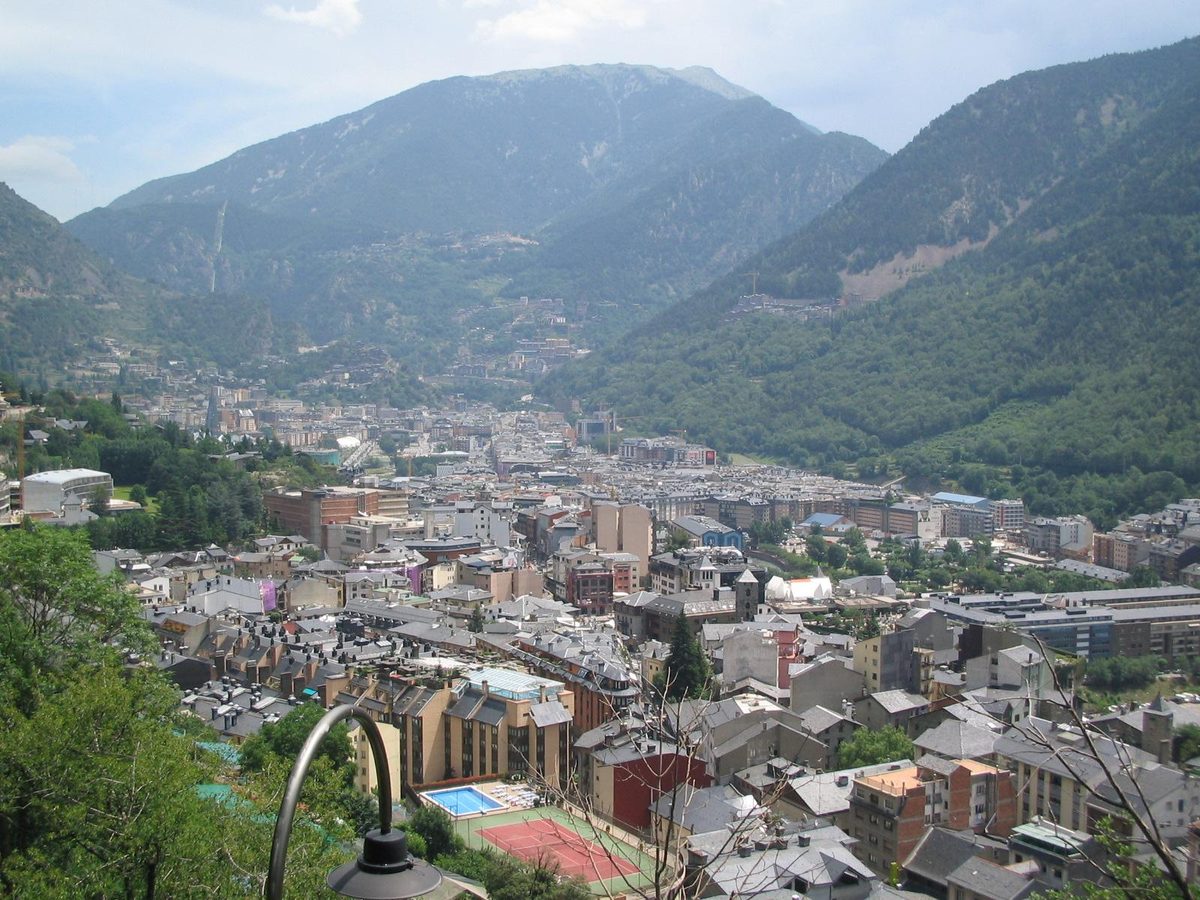
Once you reach Andorra la Vella
Step off the connecting bus at Andorra la Vella’s national station and the hard part is over — the country is tiny, about forty minutes end to end, and you won’t have missed a car at all. Cheap inter-parish buses fan out along each valley for a couple of euros, ski shuttles serve the lifts in season, and everything central is walkable. If you fancy a car for a day of remote trailheads you can hire one in the capital, but most rail arrivals never bother. The full car-free picture is in my guide to getting around Andorra, and if you’re wondering where to base yourself, the capital itself is covered in Andorra la Vella. Arriving by train and then moving car-free through the valleys is, fittingly, the low-stress way to do the whole trip.
Train to Andorra: frequently asked questions
Is there a train station in Andorra?
No. Andorra has no railway or station of its own — the mountainous terrain ruled it out. The nearest station is Andorre-l’Hospitalet in France, 38 km from Andorra la Vella, from which a connecting bus or taxi completes the journey. The Toulouse–Latour-de-Carol line that serves it is one of the most scenic railways in France.
Can you get a train from Paris to Andorra?
Nearly — a Paris night sleeper normally runs to Andorre-l’Hospitalet, from where a connecting bus reaches Andorra la Vella by late morning. However, following a February 2026 landslide on the Ariège line, this service is suspended as of mid-2026; check SNCF Connect for the latest. In the meantime, a TGV to Toulouse plus the Andbus coach is the reliable rail-based route.
How much is the night train to Andorra?
In normal operation, couchette fares start around €29 in a six-berth compartment and about €60 in first-class four-berth, with seats from roughly €22. Add around €25 for the connecting bus. That makes the whole Paris-to-Andorra journey — accommodation included in the overnight — remarkable value at around €55 and up.
What is the closest train station to Andorra?
Andorre-l’Hospitalet (renamed in 2023 from L’Hospitalet-près-l’Andorre), a small halt in the French Pyrenees about 38 km from Andorra la Vella. A Hife connecting bus meets trains and reaches the capital in around 75 minutes; a taxi takes about 47 minutes. It sits on the mountain line between Toulouse and Latour-de-Carol.
Can you travel from London to Andorra by train?
Yes, when the sleeper runs: Eurostar from London to Paris, then the night train south to Andorre-l’Hospitalet and a connecting bus. It’s a low-carbon, airport-free journey that many treat as part of the holiday. With the sleeper suspended in 2026, the interim option is Eurostar plus a TGV to Toulouse and the Andbus coach.
Is the train to Andorra better than the bus?
For speed, cost and frequency, no — the direct coach from Barcelona wins easily. For romance and low-carbon travel, the train is unbeatable, especially the Paris sleeper. Choose the train if the journey itself is the appeal and your dates fit; choose the bus if you simply want to arrive quickly and cheaply.
Does the Barcelona train go to Andorra?
Not directly. Spain’s Rodalies R3 line runs from Barcelona up to the border at Latour-de-Carol, near the French mountain line, but there’s no train onward into Andorra — you’d connect by road. It’s a scenic, cheap and very slow approach for rail enthusiasts; most Barcelona visitors take the far quicker direct coach instead.
How long does it take to get to Andorra by train?
On the Paris night sleeper in normal operation, roughly from 22:13 the evening before to an 11:30 arrival in Andorra la Vella — an overnight journey that doubles as a hotel. The TGV-and-coach alternative takes about four-and-a-half hours to Toulouse plus three or so on the bus. Either way, rail to Andorra is slower than flying-and-bussing, but far more scenic.
Related Andorra travel guides
Weighing up the rail route? Compare it with the full how to get to Andorra roundup, the quicker Madrid to Andorra and nearest airports options, and — once you’ve arrived — getting around Andorra and the best time to visit.
Photo credits
All photographs are from Wikimedia Commons under their stated licences, with thanks to the photographers:


