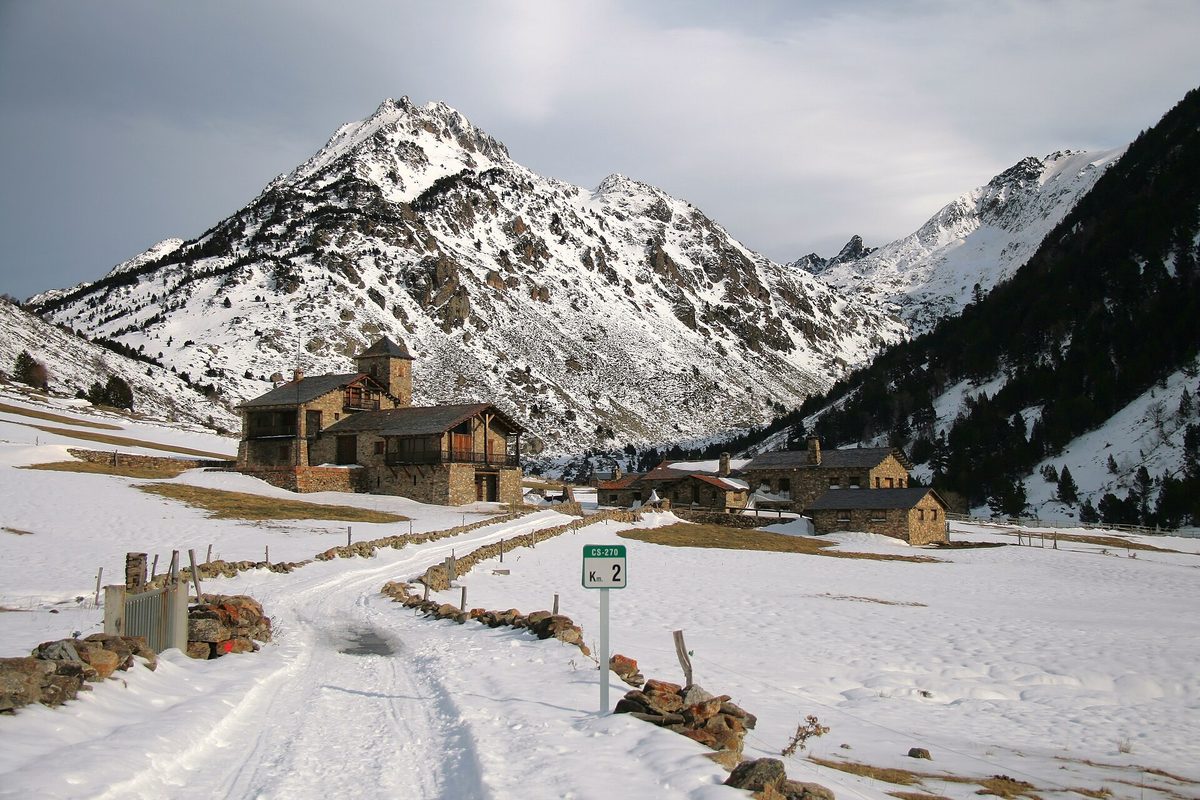
A friend once scrolled Instagram in my passenger seat all the way down from the Port d’Envalira to Soldeu. She got home to a phone bill with a line item on it that cost more than her ski pass. She had done nothing unusual. She had simply crossed a line her contract treats as the edge of the world.
That line is the Andorran border.
If you are looking for a straight answer: you almost certainly need an Andorra SIM card, an eSIM, or a deliberate decision to switch data off, because Andorra sits outside the EU and your Roam Like at Home allowance stops dead at the border. This guide is for anyone visiting from the UK, Spain, France, the rest of Europe, or further afield who wants data without a nasty invoice.
Last updated: September 2026. Roaming tariffs and SIM prices change constantly — check your own operator and andorratelecom.ad before you travel.
I have been coming here for years, in ski boots and hiking boots, and I have watched the connectivity question get simpler and cheaper — but only for people who plan it. Everyone else still pays the stupid tax. This is the guide I wish someone had handed my friend on the Port d’Envalira. Start with our broader Andorra travel tips for first-time visitors if you want the wider picture, then come back here for the phone side of it.
| Question | Short answer |
|---|---|
| Does EU roaming work? | No. Andorra is outside the EU and EEA, so Roam Like at Home does not apply |
| How many networks are there? | One. Andorra Telecom, state-owned, no competitors |
| Local prepaid tariffs | Around EUR 9/month for 1 GB, around EUR 19/month for 3 GB (Andorra Telecom, tax included) |
| Official eSIM | eSIM Andorra at esimandorra.ad, visitor rates advertised from around EUR 4.95 |
| Travel eSIMs that use the Andorran network | Airalo and Holafly both list Andorra Telecom as their network here |
| Worst-case roaming | Some Spanish operators have been quoted in the euros-per-megabyte range. Genuinely ruinous |
| The one good exception | French Orange and its sub-brands have historically included Andorra in their EU zone |
| Coverage | Strong 4G in all seven parishes and the ski sectors, 5G in parish centres, patchy in deep side valleys |
| Free Wi-Fi | The public “Andorra Wi-Fi” network along the Shopping Mile, plus most hotels and cafes |
| Emergency numbers | 112 general, 110 police, 118 fire brigade, 116 medical |
| ID needed to buy a SIM | Yes — passport or national ID card |
Why Andorra is a roaming trap, and why nobody warns you
The trap works because Andorra does not feel foreign in the way that matters. You drive in from Spain or France without stopping at a passport booth. The euro is in your pocket. The road signs look European. Your phone shows full bars.
None of that has anything to do with roaming law.
Not in the EU, not in the EEA, not in the deal
The 2017 Roam Like at Home regulation applies across the EU and the wider European Economic Area. Andorra is in neither, and it is not a signatory to any equivalent arrangement. Our explainer on Andorra’s odd relationship with the European Union goes into the constitutional detail, but the practical upshot fits in one sentence: your operator can charge you whatever its Andorra tariff says, and no regulator will stop it.
There is no cap. There is no automatic cut-off mandated by Brussels. Some operators apply their own spend limit, usually somewhere around EUR 50 or GBP 45, and send you a text when you hit it. Some do not. The ones that do not are the reason people come home to four-figure bills.
The same “looks European, isn’t” logic applies at the border itself, which is worth reading about separately in our guide to passports, visas and Andorran border formalities. Andorra is genuinely a third country. Your phone knows it even when you don’t.
One country, one network
Andorra Telecom is the only mobile operator in the principality. It is owned by the Andorran government, it was called Servei de Telecomunicacions d’Andorra before the rebrand, and older articles still refer to its Mobiland brand. There is no rival. There is no MVNO reselling capacity at a discount.
That monopoly is the engine of the whole problem. When your home operator’s customers use data in Spain, it pays a regulated wholesale rate to a Spanish network competing with three others. When they use data in Andorra, it pays whatever Andorra Telecom asks. So most European operators quietly moved Andorra out of their bundled zone and into whichever expensive bucket they use for the rest of the world.
What “unregulated” actually costs
I am going to hedge everything in this section, and I want to explain why. Roaming tariffs for a single small country get changed with no announcement, differ between contract and prepaid, differ between tariff generations on the same network, and are often buried four clicks deep on a page your operator would rather you never found. Any figure I print here has a shelf life measured in months.
So treat the numbers below as a shape, not a quote, and check your own tariff before you go.
What I can say with confidence is the order of magnitude. Reporting on Spanish operators has repeatedly put Andorra roaming in the euros-per-megabyte range — figures between roughly EUR 3.60 and EUR 18 per megabyte have circulated in the Spanish tech press. At the low end of that range, a single podcast download would cost more than a night in a budget aparthotel. That is not hyperbole; it is arithmetic.
The stories are consistent and grim. Twenty minutes of casual browsing costing EUR 15. A two-minute call home costing around EUR 6. A single WhatsApp voice note running to a couple of euros. I have heard variations of all three from people I trust.
What your own operator probably charges in Andorra
Here is the honest position, operator by operator, with the caveat repeated: verify against your own contract. Search your operator’s site for “Andorra” specifically, not “Europe”, because Andorra is exactly the country that gets carved out of “Europe”.
UK networks
Andorra is not in EE’s Europe zone. It is not in the standard inclusive zone for the other three either. What happens instead varies: some UK networks push you onto a daily roaming pass at somewhere around GBP 7 to GBP 8 a day, some sell a multi-day pass that has been advertised at around GBP 37 for a week, and some simply meter you at a per-megabyte rate that will make your eyes water.
A GBP 7-a-day pass on a five-day ski trip is GBP 35. An Andorra eSIM covering the same five days costs a fraction of that. The maths is not close.
Spanish networks
Counter-intuitively, Spanish SIMs are often the worst option, despite Spain being the nearer neighbour and the country most Andorra visitors arrive from. The Spanish operators price Andorra as a genuine foreign destination.
There are workarounds. Movistar has offered contract customers a daily Andorra bundle in the region of EUR 9 for 3 GB, which is survivable — but it has been contract-only, not prepaid. Orange Spain has an add-on, historically branded “Everywhere”, which has given around 100 MB per calendar day for about EUR 7. That is a lot of money for very little data, but it is a ceiling rather than a cliff.
If you are coming up for the day from Catalonia, this matters more than you think. Read our honest assessment of the Barcelona day trip before you commit to six hours of driving with your data left on.
French networks — the one genuine exception
French Orange has for years included Andorra inside the EU zone of its tariffs, charged at domestic French rates. That has covered Orange contracts, Sosh, the Mobicarte prepaid range and the Orange Holiday traveller SIM. If you already hold one of these, you may need to do precisely nothing.
I would still check before relying on it. Operators reprice zones. But it remains the single best “do nothing” answer available to any visitor, and it is worth knowing if you are approaching from Toulouse and the French side of the Pyrenees.
American, Canadian and Australian visitors
You are in a different situation and, oddly, sometimes a better one. Several North American plans that bundle “international roaming in 200-plus destinations” list Andorra among them, because those plans are built on global roaming agreements rather than the EU regulation. Some US carriers include Andorra in their standard international day-pass at a flat daily rate.
The catch is that flat daily rates of USD 10 to 12 add up fast over a week, and the “unlimited” data is usually throttled hard. For anything longer than a long weekend, an eSIM still wins.
Buying an Andorra SIM card from Andorra Telecom
A local Andorra SIM card is the cheapest option per gigabyte and the most reliable in the mountains, for the simple reason that it is the network rather than a guest on it. It is also the most faff. That trade is worth making only if you are staying more than a few days.
The prepaid tariffs, as of September 2026
Andorra Telecom sells two prepaid bundles, and it calls them Rate S and Rate M. Taken straight from the operator’s own English-language prepaid page:
- Rate S — around EUR 9 a month, tax included. 1 GB of data in Andorra, 20 minutes to Andorran landlines and mobiles, SMS charged at about EUR 0.16 each.
- Rate M — around EUR 19 a month, tax included. 3 GB of data in Andorra, the same 20 minutes, the same SMS rate.
Each rate runs for 30 days from the moment you activate it, then renews automatically if you still have credit on the card. You will get a text when that happens. Activation is done from the Andorra Telecom app or by calling 115 from the SIM itself.
Note what those bundles do not include: minutes to Spain, France or anywhere else. The included minutes are domestic only. If you plan to make actual voice calls home, use WhatsApp or FaceTime over the data allowance rather than dialling internationally.
Note also how small 3 GB is by modern standards. Three gigabytes will comfortably cover maps, messaging, email and a reasonable amount of browsing for a week. It will not cover a family streaming Netflix in a hotel room. If you blow through the bundle you drop onto pay-per-use metering, which has historically sat around EUR 0.02 per megabyte — about EUR 20 per additional gigabyte, which is not a bargain but is not catastrophic either.
There have also been small top-up data packs sold by SMS shortcode: roughly EUR 2 for 200 MB over three days, EUR 5 for 500 MB over a week, EUR 9 for 1 GB over a month. Useful if you are running low on the last day.
Where to buy, and what to bring
Bring photo ID. Andorra Telecom must register every Andorra SIM card to a named person, so a passport or a national identity card is not optional. A driving licence will usually not do.
The flagship shop is on Avinguda Meritxell in Andorra la Vella, in the middle of the main shopping strip — which means you can pick up a SIM in the same twenty minutes you spend walking the length of the capital’s shopping avenue. There is a network of authorised resellers across the parishes as well; the operator publishes a points-of-sale map on its website.
Two practical warnings. First, the SIM starter kit itself has historically carried a fee — sometimes around EUR 30 with matching credit included, sometimes discounted in promotions — although activating one of the two bundles has often waived it. Ask before you pay. Second, insert the SIM and confirm it is actually working before you leave the counter. If mobile data does not come up, the fix is usually setting the APN manually to the word “internet”.
Top-ups, validity and the auto-renew trap
Top up from the website, from the app, at Andbank and Crèdit Andorrà cash machines, or at any official point of sale. The app has been reported working with international cards and with fintech cards like Revolut, which saves a queue.
Credit validity is generous: the card stays live for 12 months from your last top-up, with a further two-month window to reactivate before the number is lost. So a SIM bought for a ski week genuinely will still work when you come back next season, provided you top it up occasionally.
The trap is the auto-renewal. Rate S and Rate M renew every 30 days as long as there is credit sitting on the card. If you leave EUR 20 on a SIM you are not using, it will quietly renew itself and eat that credit. Either spend the balance down before you leave or turn the auto-renew off in the app.
The Andorra eSIM options, ranked honestly
For most visitors on a trip of a week or less, an eSIM is now the right answer. No shop, no queue, no passport photocopying at a counter, and — crucially — you keep your own number active on your normal SIM so two-factor codes and WhatsApp keep working exactly as they did at home.
eSIM Andorra, the official one
Andorra Telecom runs its own visitor-facing eSIM store at esimandorra.ad, and the national tourist board promotes it directly. It is a data-only product designed for tourists: you buy online, a QR code arrives by email, and you scan it either before you fly or once you arrive. Visitor rates have been advertised starting at around EUR 4.95, which makes it the cheapest genuinely-local option for a short trip.
Because it is data-only and sits alongside your existing SIM, your usual number stays live. That is the detail that matters. If your phone is not eSIM-capable, the same rates have been sold as physical SIMs through authorised points of sale.
This is my default recommendation for a two-to-five-day visit. It runs on the only network that actually covers the country properly, and it costs less than two days of a UK roaming pass.
Travel eSIMs that genuinely use the Andorran network
This is the part the comparison sites gloss over, and it is the only part that decides if your eSIM still works at 2,400 m.
Two big providers list Andorra Telecom as the network behind their Andorra plans. Airalo states Andorra Telecom explicitly on its Andorra product page and sells unlimited-data packages from around USD 12.50 for three days up to roughly USD 72.50 for thirty, with cheaper fixed-allowance plans starting near USD 4. Holafly also states that it works with Andorra Telecom, and prices unlimited plans from roughly EUR 19 for five days to EUR 64 for thirty.
Unlimited is doing some heavy lifting in both of those descriptions — expect a fair-use throttle after a daily threshold. For maps, messaging and photo uploads it is irrelevant. For streaming a film, it is not.
The ones that quietly piggyback on Spain
Plenty of travel eSIM brands will happily sell you an “Andorra” plan that is in fact a Spanish or French roaming profile. Saily, for example, has described its Andorra coverage as running via Spanish or French networks rather than connecting directly to Andorra Telecom.
Sometimes that works fine. Spanish and French masts on the surrounding peaks spill signal into the higher parts of Andorra, which is exactly why the border-latch problem exists at all. But that signal is inconsistent, and it collapses precisely where you would want it — down in the deep valleys where the towns actually sit, and on the north-facing side valleys where the good hiking is.
So before you buy any travel eSIM for Andorra, find the line on the product page that names the network. If it says Andorra Telecom, or Mobiland, you are fine. If it says nothing, or names Movistar or Orange, assume you are buying Spanish roaming with an Andorran flag on the box, and expect gaps.
The border-latch problem, in both directions
This is the single most expensive phone mistake people make in the Pyrenees, and it has nothing to do with which SIM you bought.
Pas de la Casa and the French edge
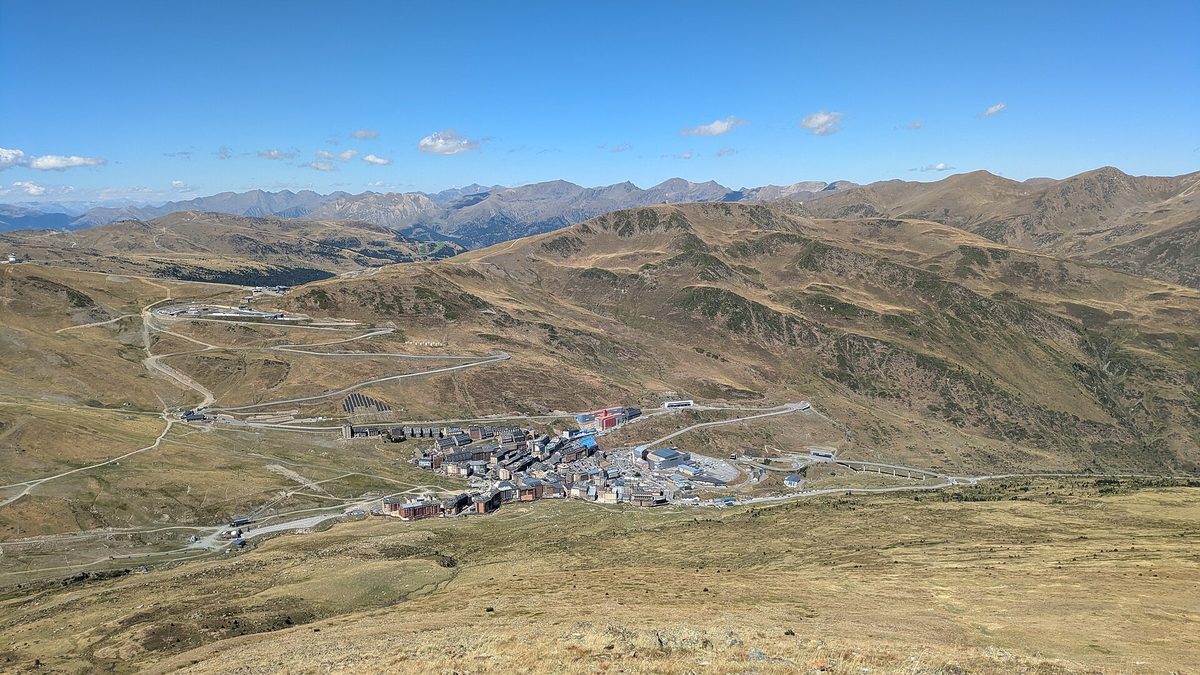
Pas de la Casa sits at 2,100 m, three hundred metres from France, on the wrong side of the Port d’Envalira. French masts on the Ariège side have a clear line of sight into the town. Your handset does not care about sovereignty; it cares about signal strength, and it will happily grab a French network in the middle of an Andorran ski resort.
That cuts both ways. If you hold a French SIM, latching onto the French network in Pas de la Casa is a gift — domestic rates in a foreign country. If you hold a UK or Spanish SIM and your Andorra eSIM is running, you can end up billed for French roaming on a plan you thought was covering Andorra, or worse, drop off your Andorran data plan entirely and onto your home operator’s Andorra tariff.
The fix is manual network selection. On both iOS and Android you can disable automatic carrier selection and pin the phone to Andorra Telecom. Do it once, in the car park, and forget about it. It takes thirty seconds and it is the highest-value setting change on this page.
The Spanish edge, and Sant Julià de Lòria
The same thing happens at the southern end. Around la Farga de Moles and up through Sant Julià de Lòria, Spanish networks from the Seu d’Urgell valley reach well inside Andorran territory. Anyone who has queued in traffic at the Andorran border crossing has watched their phone flip carriers three or four times while stationary.
If you are queueing to leave with data roaming on and no Andorran plan, that queue is quietly billing you. Turn data off before you join it.
Andorran signal bleeding outward
The reverse trap catches people leaving. Drive down the N-145 into Spain, or the RN22 into France, and for the first few kilometres your phone may still be sitting on Andorra Telecom because it has not found a reason to hand over. You are now in the EU, on a plan that thinks you are not, being billed at Andorran roaming rates.
I have seen this add charges to a bill twenty minutes after someone crossed back into Spain and assumed they were safe. If you pinned the phone to Andorra Telecom on the way in, set it back to automatic on the way out. Same thirty seconds, same setting.
Anyone driving to Andorra should build both of those into the routine along with checking the snow chains.
How to turn roaming off without going dark
If you decide to buy nothing at all — a legitimate choice for a day trip — you need to do it properly. “I’ll just be careful” is not a plan. Phones leak data constantly and silently.
The settings that actually matter
On iOS, go to Settings, Mobile Data, Mobile Data Options, and switch Data Roaming off. On Android the path varies by manufacturer but lives under Network and Internet, then Mobile Network, then Roaming. Turning the whole of Mobile Data off is blunter and more reliable, at the cost of losing data even on a local eSIM.
Do it before you reach the border, not after. A phone that has already handed over to Andorra Telecom has already started billing.
If you want to be certain, use Airplane Mode and then switch Wi-Fi back on. Nothing gets through, calls and texts included, and you can still use hotel and café Wi-Fi normally. This is what I do on day trips when I am not buying a local plan.
The background traffic that eats an allowance
The single biggest data hog on a mobile-heavy trip is not you browsing. It is your phone doing housekeeping. Photo library sync will try to upload every ski selfie in full resolution the moment it sees a connection. Podcast apps prefetch. Cloud backup runs. App stores update in the background over mobile data unless told otherwise.
Before you travel, do three things: turn off automatic app updates over mobile data, set your photo backup to Wi-Fi only, and turn off Background App Refresh over mobile data. Those three settings routinely save more data than anything you consciously do with the phone.
iOS Low Data Mode helps but does not stop everything. Do not rely on it alone.
Two-factor codes, and the thing everyone forgets
Here is the failure mode nobody warns you about. You turn off data roaming, buy a data-only eSIM, feel smug — and then your bank texts a one-time code to your home number that you cannot receive because you also switched off the SIM to be safe.
Turning off data roaming does not stop SMS. Turning off the whole SIM, or pulling it out to fit a physical local one, does. If your bank sends confirmation codes by text, keep your home SMS route alive. That usually means leaving your home SIM enabled for calls and texts while disabling its data, and running a data-only eSIM alongside it.
Receiving an SMS while roaming is free almost everywhere. Sending one is not. Receiving a call while roaming outside the EU sometimes is not, either — check.
Wi-Fi in Andorra: the honest version
Wi-Fi is genuinely good here by mountain standards, and it is the reason many people get away with buying nothing.
There is a free public network branded “Andorra Wi-Fi” running along the Shopping Mile — Avinguda Meritxell in Andorra la Vella and Avinguda Carlemany in Escaldes-Engordany. Andorra Telecom also provides free hotspots at the ski resorts, on main town streets and in the shopping centres. In practice, if you are shopping, you are connected.
Hotels are near-universally equipped. The country’s mobile-network monopoly does not extend to hotel Wi-Fi quality, which ranges from excellent fibre in the newer four-stars to something wheezing behind a plasterboard wall in an older mountain aparthotel. Ask about it if it matters to you and you are still choosing where to base yourself in Andorra.
Cafés and restaurants almost all offer it and almost none of them make you ask. The national library in Andorra la Vella is a quiet, warm, free option on a bad-weather afternoon.
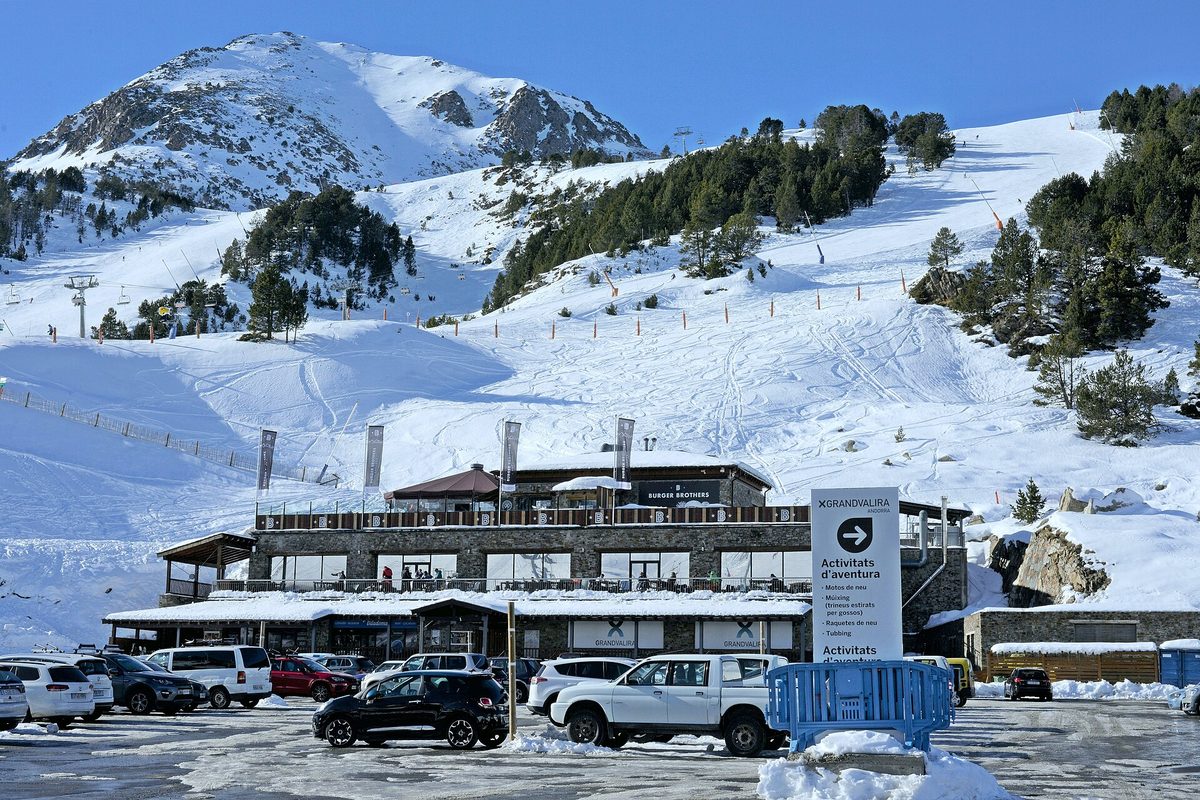
The mountain restaurants are the weak spot. Some of the mid-mountain places in Grandvalira have Wi-Fi; several of the higher refuges have nothing at all, which is arguably the point of them. Do not plan on uploading anything from 2,500 m.
Two caveats worth stating plainly. Public Wi-Fi is not secure; do not do your banking on it. And a hotel Wi-Fi login page will not load if your phone is in Airplane Mode with Wi-Fi off, which trips people up more often than it should.
Coverage in the valleys, the mountains and on the trails
Andorra Telecom’s 4G network is genuinely good across all seven parishes, and better than you would expect from a country that is roughly ninety per cent mountain. Around 5G, expect parish centres and the main resort bases rather than blanket coverage; the rollout began in December 2021 and has been expanding steadily since.
The ski areas are well served. You will have a signal at the bases and on most of the pisted terrain across Grandvalira’s seven sectors, at Pal-Arinsal and at Ordino-Arcalís. That matters more than it sounds: mobile coverage on the mountain is how you find your group again after somebody takes a wrong turn at a junction, and it is how you call for help when someone goes down hard.
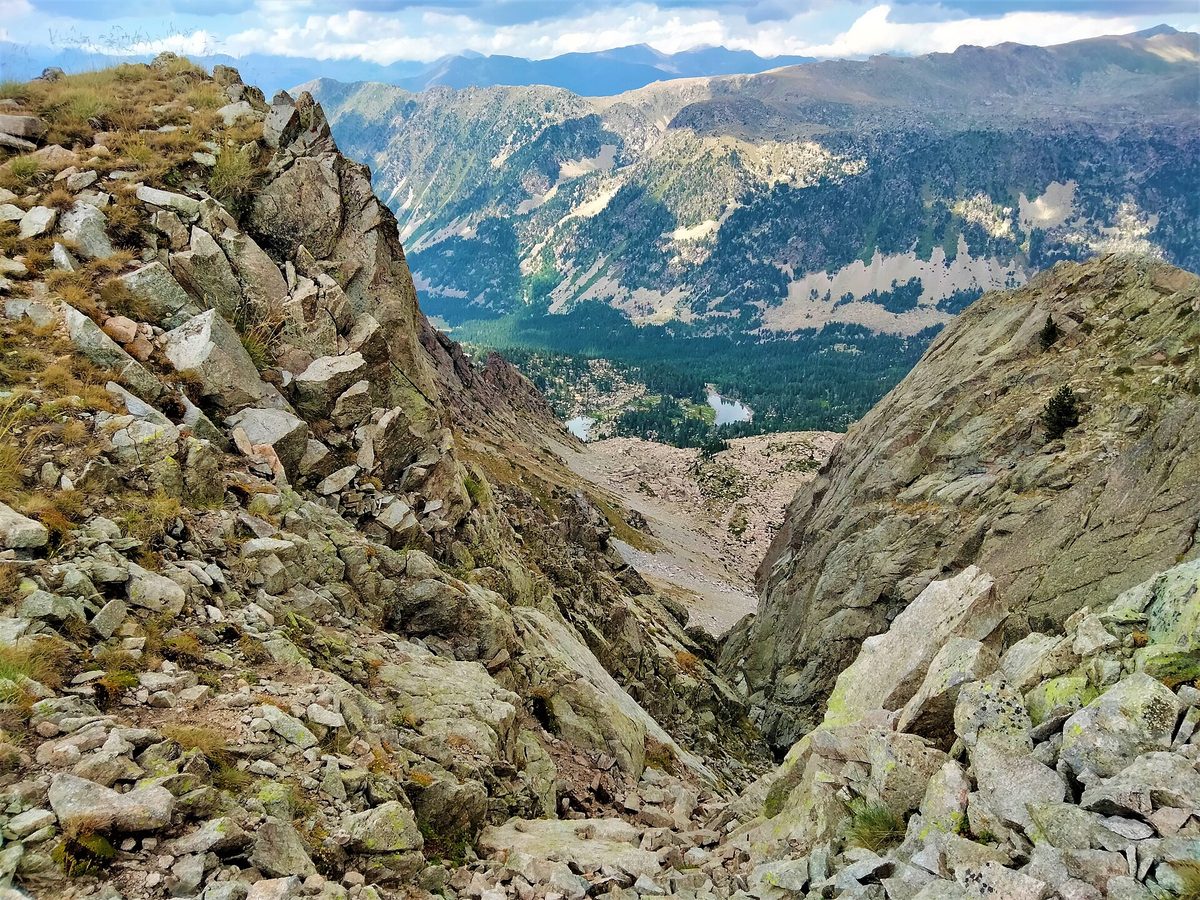
Off the pistes, it gets patchier fast. The main valleys — the Valira del Nord up to Arinsal, the Valira d’Orient up to Soldeu — hold signal reliably. The side valleys do not. I have lost signal completely partway up the Madriu-Perafita-Claror UNESCO valley, which is a deep, steep, deliberately undeveloped glen with no road and no masts. Expect the same in the upper reaches of Vall d’Incles and on the back side of the Tristaina cirque.
The rule of thumb is line of sight. On a ridge or a col you will usually have bars. In a steep-walled valley floor you often will not. If you are hiking Andorra’s high trails, download your maps for offline use before you set off and tell somebody your route. That is standard mountain practice anywhere, and the SIM in your pocket does not change it.

Emergency numbers and calling for help
Learn these before you need them. Andorra runs its own emergency services and its own short numbers, and they are not the same set you may be used to.
- 112 — general emergencies. The catch-all, and the number to use if you are not sure.
- 110 — Andorran police (Policia d’Andorra).
- 118 — the fire brigade (Bombers), who also run mountain rescue and ambulance response.
- 116 — medical emergencies through the Andorran health service.
The country dialling code is +376. From abroad, the police can also be reached on +376 872 000.
Two things worth knowing. First, emergency calls do not require an active plan or even a registered SIM — a phone with any signal from any network will connect you to emergency services, including a phone with data roaming switched off. Second, the fire brigade handles mountain rescue, so if someone breaks an ankle above Sorteny, 112 or 118 is the number, not a resort phone line.
The country’s hospital, Nostra Senyora de Meritxell, is in Escaldes-Engordany next to the capital, which means nowhere in Andorra is far from a hospital by mountain standards.
Which option should you actually buy?
The right Andorra SIM card — or eSIM, or no plan at all — comes down to two variables: how long you are staying and which country your existing contract is in. Here is the decision I would make in each case. Prices move; the logic does not.
| Your situation | What I would do |
|---|---|
| Day trip from Barcelona or Toulouse, Spanish or UK SIM | Turn data roaming off at the border. Use free Wi-Fi in the shops. Buy nothing |
| Day trip, French Orange or Sosh SIM | Check your zone list, then do nothing at all |
| Two to four nights, any nationality | eSIM Andorra from esimandorra.ad, or an Airalo short package. Under EUR 20 all in |
| A ski week, heavy phone user | An unlimited travel eSIM on the Andorra Telecom network, around EUR 25 to 30 for seven days |
| A ski week, light phone user | eSIM Andorra’s smallest visitor bundle, plus hotel Wi-Fi in the evenings |
| Two weeks or more, or you visit every year | A physical Andorra Telecom prepaid SIM on Rate M. The credit stays valid 12 months |
| Phone with no eSIM support | Physical local SIM, bought on Avinguda Meritxell with your passport in hand |
| You need your home number live for two-factor codes | Data-only eSIM alongside your home SIM, home SIM’s data roaming disabled |
| Business trip, cannot risk a gap | Local network eSIM plus your home operator’s Andorra day-pass as a fallback |
One more time, because it is the mistake that costs the most money: if you buy nothing, you must actually switch roaming off, and you must do it before you cross. Everything else on this page is optimisation. That one is damage control.
For what it is worth, the connectivity question is trivial next to the rest of the trip budget. Our breakdown of what Andorra actually costs puts a EUR 15 eSIM in perspective against lift passes and dinner. It is the cheapest insurance you will buy all week, and the reason our verdict on whether Andorra is worth visiting never hinges on your phone bill.
Frequently asked questions
Does EU roaming work in Andorra?
No. Andorra is not in the European Union or the European Economic Area, so the Roam Like at Home regulation does not apply and your inclusive EU allowance stops at the border. Roaming rates in Andorra are unregulated and uncapped, and most European operators price it in a separate, expensive zone. Check your own operator’s Andorra tariff specifically rather than its Europe zone.
How much does roaming cost in Andorra?
It varies enormously and changes often. Some UK operators offer a daily pass in the region of GBP 7 to 8; some Spanish operators have been reported metering data at euros per megabyte. French Orange and its sub-brands have historically included Andorra at domestic rates. Assume the worst until you have checked your own contract, because the range between best and worst case is enormous.
Where can I buy a SIM card in Andorra?
Andorra Telecom’s flagship shop is on Avinguda Meritxell in Andorra la Vella, and there is a network of authorised resellers across the parishes shown on a map on the operator’s website. Bring your passport or national ID card, because the SIM must be registered to you. Insert it and confirm data works before you leave the counter.
Does an eSIM work in Andorra?
Yes, and it is now the easiest option for most visitors. Andorra Telecom sells its own visitor eSIM at esimandorra.ad, and travel providers including Airalo and Holafly run Andorra plans on the Andorra Telecom network. Check the network named on any product page before buying — some brands sell Andorra plans that actually roam on Spanish or French networks, with patchier valley coverage.
What mobile network does Andorra use?
Andorra Telecom, and only Andorra Telecom. It is a state-owned monopoly, formerly known as Servei de Telecomunicacions d’Andorra and still sometimes referenced by its Mobiland brand. It runs 4G across all seven parishes and has been rolling out 5G in parish centres since December 2021. There are no rival operators and no discount resellers.
Is there free Wi-Fi in Andorra?
Plenty. A free public network runs along the Shopping Mile in Andorra la Vella and Escaldes-Engordany, and there are free hotspots at the ski resorts, on main streets and in shopping centres. Almost all hotels, cafés and restaurants offer it. Do not use public Wi-Fi for banking, and remember that a login page needs Wi-Fi actually switched on.
Do I need a SIM card just for a day trip to Andorra?
Usually not. For a single day, switching data roaming off before you cross the border and relying on the free Wi-Fi in the shopping streets works perfectly well, and costs nothing. Download your maps offline before you leave. If you would find being offline stressful, a three-day eSIM costs about the same as two coffees and removes the question entirely.
Will my phone connect to a Spanish or French network in Andorra?
Often, yes — particularly at Pas de la Casa near the French border and around Sant Julià de Lòria near the Spanish one. That is a problem if you have bought an Andorran plan, because you will drop off it and onto your home operator’s roaming tariff. Pin your phone to Andorra Telecom manually in the network settings, then set it back to automatic when you leave.
Related guides
Sort the phone out and the rest of the practical planning gets easier. Start with the full Andorra travel tips guide, then read up on what language you will actually hear and how to handle getting around Andorra without a car. If you are here to shop, our take on buying electronics in Andorra covers whether the phone itself is worth buying here — the short answer involves a 4.5 per cent sales tax and a lot of asterisks.
Photo credits
All photographs are from Wikimedia Commons under their stated licences, with thanks to the photographers: