The first time I drove out of Andorra with a boot full of shopping, a Spanish customs officer waved me into the lay-by at la Farga de Moles, glanced at two bottles of gin and a bag of coffee, and lost interest within four seconds. He never asked for my passport. Nobody had asked for it on the way in either. That is the Andorran border in one line.
So: do you need a passport for Andorra? If you carry an EU, EEA or Swiss national identity card, no — the card is enough. Everyone else needs a passport, because the only way in is through Spain or France. This guide sorts it out nationality by nationality, then explains what the border is actually like.
Last updated: September 2026. Border and visa rules are changing fast — check your own government’s advice and the Andorran authorities before you travel.
| Question | Short answer |
|---|---|
| Is there an Andorra visa? | No. Andorra issues no tourist visa of any kind. |
| EU / EEA / Swiss citizens | National ID card or passport. Either works. |
| UK, US, Canadian, Australian, Japanese, NZ citizens | Passport. No visa needed for a short stay. |
| Nationalities that need a Schengen visa | Passport plus a double- or multiple-entry Schengen visa. |
| Is Andorra in Schengen? | No. It is not in the EU or the Schengen Area. |
| Passport validity | Follow the Spanish/French rule: issued within 10 years, valid 3+ months past departure. |
| Border posts | La Farga de Moles (Spain) and Pas de la Casa (France). Both open 24/7. |
| Who checks what | Immigration checks are light. Customs checks on the way out are the real thing. |
| EES | Fully operational across Schengen since 10 April 2026. Andorra negotiated a carve-out at its two borders. |
| ETIAS | Still not live as of September 2026. The 2026 target was dropped in July. |
| Souvenir stamp | Ask at the Andorra la Vella tourist office or the border post. Availability varies. |
If this is your first trip, read it alongside our broader Andorra travel tips for first-time visitors, which covers the practical stuff — money, driving, altitude, opening hours — that catches people out once they are through the barrier.
Do You Need a Passport for Andorra? The Answer by Nationality
Andorra’s own position is refreshingly blunt. The government’s foreign affairs pages state that the Principality does not require any type of visa, and that a passport or a national identity card is enough to enter or leave. That single sentence is the entire Andorran immigration policy for tourists.
The complication is geography. Andorra has no airport and no railway station, so you arrive on a road that starts in Spain or France. Both are Schengen states. In practice you are meeting Spanish or French entry rules first, and Andorran rules second.
EU, EEA and Swiss citizens: an ID card is enough
If you hold a national identity card from an EU or EEA country, or from Switzerland, you can cross into Andorra on that card alone. Spanish and French nationals do this every weekend by the thousand — the queue at la Farga de Moles on a Saturday afternoon is largely Catalans holding up a DNI, if they are asked for anything at all.
I still carry my passport. Two reasons. Hotels occasionally prefer it for registration, and if your onward travel involves a flight home from Barcelona or Toulouse, an airline may want a document it recognises. A card in the glovebox and a passport in the bag costs you nothing.
One nuance worth knowing: Ireland is in the EU but not in Schengen, and Irish passport cards are widely accepted for travel within Europe. Irish travellers should still bring the passport itself, since the route in and out crosses Spanish or French frontiers.
UK, US, Canadian, Australian and other visa-exempt travellers
British, American, Canadian, Australian, New Zealand, Japanese, South Korean and a long list of other passport holders do not need a visa for a short stay in the Schengen Area, and therefore do not need one for Andorra either. What you do need is the passport itself, meeting the Schengen validity rule that trips people up every summer: issued less than ten years before the day you arrive, and valid for at least three months after the day you intend to leave the area.
That ten-year clause bites hardest on older British passports, where extra months were once carried over from a previous document. If your passport was issued in, say, June 2016 and you are travelling in September 2026, it is over ten years old on the date of issue — the expiry date printed inside does not save you. Check the issue date, not just the expiry.
American readers: three months of validity beyond departure is the legal floor, six is the sensible target. Border officers at Barcelona El Prat are not sentimental about it.
If you need a Schengen visa, this is the part that strands people
Here is the single most expensive mistake made on the way to Andorra. Andorra is not in the Schengen Area. Leaving Spain or France for Andorra is, legally, leaving Schengen. Coming back down the mountain is a fresh entry.
So a visitor from a visa-required country who holds a single-entry Schengen visa can drive up to Andorra perfectly happily, and then find that the visa has been consumed by the exit. The re-entry into Spain is a second entry the visa does not cover. I have read enough forum posts from people who spent a night arguing at la Farga de Moles to take this seriously.
The fix is to apply for a double-entry or multiple-entry Schengen visa from the outset, and to say plainly on the application that the itinerary includes Andorra. Consulates understand the request. Andorra’s own guidance has said the same thing for years, and as of September 2026 the requirement still stands while the new border arrangements work through ratification.
If your visa is already issued and single-entry, the honest advice is to skip Andorra on this trip. A day of duty-free shopping is not worth being refused re-entry into Spain.
Andorran residents and long-stay visitors
Anyone holding an Andorran residence permit is covered by a long-standing three-way accord between Andorra, France and Spain, signed in Brussels in December 2000, which treats an Andorran residence card much like a French or Spanish one for movement in and out of those two countries. It is a niche point for a tourist, but if you are visiting a friend who lives in Andorra, this is why their situation looks nothing like yours.
Staying longer than three months, working, or studying moves you out of tourist territory entirely and into Andorran immigration law, which is a separate and much slower process. Nothing in this guide applies to that.
Andorra Visa Rules: Why There Is No Such Thing as an Andorra Visa
People search for an “andorra visa” and find nothing, because nothing exists to find. Andorra has no tourist visa, no visa-on-arrival, no electronic authorisation and no online form. It is one of the very few countries in Europe where the immigration bureaucracy for a holiday is precisely zero pages long.
What Andorra does have is a permanent dependency on its neighbours. Every visitor arrives through Spanish or French territory, so every visitor has already satisfied Spanish or French entry rules by the time they reach the Andorran barrier. Andorra piggybacks on that. If Spain let you in, Andorra is not going to argue.
This is the same structural oddity that shapes the country’s tax, currency and trade position. If you want the full picture of how a non-member state ends up using the euro and sitting inside the EU customs union for manufactured goods, our explainer on Andorra’s strange relationship with the EU goes through it properly.
The visa you actually need is Spain’s or France’s
Work out your requirement by asking a different question: do I need a Schengen visa to enter Spain or France? If the answer is no, you are free to go to Andorra. If the answer is yes, you need that visa, and it must allow at least two entries.
Which country you apply through depends on your itinerary. The general Schengen rule points you at the state of your main destination, or your first point of entry when the trip is evenly split. Since Andorra is not a Schengen state, it does not count as a main destination — so a Barcelona-in-and-out trip with two days in the Pyrenees is a Spanish visa application, not an Andorran one. There is no Andorran embassy issuing tourist visas, because there is no tourist visa to issue.
Ninety days, and what Andorra does not do for them
Visa-exempt travellers get 90 days in any rolling 180-day period across the Schengen Area. Andorran days sit outside that count in a strict legal sense, since the country is not in Schengen. In practice, treating Andorra as a way to buy extra Schengen days is a bad plan — I explain why in the EES section below, and the short version is that you can no longer prove you left.
For a normal holiday this is academic. For anyone running close to their 90-day allowance — long-stay Brits with property in Spain, remote workers doing a European summer — it matters enormously, and the 2026 changes have made it worse rather than better.
Andorra Border Control in Practice: What Actually Happens at the Barrier
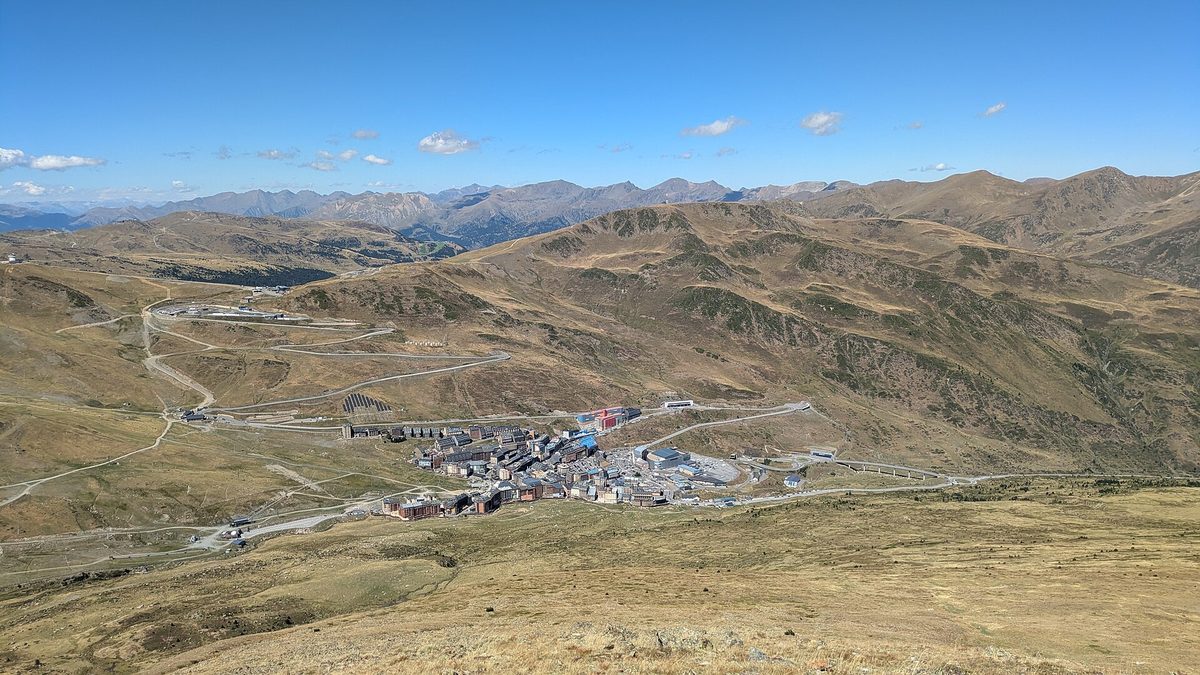
People who ask “do you need a passport for Andorra?” are usually picturing a hall with booths, queues and a stamp. Forget all of that. Andorra border control is two road checkpoints, both permanently staffed, both open around the clock, and both far more interested in your shopping than your nationality.
There is no passport hall, no queue system, no biometric gate. You drive at walking pace past a line of booths under a canopy. Somebody in uniform looks at the car. Most of the time, that is the entire interaction.
La Farga de Moles: the Spanish side
The Spanish crossing sits on the N-145 just north of La Seu d’Urgell, where the road becomes Andorra’s CG-1. It is by a wide margin the busier of the two, because it carries the traffic from Barcelona, Lleida and the whole Catalan coast.
Going in, you are typically waved through without stopping. Coming out is a different experience. On a Sunday evening in August, or after a Saturday of December sales, the southbound queue can run for well over an hour, and it is not immigration causing it — it is Spanish customs sampling cars for excess tobacco and spirits. Our guide to the Andorran border crossing and its queues goes into the timing tricks in detail.
My own rule: leave before 15:00 or after 21:00 on a Sunday, and never join the southbound road at the same moment the ski lifts close.
Pas de la Casa: the French side
The French crossing at Pas de la Casa sits at around 2,050 m on the RN22, just over the Port d’Envalira. It is quieter, colder and more likely to be affected by weather than by traffic. French douaniers work the same way as their Spanish counterparts — a look at the car, occasionally a request to open the boot.
In winter the practical obstacle at this border is not paperwork but snow. Envalira closes or requires chains often enough that anyone driving from Toulouse in January should have a plan B via Spain. Our page on driving to Andorra, tolls, tunnels and winter rules covers the equipment you are legally expected to carry.
Customs on the way out is the real border
This is the part nobody tells first-timers. Immigration into Andorra is nominal. Customs leaving Andorra is enforced, and the officers are experienced at spotting a car that has been shopping.
Per adult, the headline allowances for bringing goods back into Spain or France are roughly 300 cigarettes, 1.5 litres of spirits above 22 degrees (or 3 litres below), 5 litres of still wine, 16 litres of beer, and around EUR 900 of other goods — with a lower figure for under-15s. Food is capped separately. Keep every receipt: the officer’s first question about an expensive item is what you paid for it. The specifics are laid out in our Andorra duty-free allowance guide, and the reason people risk it at all is obvious once you see what alcohol and cigarettes actually cost in Andorra.
Exceed the limit and you are looking at duty plus a fine, calculated on the whole quantity rather than the excess. Officers have wide discretion. Being polite and having receipts is worth more than any clever argument.
If you arrive by bus
Coach passengers get a slightly more formal version of the same thing. On the Barcelona and Toulouse services the vehicle pulls in at the border and, on a random basis, an officer boards and walks the aisle asking for documents. It takes a couple of minutes. Have your passport or ID card out of the overhead locker and in your hand rather than buried in a rucksack.
Coming back south, the coach may be held while customs check the luggage bay. Nothing dramatic — but it is why the timetables on the Barcelona to Andorra route build in a buffer, and why the scheduled coach operators quote journey times as approximate rather than exact.
Schengen, EES and ETIAS: the 2026 Complications
This is where an old article will mislead you, so take the dates seriously. Two EU border systems have been circling for years. One of them finally landed. The other has not.
The Entry/Exit System is now live — and Andorra negotiated a carve-out
The EU’s Entry/Exit System began a phased rollout on 12 October 2025 and, according to the European Commission, became fully operational at every external Schengen border crossing point on 10 April 2026. It replaces the ink stamp with a digital record: name, travel document, biometrics, and the date and place of each entry and exit for non-EU short-stay travellers.
For Andorra, that raised an obvious nightmare. Two mountain roads carrying tens of thousands of vehicles a week are, technically, external Schengen borders. Systematic biometric registration at la Farga de Moles would have produced queues measured in half-days.
In late March 2026 the Andorran government announced a provisional agreement with the EU under which systematic EES processing is not applied at the Andorran borders. Random inspections continue instead, which is essentially the status quo. Andorran nationals keep their existing exemption from EES registration, ETIAS and Schengen visas for short stays, and can use the EU/EEA/CH lanes at airports.
What this means for you as a visitor: crossing into Andorra and back should not involve a biometric kiosk. Nobody is fingerprinting tourists on the CG-1. The system you will meet is the one at Barcelona or Toulouse airport when you first enter Schengen — and that one is real, with reports of significant delays during the rollout.
Does a trip to Andorra pause your Schengen 90/180 clock?
Assume it does not. That is the practical answer, and it changed during 2026.
The theory has always been tidy: Andorra is outside Schengen, so days spent there are not Schengen days. The problem has always been evidence. Without a stamp showing you left Spain and a stamp showing you came back, a border officer at your next departure has no way to see the gap, and the burden of proof sits with you.
Travellers used to work around this by stopping and asking for an exit stamp. As of late June 2026 that option appears to have gone: reporting from Andorra indicates neither the Spanish nor the French border posts will stamp in or out of Andorra any more, and the same change removed the stamp that Andorran immigration previously accepted as proof for residency applications. I would treat the workaround as dead.
So plan your days as though Andorra counts. If you are genuinely close to 90 days and the difference matters, get advice from the relevant consulate rather than from a travel article — mine included.
ETIAS: still not here, and no longer promising a date
ETIAS is the EUR 20 online travel authorisation that visa-exempt visitors will eventually need before entering Schengen. It has been delayed repeatedly since 2021.
As of September 2026 it is not in force. The official EU travel site removed its “last quarter of 2026” target in July 2026 and now says a start date will be announced several months in advance. Reporting at the time pointed to eu-LISA concluding that a 2026 launch was no longer feasible, with 2027 the realistic expectation, largely because the EES rollout consumed the capacity. A transition period of at least six months is planned once it does begin.
Two consequences. First, you do not need ETIAS today for Spain, France or Andorra. Second, when it arrives it will apply to your entry into Spain or France, not to Andorra — Andorra will not be issuing or checking ETIAS at its own borders under the agreement described above. Anything you read on a third-party site selling ETIAS applications right now is, at best, premature.
The EU association agreement in the background
There is a bigger change grinding through the machinery. The EU Council approved the text of an association agreement with Andorra and San Marino in July 2026, with signature expected in the autumn, followed by European Parliament consent, national ratifications and a binding referendum in Andorra. Entry into force is not expected before 2027 at the earliest.
If it lands, the working expectation is that Andorran territory will be treated much like part of the Schengen area for movement purposes without Andorra formally joining, and that visa nationals would no longer need a multiple-entry visa for a side trip. Until then, the multiple-entry rule stands. Do not plan around a treaty that has not been ratified.
Your Andorra Passport Is Not the Only Document That Matters
An Andorra passport question usually turns out to be a wider document question. Here is the rest of the folder.
Children and family paperwork
Every child needs their own travel document. There has been no adding a baby to a parent’s passport in Europe for well over a decade, so a two-week-old needs a passport of their own before the trip.
If you are travelling with a child who does not share your surname, or without the other parent, carry evidence of the relationship — a birth certificate copy, and ideally a signed letter of consent from the absent parent. French and Spanish officers are entitled to ask, and occasionally do. It is a two-minute conversation with the paperwork and a very long one without it. Our family guide to Andorra covers the rest of the trip once you are through.
Driving documents
Bring your licence, the vehicle registration document, and proof of insurance. A Green Card has not been required for Andorra since August 2021, though carrying one costs nothing and simplifies matters if you have a scrape. Check that your policy explicitly covers Andorra as well as the EU — a surprising number of British policies list it separately.
Hire cars are the classic trap. Many Spanish and French rental agreements exclude Andorra outright, or require advance notice and a supplementary cross-border fee, because the car is leaving the EU. Ask before you book, not at the barrier. Non-EU licence holders should also carry an International Driving Permit alongside the home licence.
Inside the country, winter equipment rules apply on mountain roads and the police do enforce them. Details are in our driving guide, and if you would rather not deal with any of it, getting around Andorra without a car is more workable than most people expect.
Health cover and insurance
Andorra is not in the EU, so European health cards do not work there. A UK GHIC, an EHIC, an S1 — none of them buy you anything at the hospital in Escaldes-Engordany. Treatment is competent and it is chargeable.
Buy travel insurance that names Andorra, and if you are skiing or doing anything on a via ferrata, check that the policy covers mountain rescue and off-piste. Helicopter evacuation in the Pyrenees is not cheap. This is the single most common gap I see in other people’s trip planning, and it costs far more than a passport ever will.
Pets
Dogs, cats and ferrets need an EU pet passport or equivalent third-country certificate, a microchip and a valid rabies vaccination. Andorra applies rules broadly aligned with the EU scheme, and you will re-enter Spain or France on the way out, so the EU requirements are the ones that bind. Check the current position with your vet well before departure — the timings around rabies boosters are unforgiving.

The Souvenir Passport Stamp (and Whether It Still Exists)
Collectors of microstate stamps have one question about Andorra, and it deserves an honest answer rather than a confident one.
There is no official immigration stamp, because there is no immigration formality. What has existed for years is a decorative souvenir stamp — a coat of arms, sometimes a mountain outline — handed out on request. Two places have traditionally obliged: the tourist office in Andorra la Vella at Plaça de la Rotonda, and the border posts themselves if you park, walk to the window and ask nicely.
As of 2026 I would call this uncertain rather than guaranteed. Traveller reports go both ways on the tourist office, and the June 2026 change to border stamping practice makes the frontier option less reliable than it was. If it matters to you, ask at the Rotonda office when you arrive rather than saving it for the drive home.
Two warnings. A souvenir stamp is not a legal entry record and proves nothing about your Schengen days. And some countries take a dim view of unofficial marks in a passport — if yours is nearly full, or you travel for work, consider having it stamped on a loose card instead. While you are in the capital, the tourist office is a genuinely useful stop for maps and bus timetables; our guide to Andorra la Vella explains what else is worth your time in the immediate area.
Practical Planning: What to Carry and How to Avoid Trouble
Everything above condenses into a short list. Print it, or do not — but do check it before you leave the hotel.
- Passport, or an EU/EEA/Swiss national ID card. Check the issue date as well as the expiry.
- A double- or multiple-entry Schengen visa, if your nationality requires one. Single-entry means no Andorra.
- Separate travel documents for every child, plus consent paperwork if the surnames do not match.
- Driving licence, V5 or equivalent, insurance certificate, and written confirmation that a hire car may cross into Andorra.
- Travel insurance that names Andorra and covers your actual activities.
- Receipts for anything expensive you buy, kept somewhere you can reach at the barrier.
- An idea of your duty-free limits before you fill the boot, not after.
Timing your crossing
Border delay in Andorra is almost entirely a customs phenomenon, and it is predictable. Southbound into Spain, the pinch points are Sunday afternoons year-round, the end of the January and July sale periods, and the hour after the lifts close in high season. Northbound into Andorra, the queue is usually short.
Coming from Barcelona, an early start beats a late one by a comfortable margin — worth remembering on a day trip from Barcelona, where the return leg is what kills the schedule. Arriving by air, the practical bottleneck is passport control at the airport rather than anything in the mountains; our comparison of the nearest airports to Andorra covers transfer times from each.
Once you are through
The rest is easy. Andorra uses the euro despite not being in the EU, cards are accepted almost everywhere, and cash machines are plentiful — the detail is in our guide to money, cards and tipping in Andorra. The official language is Catalan, but Spanish is universal and English is common in tourist-facing businesses, which our piece on what language is spoken in Andorra unpacks.
Costs sit somewhere between Spanish and French levels, with alcohol, tobacco, fuel, perfume and electronics distinctly cheaper thanks to the 4.5% sales tax. We break the numbers down in our honest look at what a trip to Andorra actually costs.
Frequently Asked Questions
Do you need a passport for Andorra from Spain?
Yes, unless you hold an EU, EEA or Swiss national identity card, which is equally valid. There is no exemption for people arriving from Spain rather than from further afield. In practice you may not be asked to show anything at all going in, but you are required to be carrying a valid document and officers do check on a random basis.
Do you need a passport for Andorra as a UK citizen?
Yes. Since Brexit a British passport is the only accepted document, and it must meet Schengen validity rules: issued within the previous ten years on the day you arrive, and valid for at least three months beyond your intended departure from the area. No visa is needed for a short holiday, and ETIAS is not yet in force as of September 2026.
Is Andorra in the Schengen Area?
No. Andorra is neither an EU member state nor a Schengen country, although it uses the euro and sits inside the EU customs union for manufactured goods. Its two land borders are legally external Schengen borders, which is why leaving Spain or France for Andorra counts as an exit from the Schengen Area even when nobody stops you.
Do they stamp your passport in Andorra?
Not as a matter of routine, and reporting from mid-2026 indicates the Spanish and French posts no longer stamp in or out of Andorra at all. A decorative souvenir stamp has traditionally been available on request at the Andorra la Vella tourist office, but treat it as a keepsake rather than a record. It carries no legal weight for Schengen day counting.
Does going to Andorra reset my 90 days in the Schengen Area?
Legally the days are not Schengen days, but you will struggle to prove it and should not rely on it. With stamping withdrawn and no EES record generated at the Andorran border, there is no evidence trail showing you left. Anyone close to the 90-day limit should count Andorran days as Schengen days and seek advice from the relevant consulate.
Do I need ETIAS to visit Andorra?
Not at present. ETIAS is still not operational as of September 2026, the EU withdrew its late-2026 target in July, and a 2027 start is now widely expected. When it does launch it will apply to your entry into Spain or France, not to Andorra itself, since Andorra will not be running ETIAS checks at its own borders under the 2026 agreement.
Can I visit Andorra on a single-entry Schengen visa?
You can get in, but you may not get back. Leaving Schengen for Andorra uses up a single-entry visa, and the return to Spain or France is a second entry it does not authorise. Apply for a double-entry or multiple-entry visa and mention Andorra in the application. If your visa is already issued and single-entry, postpone the trip.
Do children need their own passport for Andorra?
Yes, from birth. Children cannot travel on a parent’s document anywhere in Europe. Bring a birth certificate copy if the child’s surname differs from yours, and a signed letter of consent if you are travelling without the other parent — French and Spanish officers are entitled to ask for both, and occasionally do at these crossings.
Is there border control between Spain and Andorra?
Yes, at la Farga de Moles on the N-145 near La Seu d’Urgell, staffed 24 hours a day, and at Pas de la Casa on the French RN22. Andorra border control is light on immigration and serious about customs. Expect a glance on the way in and a possible bag search on the way out.
Related Guides
Once the paperwork question is settled, start with our Andorra travel tips pillar, then work out your route with how to get to Andorra and the Toulouse approach. If shopping is the reason you are going, read the complete duty-free shopping guide before you decide how much boot space you need. And if a friend ever asks you whether they need a passport for Andorra, you now know the answer depends entirely on which passport they hold.
Photo credits
All photographs are from Wikimedia Commons under their stated licences, with thanks to the photographers: