I once spent four minutes in a pharmacy in Encamp failing to buy ibuprofen. My Spanish is decent. The pharmacist’s Spanish was fine too. The problem was that I had walked in speaking English out of pure habit, she had answered in Catalan out of pure habit, and we both stood there being polite at each other until I gave up and pointed at the box. Two words would have fixed it. I have never forgotten them since.
So, what language is spoken in Andorra? Catalan — it is the sole official language, and Andorra is the only country in the world where that is true. In practice you will also hear a great deal of Spanish, some French and a fair amount of Portuguese. This guide is for visitors who want to know what they will actually encounter, and how far English gets them.
Last updated: September 2026. Language-use figures come from Andorran government surveys — check the latest before quoting them.
If you are still at the stage of working out passports, currency and driving rules, start with my broader Andorra travel tips for first-time visitors and come back here for the language detail. Language is the one thing on that list that nobody prepares for, because everyone assumes it will sort itself out. It mostly does. Not always.
| The question | The short answer |
|---|---|
| Official language | Catalan, and only Catalan (Article 2 of the 1993 Constitution) |
| Anywhere else like this? | No — Andorra is the only state where Catalan is the sole official language |
| Most-used language day to day | Catalan, 63.7% of residents (2022 government survey) |
| Second most-used | Spanish, 48.6% |
| Also heard | Portuguese 6.6%, French 5.7% |
| Best-known language overall | Spanish scores 9.3/10 on the knowledge index; Catalan 8.3 |
| Will English work? | Yes in hotels, ski schools and big shops. Patchy in buses, small restaurants, pharmacies and any government office |
| Where French dominates | Pas de la Casa and the RN22 approach from France |
| Road signs and official paperwork | Catalan, and generally Catalan only |
| Two words worth learning | Bon dia and gràcies |
The short answer to what language is spoken in Andorra
Catalan is a Romance language with roughly nine to ten million speakers, most of them in Catalonia, Valencia, the Balearics, a strip of eastern Aragon and French Roussillon. It is not a dialect of Spanish. It is a separate language that split off from the same Latin root, and it is closer in several ways to Occitan and to southern French than it is to Castilian Spanish.
Andorra’s position is unusual. In Spain, Catalan is co-official alongside Castilian. In France it has no official status at all. Andorra is the one place where Catalan stands alone on the constitution — a small country of around 85,000 people carrying the full official weight of a language that around ten million people speak.
That matters more than it sounds. It means the parliament debates in Catalan, the courts run in Catalan, the road signs are in Catalan, your parking ticket is in Catalan, and the national broadcaster is in Catalan. It also means Andorrans are quietly proud of the language in a way that is easy to underestimate if you have arrived from Barcelona assuming everything works in Spanish.
What the government surveys actually say
Andorra has been running the same language survey since 1995, roughly every four years. The most recent published wave is 2022: 747 residents aged 14 and over, interviewed between 20 May and 2 June 2022, carried out by Andorra Recerca i Innovació for the government’s language policy service. An eighth wave is being fielded now, with results expected late in 2026, so these numbers will move.
The headline figures from 2022:
- Habitual language (what people say they normally use with others): Catalan 63.7%, Spanish 48.6%, Portuguese 6.6%, French 5.7%. The total is over 100% because people can name more than one.
- Mother tongue: Catalan 44%, Spanish 40.3%, Portuguese 13.5%, French 10%, English 3%, other languages 6.8%.
- Language of identification — the language people say is theirs: Catalan 53.4%, Spanish 38.5%, Portuguese 12.3%, French 6.5%, English 2.4%.
- Knowledge index, scored 0 to 10 across understanding, reading, speaking and writing: Spanish 9.3, Catalan 8.3, then French, then English, then Portuguese.
Read that last line again, because it is the single most useful fact in this article for a traveller. Catalan is the most used language in Andorra. Spanish is the most known one. Almost everybody in the country can operate in Spanish if they need to; rather fewer can operate in Catalan at a high level, and fewer still in English.
The 2022 wave also marked a turn. Catalan had lost the mother-tongue top spot to Spanish somewhere around the end of the 1990s, and in 2022 it took it back — 44% against 40.3%, up from 35.7% four years earlier. Language policy in Andorra is not a museum exercise. It is an active, slightly anxious national project.
The 2024 language law, and where you might notice it
In April 2024 Andorra passed Law 6/2024 on the country’s own and official language, in force from the end of May that year. Among other things it gives everyone the right to be served in Catalan by the administration, by health services and by businesses operating in the country, and it obliges companies to make sure customer-facing staff can do that. Commercial advertising distributed in Andorra has to be in Catalan. Fines for repeat refusals run into tens of thousands of euros.
You will not be prosecuted for speaking English in a shop, obviously. But you may notice the effects: more Catalan-first signage than a few years ago, more staff opening with bon dia rather than buenos días, and a slightly cooler reception if you barrel in assuming Spanish is the default. The law also ties proof of Catalan knowledge to residence-permit renewals, phased in over several years, which is why half the country seems to be doing evening Catalan classes.
Andorra’s habit of doing things its own way runs through everything from tax to treaty status — I go into the constitutional side of it in my guide to whether Andorra is in the EU. A country that spent seven centuries under two foreign co-princes without ever being absorbed by either one is not going to be casual about its own language. The 1993 constitution put that in writing.
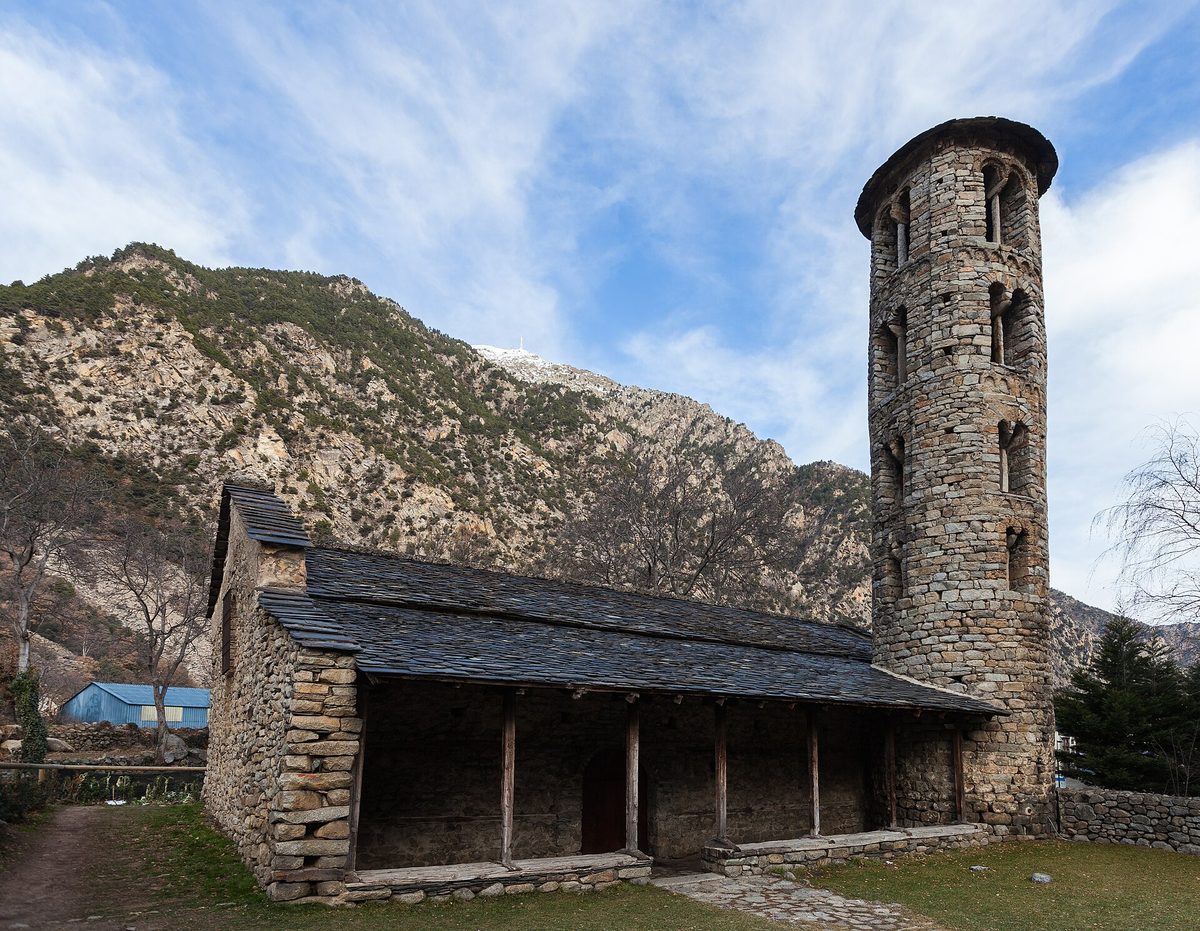
What you will actually hear, valley by valley
The national statistics flatten out something that any visitor notices within a day: Andorra’s languages are geographically sorted. Ask what language is spoken in Andorra and the honest answer changes depending on where you are standing. Walk 15 km up the CG-2 and the soundtrack changes.
Andorra la Vella and Escaldes retail: Spanish, mostly
Avinguda Meritxell on a Saturday is a Spanish-language environment. The shoppers are largely day-trippers up from Lleida, Barcelona and Zaragoza; a large share of the sales staff are Spanish nationals or Andorran-born children of Spanish families; and the path of least resistance between two people who half-share three languages is Castilian. You will hear Catalan constantly, but Spanish is what most transactions default to.
The same is true along Avinguda Carlemany and inside the malls. If you speak any Spanish at all, the retail strip covered in my Andorra la Vella shopping guide is the easiest place in the country to use it. Perfume counters, electronics shops and the big department store all run smoothly in Spanish and reasonably well in English.
Step off the shopping street, though, and it shifts. In the old quarter around Casa de la Vall, in the government offices, in the small bars on Carrer de la Vall, Catalan takes over immediately.
Ordino, Canillo and La Massana village bars: Catalan
Go up into the parishes and the picture inverts. In an Ordino bar at 11am, the men at the counter with their cafè amb llet are speaking Catalan to each other and to the woman behind the bar, and they will keep speaking Catalan until you make it clear you cannot follow. Same in Canillo, same in Llorts, same in the villages I run through in the towns and villages of Andorra.
This is not hostility. It is simply the working language of the place. Andorran-nationality residents are a minority of the population overall — depending on the year, somewhere around a third — but they are concentrated in the high parishes, and Catalan is what they speak at home, at work and in the street.
You will be answered in Spanish the moment you ask. Ask in Catalan first, even badly, and you will get a noticeably warmer version of the same conversation.
Pas de la Casa: French
Pas de la Casa is a different country inside the country. It sits at 2,050 m on the French border, its customers arrive over the RN22 from Ariège and Toulouse, and its supermarkets, ski shops and tabacs run on French. Shop signs are in French. The pizza menu is in French. The bloke selling you gloves will open with bonjour.
Catalan is still the official language and the signage on public buildings reflects that, but functionally, Pas de la Casa is the one place in Andorra where French is the more useful second language. If your French is better than your Spanish, this is where it pays off. The same applies, to a lesser degree, at Grau Roig just over the Port d’Envalira.
The Grandvalira lift queue: everything at once
A chairlift queue at Soldeu in February is genuinely one of the more multilingual spaces in Europe. In a single line you will hear Catalan from lift operators, Spanish from Barcelona families, English from British and Irish groups, French from the Pas side of the mountain, Portuguese from resort staff and, increasingly, Dutch and Scandinavian.
Lift staff across Grandvalira handle four languages as a matter of routine. Piste maps and safety signage are multilingual. Announcements tend to be Catalan first, then Spanish, then English or French depending on the sector. Nobody in a ski area is going to make your life difficult over language.
The ski schools deserve their own note. Andorra’s instructor corps is one of the most anglophone parts of the country, precisely because the British and Irish market matters so much — which is a large part of why the country works so well for a first-timer, as I argue in my case for learning to ski in Andorra. If you book English tuition, you will get an instructor who teaches in fluent English.
Kitchens, sites and the Portuguese layer
Portuguese is the quiet fourth language. Portuguese nationals make up around a tenth of Andorra’s residents, the legacy of decades of labour migration that peaked in the late 2000s, and the community is concentrated in construction, hotel housekeeping and restaurant kitchens.
You may not hear it in a dining room, but you will hear it in the corridor behind the dining room. There are Portuguese grocers, cafés and bakeries in Santa Coloma and around Escaldes, and Portuguese is the mother tongue of 13.5% of residents according to the 2022 survey — more than French. It is a real part of the country, not a footnote.
Will English work in Andorra? An honest answer
Yes, mostly, and then suddenly no. English is the fourth-best-known language in the country, behind Spanish, Catalan and French. That ranking is the whole answer in one line: English gets you through the tourist economy and stops at its edges. Most people asking what language is spoken in Andorra are really asking this question, so it is worth being precise about it.
Here is where I would actually rely on it, and where I would not.
Where English is genuinely fine
- Hotel reception, at every price point from hostel to five-star. Front-of-house staff are hired partly for languages.
- Ski schools and ski hire. Reliably good English, and the paperwork is usually available in it.
- Lift ticket offices and resort information desks at Grandvalira, Pal-Arinsal and Ordino-Arcalís.
- The big shops: department stores, perfume chains, electronics, sports retail. Staff on the main shopping strip handle English daily.
- Caldea and the larger spa complexes, where the entire model is built around international visitors.
- Tourist offices in Andorra la Vella, Escaldes and the parish capitals. Staffed, helpful, multilingual.
- Car hire desks, and the larger restaurants in the capital and in Soldeu.
Where English gets thin
- Small restaurants off the main streets. A family borda restaurant up a side valley may have an English menu or may not, and the person taking your order may have around forty words of it. Point at the board, smile, and accept what arrives.
- Buses. Drivers on the national lines usually manage Spanish and Catalan; English is hit and miss. Stop announcements and timetables are in Catalan. I cover the practicalities of the network in getting around Andorra without a car.
- Pharmacies. Some pharmacists have good English; plenty do not. Know the generic drug name, not the brand — ibuprofè, paracetamol, antihistamínic travel better than a British brand name nobody has heard of.
- Village bars and small supermarkets in Encamp, Canillo, Sant Julià. Perfectly friendly, not remotely obliged to speak English.
- Taxis. Fine for a destination name, harder for a negotiation.
Where English fails outright
- Anything administrative. Police, customs at the border, immigration, the comú (parish council), any official form. It is Catalan, with Spanish and French tolerated. English is not part of the system.
- Road signs, parking machines and roadworks notices. Catalan only, almost without exception. Desviament means diversion, obres means roadworks, cadenes obligatòries means snow chains required, and nobody is going to translate that for you at 700 m above the valley floor in a blizzard. Worth reading my notes on driving to Andorra before winter.
- Small print. Insurance terms, ski pass conditions, tenancy agreements, medical consent forms.
- Emergency services on the phone. Call handlers on 112 generally cope in several languages, but do not stake your afternoon on it. Learn the two or three phrases in the section below.
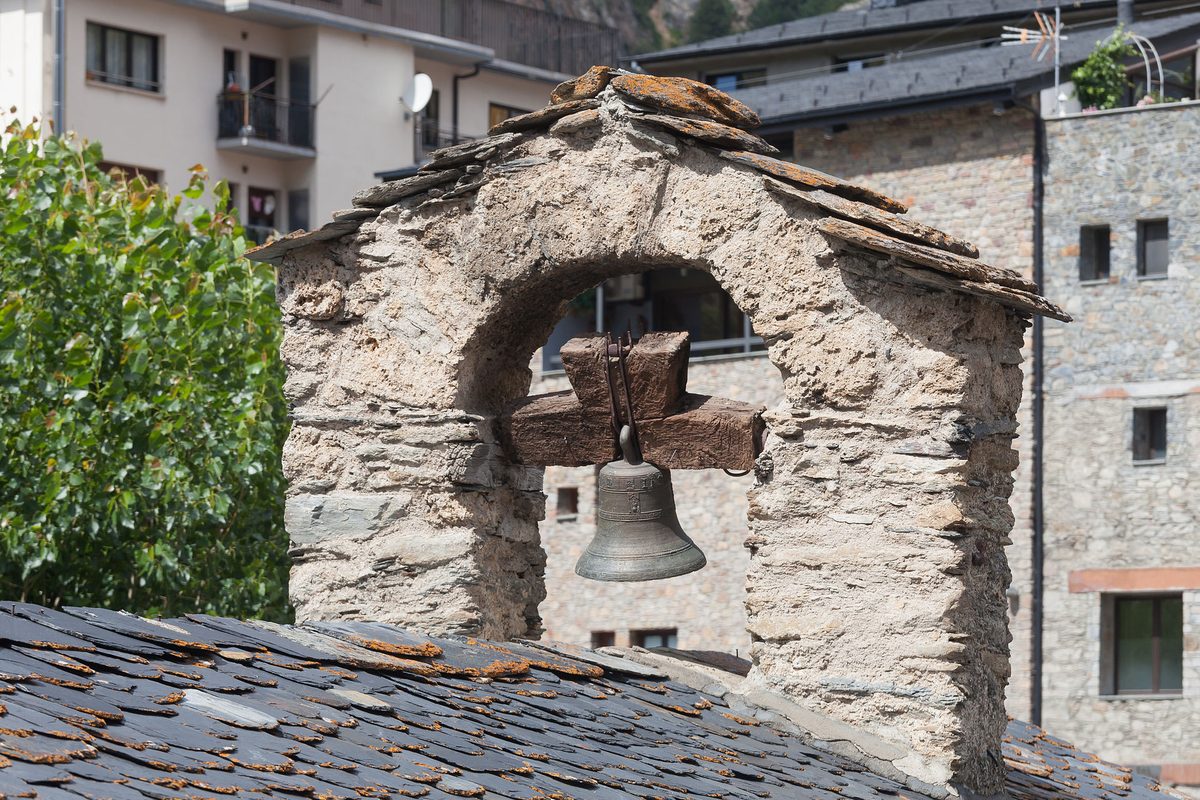
Spanish or French: which is more useful?
Spanish, comfortably, unless your entire trip happens above the Port d’Envalira.
The numbers back it up. Spanish scores 9.3 out of 10 on the government’s knowledge index against French in third place, and Spanish is the habitual language of 48.6% of residents against 5.7% for French. Roughly a third of the resident population holds Spanish nationality. Most goods arrive from Spain, most day-trippers arrive from Spain, and Spanish is the bridge language between a Catalan-speaking Andorran and a Portuguese-speaking colleague.
French has a much narrower footprint. It is strong at Pas de la Casa and Grau Roig, useful at the northern border, useful in a handful of French-run hotels, and it is one of the three school systems operating in the country — but in Sant Julià de Lòria or Santa Coloma it will get you polite confusion.
My honest advice: if you have school Spanish, use it, and accept that you will be answered in a Catalan-accented Spanish with occasional Catalan words dropped in. If you have French and no Spanish, plan your trip around the Toulouse approach and you will be fine on the French side of the mountain, then switch to English lower down.
A Catalan mini-phrasebook worth the ten minutes
You do not need Catalan. You will get more out of Andorra if you have thirty words of it. I am giving rough English respellings rather than proper phonetic notation — Andorran Catalan is the north-western variety, which is kinder to learners than Barcelona Catalan because unstressed vowels stay closer to how they are written. Stressed syllables are in capitals.
Greetings and basic courtesy
- Bon dia — bon DEE-a — good morning / hello. Use it until early afternoon, and use it every single time you walk into a shop or bar. This is the one.
- Bona tarda — BO-na TAR-da — good afternoon, from roughly 2pm.
- Bona nit — BO-na NEET — good evening and good night, both.
- Gràcies — GRA-see-es — thank you. Moltes gràcies (MOL-tes GRA-see-es) for thank you very much.
- Si us plau — sees-PLOW — please. Written as three words, said as one.
- De res — de RES — you’re welcome.
- Adéu — a-DE-oo — goodbye. Fins després (feens des-PRES) if you are coming back later.
- Perdoni — per-DO-nee — excuse me, to get attention politely.
- Ho sento — o SEN-to — I’m sorry.
- Sí / No — see / no. Easy.
- Parla anglès? — PAR-la ang-GLES — do you speak English?
- No parlo català — no PAR-lo ca-ta-LA — I don’t speak Catalan. Deployed after bon dia, this is a small act of good manners that lands well.
In a bar or restaurant
- Una taula per a dos — OO-na TAU-la per a DOS — a table for two.
- La carta, si us plau — la CAR-ta — the menu, please. La carta is the menu; el menú usually means the fixed-price set lunch.
- Què em recomana? — ke em re-co-MA-na — what do you recommend?
- Una canya — OO-na CAN-ya — a small draught beer. Una clara is a shandy.
- Un cafè amb llet — un ca-FE am YET — a white coffee. Un tallat is the small one with a splash of milk.
- Aigua amb gas / sense gas — AI-gwa am GAS / SEN-se GAS — sparkling / still water.
- Vi negre / vi blanc — vee NE-gre / vee BLANK — red / white wine. Catalan calls red wine black.
- Bon profit! — bon pro-FEET — enjoy your meal. You will hear it from strangers at the next table.
- Sóc vegetarià / vegetariana — sock ve-je-ta-ree-A(-na) — I’m vegetarian.
- Sense gluten — SEN-se GLOO-ten — gluten free.
- El compte, si us plau — el CON-te sees-PLOW — the bill, please.
- Està boníssim — es-TA bo-NEE-seem — this is delicious. Cheap goodwill, sincerely meant.
Numbers and money
Andorra uses the euro despite not being in the EU, and prices are read out in Catalan constantly.
- 1 un (oon) · 2 dos (dos) · 3 tres (tres) · 4 quatre (KWA-tre) · 5 cinc (SINK)
- 6 sis (SEES) · 7 set (SET) · 8 vuit (BWEET) · 9 nou (NOW) · 10 deu (DE-oo)
- 20 vint (BEEN) · 30 trenta · 40 quaranta · 50 cinquanta · 100 cent (SEN)
- Quant és? — kwan ES — how much is it?
- Puc pagar amb targeta? — pook pa-GAR am tar-JE-ta — can I pay by card?
- Efectiu — e-fec-TEE-oo — cash.
- Rebaixes — re-BAI-shes — the sales, which run in January and February and again in July and August.
Mountain, snow and ski words
These are the ones that repay you fastest, because they appear on signs where nobody has bothered to translate.
- Neu (NE-oo) snow · gel (JEL) ice · allau (a-YOW) avalanche
- Pista (PEES-ta) piste · tancat (tan-CAT) closed · obert (o-BERT) open
- Forfet (for-FET) lift pass · telecadira (te-le-ca-DEE-ra) chairlift · telecabina gondola · remuntador lift
- Lloguer d’esquís (yo-GE des-KEES) ski rental · casc (CASK) helmet · bastons (bas-TONS) poles
- Camí (ca-MEE) path · sender (sen-DE) waymarked trail · refugi (re-FOO-jee) mountain hut
- Estany (es-TAN) mountain lake · coll (COY) pass · pic (PEEK) peak · cim (SEEM) summit
- Font (FON) spring or drinking fountain · riu (REE-oo) river · bosc (BOSK) forest · vall (BAL) valley
- Borda (BOR-da) a stone mountain barn, and by extension a restaurant in one
Half the trail signs on the routes in my hiking guide to Andorra use these words and nothing else. Estany alone will tell you whether the path you are on ends at a lake.
Emergencies and problems
Andorra runs 112 as the general emergency number, with 110 for police, 118 for fire and ambulance and 116 for medical emergencies. Mountain rescue goes through 112.
- Ajuda! — a-JOO-da — help!
- Truqueu al 112 — troo-KE-oo al cent-DOT-ze — call 112.
- Necessito un metge — ne-se-SEE-to un MET-je — I need a doctor.
- Estic ferit / ferida — es-TEEK fe-REET / fe-REE-da — I’m injured (masculine / feminine).
- M’he perdut — me per-DOOT — I’m lost.
- On és la farmàcia? — on ES la far-MA-see-a — where is the pharmacy?
- On és el bany? — on ES el BAN — where is the toilet? Also lavabo.
- He perdut el passaport — I’ve lost my passport.
How Catalan differs from Spanish, for people who half-speak Spanish
Most visitors arrive with a bit of Spanish and expect Catalan to be a lightly accented version of it. It is not, but the overlap is large enough that a Spanish speaker can read a Catalan menu with about 70% comprehension and guess the rest. Here is what trips people up.
The sounds
- x is usually “sh”. Xai (lamb) is “shy”. Xocolata is “shoco-LA-ta”. Xixerella is “shi-she-RE-ya”.
- ll is a “y” sound, as in Spanish. Canillo is “ca-NEE-yo”.
- ny is the Spanish ñ. Ordino’s neighbouring valley, Sorteny, is “sor-TEN”.
- j and soft g are the French “zh”, not the Spanish throaty jota. Gener (January) is “je-NE”.
- tg and tj are a hard “dj”, as in the English “judge”. Formatge is “for-MAD-je”.
- ç is simply “s”. Plaça is “PLA-sa”.
- Final r is usually silent. Carrer (street) is “ca-RE”. El Tarter is “el tar-TE”.
- Final consonants harden. Fred (cold) sounds like “fret”, verd like “vert”.
- l·l, that odd raised dot, marks a doubled l. Say it as a slightly lengthened l and move on.
The shape of the words
Catalan chops the endings off words that Spanish keeps. Where Spanish has noche, Catalan has nit. Leche becomes llet, frío becomes fred, calle becomes carrer, gracias becomes gràcies. The result is a language that sounds clipped and consonantal next to Spanish — closer, to my ear, to Occitan or Portuguese in rhythm than to Castilian.
A handful of high-frequency words are worth memorising because they appear on signage everywhere:
- Sortida = exit (Spanish salida). Entrada = entrance, same in both.
- Obert / tancat = open / closed (Spanish abierto / cerrado). This one catches everyone.
- Carrer = street, avinguda = avenue, plaça = square, camí = lane or path.
- Dilluns, dimarts, dimecres, dijous, divendres, dissabte, diumenge = Monday to Sunday. Opening-hours boards use them constantly. Dl., dt., dc., dj., dv., ds., dg. are the abbreviations.
- Esmorzar / dinar / sopar = breakfast / lunch / dinner.
- Festiu = public holiday. Laborable = working day.
One more difference that matters socially rather than practically: Catalan and Spanish are not interchangeable in Andorran ears. Asking a Catalan-speaking Andorran “is that Spanish?” about their own language is roughly as welcome as asking a Portuguese person whether they are speaking Spanish. Nobody will be rude about it. They will just correct you, firmly.
Reading an Andorran menu
Menu Catalan is the highest-value vocabulary on this page, because Andorran mountain cooking uses dishes that have no Spanish or French equivalent and often no English translation on the card. I go deeper on all of this in my guide to Andorran food, but these are the words you need at the table.
- Trinxat (trin-CHAT) — mountain cabbage and potato mashed together, fried into a cake, and finished with cansalada, the local cured pork belly. Winter food, heavy, superb after a day on skis. The name literally means “chopped up”.
- Escudella (es-koo-DE-ya) — the national dish. A slow broth of meat, beans and vegetables, usually served as soup with big pasta shells first, and the meat afterwards. Christmas food that has escaped into the rest of the calendar.
- Cargols (car-GOLS) — snails. Grilled, or done in a tin over the fire, or in a sauce with plenty of garlic. Order them, they are better than you expect.
- Xai (SHY) — lamb, and the default meat of the Pyrenees. Xai a la brasa is over embers; a la llosa means cooked on a hot stone slab at your table.
- Truites de riu (TROO-ee-tes de REE-oo) — river trout, usually fried with a slice of mountain ham. Watch out: truita on its own almost always means omelette, so truita de patates is a Spanish tortilla, not fish. The de riu is doing all the work.
- Formatge (for-MAD-je) — cheese. Formatge de tupí is the fermented Pyrenean one, sharp and spreadable and not for everyone.
- Embotits — cured meats and sausages. Botifarra is the fat local sausage.
- Civet de senglar — wild boar stew. Conill is rabbit, ànec is duck, vedella is veal or beef.
- Bolets (bo-LETS) — wild mushrooms, and an autumn obsession across the whole Catalan-speaking world.
- Graellada — mixed grill. A la brasa means over wood or charcoal.
- Postres — dessert. Crema catalana is the burnt-sugar custard; mel i mató is fresh curd cheese with honey.
The set lunch — menú del dia — is the best value in the country and is almost always written in Catalan only, chalked on a board. If you can read primer, segon, postres and begudes incloses (drinks included), you can order it.
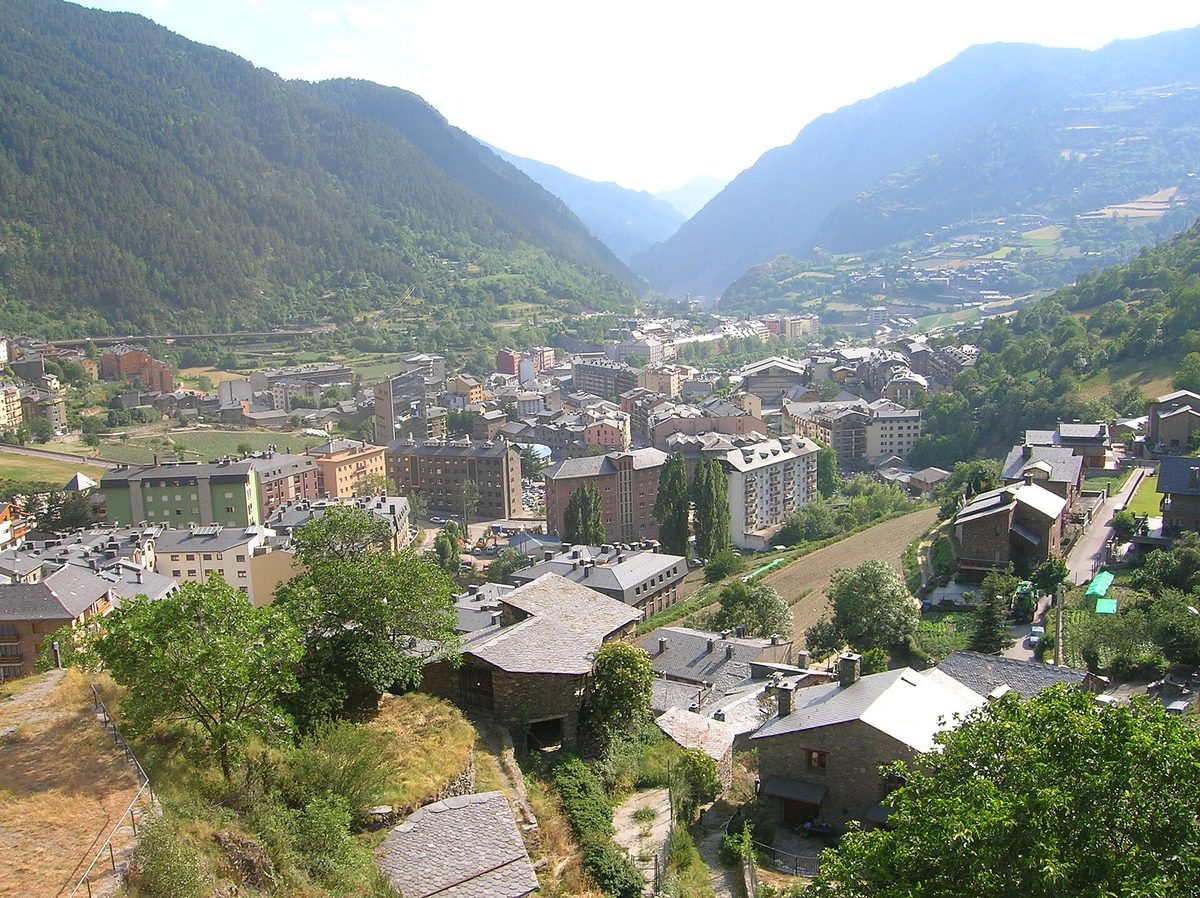
How to pronounce Andorran place names
Getting these roughly right makes asking for directions dramatically easier, and it stops bus drivers looking at you blankly.
- Escaldes-Engordany — es-KAL-des en-goor-DAN. The final -ny is the ñ sound, and it disappears into a soft nasal. Almost nobody says the whole thing; locals say “Escaldes”. More on the thermal town of Escaldes here.
- Encamp — en-CAM. The p barely lands.
- Ordino — or-DEE-no. Not “or-DEE-nu”; north-western Catalan keeps the final o as a proper o.
- Canillo — ca-NEE-yo. Two syllables of stress-free easiness once you remember ll is y.
- Arinsal — a-rin-SAL, stress on the end.
- Envalira — en-va-LEE-ra. The Port d’Envalira is “por den-va-LEE-ra”.
- Vall d’Incles — bal DEEN-kles. The v sounds like a b almost everywhere in Andorra, so vall is “bal”.
- Soldeu — sol-DE-oo, three syllables, not “SOLE-doo”.
- El Tarter — el tar-TE, final r dropped.
- Sant Julià de Lòria — san zhoo-lee-A de LO-ree-a.
- La Massana — la ma-SA-na, single s sound.
- Meritxell — me-ri-CHEY. The tx is “ch”. Avinguda Meritxell is the main shopping street and also the name of the national patron.
- Coma Pedrosa — CO-ma pe-DRO-za, the 2,942 m high point of the country.
- Madriu-Perafita-Claror — ma-DREE-oo pe-ra-FEE-ta cla-RO. Say it slowly; the UNESCO valley is worth the effort.
- Pas de la Casa — pas de la CA-za in Catalan, “pah de la ca-ZA” from French speakers. Everyone locally just says “el Pas”.
Planning around language: signs, apps, admin and manners
Signage and paperwork
Public signage in Andorra is monolingual Catalan by default, and the 2024 language law has pushed it further that way. Road signs, parking meters, bus stop boards, the notices at trailheads in the nature parks, hospital signage, the customs declaration at the border — Catalan, with occasional Spanish or French on tourist-facing panels.
Private signage is more mixed. Shops on the main drag often run Catalan plus Spanish, and sometimes English. Restaurant menus in the capital frequently come in four languages; menus in a village borda often come in one.
If you are driving, learn six words before you cross the border: obres (roadworks), desviament (diversion), cediu el pas (give way), cadenes (snow chains), tancat (closed) and peatge (toll, which you meet on the French side rather than inside Andorra). Winter closures on the high passes are announced in Catalan on the roadside gantries.
Translation apps and what they can’t do
Google Translate handles Catalan well, including camera translation, which is genuinely useful pointed at a chalkboard menu. Download Catalan and Spanish for offline use before you arrive — mobile coverage in the side valleys is patchy, and Andorra sits outside EU roaming rules, so your data may not be free. DeepL also supports Catalan and produces better prose if you need to write something.
What no app fixes is the conversational half-second. Someone asks you a question at a lift barrier and you need an answer now, not in twenty seconds via a phone. That is the gap the phrasebook above is meant to close.
The etiquette, which is the actual point
Here is the thing I most want you to take from this page. Andorrans are used to being talked at in Spanish by people who assume their country is a Spanish province with cheap perfume. They are used to being talked at in French by people who assume it is a French ski annexe. Almost nobody arrives and opens in Catalan.
So when you walk into a bar in Andorra la Vella and say bon dia, something small happens. The temperature of the exchange changes. You get the recommendation rather than the menu. You get told which of the two paths from the car park is actually open. It costs you two syllables and about a day of practice.
The same applies at the end. Gràcies rather than gracias, on the way out, every time. If you manage nothing else in Catalan for a whole week, manage those two.
Mistakes I see visitors make
- Opening in English on the assumption it is a shared default. It is the fourth language here. Open in Catalan, fall back to Spanish or English.
- Calling Catalan a dialect. It has its own literature, its own academy and its own thousand-year history. Don’t.
- Assuming the whole country works like the shopping street. Meritxell is the least representative 800 metres in Andorra.
- Trying French everywhere because Andorra half-belongs to a French head of state. Outside Pas de la Casa it is the weakest of the three big languages.
- Panicking about it. Nobody is going to leave you stranded. This is a small, wealthy, deeply multilingual country where most adults juggle three languages before breakfast.
Frequently asked questions
What language is spoken in Andorra as the official language?
Catalan, and only Catalan. Article 2 of the 1993 Constitution names it as the country’s own and official language, and Law 6/2024 strengthened the right to be served in it. Andorra is the only sovereign state where Catalan holds sole official status, which makes a country of 85,000 people the constitutional home of a language with around ten million speakers.
Do they speak Spanish in Andorra?
Constantly. The 2022 government survey found 48.6% of residents use Spanish as a habitual language and 40.3% have it as a mother tongue, and Spanish scores highest of any language on the knowledge index at 9.3 out of 10. Roughly a third of residents hold Spanish nationality. If you speak Spanish, you will not struggle anywhere in Andorra.
Can you get by with English in Andorra?
In the tourist economy, yes. Hotels, ski schools, lift ticket offices, spas, tourist offices and the larger shops all handle English comfortably. It thins out fast beyond that: buses, pharmacies, village bars, small restaurants and anything administrative run in Catalan and Spanish. Carry a translation app and a dozen Catalan words and you will be fine.
Is Catalan just a dialect of Spanish?
No. Catalan is a separate Romance language that developed independently from Latin, with its own grammar, vocabulary and literary tradition going back to the twelfth century. It shares a lot with Spanish, as any two western Romance languages do, but structurally it sits closer to Occitan and to the languages of southern France.
Is French spoken in Andorra?
Some, and it is concentrated. French is the habitual language of about 5.7% of residents and the mother tongue of 10%, but it dominates at Pas de la Casa and Grau Roig on the French border, and it is the teaching language of one of Andorra’s three parallel school systems. Elsewhere in the country it is the least useful of the three main foreign languages.
Do I need to learn Catalan before visiting Andorra?
No. You can complete an entire ski week or shopping weekend without a word of it. Learning ten words changes the trip anyway — greetings, please and thank you, a few menu terms and the words for open, closed, snow and closed piste will save you time and earn you goodwill that Spanish never will.
What language do they speak in Andorran ski resorts?
All of them. Lift staff at Grandvalira, Pal-Arinsal and Ordino-Arcalís routinely work in Catalan, Spanish, French and English. Ski schools teach in English as standard for the British and Irish market. Piste maps and safety signage are multilingual. The lift queue itself is one of the more polyglot places in Europe.
Is Andorra a Spanish-speaking country?
Not officially, and Andorrans are quick to say so. Spanish is widely spoken and widely understood, but it has no official status, it does not appear on official documents, and the government has spent thirty years actively pushing back against its drift into the default. Treat it as a useful lingua franca, not as the language of the country.
Related guides
Now that you know what language is spoken in Andorra and how to use the few words that matter, the next steps are practical: what there is to do once you arrive in my round-up of things to do in Andorra, when to come in the month-by-month guide to the best time to visit, and where to put those new menu words to work in the restaurants of Andorra la Vella.
Photo credits
All photographs are from Wikimedia Commons under their stated licences, with thanks to the photographers: