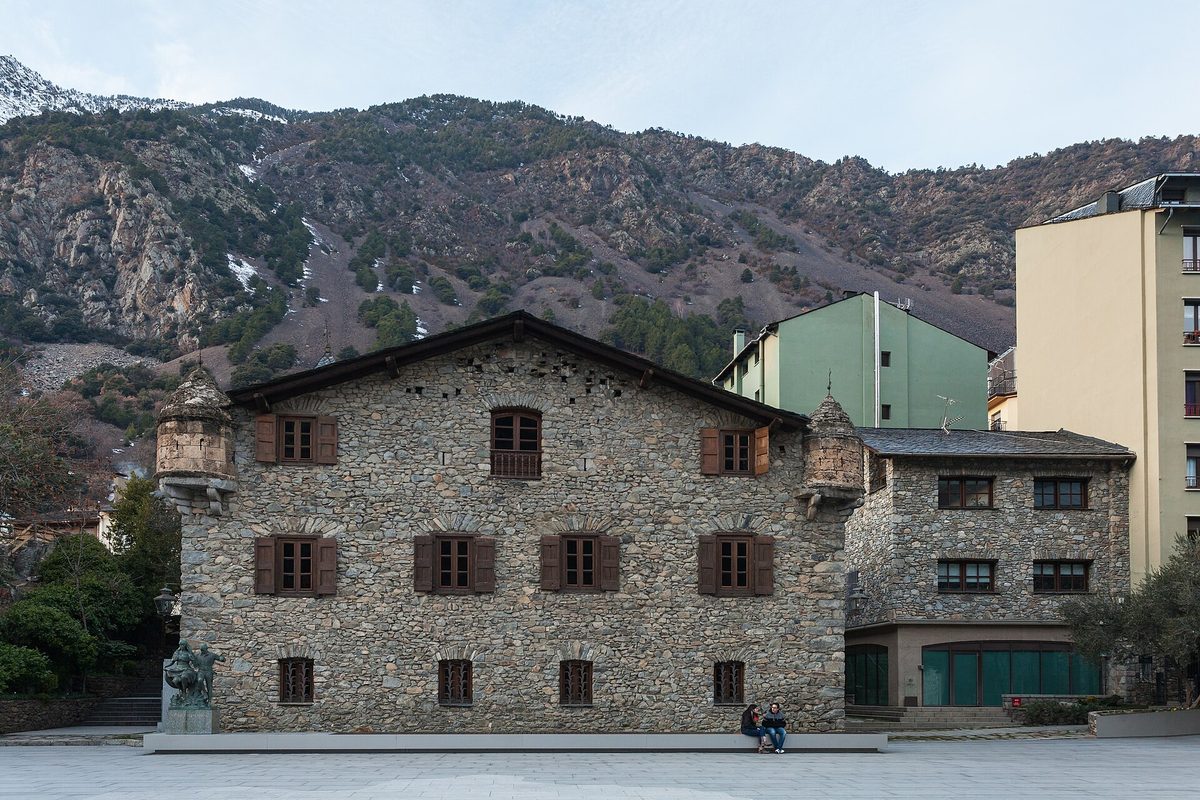
For a country that spent a thousand years quietly avoiding the notice of its bigger neighbours, Andorra ran its affairs from a building you could easily walk past. Tucked into the old stone lanes above the capital’s shopping streets stands a modest 16th-century manor house that served, for three centuries, as the entire parliament of a nation. It’s called Casa de la Vall, and it’s the most historically important building in the country — and one of the more charming small history stops in the Pyrenees.
Casa de la Vall is Andorra’s former parliament house, a fortified manor built in 1580 that served as the seat of the country’s government from 1702 until 2011. Today it’s a small museum in the old quarter of Andorra la Vella, and together with the surrounding Barri Antic it lets you walk through the heart of old Andorra in about an hour. It’s the single best place to understand how this odd little co-principality actually worked.
Last updated: July 2026. Opening hours, ticket prices and guided-tour arrangements change and visits are often by reservation; confirm current details and book ahead on the official museum site before you go.
This guide covers the building’s history, what you’ll see inside, how to visit, and the short Barri Antic walking loop that ties it to the capital’s oldest corners. It pairs naturally with our guide to Andorra la Vella.
What is Casa de la Vall?
Casa de la Vall — the name means “house of the valley” — is a stone manor house that, improbably, was the parliament building of a European country until living memory. Built in 1580 as the fortified home of a wealthy family, it was bought in 1702 by the Consell General, Andorra’s governing council, and served as the seat of government, courtroom and administrative heart of the nation for the next three centuries. When a purpose-built modern parliament opened next door in 2011, the old house became a museum — but it still hosts official ceremonies and protocol events, so it remains a working part of the state rather than a fossil.
What makes it special isn’t grandeur — it has almost none — but the opposite. This is a small, human-scaled building that ran a country of shepherds and smugglers with a handful of rooms, a single meeting chamber and a locked cupboard of documents. It tells the story of Andorra’s unusual survival better than any textbook, which is why it appears on the national side of the Andorran one-euro coin. If you want to understand the country’s improbable independence, our guide to why Andorra is a country is the companion read.
The history: a manor house that ran a country
The building went up in 1580 for the Busquets, a prominent local family, as a defensible country house — you can still read that origin in its thick walls, its dovecote tower and its coat of arms over the door. Its national chapter began in 1702, when the Consell General de les Valls — the council that had governed Andorra’s valleys since 1419 — bought the house to give the country a permanent seat. For the next three hundred years, this was where Andorra’s councillors met, where justice was dispensed in its Tribunal de Corts, and where the country’s most precious documents were kept.
That long run ended in 2011, when a modern, purpose-built Consell General opened immediately alongside — you’ll see the two buildings side by side, old and new, the transition made physical. Rather than abandon the old house, Andorra turned it into a museum of its own government while keeping it in ceremonial use. The result is a place that feels less like a preserved relic and more like a retired elder statesman: dignified, still consulted on special occasions, full of stories.
How Andorra governed itself
To make sense of the house, it helps to know the peculiar system it served. Since a medieval settlement of 1278 known as the Peace of the Pariatge, Andorra was ruled jointly by two outside lords — the Bishop of Urgell in Spain and a French count whose role passed eventually to the President of France — as co-princes, a shared sovereignty that survives to this day and makes Andorra the world’s only co-principality. Day to day, though, the country ran itself through the Consell General, a council of representatives from the seven parishes that met in this very house. That balance — two foreign princes as nominal heads of state, real power devolved to local councillors guarding their parishes’ interests — is exactly what the seven-keyed cabinet and the modest meeting chamber were built to express. For the full, strange, thousand-year story, see our guides to the history of Andorra and why Andorra is a country.
The Armari de les Set Claus: the cabinet of the seven keys
If Casa de la Vall has a single treasure, it’s a cupboard. The Armari de les Set Claus — the cabinet of the seven keys — is a wooden chest that held the country’s founding documents, and it’s locked with seven different locks. The reason is beautifully Andorran: there was one key for each of the country’s seven parishes, and the cabinet could only be opened when a representative of every parish was present, each turning their own lock. No single parish could act alone; the nation’s records could only be reached by consensus. It’s a small piece of joinery that encodes the whole cooperative, jealously balanced spirit of how Andorra governed itself, and it’s the detail I’d send anyone here to see. The documents themselves have long since moved to secure archives, but the cabinet remains, and the story it tells is the heart of the visit.
Inside Casa de la Vall: room by room
The building is small, and a visit takes in a handful of rooms across a couple of floors and an attic. It’s the intimacy that lands — this is where a country was run, and it’s the size of a large farmhouse.
The Sala del Consell
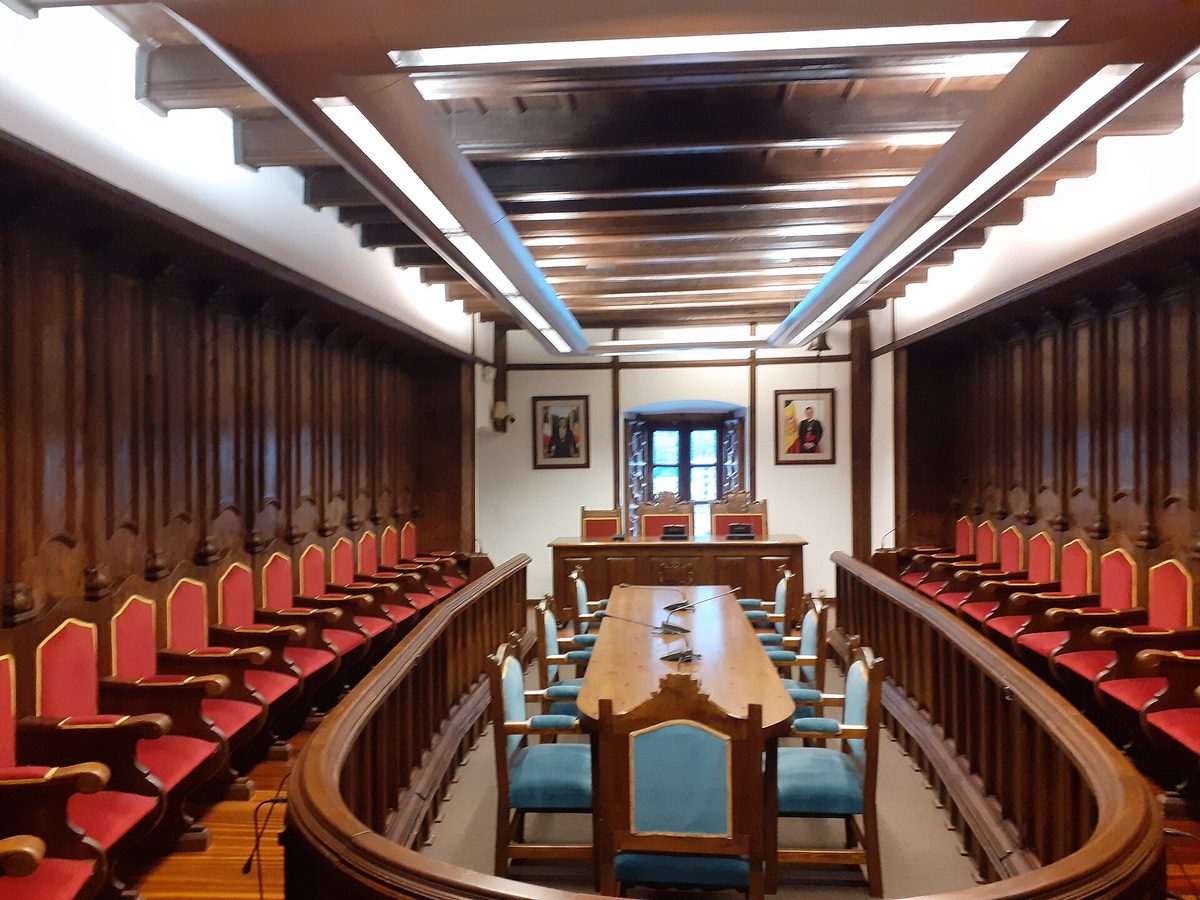
The heart of the house is the parliamentary chamber, the room where the Consell General met. It’s a modest, wood-panelled space — arranged in its present form in the 20th century — hung with portraits of the two Co-princes, the President of France and the Bishop of Urgell, who jointly serve as Andorra’s heads of state. Standing in the room where a nation’s laws were debated for centuries, at a table that would barely seat a wedding party, is the visit’s quiet highlight.
The Tribunal de Corts and the Sala dels Passos Perduts
Andorra’s justice was administered here too, in the Tribunal de Corts (the court of justice), and the antechamber known as the Sala dels Passos Perduts — the “room of lost steps,” the waiting hall where people paced before their business. The names alone are worth the ticket.
The chapel, the kitchen and the attic
The house also holds a small chapel dedicated to Sant Ermengol, a period kitchen that grounds the building in domestic reality, and an attic or garret up under the roof. Together they round out the picture of a building that was home, court, parliament and record office all at once.
The building and its garden
The house rewards a look from outside as well as in. Over the door sits the carved coat of arms, and the structure keeps the features of the defensible manor it began as, including a dovecote and the thick stone walls of a building meant to last. A small terraced garden beside it offers a quiet viewpoint over the old quarter and the valley, dotted with commemorative sculptures, and it’s a pleasant place to pause before or after the tour. Look, too, for the old measures and markings that record the building’s centuries of practical use.
Visiting Casa de la Vall: hours, tickets and tours
A visit is easy, cheap and short — budget around 30 to 45 minutes for the house itself. A few practical things, all of which you should confirm on the official museum site before you go, as arrangements change and entry is frequently by reservation:
Tickets are inexpensive — on the order of €5 for an adult, with reduced rates for students and seniors and free entry for children and certain groups. Guided tours of around 30 minutes are the best way to see it, typically for a small supplement and best booked in advance; an audio guide is usually included with entry for those who prefer to go at their own pace. Opening hours generally run Tuesday to Saturday, morning and afternoon, with reduced days in winter (often closed Sunday and Monday) and some extra Sunday mornings in the warmer months — but because the house is still used for official events and often requires reservation, it’s genuinely worth booking ahead or calling before you visit rather than just turning up. It’s a compact, well-run little museum; the main way to be disappointed is to arrive unannounced on a day it’s closed or fully booked.
A few tips to smooth the visit: guided tours are usually run in Catalan, Spanish and French, with English available at some sessions but not all, so ask when you book if language matters to you. The old house has steps and isn’t fully step-free, worth checking ahead if accessibility is a concern. Photography rules vary from room to room, so follow the guide’s lead. And because slots are limited and the house periodically closes for official functions, booking earlier in the week is wise in peak season — this is a small museum, not a turn-up-anytime attraction.
The Barri Antic: old Andorra in an hour
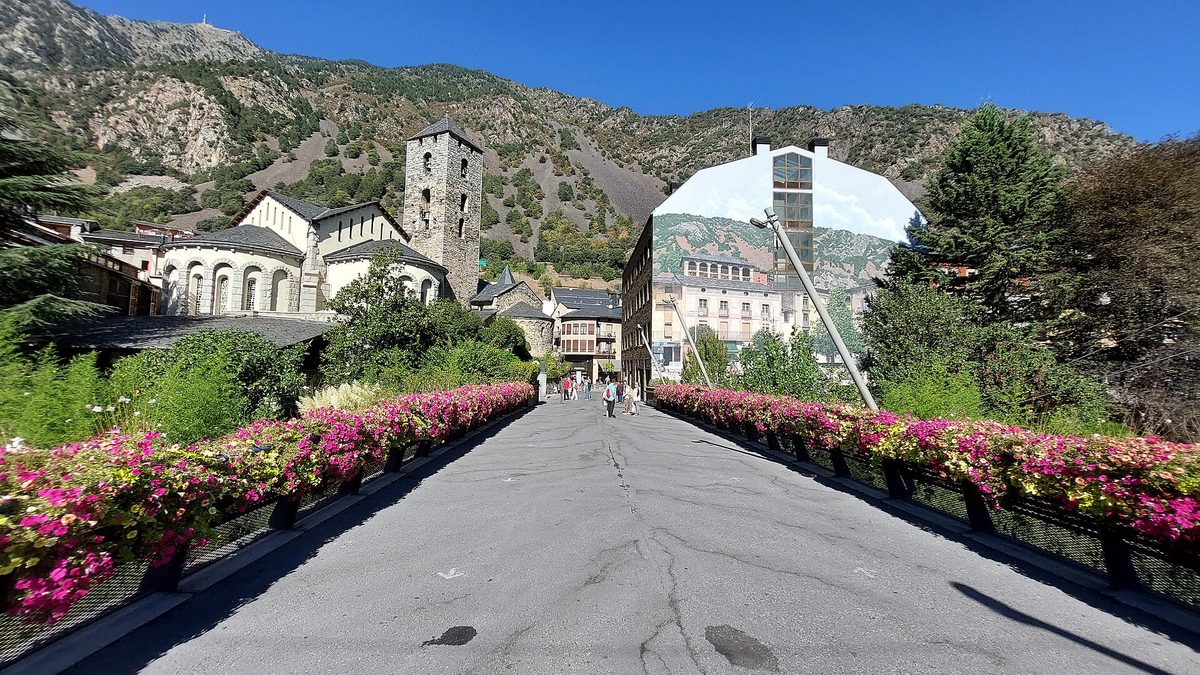
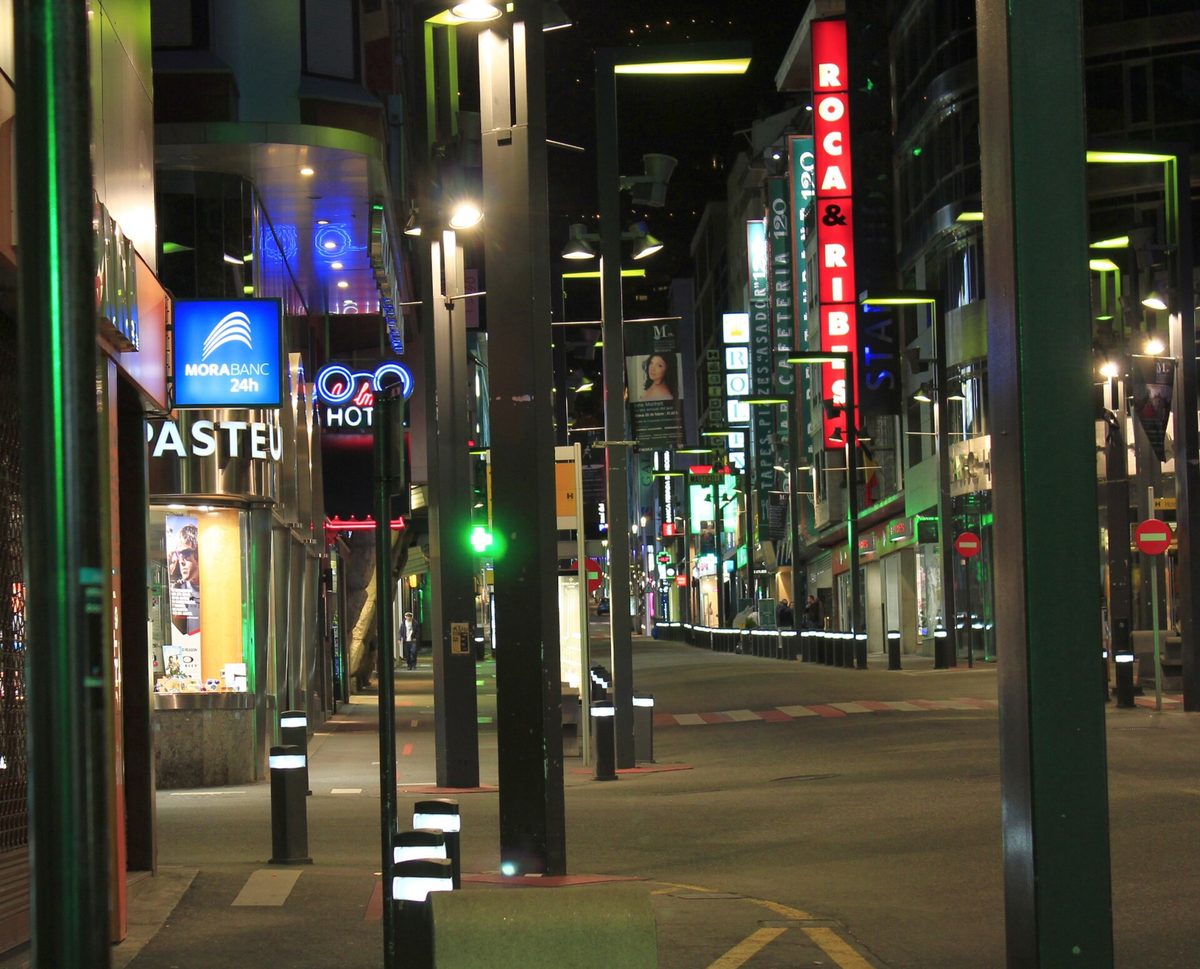
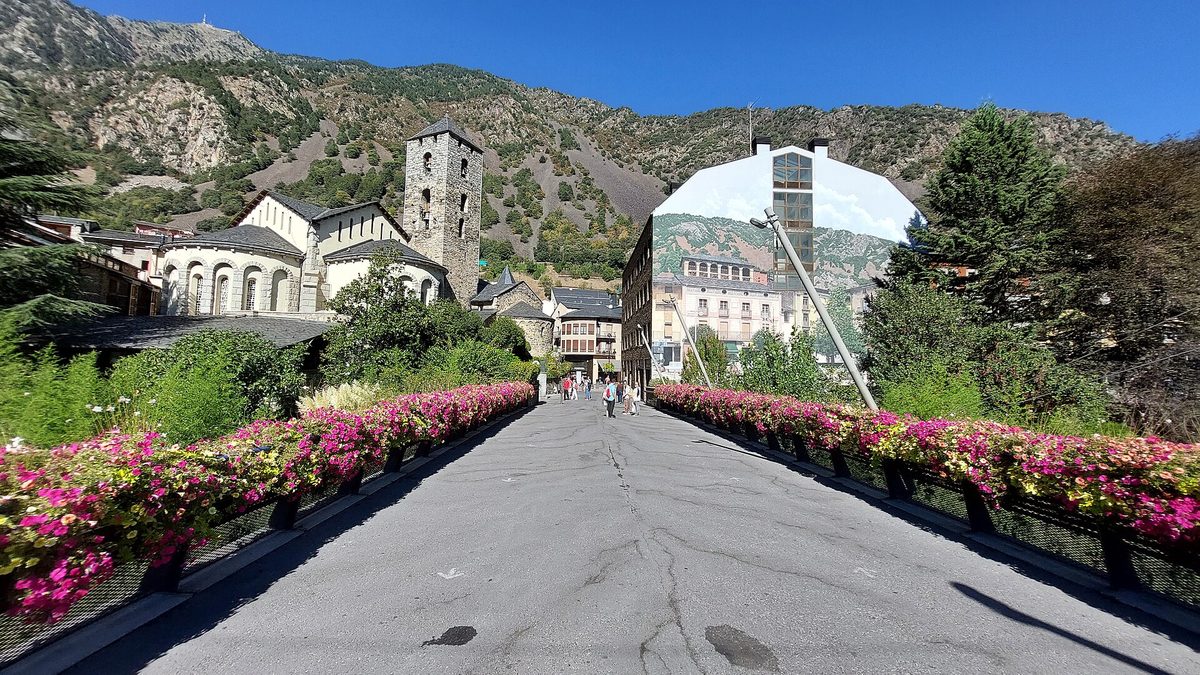
Casa de la Vall doesn’t stand alone — it sits in the Barri Antic, the small medieval quarter that is the historic core of Andorra la Vella, and the two are best experienced together. It’s a genuinely lovely surprise, because it sits just a few minutes’ walk uphill from the modern shopping bustle of Avinguda Meritxell yet feels like another century: narrow cobbled lanes, stone houses, and the quiet that the retail streets below have lost.
The walking loop is short and self-explanatory. From Casa de la Vall, wander the old main lane — Carrer de la Vall — with its stone façades, drop down to the Plaça del Poble (the modern square built above a car park, with big views over the valley), and take in the church of Sant Esteve on the edge of the quarter. You can do the whole circuit in under an hour, and it’s the single most rewarding hour of history in the capital. For a fuller day in town, our guide to one day in Andorra la Vella builds it into an itinerary, and the question of whether the capital is worth visiting is largely answered up here in the old town.
Sant Esteve church and the old quarter’s corners
On the edge of the Barri Antic stands Sant Esteve (Saint Stephen), the parish church of Andorra la Vella, originally a 12th-century Romanesque building with a characteristic Lombard bell tower, though much altered over the centuries. It’s a working church rather than a museum, and its rounded apse is a fine example of the Romanesque style that defines Andorra’s oldest architecture — part of the same tradition as the country’s rural Romanesque churches. Between the church, Casa de la Vall and the surrounding lanes, the Barri Antic packs a surprising amount of the country’s history into a few hundred metres, and it makes the perfect counterpoint to an afternoon of duty-free shopping in the streets below.
Getting there and what’s nearby
Casa de la Vall is central and easy to reach: it’s a five-minute walk uphill from Avinguda Meritxell in the heart of Andorra la Vella, signposted through the old quarter. There’s no airport or train in the country, so most visitors arrive by hire car or by the coach from Barcelona (around three hours) — the options are laid out in our guide to getting to Andorra, and it’s an easy stop on any day trip from Barcelona.
Because it’s so central and so quick to see, Casa de la Vall combines beautifully with the rest of a capital day: the restaurants of the old town and beyond (see our Andorra la Vella dining guide), the shopping, and — a short walk or drive east — the thermal spa of Caldea in adjoining Escaldes-Engordany. History in the morning, a soak in the afternoon is a very good Andorran day. For more indoor culture, our guide to museums in Andorra rounds up the rest.
Make a morning of it
Because the visit itself is so short, the trick is to build a morning around it. I’d take the first tour slot of the day while the old town is still quiet, wander the Barri Antic lanes and Sant Esteve afterwards, then drop down into the shopping streets for lunch. It turns a 30-minute museum into a half-day that moves from the country’s founding story to its modern, duty-free present in the space of a few hundred metres — one of the neatest short walks through a nation’s history you’ll find anywhere, and an easy centrepiece for a day in the capital.
Is Casa de la Vall worth visiting? My honest take
Yes — with the right expectations. If you arrive expecting the marble grandeur of a great European parliament, you’ll be puzzled; this is a small stone farmhouse that happened to run a country. But if you come for the story rather than the spectacle, it’s genuinely rewarding, and it’s the best single place to grasp how Andorra survived a thousand years wedged between France and Spain by being small, cooperative and easily overlooked. The seven-keyed cabinet alone is worth the modest ticket. Take the guided tour rather than the audio guide if you can, because a good guide brings the building’s quiet drama to life in a way the silent rooms cannot on their own. It’s cheap, it’s central, it takes under an hour, and combined with a wander through the Barri Antic and the church of Sant Esteve, it turns a shopping trip into something with a bit of soul. Book ahead, take the guided tour, and give old Andorra its hour — you’ll understand the country far better for it.
Casa de la Vall: frequently asked questions
What is Casa de la Vall?
It’s Andorra’s historic parliament house — a stone manor built in 1580 that served as the seat of the country’s government, the Consell General, from 1702 until 2011. Now a small museum in the old quarter of Andorra la Vella, it lets you see the chamber where the nation’s laws were made and the famous cabinet of the seven keys.
When was Casa de la Vall built?
The house was built in 1580 as a fortified manor for a prominent local family, the Busquets. It became the seat of Andorra’s government in 1702, when the Consell General bought it, and served that role until a modern parliament opened next door in 2011. Its thick walls and defensive features still reflect its 16th-century origins.
What is the cabinet of the seven keys?
The Armari de les Set Claus is a wooden cabinet that held Andorra’s founding documents, secured with seven separate locks — one key for each of the country’s seven parishes. It could only be opened when a representative of every parish was present, so the national archive could only be reached by unanimous cooperation. It’s the building’s most storied object.
Can you go inside Casa de la Vall?
Yes. It operates as a museum, usually visited on a short guided tour of about 30 minutes, though entry is frequently by reservation and the house is still used for official events. Because opening days and booking arrangements vary, it’s best to check the official site and reserve ahead rather than turning up unannounced.
How much does it cost to visit Casa de la Vall?
Entry is inexpensive — on the order of €5 for an adult, with reduced prices for students and seniors and free admission for children and some groups. A guided tour is usually available for a small extra charge, and an audio guide is typically included. Confirm current prices on the official museum site, as they change.
How long do you need at Casa de la Vall?
The house itself takes about 30 to 45 minutes, and a guided tour runs around half an hour. Add another 30 minutes or so to wander the surrounding Barri Antic — the old lanes, the Plaça del Poble and the church of Sant Esteve — and you have a rewarding hour to ninety minutes of history in the heart of the capital.
What else is in the Barri Antic old town?
The Barri Antic is Andorra la Vella’s small medieval quarter, a cluster of narrow cobbled lanes just above the main shopping street. Alongside Casa de la Vall you’ll find the Romanesque church of Sant Esteve, the old main lane of Carrer de la Vall, and the Plaça del Poble with its wide valley views. It’s a compact, atmospheric loop of under an hour.
Is Casa de la Vall worth visiting?
For anyone interested in how Andorra works and survived, yes — it’s the best place in the country to understand its history, and it’s cheap and quick. Just come for the story rather than for grandeur: it’s a small, human-scaled building whose charm is exactly that a whole nation was run from somewhere so modest. The seven-keys cabinet is the highlight.
Related Andorra travel guides
Keep exploring with our other in-depth guides: the capital Andorra la Vella, the thermal town of Escaldes-Engordany and its Caldea spa, the story of why Andorra is a country, the wider history of Andorra, and the country’s museums.