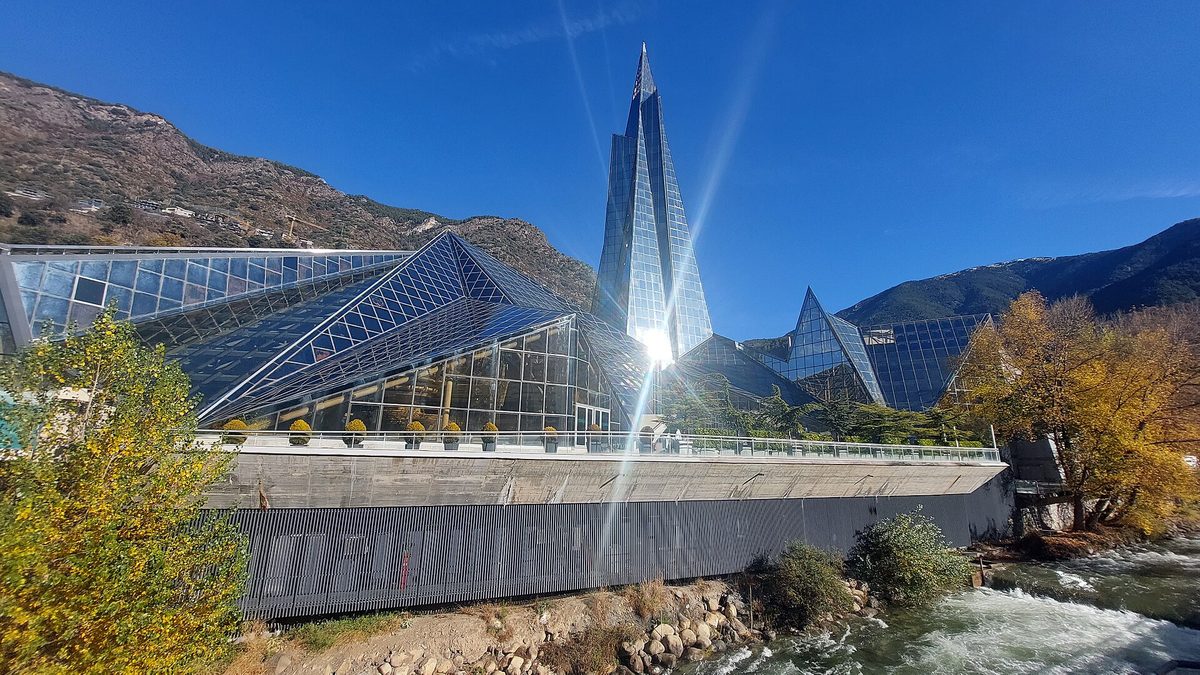
Here’s a thing that catches everyone out: you can walk from Andorra’s capital into a different town without ever noticing you’ve crossed a border. One minute you’re on Avinguda Meritxell in Andorra la Vella, the next you’re on Avinguda Carlemany in a separate parish, and the only thing that actually changed was the street name. That second town is Escaldes-Engordany, and it’s home to the country’s most famous building, its hottest springs, and rather more character than its glued-to-the-capital reputation suggests.
Escaldes Engordany is Andorra’s newest parish, a thermal town fused seamlessly onto the eastern edge of the capital. It’s built on hot sulphurous springs — the name comes from the Latin for “warm waters” — and it’s where you’ll find Caldea, the largest thermal spa in southern Europe, along with a Romanesque church, two historic bridges and some of the country’s best shopping and eating. Most visitors treat it as part of Andorra la Vella; it rewards being treated as its own place.
Last updated: July 2026. Opening hours, prices and which museums are running change over time, so confirm current details on official sites before your visit.
This is a local-eyes guide to what’s worth your time here, how it fits with the capital next door, and the thermal story that runs underneath the whole town.
Escaldes Engordany at a glance
| The basics | The detail |
|---|---|
| What it is | Andorra’s 7th and newest parish, created in 1978 from part of Andorra la Vella |
| Where | Immediately east of the capital, around 1,050 m; the two towns run together seamlessly |
| Known for | Thermal hot springs and Caldea, Southern Europe’s largest spa |
| The landmark | Caldea’s 80 m glass tower — the tallest building in Andorra |
| Also here | Sant Miquel d’Engolasters church, the Tosca and Engordany bridges, the Perfume Museum |
| Population | Roughly 14,000-15,000 — the country’s second parish by size |
| Best for | Spa days, shopping, dining, a walkable town base near the capital |
| Time needed | Half a day for the sights; longer if the spa is the point of your trip |
Where Escaldes-Engordany ends and the capital begins
Practically, it doesn’t — and that’s the first thing to understand. Escaldes-Engordany is the youngest of Andorra’s seven parishes, carved out of Andorra la Vella only in 1978, and the boundary between the two is nominal: a single street, the Riu Valira running through, and no change you’d ever notice on foot. Together they form by far the largest urban area in the country, a continuous run of shops, restaurants and apartment blocks filling the valley floor where two rivers meet.
What that means for a visitor is simple: base yourself in either and you’re effectively staying in both. Escaldes tends to be a touch quieter and more residential than the capital’s shopping core, with the spa and the hot-spring heritage as its distinctive draw. If you’re planning time in the capital, our guide to Andorra la Vella covers the pair as a single destination, and the question of whether the capital is worth visiting applies just as much here.
How Andorra’s newest parish was born
Andorra is divided into seven parishes, the administrative and historic building blocks of the country, and Escaldes-Engordany is the baby of the family. Until 1978 it was simply the eastern part of Andorra la Vella; that year it was formally separated to become the seventh and newest parish, uniting the old thermal village of Les Escaldes with the neighbouring settlement of Engordany and a scatter of smaller hamlets. The split recognised a place that had grown, on the back of its springs and later its shops, into a substantial town in its own right. It’s a reminder that, for all its ancient bathing history, much of what you see here is modern — a working 20th-century town wrapped around a two-thousand-year-old asset. For the deeper national story, our guide to the history of Andorra sets the scene.
The thermal story: from Roman springs to Caldea
Everything about Escaldes-Engordany starts with hot water. The town sits on natural sulphurous, mineral-rich springs that emerge from the ground at genuinely high temperatures, and people have been using them for as long as anyone has lived here — the very name, from the Latin calidae (warm waters), records the fact. For centuries the springs powered a wool-washing industry and a bathing culture; the restored hot fountain known as the Font del Roc del Metge still runs in the old centre, and you can feel for yourself just how warm the water comes out.
The science behind it is simple enough: rainwater and snowmelt percolate deep into the earth, are heated by the geology far below, and rise back along fault lines already hot and loaded with dissolved minerals. That’s why the water arrives warm and faintly sulphurous, and why bathing cultures the world over grew up around exactly this kind of spring. In Escaldes it supported a wool-washing trade for centuries before anyone thought to build a leisure palace on top of it.
In 1994 the town turned that ancient asset into its modern icon, channelling the thermal water into Caldea — and in doing so gave Andorra its most recognisable landmark. The story of the springs is the through-line of the whole town, and for the wider bathing context the guide to Andorra’s hot springs is worth a read.
Caldea and Inúu: the thermal spa
Caldea is the reason most people come to Escaldes-Engordany, and it’s genuinely worth the trip. Opened in 1994 and crowned by an 80-metre glass tower that’s the tallest structure in the country, it’s the largest thermal spa in southern Europe — a science-fiction cathedral of indoor and outdoor lagoons, jacuzzis, saunas, hammams and jet pools, all fed by the town’s naturally hot spring water. Floating in the outdoor lagoon at 34°C while cold mountain air (or falling snow, in winter) sits just above the water is one of the defining Andorran experiences.
It comes in two parts worth knowing about. The main Caldea complex is the big, family-friendly thermal playground; Inúu, attached, is a quieter, adults-only wellness space aimed at a more serene, spa-treatment experience. Sessions are sold in time blocks and it gets busy at weekends and on winter afternoons, so book ahead and go on a weekday morning if you can. For the full detail — what’s included, current prices and whether it’s worth it — see our dedicated guides to Caldea prices, Inúu and whether Caldea is worth it.
A practical note on the experience: bring or hire a towel and flip-flops, budget for lockers and any extras, and know that Caldea is a swimsuit spa with mixed zones and, in the Inúu area, adults-only ones — a leisure-and-wellness palace rather than a naturist baths. Children are welcome in the main complex within age rules, which makes it a rare spa that genuinely works for families; the guide to Caldea with kids has that detail.
Beyond the spa: what to see in Escaldes-Engordany
Caldea overshadows the rest, but there’s a genuinely pleasant half-day of sights here for anyone willing to look past the glass tower.
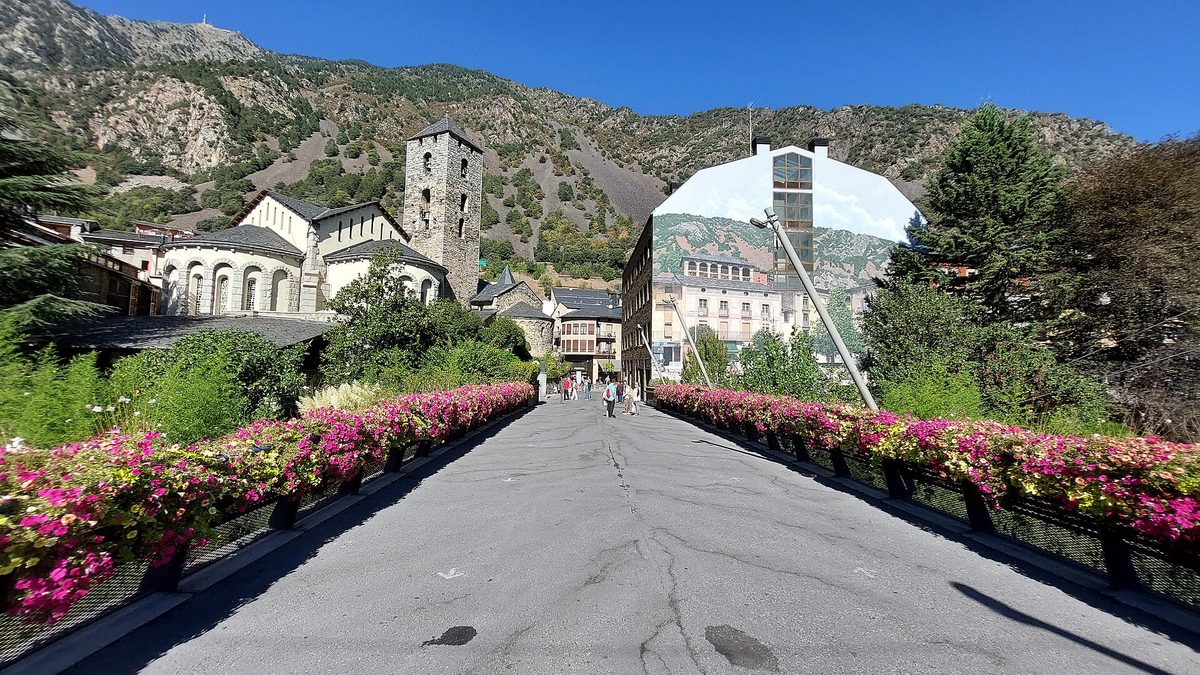
Sant Miquel d’Engolasters
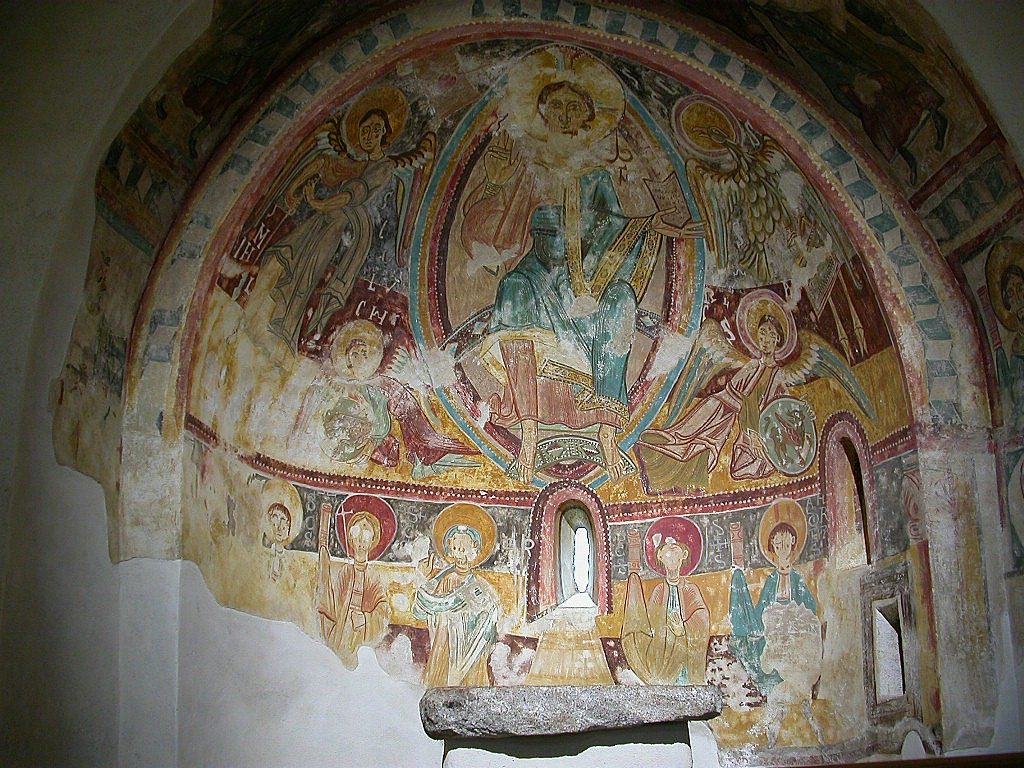
Up above the town, near the Engolasters lake at around 1,500 m, stands one of Andorra’s loveliest Romanesque churches: Sant Miquel d’Engolasters, a 12th-century stone chapel with a tall, slender Lombard bell tower. Its celebrated medieval wall paintings were removed long ago for preservation (the originals now hang in the national art museum in Barcelona), but the setting and the architecture are reason enough to make the trip up. It’s part of the country’s rich seam of Romanesque churches.
The historic bridges and the old centre
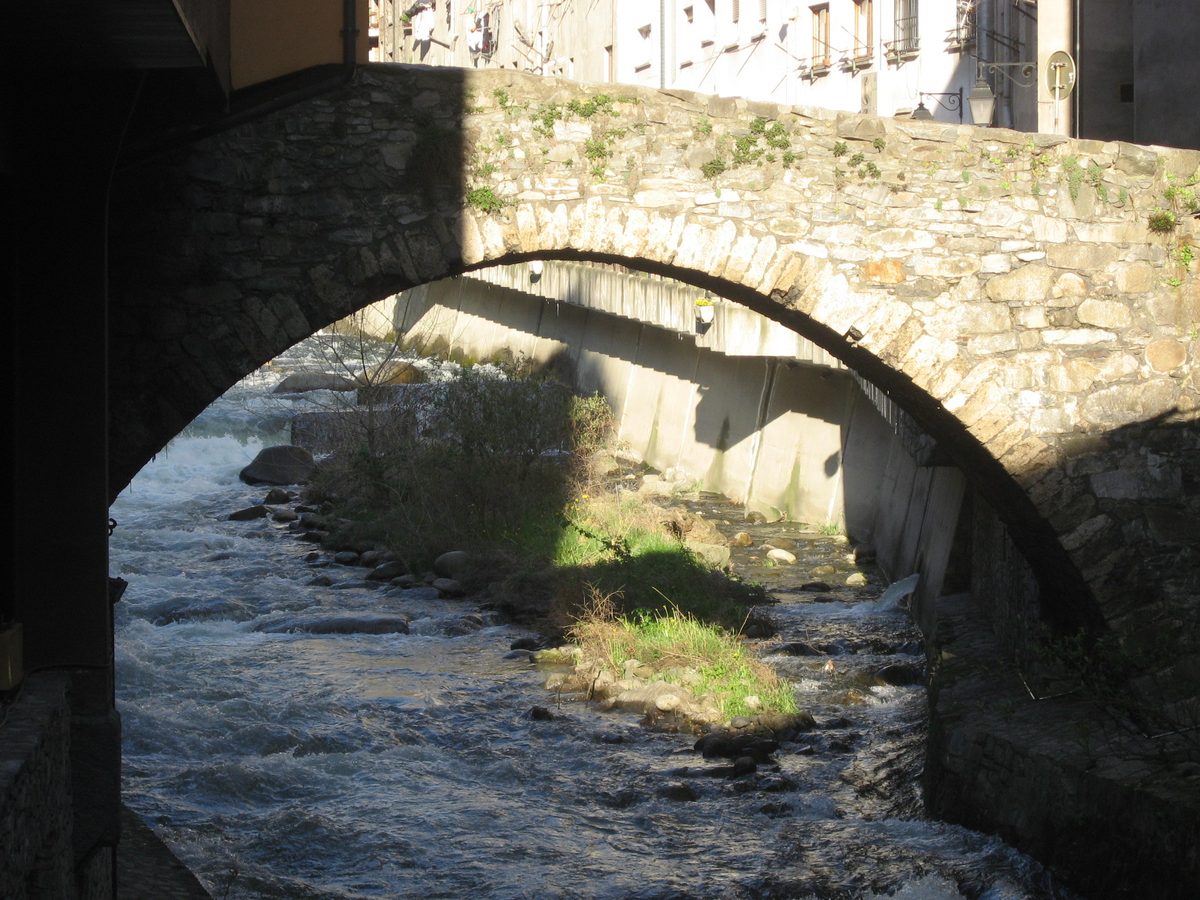
Two old stone bridges survive from the town’s pre-spa life: the Pont de la Tosca (early 19th century), which appears on the parish’s own flag, and the older Pont d’Engordany (late 18th century), a graceful single-arch crossing of the river. Between them, the Espai Caldes cultural centre marks the spot of the original thermal baths. It’s a short, walkable circuit that shows you the town beneath the tower.
The Perfume Museum
An unexpected pleasure: the Perfume Museum (Museu del Perfum), attached to a fragrance retailer, walks you through the history and craft of perfume with hundreds of bottles and a few surprises for the nose. It’s the kind of small, quirky, indoor attraction that saves a rainy afternoon, and it fits neatly with the town’s shopping. For more indoor options across the country, see our guide to museums in Andorra.
Plaça de la Coprínceps and the public art
The town’s main square, the Plaça de la Coprínceps, is named for Andorra’s two Co-princes — the President of France and the Bishop of Urgell, the country’s unusual shared heads of state — and it’s dotted with open-air sculpture that makes for a pleasant wander. Escaldes takes its public art seriously, and you’ll find modern pieces scattered through the pedestrian streets between the shops. It’s a good place to sit with a coffee and watch a town that is, unusually for Andorra, genuinely lived-in rather than purely touristic.
Shopping and eating in Escaldes-Engordany
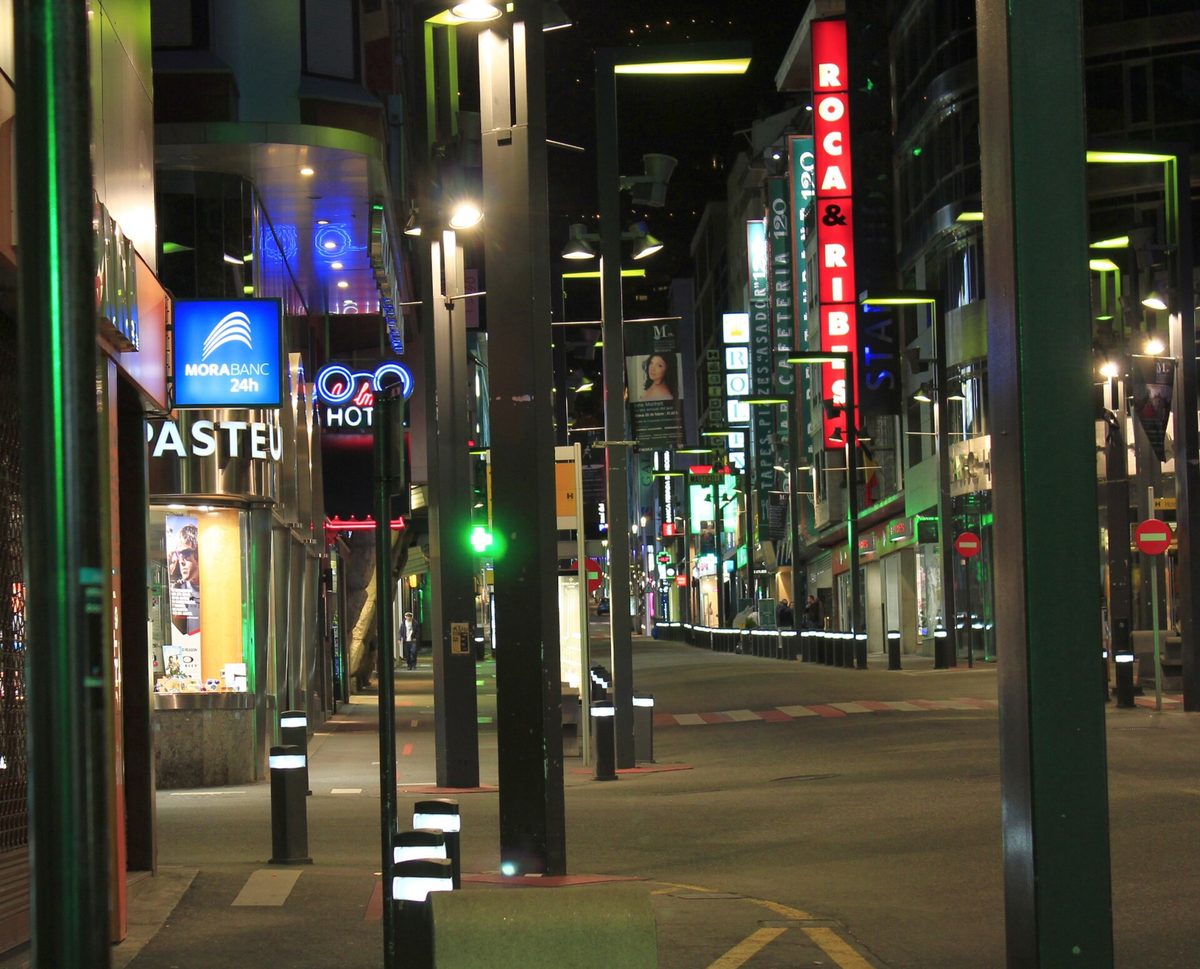
The town’s main artery, Avinguda Carlemany, is a pedestrianised continuation of the capital’s shopping street and one of the best stretches of retail in the country, anchored by the Illa Carlemany centre. Andorra’s low-tax, duty-free status makes this a genuine shopping destination for perfume, fashion, electronics and sports gear — the full picture is in our guides to shopping in Andorra and shopping in the capital area.
Eating is a strength too. Because the town blends into the capital, you have the whole combined restaurant scene on your doorstep, from traditional Andorran and Catalan mountain cooking to international options — our guides to Andorran food and the best restaurants in the capital area point you at the good ones. After a soak at Caldea, a long dinner in Escaldes is exactly the right way to end the day.
One thing worth timing if you can: Escaldes-Engordany throws its own festa major (patron-saint festival) in summer, usually in late July, when the squares fill with concerts, communal meals and fireworks and the town shows its most local face. It’s a lively few days to be here if your dates line up.
Walks from town: Rec del Solà, Engolasters and the Madriu
What surprises people is how quickly you get from this urban valley floor into real mountains. The gentle Rec del Solà, a near-flat canal-side balcony path, runs along the sunny side of the valley just above the towns with big views over the rooftops — an easy hour’s stroll that starts on the boundary with the capital. Higher up, Lake Engolasters, the pine-ringed reservoir beside Sant Miquel, is a short drive and an easy walk. And most remarkable of all, the mouth of the Madriu-Perafita-Claror valley — a UNESCO World Heritage cultural landscape of genuine wilderness covering a tenth of the country — opens directly above Escaldes, reachable on foot from the edge of town. An hour’s climb from a spa town into World-Heritage wilderness is a very Andorran trick.
A tip for the Engolasters trip: the plateau above the lake is laced with easy, well-marked forest paths and picnic spots, and it’s one of the gentlest ways in the whole country to sample the high pine forest without a hard climb. Combined with the church, it makes a lovely half-day escape from the valley floor, and it’s popular with local families at weekends for exactly that reason. Bring a picnic, and you’ve turned a spa town into a mountain day without ever going far.
Practical: getting there, staying and when to visit
Because it merges with the capital, everything that applies to reaching Andorra la Vella applies here — there’s no airport or train, so it’s a hire car or coach from Barcelona, Girona or Toulouse, as laid out in our guide to getting to Andorra. Once you’re here it’s flat and walkable, with the capital’s whole grid a stroll away.
As a base, Escaldes-Engordany is an excellent choice — central, walkable, with Caldea and the restaurants on the doorstep and slightly calmer streets than the shopping core. Our guide to where to stay in the capital area compares the options. As for timing, the town works year-round: the spa and shops run whatever the weather, cold months make the thermal lagoons even better, and the one thing to watch is Caldea’s occasional maintenance closure — check its calendar before a spa-focused trip. For the seasonal big picture, see our guide to the best time to visit Andorra.
Choosing between Escaldes and the capital as a base comes down to temperament. Andorra la Vella proper puts you in the thick of the shopping and the nightlife; Escaldes-Engordany trades a little of that buzz for calmer streets, the spa on the doorstep and, in places, better value — while still leaving the whole capital a flat walk away. For a spa-and-dinner sort of trip I’d lean Escaldes; for a shop-till-you-drop weekend, the capital’s core. Either way you’re in the same continuous town.
A day in Escaldes-Engordany: a suggested plan
If you’ve got a day to give the town, here’s how I’d spend it. Start with the sights while it’s cool — the two old bridges, the Font del Roc del Metge hot fountain, and a wander up the pedestrian streets past the sculptures of the Plaça de la Coprínceps. Drive or walk up to Sant Miquel d’Engolasters and the lake for the morning air and the Romanesque church, then come back down for a long, unhurried lunch in one of the town’s restaurants. Give the afternoon to shopping along Avinguda Carlemany, or the Perfume Museum if the weather turns. And end where the town began: a late-afternoon or evening session at Caldea, floating in hot spring water as the light fades over the valley. It’s a day that moves from old Andorra to new and back to the water that ties them together.
Is Escaldes-Engordany worth visiting? My honest take
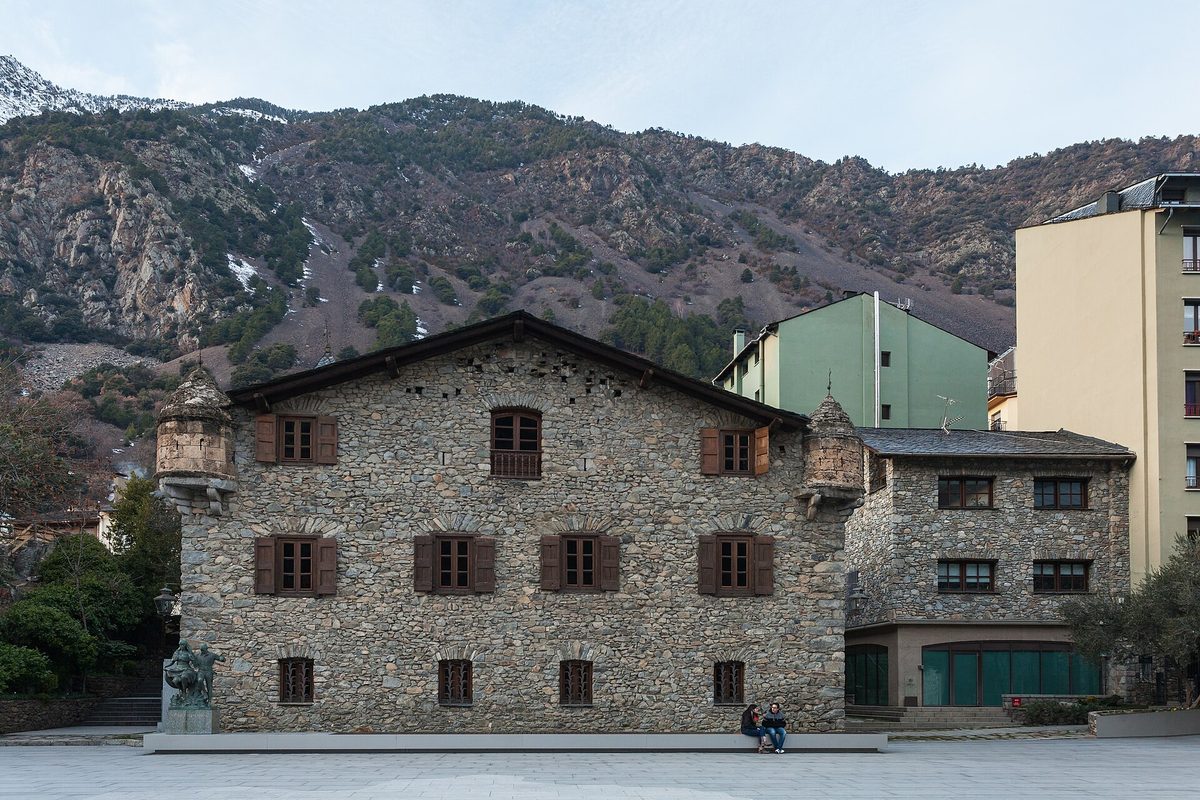
Yes — though in practice you’ll visit it whether you plan to or not, because it’s woven into the capital. What’s worth doing is treating it as more than the spa’s car park. Come for Caldea, certainly — it’s a genuinely special place — but give the town an hour or two of its own: walk the old bridges, feel the hot fountain, climb to Sant Miquel d’Engolasters, and appreciate that this ordinary-looking urban valley sits on hot springs that have shaped it for two thousand years and opens straight onto UNESCO wilderness. It’s not a chocolate-box mountain village, and it doesn’t try to be. It’s a working thermal town with the country’s best spa at its heart, and it’s a comfortable, central, well-fed base for exploring the rest of Andorra. Pair it with next-door Casa de la Vall and the capital’s old quarter and you’ve got a full, easy day that shows you both the old Andorra and the new.
Escaldes-Engordany: frequently asked questions
Is Escaldes-Engordany the same as Andorra la Vella?
No, but you’d be forgiven for thinking so. They’re two separate parishes whose towns have merged into one continuous urban area, divided only by a nominal boundary you won’t notice on foot. Escaldes-Engordany is the newer, slightly quieter of the two, known for its thermal springs and Caldea spa, while Andorra la Vella is the capital and main shopping hub.
What is Escaldes-Engordany known for?
Above all, its hot springs and Caldea — the largest thermal spa in southern Europe, whose 80-metre glass tower is the tallest building in the country. The town is also known for excellent shopping along Avinguda Carlemany, the Perfume Museum, two historic stone bridges, and the Romanesque church of Sant Miquel d’Engolasters above town.
Why is it called Escaldes?
The name comes from the Latin calidae, meaning “warm waters,” a direct reference to the naturally hot sulphurous springs the town is built on. Those springs, which emerge from the ground genuinely hot, have shaped the town’s economy and identity for two thousand years — and today feed the Caldea thermal spa.
How hot are the springs in Escaldes-Engordany?
The natural thermal water emerges very hot — hot enough that you can feel it at the restored Font del Roc del Metge fountain in the old centre. At Caldea it’s tempered to comfortable bathing temperatures, with the outdoor lagoon kept around 34°C. Always take care around the untempered natural sources, which can be scalding.
How long do you need in Escaldes-Engordany?
Half a day covers the sights — the bridges, the hot fountain, the Perfume Museum and a wander — but if the Caldea spa is the point of your trip, budget three to four hours there alone, or a full day combined with the town and shopping. Many visitors simply fold it into their time in the adjoining capital.
Is Caldea in Escaldes-Engordany or Andorra la Vella?
Caldea is in Escaldes-Engordany, right on the river in the centre of the parish, though it’s only a few minutes’ walk from Andorra la Vella given how the two towns merge. Its glass tower is visible from much of the valley and is the easiest landmark to navigate by.
Can you visit Escaldes-Engordany without going to the spa?
Absolutely. Beyond Caldea there’s the Romanesque church of Sant Miquel d’Engolasters, the Tosca and Engordany bridges, the Perfume Museum, excellent shopping on Avinguda Carlemany, and easy walks like the Rec del Solà — plus direct foot access to the UNESCO-listed Madriu valley. It’s a rewarding half-day even for non-bathers.
Related Andorra travel guides
Keep exploring with our other in-depth guides: the adjoining capital Andorra la Vella, the complete guide to Caldea, the old parliament at Casa de la Vall, the wilderness of the Madriu valley, and the country’s towns and villages.
1 comment
Comments are closed.