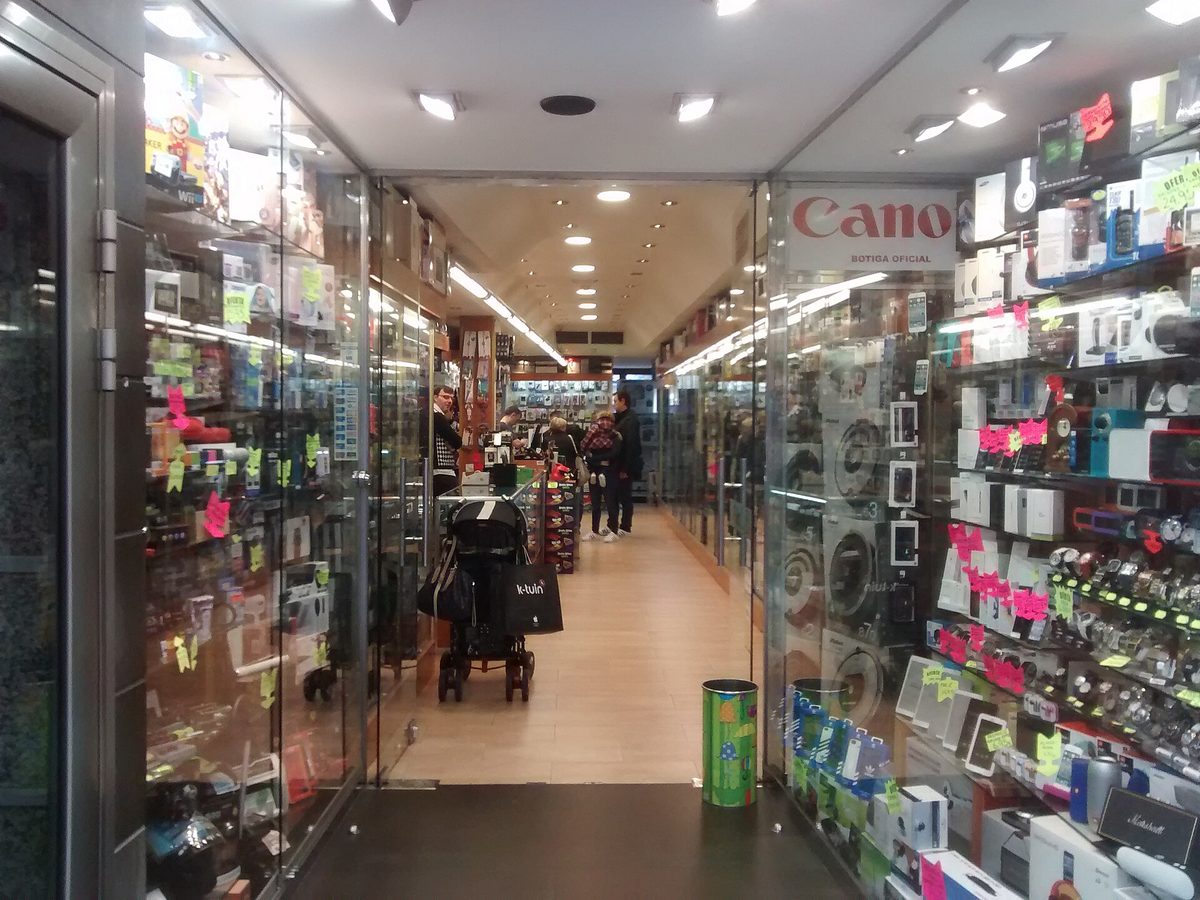
The card machine in a shop on Avinguda Meritxell once offered to charge me in pounds instead of euros. The assistant shrugged. I pressed the button marked EUR, paid in the local currency, and saved myself something like four per cent on a pair of walking poles. That little screen is the single most expensive thing about money in Andorra, and almost nobody warns you about it.
Here is the short version. Andorra currency is simple: it is the euro, the same notes and coins you use in Spain and France, and cards work almost everywhere. This guide is for anyone arriving with a wallet full of questions: how much cash to carry, what the ATMs will cost you, whether to tip, and why the prices look so cheap.
Last updated: September 2026. Bank charges and prices move — check current terms with your own bank before you travel.
If you want the wider picture before you get into the detail, start with our Andorra travel tips for first-time visitors, which covers borders, driving, phones and the rest. This page goes deep on the money.
| Question | The short answer |
|---|---|
| Currency | The euro (EUR, €) — official since 2002 |
| Own coins? | Yes. Andorra mints its own euro coins, in circulation since January 2015 |
| In the EU? | No. In the eurozone? Also no — it uses the euro by agreement, not membership |
| In SEPA? | Yes, since 2019 |
| Cards | Visa and Mastercard accepted almost everywhere; contactless is standard |
| Cash needed for | Mountain refuges, some village bars, small market stalls, tips, some parking machines |
| ATMs | Run by the three Andorran banks — Andbank, MoraBanc and Creand |
| Sales tax | IGI, general rate 4.5% (vs 21% in Spain, 20% in France) |
| Tax refund for tourists | None. Andorra runs no tax-free refund scheme |
| Tipping | Not expected. Round up, or 5–10% if the service was genuinely good |
| Foreign cash | Sterling, dollars and francs are not accepted in shops. Bring euros |
The Andorra currency question, answered properly
Andorra uses the euro. It has done since 2002, when the Spanish peseta and the French franc — both of which circulated here, side by side, for most of the twentieth century — were retired.
What makes it odd is how Andorra got there. For the first decade it simply used the euro, unilaterally, with no agreement and no right to mint anything. Monaco, San Marino and Vatican City had all signed monetary agreements with the EU at the outset. Andorra had not, partly because relations were frosty over its old banking-secrecy reputation.
That was fixed with a monetary agreement signed on 30 June 2011, which came into force in April 2012. The agreement made the euro Andorra’s official currency in law and gave the country the right to issue its own coins. Delays over legislation, design and which mint would strike them pushed the first coins back repeatedly; the 2014-dated pieces were handed to pre-booked collectors just before Christmas 2014 and reached general circulation in January 2015.
What currency does Andorra use — and what do the coins look like?
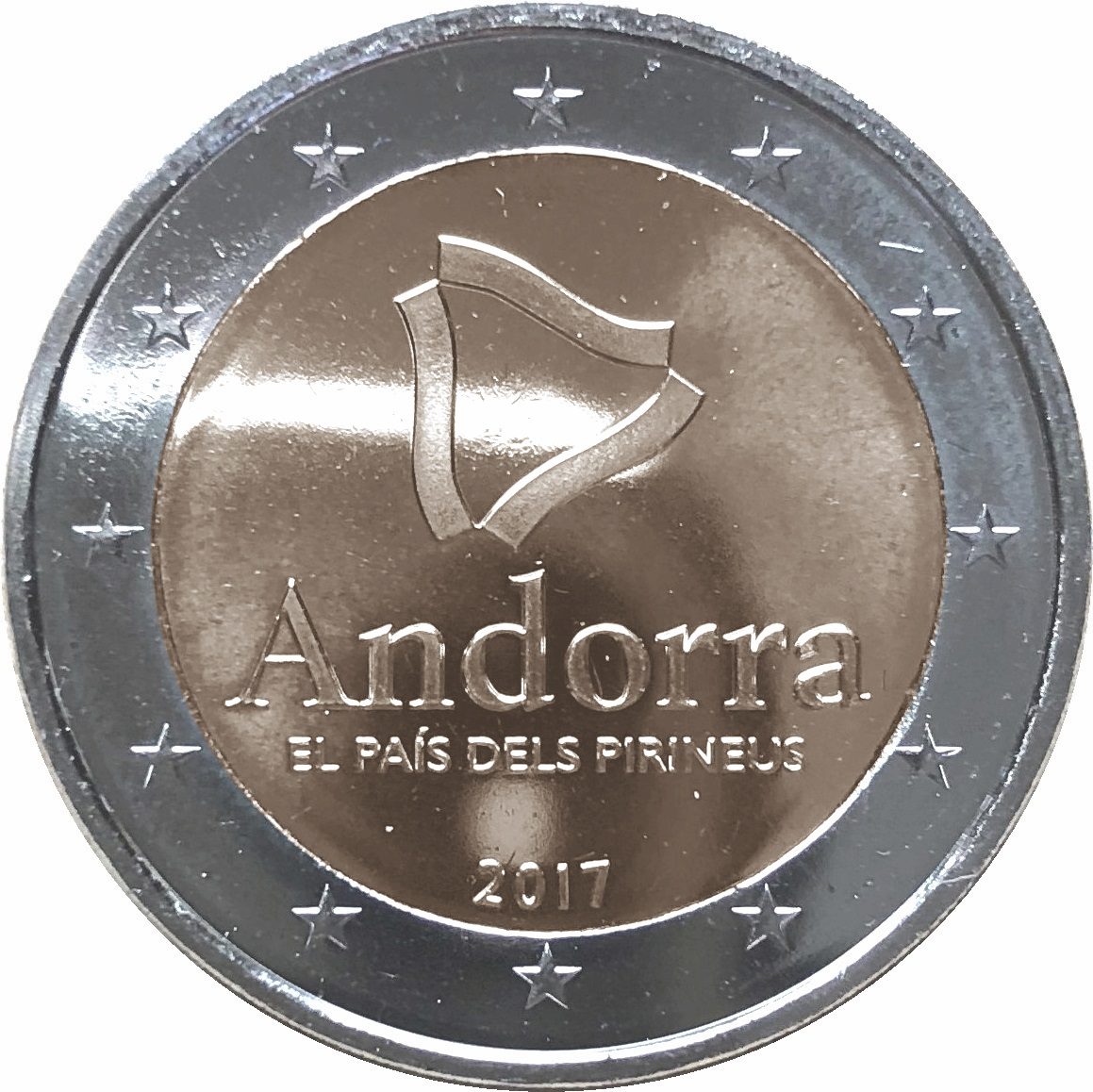
Same euro, different back. Andorran euro coins carry national designs on the reverse and are legal tender across the eurozone, exactly like a Spanish or Irish coin.
- The 2 euro coin carries the coat of arms of Andorra and the motto virtus unita fortior — strength united is stronger.
- The 1 euro coin shows Casa de la Vall, the old parliament house in the capital’s stone quarter.
- The 50, 20 and 10 cent coins show the Romanesque church of Santa Coloma with its distinctive round bell tower.
- The 1, 2 and 5 cent coins show a Pyrenean chamois and a bearded vulture.
An aside worth knowing, because it tells you something about the country’s relationship with Brussels: the original design for the middle coins included a Romanesque Christ Pantocrator from Sant Marti de la Cortinada. The European Commission objected on grounds of religious neutrality, and Andorra changed it. A microstate with two co-princes, one of them a bishop, quietly redesigning its coinage to satisfy an EU committee is a fairly good summary of how Andorran diplomacy works.
If you collect coins, the Andorran ones are worth hunting for in your change — mintages are small and they turn up far less often than the big-country designs. The government has sold coin sets directly in the past, though availability comes and goes.
Is Andorra in the eurozone? No, and it matters slightly
Andorra uses the euro but has no seat at the European Central Bank and no place in the Eurogroup. It is not an EU member either, which has real consequences for customs and shopping — we cover that properly in our explainer on Andorra’s strange status outside the EU.
For your holiday, the practical effects are small but not zero. Andorran banks sit outside EU banking supervision, so EU deposit-guarantee and consumer-payment rules do not automatically cover an account held here. And because Andorra is outside the EU customs and VAT territory, there are limits on what you can carry out — see the duty-free allowances you can legally take home before you fill the boot.
Andorra and SEPA: yes, since 2019
This one trips up a lot of older guidebooks, which still say Andorra sits outside the European payments system. It does not. Andorra joined the Single Euro Payments Area in 2019 — the Andorran Financial Authority published the accession decree in April that year, and the country’s credit institutions signed up to the SEPA schemes in March. Direct debits followed a couple of years later.
What that means in practice: an Andorran IBAN behaves like any other SEPA IBAN, so a euro transfer to a hotel, a ski school or a chalet company here should clear normally rather than being routed as an exotic international payment.
What it does not mean: Andorra is not in the EU or the EEA, so the EU rules that force banks to charge the same for a cross-border euro transfer as a domestic one do not apply to it. Some banks still price a transfer to Andorra as international and take a fee. If you are paying a large deposit — a season-long chalet, a car, a wedding venue — ask your bank what it will charge before you send, not after.
Cards versus cash: where each one actually wins
Andorra is a card country. Card payments are accepted across shops, hotels, restaurants, ski resorts and spas, and contactless is the default in the two towns where most visitors spend their money. In four days of shopping, eating and skiing you might never need a banknote.
Might. The gaps are real and they are specific.
Where cash still rules
- Guarded mountain refuges. Some now take cards; several have patchy signal and a card machine that works on a good day. If you are walking hut to hut, carry enough cash for meals and a bunk. Our guide to camping and mountain refuges in Andorra explains which huts are staffed and which are free shelters.
- Old village bars. The kind with four tables, a coffee machine older than you and a card terminal only if the owner’s daughter insisted. Common up the northern valleys and in the smaller parishes.
- Markets and street stalls, including the Christmas markets and the odd craft fair.
- Tips. A card tip is awkward here because most terminals do not prompt for one. Coins are how it is done.
- Some parking machines. Most take cards. Some do not, and the one you meet at 22:00 in the rain will be the one that does not.
- Toilets, lockers and vending at bus stations and lift bases.
My working rule: carry EUR 40–60 in cash for a town-based trip, and EUR 80–100 if you are heading into the mountains for the day or overnighting in a refuge. Include coins — a EUR 50 note in a village bar for one coffee is a small social crime.
How much cash to carry: my Andorra currency rule of thumb
Work out what you cannot pay for by card, add half again, and stop there. Andorra has ATMs everywhere in the valley floor towns, so hoarding cash achieves nothing except giving you leftover euros to lug home. There is no need to arrive with EUR 500 in an envelope.
The exception is a winter arrival at Pas de la Casa late on a Friday night, or a walking trip that starts from a trailhead at 07:00. In both cases the shops are shut, the machines you want are behind you, and cash you already have beats cash you have to find.
Mobile payments: Apple Pay and Google Pay
Both work. Andorran banks added support some years ago, and more to the point, the terminals here are ordinary contactless terminals — if your phone works in Barcelona it works in Andorra la Vella. I pay for most things with a phone here and it is genuinely rare to be refused.
Two caveats. Small independent places sometimes set a card minimum of a few euros, which is technically frowned upon but happens. And phone batteries die in the cold; if you are skiing all day at minus ten, keep a physical card in a zipped pocket as backup.
ATMs, banks and the fees nobody mentions
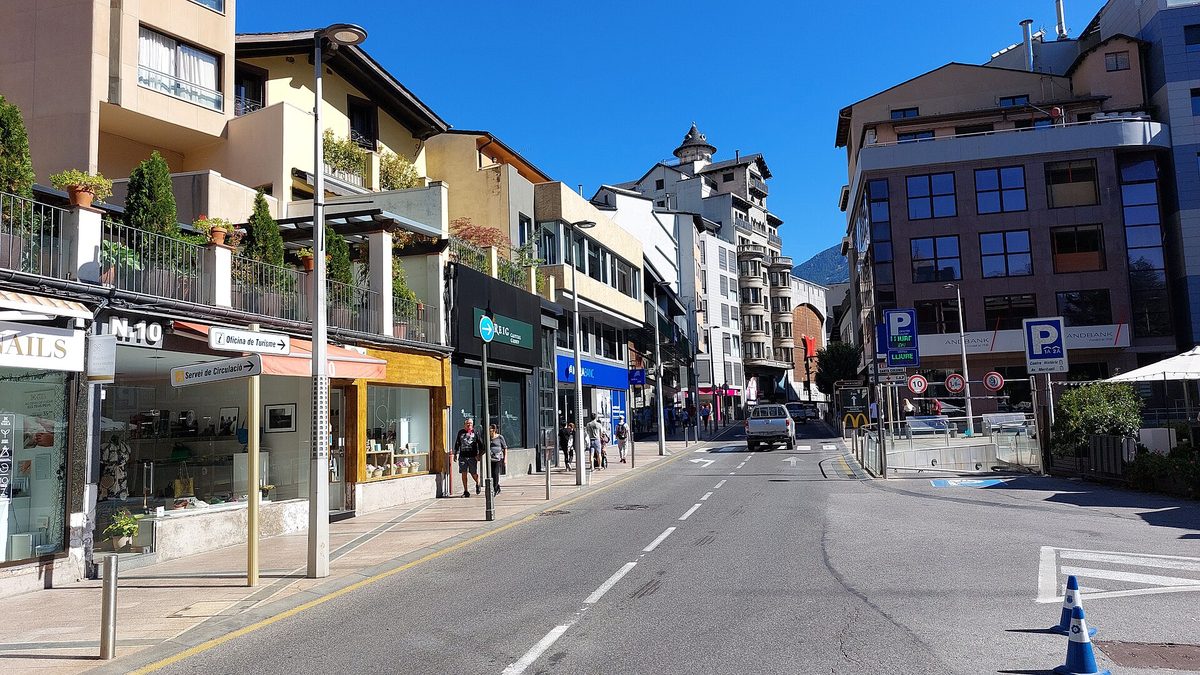
Andorra has three banks: Andbank, MoraBanc and Creand (formerly Credit Andorra). Between them they run branches and cash machines in every parish, from the capital out to the smaller villages. Branches keep normal Monday-to-Friday office hours and shut at weekends; the machines obviously do not.
All three accept the major international cards — Visa, Mastercard, and usually American Express — and their ATMs offer English alongside Catalan, Spanish and French.
What a withdrawal costs
Two separate charges can land on you, and travellers routinely confuse them.
The first is your own bank’s fee: a foreign-transaction or non-sterling cash fee, often a percentage with a minimum, plus sometimes a flat charge. That is between you and your bank, and it is the one you can plan around. A card that does not charge for foreign withdrawals is worth arranging before you come.
The second is the ATM operator’s fee, charged by the Andorran bank whose machine you are using. This is not standardised, it changes, and I am not going to quote you a figure that will be wrong by the time you read it. The machine has to tell you on screen before it dispenses. Read that screen. If the fee looks steep, cancel and try a different bank’s machine two streets away — in Andorra la Vella and Escaldes-Engordany you are never far from an alternative.
Practical advice: take fewer, larger withdrawals rather than five small ones, since flat fees hurt most on small amounts. And use machines attached to bank branches rather than standalone units in shopping arcades.
The dynamic currency conversion trap
This is the one that costs people real money, and it applies to both ATMs and shop terminals.
If your card is not a euro card, the machine will often offer to do the conversion for you: Would you like to be charged in GBP? with a helpfully displayed rate and a reassuring line about knowing exactly what you will pay. That is dynamic currency conversion, and the exchange rate baked into it is set by the terminal operator, not by your bank. It is typically several per cent worse than what your own card would have given you.
Always choose to be charged in euros. Every time, at every terminal, in every shop. Let your own bank do the conversion. On a EUR 600 electronics purchase — and people do buy electronics here, see our honest take on whether Andorran electronics prices are a real saving — the difference can be EUR 20 or more for pressing the wrong button.
Shop assistants will sometimes press it for you out of habit. It is fine to ask them to redo it in euros, and no one takes offence.
Should you bring euros in from Spain or France?
Only in the sense that you should have some euros on you already, which you probably will, because you have just driven or been bussed through Spain or France to get here. There is no airport, so you always arrive overland — see how to get to Andorra if you are still working out the route.
Do not make a special stop to change money before the border. Rates at motorway service stations and border-town exchange kiosks are worse than an Andorran ATM, and Andorran banks will exchange foreign currency at their branches if you genuinely arrive with dollars or sterling in cash. What you should not do is expect a shop to take foreign notes. They will not. The Andorra currency situation is refreshingly simple: the euro is the only money in general use here, and nothing else gets taken at a till.
Coming the other way, leftover euros are not a problem at all — you will spend them in Spain or France on the way out. There is no reason to convert anything back.
IGI, VAT and why the prices look low
Andorra does not have VAT. It has IGI — impost general indirecte — which does the same job at a general rate of 4.5%. Spain charges 21%. France charges 20%. That gap of roughly sixteen points is the entire commercial logic of the country, and it is why nine million people a year drive up a mountain valley to buy perfume and trainers.
There are other IGI bands. Basics such as food and books sit at a reduced rate, and financial and banking services carry a higher one. For a visitor, the number that matters is 4.5% on almost everything in a shop.
Prices displayed in Andorran shops already include IGI. What you see on the label is what you pay at the till, the same as in Spain or France.
Can tourists reclaim tax in Andorra? No
This is the most common misunderstanding I hear, usually from people who have done tax-free shopping in Milan or Madrid and assume Andorra is the same but better.
It is not. Andorra operates no tax-free refund scheme for visitors. There is no form to stamp, no refund desk at the border, no kiosk in the shopping centre. The reason is straightforward: the EU tax-free system exists so that non-EU residents can reclaim EU VAT on goods they export. Andorra is outside the EU VAT area entirely, so its IGI has nothing to do with that system, and 4.5% is already low enough that a refund industry would be pointless.
The saving is built into the price rather than handed back afterwards. Which is arguably better — you get it immediately and you do not queue at an airport you were never going to visit.
Two related points worth having straight. First, the refund traffic runs the other way: Andorran residents can reclaim Spanish or French VAT on purchases made across the border, because from Spain’s point of view they are non-EU residents exporting goods. Second, the real limit on your shopping is not tax but customs. Each adult leaving for Spain or France has an allowance — roughly EUR 900 of general goods, with tighter limits on tobacco and alcohol — and the border posts do check. Our guides to what actually happens at the Andorran border and alcohol and cigarette prices explain where the queues come from.
If your trip is built around shopping, read our honest price comparison against Spain and France first. Some categories are a genuine 20–30% saving. Some are barely cheaper than a sale at home, and the drive costs you a day.
Tipping in Andorra: what is actually expected
Very little. Andorra follows Catalan and French norms rather than American ones, and nobody’s wage depends on your generosity. Service is a job that pays a wage.
That said, tipping in Andorra is appreciated when the service deserves it, and rounding up is close to universal among locals. Here is how I handle each situation.
Restaurants
Look at the bill. Many places include service. If they do, you owe nothing more — leaving the coins from your change is plenty. For a good meal where you were properly looked after, 5–10% is generous by local standards and will be received as such. On a EUR 60 dinner for two, leaving EUR 65 is a normal, well-received gesture.
At a menu del dia lunch — the fixed-price weekday menu that is the best value in the country — rounding to the next euro or two is standard. See where to eat in Andorra la Vella for the places worth your euros in the first place.
Bars and cafes
Leave the coins. A coffee at around EUR 1.50–2 gets the small change; a round of beers might get a euro. Nobody counts, and nobody minds if you leave nothing. Standing at the bar rather than sitting on the terrace is usually cheaper too, exactly as in Spain.
Taxis
Round up to the next euro or two. Andorran taxis are metered and not cheap, and drivers do not expect a percentage. If someone helps you wrestle three ski bags out of the boot in a snowstorm, a couple of euros extra is fair.
Ski instructors
Not expected, and plenty of people tip nothing. If your instructor got a nervous child skiing independently across a week of lessons, a tip at the end of the course — think in the range of EUR 10–20 for a group course, more for a private week — is a kind gesture rather than an obligation. Hand it over in an envelope or with a card on the last day, not day by day. Our guide to learning to ski in Andorra covers what those lessons cost in the first place.
Hotels and spas
Housekeeping tips are not a local custom; if you want to leave something after several nights, a few euros on the last morning is fine. Porters get a euro or two per bag if they carry them. At Caldea and the other thermal spas, treatment therapists are not tipped as a matter of course — a thank you is the norm.
Guides, ski schools and drivers
Mountain guides on a full-day via ferrata or a summit day are the one group where a tip is reasonably common among visitors, again in the EUR 10–20 range per group for a good day. Airport transfer drivers on the long run from Barcelona get rounding up rather than a percentage.
The one place I would actively encourage a tip is a busy apres-ski bar where one person is serving forty people and still remembers your order. See our apres-ski guide for where those bars are.
Paying for the big-ticket items
Most of a trip’s cost sits in four or five transactions. Here is how each of them works on the ground.
Ski passes and lift tickets
Buy online, in advance, with a card. Every Andorran resort sells passes through its own website, prices are usually a little lower than at the window, and you skip the ticket queue on the first morning — which in Grandvalira on a Saturday in February is not a small win.
You will be issued a reusable contactless keycard. Expect a small deposit on the physical card, refundable when you hand it back, and keep the card between trips because most resorts let you reload the same one online. Check the current terms when you buy, since deposits and reload rules change from season to season. Our guide to Andorra ski pass prices and how to pay less goes through the multi-day and multi-resort options.
Once you are on the mountain, restaurants, ski schools and rental shops all take cards. Cash is only useful for a coffee at a small mountain bar and for the odd vending machine.
Caldea, spas and attractions
Book online by card. At Caldea you are given a wristband on entry; drinks, treatments and lockers get charged to it and you settle the total on the way out, again by card. It is a civilised system and also a slightly dangerous one, because a cocktail in the lagoon does not feel like spending money at the time. Our breakdown of Caldea prices and every way to pay less is worth ten minutes before you book.
Tolls, tunnels and parking
Andorra has one toll you are likely to meet: the Envalira road tunnel, which cuts under the pass on the French side near Pas de la Casa. It costs somewhere around EUR 8 for a car one way at current rates, paid at a staffed booth. Cards including contactless are accepted, and so is cash. When the Port d’Envalira pass above it closes for weather, the tunnel is normally opened free of charge — check before you rely on it.
Town parking is mostly underground and mostly paid. Machines in the main car parks in Andorra la Vella and Escaldes-Engordany take cards, and rates are low by European capital standards. Smaller village car parks and some ski-base overflow lots run on coins or on nothing at all. Free parking exists at several lift bases in winter but fills early. Our driving guide covers routes, winter tyre rules and where the traffic actually jams.
Fuel is one of the country’s genuine bargains, usually well below Spanish and French prices, and every station takes cards. Filling up before you leave is standard practice for anyone driving home.
Buses, taxis and transfers
National bus fares within Andorra are cheap — a few euros for most journeys along the valley. Drivers take cash, and small notes and coins make life easier for everyone. Cross-border coaches from Barcelona and Toulouse are booked online by card in advance, which you should do anyway in ski season because they sell out.
What a day in Andorra actually costs
Numbers first, caveats after. These are rough per-person daily bands from my own trips, excluding accommodation and excluding getting here.
| Style of trip | Rough daily spend per person |
|---|---|
| Hiking, self-catering, picnic lunches | Around EUR 25–40 |
| Sightseeing, one restaurant meal a day | Around EUR 60–90 |
| Skiing: lift pass, mountain lunch, a beer | Around EUR 90–140 |
| Skiing with rental and a lesson | Around EUR 150–220 |
| Spa day at Caldea plus dinner out | Around EUR 90–130 |
The individual pieces that make those numbers up, all approximate and all moving: coffee EUR 1.50–2, a beer EUR 3–4.50, a weekday menu del dia EUR 15–22, a mountain-restaurant lunch EUR 20–30, a proper dinner EUR 30–45 a head, a day lift pass in high season around EUR 60–70.
Andorra is cheaper than the French and Swiss Alps for skiing and cheaper than Barcelona for petrol, alcohol, tobacco and perfume. It is not cheap for hotels in February, and it is not cheap for a taxi. Accommodation is the lever that moves your budget most — a self-catering aparthotel in Encamp or Sant Julia de Loria against a ski-in hotel in Soldeu is a difference of hundreds across a week.
Six money mistakes I see visitors make
Pressing the button for their home currency. Covered above, and still the most expensive click of the trip. Always pay in euros.
Bringing a wad of cash from home. Unnecessary, and you will carry most of it back. Andorra currency is the euro, and there are cash machines on every second corner in the valley towns.
Assuming a refund at the border. There is no tax-free desk. The 4.5% is already in the price.
Not telling their bank they are going. Andorra is a small, unfamiliar country code to a fraud-detection algorithm. A card blocked at the supermarket till on day one is a miserable start, and some banks still list Andorra separately from Spain and France in travel notifications.
Carrying one card. Two cards from two different networks, kept in two different places, is the single best piece of travel money advice for anywhere. It applies double in a country where a lost wallet means a mountain drive to a consulate in another nation.
Ignoring cash for the mountains. The day you decide to walk to a refuge for lunch is the day the card machine there is out of coverage.
Frequently asked questions
What currency does Andorra use?
The euro. Andorra has used it since 2002 and it became the official currency in law under a monetary agreement with the EU that took effect in 2012. Andorra also mints its own euro coins, which entered circulation in January 2015 and are valid anywhere in the eurozone. Most Andorra currency questions end right there: no other money is accepted in shops.
Can I use euros from Spain or France in Andorra?
Yes, without any difference at all. Euro notes and coins from any issuing country work identically here, and Andorran coins work identically in Spain and France. Since you can only reach Andorra by road through one of those two countries, you will almost certainly arrive with euros already in your pocket.
Do I need cash in Andorra?
Not much, but not none. Cards and phone payments cover shops, hotels, restaurants, ski resorts and spas. Keep EUR 40–60 for mountain refuges, small village bars, market stalls, tips and the occasional coin-only parking machine. Take more if you are heading into the high valleys for the day.
Do ATMs in Andorra charge fees?
They can. Two charges are possible: your own bank’s foreign withdrawal fee, and an operator fee from the Andorran bank running the machine. The screen must show the operator fee before it dispenses, so read it and cancel if it looks steep — another bank’s machine is rarely more than a few streets away.
Is tipping in Andorra expected?
No. Service is often included and staff are paid a wage. Rounding up is the local habit, and 5–10% marks a genuinely good meal. Taxis get rounding up, ski instructors and mountain guides get an optional EUR 10–20 at the end of a course, and nobody will chase you down the street if you leave nothing.
Can tourists claim a tax refund in Andorra?
No. Andorra runs no tax-free refund scheme, because it sits outside the EU VAT area and its own sales tax, IGI, is only 4.5% at the general rate. The saving is already inside the shelf price. Your practical limit on shopping is the customs allowance when you cross back into Spain or France.
Is Andorra in SEPA?
Yes. Andorra joined the Single Euro Payments Area in 2019, so euro transfers to and from Andorran accounts run on the standard SEPA rails. Because the country is outside the EU and the EEA, though, the EU rules that equalise charges on cross-border euro payments do not cover it — your bank may still apply an international transfer fee.
Do card payments work at Andorra’s ski resorts?
Yes, throughout. Lift passes, ski schools, rental shops and mountain restaurants all take cards, and passes are cheaper bought online in advance. Carry a small amount of cash anyway for a coffee at a remote mountain bar, a locker or a vending machine.
Related reading: work out the practicalities of moving around in getting around Andorra without a car, cut the biggest line in your budget with our guide to cheap stays, hostels and aparthotels, and learn the handful of Catalan words that help at a till in what language is spoken in Andorra.
Photo credits
All photographs are from Wikimedia Commons under their stated licences, with thanks to the photographers: