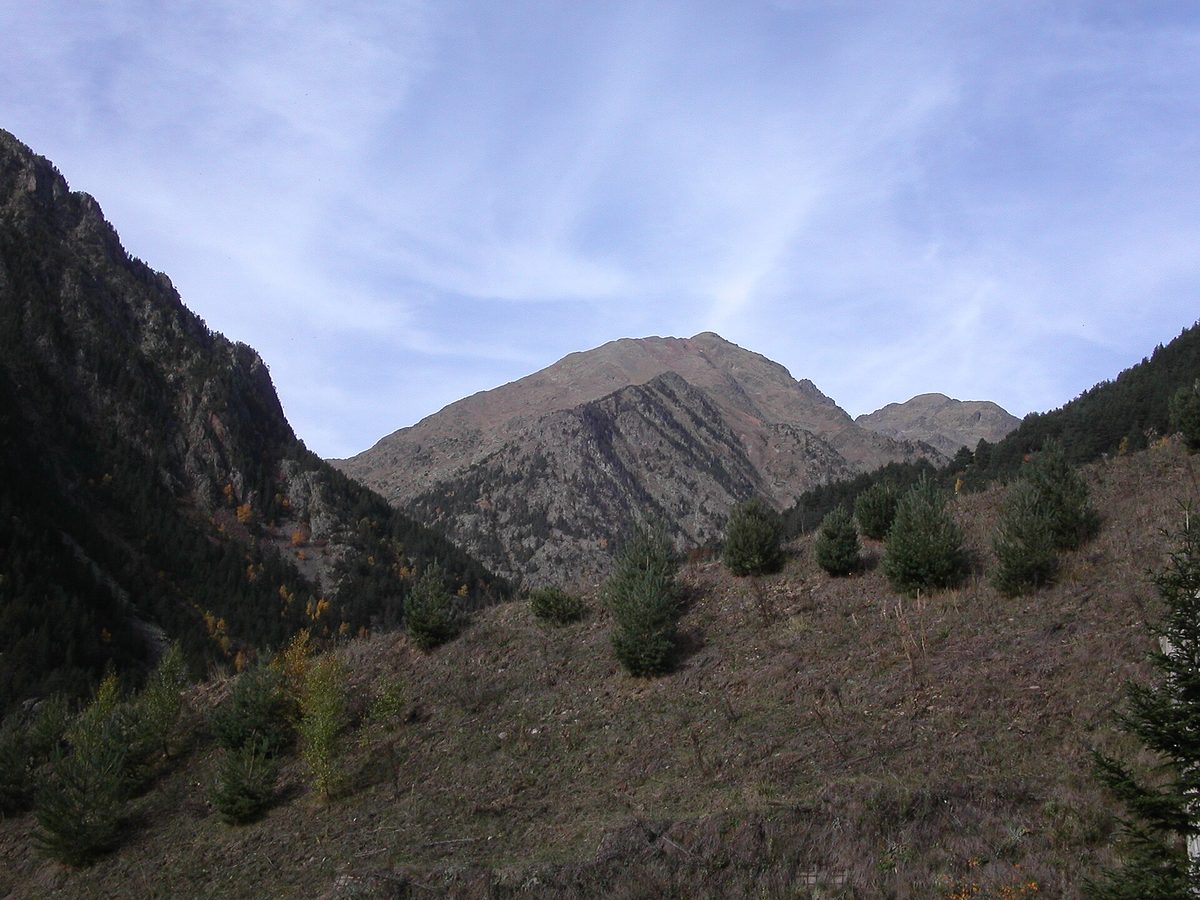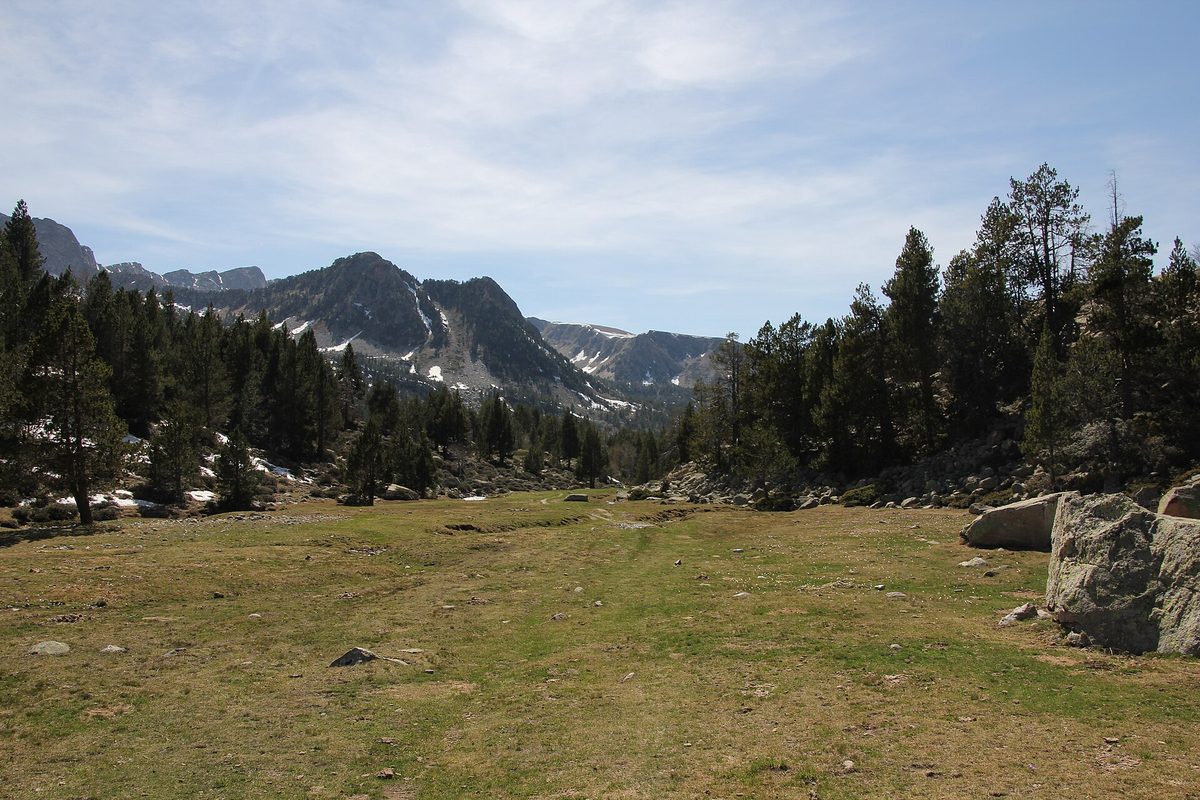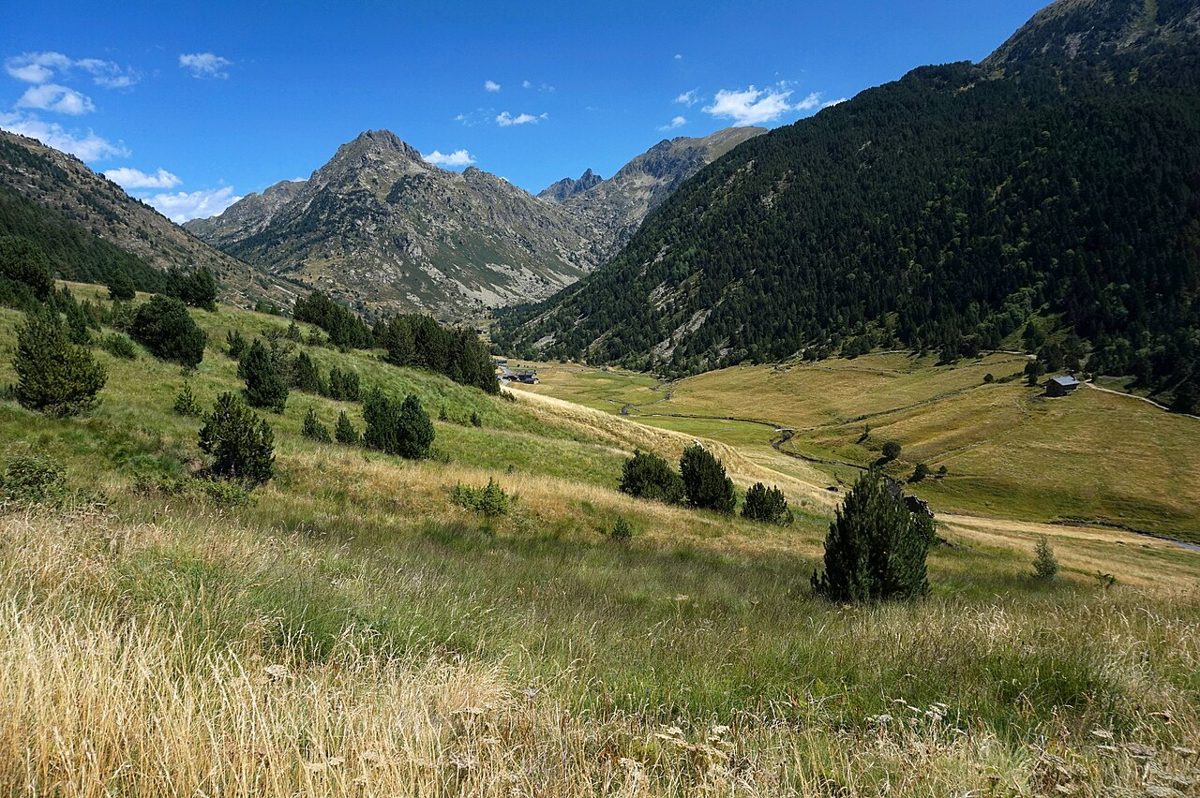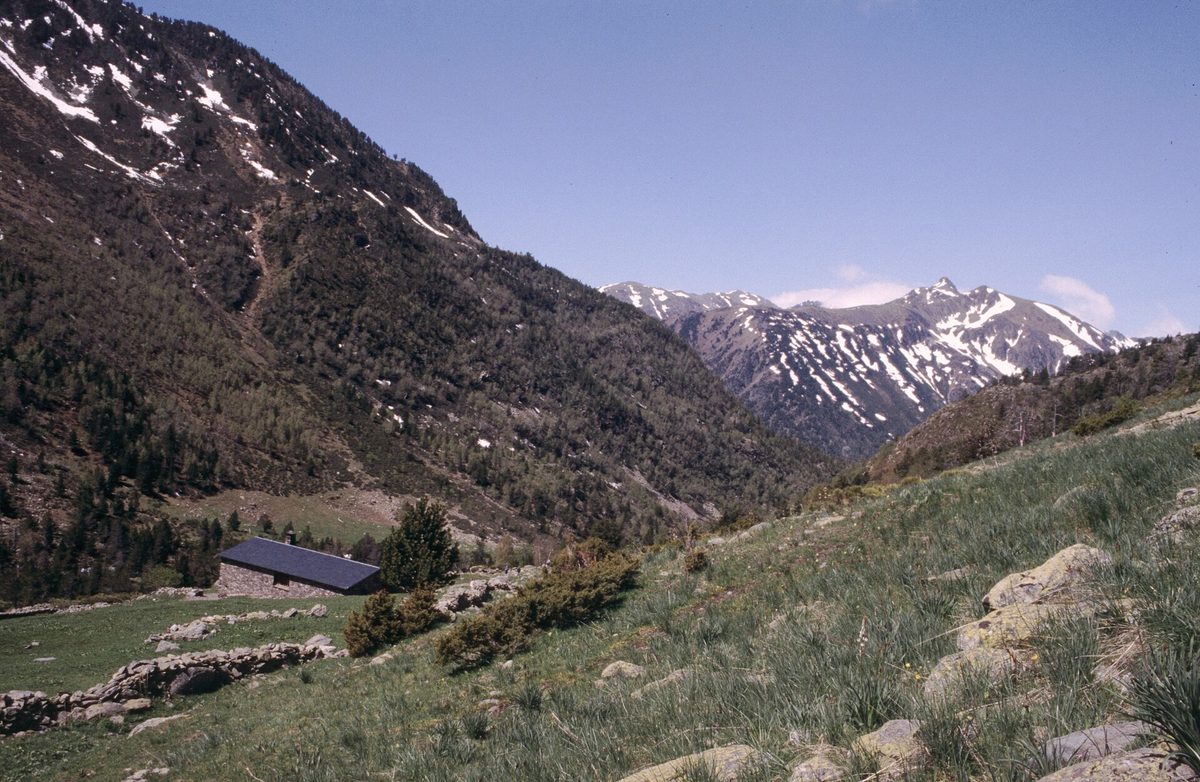
I had Sorteny’s meadows to myself on a Tuesday in early July, which still strikes me as an absurd thing to be able to say about a valley twenty minutes’ drive from a ski resort. There were marsh orchids in the wet ground beside the path, a marmot shrieking somewhere above the birches, and not another walker until the refuge. Andorra gets four times its population in visitors most summer weekends. Almost none of them come here.
This guide covers Sorteny Valley in the parish of Ordino: the botanic garden, the easy valley walks, the lake, the 2,900 m peaks, wildflower timing, the seasonal bus and the refuge. It is written for walkers who want a full day in real mountains without crowds, and for anyone curious about plants.
Last updated: September 2026. Opening dates, parking charges and bus timetables change from season to season — check the park and Ordino comú sites before you drive up.
Sorteny at a glance
| Detail | What to expect |
|---|---|
| Where | Parish of Ordino, northern Andorra, up the road past El Serrat |
| Protected since | 1999 as a nature park; the parish is now a UNESCO Biosphere Reserve |
| Size | Around 1,080 hectares |
| Plants | Over 800 species recorded, roughly 70 of them endemic to the Pyrenees |
| Botanic garden | Around 300 labelled species near the valley entrance, free to walk through |
| Car park | Around 1,800 m, with an information hut staffed in summer |
| Refuge | Refugi Borda de Sorteny, roughly 1,970 m, about 30 minutes’ walk from the car park |
| High point | Pic de l’Estanyó, 2,915 m — Andorra’s second-highest summit |
| Best months | Late June to early August for flowers; September for quiet, colour and stable weather |
| Costs | Entry free; parking around EUR 4 in peak summer daytime; seasonal shuttle bus a token fare |
Why this valley is different from everywhere else in Andorra
Andorra has a lot of beautiful valleys. What Sorteny has that the others do not is botany, and I mean that as a genuine draw rather than a consolation prize.
The valley is glacial in shape — a broad U with a flat floor and steep sides — and it sits on a mix of underlying rock and drainage conditions that produces an unusual number of small, distinct habitats in a small area. Peat bog, wet meadow, dry south-facing slope, birch wood, pine wood, scree, snow-patch hollow. Each one grows a different community of plants. Add them together and you get more than 800 recorded species inside about 1,080 hectares, which is a density of plant life that specialists travel a long way for.
Roughly seventy of those species are Pyrenean endemics — they exist here and in the neighbouring ranges and nowhere else on earth. You will not identify them all. You do not need to. What you notice, walking up the valley floor in the first fortnight of July, is simply that the meadow is not green. It is yellow and purple and white and pink, in bands, changing every fifty metres as the ground gets wetter or drier.
Protected, but not fenced off
The park was declared in 1999. In practice, protection here means marked paths, no camping outside designated spots, no picking, no drones and no dogs off the lead — not turnstiles and ticket booths. There is no entrance fee and no gate. You drive to the car park, read the boards at the information hut, and walk.
The parish of Ordino as a whole carries UNESCO Biosphere Reserve status, which is a designation about living landscapes rather than a museum-piece wilderness. Cattle and horses still graze the upper valley in summer. You will meet them. They are used to people and entirely uninterested in you.
Where the nature centre actually is
A thing that catches people out: the park’s interpretation centre is not in the valley. It sits down in the village of La Cortinada, on the main road below Ordino, in a restored building with displays on the park’s geology and species. The valley itself has only a small information booth at the car park, open in the summer months.
If it is raining, or if you have young children who will not last a day on the hill, La Cortinada is a decent half-hour stop and pairs well with a wander round the stone villages of the Valira del Nord. If the weather is good, skip it and go straight up.
The botanic garden: fifteen minutes that improve the whole day
The Jardí Botànic de Sorteny sits close to the valley entrance, a compact set of beds and gravel paths holding around 300 species arranged by habitat rather than by family. Bog plants together, scree plants together, meadow plants together. Everything is labelled in Catalan with the scientific name alongside.
I am not, by nature, a botanic garden person. I still think this one is the single most useful fifteen minutes you can spend in the valley, for a simple reason: it teaches you what to look for before you are looking at it. Walk the garden first, learn to recognise three or four things — the gentians, the ramonda if it is in flower, the sedums on the dry banks — and the rest of the day changes character. You stop seeing “flowers” and start seeing species.
It takes fifteen to thirty minutes at a normal pace, longer if you are the sort who reads every label. It is free. It is also the one part of the park that works in poor weather and with a pushchair, which makes it a reasonable fallback on a wet day if you happen to be in the north of the country anyway.
One honest caveat: outside roughly late June to early September there is not a great deal in flower, and in October you are looking at seed heads and labels. Time it right or skip it.
Sorteny valley hiking: every route, ranked by effort
The trail network here is genuinely good — much better signposted than the raw visitor numbers would suggest. Everything below starts from the same car park, which makes planning simple: you can commit to a peak, get halfway, feel the weather turn, and come down without having stranded yourself.
These are the routes worth your time, easiest first.
Valley floor to Refugi Borda de Sorteny (easy, about 1 hour return)
The main path leaves from the information booth and runs east up the valley, climbing gently for about 1.5 km to the staffed refuge at roughly 1,970 m. Reckon on 30 minutes up, a bit less down. The ascent is somewhere around 150 m and the surface is good.
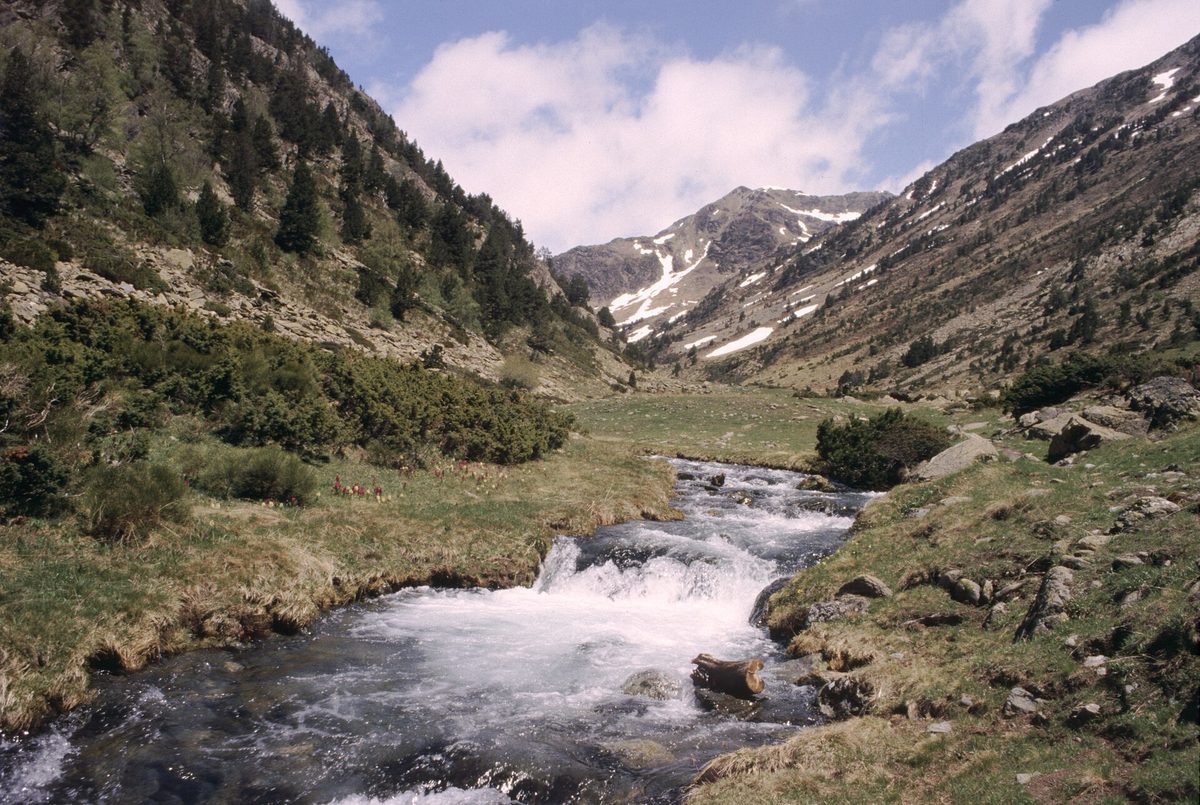
This is the walk to do if you have limited time, limited legs, or small children. It is also the best flower walk in the park, because the meadows either side of the lower path are exactly the wet, sunny, grazed ground that the orchids and the taller herbs like. On a July morning I would rather do this 1.5 km slowly, sitting down twice, than march up a peak.
The refuge has a terrace, a restaurant serving mountain food, and — crucially for anyone doing this as the whole outing — a reason to stop that is not just a signpost. A beer on that terrace with the ridge above you is a perfectly respectable summit substitute.
Grau de la Llosa viewpoint (easy-moderate, about 1.5 hours return)
A short marked circuit of roughly 4 km climbs the valley side to a viewpoint over the whole basin. Allow around an hour and a half at a steady pace, plus stops. The gradient is real but never severe, and the payoff is the view most people take home: the flat green valley floor from above, with the peaks stacked behind it.
Choose this over the refuge walk if you want a proper short hike rather than a stroll, and you are not committing to a big day.
Estany de l’Estanyó (moderate, 4–5 hours return)
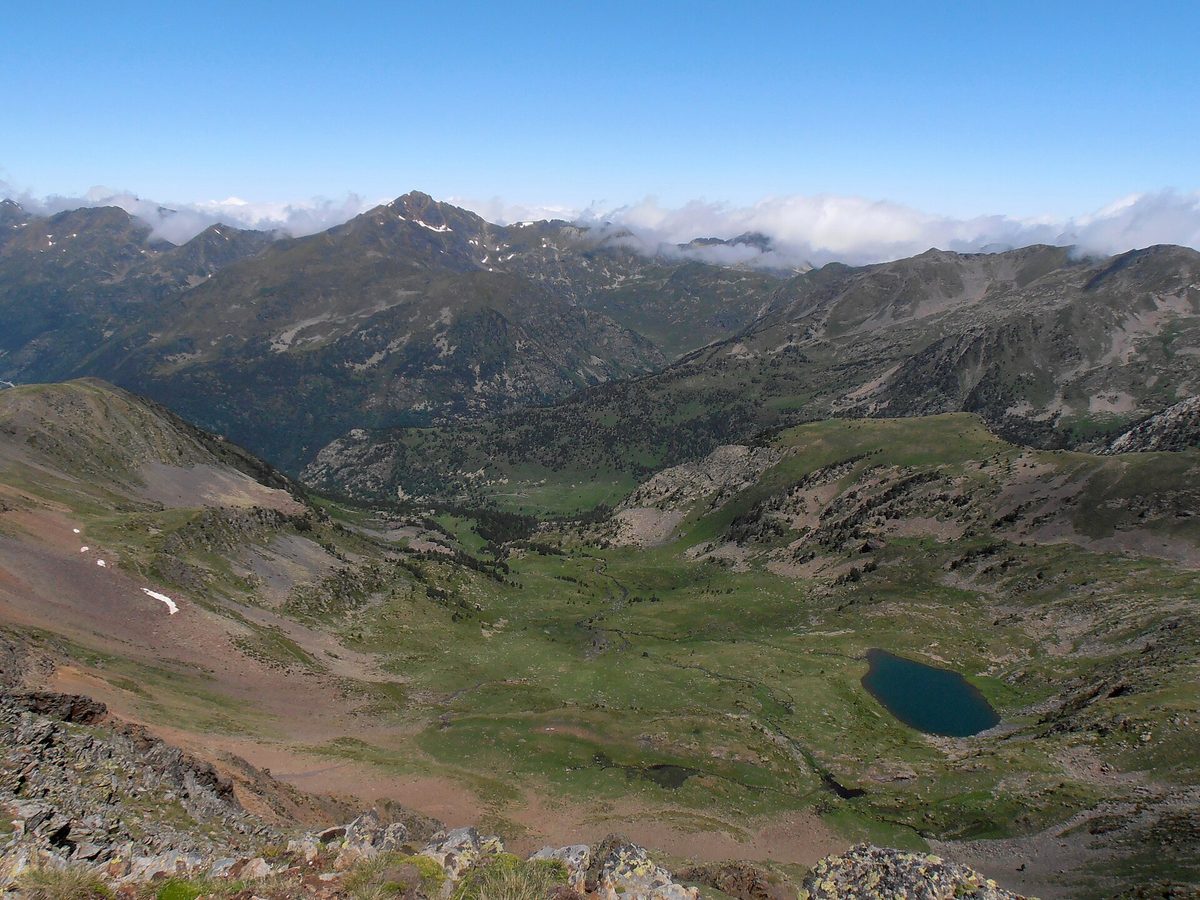
The lake sits at about 2,339 m in a hollow below the summit ridge, and it is the best mid-length objective in the valley. From the car park you follow the main path past the refuge, then bear north-east up the Estanyó stream, gaining something like 550 m from the refuge and around 700 m overall.
Give it four to five hours return with a decent lunch stop. The final section crosses open ground where the path is clear but the footing is loose in places. In early July there can still be old snow in the shaded hollows near the lake — nothing needing an axe, but enough to make the last 200 m slower than you planned.
What I like about this one is the transition. You start in birch and pine, cross flower meadow, then rise out of the vegetation entirely into rock and water. That whole sequence in three hours of walking is the argument for Sorteny in a nutshell.
Pic de l’Estanyó, 2,915 m (hard, 6–8 hours return)
Andorra’s second-highest summit, and a serious but non-technical day. The standard route is roughly 11–12 km return from the car park with around 1,100 m of ascent, which most reasonably fit walkers do in six to eight hours including breaks.
It is a walk, not a climb — no hands required on the normal line — but 1,100 m is 1,100 m, and the upper section is stony and exposed to weather. From the top you look down onto the lake you passed, across to Coma Pedrosa in the west, and out over an unreasonable amount of the Pyrenees.
If you are choosing between this and the ascent of Coma Pedrosa, Andorra’s actual highest point, I would give the edge to Coma Pedrosa for the summit itself and to Estanyó for the approach. Estanyó is the more pleasant walk; Coma Pedrosa is the bigger tick.
Pic de la Serrera, 2,913 m (hard, 6–8 hours return)
Two metres lower than Estanyó and, from the Sorteny side, a gentler proposition. The path runs north from the refuge and climbs steadily for something over four kilometres to the summit, with a similar 1,100 m of ascent but less of the loose, awkward ground.
Serrera sits on the French border. Standing on it, you are looking straight down into the Ariège, and the contrast is instructive: Andorra behind you, all roads and villages and ski infrastructure; France in front, a great deal of nothing.
The three-peaks circuit (very hard, 9–10 hours)
Serrera, Cabaneta (about 2,862 m) and Estanyó in a single loop is the big day here — roughly 17 to 20 km depending on the variant, with over 1,500 m of cumulative ascent and nine to ten hours of walking. The ridge between Serrera and Cabaneta is rocky with drops on both sides, and the final pull onto Cabaneta is steep with loose ground underfoot.
Do not attempt it as your first day in Andorra, and do not attempt it if you are unhappy on exposed ridges. Start before seven. Carry more water than feels sensible, because there is none on the ridges. And if you use the longer variant that drops onto the French side, be aware that the path there is faint to nonexistent in places — take a GPS track, not just optimism.
Rialb valley and the free shelter (easy, 1 hour return)
From the northern end of the car park, a separate path follows the Riu de Rialb about 2 km up a side valley to Refugi de Rialb, a small unstaffed shelter with a handful of bunks and a fireplace. No toilet, no water supply, no warden, no charge.
As a walk it is short, pretty and almost always empty — most people take the main path east and never notice this one exists. As a base it is the cheapest way to get two full days in the park, if you are equipped for basic mountain shelters and prepared to find it occupied.
When the flowers actually happen
Wildflower timing in the Pyrenees is altitude-dependent and snow-dependent, so any calendar is approximate. That said, here is what I would plan around.
Late May to mid-June. The valley floor greens up and the first meadow species appear, but the upper valley is often still holding snow and the botanic garden is barely started. Good for solitude, thin on flowers.
Late June to mid-July. The peak, and it is not close. Meadow orchids, gentians, the whole wet-ground community, and the garden at its fullest. This is the fortnight to book if flowers are the point of the trip.
Late July to August. Still colourful, but the show moves uphill as the lower meadows go over and get grazed. The high scree and snow-hollow species come into their own. August also brings Andorra’s busiest weeks, though even at its worst Sorteny is quiet by national standards.
September. My favourite month here and, I would argue, the best month for hiking in Andorra generally. Flowers are largely done, but the air is clear, the thunderstorm risk drops, the birches start turning, and the valley empties out completely once schools go back.
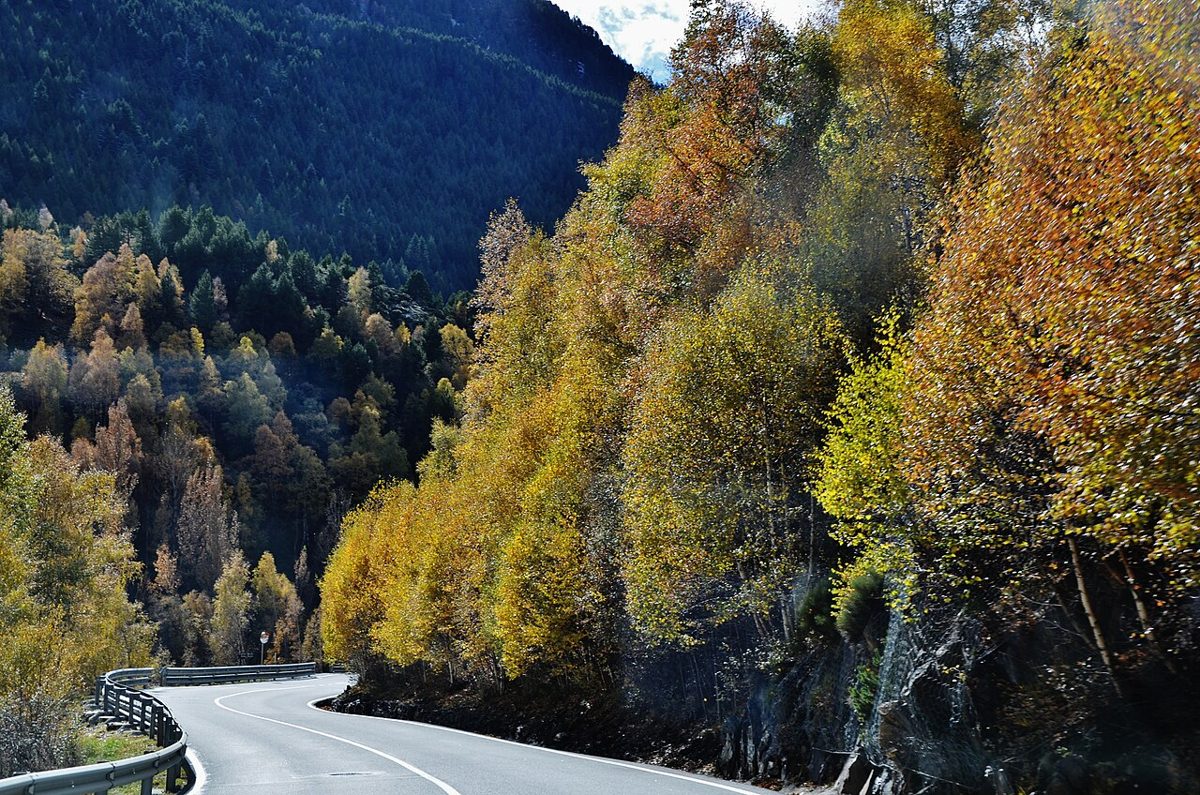
October. The birch and aspen colour is excellent, the refuge is winding down, and the first snow can arrive on the tops at any point. Beautiful, but check conditions. The wider case for autumn in Andorra is strong if you do not need alpine flowers.
November to May. The road may be gated or unploughed beyond a point, the botanic garden is under snow, and Sorteny becomes a snowshoe and ski-touring venue rather than a walking one. Lovely, but a different trip entirely, and one requiring avalanche awareness.
What you will see moving, not just growing
Sorteny is a genuinely good wildlife valley by western European standards, mostly because nobody is here.
Marmots are the reliable one. You will hear the alarm whistle long before you see anything; scan the boulder fields on the valley sides and you will usually find one sitting up. Chamois — izard, locally — work the upper slopes and are most likely early in the morning or in the last two hours of light. Roe deer favour the birch woods lower down.
Birds worth knowing: griffon and bearded vultures cruise the ridges, black woodpeckers hammer in the pine, and the small stuff in the birch scrub includes bullfinches and crested tits. In the streams, if you look carefully in the shallows, there are Pyrenean brook salamanders — small, dark, easy to miss and legally protected, so look and do not lift stones.
Butterflies deserve a mention, because a flower-rich valley is a butterfly-rich valley. On a warm July afternoon on the lower meadows the numbers are remarkable, including several Pyrenean specialities.
Getting to Sorteny
By car
From Andorra la Vella, head north up the CG-3 through Ordino and La Cortinada to El Serrat. Roughly 1.4 km beyond El Serrat there is a signed junction on the right for the park; a narrow secondary road climbs from there to the car park. Allow around 35–40 minutes from the capital in normal traffic, more on a summer Saturday.
The access road is paved but narrow with tight bends. It is fine in a normal hire car and unpleasant in anything wide. Take it slowly and expect to reverse for a van at least once.
Parking is free for most of the year. In peak summer, during daytime hours, there is usually a modest charge — around EUR 4 for a car when I last paid it, less for motorbikes. Rates and dates change, so treat that as a ballpark rather than a promise. The car park fills by mid-morning on August weekends; before nine or after four you will find space.
If you are working out the practicalities of a car at all, the rest of our advice on driving to Andorra covers borders, fuel, mountain roads and winter tyre rules in more detail.
By bus
This is the part people do not expect. In high summer — broadly July to the first weekend of September — a small shuttle runs between El Serrat and the Sorteny car park through the day, roughly every half hour, for a nominal fare of a few cents. It exists to keep cars off that narrow road, and it works.
To use it, take the national bus from Andorra la Vella to Ordino and on to El Serrat, then change to the shuttle. It turns Sorteny into a genuinely car-free day out, which is rare in Andorra. Timetables shift year to year and the shuttle season is short, so confirm before you build a day around it.
Where to base yourself
Ordino village is the obvious base: ten minutes down the valley, good restaurants, and pleasant in its own right. El Serrat is closer still and much smaller. Both are covered in our guide to where to stay in Andorra.
Staying down in the capital works fine too — it is only forty minutes — but you will spend the drive wishing you had woken up in the north.
Sleeping in the park
Refugi Borda de Sorteny is a staffed refuge at roughly 1,970 m with dormitory rooms, showers, a restaurant and a terrace, sleeping somewhere around fifty people. It opens for a summer season running from about June into October, and again in winter for ski tourers, typically on reduced days. Expect a bunk to cost somewhere in the region of EUR 20, with dinner and breakfast extra — figure on roughly EUR 45–55 for half board, and check current rates when you book.
Book ahead. It is not a big building, and in August it fills.
The unstaffed Refugi de Rialb, two kilometres up the side valley, is free and first-come-first-served with about six places. Andorra’s convention is that you may pitch a small tent beside a shelter if it is full, and take it down in the morning — the rules on wild camping are stricter than in Scotland and looser than in Spain, and our page on camping in Andorra sets out what is actually permitted.
Staying up here changes the valley. Sorteny at seven in the morning, with mist coming off the meadow and nobody in it, is a different place from Sorteny at noon.
What to bring, and what it costs
For the valley walk and the botanic garden: trainers are survivable, walking shoes better, and a rain layer regardless of the forecast. That is it.
For the lake or a peak: proper boots, poles if your knees have opinions, two litres of water minimum, a warm layer and a waterproof, sun protection, and food. Summer afternoon thunderstorms are the real hazard in these mountains — they build fast from about two o’clock and you do not want to be on a ridge when one arrives. Start early and be off the tops by mid-afternoon.
Phone signal is patchy in the upper valley and absent in the Rialb side valley. Download an offline map. The waymarking is good on the main routes and thins out considerably once you leave them.
On money: the park itself costs nothing beyond parking. A day here — parking, a sandwich, a beer at the refuge — comes in well under EUR 30 for two people, which makes it one of the better-value days in an expensive small country. Almost everything you do here is free.
Mistakes I see people make here
Arriving in the middle of August at eleven o’clock and finding the car park full, then driving back down that narrow road in a temper. Come early or take the shuttle.
Underestimating the peaks. Estanyó and Serrera look benign from the valley floor. They are 1,100 m of ascent at altitude, and people set off at ten in trainers with a half-litre of water fairly regularly.
Treating the botanic garden as the attraction and the valley as the car park. It is the other way round.
Coming in late May expecting flowers. The photographs that sell this valley were taken in a specific three-week window and the internet does not label them with dates.
Bringing a dog off the lead. Livestock graze here, wildlife is the point of the place, and the rules are enforced.
How Sorteny compares with Andorra’s other walking valleys
Andorra packs an implausible number of good valleys into 468 square kilometres, and they are not interchangeable. A rough guide to choosing:
Come to Sorteny for flowers, quiet and a genuine nature-park feel with easy trail access. It is the botanist’s valley and the solitude-seeker’s valley.
Choose the Madriu-Perafita-Claror valley instead if you want the UNESCO World Heritage cultural landscape, no road access at all, and a bigger multi-day feel. It is wilder and harder to reach.
Choose the Tristaina lakes circuit if you want three alpine lakes in three hours with a chairlift doing the climbing for you — the highest reward-to-effort ratio in the country, and correspondingly busier. It pairs naturally with the Ordino Arcalís area just over the ridge from Sorteny.
Choose the Vall d’Incles for a wide, gentle, family-friendly valley floor in the east, or Lake Engolasters for a flat lakeside loop twenty minutes from the capital. Neither will give you Sorteny’s flora.
And if you are stitching together a day rather than a whole trip, the Roc del Quer viewing platform just above Canillo, which takes twenty minutes and is a good bolt-on to a Sorteny morning.
Is Sorteny good with children?
Yes, with the right expectations. The botanic garden plus the walk to the refuge and back is close to ideal for children of about six upwards: 3 km total, gentle, a proper mountain hut at the far end with food, and marmots to listen for. Younger children manage it in a carrier easily enough.
The lake is too much for most under-tens. The peaks are out of the question.
What makes it work better than most Andorran hikes for families is the absence of exposure on the lower paths and the presence of an actual destination. Children walk to things, not through scenery. Our guide to Andorra with kids has more on which valleys suit which ages.
Frequently asked questions
How long do you need in Sorteny Valley Natural Park?
Two hours covers the botanic garden and the walk to the refuge. Half a day gets you the Grau de la Llosa viewpoint circuit as well. A full day is needed for Estany de l’Estanyó, and a long full day for either of the 2,900 m peaks. Most visitors do the valley in three to four hours and leave satisfied.
Is there an entrance fee for Parc Natural de Sorteny?
No. The park and the botanic garden are free to enter, and there is no gate or ticket office. The only cost is parking, which is free outside peak summer daytime hours and around EUR 4 for a car when the seasonal charge applies. The seasonal shuttle bus from El Serrat costs only a few cents.
When is the best time to see wildflowers in Sorteny?
Late June to mid-July is the peak, with the lower meadows at their fullest and the botanic garden at its best. Timing shifts by a week or two depending on how late the snow lay. By late July the display moves to higher ground, and by September flowering is largely finished though the autumn colour is excellent.
How hard is the hike to Pic de l’Estanyó?
Hard but non-technical. From the Sorteny car park it is roughly 11–12 km return with about 1,100 m of ascent, taking six to eight hours for a fit walker with stops. No scrambling is required on the standard route, but the upper section is stony and exposed, and afternoon storms are a genuine risk in summer.
Can you get to Sorteny without a car?
In high summer, yes. Take the national bus from Andorra la Vella to Ordino and on to El Serrat, then the seasonal shuttle that runs to the park car park roughly every half hour through the day from about July to early September. Outside that window you would face a long uphill road walk from El Serrat, so a car is effectively required.
Are dogs allowed in Sorteny Valley?
Dogs are permitted on the marked paths but must be kept on a lead throughout, because the valley is grazed by livestock in summer and is a protected wildlife area. Do not let them into the meadows or the botanic garden beds. If your dog does not walk to heel reliably, this is not the valley for it.
Is Sorteny worth visiting if you are not interested in plants?
Yes. Strip out the botany and you still have a quiet glacial valley, a lake at 2,339 m, two of Andorra’s seven summits above 2,900 m, a good staffed refuge and reliable marmot and chamois sightings. The flora is what makes it internationally notable, but the walking stands on its own.
What else is worth doing nearby on the same day?
Ordino village for lunch, La Cortinada for the park’s interpretation centre, and Roc del Quer for the cantilevered viewpoint over the Valira valley. Ordino Arcalís sits over the ridge to the west and gives access to the Tristaina lakes. All are within about half an hour’s drive of the Sorteny turning.
Related guides
If Sorteny has sold you on the north of the country, read our overview of the best hiking trails in Andorra next, then work out timing with the best time to visit Andorra and our guide to Andorra in summer. For a wider set of options beyond the mountains, see what there is to do in Andorra besides skiing.
Photo credits
All photographs are from Wikimedia Commons under their stated licences, with thanks to the photographers: