The first time I really understood how strange Andorra is, I was standing on a public street in the capital, in the rain, staring at a five-metre bronze of a melting clock. No ticket. No gift shop. No queue. Just an original Salvador Dalí, bolted to a traffic island between a phone shop and a bank, while locals walked past it the way you or I would walk past a bus stop. That, in a nutshell, is why the most unusual things to do in Andorra are the ones the country keeps out in the open, without any fuss.
The most unusual things to do in Andorra are a mix of the free and the frankly bizarre: seeing an outdoor Dalí sculpture in the capital, peering through microscopes at art painted on grains of rice, poking around a shuttered radio station that once blanketed Europe, and grasping the genuinely weird fact that you’re in a co-principality with no airport ruled jointly by a French president and a Spanish bishop. This guide is for curious travellers who’ve done the skiing and want the odd stuff.
Last updated: July 2026. Opening hours, prices and which museums are actually open change often in a country this small, so treat everything here as a starting point and check official sites and opening times before you go.
I’ve been coming to Andorra for years, and my honest take is that its quirks are more interesting than its postcards. The mountains are lovely, sure. But the reason I keep telling people to look past the ski lifts is that this is one of the last genuinely peculiar corners of Europe, and most visitors drive straight through the weirdness on their way to a duty-free perfume counter. Let me slow you down and point at the good bits.
Unusual things to do in Andorra, at a glance
| The oddity | Where | Roughly what it costs | Why it’s worth it |
|---|---|---|---|
| Dalí’s “The Nobility of Time” sculpture | Plaça de la Rotonda, Andorra la Vella | Free | An original Dalí, out on the street, no ticket |
| Museum of Miniatures (micro-sculpture) | Ordino | Around €5, check current price | Art on grains of rice, viewed through microscopes |
| National Automobile Museum | Encamp | Around €5, check current price | Steam cars to classics; oddly large collection |
| Radio Andorra building | Encamp | Free to see from outside; check tours | The station that once beamed across Europe |
| Tobotronc alpine coaster | Naturland, Sant Julià de Lòria | Part of a park pass, check price | One of the world’s longest mountain coasters |
| Grasping the country itself | Everywhere | Free | Co-principality, highest capital, no airport |
The strangest thing about Andorra is Andorra
Before we get to museums, let’s deal with the biggest oddity, which is the country itself. You cannot really appreciate the quirky things Andorra has to offer without understanding that the whole place is a historical accident that never got tidied up.
It’s a co-principality with two heads of state (and neither of them lives here)
Andorra is a co-principality, which is a fancy way of saying it has two heads of state at once, and they share the job. One is the President of France. The other is the Bishop of Urgell, a Catholic bishop based just over the border in the Spanish town of La Seu d’Urgell. This arrangement dates back to a 13th-century treaty — 1278, if you want the pub-quiz answer — between the Bishop of Urgell and a French count, and remarkably nobody has bothered to change it in the 750-odd years since.
So the sitting French president is, right now, technically a prince of a small Pyrenean state, whether they think about it or not. The role is mostly ceremonial these days; the day-to-day governing is done by an elected head of government and the Consell General, Andorra’s parliament. But it means Andorra is the only country in the world co-ruled by a French politician and a Spanish clergyman, which is the kind of fact that stops a dinner party dead. If the history grabs you, our guide to the history of Andorra goes deeper into how this odd little state survived.
The highest capital in Europe, with no airport and no trains
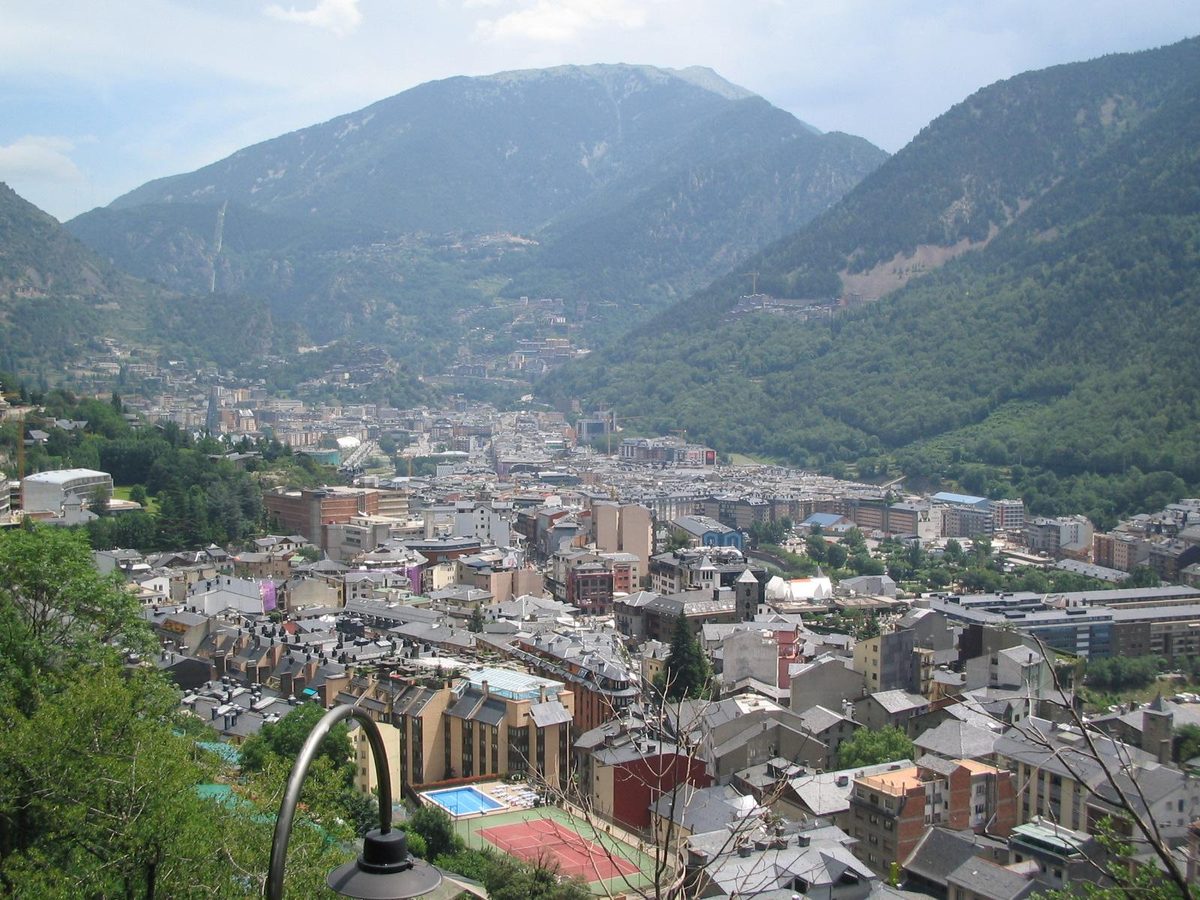
Andorra la Vella sits at around 1,023 metres above sea level, which makes it the highest capital city in Europe. That’s higher than most ski resorts elsewhere on the continent. You feel it, too — the light is sharp, the air is thin enough to notice on a steep walk, and in winter the whole capital can be under snow.
Here’s the part people don’t believe until they try to book a flight: Andorra has no airport and no commercial railway. None. You cannot fly in, and you cannot take a train to the country. The nearest useful airports are over the border in Spain and France — Barcelona, Girona, Toulouse — and from there it’s a two-to-three-hour drive up into the mountains, or a long-distance bus. There’s a small aerodrome (La Seu d’Urgell, just inside Spain) and heliports for charters, but for ordinary mortals the only way in is by road. That single fact shapes everything about a visit, which is why I always tell people to read up on Andorra travel tips before booking anything.
The tax quirk that built a nation of shops
Andorra’s other famous oddity is fiscal. For most of its modern history it had no VAT and extremely low taxes, and even now its general indirect tax sits far below what you’d pay in France or Spain. The upshot is that half of Andorra la Vella is a shopping street — perfume, electronics, alcohol, tobacco, ski gear — and busloads of French and Spanish day-trippers come purely to fill their boots and drive home. It’s genuinely strange to watch: a mountain microstate that turned itself into a giant tax-light supermarket. I don’t love it, honestly. But it’s part of the character, and the contrast between the shiny shopfronts and the medieval stone church two streets away is very Andorra.
Genuinely weird things to see: sculptures, micro-art and old radio
Now the good stuff. If you like your travel with a side of “wait, what?”, this is where Andorra delivers.
An outdoor Dalí, free to see, in the middle of the capital
The single most surreal thing to see in Andorra — appropriately, given the artist — is Salvador Dalí’s “The Nobility of Time” (La Noblesse du Temps). It’s a bronze standing around five metres tall, a melting pocket watch draped over a branch, crowned and flanked by figures: an angel deep in thought on one side, a woman rising as if from a bath on the other. It’s the melting-clock motif from Dalí’s most famous painting, made solid and stuck out in the fresh mountain air.
What makes it special isn’t just that it’s a real Dalí. It’s that it’s on the street, in Plaça de la Rotonda in central Andorra la Vella, free for anyone to walk up to. The piece travelled around various cities before being installed permanently in the capital around 2010; it came to Andorra via Enric Sabater, who was Dalí’s agent for years. I’ve stood there at dusk when the shops were closing and had the whole thing to myself. For a marquee-name artwork, that’s almost unheard of, and it’s one of the best free things to do in Andorra.
Art painted on a grain of rice: the Museum of Miniatures
Up in the village of Ordino, in the north of the country, there’s a small museum that I’d put near the top of any list of hidden gems Andorra keeps for the patient traveller. The Museum of Miniatures (Museu de la Miniatura) houses the microminiature work of Nikolai Siadristy, a Ukrainian craftsman widely reckoned to be one of the best in the world at this frankly insane discipline.
How insane? He’s carved the Three Kings onto a single grain of rice. There’s a still life painted on a grain of salt, and a caravan of camels passing through the eye of a sewing needle. Most of the pieces are too small to see with the naked eye, so the museum gives you microscopes to peer through. You bend over an eyepiece, someone lines it up, and suddenly there’s a tiny impossible world in focus. It also shows Chinese “snuff bottles” painted on the inside — around 5 cm each, with Andorran scenes inside them.
It’s tiny, it takes maybe half an hour, and it’s the kind of place a big-city museum could never justify. Ordino itself is one of the prettier stone villages in the country, so pair it with a wander; our Andorra villages guide has more on where to go up here. Check current opening days and the small entry fee (a few euros) before you drive up, since hours shift by season.
The radio station that once blanketed a continent
Here’s a piece of history most visitors never hear about. From 1939 into the 1980s, Radio Andorra broadcast from a building in Encamp, and thanks to a powerful transmitter and Andorra’s neutral, out-of-the-way position, its signal reached deep across France, Spain and beyond. In an era of state-controlled airwaves and wartime censorship, a commercial station beaming pop and adverts from a tiny neutral mountain state was a genuinely big deal. For decades it was one of the most-listened-to stations in France.
The original 1930s station building still stands at Roc del Pui in Encamp. Andorra has been restoring it as a heritage site, and it’s a wonderfully atmospheric relic of a strange chapter — the microstate as a crack in the Iron Curtain of the airwaves. Access to the interior comes and goes with restoration works and guided-visit schedules, so this is one to check the official Andorra heritage listings for before you turn up, rather than assuming the doors are open. Even from outside, though, it’s a curious pilgrimage for anyone who likes their history a bit obscure.
Orthodox icons and a “teleporting” saint
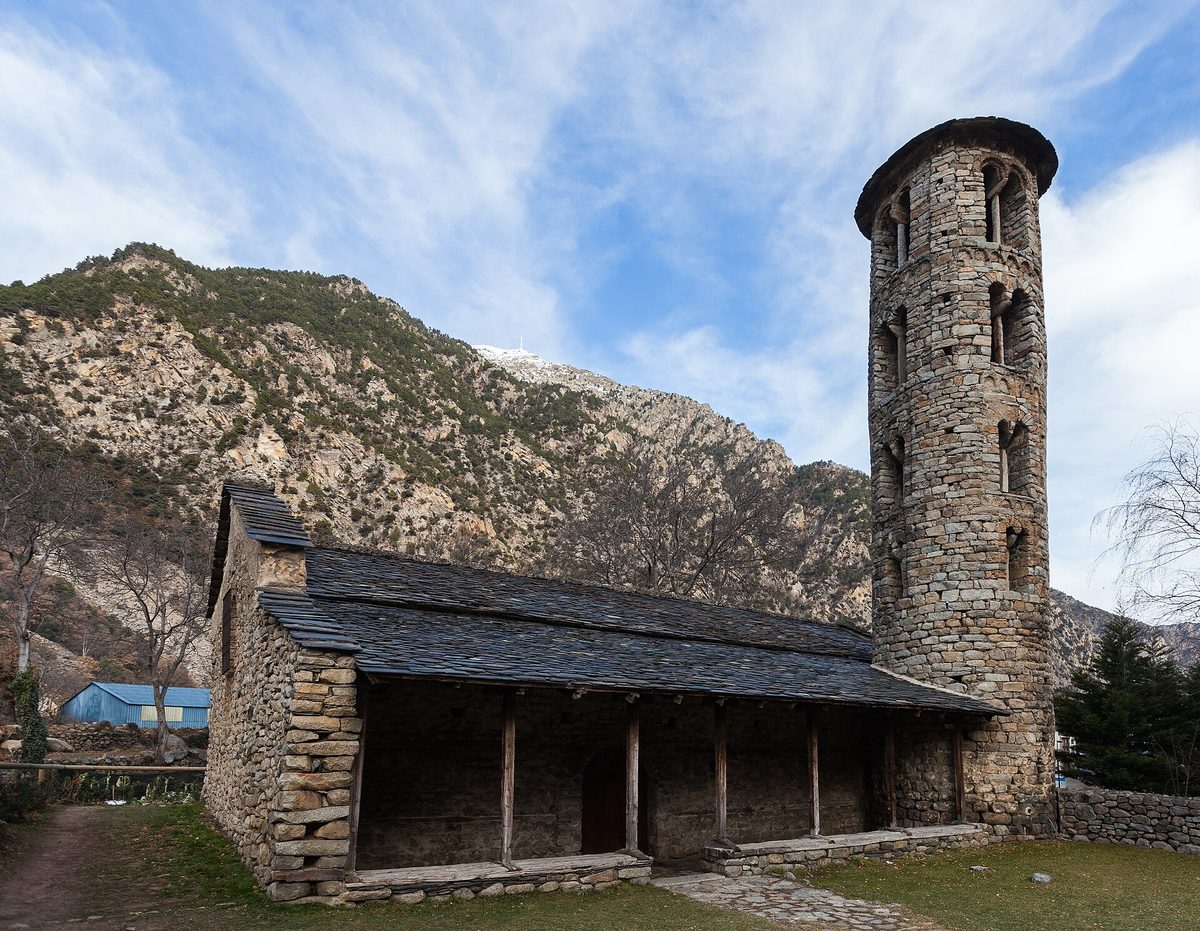
Two more oddities for the collectors. Andorra holds a surprisingly large collection of Orthodox Christian icons — not something you’d expect from a Catholic Pyrenean state — displayed as part of the country’s museum network. And then there’s Sant Roc, tied up in local legend as a patron who, the stories go, could appear in more than one place at once. Whatever you make of the folklore, the little Romanesque and modern churches scattered around the valleys are lovely, quiet, and free to step into. The round-towered church of Santa Coloma, just outside the capital, is one of the oldest buildings in the country and worth a look if you’re passing.
Odd museums for a bad-weather day
Andorra has an unusually high museum-per-head ratio for a country of around 80,000 people, and several of them are strange enough to be worth a detour. This is also your rainy-day insurance; for a fuller list of indoor options, see our Andorra rainy day guide.
The National Automobile Museum
In Encamp, the National Automobile Museum (Museu Nacional de l’Automòbil) is far bigger and better than a country this size has any right to have. The collection runs to roughly 80 cars, 60 motorbikes and around 100 bicycles, and it starts early — the oldest exhibit is a Pinette steam vehicle from 1885. It walks you from steam through the golden age of the motor car up to the mid-20th century, and it’s regarded as one of the more important collections in southern Europe. Even if you’re not a car person (I’m only mildly one), the sheer improbability of it in a mountain microstate makes it fun. Check current hours; it typically closes for a midday break and shifts its schedule by season.
Perfume, comics and bikes
A few more that lean quirky. Les Escaldes has a Perfume Museum where the exhibits are about scent itself, with interactive stations that let you play at building a fragrance. La Massana has a Comic Museum stuffed with original drawings and panels. And there’s a dedicated bike museum, Bici Lab, with a big collection of cycles and even virtual-reality riding — fitting for a country that hosts serious road-cycling and mountain-bike events. None of these is huge, but together they tell you something about Andorra: it collects things, obsessively, in a way that’s slightly out of proportion to its size.
A word on the tobacco museum (check before you go)
You’ll see the Tobacco Museum (Museu del Tabac) in Sant Julià de Lòria on plenty of older lists, housed in the historic Reig tobacco factory. Important update: the physical museum closed in early 2022 and, as far as I can tell, now exists mainly in virtual form. So don’t drive down there expecting to walk in — check the current status first. It’s a shame, because the tobacco story is one of Andorra’s oddest: tobacco has genuinely been grown in these high valleys for generations, and in late summer you can still see the broad green leaves drying in the fields and under the eaves of old barns. Keep an eye out for that on your drives; it’s a living piece of the country’s strange economic history even with the museum shut.
Offbeat outdoor experiences
Not all of Andorra’s weirdness is indoors. Some of the best oddities involve strapping yourself to something and pointing it downhill.
One of the world’s longest mountain coasters
At the Naturland park above Sant Julià de Lòria sits the Tobotronc, an alpine coaster that has held recognition as one of the longest mountain coasters in the world. The full track runs to around 5.3 kilometres, with a long descent stage of roughly 3.6 km, and the ride down takes something like 15 to 20 minutes as you snake through the forest on a two-seater sled with a brake lever you (mostly) control. It’s the rare attraction that’s genuinely thrilling and suitable for kids, and the setting — proper mountain woodland — beats any theme-park version. Naturland has other bits too: it’s a good half-day. Check season and prices, as it usually runs as part of a park pass.
Karting on ice, and other cold-weather oddness
In winter, Andorrans do things to ice that most nations wouldn’t consider. Ice go-karting is a thing here — actual karts, sliding around a frozen circuit — and it’s exactly as ridiculous and fun as it sounds. There’s ice-driving, snowshoe treks to remote refuges, and, if you fancy paying handsomely for a story, the occasional pop-up igloo hotel high up in the Grandvalira ski area, where a one-night stay comes with cava and a very cold walk to the loo. These are seasonal and change year to year, so check what’s actually running the winter you visit. For the broader menu, our Andorra activities and things to do in Andorra besides skiing guides lay out the options.
Vertigo with a view: cantilevers and swinging bridges
Andorra has quietly built a small collection of engineered viewpoints designed to scare you gently. The Roc del Quer viewpoint juts a walkway out over a sheer drop, ending in a section of open metal grating so you’re standing on thin air above the valley. Not far away, the Tibetan bridge Andorra strings a long, swaying suspension footbridge across a gorge — long enough and high enough to get your heart going. And the Tristaina solar viewpoint pairs high-mountain lake views with a bit of astronomy. They’re the sort of low-key adrenaline stops Andorra does well, and they’re a world away from queuing for a cable car.
Planning the unusual: practical notes
A few honest logistics, because the oddities are scattered and Andorra is small but vertical.
You’ll want a car. With no airport and no trains, and with the strange museums spread across Encamp, Ordino, Les Escaldes, La Massana and Sant Julià de Lòria, a hire car makes an oddity-hunting trip vastly easier. Buses exist and are cheap, but they’ll eat your day. Pick up a car at Barcelona or Toulouse airport and drive in.
Distances are short but slow. The whole country is only about 25 km end to end as the crow flies, but the roads switchback up and down, so allow more time than the map suggests. On the plus side, you can genuinely see the capital’s Dalí, drive up to Ordino’s miniatures and swing through Encamp’s cars and old radio station all in one full day.
Check opening times obsessively. This is the big one. Small museums here keep short, seasonal, occasionally unpredictable hours, close for a long lunch, and — as the tobacco museum shows — sometimes just shut for good. Don’t build a day around a single attraction without confirming it’s open that day on its official site.
Timing matters. Late summer is when the tobacco fields are green and drying; winter is when the ice-karting and igloo oddities run; shoulder seasons are quietest for the indoor museums. Our best time to visit Andorra guide breaks down the trade-offs.
Unusual Andorra by type of traveller
Who’s this weird little country actually for? A rough steer.
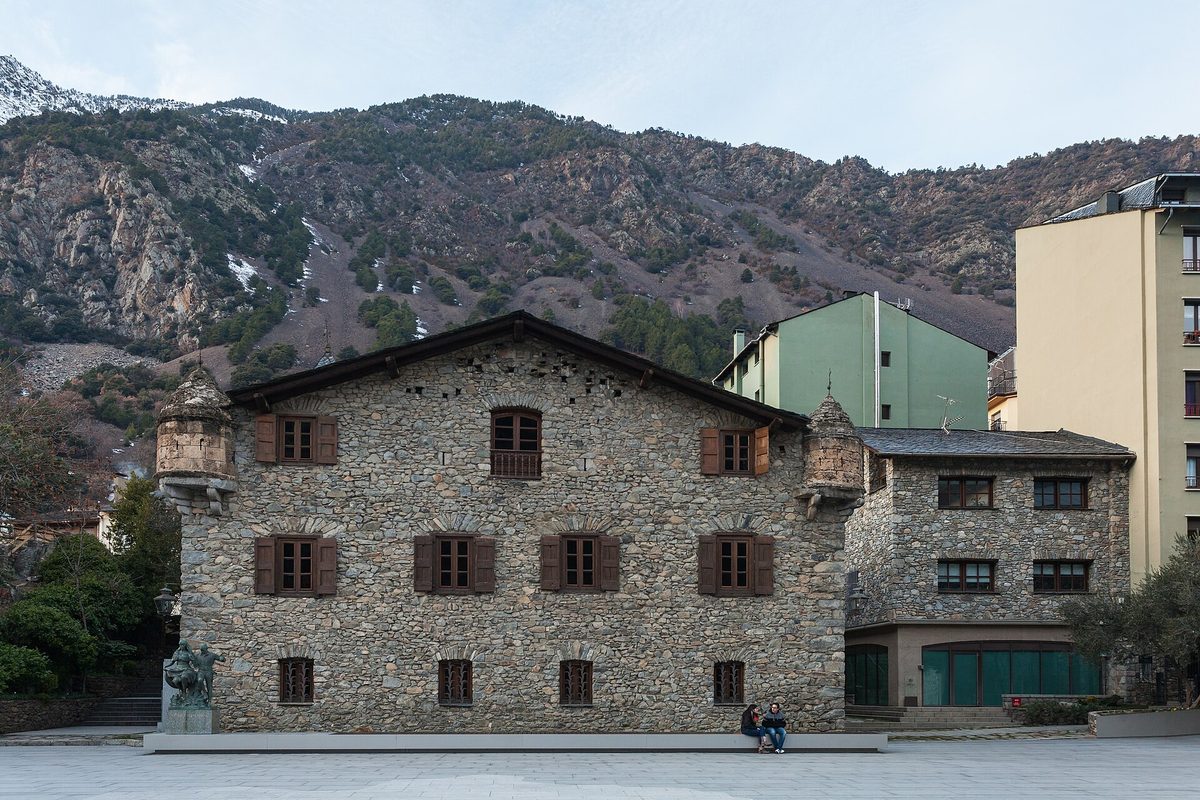
Art and culture lovers: Start with the free Dalí, then the miniatures in Ordino, the Orthodox icons and the historic Casa de la Vall (the old parliament house) in the capital. You could fill a rich day without setting foot on a ski slope. The wider Andorra la Vella guide covers the capital’s cultural core.
Families: The Tobotronc coaster is the headline, backed up by the miniatures (kids love the microscopes), the car museum, and in winter the snowier oddities. It’s an easy sell to sceptical teenagers.
History and trivia nerds: This is your paradise. The co-principality, the highest capital, the no-airport quirk, Radio Andorra’s Cold War-era reach, the tobacco heritage — Andorra is one long string of “no, really?” facts.
Foodies: Andorra’s mountain cooking is heartier and more interesting than you’d expect from a shopping-trip reputation, blending Catalan and French influences with high-altitude staples. See our Andorran food guide, then go find a valley restaurant serving trinxat and grilled meats.
Everyone else: If you’re already here for the mountains, treat the oddities as seasoning. The full things to do in Andorra pillar guide, plus our things to do in Andorra in summer rundown, will fill in around the weird stuff.
FAQ: unusual things to do in Andorra
Is Andorra worth visiting just for the unusual stuff?
Honestly, the oddities alone probably won’t fill a week, but they turn a one- or two-day stop into something memorable. If you’re already passing through — many people combine it with Barcelona or a ski trip — the Dalí sculpture, the miniatures museum and grasping the country’s strange status are absolutely worth the detour. As a pure oddity pilgrimage from far away, I’d temper expectations.
What is the most unusual thing to see in Andorra?
For me it’s a tie between two extremes of scale. The Dalí sculpture standing free on a public street in the capital is the flashiest surprise. But the microminiatures in Ordino — art carved onto grains of rice and viewed through microscopes — are the ones that genuinely make people gasp. Between them they capture Andorra’s habit of hiding remarkable things in an offhand way.
Do you really need a car to reach these places?
Effectively, yes. Andorra has no airport and no train service, and the quirky sights are scattered across several parishes with steep roads between them. Local buses are cheap and cover the main valley, but they’re slow and won’t get you efficiently between Ordino, Encamp and Sant Julià in a day. Hiring a car at Barcelona or Toulouse airport and driving in is by far the easiest approach.
Is the Dalí sculpture in Andorra real, and is it free?
Yes on both counts. “The Nobility of Time” is a genuine Salvador Dalí bronze, a roughly five-metre melting-clock piece that came to Andorra through Dalí’s former agent and was installed permanently in Andorra la Vella around 2010. It stands out in the open at Plaça de la Rotonda in the city centre, so there’s no ticket and no opening hours — you can walk up to it any time, day or night, for nothing.
Is the tobacco museum in Andorra still open?
Not as a walk-in museum. The physical Tobacco Museum in Sant Julià de Lòria, in the old Reig factory, closed in early 2022 and now exists mainly as a virtual experience, so don’t plan a visit around it without checking its current status first. The tobacco story lives on outdoors, though: the crop is still grown in Andorra’s high valleys, and in late summer you can spot the leaves drying in the fields.
Can you visit the old Radio Andorra building?
The original 1930s Radio Andorra station still stands at Roc del Pui in Encamp, and Andorra has been restoring it as a heritage site. Access to the interior depends on restoration works and guided-visit schedules, which change, so check the official Andorra heritage listings before you go rather than assuming it’s open. Even from the outside it’s an atmospheric stop for anyone into the story of the station that once reached across Europe.
Why does Andorra have two princes?
It’s a leftover from a 1278 treaty that settled a feud by making two rulers share power: the Bishop of Urgell in Spain and a French count, whose role passed down eventually to the President of France. So today Andorra is a co-principality with two heads of state — a French president and a Spanish bishop — neither of whom lives there, and both roles are now largely ceremonial. Nobody has ever got round to simplifying it.
What’s the strangest fact about Andorra?
Take your pick, but my favourite is that its capital, Andorra la Vella, is the highest capital city in Europe at around 1,023 metres, and yet the country has no airport and no railway at all. So you have Europe’s loftiest seat of government, and the only way to reach it is a winding drive up from Spain or France. For a European capital, that combination is genuinely one of a kind.
Related guides
Ready to build the trip around the weird stuff? Start with the full things to do in Andorra pillar, then dig into free things to do in Andorra, things to do in Andorra besides skiing and, for grey afternoons, our Andorra rainy day guide. For the vertigo-inducing viewpoints, see Roc del Quer, the Tibetan bridge Andorra and the Tristaina solar viewpoint. And to plan the practical side, lean on our Andorra travel tips and best time to visit Andorra guides.
Photo credits
All photographs are from Wikimedia Commons under their stated licences, with thanks to the photographers: