The moment Andorra stopped confusing me was the moment somebody drew me a map with seven blobs on it. Until then it had been a blur of unpronounceable valleys and identical-looking apartment blocks. Afterwards it was a country with seven distinct personalities, and I could finally tell someone where to stay without hedging.
The seven andorra parishes are Canillo, Encamp, Ordino, La Massana, Andorra la Vella, Sant Julià de Lòria and Escaldes-Engordany. Each is a self-governing mini-county with its own council, taxes, tourist office and festival. This guide explains what they are, how they differ, and which one you should point yourself at.
Last updated: September 2026. Areas, populations, festival dates and governance details were checked against the Departament d’Estadística figures for 31 December 2025, the Catalan-language parish records, visitandorra.com and the official 2026 parish holiday calendar. Populations and festival dates move every year — check the relevant comú’s own site before you build a trip around a date.
The seven parishes at a glance
Before the detail, the shape of the thing. This is the bit worth screenshotting.
| How it works | |
|---|---|
| What a parish is | A parròquia — the country’s only tier of local government, somewhere between a county and a large village council |
| How many | Seven, in 468 km² — about a third the area of Greater London, split seven ways |
| The names | Canillo, Encamp, Ordino, La Massana, Andorra la Vella, Sant Julià de Lòria, Escaldes-Engordany (that’s the official protocol order) |
| The newest | Escaldes-Engordany, created in 1978 out of Andorra la Vella. The other six are medieval |
| Local government | Each has a comú — a council of a cònsol major (mayor), a cònsol menor and 8–14 councillors, elected every four years |
| Real power? | Yes. Comuns control land use, building and business licences, parking, communal property and a large slice of local tax |
| National parliament | The Consell General has 28 seats: 14 elected nationally, and exactly two from each parish |
| Sub-divisions | Ordino, La Massana and Sant Julià are split into quarts; Canillo into ten veïnats |
| Biggest / smallest | Canillo is biggest by area (121 km²); Andorra la Vella is smallest (12 km²) and by far the most populous |
| Why you care | Different parking rules, tourist offices, ski areas, festival dates, hotel prices and atmospheres — all inside a 40-minute drive |
What a parish actually is — and why a country this small has seven of them
Search for Andorra regions or Andorra administrative divisions and you’ll get a stub article and a list of seven names. Here’s what the list doesn’t tell you: the parishes came first. Andorra as a nation is essentially a federation of these seven valleys, not a country that was later chopped into administrative units. The six original parishes were church-and-community territories long before there was any such thing as a national government, and when the modern state was formalised — first by the 1278 pareatges that created the co-principality, then by the 1993 constitution — it was built on top of them rather than over them.
That history is why the comuns are not the toothless parish councils the English word suggests. A comú is closer to a small, wealthy, quite stubborn borough council. It runs planning and land use, issues building and business licences, sets and collects a real chunk of the tax you pay locally, owns and manages communal land (which in Andorra means most of the mountain), operates the car parks and the sports centres, and can even put draft legislation in front of the national parliament. If you have ever wondered why one Andorran valley has a shiny new sports hall and the next one along does not, the answer is nearly always the comú.
Each comú is headed by a cònsol major and a cònsol menor — literally the major and minor consul, which is a wonderfully Roman way of saying mayor and deputy mayor — plus a council of between eight and fourteen consellers comunals. They’re elected by universal suffrage every four years; the last local elections were in December 2023, so the next are due at the end of 2027. Fourteen consuls and roughly eighty councillors for a country of 89,000 people is either charming or absurd, and I’ve stopped trying to decide which.
Below parish level things get more antique still. Ordino, La Massana and Sant Julià de Lòria are subdivided into quarts — quarters, historic groupings of houses and land with their own small assemblies and, in some cases, their own property. Canillo is instead split into ten veïnats, neighbourhoods, which mostly map onto its scattered villages. These are not tourist-facing units and you will never need to know which quart you’re standing in, but they explain why so many Andorran villages of forty people have a communal barn, a shared water right and an opinion.
Two more quirks worth having in your pocket. First, the four northern and eastern valley parishes — Canillo, Encamp, Ordino and La Massana — are traditionally called the parròquies altes, the high parishes, while the rest are the low or central ones. It’s a distinction Andorrans still use, and it’s a decent shorthand for “mountains” versus “shops”. Second, the border between Canillo and Encamp has never actually been agreed. A 15.6 km² wedge of high ground between them is known as the Terreny de Concòrdia, the Land of Concord, which is a very polite name for a dispute that has been running for centuries. Grandvalira’s lifts run across it. Nobody seems in a hurry to settle it.
The seven Andorra parishes, compared
Now the numbers. Areas here sum to Andorra’s official 468 km²; populations are approximate, based on the national statistics office’s figures for 31 December 2025 (national total 89,058) and the published per-parish growth rates, so treat them as accurate to a couple of hundred rather than to the person.
| Parish | Main town (altitude) | Area | Population | Ski area | What you actually go for |
|---|---|---|---|---|---|
| Canillo | Canillo (~1,530 m) | 121 km² | ~6,500 | Grandvalira (Canillo, El Tarter, Soldeu) | The Tibetan bridge, Meritxell sanctuary, Romanesque churches, Vall d’Incles |
| Encamp | Encamp (~1,250 m) | 74 km² | ~13,650 | Grandvalira (Funicamp, Grau Roig, Pas de la Casa) | Value ski beds, the Funicamp gondola, Lake Engolasters, twenty-plus glacial lakes |
| Ordino | Ordino (1,300 m) | 89 km² | ~5,700 | Ordino-Arcalís | The prettiest villages, the national auditorium, Sorteny park, Tristaina lakes |
| La Massana | La Massana (~1,230 m) | 65 km² | ~12,300 | Pal Arinsal | Comapedrosa (2,942 m), the bike park, Pal and Sispony, family ski weeks |
| Andorra la Vella | Andorra la Vella (1,023 m) | 12 km² | ~24,000 | None | The capital: shopping, restaurants, Casa de la Vall, the bus station |
| Sant Julià de Lòria | Sant Julià (908 m) | 60 km² | ~10,100 | Naturlandia / La Rabassa (cross-country and toboggan) | The Spanish border, big-box shopping, Os de Civís, the tobacco museum |
| Escaldes-Engordany | Les Escaldes (~1,050 m) | 47 km² | ~16,300 | None | Caldea, hot springs, the Madriu valley gateway, Engolasters |
A few things jump out of that table. Canillo has ten times the land of the capital and about a quarter of the people. Two parishes have no ski area at all and are still where most visitors sleep. And the top four parishes by population — Andorra la Vella, Escaldes-Engordany, Encamp and La Massana — hold roughly three quarters of the country between them, almost all of it strung along a single valley road.
The seven parishes of Andorra, one by one
In official protocol order, which is the order Andorrans always list them in, and which runs roughly from the far north-east down to the capital and back out again. I’ve given each one the honest version: what it’s for, and who should skip it.
1. Canillo — the big empty one
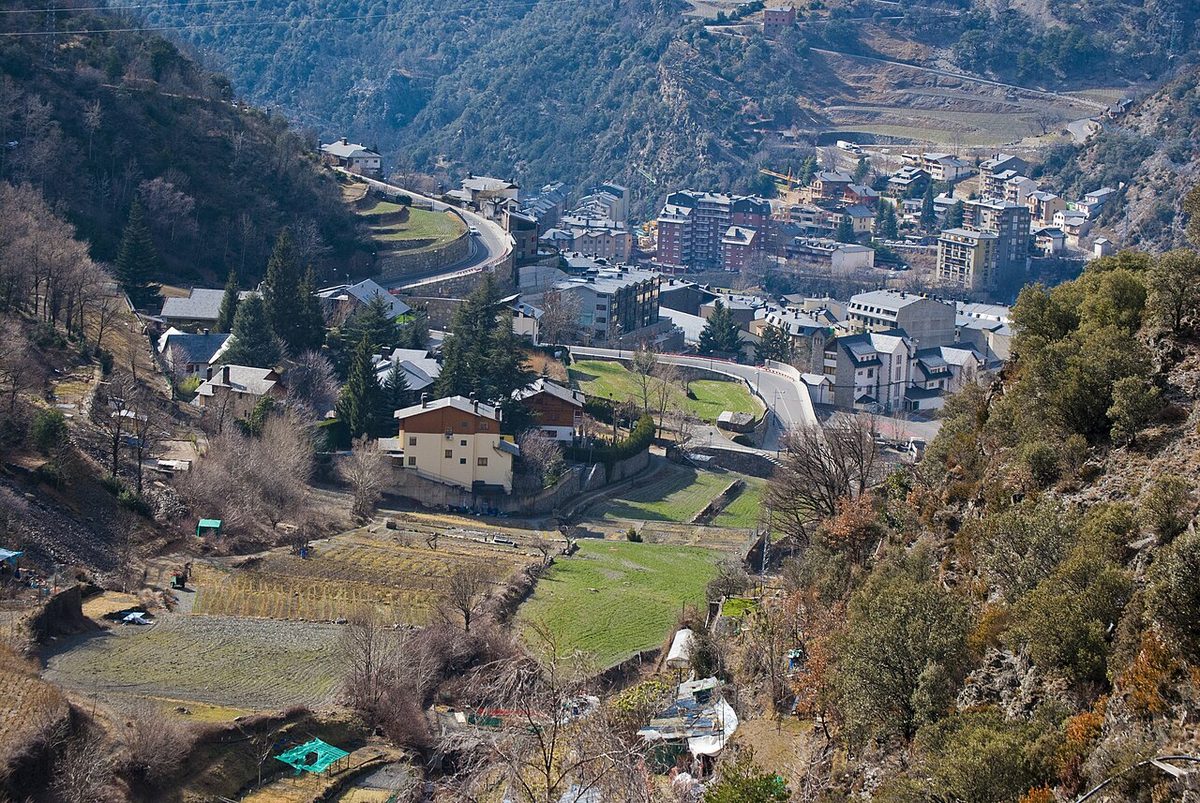
Canillo is a quarter of the country by area and holds about seven per cent of its people, which tells you most of what you need to know. It’s the highest parish, the furthest from Spain, and the one that still looks like the Pyrenees rather than like a shopping street with mountains behind it. It’s also, right now, the fastest-growing parish in Andorra by some distance — the population jumped 7.3% in 2025 alone.
You come here for the Tibetan bridge over the Vall del Riu, for the Sanctuary of Meritxell (home of the national patron saint), for the Romanesque church of Sant Joan de Caselles, and for the Roc del Quer viewpoint with its cantilevered walkway. The parish also covers the Soldeu and El Tarter side of Grandvalira, so a great many British skiers sleep in Canillo without ever learning the word. Full detail in my guide to Canillo.
Skip it if you want shops, nightlife or a short transfer from Barcelona. It’s the far end of the country.
2. Encamp — the working town
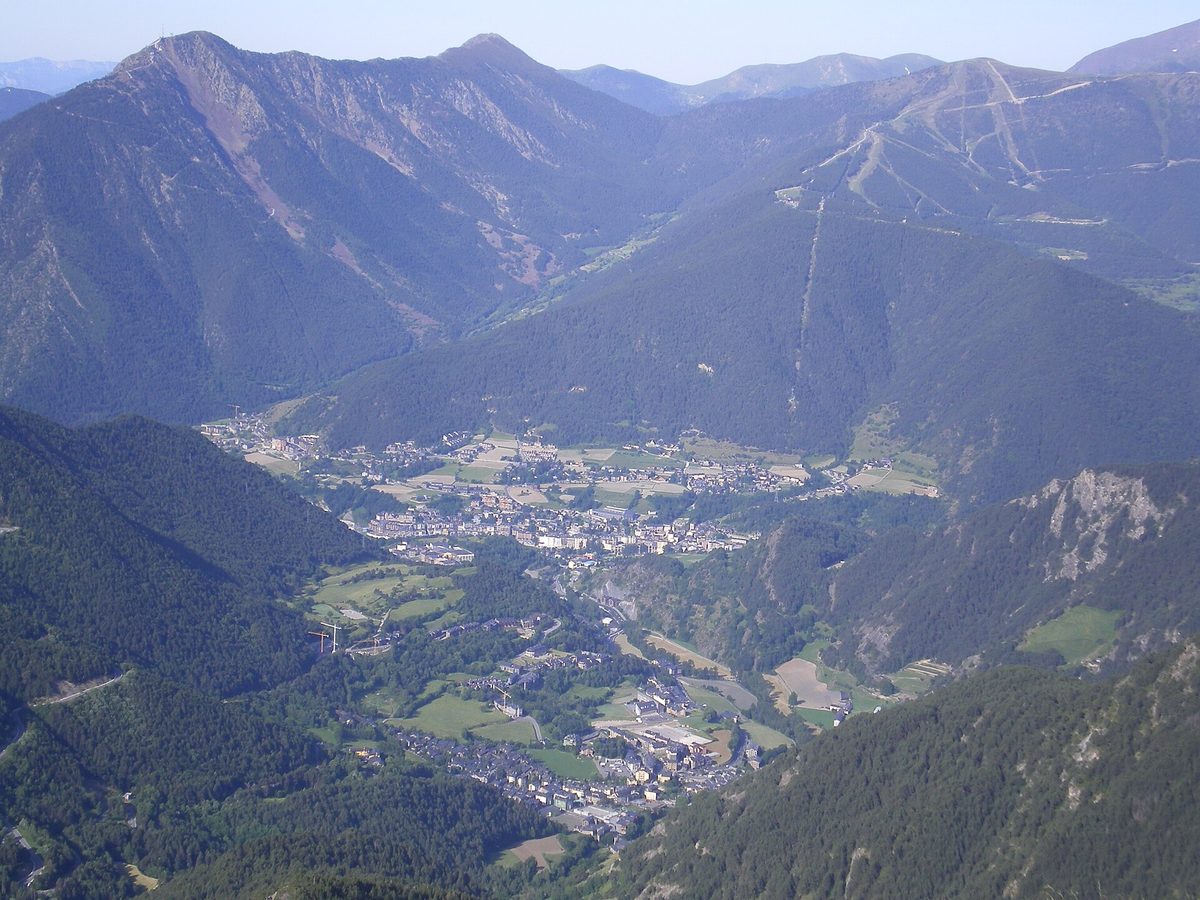
Encamp is the least glamorous parish and, for a certain kind of traveller, the smartest. It’s a real valley town at about 1,250 m, ten minutes from the capital on the CG-2, where the bakeries serve residents and the set lunches cost what Andorrans pay rather than what visitors are charged. Confusingly, the parish also contains Pas de la Casa, 25 km away on the French border and about as different from Encamp town as it’s possible to be.
The killer feature is the Funicamp gondola, which lifts you roughly six kilometres and 1,250 vertical metres from the edge of town straight into Grandvalira in about 25 minutes. That single lift is why basing yourself in Encamp can be the cheapest good ski week in the Pyrenees. Add Lake Engolasters above the town, a Romanesque bell tower to match it, and a startling share of the country’s high glacial lakes, and the “ordinary” parish starts looking underrated.
Skip it if you want charm on your doorstep. Encamp is a town that works for a living.
3. Ordino — the pretty one
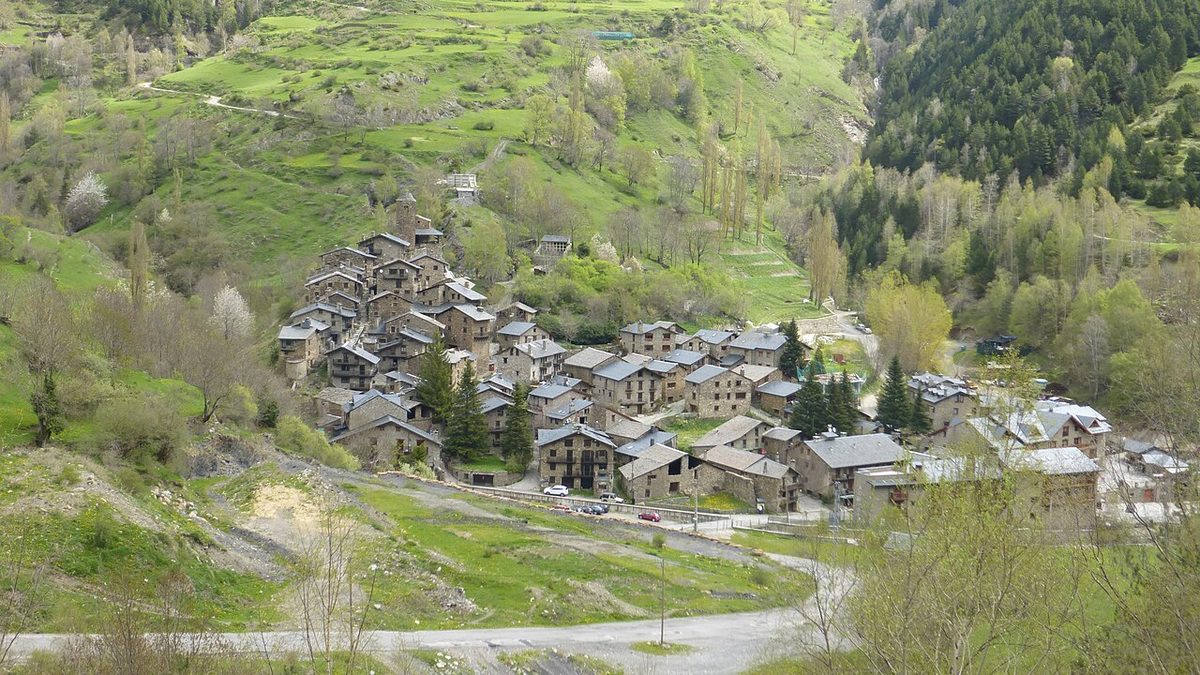
If you have seen a photograph of Andorra that made you want to come, there’s a fair chance it was taken in Ordino. The village sits at 1,300 m fifteen minutes north of the capital, and it’s the one place in the country where the stone, the slate roofs, the church and the hay meadows have survived intact. It carries a UNESCO Biosphere Reserve designation and a UN Tourism “Best Tourism Village” title, and unusually for that kind of award, it earns them.
It’s also the least populous parish — around 5,700 people across 89 km² — which means the villages up the valley (La Cortinada, Llorts, El Serrat) feel genuinely rural. The parish owns and runs Ordino-Arcalís, the small, high, north-facing ski area that serious skiers rate above anything else in the country, and it holds the Sorteny natural park and the Tristaina lakes. See the full write-up on Ordino.
Skip it if you need late-night anything, or if you’re travelling without a car in deep winter — the upper valley thins out fast.
4. La Massana — the family one
La Massana is the sensible middle option and it doesn’t get enough credit. The town sits at around 1,230 m, ten minutes from Andorra la Vella and — thanks to the free Dos Valires tunnel — about five minutes from Encamp, which puts nearly the whole country inside half an hour of your bed. The parish is unusually spread out, seven quarts and a scatter of villages, of which stone-built Pal and Sispony are the ones worth the detour.
Above it sit the Pal Arinsal ski area and Comapedrosa, at 2,942 m the highest point in Andorra. In summer the parish turns into the country’s mountain-bike capital. If you’re travelling as a family and want ski school, a supermarket and a mountain all within reach, La Massana is usually the answer.
Skip it if you want the biggest ski area — Pal Arinsal is good, but it isn’t Grandvalira.
5. Andorra la Vella — the capital
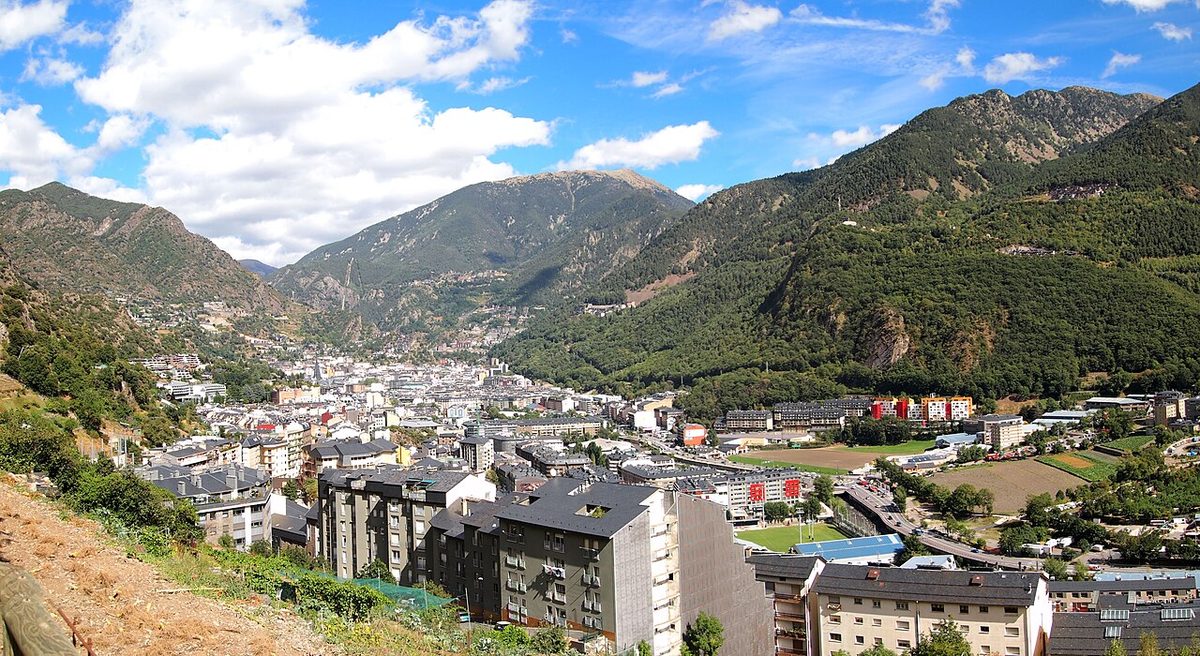
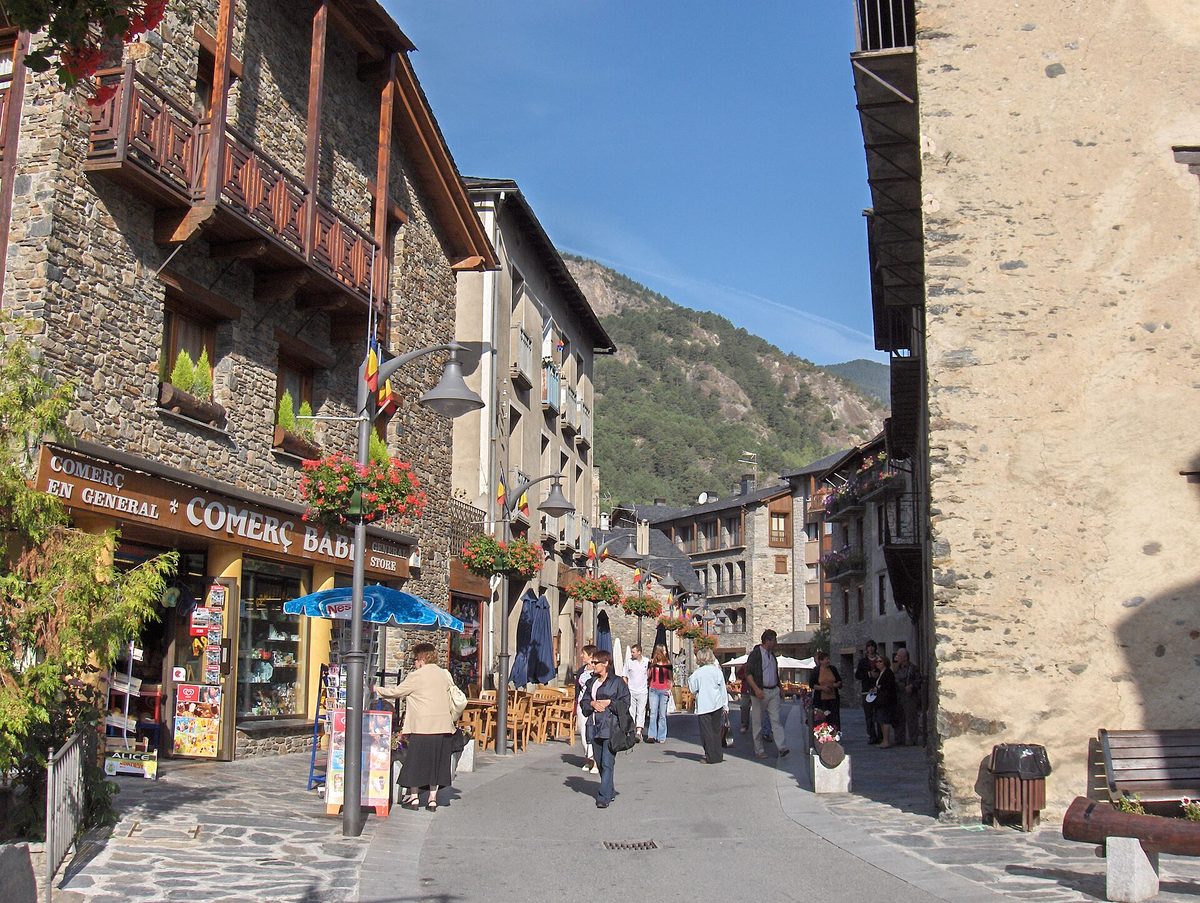
Twelve square kilometres, about 24,000 people, and Europe’s highest capital at 1,023 m. It is the smallest parish by area and the largest by population, and it contains the country’s parliament, its bus station, its 1.5 km duty-free shopping mile and its only proper old town — a two-hour Barri Antic wrapped around Casa de la Vall, the 16th-century manor that served as parliament for three centuries.
My honest read on Andorra la Vella hasn’t changed: treat it as a destination and it underdelivers, treat it as a base and it quietly over-delivers. Everything in the country is inside 45 minutes, the buses all start here, and the restaurant choice is the best in Andorra by a distance. The parish also climbs to Pic de Carroi at 2,334 m, and the balcony paths above the city are startlingly empty.
Skip it if the point of your trip is mountains and quiet. You’ll sleep next to a roundabout.
6. Sant Julià de Lòria — the border parish
The southernmost parish, the lowest (the town sits at 908 m), and the one everybody drives through without stopping on the way from Barcelona. That’s a mistake, though a small one. Sant Julià is where the Spanish frontier is, where the big-box shopping sheds cluster, where the university is, and where the country’s tobacco heritage is preserved in a genuinely good museum.
Two things make it worth a detour. One is La Rabassa and the Naturlandia activity park up on the mountain, which is Andorra’s only cross-country ski terrain and its best wet-weather-proof family day. The other is Os de Civís — a Spanish village you can only reach by road through Andorra, up a lane from Bixessarri, and one of the prettiest lunch destinations in the region. More on the parish in my guide to Sant Julià de Lòria.
Skip it if you’re here to ski downhill. There’s no alpine area in the parish.
7. Escaldes-Engordany — the youngest, and the spa one
This is the newcomer, and the fact needs stating clearly because half the internet gets it wrong: Escaldes-Engordany was created in 1978, split off from Andorra la Vella, having previously been a quart of that parish. It’s the only one of the seven that isn’t medieval, and its creation is why the national parliament went from 24 seats to 28.
Walk from the capital’s Meritxell shopping street onto Escaldes’ Avinguda Carlemany and you will not notice a border — the two towns are one continuous urban area — but you have changed parishes, councils, parking systems and tax jurisdictions. The parish is built on hot springs, which is why Caldea and its glass spire are here, and it’s also the road-end gateway to the UNESCO-listed Madriu-Perafita-Claror valley, which covers about a tenth of the country and has no road in it at all. My full guide to Escaldes-Engordany goes deeper.
Skip it if you want to feel like you’re in the mountains. You’re in a town.
Why the parish boundaries actually matter to you
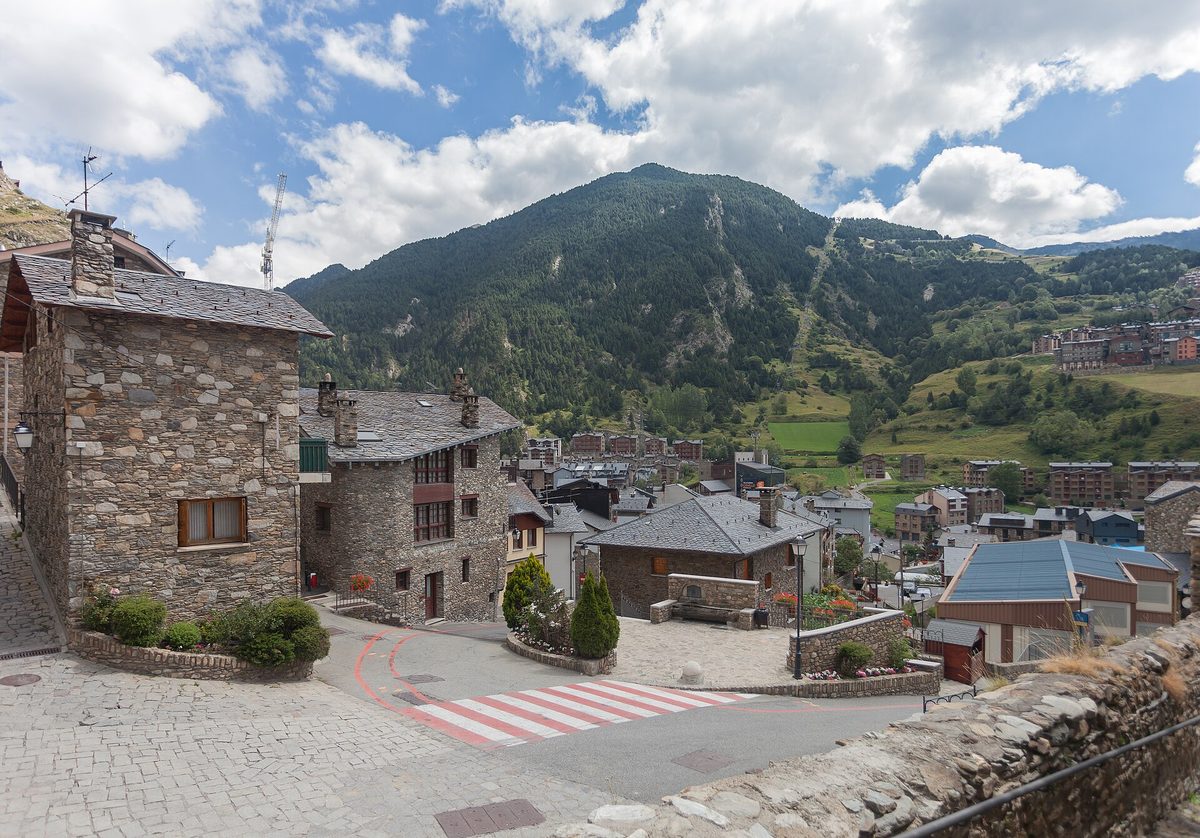
You could argue that a visitor to a country 25 km across doesn’t need to care about internal borders. I’d have agreed with you before I got a parking ticket for exactly that reason. Here’s where the seven-way split shows up in practice.
Parking is a parish matter
Each comú runs its own street parking, its own car parks and its own tariffs, and there is no single national app or ticket. The capital and Escaldes-Engordany both operate metered zones — broadly a blue zone at around €1 an hour with a two-and-a-half-hour maximum, and a cheaper green zone at around €0.50 an hour for up to five hours, at the time of writing — but they are separate systems on adjoining streets. Up-valley parishes mostly use free or cheap surface car parks instead. The practical advice from my guide to driving in Andorra stands: use the underground car parks in the two central parishes and stop trying to be clever.
Seven tourist offices, seven answers
Andorra Turisme runs the national marketing, but each comú runs its own tourist office, its own signposted walking network and its own summer activity programme. That’s why you can be told confidently in one parish that a museum is open and find in the next that it isn’t — you were asking the wrong council. If you want the reliable answer about a village church, a mountain refuge or a local bus, ask the comú that owns it.
Ski areas belong to parishes, and it shows
Andorra’s three ski areas map onto parishes rather than onto the country. Grandvalira straddles Canillo and Encamp. Pal Arinsal is La Massana’s. Ordino-Arcalís was built in 1983 by the people of Ordino parish and still feels like their mountain — which is a large part of why it’s the least commercial and, for strong skiers, the most interesting. The overview of skiing in Andorra sets out how the passes interlock; the short version is that your lift ticket, not the parish line, is what limits you.
Holidays and opening hours are local
This is the one that catches people out. Andorra has fourteen national public holidays, and on top of those each comú can declare up to four local ones. So a Monday in late July can be a completely normal working day in La Massana and a total shutdown in Sant Julià de Lòria, twenty minutes down the road, because it’s their festa major. Village-level holidays exist too: in 2026 the calendar included separate closures for Pal, Arinsal, Soldeu, El Tarter, Llorts, Sornàs, Ansalonga, Anyós, Erts and La Cortinada, among others. If a shop, museum or town hall is inexplicably shut, check whose saint’s day it is.
Prices and atmosphere differ more than the map suggests
Andorra is small enough that people assume it’s uniform. It isn’t. A three-star room in Encamp in February and the equivalent in Soldeu are not close on price, even though they’re on the same lift system. Ordino’s hotels price like a boutique destination; Sant Julià’s price like a border town. The capital and Escaldes have the restaurant density and the late bars; the high parishes largely don’t, and kitchens up there can close by 9:30 pm. My guide to where to stay in Andorra gets into the specifics, but the rule of thumb is that you pay for altitude, snow-reliability and prettiness, and you save by staying in a working town.
The bus network ignores the borders — usefully
One genuinely simplifying fact: public transport is national, not parish-run. A network of numbered lines (L1, L2, L4, L5, L6, a circular LC and a very frequent express) radiates from the bus station in Andorra la Vella and reaches every parish, at a flat fare starting around €1.90 a ride, roughly 6:30 am to 10:30 pm. It’s the reason a car-free trip around Andorra is not only possible but often better. You can sleep in one parish, ski in another and eat in a third without ever owning a parking problem.
Which parish should you base yourself in?
The question everyone actually wants answered. Here’s how I’d allocate people, and I’ll say plainly where I think the conventional advice is wrong.
First-time visitor, three or four days
Andorra la Vella or Escaldes-Engordany. Not because they’re the best bits — they aren’t — but because everything else is reachable from them in under 45 minutes, the buses all start there, and you’ll eat far better. Base centrally, day-trip outward, and spend your evenings walking rather than driving. That’s the backbone of most of my Andorra itineraries.
Skiers
Canillo or Encamp for Grandvalira; La Massana for Pal Arinsal; Ordino for Arcalís. Encamp is the value play thanks to the Funicamp gondola. Canillo’s Soldeu and El Tarter give you ski-in convenience at a price. La Massana suits families who want a smaller, friendlier mountain. Ordino suits people who care more about the snow than the après. The full comparison is in where to stay for skiing.
Hikers and summer walkers
Ordino, or Escaldes-Engordany if you want the Madriu. Ordino puts you within twenty minutes of Sorteny, Tristaina and the Arcalís high country. Escaldes is the road-head for the Madriu-Perafita-Claror valley, which is the single most impressive walk in the country and the only place in Andorra where you can go a whole day without seeing a car park. La Massana is the alternative if Comapedrosa is the goal. See hiking in Andorra for routes.
Families with young children
La Massana, or Escaldes-Engordany in bad weather. La Massana has the ski school, the bike park, the supermarket and the short drives. Escaldes has Caldea and the whole indoor-activity fallback within walking distance, which matters more than you think on day three of rain. Canillo’s ice palace is the other great weather-proof card, and it’s why Canillo punts above its weight for a trip with kids.
Shoppers
Andorra la Vella and Escaldes-Engordany, and don’t overthink it. The pedestrianised Meritxell–Carlemany axis crosses the parish line halfway along and is one continuous 1.5 km run of shops. The alternative is the cluster of big commercial centres at the southern end of Sant Julià near the Spanish border, which is where locals and day-trippers actually go for volume. Both are covered in shopping in Andorra.
Budget travellers
Encamp, then Sant Julià de Lòria. Encamp gives you the cheapest beds with real ski access in the country. Sant Julià gives you the cheapest beds full stop, plus a short hop to Spain, at the cost of being furthest from the mountains. Both are much better value than the capital and dramatically better value than Soldeu.
Car-free travellers
Andorra la Vella or Escaldes-Engordany, no contest. You are at the hub of the bus network, you can walk between the two parishes in twenty minutes, and you can reach every other parish on a flat fare. Anyone telling you that you need a car in Andorra is thinking of the villages, not the valley.
The seven festes majors — and the one national day
Every parish throws its own festa major, the patron-saint festival, and these are the days when the parish system stops being an administrative curiosity and becomes the most visible thing about the country. Squares fill, communal meals happen, there is a great deal of amplified music, and half the shops close.
Here is the 2026 calendar as published by Andorra Turisme. Dates shift from year to year — most are anchored to a saint’s day and a weekend, so they move by a few days — and the parish programme is usually only posted a few weeks in advance on the comú’s own site.
- Ordino — 3–6 July (the Roser d’Ordino). Ordino is the confusing one: its historic patron-saint day is Sant Corneli i Sant Cebrià on 16 September, which is still a parish holiday with a midday mass and an afternoon dance, while the big summer festival sits in early July. Both are worth catching; the September one is far more local.
- Canillo — 17–20 July. High-valley festival, small crowds, a genuinely rural feel.
- Escaldes-Engordany — 18–26 July, built around Sant Jaume (25 July) and Santa Anna (26 July). The longest of the seven and the most concert-heavy.
- Sant Julià de Lòria — 24–28 July. The parish also keeps a second, quieter feast: Canòlich, at the end of May, at a mountain sanctuary above the town.
- Andorra la Vella — 30 July to 3 August. The capital’s, and the busiest.
- Encamp — 14, 15 and 16 August, tied to Sant Roc on the 16th. Note that Encamp town also holds a separate village festival in late June, so if you see conflicting dates online, that’s why.
- La Massana — 14–16 August, also around Sant Roc, and running head-to-head with Encamp’s.
Underneath the seven parish festivals sits a dense layer of village ones: Pal in late June, Soldeu in July and again in late August, Llorts on the first weekend of August, Arinsal in late August, La Cortinada in early September. If you are in the country between late June and mid-September, you are almost certainly within twenty minutes of a festa on any given weekend.
And then there’s the day that belongs to all seven. 8 September is the Diada de Meritxell, Andorra’s national day, honouring Our Lady of Meritxell, patron saint of the principality since 1873. The focus is the Meritxell sanctuary in the parish of Canillo, where the country’s leadership and a great many ordinary Andorrans turn up for mass, and where the old chapel — gutted by fire in 1972 — stands beside the modern sanctuary that replaced it. It’s one of four fixed national holidays that cannot be moved, along with 1 January, Constitution Day on 14 March and Christmas Day. Almost everything closes. If you’re visiting on 8 September, plan for a country at rest, then go to Meritxell and watch it not be at rest at all.
A short history of how seven became seven
For a bit of context that makes the map legible. Andorra spent most of its recorded existence as six valleys: Canillo, Encamp, Ordino, La Massana, Andorra la Vella and Sant Julià de Lòria. That structure survived the 1278 pareatges that ended the medieval dispute between the Bishop of Urgell and the Count of Foix and created the co-principality still in place today, and it survived the 1419 founding of the Consell de la Terra, the assembly that became the modern parliament. Each valley sent its own men; each valley kept its own land.
The change came in 1978, at the front edge of the reform wave that eventually produced the 1993 constitution. Escaldes-Engordany, until then a quart of Andorra la Vella, was constituted as a parish in its own right, and the national council went from 24 members to 28 as a result. Two more councillors, one new comú, and a border drawn straight down a shopping street. Escaldes still marks its founding with a commemorative day in mid-June.
The modern balance of power is worth understanding because it explains the country’s texture. The Consell General’s 28 seats are split evenly: 14 elected from national party lists by proportional representation, and 14 elected two-per-parish. That means Ordino, with about 5,700 people, returns exactly as many parish deputies as Andorra la Vella, with about 24,000. It’s deliberate, it’s the price of holding a federation of valleys together, and it’s why the small high parishes have never been steamrollered by the capital. Before 1997, incidentally, the imbalance was even starker — each parish returned four deputies and there was no national list at all. If you want the longer story, my guide to the history of Andorra covers the co-principality and the constitution in detail.
Frequently asked questions
How many parishes does Andorra have?
Seven. The parishes of Andorra are Canillo, Encamp, Ordino, La Massana, Andorra la Vella, Sant Julià de Lòria and Escaldes-Engordany. That’s the official protocol order, and it’s how Andorrans always list them. There were six until 1978, when Escaldes-Engordany was separated from Andorra la Vella and became the seventh.
What is a comú in Andorra?
The comú is the parish council — the elected local government of each parish. It’s led by a cònsol major (mayor) and a cònsol menor, with between eight and fourteen councillors elected every four years by universal suffrage. Comuns control planning, licensing, communal land, parking and a substantial share of local taxation, and can propose legislation to the national parliament.
Which is the biggest parish in Andorra?
By area, Canillo, at 121 km² — about a quarter of the whole country. By population it’s Andorra la Vella, with roughly 24,000 residents in just 12 km², the smallest parish by area. Ordino is the least populated, at around 5,700 people spread across 89 km² of mountain.
Which Andorran parish should I stay in?
For a first trip, Andorra la Vella or Escaldes-Engordany, because everything else is within 45 minutes and the buses radiate from there. For skiing, Encamp for value or Canillo for convenience. For scenery, Ordino. For families, La Massana. For the cheapest beds, Encamp or Sant Julià de Lòria.
What are quarts and veïnats?
They’re sub-parish units. Ordino, La Massana and Sant Julià de Lòria are divided into quarts — historic quarters of houses and shared land, some of which still hold communal property. Canillo is instead split into ten veïnats, neighbourhoods, which broadly correspond to its villages. Neither affects a visitor, but both explain why tiny hamlets here have communal assets.
Do the parishes have different rules?
Yes, and it’s more noticeable than you’d expect. Each comú sets its own parking tariffs and systems, its own local taxes and licensing, its own tourist office and signposted trail network, and up to four of its own public holidays. National law, the currency, the police and the bus network are the same everywhere.
When is each parish’s festa major?
In 2026: Ordino 3–6 July, Canillo 17–20 July, Escaldes-Engordany 18–26 July, Sant Julià de Lòria 24–28 July, Andorra la Vella 30 July–3 August, and both Encamp and La Massana 14–16 August. Dates move a little each year, so check the comú’s website. The national day, 8 September, is separate and belongs to the whole country.
What is the Terreny de Concòrdia?
A 15.6 km² stretch of high ground between Canillo and Encamp whose ownership the two parishes have never agreed. Grandvalira’s lifts run across it. It has no practical effect on visitors whatsoever, but it’s a good reminder that in Andorra the parishes are the durable political units and the national border is the newer idea.
My honest take after a lot of driving around a very small country
The seven-parish system is the single most useful thing to understand about Andorra, and almost nobody explains it to visitors because it sounds like homework. It isn’t. It’s the difference between “Andorra is a duty-free strip in the mountains” and “Andorra is seven small worlds you can visit in a long weekend.”
My own allocation, for what it’s worth: sleep in the central parishes on a first trip, sleep in Encamp if you’re skiing on a budget, and give Ordino at least one full day whatever else you do. Then go and stand in a village square during a festa major in August and watch a parish of six thousand people run an event that a city would be proud of. That’s when the map stops being administrative and starts being the point.
If you’re planning around this, the guides that pair best with it are my overview of Andorra’s villages — the pillar this sits under, and the one that ranks the actual settlements inside these seven parishes — plus where to stay in Andorra, which turns the parish question into an actual hotel decision, and getting around Andorra, which explains the bus network that stitches all seven of them together for less than the price of a coffee.
Photo credits
All photographs are from Wikimedia Commons under their stated licences, with thanks to the photographers:
- Photo: Tiia Monto, CC BY-SA 3.0, via Wikimedia Commons — source
- Photo: Matthew Ross, Public domain, via Wikimedia Commons — source
- Photo: Luis Miguel Bugallo Sánchez (Lmbuga), CC BY-SA 3.0, via Wikimedia Commons — source
- Photo: Luis Miguel Bugallo Sánchez (Lmbuga), CC BY-SA 3.0, via Wikimedia Commons — source