A sensible shopping trip to Andorra ends with two bags. One is boring: a carton of cigarettes, a litre of gin, a bottle of perfume for a birthday you nearly forgot. The other bag holds cheese, honey and wine, and it is the one people actually remember.
The honest answer to what to buy in Andorra is two lists, not one. There is the tax bargain list, where the 4.5% IGI genuinely saves you money, and the souvenir list, where you buy things that could not have come from anywhere else. This guide covers both, plus everything I think you should walk past.
Last updated: August 2026. Every price below is a good-faith 2026 snapshot from shelves in Andorra la Vella and Escaldes-Engordany. Promotions move weekly, customs rules get revised, and producers change their opening days. Check official sites and shop windows before you commit a boot-load of money.
The buy list at a glance
If you read one section and then go shopping, make it this one. Everything below is expanded further down.
| The question | The short answer |
|---|---|
| Best bargain buy | Tobacco, spirits and perfume — roughly 40-50%, 30-44% and 25-35% under Spanish prices |
| Best souvenir buy | Andorran mountain cheese and Pyrenean charcuterie, vacuum-packed at the counter |
| Why anything is cheap | A general IGI sales tax rate of 4.5%, against standard VAT of 21% in Spain and 20% in France |
| Genuinely made here | Cheese, cured meat, mountain honey, wine, knife-carved craft, collector stamps and the Andorran diner |
| Worst value | Chain fashion, books, fresh groceries, luxury watches and fine jewellery |
| Where for bargains | Avinguda Meritxell and Fener Boulevard, Vivand in Escaldes, Epizen at the Spanish border, Pas de la Casa at the French one |
| Where for local products | The old town craft shops, the Pyrénées gourmet hall, independent delis, and the cellar doors in Sant Julià and Auvinyà |
| Customs allowance per adult | 300 cigarettes, 1.5 L spirits, 5 L wine, €900 of other goods, €300 of food; 16 L beer into Spain, but no separate beer quota into France |
| Opening hours | Typically to 20:00 Sunday-Thursday and 21:00 Friday-Saturday; shops trade on Sundays too, unless 1 January, 8 September or 25 December falls on one |
| Sales seasons | Rebaixes in January-February and July-August; the Shop in Andorra Festival each November |
| Best ski-gear windows | Late October to November pre-season, then the March-April clearance |
| Realistic souvenir budget | €25-60 buys a very good cheese, meat, honey and wine haul for one household |
What to buy in Andorra: two lists, not one
Almost every guide on this subject picks a side. The price-comparison sites give you a table of cigarette cartons and iPhones and stop. The souvenir listicles give you wool blankets and pottery and never mention tobacco or spirits at all. Both halves are true and they serve different people.
The bargain list exists because Andorra is not in the EU and its general sales tax rate is 4.5%, against standard VAT of 21% in Spain and 20% in France. The full arithmetic, category by category, lives in the complete guide to shopping in Andorra, and it is worth reading first if you are here mainly to save money. What follows is the product-level version: what goes in the bag, and what does not.
The souvenir list exists for a different reason. Andorra has about 90,000 people, seven parishes and a farming tradition that survived at altitudes where farming should not work. That produces cheese, honey, cured meat and wine you cannot buy at home, plus a handful of things that only make sense in a country with two heads of state and no airport. Those are the gifts worth the weight.
My rule after many trips is unromantic. Buy the bargain list for people who asked for something. Buy the souvenir list for people who did not.
The bargain list: what is genuinely cheaper
These are the categories where the tax gap is large enough to survive retailer margins. If you want the full tax reasoning rather than the shopping list, the piece on whether Andorra is actually cheap for shopping does the maths properly.
Tobacco: a real gap and the tightest leash
Nothing else comes close proportionally. A pack of Marlboro runs around €4-5 here against roughly €6 in Spain and something close to €12.50 in France. A carton lands near €48 in town, against about €60 in Spain and well over €120 across the French border, which explains the queue of French registration plates at Pas de la Casa on any Saturday morning.
Two things people get wrong. Tobacco prices are effectively fixed nationally, so hunting shop to shop wastes your morning — though many tobacconists throw in a lighter or a small bottle of oil with a carton, and it costs nothing to ask. And the allowance is 300 cigarettes per adult, which is exactly one and a half cartons, not two. Customs officers on both borders treat tobacco as the main quarry. The detail on both sits in the guide to alcohol and cigarette prices in Andorra.
Spirits, and the wine allowance nobody uses
Big-brand spirits run 30-44% under Spanish shelf prices. Jack Daniel’s at around €18 for 70 cl against roughly €24 in a Spanish supermarket, litre bottles of Ballantine’s or J&B in the €14-18 band, Johnnie Walker Black around €18 a litre. Champagne and premium malts hold up too: a Moët Brut near €36 against about €45.
The open secret is that supermarkets usually beat the neon-lit liquor shops on standard brands. The Carrefour inside Epizen and the big grocery floors price Absolut and Havana Club below the specialists a hundred metres from the border. The specialists earn their keep on rare malts, cognac and armagnac, where the selection genuinely is deeper.
And the wine allowance is the one almost nobody exploits. You may bring back five litres of still wine per adult on top of your spirits — that is nearly seven bottles each. Decent Rioja and Priorat sit at €4-10 here. Two adults can legally carry thirteen bottles home and save enough to pay for lunch several times over.
Perfume, cosmetics and the skincare loophole
This is the errand Andorra built its retail reputation on and it still delivers 25-35% off the big houses. Acqua di Giò 100 ml sits near €50 here against €72-89 in Spain depending where you look. Loewe Solo Cedro around €80 against €100-107. Chanel N°5 100 ml close to €85 against about €120.
The technique matters more than the shop. Perfumery here is a competitive local industry, not an airport concession, and the two or three big chains on Avinguda Meritxell undercut each other constantly on exactly the bottles tourists want. The same box can differ by €5-8 between shops two doors apart. Walk three of them before you pay. The full method is in the guide to buying perfume in Andorra.
The quieter win is skincare. Serums with actual actives — retinol, vitamin C, niacinamide — and mid-market dermocosmetic brands run visibly under Spanish pharmacy and parapharmacy prices, and there is no fragrance-allowance nonsense to worry about if you keep quantities domestic. A basket of three or four serums and creams is one of the highest value-per-gram things you can put in hand luggage.
Branded groceries: the trolley economy
Watch a Catalan family at the Epizen checkout and you will see a trolley that is forty per cent Milka by volume. They are not being silly. Branded chocolate, coffee capsules, biscuits, breakfast cereals and spirits-adjacent treats run 30-50% below Spanish supermarket prices, because those products carry a lot of tax and very little else.
Coffee capsules are the standout for anyone who drinks them. A sleeve that costs a small fortune at home is close to half price here, weighs nothing and survives any journey. Chocolate is the same story, with the caveat that it turns to soup in a hot car in August. Buy it on the way out, not on day one.
Pharmacy and parapharmacy
Andorran pharmacies are noticeably cheaper than Spanish ones on a long list of everyday medicines, and they stock some products that need a prescription elsewhere. Painkillers, anti-inflammatories, allergy tablets, contact lens solution, sun cream and children’s medicine are all worth a stop. Parapharmacy — the cosmetics-adjacent shelf — is where the savings get interesting, especially on French dermocosmetic brands.
Two sensible rules. Bring your paperwork if you take anything regularly, and ask the pharmacist rather than improvising; they are generally excellent, multilingual and unhurried. And remember that whatever you buy has to be legal to carry home in personal quantities, which for ordinary over-the-counter medicine it is.
Ski and outdoor gear, if you get the week right
Hardware is a genuinely good buy here and almost nobody times it properly. Jackets, boots, helmets, goggles, technical layers and skis themselves come in meaningfully below Spanish and French sports-chain prices, particularly at the mid to upper end.
Two windows matter: the run-up to the season, when the shops put out new stock and clear last year’s before the lifts open, and the end of the season, when they clear whatever is left rather than store it. The November Shop in Andorra Festival lands in the first window, which is not a coincidence. Buy boots in the shoulder season and you get a proper fitting session from someone who is not being shouted at by six other customers.
A caveat I would want told to me: try everything on. Boot fitting is the entire point of buying in person, and a bargain boot that ruins day three of your ski trip is not a bargain.
Electronics, with three asterisks
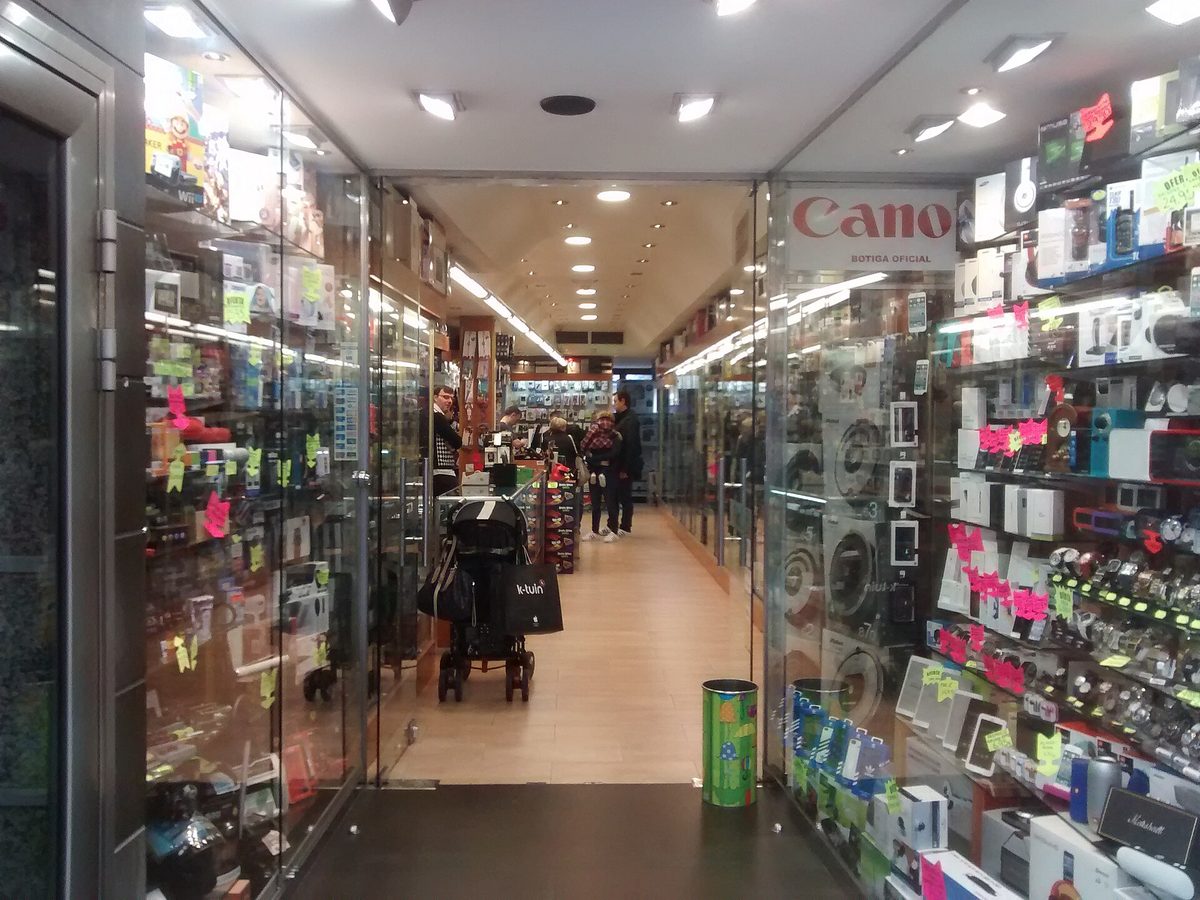
Phones, laptops, cameras and headphones run roughly 10-20% under Spanish retail. In real money that is around €80 on an iPhone 17 at 256 GB (near €879 against €959), about €80 on a Mac Mini M4, and over €120 on a Pro Max. Worthwhile if you were buying anyway. Not the deal your uncle remembers from 1985.
The asterisks are these. First, the €900 personal allowance means a flagship phone technically exceeds what you can carry into Spain or France without declaring, and a couple cannot split one indivisible item across two allowances. Second, ask explicitly for an EU or European warranty rather than a shop-only guarantee, because Andorran consumer law is not EU consumer law and your home protections do not follow you across the border. Third, compare against online prices rather than your home high street, because a flash sale can erase the gap entirely. There is a full breakdown in the guide to buying electronics in Andorra.
Fuel, the free bargain
Petrol and diesel typically run 10-20 cents a litre under Spanish prices and considerably more against France. Fill up before you leave, every time, without exception. It is the one purchase that costs you no extra time, no boot space and no customs anxiety, and on a full tank it can quietly pay for your lunch. You will pass stations on the CG-1 heading for the Spanish border and in Pas de la Casa on the French side.
Best buys and typical savings against Spain
Treat these as August 2026 snapshots rather than a price list. Promotions move, and the gap on any individual item can swing several per cent in a week.
| What you are buying | Typical Andorra price | Typical Spain price | Realistic saving |
|---|---|---|---|
| Marlboro carton (200) | around €48 | around €60 | ~20% vs Spain, ~60% vs France |
| Johnnie Walker Black, 1 L | around €18 | around €32 | ~44% |
| Jack Daniel’s, 70 cl | around €18 | around €24 | ~25% |
| Rioja crianza, 75 cl | around €5 | around €8 | ~35% |
| Acqua di Giò EDT, 100 ml | around €50 | around €75 | ~33% |
| Chanel N°5, 100 ml | around €85 | around €120 | ~29% |
| Dermocosmetic serum, 30 ml | around €25 | around €35 | ~28% |
| Coffee capsules, box of 50 | around €14 | around €22 | ~35% |
| iPhone 17, 256 GB | around €879 | around €959 | ~8%, and mind the €900 limit |
| Mid-range ski jacket | around €150 | around €200 | ~25%, more in clearance weeks |
| Unleaded petrol, per litre | around 10-20c less | — | ~10-15% |
| Zara or Mango basics | compare the tag | compare the tag | 0% |
What is not worth buying, in plain language
Half the value of a shopping guide is the list of things you should walk past, so here it is without hedging.
Chain fashion
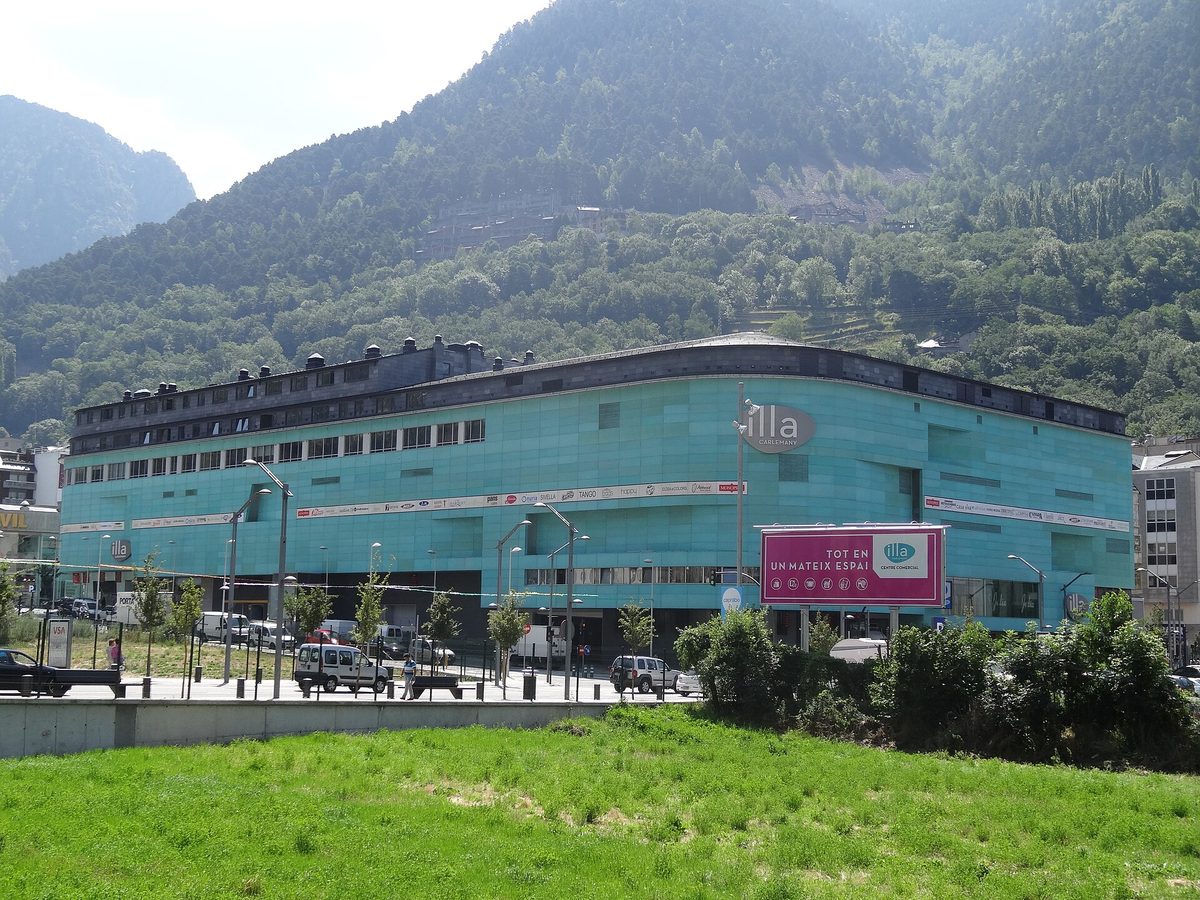
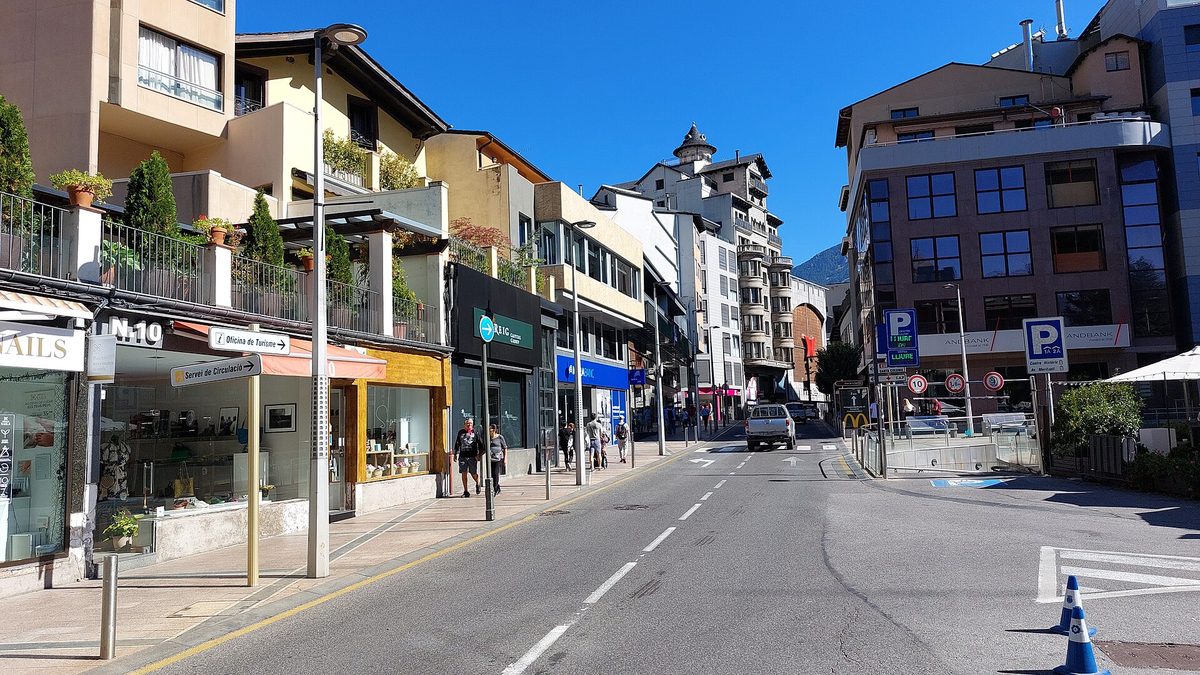
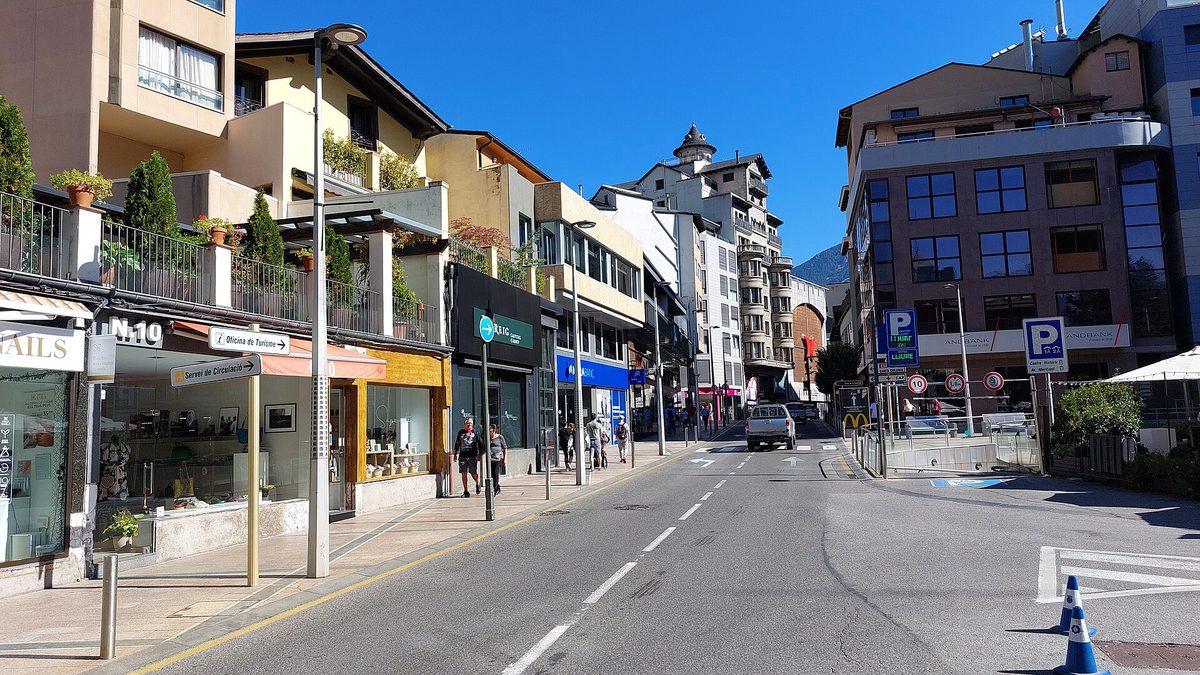
Don’t expect Zara, H&M, Mango and their neighbours to undercut their Spanish stores by enough to justify the trip; if a saving matters, compare the tag on the exact item. The 1.5 km Shopping Mile, running from Andorra la Vella into Escaldes-Engordany along Meritxell, Fener Boulevard, Vivand and Carlemany, is about choice and a warm place to walk on a wet afternoon, not about savings. Buy clothes here if you like the clothes.
Books and stationery
Same price or worse, and the English-language selection is thin. Small-market economics beat small-tax economics every time.
Fresh groceries
Fruit, vegetables, milk, bread and fresh meat cost the same as Spain or a little more, because everything has to be trucked up a mountain. Nobody drives to a Pyrenean microstate for lettuce. The exception is the local produce covered further down, which you buy for what it is rather than for the price.
Luxury watches and fine jewellery
The Meritxell window displays are seductive and the maths rarely is. Authorised dealers work to brand-set international pricing, the real deltas against a serious Spanish or French dealer are small once you compare like for like, and a €4,000 watch blows through the €900 allowance so comprehensively that the legal position gets awkward. Older guides that promise Rolex bargains here are recycling a 1980s reputation.
The tat, the fakes and the illegal
Skip the fridge magnets, the moulded resin skiers, the “I love Andorra” mugs and the machine-embroidered towels. They are made in the same factories that supply every other souvenir shelf in Europe and they will be in a drawer by Christmas. Skip anything sold as a designer bag or watch at a price that would be a miracle, because it is a counterfeit and counterfeits get confiscated at the border along with a conversation you do not want. And skip anything you cannot legally carry home: sizeable quantities of untaxed tobacco beyond your allowance, and any protected wildlife product.
Andorra souvenirs worth the weight
Now the good bag. Everything below is either produced in Andorra or so specific to this valley system that it makes no sense anywhere else. This is the answer to what is Andorra famous for shopping beyond the duty-free run, and it is the half of the trip I actually enjoy.
Mountain cheese, starting with tupí
Andorran cheesemaking is small, stubborn and genuinely good. Producers work cow, sheep and goat milk at altitude, and the results change valley by valley in a way that sounds like marketing until you taste two of them side by side. Casa Raubert up at Escàs in La Massana makes a range from cow and sheep milk and runs tastings and workshops. El Batall in Santa Coloma works with organic cow milk and makes mató, the fresh curd cheese you will meet again as a dessert with honey.
The one to hunt down is tupí — formatge de tupí — a strong, spreadable cheese matured with spirit in a sealed pot until it develops a smell that clears rooms and a flavour that converts sceptics. It is a Pyrenean tradition rather than a purely Andorran one, and it is the single most memorable edible thing you can carry out of this country. Ask for it vacuum-packed at the counter. Ask twice if the assistant looks doubtful; they can usually do it.
Expect around €8-20 for a good wedge. If you want to understand what you are eating before you buy, the guide to Andorran food is the place to start, and eating a proper mountain meal at a borda restaurant first is the most enjoyable possible form of market research.
Charcuterie and controlled-quality meat
The embotits — cured sausages, bull, llonganissa, dry-cured ham — are Catalan-Pyrenean in style and excellent. Look for the Carn de qualitat controlada d’Andorra label on meat products, which certifies free-grazing summer and autumn pasture and controlled feed, and for protected geographical indication beef. Vacuum-packed cured sausage travels beautifully, needs no refrigeration and looks far more impressive than its price.
One practical warning that catches people. Meat and dairy carried into the EU from a non-EU country is restricted, and Andorra is not in the EU. Food from Andorra is capped at €300 in value per traveller aged 15 or over (€150 for under-15s), with limits of 4 kg of cheese and 5 kg of meat, so do not attempt a suitcase of ham, and do not carry any of it onto a flight from a third country without checking the current rules.
Mountain honey, and a syrup made from fir cones
High-altitude honey is the easiest good souvenir in the country: light, unbreakable if you pack it properly, and unmistakably of this place. Apiaries sit high in the valleys — Naturalis, Casa Folch and Autèntic are names to look for — and some run guided visits where you see the whole production line. Rhododendron and wild mountain flower honeys are the ones I bring home. Around €8-15 for a decent jar.
The oddity worth seeking is a fir-cone syrup, sold under names like Nectum, made by steeping young cones. It tastes resinous and faintly medicinal and it is the sort of thing nobody at home has encountered, which is rather the point of a souvenir.
Wine from vineyards that should not exist
Andorra makes wine, and makes it high in the mountains. The scene is tiny — a handful of producers, small volumes, sold out some years — which makes a bottle a genuinely uncommon gift rather than a generic one. Casa Auvinyà in Sant Julià de Lòria makes reds and a white called Imagine, a blend of Viognier, Pinot Gris and Albariño. Borda Sabaté 1944 is in the same parish, and a few smaller growers are worth asking about at a good deli.
Expect to pay more than for a supermarket Rioja, because you are buying scarcity and hand-worked terraces, not volume. That is the correct reason to buy it. Several cellars take visits by arrangement, which turns a purchase into an afternoon; there is more on the producers and the tasting circuit in the guide to Andorran wine.
Craft: iron, wood, wool
Ironwork has a long history here, alongside the livestock, farming and weaving that carried Andorra’s economy long before tourism. You will find hand-forged candlesticks, hooks, small tools and decorative pieces in the old-town workshops and craft shops. Knife-point carving on wood, leather and metal is another local tradition, as is pinewood furniture, which is beautiful and entirely impractical to carry unless you drove.
Wool is the safe bet: scarves, throws and blankets from Pyrenean sheep, warm and packable. And several craft shops sell pieces referencing the Romanesque churches — Santa Coloma’s round bell tower, the frescoes, the stone doorways — which read as design objects rather than tourist product. Buy from an actual craft shop rather than a souvenir kiosk and the difference in quality is immediately visible.
Stamps and the diner, for people who collect things
This is my favourite quirk. Andorra has no postal service of its own: Spain’s Correos and France’s La Poste both operate here, side by side, and each issues its own stamps specifically for Andorra that are not valid in the issuing country. Two national postal administrations, one tiny country, two parallel sets of collectible stamps. For a philatelist that is irresistible, and a sheet costs a few euros.
The Andorran diner is the coin version. Andorra uses the euro, but it also issues commemorative diner coins aimed squarely at collectors, with no legal tender value. Both make excellent gifts for the relative who is impossible to buy for, weigh nothing, and cannot break.
Caldea spa products and the things people actually use here
The thermal spa in Escaldes-Engordany sells its own bath and body range, which is a rare example of branded merchandise that is genuinely tied to the place — the water is the entire reason the town exists. If you have already spent an afternoon in the thermal waters at Caldea, a bottle of something from the shop on the way out is a better memento than a keyring.
The same logic applies to gear. A pair of goggles, a base layer or a helmet bought in a shop in Pas de la Casa and used on Grandvalira the next morning is a souvenir that earns its place in the wardrobe for a decade. A Catalan-language book, a recording of local Pyrenean music, or a cookbook of mountain recipes does the same job for people who do not ski.
The co-princes, and the joke merchandise that is actually good
Andorra’s two heads of state are the Bishop of Urgell and the President of France, co-princes whose office traces its origins to the paréage of 1278. It is one of the strangest constitutional facts in Europe and the shops know it. Postcards, prints, T-shirts and small books that lean into the co-princes, the smuggling history and the general improbability of the place are genuinely funny and genuinely local. That is a much better joke gift than a plastic mountain goat.
Where to buy Andorra local products
The bargain list is easy to find; the whole valley advertises it. The local products hide in plain sight, and if you only walk the main avenue you will miss all of them. Here is where each thing actually lives.
The old town of Andorra la Vella
Two minutes uphill from Avinguda Meritxell, the stone quarter around Casa de la Vall is where the craft and speciality shops cluster: ironwork, wool, carved wood, Romanesque-referencing pieces and a few good delis. This is a gift-hunting district, not a bargain district, and prices reflect hand work. Give it an hour. The detail on the streets and which shops are worth the climb sits in the guide to shopping in Andorra la Vella.
The Pyrénées gourmet hall
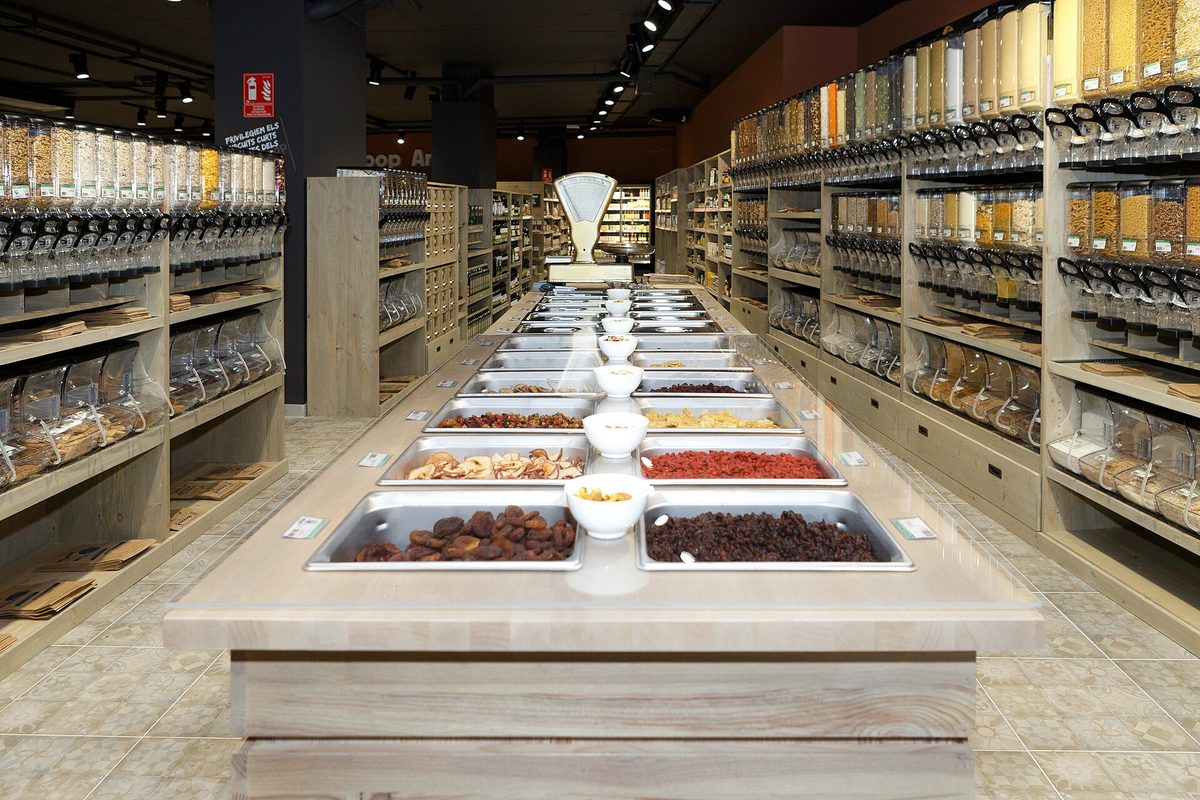
Pyrénées, the department store at Avinguda Meritxell 11, has a gourmet floor that makes an efficient single stop for edible souvenirs. Cheese counter, charcuterie counter, Andorran and Catalan wine, honey, preserves, and staff who will vacuum-pack for you. It is not the cheapest option on any individual item, but for a visitor with two hours and a list it is unbeatable. The other malls and border boxes are covered in the roundup of Andorra’s shopping centres.
Independent delis and the market
The unglamorous grid of streets on the river side of the avenue — around Riberaygua and Travesseres — is where family-run food shops survive. Better prices, better conversation, less English. Seasonal markets such as the Mercat de la Vall bring producers together with tastings, and if your dates line up that is the single best place to buy cheese, because you can try before you commit.
Cellar doors and farm shops
The wineries are mostly in Sant Julià de Lòria parish and the terraces above it; the cheese producers are scattered through La Massana and Santa Coloma; the apiaries are up the valleys. Several take visits by arrangement rather than as drop-ins, so email ahead. This is the version of shopping that needs a car and rewards a slow morning, and it pairs naturally with a walking-and-eating day rather than a retail one.
Tourist office shops and Escaldes
The tourist office shops sell stamps, coins, books and a curated shelf of local products, and they are the honest option if you have twenty minutes before a coach leaves. Over the parish line in Escaldes-Engordany, the pedestrianised Vivand stretch mixes chains with a slightly more local set of boutiques and food shops, and the spa shop sits at the far end.
How to tell the real thing from the shelf-filler
Look for the Made in Andorra mark, which certifies products actually produced in the country, and for the Productes Agrícoles i Artesans d’Andorra brand created to group the small mountain producers. On meat, the Carn de qualitat controlada d’Andorra label is the one that means something. On food generally, check for a named producer, a parish, and a cure or harvest date. Anything labelled vaguely as European, priced suspiciously low and stacked in identical rows is a distributor product that has never been near a Pyrenean farm.
The allowances that decide how much you can take
Everything on the bargain list is capped by customs, and this is where the internet lets people down badly. Several widely-read price guides publish the generic third-country figures — 200 cigarettes, one litre of spirits, a €300 general allowance — which are not the numbers that apply on the Andorran border. The correct per-adult allowances for returning into Spain or France are more generous.
| Category | Allowance per adult |
|---|---|
| Cigarettes | 300 (one and a half cartons) |
| Spirits over 22% | 1.5 litres |
| Fortified or sparkling under 22% | 3 litres |
| Still wine | 5 litres |
| Beer | 16 litres into Spain; no separate quota into France |
| All other goods | €900 in value (€450 if under 15) |
| Food products | €300 in value |
Three things worth knowing. Allowances are per person, so a car of four adults carries four sets — but a single indivisible item, like a €1,050 phone, cannot be split across two people’s allowances. Keep your receipts, because value has to be provable. And exceeding a limit is not automatically a confiscation, but it does mean duty, possible penalties and a long conversation in a lay-by. The full rules, including the vehicle and fuel details, are in the guide to the Andorra duty-free allowance.
A shopping list by budget
The most useful framing for what to buy in Andorra is not category but wallet. Here is how I would spend three different amounts.
Under €20: the good small gift
A jar of high-altitude honey, around €8-15. A vacuum-packed wedge of local cheese, from about €8. A dry-cured llonganissa, around €8-12. A sheet of Andorran stamps, a few euros. A bar of good local chocolate or a jar of fir-cone syrup. Any two of those, wrapped together, beat a €40 department-store gift set comfortably, and they are the presents people ask about.
Under €100: the proper haul
A bottle of Andorran wine at €15-30, a serious cheese and charcuterie selection at €25-40, honey, and a wool scarf. Or, if you are shopping the bargain list, a good perfume plus a litre of spirits and still change. This is the sweet spot for a couple doing a day trip: enough that the drive paid for itself, not enough to trouble anyone at the border.
Big-ticket: when it genuinely makes sense
Ski hardware bought in the pre-season or clearance windows, with a real boot fitting. A phone or laptop you were already going to buy this quarter, checked against online pricing first and bought with an EU warranty. A full case of wine split across two adults’ allowances. Everything else at this price level — watches, jewellery, designer fashion — is a purchase you happen to be making in Andorra rather than a reason to be in Andorra.
If you came by coach: weight, fragility and the no-car problem
Most guides quietly assume you drove. Plenty of people arrive on a bus from Barcelona or Toulouse with a day-return ticket and a hold limit, and the calculus changes completely.
Weight first. Wine is heavy once you count the glass, and five litres of it will wreck a shoulder before you reach the terminal. Honey is heavy for its value. Cheese and charcuterie are the best weight-to-memory ratio in the country, and coffee capsules are close behind. If you are carrying rather than driving, buy the cheese and skip the case of Rioja.
Fragility second. Ask for bubble wrap at the counter — food shops here have it because half their customers are visitors — and put glass in the middle of soft things. Liquids in aircraft hand luggage have to be in containers of 100 ml or less, inside a clear resealable one-litre bag (medicines, baby food, special dietary products and sealed airport purchases with their receipt are the exceptions), which catches out people connecting through Barcelona or Toulouse. Cured meat and hard cheese are fine in a bag; soft cheese in a hot coach for four hours is a mistake you make once.
Timing third. Coach day-trippers usually get three or four useful hours. Spend them on the Meritxell to Vivand axis, use the Pyrénées gourmet hall as the one-stop for food, and buy nothing in the first shop you enter. If you are planning the whole day rather than improvising, the guide to organising an Andorra shopping trip lays out a realistic timetable.
Frequently asked questions
What is Andorra famous for shopping?
Tobacco, alcohol, perfume and cosmetics, electronics and ski gear. The general sales tax rate is 4.5%, against standard VAT of 20-21% next door, though the real saving varies by product, so compare the exact item before you buy. Less famously, it produces excellent mountain cheese, cured meat, honey and small-batch wine, which is the half of the shopping most visitors drive straight past.
What is the best souvenir to buy in Andorra?
Vacuum-packed local cheese, and specifically tupí if you can find it. It costs under €20, it exists nowhere else in this form, and it starts a conversation the moment you open it. If you want something that does not need eating, a sheet of Andorran stamps or a hand-forged piece of ironwork from an old-town craft shop.
Are there any products actually made in Andorra?
Yes, more than the duty-free reputation suggests. Cheese from small dairies, cured sausage, mountain honey, high-altitude wine, ironwork, wool and carved wood. Look for the Made in Andorra mark or the Productes Agrícoles i Artesans d’Andorra brand to be sure of the origin.
Is Andorra cheaper than Spain for everything?
No, and assuming so is how people waste a day. Tobacco, spirits, perfume, branded groceries, pharmacy items and fuel are meaningfully cheaper. Electronics are modestly cheaper. Chain fashion, books, fresh food and luxury watches are the same or worse. Know your home price before you cross the border, especially on anything electronic.
How much can I bring back from Andorra?
Per adult: 300 cigarettes, 1.5 litres of spirits over 22% or 3 litres under, 5 litres of still wine, €900 of other goods and €300 of food. Spain adds 16 litres of beer; France sets no separate beer quota. Under-15s get €450 of goods and no alcohol or tobacco. Allowances are per person, but a single expensive item cannot be split between two of you.
Can I take cheese and cured meat home from Andorra?
Into Spain or France, yes, within the food allowance: €300 in value per traveller aged 15 or over (€150 under 15), and no more than 4 kg of cheese and 5 kg of meat each. Andorra is outside the EU, so meat and dairy are technically restricted goods and commercial quantities are not permitted. If you are flying home from Barcelona or Toulouse afterwards, check your airline and destination rules, because a connecting flight can change the answer.
Does Andorra make its own wine?
It does, and at altitude. Volumes are tiny and bottles are not cheap, which is exactly why they make good gifts. Casa Auvinyà and Borda Sabaté 1944, both in Sant Julià de Lòria, are two names to look for; ask the cellars directly about visits.
What can I buy in Andorra for under €20?
A jar of mountain honey, a wedge of local cheese, a cured llonganissa, a sheet of collectible stamps, a bar of chocolate, a jar of fir-cone syrup, or a mid-range bottle of Andorran wine if you catch a good one. Two or three of those together make a better gift than anything on the tourist-shelf side of the street.
Related Andorra travel guides
Once you have worked out what to buy in Andorra, the rest of the trip needs planning too. The tax arithmetic and the border logistics all live in the shopping pillar linked near the top of this guide. From there, look at things to do in Andorra for everything that is not retail, the sample Andorra itinerary if you are fitting shopping around mountains, and the practical Andorra travel tips for the border, driving and payment details that make the difference between a smooth day and a long one.