The worst way to spend one day in Andorra produces a car park, a queue and a sandwich. Drive straight up to Pas de la Casa because it is the only name you recognise, find fog and a retail strip, turn around, and hit the CG-1 through the capital in the middle of the afternoon.
Go home after a day like that and Andorra looks overrated. It isn’t. The plan was.
Here is the honest version. One day in Andorra buys one thing well, not three things badly: the mountains, the capital, a day on skis, or a duty-free-and-spa run. This guide is for anyone who already knows how they are getting here, and now has to decide what to do with the hours.
Last updated: August 2026. Prices, opening seasons, ticket rules and bus timetables in Andorra move every year, and several of the headline attractions run seasonal calendars that shift with the snow. Everything below is a 2026 snapshot, hedged accordingly — check visitandorra.com and each operator’s own site before you build a day around anything.
This is the on-the-ground companion to the main Andorra itinerary guide, which argues about how many days the country deserves in the first place. I am not going to re-run that argument here, and I am deliberately not writing about how you get into the country either — that is its own subject. This page starts at the moment you are standing in Andorra with a single day in your hands, and it is entirely about the choice you make next.
The day at a glance
If you read nothing else, read the table. Nearly every disappointing day here traces back to one of these lines being ignored.
| Planning point | The 2026 reality |
|---|---|
| What a day realistically covers | One valley and one headline experience, plus a proper lunch. Not three regions |
| The four workable plans | Mountain day, capital day, winter ski day, shopping-and-spa day |
| Best plan for a first visit, May–October | The mountain day — Ordino and Canillo, not the capital |
| Best plan with no car | The capital day. Everything is walkable or one bus hop |
| Drive times from Andorra la Vella | Ordino, Canillo and Arinsal are the short hops; Soldeu is further, and Pas de la Casa, at the French border, is the longest drive |
| What ruins tight plans | CG-1/CG-2 traffic through the capital: allow extra time and check road conditions on mobilitat.ad |
| Buses | National lines from €1.90 a ride; Andorra la Vella–Encamp every 11–15 min on weekdays, 20–30 min on Saturdays, 30 min on Sundays |
| Minimum useful window | Eight hours on the ground. Ten is comfortable. Six needs the cut-down plan |
| Rough cost per adult | ~€55–75 mountain day; ~€80–95 capital and spa; ~€110–150 ski day |
| Book before you arrive | Caldea entry slot, Tibetan Bridge shuttle, ski pass and rental, weekend borda table |
| Skip on a single day | Pas de la Casa in summer, the Madriu valley, stacked museums, two ski sectors |
| Honest verdict | Enough for a genuinely good day out. Not enough to say you have seen Andorra |
What one day in Andorra can actually hold
Andorra is small enough to lie to you. The whole country is 468 km², about the size of a mid-sized city’s commuter belt, and on a map every point looks twenty minutes from every other point. On a clear Tuesday morning in October that is broadly true.
The shape matters more than the size. Andorra is a Y lying on its side. The stem comes up from the Spanish border through Sant Julià de Lòria into Andorra la Vella and Escaldes-Engordany, where the two arms split. The eastern arm, the CG-2, climbs through Encamp and Canillo to El Tarter, Soldeu and eventually the French border at Pas de la Casa. The western arm runs up through La Massana to Ordino and on to El Serrat and the Arcalís bowl, with a branch to Arinsal and Pal.
Everything hangs off the capital. There is no road that lets you cut from Ordino to Canillo without coming back down through Andorra la Vella, which means the two most interesting mountain valleys in the country are joined by the single most congested kilometre in it.
Roughly in order of distance from central Andorra la Vella, nearest first:
- Escaldes-Engordany — joined on to the capital, and close enough to walk
- La Massana — the first village up the western arm
- Encamp — the first stop up the eastern arm
- Ordino — further up the western arm, past La Massana
- Arinsal — on the branch off La Massana
- Canillo — past Encamp on the eastern arm
- El Serrat — near the head of the Ordino valley
- Soldeu — high on the eastern arm, after El Tarter
- Ordino-Arcalís car park — the top of the western arm
- Pas de la Casa — the French border, and the longest drive of the lot
How long each drive takes swings with traffic, weather and the time of day, so check a live route planner on the morning rather than building a tight itinerary on fixed numbers.
The CG-1 through the capital is the thing that ruins tight plans
Every drive above is easy when traffic is flowing. Through the urban valley of Andorra la Vella and Escaldes, the main roads — the CG-1 from the Spanish side and the CG-2 on towards France — carry shoppers, delivery lorries, ski coaches and local traffic alike. There is no bypass. There is no clever back street.
A short hop across the capital can take far longer than the map suggests when traffic builds. If your day contains one crossing of the capital, plan it around the busiest hours. If it contains two, you have designed a bad day.
The practical consequence is simple and it drives everything below: pick one arm of the Y and stay in it. The single biggest mistake people make with one day here is trying to do the capital, the mountains and the shopping mile between breakfast and dinner. You can drive that route. You cannot enjoy it.
Plan 1: the mountain day (my default for a first visit)
If it is anywhere between late May and early November, and you have a car, this is the day I would give you. It is also the day almost nobody writes about, because most one-day guides are secretly guides to the capital.
The argument is straightforward. The mountains are the reason Andorra exists as a place worth visiting. The capital is a pleasant shopping town with a small, genuinely lovely old quarter that you can see properly in ninety minutes. If you have one day, spend it at altitude and accept that you will see the capital through a windscreen.
Hour by hour
08:30 — Out of the valley before it wakes up. Head north on the CG-3 towards La Massana and Ordino. Doing this leg before nine is worth more than any other decision in the plan; by ten the same drive is twice as long.
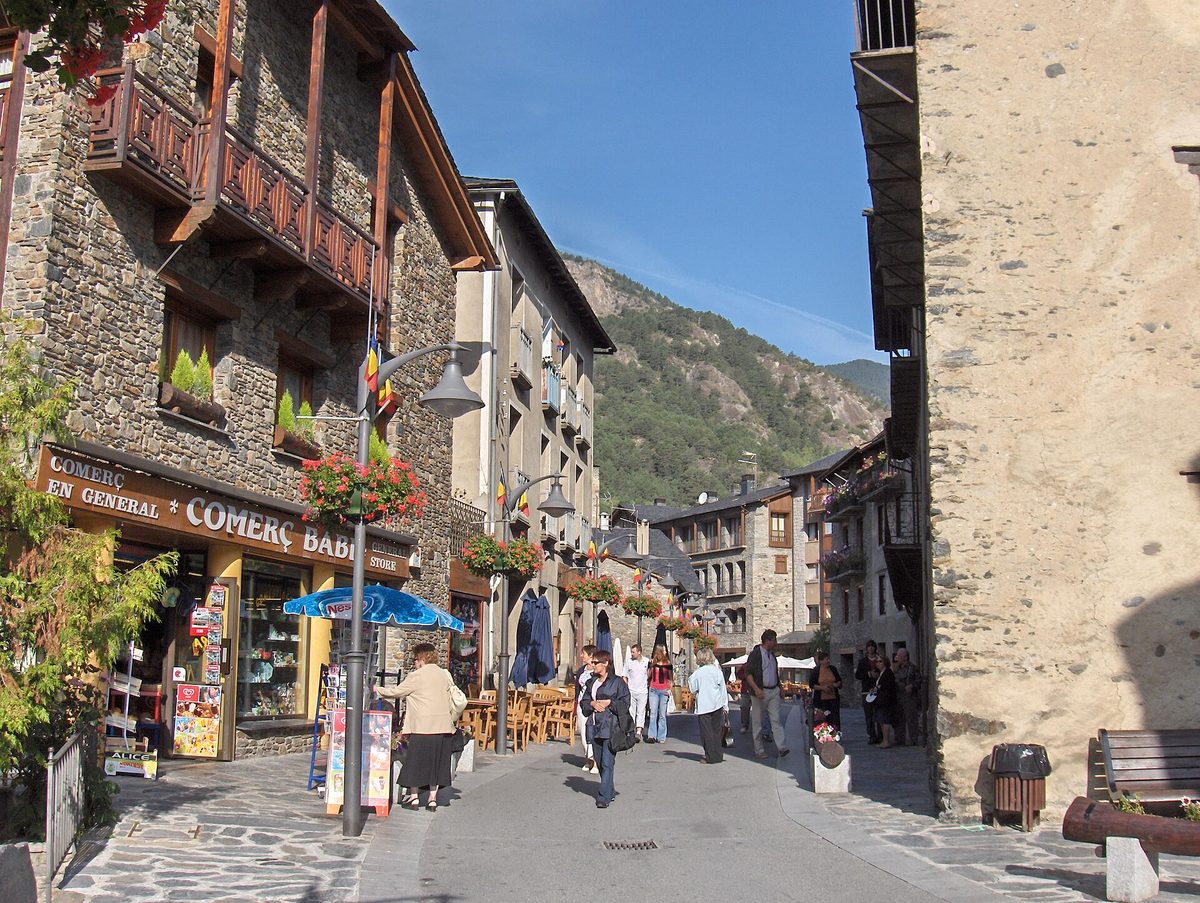
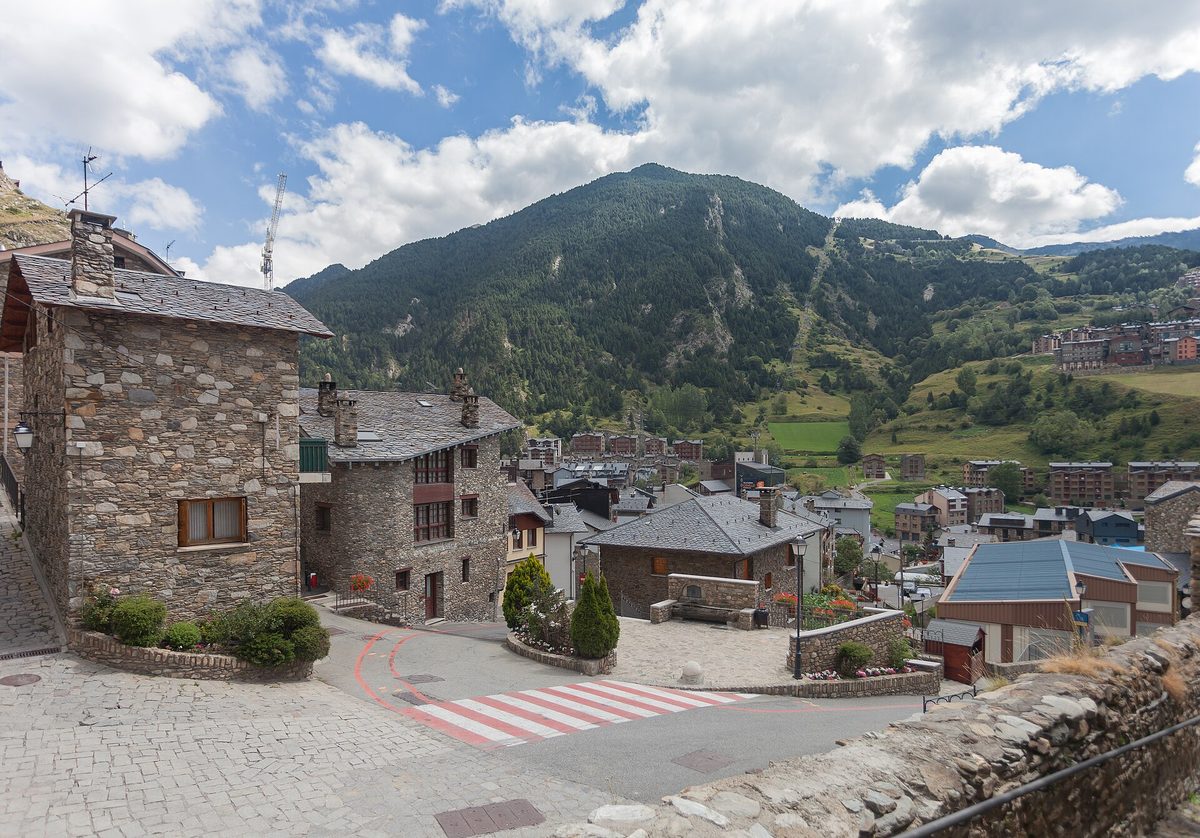
09:00 — Coffee in Ordino. Ordino sits at around 1,300 m and is the prettiest village in Andorra by a comfortable margin — dark stone, slate roofs, a proper square rather than a car park with ambitions. Have coffee on Plaça Major, look at the church of Sant Corneli i Sant Cebrià, and if you like house museums, the Casa d’Areny-Plandolit is the best small museum in the country and takes about forty minutes. Ordino is a UNESCO Biosphere Reserve, which for once is not just a plaque. My guide to Andorra’s villages goes further into which ones are worth the detour.
10:00 — Keep climbing. You now choose between two ends of the same valley. Carry on past El Serrat to the Vall de Sorteny natural park, where a small road ends at a car park and a mountain refuge, and the meadows in early July are the best wildflower display in the Pyrenees I know of. Or turn up towards Ordino-Arcalís for the Tristaina lakes, on foot or with a lift from the resort.
10:45 — A short walk at altitude. The Estanys de Tristaina circuit links three high-mountain lakes over 4.4 km; the tourism board allows about three hours, and the total climb of around 201 m is modest by Pyrenean standards. It is the best effort-to-reward walk in Andorra and the reason I keep sending first-timers up there. In summer 2026 the Creussans chairlift ran daily from 6 June to 1 November, while the Tristaina gondola ran daily only from 20 June to 13 September, at weekends either side of that and on certain public holidays. The high-season pass for both cost €23; the €20 low-season pass covered the chairlift alone. Either shortens the whole thing considerably if your legs or your schedule are limited. Sorteny is the gentler alternative: a flat hour among the flowers, no navigation required. Longer options are in the hiking guide, but do not get ambitious on a one-day visit.
13:15 — Lunch at a borda. A borda is a converted stone barn doing grilled meat over wood, escudella stew in winter and trinxat all year, and eating in one is the single most Andorran thing you can do in a day. There are good ones scattered through La Massana and the Ordino road; book ahead at weekends, because the good ones fill with locals. Expect €30–45 a head with wine. If you want the full explanation of what a borda restaurant actually is and which ones earn the drive, that guide has it.
15:00 — Cross to Canillo, or do not. This is where the plan forks, and I want to be straight with you about it. Crossing back down through the capital and up the eastern arm to Canillo is quick if the road behaves and slow if it does not. Midweek in June, do it. On a Saturday in August, absolutely do not — instead, stay west, walk the second Ordino valley or sit outside in La Massana, and go home unhurried.
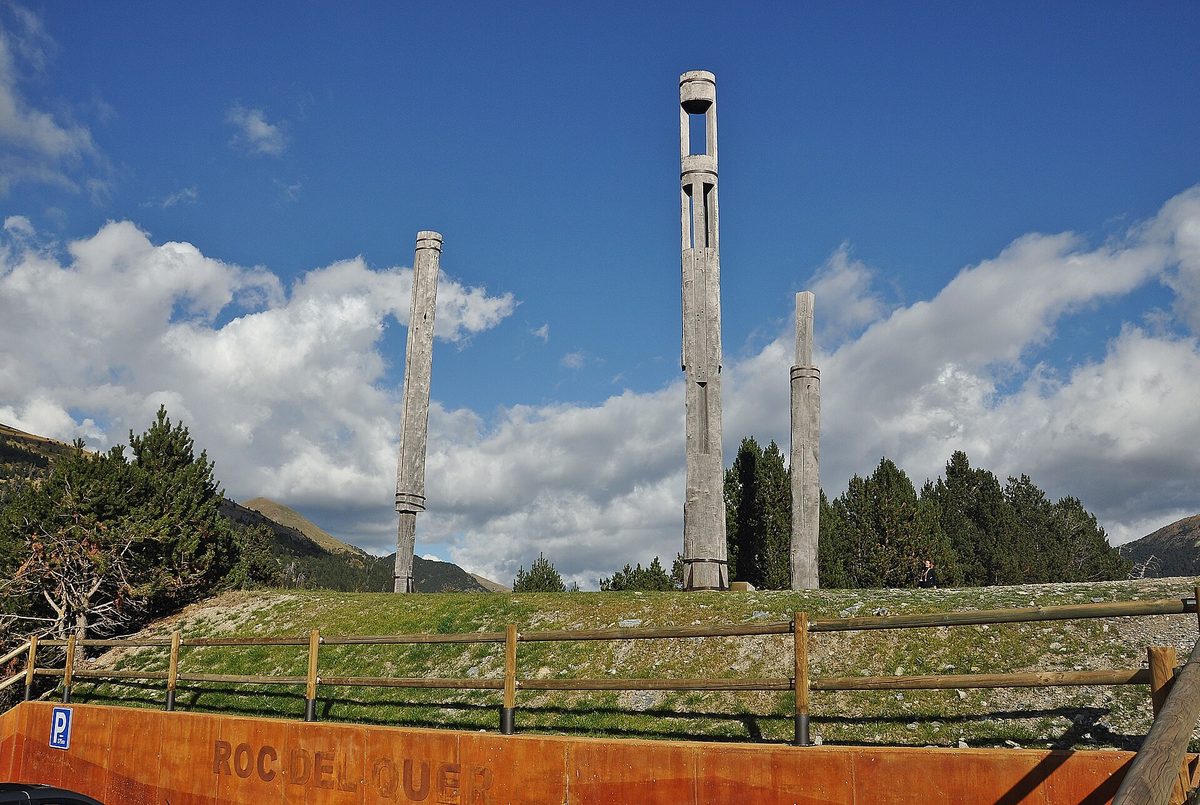
15:45 — The Canillo pair. Two things sit within ten minutes of each other above Canillo. The Roc del Quer viewpoint is a short walkway at nearly 1,900 m that ends in a cantilevered glass floor over an enormous drop, with a bronze figure sitting on the end of it contemplating the void; entry is €6, and from November 2026 to February 2027 it opens daily, 10:00–16:00, weather permitting. The Tibetan Bridge at Canillo is a 603 m footbridge strung 158 m above the Vall del Riu, opened in 2022, and in 2026 has been running around €17 for adults, about €19 in peak summer, with the compulsory shuttle bus included. You cannot drive to the bridge. Combined tickets covering both exist and are worth asking about.
Pick one if you are tired. Do both if you are not. The bridge is the bigger outing: its entrance is a 900 m walk from the shuttle stop before you set foot on the 603 m span. The Roc del Quer is a short walkway and a photograph.
18:00 — Down. The evening run back through the valley is usually clear, and the light on the eastern slopes between six and eight in summer is the best of the day.
The simpler version
If the forking makes you nervous, halve it. Spend the whole day in one valley: Ordino, Sorteny or Tristaina, a borda lunch, an afternoon by a river, home. Or spend the whole day in Canillo: the bridge, the viewpoint, the eleventh-century church of Sant Joan de Caselles, lunch in the village, and the Palau de Gel if you have children who need burning off. Both are calmer days than the full circuit and neither leaves you feeling short-changed.
Can you do the mountain day without a car?
Partly. National buses run up the eastern arm through Encamp to Soldeu and Pas de la Casa and up the western arm to La Massana, Ordino and Arinsal, frequently and cheaply. What the buses do not do is deliver you to trailheads: there is no service to the Roc del Quer, and the Arcalís car park is a seasonal proposition. Canillo is the realistic car-free mountain day, because the Tibetan Bridge shuttle starts in the village and the bus stops there.
Plan 2: the capital day
This is the day most visitors end up having, and there is nothing wrong with it as long as you choose it deliberately rather than defaulting into it. It is the right plan if you have no car, if the cloud base is sitting below 2,000 m, if you are travelling with someone whose knees have opinions, or if the whole point of the trip was the spa.
Andorra la Vella and Escaldes-Engordany are effectively one town strung along the valley floor. You can walk the entire useful length of it in forty minutes. Park once, or arrive at the Estació Nacional d’Autobús, and then do not touch the car again.
Hour by hour
09:30 — Park once, properly. The big central car parks under Prat de la Creu and around the Centre Ciutat area run at roughly €2–3 an hour and are the correct answer. Hunting for free street parking in the capital is a sport for residents and you will lose.
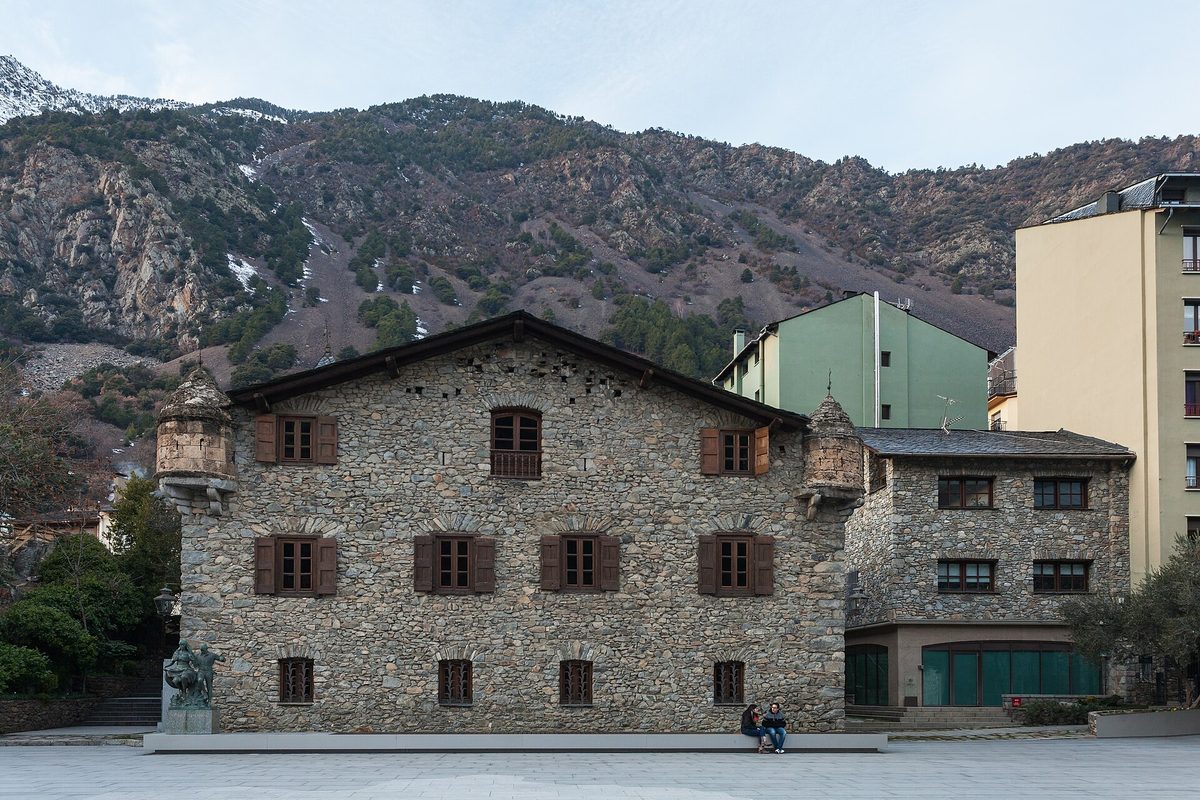
10:00 — The Barri Antic. The old quarter is small — genuinely small, thirty to forty minutes of cobbles — and it is still the best thing in the capital. Start at the Romanesque church of Sant Esteve, which is free and quiet, then climb the lane to Casa de la Vall, the 1580 stone manor that housed Andorra’s parliament for over three centuries. Entry is €5 and you can look round on your own; a guided tour costs €1.50 more and has to be booked ahead. From October to May it is shut on Sundays and Mondays, though it opens on Sunday mornings from June to September — a fact that catches out people who arrive on a Sunday coach. Book or check before you go.
11:15 — Plaça del Poble. Take the public lift up from the old quarter to the square on the roof of the government building. It is a public square, newly refurbished and reopened in June 2026, so there is nothing to pay, and the terrace gives you an easy view down the valley without leaving the city. Five minutes, and the best free thing in the capital.
11:45 — The Dalí and the river. Walk down to Plaça de la Rotonda for La Noblesse du Temps — Salvador Dalí’s melting bronze clock, nearly five metres tall, standing in the open air with no ticket, no museum and usually no queue. Cross the Pont de París and pick up the riverside walkway along the Valira. Locals use it as an exercise loop; in spring the trees along it flower pink through the middle of the capital, which is a strange and lovely thing to find between two duty-free shops.
13:00 — Lunch. Order the menú del dia somewhere unfussy off the main drag: three courses with bread and wine for roughly €15–20 is still normal here at lunchtime and it is the best value meal in the country.
14:15 — The Shopping Mile. Avinguda Meritxell runs into Fener Boulevard and then into Vivand and Avinguda Carlemany in Escaldes: about 1.5 km of near-continuous retail, open on Sundays, with the Pyrénées department store at Meritxell 11 and the illa Carlemany mall along the way. Even if you have no intention of buying anything, walk it once for the people-watching. What is actually cheaper here, and by how much, is the subject of the shopping in Andorra guide rather than this one.
16:00 — Three hours in Caldea. The thermal complex in Escaldes-Engordany draws on springs that come out of the ground at 65–70°C, and an afternoon session in the outdoor lagoon with the mountains going dark above you is a genuinely good way to end a day. Classic afternoon tickets start at €49.50, and cheaper two-hour slots start at €31 in the early morning and at midday, with midday entry between 13:15 and 13:45; prices vary by date. Book your slot online in advance: entry times are enforced strictly, and Caldea has spent much of 2026 under phased renovation, so check what is actually open on your date. The full ticket-by-ticket breakdown is in the Caldea guide.
19:30 — Dinner, if you are staying. The old quarter is much better in the evening than at midday, once the day-trip coaches have gone and the terraces fill up.
If you want this day expanded street by street, with the museums that justify their entry fee and the ones that do not, I have written it up separately as one day in Andorra la Vella. Note that the Carmen Thyssen museum is temporarily closed, so check the museum’s own site for reopening news before you plan around it.
Plan 3: the winter ski day
Between roughly early December and early April, a single day on snow is the most efficient use of a day in Andorra there is — provided you accept one rule. One sector. Not one resort, one sector.
Grandvalira alone is about 215 km of piste across seven linked sectors. People arrive with a day pass and a plan to “see the whole mountain”, spend four hours traversing, ski about nine runs and go home tired and vaguely disappointed. Skiing one sector properly and lapping the lifts you like is a better day by a wide margin.
Hour by hour
The night before — Buy the pass and book the rental. Both Grandvalira and Pal-Arinsal price passes dynamically now. A Grandvalira adult day has run from roughly €50 booked ahead to around €67 for a peak walk-up; Pal-Arinsal has sat a little cheaper, roughly €45 online against €49.50 at the window. Ski, boot and pole hire runs around €25–30 a day. Buying at the ticket window on the Saturday of a half-term is the most expensive way to do everything.
07:45 — Collect kit. Rental shops in the valley towns open earlier than the ones at the lift base and have shorter queues. Twenty minutes saved here is a full extra run at the other end of the day.
09:00 — First lift. The first hour on any Andorran mountain is the quietest and usually has the best snow. Do not squander it on breakfast.
12:30 or 13:45 — Lunch, at one of those two times. Mountain restaurants here go from empty to unusable between 13:00 and 13:30. Eat early or eat late; a self-service plate runs €20–30.
16:00 — Last lifts. Last-lift times vary by sector and through the season, so check the current operating information for the lift you are on before you commit to one more run. Ski down rather than ride down if you can — the last descent on empty pistes is usually the best run of the day.
16:30 — Après, briefly. Soldeu and El Tarter both have base bars that fill immediately after the lifts close, and Pas de la Casa has a rowdier version of the same. One drink, then leave. Which is the honest problem with a single ski day: the drive out is the part you have least energy for.
17:30 — Out. If you are heading for France over the Envalira pass, check conditions. Winter equipment requirements can be imposed at short notice on the mountain roads and they are enforced.
Which sector to pick depends on you: Soldeu and El Tarter for confident intermediates, Canillo and Encamp for families and beginners with valley access by cable car, Grau Roig and Pas de la Casa up towards the French border, Pal-Arinsal for a smaller and friendlier mountain, and Ordino-Arcalís at the head of the Ordino valley as the separate option. The full comparison lives in the skiing in Andorra guide.
One caveat worth saying plainly. A single ski day only makes sense if you are already sleeping close by, or you are a confident early starter with a car. If you are coming up from Barcelona for the day in January, you will get about four hours on snow for a very long day in a vehicle, and it is not a good trade.
Plan 4: the shopping-and-spa day
Some people come to Andorra to buy things. That is a legitimate reason to be here — general sales tax is 4.5% against 21% in Spain and 20% in France, and on the right categories the difference is real money. If that is you, stop pretending you want a mountain and build the efficient version of the day you actually want.
09:30 — Arrive as the shutters go up. Most shops open in the morning and stay open well into the evening. They trade on Sundays too, closing only on a handful of national holidays.
09:45 — Big-ticket first, while you are fresh. Electronics, perfume, spirits and sports gear are the categories where the saving is largest and the decisions hardest. Do them before your feet hurt. Pyrénées for the department-store sweep, illa Carlemany and Vivand for brands, the border retail boxes in Sant Julià de Lòria for volume.
13:00 — Lunch and a stock-take. Work out what you are actually carrying against your allowance: per adult returning to Spain or France, roughly 300 cigarettes, 1.5 L of spirits over 22°, 5 L of still wine, 16 L of beer, and €900 of other goods. There is no tourist tax-refund scheme here, so the tag price is the price.
15:00 — Caldea. A three-hour afternoon session is the correct reward for a morning on a hard retail street, and the complex sits at the far end of the shopping mile, which makes the geography almost suspiciously convenient. Book the slot before you leave home.
18:30 — Fuel, then cross. Fill the tank before the border regardless of which way you are going out.
Two honest warnings. First, this is the plan that most reliably disappoints people who half-imagined mountains: you will spend the whole day on one strip of valley floor and see essentially nothing of the country. Second, Saturdays and sale weekends turn the shopping mile and the border queues into a genuine ordeal. Come midweek if you possibly can.
Andorra in one day: the four plans compared
Read across the row that describes you and stop reading the other three.
| Plan | Best season | Energy needed | Rough cost per adult | Car? | Who it suits |
|---|---|---|---|---|---|
| The mountain day | Late May to early November | Moderate — a couple of hours on foot | ~€55–75 | Strongly preferred | First-timers, couples, anyone who came for the Pyrenees |
| The capital day | All year, and the right call in bad weather | Low — flat pavement all day | ~€80–95 with a spa slot | No | No-car visitors, coach day-trippers, mixed-mobility groups, rainy days |
| The winter ski day | Early December to early April | High | ~€110–150 with pass and hire | Yes, unless you are staying on the mountain | Skiers already sleeping nearby or in the valley |
| The shopping-and-spa day | All year; best midweek and in the January or July sales | Low, but hard on the feet | Entry costs are small; the damage is discretionary | Helpful for carrying things | People who came specifically to buy, and are honest about it |
If you only have six hours
Plenty of people are not on the ground for a full day. If you arrive around 11:00 and have to leave by 17:00 — which is the shape of most coach day trips — the four plans above collapse into two, and pretending otherwise is how people end up eating a service-station sandwich in a lay-by.
The six-hour capital version. 11:15 Barri Antic and Sant Esteve. 11:45 Casa de la Vall from the outside, or inside if it is a Tuesday to Saturday and you booked. 12:15 Plaça del Poble terrace. 12:45 the Dalí and the Pont de París. 13:15 lunch. 14:30 the shopping mile at a walking pace. 15:30 a two-hour Caldea slot, or an hour on the riverside walk if you would rather not undress. Out by 17:00.
The six-hour Canillo version. 11:15 drive straight past the capital without stopping. 11:45 arrive in Canillo. 12:00 Roc del Quer, twenty minutes and a photograph. 13:00 lunch in the village. 14:15 the Tibetan Bridge shuttle. 16:00 back down. This one gets you a mountain, which the capital version does not, but it needs a car and it needs the weather to cooperate.
What does not work in six hours: anything involving Pas de la Casa, anything involving a walk longer than an hour, and any plan that crosses the capital twice.
How to choose your one day in Andorra plan
Two questions decide it: what month is it, and who is standing next to you.
By season
December to March. If anyone in the group skis, ski. If nobody does, take the capital day and put the spa at the end of it — the mountain roads are still beautiful but the high viewpoints are shut or snowbound, and the Roc del Quer access road in particular is not a winter proposition. Short daylight also matters: in late December you effectively lose the day at five.
April and May. The awkward months. The ski season is finishing or finished, the summer attractions have not opened yet, and the high trails are still under snow. Take the capital day, or come another time. My honest ranking of the months is in the best time to visit Andorra guide.
June to September. The mountain day, without hesitation. Everything is open, the lifts are running, the days are long enough to be generous with, and the meadows are at their best in late June and early July. August brings crowds and heat in the valley, but 2,200 m fixes both.
October and early November. Still excellent, with the best light of the year and almost nobody about, but the operating seasons start closing down around late October and early November. Check every attraction individually before you build a day on it.
Any month, if the cloud base is low. Look at the mountain webcams the night before. If the cloud is sitting below 2,000 m, the mountain day loses its entire point and you are paying to stand in fog. Switch to the capital without regret.
By who you are travelling with
- First-time visitors in summer. Mountain day. You did not come to the Pyrenees to look at a perfume counter.
- Couples with a car. Mountain morning, borda lunch, late Caldea slot. This is the best single day in the country and it just about fits if you keep the crossing to one.
- Families with under-tens. Canillo. The bridge is a genuine thrill for anyone over about eight, the Palau de Gel handles rain, and the village is small enough that children can be let off the lead.
- Teenagers. The Tibetan Bridge, then the shopping mile, in that order. Doing it in the other order is how you end up carrying bags across a footbridge.
- Anyone with limited mobility. Capital day. You stay on the valley floor, and a public lift takes you up to Plaça del Poble.
- Groups without a car. Capital day, or Canillo by bus. Do not attempt Ordino-Arcalís by bus on a tight schedule.
- People who came to shop. Plan 4, midweek, and skip the guilt.
Getting around on the day
You have three options and they suit different plans. The full detail on routes, passes and driving rules sits in the getting around Andorra guide; here is what matters for a single day.
The national buses. Cheap, frequent and genuinely good. Single fares go by zone: €1.90 for zone 1, €3.45 for zone 2, €4.80 for zone 3 and €6.35 for zone 4. The L2 runs to Encamp, the L3 to Soldeu and the L4 to Pas de la Casa on the eastern arm; on the western arm the L5 goes to Arinsal, the L6 to Ordino and La Cortinada, and the L7 to La Massana and Ordino. Frequencies depend on the line and the day: the Andorra la Vella to Encamp service runs every 11 to 15 minutes on weekdays, every 20 to 30 minutes on Saturdays and every half hour on Sundays and holidays, when departures from the capital run from 06:50 to 21:20. Timetables are posted at the stops and are honest.
A hire car. Almost everyone driving in Andorra picked the car up in Barcelona, Toulouse or Lleida, because renting one inside the country for a single day rarely makes arithmetic sense. If you have one, it buys you Sorteny, Arcalís and the Roc del Quer road, which is to say it buys you the mountain day.
Taxis. They exist, they are metered, and they are not cheap. A capital-to-Canillo run will cost meaningfully more than €40 each way. Worth it once to reach a trailhead; not worth building a day around.
Parking. Park once and leave it. Central car parks in Andorra la Vella and Escaldes run at roughly €2–3 an hour (Andorra la Vella’s municipal car parks charge €2.90 for one hour); village car parks in Ordino, Canillo and La Massana are cheap or free, but check the tariff board when you arrive. The Arcalís and Sorteny car parks are free but small, so arrive early on a summer weekend.
What to skip on a single day, and why
Cutting things is the whole skill here.
- Pas de la Casa, in summer. The longest drive from the capital, each way, to a high-altitude retail strip built for French shoppers buying petrol and tobacco in bulk. In winter it is a serious ski base and a fine reason to drive up there. In August it is a long round trip to a car park. If you want to disagree with me, do it in February.
- The Madriu-Perafita-Claror valley. Andorra’s UNESCO site covers about 9% of the country and has no road access: you see it on foot or not at all. It is one of the best things here and it is not a one-day item. Do not try to “see” it from a lay-by.
- Stacking museums. Casa de la Vall plus one other, maximum. And leave the Carmen Thyssen museum off the list: it is closed for now, until the museum announces a reopening.
- Two ski sectors. Covered above, and worth repeating: traversing is not skiing.
- Coma Pedrosa. Andorra’s highest peak at 2,942 m needs about eight hours on the demanding standard route from Prats Sobirans, above Arinsal. Save it.
- The far south plus the far north. Naturlandia and the Tobotronc sit in Sant Julià de Lòria; Arcalís is an hour away at the opposite end of the country. Pick an end.
- The full grand tour. The capital, the mountains and the shopping mile in one day is the headline mistake, and it is the one nearly every disappointed visitor has made.
What a day in Andorra actually costs
Andorra is not expensive by Western European standards, and a day here costs less than most people fear. Rough per-adult figures for 2026, excluding how you got into the country:
- Mountain day, two adults sharing a car: fuel inside the country €8–15, village parking free, Roc del Quer a few euros, Tibetan Bridge around €17, borda lunch €30–45. Call it €55–75 each.
- Capital day, no car: buses €4–8, Casa de la Vall around €5, menú del dia €15–20, Caldea afternoon around €49. Call it €80–95 each, or nearer €61.50 if you take the €31 two-hour spa slot.
- Ski day: pass €50–67, rental €25–30, mountain lunch €20–30, parking and fuel. Call it €110–150 each before lessons, which add €40–60 for a group session.
- Shopping-and-spa day: the fixed costs are small — parking, lunch, a spa ticket. Everything else is a choice you make in a shop.
The cheap version is cheaper than any of that. Ordino, the Plaça del Poble terrace, Sant Esteve, the Dalí, the riverside walk and a mountain path cost nothing at all, and a picnic bought in a supermarket is a perfectly dignified lunch up in the mountains.
24 hours in Andorra: the case for staying the night
Here is the thing about the arithmetic. The gap between one day and two days in Andorra is larger than the gap between two days and five.
Stay one night and the whole structural problem disappears. You do the mountain arm on one day and the capital and spa on the other, and you never have to cross the capital at three in the afternoon with a plan to keep. You also get the evening, which is when Andorra la Vella is at its best — the coaches gone, the terraces in the old quarter open, the shops still lit and the valley walls black above the streetlights. And a hotel bed here is genuinely cheap outside the ski peaks and August.
If you can move things around, do. Two days in Andorra is the point at which the country starts making sense rather than just making an impression. Everything below that is a sampler, and there is no shame in a sampler — just know which one you have bought.
Andorra one day itinerary: frequently asked questions
Is one day in Andorra enough?
Enough for one good thing, not enough for the country. In a day you can properly enjoy either the mountains or the capital, plus lunch and one headline attraction. You will leave understanding the appeal and knowing you only scratched it. If you have any flexibility at all, one night here changes the trip disproportionately.
What can you do in Andorra in one day?
Realistically, one of four days: a mountain day around Ordino, Sorteny or Canillo with a short walk at altitude; a capital day of old quarter, Dalí sculpture, shopping mile and Caldea; a single day on skis in one sector; or an efficient duty-free run finished off at the spa. Choose one and commit to it.
Can you see the mountains and Andorra la Vella on the same day?
You can, badly. The two mountain valleys both hang off the capital, so combining them usually means crossing Andorra la Vella on the CG-1, and traffic there can turn a short hop into a long one. If you insist, do the mountains first, cross once around three, and keep the capital stop to ninety minutes in the old quarter.
Is Andorra worth visiting for a day?
Yes, if you pick a plan and stick to it. A summer mountain day at 2,200 m among glacial lakes is worth the drive by itself. A day spent trying to sample everything is not, and that is where most of the negative verdicts come from. The country punishes indecision more than it punishes short visits.
How much does a day in Andorra cost?
Roughly €55–75 per adult for a mountain day including a borda lunch and one paid attraction; €80–95 for a capital day with a three-hour Caldea slot; €110–150 for a ski day with pass and rental. All 2026 estimates, excluding transport into the country. A free version of the mountain day, with a picnic, costs almost nothing.
Can you visit Andorra in one day without a car?
Comfortably, if you choose the right plan. The capital day needs no car at all, and Canillo is reachable by bus with the Tibetan Bridge shuttle starting in the village. What buses will not do is deliver you to the Roc del Quer or reliably to the Arcalís car park, so the deep mountain day really does want wheels.
What is the best month for a one-day visit to Andorra?
Late June, September or early October. Everything is open, the lifts and viewpoints are running, the days are long, and the valley is not at August density. February is the answer instead if you ski. April, May and late November are the months I would actively avoid for a single day.
Do I need to book anything in advance for one day in Andorra?
Four things, all worth doing before you set off: your Caldea entry slot, which is time-enforced; a ski pass and rental if it is winter, which is meaningfully cheaper online; a table at a borda if it is a weekend; and Casa de la Vall, which runs limited-capacity guided visits and closes on Sundays and Mondays.
Related Andorra itinerary guides
If this has convinced you that a day is not quite enough, the natural next step is three days in Andorra, which is the length at which the country stops feeling like a detour. And before you set off, the practical things that catch people out — the border, the customs limits, the tipping, the driving rules — are collected in my Andorra travel tips. Pick your plan, book the two or three things that need booking, and leave the rest of the day loose.
Photo credits
All photographs are from Wikimedia Commons under their stated licences, with thanks to the photographers:


1 comment
Comments are closed.