Give Andorra a single afternoon and it will let you down. Arrive from Lleida at two, panic-buy a bottle of gin on Avinguda Meritxell, photograph the melting Dalí clock, and you are back over the border by seven, mildly baffled about the fuss. One night changes everything.
2 days in Andorra is the shortest stay that genuinely works: one night, two unhurried days, and enough room for the capital, a proper spa afternoon and a real mountain morning. This guide is for anyone with a free weekend from Barcelona, Toulouse or the Spanish Pyrenees who wants a plan rather than a list of attractions.
Last updated: August 2026. Prices, opening hours and bus timetables in Andorra move every season — treat every number below as an approximate 2026 snapshot and check the official sites before you book anything.
A weekend in Andorra at a glance
The shape of the trip, before the detail. If you read nothing else, read this table and the section on where to sleep.
| The 48-hour version | |
|---|---|
| Nights needed | One. Two if you arrive after 18:00 on the Friday |
| Best base | Andorra la Vella or Escaldes-Engordany for a first visit; a ski village in winter |
| Car or no car | Car is better; no car is entirely workable on the valley buses |
| Summer headline | Old town and Caldea on Day 1; Ordino, high lakes and Canillo on Day 2 |
| Winter headline | One Grandvalira sector on Day 1; a second area plus the drive out on Day 2 |
| Book ahead | Caldea slot, the Tibetan Bridge shuttle, Saturday dinner, ski hire |
| Realistic cost | Around €160 lean, €320 comfortable, €600+ indulgent, per person |
| Sales tax | IGI at 4.5% general rate, against 21% in Spain and 20% in France |
| Biggest mistake | Treating Day 2 as a driving day and seeing four valleys badly |
Why 2 days in Andorra works when one day does not
A day trip to Andorra is an errand. You get the shopping mile, a coffee, a stone church, and a long drive at both ends. It is not a bad day out, and if that is all you have, the guide to squeezing one day in Andorra into something worthwhile will help. But it leaves the whole point of the place untouched.
The point of Andorra is altitude, and altitude takes a morning. Everything good here — the Tristaina lakes, the highest at 2,330 m, the Sorteny meadows, the top of Grandvalira at 2,640 m, the Roc del Quer walkway before the coaches arrive — sits high in the mountains and rewards you for being there early. You cannot be somewhere early if you slept in Barcelona.
One night buys you three specific things. It buys the early start, which is the difference between a viewpoint to yourself and a viewpoint with forty people on it. It buys a proper evening, which in a Catalan-clock country means eating at nine and not feeling rushed. And it buys the psychological shift from tourist to guest: you stop counting the hours until you have to leave.
Two days is not the perfect length. Three is better, and if you can stretch to 3 days in Andorra you get a full mountain day without sacrificing the capital or the spa. But two is the point at which the trip stops being a border run and starts being a holiday, and the gain from one to two is far bigger than the gain from two to three. For the full comparison across every trip length, the Andorra itinerary planner lays them out side by side.
The geography that decides your weekend
Andorra is 468 km². That sounds like nothing, and on a map you will convince yourself you can do the whole country in a morning. You cannot, because the roads are not straight and the country is not flat.
The layout is simple once you see it. One main road runs from the Spanish border in the south-west through Sant Julià de Lòria, the capital and Escaldes-Engordany, then up through Encamp, Canillo and Soldeu to the French border at Pas de la Casa. Off that spine, one significant branch climbs north-west to La Massana, Ordino and the high end of the northern valley. Everything else is a side valley you drive up and back down again.
So a weekend has room for the spine plus one branch. Not two branches. The moment you try to do the northern valley and the Envalira pass on the same day you are in the car for four hours and the trip becomes a windscreen tour.
Realistic driving times inside Andorra
These are rough distances from Andorra la Vella, shown as tiers rather than minutes. Allow more for a Saturday afternoon in the capital, and add serious padding in winter if it is snowing on the CG-2.
| From Andorra la Vella to | Distance from Andorra la Vella |
|---|---|
| Escaldes-Engordany (Caldea) | Next door, and walkable from most capital hotels |
| Sant Julià de Lòria | A short drive south |
| La Massana | A short drive north |
| Encamp | A short drive east |
| Ordino village | A little beyond La Massana |
| Canillo (Roc del Quer, Tibetan Bridge) | Further up the main valley, past Encamp |
| Meritxell sanctuary | Just short of Canillo |
| Soldeu / El Tarter | Beyond Canillo; allow extra in snow |
| Ordino-Arcalís base / Tristaina | One of the longest runs, at the head of the northern valley |
| Pas de la Casa over the Port d’Envalira | The longest run, over the pass; check road conditions first |
| Spanish border at la Farga de Moles | A short drive south, beyond Sant Julià |
Two things matter most. Caldea is walkable from most capital hotels, which quietly saves you a parking problem on Saturday evening. And Ordino-Arcalís is one of the longest drives of the weekend, so give the Tristaina walk the start of the day, and check a live route to the trailhead and whether the upper road is open for the season before you set off.
Where to base yourself for a weekend in Andorra
One base. Do not split a two-day trip across two hotels; you will spend an hour of a very short trip packing and re-checking in, and the saving in driving is about twenty minutes.
For a first visit in any season, sleep in the capital or in Escaldes-Engordany. The two run into each other along the same pedestrianised shopping strip, so the practical difference is small, but Escaldes has the edge: you can walk to Caldea, walk to dinner, and walk back at midnight without touching the car. The capital has more hotel stock and slightly better value on a Saturday.
In winter with skis, sleep on the mountain instead. Soldeu, El Tarter, Encamp or Pas de la Casa put you on the lift in minutes rather than driving the CG-2 twice a day in the dark. You lose the spa-and-shopping evening and gain roughly ninety minutes of skiing per day, which for a two-day ski trip is the right trade.
For quiet, base in Ordino or La Massana. Stone villages, real restaurants, a fifteen-minute run down to the capital when you want it, and the northern valley on your doorstep. This is the best choice for a second visit and the worst choice for a first one, because you will spend your two evenings driving to the things you came to see. The full breakdown of the trade-offs by parish is in the guide to where to stay in Andorra.
The summer weekend in Andorra, hour by hour
This is the version for anyone who has never been. It assumes a car, a Saturday arrival, a Sunday departure and no skiing. Shift everything an hour later if you are the sort of person who cannot leave a hotel before ten.
Day 1 — the capital valley, at walking pace
| Time | Day 1 |
|---|---|
| 09:30 | Cross the border, drive up the CG-1, drop bags at the hotel |
| 10:30 | Barri Antic: cobbles, Sant Esteve church, Plaça del Poble terrace |
| 11:00 | Casa de la Vall — guided visit, book the slot |
| 12:00 | Plaça de la Rotonda for the Dalí melting clock, then the river |
| 12:30 | The shopping mile: Avinguda Meritxell into Vivand and Carlemany |
| 14:15 | Late lunch, Catalan hours, no rush |
| 16:00 | Caldea, three hours, phone in the locker |
| 19:15 | Back to the hotel, shower, change |
| 21:00 | Dinner at a borda in the hills above town |
Start in the old town, the part of the capital that still keeps its narrow streets, small squares and old stone houses. The Barri Antic is genuinely small — four or five lanes of dark stone around the Romanesque church of Sant Esteve — and you can walk the whole thing in twenty minutes. Do it slowly anyway. The contrast between these lanes and the glass-fronted phone shops one street below is the whole story of modern Andorra in about ninety seconds of walking.
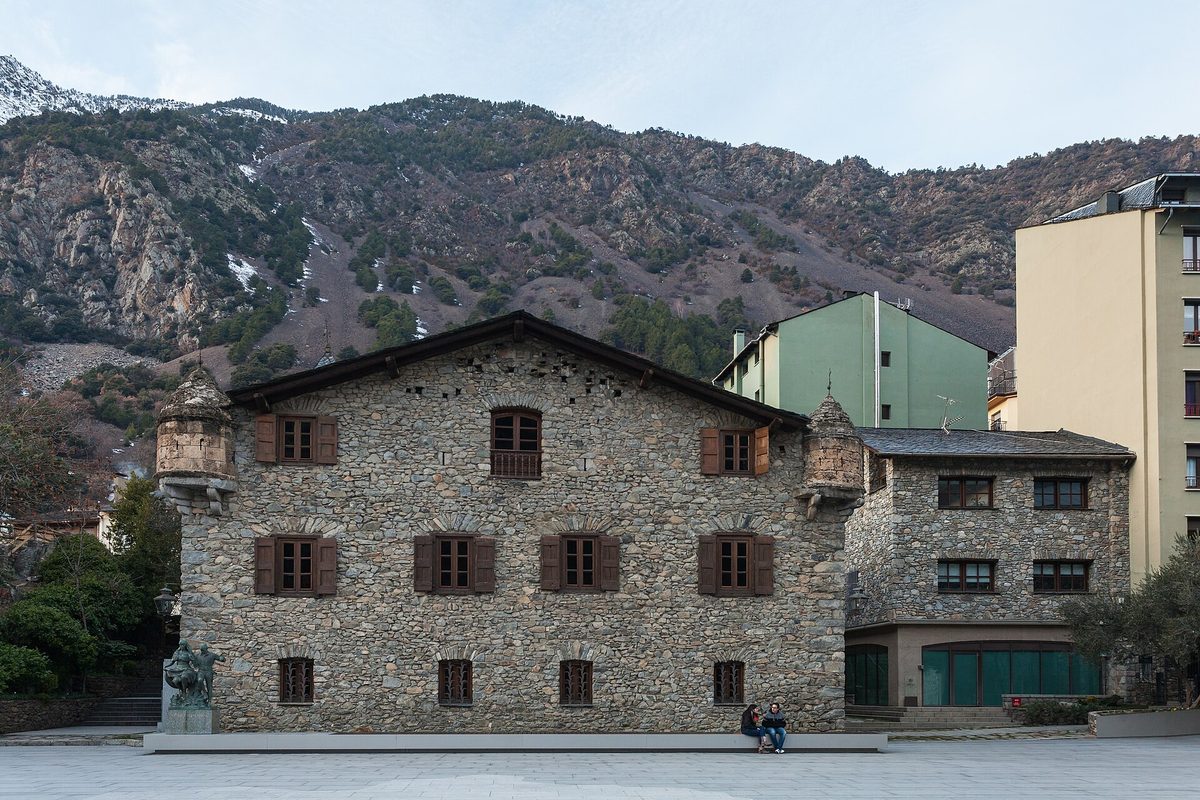
Casa de la Vall is the one indoor sight worth an actual ticket. It is a 16th-century stone house that served as the country’s parliament for over 300 years, and the visit takes you into the old chamber and the old courtroom, complete with the famous cupboard of the seven keys — one held by each parish, so it could only be opened with every parish present. It had six locks until Escaldes-Engordany became the seventh parish in 1978. You can go round on your own with an audio guide, or book a guided tour ahead for a €1.50 supplement. Opening days change with the season — check the timetable before you build a morning around it, because turning up hopefully at 11:00 on a closed day is a wasted hour.
Then walk five minutes to Plaça de la Rotonda for Dalí’s La Noblesse du Temps, the bronze melting clock on a crowned figure. It takes four minutes and everyone photographs it. Fine. It is a good sculpture in a mediocre setting, and it puts you at the top of the shopping mile anyway.
From there the retail begins and does not stop for about two kilometres: Avinguda Meritxell, the Fener boulevard, then over the invisible parish line into Vivand and Avinguda Carlemany in Escaldes. Pyrénées at Meritxell 11 is the old department store and the easiest single stop; illa Carlemany is the central mall. Sales tax is 4.5% against 21% in Spain, but the tax gap does not always reach the shelf, so compare prices on anything you were planning to buy anyway. Shops open on Sundays, so there is no urgency — buy on Sunday on the way out, not Saturday when you then have to carry it.
Lunch at 14:15, because that is when Andorra eats and because you want the afternoon clear. Then Caldea, which is the reason a two-day trip beats a one-day trip more than anything else on this list. Caldea calls itself the largest thermal spa in southern Europe, fed by spring water that surfaces at 65–70°C under Escaldes. The standard three-hour Classic pass starts at €46 for a morning or night slot and €49.50 in the afternoon, with two-hour early-bird tickets from €31; prices vary by date. Premium, the adults-only spa formerly called Inúu, starts at €60 for an early-bird slot and €75 in the afternoon, and is much calmer.
Honest verdict: on a busy Saturday the main Caldea lagoon is closer to a warm swimming pool with a crowd than a serene retreat, and if that will annoy you, pay the extra for Premium or take the earliest slot of the day. The outdoor pool with the mountains around it is worth the ticket regardless. Book the slot online before you leave home.
Dinner at nine, in a borda. These are old stone hay barns converted into restaurants, most of them up a hairpin or two above the valley floor, and they are where you find trinxat (cabbage, potato and pork, mashed and fried), escudella, grilled lamb, and the sort of rice-and-mountain-meat dish that ruins your plans for the following morning. Reserve. Andorran restaurants are small and Saturday fills.
Day 2 — north, early, and high
| Time | Day 2 |
|---|---|
| 08:00 | Out of the hotel, north towards La Massana |
| 08:30 | Ordino: coffee on the square, empty streets, stone houses |
| 09:15 | Casa d’Areny-Plandolit, the noble house museum |
| 10:15 | Drive on up the valley to the Arcalís road head |
| 11:00 | Tristaina lakes circuit, or the Sorteny valley if you want it gentler |
| 13:15 | Back down the valley |
| 14:00 | Long lunch — La Massana, Ordino or Canillo |
| 15:45 | Roc del Quer viewpoint, or the Tibetan Bridge if you booked it |
| 17:00 | Meritxell sanctuary, twenty quiet minutes |
| 17:45 | Duty-free stop, then the border |
The 08:00 alarm is the single most important instruction in this guide. Andorra’s northern valley at eight on a Sunday morning is a different country from the same valley at eleven: no coaches, no queue for the Arcalís road, light coming over the ridge, and the villages doing their own thing rather than performing.
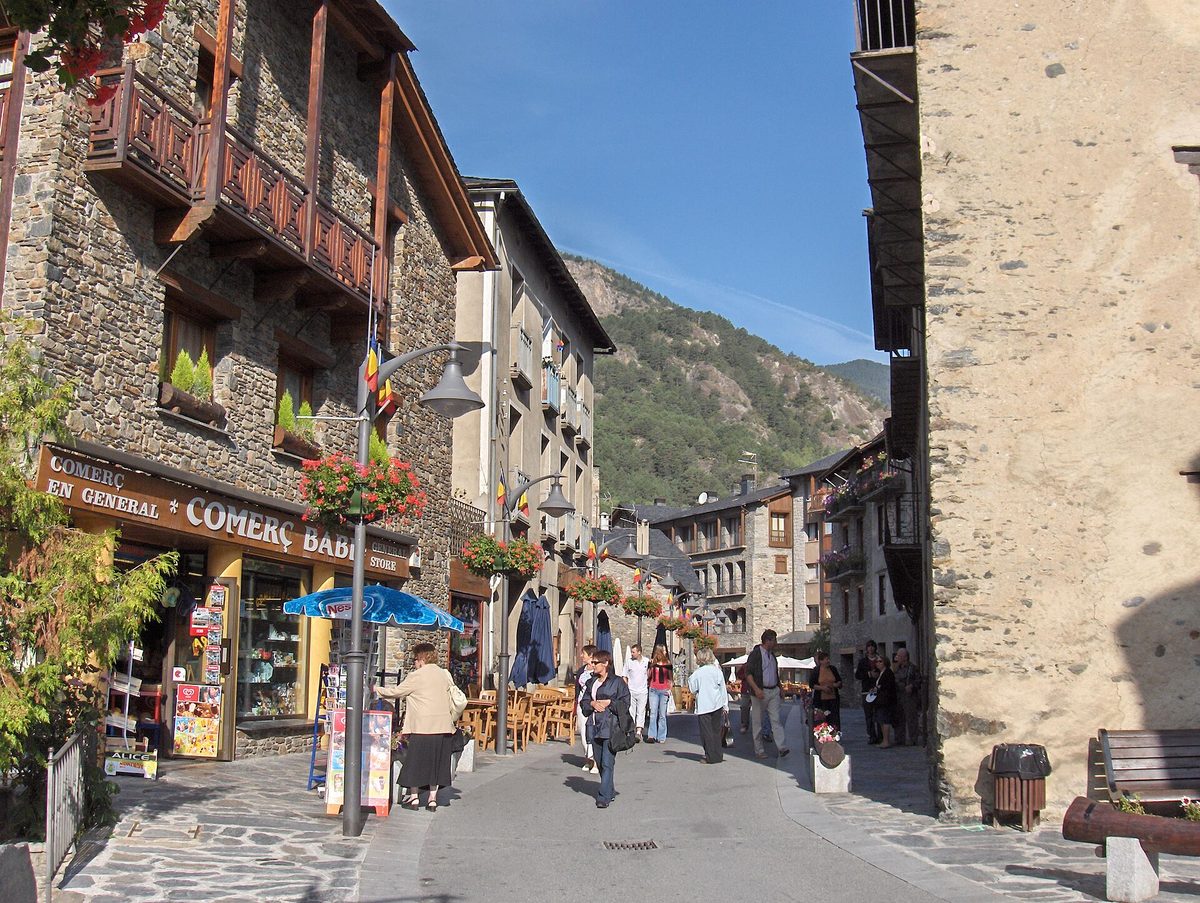
Ordino is the prettiest village in Andorra and the only one that would still be worth a detour if the country had no mountains. Dark stone houses, wrought-iron balconies, a real square with a real bakery on it, and none of the retail sprawl of the valley floor. Give it half an hour on foot before you go anywhere near a museum.
Casa d’Areny-Plandolit is the museum to pick if you only do one. It is the 17th-century house of Andorra’s leading family, kept furnished, and the guided tour is a surprisingly good short course in how a tiny mountain aristocracy actually lived — ironworks money, French furniture, a chapel, and a gun room. Roughly an hour, a few euros, guided only.
Then up. The road climbs past La Cortinada and El Serrat to the Ordino-Arcalís ski base, and in summer it is one of the great short drives in the Pyrenees. Two choices at the top, and they suit different people.
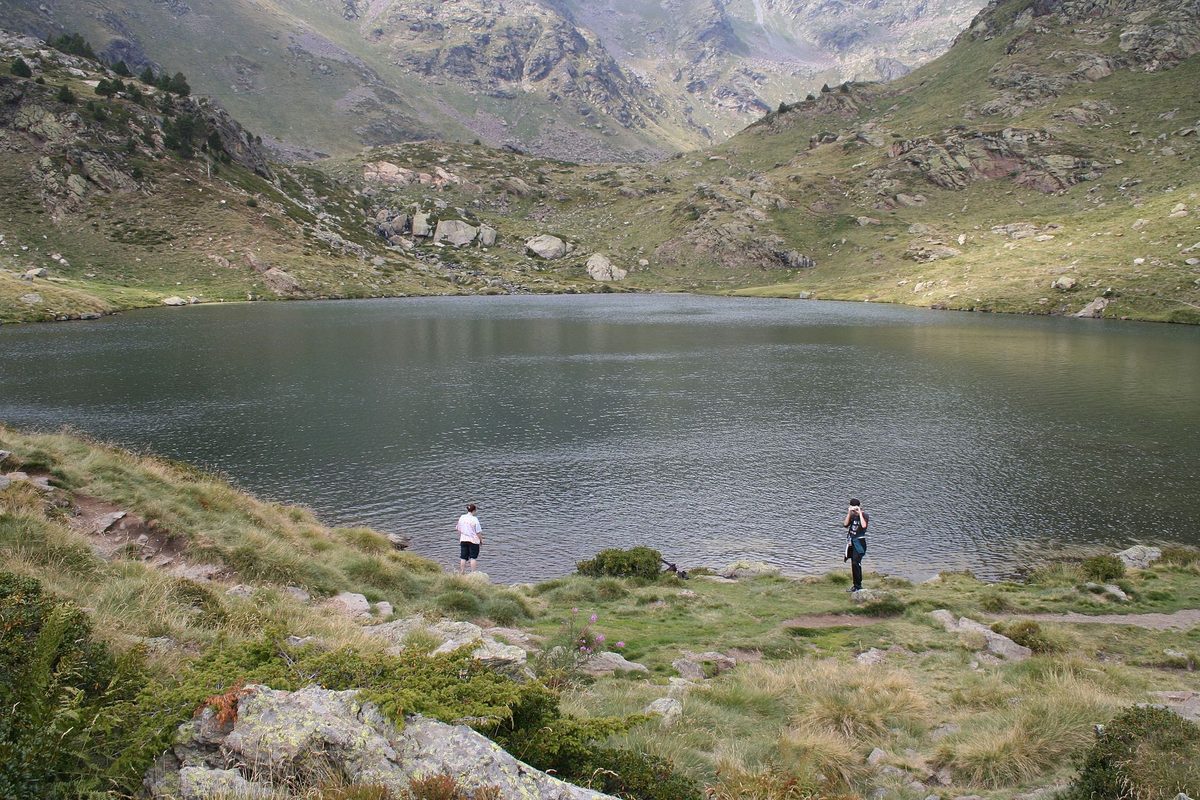
The Tristaina lakes circuit is the postcard: three glacial lakes in a granite bowl, the highest at 2,330 m, on a 4.4 km loop that takes about three hours, with a stiff climb between the second and third lake. Above them sits the Tristaina Solar Viewpoint, a sundial at 2,701 m. It is not technical, but it is real mountain ground and I would not do it in trainers. The Sorteny valley is the gentler option: a broad, flowered valley with a botanical garden and a refuge that does lunch, almost flat for the first hour, and far better for anyone travelling with a slow walker. Both are covered properly in the guide to hiking in Andorra, including the ones that need more than a morning.
Come down, eat properly, then swing east for the Canillo half of the afternoon. Roc del Quer is the free one: a steel walkway cantilevered out over the Canillo valley with a bronze figure sitting on the end of it, reached by ten minutes of hairpins above the village. It takes twenty minutes and it is the best twenty minutes of the weekend for the effort involved.
The Tibetan Bridge at Canillo is the paid alternative and it is a bigger commitment: 603 m of suspended walkway hanging up to 158 m above the ground, reached by a shuttle from Canillo plus a walk, with timed entry slots. Budget two hours door to door, book the slot days ahead, and take a windproof layer — the valley funnels wind through that gap all afternoon. If you have vertigo, do Roc del Quer instead and do not feel you have missed the country.
Finish at the Meritxell sanctuary, five minutes down the road. The medieval sanctuary was badly damaged by fire in 1972, and Ricard Bofill designed a new one, inaugurated in 1976, startlingly modern in raw stone and arches. The old church beside it was restored in 1994 and now houses the Meritxell Memorial exhibition. Entry is free, and it is the quietest thing you will do all weekend — a good last stop before the drive out. Our Lady of Meritxell is Andorra’s patron saint and 8 September is the national holiday, so avoid that date unless you want the crowd.
The winter weekend: two sectors, one spa, no wasted morning
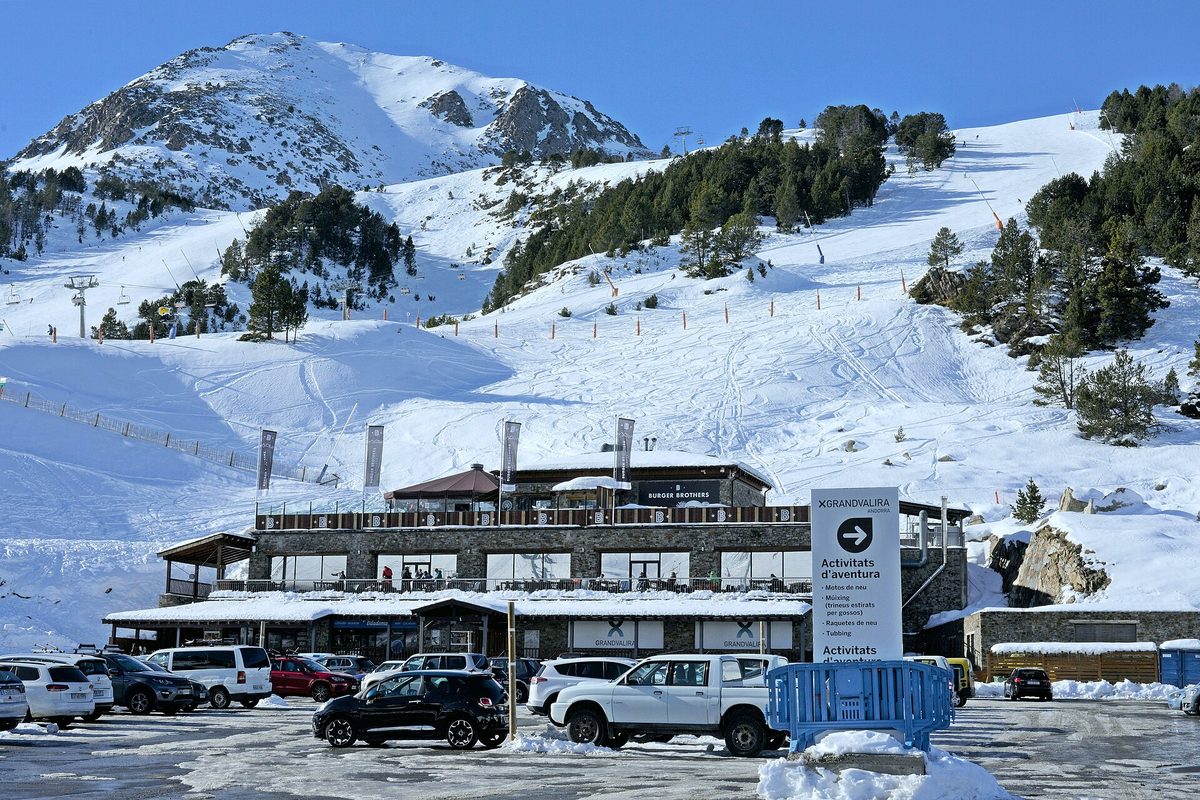
Winter changes the maths completely. In summer the country is the attraction; in winter the snow is, and everything else is what you do between lifts. The good news is that a ski weekend here is unusually efficient, because Grandvalira alone is about 215 km of piste across seven linked sectors.
Winter Day 1 — ski one sector properly
Lifts generally turn from 09:00 to 17:00, conditions permitting, so be booted up at the bottom station before nine and check which lifts are running. Pick one sector and stay in it. The instinct on a first ski day is to chase the far end of the map; resist it, because the linking traverses eat an hour each way and you finish the day having skied a lot of flat cat-track.
If you are based around Soldeu or El Tarter, that means the central sectors: long, wide, north-facing intermediate runs, the best tree skiing in the country when it is snowing, and a gondola back to the door. If you are based in Encamp, the Funicamp gondola lifts you to Solanelles, at around 2,500 m in the Encamp sector, in roughly 25 minutes. From there you can ski on to Grau Roig, which is the quietest good skiing in Grandvalira and where I would spend a first day.
Off the snow by 16:30. Apres in Andorra is genuinely good and genuinely loud — the bars at the foot of the El Tarter and Soldeu lifts fill within ten minutes of the last run — and you have a decision to make. Either you stay for it and eat late in the village, or you drive down to the capital for a spa evening and a proper dinner. Both are correct. Doing half of each is not; the drive down the valley eats into both, and you will end up doing neither well.
Winter Day 2 — a second area, then the drive out
Ski a different mountain on Sunday, even if your pass covers the same one. Two options. Stay within Grandvalira and traverse east to Grau Roig and Pas de la Casa, the high-altitude eastern end of the resort, though snow there still depends on the weather, so check the report before you commit in March. Or drive out of the ski pass entirely: Pal-Arinsal above La Massana is friendlier and more sheltered on a bad-weather day, and Ordino-Arcalís at the head of the northern valley is worth the separate lift ticket for the terrain alone.
Ski until about 14:00, not 16:30. This is the part people get wrong. You want to be down, changed, fed and moving by mid-afternoon, because the border queues on a Sunday evening in high season are genuinely bad and every hour you gain on them is an hour off your drive home.
Then the duty-free stop, which is the only shopping most ski weekenders do. Heading into France, Pas de la Casa sits right on the frontier and the supermarkets are two minutes off the road. Heading into Spain, the big-box retail is at the southern end — Sant Julià de Lòria and the run down to la Farga de Moles. Per adult, the allowance back into Spain or France is roughly 300 cigarettes, 1.5 litres of spirits over 22 degrees, 5 litres of still wine, 16 litres of beer and €900 of other goods. Both borders are staffed, both are open around the clock, and they do stop cars.
Variants on the standard Andorra 2 day itinerary
The skeleton above assumes a car, two adults and no constraints. Most weekends have at least one constraint. Here is how the same 48 hours bends.
The no-car version
Entirely doable, and cheaper than you think. Take a direct coach in — the Barcelona services run from El Prat airport and Sants station to the capital’s bus station in about three hours, with departures through the day, and Toulouse is roughly two and a half to three hours. Then live off the national bus network, which radiates from the Estació Nacional d’Autobusos in Andorra la Vella. The L1 and L2 are the workhorse valley lines. On weekdays the L2 runs every 11 to 15 minutes and the L1 every 20 minutes until 21:00, then every 30; at weekends both thin out to every 20 to 30 minutes. Single fares go by zone, from €1.90 for one zone to €6.35 for four, and first and last buses depend on the line, the direction and the day, so check each timetable on bus.ad.
Adapt the plan like this. Day 1 barely changes at all: the old town, Casa de la Vall, the shopping mile and Caldea are all walkable from a capital hotel, and Escaldes runs straight on from the capital along the river. Day 2 is where you compromise. Take the bus up to Ordino for the village and the museum, or east to Canillo for Roc del Quer and Meritxell, but not both — the high trailheads at Arcalís are the one thing the network does not reach reliably outside the ski season. Trade the Tristaina lakes for the Rec del Solà, the flat irrigation-channel path on the hillside above the capital, which is two and a half easy kilometres with the whole valley below you and costs nothing. The full picture of lines, fares and taxi realities is in the guide to getting around Andorra.
The rainy-weekend version
It rains here, and at 1,000 m a wet Saturday in June can be genuinely cold. Do not try to salvage a high walk in low cloud; you will see nothing and get wet doing it. Instead: give Caldea four hours instead of three, do Casa de la Vall and the Carmen Thyssen museum in the capital, drive up to the Palau de Gel in Canillo for the ice rink and pool if you have anyone under fifteen with you, and put the shopping mile in the afternoon rather than the morning, because it is almost entirely indoors or covered. Meritxell and Roc del Quer both still work in drizzle. Roc del Quer in cloud does not.
The couples version
Base in Ordino or La Massana rather than the capital, which trades convenience for quiet and is the right call when there are two of you and no timetable. Book Premium rather than the main Caldea lagoon — it is adults-only, it is roughly €75, and the difference in atmosphere on a Saturday is worth every euro of the gap. Eat in a borda both nights if you are staying two. And swap the Sunday afternoon viewpoint for a late one: Roc del Quer an hour before sunset, with the light coming down the valley, is the best free thing in the country.
The families-with-kids version
Cut the museums and the old town to about forty minutes total, and build the weekend around two big anchors instead. In summer that is Naturlandia in Sant Julià de Lòria, where the Tobotronc alpine toboggan run is over five kilometres of forest and genuinely brilliant — but check the ticketing, because the toboggan is normally bundled into a full-park pass rather than sold alone. In winter it is a morning of ski school plus an afternoon at the Palau de Gel. Caldea’s main lagoon takes younger children with an adult; Premium is for over-16s only. The Tibetan Bridge has a minimum age and a minimum height, so check before you promise it to anyone. There is a whole guide to Andorra with kids if that is your weekend.
The Saturday-night-out version
Andorra’s nightlife is concentrated and it starts late. Book an evening Caldea admission rather than an afternoon one, eat at 22:00, then head out to the bars around Avinguda Meritxell and the streets behind it. In ski season, Pas de la Casa is the loud alternative and the one where the apres never really stops — it is not a pretty town and it does not care. Either way, this version costs you Sunday morning. Move the northern valley to the afternoon, drop the Tristaina walk, and accept that you are doing a shorter day.
What to book ahead, and what to leave alone
Andorra is not a city break where everything needs reserving weeks out, but four things genuinely do.
- Caldea Classic or Premium. Book the time slot online before you travel, rather than turning up hopefully and taking whatever entry is left.
- The Tibetan Bridge shuttle. Timed slots, limited capacity, and the summer weekends go days ahead.
- Saturday dinner. Bordas are small and locals book them. A table for four at 21:00 on a Saturday in high season needs a call.
- Ski hire and lift passes in winter. Buying the pass online is usually a few euros cheaper and saves you the ticket-office queue at 08:45, which on a two-day trip is real time.
What does not need booking: Casa de la Vall in the low season, Roc del Quer, Meritxell, any of the walks, and parking, which is plentiful and cheap by European standards. Hotels are the wild card — midweek in October you can walk in, but a February half-term Saturday or the first weekend of the January sales will be full.
What an Andorra weekend itinerary actually costs
Andorra is cheaper than the Alps and more expensive than inland Spain. Fuel, alcohol, tobacco, electronics and perfume are properly cheap; hotels, lift passes and restaurant mains are ordinary European prices. Here is what 2 days in Andorra tends to come to, per person sharing a double room, for a summer weekend with one night.
| Per person, 2 days / 1 night | Lean | Comfortable | Indulgent |
|---|---|---|---|
| Bed | €50 | €95 | €220 |
| Food and drink | €50 | €90 | €180 |
| Spa, museums, activities | €10 | €55 | €120 |
| Fuel, parking or buses | €30 | €45 | €60 |
| Everything else | €20 | €35 | €50 |
| Approximate total | €160 | €320 | €630 |
The lean column is not a fantasy. A two-star room out towards Santa Coloma, a supermarket breakfast, a €16 to €20 menú del dia at lunch, free viewpoints and a picnic on the second day gets you through a proper weekend for the price of one night in Barcelona. What it does not get you is Caldea, and Caldea is the thing most people come for.
In winter, add roughly €55 to €65 per day for a Grandvalira lift pass and €25 to €35 per day for ski and boot hire, so call it €160 to €200 extra per person for two days on snow. Hotel rates also climb steeply for February half-term and the Christmas fortnight; the same room can double. All of these are approximate 2026 figures and every operator repriced them in the autumn, so check before you budget.
Six mistakes people make with 2 days in Andorra
These are the common ones. Every single one is avoidable.
- Turning Day 2 into a driving day. The country is small enough that you can theoretically see four valleys in eight hours. You will remember none of them. One valley, done slowly, beats four seen through a windscreen.
- Arriving at the border mid-Saturday. The CG-1 up from la Farga de Moles can back up at busy times, so check the current border traffic on mobilitat.ad before you set off and time your crossing around it.
- Not booking Caldea and the Tibetan Bridge. Two things sell out; they are the two things everyone assumes they can walk into.
- Doing the duty-free shopping first. Then carrying it, parking around it, and worrying about the car all weekend. Buy on the way out. The shops are open on Sunday and they are on the road you are already driving.
- Booking dinner for 19:30. You will eat alone in an empty room with a kitchen that has just started. Nine o’clock is normal here.
- Assuming the mountain lifts run in summer. Several do, but on limited dates — often only July and August, sometimes only weekends. If your plan depends on riding a gondola in June, check the operating calendar first, because the walk-up alternative is usually two hours steeper than you were expecting.
Weekend in Andorra FAQ
Is 2 days in Andorra enough?
For a first visit, yes. Two days covers the capital, the old town, a spa afternoon, one proper mountain morning and one good dinner, which is the honest core of the country. It is not enough for a serious hike plus a ski day plus the villages. For that you need three.
Can you do a weekend in Andorra without a car?
Yes, with one compromise. Direct coaches reach the capital from Barcelona and Toulouse, and the national bus lines run along the main valleys, the busiest every 11 to 15 minutes on weekdays, with single fares from €1.90 depending on the zones you cross. What you lose is the high trailheads, which are awkward to reach outside the ski season. Everything else is walkable or a bus ride.
How long does it take to drive across Andorra?
Longer than the map suggests, even with no stops. The road through Escaldes and the capital is slow, ski traffic clogs the CG-2 on winter mornings, and the climb to the Port d’Envalira at 2,408 m is not a road to hurry on in bad weather.
Do you need to book Caldea in advance?
Book it. Entry is by timed slot and the popular afternoon sessions sell out on summer and February weekends and over Christmas. Booking online also tends to be cheaper than the door price, and the early-bird slots are both the quietest and the least expensive way in. Check current times and prices on the official site.
Is Andorra expensive for a weekend?
Moderately. Reckon on roughly €160 per person for a lean summer weekend and €320 for a comfortable one, before ski costs. Sales tax is only 4.5%, against 21% in Spain. Hotels, lift passes and restaurant mains sit at normal European levels, so the savings are narrower than the shopping reputation suggests.
Do you need a passport to visit Andorra?
Carry your passport or national ID card. Andorra is not in the EU and not in the Schengen area, and both borders have staffed customs posts that stop cars, mostly checking for over-allowance shopping rather than people. There is no entry stamp, though some posts will give you a souvenir tourist stamp if you ask nicely.
What is the best month for a weekend in Andorra?
Late June and September for walking — the trails are clear, the lifts and refuges are open, and the valley is not full. February and early March for snow, with the caveat that half-term weekends are busier and pricier. November and late April are the two months I would actively avoid: too late for autumn, too early for snow.
Can you visit Andorra for a weekend from Barcelona?
Easily, and it is the most common way people do it. The drive is around three hours each way, the direct coach is about the same, and both make a Saturday-morning departure and a Sunday-evening return comfortable. Leaving Barcelona on Friday evening instead buys you the whole of Saturday morning in the mountains, which is worth the extra night.
The bottom line
One night. That is the entire argument. Give Andorra a single day and you get a shopping street and a long drive; give it 2 days in Andorra and you get an early morning at 2,300 m, a thermal pool with mountains around it, and dinner in a converted hay barn at nine o’clock. The country does not change. Your relationship with it does.
If you are still shaping the trip, the guide to eating in a traditional Andorran borda will sort your Saturday night, the summer itinerary goes deeper on the warm-weather version of all this, and the Andorra ski weekend guide handles the winter version in far more detail than I have room for here.
Photo credits
All photographs are from Wikimedia Commons under their stated licences, with thanks to the photographers:


