My first trip to Andorra, I packed like I was going to Barcelona with a jumper. Landed in the capital at 1,020 m in bright March sunshine, got on a lift the next morning, and by 11am I was squinting into a wall of white glare with no sunglasses, wearing cotton socks that had already gone damp and cold. I bought Category 3 sunglasses at the top station for roughly triple what they cost in the shops a thirty-minute bus ride below.
Here’s the short version of what to pack for Andorra: a three-layer clothing system, proper grippy footwear, sunglasses and high-factor sunscreen in every single season, a Type C/F plug adapter, and a lot less than you think. This guide is for anyone visiting the Pyrenees micro-state for skiing, hiking, shopping or the spas, and it’s written to fit one bag.
Last updated: September 2026. Customs allowances, spa rules and winter driving requirements were checked against official and government-linked sources this month, but rules and prices move — check official sites before you travel.
What to pack for Andorra at a glance
If you read one section and then go and zip your bag, make it this one. Every row gets unpacked properly further down.
| The question | The short answer |
|---|---|
| The governing fact | Andorra la Vella sits at 1,020 m; the lifts top out around 2,600 m. You will experience two different climates in one day, every day |
| The clothing system | Three layers — wicking base, insulating mid, waterproof and windproof shell. Not one big coat |
| Most under-packed item | Sunglasses (Category 3 or 4) and SPF 50 sunscreen — in winter as much as summer |
| Second most under-packed | A warm layer in August. Summer nights and 2,500 m viewpoints are genuinely cold |
| Most over-packed item | A full ski kit you could hire here for a fraction of the airline’s ski-bag fee |
| Second most over-packed | Formal clothes. Andorra tops out at smart-casual. Nobody needs a jacket and tie |
| Plugs and power | 230 V, 50 Hz, Type F sockets (Type C plugs fit). UK visitors need an adapter; North Americans need dual-voltage chargers |
| Money | Euro. Cards are accepted almost everywhere; carry €50–100 in cash for mountain refuges, small village bars and parking |
| Spa kit | Swimsuit yes; flip-flops no at Caldea (hygiene rules) — long hair must be tied back or capped |
| Leave space for | Duty-free shopping. Your allowance out is around €900 of goods per adult, and it’s easier to hit than you think |
| Winter driving | Winter tyres or chains are legally required roughly 1 November to 15 May — a hire-car question, not a suitcase one |
The one fact that governs every Andorran packing list
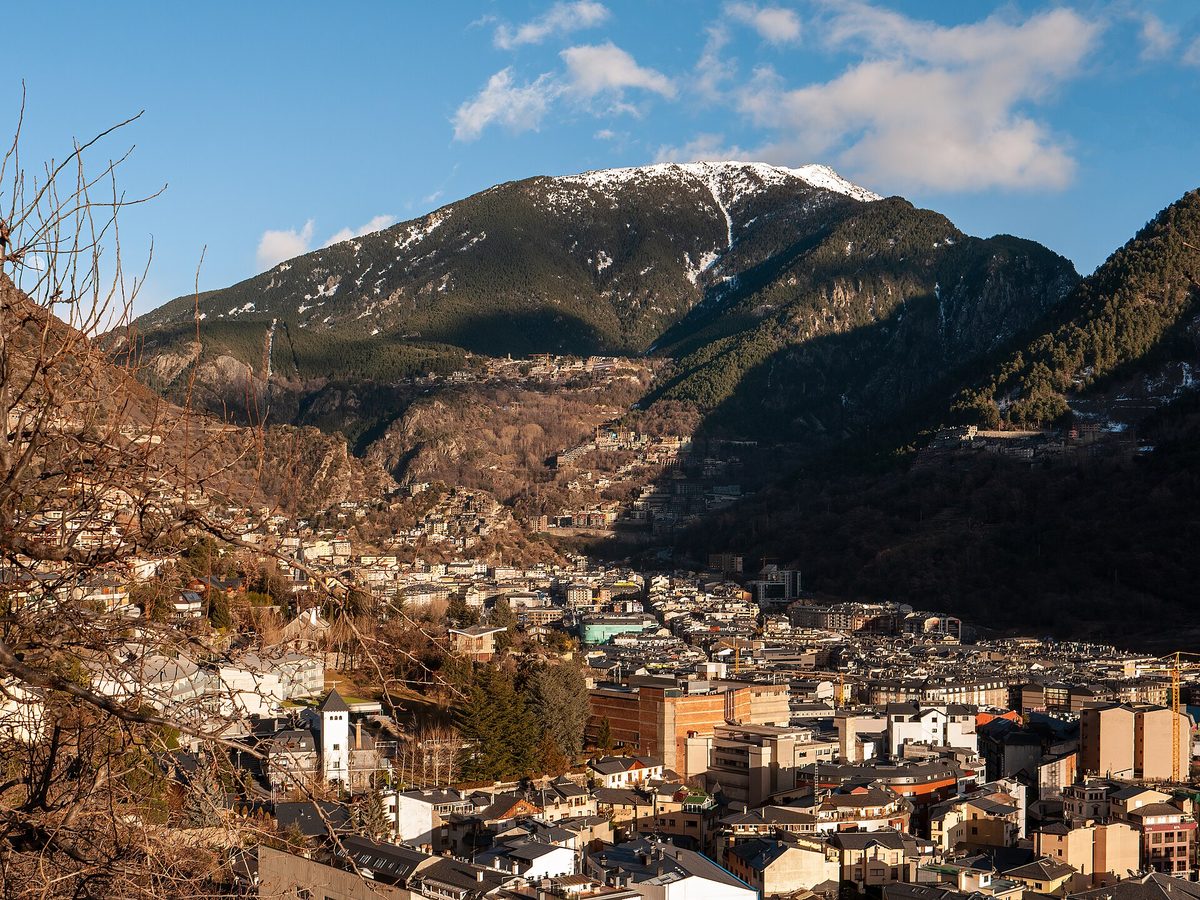
Andorra is small — 468 km², about the size of a large city — but it is stacked vertically. The capital sits at 1,020 m. The villages climb from there. The ski lifts and the high hiking passes reach past 2,600 m. The mean altitude of the whole country is somewhere around 1,900 m, which is higher than most people’s mental image of “a mountain”.
The rule of thumb is that air temperature drops roughly 1°C for every 100 m you climb. So a pleasant 24°C afternoon on Meritxell avenue in the capital is around 8–10°C colder at the top of a gondola — before you add wind. And there is always wind. A 30 km/h breeze at 2,400 m will strip another handful of degrees off what your skin feels.
Run that maths and the whole packing problem solves itself. You are not packing for a destination. You are packing for a 1,600-metre vertical range that you will move through in a single morning, then move back down through for dinner. That’s why one thick coat fails and a stack of thin things works. It’s also why the people who look most comfortable in Andorra — in any month — are the ones carrying a small daypack with a spare layer in it.
The second altitude effect is ultraviolet. UV intensity rises with elevation, and in winter you add snow, which throws a large share of it straight back up at your face. This is the single most reliable way for a visitor to ruin a day here: a February morning at 2,300 m under a clear sky with no eye protection is not “a bit bright”. It is an eye-strain headache by lunchtime, and at the far end it is snow blindness. Bring the sunglasses. Bring the eye protection in July as well as January; the sun does not soften just because the snow has gone.
The three-layer system, explained without the sales pitch
If your real question is what to wear in Andorra rather than what to carry, this section is the whole answer. Every outdoor shop in the country will sell you the layering pitch, so let me give you the honest version for free. You need three functions, not three specific garments, and cheap versions of all three work fine.
Layer one: the base layer
Its only job is to move sweat off your skin. Merino wool or a synthetic technical fabric. Not cotton — cotton holds moisture against you, and wet fabric in cold air is how a good day becomes a miserable one. This is the layer people skip because it’s invisible, and it’s the one that matters most. For a ski trip, bring one clean set per day if you can; they pack down to nothing.
Layer two: the insulation
A microfleece, a lightweight down or synthetic puffy, or a thick wool jumper. The trick is that thin-and-two beats thick-and-one, because you can shed half of it when the sun comes out at midday. A packable down jacket that squashes into its own pocket is the single best-value item in an Andorran bag — it’s your summit layer in August and your under-jacket layer in January.
Layer three: the shell
Waterproof and, crucially, windproof. A city coat that keeps rain off but lets wind through will fail you above the tree line. You do not need a €600 jacket; you need a taped-seam membrane and a hood that stays up. For summer this can be a 200-gram packable rain shell that lives in your daypack. For winter it’s your ski jacket, and it can do double duty as your walking-around-town coat.
The winter and ski packing list
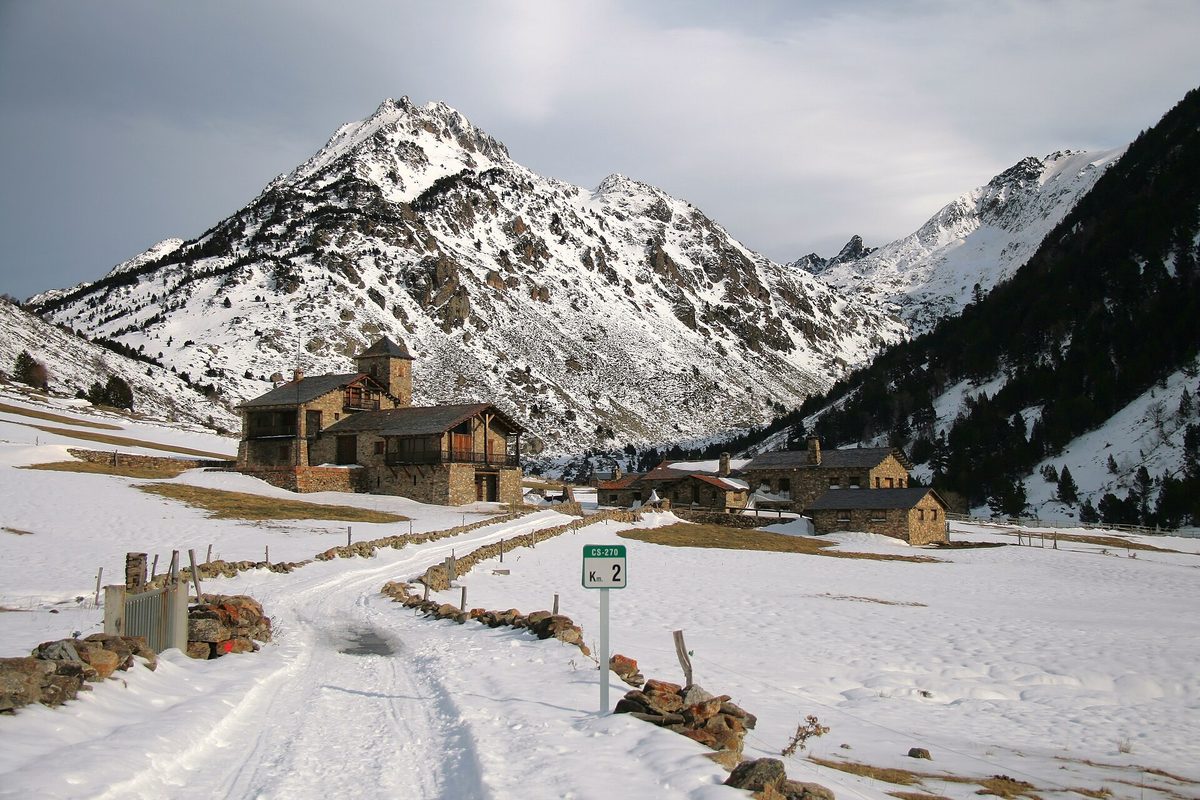
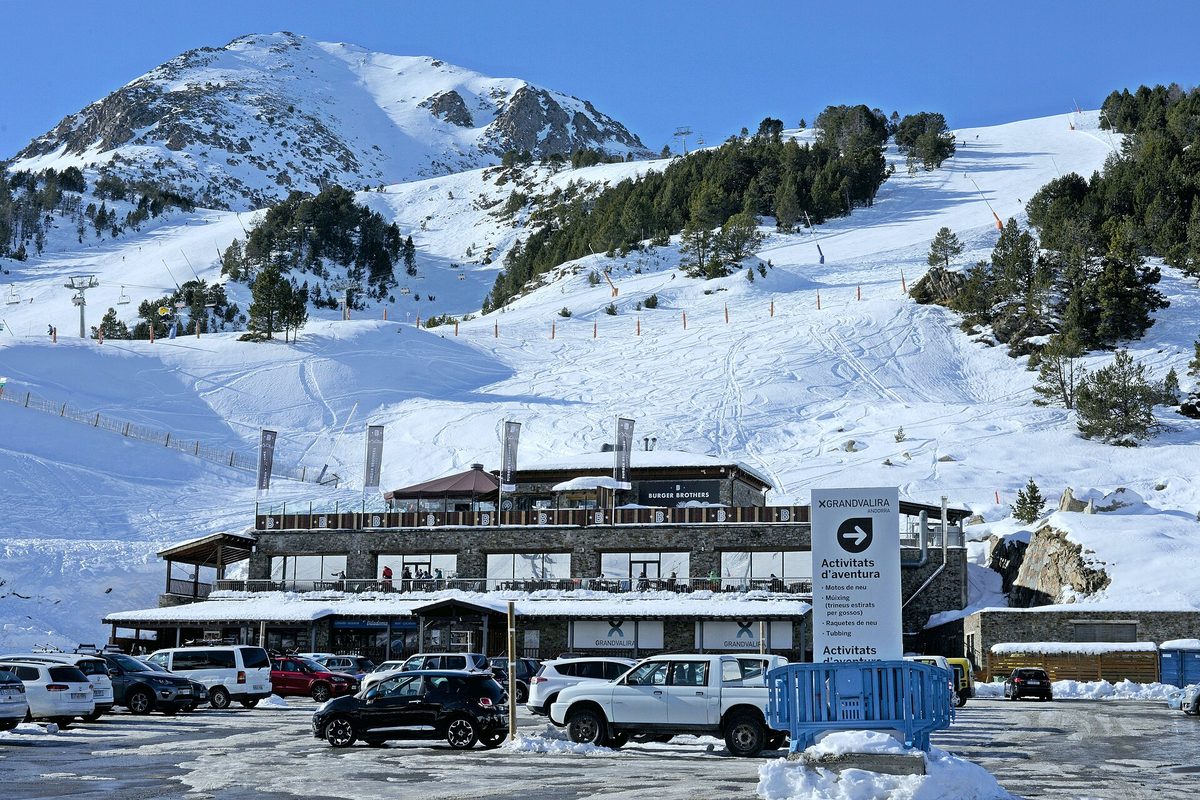
This is the Andorra ski packing list proper, and it splits into what goes on the mountain and what you actually need in the evening. Winter here runs roughly December to early April, with February historically the fattest month for snow. The valley floor in the capital hovers around freezing to +6°C in January; up in the resort sectors you should expect a daytime range of about −8°C to 0°C, colder at dawn and colder again in wind. Those are averages, not promises.
On the slopes
- Ski or snowboard jacket and salopettes — waterproof membrane, taped seams, a powder skirt if you have one.
- Two or three pairs of proper ski socks. Thin, technical, knee-high, one pair at a time. Two pairs of thick socks inside a boot causes numb feet, not warm ones. This is the mistake I see most often.
- Base layers, one set per ski day if space allows.
- Waterproof gloves or mittens, plus a thin liner glove for lift-pass fiddling and phone use. Mittens are warmer; kids should wear them.
- Goggles with a lens tint that suits flat light — you will get grey days, and a dark glacier lens is useless in fog.
- Neck gaiter or buff. Weighs nothing, covers the gap that ruins everything.
- Helmet if you own one that fits; otherwise hire.
- Sunscreen SPF 50 and lip balm with SPF. Reapply at lunch. The undersides of your nose and chin catch reflected light, which is why sunburn up here has a distinctive silly shape.
- Sunglasses, Category 3 or 4, for the lift queue, the terrace and the drive.
Off the slopes
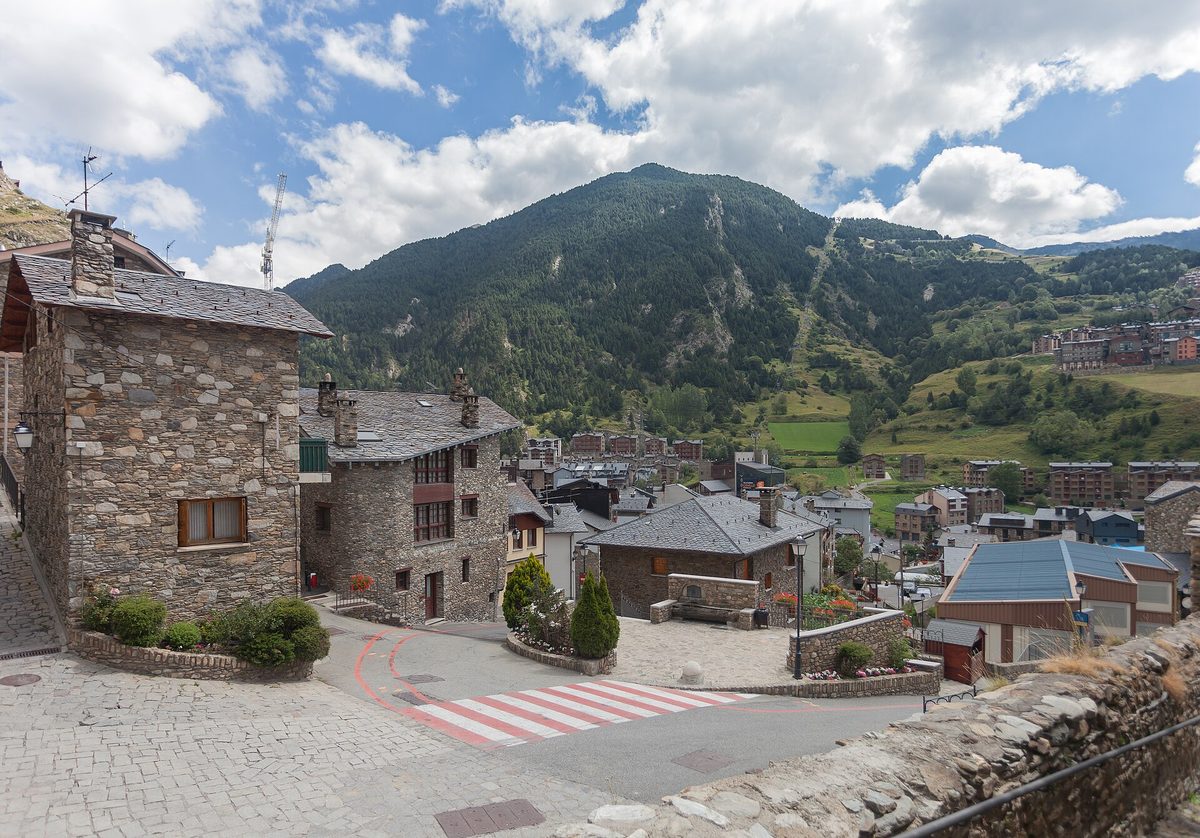
The evening kit is where people go wrong in the opposite direction. You do not need anything smart. What you do need is footwear with grip: a boot with a lugged rubber sole that will hold on a pavement that froze overnight and thawed at lunchtime. Andorra la Vella and Escaldes are steep towns with a lot of stone and a lot of black ice at 8am. Trainers with flat soles are how people spend a holiday on crutches.
Beyond that: a warm street coat (your ski jacket is fine), a couple of jumpers, jeans or warm trousers, a hat, and a swimsuit. Everyone forgets the swimsuit, and then they discover that the country’s single most famous attraction is a spa. More on that below.
If you’re driving
This is technically not packing, but it catches people every year. Vehicles in Andorra must carry winter equipment — either winter tyres marked 3PMSF, or chains or textile socks for the driven wheels — from around 1 November to 15 May, with on-the-spot fines reported in the €180 range for non-compliance. If you are hiring a car in Barcelona or Toulouse, ask the rental desk explicitly what the vehicle is fitted with, because the default answer is often “summer tyres” and the default assumption is that you’ll sort it out yourself. My full guide to driving in Andorra goes through the passes, the tunnels and the winter rules properly. Also throw in an ice scraper and a phone mount; neither comes as standard.
The summer and hiking packing list
Summer in Andorra is quietly excellent and badly understood. The capital in July and August is warm rather than hot — think low-to-mid 20s°C on a normal afternoon, occasionally pushing higher in a heatwave — and then it drops away sharply after sunset, because you are still a kilometre up in the air. Nights in the valley can sit in the low teens or below. At 2,400 m on a windy morning in August, I have been genuinely cold in a fleece.
The valley kit
T-shirts, shorts, a light dress or two, a sun hat, sunglasses again, and something with sleeves for the evening. Andorrans dress casually but not scruffily; you’ll be fine in anything you’d wear in a Spanish town. Add a swimsuit for the river pools and the lakes, and comfortable shoes for the shopping streets, which are long and mostly uphill.
The mountain kit
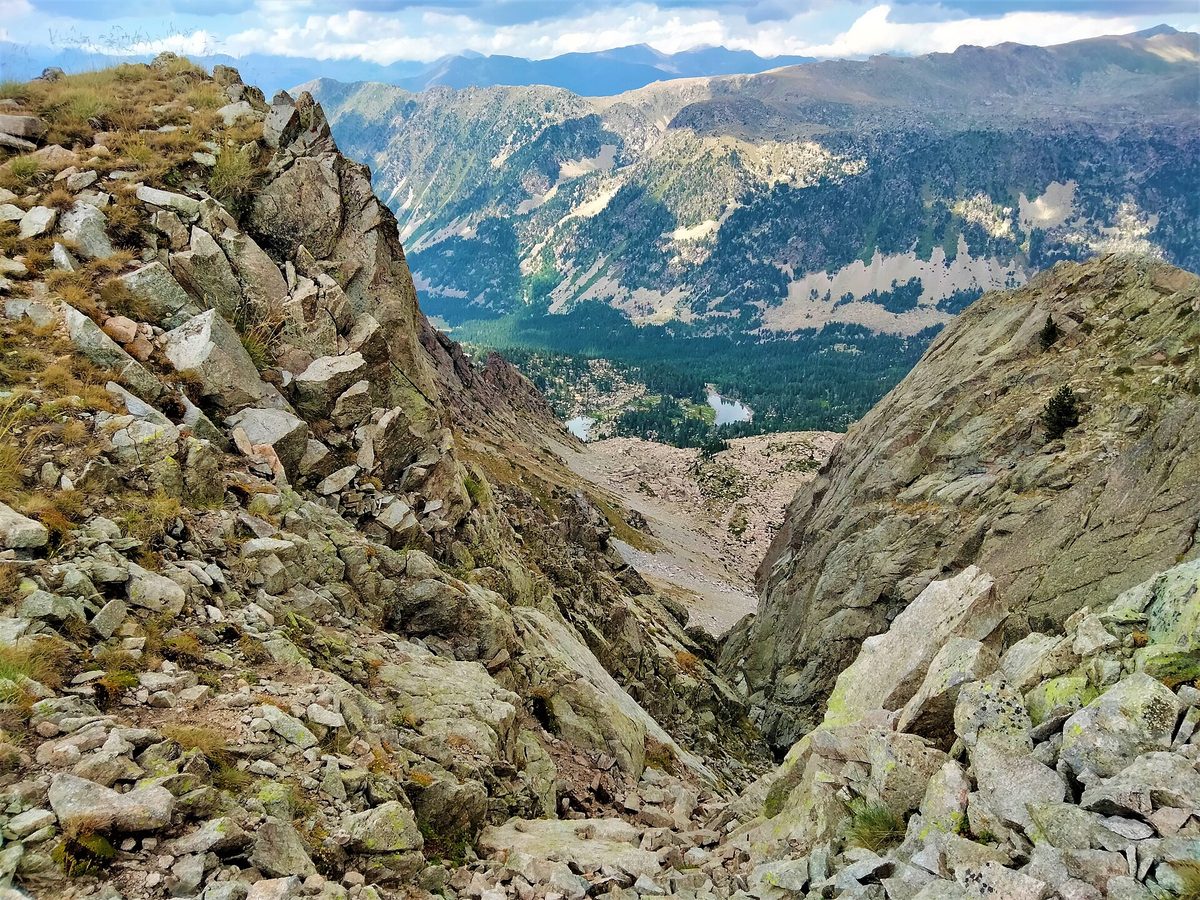
- Proper walking shoes or boots. Andorran trails are rocky, loose and steep — this is not a country of flat gravel paths. Approach shoes or light boots with real tread. Break them in first.
- A packable insulated layer and a windproof shell, both in your daypack, both non-negotiable even on a bluebird August day.
- Long trousers or zip-offs for scree and for scrubby sections.
- Two litres of water capacity plus a way to refill. There are fountains in villages; there is nothing on a ridge.
- Sunscreen, hat, sunglasses. The UV story does not take the summer off.
- A small first-aid kit, blister plasters especially, and a headtorch if you’re starting early or finishing late.
- Trekking poles if your knees have opinions. The descents here are long.
One weather habit that will save your trip: Pyrenean summer afternoons build thunderstorms. They arrive fast, they arrive with hail, and being on an exposed ridge at 3pm in one is genuinely dangerous. Locals start early and are off the tops by early afternoon. Pack the rain shell and adopt the schedule. The guide to hiking in Andorra has the routes and the sensible start times.
Shoulder season: the trickiest bag to pack
May, June, October and November are the honest problem months, because the country is running two seasons at once. The valley can be in short sleeves while there’s still old snow on the north-facing passes and half the lifts are shut for maintenance.
Pack the summer list, then add the winter accessories: hat, gloves, a warmer mid-layer, and waterproofs you actually trust. Autumn is my favourite time to be here — the larches turn, the light is long and low, the crowds are gone — but it’s also the season where I most often want a spare pair of dry socks. Check what’s actually open before you commit, because a lot of high mountain restaurants and some cable cars close between seasons.
Leave this at home: the honest list
Every packing article on the internet tells you what to add. Almost none tell you what to take out, which is the half that actually gets you into one bag. Here is what I now leave behind.
Your entire ski kit, probably
Unless you own boots that are moulded to your feet and skis you love, leave them. Airlines charge real money for a ski bag each way, you have to schlep it through two airports and a two-and-a-half-hour transfer, and Andorra is stuffed with rental shops that will fit you properly and swap the gear mid-week if the snow changes. Pre-booking online typically knocks a meaningful chunk off walk-up resort prices. Bring your own boots if you have good ones — boots are the piece where fit genuinely matters — and hire the rest.
Formal clothes
Andorra does not have a dress code. There is no restaurant in the country where you will be turned away for wearing a decent jumper and clean trousers. Even the smartest hotel dining rooms and the one Michelin-starred kitchen sit comfortably at smart-casual. Pack one nice-ish outfit if it makes you happy. Do not pack a suit, heels for cobbles, or a second pair of dress shoes.
A week of toiletries
You are going to a country whose entire commercial identity is cheap shopping. Shampoo, sunscreen, painkillers, contact lens solution and cosmetics are all available and, thanks to the low indirect tax, often noticeably cheaper than at home. Bring what gets you through day one and buy the rest.
Too many shoes
Two pairs. In winter: one grippy warm boot and one indoor/comfort shoe. In summer: one walking shoe and one sandal or trainer. That’s it. Shoes are the heaviest, bulkiest thing in most suitcases and the easiest place to save.
A hairdryer, an iron, a travel kettle
Hotels have them. Also, at 230 V, a 110 V appliance from North America will not simply run slower — it will fail, sometimes memorably.
Large amounts of cash
Not needed, and above €10,000 in cash or equivalents you are legally obliged to declare it at the border anyway. See the money section below.
What to buy there instead of packing it
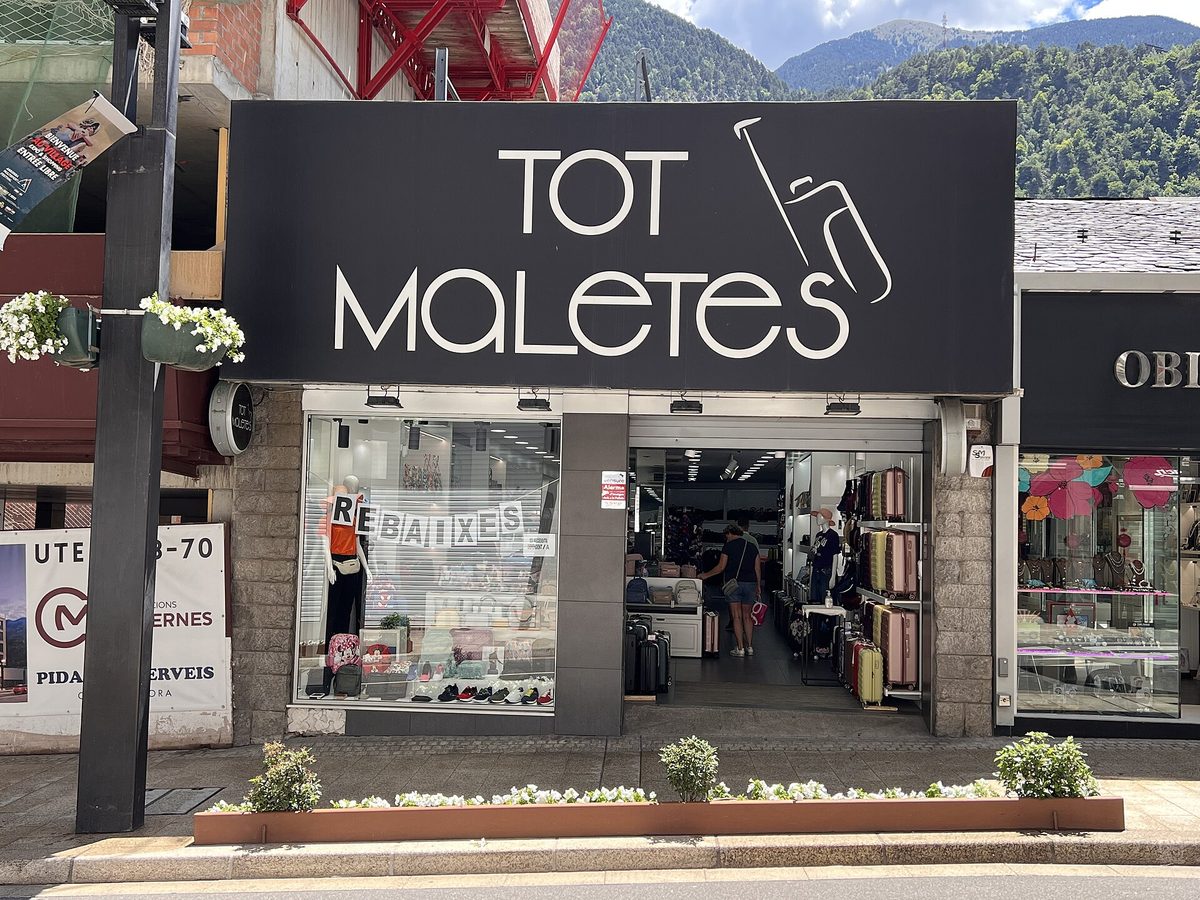
This is the genuinely Andorra-specific bit, and it’s why your packing strategy here should differ from packing for France or Spain. Andorra has no VAT in the ordinary sense — it runs a low indirect tax (IGI) that sits in the region of 4.5% on most goods, against 21% VAT in Spain. That gap is the entire tourist economy of the main valley, and it changes what belongs in your suitcase.
Things that are genuinely worth buying here rather than carrying in:
- Sunglasses and ski goggles. Optical goods are one of the strongest categories. If you were going to buy a decent pair anyway, buy them here — just buy them in town, not at the top station.
- Ski and outdoor clothing. The technical-wear shops in Andorra la Vella and Escaldes are excellent, deep on stock and competitively priced. A forgotten mid-layer is not a crisis.
- Electronics. Cameras, headphones, laptops and phones are a long-standing draw; see the guide to buying electronics in Andorra for the honest read on how much you actually save now.
- Perfume and cosmetics. The classic Andorran purchase. There’s a whole guide to buying perfume in Andorra, including the shops worth your time.
- Alcohol and tobacco, within the allowances below.
- Pharmacy goods — sunscreen, over-the-counter medicines, skincare.
For the wider picture of where to go and whether the savings hold up in 2026, the guides to shopping in Andorra and what to buy in Andorra are the ones to read before you arrive with a full case.
Leave luggage space: the allowance on the way out
Here is the bit nobody tells you until they’re standing at La Farga de Moles with a boot full of shopping. Andorra is not in the EU and not in the Schengen area, so leaving is a customs event. There are limits on what you can carry out duty-free into Spain or France, and they are per person, per category, and enforced by real checks — Pas de la Casa and La Farga de Moles both run inspections, most keenly at weekends and in ski season.
At the time of writing, the adult allowances look roughly like this:
| Category | Allowance per adult |
|---|---|
| General goods (clothes, electronics, gifts) | Around €900 (about €450 for a child under 15) |
| Cigarettes | 300 (1.5 cartons), shared with cigars and rolling tobacco |
| Spirits over 22% | 1.5 litres |
| Wine, sparkling or aperitifs under 22% | 3 litres (still wine has its own separate quota) |
| Beer | Around 16 litres |
| Perfume / eau de cologne | Around 75 ml / 375 ml |
| Cash | Declare at €10,000 or above |
Two things follow from that table. First, leave physical space in your bag — the €900 allowance is easier to fill than you’d guess once a laptop or a jacket is in the mix, and an indivisible item over that value must be declared even if two of you are travelling. Keep the receipts. Second, that perfume limit is smaller than most shoppers assume, and it is the one people trip over. These figures shift, so check the current position with the guide to the Andorra duty-free allowance and the official customs pages before you load up.
Rent or bring the ski kit? My honest answer
I get asked this more than anything else, so here is a straight decision tree rather than a hedge.
Hire everything if you ski once or twice a year, if you’re flying with hand luggage or a single hold bag, or if you’re a beginner. Rental skis at a Pyrenean resort are serviced constantly and are almost certainly better than whatever is in your garage. You can pre-book online, usually pick up the afternoon before, and change skis mid-week if conditions swing from ice to slush — which in Andorra they will.
Bring your boots, hire the skis if you ski more than a week a year. Boots are the interface between you and the sport; a well-fitted personal boot is worth carrying and rental boots are the most common source of a ruined day. Boots fit in a rucksack.
Bring everything only if you’re driving in from Spain or France, or you have skis you genuinely care about and a season’s worth of days ahead of you. Do the arithmetic on the airline ski-bag charge both ways before you decide it’s free.
A helmet is worth owning if you ski regularly, purely for fit and hygiene, but every rental shop has them and Andorran resorts are helmet-normal. If you’re learning, spend the money on lessons before you spend a penny on kit — the sequence matters. For the wider picture of the resorts and how they link up, start with the overview of skiing in Andorra.
Packing for Caldea and the spa day
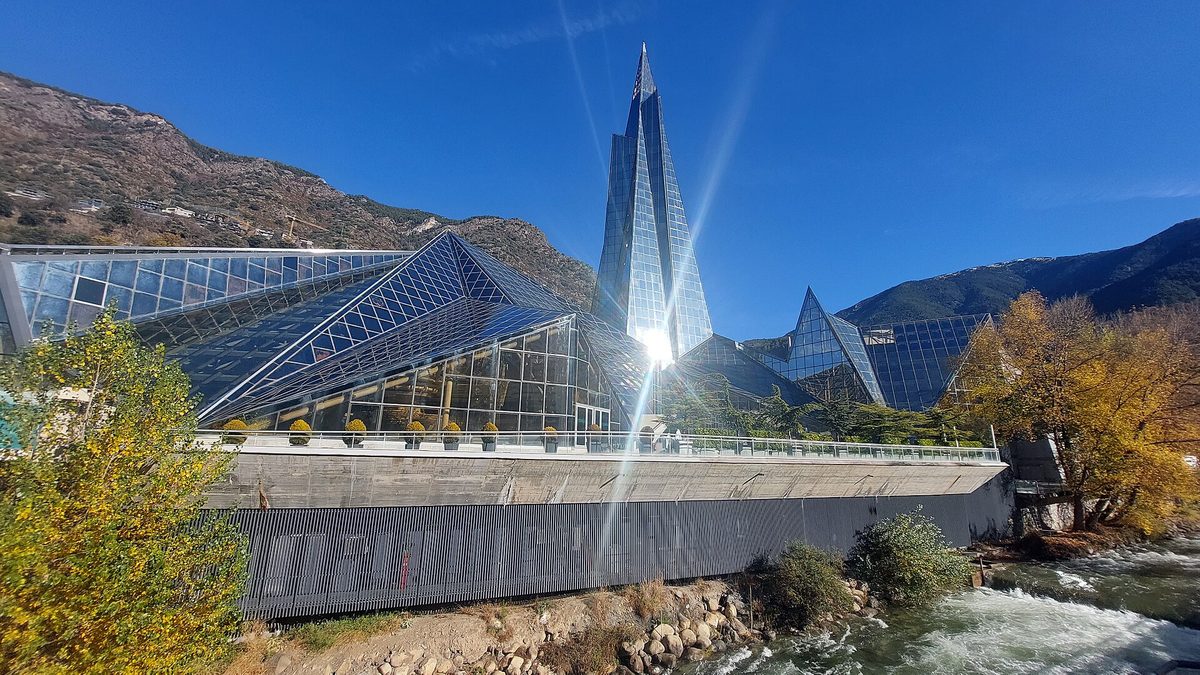
Andorra sits on thermal springs, and the giant glass spire of Caldea in Escaldes-Engordany is the country’s most-visited attraction. It is also the thing people are least prepared for, because everyone assumes a spa works the same everywhere.
What you need:
- A swimsuit. Any swim-specific garment is fine — swimsuit, bikini, burkini, trunks or swim shorts. This is not optional and there is nowhere to improvise.
- A towel, unless you want to hire one. Standard entry does not include one; hire runs to a few euros. A robe is likewise hireable and included on some premium tickets.
- Something to tie long hair back. For hygiene reasons long hair must be secured; a swim cap is one way to do it, and caps are permitted, but they are not the only option.
- Not flip-flops. This is the one that surprises everybody. Flip-flops are not allowed in the water circuits for hygiene reasons — you go barefoot or buy the single-use booties sold on site for a few euros. Pack them for your hotel bathroom by all means; don’t plan your spa day around them.
Rules and prices do change, so confirm on the day. The full guide to Caldea goes through the ticket tiers, the adults-only Inúu section and the busy hours in detail. If your trip is a spa-and-shopping weekend rather than a mountain one, your bag gets very simple: swimwear, a towel, comfortable walking shoes, one warm layer, and space for what you buy.
Documents, money, phone and plugs
Documents
Bring the passport or national ID that got you into Spain or France, because you may be asked for it at the Andorran border and you will be asked for it at hotel check-in. Non-EU travellers who need a Schengen visa should note the trap: you enter Andorra through Schengen and leave back into it, so you want a multiple-entry visa. The full detail is in the guide to whether you need a passport for Andorra. Also pack travel insurance documents that explicitly cover winter sports and mountain rescue if you’re skiing or hiking high — this is not a country where you want to discover a policy exclusion.
Money
Andorra uses the euro despite not being an EU member, which spares everyone a currency conversion. Cards work almost everywhere in the main valley, in the resorts and in the shops. Where cash still earns its place: small village bars, mountain refuges, a few of the older restaurants in the high parishes, parking meters and the odd market stall. Carry €50–100 in notes and coins and you will never be stuck. ATMs are plentiful in the capital and scarcer in the villages. There’s more on charges and card acceptance in the guide to currency in Andorra.
Your phone
This one costs people real money. Andorra is not in the EU roaming zone, so “roam like at home” does not apply, and a European or UK plan can rack up eye-watering charges the moment you cross the border. Andorran networks also reach across the frontier, so you can be billed at Andorran rates before you have technically arrived. Turn data off as you approach, check your operator’s Andorra pricing in advance, and consider a local SIM or an eSIM — the options are compared in the guide to getting an Andorra SIM card. Hotel and cafe wi-fi is generally good if you’d rather just go offline.
Plugs and voltage
Andorra runs on 230 V, 50 Hz, with Type F sockets — the round two-pin with earth clips at the sides. Type C plugs (the plain two round pins used across most of continental Europe) fit those sockets fine, so if you’re coming from France, Spain, Germany or most of the EU, your existing chargers work with no adapter at all.
Everyone else needs to plan. UK and Irish visitors need a Type C or F travel adapter — your three-pin plug will not fit anything. North American, Japanese and other 110–120 V visitors need two things: a physical adapter, and confirmation that each device is rated for 100–240 V. Phone, laptop and camera chargers almost always are; hairdryers, curling irons and travel kettles usually are not, and plugging a 110 V one into 230 V will destroy it. Read the small print on the brick. Bring one multi-socket extension lead or a multi-port USB charger and you can run a whole family off a single adapter, which is a trick I wish I’d learned earlier.
Medication, pharmacies and the small-print stuff
Pack your prescription medicines in your hand luggage, in their original labelled packaging, with enough for the trip plus a few spare days. Carry a copy of the prescription or a letter from your doctor — it costs nothing and solves everything if a bag goes missing.
The good news is that Andorra is not a place where you will struggle. For a country of roughly 85,000–90,000 people it has an unusual density of pharmacies, well over fifty of them, concentrated in the capital and Escaldes but present in every parish. Typical hours are around 9am to 1pm and 3pm to 7:30pm Monday to Saturday, with the larger chains running longer, and there is always a duty pharmacy (farmàcia de guàrdia) covering nights and Sundays on a rota. Pharmacists here commonly speak Catalan, Spanish, French and often English.
Two caveats. First, a prescription issued outside Andorra may not be dispensable — for anything genuinely prescription-only you may need to see a local doctor, so bring your supply rather than planning to buy. Second, altitude has mild but real effects: some people find their sleep is poor for the first night or two and that alcohol hits harder than usual. Neither needs equipment, just awareness. Drink more water than you think you need, particularly on ski days, when the dry air quietly dehydrates you.
Small things that punch above their weight in a bag here: lip balm (the combination of altitude, cold and dry air chaps lips within a day), moisturiser, blister plasters, a reusable water bottle, a small daypack, and a power bank — cold weather flattens phone batteries fast, and your phone is your lift map and your bus timetable.
The one-bag strategy: how it actually fits
Andorra has no airport, so everyone arrives by road after a flight into Barcelona or Toulouse and a coach or car transfer of two to three hours. That journey is much pleasanter with one bag, and the bus luggage holds get tight in ski season. Here’s how I do it. (The route options are laid out in the guide to how to get to Andorra.)
Winter, one carry-on plus a daypack
Wear the bulkiest items on the plane: boots, jacket, fleece. Into the bag go salopettes (rolled), three sets of base layers, three pairs of ski socks, two jumpers, one pair of trousers, underwear, swimsuit, gloves, hat, gaiter, goggles, sunglasses, washbag, chargers and adapter. Hire skis, poles, helmet and — if you must — boots. That genuinely fits a 40-litre cabin bag if you roll rather than fold and use one compression cube for the soft layers.
Summer, one carry-on plus a daypack
Easier. Wear the walking shoes. Pack: two pairs of shorts, three or four t-shirts, one long-sleeve, a packable insulated jacket, a rain shell, long trousers, swimsuit, sun hat, sunglasses, sunscreen, a towel, washbag, chargers and adapter. The daypack doubles as your hiking pack. You will have room left over, which is exactly the point given what you might carry home.
The rule that makes it work
Everything soft compresses; everything hard does not. So the decisions that matter are the hard ones — shoes, gear, bottles, books. Cut those to the bone and the clothing sorts itself out. And remember you are in a country where a forgotten fleece or a second pair of gloves is a ten-minute shopping trip away, usually cheaper than at home. Andorra is the most forgiving place in Europe to under-pack.
Packing by traveller type
Families with young children
Add spare gloves — mittens for under-fives, and always a second pair, because the first pair will be soaked by mid-morning. One-piece snowsuits for small children stop snow going up their backs when they fall; two-piece sets are easier for older kids and toilet trips. Bring a favourite snack or two, a small toy for the transfer, and sun cream for children specifically. The guide to Andorra with kids covers the nurseries, the family circuits and the non-ski options for a bad-weather day.
Shoppers and spa weekenders
Your list is short and your empty space is long. Comfortable walking shoes, one warm layer, a swimsuit and towel, a folded tote or duffel that packs flat and expands, and your receipts folder. That’s a weekend, and you will still be the lightest-packed person on the coach.
Hikers and long-distance walkers
Add a map or offline mapping, a whistle, a headtorch, a foil blanket, and enough insulation to sit still in the wind at 2,500 m. If you’re doing multi-day routes and staying in refuges, add a lightweight sleeping bag liner, earplugs and flip-flops — the one place in Andorra where flip-flops are genuinely essential.
Frequently asked questions
What should I wear in Andorra in winter?
Layers: a wicking base layer, a fleece or light down mid-layer, and a waterproof windproof shell. Add a hat, gloves, a neck gaiter and boots with a grippy lugged sole for icy pavements. In town the valley sits around freezing to +6°C in January; in the resorts expect roughly −8°C to 0°C, colder with wind chill.
Do I need sunglasses and sunscreen in Andorra in winter?
Yes, and this is the most commonly skipped item on any Andorra packing list. UV intensity climbs with altitude and snow reflects a large share of it back at your face. Bring Category 3 or 4 sunglasses or goggles plus SPF 50 sunscreen and an SPF lip balm, and reapply at lunchtime. February and March sun is fiercest.
What plug adapter do I need for Andorra?
Andorra uses 230 V, 50 Hz with Type F sockets, which also accept Type C plugs. Most continental European chargers work with no adapter. UK and Irish visitors need a Type C/F adapter. North American visitors need an adapter plus dual-voltage (100–240 V) devices — 110 V-only appliances will be damaged.
Should I bring my own skis to Andorra or rent?
Rent, in almost every case. Rental shops across the resorts fit you properly, service kit constantly and let you swap as conditions change, and pre-booking online usually beats walk-up prices. Bring your own boots if they’re well fitted — that’s the piece where fit genuinely matters. Airline ski-bag fees rarely make bringing skis worthwhile.
What do I need to pack for Caldea?
A swimsuit is essential, and a towel unless you plan to hire one. Long hair must be tied back for hygiene reasons and swim caps are permitted. Flip-flops are not allowed in the water areas — you go barefoot or buy single-use booties on site for a few euros. Robes and towels are available to hire.
Do I need cash in Andorra or are cards enough?
Cards work almost everywhere in the capital, the shopping centres and the resorts. Carry €50–100 in euros for mountain refuges, small village bars, parking meters and the occasional older restaurant in the high parishes. ATMs are easy to find in Andorra la Vella and thinner on the ground in the villages.
Do I need warm clothes in Andorra in August?
You need one. Valley afternoons are pleasant, but nights drop sharply and anywhere above 2,000 m can be cold and windy at any hour. A packable insulated jacket and a wind shell in your daypack are enough, and they take up almost no room. Afternoon thunderstorms are common, so waterproofs earn their space too.
How much luggage space should I leave for shopping?
More than you think. The duty-free allowance leaving Andorra runs to roughly €900 of general goods per adult, with separate limits for alcohol, tobacco and perfume. A flat-packed duffel or tote weighs nothing and solves the problem. Keep receipts for electronics and anything high-value, and declare anything over the limits.
The version of this I’d text a friend
Three layers, grippy shoes, sunglasses in every season, an adapter, a swimsuit, and half the clothes you first put on the bed. Hire the skis. Skip the smart shoes. Leave a gap in the case for whatever the shops talk you into on the last afternoon, and check the customs limits before you fill it.
Andorra rewards travellers who pack light and layer well, because it lets you say yes to the thing you weren’t planning — a gondola on a whim, an hour in the thermal water, a walk that turns into a summit. That’s the whole trick of this country. Get the kit right and it opens up.
Planning the rest of the trip? Start with the hub of Andorra travel tips for the practical groundwork, then read up on where to stay in Andorra for the parish-by-parish breakdown, and things to do in Andorra once the bag is packed and you’re wondering how to fill the days.
Photo credits
All photographs are from Wikimedia Commons under their stated licences, with thanks to the photographers: