I have driven through Sant Julià de Lòria perhaps forty times and stopped in it maybe six. That is the honest confession this guide has to start with, because it is also what almost everyone else does: you clear Spanish customs at the river, the CG-1 lifts you up between two rows of shopfronts, and eight minutes later you are in the capital with the perfume shops. The town slides past the window like a corridor.
Sant Julia de Loria — properly spelled Sant Julià de Lòria — is Andorra’s southernmost parish and its lowest town, at about 908 m, sitting five minutes from the Spanish frontier. This guide is for anyone driving up from La Seu d’Urgell, anyone thinking of basing themselves here to save money, and anyone who suspects the place deserves more than a windscreen glance. It does, in parts.
Last updated: September 2026. Prices, hours and timetables were re-checked against museus.ad, visitandorra.com, web.naturland.ad and bus.ad in September 2026. Andorran opening seasons move around a lot — check official sites before you book or travel.
Sant Julia de Loria at a glance
The shape of the parish before we get into the detail. If you read two things here, make it this table and the honest verdict near the end.
| Sant Julià de Lòria | |
|---|---|
| What it is | The southernmost of Andorra’s seven parishes, and the first town you reach from Spain |
| Town altitude | About 908 m — the lowest and warmest town in the country |
| Population | Around 10,000 across the parish (roughly 9,900 at the 2023 estimate) |
| Size | About 60 km², holding 11 villages and hamlets |
| Distance to the border | Roughly 3 km to the Riu Runer crossing; about 10 km to La Seu d’Urgell |
| Distance to the capital | About 7 km, 10–20 minutes depending on traffic |
| Headline attraction | Naturland at La Rabassa, and its 5.3 km Tobotronc alpine coaster |
| Best bits | Sant Serni de Nagol, the Canòlich sanctuary, the Os de Civís road, high vineyards, Carnival |
| Not for | Anyone expecting a stone-village postcard — the valley floor is a working town |
| Getting there | Bus L1 from Escaldes and the capital, every 20 minutes on weekdays |
| How long to give it | Half a day in the town; a full day if you add Naturland or the hamlets |
The parish everyone drives through
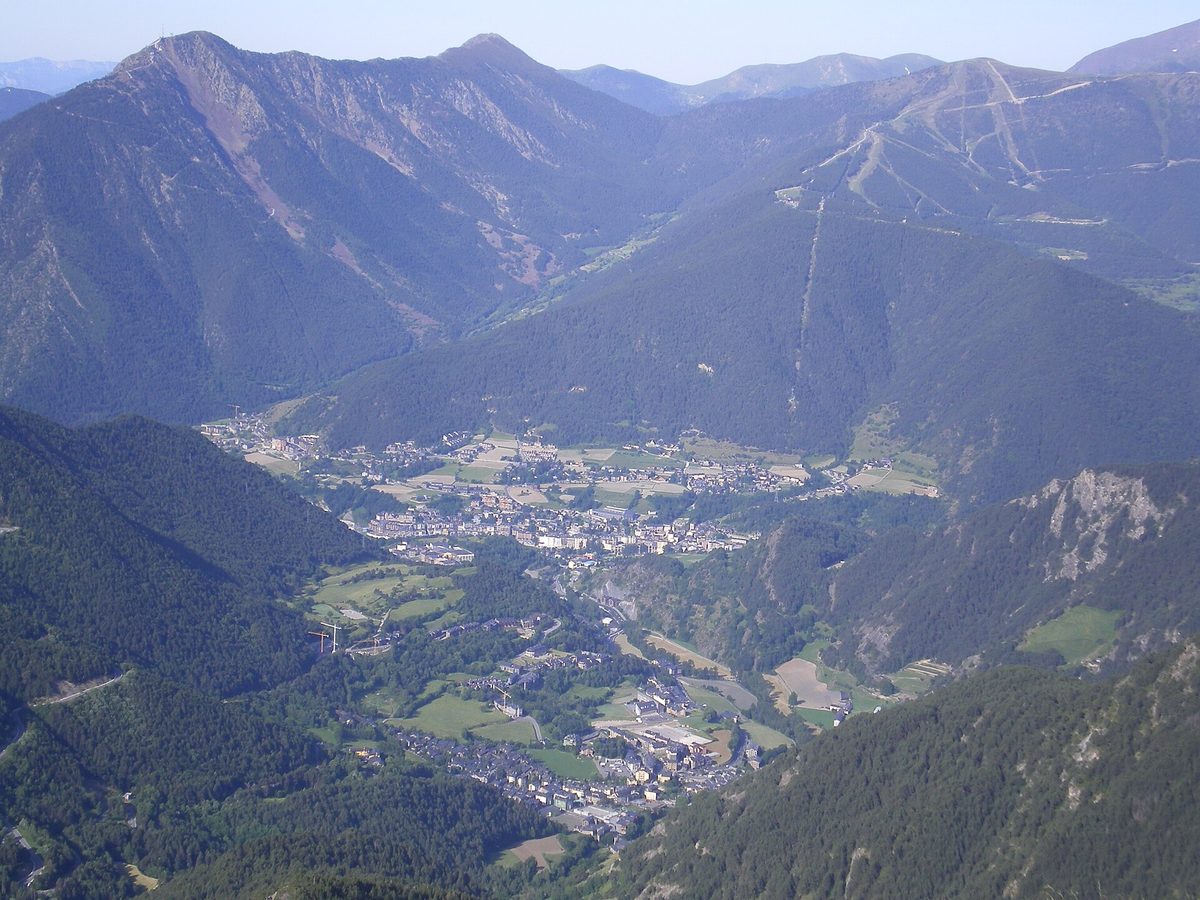
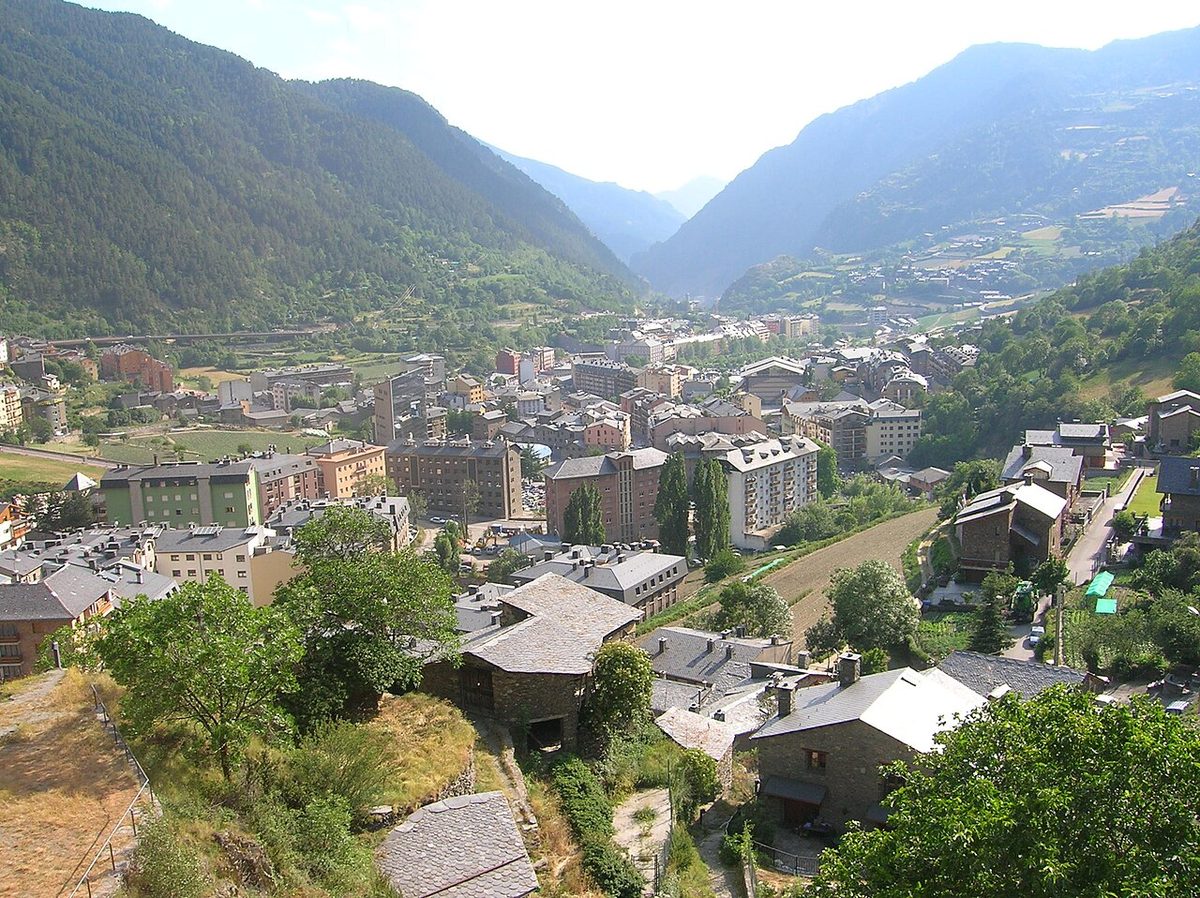
Let’s be straight about the geography, because it explains everything else. Andorra has one main road, and Sant Julià sits on it at the bottom. Every lorry, every coach from Barcelona, every Spanish family coming up for a weekend of cheap fuel and ski passes passes through this town. Its main street is a border road first and a high street second, and it looks it: apartment blocks, tyre places, banks, a couple of big shopping centres near the frontier, and a river running under it all.
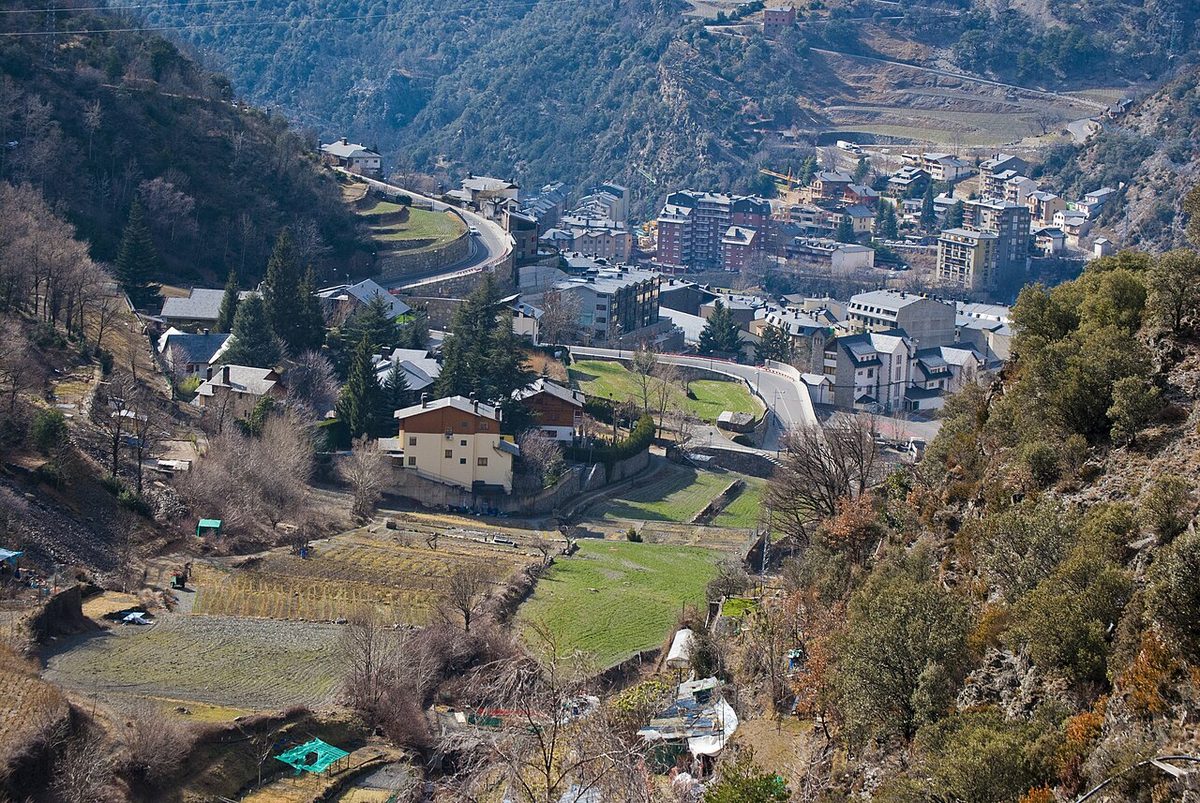
That is the valley floor. Climb 200 metres up either side of it and you are somewhere else entirely — terraced hamlets with a dozen houses each, hay meadows, an 11th-century chapel on a rock spur, and vineyards that have no business existing at this altitude. The parish is essentially two countries stacked on top of each other, and the guides that call the whole thing charming are describing only the top half.
The other thing to know is that Sant Julià is the parish most shaped by the frontier. Tobacco was grown on these slopes and rolled into cigarettes in a factory in the middle of town for half a century. The country’s whole modern history of duty-free trade runs through here, and it still does — the queue of Spanish-plated cars nosing home on a Sunday afternoon is the parish’s most reliable daily event.
Getting to Sant Julià de Lòria
This is the easiest place in Andorra to reach and one of the easiest to leave, which is both its selling point and its problem.
Driving up from Spain and the Riu Runer border
Coming from Barcelona or Lleida you take the N-145 up from La Seu d’Urgell, and the border post sits at the Riu Runer, where the Spanish hamlet of La Farga de Moles faces the Andorran customs sheds. It is about 10 km from La Seu, and Sant Julià is another three minutes beyond it. Andorra is not in the EU or the Schengen area, so this is a real customs post with real checks — passports or ID cards get glanced at, and boots get opened when the officers feel like it.
Northbound, on a normal weekday morning, you will be through in under five minutes. Southbound on a Sunday afternoon in July, or on the last day of a long weekend, is a completely different animal. Spanish customs is checking what everyone has bought, and the tailback from the Runer has been known to run two or three kilometres back up the valley into the town itself. I have sat in it. It is not fun, and it is entirely avoidable if you leave before about 3 pm or after about 8 pm.
Two practical notes. First, know your allowances before you join that queue — the rules on alcohol and tobacco in particular are tighter than people assume, and the full picture is in my guide to the Andorran duty-free allowance. Second, if you are planning the drive from scratch, the route detail, the mountain-pass seasons and the on-the-ground rules are all in driving to Andorra. There is more on the checks themselves in my piece on the Andorra border crossing.
By bus
The national bus line L1 runs Escaldes-Engordany to Sant Julià de Lòria and back, through the middle of Andorra la Vella. At the time of writing it goes every 20 minutes from around 06:20 to 21:00 on weekdays, then every 30 minutes until about 22:00, and every 30 minutes from about 06:45 to 22:15 at weekends and on holidays. The southern terminus is the Epizen shopping centre, at the stop called La Portalada, near the border end of town.
From the centre of the capital, expect 15 to 20 minutes and a fare of a couple of euros. It is genuinely frequent, genuinely cheap, and one of the better public-transport experiences in the Pyrenees — the fuller picture is in getting around Andorra. There is also a night bus on this corridor, which matters if you are staying down here and eating up in Andorra la Vella.
Long-distance coaches from Barcelona and Barcelona airport pass straight through Sant Julià on their way to the capital, and most will drop you here on request — worth knowing if your hotel is at this end. Journey time from Barcelona is around three and a half hours in normal traffic. The closest runway is the little Andorra–La Seu d’Urgell airport about 12 km south, though almost nobody arrives that way — in practice you fly to Barcelona or Toulouse and drive.
Parking
Easier than the capital, which is not a high bar. There are underground and surface car parks around the centre and by the shopping centres near the border, and street parking is metered in the core. Rates are lower than Andorra la Vella. If you are day-tripping from the capital and cannot face its car parks, parking in Sant Julià and taking the L1 up is a legitimate and slightly smug move.
What is actually worth stopping for in the town
An hour, maybe ninety minutes, covers the town centre properly. Here is what is in it, and one significant thing that no longer is.
The church of Sant Julià i Sant Germà
The parish church sits in the old core, a short walk uphill off the main road, and it is still a working church rather than a museum piece. The building has been rebuilt and remodelled repeatedly, so what you are really coming for is the bell tower: three storeys of Romanesque stonework with Lombard arches and pilaster strips, the oldest surviving piece of the whole structure and one of the better Romanesque towers in a country that has an unfair number of them. Inside there is a nave with side altars and a Baroque apse with coloured glass. It takes ten minutes and it is free.
The Museu del Tabac — read this before you go
Here is the thing every other page about Sant Julià still gets wrong, including some published this year. The Museu del Tabac, housed in the old Reig cigarette factory on Carrer Doctor Palau, was for years the best small museum in Andorra: a genuinely clever multimedia walk through a real early-20th-century factory, smells and all, telling the story of how a poor mountain parish got rich on leaf tobacco and the border.
It ran from 2003 until January 2022, and it is now a virtual museum only. Museus.ad, the government’s own museum portal, says so plainly. The building is still there and the foundation still runs occasional temporary exhibitions in it, but you cannot turn up and buy a €5 ticket for the factory tour, and I would not build a day around it. Check museus.ad or the Museu Fàbrica Reig site before you go in case the situation changes — and treat any listicle that promises you a tobacco museum visit with the suspicion it deserves.
The tobacco story itself is still worth knowing. The Reig factory operated from 1909 to 1957, tobacco was grown on terraces all over these south-facing slopes, and the fortune it built underwrote a lot of modern Andorra. You will still see small tobacco plots on the hillsides in late summer, which surprises people who assume the crop died out.
The small stuff, which is better than it sounds
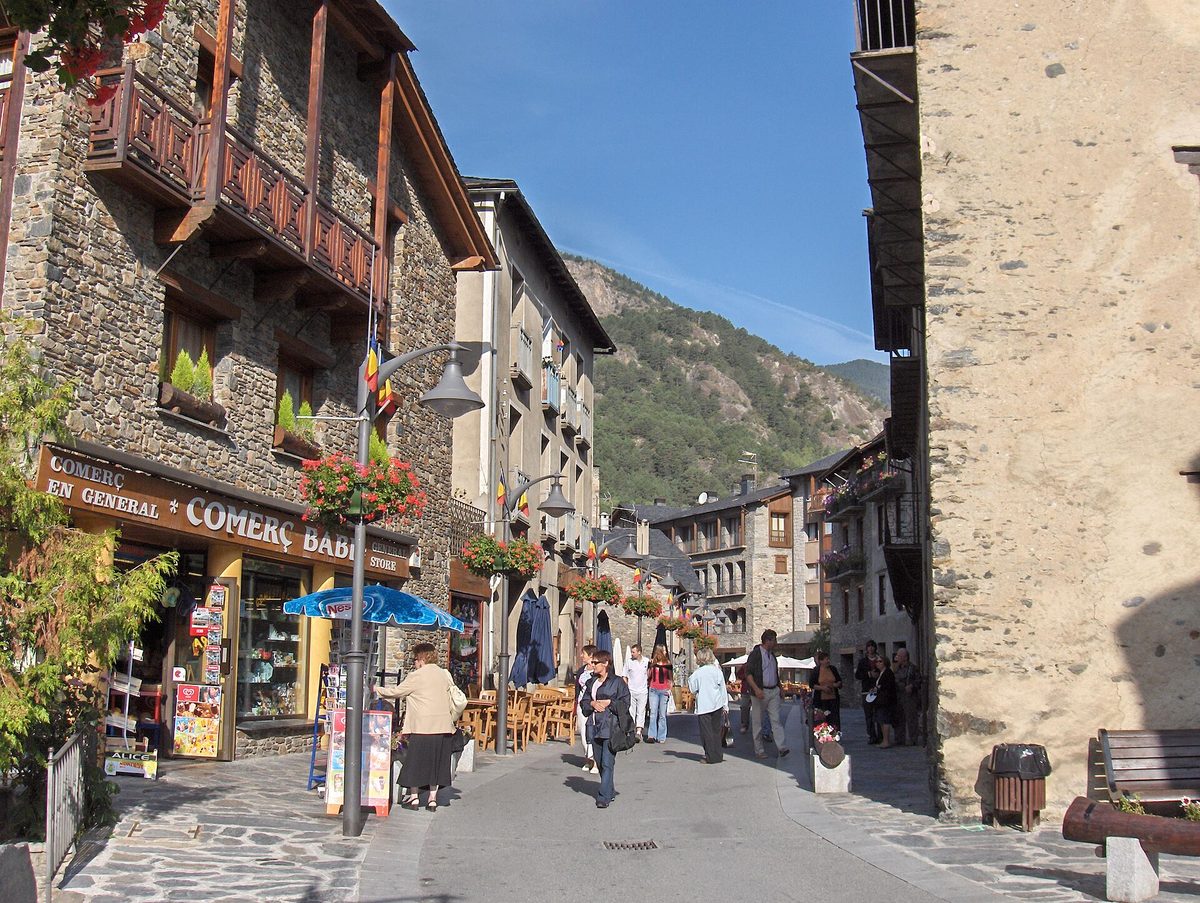
A handful of things are worth a wander between the church and the river. The Font dels Cóms on Carrer Doctor Palau is a stone drinking trough that once watered the mules of merchants heading down to La Seu — cóm is Pyrenean Catalan for a drinking trough — and it is a nice small reminder of what this road was before it was a road. In Plaça de Calonge there is a bust of Clio, muse of history, by the Barcelona sculptor Josep Maria Subirachs, carved in sunken relief so the face appears to track you as you move. The Casa Comuna, the parish council building finished in 1927, doubled as the village school for decades.
The Centre Cultural Lauredià burned in November 2022 and reopened after several years of restoration; it is the parish’s main venue for concerts and exhibitions, so it is worth a look at the programme if you are staying.
The university nobody expects
One genuine oddity: the Universitat d’Andorra, the country’s only university, is based here rather than in the capital. It is small — a few hundred students across nursing, computing, education and business — but it gives Sant Julià a student population and a slightly different evening feel from the rest of the valley. It is not a sight. It is just a fact that surprises people, and it explains a few of the cheaper bars.
Naturland at La Rabassa
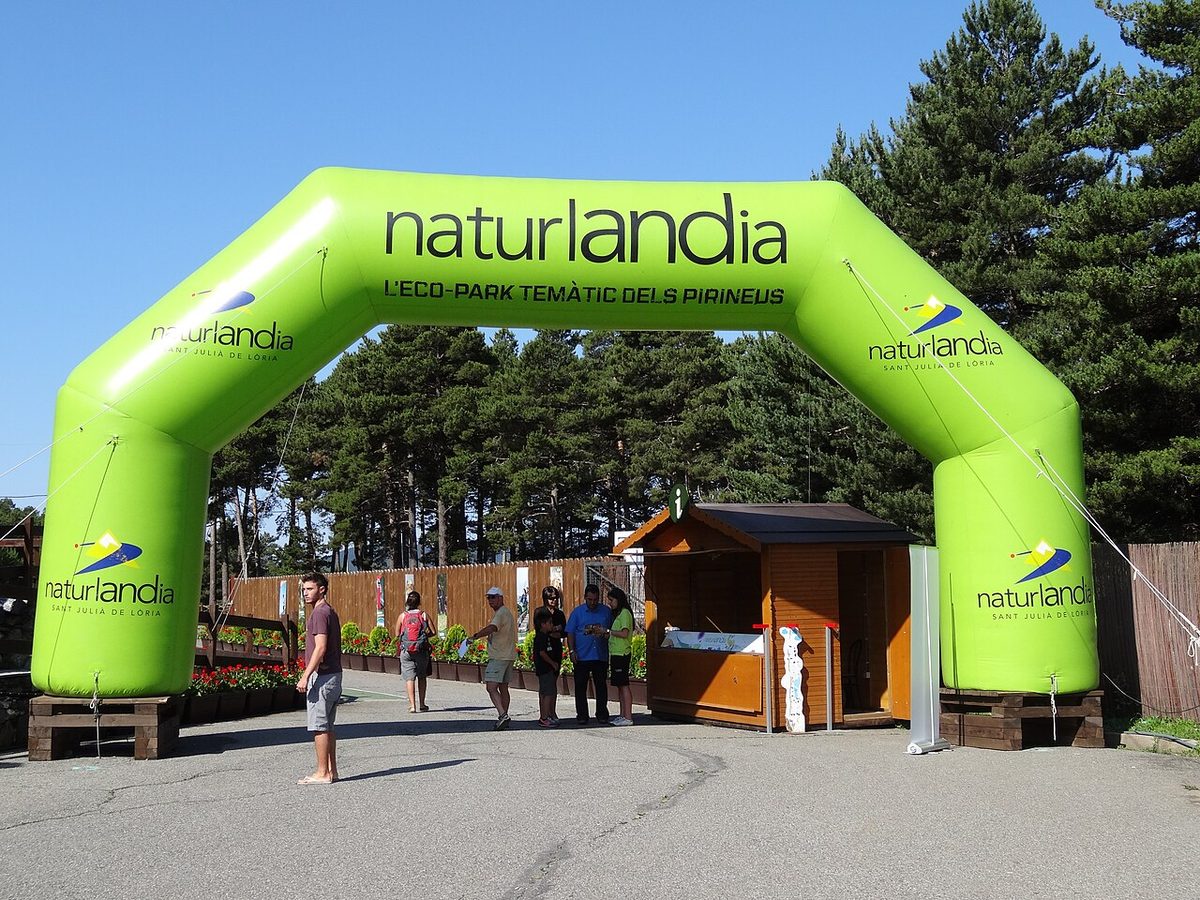
The single biggest reason people deliberately turn off the CG-1 here. Naturland is an outdoor activity centre spread over several hundred hectares of forest at La Rabassa, on the western side of the parish, reached by a switchbacking mountain road that climbs from the town to a base area at 1,600 m and an upper area at 2,000 m. The park labels these cota 1600 and cota 2000, and knowing which is which saves you a lot of driving.
The Tobotronc
The headliner is the Tobotronc, an alpine coaster on steel rails that runs 5.3 km through the La Rabassa forest with around 400 m of vertical drop. Naturland calls it the longest alpine slide in the world, and it is at minimum the longest in Europe — Wikipedia hedges to the European claim, so I will too, but either way nothing else I have ridden comes close for sheer duration.
The ticket includes the tow up from cota 1600 to cota 2000 and the ride back down, and the whole round trip takes about 20 minutes. You sit in a two-seat sled and control your own brake, which means the person in front decides your afternoon. Riders need to be at least 1.20 m tall; under-14s must ride with an adult over 18; there is a 160 kg limit per sled. Go early — the queue after about 11 am on a summer weekend can eat an hour.
The rest of the park, and the snow
Cota 1600 holds the adrenaline stuff: the Airtrekk high ropes course, the Eclipse zip line, a squirrel circuit and mini zip line for smaller kids, archery, and a summer sledge run. Cota 2000 is the quieter, greener half — pony and horse rides, forest walks, and the country’s main nordic ski area in winter, with cross-country trails through the pines plus snowshoe routes and snowmobile outings.
That nordic centre matters more than its size suggests. Andorra is an alpine country almost everywhere else, and La Rabassa is where you go if you want to skate or classic-ski rather than ride lifts. It is a completely different day out from the big downhill resorts, and much cheaper.
Is it worth the money?
Honest answer: yes if you have children between about six and fourteen, and yes if you specifically want the Tobotronc, which is a genuinely brilliant twenty minutes. Less so otherwise. Entry is sold as bundled passes rather than pay-per-ride, and 2026 pricing sits somewhere around €35 to €52 per adult depending on which bundle you take, so a family day here is not cheap by Andorran standards. Check current prices and the activity-status page on the official site before you drive up, because individual attractions close for weather and maintenance and you do not want to find that out at 1,600 m. If you are travelling with kids, weigh it against the alternatives in my guide to Andorra with kids.
One logistical warning the brochures skip: getting to La Rabassa without a car is awkward. There is no frequent public bus up the mountain road, so it is a taxi or a hire car, and cota 2000 is another climb above cota 1600.
The hamlets above the valley — the good half of the parish
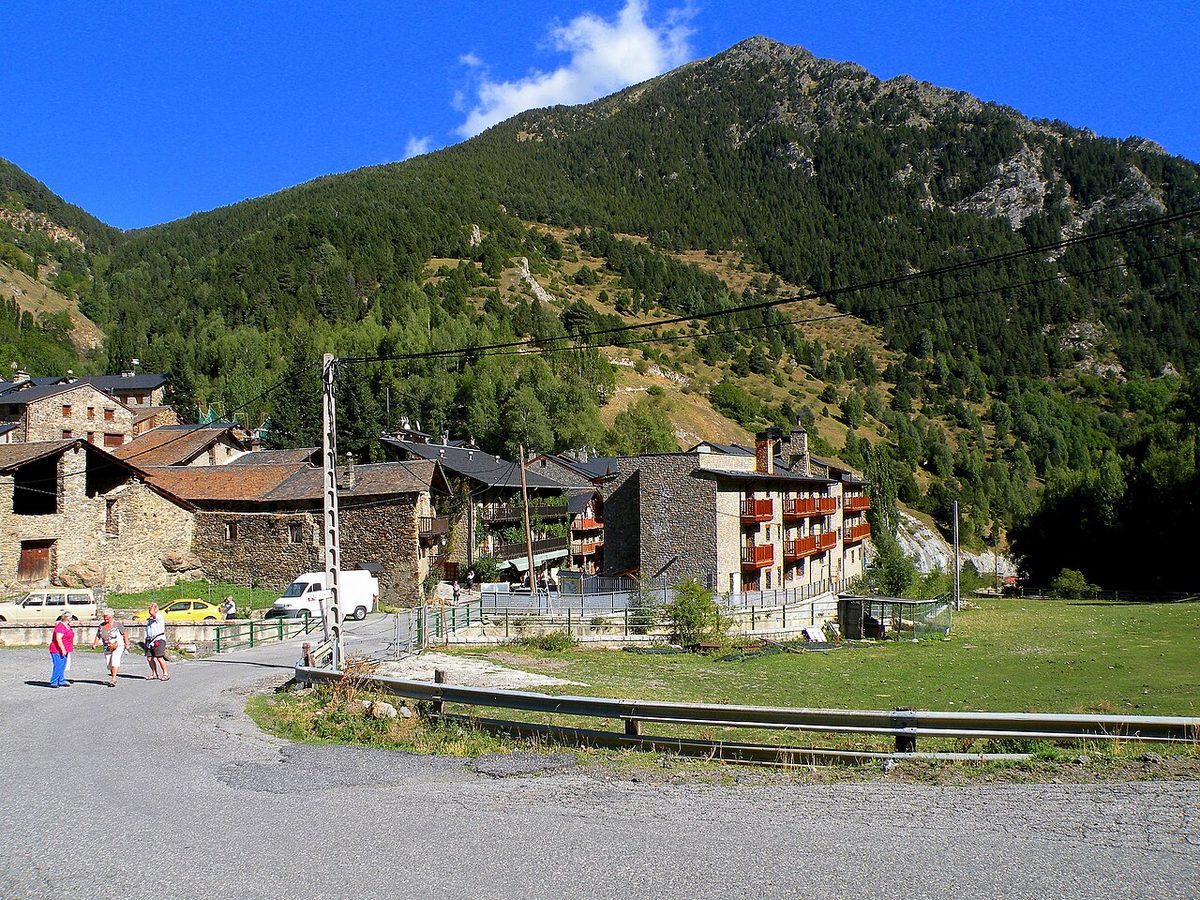
This is where I would spend my time. Eleven villages and hamlets are scattered up the side valleys, most of them reached by narrow roads that switchback off the main drag, and almost none of them see a coach. If you like the stone-and-slate side of the country you already know from Andorra’s villages, this is the southern chapter of it.
Nagol and Sant Serni
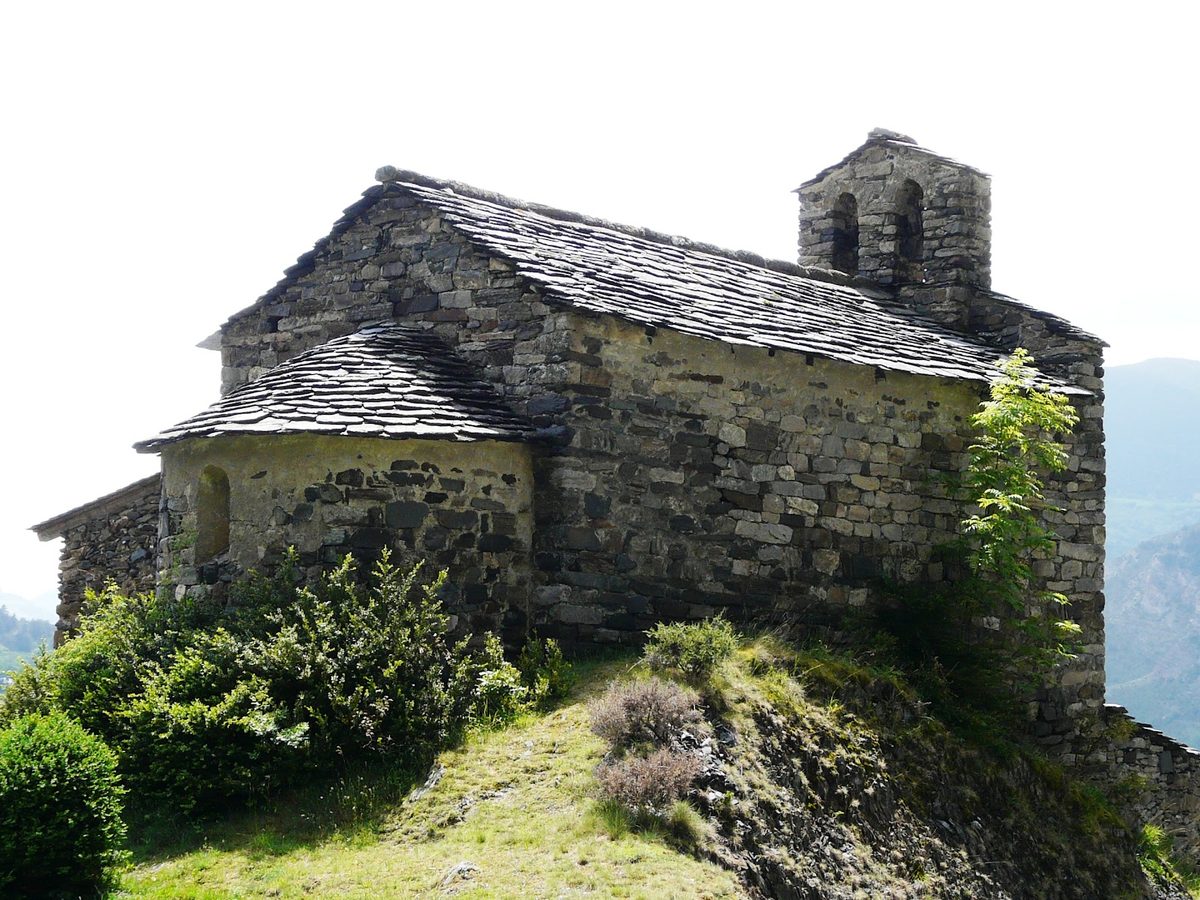
Drive 2.2 km up the Carretera de Nagol (the CS-120) from the town and you reach the best thing in the parish. Sant Serni de Nagol is a tiny pre-Romanesque church perched on a spur with the whole Sant Julià valley laid out below it. Its consecration document is dated 1055, which puts it earlier than the Lombard building boom — hence the complete absence of exterior decoration. It is a plain stone box with a bellcote, and it is wonderful.
Inside are Romanesque mural paintings discovered in 1978: linear, almost naive in their use of colour, influenced by the illuminated Beatus manuscripts. There is also a 15th-century altarpiece to the church’s patron, the first bishop of Toulouse. The interior is not reliably open — like most of Andorra’s Romanesque churches it runs guided visits in season, booked through the government museums service or the Sant Julià tourist office on Plaça Laurèdia. Even locked, the walk and the view are worth the drive, and the light at the end of the day is superb.
Canòlich
The Sanctuary of Canòlich sits at about 1,635 m above the valley and is the spiritual centre of the parish. On the last Saturday of May the whole town walks up for Canòlich Day — bread is blessed, sardanas are danced, and a small mountain chapel briefly becomes the busiest place in southern Andorra. If you can time a visit to that Saturday, do. There is now a Canòlich Music festival attached to it too.
Auvinyà, Juberri and Fontaneda — and yes, wine
The eastern terraces hold a run of small hamlets that repay an afternoon’s aimless driving. Auvinyà is the one to know, because Casa Auvinyà is here: a family winery founded in 2005 by the Tor family, working about two hectares of terraced plots on steep west-facing slopes with cellars at around 1,200 m. They grow pinot noir, pinot gris, viognier and syrah, which sounds implausible until you taste it. Guided visits with tastings run on request and take around half an hour — book ahead, because this is a small operation, not a visitor centre. There are a handful of other cellars in the parish, including Mas Berenguer.
Andorra makes tiny quantities of wine from some of the highest vineyards in Europe, and this parish is where most of it comes from. If that side of the country interests you, it slots neatly into my guide to Andorran food and drink.
Up at Juberri there are the Jardins de Juberri, a private sculpture garden with dinosaurs, animals and scale-model monuments dotted through terraced planting and long views down the valley. It is odd, cheerful and very much a family stop rather than a serious art destination. Fontaneda, higher and quieter, is the classic hay-meadow hamlet with a few bordes converted into restaurants.
Bixessarri and the road to Os de Civís
My favourite drive in the parish, and one of the strangest roads in Europe. From Aixovall the CG-6 turns west and climbs a narrow valley through Bixessarri, a hamlet of a few dozen people, and keeps going until it crosses back into Spain and dead-ends at Os de Civís.
Os de Civís is a Spanish village — administratively part of Les Valls de Valira in Catalonia — that has no road connection to the rest of Spain. The only way in by car is through Andorra. There is no border post, because the road goes nowhere except the village. It has under a hundred registered residents, a cluster of good stone houses, and several restaurants that do a brisk trade in Andorran day-trippers who have come for exactly the novelty I am describing. Allow an hour and a half round trip from the main valley, more if you eat.
Aixovall and the Margineda
At the northern end of the parish, where the valley briefly widens, Aixovall holds the flat ground: the parish sports complex and football pitches, the CG-6 junction, and the government’s vehicle inspection station. It is not scenic. It is, however, where Andorran league football gets played, and if you want the full small-country experience, a Primera Divisió match in front of a few hundred people is hard to beat for value.
Just north of here, technically over the line in the capital’s parish, sit the Pont de la Margineda — a high-backed medieval bridge over the Valira — and the Balma de la Margineda, a rock shelter with evidence of human occupation going back roughly 10,000 years, plus the Roureda de la Margineda medieval archaeological site. The Camí dels Pujols path links them and makes an easy hour’s walk, and it is one of the few genuinely flat strolls in the country.
Cycling: Coll de la Gallina
Roadies already know this parish, even if walkers do not. The Coll de la Gallina climbs from Sant Julià to about 1,910 m in a series of brutal double-digit ramps and has featured repeatedly in the Vuelta a España. There is a monument at the top to the Catalan climber Joaquim “Purito” Rodríguez, whose career is tangled up with this road. It is one of the hardest paved climbs in the country and one of the most rewarding — and the descent back into the valley is glorious. The Coll de la Gallina is also a quiet way to reach the upper hamlets on foot or by bike if you want to avoid the main road entirely.
Carnival, Canòlich and the parish calendar
Sant Julià takes its Carnaval more seriously than anywhere else in Andorra — locals will tell you it is the country’s biggest, and having stood in the confetti I am not inclined to argue. It runs over several days in February, with traditional comparsa groups (the Ninots, Dimonis, Bruixots, Porrers and Marratxins), a float competition and a big evening parade that loops from Plaça Francesc Cairat along Avinguda Verge de Canòlich and Carrer Bonaventura Riera before finishing at Plaça de la Germandat. It is loud, family-heavy and completely unpolished for tourists, which is the point.
The other fixed points are Canòlich Day on the last Saturday of May and the parish festa major in late July. Dates shift, so check the parish council site. If you are choosing a month for a trip generally, my guide to the best time to visit Andorra lays out the seasons properly.
Staying in Sant Julia de Loria: the case for and against
This is the practical question most people arrive at, so let me answer it properly.
Why you might actually stay here
Three real reasons. Price — beds down here are consistently cheaper than the capital and dramatically cheaper than slopeside, which makes it one of the better plays for cheap accommodation in Andorra. Position — you are five minutes from the border, ten from La Seu d’Urgell, and well placed for a run down into the Spanish Pyrenees — La Seu d’Urgell’s cathedral, the Cadí-Moixeró park and the Segre valley are all easy half-days from here. Altitude — at 908 m this is the mildest corner of the country, which is a genuine advantage in shoulder season when the north is cold and grey.
It also works as a ski base if you have a car and do not mind the drive, since you are at the bottom of the only road. You will spend 40 to 60 minutes each way to Grandvalira, though, which is a lot of your holiday; the trade-offs are laid out in where to stay in Andorra.
Why you might not
The town has no evening life to speak of. Restaurants close early, the good ones are up in the hamlets rather than on the main road, and if you want a proper night out you are getting the bus or a taxi to the capital. There is no spa complex here — the big thermal centre is 20 minutes north, in Escaldes-Engordany. And the main street is a through-road, so ask for a room at the back.
Eating
The parish’s strength is bordes — old stone barns converted into grill restaurants — and they are mostly up the La Rabassa road and around Fontaneda and Juberri rather than in town. Expect grilled mountain meat, trinxat, escudella in winter, and mushrooms in autumn. In the town centre you will find market-cooking places and tapas bars, decent rather than destination-grade, plus the cheap student-friendly end that the university supports. Andorran restaurant prices track Spanish ones fairly closely, which is to say moderate: the famously low taxes barely touch a dinner bill.
How long does Sant Julià actually deserve?
My honest verdict, and it is a two-part one. The town deserves about ninety minutes: the church tower, the old core, the Font dels Cóms, a coffee. That is it, and I would not feel guilty about it. The parish deserves a full day, and a good one — Nagol at opening light, Canòlich or the Coll de la Gallina in the middle of the day, the CG-6 out to Os de Civís for lunch, a winery in Auvinyà in the afternoon. Add a second day if you are doing Naturland with children.
Where it fails is as a standalone destination. Nobody should fly to Europe to see Sant Julià de Lòria. Where it succeeds is as the part of an Andorra trip that stops the country feeling like one long shopping street — and as a base that saves you money without stranding you. Slot it into a longer plan using the three days in Andorra itinerary, or pair it with the northern valleys around La Massana for contrast.
Frequently asked questions
Is Sant Julià de Lòria worth visiting?
The parish is, the town centre only just. Give the centre ninety minutes for the Romanesque bell tower and the old core, then spend your real time above the valley — Sant Serni de Nagol, the Canòlich sanctuary, the Auvinyà vineyards and the road to Os de Civís. Treat it as a half-day or full-day side trip rather than a destination in itself.
How far is Sant Julià de Lòria from the Spanish border?
About 3 km, or five minutes’ drive, to the Riu Runer crossing at La Farga de Moles. La Seu d’Urgell is roughly 10 km beyond that. This is the first Andorran town you reach coming up from Spain, which is why it is nicknamed the country’s southern gate — and why the southbound customs queue is a local fact of life.
How do I get from Andorra la Vella to Sant Julià de Lòria?
Take the national bus line L1, which runs between Escaldes-Engordany and Sant Julià through the middle of the capital. At the time of writing it goes every 20 minutes on weekdays and every 30 minutes at weekends, takes about 15 to 20 minutes, and costs a couple of euros. Driving takes 10 to 20 minutes depending on traffic through the capital.
Is the Museu del Tabac still open?
Not as a physical museum. The Reig factory museum operated from 2003 until January 2022 and has since been a virtual museum, according to the government’s own museus.ad portal. The building still hosts occasional temporary exhibitions. Plenty of travel sites have not updated this, so check museus.ad before planning a visit around it.
Is Naturland worth it?
If you have children roughly six to fourteen, or you specifically want the 5.3 km Tobotronc, yes. Bundled passes ran around €35 to €52 per adult in 2026, so it is a real spend for a family. Arrive early to beat the Tobotronc queue, check the activity-status page before driving up, and remember you need a car for the mountain road.
Can you drive to Os de Civís?
Yes, and it is the only way in. Take the CG-6 west from Aixovall through Bixessarri; the road crosses into Spain and ends at the village. There is no border control, because the road leads nowhere else. Allow around 90 minutes for the round trip from the main valley, longer if you stop for lunch, and note the road is narrow and can be tricky in snow.
What is there to do in Sant Julià de Lòria in winter?
Naturland’s cota 2000 runs Andorra’s main cross-country ski area, plus snowshoe routes and snowmobiling — a good change of pace from the lift-served resorts. February brings the parish Carnival, the biggest in the country. Otherwise it works as a cheap, low-altitude base for driving up to the ski areas, which is how a lot of people use it.
Is Sant Julià de Lòria a good base for a ski trip?
Only with a car and a tolerance for driving. You are 40 to 60 minutes from the Grandvalira sectors and a similar distance from Pal Arinsal, but the beds are meaningfully cheaper and the town sits at a mild 908 m. Families doing one or two ski days plus sightseeing benefit most; people skiing six days out of seven should stay higher.
The verdict
Sant Julià de Lòria is the parish Andorra’s marketing forgets and its own residents quietly like. The valley floor will never charm anyone, and I am not going to pretend otherwise. But the top half of it — an 11th-century church on a rock with 1,000-year-old paintings inside, vineyards at 1,200 m, a mountain road to a Spanish village you can only reach through Andorra, and a Carnival that belongs entirely to the people who live there — is one of the more rewarding half-days in the country, precisely because almost nobody stops.
Next time you clear the Runer, give it two hours instead of eight minutes. Then decide.
Keep planning: settle the big question with is Andorra worth visiting, then build the trip from things to do in Andorra and, for the summer version of this parish, hiking in Andorra.
Photo credits
All photographs are from Wikimedia Commons under their stated licences, with thanks to the photographers: