You drive past a dozen of them before anyone tells you what they are: squat stone buildings with slate roofs, alone in a field halfway up a valley side. Then someone says “we’re going to a borda for dinner”.
A borda is a traditional stone hay barn — livestock stabled below, fodder stored above — built high near the summer pastures and separate from the family farmhouse. Search borda Andorra today and you mostly get restaurants: around two dozen of these barns have been converted, keeping the stone, the beams and the hearth. This guide explains what they are, which ones are worth the drive, and what to order.
Last updated: September 2026. Ownership, opening days and menus at Andorran bordas change more often than you would expect, and several close in the shoulder seasons. Phone ahead, and check official sites before you commit to a drive.
Andorra’s bordas at a glance
| Borda | Parish | What it’s for |
|---|---|---|
| Borda Xicoies (ex-Raubert) | Erts, La Massana | The most dependable traditional borda in the country. Family-run, no interpretation |
| Jou la Borda | Sispony, La Massana | The ambitious one. Fire cooking at tasting-menu standard; a 2026 Repsol Guide entry |
| Les Pardines 1819 | Cortals d’Encamp | A restored barn on a working farm; new to the Michelin Guide for 2026. Takes online bookings |
| Borda de les Pubilles | Aixirivall, Sant Julià | 18th-century building, big portions, sane prices. The family choice |
| Borda del Tremat | Encamp old town | One of the least-altered interiors, plus — rare up here — parking |
| Borda de l’Hortó | Ransol, Canillo | Original animal troughs still in the room. Grill and charcuterie, resident prices |
| Borda del Pi | Vall de Montaup, Canillo | The best view of any restaurant in Andorra, at around 1,890 m. Events-led — call first |
| Borda del Rector | Vall d’Incles, Canillo | Refuge-in-the-mountains feel at the mouth of Andorra’s prettiest valley |
| Borda Estevet | Andorra la Vella | The famous, convenient one. Read the honest note below before you book it |
| Borda Xixerella | Xixerella, La Massana | Grill plus slow-cooked specials. Phone or WhatsApp only — it refuses email bookings |
Budget roughly €35–45 a head with a glass of wine. Most need a car. Almost all need a phone call.
Borda Andorra: what the word means and what the building was for
Start with the building, because everything else follows from it.
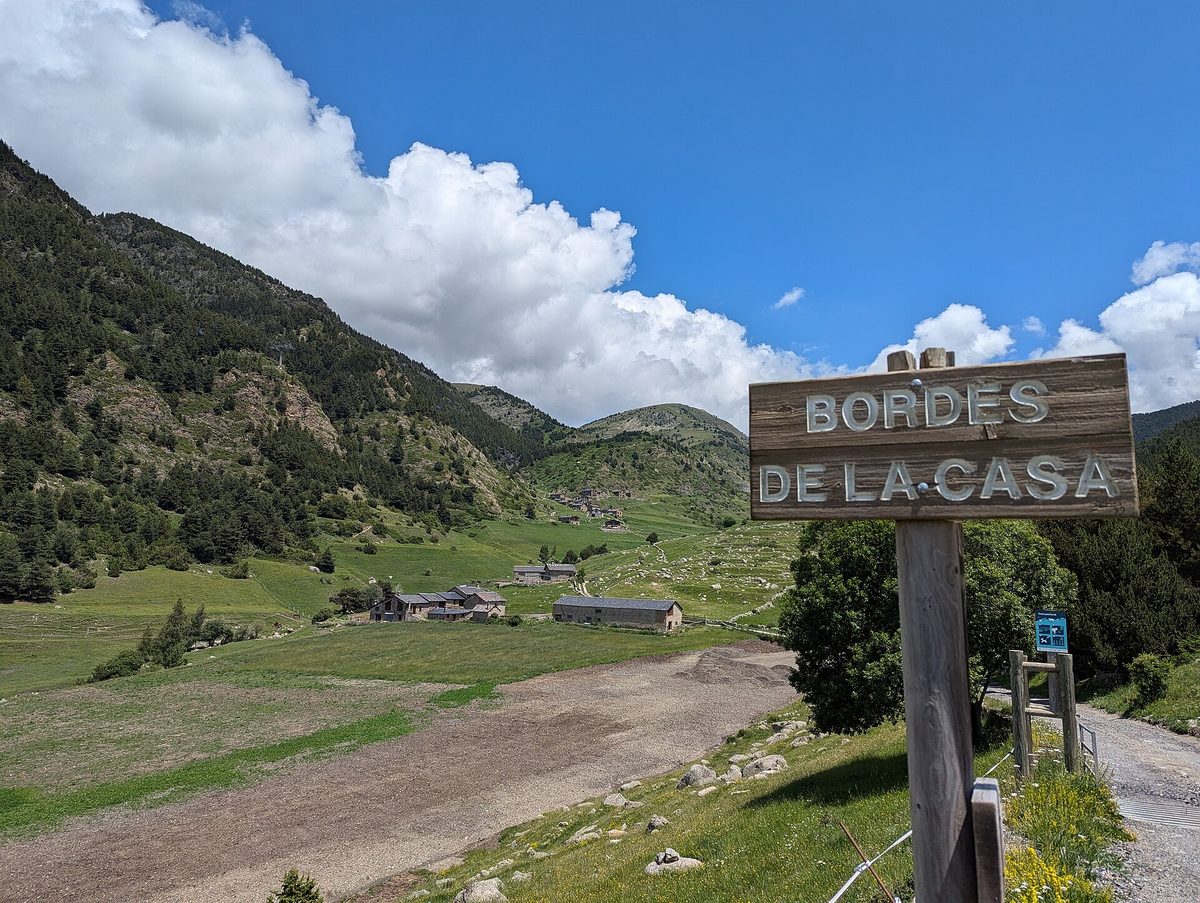
An Andorran farm was never one building. There was the casa — the family house, down in the village, on the flat, near the church. And then, scattered up the valley sides wherever there was pasture, there were the bordes: outbuildings that let a family work land two hours’ walk from home without walking back every night.
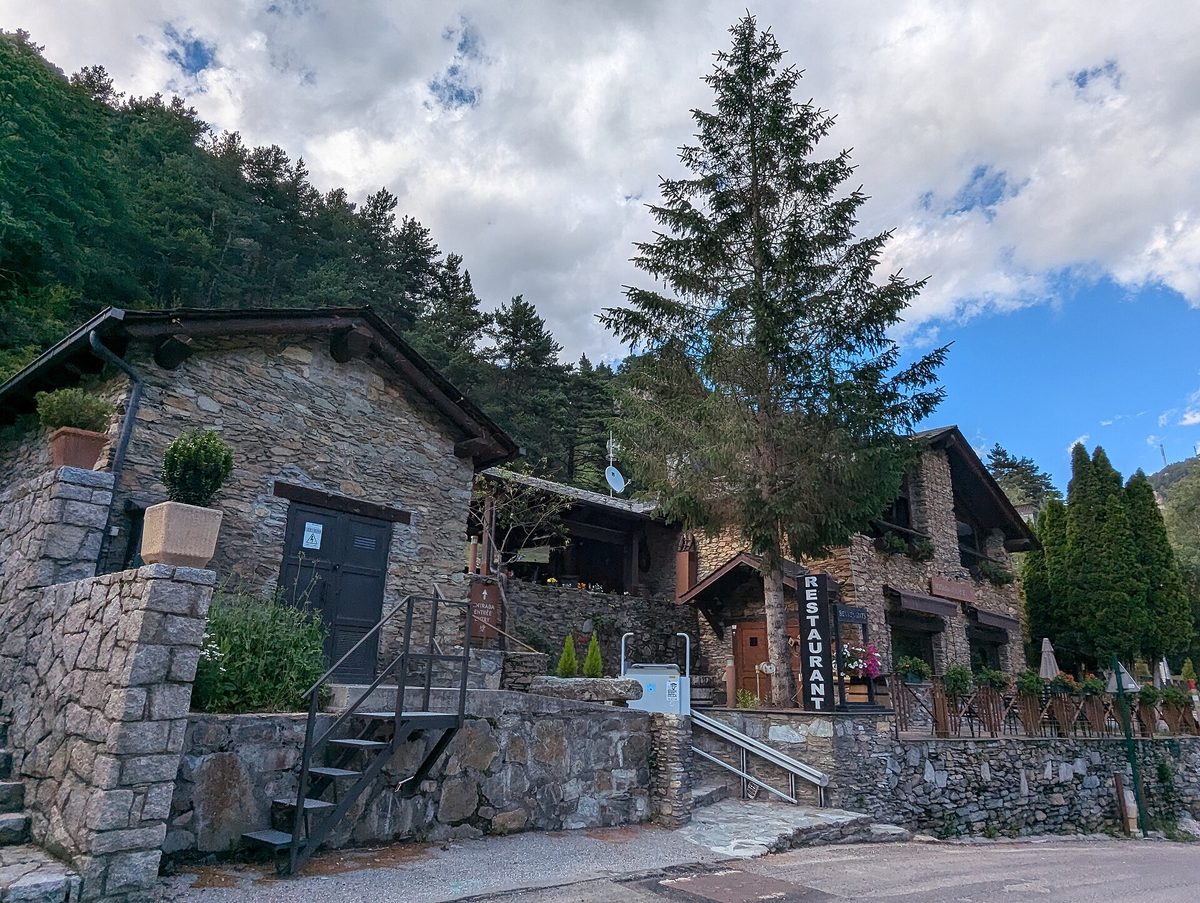
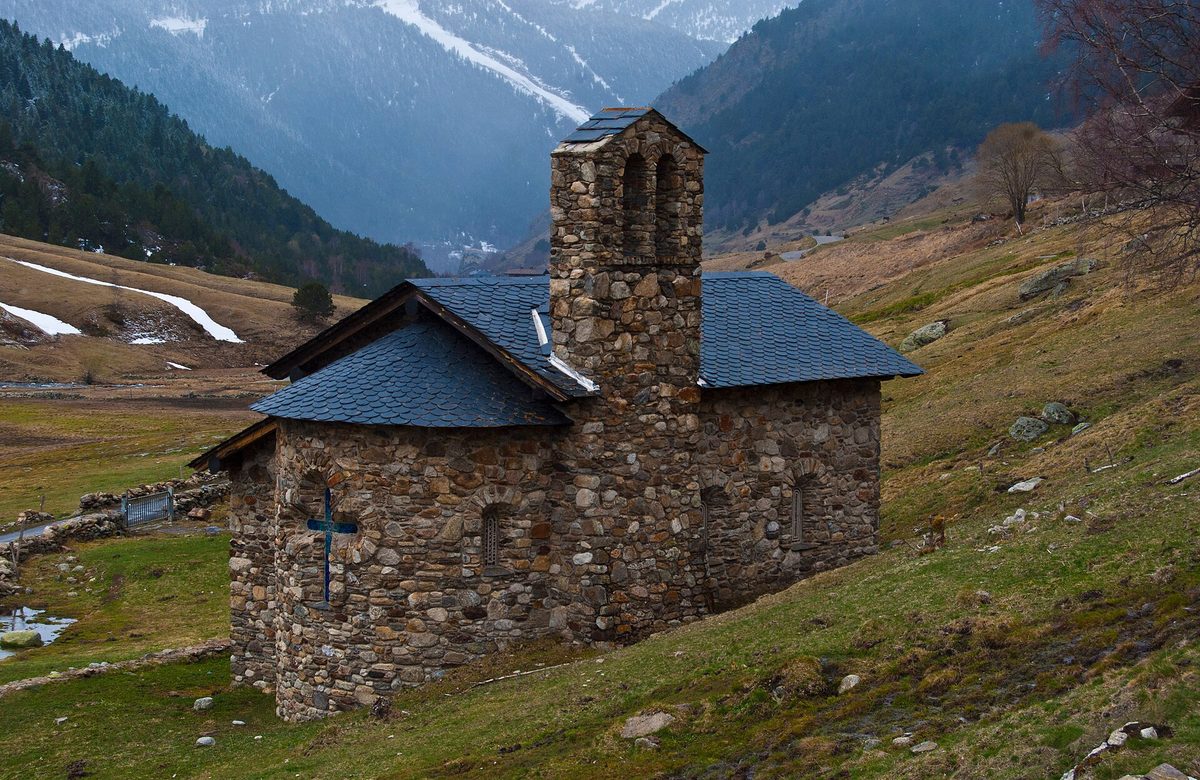
The design is the same everywhere and it is entirely practical. Two storeys. Thick stone walls laid without much mortar. A timber frame. A roof of heavy slate slabs — llosa — pitched steeply so the snow slides off. Livestock on the ground floor through the winter, where their body heat rose into the building. Hay, grain and tools above. Sometimes a corner where a shepherd could sleep out a storm or a high-summer working week.
The word itself is old and its origin is disputed. It is Catalan, probably pre-Roman, possibly connected to an Occitan word for the reeds and shrubs once used to thatch huts. Nobody I have asked in Andorra is confident about it, which is usually a sign that the linguists are not either. What matters is the distinction it carries: in the Pyrenees a borda belongs to livestock farmers, where a masia belongs to arable ones. Andorra, being 90% mountain, was overwhelmingly a country of the first kind.
Many of the surviving bordas date from the 17th and 18th centuries, and some carry a date carved in the lintel. They are the most honest architecture in the country: no ornament, no display, just the cheapest way to keep animals alive at altitude, repeated a few thousand times across seven parishes.
How barns became restaurants
The pastoral economy that needed bordas collapsed over the second half of the twentieth century. Andorra went from a poor livestock and tobacco economy to a tax-advantaged retail and skiing one in about two generations, and the young people who would have been up the mountain with the cattle went to work in shops on Avinguda Meritxell instead. The buildings emptied. A lot of them fell in.
The ones that did not were saved by an idea that turned out to be very good: keep the shell, put a wood grill where the animals stood, and feed people. It worked because a converted borda gives you three things at once that a purpose-built restaurant cannot fake — a room with 250-year-old stone walls and blackened beams, a fireplace big enough to cook over, and a location up a valley with a view down it.
Several conversions kept more than the shell. Borda de l’Hortó in Ransol still has the original stone feeding troughs in the dining room. Others left the hay hatches, the yokes, the iron work. It can tip into theme-park territory in the wrong hands, but mostly it doesn’t, because the families doing the converting were often the families who had farmed the place.
Today there are around two dozen of them — sources disagree between eighteen and “more than twenty-five”, which tells you the category has soft edges — loosely grouped as the Itinerari de les Bordes, a gastronomic trail that covers all seven parishes. The official tourist board directory for it has been broken for some time, which is part of why this guide exists.
One warning before the list. The bordas are not uniform in quality. They share a setting and a spirit, not a standard. Some are superb. Some are coach-tour machines with a stone wall. The building tells you nothing about the kitchen, and that is the single most useful thing in this article.
What you eat in a borda
The menu is remarkably consistent from one borda to the next, which is not laziness — it is a small mountain country’s repertoire, cooked over fire. Here is what will be on the card, and what I would actually order.
The things to order
Carn a la brasa is the centrepiece and the reason the grill sits in the middle of the room. Andorran veal and lamb, botifarra sausage, ribs, an aged entrecôte. Beef with a controlled Andorran origin is a genuine thing here and the difference is not marketing. A parrillada for two is the default order and it will defeat you.
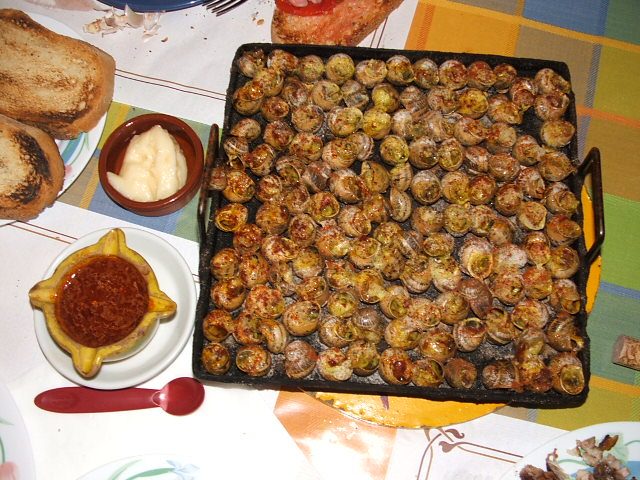
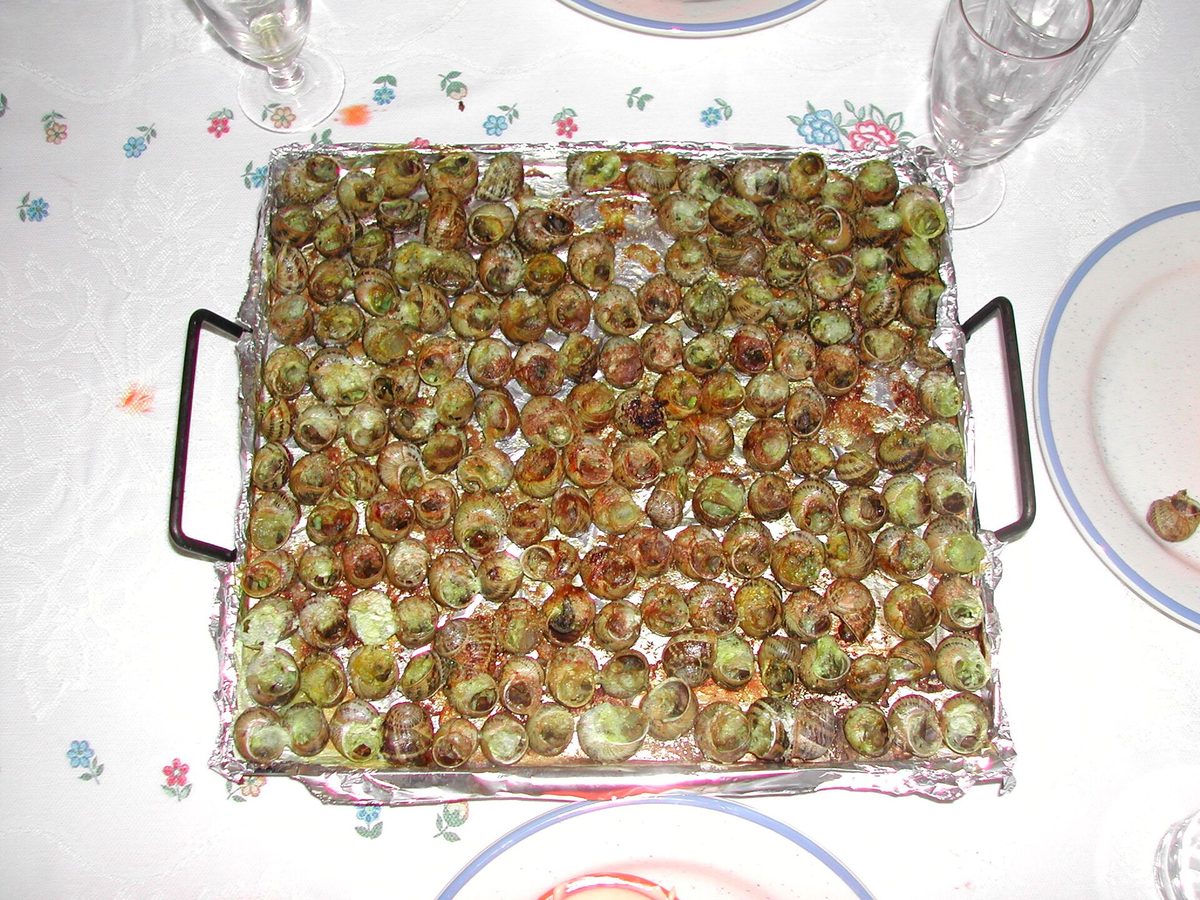
Cargols a la llauna — snails roasted over the coals in a shallow tin tray with oil, garlic and parsley, served with allioli and a sharp vinaigrette to dip them in. If you have talked yourself out of snails somewhere in life, do it here instead; this is the version that converts people. Expect around €20 for a tray.
Trinxat, the Pyrenean cake of frost-touched winter cabbage and potato mashed together and fried crisp in pork fat with bacon laid over it. Peasant food, restaurant prices, completely worth it. Winter is its season though most bordas serve it year-round. There is a fuller account of it and of escudella, the national stew, in its own guide.
Embotits to start — the cured meat board. Look for donja, which is specifically Andorran and made of nothing but pancetta, lard, salt and pepper, alongside secallona and bringuera. Most of it is made at the January pig slaughter and eaten across the year.
Civet de senglar, wild boar braised long in wine with onion and mushrooms, in autumn and winter. Carn a la llosa, meat you finish yourself on a heated slate at the table. Andorran cannelloni, a local variant with lamb, pork and chicken under béchamel. Bacallà a l’andorrana, gratinated cod. Xicoies, a salad of bitter wild chicory foraged on the mountain with walnuts and bacon — ask if it is on, because it usually is not written down.
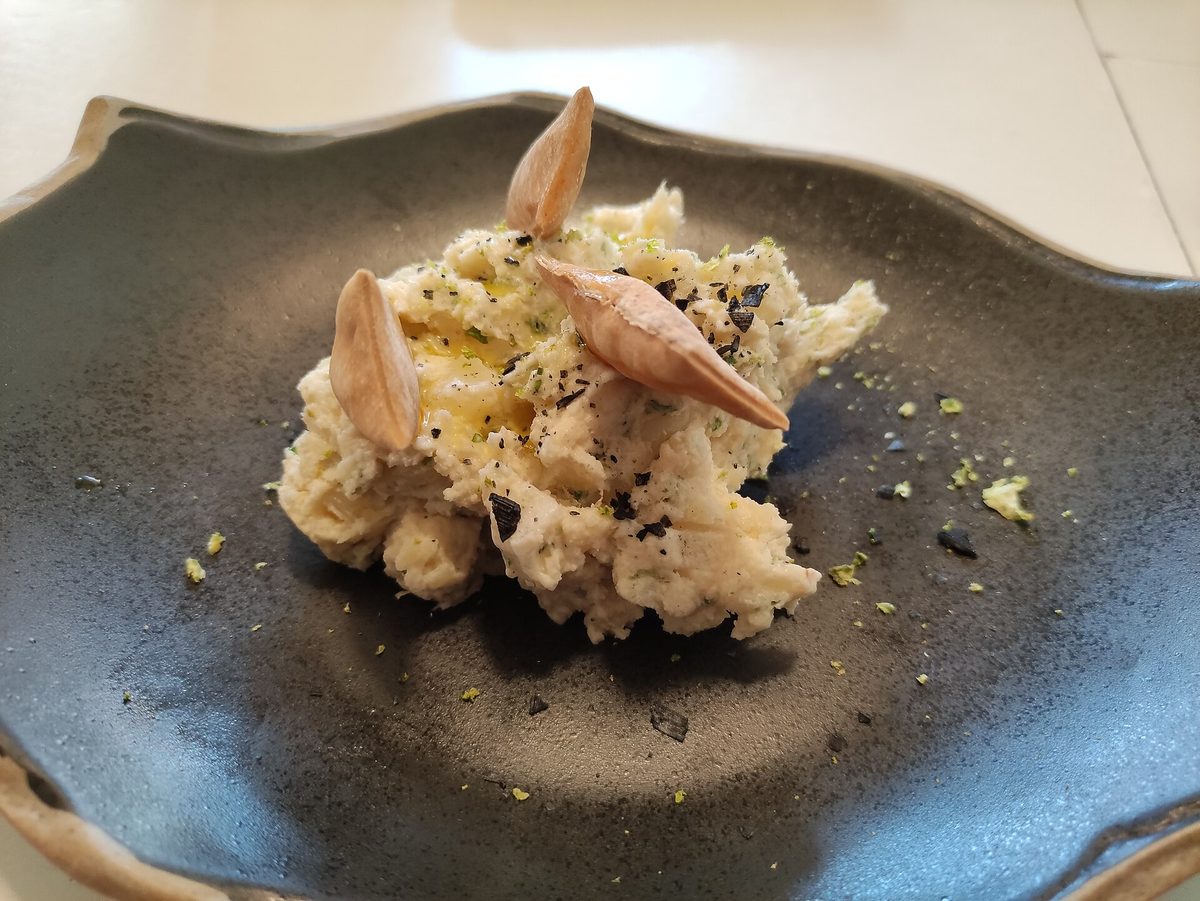
Ask for allioli de codony, quince allioli, with the grilled meat. Finish with crema andorrana or coca masegada. Drink the local wine — Andorra makes small quantities at high altitude and a borda is the right place to try it, as the guide to Andorran wine explains at length.
What’s seasonal
Escudella and trinxat are winter dishes and taste better in winter. Wild mushrooms arrive September to November and the good bordas make a fuss of them. River trout appears in the warmer months. Game is autumn. Several bordas run a distinct winter and summer carta, so what you read online in August may not be what arrives in February.
The best bordas in Andorra, parish by parish
La Massana: the strongest concentration
La Massana parish is where I send people first. Four or five genuinely good bordas sit within fifteen minutes of the town, and if you are skiing Pal-Arinsal or based in the northern valleys you are already halfway there.
Borda Xicoies, in the hamlet of Erts on the road up to Pal and Arinsal, was Borda Raubert until fairly recently and is run by the same family. It is the one I recommend without qualification: trinxat, escudella, a warm sweetbread salad, shoulder of lamb with wild mushrooms, cod done the Andorran way. Nothing is trying to be clever. Everything is correct.
Jou la Borda in the village of Sispony is the other end of the scale and my favourite meal in the country in recent years. It occupies a traditional borda in premises that housed a well-known restaurant before it, and it has done the thing that almost no grill kitchen manages: made fire cooking precise without making it precious. Holm-oak embers, Andorran veal with a protected origin, rice finished over the fire in a tin tray, artichokes with pancetta, a torrija people describe to each other afterwards. Around €65–90. Michelin has not listed it; the Repsol Guide added it in 2026, and they were right.
Borda Xixerella, on the Pal road at Xixerella, opened in its current form in 2019 and mixes the grill with slow-cooked xup-xup specials — oxtail, pig’s trotters — that most bordas have stopped bothering with. The dining room is small and the terrace is lovely in summer. Note the booking rule: phone or WhatsApp only, on +376 749 517. The restaurant states plainly that it does not take reservations by email or Instagram, and it means it.
Borda d’Erts, next door in the same hamlet, is the plainer, cheaper option — escudella, rabbit, snails, a fireplace, a wooden ceiling and a terrace. Borda Eulari in Anyós does honest grill cooking without ambition. Borda de l’Avi on the edge of town is built for big tables and events; it works for a group of twelve and is not where I would take one person I liked. Malandra is the modern reading: a borda building run as a sleek grill restaurant, foie cannelloni and low-temperature pork ribs, worth knowing about if the traditional carta is starting to blur.
Encamp: the local one
Encamp is not a place most visitors linger, which is exactly why its bordas are good value. Borda del Tremat, in the old town on Carrer Sant Miquel, has one of the least-altered interiors of any borda in Andorra, a properly seasonal menu, and its own parking — a bigger deal than it sounds in a village of one-car-wide streets. Borda Major is the resident favourite: generous, cheap, entirely unbothered by tourism. Borda de l’Hereu is the large informal one for groups.
Up the Cortals road above the town sits Les Pardines 1819, and it deserves its own paragraph. It is a restored borda attached to a small hotel, run by a family who still farm the land and keep livestock on it, with Óscar Villalba in the kitchen cooking what the farm and the valley produce. Michelin added it to the guide for the first time in 2026. It is the clearest signal of where Andorran cooking is going: not away from the borda tradition into imported fine dining, but further into the tradition, done seriously. It also has an actual online booking engine, which among bordas is close to miraculous.
Borda Vella, also in Encamp, is the awkward one. For years it was a national reference for creative takes on mountain cooking. It changed ownership recently and my sources now flatly disagree about whether it is still at that level — one resident writer says no, a 2025 review says emphatically yes. Go if you are curious. Don’t go if you need the meal to be perfect.
Canillo: the views
Borda del Pi sits at around 1,890 m in the Vall de Montaup, up the same road that leads to the Roc del Quer viewing platform, and has a view no other restaurant in Andorra can match. The catch is that it functions largely as an events and celebrations venue, and a normal walk-in lunch is not always possible. Phone before you drive up, or plan it as a drink on the terrace with dinner somewhere else.
Borda del Rector, on the road into the Vall d’Incles, has the refuge feeling — low ceiling, big fire, grill-led menu, one of the prettiest valleys in the Pyrenees outside the window. Borda de l’Hortó up in Ransol is the value pick of the parish, with the original farm gear and the stone troughs still in place and a clientele of Andorrans rather than visitors. Over in Soldeu, La Cort del Popaire is a converted borda in the middle of a ski resort — stone, wooden ceilings, antique clutter, cured and grilled meats — and by some distance the most atmospheric room in Soldeu.
Sant Julià de Lòria and the south
Borda de les Pubilles in the village of Aixirivall is an 18th-century building in a quiet corner of Sant Julià de Lòria parish, and it is where I would take a family. Snails in the tin tray, mountain rice, ous estrellats, pork ribs, homemade puddings, around €30–40 a head, portions built for people who have been outdoors. Nobody minds children.
Borda Conangle, in forest above the same parish, is the most designed of them — modern cooking on a traditional frame, spectacular setting, and the least generous value of the ones I know. Borda de l’Arena, out on the road towards Os de Civís, is the opposite: very quiet, very local, grill and trinxat and not much else.
Andorra la Vella: the convenient ones
Borda Estevet, on the Comella road just above the capital, is the borda most visitors eat in, because it is the closest one and every hotel names it. Let me be straight about it. The building is genuinely well preserved, the grill is real, the menu is proper (snails around €21, a mixed grill around €24, an aged entrecôte around €29). But it seats something like 250 people, it is entirely comfortable with coach parties, and it has changed hands more than once. Residents I trust will not vouch for its current standard. It is a perfectly acceptable dinner sold to you as the best borda in Andorra, which it is not.
Borda Pairal 1630 is in the city centre, restored and more polished than any rural borda — snails, grilled meat, an urban crowd. It has also been reported to run as a late-night bar at weekends, which you may consider a bonus or a warning. For the capital’s full range there is a separate guide to where to eat in Andorra la Vella.
What a borda dinner costs
Plan on around €35–45 a head including a glass of wine at most bordas. That is the honest middle. The plainer village places — Borda d’Erts, Borda Major, Borda de l’Arena — come in nearer €30. Borda Vella and the more ambitious kitchens run €40–55. Jou la Borda’s menus sit at €65–90, and Les Pardines is priced as the guide-listed restaurant it now is.
Individual dishes give you the shape of it: starters around €14–20, a tray of snails around €20, mountain rice for two around €21, a mixed grill around €24, an aged entrecôte around €29. Those are real 2026 numbers from one of the better-known bordas and they move with the season.
Is that expensive? For Andorra, no — it is roughly what a decent restaurant in Barcelona charges, and less than the equivalent in France. Set against the ski-town roadside places charging €28 for reheated paella, it is very good value indeed. If you are watching the budget hard, the weekday menú del dia at a village restaurant will feed you three courses for about half, and the wider question of whether Andorra is expensive has its own guide.
Booking, getting there, and the practical stuff
Always book. The good bordas seat forty or fifty people and fill on winter weekends, through August, and on any Sunday lunchtime year-round. Sunday lunch at a borda is a national institution and you will not walk in.
Book by phone. Most bordas have no online reservation system at all. Some take WhatsApp. Borda Xixerella explicitly refuses email and Instagram. Les Pardines, being attached to a hotel, is the exception with a web booking engine. If your Catalan and Spanish are shaky, ask your hotel to make the call — they do it constantly and will not mind.
You need a car. This is the big one. Almost every borda worth the drive sits up a side valley, on a hillside, or in a village the bus does not usefully serve. Andorra’s inter-town bus network is fine and irrelevant here. If you are car-free, read getting around Andorra without a car and budget for taxis, or pick Borda Estevet and Borda Pairal, which you can reach from the capital.
Winter driving is real driving. Several bordas are up unlit mountain roads at 1,500–1,900 m. From November to April you are legally required to carry winter tyres or chains, and a borda track after a snowfall is not the place to discover your hire car has neither. The rules are set out in the guide to driving in Andorra.
Hours are Spanish. Lunch roughly 13:00–15:30, dinner from about 20:00 with 21:00 normal. Many bordas close one day a week, and a surprising number shut entirely in the quiet windows of May to mid-June and late October into November.
Tipping is not expected. Round up if you liked it. Cards work almost everywhere, but carrying €50 in cash is sensible for the smallest village places.
Dress for a barn, not a dining room. These are stone buildings with big fires and cold corners. Nobody cares what you are wearing; you will care whether you brought a jumper.
Which borda should you actually pick?
If you have one night in Andorra
Jou la Borda in Sispony, or Les Pardines 1819 above Encamp. Both are twenty-five minutes from the capital, both are cooking at a level the country did not have ten years ago, and both are unmistakably Andorran rather than generically good.
If you want the traditional thing done properly
Borda Xicoies in Erts. Book it, order the trinxat and the lamb shoulder, drink the house red, do not overthink it.
If you’re with children
Borda de les Pubilles in Aixirivall, or Borda Major in Encamp. Big portions, relaxed rooms, an open grill that keeps a bored child occupied for twenty minutes. More on eating out as a family in the Andorra with kids guide.
If the view is the point
Borda del Pi, having phoned first, or Borda del Rector in the Vall d’Incles. Go at lunchtime in clear weather — there is no point paying for a mountain view in the dark.
If you’re on skis all week
La Cort del Popaire in Soldeu if you are on the Grandvalira side; the Erts and Xixerella cluster if you are at Arinsal or Pal. Both are ten minutes from the lifts, which matters more than you think at the end of a ski day.
Frequently asked questions
What is a borda in Andorra?
A borda is a traditional Andorran farm outbuilding: a two-storey stone barn with a slate roof, built up the valley sides near the summer pastures, with livestock stabled on the ground floor and hay and tools stored above. Many date from the 17th and 18th centuries. Around two dozen have been converted into restaurants.
What does the word borda mean?
It is a Catalan word of disputed and probably pre-Roman origin, possibly connected to an Occitan term for reeds and shrubs used to roof huts. In Pyrenean usage a borda belongs to livestock farmers, in contrast to a masia, the farmhouse of arable ones.
Which is the best borda restaurant in Andorra?
For traditional cooking done reliably, Borda Xicoies in Erts. For the best meal outright, Jou la Borda in Sispony or Les Pardines 1819 above Encamp, both of which now appear in national restaurant guides. Borda de les Pubilles is the best value for families.
What food do they serve in a borda?
Charcoal-grilled Andorran veal and lamb, trinxat, escudella, cargols a la llauna (snails roasted in a tin tray), civet of wild boar in autumn, cured meats including the Andorra-only donja, Andorran cannelloni, gratinated cod, and crema andorrana for dessert. Local high-altitude wine to drink.
How much does it cost to eat at a borda?
Around €35–45 a head including a glass of wine at most bordas. Plainer village places run closer to €30; the ambitious kitchens run €65–90 for a tasting menu. Individual mains generally sit between €20 and €30.
Do you need to book a borda restaurant?
Yes, and by phone. Most have no online booking, some take WhatsApp, and at least one explicitly refuses email and social-media requests. Capacity is small, and Sunday lunch and winter weekends are booked out well ahead. Ask your hotel to call if language is a problem.
Can you get to a borda without a car?
Mostly not. Almost all sit up side valleys or on hillsides that the bus network does not serve usefully. Borda Estevet and Borda Pairal 1630 are the practical exceptions, both reachable from Andorra la Vella. Otherwise plan on a taxi each way.
Are bordas open in summer?
Most are, and summer is a lovely time to eat at one — terraces, long evenings, river trout and mushrooms in season. The genuinely quiet windows are May to mid-June and late October into November, when a number of them close for holidays. Confirm before driving up.
Eating your way round the country? The pillar guide to Andorran food covers the whole repertoire, the best restaurants in Andorra ranks the bordas against everything else, and fine dining in Andorra handles the Michelin end. For the villages the bordas sit in, try Andorra’s towns and villages and Canillo.
Photo credits
All photographs are from Wikimedia Commons under their stated licences, with thanks to the photographers: