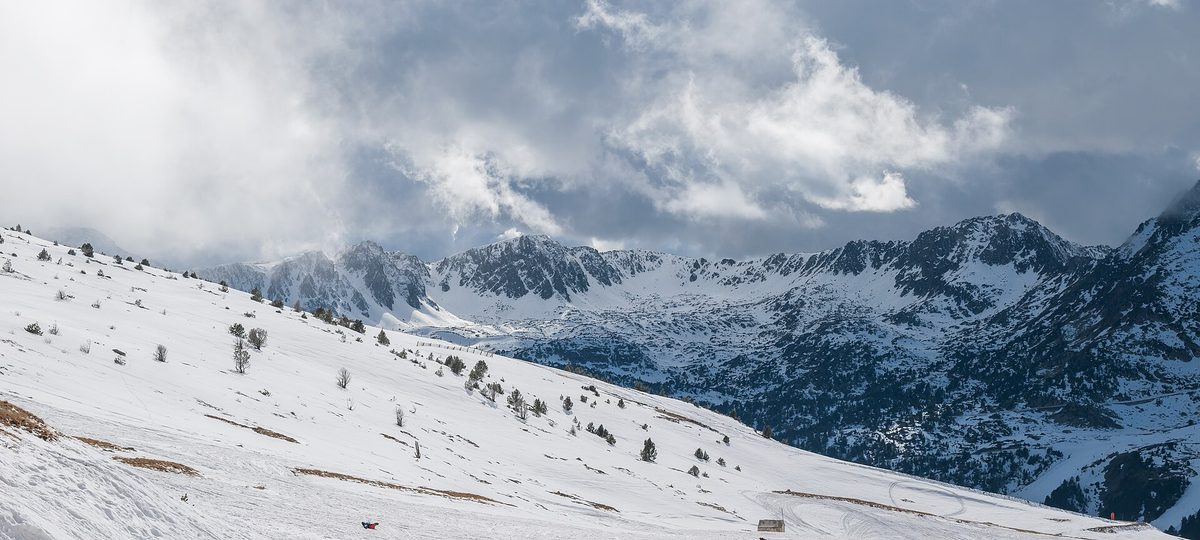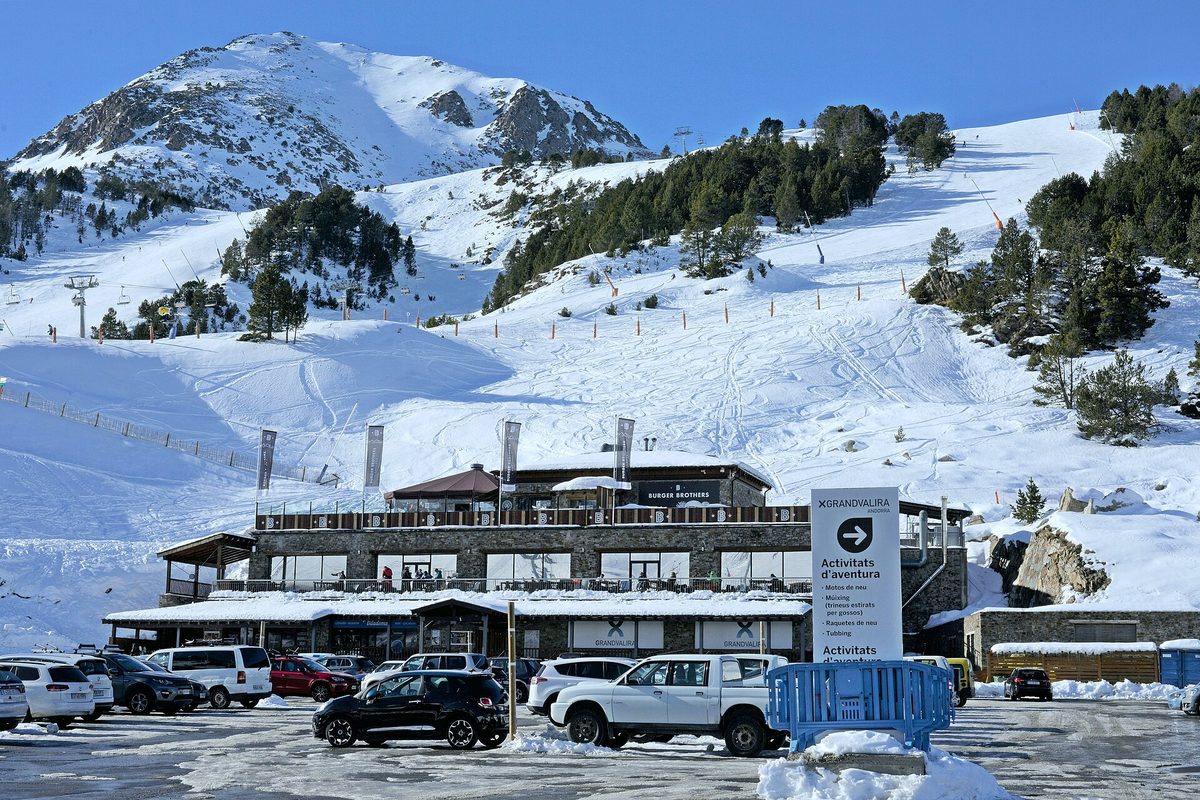
The first time I came to Andorra in summer I’d packed, out of sheer habit, for a ski trip. I spent the week in a t-shirt instead, watching wildflowers riot at 2,400 metres while the chairlift that hauls skiers up in January carried mountain bikers and their muddy bikes the other way. Nobody I knew back home had the faintest idea the place existed without snow on it. That, I’ve come to think, is the whole point.
Andorra in summer — roughly mid-June to mid-September — is a high-Pyrenean walking, biking and spa country of warm valley days, cool nights and some of the emptiest good trails in Europe. It’s for hikers, families, cyclists and anyone who finds the Mediterranean coast three hours south too hot to think in. And it costs a fraction of the winter peak.
Last updated: July 2026. Event dates, lift schedules and prices below are 2026 figures gathered from the resorts, the tourist board and operators; they shift year to year, so treat them as close guides and check official sites before booking.
I’ve now spent enough green seasons here to be evangelical about it, and slightly protective. This is the honest, complete version of why summer might be the best time to come — and the handful of things nobody warns you about. If you’re still weighing months, it pairs well with our month-by-month guide to the best time to visit Andorra, which sets summer against the ski season and the shoulder months.
Andorra in summer at a glance
| The question | The short answer |
|---|---|
| When is “summer”? | Mid-June to mid-September; high trails fully clear by late June |
| Valley weather | Warm days (low-to-mid 20s°C, the odd 30°C spike), cool nights (8-13°C) |
| Up high (2,000 m+) | 10°C cooler, real wind-chill, near-daily afternoon storms in August |
| Best months | June and September for space and price; July for the fullest events diary |
| Come for | Hiking, mountain biking, via ferrata, lakes, festivals, thermal spa |
| Not ideal for | Beach heat, guaranteed dry afternoons, anyone who needs nightlife |
| Rough cost vs winter | Well below the ski peak; September runs 30-40% under August |
| Getting around | Hire car is easiest; buses link the main valleys and trailheads |
Why Andorra in summer is the country’s best-kept secret
Andorra has two entirely separate high seasons, and it markets exactly one of them. From December to April it’s a ski nation with 300-plus kilometres of pistes and every hotel bed within sight of a lift. Then the snow melts and — as far as most of Europe is concerned — the country quietly closes. It doesn’t. It swaps skis for boots and becomes, for my money, a better destination than it is in winter.
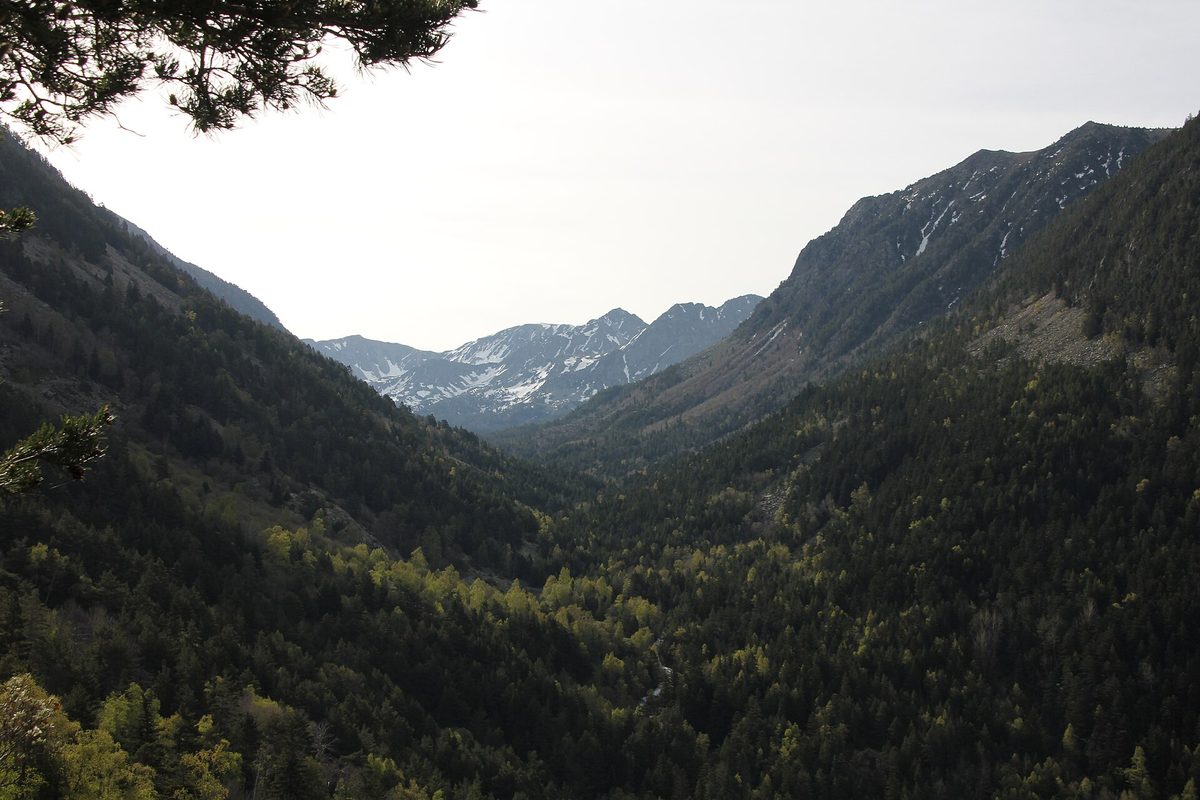
The geography does the heavy lifting. This is the highest country in Europe by average altitude, a wedge of the eastern Pyrenees where the inhabited valleys sit around 1,000-1,600 m and the mountains climb to 2,942 m at Coma Pedrosa. That elevation gives summer here a quality the lowlands can’t touch: you hike in genuine warmth but you sleep under a blanket, and the air at 2,000 m has none of the soupy heat that flattens Barcelona. When Spain hits 40°C in July, Andorra is doing a very civilised 25°C with a breeze.
What you get in exchange for the drive is space. The famous honeypots — one lake circuit, one hanging bridge — get busy in August. Everything else stays astonishingly quiet. Walk twenty minutes past the first viewpoint on almost any trail and you’ll have the mountain to yourself. After a winter of lift queues, that emptiness is the thing I keep coming back for.
Andorra in summer weather: warm days, cool nights, and 4pm storms
Here’s the pattern that has never once let me down. Mornings are the prize: clear, still, cool enough for a fleece at the trailhead and warming fast. The valley (measured at the capital, 1,023 m) runs into the low-to-mid 20s°C through June and September and a bit warmer in July and August, with the occasional 30°C-plus day that makes the locals grumble. Subtract roughly 10°C for wherever you’re actually standing on the mountain, and expect any single day to swing wildly between frosty shade and t-shirt sun.
The catch, and the single most useful thing in this guide: afternoon thunderstorms. From roughly mid-July into August, warm valley air piles up against the peaks and lets go in a loud, dramatic, usually brief storm somewhere between 2pm and 5pm. It is rarely a washed-out day — more a violent hour you don’t want to spend on an exposed ridge. The rule the whole country runs on is simple: start early, be off the summits by noon, and treat the afternoon as spa, town or terrace time. Do that and you’ll finish dry far more often than the rainfall figures suggest. Ignore it and the Pyrenees will teach you the lesson personally.
Daylight is the other summer gift — close to 15 hours of it around the June solstice, which means you can be walking by 7am and still have the whole afternoon to write off to weather. For the full climate breakdown against the rest of the year, the best-time-to-visit guide has the month-by-month numbers; the very short version is that summer is warm and thundery, and the opposite pole, Andorra in winter, is cold and snow-sure.
The hiking: lakes, peaks and a UNESCO valley
This is the main event, and it’s the reason I get faintly annoyed that Andorra is filed under “skiing” in most people’s heads. The country is roughly 90% mountain, threaded with more than 60 marked routes and a scatter of glacial lakes, and because nothing is more than an hour’s drive from anything else you can pack an absurd amount of variety into a week. The full network is laid out in our guide to hiking in Andorra; here’s how I’d spend the days.
The easy wins
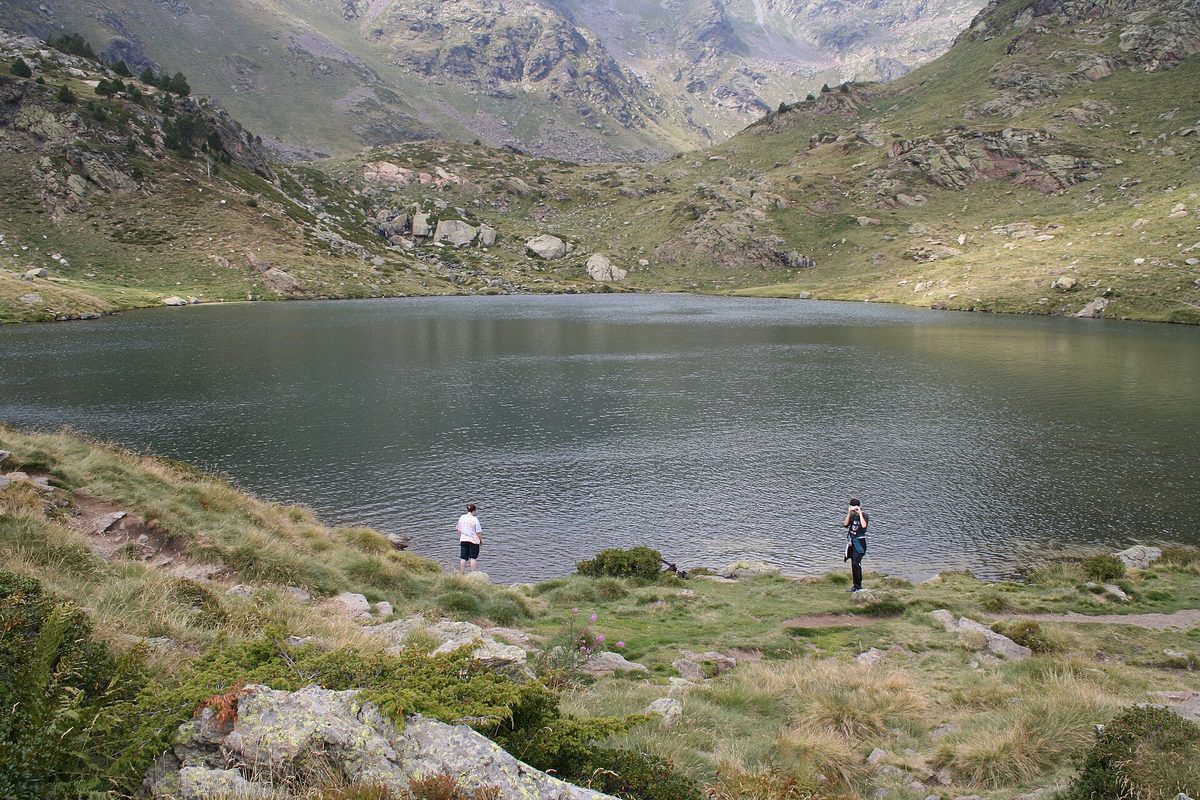
Not every walk needs to be an expedition. Lake Engolasters, a dammed reservoir ringed by pines above Escaldes, is a near-flat stroll five minutes from a car park and perfect for a first afternoon or a day with tired legs. The Tristaina lakes circuit, starting from the top of the Ordino-Arcalís road, links three glacial tarns on a family-friendly loop of around three hours and is, on a clear morning, as good as mountain scenery gets in this country. For more of these gentler options, see our roundup of easy hikes in Andorra.
The big days
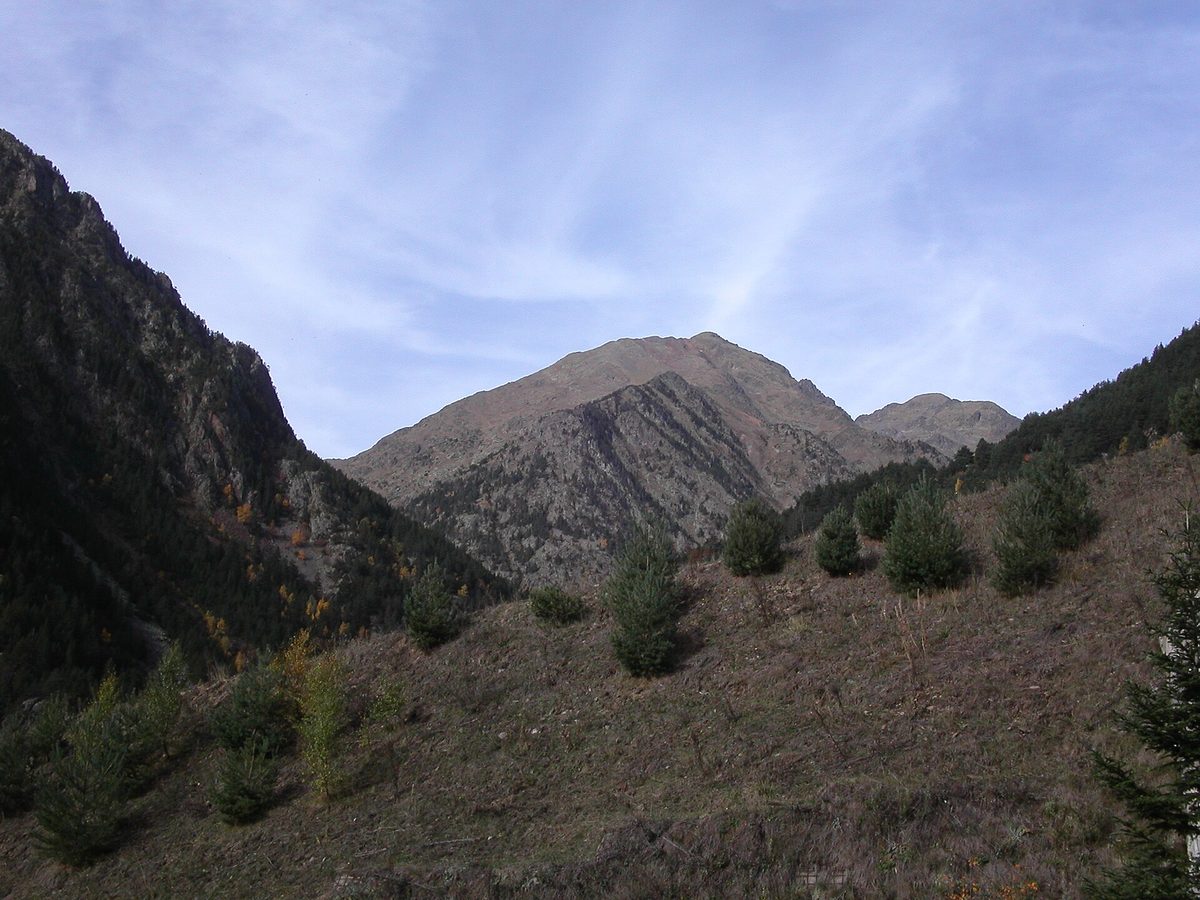
If you want to earn your dinner, Coma Pedrosa is the national high point at 2,942 m — a serious, rewarding full-day climb from Arinsal via a mountain refuge, best attempted July to September when the snow has properly gone. Quieter and stranger is the Madriu-Perafita-Claror valley, a UNESCO World Heritage cultural landscape covering a tenth of the country and reachable only on foot: an hour’s walk from a parliament building drops you into genuine wilderness of stone huts, waterfalls and grazing horses. And for the properly committed, the Coronallacs circuit strings the country’s high refuges into a multi-day trek that is Andorra’s answer to a mini Tour du Mont Blanc, minus the crowds.
Beyond walking: bikes, via ferrata and an alpine coaster
Summer here is not only for hikers, which is the other thing the brochures undersell. The same lift companies that run the ski schools turn the mountains over to a full menu of warm-weather adrenaline — the whole spread is in our guide to adventure activities in Andorra.
Mountain bikers get the Vallnord bike park at Pal-Arinsal, a lift-served downhill playground of gravity trails that has hosted World Cup racing and that Red Bull once rated among the best on the planet. Climbers and scramblers get one of the densest concentrations of via ferrata routes in Europe — cabled cliff routes graded from gentle to genuinely frightening. Families get Naturland, whose Tobotronc bills itself as the world’s longest alpine coaster, a 5-kilometre sledge run threading down through the forest. And if you only do one “attraction”, make it the Tibetan bridge at Canillo: a 600-metre-long wire footbridge slung 150-odd metres above a valley, accessed by shuttle bus and not, I’d gently suggest, for anyone who dislikes heights.
Road cyclists deserve their own line. Andorra’s mountain passes — the Port d’Envalira chief among them, the highest paved pass in the Pyrenees — are bucket-list climbs, which is exactly why the Tour de France keeps coming back to the region. In summer the roads are quiet, the gradients are honest, and the café at the top has earned its place.
The lifts still run — and that changes everything
The detail that makes Andorra punch above a lot of Alpine summer resorts: several of the gondolas and chairlifts keep spinning through the warm months, hauling walkers and bikes uphill so you can start your day at 2,300 m instead of grinding up to it. That turns big-mountain terrain into afternoon-stroll terrain and opens the high lakes to families who’d never manage the full ascent. The summer lift calendar typically runs from late June to mid-September and tapers fast after the second week of that month, so if a lift-served plan matters to you, front-load it and check the current dates before you commit.
Summer festivals worth planning around
For a country of 80,000 people, Andorra throws a startlingly full summer diary, and a couple of these are worth building a trip around. The complete rundown lives in our guide to Andorra’s festivals, but the summer highlights are these.
Falles de Sant Joan (around 23 June) is the one I’d cross a continent for. On the solstice, fire-swingers whirl flaming bundles through the old quarters of the villages to mark midsummer — a UNESCO-listed tradition shared with Catalonia and the French Pyrenees, free, and utterly real. Trail 100 by UTMB (mid-June) fills the Ordino valley with several thousand ultra-runners and a brilliant atmosphere. In summer 2026, Cirque du Soleil staged an open-air production, Radio Andorra, in Andorra la Vella from 3 July to 2 August, Tuesday to Sunday at 10pm; that run has ended, so look to cirquedusoleil.com for anything announced next. And through late July into mid-August comes festa major season, when each town throws its own patron-saint festival of free concerts, communal dinners and fireworks; Escaldes-Engordany and the capital run theirs in this window. September closes the summer with Meritxell Day (8 September), the national holiday, when Andorrans walk in pilgrimage to their patron saint’s sanctuary — a quiet, untouristed thing to witness.
Rest days: Caldea, the capital and duty-free
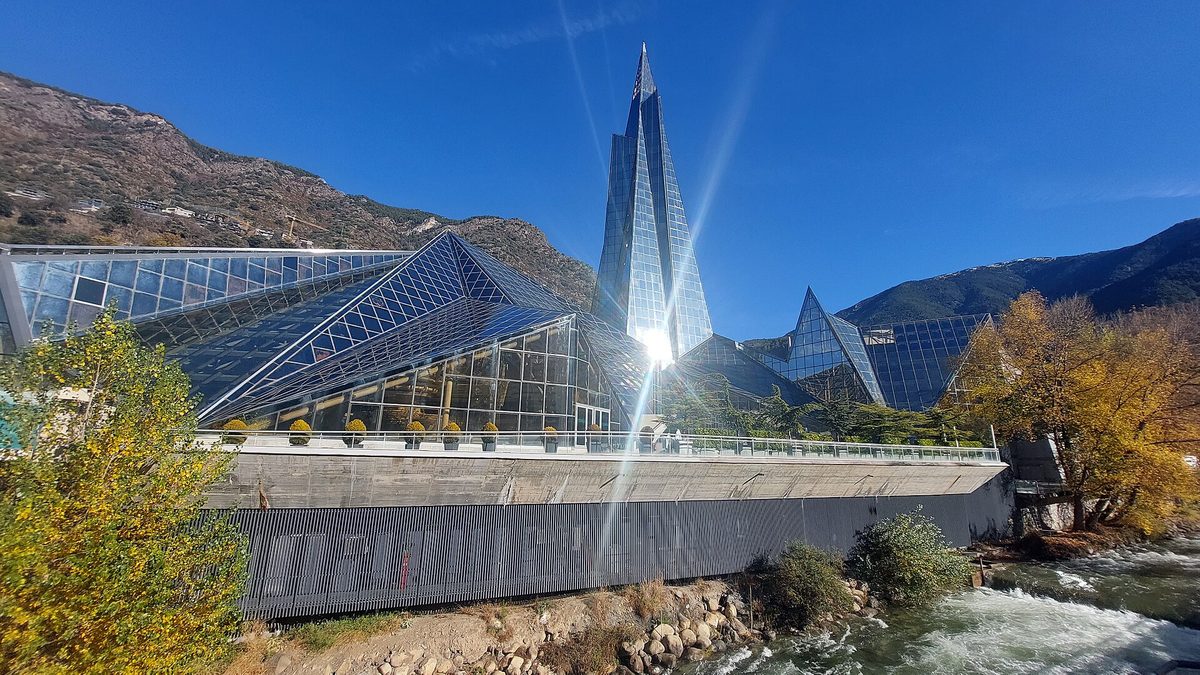
When the legs give out or the storm arrives on schedule, Andorra has an unusually good Plan B. Caldea, in Escaldes, is the largest thermal spa in southern Europe — a glass ziggurat of indoor-outdoor lagoons, jets and saunas fed by the town’s hot springs, and the correct place to soak away a hard hike. One summer-specific warning: Caldea takes an annual maintenance closure that in recent years has stretched across late spring and into early summer, so if it’s central to your plans, confirm it’s open before you travel rather than assuming.
The capital, Andorra la Vella, is the other rainy-afternoon fallback: duty-free shopping along Avinguda Meritxell, a clutch of museums and a small medieval quarter, all walkable. It’s not why you came, but it’s a pleasant way to spend the hours the sky steals from you. Bring the family and the things to do with kids stack up fast — the alpine coaster, the lakes, the bridge and the spa’s children’s lagoon between them can fill a week.
Where to stay in summer
My one firm piece of advice: in July and August, sleep high. The valley towns are warm and lively but they’re also where the traffic and the heat pool; the higher villages — Ordino, La Massana, Soldeu, Arinsal, Canillo — sit cooler, quieter and closer to the trailheads, and they turn the honeypots into early-morning walks rather than mid-morning queues. Ordino in particular is a lovely, stone-built base for the northern valleys and the Tristaina lakes. For a full breakdown by area and budget, see our guide to where to stay in Andorra, and if you’re mapping a route rather than a base, the towns are compared in our guide to Andorra’s villages.
Andorra in summer, month by month
June — the mountains wake up
Two months in one. Early June still has snow patches above 2,300 m and some high loops closed; by the solstice it’s properly summer, the lakes have thawed, the lifts are opening and the diary fills with the UTMB and Falles de Sant Joan. Long days, fresh trails, pre-peak prices — June quietly overdelivers.
July — high summer, high energy
The warmest month and the fullest one, with the last of the wildflowers up high and every attraction open. Afternoon storms start to appear. Busy by Andorran standards, which is to say you’ll still find solitude above 2,200 m by 9am.
August — the Spanish month
Spain holidays en masse and drives up, so the first fortnight around the 15th is the crowd peak: full trailhead car parks and lively towns. It’s also the thunderiest stretch. Sleep high, start at dawn, treat the towns as evening entertainment — or read our dedicated guide to Andorra in August and plan around the pulses.
September — the insider’s answer
If I could send you in one month it would be the first three weeks of September: July’s weather with June’s crowds, water still swimmable in the lakes, and hotel rates well below August for the identical room. The lifts wind down mid-month, so front-load anything that depends on them. It is, by a distance, my favourite time in the country.
What to pack for Andorra in summer
Pack for two climates, because you’ll experience both in a day. Shorts and t-shirts for the valley; a proper fleece and a waterproof shell for the tops, where wind and that 2pm storm are always on the cards. Real walking shoes or boots with grip — the trails are rocky and the afternoon slush of a passing storm is slippery. Sun cream and sunglasses that mean it: UV at altitude is fierce even when the air feels mild. A refillable water bottle (the mountain streams and fountains are your friends), and a small daypack. If you’re driving, note that Andorra sits outside the EU, so check your mobile roaming before you rely on it, and download your maps offline.
Is Andorra worth visiting in summer? My honest take
Yes — and more so than in winter, which I realise is heresy in a country famous for skiing. Summer Andorra gives you Alpine-quality mountains, a genuinely dense menu of things to do, warm days and cool nights, and prices and crowds that both sit far below the ski season. The trade-offs are honest ones: the afternoon storms are real, the two or three headline sights get busy in August, and if you need nightlife or a beach this is emphatically the wrong country. But if your idea of a good holiday involves a lake at 2,400 m that you’ve walked to before the crowds, a thunderstorm watched from a spa, and a plate of mountain food in a stone village afterwards, I’m not sure Europe does it better for the money. Come in September and thank me later.
Andorra in summer: frequently asked questions
Is Andorra worth visiting in summer?
Very much so. From mid-June to mid-September you get warm valley days, cool nights, more than 60 marked hiking trails, lift-served mountain biking, via ferrata, glacial lakes and a thermal spa — at prices well below the winter ski peak and with a fraction of the crowds. September is the standout month.
How hot does Andorra get in summer?
Valley afternoons (around 1,000 m) typically run into the low-to-mid 20s°C, occasionally spiking above 30°C in a heatwave, while nights drop to a comfortable 8-13°C. Up at 2,000 m and above it’s roughly 10°C cooler with real wind-chill, so you’ll want a layer even on a blue day.
Does it rain a lot in Andorra in summer?
Mornings are usually clear; the classic summer pattern is a brief, dramatic afternoon thunderstorm, most common in August, between about 2pm and 5pm. Whole washed-out days are rare. Start hikes early, plan to be off high ground by noon, and keep the afternoon flexible for town, spa or terrace.
What is the best month to visit Andorra in summer?
September for the best balance of weather, price and space — stable spells, empty trails and rates well under August. June is the other sweet spot: fresh trails, long days and pre-peak prices. July has the fullest events diary; August is warmest and busiest, with the most thunderstorms.
Are the ski lifts open in summer?
Some of them, yes. Several gondolas and chairlifts run through the warm months — typically late June to mid-September — carrying hikers and mountain bikes uphill, and they taper off quickly after the second week of September. If a lift-served walk or bike descent matters to you, check the current operating dates before you go.
Can you swim in the mountain lakes?
You can, and by mid-summer the more accessible ones warm up enough for a bracing dip, but this is snowmelt water at altitude — expect it to be cold, and treat the high tarns with respect. Lower reservoirs like Engolasters are the gentler option; the high glacial lakes are for the hardy.
How many days do you need in Andorra in summer?
Four to five days lets you mix a couple of big hikes, an activity day (bike park, via ferrata or the Tibetan bridge), a spa afternoon and a festival or town evening without rushing. A long weekend covers the highlights; a full week lets you add the Madriu valley or a Coronallacs section and still shop on the way out.
Do you need a car for Andorra in summer?
It helps a lot. A hire car makes the trailheads, the lakes and the higher villages far easier to reach on your own schedule, though buses do link the main valleys and some honeypots run dedicated shuttles. See our guide to getting to Andorra for the airport, bus and driving options.
Related Andorra travel guides
Keep planning your green-season trip with our other in-depth guides: the month-by-month best time to visit Andorra, the full network of hiking trails, the year-round menu of adventure activities, a soak at Caldea, and the flip side of the calendar in August and winter.
Photo credits
All photographs are from Wikimedia Commons under their stated licences, with thanks to the photographers: