I have had the same conversation in a Barcelona hostel kitchen, in a Toulouse car-hire queue and twice on a chairlift above Grau Roig. Someone finds out I know Andorra, pulls a face, and says: it’s basically a shopping centre with mountains around it, right?
Partly. And that half-truth is why a lot of people write the country off after ninety minutes on Avinguda Meritxell.
Is Andorra worth visiting? Yes, if you come for the mountains, the skiing or the thermal water and you get off the valley-floor strip within your first afternoon. No, if you want a cobbled microstate with plazas and cathedrals. This guide is for the person deciding honestly, before booking anything.
Last updated: September 2026. Opening seasons and prices move — check official sites before you book.
What follows is the argument for, the argument against, and then a straight answer by traveller type. If you want the wider practical picture afterwards, the Andorra travel tips hub collects the things I wish someone had told me before my first trip.
| Question | Short answer |
|---|---|
| Overall verdict | Worth it for skiers, walkers, spa-goers and road-trippers. Not worth it for an old-town city break. |
| Best reasons to go | Skiing at Alpine quality for less, high Pyrenean walking, Caldea, low-tax shopping |
| Worst reasons to go | Historic architecture, museums, nightlife, anything resembling a beach |
| How long | 1 day = a taste; 2–3 days = the real country; a week = skiing or walking properly |
| Getting there | No airport, no railway. Road only: roughly 3 h from Barcelona, 2 h 30 from Toulouse |
| Ski season | Roughly early December to early April |
| Most expensive weeks | Christmas–New Year and February half-term in the ski valleys |
| Quietest, most closed weeks | Roughly mid-April to mid-June, and mid-October to late November |
| Size and scale | 468 km², about 85,000 residents, around 9 million visitors a year |
| Highest point | Coma Pedrosa, 2,942 m |
| UNESCO site | Madriu-Perafita-Claror valley — about 9% of the country |
| Money and status | Uses the euro; not an EU member; general sales tax (IGI) 4.5% |
Why visit Andorra? The honest case for
Let me put the strongest arguments first, because they are stronger than the internet gives them credit for.
Skiing at a price and quality point Switzerland cannot touch
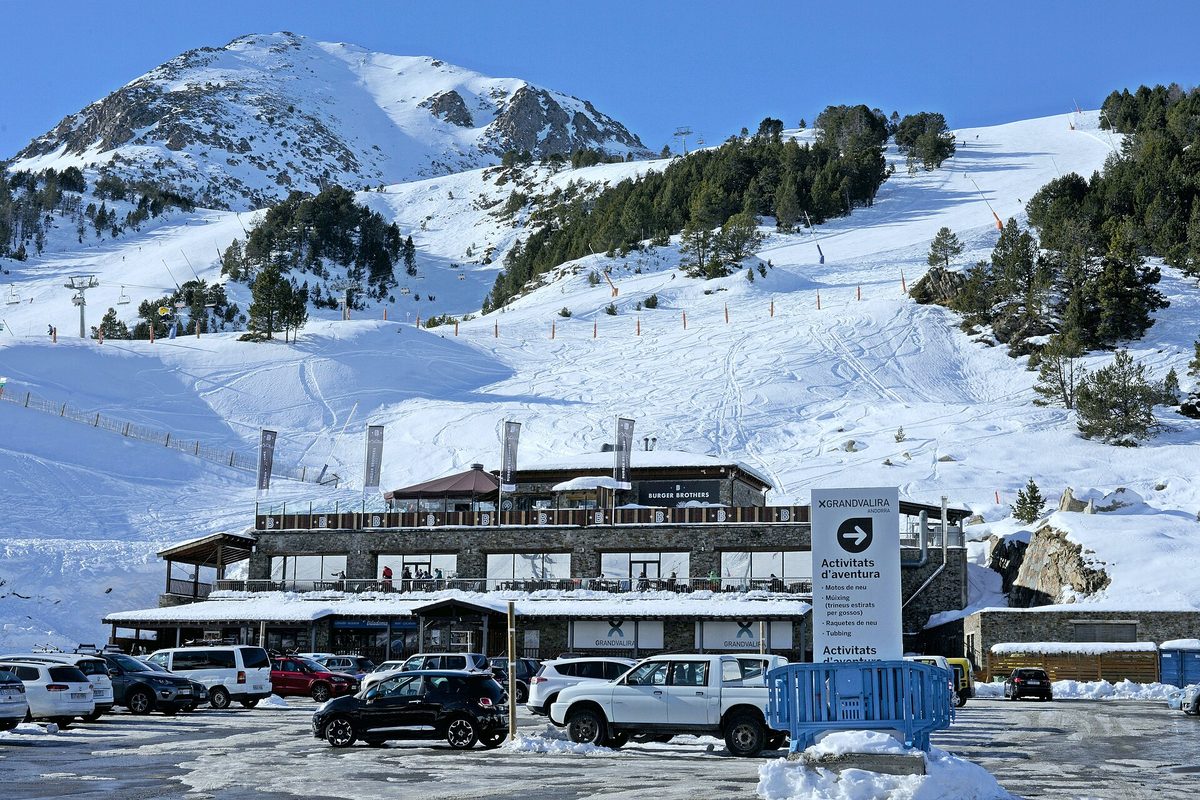
This is the single best reason to come. Grandvalira alone runs to roughly 210 km of pistes across seven linked sectors — Pas de la Casa, Grau Roig, Soldeu, El Tarter, Canillo, Encamp and the rest — and Pal-Arinsal and Ordino-Arcalís add two more distinct areas on the western side.
The lifts are modern. The snowmaking is aggressive, which matters in a range this far south. The ski schools are used to teaching in English, and the beginner terrain is unusually generous: Ordino-Arcalís has a green run of around 8 km, which is a genuinely rare thing for a nervous first-week skier.
Then the money. A high-season day pass at Grandvalira typically lands somewhere around EUR 60, and multi-day passes bought in advance come down meaningfully from that — check the current tariff before you commit. Compare that with Verbier or Val d’Isère and the gap is not marginal. Add ski hire, lessons and half-board hotels that cost a fraction of Swiss equivalents, and a family week that would be impossible in the Alps becomes ordinary here. I go into the trade-offs, and the pass maths, in my piece on how Andorran skiing really compares with the Alps.
Is it the best snow in Europe? No. Andorra sits at the southern end of the Pyrenees and can have thin Decembers. But the resorts are high — Pas de la Casa sits above 2,000 m and the top lifts push past 2,600 m — and that altitude buys reliability that lower Alpine resorts have quietly lost.
The walking is the real argument, and almost nobody mentions it
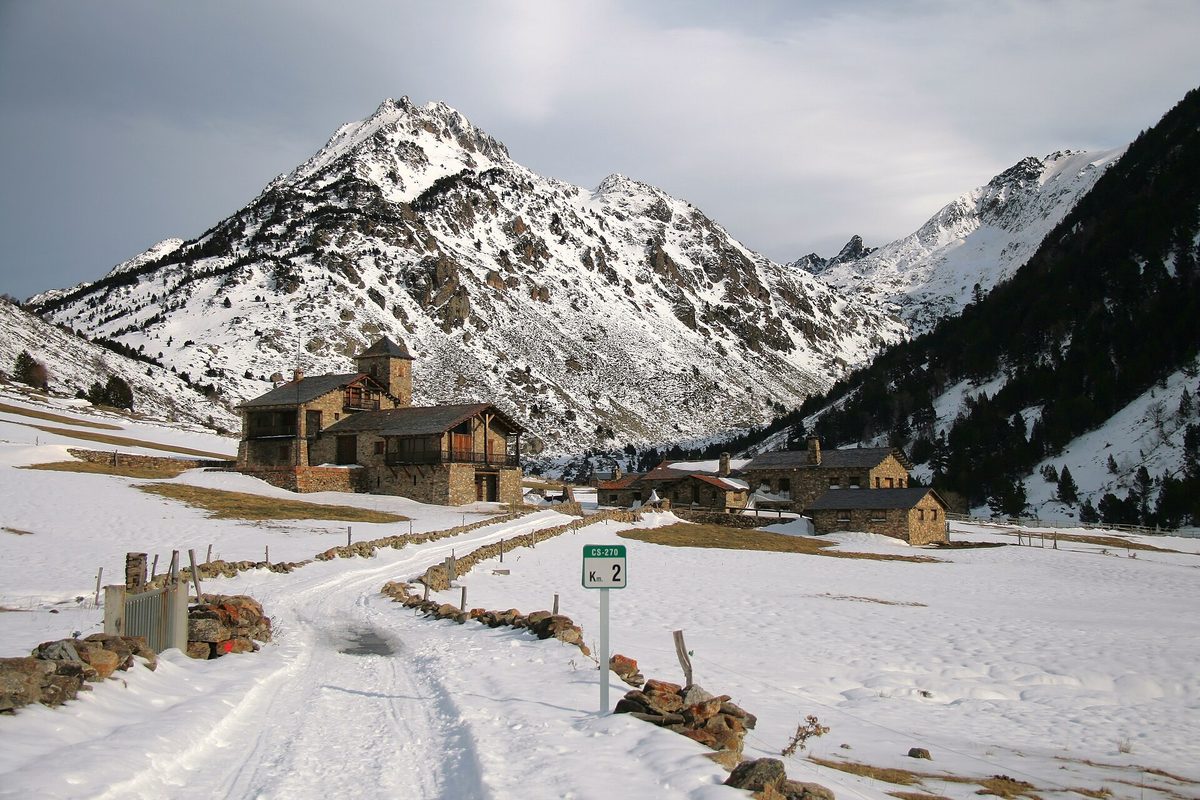
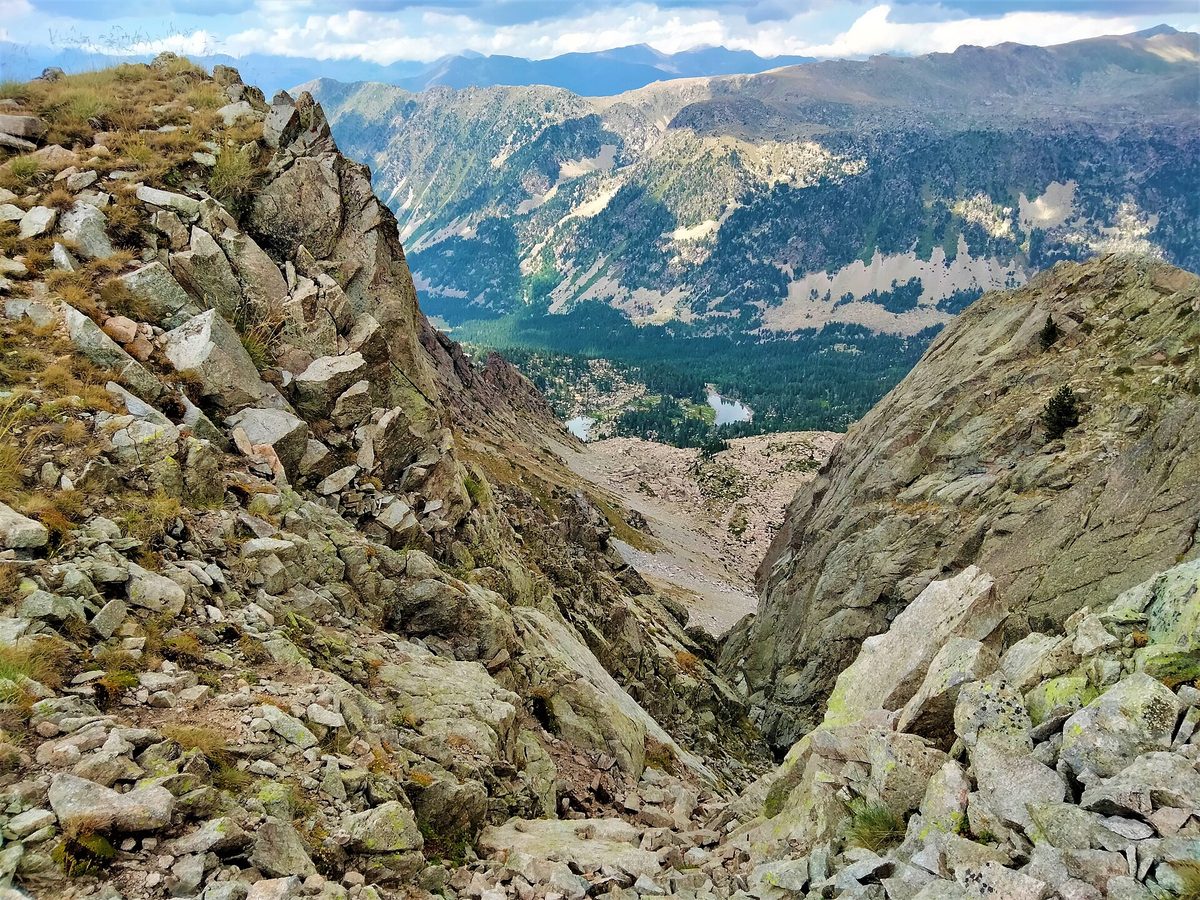
Ninety per cent of Andorra is mountain. Once you are twenty minutes off the main road, you are in high Pyrenean terrain of the kind people fly to Chamonix for: glacial lakes, granite, marmots, refuges you can sleep in for very little.
The Tristaina lakes above Arcalís are a half-day loop with three lakes and about 400 m of ascent. Vall d’Incles is a flat-bottomed U-shaped valley with a summer shuttle bus, so you can walk it without a car. Coma Pedrosa at 2,942 m is a serious full day — roughly 1,200 m of ascent from Arinsal — and the summit view covers three countries.
None of that is on the coach-tour itinerary, which is exactly why the coach-tour verdict on Andorra is worthless. My guide to hiking in Andorra lays out which trails deserve your legs.
Madriu-Perafita-Claror, and the answer to “there’s no culture”
The most common criticism is that Andorra has no history. It has plenty; it just isn’t stacked up in a photogenic old town.
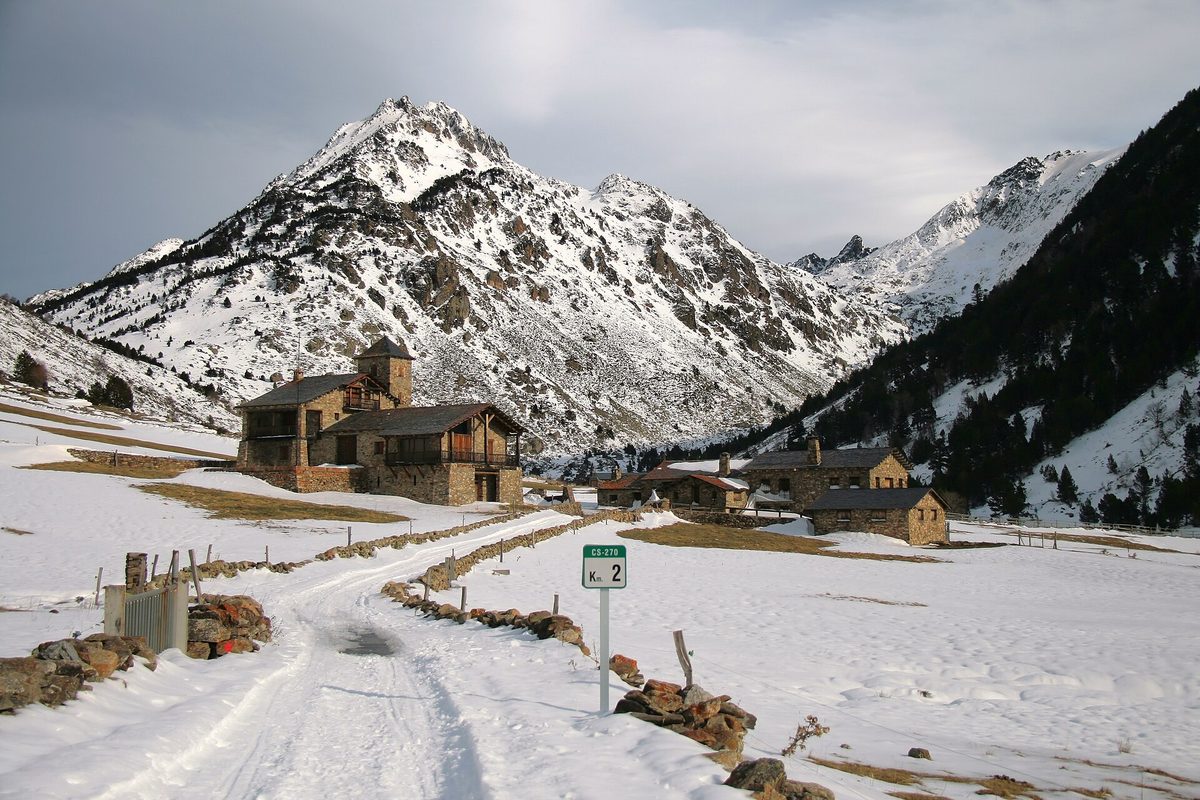
The Madriu-Perafita-Claror valley is a UNESCO World Heritage site covering roughly nine per cent of the country, and it is listed as a cultural landscape rather than a natural one — for the shepherds’ huts, the irrigation channels, the charcoal terraces and the pack trails that seven centuries of high-altitude farming carved into it. There is no road into it. You walk, from Escaldes or from Entremesaigües.
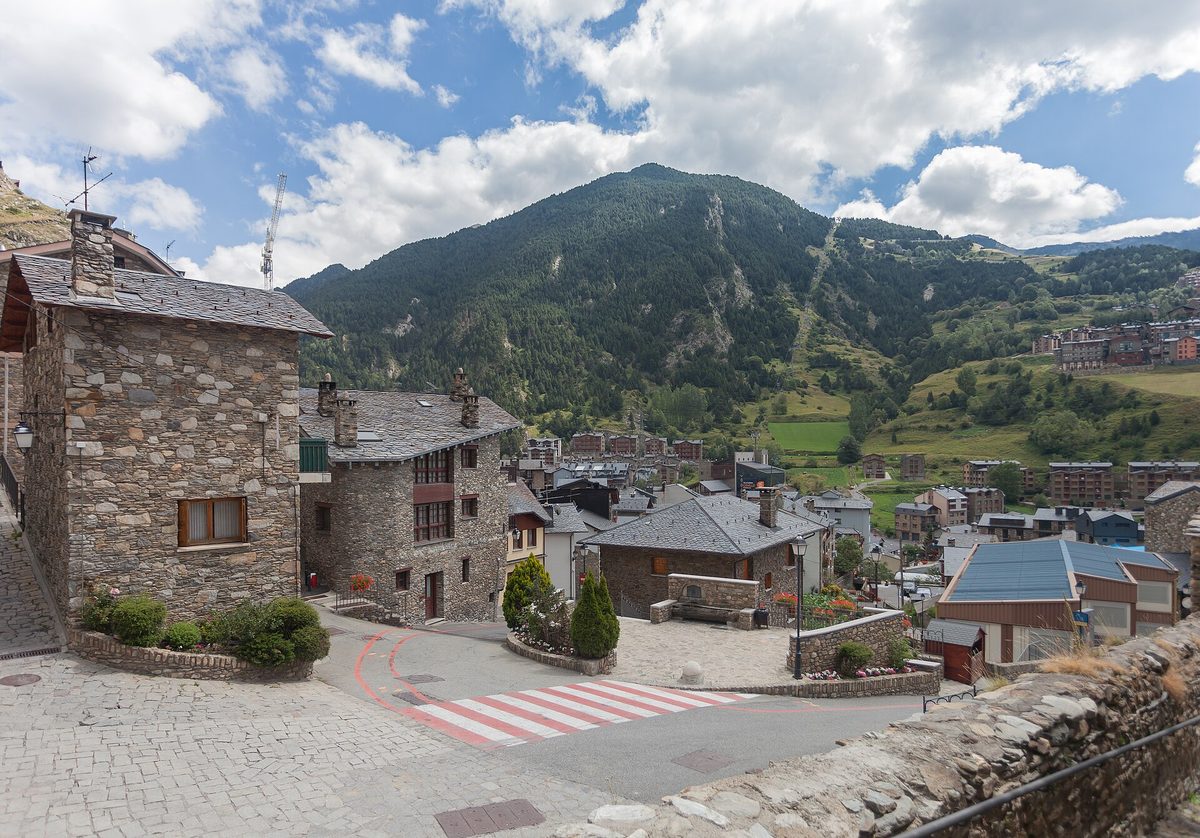
Above ground level there are also around forty Romanesque churches, most of them tiny and many of them still locked unless you time a guided visit. Santa Coloma has a round bell tower that is genuinely pre-Gothic. Sant Joan de Caselles at Canillo sits alone in a field below the road. Sant Miquel d’Engolasters is a ten-minute walk from a car park most people drive past.
You will not get Toledo. You will get an unusually complete set of small mountain Romanesque, and a country that governed itself under two co-princes for seven hundred years without an army. The stone that survives is up the side valleys — Ordino, Pal, Llorts, Os de Civís.
Caldea, and the fact that a wet day is not a lost day
I am usually sceptical of spa complexes. Caldea converted me on a November afternoon when the cloud came down to about 1,300 m and walking was pointless.
It is the largest thermal spa complex in southern Europe, fed by genuine hot springs at Escaldes-Engordany, and the outdoor lagoon in falling snow is one of the better sensory experiences in the Pyrenees. It is also busy, slightly dated in places, and the upsells add up. Three hours is the right dose. Six is too many.
Cheap fuel, cheap perfume, and shopping maths that sometimes works
Andorra’s general sales tax is 4.5%, against 21% in Spain and 20% in France. That differential is real, but it does not apply evenly.
Where it genuinely works: fuel, tobacco, spirits, perfume and cosmetics, and some ski and outdoor gear. Where it mostly doesn’t: clothing you could buy in a Spanish sale, and electronics, where the headline saving often evaporates once you account for warranty and the drive. I have laid the category-by-category numbers out in the complete duty-free shopping guide, including the customs allowances you need to respect on the way home.
It is genuinely easy to reach — if you accept the road
Barcelona El Prat to Andorra la Vella is about three hours by direct coach, and the buses are comfortable, frequent enough and cheap. Toulouse is closer, around two hours thirty, and the French approach over the Port d’Envalira is the better drive by a distance. Both borders are open around the clock. See every route into Andorra compared for the detail.
Is Andorra overrated? The honest case against
Now the other side, and I am not going to soften it. Most of the people who come away unimpressed had a specific, predictable experience, and it is worth understanding exactly what went wrong for them.
The Andorra la Vella–Escaldes strip is a traffic-choked retail corridor
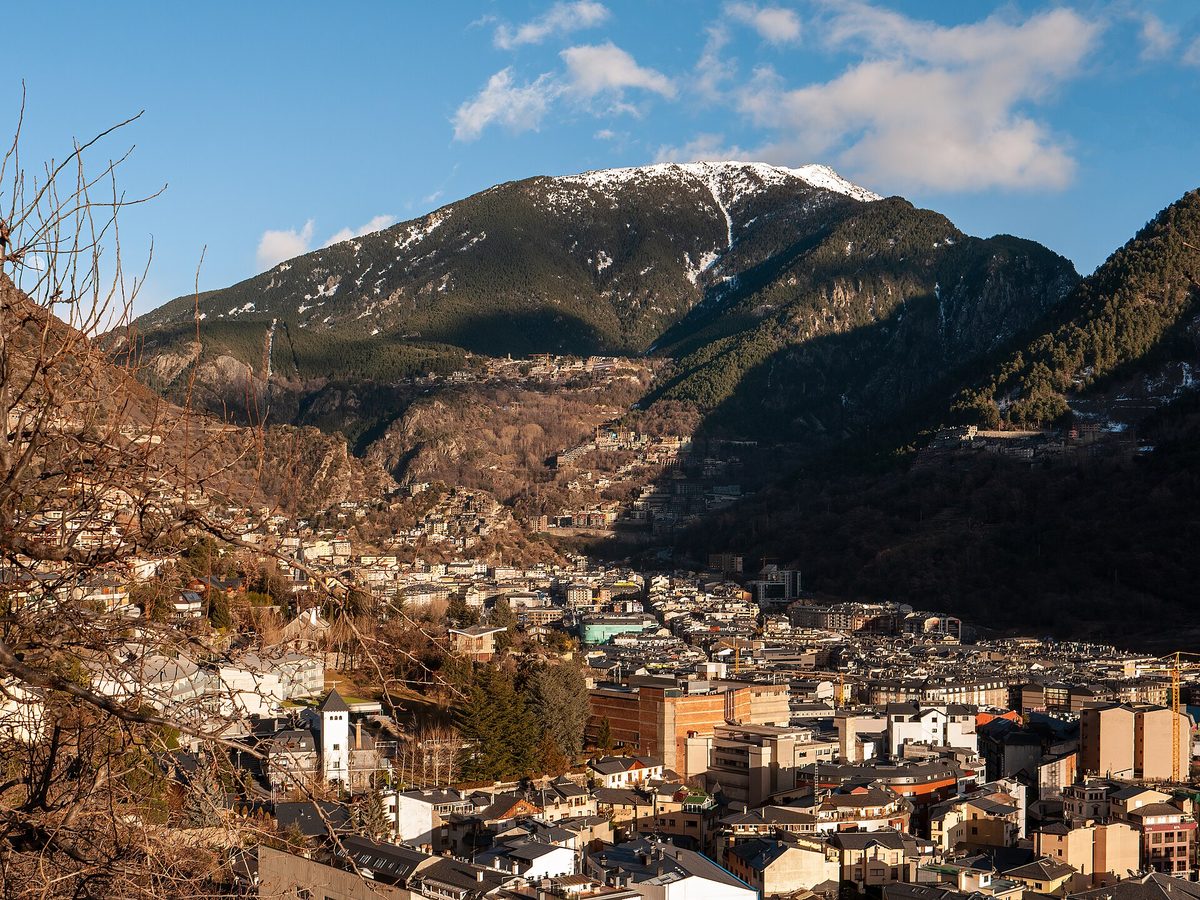
There is no polite way round this. The capital and Escaldes-Engordany have grown into one continuous ribbon of concrete along the valley floor, and the through-road — Avinguda Meritxell into Avinguda Carlemany — is lined with perfume shops, phone shops, sports shops and fast food, with cars nose to tail beside them.
On a Spanish long weekend it is slow, loud and short of anywhere pleasant to sit. Travel-forum threads have compared it to a giant out-of-town discount store for a quarter of a century, and honestly, on a Saturday in August, from the pavement of Meritxell, that is a fair report.
The Barri Antic — the old quarter around Casa de la Vall — is real and it is worth an hour. It is also about four streets. If you arrive expecting Girona or Vitoria, you will spend that hour wondering when the good part starts. I have written a whole piece on what the capital is and isn’t, because that distinction saves more trips than any other single thing on this site.
Getting in can be slow, and there is no airport or train
Andorra has no airport and no railway. The nearest station is L’Hospitalet-près-l’Andorre on the French side, and it needs a bus connection at the other end.
The Spanish approach, the CG-1 up from La Seu d’Urgell, is nine kilometres of border-town road that can take well over an hour on a bad day. People have been complaining about that specific queue for a quarter of a century. Sunday evenings, when Catalonia drives home with its boot full, are the worst.
The French side over the Port d’Envalira is more scenic and usually quicker, but it climbs past 2,400 m, and in a January storm it closes or goes chains-only. The Envalira road tunnel below it is tolled and stays open, which is worth the few euros in bad weather.
February is not cheap
The “Andorra is the budget Alps” line has a footnote. In Christmas week and in the February half-term windows, ski-in hotel rates in Soldeu and El Tarter climb to something recognisably Alpine, restaurants add a season supplement, and the value argument thins out considerably.
The saving is real in early December, in mid-January and in March. It is much less real in the three or four weeks the whole of southern Europe wants. My cost breakdown puts numbers to that.
The shoulder seasons are genuinely dead
This is the trap I see catch the most people, and almost no page-one guide warns about it properly.
From roughly mid-April to mid-June, the ski lifts have shut and the summer lift and shuttle operations have not started. Snow still blocks the high trails into June in a heavy year. Hotels close for refurbishment. Some mountain restaurants simply lock up.
The same thing happens again from about mid-October to late November. Arriving in late May expecting to ride a gondola, or in early November expecting to ski, is the most reliable way to have a disappointing trip here. Check the month before you book anything — the month-by-month guide exists for exactly this reason.
If you want a cute European microstate, you will be let down
People come to Andorra with San Marino or Liechtenstein in their heads: a walled hilltop town, a castle, a photogenic main square. That is not what this is.
Andorra is a working mountain country of about 85,000 people that got rich quickly in the second half of the twentieth century and built accordingly. Much of the valley-floor architecture is brown-rendered apartment blocks and glass boxes. Pas de la Casa, the highest and liveliest ski town, is a wall of concrete bolted to a pass, and I say that with affection.
The beauty here is above the roofline, not in it. Accept that and the country is superb. Refuse to accept it and you will spend two days annoyed.
So, is Andorra worth visiting for your kind of trip?
Here is the part that actually decides it. The answer changes completely depending on who is asking.
Skiers and snowboarders: yes, emphatically
If you ski, this is one of the best value-for-quality propositions in Europe, and it is not close. Grandvalira’s linked terrain is big enough for a week, the lift infrastructure is modern, and lessons in English are the default rather than an accommodation.
Base yourself at the snow. Soldeu and El Tarter for polish and ski-in access, Pas de la Casa for cheap and lively, Arinsal for beginners and a British crowd. Where to stay in Andorra compares the bases properly.
Hikers and trail runners: yes, from late June to mid-October
The high country is excellent and the trails are well waymarked. Refuges are plentiful and many of the unstaffed ones are free. You can walk hut to hut across the whole country in about a week.
Do not come in May for this. Do come in early July, when the meadows in Sorteny are at their best and the crowds are still in Barcelona.
Families: yes, with one condition
Andorra is one of the easiest family destinations in the Pyrenees — low crime, short transfers, ski schools that take three-year-olds, an alpine toboggan run at Naturland that runs about five kilometres downhill, and thermal pools when the weather turns.
The condition: do not put small children in a valley-floor hotel on the main road and expect a mountain holiday. Stay up a side valley. The family playbook goes season by season.
Couples wanting a European city break: no
Go to Girona. Go to San Sebastián. Go to Toulouse, which is an hour and a half from the border and has everything the capital doesn’t.
Andorra can be romantic — a mountain hotel in Ordino, dinner and a thermal pool — but it is a rural romance, not an urban one. If the plan involves wandering old streets and finding a wine bar, this is the wrong country.
Shoppers: yes, if you are buying the right things
Perfume, cosmetics, spirits, tobacco, fuel and outdoor kit: come, and come with a list and the customs allowances memorised. Sales periods in January–February and July–August stack the discount on top of the tax difference.
General fashion and electronics: probably not worth a special journey. Shops open every Sunday, which is a genuine advantage over Spain and France, and it is why the car parks fill on Sunday morning.
Road-trippers: yes, and this is the underrated use case
If you are already driving between Barcelona and Toulouse, routing over Andorra instead of around it costs you a couple of hours and buys you one of the great Pyrenean road days: up from La Seu, over the Envalira, down the Ariège. Break it with a night in Ordino or Canillo rather than the capital.
Country-tickers: go, but give it 24 hours
If the honest goal is adding a flag to the list, fine — but do it as an overnight rather than a six-hour round trip from Barcelona. One night lets you drive Roc del Quer at dusk, sleep in a valley, and see the country rather than the shopfront. A day trip mostly shows you traffic. I have been blunt about that in the Barcelona day-trip guide.
How long is enough in Andorra?
The country is 468 km². You can drive its longest axis in an hour and a half without traffic. That fools people into thinking a few hours will do it, and it is why so many negative reviews are written by people who were in the country for less time than a long lunch. Nothing shifts the answer to “is Andorra worth visiting” more than the number of nights you give it.
A day trip: only if the day trip is well built
Six hours in the car for six hours on the ground is a bad ratio, and I would not do it again from Barcelona. From La Seu d’Urgell, Ax-les-Thermes or Puigcerdà it is a different calculation entirely — you are an hour away, and a day is enough for the old quarter, one short walk and a soak.
If a day is all you have, pick one thing and do it properly. Caldea and lunch. Or Vall d’Incles and a picnic. Trying to do the capital, a mountain and a shop in one afternoon is how people end up describing the country as a car park.
Two or three days: the sweet spot for a first visit
This is what I recommend to most first-timers. Three days gets you one full mountain day, one relaxed day of villages and Romanesque churches, one spa or shopping afternoon, and enough evenings to eat properly — escudella, trinxat, a slow grill.
Sleep outside the capital for at least one of those nights. Ordino, Canillo or La Massana all work. My three-day itinerary sets out the order that wastes the least driving.
A week: only for skiing, walking or cycling
A week here is excellent if you have an activity to hang it on. Ski week, hiking week, or a road-cycling week on the classic cols — Envalira, Ordino, La Rabassa — all justify seven nights easily.
A week of general sightseeing does not. You will run out of sights on day four and start driving the same valleys twice. Pair Andorra with the Cerdanya, the Ariège or the Alt Urgell instead, and treat the border as an irrelevance, which is roughly how the locals treat it.
How not to ruin your visit to Andorra
Almost every bad Andorra trip I have heard about comes down to one of six avoidable mistakes.
- Don’t base yourself on the main strip if you came for mountains. A hotel on Meritxell is convenient for shopping and wrong for everything else. Twenty minutes up any side valley and you wake up to a different country.
- Don’t come in late May or early November expecting lifts. The gap between the ski season and the summer season is real, and it is longer than the tourist board implies.
- Don’t drive in on the 8th of September. National day fills the roads and closes the shops. The Constitution Day holiday on 14 March and Spanish long weekends have a milder version of the same effect.
- Don’t cross the Spanish border southbound on a Sunday evening. Choose Saturday morning, or go out through France, or accept the queue at la Farga de Moles with a book.
- Don’t judge the country from the bus window. The road in shows you the least attractive ten per cent of Andorra. Every organised coach tour lands you there, which is why coach-tour reviews of Andorra are so consistently sour.
- Don’t skip the car question. You can manage without one — the inter-parish buses are cheap and run all day — but trailheads and villages need planning. Getting around Andorra without a car covers what is actually reachable.
Is Andorra worth it on the money?
Roughly, and with the usual caveat that you should check current rates: a mid-range double in the capital outside peak sits somewhere in the EUR 70–110 band, a mountain-village hotel a little more, and ski-season Soldeu considerably more. A decent sit-down dinner runs around EUR 25–40 a head. Coffee and a pastry cost about what they cost in Barcelona.
Fuel is the one thing that is unambiguously cheaper than both neighbours, usually by a clear margin per litre, which is why the petrol stations at Sant Julià de Lòria have queues. Alcohol, tobacco and perfume follow the same logic.
So the honest summary on cost: Andorra is not a cheap country, but it delivers Alpine mountain experiences at Pyrenean prices, and that is where the value sits. It is not a budget city break with mountains attached.
The verdict
So, is Andorra worth visiting? On balance, yes — with two conditions that decide everything.
Andorra is a mountain country with an ugly shop window. Judge it by the window and you will leave unimpressed; drive twenty minutes up any side valley and it earns every hour you give it.
That is the whole thing in two clauses. The people who dismiss Andorra almost always saw the window. The people who love it — and there are around nine million arrivals a year, so there are quite a few — went up a valley.
Come for skiing, walking, cycling, thermal water or a serious road trip, give it at least two nights, sleep outside the capital, and it is comfortably worth the detour. Come for old towns, museums and nightlife and you will be back in the car by lunchtime, writing a review that says there is nothing here. Both of those trips are available. You choose which one you book.
Frequently asked questions
Is Andorra worth visiting for a day trip?
From Barcelona or Toulouse, not really — six hours of driving buys you six hours on the ground, most of them in the retail corridor. From La Seu d’Urgell, Puigcerdà or Ax-les-Thermes, absolutely: you are an hour out, and one focused thing plus lunch makes a good day. Overnight always beats a day trip here.
How many days do you need in Andorra?
Two to three nights is the sweet spot for a first visit, and it is what I suggest to most people. That covers one mountain day, one villages-and-churches day and a spa or shopping afternoon. Go to a week only if you have skiing, hiking or road cycling to fill it — general sightseeing runs dry around day four.
Is Andorra expensive to visit?
Mid-range, not cheap. Hotels and restaurants sit broadly in line with northern Spain and below France, while fuel, alcohol, tobacco and perfume are clearly cheaper thanks to the 4.5% sales tax. The exception is peak ski weeks — Christmas and February half-term — when accommodation in Soldeu and El Tarter reaches Alpine levels.
Is Andorra worth visiting in summer?
Yes, and it is the season most people overlook. From late June to mid-October the walking is superb, temperatures are fifteen degrees kinder than the Catalan coast, and the summer lifts and valley shuttles run. Late May and early June are the risky weeks: melting snow up high, lifts shut, some hotels closed.
Is there anything to do in Andorra besides skiing and shopping?
Plenty, though you have to go and find it. Hiking and via ferrata, the Madriu UNESCO valley, forty-odd Romanesque churches, Caldea and the thermal springs, the Tibetan bridge at Canillo, the Roc del Quer glass platform, and some genuinely good mountain cooking. My guide to what to do in Andorra besides skiing lists the rest.
Do you need a car in Andorra?
No, but it helps. The inter-parish bus network is cheap, reliable and covers every main valley, and summer shuttles run into Vall d’Incles and a few other trailheads. Without a car you will be picking trails that start near bus stops, which is a real constraint in shoulder season when shuttle frequencies drop.
Is Andorra la Vella nice?
Parts of it. The Barri Antic around Casa de la Vall is a pleasant hour, the riverside walk is decent, and the setting is dramatic. The rest is a busy retail avenue hemmed in by 1970s apartment blocks. Treat the capital as a base and a shopping stop rather than a sight in itself.
What is Andorra actually best known for?
Three things: skiing, low-tax shopping and thermal spas. Its residents would add a fourth — a thousand years of quiet independence under two co-princes, with no army and almost no crime. What it is not known for, fairly, is monumental architecture or nightlife.
Related guides
If this convinced you, plan the shape of the trip with the Andorra itinerary planner. And if you are still weighing it up, the wider Andorra travel tips hub answers most of what comes next.
Photo credits
All photographs are from Wikimedia Commons under their stated licences, with thanks to the photographers: