I have driven through Canillo more times than I have stopped in it, and for years that was my mistake. It sits on the CG-2 exactly where your foot gets heavy on the accelerator — twelve kilometres past the capital, twenty minutes short of the ski lifts — so most people see a bell tower, an ice rink and a petrol station, and carry on to Soldeu. Then one August I finally parked, and spent three days working out why the parish keeps quietly out-building everywhere else in the country.
Canillo is Andorra’s largest parish by area and its high, green, family-facing one: the 603-metre Tibetan Bridge, the Roc del Quer walkway, the Sanctuary of Meritxell, an 11th-century Romanesque church, an ice palace and a mountain family park above the village. This guide is for anyone deciding whether to visit for a day or base a whole trip here.
Last updated: September 2026. Prices, opening hours and bus times were checked against ponttibetacanillo.com, grandvalira.com, museus.ad and the Canillo tourist office in September 2026. Andorran mountain attractions are seasonal and weather-dependent, so treat every number here as a close guide and check the official sites before you travel or book.
Canillo at a glance
If you read one section before you decide, read this table and the honest verdict near the end.
| Canillo | |
|---|---|
| What it is | A parish and its main village in Andorra’s eastern valley, the Valira d’Orient |
| Village altitude | Roughly 1,500–1,530 m — high enough to hold snow into April |
| Parish size | 121 km², the largest of Andorra’s seven parishes (about a quarter of the country) |
| Distance from the capital | ~12 km / 15–20 min by car; ~25–30 min on the L3 bus |
| Headline sights | Tibetan Bridge (603 m), Roc del Quer viewpoint, Sanctuary of Meritxell, Sant Joan de Caselles |
| Best for | Families, Romanesque churches, summer valleys, a quieter and cheaper ski base |
| Not for | Nightlife, shopping, ski-in/ski-out purists, anyone who wants a compact old town to wander |
| Ski access | Canillo gondola into the Grandvalira ski area; Soldeu and El Tarter are 10–15 min up the road |
| Villages and hamlets | Canillo, Meritxell, Prats, Ransol, El Forn, El Vilar, L’Aldosa, Incles, Molleres, Soldeu, El Tarter |
| How long to spend | A full day minimum; two or three days if you want the bridge, the valleys and the churches |
Where Canillo sits, and why the parish is bigger than it looks
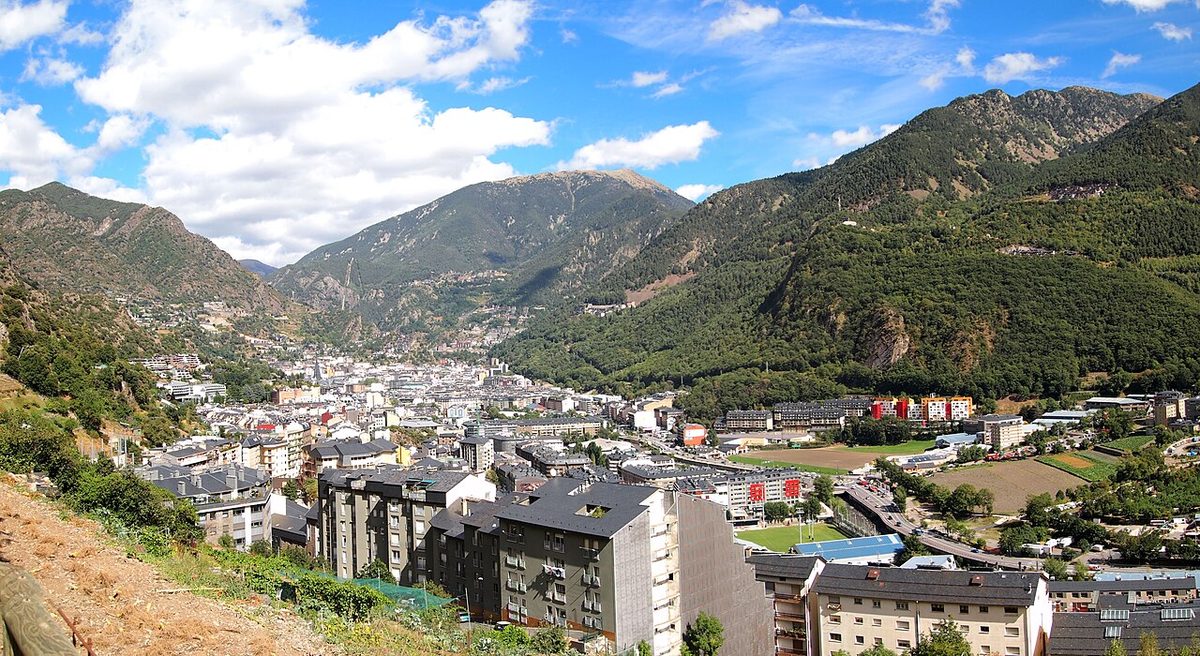
Andorra is shaped like a Y. Two river valleys run down from the high frontier and meet at the capital: the Valira del Nord, which carries Ordino and La Massana, and the Valira d’Orient, which carries Encamp, Canillo and eventually the French border at Pas de la Casa. Canillo owns the top-right arm of that Y — 121 square kilometres of it, which makes it comfortably the largest of the seven Andorran parishes and villages and roughly a quarter of the entire country.
Here is the thing that trips people up. When someone says “Canillo” they might mean the village at 1,500 m with the ice rink and the church, or they might mean the parish, which also contains Soldeu, El Tarter, the Vall d’Incles and a good chunk of the Grandvalira ski area. Your hotel booking, your bus stop and your ski pass may all be using the word differently. When I use it below I mean the village unless I say otherwise.
Unlike Ordino or La Massana, Canillo isn’t divided into quarts. It has ten veïnats — neighbourhoods — which is a piece of medieval administrative trivia that turns out to matter, because it’s part of why hamlets of thirty houses here still have their own identity, their own chapel and, in a couple of cases, their own festival. The way Andorra organised itself in the Middle Ages is still visible on the ground.
The parish is also the fastest-growing in the country, and you can see it. Canillo village has spent the last decade building: the ice palace, the gondola, the family park, the bridge, a smart new sports and culture complex. It is not a preserved museum village. It is a working mountain town that has decided its future is year-round tourism, and it is spending accordingly. Whether that’s charming or slightly over-groomed depends on your taste, and I’ll be honest below about where it tips over.
Bridges: the 603-metre crossing above Vall del Riu
The single reason most first-timers now type “Canillo Andorra” into a search box is the Tibetan Bridge of Canillo, and the numbers do most of the persuading. It is 603 metres long, one metre wide, hangs up to 158 metres above the ground and sits at around 1,875 m altitude at the mouth of the Vall del Riu. The operator bills it as the second-longest footbridge of its kind in the world, and while superlatives in this business get slippery, that one has held up since it opened.
What the numbers don’t tell you is the texture. The deck is a metal grille, so you can see straight through it the whole way. It moves — not alarmingly, but constantly, and more when the crossing is busy and people fall out of step. There is no halfway exit. Most people take fifteen to twenty minutes to cross, and a decent number of them do it faster than they intended, staring hard at the far anchor point and not at their feet.
The logistics that catch people out
This is the bit nobody tells you, and it ruins more Canillo days than bad weather does. You cannot drive to the bridge. Access is exclusively by official shuttle bus, either from Canillo village itself or from the Roc del Quer car park, and parking on the access road is prohibited and enforced. The bus fare is bundled into the ticket, so it isn’t an extra cost — it’s a compulsory step.
Three more things worth knowing before you go:
- You board 30 minutes before your slot. The rule at the time of writing is that you get on the bus from Canillo half an hour before the entry time printed on your ticket. Turn up at your slot time and you have missed it.
- There is a 900-metre walk at the other end. The bus drops you at Montaup; the path to the bridge head takes maybe fifteen minutes on rough mountain ground. Wear real shoes, not sandals.
- Buy in advance. Tickets are sold online through the official Pont Tibetà shop or at the Canillo tourist office on Avinguda Sant Joan de Caselles. They are not sold at the bridge, and there is no phone signal up there, so you cannot fix it on arrival.
On price, at the time of writing a standard adult ticket runs around €17, rising to about €19 in the high-summer window (roughly mid-July to mid-September), with children up to 12 a few euros less and under-5s free. The combined pack with the Roc del Quer viewpoint is around €20, or €22 in peak. In July and August there’s also a night crossing on certain evenings at around €45, which includes the bus and a grilled botifarra sausage at the bar near the trailhead. That one is a genuinely good night out and books up.
Allow two to three hours for the whole thing including buses and the walk, treat it as a morning activity because the last useful departure is earlier than you’d expect, and have a plan B: high wind shuts the bridge with no notice and no argument.
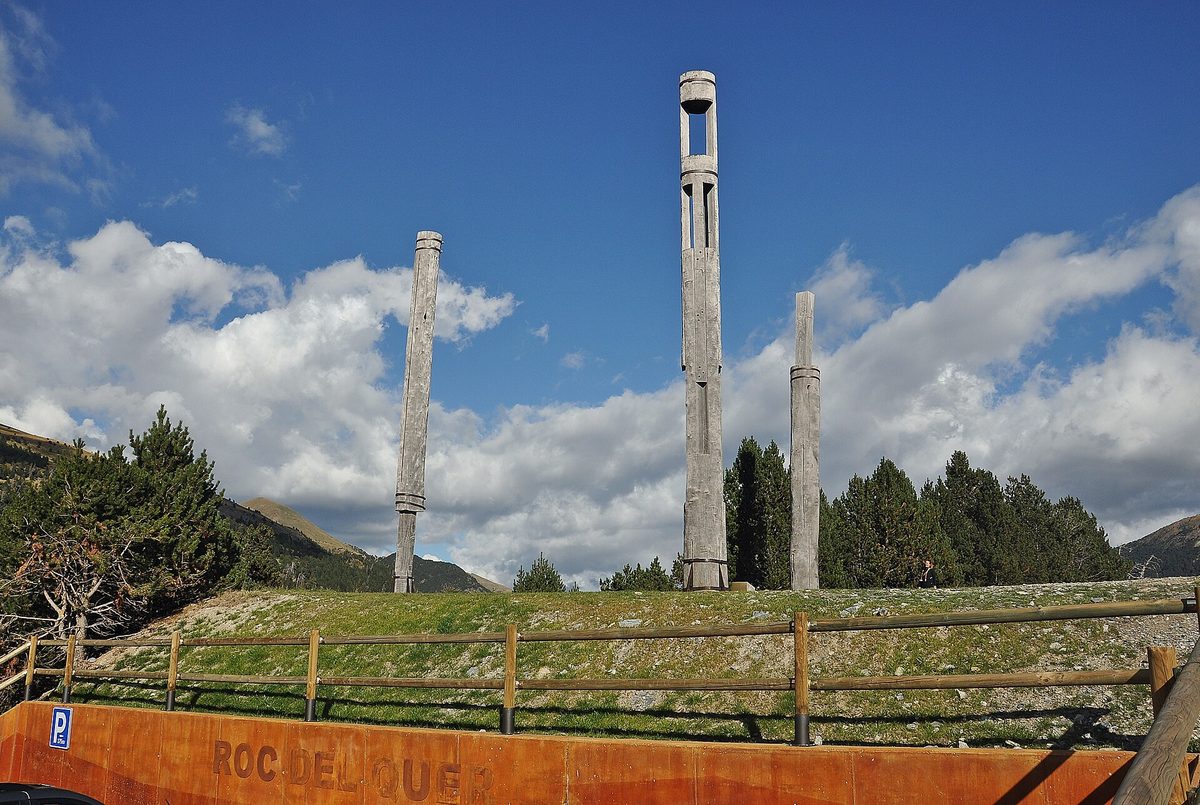
Roc del Quer: the walkway with a man sitting on the end
Half an hour up the Montaup road from the village, the Roc del Quer viewpoint does something cleverer than the bridge with a fraction of the engineering. It is a 20-metre steel walkway. Eight of those metres are anchored on solid rock. The other twelve stick straight out over the Vall del Riu, the last stretch floored in glass, above roughly 500 metres of open air.
At the tip sits “El Pensador” — The Thinker — a seated iron figure of about three metres and over a tonne, elbow on knee in an unmistakable nod to Rodin, gazing out at the valley as though the drop were an interesting but manageable problem. It is the most photographed object in the parish, and unlike a lot of Instagram sculpture it genuinely earns its spot.
Two practical warnings. First, admission is now charged — around €6 for adults, less for children, payable at the viewpoint. It used to be free and plenty of older guides still say so. Second, and this is the one that catches people: there is no bus to the viewpoint on its own. The shuttle only runs for the Tibetan Bridge and the combined ticket. If you want the mirador by itself, you need a car, and the Montaup road is narrow, hairpinned and not one to hurry on. The car park sits at around km 6.5 with a short path to the walkway.
If you only have time for one, and you are travelling with someone who dislikes heights, take the viewpoint. Fifteen minutes, one photograph, and you are back in the car. The bridge is a half-day commitment and a genuine test of nerve.
Belfries: the Romanesque churches of Canillo
Andorra has more Romanesque churches per square kilometre than almost anywhere in Europe, and the parish of Canillo holds the best of them. This is the half of the day that gets skipped, which is a pity, because it costs almost nothing and takes about ninety minutes.
Sant Joan de Caselles
A kilometre north-east of the village, on a shelf above the road, Sant Joan de Caselles is the one to see. Built at the end of the 11th century and finished into the 12th, it has kept its Romanesque bones better than nearly any church in the Pyrenees: a rectangular nave with a wooden ceiling, a semi-circular apse, and a three-storey Lombard bell tower with the arched blind-arcading that gives the style away at a glance.
Inside is the thing worth the detour. A 12th-century stucco Crist en Majestat — Christ in Majesty — in relief, framed by the remains of a painted mural: the figures of the two thieves, the sun and the moon, angels. It was rediscovered under later work in the 20th century, and standing in front of it in a cold stone room at 1,500 m is a very different experience from seeing the same iconography behind glass in a Barcelona museum. There is also a large carved altarpiece from 1527 with Italian and German Renaissance influence, which is fine but not why you came.
Opening hours at the time of writing run Tuesday to Friday roughly 10am–2pm and 3–7pm, Saturday to 8pm, Sunday mornings only, closed Monday. Entry is a couple of euros. Two honest notes: many Andorran village churches only unlock in summer, so check museus.ad before you build a day around one; and despite what several travel sites claim, Sant Joan de Caselles is not a UNESCO World Heritage Site. Andorra’s only UNESCO listing is the Madriu-Perafita-Claror valley, at the other end of the country. The church is superb on its own merits and doesn’t need the badge.
Sant Serni and the smaller chapels
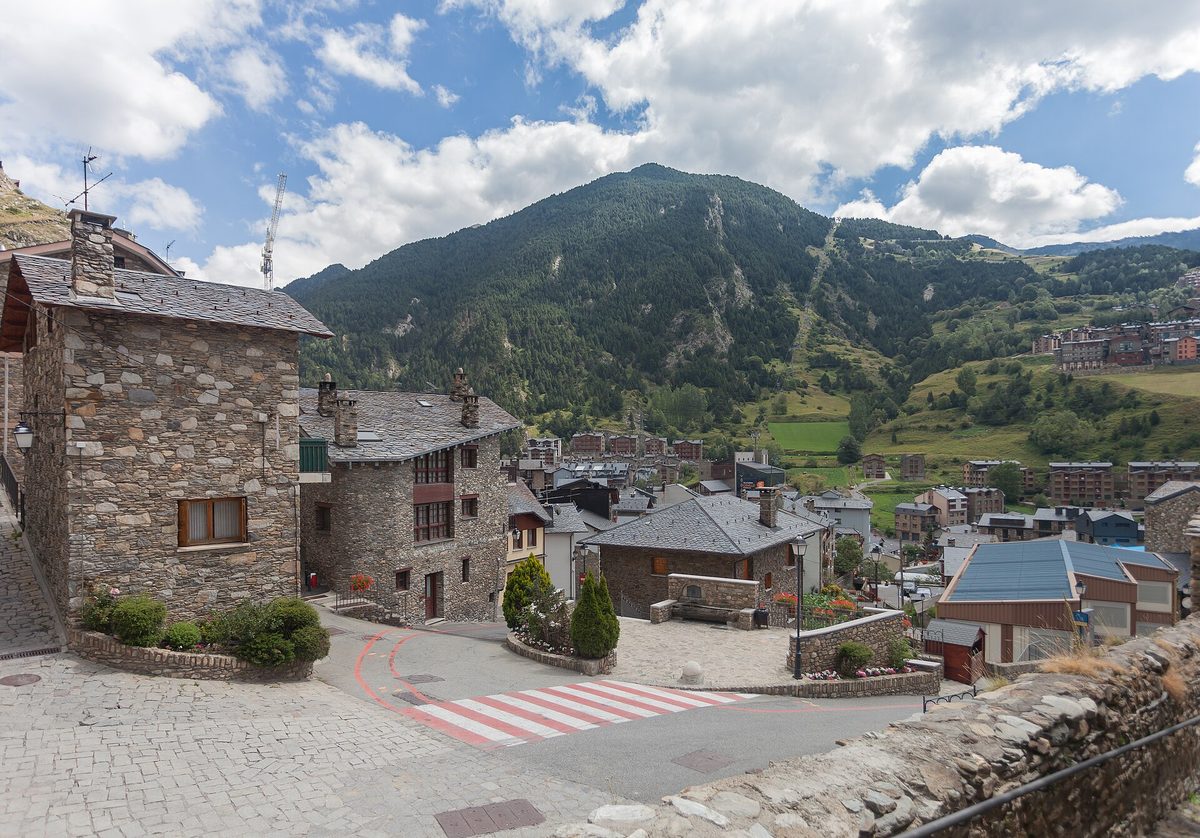
The parish church in the old quarter of the village is Sant Serni de Canillo, originally 12th century, given a thorough Baroque interior in the 17th and 18th. Next to it, the bell tower is the tallest in Andorra, which is the sort of fact a comú puts on a plaque and then quietly enjoys. The cluster of old houses around the Plaça de Sant Serni — Ca Armany, Cal Fluix, Cal Ferrer Nou — is the closest thing Canillo has to an old town, and I’ll be straight with you: it is small. Fifteen minutes, not an afternoon.
Down by the river stands Santa Creu (1781), and up in the hamlet of Prats is Sant Miquel de Prats, 12th to 13th century. Prats also hides the Roc de les Bruixes — the “witches’ rock” — a panel of prehistoric engravings ranging from the Bronze Age to the early medieval period. It is a short walk, it is properly old, and hardly anyone goes. If you like your sightseeing free and uncrowded, put it on the list.
The Sanctuary of Meritxell
Four kilometres down the valley from Canillo village, at the hamlet of Meritxell, is the building every Andorran has an opinion about. This is the national sanctuary of Our Lady of Meritxell, patron saint of the country since 1873, and 8 September — her feast — is the national holiday.
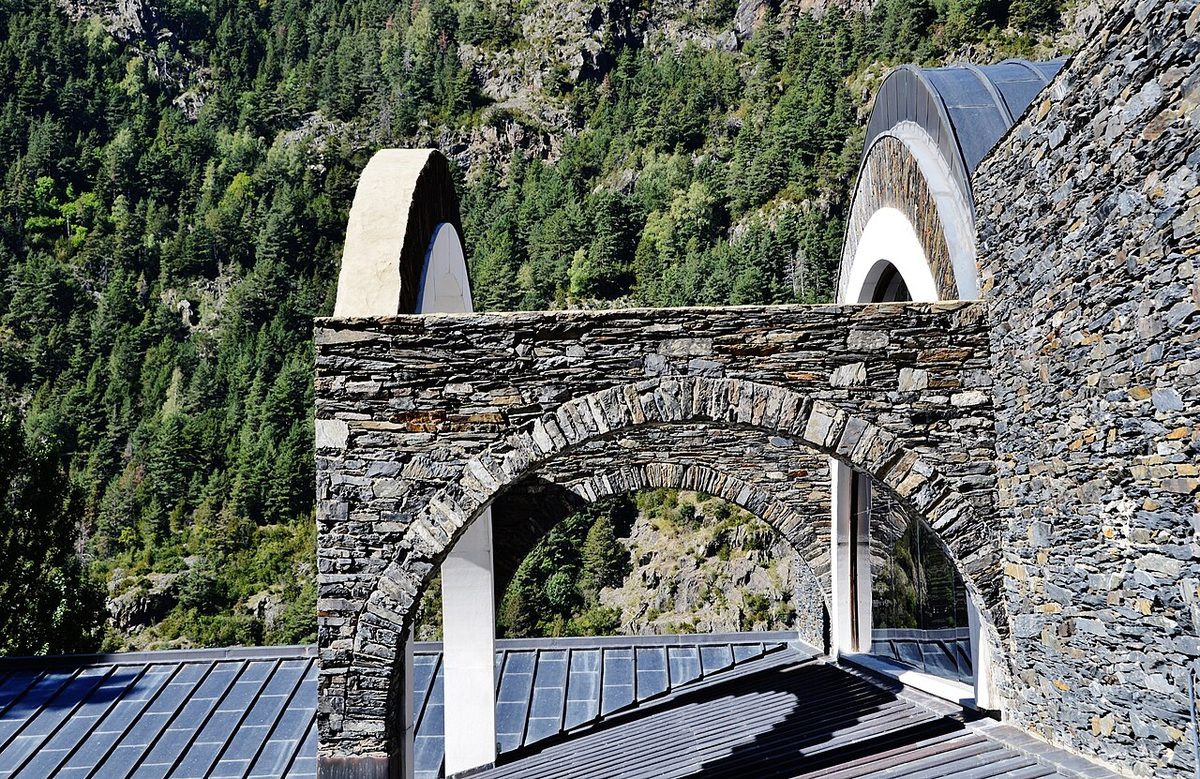
The original was Romanesque, remodelled in the 17th century, and it burned to the ground on the night of 8 September 1972, taking the medieval carving of the Virgin with it. What replaced it, inaugurated in 1976, is a Ricardo Bofill building: a long, pale, arcaded structure of stepped arches and open courtyards that reads as half monastery, half stage set, deliberately quoting the Romanesque without imitating it. Pope Francis raised it to the status of minor basilica in 2014.
Opinions divide sharply. Some visitors find it cold. I think it is the single most interesting piece of architecture in Andorra, and the ruins of the old sanctuary standing right beside it — kept as they were left by the fire — make the point better than any interpretation panel could. Entry is free, it is open daily through the day, and free guided visits run at regular intervals. There is a room explaining the legend, the fire and the rebuild, and a slightly eccentric display of Bibles in dozens of languages. Give it forty-five minutes. If a service is on, hours shift, so don’t arrive on a tight schedule.
The zip line, and whether it really is the longest in the Pyrenees
Let’s deal with the claim honestly, because you will see it repeated everywhere. The zip line at Mon(t) Magic Family Park, above Canillo village, is 550 metres long, launches from about 40 metres up and tops out at around 80 km/h. The resort’s own English wording calls it “one of the longest in the Pyrenees”, and various tourism sites round that up to “the longest”.
It isn’t. There are longer wires on the Spanish side of the range — the Tena valley and the Fuentespalda line among them — and a 550-metre run is a good, punchy ride rather than a record. What it is, though, is the longest zip line I know of in Andorra, hung across a proper mountain valley, and one of very few anywhere that you can do in ski boots in February. Judge it on that and you won’t be disappointed.
Three modes at the time of writing: seated (minimum 35 kg), a horizontal “superman” position for the brave, and a tandem seat so a child of 20–35 kg can go with an adult. Bought on its own at the ticket office, expect around €20 seated, €26 horizontal and €36 for the tandem, on top of a park pass. In winter it’s sold as a standalone experience from about €21, and you have to be weighed at the El Forn information point first, which is exactly as dignified as it sounds.
Mon(t) Magic Canillo: what else is up there
The zip line is one line item on a much bigger mountain. Mon(t) Magic Family Park sits above the village and you reach it by the Canillo gondola, which lifts straight out of the middle of town — no car, no shuttle, no ski-resort car park nonsense. In summer, the top station opens onto a small lake with kayaks, pedalos and canoes, an alpine slide (the Màgic Gliss, more than 550 metres of rail toboggan), trampolines, inflatables, mini-golf, archery, a marmot observation point, a legends trail, an Explor Games treasure-hunt circuit and mountain bikes for the Molleres loop.
Pricing at the time of writing works in tiers: a Basic Pass covering the gondola and the gentler activities across two consecutive days for around €23; the Únic Pass, which is the everything-included family ticket, around €41 with a cheaper after-2pm rate; and the Adrenalina Pass at around €62 for the thrill stuff including the zip line, aimed at ages 12 and up. Insurance is a few euros extra at the desk and is not included — worth reading the small print if your family travel policy excludes adventure activities.
Honest verdict: this is the best single day out in Andorra for children roughly 4 to 12, and it is genuinely worth building a trip around if that’s your group. Teenagers will burn through the adrenaline list by lunchtime. Adults without kids can skip it entirely and spend the day in the Vall d’Incles instead. For the wider picture of what the country does well with children in tow, our guide to Andorra with kids compares this against Naturland and the spa options.
Palau de Gel: the rainy-day trump card
In the middle of Canillo village sits a large, frankly unlovely building that is the most useful thing in the parish. The Palau de Gel d’Andorra is an Olympic-size ice rink — home of the Andorran ice sports federation, with hockey and curling — wrapped in a leisure complex: a heated swimming pool with a set of flumes dropping from around seven metres, a gym, sauna, squash court and an indoor climbing wall.
Public skating sessions typically run afternoons on weekdays and both morning and afternoon at weekends, with prices in the region of €15–19 for adults depending on whether you book online, less for children, free for the very young; skate hire is extra. Check palaudegel.ad before you set off, because the complex closes sections for maintenance in spring and the schedule genuinely does change.
It is not beautiful and it is not authentic and I do not care: when the cloud comes down to 1,400 m and the bridge is shut and everyone is fractious, this is the answer. Keep it in your back pocket alongside the rest of our rainy day options in Andorra.
Canillo things to do outdoors: valleys, hamlets and high lakes
Strip out the ticketed attractions and what’s left is the reason I keep coming back. The parish is 121 square kilometres of side valleys hanging off one road, and each one has a hamlet at the bottom and a lake or a col at the top.
Vall d’Incles
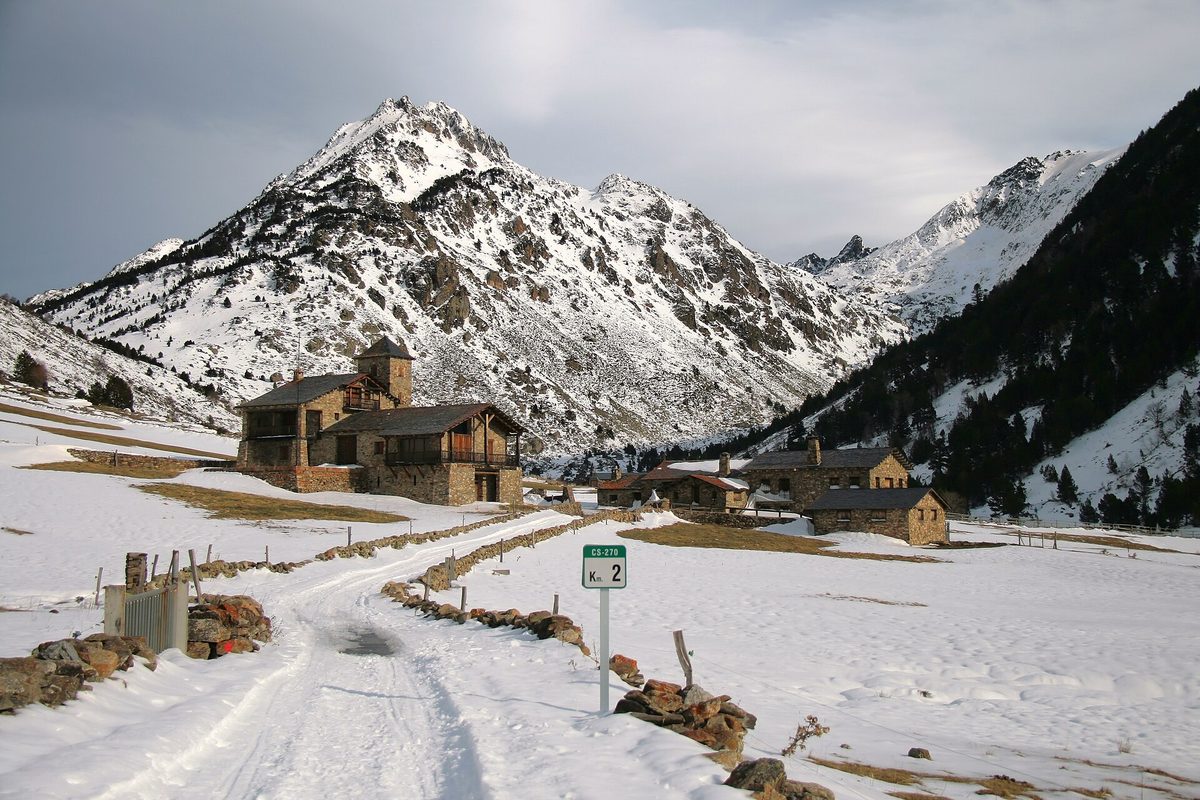
If you do one walk in this parish, do this one. The Vall d’Incles opens off the main road between Soldeu and El Tarter and runs north into a flat-bottomed glacial valley of hay meadows, stone bordes and a braided river, with horses grazing and the Pic d’Escobes at the head of it. It is, by a distance, the prettiest easily reached valley in Andorra.
The catch, and it’s a good catch: in high season private cars are restricted, generally from around 10am to 6pm across the summer, and an electric shuttle minibus runs up and down the valley instead for a couple of euros each way. People grumble. They are wrong. Before the restriction the single-track lane was a solid line of parked cars and the whole point of the place was lost. Take the shuttle, or arrive before ten.
From the top of the valley, keep walking and you reach the Estany de Juclà, at 21.3 hectares the largest lake in the country, on a route that suits anyone with a reasonable day’s walking in their legs. There are gentler options too: the valley floor itself is essentially flat, which makes it a rare Andorran walk that works for mixed-ability groups and small children.
Ransol, El Forn, Prats and Molleres
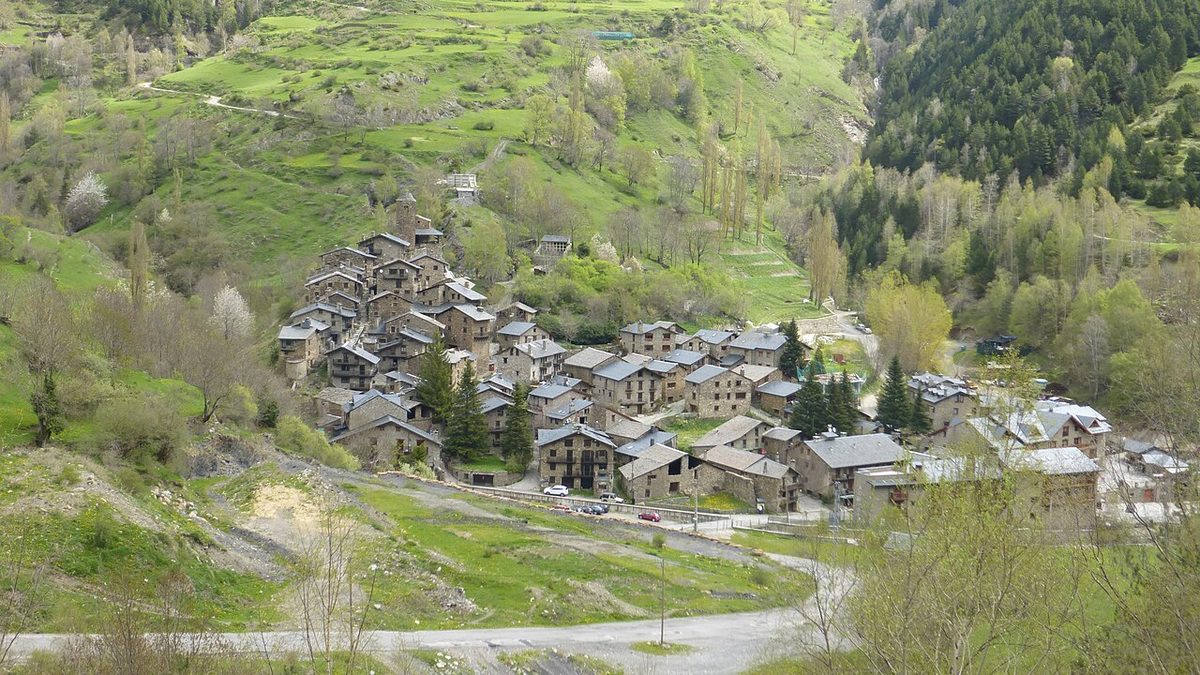
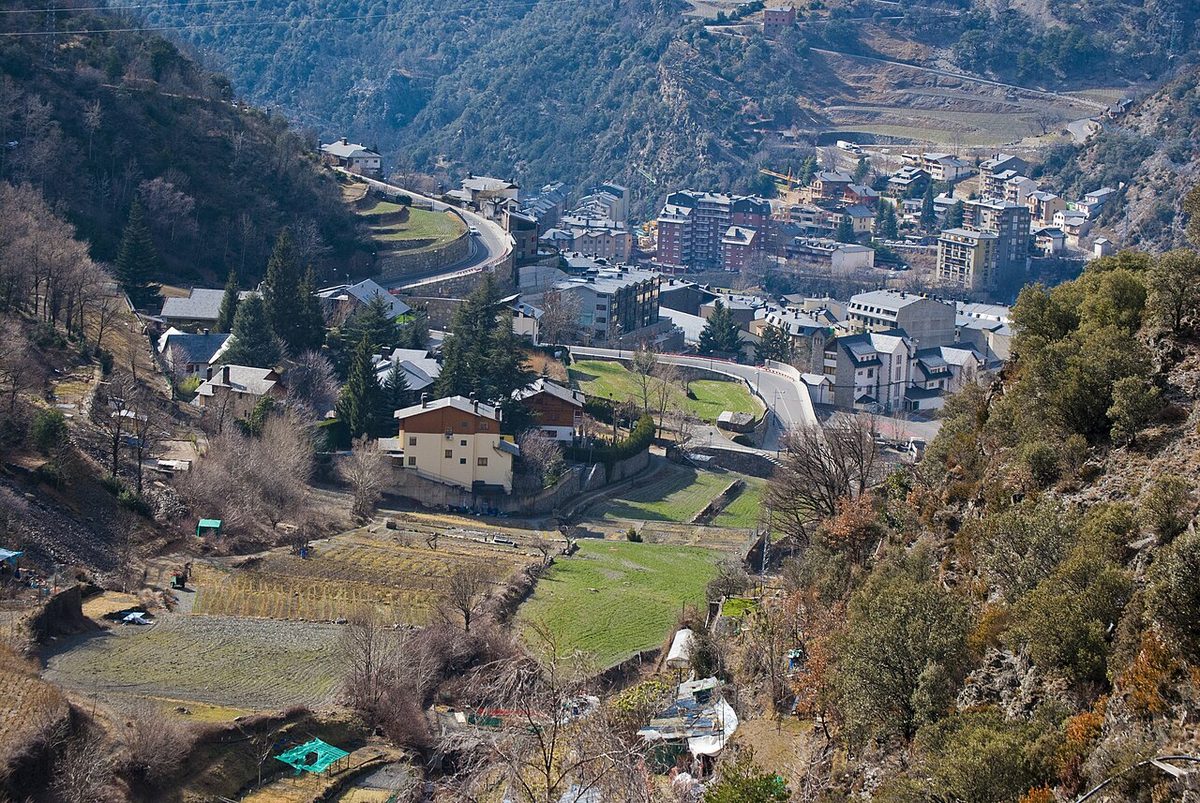
The hamlets are the parish’s quiet pleasure. Ransol sits up its own side valley with a chapel and a trailhead; El Forn is the road up towards the ski area and the information point where they weigh you for the zip line; Prats keeps the witches’ rock and the little church of Sant Miquel; Molleres, Els Plans, El Vilar and L’Aldosa are strings of slate-roofed houses and hay barns where the through-traffic never stops.
None of them will fill an afternoon on their own. Together, with a car and no particular plan, they make a very good two hours — and they are where you get the version of Andorra that existed before the ski lifts arrived.
Winter: skiing out of Canillo village
The Canillo gondola from the village centre puts you into the Canillo sector of Grandvalira, which links onward to El Tarter, Soldeu, Grau Roig and eventually Pas de la Casa across the largest ski area in the Pyrenees. The local sector is gentle, wide and quiet — genuinely good learning terrain, and a relief on a busy Saturday when Soldeu’s base area is a scrum.
The trade-off is honest and simple: you are not ski-in, ski-out. You walk or take a short bus to the gondola in the morning and ride it back down at the end of the day, and if the wind shuts the gondola you have a bus ride to Soldeu ahead of you. In exchange you get cheaper beds, a village with a supermarket and a school run rather than a strip of bars, and a five-minute lift queue. Our comparison of where to stay in Andorra for skiing lays out that maths across every resort base in the country.
Planning a visit to Canillo
Getting there
Canillo sits on the CG-2, the main road up the eastern valley, about 12 km from Andorra la Vella. Driving takes 15–20 minutes outside rush hour and rather longer when the ski traffic is moving; the road is good and wide by Andorran standards, and mostly free of the hairpins that make the northern valleys slow.
Without a car, national bus line L3 runs from the bus station in the capital up the valley through Encamp and Canillo to Soldeu and the Bordes d’Envalira, roughly every half hour from early morning until around 10pm. Expect 25–30 minutes to Canillo and a fare of a couple of euros each way; day and weekly passes exist and are worth it if you’re staying put. Check current timetables before you rely on the last bus, and read our notes on getting around Andorra for how the network fits together.
Parking
Easy, which is not something you can say about the capital. There is free and cheap parking around the Palau de Gel and the gondola base, and the village is small enough that wherever you land you can walk everywhere. The one place parking is not easy is the Montaup road up to Roc del Quer, where the viewpoint car park at around km 6.5 fills on August afternoons and stopping on the road itself is banned.
How long to spend
My honest allocation: half a day gets you the village, Sant Joan de Caselles and Meritxell. A full day adds either the Tibetan Bridge or a morning at Mon(t) Magic. Two to three days is the sweet spot if you want the bridge, the family park, the Vall d’Incles and time to poke at the hamlets without watching the clock. Beyond three days you are really using Canillo as a base for the rest of the country, which is a perfectly sensible thing to do given how small Andorra is.
Where Canillo beats Soldeu — and where it doesn’t
People book Soldeu because it is the name they know. Here is the trade, plainly. Canillo is cheaper, quieter, has a real village centre with a supermarket and a bakery, a gondola from the middle of town, the ice palace for bad days, and the parish’s culture on the doorstep. Soldeu has the ski-in ski-out convenience, most of the bars, the ski school hub and the direct access when the snow line is high.
So: families, budget skiers, summer visitors and anyone who wants to see Andorra rather than just ski it should base in Canillo. Groups who want to walk out of a bar and onto a piste should base in Soldeu and visit Canillo for a day. There is no wrong answer, but there is a wrong assumption — that the two are interchangeable because they share a parish and a lift pass. They are ten minutes and one entire holiday-mood apart.
What it costs
- Tibetan Bridge: around €17 adult, about €19 in peak summer, bus included; children up to 12 a few euros less, under-5s free.
- Roc del Quer viewpoint: around €6 adult, around €4 for children; car access only.
- Combined bridge and viewpoint pack: around €20, or €22 in peak summer.
- Mon(t) Magic passes: roughly €23 (Basic, two days), €41 (Únic), €62 (Adrenalina); insurance about €6 a day extra.
- Zip line on its own: around €20 seated, €26 horizontal, €36 tandem, on top of a park pass.
- Palau de Gel skating: roughly €15–19 adult depending on how you book; skate hire extra.
- Sant Joan de Caselles: a couple of euros. Sanctuary of Meritxell: free.
- L3 bus from the capital: a couple of euros each way; day and weekly passes available.
Frequently asked questions
Is Canillo worth visiting?
Yes, and more so than its roadside first impression suggests. In one small parish you get the country’s best-preserved Romanesque church, its national sanctuary, a 603-metre suspension footbridge, a glass-floored cantilevered viewpoint and a mountain family park reached by gondola from the village square. Give it a full day at minimum.
What is Canillo known for?
Four things, mostly. The Tibetan Bridge of Canillo and the Roc del Quer viewpoint with its “El Pensador” sculpture; the Sanctuary of Meritxell, home of Andorra’s patron saint; the Romanesque church of Sant Joan de Caselles; and the Palau de Gel ice palace. It is also the country’s largest and fastest-growing parish.
How do you get from Andorra la Vella to Canillo?
Drive the CG-2 east up the valley — about 12 km and 15–20 minutes in normal traffic. By public transport, take national bus line L3 from the capital’s bus station towards Soldeu; it runs roughly every half hour and takes about 25–30 minutes, for a fare of a couple of euros. Check the current timetable before relying on the last service.
Is the Tibetan Bridge of Canillo the longest in the world?
No. It is 603 metres long and is billed by its operator as the second-longest footbridge of its kind in the world, hanging up to 158 metres above the Vall del Riu at around 1,875 m altitude. It is comfortably the longest structure of its type in Andorra, and it feels every metre of it.
Can you drive to the Tibetan Bridge or Roc del Quer?
To the bridge, no — access is exclusively by official shuttle bus from Canillo village or the Roc del Quer car park, with the fare included in your ticket and roadside parking banned. To the viewpoint on its own, yes, and in fact only by car: there is no bus that serves the mirador alone.
Is the zip line at Canillo really the longest in the Pyrenees?
Probably not, despite the marketing. The Mon(t) Magic zip line is 550 metres long, launches from about 40 metres up and reaches around 80 km/h, and the resort’s own wording is “one of the longest”. Longer wires exist on the Spanish side of the range. It is still the best zip line in Andorra.
Is Canillo good for families with young children?
It is the best base in the country for children roughly 4 to 12. The Mon(t) Magic family park is a gondola ride from the village centre, the Palau de Gel covers wet days with skating and a pool, the Vall d’Incles walking is flat, and beds are cheaper than in Soldeu. Teenagers may want more nightlife.
How many days do you need in Canillo?
One full day covers the village, the churches and either the bridge or the family park. Two to three days lets you do all of it plus the Vall d’Incles and the hamlets at a civilised pace. Longer than that and you are using Canillo as a base for the rest of Andorra, which works well.
The honest verdict
Canillo is not the prettiest village in Andorra — Ordino takes that, and it isn’t close. What Canillo has instead is range. In three days here I have crossed a bridge that made my hands sweat, stood in front of a 900-year-old stucco Christ in an unheated stone nave, watched a nine-year-old fly down a wire at 80 km/h shrieking with joy, and walked a flat green valley where the only sound was river and cowbells. No other parish in this country asks you to switch gears that hard.
My advice: don’t treat it as a stop on the way to the skiing. Give it a base, or at least a full unhurried day. Book the bridge in the morning, keep the ice palace in reserve, and take the shuttle up the Vall d’Incles in the late afternoon when the light goes long and the day-trippers have gone home. That’s the parish at its best, and it costs less than a lift ticket.
If you’re building the rest of the trip around this, our guide to skiing in Andorra covers the sectors and passes in detail, the round-up of easy hikes in Andorra picks up several trailheads in this parish, driving in Andorra explains the winter tyre law and the mountain roads, and the master list of things to do in Andorra puts Canillo’s attractions in national context.
Photo credits
All photographs are from Wikimedia Commons under their stated licences, with thanks to the photographers:
- Photo: Luis Miguel Bugallo Sánchez (Lmbuga), CC BY-SA 3.0, via Wikimedia Commons — source
- Photo: Alberto-g-rovi, CC BY 3.0, via Wikimedia Commons — source
- Photo: MARIA ROSA FERRE ✿, CC BY-SA 2.0, via Wikimedia Commons — source
- Photo: Jorge Franganillo from Barcelona, Spain, CC BY 2.0, via Wikimedia Commons — source